

15 Japanese Tiny House Design Tips & Aesthetics
Japanese tiny house design is admired worldwide for its mastery of simplicity, efficiency, and serenity. Rooted in centuries-old architectural principles, Japanese aesthetics focus on natural materials, minimalism, clever spatial solutions, and a deep connection with nature.
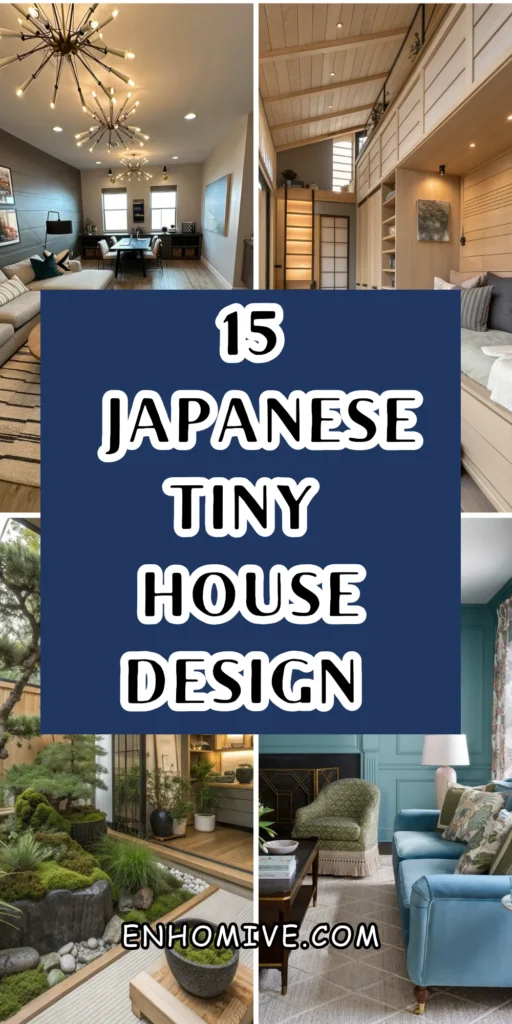
These qualities make them perfect for tiny homes, where every inch counts and every element should feel intentional. Whether you’re planning a compact home or simply love Japanese-inspired interiors, these design tips and aesthetics will help you create a peaceful, functional, and visually balanced tiny house.
1. Embrace Minimalism as a Lifestyle
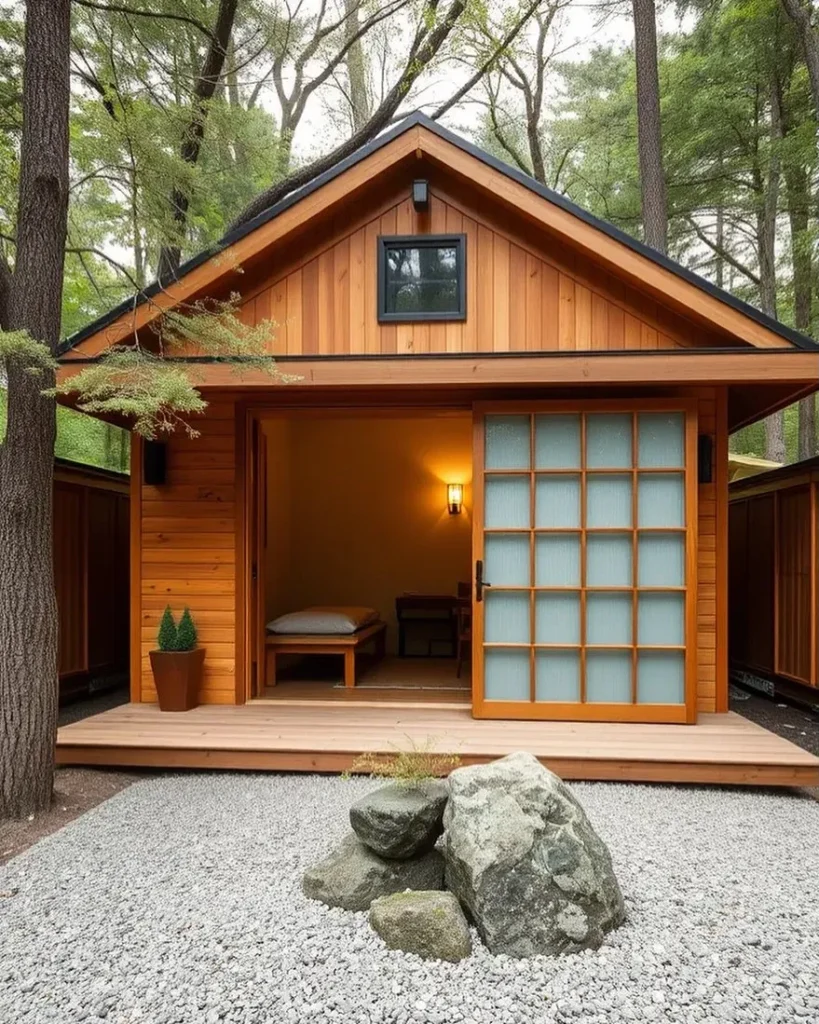
Minimalism isn’t just a look in Japanese design—it’s a way of life. Tiny homes benefit from keeping only what you use and love. Choose multifunctional items, declutter regularly, and leave open spaces on shelves and floors. Simplicity allows the home to breathe, making even a small footprint feel spacious and calm.
2. Use Natural Materials for Warmth
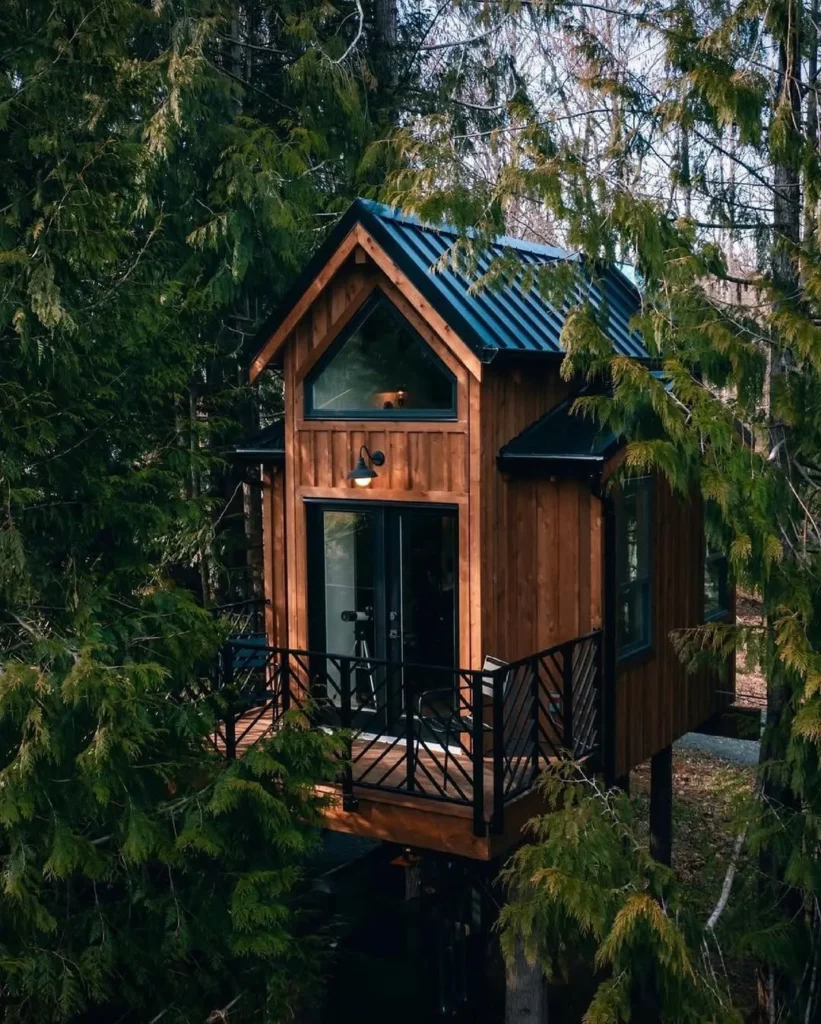
Japanese design celebrates nature, so materials such as wood, bamboo, stone, linen, and rice paper are essential. Use natural wood for floors, built-ins, or loft ladders. Combine bamboo blinds, linen curtains, and woven textures to soften the look. These materials add warmth and authenticity while keeping visual clutter low.
3. Maximize Vertical Space
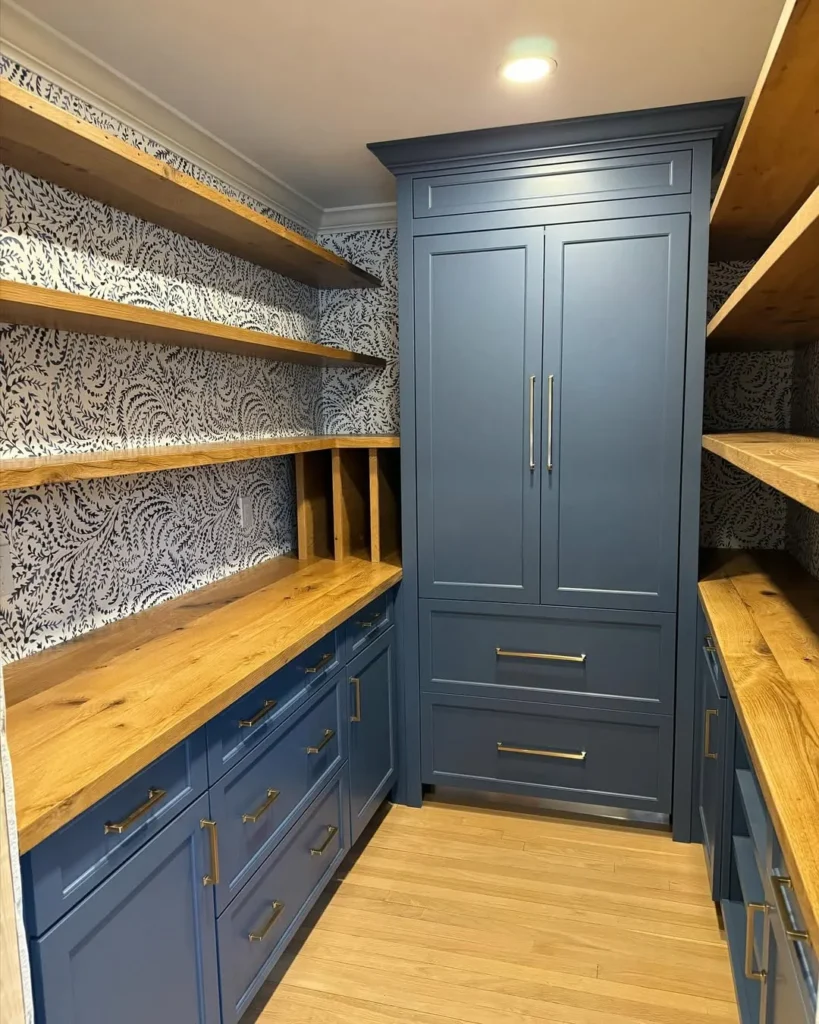
In tiny Japanese homes, verticality is everything. Use tall storage cabinets, wall-mounted shelves, and high windows to maximize airiness. Loft areas—often used for sleeping—make the main space feel open and uncluttered. Vertical lines also contribute to the clean, organized feel typical of Japanese interiors.
4. Create Flexible Multi-Use Rooms
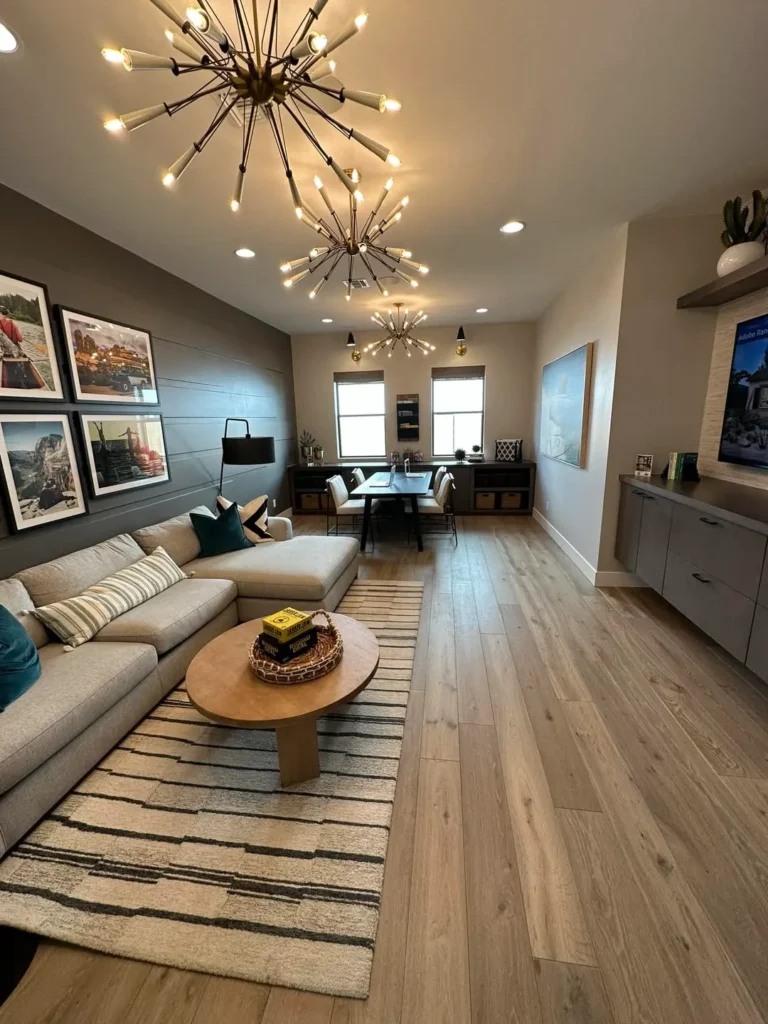
Traditional Japanese rooms are designed for flexibility. A single space can function as a living area, dining room, sleeping zone, or workspace depending on the time of day. Incorporate foldable futons, sliding tables, stackable cushions, or modular seating. This adaptability lets your tiny house perform multiple functions without feeling cramped.
5. Incorporate Shoji Doors for Light and Flexibility
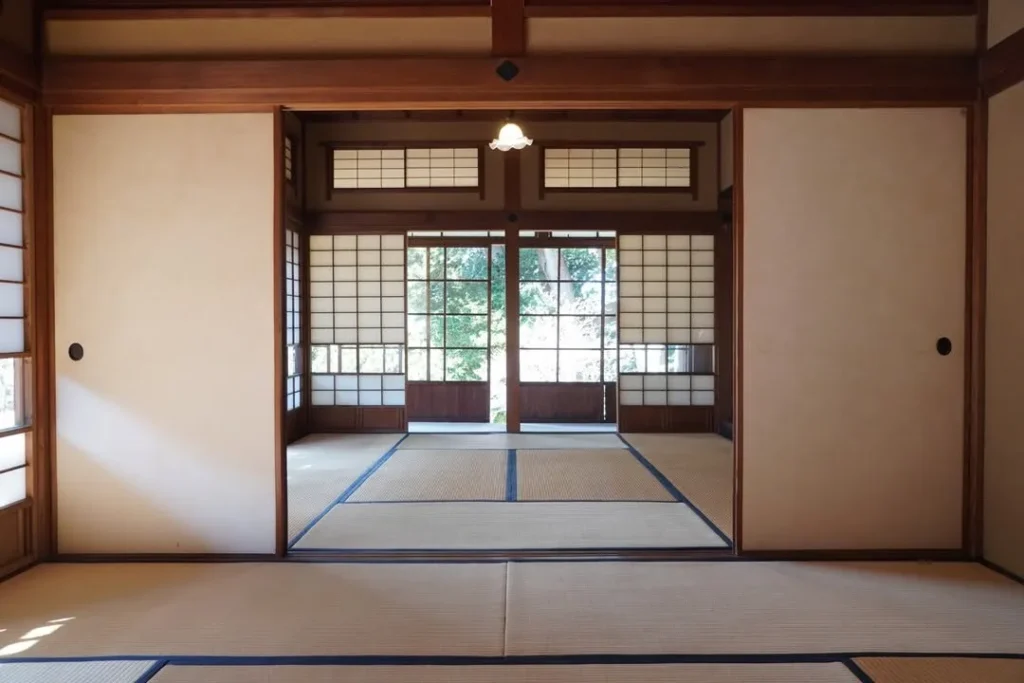
Shoji doors—sliding doors made of wood lattice and translucent paper—are signature elements of Japanese interiors. They save space compared to swing doors, diffuse natural light beautifully, and create flexible partitions. Modern versions use durable acrylic, making them practical for tiny homes. Install shoji panels between rooms, closets, or as large window coverings.
6. Design Around a Low Furniture Layout
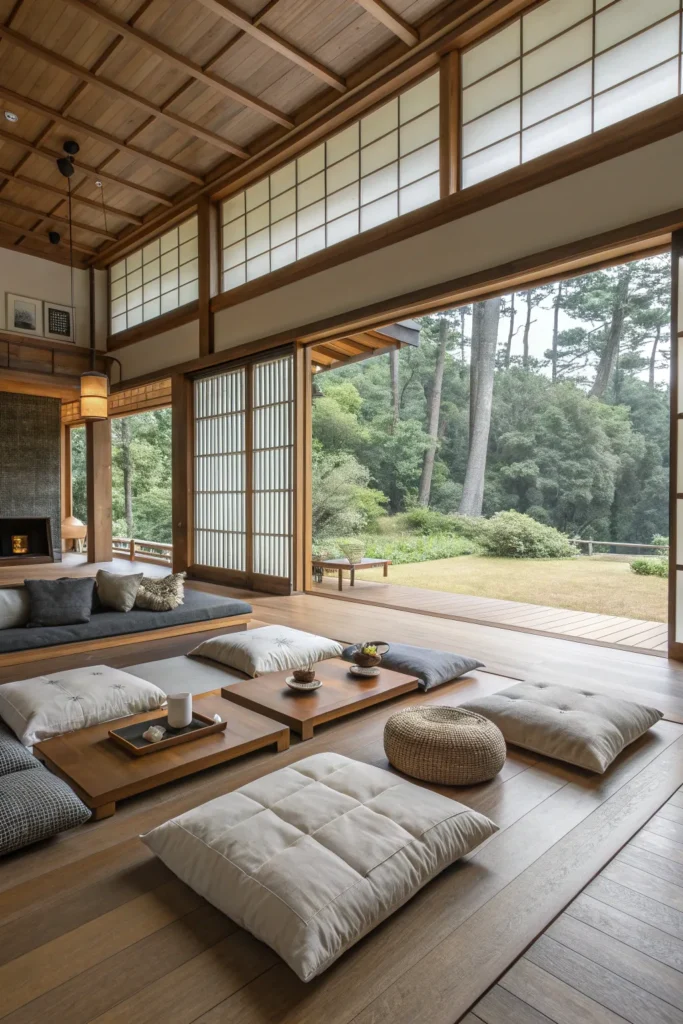
Japanese design often features low-profile furniture to create a sense of openness. Use floor cushions, low coffee tables, futons, and compact seating. This brings you closer to the floor, making the ceiling feel higher and the room larger. It also keeps sightlines clear, adding to the peaceful aesthetic.
7. Feature Zen-Inspired Color Palettes
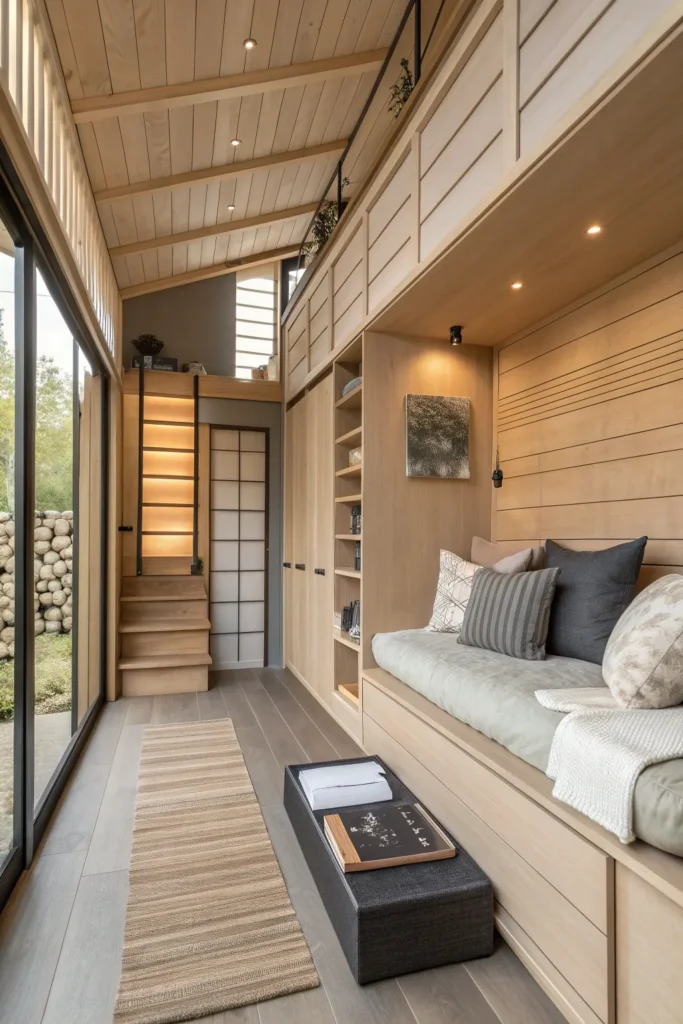
Soft, calming colors define Japanese tiny homes. Choose warm neutrals like beige, cream, taupe, or muted greys. Combine them with natural wood tones and occasional hints of black for definition. The result is a quiet, harmonious environment that encourages relaxation.
8. Use Clever Built-In Storage
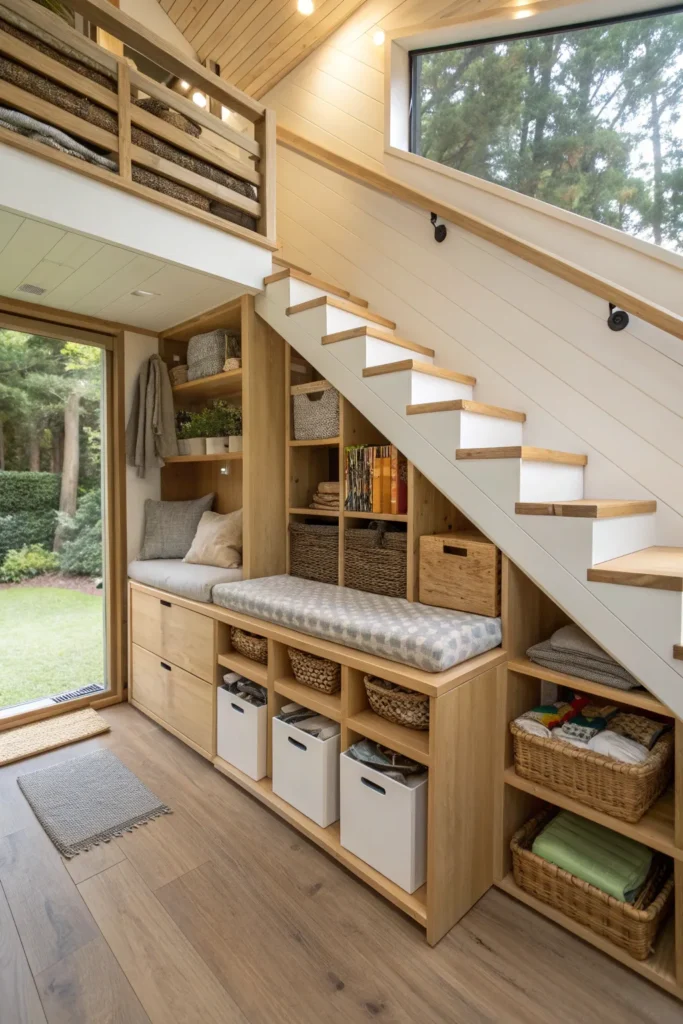
Built-ins are a must for tiny Japanese homes. Create under-stair storage, built-in benches with compartments, hidden drawers in platforms, and recessed shelving in walls. Keep items neatly organized in bamboo boxes or fabric bins. These storage solutions save space while maintaining the clean, minimalist look.
9. Embrace Wabi-Sabi Imperfection
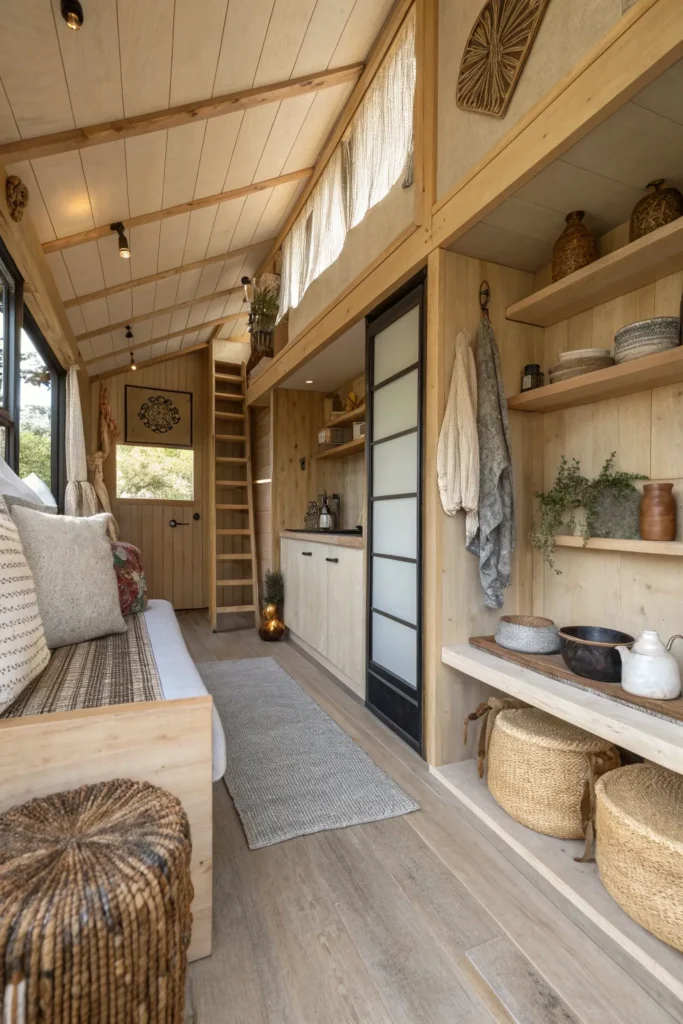
Wabi-sabi, the appreciation of imperfection and natural aging, is central to Japanese aesthetics. Choose handmade pottery, distressed wood, or textured fabrics that celebrate authenticity. Let the home feel lived-in, simple, and full of soul. This philosophy helps tiny spaces feel warm and meaningful rather than overly styled.
10. Bring Nature Indoors With Plants
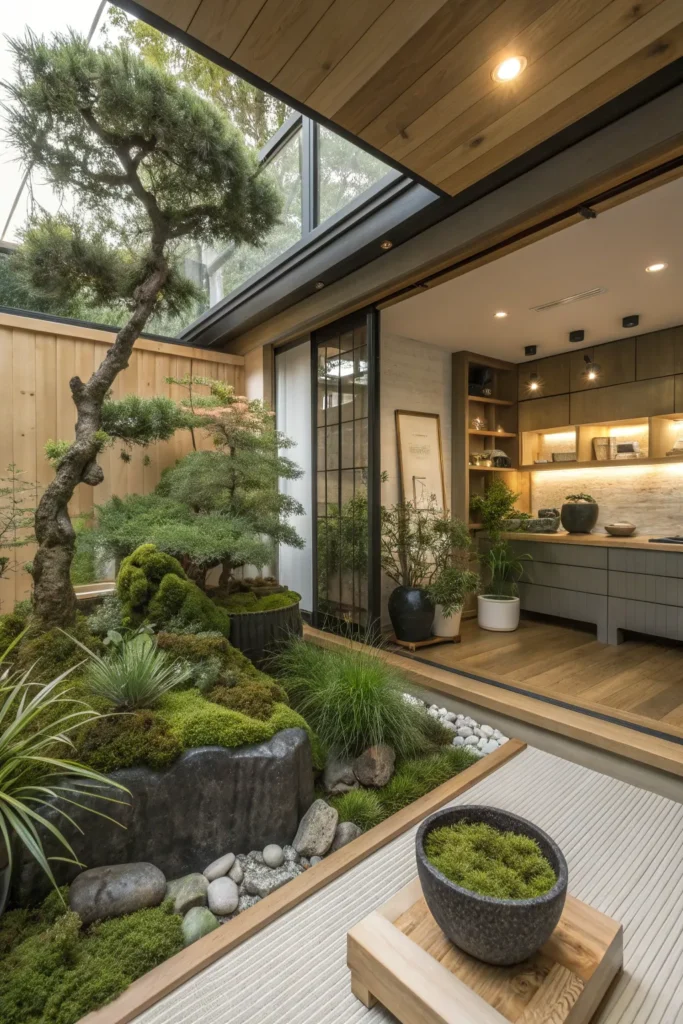
Nature is deeply rooted in Japanese design. Use bonsai trees, bamboo plants, ferns, moss bowls, or ikebana arrangements. Keep the greenery minimal and intentional so it remains calming rather than overpowering. Natural elements soften the clean lines and add a sense of life and balance to your tiny house.
11. Include an Engawa-Inspired Entry or Deck
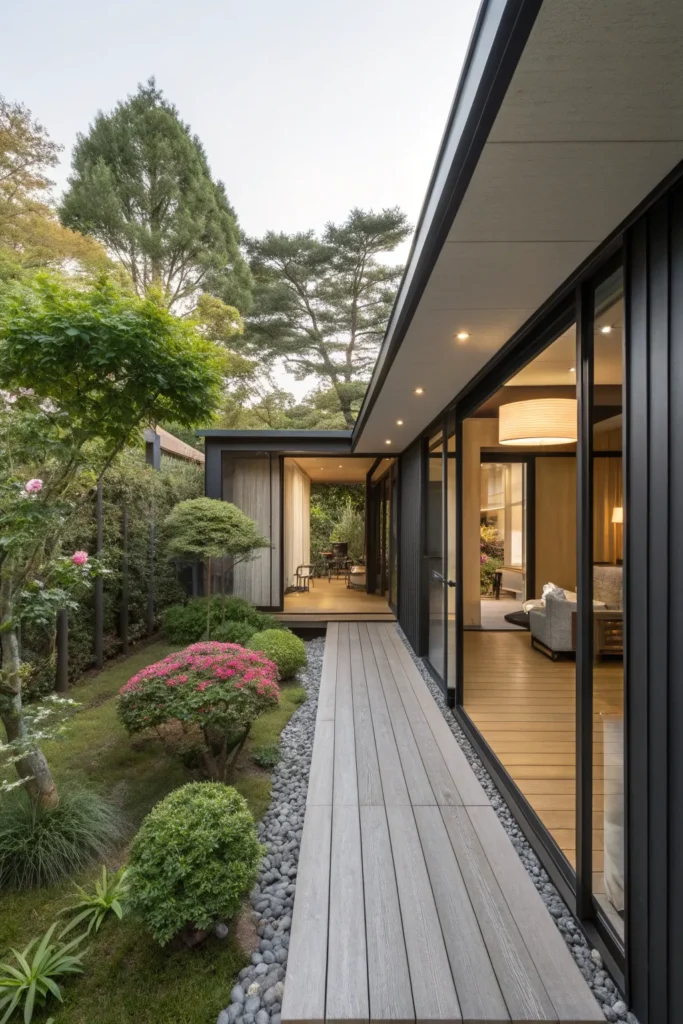
The engawa is a narrow exterior corridor found in traditional Japanese homes that connects indoor and outdoor spaces. In tiny houses, you can echo this concept with a small deck, step-out platform, or sliding glass door. This creates a smooth transition to nature and makes the interior feel larger.
12. Use Sliding or Pocket Doors to Save Space
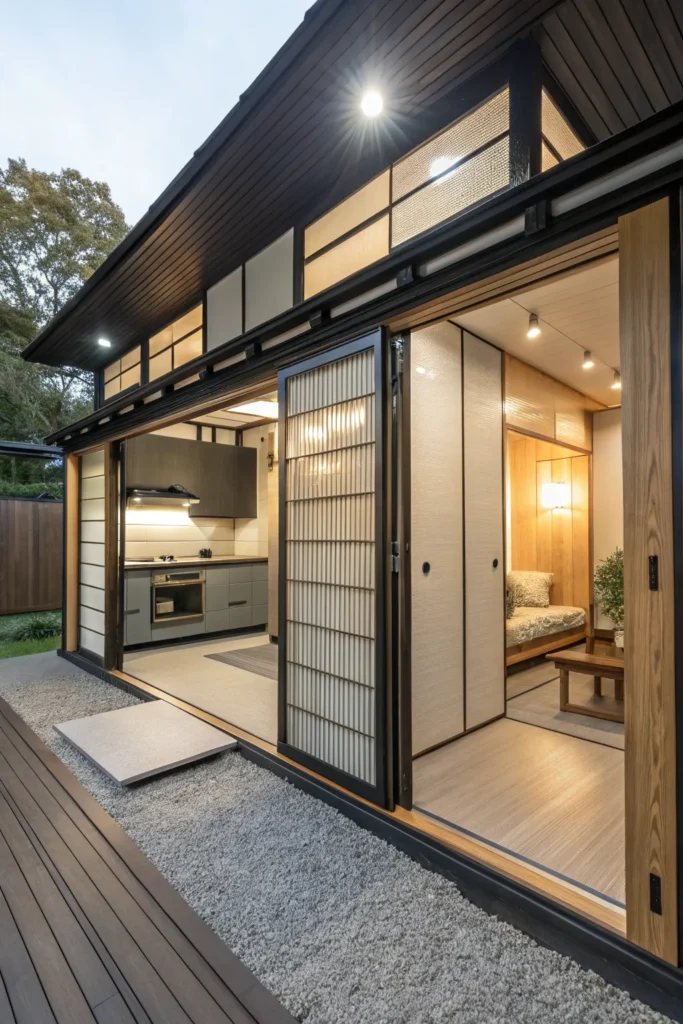
Besides shoji doors, incorporate modern sliding or pocket doors to maximize floor area. These doors eliminate swing clearance and help maintain open pathways. They’re ideal for tiny bathrooms, closets, or bedroom partitions, keeping the layout efficient without sacrificing aesthetics.
13. Create a Compact Japanese Bathroom
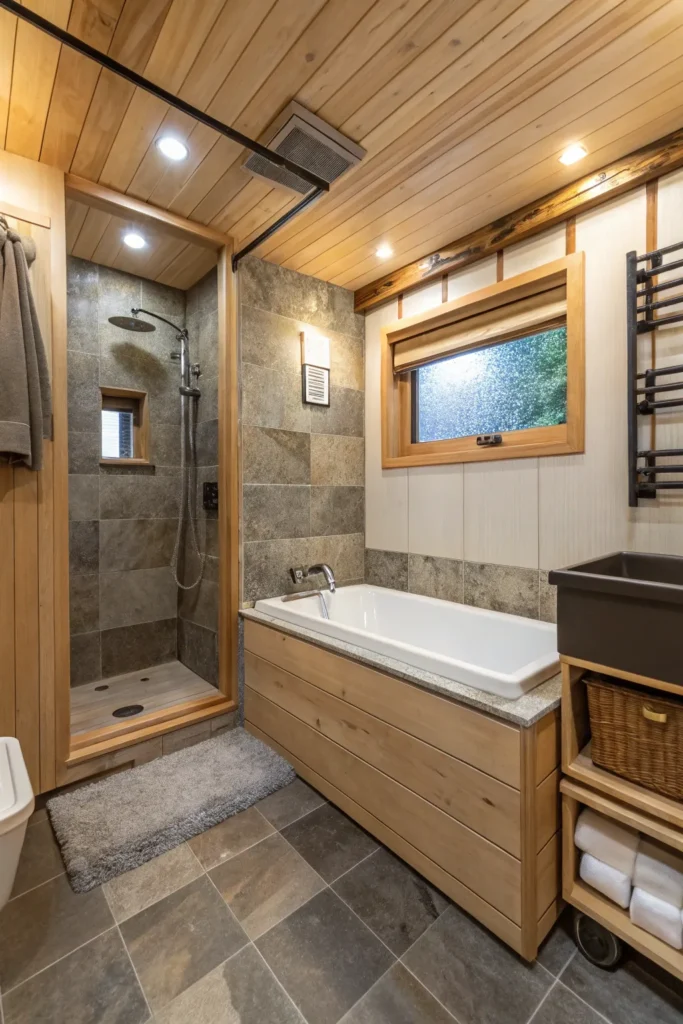
Japanese bathrooms are incredibly efficient. A compact wet-room design lets the entire space act as a shower, often with a deep soaking tub (ofuro) in small homes. Use waterproof materials like stone, cedar, or tile. Keep storage recessed and minimal. This layout is practical for tiny homes while delivering the serene spa-like feeling Japan is known for.
14. Highlight Craftsmanship Through Details
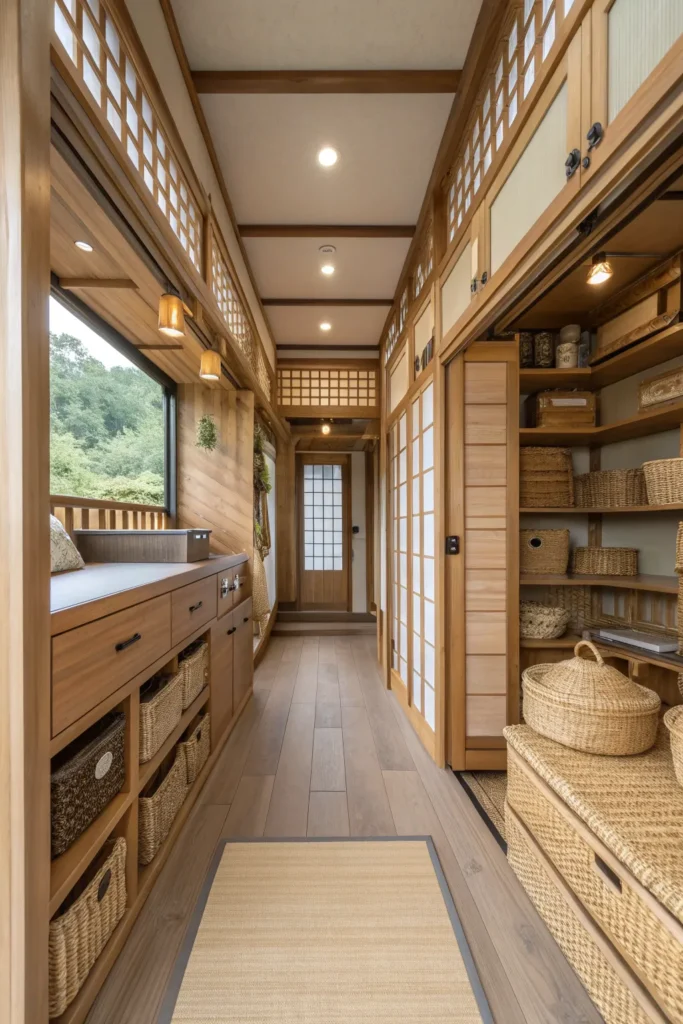
Japanese design values craftsmanship and thoughtful details. Even in a tiny home, you can incorporate beautiful joinery, well-crafted wooden handles, woven baskets, and neatly aligned architectural lines. These subtle touches elevate the space, making it feel refined and intentional.
15. Frame Views and Natural Light
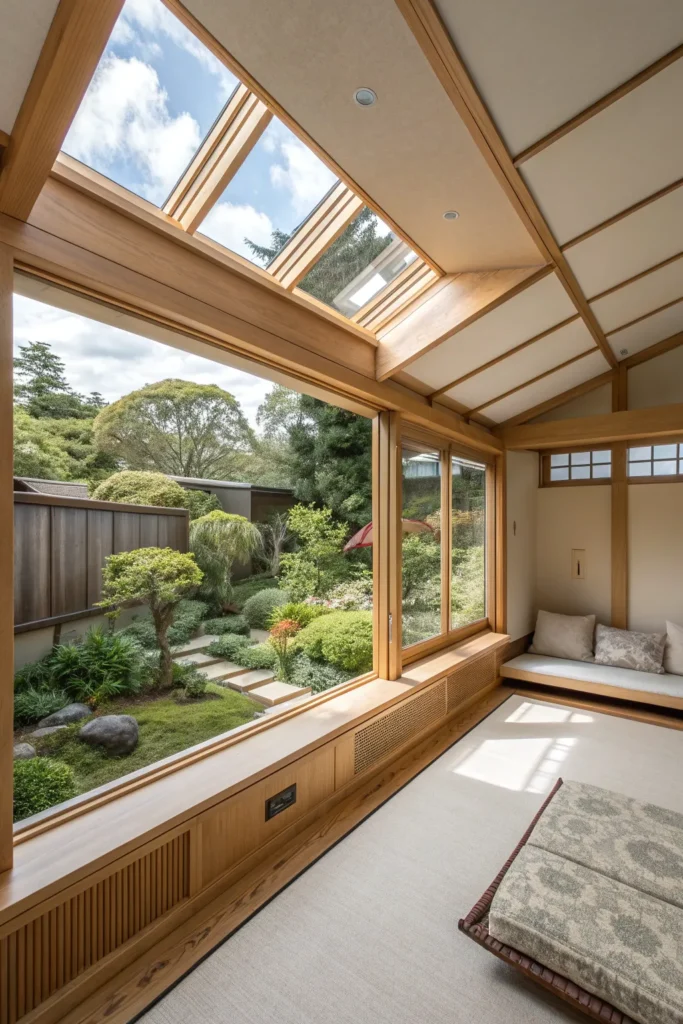
Light and views are essential in small Japanese homes. Place windows strategically to capture garden views, natural light, or open sky. Use clerestory windows, skylights, or horizontal slits to brighten the space while maintaining privacy. Framing views makes the room feel larger and more connected with its surroundings.
Final Thoughts
Japanese tiny house design blends functionality, serenity, and beauty through thoughtful choices, natural materials, and flexible layouts. By embracing concepts like minimalism, wabi-sabi, craftsmanship, and nature-centric living, you can transform even the smallest home into a tranquil retreat. These fifteen design tips help you create a balanced, airy, and elegant tiny house that feels peaceful, inviting, and deeply connected to traditional Japanese aesthetics.