
15 Above Fridge Cabinet Ideas to Maximize Storage
The space above your refrigerator represents one of the kitchen’s most underutilized storage opportunities. That awkward gap between the top of your fridge and your ceiling is prime real estate being wasted in countless homes.
Too high for convenient daily access yet too valuable to ignore, this zone requires thoughtful design to transform from dead space into functional storage that enhances your kitchen’s efficiency and aesthetics.
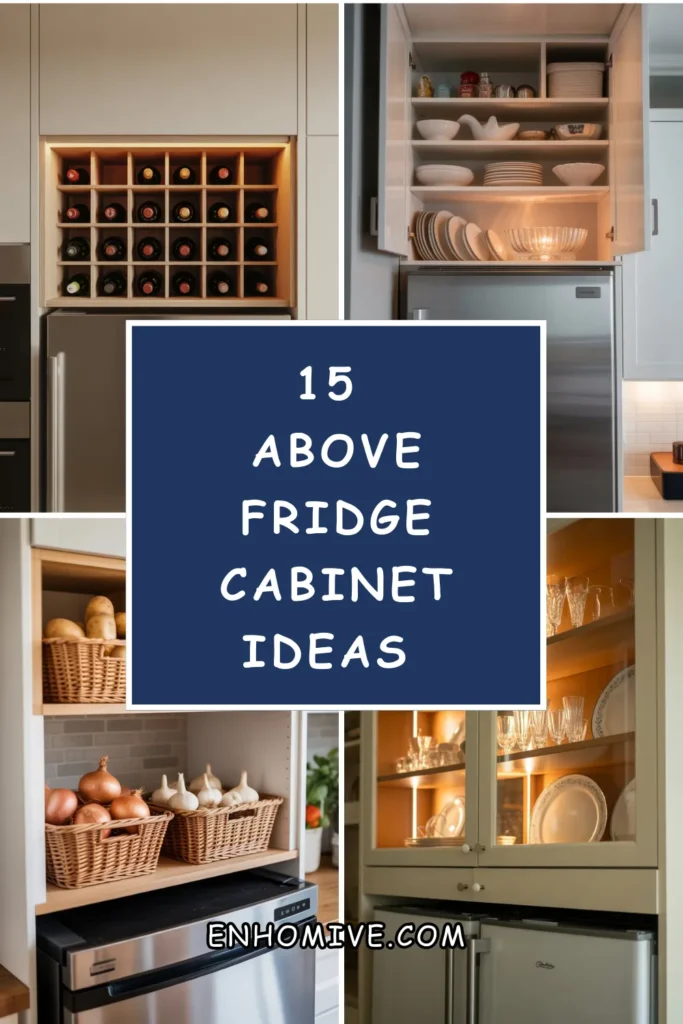
Modern kitchen design increasingly recognizes that every cubic inch matters, especially as homes trend smaller and storage needs continue expanding. The above-fridge cabinet has evolved from afterthought to strategic storage solution, capable of housing everything from seasonal serving pieces to small appliances you use occasionally.
The key is designing storage that’s accessible enough to be useful but dedicated to items you don’t need constantly. These fifteen ideas will help you maximize this often-neglected space while maintaining a cohesive, polished kitchen design.
1. Full-Height Cabinet with Pull-Down Shelving
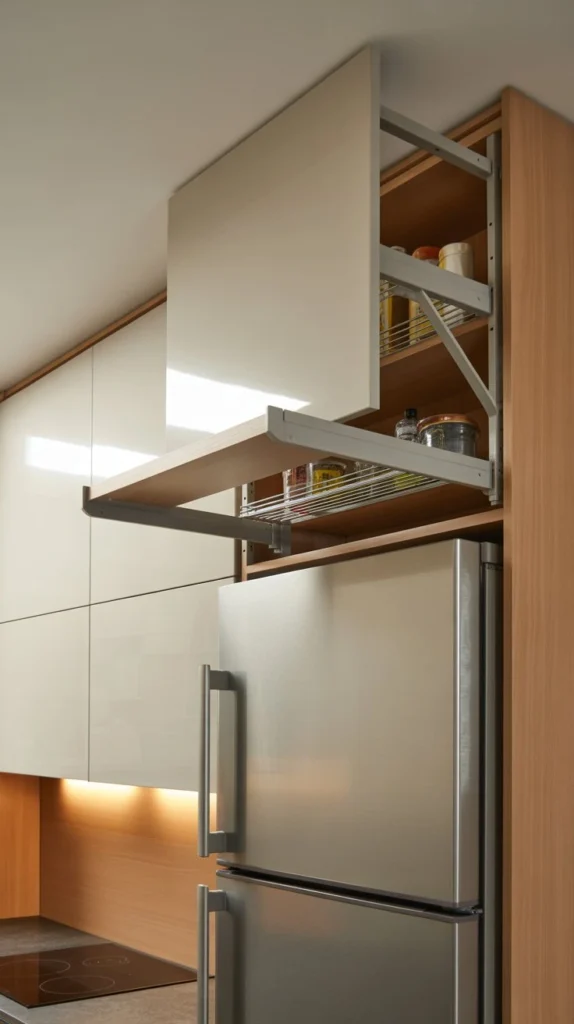
The ultimate solution for above-fridge storage combines generous capacity with genuine accessibility. Full-height cabinets that extend from counter level to ceiling incorporate the fridge space seamlessly while including pull-down shelving mechanisms in the upper section.
These ingenious systems bring high shelves down to eye level with minimal effort, making even the topmost storage completely accessible. While this represents a larger investment than basic cabinets, the functionality justifies the cost for anyone who struggles with step stools or simply wants their entire kitchen storage to be truly usable. This works particularly well in universal design or aging-in-place situations where climbing isn’t ideal.
2. Glass-Front Display Cabinets
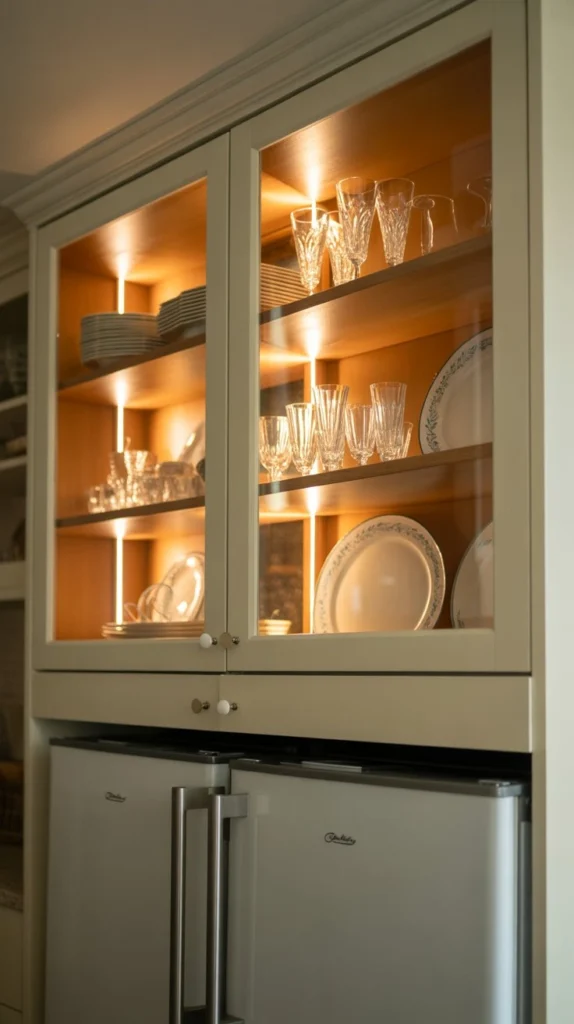
If you’re storing attractive items above your fridge, why hide them? Glass-front cabinets transform this high space into a display opportunity for beautiful serving pieces, vintage collections, or decorative items that add personality to your kitchen. This approach works especially well when the cabinet faces into an open living area, creating visual interest at eye level when viewed from seating areas.
Choose items that don’t require frequent access but deserve to be seen: grandmother’s china, collectible pottery, or an assortment of vintage glassware. The glass front also makes it easier to identify contents without climbing up to investigate.
3. Deep Storage Bins on Sliding Tracks
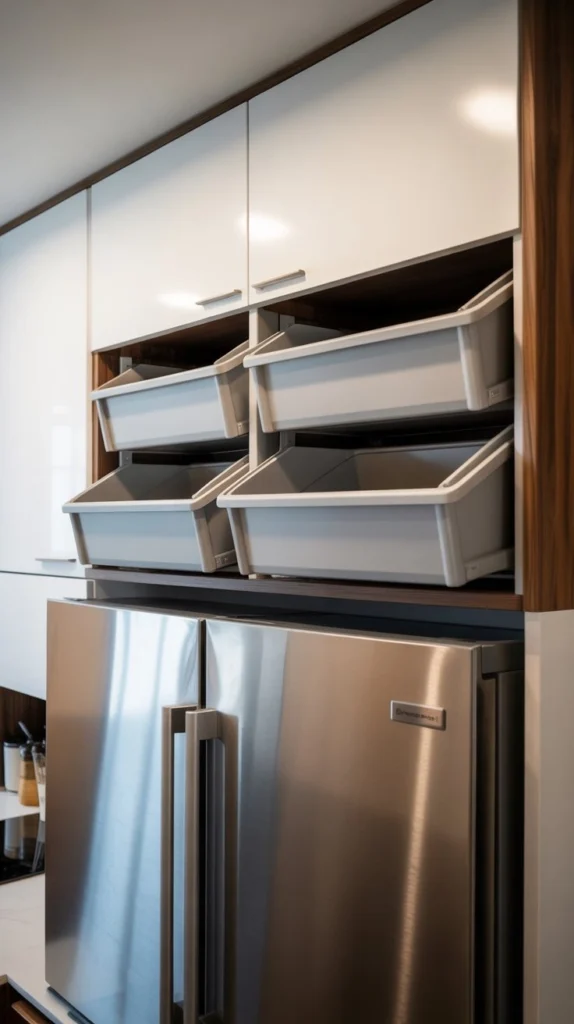
Rather than traditional shelving, consider installing deep bins on sliding tracks within your above-fridge cabinet. These work like oversized drawers, pulling out fully to reveal contents while preventing items from getting lost in the back corners.
This system is ideal for storing bulk purchases, seasonal items, or categories of kitchen gear you use occasionally. Label the front of each bin for easy identification from below. The sliding mechanism makes the deep cabinet space far more functional than fixed shelves where items inevitably migrate to inaccessible corners.
4. Wine Storage Rack Integration
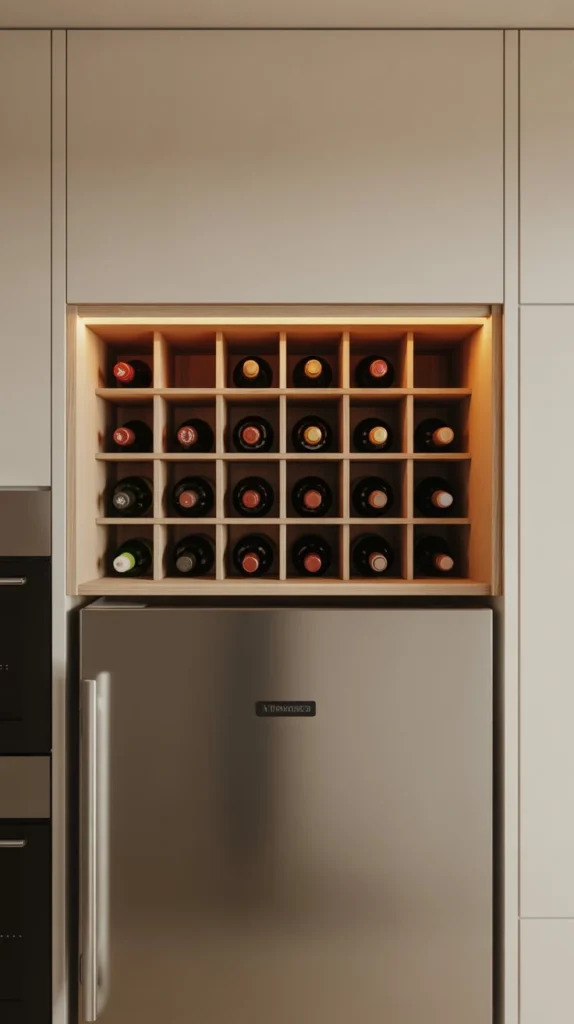
For wine enthusiasts with limited storage, the above-fridge cabinet can become a climate-controlled wine rack. While not ideal for valuable wines requiring precise temperature control, this space works well for everyday bottles, especially if your kitchen stays relatively cool. Install diamond-pattern wine racks or individual bottle holders that maximize capacity while keeping bottles secure.
The height actually provides some advantage, as heat rises and this area stays warmer than lower cabinets, which can be beneficial for certain wines. Add ambient LED lighting to create an attractive display that showcases your collection.
5. Appliance Garage for Occasional-Use Items
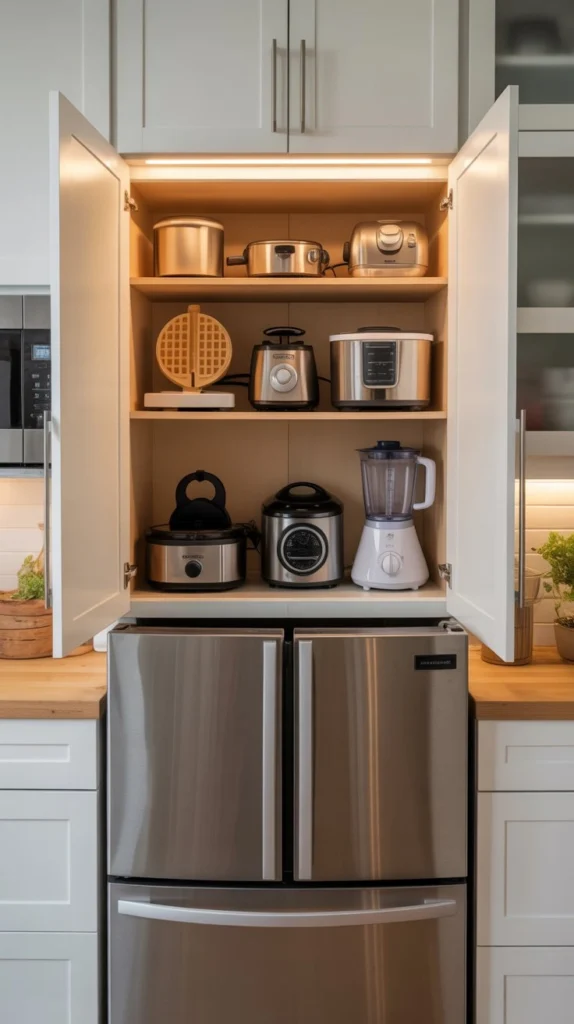
Small appliances clutter countertops but aren’t all used daily. The above-fridge cabinet makes an excellent appliance garage for items like waffle makers, fondue pots, ice cream makers, or specialty blenders you use monthly rather than daily.
Install sturdy shelving capable of supporting appliance weight, and consider adding outlets inside the cabinet if you want to store items like slow cookers or rice cookers that could be used directly from this location. This frees up valuable lower cabinet and counter space for items you access constantly.
6. Matching Cabinet with Decorative Molding
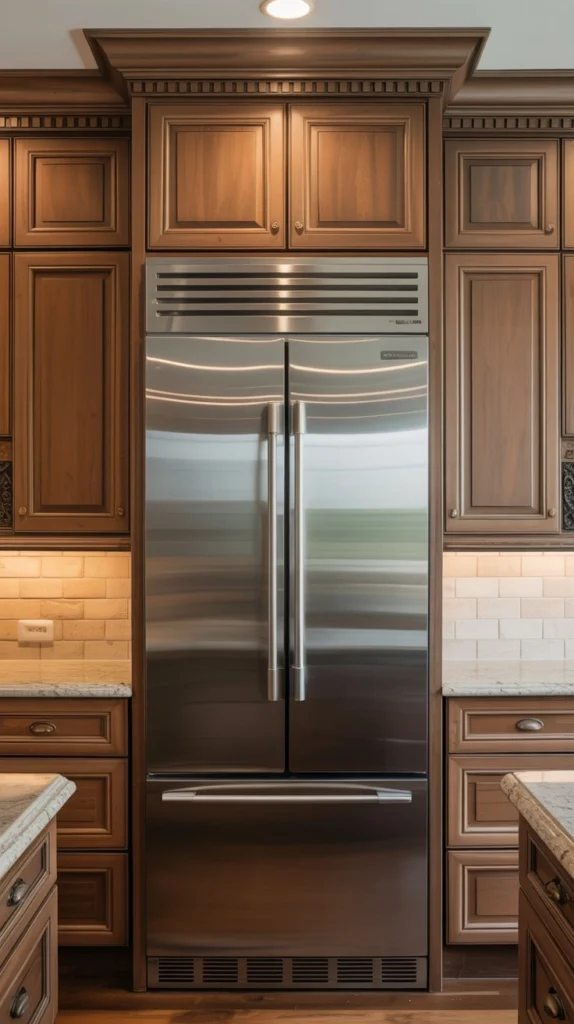
Sometimes the best approach is making the above-fridge cabinet disappear into your overall kitchen design. Install cabinetry that exactly matches your other uppers, complete with crown molding that extends across all cabinets including the fridge section.
This creates a cohesive, built-in look that makes the refrigerator feel integrated rather than like a standalone appliance. The cabinet itself becomes simple storage for infrequently used items, but the real victory is the visual continuity that elevates your entire kitchen’s appearance. This approach works particularly well in traditional or transitional kitchen designs where consistency matters.
7. Open Shelving with Decorative Baskets
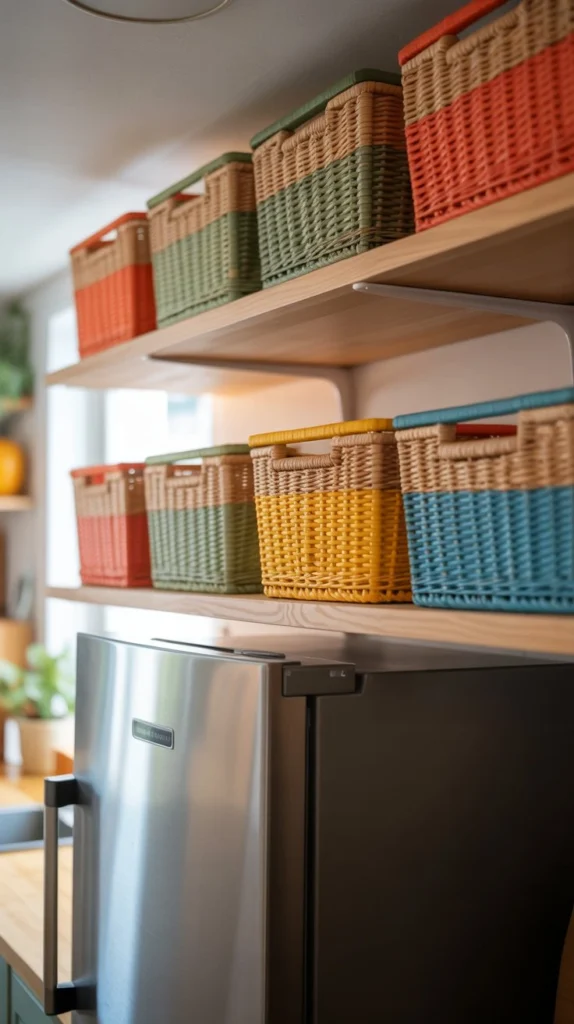
For a more casual, accessible approach, replace solid cabinet doors with open shelving and attractive baskets. This keeps the space from feeling heavy while maintaining storage functionality. Choose baskets in materials that complement your kitchen: woven seagrass for coastal or farmhouse styles, wire baskets for industrial looks, or sleek fabric bins for contemporary spaces.
The open concept makes contents slightly more accessible since you can grab baskets without opening doors, and it provides an opportunity to introduce texture and warmth. Ensure baskets are clearly labeled so you know contents without pulling everything down.
8. Narrow Vertical Storage for Baking Sheets
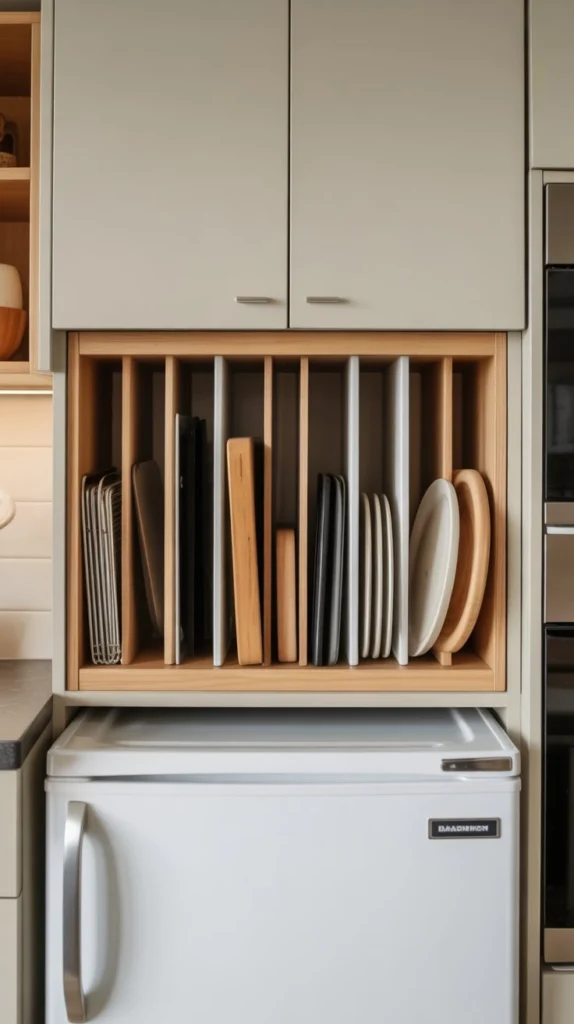
Transform the above-fridge cabinet into specialized vertical storage for flat items like baking sheets, cutting boards, and serving platters. Install vertical dividers that create narrow slots, allowing you to file items upright rather than stacking them. This prevents the frustrating situation where accessing the bottom cutting board requires removing everything on top.
The height of this space is actually ideal for storing platters and larger serving pieces that don’t fit conveniently in standard cabinets. Add felt or cork padding between dividers to protect delicate items.
9. Climate-Controlled Pantry Extension
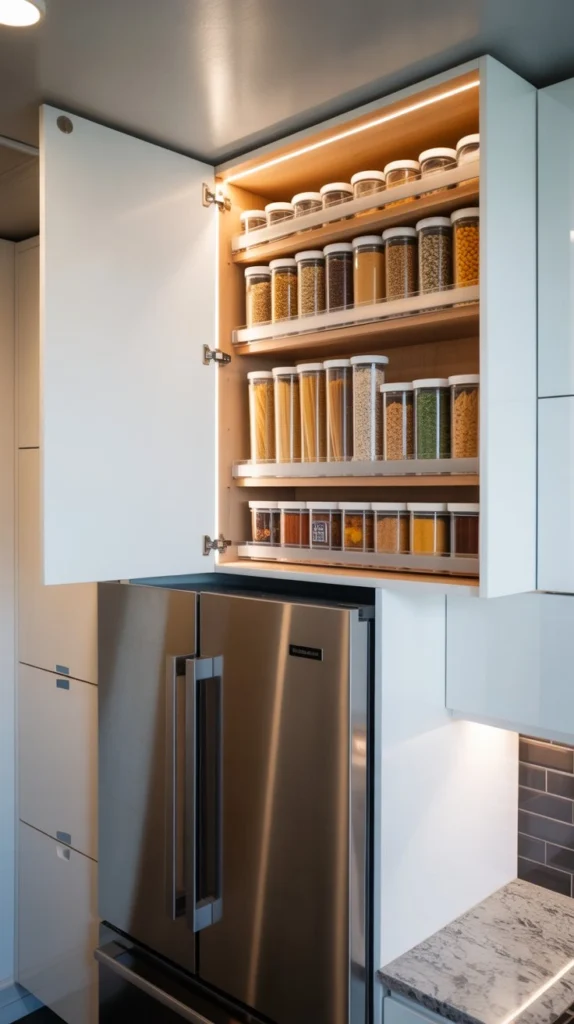
If your above-fridge cabinet backs onto a pantry wall, consider connecting them to create additional pantry storage. This works particularly well for items that benefit from being away from heat sources: specialty flours, backup spices, or bulk dry goods.
Install pull-out shelving or lazy Susan mechanisms to make the depth more manageable. While climbing up occasionally to restock your backup supplies isn’t ideal, it’s perfectly reasonable for overflow storage that supplements your main pantry rather than replacing it.
10. LED-Lit Display for Cookbooks
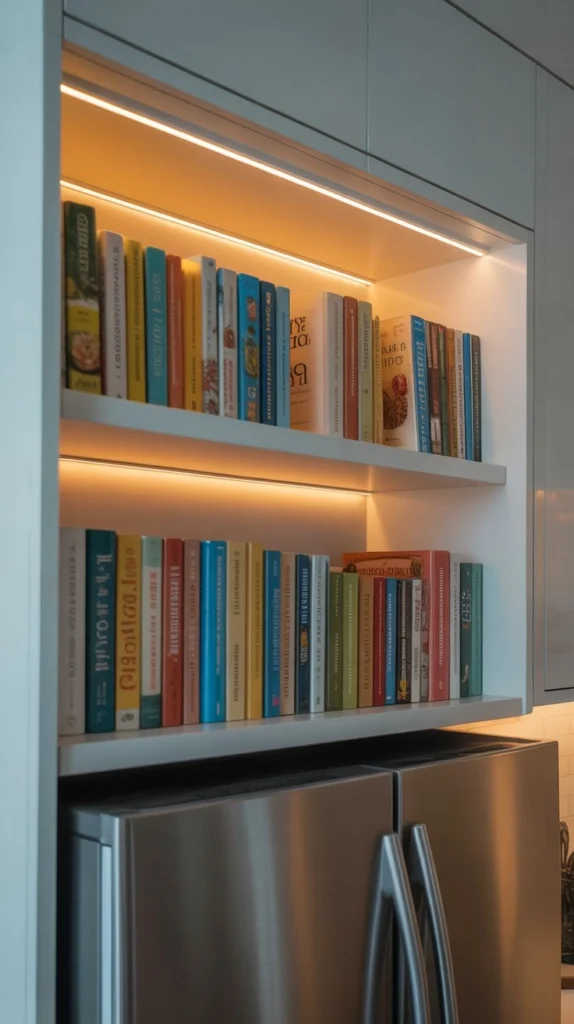
Cookbook collections can consume significant kitchen real estate, but the above-fridge space provides an unexpected solution. Install shallow shelving designed specifically for books, add LED strip lighting to illuminate spines, and create an attractive display that’s also functional.
Keep your most-used cookbooks in more accessible locations, but use this space for the complete collection, specialty books, or vintage finds that are more decorative than practical. The height actually protects books from cooking splashes while the closed or glass-front cabinet prevents dust accumulation.
11. Two-Tier Cabinet System
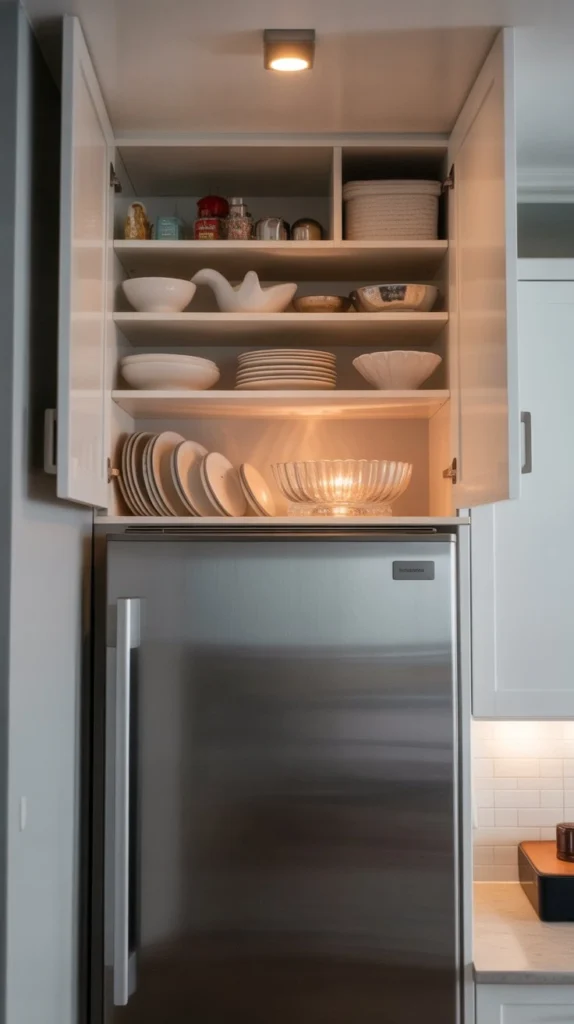
Maximize vertical space by installing a two-tier cabinet system with a horizontal divider creating distinct upper and lower storage zones. The lower section, easier to access, stores items you might need monthly: special occasion platters, seasonal cookie cutters, extra mixing bowls. The upper tier holds true long-term storage: entertaining pieces for specific holidays, duplicate items kept as backups, or sentimental kitchen items you can’t part with but rarely use. This stratification makes the tall cabinet more organized and functional.
12. Slide-Out Step Stool Storage
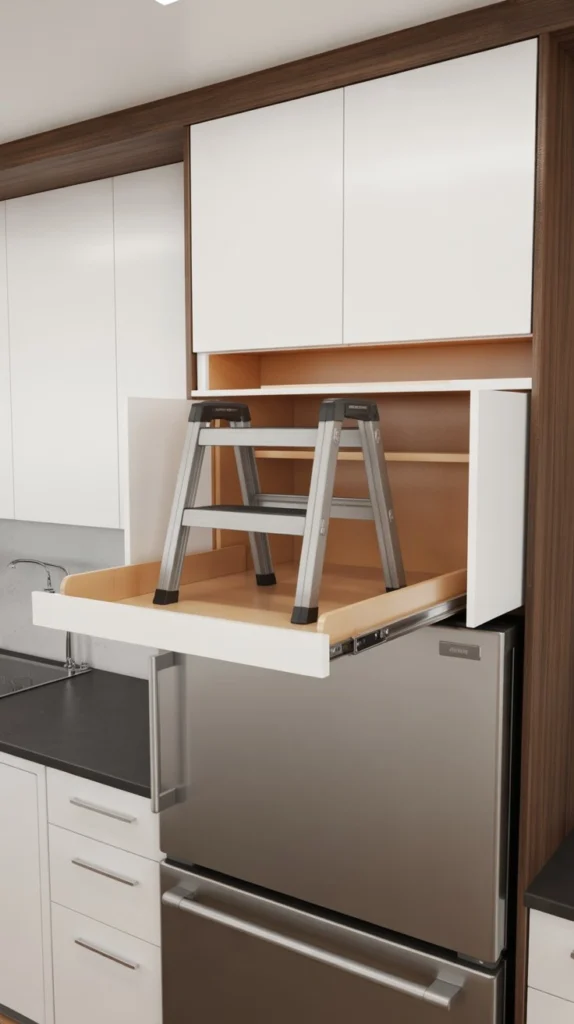
Address the accessibility challenge by incorporating a slim slide-out step stool into the adjacent cabinetry. This stool tucks into a narrow cabinet beside or below the fridge, pulling out whenever you need to access upper storage. While this doesn’t change the cabinet itself, it makes high storage significantly more practical for everyday use.
Choose a sturdy step stool with a small footprint that slides smoothly on tracks. This solution works particularly well in kitchens where multiple cabinets extend to the ceiling, as the step stool serves the entire upper storage system.
13. Ventilated Storage for Root Vegetables
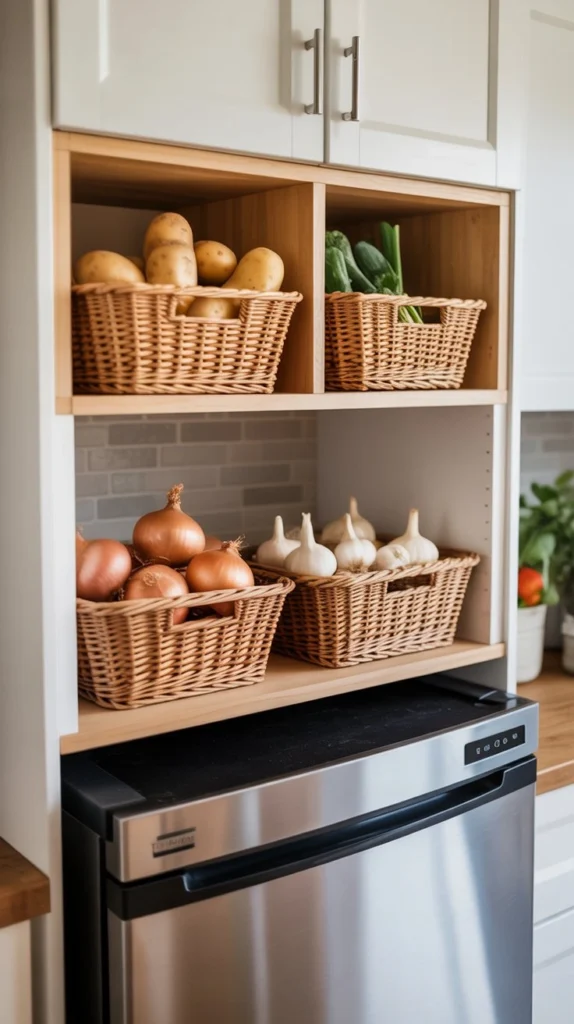
In kitchens where refrigerator placement happens to create an exterior wall situation, consider ventilated storage for items that prefer cool, dark, dry conditions. Potatoes, onions, garlic, and winter squash often clutter counters or consume refrigerator space unnecessarily.
A ventilated cabinet above the fridge with air holes and slatted shelving creates ideal storage conditions for these items. This works best in temperate climates where the space doesn’t get excessively hot. Add labels to bins or baskets to keep different vegetables separated.
14. Cookbook and Recipe Organization Center
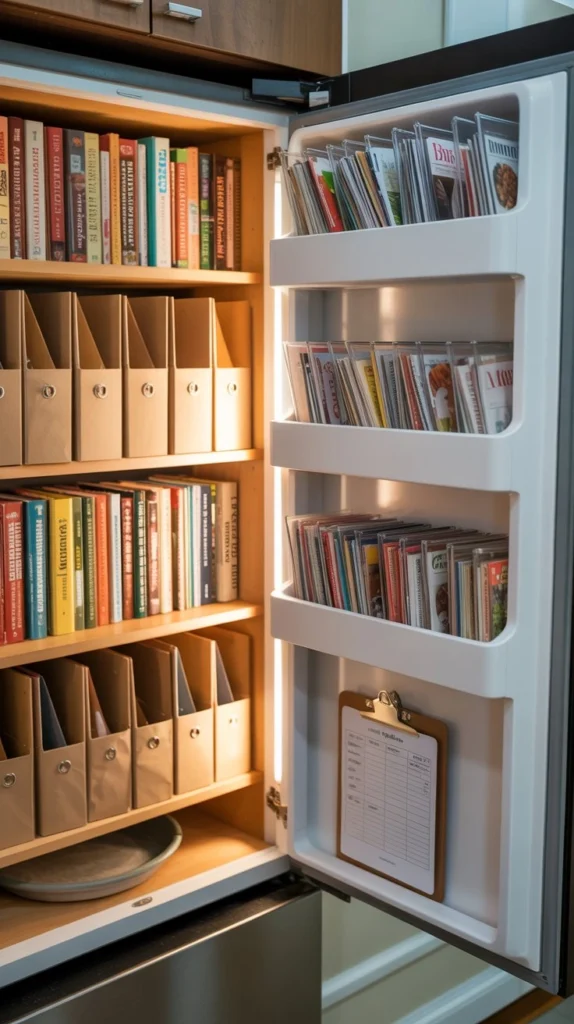
Transform the above-fridge space into a comprehensive recipe organization center. Install shallow drawers or file folders for loose recipes, magazine clippings, and printouts. Add a section for cookbooks that stand upright, and include a small bulletin board or magnetic panel on the inside of the cabinet door where you can pin current meal plans or recipes you’re trying.
This consolidates all recipe-related materials in one dedicated location, freeing up drawer and counter space elsewhere. While not ideal for grabbing a recipe while actively cooking, it’s perfect for planning and organizing.
15. Seasonal Decoration Storage
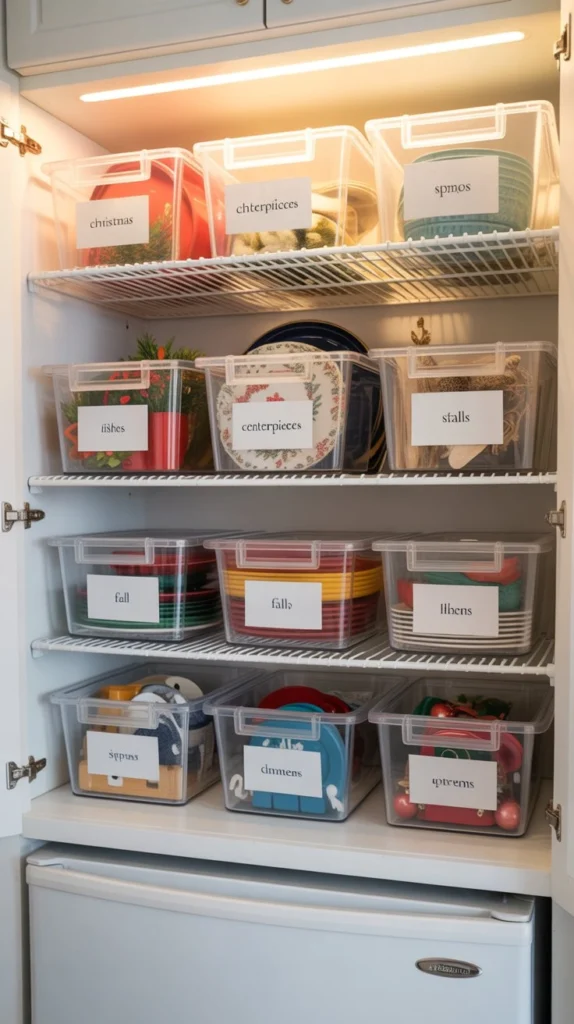
The above-fridge cabinet is ideal for storing seasonal kitchen decorations: holiday serving pieces, seasonal dish towels, festive cookie jars, and themed decorations that only emerge a few times yearly. Install adjustable shelving to accommodate items of varying heights, and use clear storage containers labeled by holiday or season.
This removes seasonal items from your everyday storage while keeping them accessible enough to rotate easily. The cabinet’s location in the kitchen means you’ll remember what’s stored there when holidays approach, unlike basement or attic storage that’s easily forgotten.
The above-fridge cabinet represents an interesting paradox in kitchen design. It’s simultaneously too high for convenient daily use yet too accessible to waste entirely. The solutions that work best recognize this inherent tension, dedicating the space to items that benefit from storage but don’t require constant access.
This might be overflow storage for frequently used categories, dedicated storage for infrequent items, or specialized storage for things with particular requirements.
What separates successful above-fridge storage from wasted space is honest assessment of your actual habits and needs. If you genuinely won’t climb up to access something, don’t store items there that you’ll need regularly.
This leads to step stools living permanently in your kitchen or worse, items being abandoned because access is too annoying. Instead, use this space for true occasional-use items where climbing up a few times yearly is perfectly reasonable.
Consider too the weight limitations of above-fridge cabinets. This location typically can’t support the same weight as lower cabinets due to leverage and mounting constraints. Avoid storing your heaviest items here, both for safety and for practical reasons. Lifting heavy objects overhead is awkward and potentially dangerous. Reserve this space for lighter items even if they’re bulky.
The aesthetic integration of above-fridge storage also deserves attention. A cabinet that clearly doesn’t match your other cabinetry or appears tacked on as an afterthought detracts from your kitchen’s overall design.
Whether you choose matching cabinets that create seamless continuity, open shelving that adds intentional visual interest, or glass-front displays that showcase beautiful items, the approach should feel deliberate and cohesive with your broader kitchen style.
Installation quality matters significantly with above-fridge cabinets. These high, often deep cabinets require secure mounting to wall studs with appropriate hardware. Poor installation can be dangerous, especially if you’re storing heavier items or using pull-down mechanisms. This is one area where professional installation often justifies its cost, ensuring both safety and proper function.
Finally, remember that above-fridge storage works best as part of a comprehensive kitchen storage strategy rather than as an isolated solution. Consider how this space relates to your pantry, lower cabinets, and drawer organization.
Items stored above the fridge should be those that genuinely belong there based on frequency of use and storage requirements, not just whatever didn’t fit elsewhere. This thoughtful approach to the entire kitchen’s storage ecosystem ensures every item has an optimal location.
These fifteen ideas provide frameworks for transforming your above-fridge void into valuable storage, but your specific solution should reflect your kitchen’s unique characteristics, your storage needs, and your willingness to access high spaces. Whether you implement elaborate pull-down systems or simple matching cabinets, the goal remains maximizing this space’s potential while maintaining your kitchen’s functionality and beauty.