
15 Bamboo Garden Design Ideas
Bamboo captures the imagination like few other plants, combining architectural drama with graceful movement and soothing sound. These remarkable grasses grow with astonishing speed, create natural privacy screens, and bring an exotic elegance to gardens of any style.
Whether you’re drawn to bamboo’s Asian aesthetic heritage, its contemporary sculptural qualities, or simply its practical screening abilities, these fifteen design ideas will help you harness bamboo’s unique characteristics while managing its vigorous growth.
From intimate urban gardens to expansive landscapes, bamboo offers solutions that are both beautiful and functional.
1. Create a Living Privacy Screen
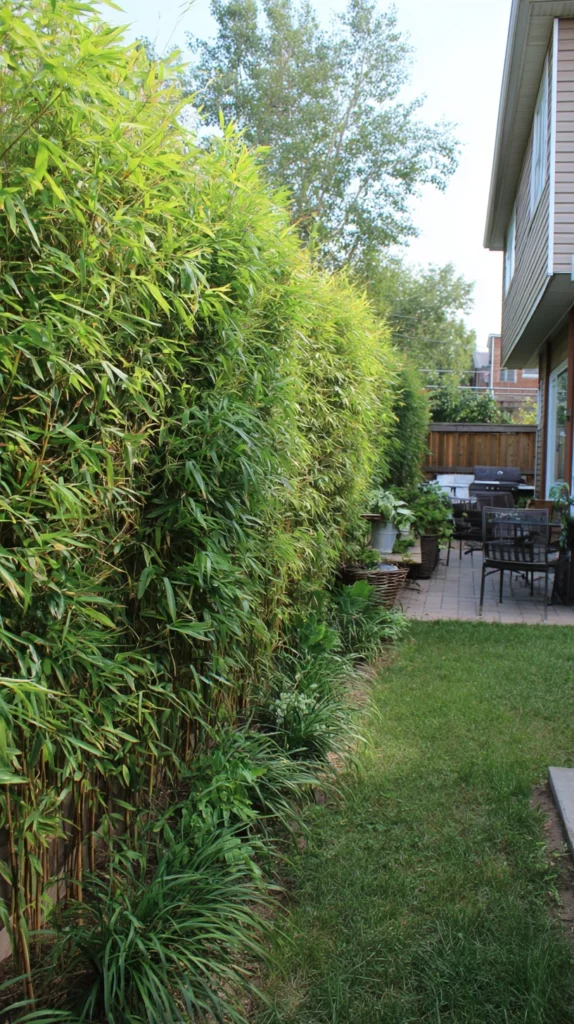
Bamboo excels at creating dense, living walls that block unwanted views while maintaining an organic, breathing quality that solid fences cannot match. Plant running bamboo varieties like Phyllostachys aureosulcata in a contained trench with proper rhizome barriers, or choose clumping varieties like Bambusa multiplex for gardens where containment proves challenging.
Space plants closer together for faster screening, typically three to five feet apart, allowing them to fill in within two to three growing seasons. The vertical culms create year-round privacy while their rustling leaves add movement and sound. This approach works beautifully along property lines, around patios, or anywhere you need to define space without the harsh visual impact of traditional fencing. The screening effect improves with age as the grove matures and thickens.
2. Design a Bamboo Pathway Corridor
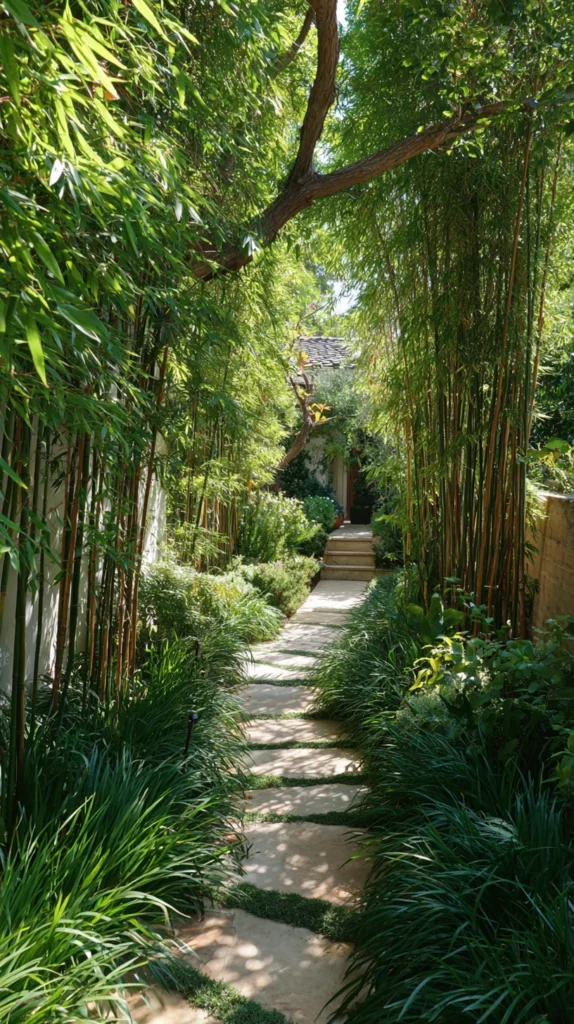
Transform garden pathways into immersive experiences by flanking them with bamboo planted on both sides, creating a living tunnel that invites exploration. Choose medium-height varieties that arch slightly overhead without completely blocking sky views, such as Fargesia species that reach ten to fifteen feet.
The dappled light filtering through bamboo leaves creates shifting shadow patterns on the path surface, changing throughout the day and adding temporal dimension to the spatial experience. This design works particularly well for longer pathways connecting different garden areas, as the corridor creates anticipation and frames the destination. Install path lighting at ground level to illuminate the bamboo culms from below at night, casting dramatic shadows upward and extending the pathway’s usefulness into evening hours.
3. Establish a Bamboo Grove Retreat
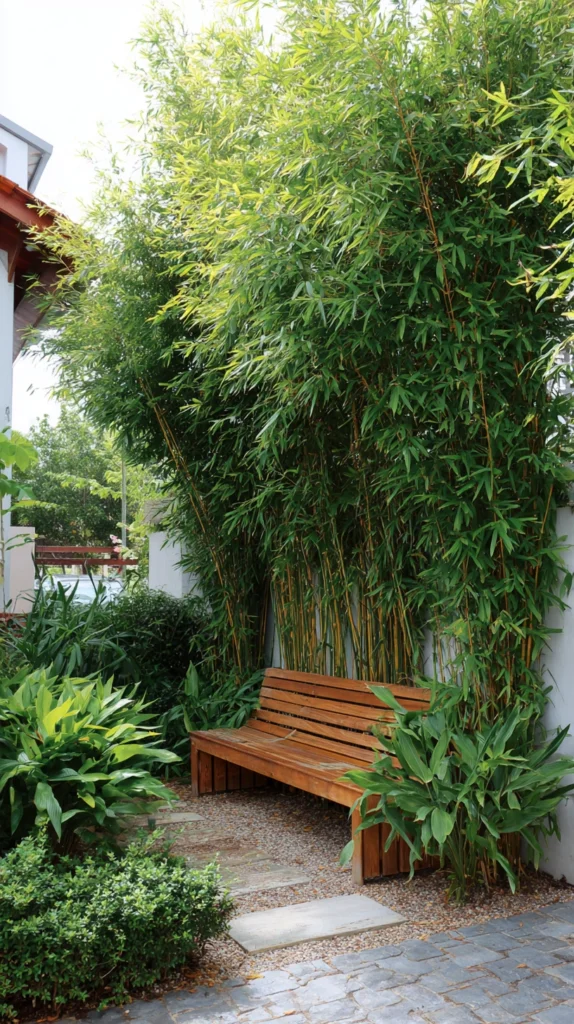
Dedicate a section of your garden to a dense bamboo grove that becomes a destination in itself, a place for contemplation and escape. Plant bamboo densely to create an intimate, enclosed feeling, allowing the culms to grow naturally without excessive thinning. Add a simple bench, a few strategically placed stones, or a small clearing at the grove’s center where you can sit surrounded by swaying bamboo.
The microclimate within an established grove differs noticeably from surrounding garden areas, feeling several degrees cooler and distinctly calmer. Underplant with shade-tolerant ground covers like ferns or mondo grass that thrive in the filtered light. This approach transforms bamboo from mere screening plants into experiential landscape, creating rooms within your garden that offer genuine retreat from daily stresses.
4. Create a Container Bamboo Garden
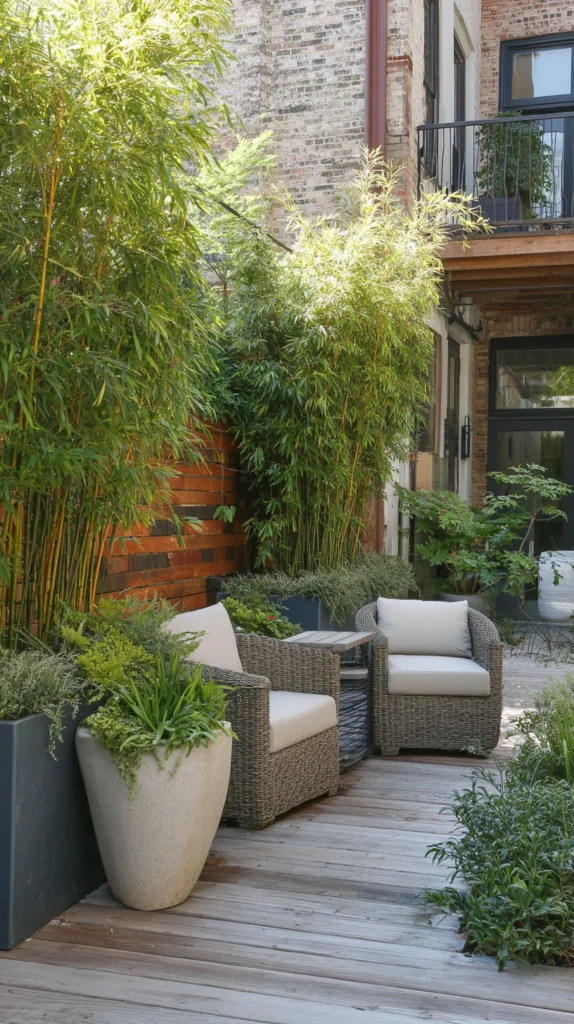
For renters, balcony gardeners, or anyone wanting bamboo’s beauty without committing to in-ground planting, container cultivation offers excellent solutions. Choose clumping varieties that tolerate root restriction better than running types, selecting large containers at least twenty-four inches in diameter and depth.
Arrange multiple containers of varying heights to create layered compositions on patios, decks, or terraces. Container bamboo requires more frequent watering than in-ground plants but offers the advantage of complete portability and control. Mix different bamboo varieties with contrasting culm colors—black bamboo, golden bamboo, and green varieties—for visual interest. This approach works beautifully in urban settings where ground planting space doesn’t exist, and the containers themselves become sculptural elements when chosen thoughtfully.
5. Design a Bamboo Water Feature Surround
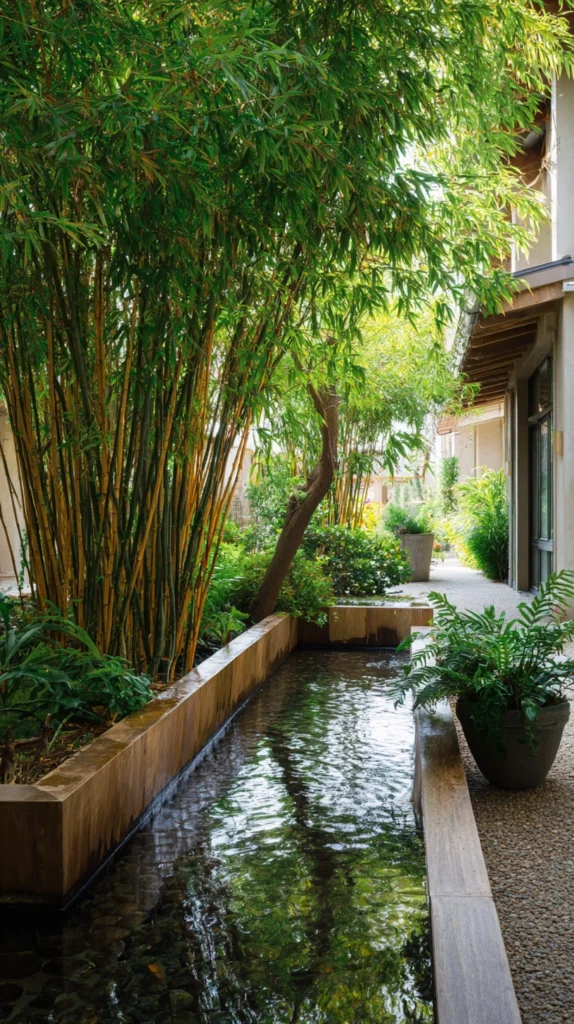
Bamboo and water form natural partnerships, and surrounding pools, ponds, or fountains with bamboo enhances both elements. Plant bamboo around three sides of a water feature, leaving one side open for viewing, creating a sense of discovery as visitors approach. The bamboo’s reflection in still water doubles its visual impact, while the rustling leaves complement water sounds beautifully.
Choose varieties that tolerate moisture, as areas near water features often remain damper than surrounding gardens. The combination evokes natural streamside landscapes while providing practical screening for pool equipment or neighboring properties. Add stepping stones through the bamboo leading to the water’s edge, creating pathways that encourage intimate engagement with both elements.
6. Establish Bamboo as Architectural Accent
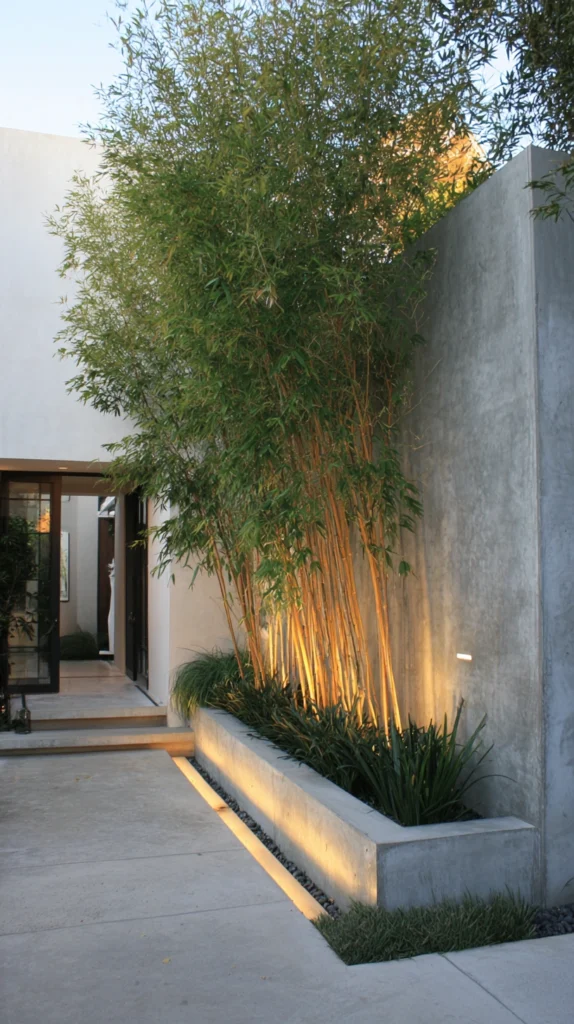
Position specimen bamboo plants as architectural focal points near building entries, courtyards, or key sightlines, treating them as living sculpture. Choose varieties with distinctive characteristics—black bamboo with its striking dark culms, or golden bamboo that glows when backlit.
Plant single specimens or small clusters in ground pockets cut into paving or hardscape, creating dramatic contrast between built environment and organic plant material. Uplighting these specimens at night emphasizes their architectural qualities while casting dramatic shadows on nearby walls. This approach works particularly well with contemporary architecture where bamboo’s clean vertical lines complement modern design vocabulary. The plants soften hard architectural surfaces while reinforcing rather than competing with structural elements.
7. Create a Bamboo Border Edge
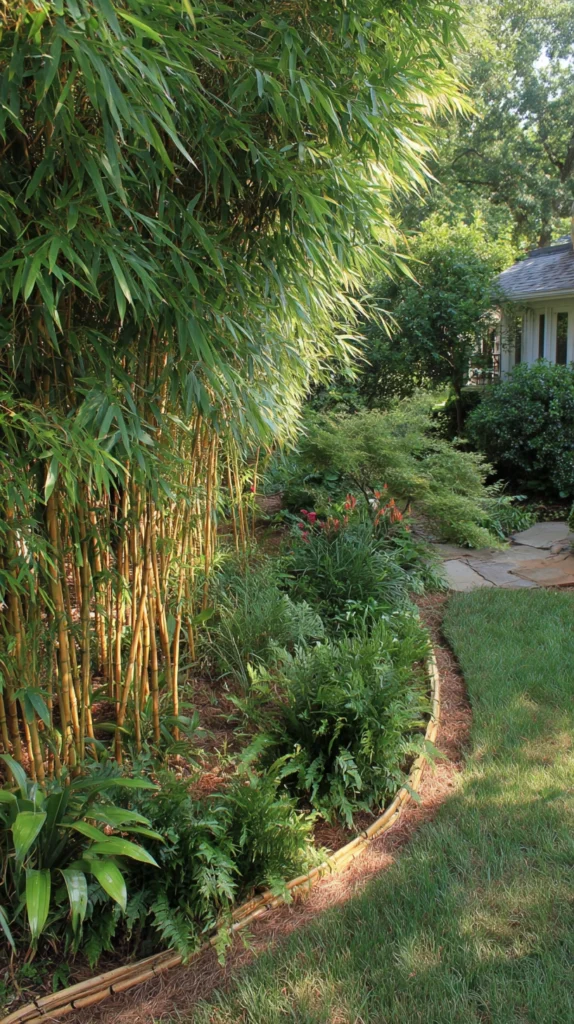
Define garden beds, pathways, or lawn areas with low-growing bamboo varieties that create soft, billowing edges. Dwarf bamboo species like Pleioblastus variegatus or Sasa veitchii stay under three feet tall, forming dense groundcovers that prevent erosion while creating visual boundaries. These shorter varieties work beautifully along curved garden paths where their flowing form emphasizes the path’s meandering nature.
The bamboo edge requires less maintenance than traditional border plants while remaining evergreen throughout the year. In sloped areas, bamboo borders help stabilize soil while creating terraced visual effects. Combine different dwarf varieties to create subtle color variations within the border, mixing green and variegated forms for textural interest.
8. Design a Bamboo Roof Garden
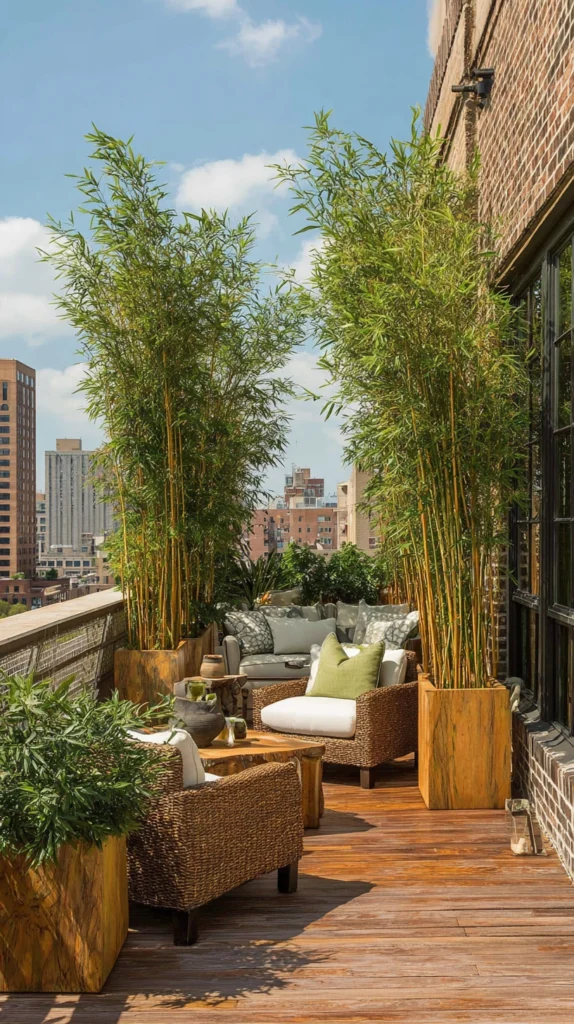
Transform rooftop spaces into exotic retreats using container bamboo that tolerates exposed conditions while creating privacy from overlooking buildings. Choose hardy varieties that withstand wind exposure, planting them in reinforced containers with excellent drainage and weight considerations for roof load limits.
Arrange containers to create outdoor rooms on the rooftop, defining dining areas, lounging spaces, or garden pathways. The bamboo provides crucial wind screening that makes rooftop spaces more comfortable while its vertical growth doesn’t consume precious floor area.
Add companion plantings of ornamental grasses and drought-tolerant perennials that complement bamboo’s texture while sharing similar cultural requirements. This approach transforms utilitarian rooftop space into genuine garden experiences that rival ground-level landscapes.
9. Establish a Bamboo Meditation Garden
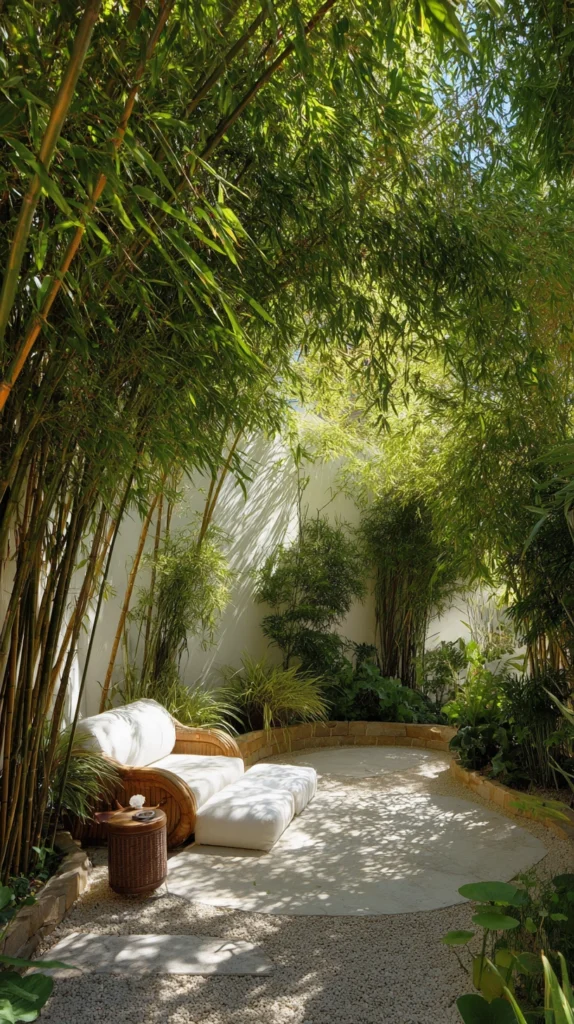
Create contemplative spaces centered around bamboo’s calming presence, designing areas specifically for meditation, yoga, or quiet reflection. Plant bamboo in a circular or semicircular arrangement, creating an enclosed space with a clear floor area for practice. The bamboo culms provide vertical definition without creating walls, maintaining connection with sky while defining sacred space.
Add a simple gravel or stone floor, perhaps a single large rock for seating, and resist the urge to over-furnish the space. The bamboo’s gentle movement and sound become part of the meditative experience, their constant subtle motion anchoring attention in the present moment. Morning light through bamboo leaves creates particularly beautiful effects, making these spaces ideal for dawn practices.
10. Create Bamboo Hedgerows
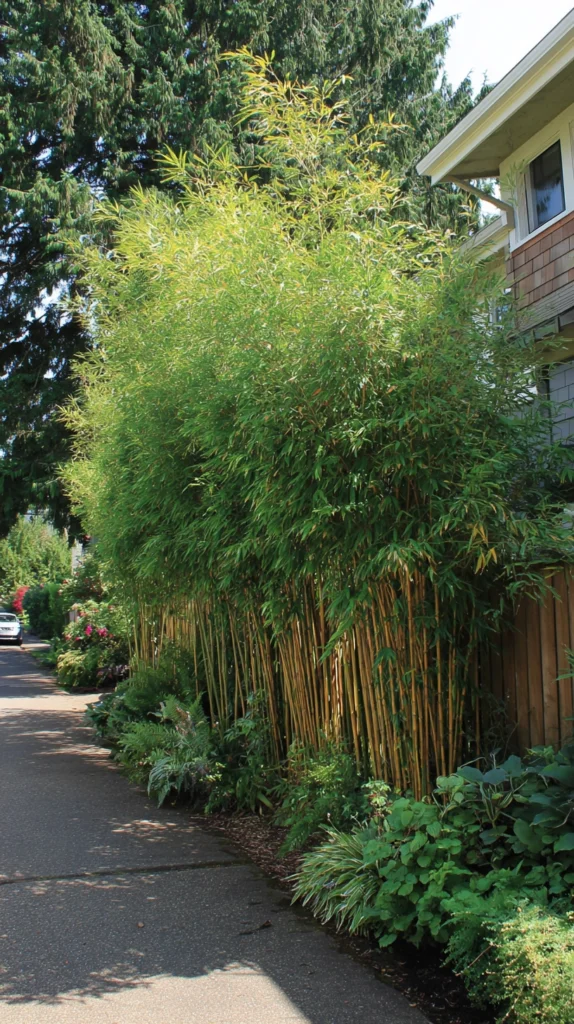
Replace traditional hedging plants with bamboo to create unique property boundaries that grow quickly and maintain year-round presence. Plant bamboo in straight or gently curving lines with appropriate rhizome barriers, spacing plants to achieve desired density. Unlike traditional hedges requiring frequent shearing, bamboo hedgerows need only annual thinning of older culms and occasional height management.
The result is a more natural, graceful boundary than rigidly clipped hedges while providing equivalent privacy and screening. This approach reduces long-term maintenance while creating dynamic boundaries that move with breezes. Choose varieties appropriate to your desired height—shorter varieties for waist-high boundaries, taller species for complete screening—and select clumping types if running bamboo’s containment seems daunting.
11. Design a Bamboo Courtyard Garden
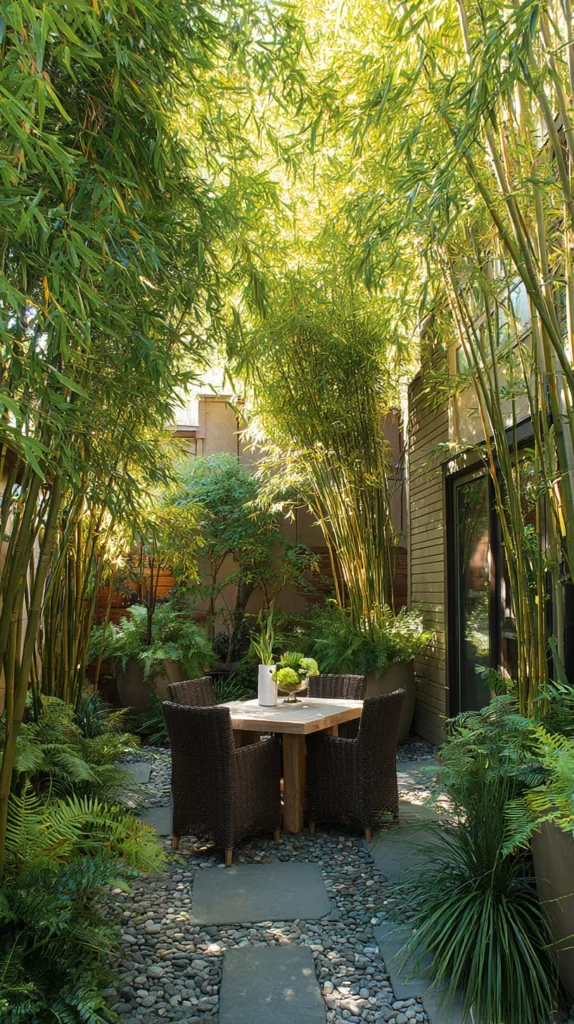
Transform enclosed courtyards into exotic sanctuaries by surrounding the space with bamboo that creates enclosed, intimate atmospheres. Plant bamboo around the courtyard perimeter, allowing it to lean slightly inward to create a canopy effect overhead. The enclosed nature of courtyards contains bamboo naturally while maximizing its screening benefits.
Add complementary elements like stone pathways, water features, and carefully selected companion plants that thrive in bamboo’s filtered shade. Courtyard bamboo gardens excel in urban settings where they block city noise and screen buildings while creating surprisingly serene spaces. The overhead bamboo canopy moderates temperatures, making courtyards comfortable even during hot weather, while their evergreen nature ensures year-round beauty.
12. Establish Bamboo Slope Stabilization
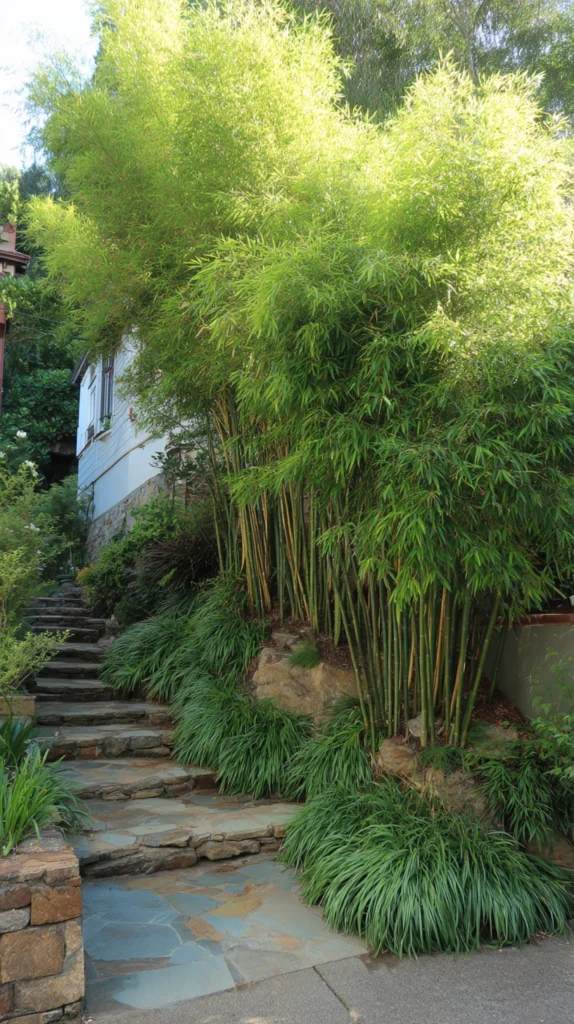
Harness bamboo’s vigorous root systems to stabilize slopes while creating beautiful hillside landscapes. Plant running bamboo varieties on erosion-prone slopes where their rhizomes quickly colonize the area, binding soil and preventing washout. The dense root network prevents erosion more effectively than many traditional ground covers while establishing much faster. This approach works particularly well on steep banks where maintenance access is difficult, as bamboo requires minimal care once established.
The vertical culms rising from sloped ground create dramatic visual effects, especially when viewed from below, and the bamboo’s evergreen nature prevents the bare-soil periods that invite erosion. Combine with strategic boulder placement for immediate erosion control while the bamboo establishes.
13. Create Bamboo Garden Rooms
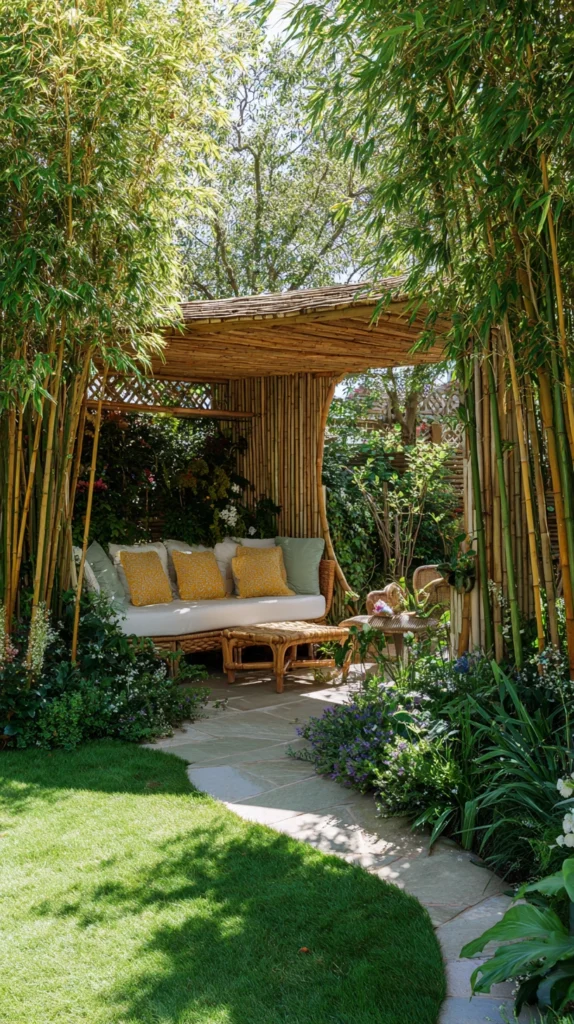
Divide larger gardens into distinct rooms using bamboo as living walls that define spaces without completely blocking visual or physical connection. Plant bamboo in strategically placed rows or curves that create separate areas for dining, lounging, playing, or gardening. Leave deliberate openings between bamboo sections that serve as doorways between rooms, creating pathways that invite exploration. This approach brings structure to large properties while maintaining an organic feeling that masonry walls cannot achieve.
Each room can have a distinct character—a sunny dining terrace, a shaded reading nook, a children’s play area—while bamboo provides the architectural framework tying everything together. The rooms evolve as bamboo matures, with the garden growing more defined and enclosed over time.
14. Design a Bamboo Xeriscape Element
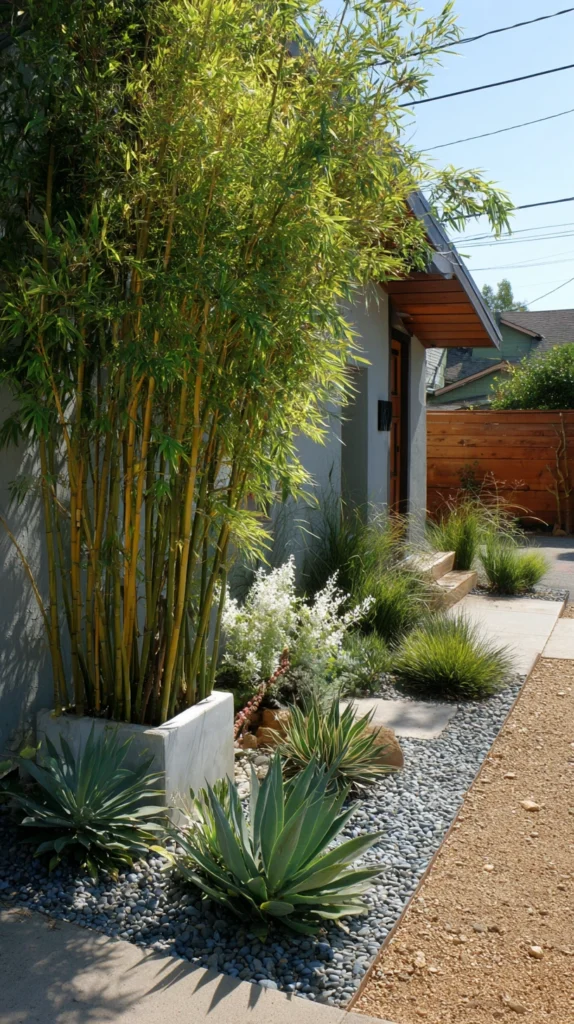
While bamboo is often associated with moisture, many varieties tolerate drought once established, making them viable for water-wise landscapes. Plant drought-tolerant species like Bambusa oldhamii in xeriscape designs where they provide vertical interest among lower succulents and drought-adapted plants.
The contrast between bamboo’s lush appearance and surrounding drought-tolerant plants creates compelling tension. Bamboo’s extensive root systems allow it to access deeper moisture during dry periods, while its evergreen nature maintains garden interest when surrounding plants go dormant.
This unexpected combination challenges conventional plant palette assumptions while creating landscapes that remain beautiful with minimal irrigation. Mulch heavily around bamboo bases to conserve moisture and moderate soil temperatures.
15. Establish a Bamboo Wildlife Habitat
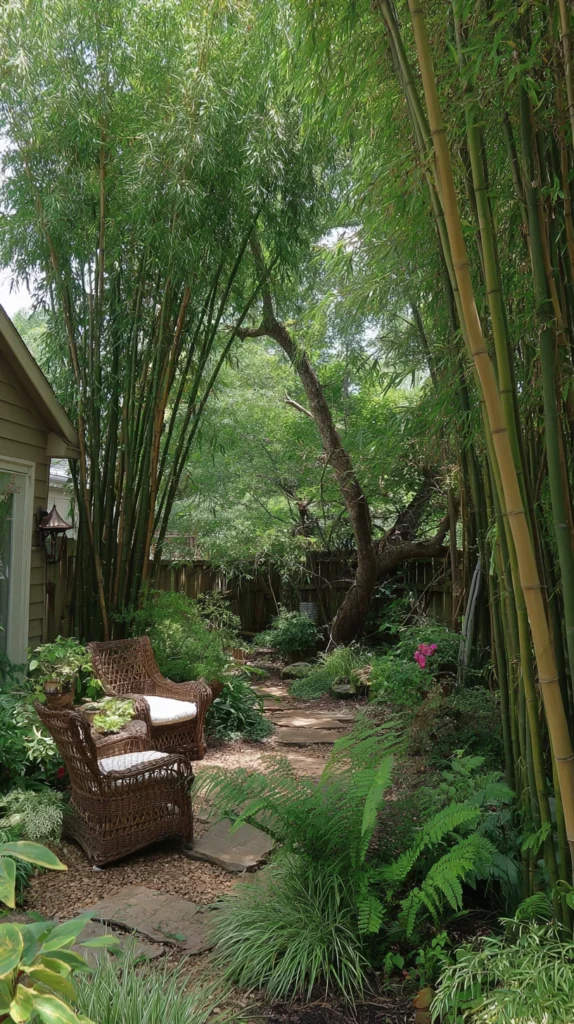
Create sanctuaries for birds and beneficial insects using bamboo groves that provide nesting sites, shelter, and foraging opportunities. Dense bamboo plantings offer protected spaces where birds nest away from predators, while hollow culms provide homes for beneficial insects.
The bamboo canopy creates microclimates that attract diverse wildlife, from birds to butterflies to small mammals seeking cover. Underplant groves with native woodland species that provide additional food sources and habitat layers. Add water features within or near bamboo groves to complete habitat needs.
This approach transforms purely ornamental bamboo plantings into functioning ecosystems that support biodiversity. The wildlife activity adds another dimension to the garden experience, with birdsong and insect activity creating living soundscapes throughout the seasons. Resist the urge to over-tidy bamboo groves, as fallen leaves and natural debris provide essential habitat components.