
15 Bedroom Back Wall Design Ideas for a Bold Focal Point
The wall behind your bed serves as the natural focal point of any bedroom, drawing the eye immediately upon entering the space. This prominent position makes it the perfect canvas for creating drama, adding personality, and establishing the overall aesthetic of your room.
While many people default to simply hanging a piece of artwork or painting the wall the same color as the rest of the room, the back wall offers so much more potential for creative expression and visual impact. Whether you prefer subtle sophistication or dramatic statements, the right back wall design can transform your bedroom from ordinary to extraordinary.
These 15 design ideas range from simple paint techniques to elaborate installations, offering options for every budget, skill level, and design preference. Each approach creates a distinctive focal point that anchors the room and provides a polished, intentional look that elevates the entire space.
1. Dramatic Wood Plank Wall
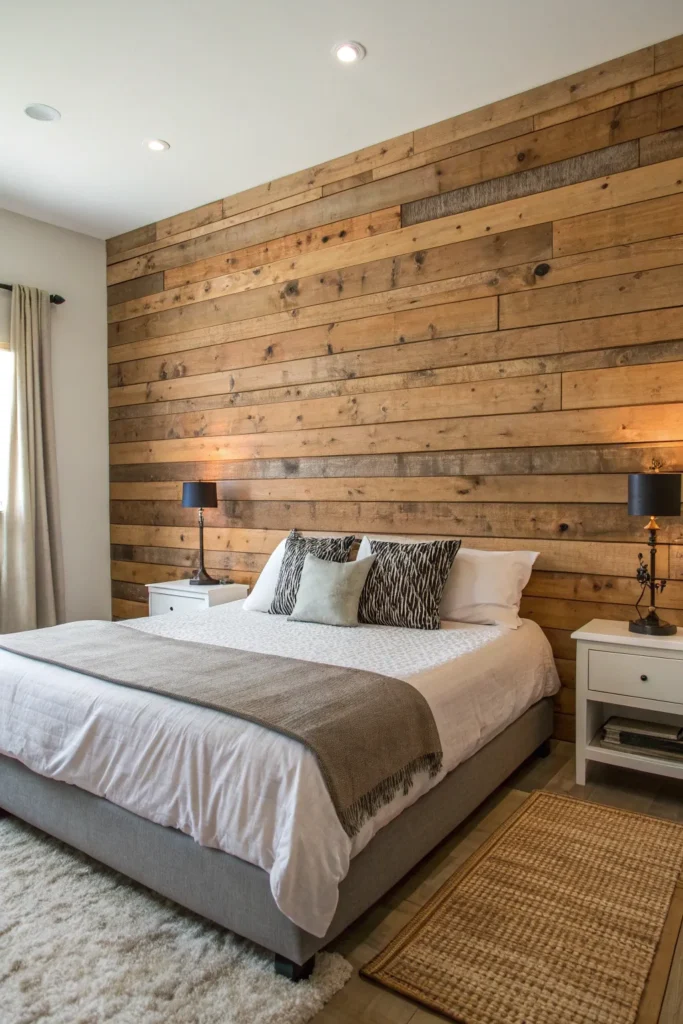
Wood planking creates instant warmth, texture, and architectural interest that’s difficult to achieve with any other material. Installing horizontal wood planks in varying widths adds dimension and visual movement, while vertical planks can make ceilings appear higher.
Choose reclaimed barn wood for rustic character with natural weathering and color variation, or opt for smooth stained planks in walnut or oak for a more refined contemporary look. The installation process is straightforward enough for determined DIYers, requiring only basic carpentry skills, a level, and wood adhesive or a nail gun.
For those wanting the look without the commitment or expense, high-quality wood-look wallpaper or peel-and-stick planks offer convincing alternatives. The beauty of wood planking lies in its versatility—it works equally well in modern, farmhouse, Scandinavian, or traditional interiors.
Paint the planks in soft white for a beachy cottage feel, leave them natural for organic warmth, or stain them dark for moody sophistication. This treatment adds significant perceived value to a bedroom, making it feel custom and considered rather than basic.
2. Upholstered Fabric Wall Panels
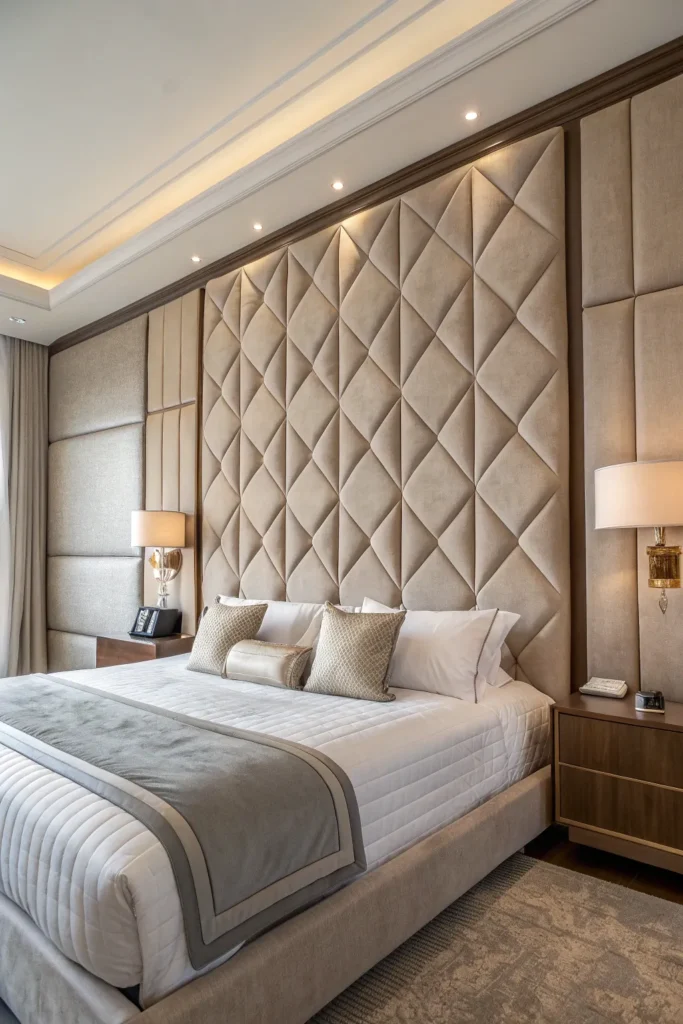
Fabric-covered walls introduce softness, sound absorption, and luxurious texture that appeals to multiple senses simultaneously. Floor-to-ceiling upholstered panels in linen, velvet, or suede create a cocooning effect that makes bedrooms feel like high-end hotel suites.
This approach works particularly well in master bedrooms where creating a serene, luxurious retreat is the primary goal. The fabric can be installed as one large panel spanning the entire wall or divided into geometric sections with decorative trim or nailhead details separating each panel. Neutral linens in cream, beige, or gray provide timeless elegance, while rich velvet in jewel tones like emerald, sapphire, or deep plum makes bold statements. Beyond aesthetics, upholstered walls provide practical benefits including improved acoustics, which is especially valuable in urban environments or homes with thin walls.
The padded surface also adds subtle insulation, helping maintain comfortable room temperatures. While professional installation ensures the best results, ambitious DIYers can create similar effects using batting, fabric, and a staple gun on plywood panels mounted to the wall.
3. Gallery Wall Arrangement
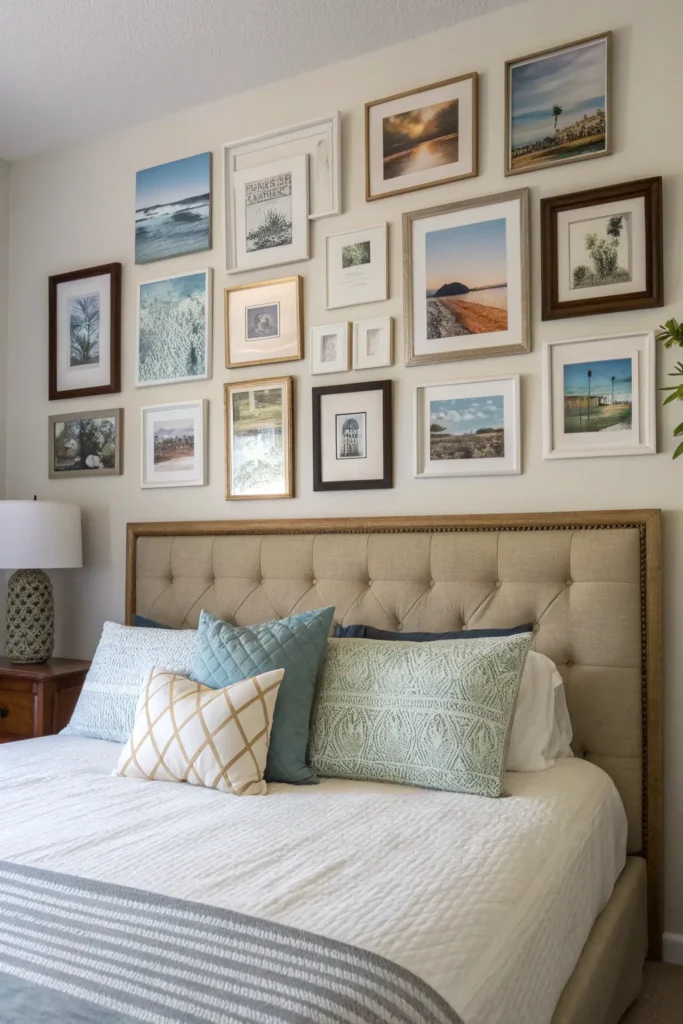
A thoughtfully curated gallery wall transforms personal photographs, artwork, and meaningful objects into a cohesive focal point that tells your story. The key to successful gallery walls lies in planning the arrangement before hammering a single nail—lay everything out on the floor first, photograph it, and use that as your installation guide.
Mix frame sizes, orientations, and even frame styles for an collected-over-time aesthetic, or use identical frames for a more structured, contemporary approach. Include a variety of content types such as family photos, abstract art, botanical prints, mirrors, small shelves with objects, and even framed textiles or wallpaper samples for dimensional interest.
Maintain visual cohesion through a unifying element like a consistent color palette within the artwork, matching frame finishes, or similar matting choices. Gallery walls work in any bedroom style from minimalist to maximalist, adapting to available wall space whether you have a massive wall begging for coverage or a smaller area requiring careful curation.
The arrangement can evolve over time as you acquire new pieces, making this one of the most flexible back wall treatments. Start from the center and work outward, or begin with the largest piece and build around it, maintaining relatively consistent spacing between frames for a polished appearance.
4. Moody Dark Paint
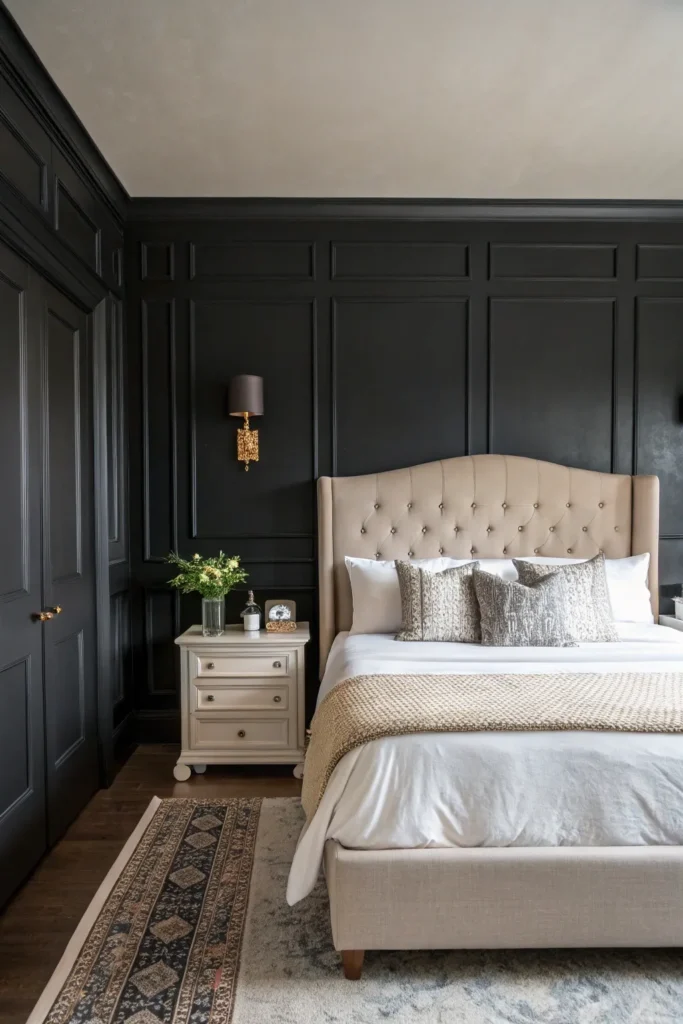
Deep, saturated wall colors create intimate, enveloping atmospheres that transform bedrooms into dramatic sanctuaries perfect for rest and relaxation. Navy blue, charcoal gray, deep forest green, or rich chocolate brown on the back wall establishes immediate sophistication and makes lighter furniture and bedding pop with stunning contrast.
Many people fear dark colors will make rooms feel smaller or gloomier, but when executed properly with adequate lighting and balanced with lighter elements, dark walls actually create depth and dimension.
The key is ensuring sufficient natural light during the day through unobstructed windows and layered artificial lighting at night including ambient overhead lights, task reading lamps, and accent lighting.
Dark walls serve as perfect backdrops for artwork and decorative objects, providing museum-quality presentation that makes colors and metallics appear more vibrant. This approach works exceptionally well in large bedrooms where the goal is creating coziness, but it can also make small bedrooms feel more intimate and jewel-box-like.
Choose paint with a slight sheen like eggshell or satin rather than flat matte to reflect light and prevent the wall from absorbing all available brightness. Consider painting just the back wall in your chosen dark color while keeping the remaining walls in coordinating lighter shades to maintain brightness and prevent the space from feeling too enclosed.
5. Geometric Wallpaper
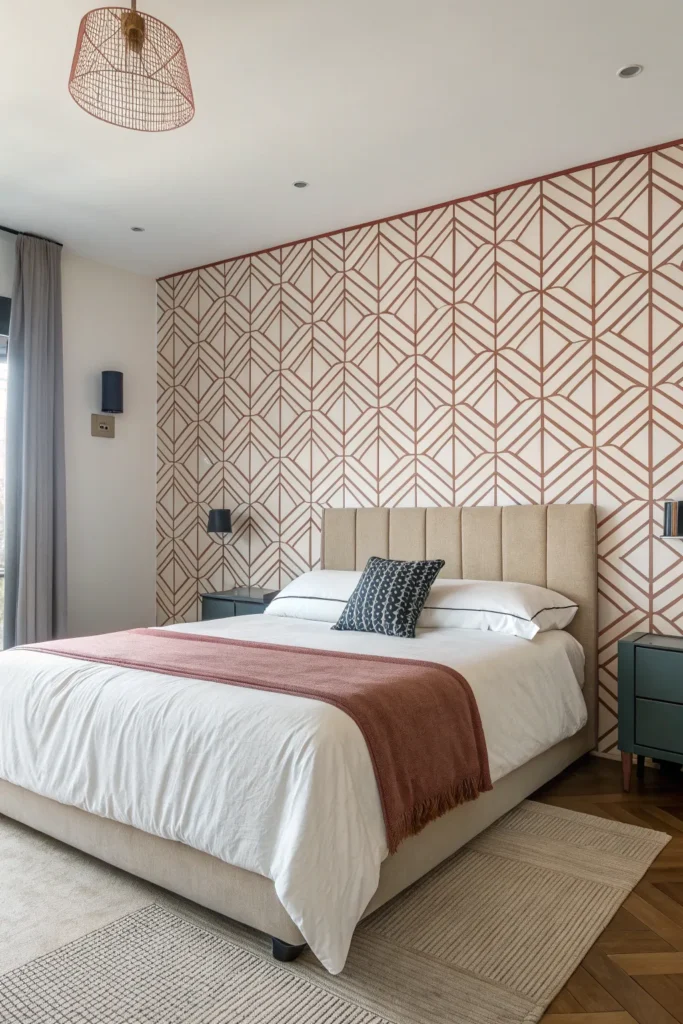
Bold geometric wallpaper introduces pattern, color, and visual interest while making strong style statements that set the tone for entire rooms. Large-scale geometric patterns in contrasting colors create maximum impact, while subtle tone-on-tone geometrics add texture without overwhelming.
Hexagons, triangles, chevrons, diamonds, and abstract shapes each bring different energy—angular patterns feel modern and dynamic, while curved geometrics appear softer and more organic. Limit wallpaper to just the back wall rather than papering the entire room to prevent pattern fatigue and maintain the focal point’s impact.
Choose colors that complement your existing bedding and furniture, or use the wallpaper as your starting point and build the room’s palette around it. Removable peel-and-stick wallpapers have revolutionized this design approach, allowing renters and commitment-phobes to experiment with bold patterns without permanent installation.
High-quality traditional wallpaper offers superior texture and finish but requires more installation expertise and isn’t easily changeable. Geometric wallpaper suits contemporary, mid-century modern, and even traditional spaces depending on the specific pattern and color choices. This treatment adds instant personality and visual sophistication, eliminating the need for additional wall decor since the paper itself provides sufficient interest.
6. Textured Plaster or Venetian Plaster Finish
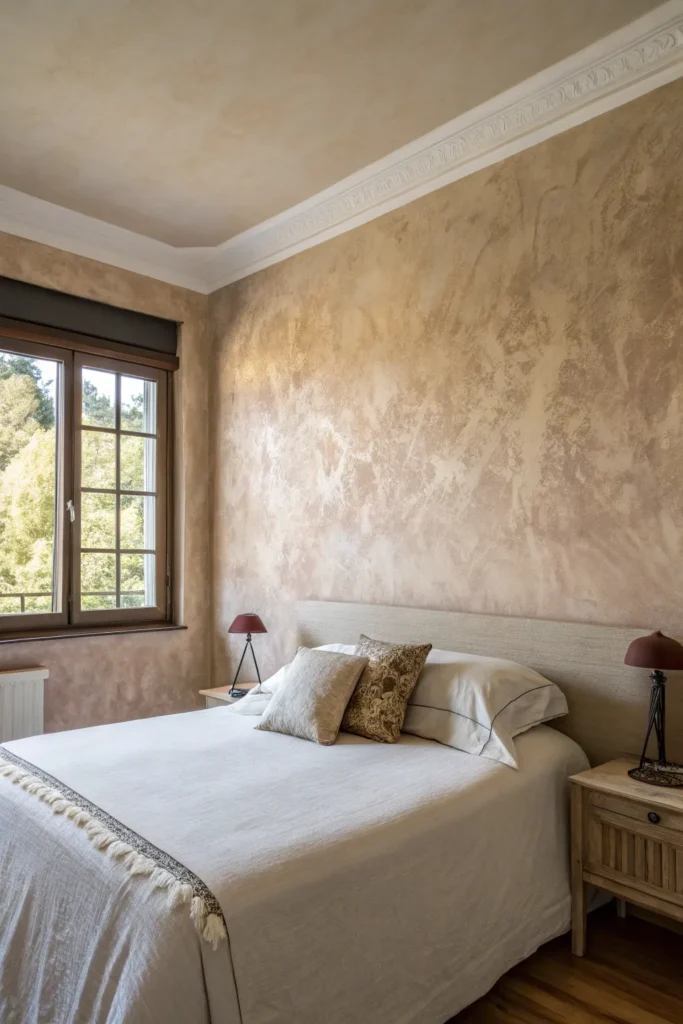
Artisan plaster techniques create subtle, organic texture and depth that catches light beautifully throughout the day as sun angles shift. Venetian plaster, applied in multiple thin layers and burnished to a soft sheen, delivers Old World elegance with contemporary versatility. The slightly irregular surface and subtle color variation create living walls that feel handcrafted and special rather than factory-perfect.
This treatment works in virtually any color from bright white for Mediterranean freshness to warm neutrals for organic sophistication to deep jewel tones for dramatic luxury. The application process requires skill and patience, making professional installation worthwhile for best results, though DIY-friendly alternatives exist.
Textured plaster adds significant perceived value, making bedrooms feel custom and high-end without requiring expensive furniture or accessories. The subtle variation and organic quality bring warmth that flat painted walls simply cannot achieve.
Unlike wallpaper or other treatments, plaster becomes part of the wall itself, creating a permanent, durable finish that ages beautifully. The technique suits both modern and traditional aesthetics depending on the degree of texture and finish sheen chosen. Consider adding subtle metallic elements to the plaster for extra dimension, or tint it in soft, complex colors rather than pure white for added sophistication.
7. Statement Wallpaper Mural
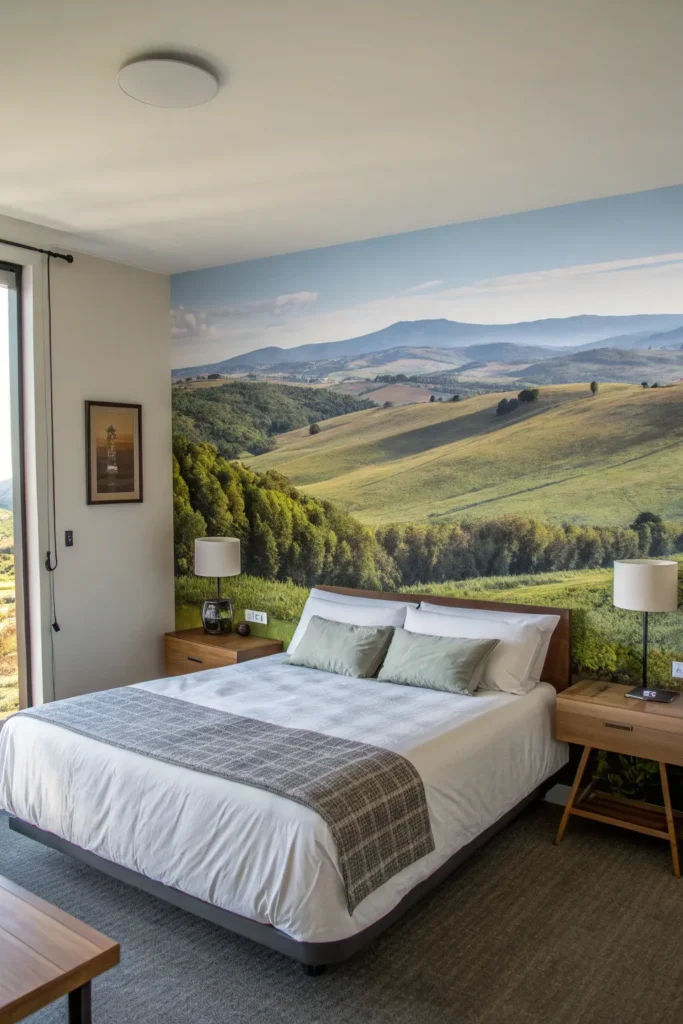
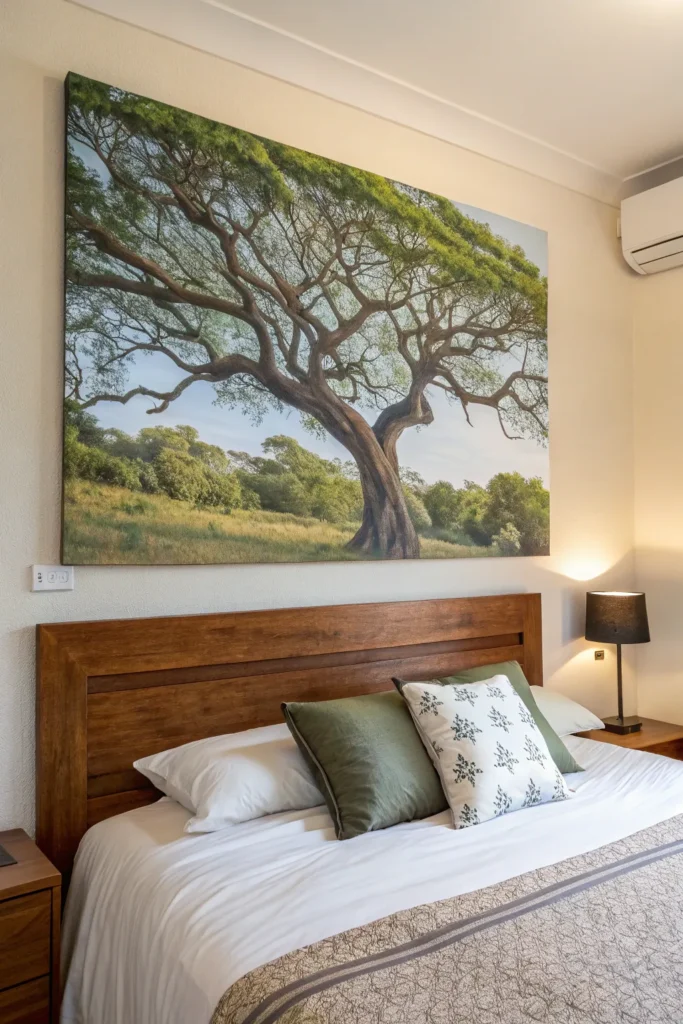
Large-scale photographic or illustrated murals transform back walls into immersive experiences that transport you to different environments and moods. Nature scenes including forests, mountains, beaches, or botanical gardens bring the outdoors inside and create serene, restorative atmospheres. Abstract watercolor or painted effects add artistic flair without literal representation, working with various design styles. Cityscape murals suit urban lofts and contemporary spaces, while vintage maps appeal to travelers and history enthusiasts. The key to successful murals is choosing images with appropriate scale—overly busy scenes can feel chaotic, while images with depth create the illusion of expanded space. Position the bed to align with the mural’s focal point, whether that’s a path leading into a forest or the horizon line of an ocean view.
Custom murals allow you to use personal photography or commission artwork specific to your vision, though many companies offer stunning pre-designed options in standard sizes. Installation has become significantly easier with peel-and-stick mural panels that align to create seamless images without professional help.
This approach works best when the mural is the room’s primary focal point, so keep remaining walls and decor relatively simple to avoid competing for attention. Consider the mural’s mood and how it aligns with the bedroom’s purpose—calming nature scenes promote relaxation, while energizing cityscapes might be too stimulating for restful sleep.
8. Floor-to-Ceiling Built-In Shelving
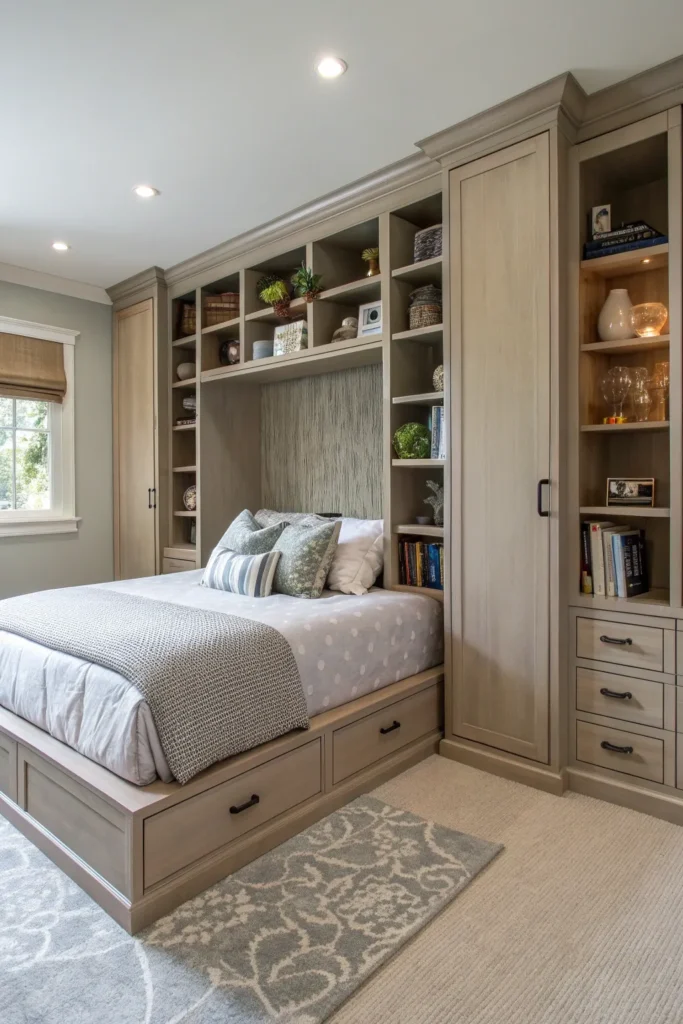
Custom built-ins create architectural interest while providing extensive storage and display opportunities that combine beauty with function. Flanking the bed with built-in shelving creates symmetry and a cozy alcove effect, making the sleeping area feel embraced and intentional. Open shelving displays books, decorative objects, and personal collections, while incorporating closed cabinet sections hides less attractive necessities.
Paint built-ins the same color as walls for a seamless, integrated look, or choose contrasting colors to make the architectural element stand out. Including lighting within the shelving through LED strips or small puck lights creates ambiance and highlights displayed items.
This approach particularly suits smaller bedrooms where maximizing storage is essential, as vertical built-ins utilize wall space that would otherwise remain empty. The investment in custom carpentry delivers significant value both in functionality and aesthetics, making bedrooms feel custom and thoughtfully designed.
For budget-conscious approaches, floor-to-ceiling bookcases from retailers can have a built-in appearance when installed wall-to-wall with trim added around edges. Style shelves with a mix of books, decorative objects, framed photos, and plants using the rule of thirds and varying heights for visual interest. This treatment works in any design style from traditional with ornate molding details to modern with clean, handleless cabinets.
9. Shiplap or Tongue and Groove Paneling
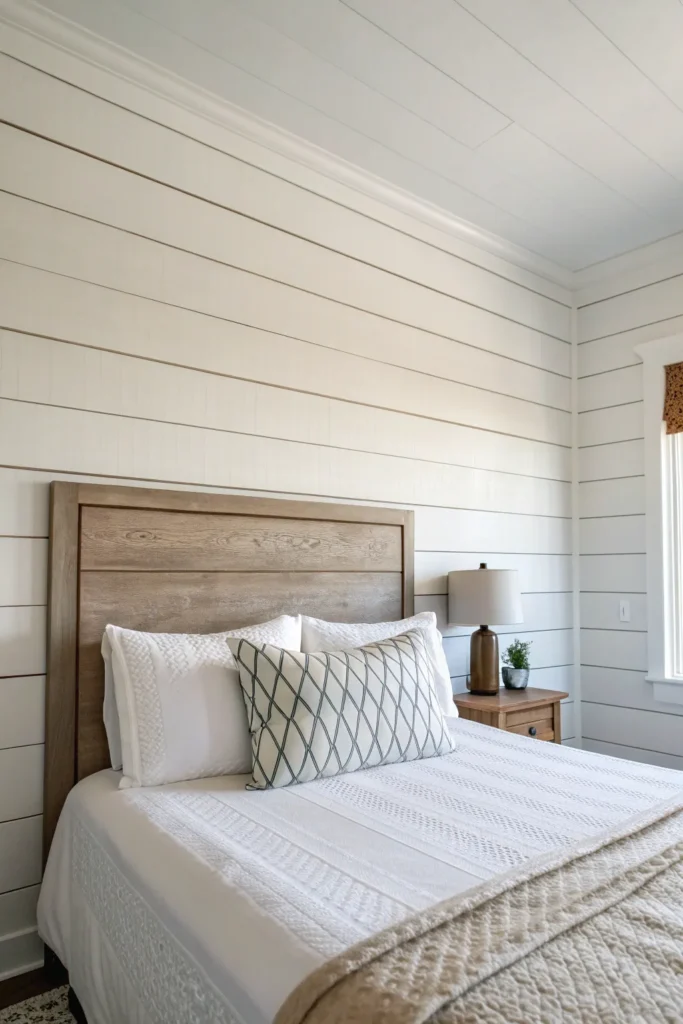
Horizontal shiplap paneling delivers farmhouse charm and cottage coziness that’s become increasingly popular across various design styles. The characteristic gaps between boards create subtle shadow lines that add dimension and architectural interest beyond flat painted walls.
Traditional white shiplap offers bright, airy appeal perfect for coastal or Scandinavian aesthetics, while natural wood tones bring warmth and organic texture. Painting shiplap in soft pastels like sage green, dusty blue, or blush pink creates gentle color while maintaining the textural interest.
Vertical tongue and groove paneling creates similar effects while making ceilings appear taller and rooms feel more spacious. Installation requires careful planning and precision to ensure boards remain level and properly aligned, but determined DIYers can achieve professional results with patience and proper tools.
This treatment works particularly well when combined with complementary design elements like vintage-inspired lighting, simple furnishings, and natural materials. The linear quality of the boards provides inherent rhythm and movement that draws the eye across the wall’s surface.
For budget alternatives, grooved plywood sheets or special shiplap-look wallpaper mimic the appearance without individual board installation. Consider extending the shiplap treatment to the ceiling for a fully enveloped cottage feel, or limit it to just the back wall for a focused focal point.
10. Oversized Artwork or Tapestry
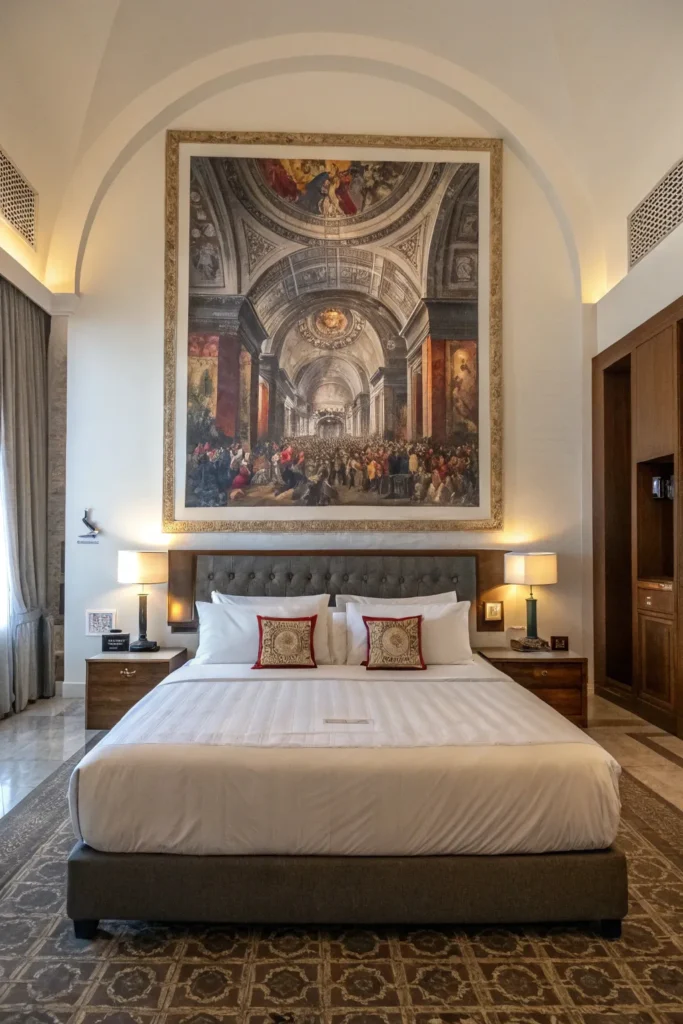
A single large-scale piece of art makes powerful statements with minimal effort, serving as the room’s defining element and conversation starter. Oversized paintings, photographs, or prints should be substantial enough to anchor the bed—generally at least two-thirds the width of the headboard or bed frame.
Abstract art in colors that complement your bedding and overall palette ties the room together while maintaining flexibility for future updates. Dramatic black and white photography creates sophisticated, gallery-like atmospheres that work with any color scheme.
Woven tapestries add bohemian warmth and softness that’s especially appealing in bedrooms, and they provide acoustic benefits by dampening sound. When hanging oversized art, position it so the center sits roughly at eye level when seated on the bed, typically 8-12 inches above the headboard. For extra impact, lean a massive framed piece against the wall on the floor rather than hanging it, creating a relaxed, collected aesthetic.
Commission local artists for truly custom pieces that reflect your personality and ensure no one else has identical art. Large-scale art investments become focal points not just of the bedroom but of the entire home, making them worthwhile splurges. This approach suits minimalists who prefer single statement pieces over curated collections, and it simplifies the decorating process by eliminating the need for multiple smaller elements.
11. Accent Wall with Bold Color Blocking
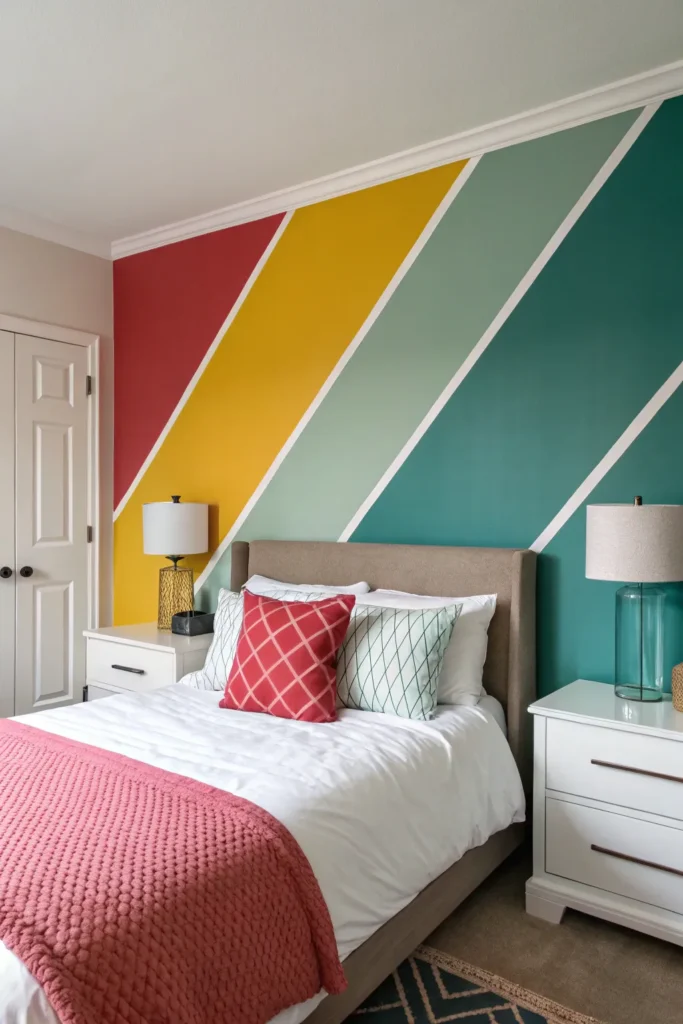
Geometric color blocking creates modern, graphic impact through intentional use of contrasting paint colors in defined shapes and sections. Horizontal blocking with darker colors on the bottom third and lighter above creates visual weight and grounding.
Vertical sections in alternating colors add height and can help balance asymmetrical room layouts. Diagonal divisions create dynamic energy and movement, though they require more careful planning and taping during execution.
The key to successful color blocking is choosing colors with enough contrast to be clearly defined but complementary enough to feel cohesive. Two-tone combinations work well for subtle sophistication, while three or more colors create bolder, more playful effects. Use painter’s tape to create crisp, clean lines between sections, removing it while paint is still slightly wet to prevent peeling.
This treatment costs very little since it only requires paint and supplies, making it perfect for budget-conscious bedroom updates. Color blocking allows for complete customization—the shapes, sizes, and colors can be tailored exactly to your preferences and room proportions. The graphic quality suits contemporary and modern interiors particularly well, though the right color choices can work in transitional spaces. Consider extending one of the blocked colors onto an adjacent wall to create flow, or keep the treatment contained to just the back wall for maximum focal point impact.
12. Brick or Stone Accent Wall
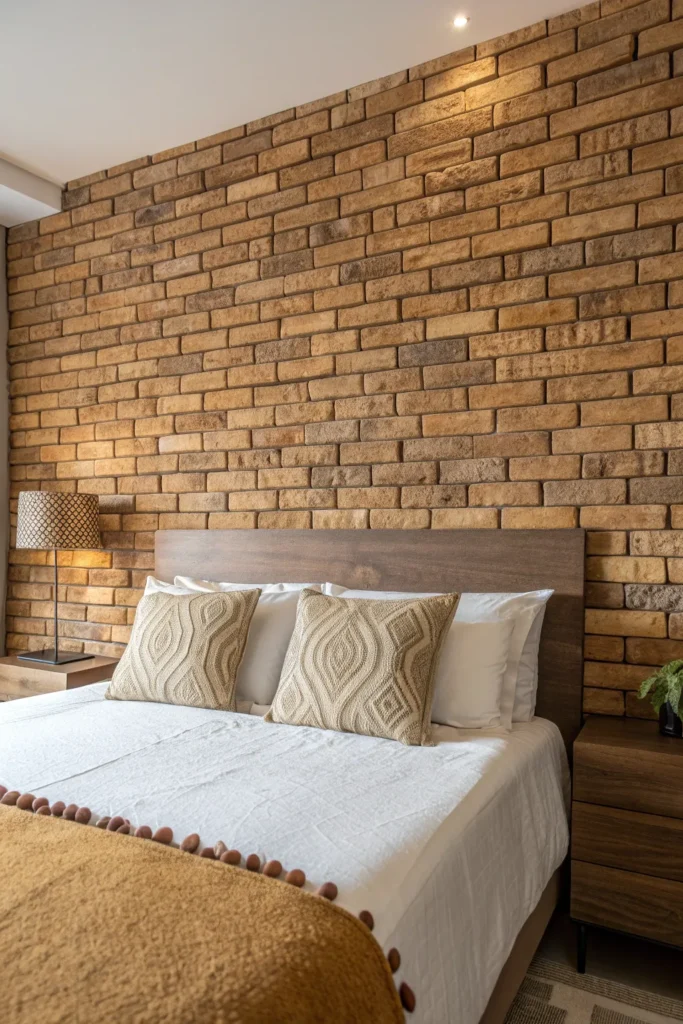
Exposed brick or stone creates texture, history, and organic character that’s impossible to replicate with any other material. Authentic exposed brick in older buildings offers unparalleled charm with its irregular surfaces, varied colors, and aged patina.
For homes without existing brick, thin brick veneer or brick-look panels provide similar aesthetics with easier installation. Stone veneer in stacked ledgestone, river rock, or cut stone patterns creates different moods from rustic to refined. Whitewashing or painting brick maintains texture while lightening and brightening the surface for Scandinavian or modern farmhouse styles. Sealed natural brick or stone works in industrial lofts, rustic retreats, Mediterranean villas, and even contemporary spaces when balanced with sleek furnishings.
The three-dimensional quality and color variation create visual interest that remains engaging over time without feeling busy or overwhelming. This treatment adds significant architectural character, making newer homes feel more established and interesting. Installation of veneer materials has become more DIY-friendly with interlocking systems and corner pieces that simplify the process.
The organic nature of brick and stone provides welcome contrast to smooth, manufactured bedroom elements like upholstered furniture and polished finishes. Consider adding accent lighting to graze across the textured surface, creating dramatic shadows that emphasize the three-dimensional quality.
13. Metallic or Specialty Paint Finishes
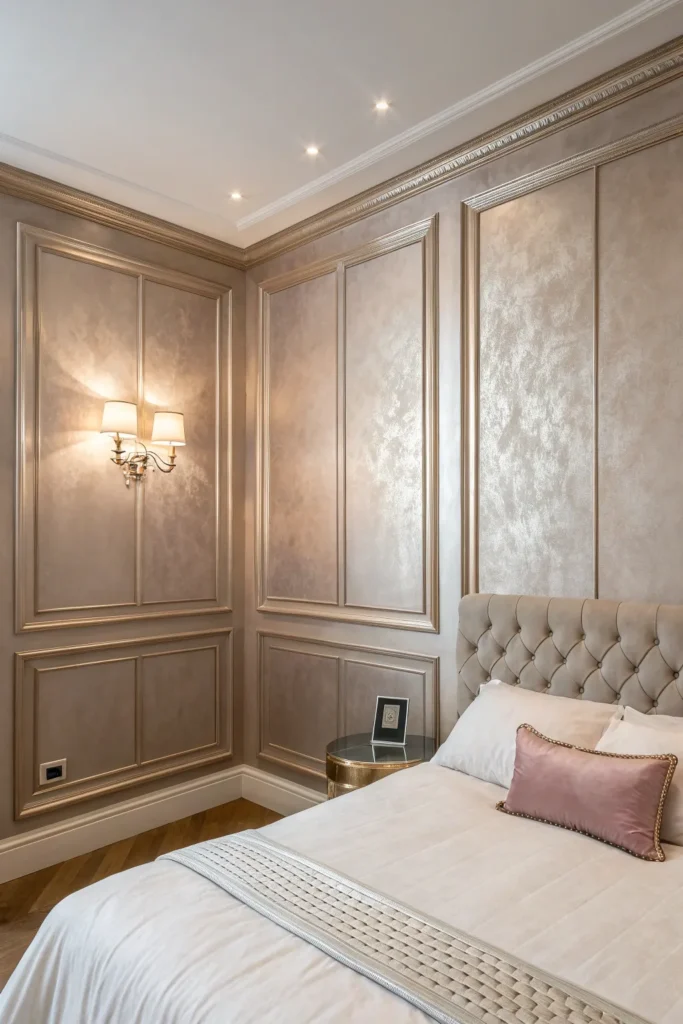
Metallic paints and specialty finishes add subtle glamour and light-reflecting properties that create sophisticated, dynamic walls changing throughout the day.
Soft metallic sheens in champagne, rose gold, or pewter catch light without appearing garish or disco-like. Ombre paint techniques that gradually transition from dark at the floor to light at the ceiling create serene, atmospheric effects. Color washing or ragging techniques layer multiple coordinating paint colors for depth and organic variation.
Pearlescent finishes provide subtle shimmer that reveals itself only when light hits at certain angles, creating understated luxury. The key to successful specialty finishes is restraint—the effect should enhance rather than overwhelm. These techniques work particularly well in bedrooms because the subtle, changeable quality creates interest without demanding constant attention.
Professional painters can execute complex finishes flawlessly, but many specialty paints now come formulated for easier DIY application. Metallic accents work in feminine spaces with rose gold and blush tones, masculine rooms with pewter and charcoal, or neutral spaces with champagne and soft gold.
Consider the room’s lighting when choosing metallic finishes—north-facing rooms benefit from warm metallics while south-facing spaces can handle cooler tones. Layer specialty painted walls with simple furnishings and decor so the wall finish can shine as the focal point without competing elements.
14. Wallpapered Panels with Trim
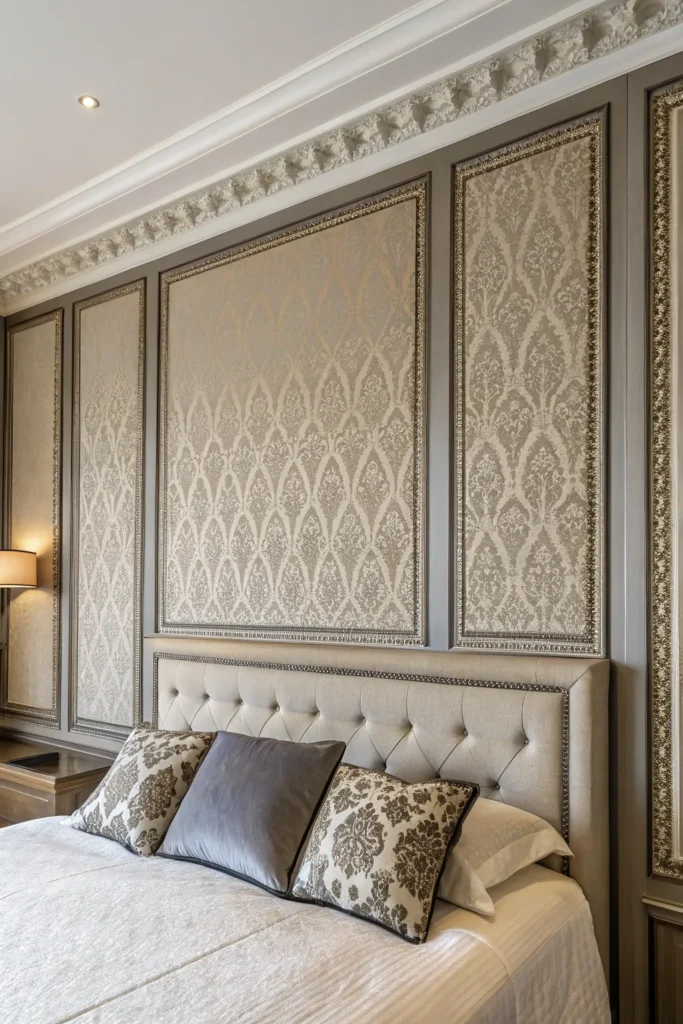
Framing wallpaper within decorative trim creates custom wainscoting-like effects that feel traditional yet fresh when executed with contemporary patterns. Install picture frame molding or chair rail trim in geometric patterns like squares or rectangles, then fill each section with coordinating wallpaper.
This approach allows you to use bold, dramatic wallpapers in controlled doses that won’t overwhelm the entire room. The trim creates structure and definition that suits traditional, transitional, and even modern spaces depending on the molding style chosen.
Paint the trim in contrasting colors like white against colored walls, or tone-on-tone for subtler sophistication. This treatment adds architectural interest to flat, boring walls, making builder-grade bedrooms feel custom and special. The panels draw the eye upward, making standard-height ceilings appear taller through the vertical emphasis.
Choose wallpaper patterns that complement rather than match your bedding and window treatments—too much matching feels contrived while complementary elements feel collected and intentional. This approach works particularly well behind beds because the paneled sections naturally frame the headboard and create symmetry.
Installation requires careful measuring and level lines, but the dramatic results justify the effort. Consider varying the panel sizes for more dynamic interest, or keeping them uniform for orderly, calming effects.
15. Living Wall or Vertical Garden
Green walls bring nature indoors through vertical plantings that create living, breathing focal points with air-purifying benefits. Modular living wall systems with built-in irrigation make maintenance manageable even for those without green thumbs. Choose low-light tolerant plants like pothos, philodendron, and ferns for bedrooms with limited natural light. Succulents and air plants work in brighter bedrooms and require less frequent watering.
The organic, evolving nature of living walls means the focal point changes subtly over time as plants grow and flourish. This treatment particularly suits bedrooms because plants improve air quality, increase oxygen levels, and create calming connections to nature.
The initial investment in a quality system pays dividends through years of living beauty that no static wall treatment can match. For lower-commitment alternatives, install floating shelves at various heights and populate them with potted plants creating similar vertical garden effects. The lush greenery provides textural contrast to typical bedroom materials like wood, fabric, and metal.
Living walls work in modern, bohemian, Scandinavian, and biophilic design styles that prioritize natural elements. Consider the room’s humidity levels and light exposure when selecting plants to ensure they’ll thrive in the specific bedroom environment. Maintenance requirements vary by system and plant selection, so research thoroughly before committing to ensure the upkeep fits your lifestyle.
Choosing the Right Back Wall Design
Selecting the perfect back wall treatment requires considering several factors including your budget, commitment level, existing room style, and personal preferences.
Temporary solutions like removable wallpaper, leaning artwork, or paint allow for easy changes as tastes evolve. Permanent installations like built-ins or plaster finishes require more commitment but deliver lasting value and impact. Consider the room’s architectural features—rooms with interesting molding or high ceilings can handle bolder treatments, while rooms with challenging proportions might benefit from designs that correct visual imbalances.
Think about how the back wall relates to the entire room’s design, ensuring it complements rather than conflicts with existing elements. The best focal points feel intentional and considered, transforming ordinary bedrooms into personalized retreats that reflect your style while creating beautiful, functional spaces for rest and rejuvenation.