
15 Corner Kitchen Sink Ideas That Make the Most of Every Inch
The corner of a kitchen is one of the most consistently underused and awkwardly designed spaces in the entire home. Most kitchens treat the corner as a problem to be managed rather than an opportunity to be maximised — a dead zone filled with a lazy susan, a blind cabinet, or simply ignored entirely. A corner kitchen sink changes that calculation completely.

Installing a sink in the corner is one of the most space-efficient and practically intelligent decisions you can make in a kitchen layout. It frees up the linear runs of countertop on either side for uninterrupted prep and cooking space, positions the sink naturally at the intersection of two work zones, and turns what was previously the most awkward spot in the kitchen into one of its most hardworking and distinctive features.
Here are 15 corner kitchen sink ideas that prove the corner is not the problem — it is the solution.
1. Classic White Farmhouse Corner Sink
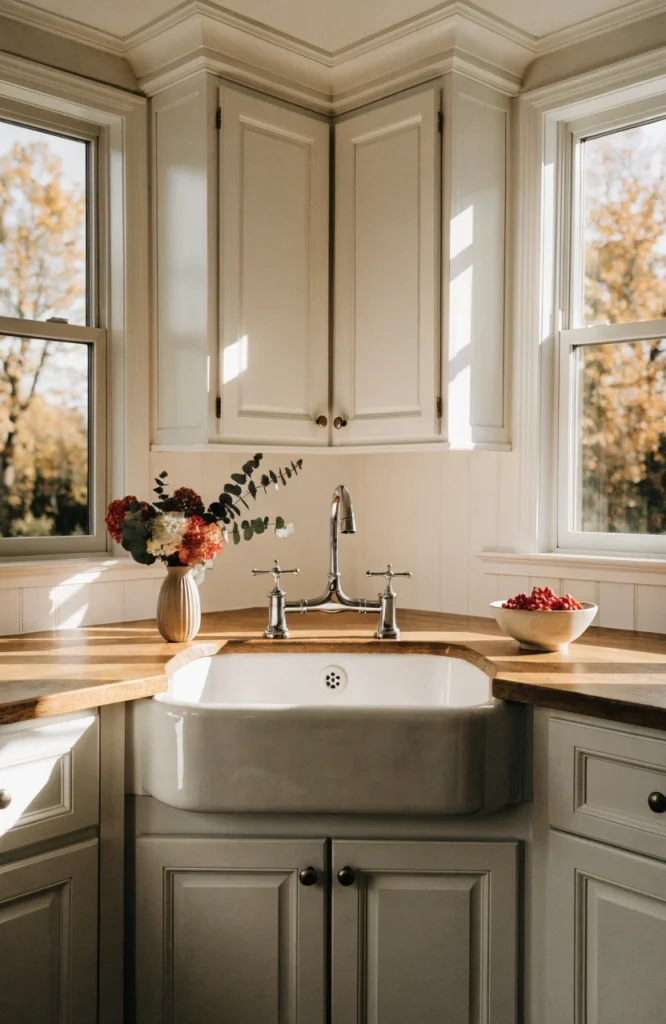
A white ceramic farmhouse sink installed in the corner of a kitchen brings together two of the most enduringly popular kitchen design elements — the apron front sink and the corner placement — into a single feature that is both deeply practical and genuinely beautiful.
The generous basin of a farmhouse sink suits corner placement particularly well because the corner position allows the full width of the apron front to be appreciated from multiple angles rather than just head-on. Paired with a simple bridge mixer tap, white shaker cabinets, and a natural timber countertop, a corner farmhouse sink creates a kitchen focal point with real character and warmth.
Pro Tip: Specify a corner farmhouse sink with an angled or diagonal front apron rather than a standard rectangular one. An angled apron sits naturally in the corner and faces the room at 45 degrees, creating a much more intentional and resolved look than a standard rectangular sink forced into a corner cabinet. Several specialist ceramic sink manufacturers offer corner-specific farmhouse sink designs made precisely for this purpose.
2. Stainless Steel Corner Sink for a Modern Kitchen
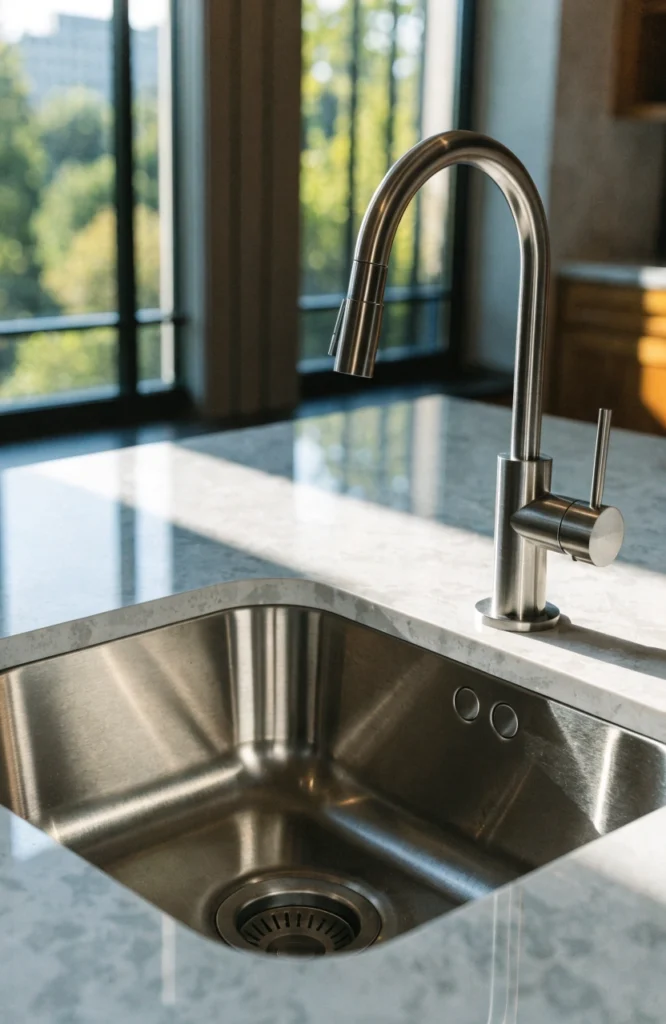
A stainless steel corner sink in a contemporary kitchen is a study in functional elegance. Clean lines, a reflective surface that bounces light around the kitchen, professional-grade durability, and a completely neutral aesthetic that works with any cabinet color or countertop material — stainless steel is one of the most reliably excellent sink materials available and it suits corner placement beautifully.
A double bowl stainless steel corner sink — with two basins positioned on either side of the corner angle — creates a genuinely practical workspace that allows simultaneous food prep and washing up without either task interfering with the other. The two basins fan out naturally along the two countertop runs on either side of the corner, making the most of the angled space.
Pro Tip: Choose a stainless steel corner sink with a brushed rather than a polished finish for a kitchen that will be used hard in daily life. Brushed stainless steel hides water spots, fine scratches, and general wear significantly better than a highly polished surface, which shows every mark and requires constant wiping to maintain its appearance. A brushed finish looks just as beautiful and requires a fraction of the maintenance effort.
3. Corner Sink with a Window — The Perfect Pairing
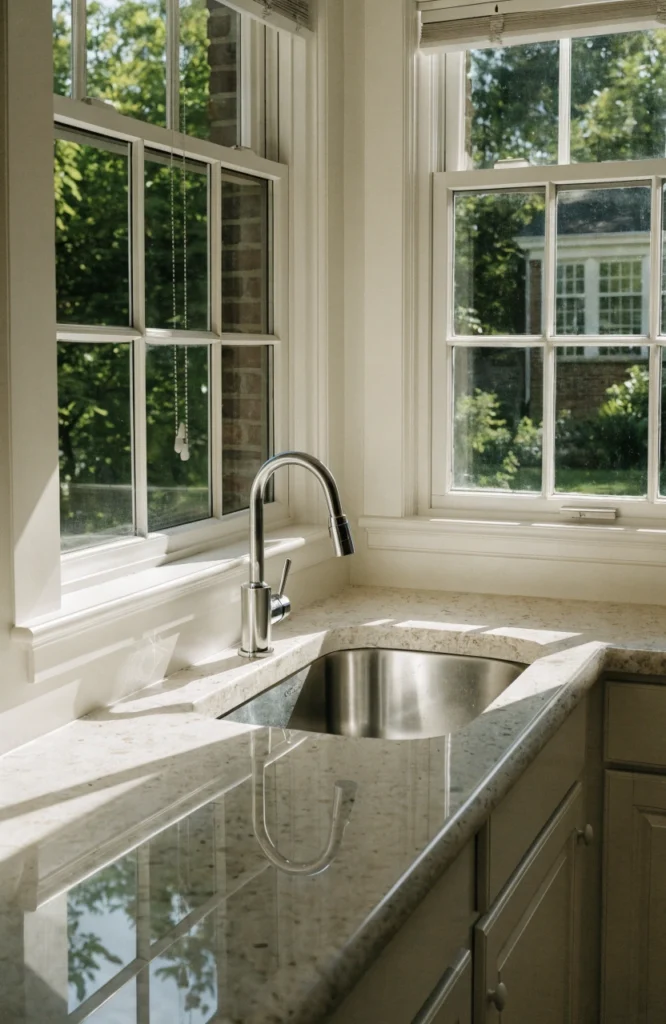
One of the most compelling arguments for a corner kitchen sink is the opportunity it creates for window placement. A window positioned in the corner above the sink — whether a single corner window that spans both wall planes, a pair of windows meeting at the corner, or a picture window on one of the two walls — creates a view, a source of natural light, and a connection to the outdoors that transforms the daily experience of standing at the sink.
Washing up, preparing vegetables, or simply standing at the corner sink becomes an entirely different experience when there is something worth looking at through the glass. A garden view, a courtyard, a tree, or even just an open sky above a fence line — natural light and an outdoor view at the kitchen sink is one of the most genuinely appreciated features in any kitchen.
Pro Tip: Specify corner windows that open outward — either casement or awning style — rather than sliding or fixed windows above a corner sink. The ability to open the window while cooking or washing up provides ventilation that significantly reduces cooking odors and condensation in the kitchen. A fixed corner window looks beautiful but misses the practical opportunity that an opening window at the sink position delivers.
4. Undermount Corner Sink for Seamless Countertop Flow
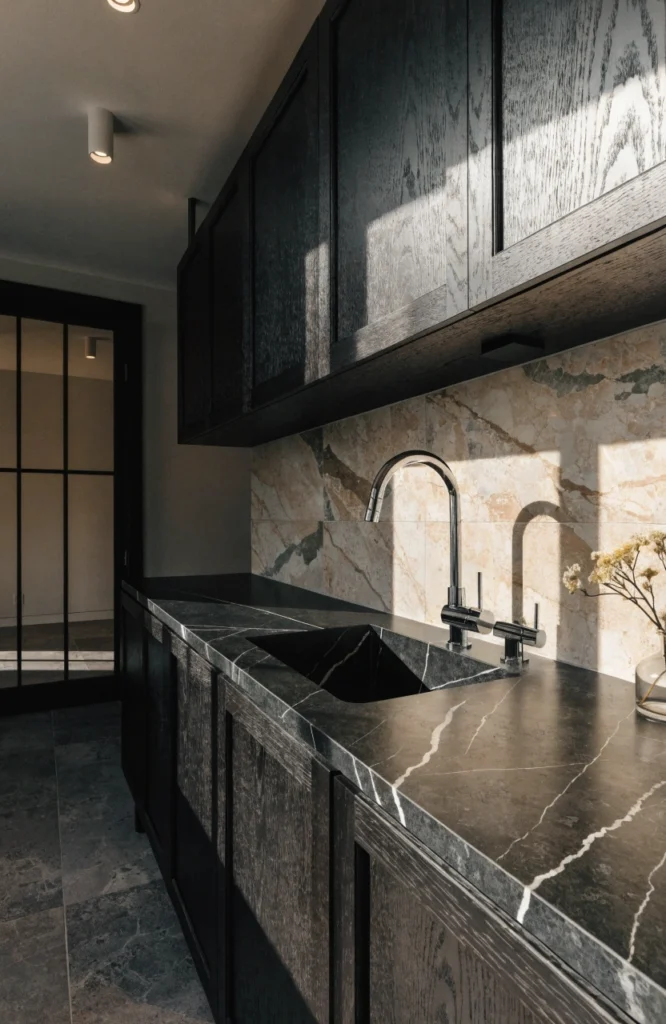
An undermount corner sink — fitted beneath the countertop surface rather than dropped in from above — creates the cleanest, most seamless possible integration of sink and worksurface in a corner kitchen. With no rim sitting on top of the countertop, the surface flows continuously from one side to the other with nothing to interrupt the clean line or trap debris along the edge.
Undermount installation works beautifully with stone countertops — granite, quartz, marble, or engineered stone — where the edge of the cutout can be polished to a smooth, finished profile that looks deliberately considered and genuinely premium. In a corner position, an undermount sink with a continuous stone countertop creates a kitchen workspace that looks and functions like something from a professional culinary environment.
Pro Tip: Ensure the corner cabinet base unit specified for an undermount corner sink is built with sufficient structural reinforcement to support the weight of the stone countertop spanning the corner without any cabinet wall directly below the sink cutout. The corner position means the countertop must span a larger unsupported area than in a standard sink position — inadequate cabinet structure beneath can lead to countertop movement, cracking, or settlement over time.
5. Diagonal Corner Sink Cabinet for a Bespoke Look
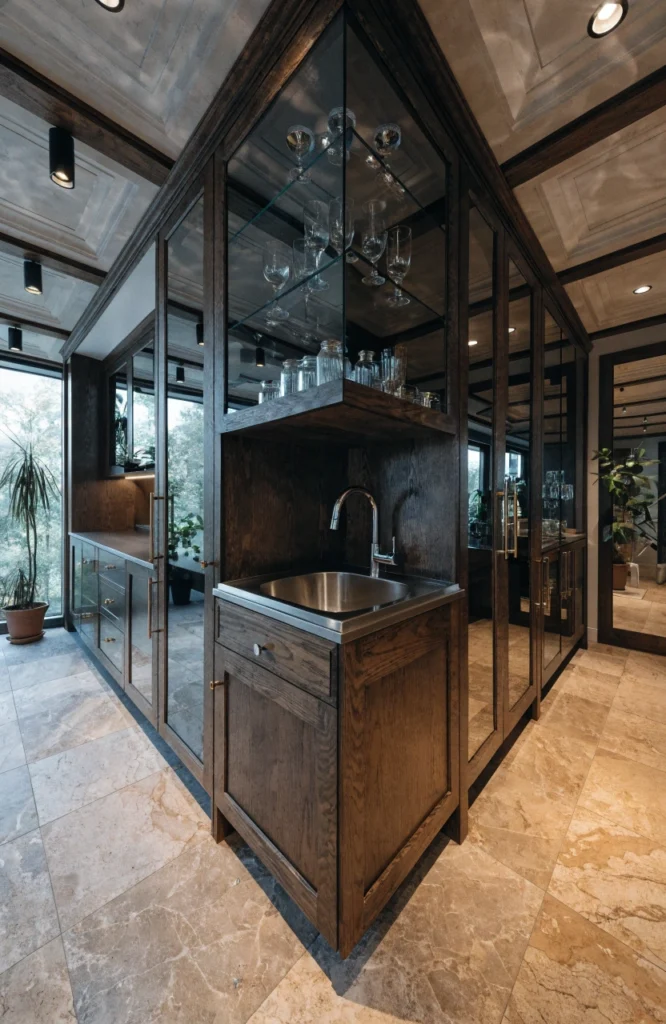
Rather than fitting a sink into a standard right-angle corner cabinet, a diagonal corner sink cabinet — where the front face of the cabinet and the sink itself are set at 45 degrees to the two adjacent walls — creates a genuinely bespoke kitchen layout that looks architecturally considered and makes the corner feel like a deliberate design feature.
The diagonal placement creates a more generous working position in front of the sink, makes the basin more ergonomically accessible from a straight-on standing position, and gives the kitchen a custom, almost fitted-furniture quality that standard right-angle cabinetry cannot match. It is a feature that reads immediately as considered and intentional in any kitchen layout.
Pro Tip: Use the triangular cabinet spaces on either side of a diagonal corner sink unit for narrow pull-out storage — thin pull-out drawers or shelving units that slot into the angled gaps between the diagonal cabinet face and the adjacent straight cabinet runs. These pull-out units make excellent storage for cleaning products, chopping boards, baking trays, or dish cloths — items that are used at or near the sink and benefit from being stored immediately adjacent to it.
6. Corner Sink in a Small Kitchen to Maximise Counter Space
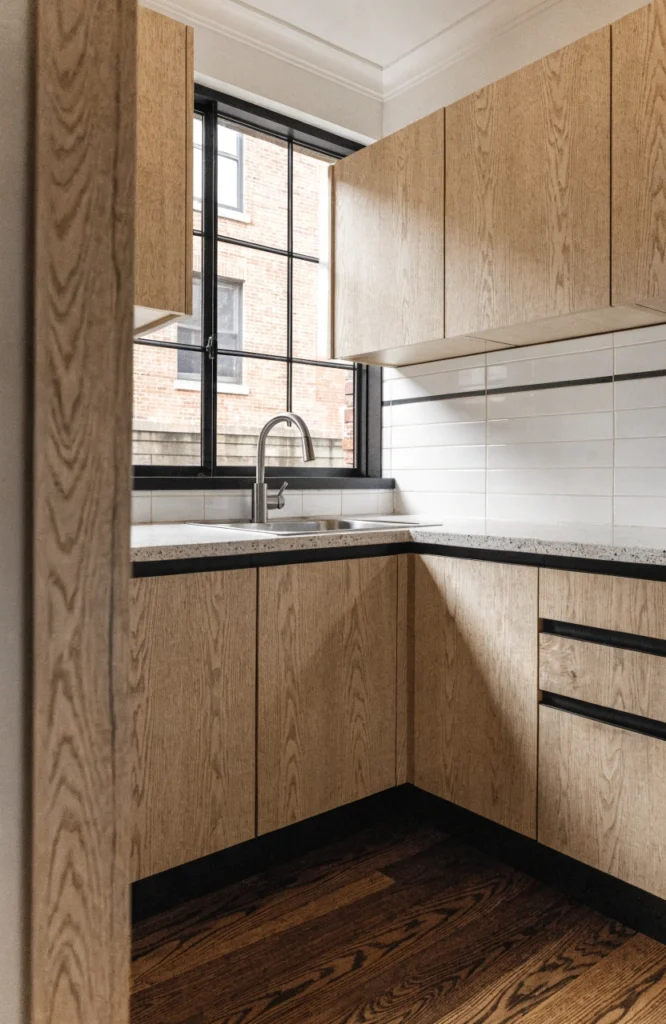
In a small kitchen, a corner sink is not just a design choice — it is a genuinely strategic space-planning decision. By placing the sink in the corner, both of the adjacent countertop runs are freed from the interruption of a mid-run sink placement and become continuous, unbroken work surfaces that are significantly more useful for food preparation, appliance storage, and general kitchen workflow.
Even a modest kitchen gains a considerable amount of effective working counter space when the sink is moved from the middle of a run to the corner. The two shorter countertop sections on either side of a mid-run sink — never quite long enough to be truly useful — become one long uninterrupted run that transforms what the kitchen can actually do.
Pro Tip: In a small corner sink kitchen, specify a compact single bowl corner sink rather than a large double bowl to preserve as much countertop space as possible on both adjacent runs. A smaller basin that fits neatly into the corner with minimal footprint maximises the countertop gain that corner placement delivers — the primary reason for choosing a corner position in a space-constrained kitchen in the first place.
7. Corner Sink with a Breakfast Bar Opposite
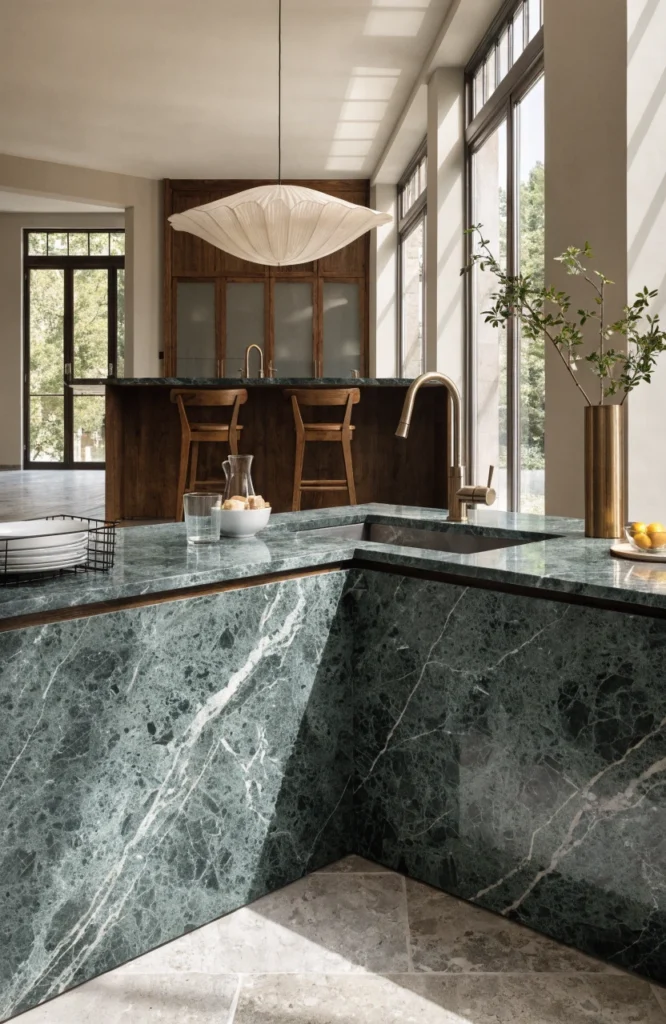
Pairing a corner kitchen sink with a breakfast bar or kitchen island positioned opposite — so that whoever is standing at the sink faces directly toward the seating area — creates a naturally sociable kitchen layout that keeps the cook connected to the rest of the room while working at the sink.
The corner position of the sink means it naturally faces the centre of the kitchen rather than a wall, which makes it the most socially connected sink position possible in an open-plan kitchen layout. Combined with a breakfast bar or island that brings seating into the sightline of the sink, it creates a kitchen where the person doing the washing up is part of the conversation rather than banished to face a blank wall.
Pro Tip: Consider the sightlines from the corner sink position to the main living or dining area when planning an open-plan kitchen with a corner sink. The view from the sink — what you look at while washing up, preparing food, and working at the most frequently used position in the kitchen — should be the most pleasant view in the kitchen. A corner sink positioned to face a garden, a living area, or a well-designed kitchen island makes the time spent at the sink genuinely enjoyable.
8. Corner Sink with Integrated Drainer and Worktop
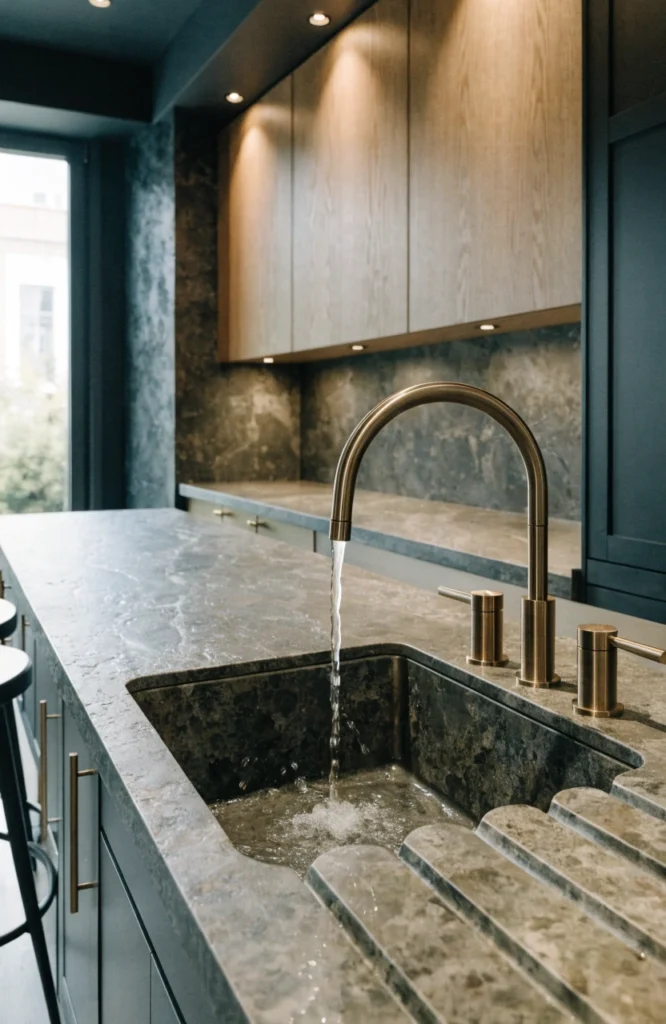
A corner sink specified with an integrated drainer — a draining surface moulded or cut into the countertop material on one or both sides of the basin — creates a completely unified sink and work station that is both practically excellent and visually clean. The integrated drainer eliminates the need for a separate drying rack on the countertop, keeps the working area beside the sink clear, and creates a cohesive, considered look.
In a corner position, an integrated drainer can extend along one of the two adjacent countertop runs — or along both — creating a generous drying area that takes advantage of the corner location’s natural spread across two wall planes. Stone, composite, and stainless steel all work beautifully as integrated drainer materials in a corner sink specification.
Pro Tip: Specify the drainer channels or grooves in an integrated corner sink drainer running toward the basin rather than parallel to it. Correctly angled drainer channels direct water efficiently back into the basin rather than allowing it to pool or run toward the edge of the countertop. This seemingly small detail makes an enormous practical difference to how well the integrated drainer functions in daily use.
9. Corner Sink with Open Shelving Underneath
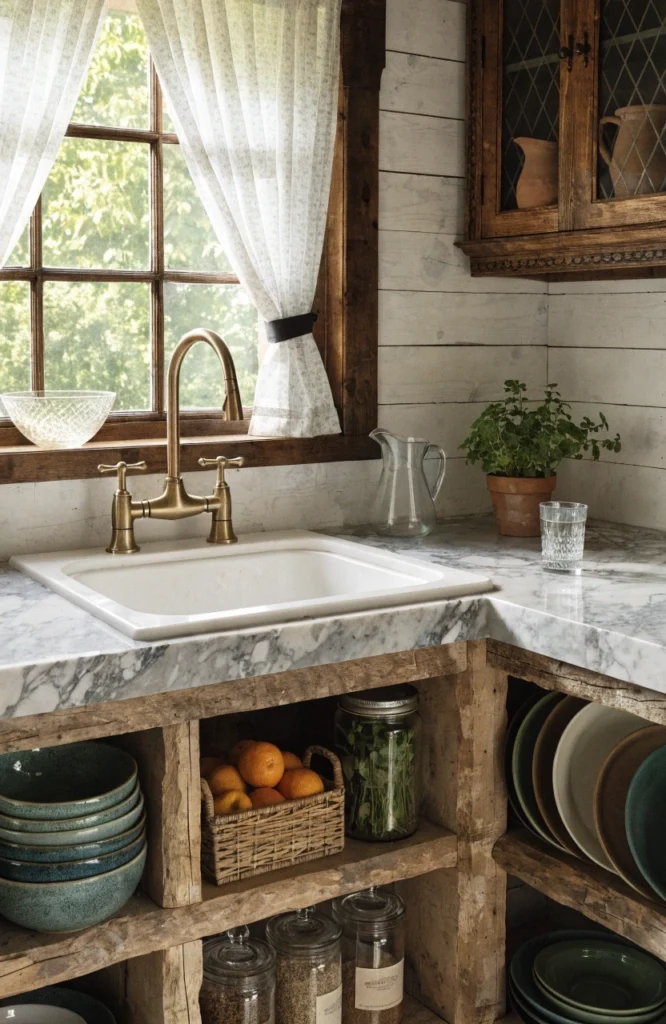
Rather than enclosing a corner sink in a standard base cabinet, leaving the space underneath open — with the pipework neatly boxed in or finished with a decorative pipe kit — creates a corner sink moment that feels more like a piece of freestanding furniture than a fitted kitchen unit. Open shelving underneath allows the display of washing up bowls, cleaning brushes, and attractive storage baskets in a way that adds character and warmth to the kitchen.
This approach suits farmhouse, cottage, and unfitted kitchen aesthetics particularly well. A simple curtain on a rod across the open base — a vintage ticking stripe, a gingham check, or a natural linen in a complementary color — provides concealed storage while adding a soft textile element to the kitchen that no standard cabinet door can replicate.
Pro Tip: If leaving the space under a corner sink open for shelving or decorative display, ensure all pipework and waste connections are either genuinely decorative — polished chrome bottle traps look beautiful on display — or fully concealed behind a neat boxing-in solution. Exposed plastic waste pipes and flexible hoses are the detail that most undermines the aesthetic of an otherwise beautiful open under-sink display in any kitchen style.
10. Two Tone Corner Sink Cabinet Design
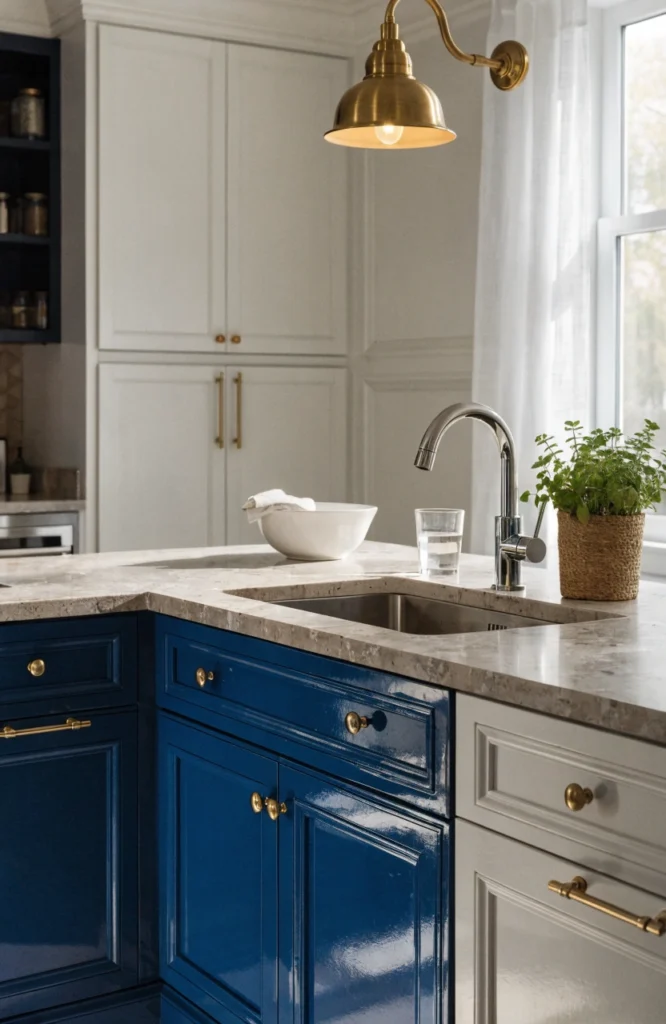
Using the corner sink cabinet as an opportunity to introduce a second color or material into the kitchen creates a natural and logical accent feature at the most architecturally significant point in the layout. A corner sink cabinet in a contrasting color to the surrounding cabinetry — a deep navy in an otherwise all-white kitchen, a forest green against pale grey, a warm timber finish against painted units — turns the corner into a deliberate design focal point.
The corner position amplifies the impact of a contrasting cabinet color because the corner faces the room from two angles simultaneously — it is visible from a wider range of positions in the kitchen than any other single cabinet. A well-chosen contrasting color at the corner sink position creates a kitchen that looks genuinely designed rather than simply specified from a catalogue.
Pro Tip: Extend the contrasting color from the corner sink cabinet to one or two additional elements in the kitchen — the kitchen island, a run of lower cabinets, or the larder unit — rather than limiting it exclusively to the corner sink. A single contrasting cabinet in an otherwise uniform kitchen can sometimes look isolated rather than intentional. Repeating the accent color in two or three locations creates a cohesive color story that feels considered and complete.
11. Corner Butler Sink with Traditional Taps
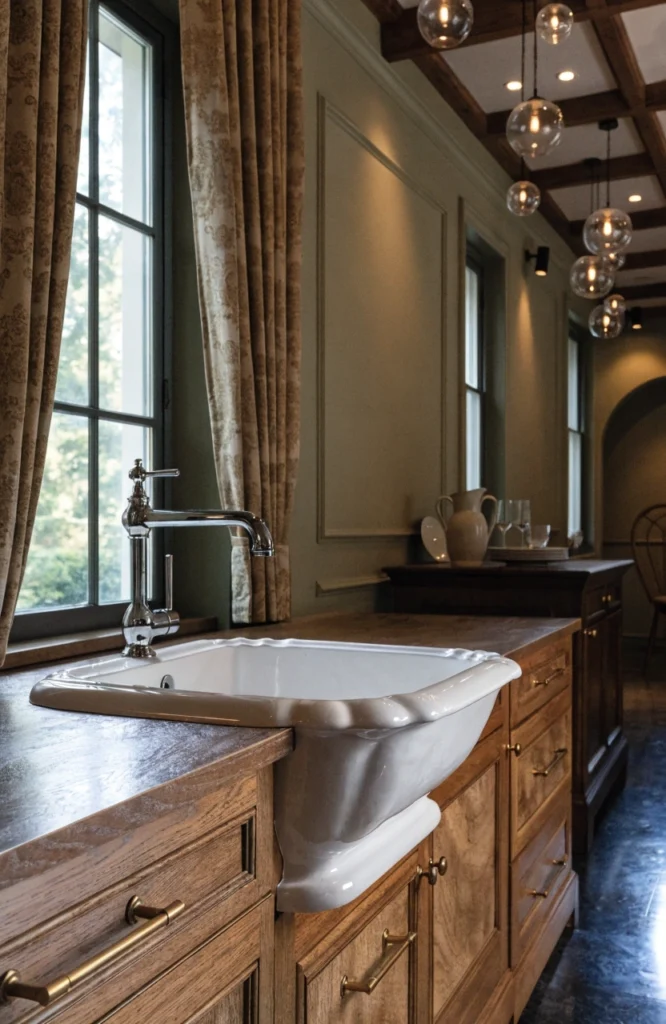
A butler sink — the deep, rectangular ceramic sink originally designed for the working kitchens of large country houses — installed in a corner position with a pair of traditional pillar taps or a classic bridge mixer creates one of the most timelessly beautiful corner sink combinations available in any kitchen style.
The generous depth of a butler sink makes it one of the most practical sink formats for a busy family kitchen — it accommodates large pots, baking trays, and oversized items that standard depth sinks struggle with. In a corner position with traditional taps and a natural stone or timber countertop, a corner butler sink creates a kitchen workspace that feels both historically rooted and completely relevant in a contemporary home.
Pro Tip: Specify wall-mounted taps positioned on one of the two walls rather than deck-mounted taps on the countertop for a corner butler sink wherever the plumbing configuration allows. Wall-mounted taps on a corner sink keep the countertop surface completely clear around the basin, make cleaning significantly easier, and create a cleaner, more considered look than deck-mounted taps that sit awkwardly in the corner angle beside the basin.
12. Corner Sink with a Pot Filler Above
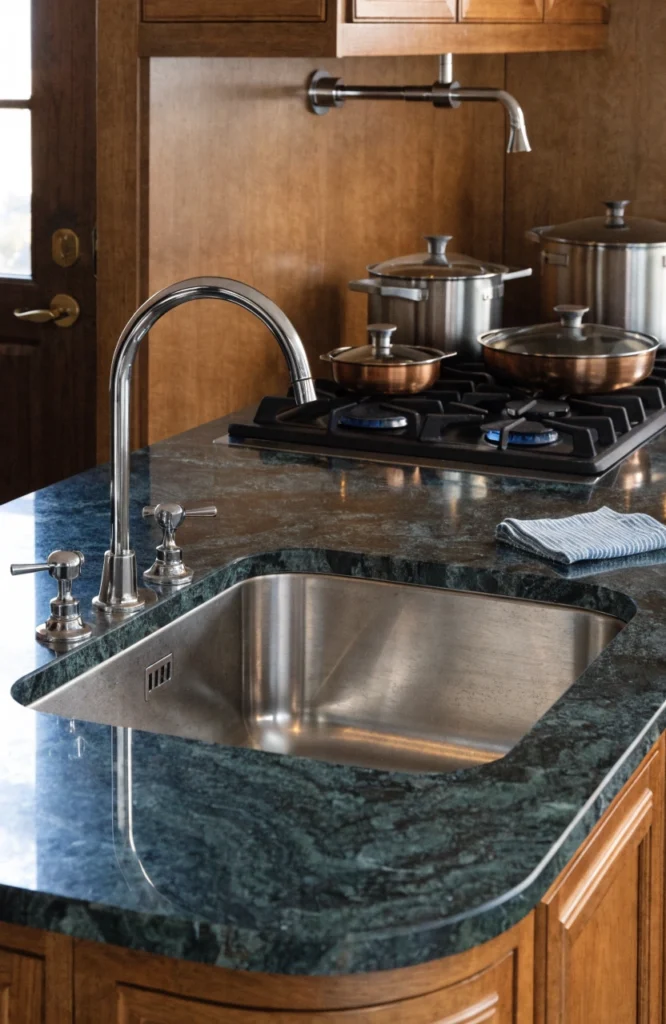
Adding a pot filler — a wall-mounted tap on an articulated arm that extends over the hob to fill large pots with water — to a corner kitchen layout that also includes a corner sink creates a kitchen workspace of genuinely professional efficiency. The combination means water is available at both the sink and directly above the cooking position, eliminating the need to carry heavy pots of water across the kitchen from sink to hob.
In a corner kitchen layout where the sink and hob are positioned on adjacent walls meeting at the corner, a pot filler mounted on the wall above the hob is particularly well-placed — close to the corner sink, within easy reach of the cooking position, and requiring minimal pipework to connect to the water supply running to the adjacent corner sink.
Pro Tip: Specify a pot filler with a double-jointed articulated arm rather than a single-jointed one. A double-jointed arm folds completely flat against the wall when not in use — sitting neatly beside the splashback without protruding into the cooking space — and extends to reach the centre of the largest pot on the largest burner when needed. A single-jointed pot filler arm is less flexible and more likely to be left awkwardly extended when not in use.
13. Corner Sink with Colour Pop Splashback
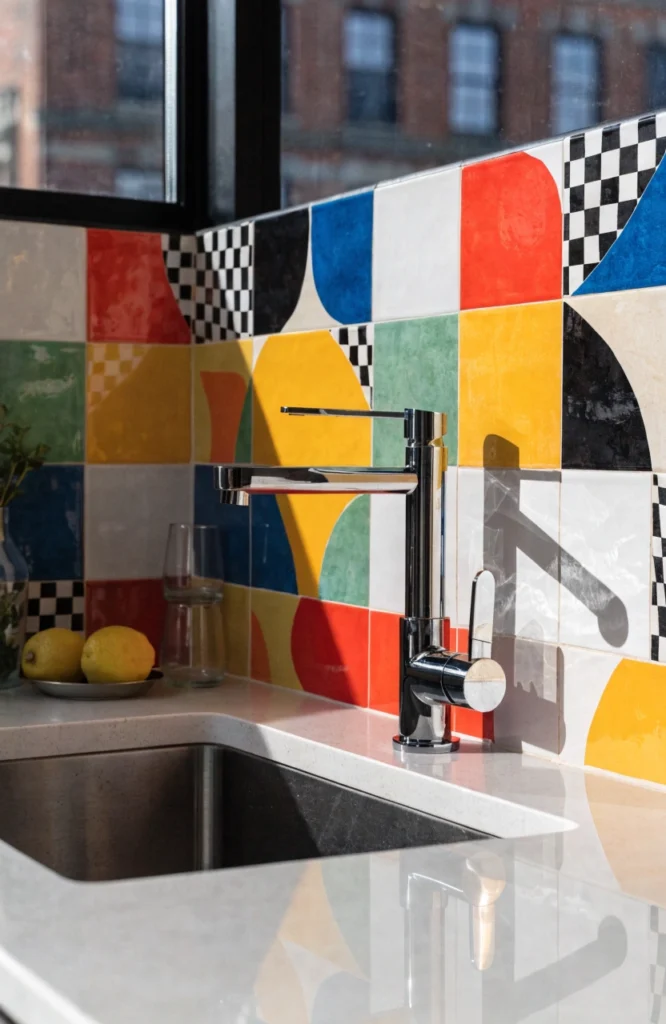
The two wall planes that meet at a corner sink position create a natural splashback opportunity that is larger and more visually prominent than the single-wall splashback behind a standard mid-run sink. A bold, colorful, or highly decorative splashback that wraps around both walls of the corner — meeting at the internal corner above the sink — creates a kitchen feature of genuine visual impact.
Handmade zellige tiles in a jewel tone, a bold geometric encaustic tile, a single large format marble slab cut to wrap the corner, or a vibrant solid color in a glossy paint-grade finish — all create a corner splashback moment that makes the sink position the most visually exciting area in the kitchen. The corner amplifies the impact of the splashback material by displaying it across two planes simultaneously.
Pro Tip: Use a single continuous material across both wall planes of a corner splashback rather than treating each wall separately with a visible join at the internal corner. A continuous material wrap — particularly important with large format tiles or slab materials — requires careful planning and precise cutting at the corner angle but creates a seamless, considered result that a two-piece splashback with a visible internal corner join can never fully replicate.
14. Corner Sink with Smart Storage Solutions Around It
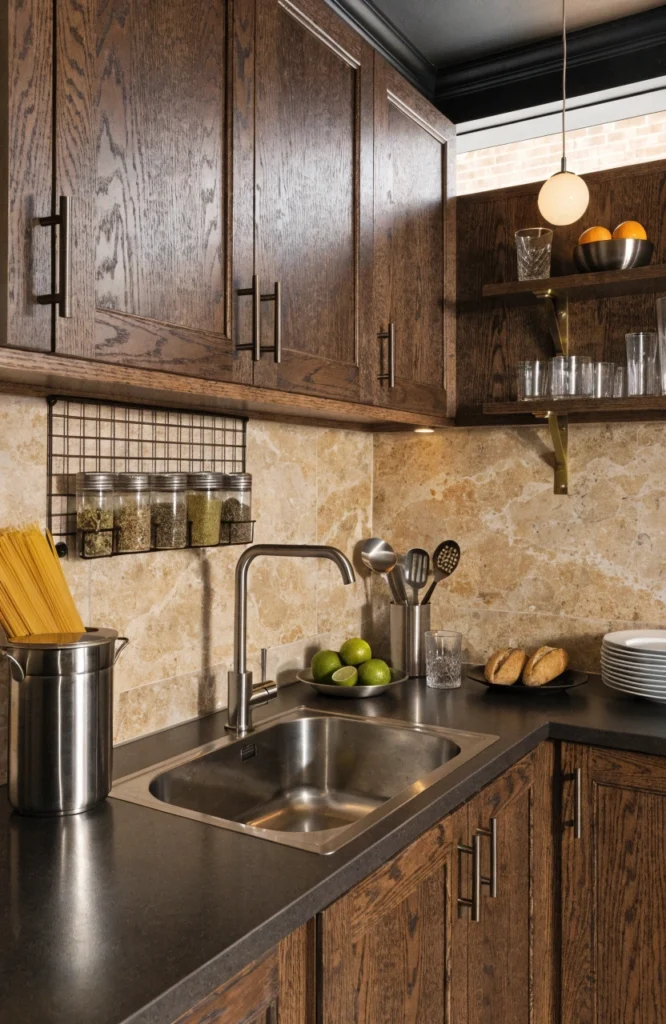
The area immediately around a corner sink — the countertop surfaces on either side, the cabinet space below, and the wall area above — represents a concentrated storage opportunity that the best corner sink designs exploit fully. A corner sink surrounded by well-designed, purpose-built storage becomes the most functional zone in the entire kitchen.
Pull-out waste and recycling bins built into the cabinet directly below the sink, a dedicated cleaning product pull-out beside it, wall-mounted magnetic strips for brushes and cloths above the splashback, and a narrow pull-out caddy for washing up liquid and hand soap beside the basin — each small storage solution contributes to a sink area that is a genuinely efficient and organised workspace.
Pro Tip: Build in a dedicated pull-out recycling and waste sorting station in the cabinet immediately adjacent to the corner sink — not directly below it where the waste pipes limit usable space, but in the first full-depth cabinet on either side. A pull-out waste station that is genuinely convenient to the sink encourages consistent recycling sorting habits and keeps waste off the countertop in a kitchen where aesthetics and function are equally important.
15. Corner Sink as Part of a Full Corner Kitchen Redesign
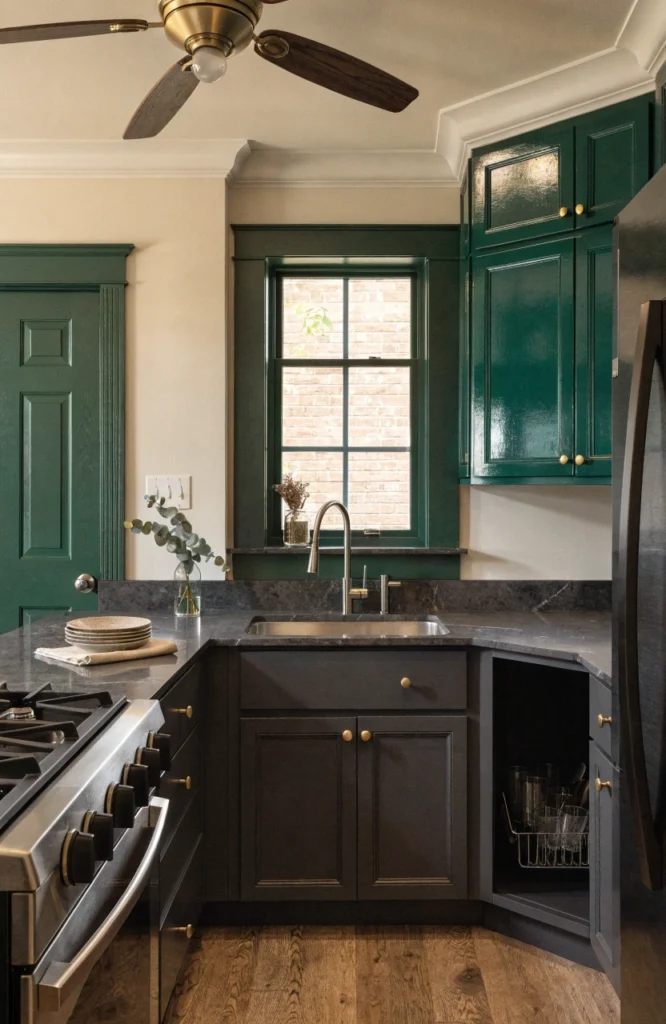
The most ambitious and rewarding approach to a corner kitchen sink is to use it as the starting point for a complete rethinking of the kitchen layout — designing the entire room around the corner sink position rather than retrofitting it into an existing layout. When the corner sink is the fixed point from which every other kitchen element is planned, the whole kitchen can be optimised around it.
Hob placement on an adjacent run, refrigerator positioned to complete the working triangle, island or breakfast bar oriented to face the corner sink, and storage zoned logically around the three primary kitchen activity areas — prep at the sink, cooking at the hob, and serving at the island — creates a kitchen that functions with a coherence and efficiency that no retrofitted corner sink can fully achieve.
Pro Tip: Work with a kitchen designer or space planner for a full corner kitchen redesign rather than attempting to plan the layout independently. The spatial relationships between sink, hob, refrigerator, and work surfaces in a corner kitchen are more complex than in a standard galley or L-shaped layout, and the decisions made at the planning stage determine how well the finished kitchen functions for years. Professional layout planning is the investment that delivers the greatest long-term return in kitchen design.
Stop Wasting Your Corner and Start Using It
The corner of your kitchen has been waiting for a job that is worthy of it. A corner sink gives it exactly that — a purpose, a presence, and a practicality that transforms the most awkward point in the room into the most hardworking one.
Whether you are planning a full kitchen renovation or simply rethinking an existing layout, the corner sink deserves serious consideration. The kitchens that work best are the ones where every decision was made with genuine intention — and choosing to put the sink in the corner is one of the most intentional decisions a kitchen can contain.