
14 Courtyard Garden Ideas for Small Homes with Big Style
Courtyard gardens possess a special kind of magic. These enclosed outdoor spaces offer privacy, intimacy, and a connection to nature right outside your door—even in the heart of bustling cities or compact suburban homes.
The walls that define a courtyard might seem limiting at first, but they’re actually opportunities to create something extraordinary. A well-designed courtyard becomes an extension of your living space, a private sanctuary where every element is curated for maximum impact.
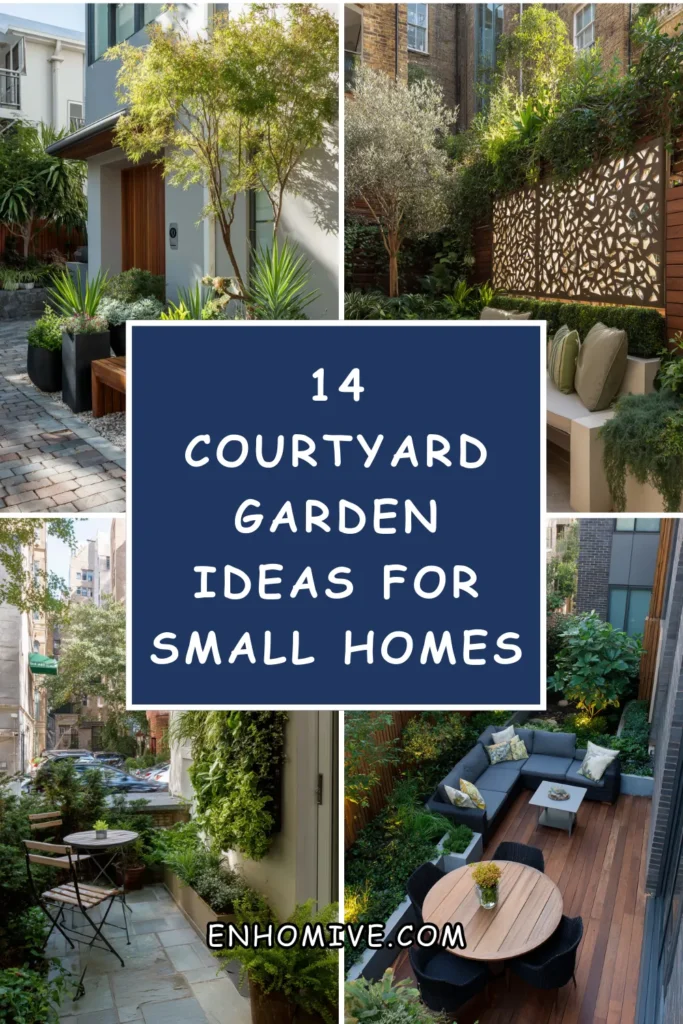
The challenge isn’t the size—it’s knowing how to transform those precious square feet into a stylish, functional outdoor room that feels expansive rather than cramped. These 14 courtyard garden ideas will show you how to pack serious style into small spaces, creating outdoor retreats that punch well above their weight.
1. Vertical Garden Walls: Growing Upward
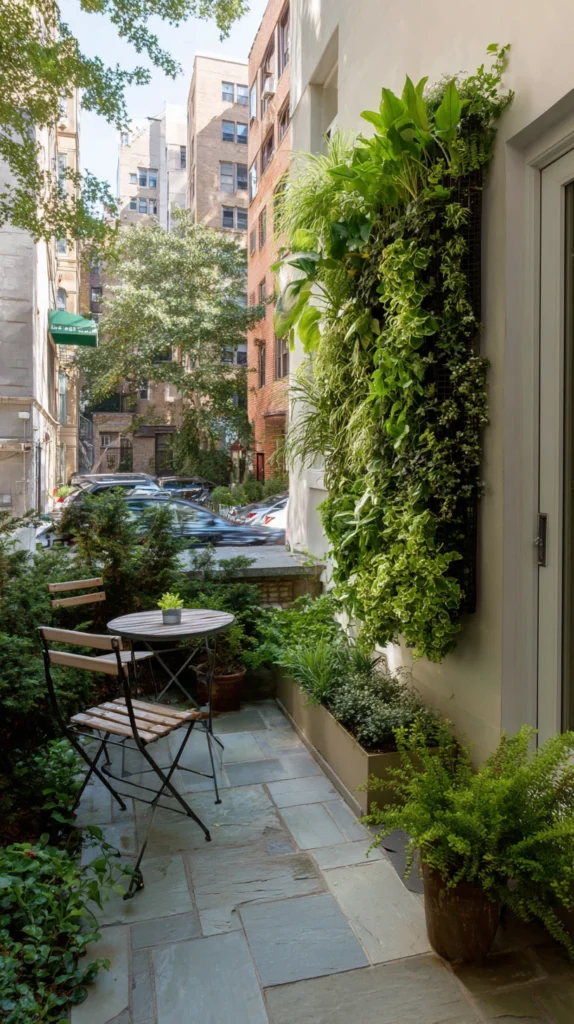
When ground space is limited, the only way to go is up. Vertical gardens transform blank courtyard walls into lush, living tapestries that add greenery without sacrificing precious floor space. Install wall-mounted planters, pocket systems, or modular panels that allow you to layer different plants at varying heights.
Mix cascading ferns with upright succulents, flowering vines with trailing ivy, and herbs with ornamental grasses. The vertical approach not only saves space but also draws the eye upward, creating the illusion of height and making your courtyard feel larger.
This living wall becomes a stunning focal point while improving air quality and adding natural insulation to your home. For easier maintenance, choose drought-tolerant plants or install an integrated drip irrigation system that keeps everything thriving with minimal effort.
2. Water Features: Sound and Serenity
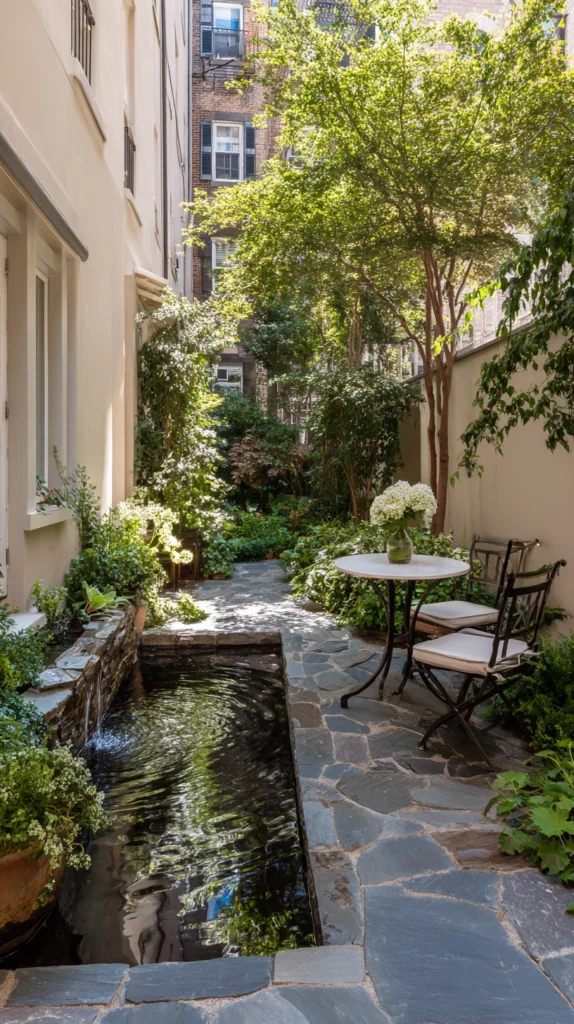
Nothing transforms a courtyard quite like the gentle sound of moving water. Even the smallest water feature creates an oasis-like atmosphere while masking urban noise from neighbors and traffic. For compact courtyards, consider wall-mounted fountains that provide visual and auditory appeal without taking up floor space.
A simple bowl fountain surrounded by river stones creates a minimalist focal point, while a more elaborate tiered fountain adds classical elegance. The key is choosing something proportional to your space—subtle and soothing rather than overwhelming and gurgling. Water features also attract birds and create reflective surfaces that bounce light around your courtyard, making it feel brighter and more spacious. If you’re concerned about maintenance, modern recirculating fountains require minimal upkeep and can be turned off when not in use.
3. Strategic Lighting: Evening Enchantment
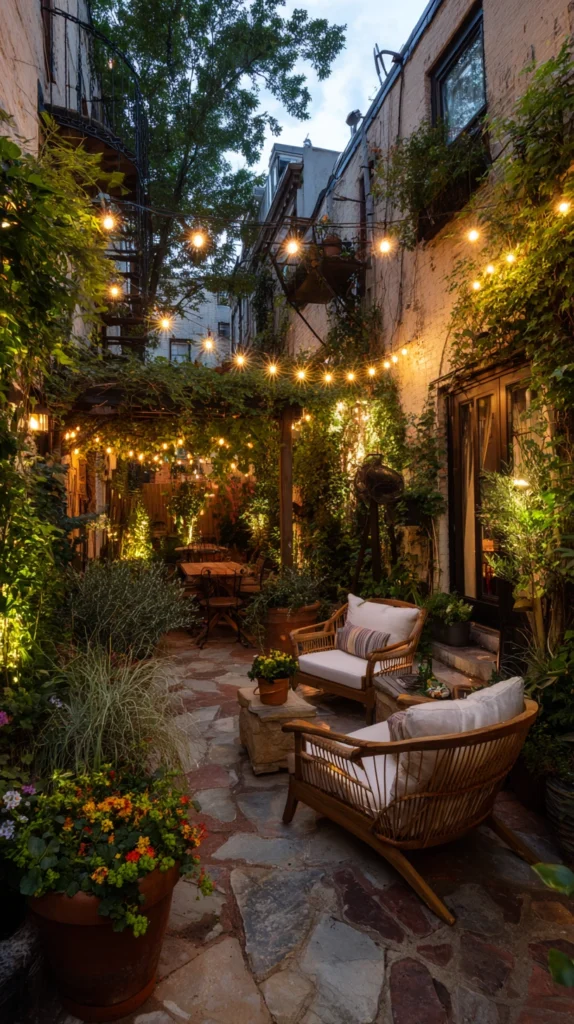
Lighting extends your courtyard’s usability into evening hours while adding drama and atmosphere. Layer different light sources to create depth and interest: string lights overhead for ambient glow, uplights highlighting architectural features or specimen plants, and subtle path lighting for safety and guidance. Solar-powered options eliminate wiring concerns and reduce energy costs. Consider battery-operated candles or lanterns for movable accent lighting that you can rearrange for different moods.
The right lighting transforms your courtyard from a daytime retreat into a magical evening escape. Avoid over-lighting, which can feel harsh and diminish the intimate atmosphere. Instead, aim for gentle pools of light that create mystery and shadow, making the space feel larger and more intriguing after dark.
4. Built-In Seating: Maximizing Function
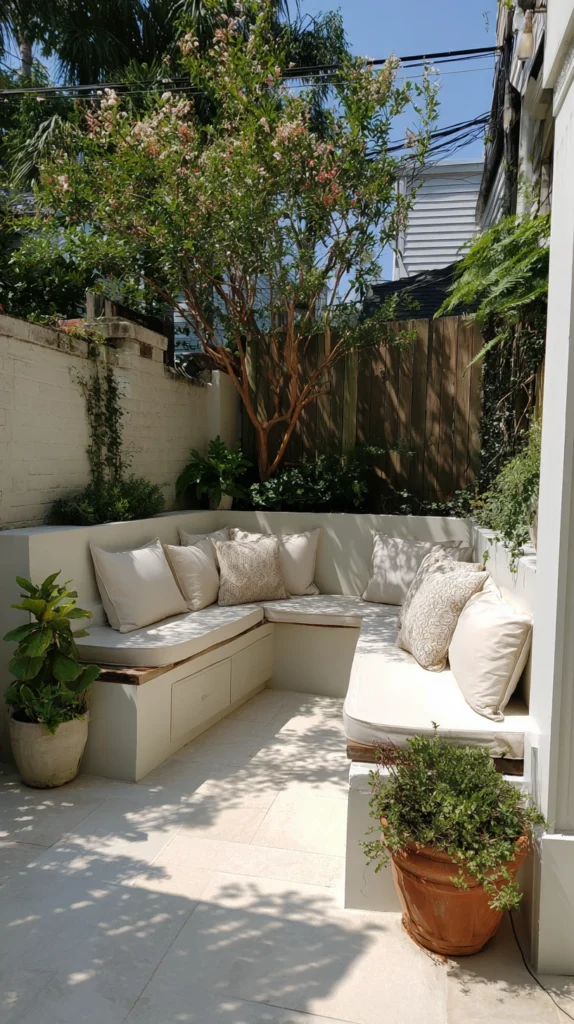
Freestanding furniture can overwhelm small courtyards, making them feel cluttered and cramped. Built-in seating offers an elegant solution that maximizes usable space while providing ample seating for entertaining. Low walls topped with cushions, L-shaped benches tucked into corners, or window-seat style arrangements along one wall create comfortable seating without eating into precious floor area.
Add weatherproof cushions and throw pillows for comfort and style. The beauty of built-in seating is its dual purpose—incorporating hidden storage beneath bench seats for garden tools, cushions, or outdoor dining accessories. This approach creates clean lines and a custom, high-end look that makes your courtyard feel intentionally designed rather than haphazardly furnished.
5. Mirrored Surfaces: Expanding Perception
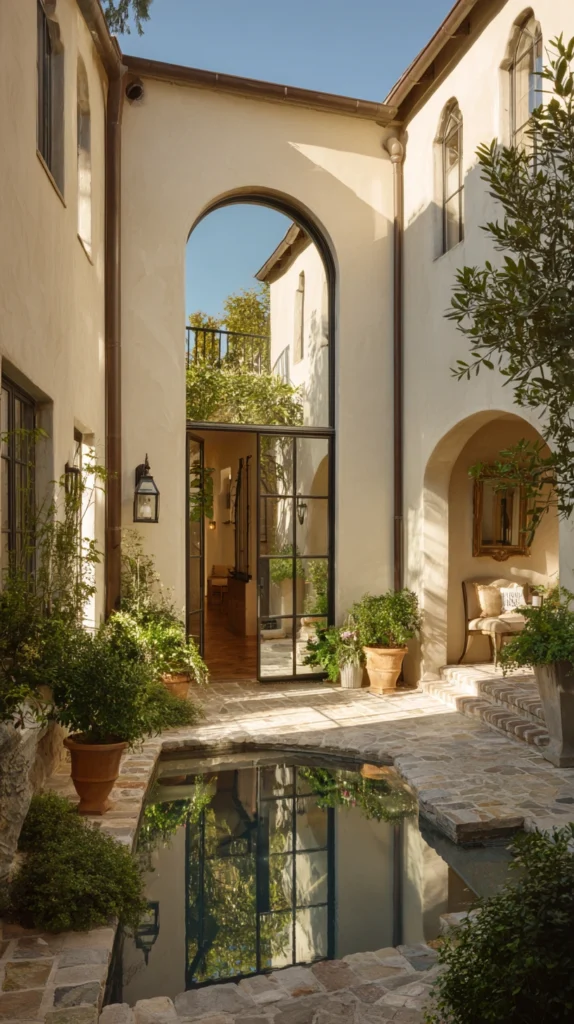
Strategically placed mirrors create the illusion of expanded space while reflecting light and greenery throughout your courtyard. Outdoor-rated mirrors mounted on walls or fences essentially double your visual garden space, creating depth and intrigue. Position mirrors to reflect your most attractive plantings or to bounce natural light into shadowy corners.
Arched mirrors add architectural interest and evoke Mediterranean or Moorish garden styles. Mirrored screens can also serve as privacy dividers if your courtyard connects to other outdoor areas. Be mindful of placement—avoid positioning mirrors where they might confuse birds or reflect harsh afternoon sun into seating areas. When used thoughtfully, mirrors transform compact courtyards into seemingly expansive garden rooms.
6. Paving Patterns: Ground-Level Interest
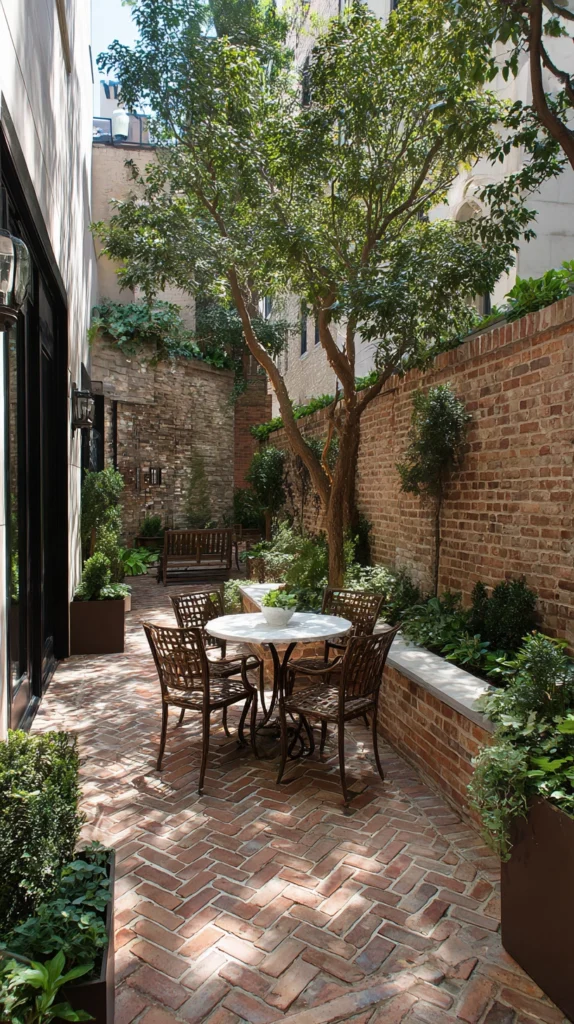
The flooring in your courtyard deserves as much attention as the walls and plants. Interesting paving patterns add visual texture and can actually make spaces feel larger. Diagonal layouts create longer sightlines that expand perceived dimensions.
Alternating materials—perhaps stone pavers bordered by gravel, or brick laid in herringbone patterns—adds sophistication and breaks up monotonous surfaces. For contemporary courtyards, large-format porcelain tiles create seamless, modern looks with minimal grout lines. Traditional courtyards might feature terracotta, cobblestones, or weathered brick for timeless appeal. Consider permeable paving options that allow water drainage while supporting environmental sustainability. The right flooring sets the tone for your entire courtyard design and provides a cohesive foundation for everything else.
7. Container Gardens: Flexible Beauty
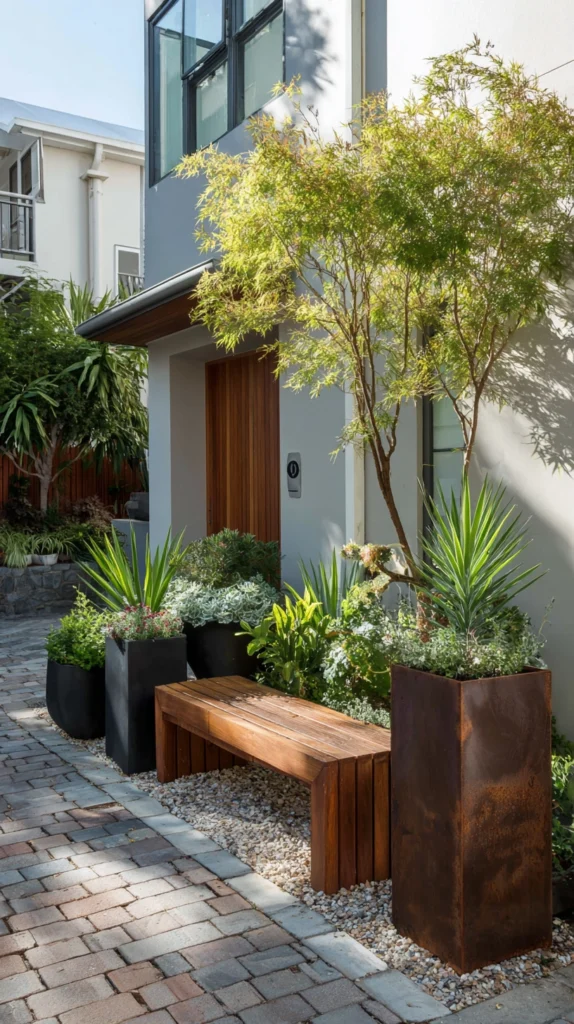
Containers offer unmatched flexibility in courtyard gardens, allowing you to rearrange, refresh, and adapt your space seasonally. Group pots in varying heights and sizes to create visual interest and depth—large statement planters anchoring corners with smaller pots clustered around them.
This layered approach mimics natural plant communities while keeping everything portable. Choose containers that complement your courtyard style: sleek concrete or metal for modern spaces, terracotta or ceramic for Mediterranean vibes, or painted wood for cottage charm.
The mobility of container gardens means you can rotate plants based on seasonal interest, move delicate specimens to protected areas during harsh weather, or completely refresh your courtyard’s look whenever inspiration strikes. Mix edibles with ornamentals for both beauty and function.
8. Pergolas and Overhead Structures: Defining Space
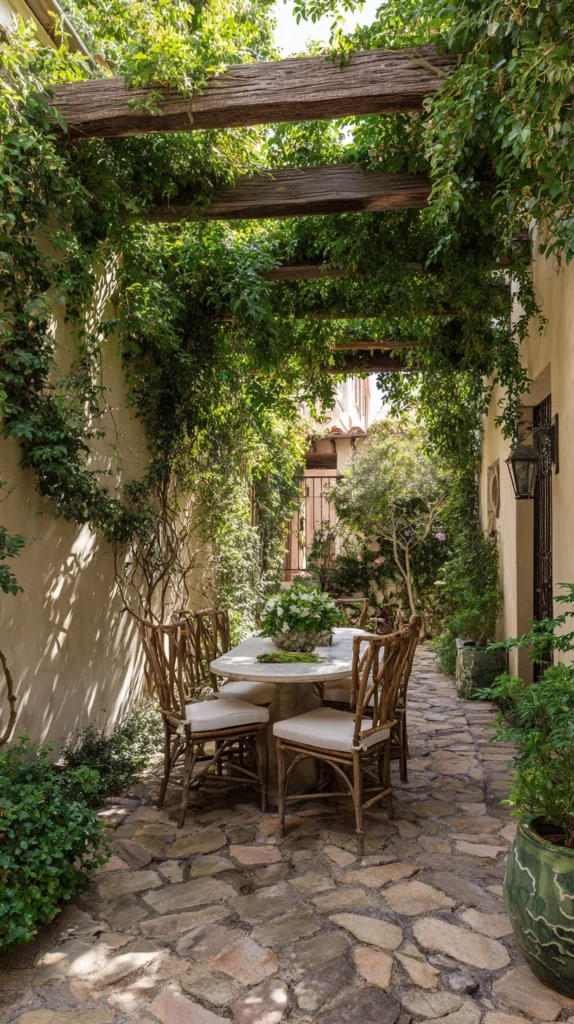
Adding an overhead element to your courtyard creates the feeling of an outdoor room while providing much-needed shade and vertical interest. Even partial coverage from a pergola, arbor, or sail shade defines the space and makes it feel more intimate and intentional.
Train climbing plants like wisteria, jasmine, or roses over the structure to create a living ceiling that evolves through seasons. The dappled shade from overhead beams provides relief from harsh sun while maintaining that crucial sense of openness.
For contemporary courtyards, clean-lined metal or wood pergolas complement modern architecture. Traditional spaces benefit from more ornate structures with decorative brackets and finials. The overhead framework also provides perfect mounting points for lighting, hanging plants, or flowing outdoor curtains.
9. Bold Accent Walls: Personality and Drama
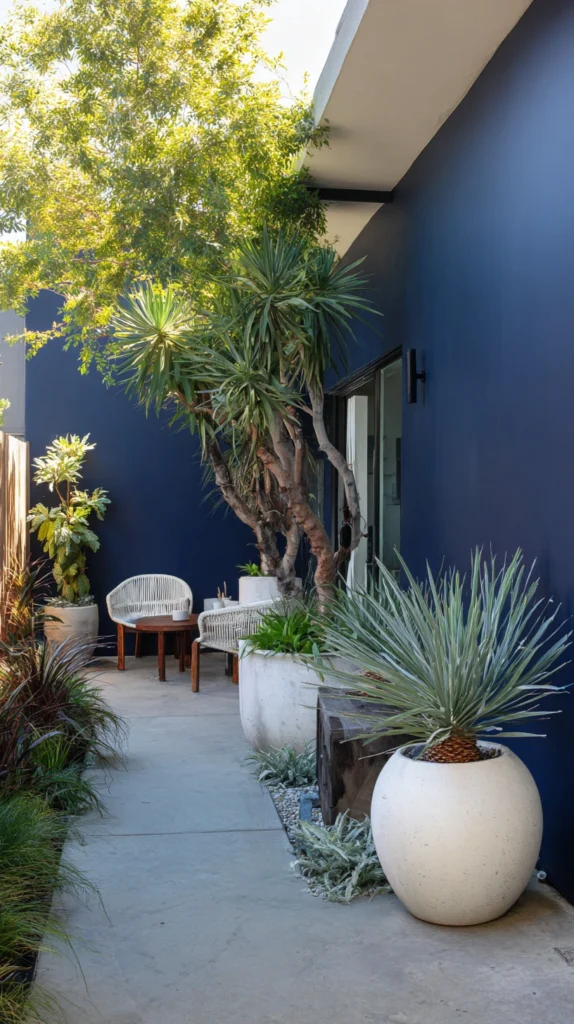
While many design guides suggest keeping courtyard walls neutral to maximize perceived space, a strategically painted accent wall can actually add depth and character. Choose the wall furthest from your main viewing point and paint it in a rich, saturated color—deep navy, forest green, terracotta, or charcoal.
This creates a focal point while making the wall appear to recede, adding the illusion of depth. The bold backdrop also makes plants pop visually, turning simple greenery into dramatic displays. Alternatively, add visual interest with textured finishes, decorative tiles, or weathered wood paneling.
The key is treating your courtyard walls as you would interior walls—as opportunities for expression and style rather than neutral afterthoughts that simply enclose the space.
10. Multi-Level Plantings: Creating Depth
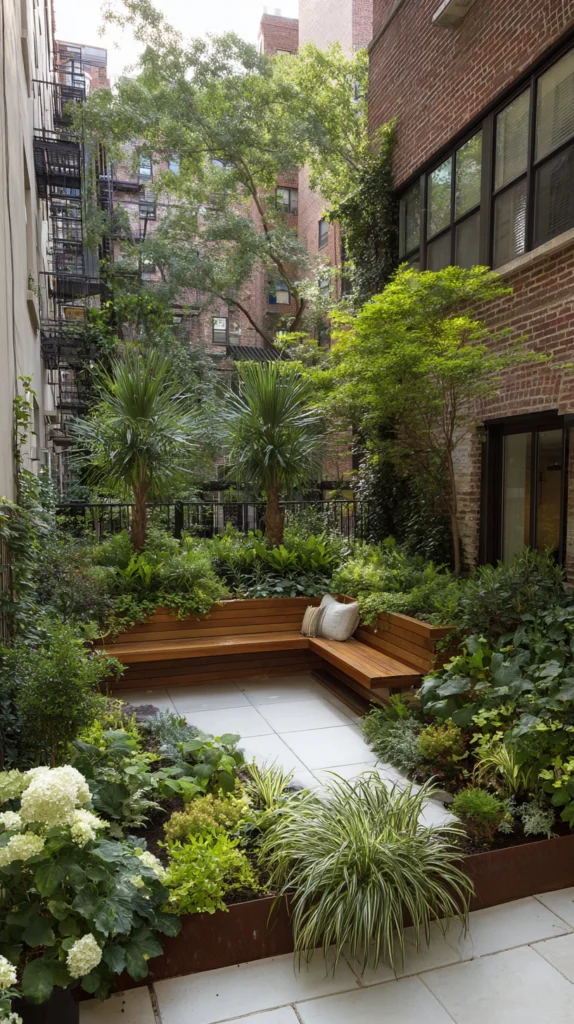
Flat courtyards can feel one-dimensional and dull. Introducing different levels through raised beds, tiered planters, or stepped staging creates depth and visual interest that makes small spaces feel larger.
Build raised planting beds around the perimeter at varying heights, creating a layered effect that draws the eye around the space. Use plant stands or staging to elevate smaller pots, creating a cascading garden effect even in the smallest courtyard.
This vertical layering mimics natural landscapes where plants grow at different elevations, creating a more organic, established feeling. Mix plant heights within each level too—tall architectural plants like bamboo or ornamental grasses, medium shrubs and perennials, and low ground covers or trailing plants that soften edges and spill over containers.
11. Minimalist Design: Less is Luxurious
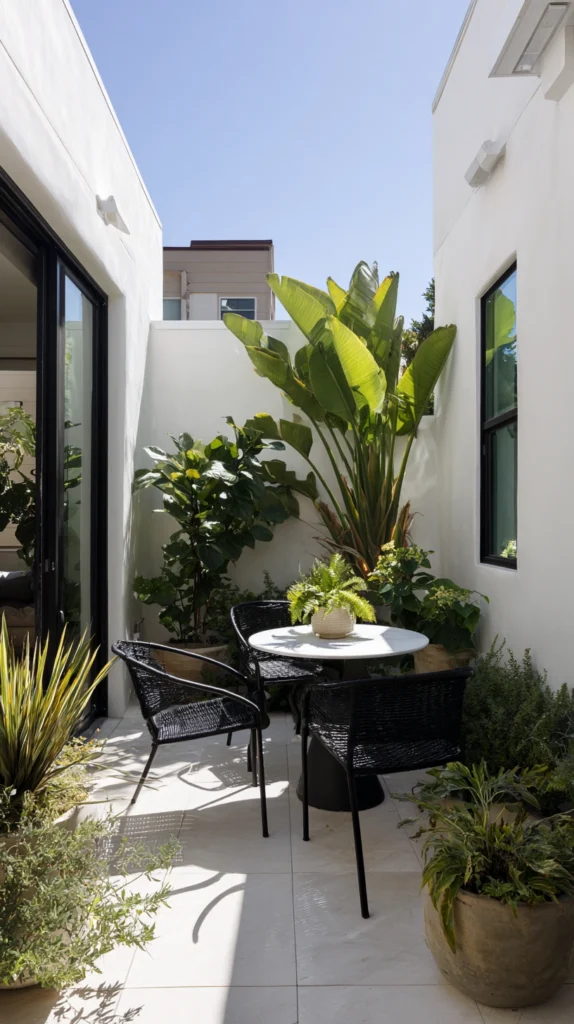
Sometimes the most stylish approach is radical simplicity. Minimalist courtyard design relies on clean lines, limited color palettes, and carefully edited plant selections. Choose just two or three types of plants and repeat them throughout the space for cohesive impact. Stick to a neutral color scheme in hardscaping and furnishings, allowing the green of plants to provide natural color.
This pared-down approach prevents visual clutter that can make small courtyards feel chaotic and cramped. Each element earns its place through function or exceptional beauty. The result feels calm, sophisticated, and surprisingly spacious. Minimalism doesn’t mean boring—it means intentional. Focus on quality over quantity, choosing investment pieces and statement plants that truly shine rather than filling every corner with random elements.
12. Outdoor Rooms: Defining Purpose
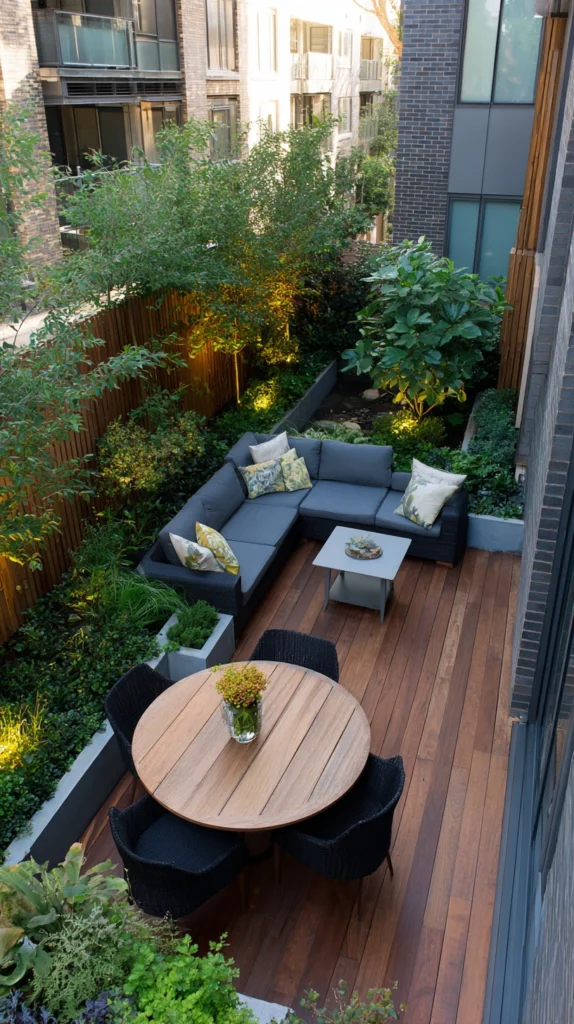
Treat your courtyard as an outdoor room with specific functions rather than generic garden space. Create distinct zones for different activities: a dining area with a small bistro table, a lounging corner with comfortable seating, perhaps a working space with a desk or potting bench. Use different flooring materials, varying overhead coverage, or strategic planting to define these zones without physical barriers.
This approach makes small courtyards feel more spacious by suggesting multiple areas and purposes. It also ensures you’ll actually use the space rather than treating it as a pass-through or storage area. Consider how you want to live in your courtyard—morning coffee, evening entertaining, reading, gardening—and design zones that support these activities. The intentional zoning creates a sophisticated, well-planned aesthetic.
13. Tropical Paradise: Lush and Layered
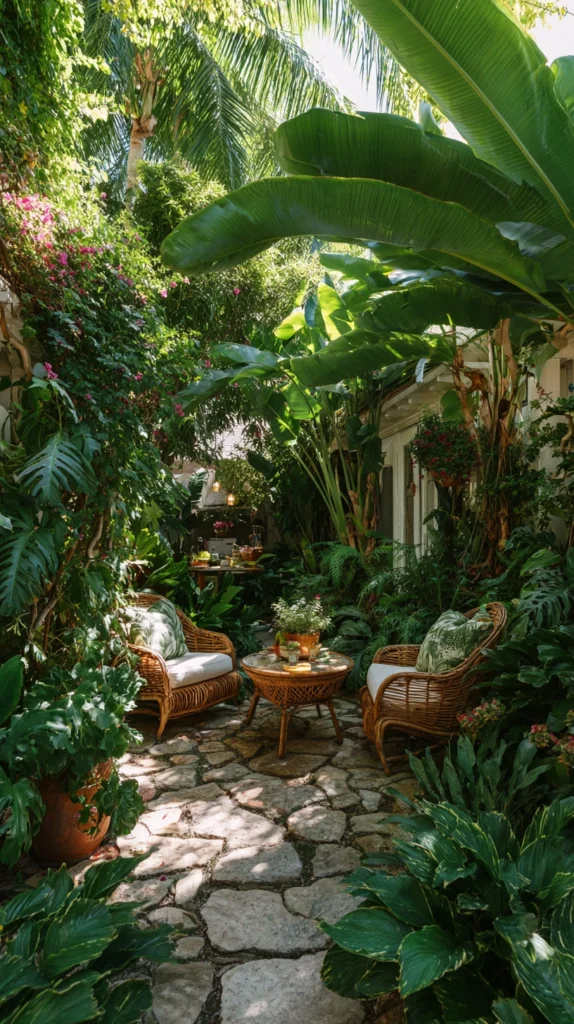
Even in temperate climates, you can create a tropical retreat in your courtyard through strategic plant selection and layering. Large-leafed plants like elephant ears, cannas, and banana plants create instant drama and lushness.
Add ferns, palms, and bamboo for architectural interest and movement. The dense, layered planting common in tropical styles actually works beautifully in small courtyards—it creates privacy, blocks visual boundaries, and makes the space feel like a secret jungle hideaway. Enhance the tropical vibe with natural materials like bamboo screening, teak furniture, and stone or pebble accents. Water features fit perfectly into this aesthetic. The key is embracing abundance rather than restraint, filling your courtyard with rich textures and overlapping greenery that creates an immersive experience.
14. Decorative Screening: Privacy with Personality
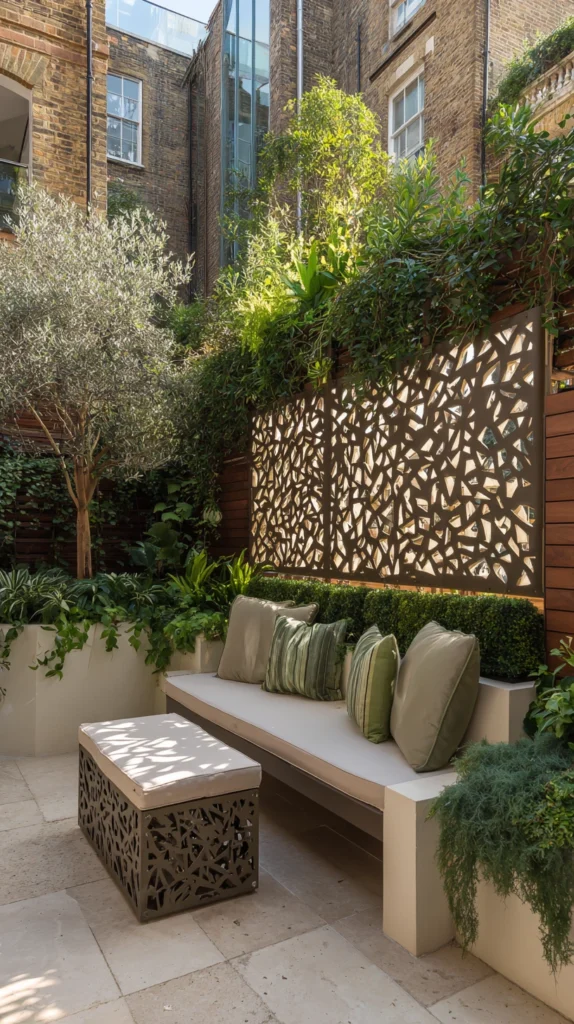
Functional privacy screening becomes a design element in stylish courtyards. Instead of solid fences that feel oppressive, use decorative screens with cut-out patterns that filter views while allowing light and air circulation. Laser-cut metal panels in geometric or botanical patterns add contemporary flair.
Traditional wooden lattice provides classic charm and supports climbing plants. Bamboo screening brings natural texture and zen-like simplicity. These semi-transparent barriers maintain privacy without the heavy, closed-in feeling of solid walls. Layer screening with plantings for increased coverage and softer edges.
The patterns cast beautiful shadows that change throughout the day, adding kinetic interest to your courtyard. Choose screens that reflect your style and the overall aesthetic you’re creating—they become sculptural elements that define your space.
Making Your Courtyard Work
Creating a stylish, functional courtyard garden requires balancing multiple considerations. Here’s how to ensure your design succeeds:
Assess Your Light Conditions: Before selecting plants or planning layouts, spend time observing how sunlight moves through your courtyard throughout the day and across seasons. Enclosed courtyards often have unique light patterns with areas of full sun, dappled shade, and deep shadow.
Choose plants suited to these specific conditions rather than fighting against them. Position seating in spots where light feels comfortable during times you’re most likely to use the space.
Consider Scale Carefully: Everything in a small courtyard needs to be proportional. Oversized furniture overwhelms tiny spaces, while diminutive pieces can look sparse and unintentional.
Test furniture placement before committing—sometimes larger pieces work better because they feel substantial and purposeful rather than apologetic. The same applies to plants: one impressive specimen tree often makes more impact than a dozen small shrubs.
Choose a Cohesive Style: Courtyard gardens benefit from unified design approaches. Mixing too many styles—Mediterranean tiles with Japanese bamboo with English cottage plantings—creates visual chaos in compact spaces.
Select a clear aesthetic direction and commit to it throughout materials, plants, and accessories. This doesn’t mean everything must match, but elements should harmonize and support your overall vision.
Plan for All Seasons: Year-round interest is crucial when your courtyard is visible from interior rooms. Include evergreen plants for winter structure, spring bloomers for seasonal excitement, summer foliage for lushness, and fall color for dramatic transitions.
Consider how the space functions seasonally too—is there covered seating for rainy days? Does summer sun make certain areas too hot?
Maintain Breathing Room: Even when embracing lush, layered designs, leave some open space for visual rest and practical movement. Cramming every square inch creates claustrophobia rather than abundance. Strategic emptiness makes the elements you do include feel more impactful and intentional.
Invest in Quality: Because courtyard gardens are small, you need fewer materials and plants than larger gardens. This makes it feasible to splurge on higher-quality items that truly elevate the space. Better paving, premium plants, substantial furniture, and quality lighting make a noticeable difference in compact areas where every element is scrutinized.
Create Focal Points: Every successful courtyard needs something that catches attention and anchors the design. This might be a water feature, a specimen tree, a piece of garden art, or a beautifully detailed doorway. Without a focal point, eyes wander aimlessly and the space feels directionless. One strong focal element creates purpose and structure.
Living Large in Small Spaces
The beauty of courtyard gardens lies in their intimacy and their potential for perfection. You’re not designing acres of landscape—you’re crafting a jewel box outdoor room where every element contributes to an overall vision. This focus allows for experimentation, luxury, and attention to detail that might be impractical in larger gardens.
Your courtyard can be whatever you dream it to be: a tropical escape, a minimalist meditation space, a sophisticated dining room, a productive kitchen garden, or a romantic hideaway.
The walls that enclose it aren’t limitations—they’re blank canvases waiting for your creativity. They provide privacy, create microclimates that protect plants, and establish boundaries that make the space feel secure and personal.
Small homes with big style understand that luxury isn’t about square footage—it’s about quality, intention, and thoughtful design. Your courtyard garden embodies this principle perfectly. By maximizing vertical space, choosing elements with purpose, layering textures and heights, and creating cohesive style, you transform modest outdoor areas into extraordinary retreats that rival gardens many times their size.
The most successful courtyard gardens feel inevitable—like every plant, every paver, every piece of furniture was always meant to be exactly there. Achieving this requires planning, patience, and a clear vision, but the reward is an outdoor space that becomes a genuine extension of your home and your life.
A place where you linger over morning coffee, where friends gather for evening drinks, where you steal quiet moments throughout busy days. That’s the real magic of courtyard gardens—they prove that style, beauty, and joy don’t require vast spaces. They just require imagination and care.