

15 DIY Garden Path Ideas
A garden path is one of the most fundamentally important design elements in any outdoor space. It determines how the garden is moved through, how its different zones are connected, and how the overall layout of the outdoor space is experienced by everyone who walks within it. A well-designed garden path does more than provide a dry, firm surface underfoot.
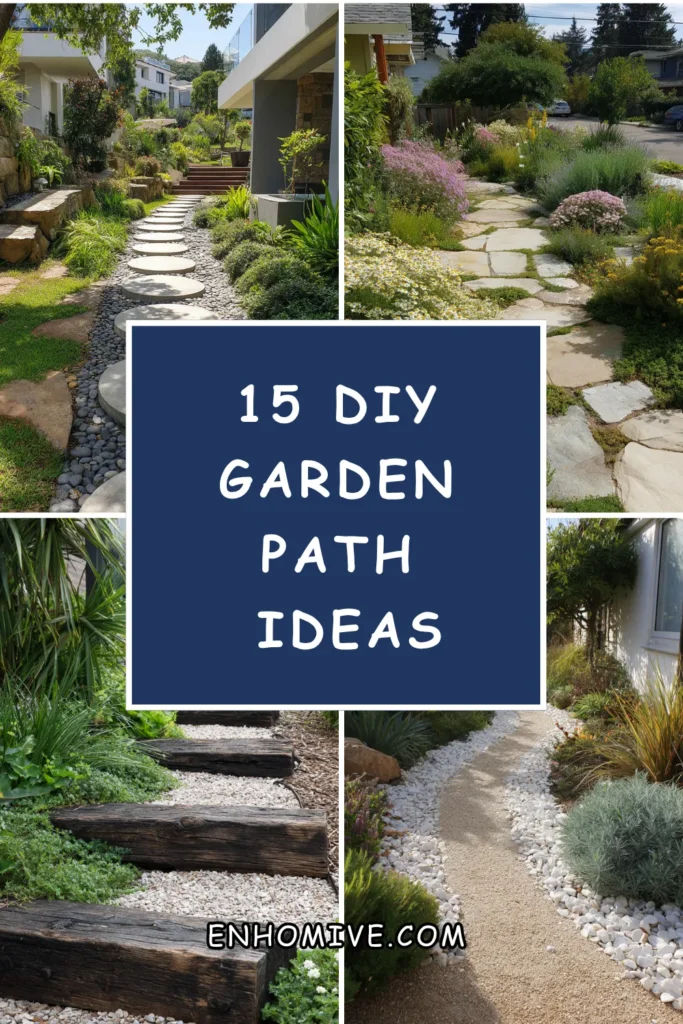
It creates a journey through the garden, draws the eye toward specific views and destinations, and contributes a material warmth and character to the outdoor space that planting alone cannot provide. The good news is that a beautiful garden path does not require a professional contractor or an expensive material budget. Here are 15 DIY garden path ideas that are modern, practical, and genuinely worth making.
1. Gravel and Stepping Stone Path
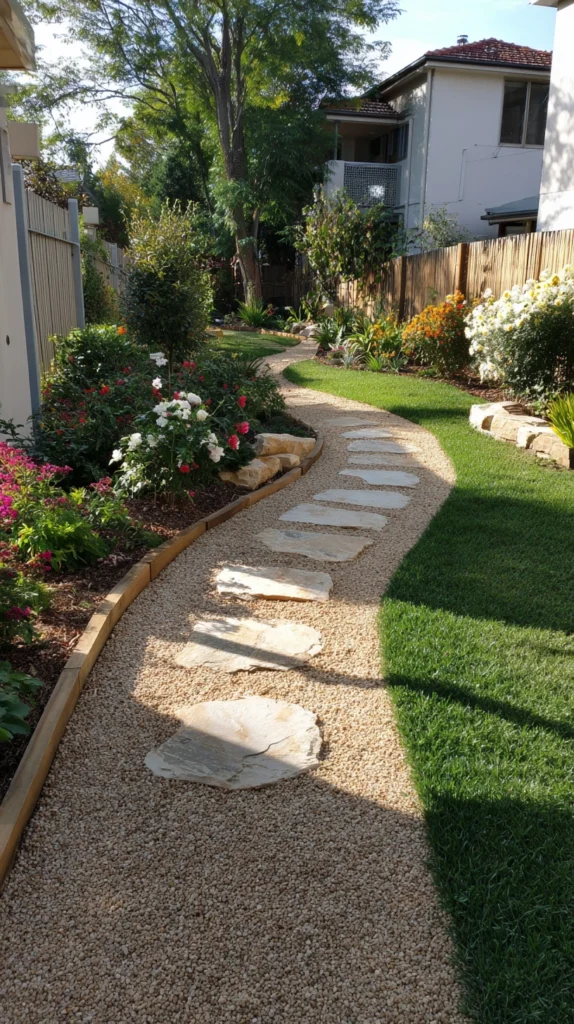
A gravel path punctuated by large flat stepping stones is one of the most classic and most naturally beautiful DIY garden path constructions available. Lay a weed-suppressing membrane along the path route, edge it with simple timber boards or metal edging strips, fill it with a generous layer of fine gravel, and position large flat natural stones at comfortable walking intervals along the center of the path.
The stepping stones provide a firm, dry surface underfoot while the gravel surrounding them adds texture, warmth, and the satisfying sound of footfall that only gravel can produce.
Choose stepping stones in a natural material that suits the garden’s aesthetic. sandstone for a warm, traditional quality. slate for a more contemporary, graphic result. limestone for a pale, formal character. The gravel infill should coordinate in tone with the stepping stones for a cohesive, considered result that reads as a unified path surface rather than two competing materials.
2. Reclaimed Brick Path
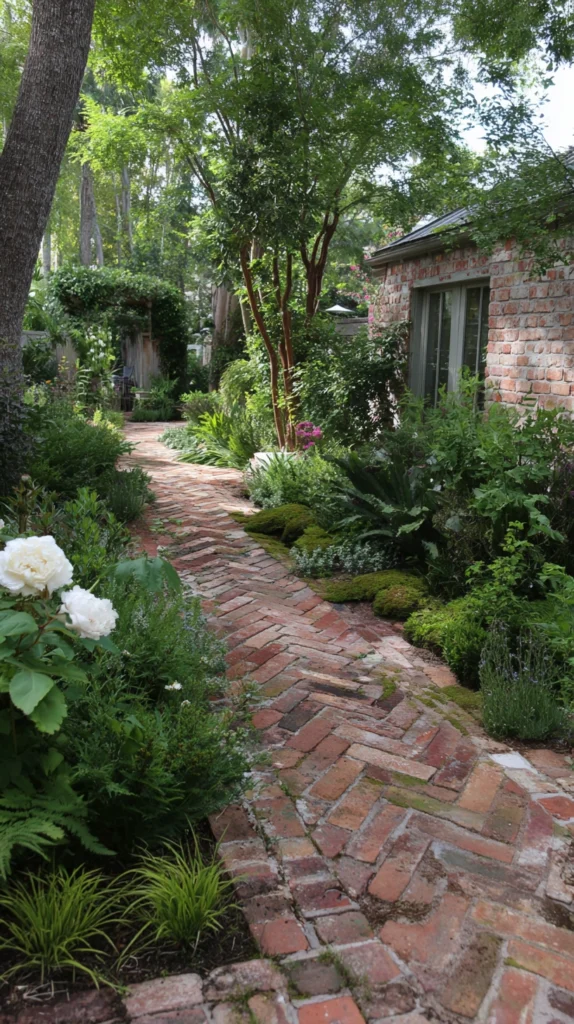
A path constructed from reclaimed bricks laid in a traditional herringbone, basket weave, or running bond pattern creates a garden path of extraordinary warmth, character, and historical authenticity.
Source reclaimed bricks from demolition contractors, salvage yards, or online marketplaces and select pieces of consistent thickness for the most level finished surface. Excavate the path route to a depth of approximately 10cm, compact a layer of sharp sand as a laying bed, and set each brick individually in the pattern of your choice.
The warm red, orange, and terracotta tones of reclaimed brick coordinate beautifully with garden planting in virtually every color and every style. A reclaimed brick path laid in a herringbone pattern has a richness and complexity that new brick cannot replicate, and the slight variation in color and texture between individual bricks creates a path surface of genuine visual interest that improves further with every season of weathering and moss growth.
3. Timber Sleeper Path
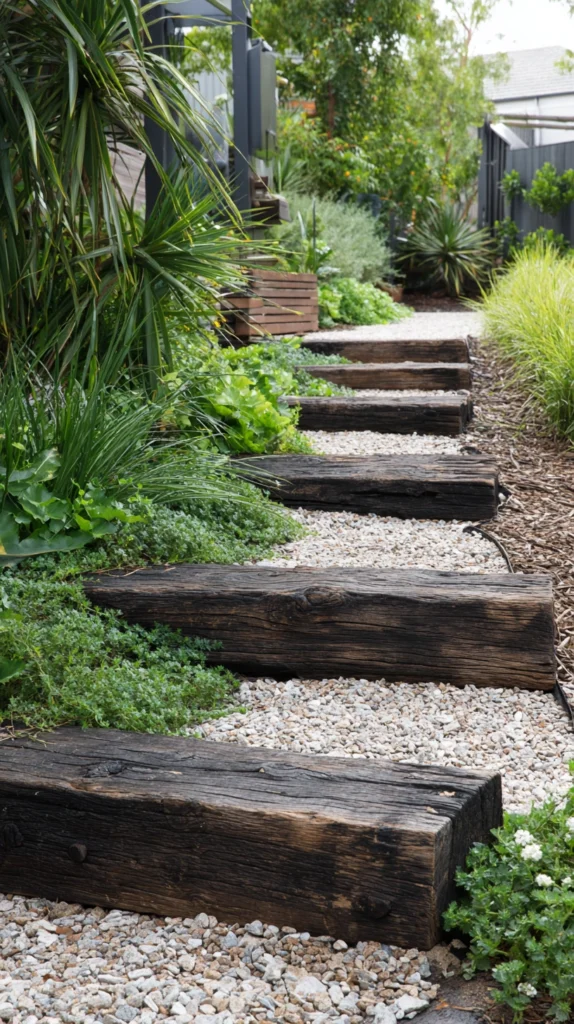
Large timber railway sleepers laid across the path route at regular intervals create a simple, bold, and strikingly modern garden path of great character.
Space the sleepers at a comfortable walking pace, ensuring each one sits level and stable in the ground, and fill the gaps between them with gravel, pebbles, or low-growing ground cover plants. New or reclaimed railway sleepers in oak or pine create a path with a satisfying solidity and visual weight that lighter path materials cannot achieve.
Treat timber sleepers with a plant-safe wood preservative before installation to extend their outdoor life and prevent premature deterioration in ground contact. The combination of dark, weathered timber sleepers with the bright green of low-growing plants between them creates one of the most visually striking and most contemporary garden path aesthetics available to a DIY gardener with a modest material budget.
4. Stepping Stone Grass Path
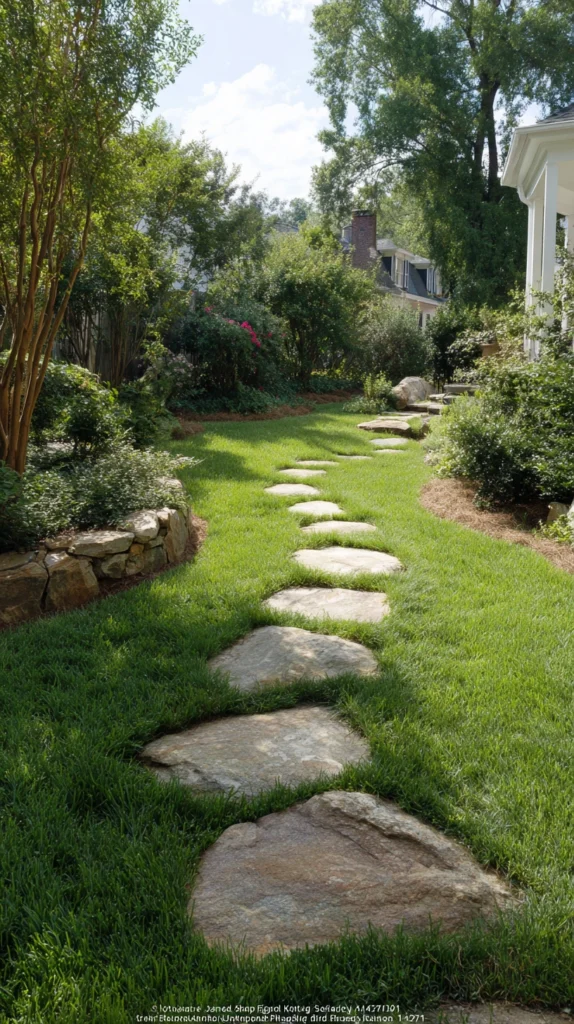
Individual stepping stones set flush into an existing lawn create the simplest and most seamlessly integrated garden path available.
Mark the path route with a garden hose or a length of rope, position the stones at comfortable walking intervals along the marked route, and cut around each stone with a sharp spade before lifting the turf and excavating to the stone’s depth plus a 25mm sand laying bed. Set each stone level with the surrounding lawn surface so that the lawnmower can pass over it without obstruction.
Choose stepping stones of sufficient size to accommodate a full adult footstep comfortably. stones that are too small feel insecure underfoot and quickly look mean and insufficient within the lawn.
Natural flat stones of at least 45cm in their shortest dimension provide the most comfortable and most visually generous stepping stone path through a lawn. Allow the grass to grow up to the edges of each stone naturally for a path that integrates completely into the lawn with no visible edging or border material.
5. Pea Gravel Path
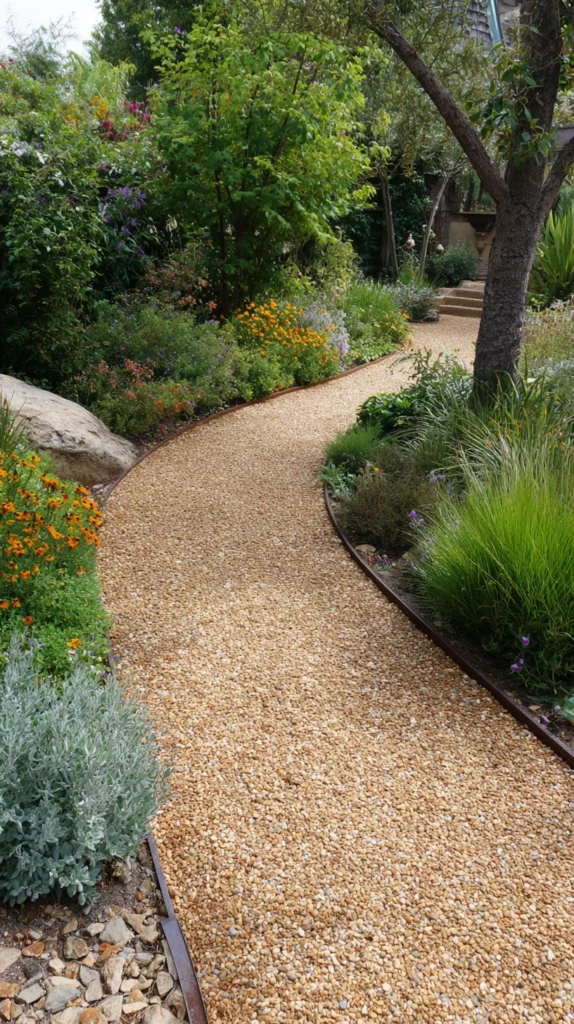
A pea gravel path is one of the most affordable, most quickly installed, and most texturally satisfying DIY garden path options available. Excavate the path route to a depth of approximately 10cm, compact a layer of hardcore or crushed stone as a base, lay a weed-suppressing membrane over the compacted base, and pour pea gravel on top to a finished depth of approximately 50mm.
Edge the path with simple timber boards, metal edging strips, or natural stone for a clean, defined path boundary that prevents the gravel from migrating into the surrounding lawn or planted beds.
Pea gravel in a warm golden or grey tone creates a path that is simultaneously practical and beautiful. Its rounded, smooth surface is comfortable underfoot, its self-draining quality eliminates puddles after rain, and its neutral tone coordinates with virtually every garden material and planting style. Rake the pea gravel surface regularly to maintain a consistent, level appearance and top up the gravel depth as needed through the seasons.
6. Moss and Stone Path
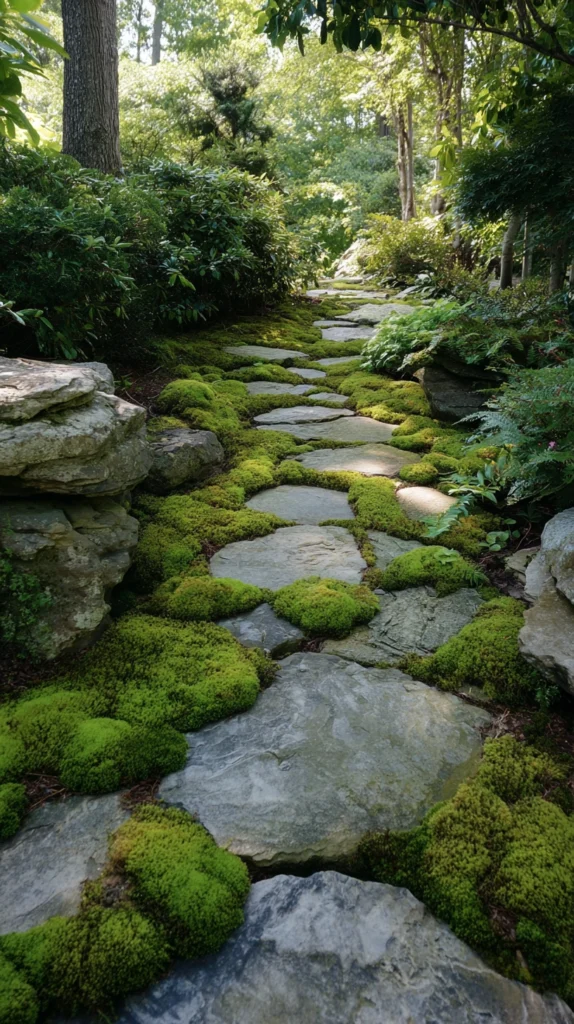
A path of flat natural stones with moss encouraged to grow between them creates one of the most naturally beautiful and most evocative garden path surfaces available. Lay flat stones in the path route with deliberately wide gaps between them. approximately 5 to 10cm. and plant or encourage moss to establish in the gaps.
The combination of the cool grey stone and the deep, velvety green moss creates a path surface that references the ancient stone paths of Japanese temple gardens and English country estates in the most authentic and most effortless way.
Moss establishes most readily in shaded, moist conditions. a moss and stone path is therefore most appropriate for the shadier areas of the garden where other path materials can look dark and unwelcoming. Inoculate the gaps between stones with a moss slurry made from blended fresh moss, water, and a small amount of natural yogurt or buttermilk to accelerate establishment in areas where moss does not grow naturally.
7. Concrete Stepping Stone Path
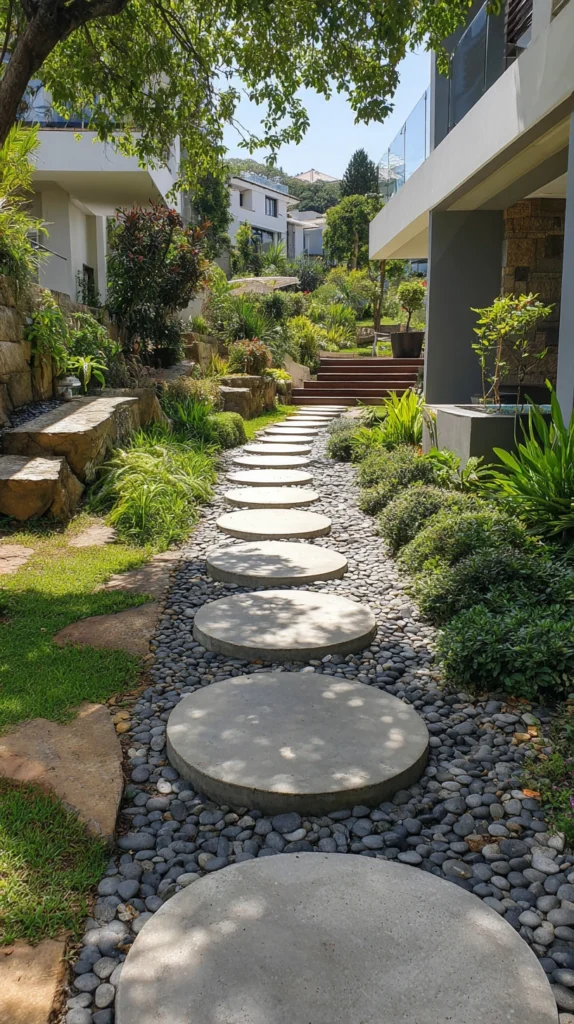
Casting your own concrete stepping stones is one of the most satisfying and most affordable DIY garden path projects available. Mix a standard concrete blend of one part cement, two parts sharp sand, and three parts aggregate, pour it into simple timber or cardboard mold forms of your chosen shape and size, and allow it to cure for at least 48 hours before demolding.
Press decorative elements into the wet concrete surface before it sets. smooth pebbles, pieces of slate, leaf imprints, or mosaic tile fragments. for a personalized, decorative finish that makes each stone unique.
Cast concrete stepping stones can be made in any shape, any size, and any surface finish, giving complete creative control over the design of the path to the maker.
Make the stones significantly larger than you think you need as concrete stepping stones that look generously proportioned in isolation often look surprisingly small once laid in the garden context. A minimum size of 50cm by 50cm for square stones and 60cm diameter for circular ones ensures a confident, satisfying result in the finished path.
8. Decomposed Granite Path
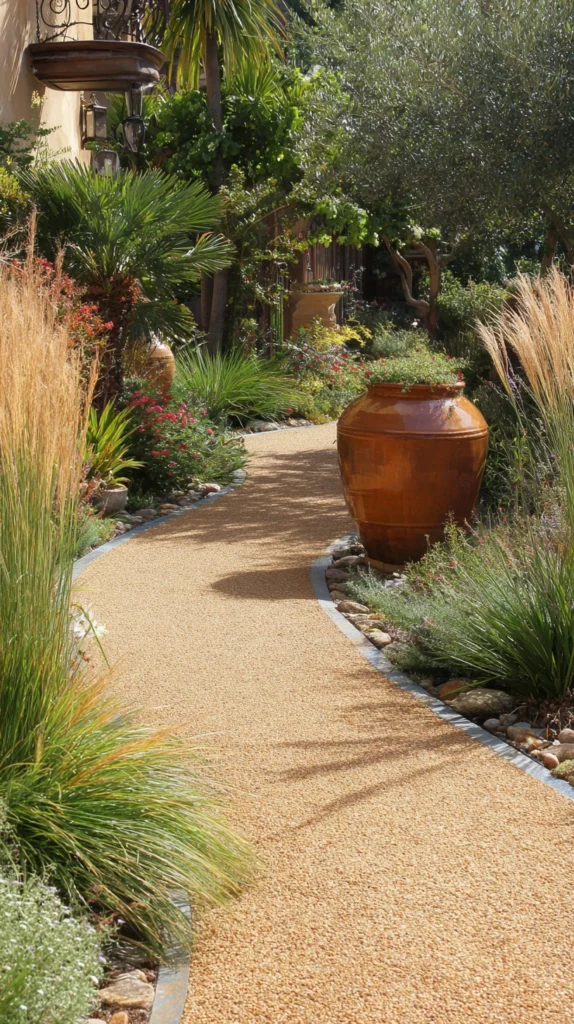
A decomposed granite path creates a garden surface of warm, golden character that is self-compacting, self-draining, and naturally beautiful in a way that conventional gravel cannot quite replicate. Decomposed granite. the naturally weathered, granular material that results from the breakdown of solid granite over geological time. compacts under foot traffic to create a firm, stable path surface that does not shift or rut like loose gravel. Install over a compacted hardcore base and a weed-suppressing membrane, edged with steel or stone edging, and compact the decomposed granite surface firmly on installation for the most durable result.
Decomposed granite in a warm golden or reddish tone creates a path surface that suits Mediterranean, drought-tolerant, and naturalistic garden styles with particular beauty. It coordinates naturally with terracotta pots, natural stone walling, and the warm tones of ornamental grasses and drought-tolerant perennials that typically populate the garden styles it suits most effectively.
9. Log Slice Stepping Stone Path
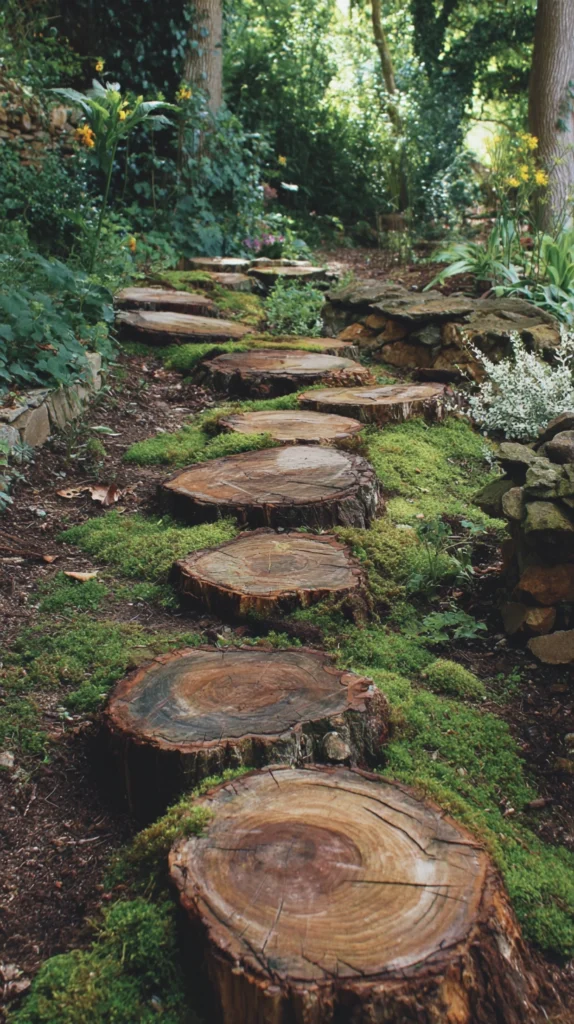
Thick cross-section slices cut from large logs create the most organically beautiful and most woodland-appropriate stepping stone path available.
Cut log slices of approximately 8 to 10cm thickness from a large diameter log using a chainsaw or a large bow saw, treat the cut surfaces with a wood preservative to slow deterioration, and set them into the ground on a sand laying bed at comfortable walking intervals along the path route. The circular wood grain pattern visible on the cut surface of each log slice creates a path surface of extraordinary natural beauty and considerable character.
Log slice stepping stones work best in woodland gardens, shaded areas beneath tree canopies, and naturalistic garden settings where the organic, slightly impermanent quality of the timber suits the garden’s overall aesthetic.
Replace individual log slices as they deteriorate over time. The lifespan of a log slice path varies considerably depending on the timber species used and the moisture level of the installation environment. Oak and sweet chestnut are the most durable species for log slice path construction in outdoor conditions.
10. Shell and Pebble Path
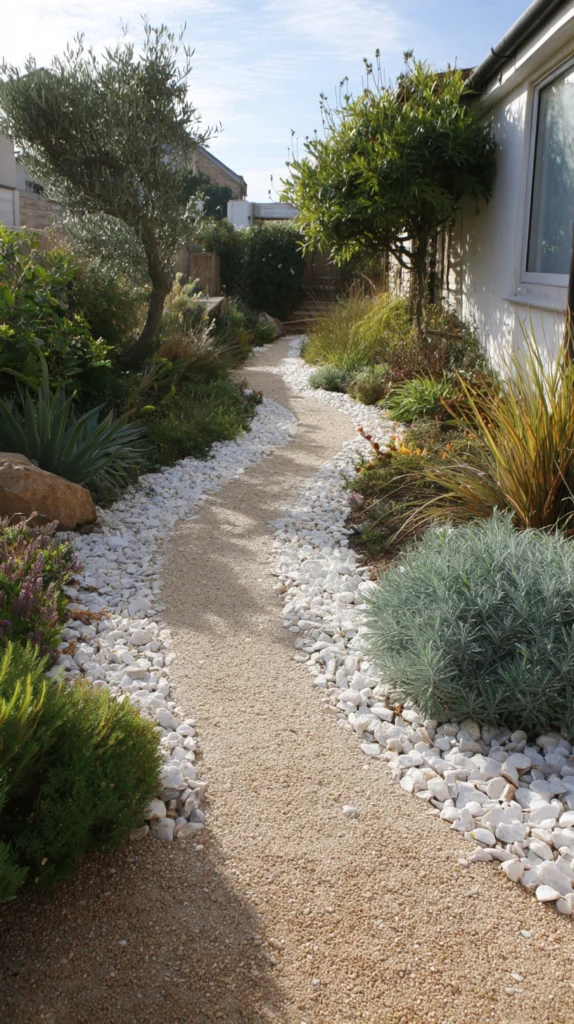
A path surfaced with a mixture of crushed shells and smooth pebbles creates a coastal, beachside garden path of warm, natural character that is entirely unlike any other path material available. Oyster shells, cockle shells, or clam shells crushed to a consistent size and mixed with smooth grey or cream pebbles create a path surface with a satisfying crunch underfoot and a pale, luminous color that brightens shaded garden areas beautifully.
Install over a compacted base and weed membrane, edge firmly to contain the loose material, and top up annually as the shell material gradually compresses and reduces in depth.
A shell and pebble path suits coastal gardens, seaside properties, and any garden where a relaxed, informal, beachside aesthetic is the primary design intention. The pale color of shell and pebble path material reflects available light effectively, making it a particularly intelligent path surface choice for gardens in shaded or north-facing positions where maximizing reflected light improves the overall brightness and visual quality of the outdoor space.
11. Poured Concrete Path with Texture
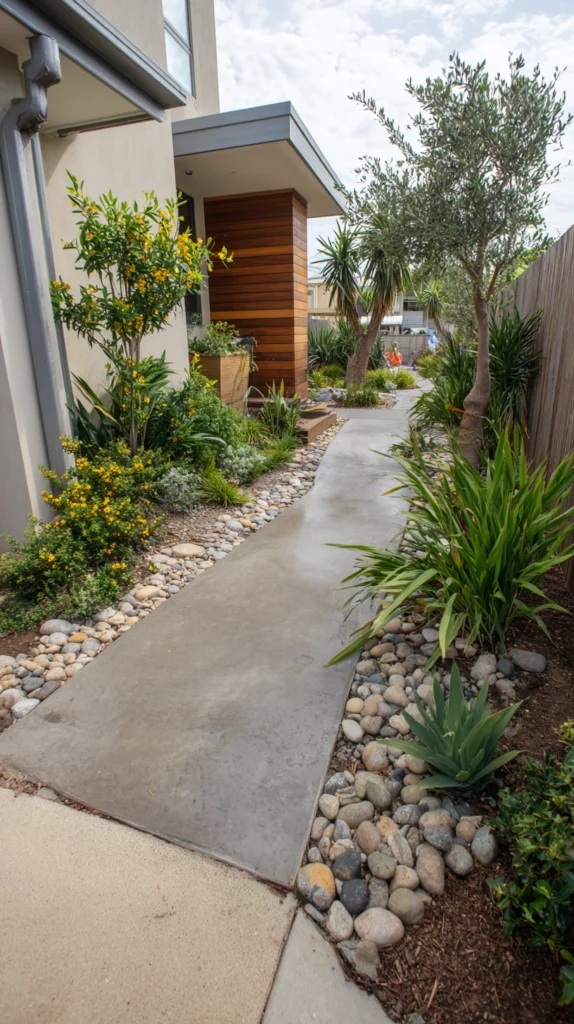
A poured concrete path created by excavating the path route, setting timber form boards along each side, pouring a standard concrete mix between the forms, and applying a decorative texture to the surface before it sets creates a permanent, durable, and surprisingly beautiful garden path.
Apply texture to the wet concrete surface by dragging a stiff brush across it for a non-slip broom finish. pressing a sheet of hessian fabric into the surface for a subtle woven texture. or embedding pebbles, slate pieces, or glass aggregate for a decorative exposed aggregate finish.
Divide the poured concrete path into sections with timber expansion joints every 1.5 to 2 meters to prevent cracking as the concrete expands and contracts through seasonal temperature variation.
A poured concrete path is the most permanent DIY path construction available and requires the most careful preparation and execution. But the durability and low maintenance of the finished surface reward the additional effort with a path that will perform without deterioration for many decades.
12. Brick and Gravel Combination Path
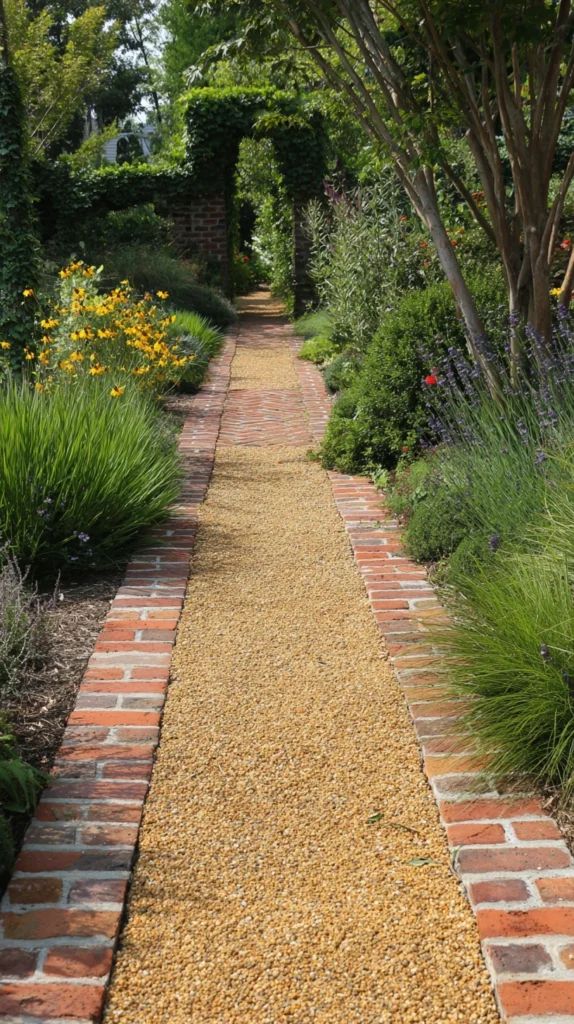
A path that combines a central strip of reclaimed bricks laid in a simple running bond pattern with wide gravel borders on each side creates a garden path of considerable visual richness and material variety.
The brick center provides a firm, defined walking surface while the gravel borders add textural contrast, improve drainage at the path edges, and create a visual transition between the path and the adjacent planted beds. Edge the outer gravel borders with a simple metal or timber edging strip to contain the gravel and prevent migration into the surrounding garden.
This combination path style suits formal kitchen gardens, cottage garden settings, and any outdoor space where the warmth of reclaimed brick and the texture of gravel are both desirable qualities in the path surface.
The contrast between the regular, geometric pattern of the brick center and the loose, organic texture of the gravel border creates a path with the visual complexity and material interest that single-material paths cannot achieve at equivalent simplicity of construction.
13. Grass Strip Path
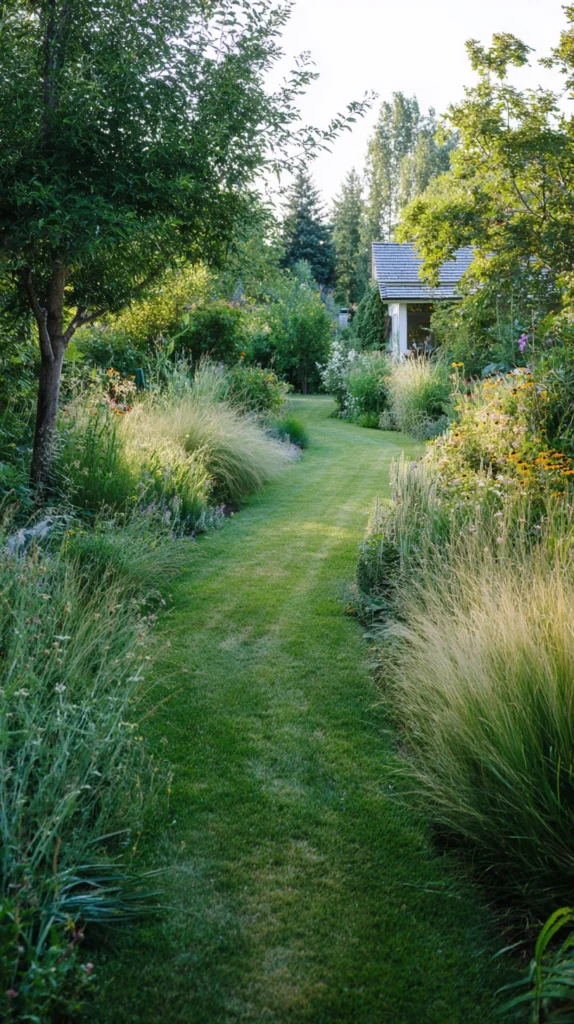
A grass strip path. a narrow lawn corridor maintained at the same height as the surrounding grass but defined by low edging or by the contrast between the grass path and the planted beds on either side. is the most natural, most affordable, and most effortlessly beautiful garden path available in a garden that already has a lawn.
Simply mow a consistent width strip through the garden in the desired path route, edge the sides cleanly with a half-moon edging tool, and maintain the strip as a regular mowing priority to keep the path clearly defined and neatly presented through the growing season.
A grass strip path suits informal, naturalistic, and cottage garden settings where the softness of a mown grass surface is more appropriate than a hard path material. It works particularly well winding through a wildflower meadow, leading through an orchard, or connecting different areas of an informal garden where the path needs to feel like a natural part of the landscape rather than an imposed structure within it.
14. Flagstone Path with Planted Gaps
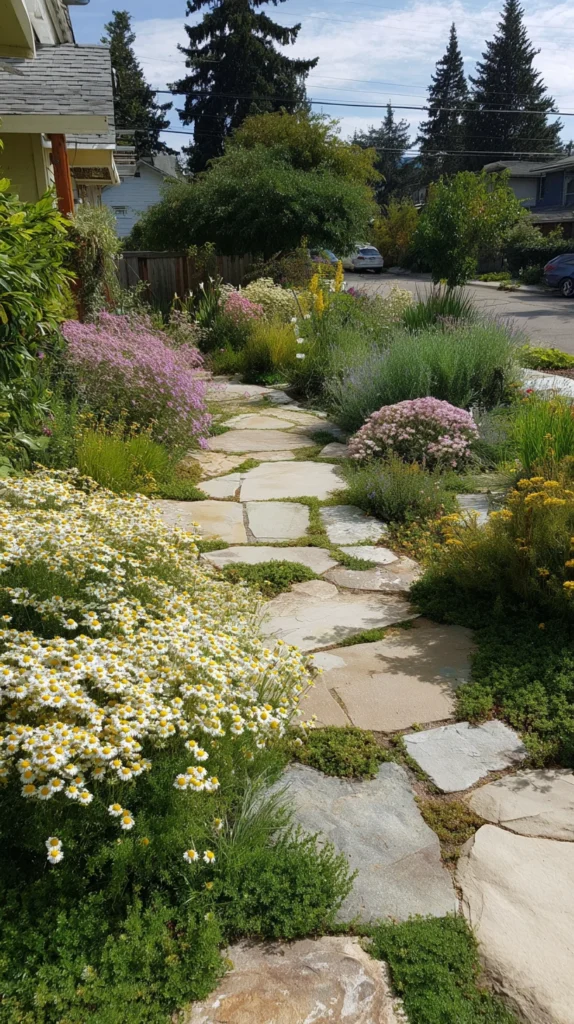
Large flagstones in natural sandstone, limestone, or slate laid with deliberately wide gaps between them, planted with low-growing creeping plants. thyme, chamomile, creeping Jenny, or mind-your-own-business. create a garden path of exceptional natural beauty that blurs the boundary between hard landscaping and planted garden in the most organic and most genuinely beautiful way.
The creeping plants establish between the flagstones and grow to cover the gaps with a soft, aromatic carpet that releases fragrance when stepped on and creates a path surface of constantly evolving botanical beauty.
Plant the gaps between flagstones with species that are genuinely tolerant of occasional foot traffic. Thyme and chamomile are the most robust and the most fragrant options. while creeping Jenny and mind-your-own-business suit shadier, moister path positions where thyme and chamomile would struggle.
Weed the gaps regularly in the first season after planting to give the chosen ground cover plants the best possible establishment conditions before they develop sufficient density to suppress weed competition independently.
15. Upcycled Material Path
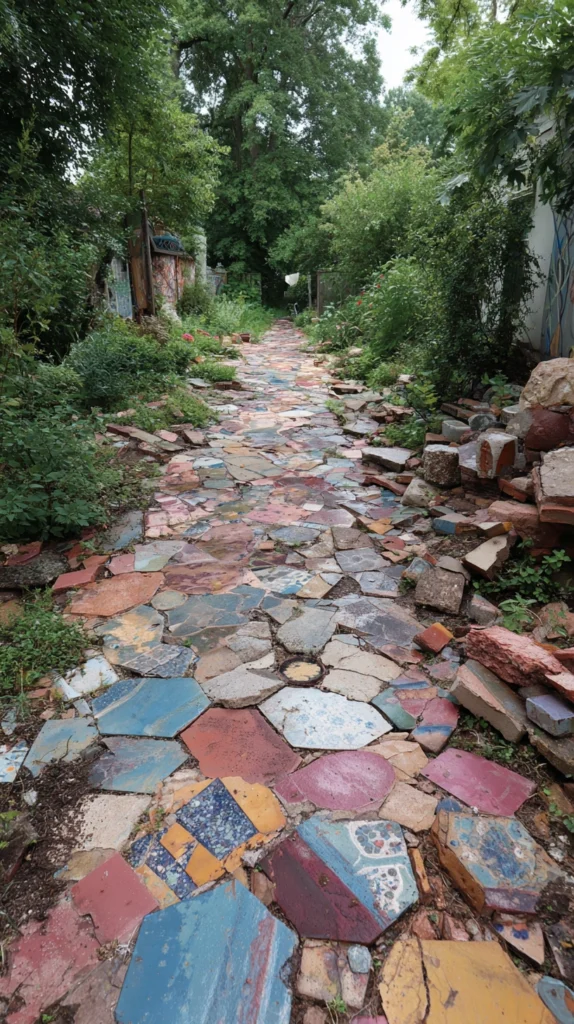
A garden path constructed from upcycled and reclaimed materials. broken terracotta pots arranged in a mosaic pattern, pieces of reclaimed slate set on edge in a French pattern, fragments of old ceramic tiles embedded in a sand laying bed, or broken concrete pieces arranged in a crazy paving format. creates a garden path of genuine originality, character, and personal expression that no purchased path material can replicate.
The upcycled path is simultaneously the most environmentally responsible and the most creatively individual DIY garden path option available, reflecting the specific materials available to the maker and the specific aesthetic sensibility they bring to their arrangement.
Collect upcycled path materials over time from demolition skips, reclaim yards, and the leftovers of other garden and building projects until sufficient material for the full path length has been accumulated. Lay each piece individually on a sand laying bed, adjusting the depth of the sand beneath each piece to achieve a level, stable finished surface.
Fill the gaps between pieces with fine sand, pea gravel, or a planted ground cover for a path surface that is coherent, beautiful, and entirely unlike anything available in a garden center or landscape supplier.
The Path as Garden Design
A well-made DIY garden path does more than connect one part of the garden to another. It creates the experience of moving through the garden, sets the pace of that movement, and contributes a material character and warmth to the outdoor space that influences how the entire garden feels to everyone who walks within it. Choose a path material that suits the garden’s aesthetic, build it with care and precision, and it will serve and beautify the garden for many years to come.