
15 DIY Pea Trellis Ideas for Your Garden
Growing peas is one of the most rewarding and most satisfying kitchen garden pursuits available to any gardener with even a modest amount of outdoor growing space. Peas are generous, productive, and delicious, but they are also climbing plants that require vertical support to perform at their best.
A pea trellis is not merely a functional necessity. It is a genuine garden feature that adds vertical dimension, structural interest, and the beautiful spectacle of climbing plants in full growth to the kitchen garden or the ornamental border.
The good news is that a pea trellis does not need to be purchased from a garden center or manufactured from expensive materials. Some of the most beautiful and most effective pea trellises are made by hand from simple, affordable, and often reclaimed materials. Here are the best DIY pea trellis ideas for a productive and beautiful garden.
1. The Hazel Branch Wigwam
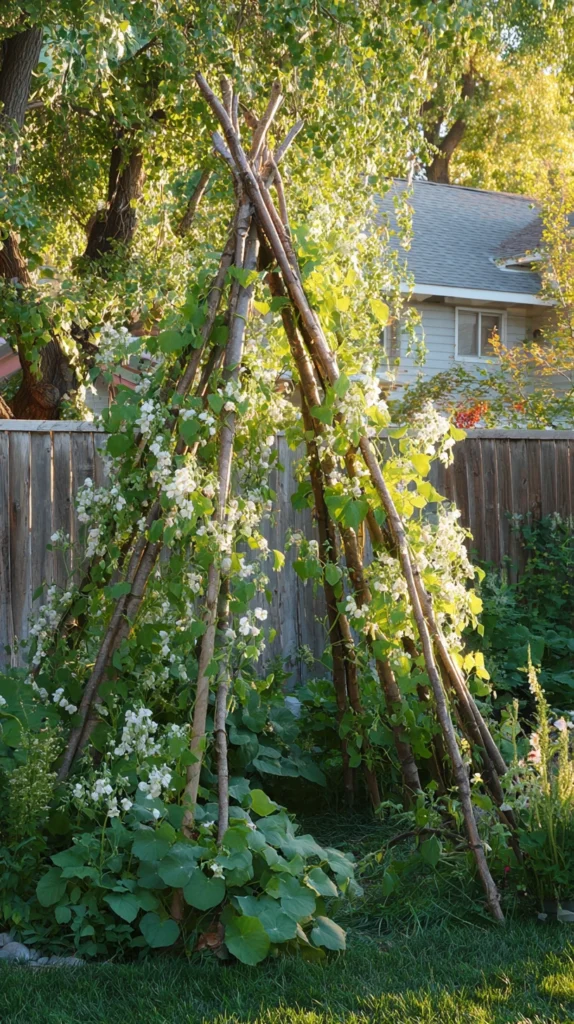
The hazel branch wigwam is the most traditional and most naturally beautiful DIY pea trellis available. Cut six to eight hazel branches of approximately 1.8 meters in length from a coppiced hazel tree or source them from a local woodland management project.
Push the thicker end of each branch firmly into the soil in a circle of approximately 60cm diameter, angling each branch inward as it rises so that the tops meet and can be tied together with natural twine at the apex. The finished wigwam has an organic, handcrafted quality that no manufactured product can replicate.
The irregular surface of the hazel branches provides excellent grip for pea tendrils, which wind themselves around the branches instinctively as the plants grow upward. The wigwam format creates a three-dimensional growing structure that allows peas to be planted all around its base, maximizing productivity in a small footprint.
As the peas grow and flower over the hazel structure, the wigwam becomes one of the most beautiful features in the kitchen garden. a tower of green and white that earns its space on visual merit as well as on productive grounds.
2. The Bamboo Cane Grid Trellis
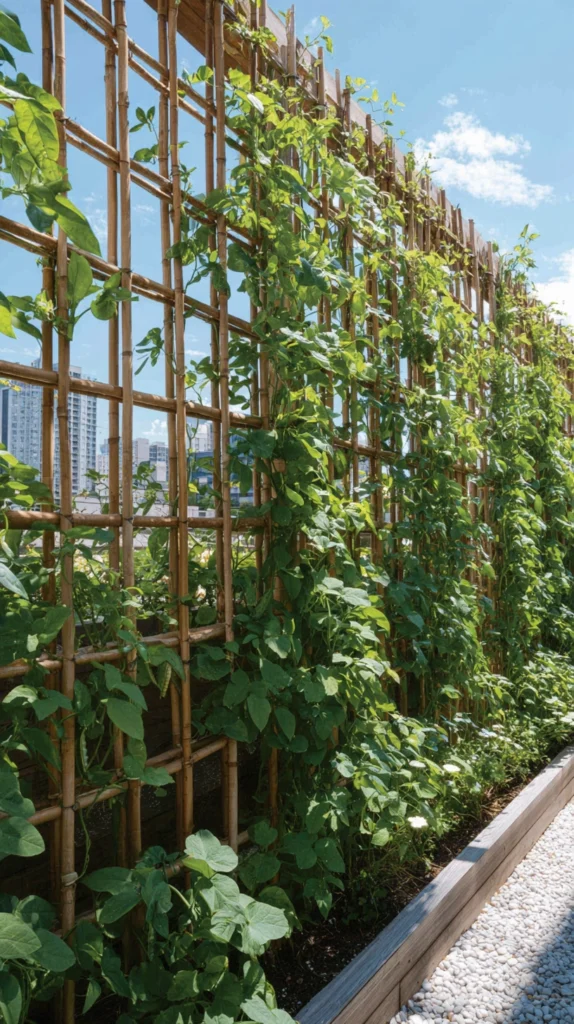
A bamboo cane grid trellis is the simplest, most affordable, and most widely applicable DIY pea trellis available. Push a row of bamboo canes into the soil at regular intervals of approximately 30cm along the length of the growing bed, then connect them horizontally with lengths of natural twine tied at intervals of approximately 20cm from the ground upward.
The resulting grid of vertical canes and horizontal twine provides an effective climbing framework that peas will navigate enthusiastically from the moment their first tendrils appear.
Use canes of at least 1.5 meters in height for most pea varieties and push them at least 20cm into the soil for stability in wind. Add diagonal bamboo canes at each end of the trellis run for additional structural rigidity.
A double row of canes with a wider base that narrows at the top creates an A-frame variant of the bamboo grid trellis that is even more stable and provides a slightly wider climbing surface for the peas growing up each side of the structure.
3. The Branch and Twig Natural Trellis
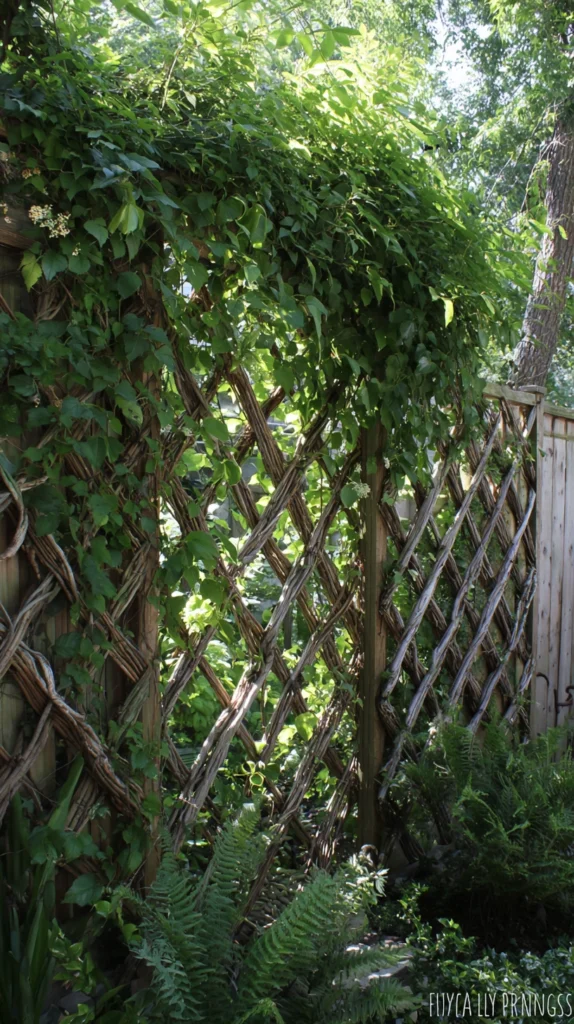
A trellis assembled from collected branches and twigs of varying thicknesses creates a DIY pea support structure of considerable natural beauty and zero cost. Collect straight or slightly curved branches from pruned garden shrubs or fallen trees. prunings from roses, fruit trees, or ornamental shrubs all work well.
Push the thicker main branches vertically into the soil to form the trellis uprights, then weave and tie thinner twigs horizontally between the uprights to create a lattice of natural material that provides ample climbing support for pea tendrils.
The irregular, organic quality of a branch and twig trellis gives it a beauty that is entirely its own. No two are identical and each reflects the specific plants available to the gardener who made it.
As the peas grow through and around the twig lattice, the natural material of the trellis becomes increasingly invisible within the planting, creating the impression of freestanding columns of growing peas with no visible support structure. This natural disappearing act is one of the most charming qualities of the branch and twig trellis as a growing support.
4. The Upcycled Ladder Trellis
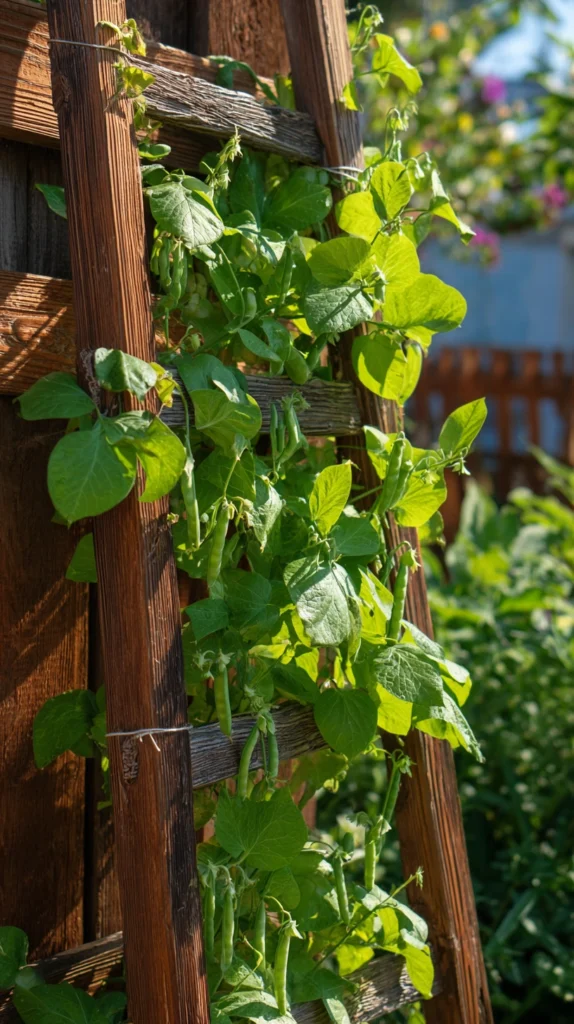
An old wooden ladder repurposed as a pea trellis is one of the most inventive and most characterful DIY pea growing solutions available. Position the ladder vertically in the growing bed, securing its base firmly in the soil or against a raised bed edge, and plant peas at the base of each rung.
The rungs provide natural horizontal supports at regular intervals up the full height of the ladder, and additional twine can be strung between the rungs for denser coverage if needed. The ladder trellis has a charming, slightly eccentric quality that suits cottage gardens, allotment plots, and any growing space where personality and practicality are valued equally.
5. The Wire Mesh Panel Trellis
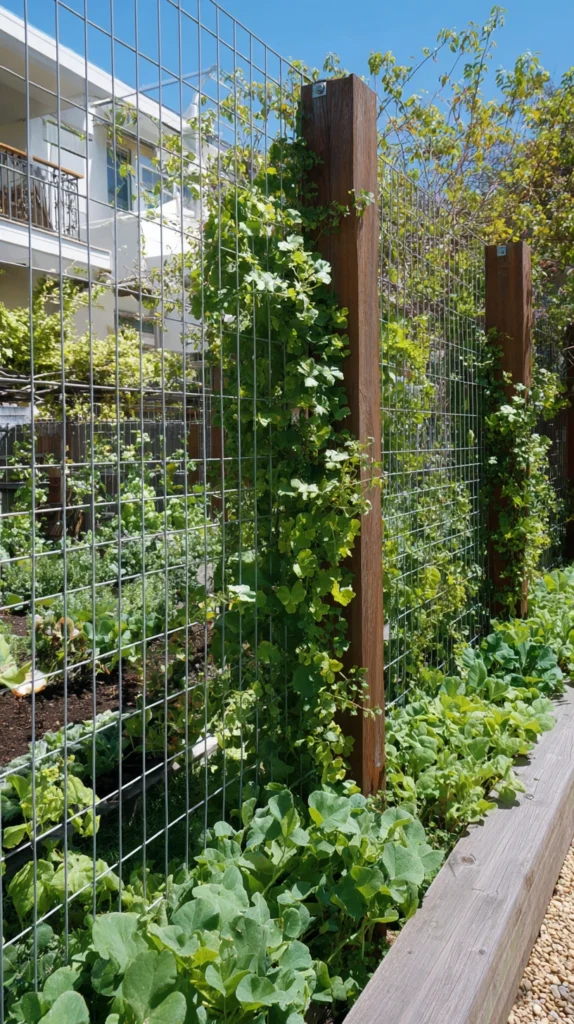
A panel of wire mesh garden fencing or galvanized welded wire mesh stretched between two sturdy wooden or metal posts creates a pea trellis of considerable structural strength and longevity.
The regular grid of the wire mesh provides a climbing surface that pea tendrils can navigate easily in every direction, and the structural solidity of the mesh panel means the trellis can support even a heavy crop of mature peas without deflection or collapse. Choose a mesh with openings of approximately 10 to 15cm for the most pea-friendly climbing surface.
Wire mesh panel trellises are particularly well-suited to longer rows of peas in a dedicated kitchen garden bed. A single panel of 2 meters by 1.5 meters can support a generous sowing of peas along its full length. The galvanized wire mesh weathers naturally in the garden but remains structurally effective for many growing seasons. Remove it at the end of the pea season, clear the old plant material from the mesh, and store it flat for reuse the following year with no deterioration in performance.
6. The Willow Hurdle Trellis
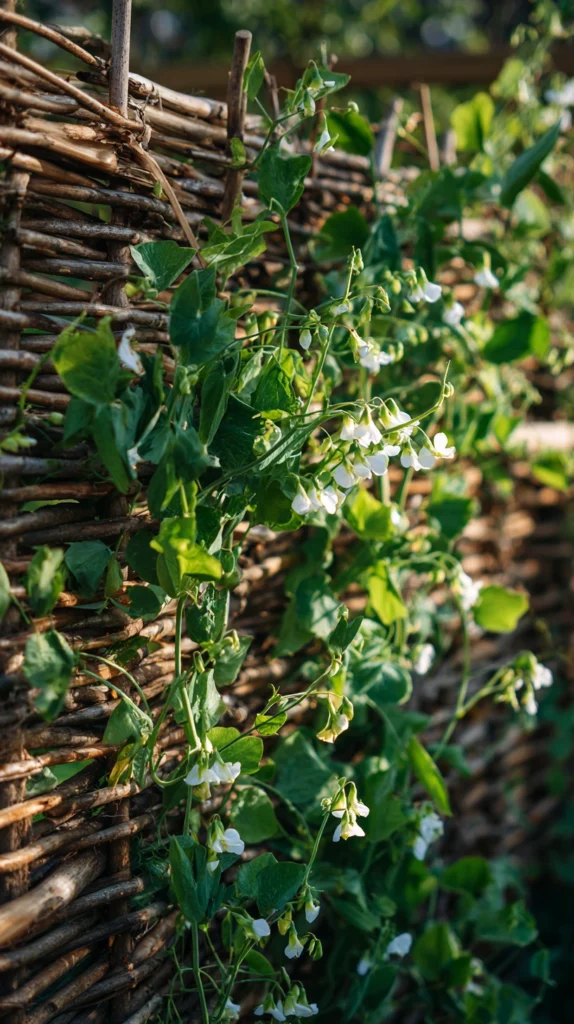
A willow hurdle. a traditional woven panel of living or dried willow withies. repurposed as a pea trellis creates one of the most beautiful and most ecologically considered growing support structures available.
Willow hurdles are available from traditional craft suppliers and country markets or can be woven by hand from fresh willow withies harvested in late winter when the sap is not yet rising. Positioned vertically in the growing bed and secured between two posts, a willow hurdle provides a dense, intricate climbing surface that pea tendrils colonize with enthusiasm.
Living willow hurdles. woven from fresh willow that continues to grow after installation. develop into increasingly complex growing structures as the willow puts out new shoots through the season.
The combination of the living willow structure and the growing peas creates a planting of extraordinary natural richness that blurs the boundary between the support and the supported plant in the most beautiful and most organic way imaginable.
7. The String and Post Simple Trellis
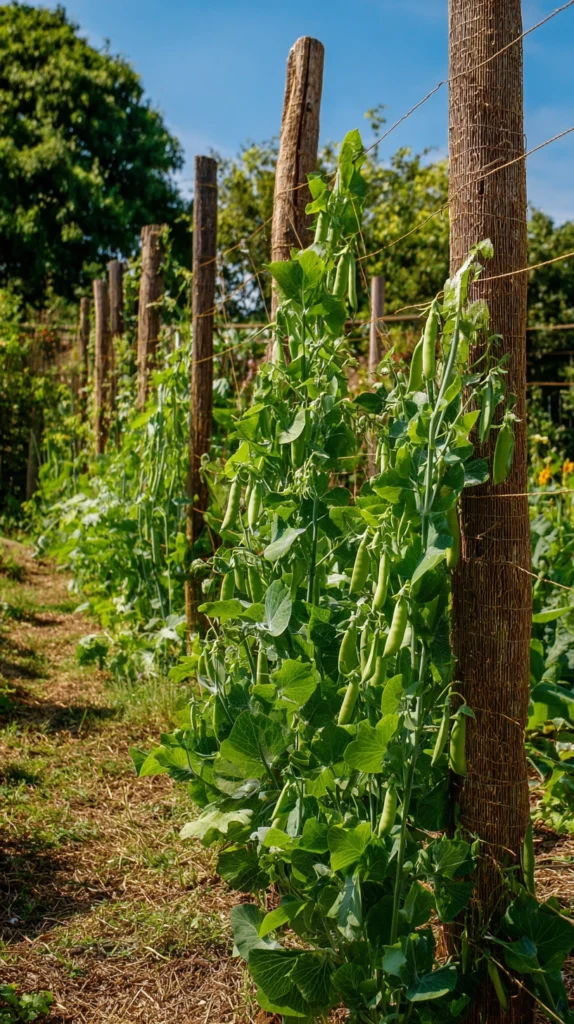
The simplest and most immediately deployable DIY pea trellis requires nothing more than two wooden posts and a ball of natural jute twine. Push a post firmly into the soil at each end of the row of peas, then run lengths of twine between the posts at vertical intervals of approximately 15cm from the ground upward, tying each length of twine securely to both posts.
The resulting series of parallel horizontal strings provides a simple but entirely effective climbing framework that peas will use immediately as their tendrils extend upward through the growing season.
Add vertical strings between the horizontal runs for a full grid pattern that provides even more climbing options for the peas.
Natural jute twine biodegrades at the end of the season along with the pea plants, allowing the entire trellis and its spent crop to be composted together without any need for separating plant material from synthetic twine. This biodegradable quality makes the string and post trellis not only the simplest but also the most environmentally responsible DIY pea trellis available.
8. The Bamboo Teepee with Netting
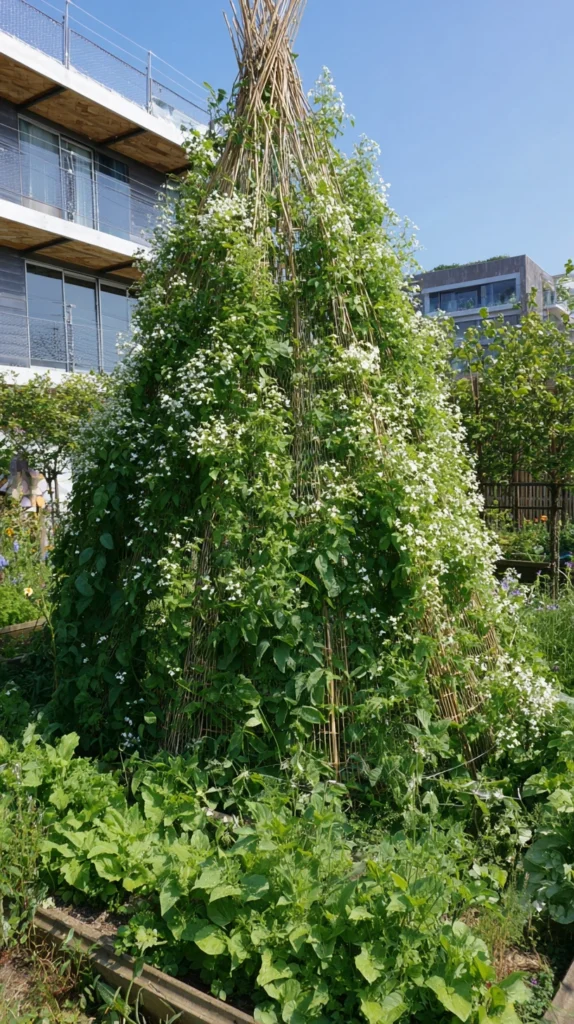
Combining a bamboo cane teepee framework with a covering of fine garden netting or pea netting creates a DIY pea trellis of maximum climbing surface and structural stability. Push six bamboo canes into the soil in a circle and tie their tops together to form the teepee structure.
Then wrap the teepee frame with pea netting, securing the netting to each cane with garden ties or twine at multiple points. The netting provides a continuous, fine-mesh climbing surface that pea tendrils can grip at any height and at any angle around the full circumference of the teepee.
The netting teepee produces a column of pea planting of exceptional density and productivity. Peas planted all around the base grow upward through the netting to create a solid green tower of foliage, flower, and pod by midsummer. The visual impact of a fully grown pea teepee in the kitchen garden is genuinely extraordinary. a temporary garden architecture of living green that performs as beautifully as it produces.
9. The A-Frame Wooden Trellis
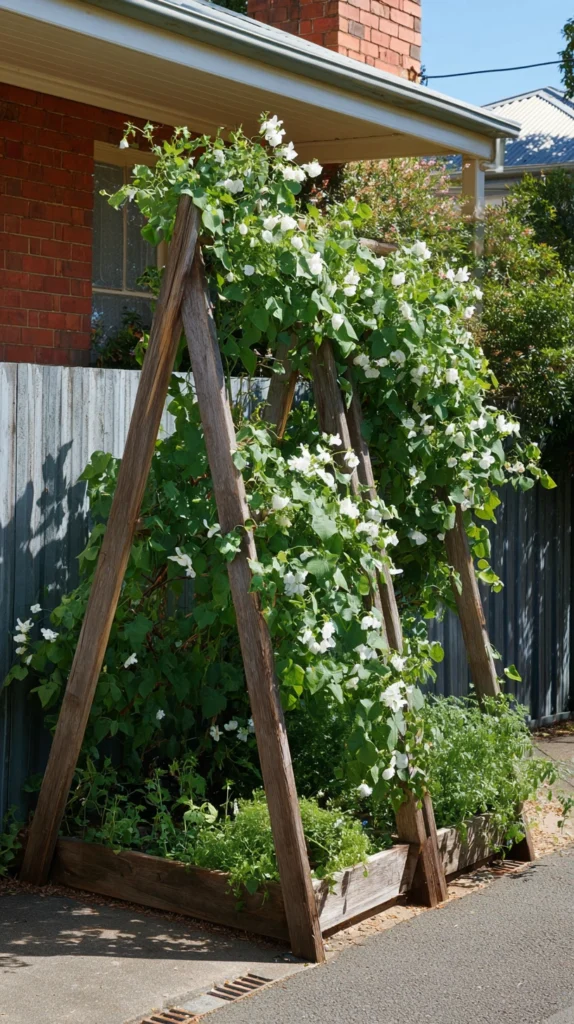
An A-frame wooden trellis constructed from two panels of timber lath or bamboo canes hinged or tied together at the top creates a freestanding, self-supporting pea growing structure that requires no posts driven into the soil and can be repositioned anywhere in the garden as the crop rotation demands.
Build each panel from two vertical timber uprights connected by horizontal lath strips at regular intervals, then lean the two panels together at the top and secure them with a length of wire or strong twine at the apex. The A-frame sits stably on the soil surface under its own weight and the weight of the growing crop.
The A-frame format creates a growing surface on both sides of the structure, allowing a double row of peas to be planted along each base edge for maximum productivity from a single trellis installation.
The space beneath the A-frame roof creates a shaded microclimate that can be planted with shade-tolerant salad leaves or herbs, turning the trellis structure into a productive three-layer growing system. Store the A-frame flat against a wall or fence between growing seasons for easy, space-efficient seasonal storage.
10. The Recycled Pallet Trellis
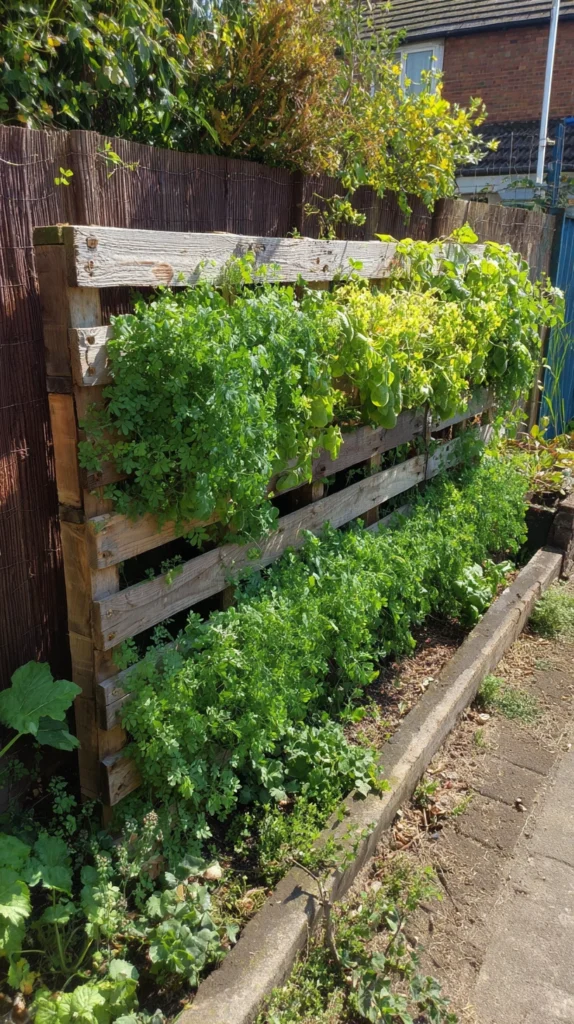
A recycled wooden pallet repurposed as a vertical pea trellis is one of the most resourceful and most immediately available DIY growing support solutions. Stand the pallet vertically in the growing bed, bracing it securely with timber stakes driven into the soil on each side, and plant peas along its base on both the front and back faces.
The existing timber slats of the pallet provide horizontal supports at regular intervals, and the gaps between the slats allow pea tendrils to weave through the structure from one side to the other as the plants grow.
Pallets are available freely from local businesses, timber yards, and online marketplaces, making this one of the zero-cost DIY trellis options available to any gardener. Sand any rough edges on the pallet before installation to prevent splinters and treat the timber with a plant-safe wood preservative to extend its outdoor life.
A row of three or four pallets stood vertically side by side creates a generous pea growing wall that provides both a productive growing surface and a degree of privacy screening within the kitchen garden.
11. The Cattle Panel Arc Trellis
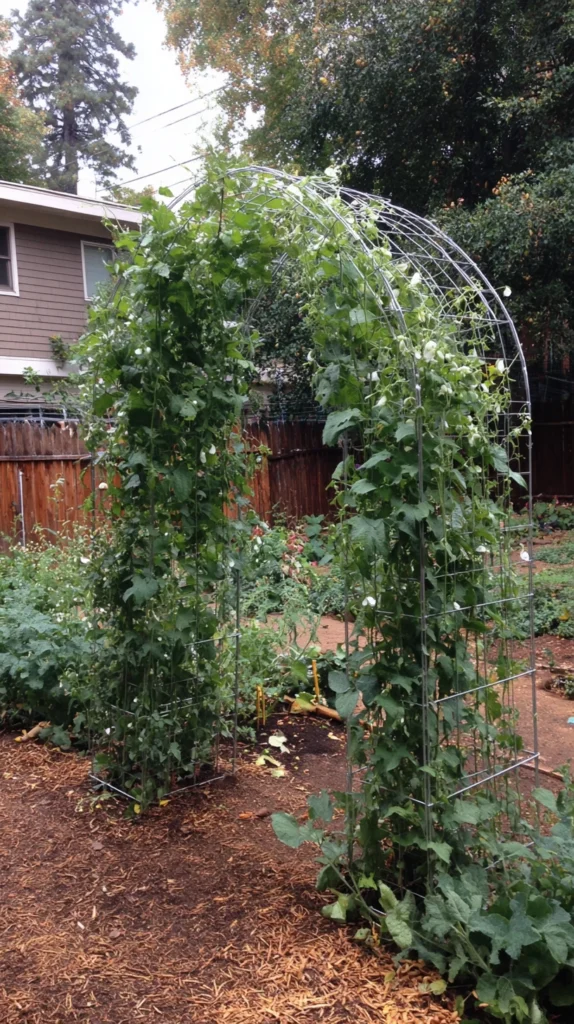
A cattle panel. the rigid galvanized steel grid panel used in agricultural livestock management. bent into an arc and secured at each end creates one of the most structurally impressive and most productively generous DIY pea trellises available.
The curved arc format creates a tunnel of growing space through which the gardener can walk, with peas growing up both sides of the arc and meeting at the top to create a canopy of foliage, flower, and pod that is one of the most spectacular kitchen garden features imaginable. Secure each end of the arched cattle panel to timber posts driven firmly into the soil for structural stability under the weight of a heavy crop.
Cattle panels are available from agricultural merchants and farm supply stores at modest cost and in standard lengths that create a comfortable walking-height arc when bent. The galvanized steel of the cattle panel is virtually indestructible in an outdoor setting, making this a trellis investment that will serve the kitchen garden for decades without deterioration.
At the end of each growing season, remove the spent pea plants from the panel, clear the debris, and the structure is immediately ready for the following season’s sowing.
12. The Woven Hazel Hurdle Trellis
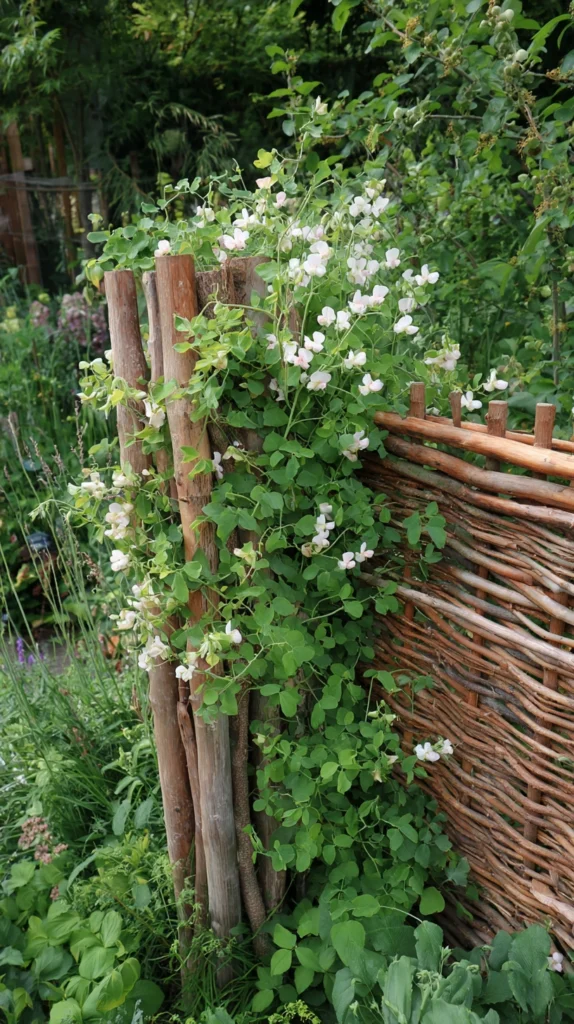
A woven hazel hurdle. the traditional rural fencing panel constructed from woven hazel withies in a dense, flexible lattice. used as a pea trellis creates a growing support of exceptional natural beauty and cultural resonance. Hazel hurdles have been used in British agricultural landscapes for centuries as temporary fencing, windbreaks, and garden structures, and their dense woven surface provides an outstanding climbing framework for pea tendrils.
Source hazel hurdles from traditional craft suppliers, country shows, and woodland management cooperatives where they are made by hand using traditional coppice management techniques.
Position the hazel hurdle vertically between two sturdy posts in the growing bed and plant peas along its full length at the base. As the peas grow upward through the dense woven hazel lattice, the hurdle becomes progressively more invisible within the planting until by midsummer only the tips of the hazel frame are visible above a solid column of productive pea growth.
The hazel hurdle trellis has a working life of approximately five to seven years in outdoor conditions, after which it can be composted and replaced with a freshly made panel.
13. The Fan-Shaped Cane Trellis
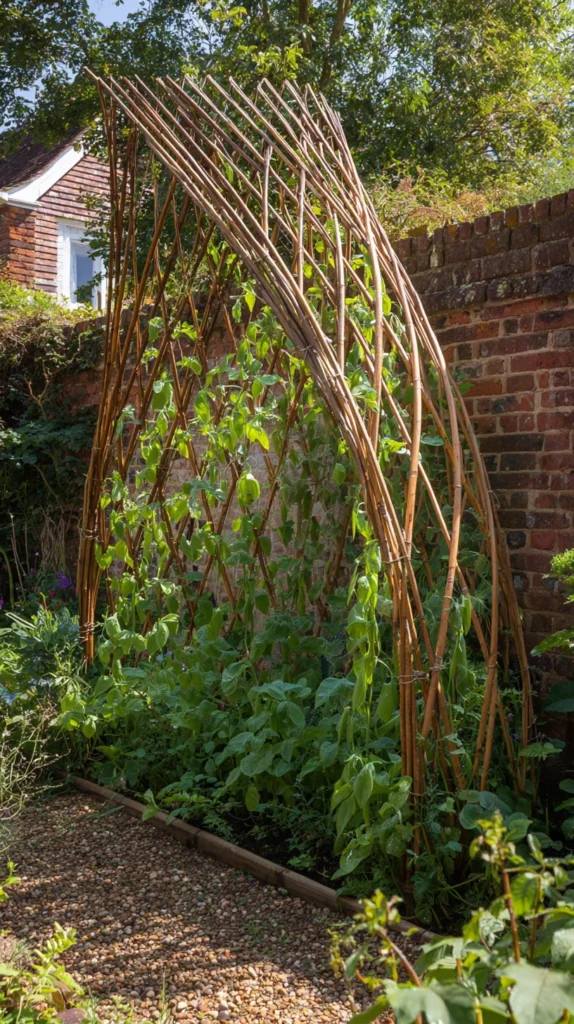
A fan-shaped cane trellis. a series of bamboo canes pushed into the soil in a semicircular fan arrangement with their bases close together and their tops spread wide apart. creates a distinctive and visually elegant pea growing structure that is entirely different from the standard grid or wigwam formats.
Push six to eight canes into the soil at a single central point, spreading them evenly outward in a fan shape to create a broad, flat growing surface that maximizes the light available to the plants growing up each individual cane. Connect the canes horizontally with twine at regular intervals for additional climbing surface between the main fan spokes.
The fan-shaped trellis is particularly well-suited to growing peas against a wall or fence where its flat format fits neatly into a narrow growing space between the wall and a path.
It is also visually striking in the open kitchen garden as a decorative structural element that contributes a strong geometric form to the vegetable garden layout. A pair of fan-shaped trellises positioned symmetrically on either side of a garden path creates a simple but genuinely beautiful framing device that suits formal kitchen garden designs.
14. The Mesh Sock Cylinder Trellis
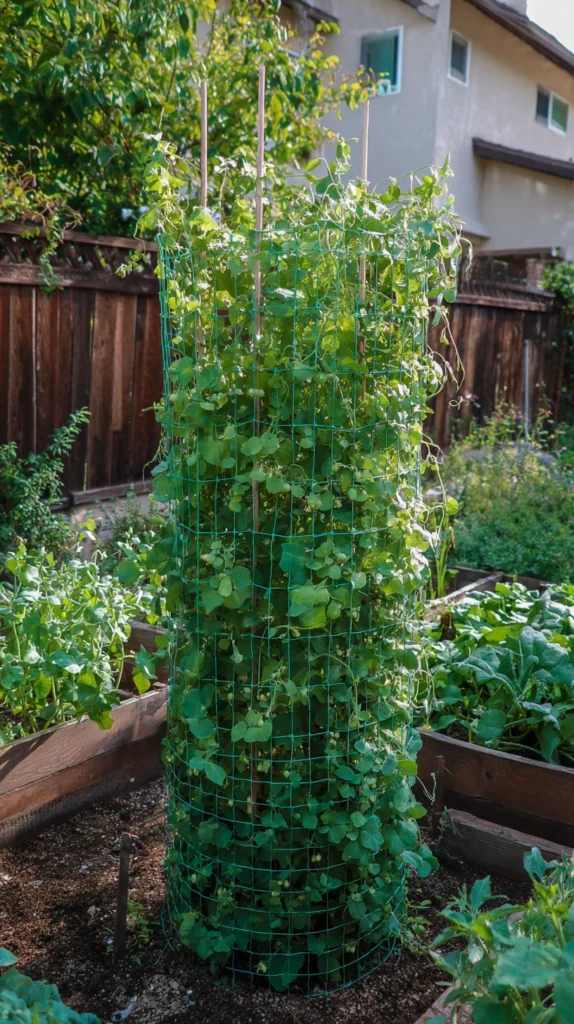
A cylinder of flexible garden mesh or fine wire netting formed into a vertical tube and secured with cable ties or garden wire creates a compact, freestanding pea growing structure that suits small gardens, raised beds, and container growing situations where a conventional flat trellis panel would be too large or too cumbersome.
Form the mesh into a cylinder of approximately 40 to 50cm diameter and 1.5 meters in height, securing the overlapping edges with cable ties at regular intervals. Push three or four short stakes through the base of the cylinder into the soil to anchor it against wind.
Plant peas in a circle around the exterior base of the mesh cylinder and allow them to climb up the outside of the structure, or plant inside the cylinder and train the peas outward through the mesh for an even more compact growing arrangement.
The cylinder format makes efficient use of vertical space in a minimal horizontal footprint, making it one of the most space-efficient pea trellis designs available for gardeners with limited growing space. At the end of the season, unclip the cable ties, flatten the mesh for compact storage, and reuse it for multiple growing seasons without any loss of structural effectiveness.
15. The Decorative Painted Timber Frame Trellis
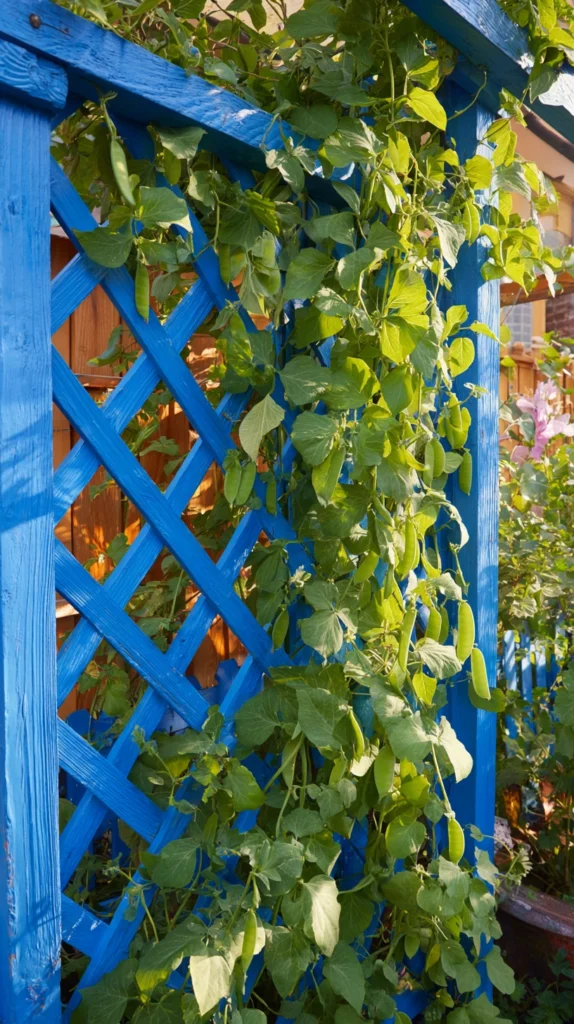
A timber frame trellis constructed from planed timber lath in a grid or diamond lattice pattern and painted in a bold, considered color creates a pea growing structure that is as decorative as it is functional.
Build a simple rectangular frame from four pieces of timber and fill the interior with a grid of thinner lath strips stapled or nailed at regular intervals in a square or diagonal diamond pattern. Paint the finished frame in a deep garden color. a rich cobalt blue, a warm terracotta, a deep forest green, or a classic black. that reads as a deliberate design statement within the kitchen garden.
A painted decorative trellis panel mounted on a wall, fence, or freestanding post framework becomes one of the most visually impactful features of the kitchen garden even before the peas have begun to grow up.
As the growing season progresses and the peas colonize the frame with their tendrils, flowers, and pods, the painted color of the timber frame flickers through the green growth in a combination of color and living plant material that is genuinely beautiful. At the end of the season, clean the frame, touch up the paint if needed, and store it ready to contribute its decorative quality to the following year’s kitchen garden with equal effectiveness.
The Trellis as Kitchen Garden Design
A DIY pea trellis is more than a practical growing accessory. It is a design element that contributes structure, height, and seasonal beauty to the kitchen garden through every week of the growing season.
Made with care from simple materials. hazel, bamboo, willow, wire, or reclaimed timber. A handmade pea trellis reflects the gardener’s skill, resourcefulness, and love of growing things in a way that a purchased product can never fully replicate. Build it with intention, plant it generously, and the pea trellis will reward every effort with one of the most satisfying and most delicious growing experiences the kitchen garden has to offer.