

15 DIY Plant Stand Ideas You Can Make at Home
Plant stands are one of those home accessories that make an enormous difference to how a space feels. They lift plants off the floor, bring trailing varieties to eye level, create height variation in a plant display, and turn a single pot into a genuine design statement. The problem is that beautiful plant stands are often surprisingly expensive to buy.
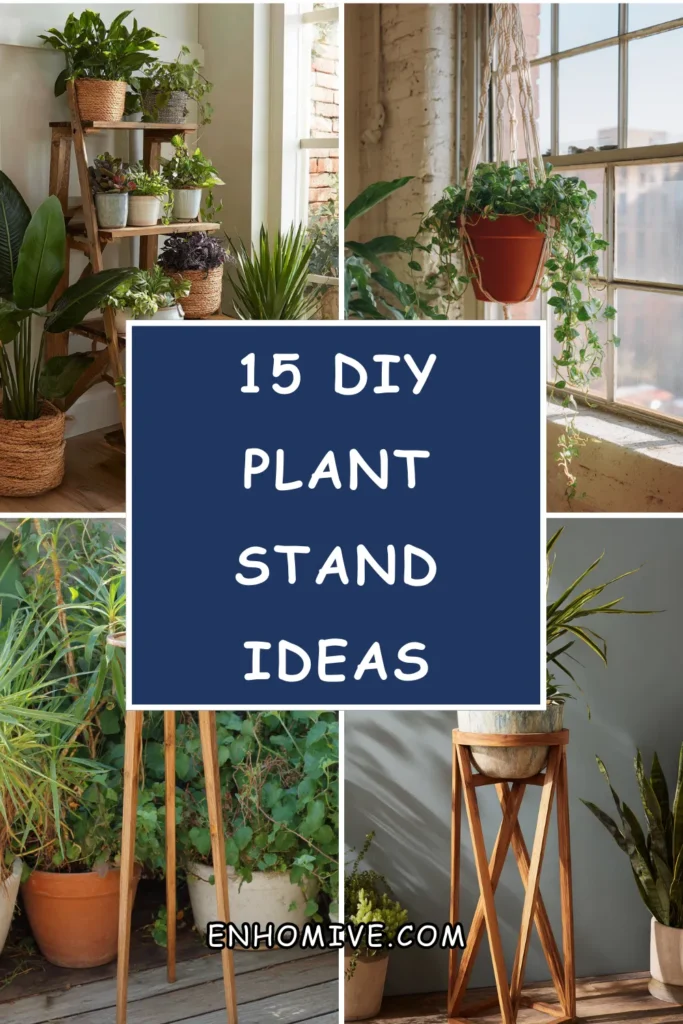
The good news is that making your own is far easier than most people expect. With basic materials, minimal tools, and a few hours on a weekend, you can create plant stands that look just as good — often better — than anything available in a shop. And the satisfaction of displaying a plant in something you made yourself adds a layer of meaning that no retail purchase can replicate.
Here are 15 DIY plant stand ideas for every skill level, every budget, and every interior style.
1. Simple Wooden Tripod Plant Stand
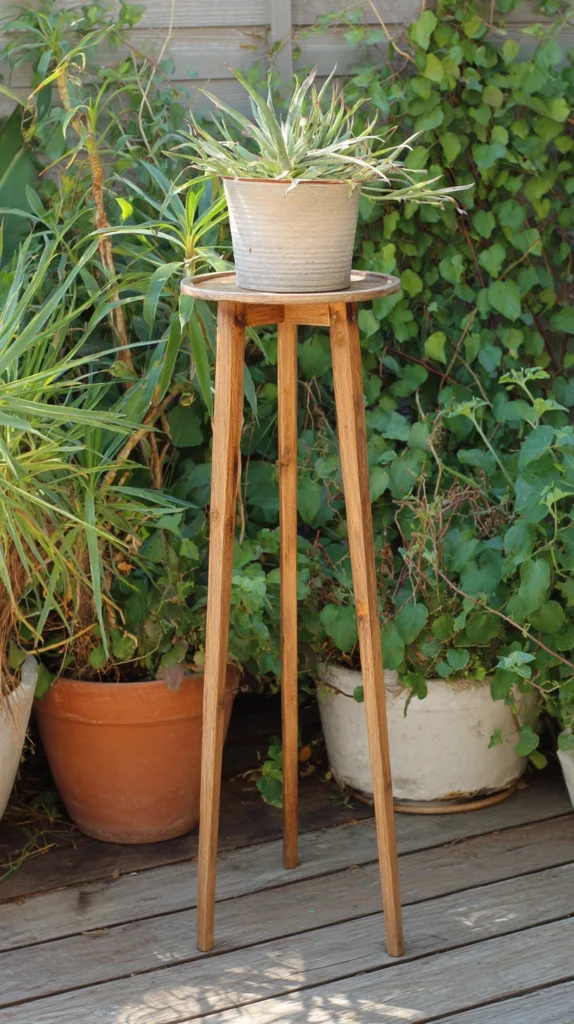
The tripod plant stand is one of the most elegant and timeless designs in the plant stand world. Three legs meeting at a central point, a small platform or ring at the top to hold the pot — it is minimal, sculptural, and looks beautiful in virtually any interior from modern Scandinavian to warm bohemian.
Cut three lengths of dowel or thin timber to equal length, drill angled holes into a small circular top platform, insert and glue the legs at a consistent outward angle, and finish with natural oil or a dark wood stain. The whole project takes an afternoon and the result looks like something from a designer homeware brand.
Pro Tip: The key to a stable tripod stand is getting all three legs at exactly the same angle. Make a simple jig from scrap wood to hold each leg at the correct angle while the glue dries. Consistent angles mean all three feet sit flat on the floor simultaneously — even a small variation will cause the stand to rock noticeably.
2. Stacked Log Plant Stand
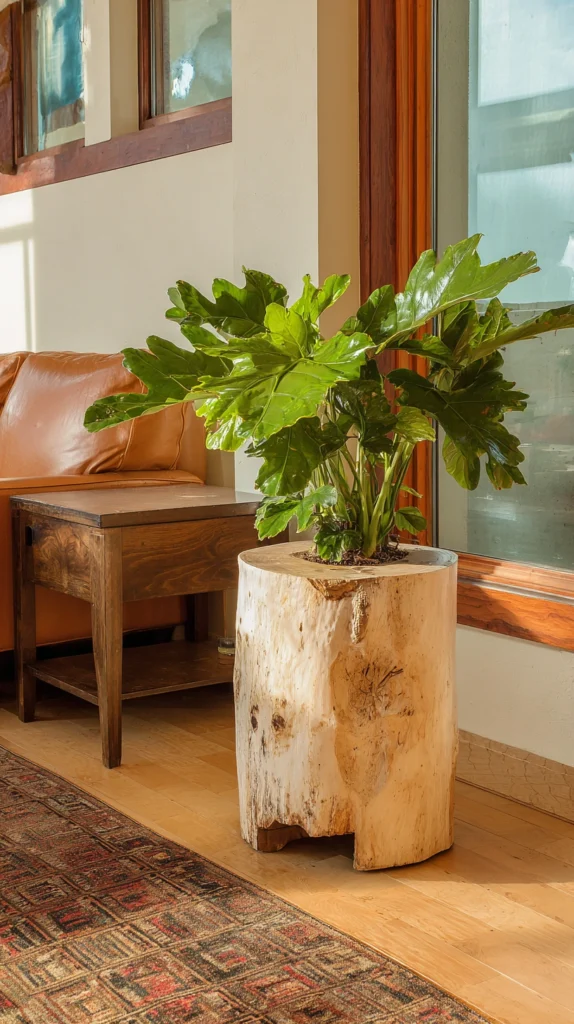
A section of a chunky log or tree trunk makes one of the most naturally beautiful plant stands imaginable. The organic shape, the texture of the bark, and the variation in grain and color give each one a completely unique character that no manufactured product can replicate.
Source a suitable log section from a fallen garden tree, a timber merchant, or a firewood supplier. Cut it to your desired height with a clean horizontal top and base, sand the top surface smooth to protect the pot base, and apply a coat of clear exterior wax to preserve the wood. Position it in a corner, beside a sofa, or in a bright window and place your largest, most dramatic plant on top.
Pro Tip: Dry your log section thoroughly before using it indoors as a plant stand. Fresh or green wood contains significant moisture and will crack, warp, and potentially develop mold as it dries out in a warm interior. Allow at least several weeks of drying time in a dry, ventilated space before bringing it inside.
3. Copper Pipe Plant Stand
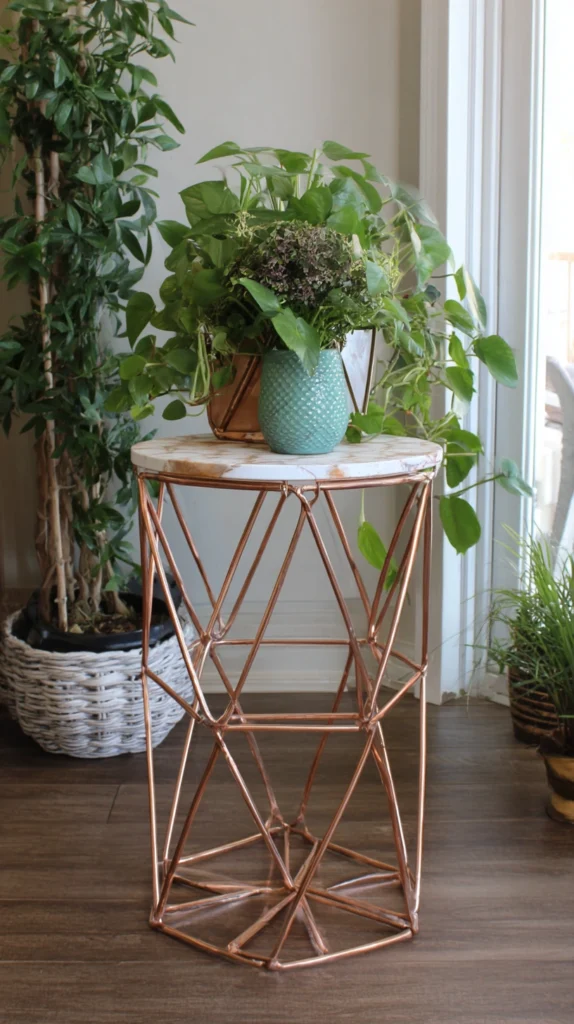
Copper pipe plant stands have a warm, industrial-meets-artisan quality that works beautifully in modern, minimal, and eclectic interiors alike. The warm tones of the copper complement almost every plant color and pot material, and the material itself develops a beautiful patina over time that makes it look even better with age.
Use standard 15mm or 22mm copper plumbing pipe and fittings — all available cheaply from any hardware store — to construct a simple geometric frame. Elbow joints, T-junctions, and straight sections can be assembled into a tripod, a tiered stand, or a simple straight-legged platform. No soldering required — push-fit or compression fittings hold everything together firmly.
Pro Tip: Clean your copper pipe with a fine wire wool or copper cleaner before assembly to remove any surface oxidation and bring out the warm, bright finish. If you prefer the aged verdigris look, a solution of salt and white vinegar applied to the surface and left to dry accelerates the patina beautifully within just a few hours.
4. Hairpin Leg Plant Stand Platform
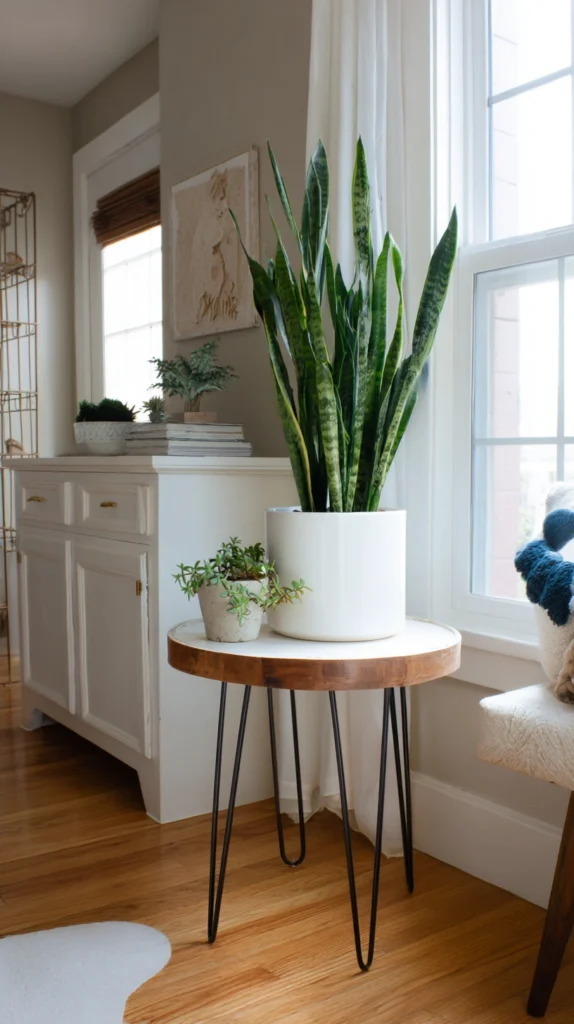
Hairpin legs are one of the most versatile and affordable components in DIY furniture making. A small circular or square timber platform fitted with four short hairpin legs creates a plant stand that is simple, modern, and endlessly adaptable to different pot sizes and interior styles.
Cut or source a small circle or square of plywood or solid timber, sand and finish it in your chosen stain or paint color, and attach four short hairpin legs — available very cheaply online — with simple screws through the pre-drilled holes. The finished stand looks clean, contemporary, and genuinely professional.
Pro Tip: Attach small adhesive felt pads to the bottom of each hairpin leg foot before placing the stand on hard floors. Hairpin leg feet are typically bare metal and will scratch timber floors, tiles, and stone surfaces surprisingly quickly under the weight of a plant and pot. Felt pads are a tiny detail that protects your floors and costs almost nothing.
5. Macramé Hanging Plant Stand
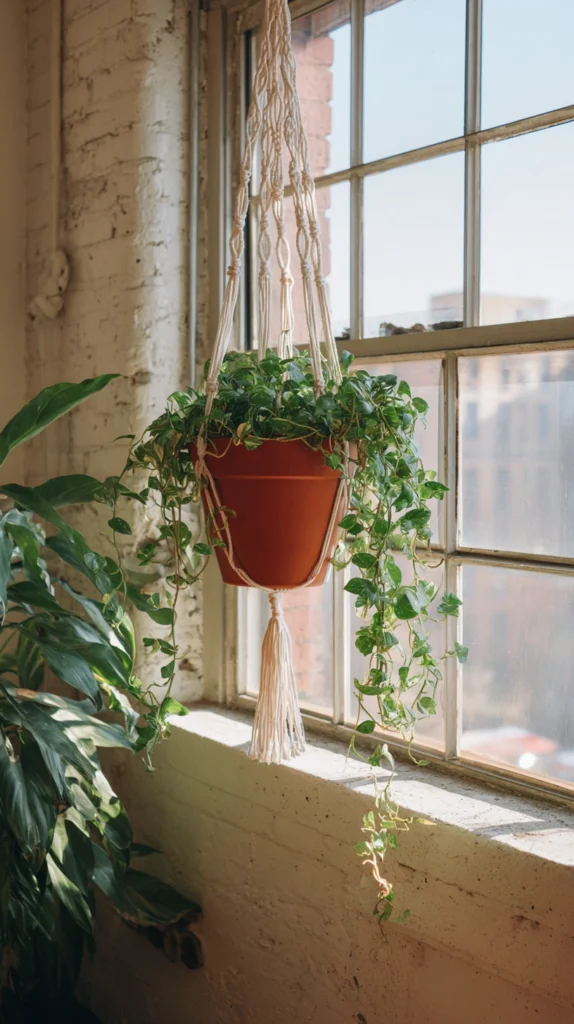
A macramé hanging plant stand suspends your pot in mid-air, creating a floating, ethereal display that adds enormous visual interest to any room. It uses vertical space that would otherwise go to waste, keeps trailing plants perfectly positioned to cascade downward, and adds a wonderful handcrafted textile element to your interior.
All you need is macramé cord — natural cotton or jute both work beautifully — a wooden dowel or metal ring for the top, and a basic knowledge of two or three simple macramé knots. Square knots and spiral half hitch knots are all you need to create a beautiful, functional hanging cradle for your pot.
Pro Tip: Always test the weight capacity of your ceiling hook or wall bracket before hanging a planted macramé holder. A pot, compost, and plant together are considerably heavier than they look — particularly after watering. Fix your hook directly into a ceiling joist or wall stud rather than just into plaster, and check the fixing regularly as the plant grows and gains weight.
6. Concrete Plant Stand
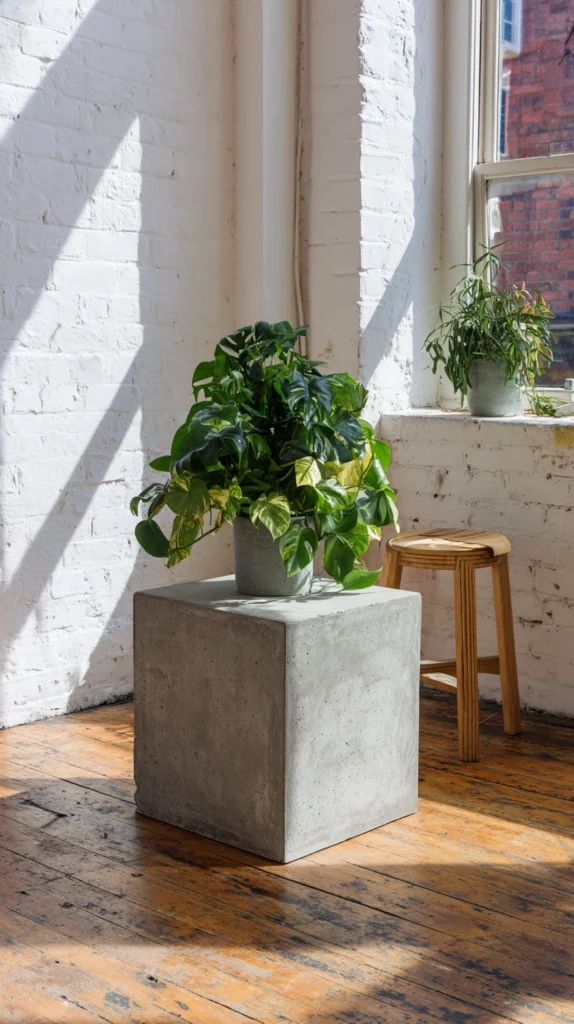
A concrete plant stand has a raw, architectural quality that looks stunning in modern, industrial, and minimal interiors. Concrete is heavier than most other DIY stand materials, which gives it a solidity and permanence that feels genuinely premium — and it is surprisingly easy to work with at home using basic casting techniques.
Mix a bag of rapid-set concrete to a thick, workable consistency and pour it into a simple mold — a plastic food container, a cardboard box, or a purpose-made silicone mold all work well. Embed a wooden or metal platform at the top before the concrete sets, allow it to cure fully, and sand any rough edges smooth with coarse sandpaper.
Pro Tip: Add a handful of fine sand or a small amount of pigment powder to your concrete mix before casting to vary the texture and color of the finished stand. Charcoal grey, warm sand, and soft white pigments all create beautiful results that look more refined than plain grey concrete straight from the bag.
7. Wooden Crate Plant Stand
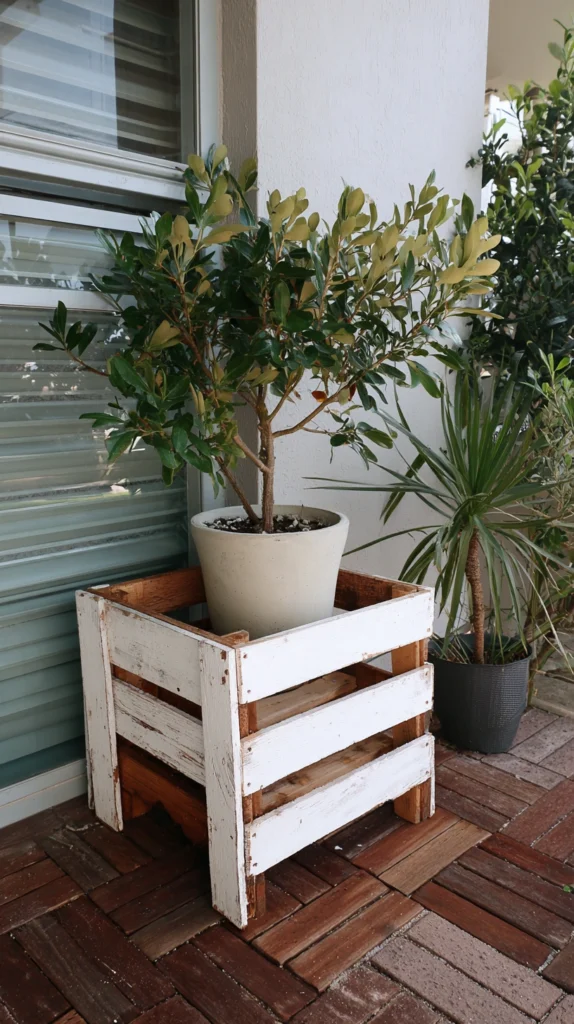
A simple wooden crate — whether a vintage fruit crate, a wine crate, or a simple DIY box built from timber planks — makes a wonderfully casual and characterful plant stand. Turn it upside down as a solid plinth, stack two or three at different heights for a tiered display, or use it right-side up with the plant sitting inside it.
Sand any rough edges, paint or stain in your chosen color, and add small furniture feet to the base if you want to lift it slightly off the floor and improve drainage beneath potted plants. A cluster of differently sized crates painted in the same color creates a cohesive plant display area that looks genuinely considered.
Pro Tip: Line the inside of any crate used as a direct plant container — rather than just a stand — with a piece of plastic sheeting before adding compost or a potted plant. This protects the timber from water damage and dramatically extends the life of the crate, particularly if it will be used outdoors or in a humid bathroom environment.
8. PVC Pipe Plant Stand
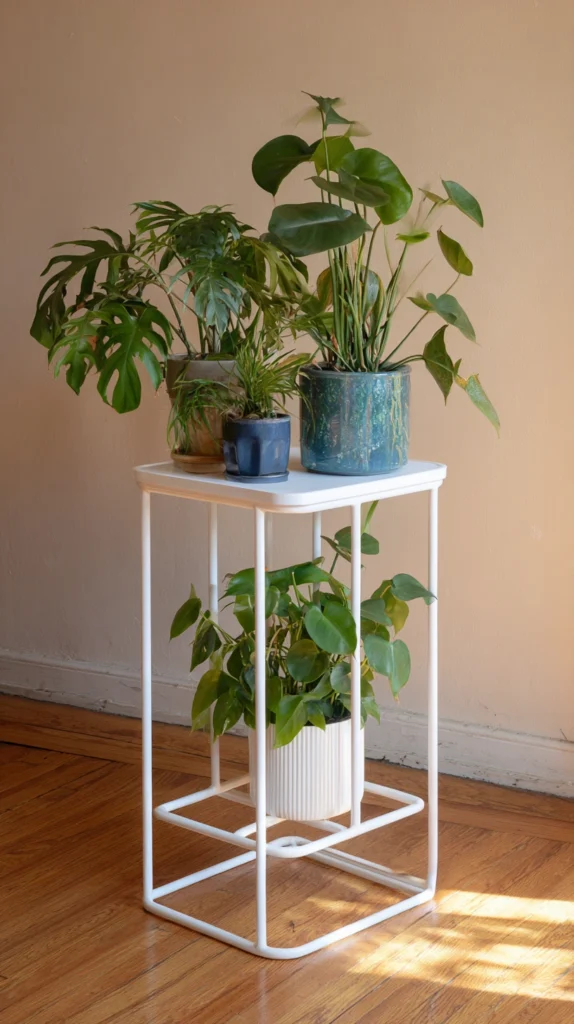
PVC pipe is one of the most affordable, lightweight, and surprisingly versatile materials for DIY plant stands. White PVC has a clean, modern quality that suits contemporary interiors, and it can be painted in any color using plastic-bonding spray paint for a completely custom finish.
Use standard PVC waste pipe and push-fit fittings to construct a geometric plant stand frame — a simple square base with four vertical legs and a top platform is achievable in under an hour with no specialist tools. The modular nature of push-fit fittings means you can experiment with different configurations until you find the proportions you like best.
Pro Tip: Paint PVC plant stands with a plastic-bonding primer before applying your chosen topcoat color. Standard paint does not adhere reliably to smooth PVC surfaces and will peel and chip quickly without the correct primer underneath. Plastic-bonding primer creates a surface that paint can grip properly, resulting in a finish that lasts.
9. Tiered Wooden Ladder Plant Stand
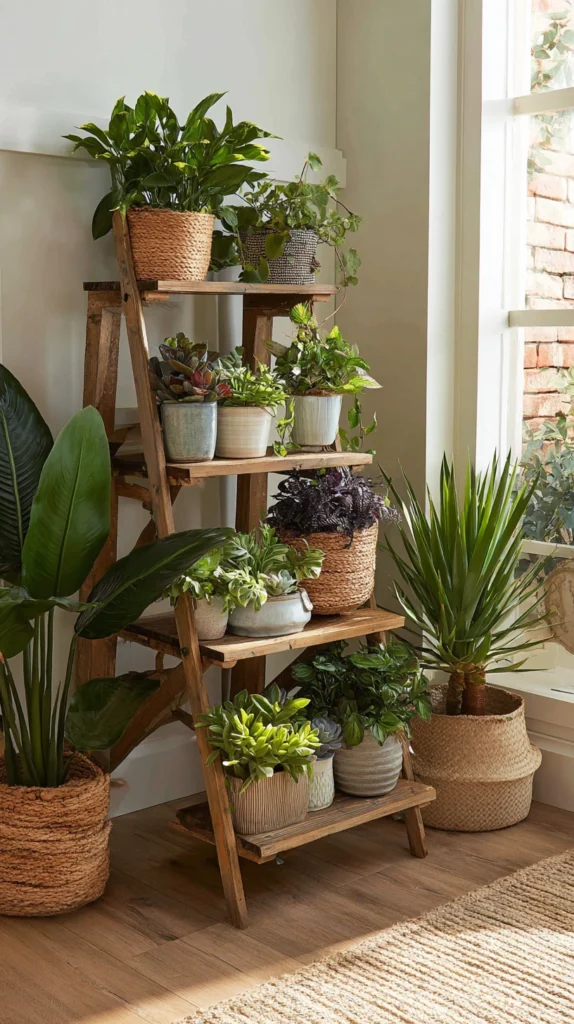
A simple wooden ladder — either a repurposed vintage ladder or one built from scratch with two side rails and a series of rungs — makes a brilliant tiered plant stand that displays multiple plants at different heights in a single, slender footprint. It is one of the most space-efficient plant display solutions you can make.
Sand the ladder smooth, finish in white, natural timber, or a bold accent color, and lean it against a wall at a slight angle. Place plants on the rungs at varying heights — larger pots at the bottom, smaller ones toward the top — for a balanced, visually dynamic display that fills a corner beautifully without taking up much floor space.
Pro Tip: Attach small wooden ledges or lips to each rung of the ladder stand to stop pots from slipping forward and falling off. A simple strip of timber glued and pinned to the front edge of each rung creates a subtle retaining edge that keeps pots secure without looking clunky or affecting the overall appearance of the stand.
10. Woven Rope Plant Stand
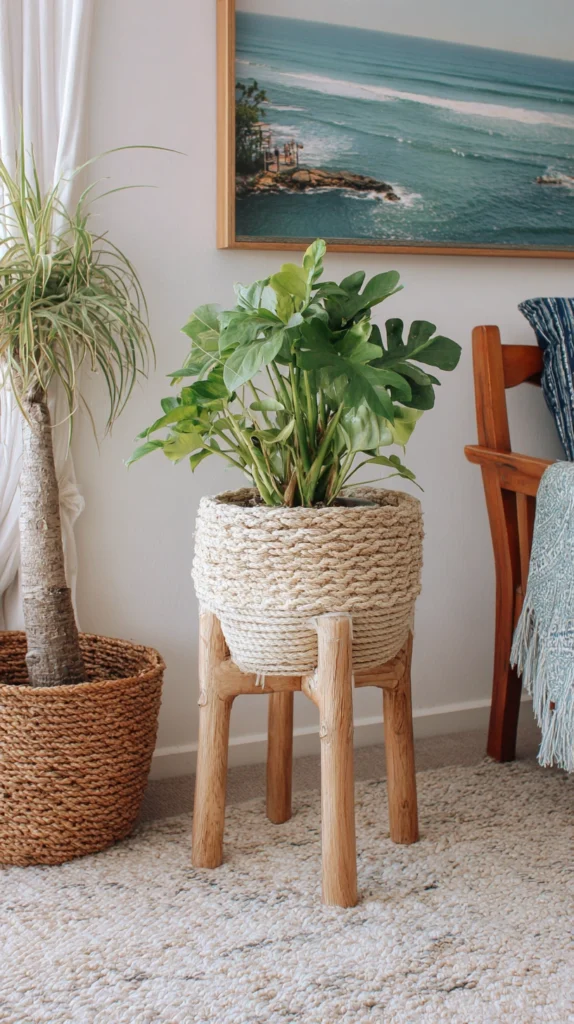
A woven rope or nautical cord plant stand has a relaxed, coastal, and tactile quality that suits bohemian, beach house, and natural interiors beautifully. The woven texture adds a handcraft element to the display and complements natural terracotta, ceramic, and woven pot materials particularly well.
Construct a simple timber or metal frame for the stand structure — four legs and a top ring or platform — then weave or wrap rope around the legs and between the frame elements to create the decorative surface. Natural jute, sisal, or cotton rope all work beautifully and are inexpensive to source in large quantities.
Pro Tip: Secure the rope wrapping at both the start and end of each section with a strong waterproof adhesive rather than relying on knots alone. Knots can loosen over time with the weight of the plant and the slight movement that occurs when the stand is repositioned. A dab of strong glue at each end point keeps the wrapping permanently secure and tidy.
11. Hairpin and Marble Plant Stand
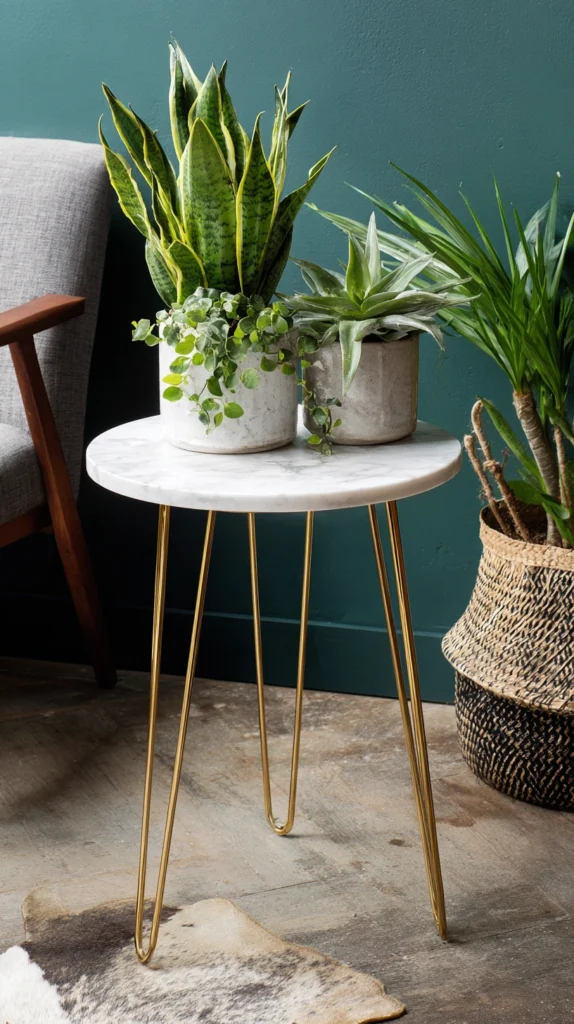
A small circle of marble or marble-effect porcelain tile fitted with three or four short hairpin legs creates one of the most elegant and genuinely luxurious-looking DIY plant stands possible. The combination of the cool marble surface and the warm metal of the hairpin legs is a pairing that looks effortlessly expensive.
Source a marble offcut from a stone merchant or tile supplier — even a small piece is usually very affordable as an offcut — have it cut to your desired shape, attach hairpin legs with a strong construction adhesive and small bolts where possible, and place your most beautiful pot on top. The result looks like a designer piece that costs ten times what it actually does.
Pro Tip: Seal the marble surface with a penetrating stone sealer before use as a plant stand. Marble is naturally porous and will stain permanently from water, soil, and pot drainage if left unsealed. A good quality stone sealer applied according to the manufacturer’s instructions makes the surface resistant to everyday plant care without affecting its appearance.
12. Wooden Dowel Geometric Plant Stand
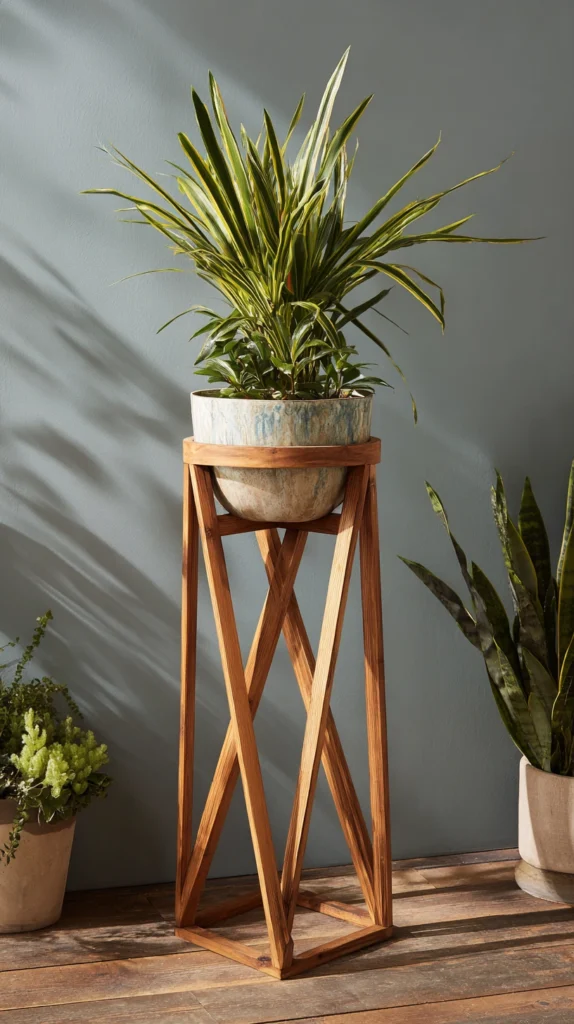
Wooden dowels assembled into geometric forms — triangles, hexagons, cube frames — create plant stands with a modern, architectural quality that looks genuinely considered and design-forward. The geometric framework holds the pot within or on top of the structure and turns the whole display into a piece of functional sculpture.
Cut dowels to equal lengths using a simple mitre box and saw, join the ends with small wooden connector blocks or specialist dowel connectors, and assemble your chosen geometric form. Sand smooth, finish in natural wood, white, or black, and displayed with a simple terracotta or ceramic pot placed inside or on top of the frame.
Pro Tip: Stain or paint all your dowel sections before assembly rather than after. Finishing individual pieces before joining them together gives you complete, even coverage on every surface — including the ends — without the awkward angles and hard-to-reach areas that make finishing an already-assembled geometric frame frustrating and time-consuming.
13. Upcycled Stool Plant Stand
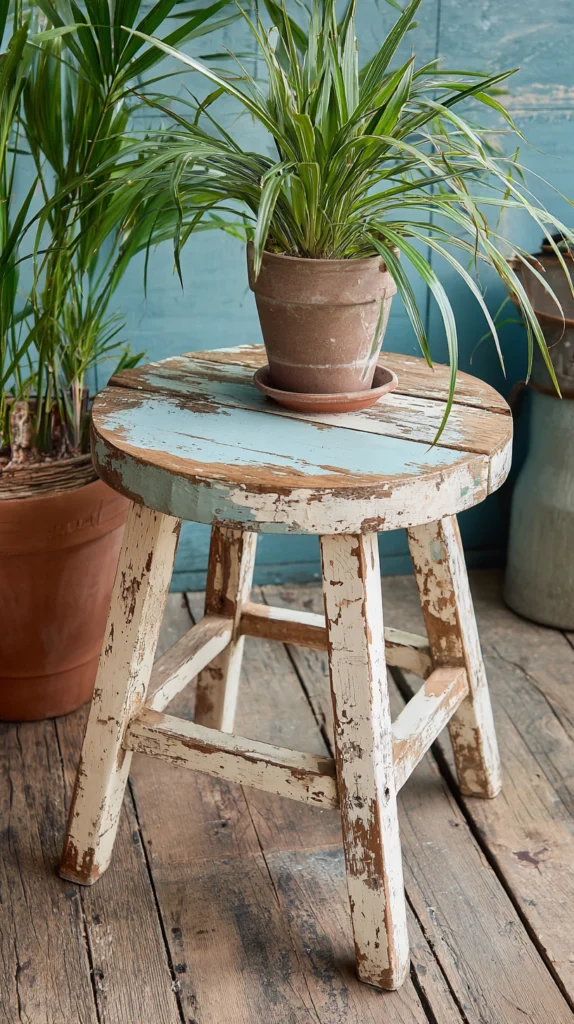
An old wooden stool — picked up from a charity shop, a car boot sale, or rescued from a skip — makes one of the most charming and characterful plant stands imaginable. The height, the four legs, and the flat circular or square top surface make a stool almost perfectly proportioned for holding a medium to large plant pot.
Sand it back if needed, repaint or restain in a color that suits your interior, and place your chosen plant on top. A cluster of stools at different heights grouped together in a corner creates an eclectic, collected plant display that looks casually stylish and costs almost nothing to put together.
Pro Tip: When shopping for stool plant stands in charity shops or at car boot sales, prioritize structural soundness over cosmetic condition. Wobbly joints, cracked legs, or unstable frames are genuine safety concerns when supporting the weight of a large plant and pot. Surface scratches, old paint, and worn finishes are all easy to fix — structural problems are considerably more effort.
14. Terracotta Pot Stacked Plant Stand
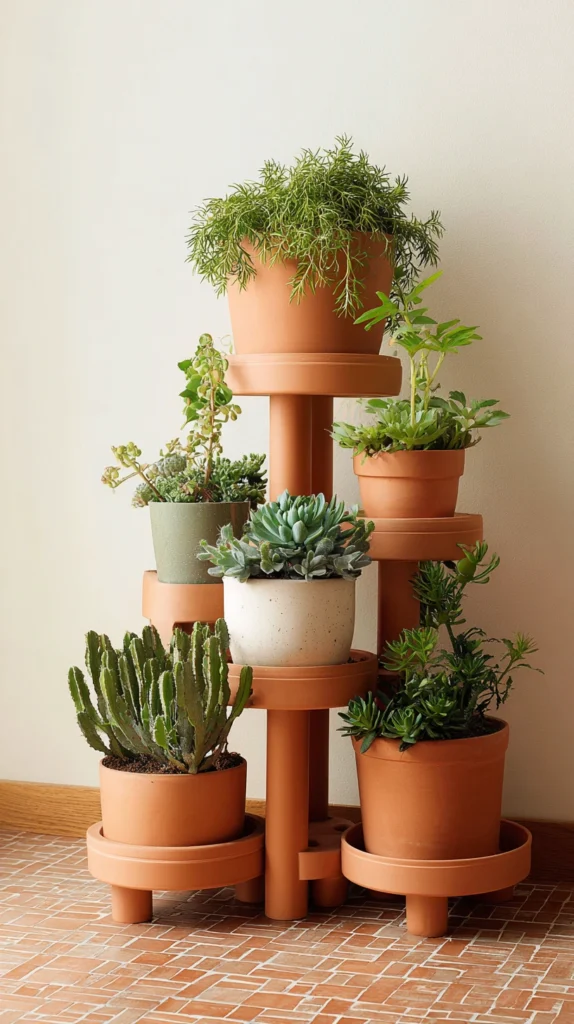
Stacking terracotta pots of descending sizes — largest at the bottom, progressively smaller toward the top — creates a tiered plant stand that is entirely made from the same material as the pots themselves. It is a wonderfully cohesive, organic solution that looks beautiful in a garden, on a terrace, or in a bright sunny room indoors.
Stack three or five pots upside down on top of each other in descending size order, with a final right-way-up pot at the very top holding your plant. The inverted pots form the stand structure and the topmost pot holds the plant. Secure each layer with a dab of exterior silicone adhesive for stability if the stand will hold a heavy plant.
Pro Tip: Choose terracotta pots with a flat, stable base rather than a tapered or curved base for stacking. Flat-based pots sit securely on top of each other without rocking or shifting. Tapered pots can be unstable when stacked and may topple if knocked — a particular concern on an outdoor terrace where wind or passing pets could disturb the arrangement.
15. Build a Plant Stand Corner Display Unit
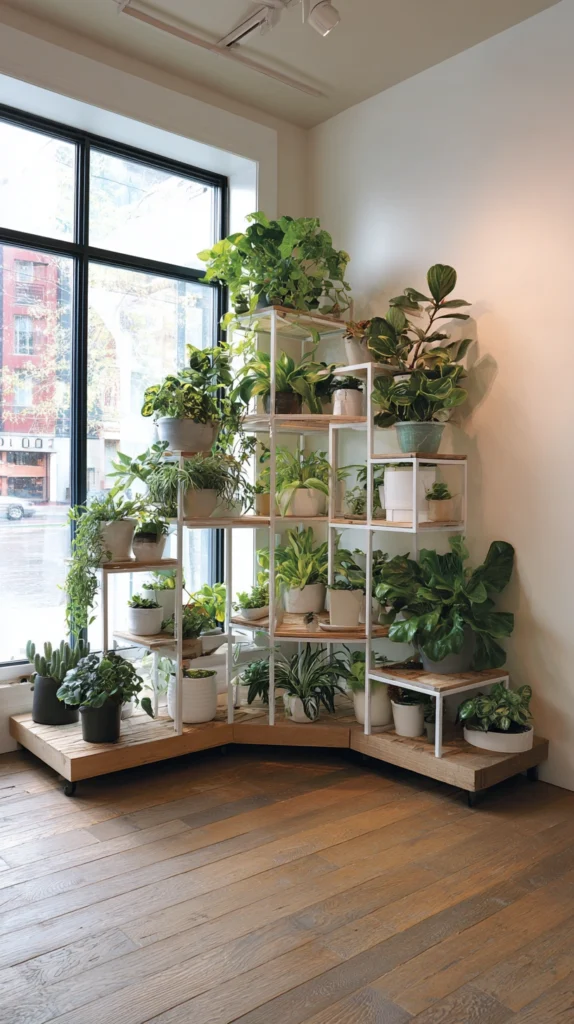
The most ambitious project on this list — and the most rewarding — is a custom-built corner plant stand display unit designed to fill an entire corner of a room with plants at multiple heights. Think of a combination of shelves, platforms, and open frameworks at varying levels, all built from the same timber and finished in the same color to create a cohesive, purpose-built plant corner.
Design the unit to fit your specific corner dimensions, build from plywood and solid timber uprights, finish in white, natural, or a bold accent color that complements your interior, and fill every level with plants chosen for their varying heights, leaf shapes, and trailing habits. The result is a living green installation that transforms a dead corner into the most talked-about feature in your home.
Pro Tip: Fix the corner display unit to the wall at the top with a simple L-bracket screwed into a stud for safety and stability. A large, heavily planted display unit is significantly heavier than it looks, and securing it to the wall prevents any risk of it toppling forward. Paint the bracket the same color as the unit and it becomes completely invisible within the finished display.
The Best Plant Stand Is the One That Tells Your Story
There is no single right way to display a plant. The best stands are the ones that reflect your taste, suit your space, and make you smile every time you walk past them. A stand you built yourself — even an imperfect one — will always carry more meaning than something bought and delivered in a box.
Pick one project from this list, gather your materials, and start this weekend. Your plants deserve a beautiful home, and so do you.