
DIY vs Store-Bought Toilet Bowl Cleaners Compared
I used to buy whatever toilet bowl cleaner had the most aggressive packaging—bottles promising “Mega Power” with images of swirling blue liquid destroying germs. I’d spend $5-8 per bottle, use it weekly, and still deal with stubborn rings that refused to budge.
Then during a pandemic-era cleaning supply shortage, I ran out of cleaner and desperately googled homemade alternatives. I mixed baking soda with vinegar, let it sit for 10 minutes, and scrubbed. The ring that had resisted months of expensive cleaners disappeared.
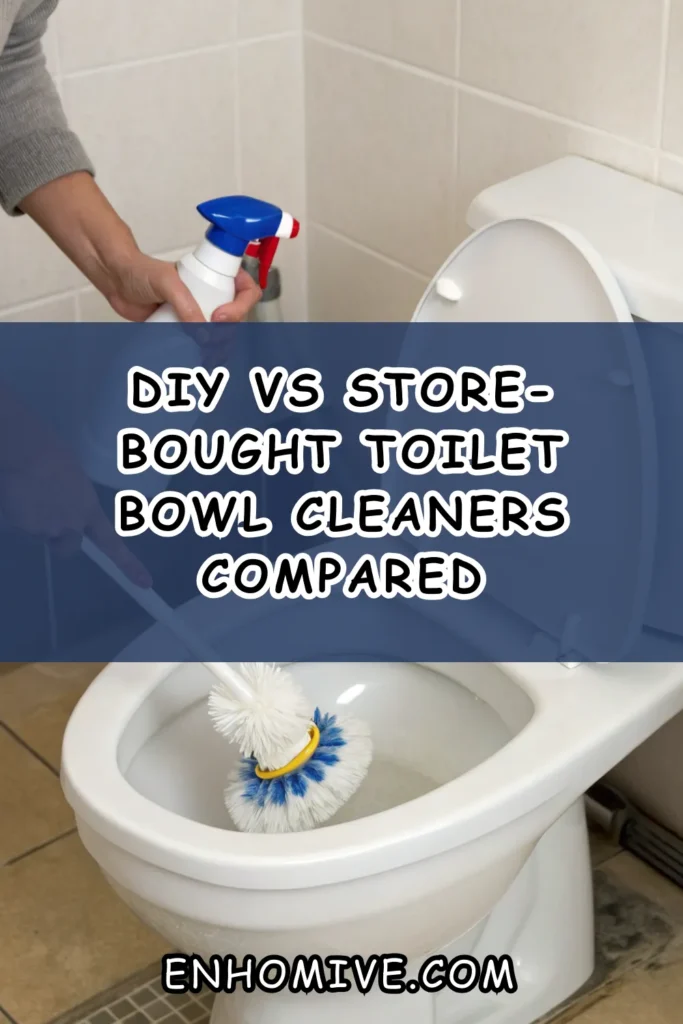
That moment sent me down a rabbit hole of testing every toilet cleaning method I could find. I spent six months systematically testing these products on the three toilets in my home, plus my parents’ heavily stained guest bathroom that hadn’t been deep-cleaned in years.
If you’ve ever wondered whether those $8 specialty toilet cleaners actually work better than baking soda, or if generic brands clean as well as name brands, this guide will give you definitive answers.
Understanding What Makes Toilets Dirty
Before comparing products, knowing what you’re cleaning explains why certain methods work better than others.
Hard water rings and mineral deposits are brown, orange, or white rings at the water line—calcium, magnesium, and iron left behind as water evaporates. Living in a hard water area, this is my biggest challenge.
Rust stains appear as orange or reddish-brown streaks from iron in water or corroding components.
Mold and mildew create black staining, while pink rings are actually bacteria called Serratia marcescens.
Urine scale builds up as yellowish deposits, particularly problematic in households with boys.
Limescale in rim jets creates white crusty deposits that clog the holes under the rim, reducing flush power.
Each type responds differently to cleaning products. Hard water stains need acid. Mold needs bleach or peroxide. Using the wrong product wastes time and money.
DIY Toilet Cleaning Methods
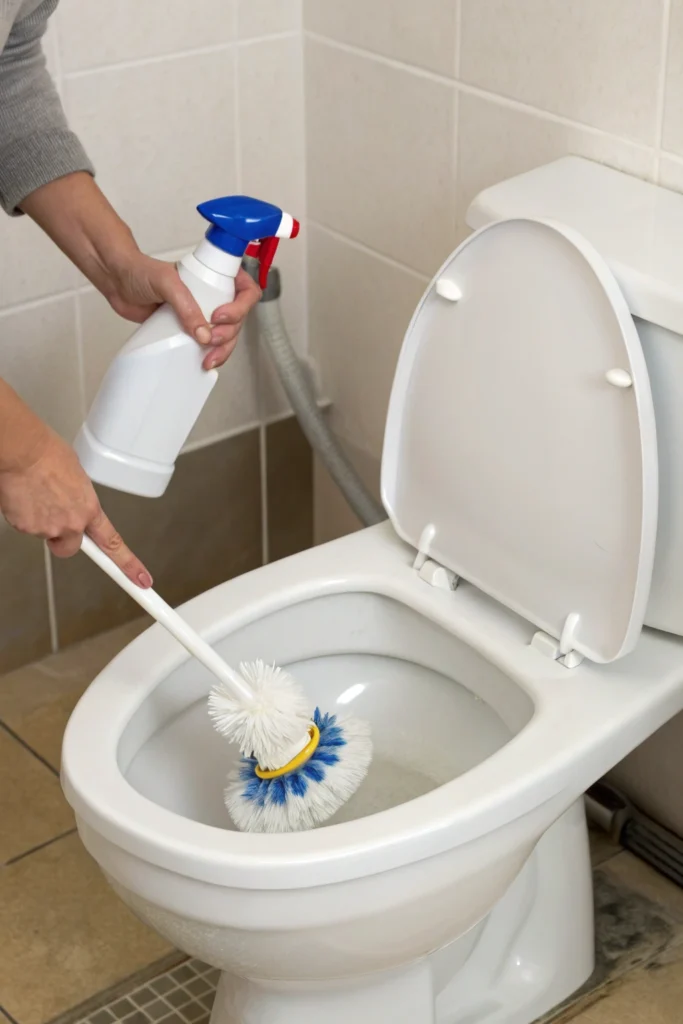
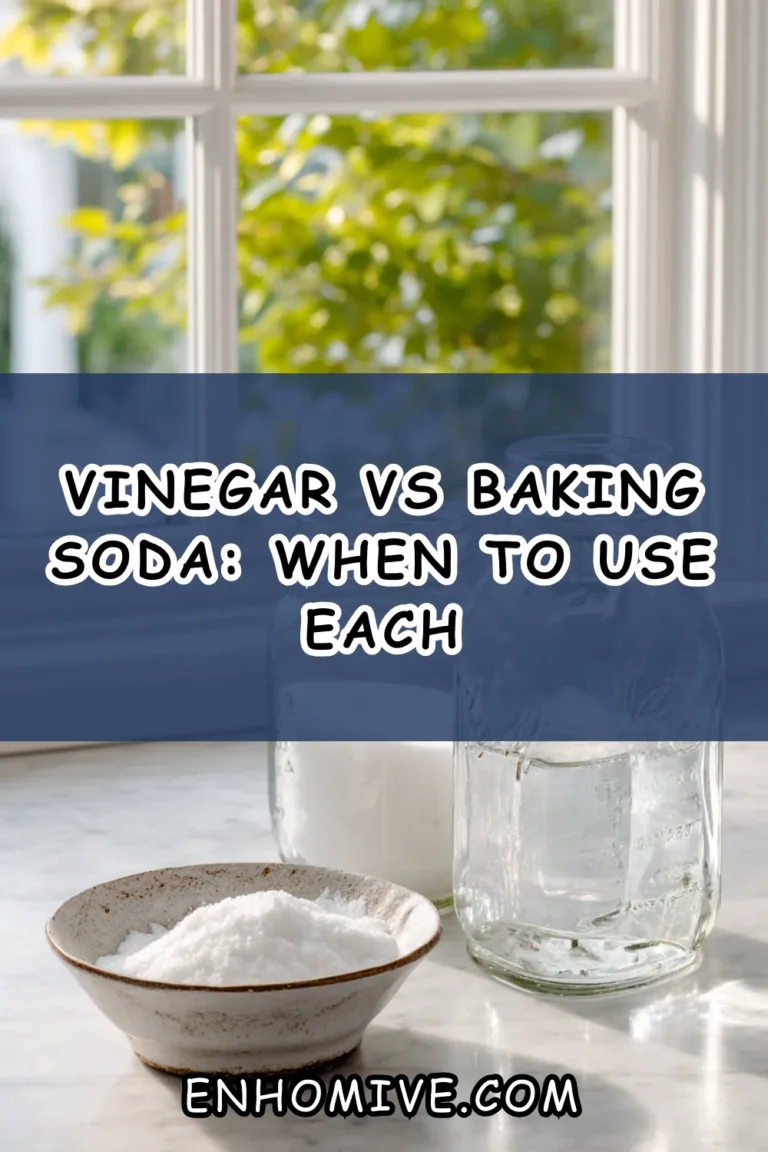
Baking Soda and Vinegar
The classic combination everyone recommends, though it works differently than people think.
I use 1 cup baking soda and 1-2 cups vinegar. The dramatic fizzing looks impressive, but the reaction actually neutralizes both substances. The real cleaning comes from vinegar’s acidity and baking soda’s mild abrasion.
Testing them separately versus together showed virtually no difference in effectiveness. For light stains and maintenance, this removes about 70% of mineral rings. For tough stains, it disappoints.
Cost: $0.50 per cleaning
Best for: Regular maintenance, light stains
Vinegar Alone
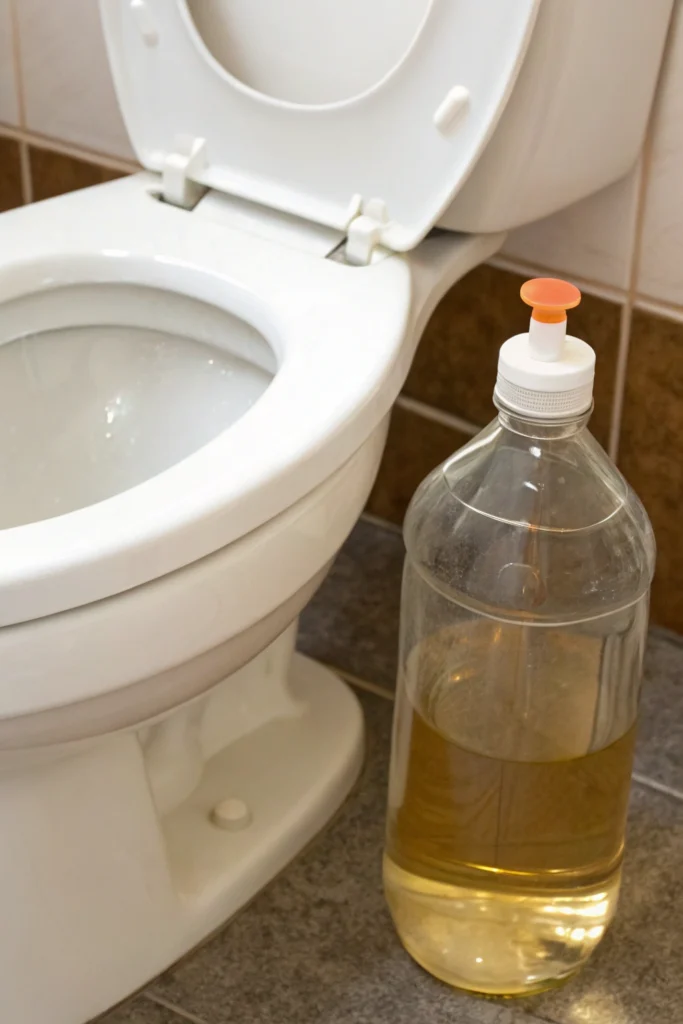
After realizing the combination wasn’t optimal, I tested straight vinegar—and got substantially better results.
I pour 2-3 cups into the bowl, spread with a brush, and let sit for 30 minutes to 2 hours. For severe stains, I use overnight treatment: turn off water, flush to an empty bowl, pour in an entire bottle, and let sit overnight.
Vinegar is acetic acid (pH 2.4), which dissolves mineral deposits and lime scale. Unlike the baking soda combination, straight vinegar maintains cleaning power the entire time.
On moderate hard water rings, vinegar removed them with minimal scrubbing after two hours. The same stains had resisted the baking soda combination for weeks.
Cost: $0.25-1.00 per cleaning
Best for: Hard water stains, mineral deposits, maintenance
The Works Acid Cleaner
For comparison, I tested The Works ($2.50/32oz), which contains hydrochloric acid.
On severe hard water rings, it removed 85-90% of staining after just 15 minutes—dramatically faster and more effective than vinegar. The stronger acid (9-12% concentration versus vinegar’s 5%) dissolves deposits that weaker acids can’t touch.
However, this requires serious safety precautions—gloves, ventilation, and never mixing with bleach (creates toxic gas).
Cost: $0.15-0.25 per cleaning
Best for: Severe mineral deposits, when vinegar isn’t enough
Pumice Stone
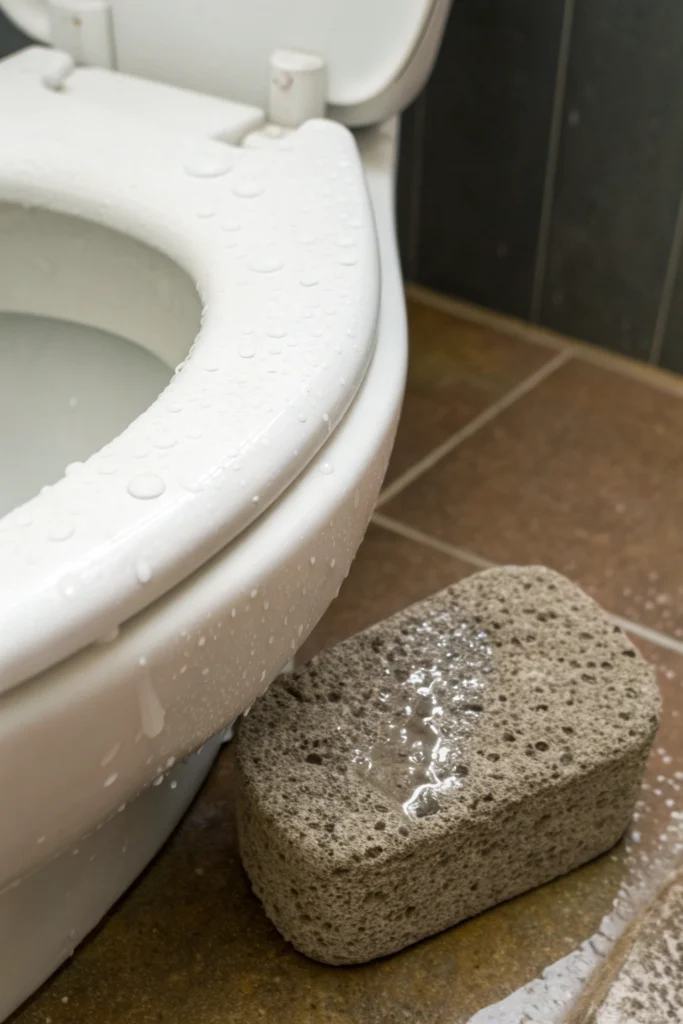
For impossible stains that resist all chemicals, a pumice stone provides physical removal without scratching porcelain—when used correctly.
The stone and toilet must stay wet. I use gentle pressure and circular motions. Dry pumice will scratch porcelain permanently.
After every chemical solution failed on my parents’ neglected toilet, the pumice stone removed the baked-on ring in 10 minutes.
Cost: $3-8 for reusable stone
Best for: Last-resort stains that resist all chemicals
Hydrogen Peroxide
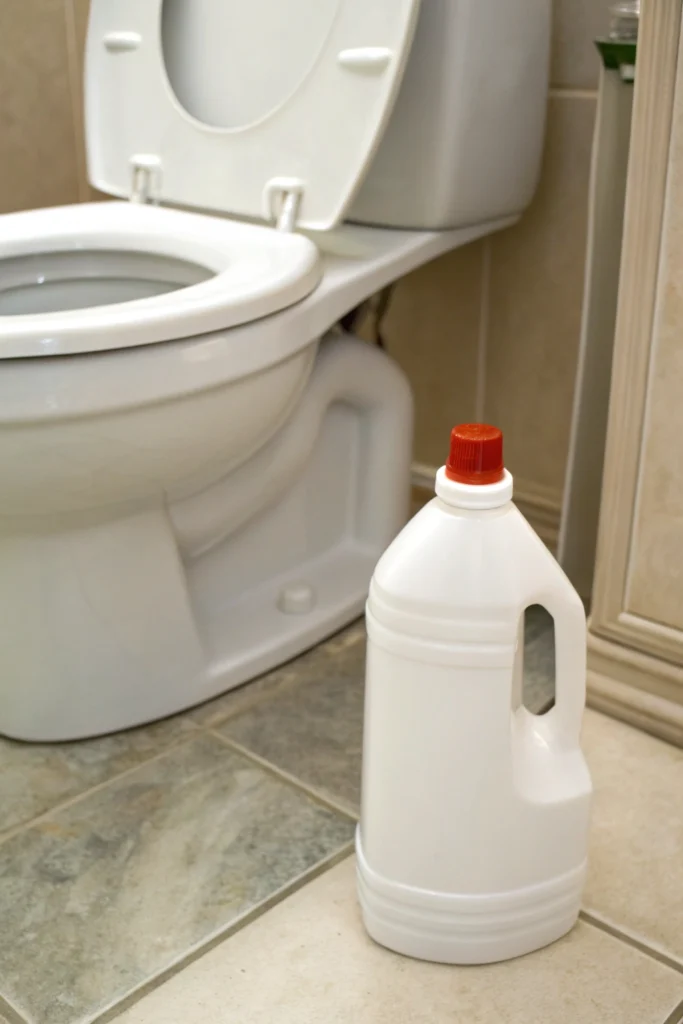
For mold, mildew, and disinfecting, hydrogen peroxide provides a bleach alternative without harsh fumes.
I pour 1-2 cups of 3% peroxide into the bowl, coat all surfaces especially under the rim, and let sit for 30 minutes.
On a toilet with pink bacterial staining, one treatment lightened it noticeably. Three weekly treatments eliminated it completely.
Cost: $0.50-1.00 per cleaning
Best for: Mold, mildew, bacteria, disinfecting
Store-Bought Products
Bleach-Based Cleaners
Clorox and similar bleach cleaners are what most people use. I tested Clorox ($3.50/24oz), store brands ($2/24oz), and Lysol ($3.75/24oz).
All cleaned comparably for general grime and bacteria. But for hard water rings—my main problem—they barely helped. Bleach is alkaline (pH 11-13), excellent for killing germs but wrong for mineral deposits that need acid.
On a moderate mineral ring, bleach removed maybe 20% even after 30 minutes.
Cost: $0.15-0.20 per cleaning
Best for: Disinfection, not mineral stains
Acid-Based Commercial Cleaners
Products like Lysol Power ($4.50/24oz), The Works ($2.50/32oz), and Zep ($6/32oz) contain hydrochloric acid.
The difference versus bleach was dramatic. The Works removed 85-90% of severe hard water stains after 15 minutes. Lysol Power performed marginally better at 90-95%. Zep delivered 95%+ but cost twice as much for similar results.
These require safety precautions—gloves, ventilation, never mix with bleach—but they actually solve hard water problems.
Cost: $0.15-0.35 per cleaning
Best for: Hard water stains, lime scale, rust
Drop-In Tablets
Clorox and Lysol make tablets that dissolve in the tank, supposedly cleaning with each flush.
I tested these for three months. They extended time between cleanings by perhaps 1-2 weeks—minimal benefit. Worse, the constant chemical exposure damaged flapper valves in two toilets within six months.
Some plumbers warn these void warranties. My toilet documentation specifically prohibited them.
Not recommended
Direct Comparison Testing
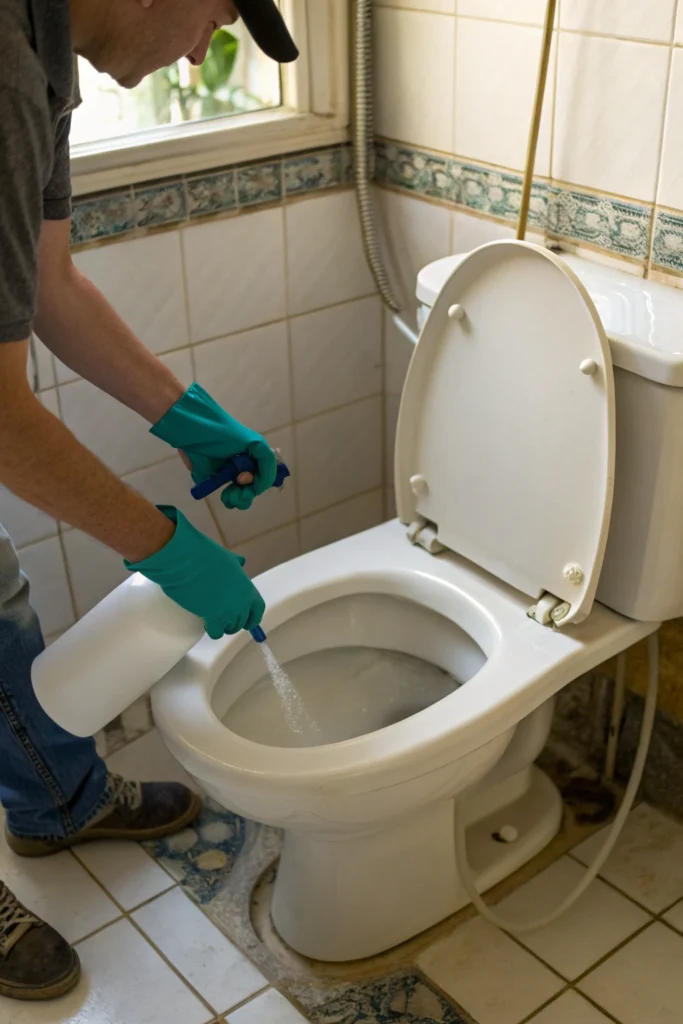
Test 1: Moderate Hard Water Rings
Setup: Two identical toilets with moderate rings from 3-4 weeks of neglect.
- Baking soda paste: 15-20% improvement (wrong tool)
- Vinegar overnight: 75% removal (good but slow)
- The Works acid: 90% removal in 15 minutes (winner)
- Premium acid gel: 92% removal (not worth premium)
Winner: The Works for effectiveness and value
Test 2: Severe Neglected Staining
Setup: Guest bathroom with 6+ months of accumulated hard water, minerals, and rust.
- Multiple vinegar treatments: 40% removal over three days
- The Works: 70% of minerals, minimal rust removal
- Iron OUT: 95% of rust stains
- Pumice + acid: 95%+ total removal
Winner: Combination approach—no single product solved everything
Test 3: Disinfection Testing
I used ATP swab testing to measure actual bacterial reduction.
- Bleach: 99.9% reduction (complete disinfection)
- Acid cleaner: 30-40% reduction (cleans but doesn’t sanitize)
- Vinegar: 80-85% reduction
- Hydrogen peroxide: 95-98% reduction
- Eco-cleaner: 75-80% reduction
Key insight: Visible cleanliness doesn’t equal disinfection. Acid cleaners remove stains beautifully but leave bacteria behind.
Test 4: Annual Cost Comparison
Assumptions: Three toilets, weekly cleaning, monthly deep cleaning.
- DIY vinegar/baking soda only: $51/year
- Commercial bleach products: $47/year
- Premium all-commercial: $82/year
- Eco-friendly only: $79/year
- Hybrid approach: $35/year
Winner: Hybrid combining cheap DIY maintenance with targeted commercial products
My Current System
Tools (one-time ~$25):
- Quality toilet brush: $8
- Bottle brush for rim jets: $4
- Pumice stone: $5
- Rubber gloves: $5
Products (annual ~$35):
- White vinegar: $12
- Store-brand bleach: $8
- The Works acid cleaner: $10
- Hydrogen peroxide: $5
Schedule:
Weekly (5 minutes): Alternate vinegar and bleach cleaner, quick scrub
Monthly (15 minutes): Acid cleaner, thorough scrubbing including under rim, peroxide disinfection
Quarterly (30 minutes): Tank vinegar treatment, pumice on any developing stains
This keeps three toilets consistently clean for $35 annually versus the $120+ I used to spend on premium products.
Common Mistakes to Avoid
Never mix bleach and acid—creates toxic chlorine gas. I wait 24 hours and flush multiple times between using different product types.
Don’t let acid cleaners dry—they become concentrated and can etch porcelain. Never exceed recommended dwell times.
Don’t use abrasives on colored toilets—pumice is safer on white porcelain than colored finishes.
Clean the tank occasionally—I add 1 cup vinegar every 3 months, let sit overnight, flush. Prevents buildup without damaging components like tablets do.
The Final Verdict
DIY solutions deliver 80-90% of commercial product results at 10-20% of the cost for most situations.
For routine maintenance, vinegar matches mid-range commercial cleaners at fraction of the cost. For severe mineral deposits, commercial acid cleaners like The Works ($2.50) outperform all DIY options and are worth it.
My recommended minimum system:
- White vinegar: $3-4 (maintenance, minerals)
- Store-brand bleach: $2 (disinfection)
- The Works acid cleaner: $2.50 (monthly deep cleaning)
- Total: ~$8 for months of supplies
Optional additions:
- Hydrogen peroxide: $3 (bleach alternative)
- Pumice stone: $5 (emergency severe stains)
The key insight: understanding what you’re cleaning and matching the right pH to the problem delivers better results than expensive products with vague “power” claims.
Hard water stains need acid. Bacteria need bleach or peroxide. Using vinegar on mineral deposits works. Using bleach on mineral deposits wastes money.
My three toilets stay consistently clean with $35 annual costs and 15 weekly minutes. I’m saving $85+ yearly while achieving better results than when I bought premium products.
What’s been your experience with toilet cleaning? Have you found DIY solutions that work exceptionally well, or commercial products that truly justify their cost?