

15 Farmhouse Living Room Ideas for Cozy, Inviting Spaces
Farmhouse living rooms have a special kind of warmth. They feel relaxed without being sloppy, stylish without being showy, and welcoming without trying too hard.
At their best, farmhouse interiors balance comfort, character, and simplicity, creating spaces that invite you to slow down and stay awhile. Whether you live in a country home or a city apartment, farmhouse style adapts beautifully when the focus stays on texture, warmth, and livability.

A cozy farmhouse living room isn’t built around trends. It’s shaped by natural materials, soft layers, and furniture that feels meant to be used, not just admired. These 15 ideas explore how to design farmhouse living rooms that feel inviting, stylish, and timeless, while still working for modern life.
1. Soft Neutral Color Palettes That Feel Warm
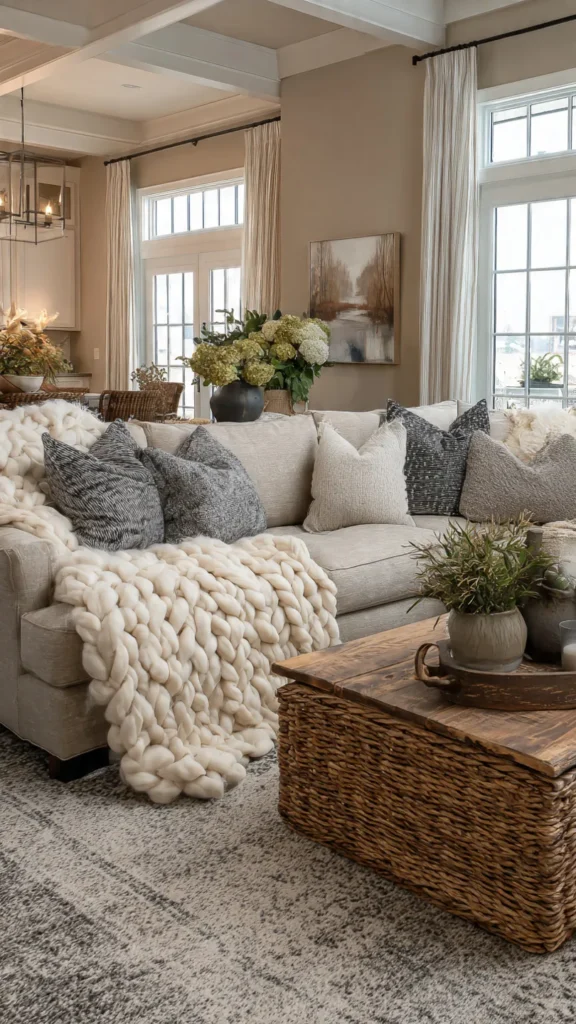
Farmhouse living rooms almost always begin with a calm, neutral base. Warm whites, creamy beiges, soft greige, and light taupe create a soothing foundation that instantly feels inviting.
The key is choosing neutrals with warmth rather than stark or cool undertones. Layering similar shades across walls, upholstery, and textiles adds depth without visual clutter. This approach keeps the room feeling light, cozy, and effortlessly pulled together.
2. Comfortable Sofas Designed for Real Living
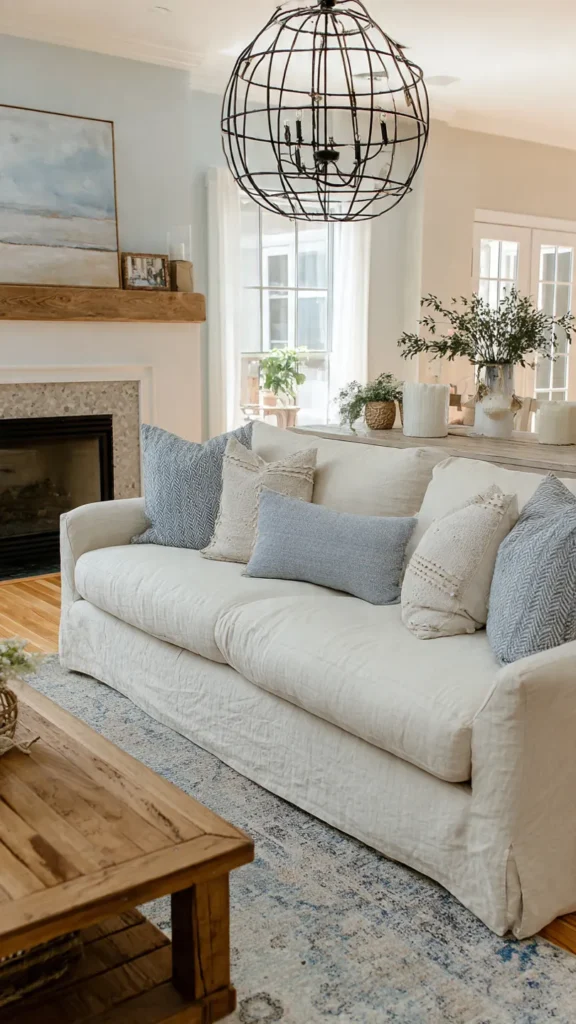
A farmhouse living room should never feel precious. The sofa, often the heart of the space, needs to look good while encouraging people to sink in and relax.
Slipcovered sofas in cotton or linen blends are classic farmhouse staples. They feel casual, practical, and timeless. Deep seats, plush cushions, and soft fabrics make the space feel lived-in and welcoming rather than formal or stiff.
3. Natural Wood Elements for Warmth and Character
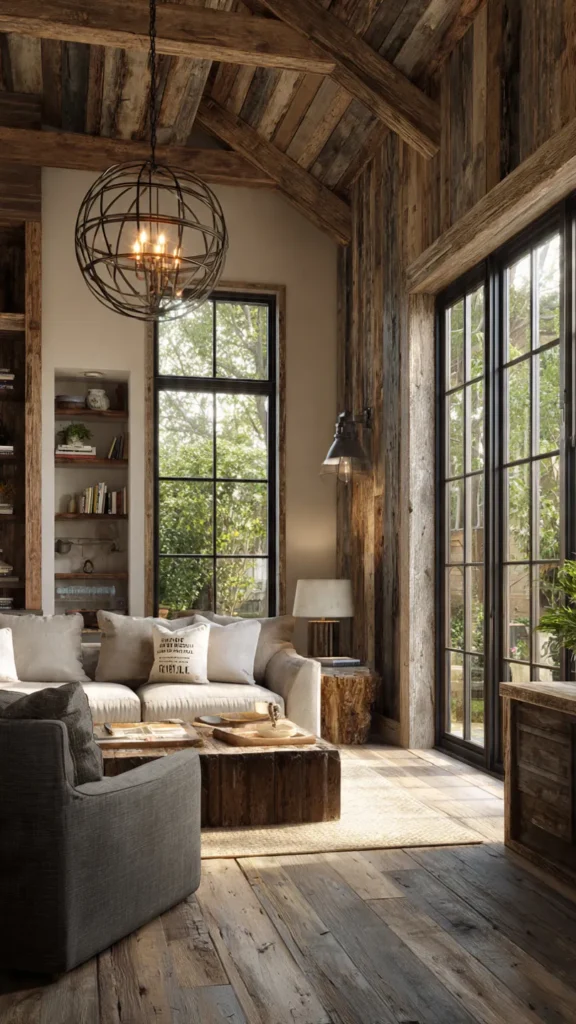
Wood brings instant warmth and authenticity to farmhouse interiors. Coffee tables, side tables, exposed beams, or wood shelving add texture and grounding to the living room.
The most inviting spaces mix wood tones rather than matching everything perfectly. Slight variations in finish and grain add character and prevent the room from feeling staged. Natural or lightly distressed wood finishes enhance the cozy, collected feel.
4. Layered Textiles for Softness and Comfort
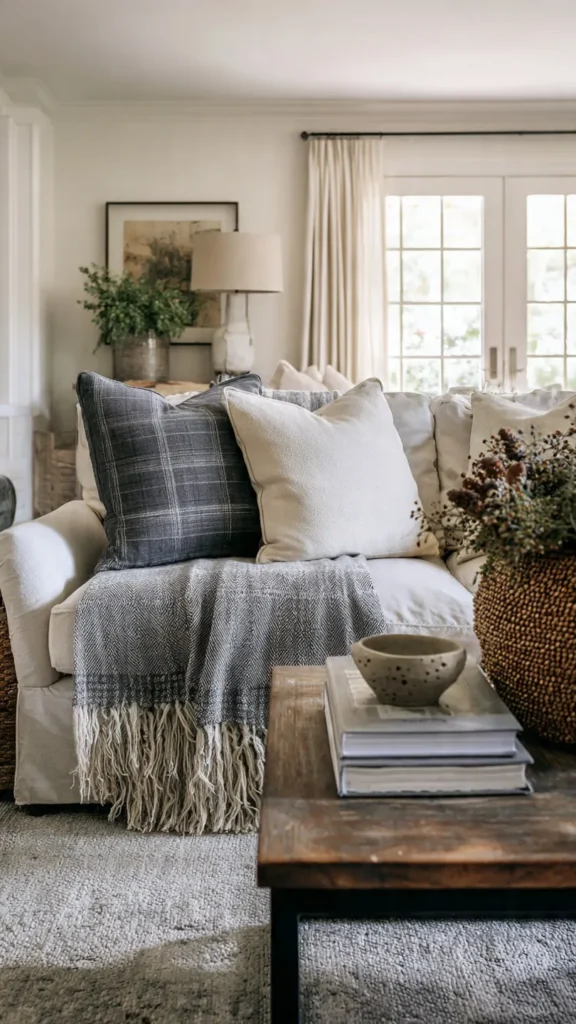
Textiles play a major role in creating a cozy farmhouse living room. Layering different fabrics adds depth, softness, and visual interest.
Think chunky knit throws, linen pillows, cotton upholstery, and woven rugs. Keeping patterns subtle and colors muted allows texture to shine. These layers make the room feel warm, relaxed, and comfortable throughout the seasons.
5. A Mix of Old and New for Timeless Style
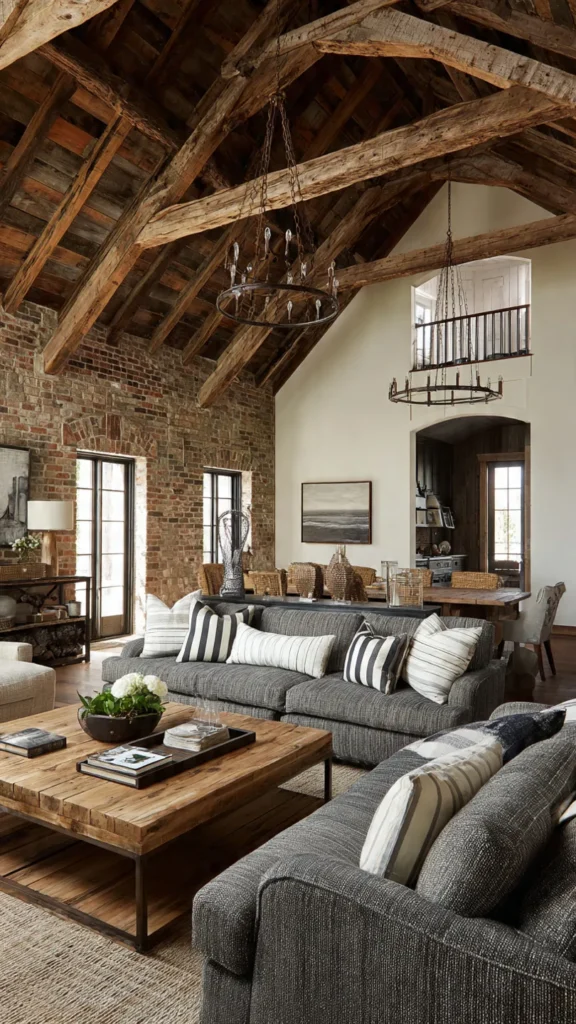
Farmhouse style thrives on balance. Mixing vintage-inspired pieces with modern comforts creates a space that feels curated rather than themed.
An antique-style console paired with a contemporary sofa or a modern lamp on a rustic side table keeps the room dynamic. This blend prevents the space from feeling dated while honoring farmhouse roots.
6. Open Shelving with Thoughtful Styling
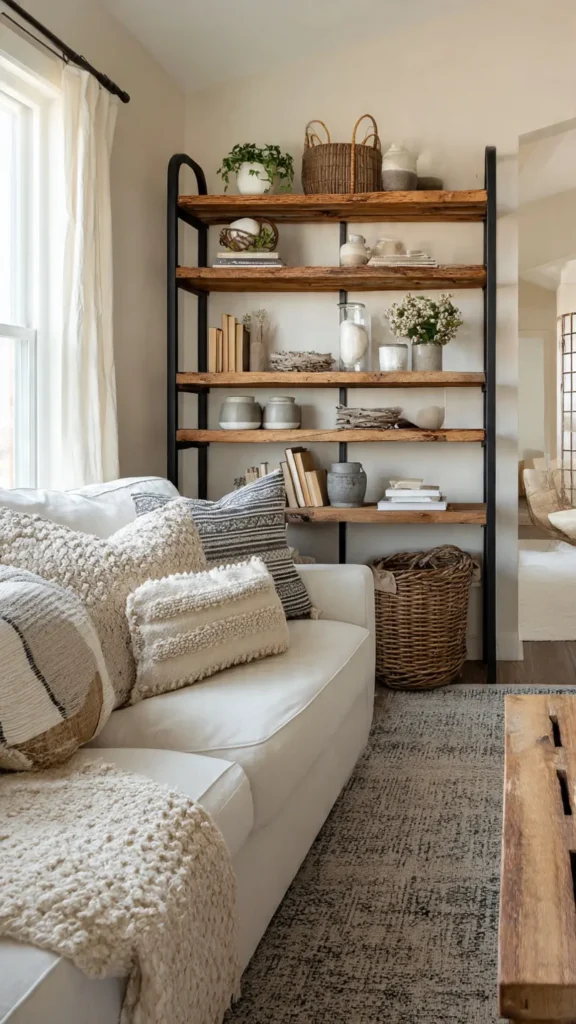
Open shelving adds charm and personality to farmhouse living rooms when styled with intention. It offers a chance to display meaningful items while keeping the space feeling light.
Books, ceramic vases, framed photos, and small plants work beautifully. Leaving some negative space between objects prevents visual clutter. The goal is a relaxed, collected look rather than a crowded display.
7. Warm Lighting That Creates Atmosphere
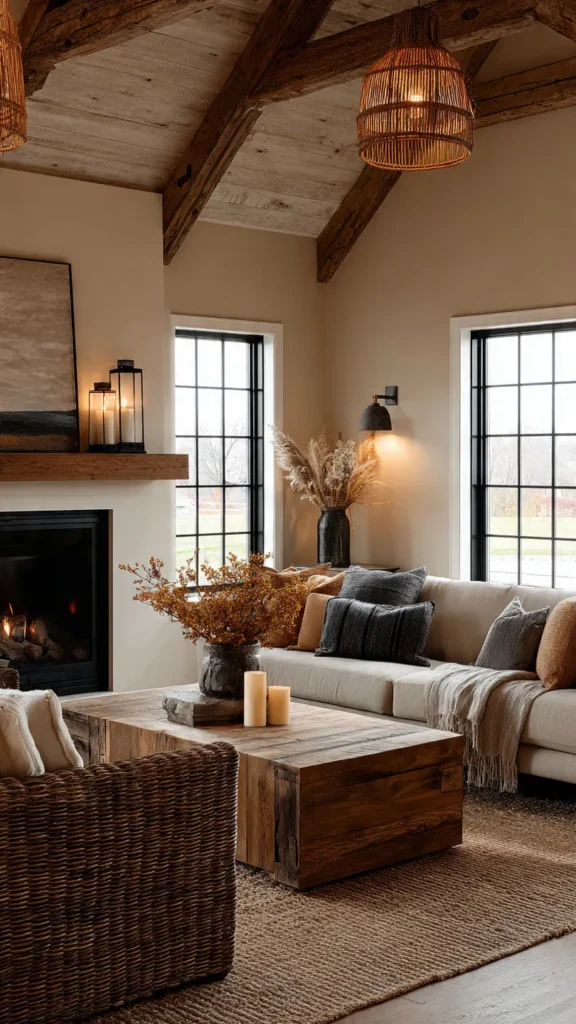
Lighting can make or break the coziness of a living room. Farmhouse spaces benefit from soft, layered lighting that feels gentle and inviting.
Table lamps, floor lamps, and wall sconces add warmth at different levels. Choosing warm-toned bulbs enhances the cozy mood and highlights natural textures. Avoid overly bright or harsh lighting that disrupts the relaxed feel.
8. Comfortable Rugs That Anchor the Space
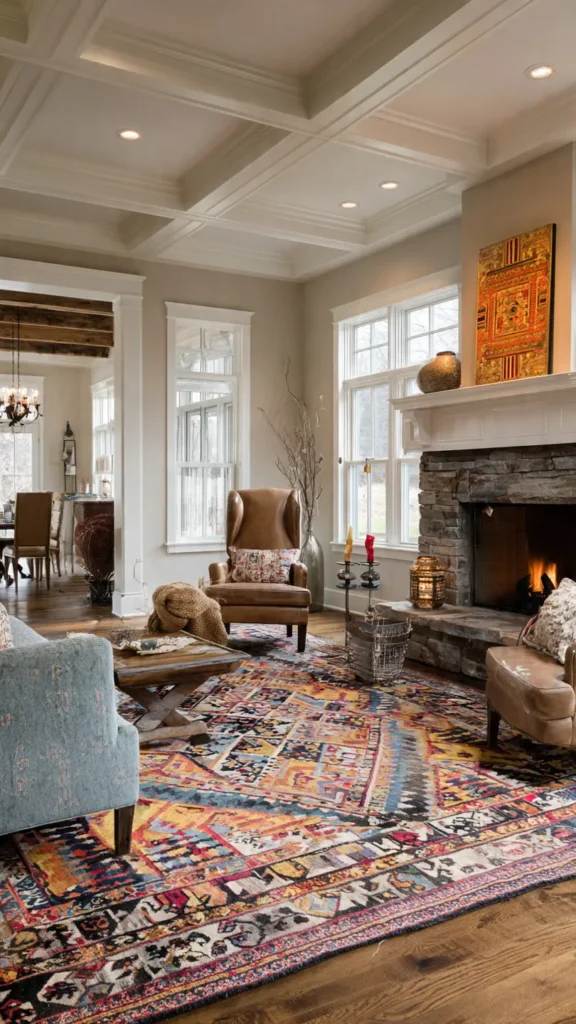
A rug grounds the living room and adds another layer of comfort. In farmhouse interiors, rugs should feel soft and welcoming underfoot.
Neutral or muted patterned rugs work well, especially those inspired by vintage designs. Natural fiber rugs like jute add texture, while wool or cotton blends provide warmth. The rug should be large enough to connect seating areas and create cohesion.
9. Subtle Patterns for Visual Interest
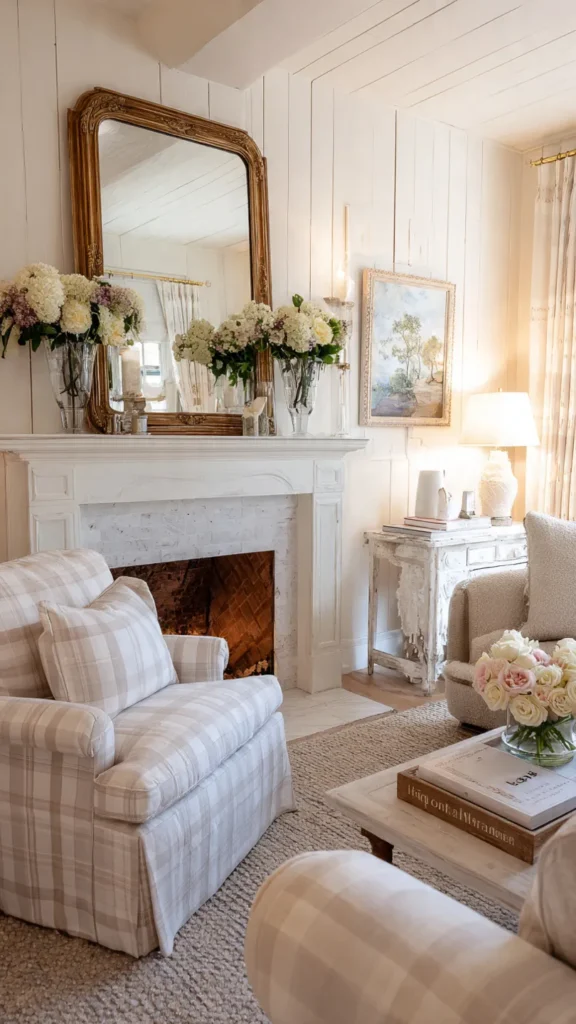
While farmhouse living rooms favor simplicity, subtle patterns add depth and charm. Soft stripes, small florals, or classic checks introduce interest without overwhelming the space.
Using patterns sparingly on pillows, throws, or accent chairs keeps the room feeling balanced. Sticking to a consistent color palette ensures the patterns feel cohesive rather than busy.
10. Cozy Seating Arrangements That Encourage Conversation
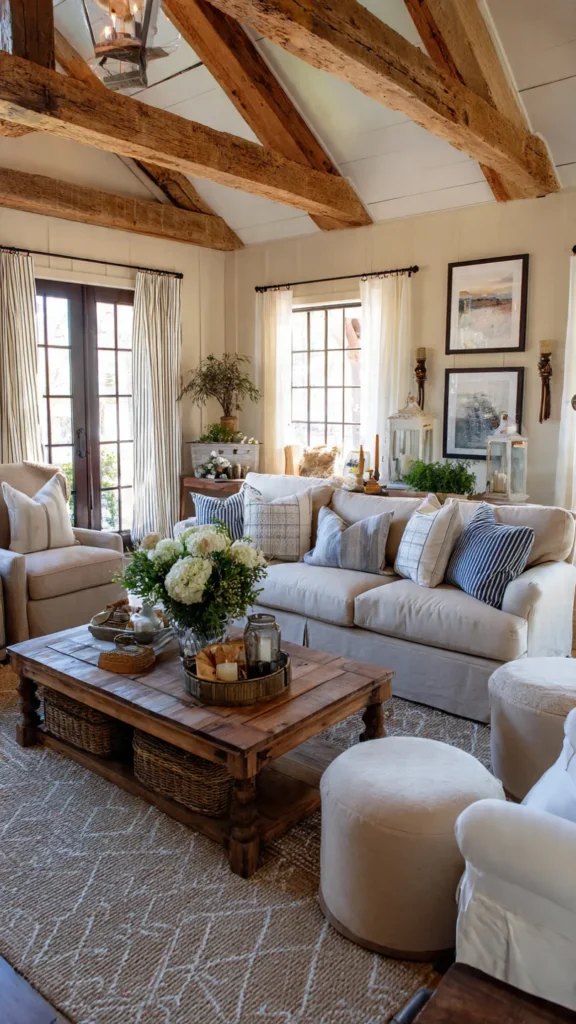
Farmhouse living rooms are meant for connection. Seating should be arranged to encourage conversation and togetherness rather than focusing solely on a television.
Position sofas and chairs facing each other when possible, with a coffee table anchoring the center. Adding an extra armchair or pouf increases flexibility and reinforces the welcoming atmosphere.
11. Simple Window Treatments That Let Light In
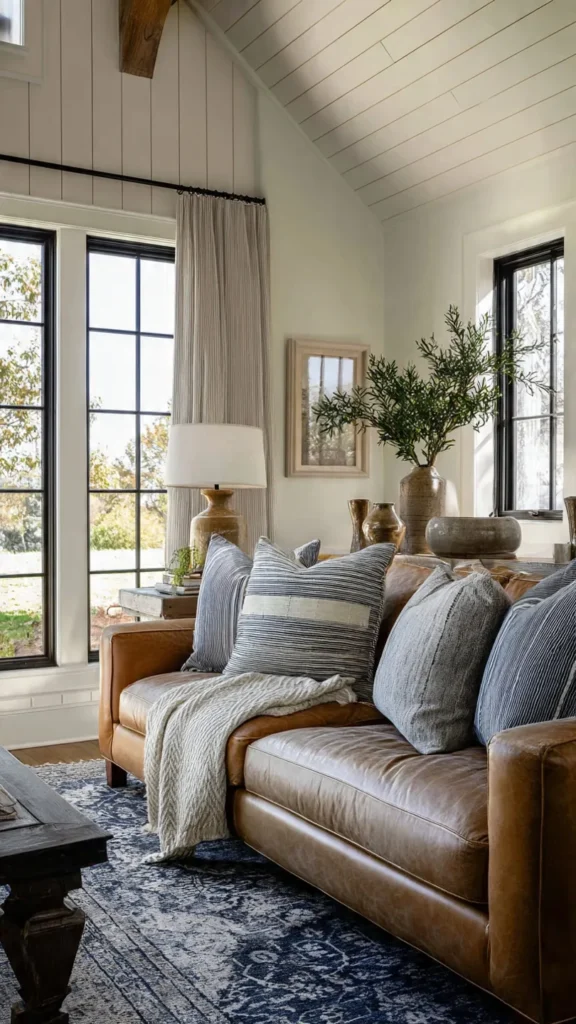
Natural light enhances the warmth of a farmhouse living room. Window treatments should soften the light without blocking it entirely.
Sheer curtains, linen panels, or woven shades provide privacy while maintaining an airy feel. Avoid heavy drapes that darken the room and compete with the relaxed aesthetic.
12. Greenery for a Fresh, Lived-In Touch
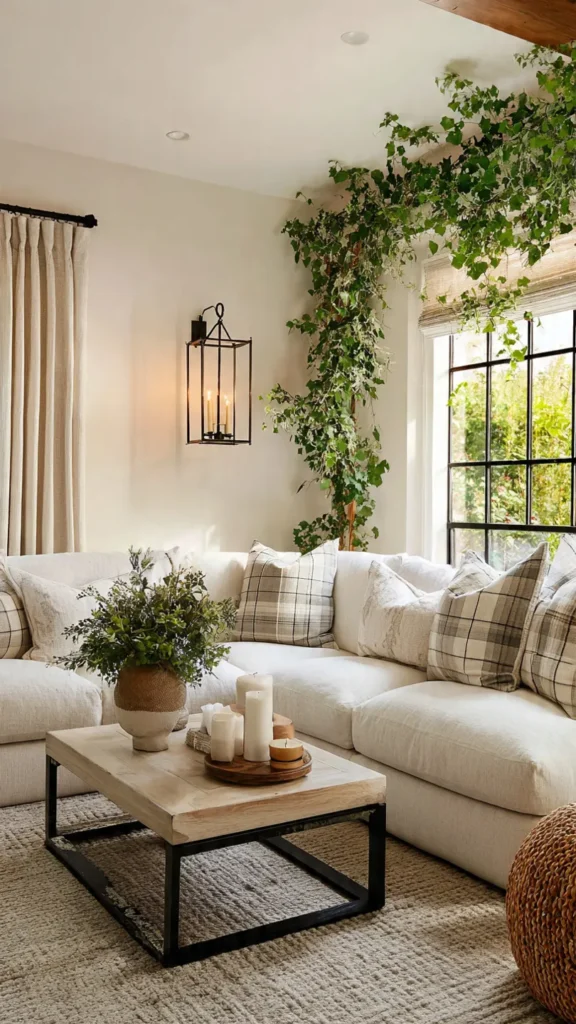
Plants bring life and freshness to farmhouse living rooms. Whether real or high-quality faux, greenery softens the space and adds organic beauty.
Simple potted plants, trailing vines, or small arrangements on shelves create a relaxed, homey feel. Keeping planters neutral or natural helps them blend seamlessly with the decor.
13. Statement Coffee Tables with Rustic Appeal
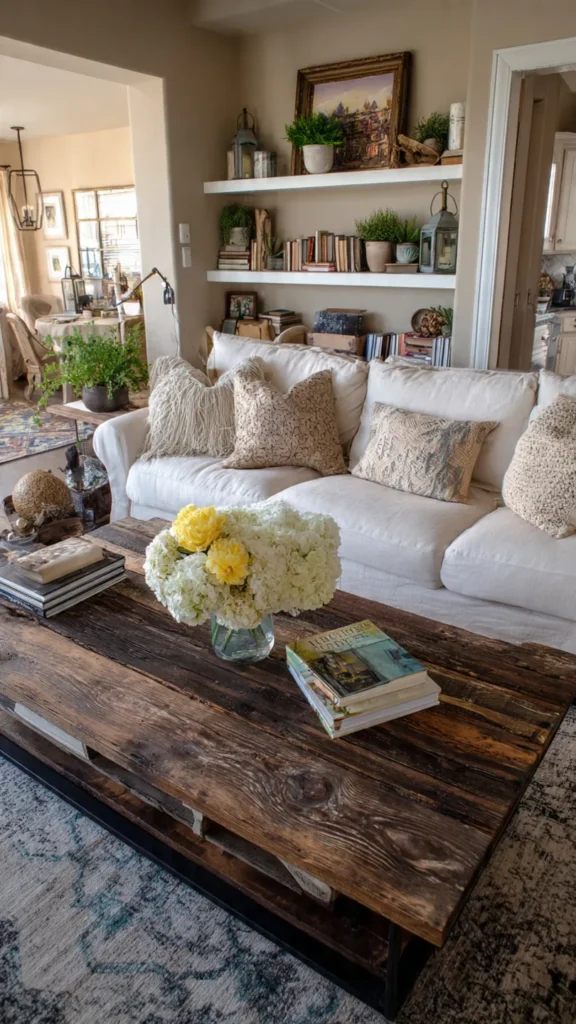
A coffee table is both functional and decorative in a farmhouse living room. Tables made from reclaimed wood, distressed finishes, or simple solid designs add character and warmth.
Choosing a sturdy, substantial piece reinforces the cozy, grounded feel of farmhouse style. Keeping tabletop styling minimal ensures the table remains practical for everyday use.
14. Personal Decor That Tells a Story
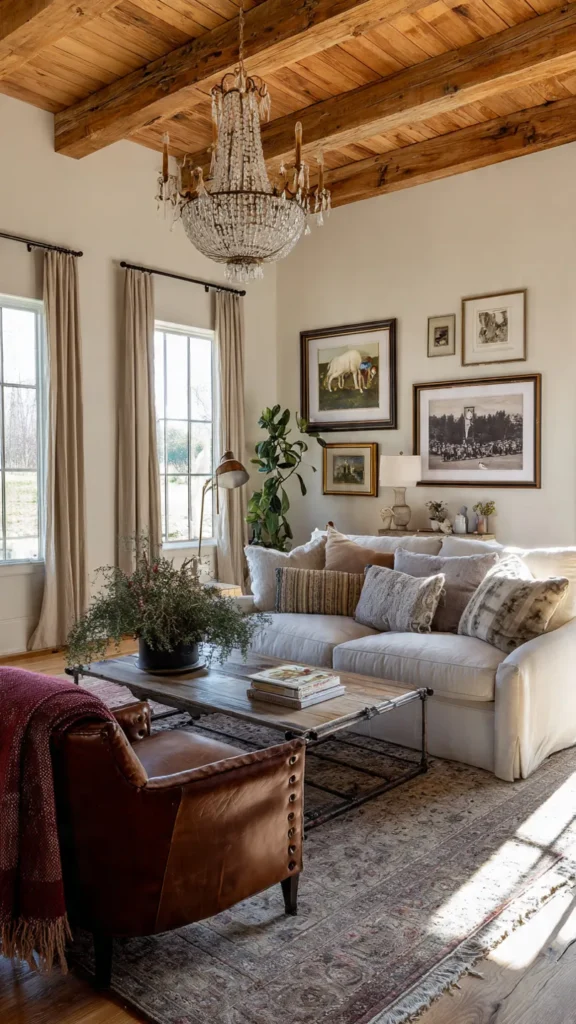
Farmhouse living rooms feel most inviting when they reflect the people who live there. Personal decor adds soul and authenticity.
Family photos, meaningful artwork, or collected objects bring warmth and individuality. The key is restraint. A few well-chosen pieces feel intentional and heartfelt without cluttering the space.
15. A Balanced, Uncluttered Layout
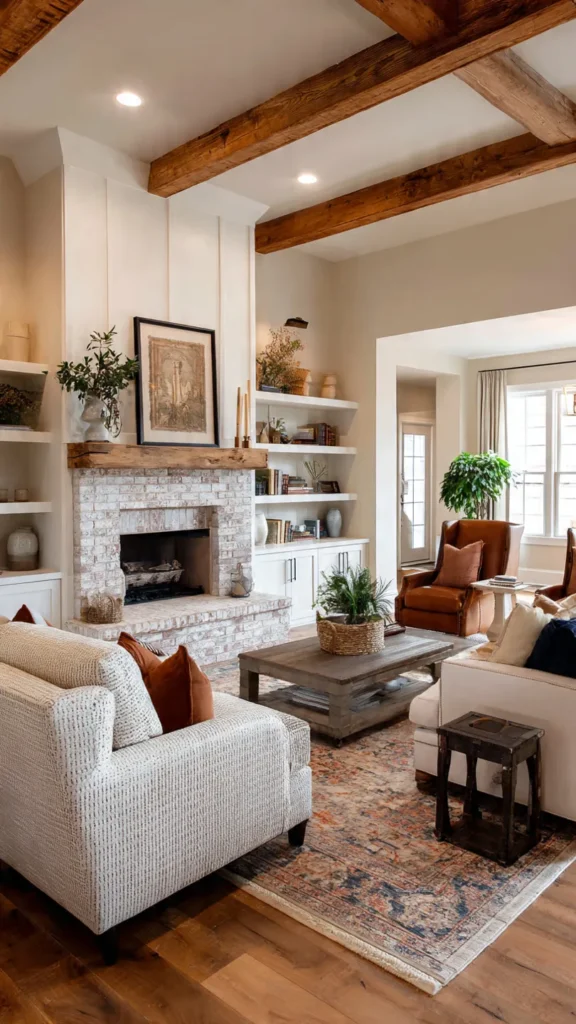
True coziness doesn’t come from filling every corner. A farmhouse living room should feel open, breathable, and easy to move through.
Leaving some open space allows furniture and decor to shine. This balance between comfort and simplicity is what makes farmhouse living rooms feel inviting rather than overwhelming.
Farmhouse living rooms succeed because they prioritize comfort, warmth, and authenticity. By focusing on natural materials, soft textures, thoughtful lighting, and personal touches, you can create a space that feels cozy without sacrificing style. These ideas show that farmhouse design isn’t about perfection or trends, but about creating a welcoming home where people feel relaxed, connected, and truly at ease.