
15 Front Yard Garden Landscaping Ideas
Your front yard garden is the first impression of your home and a reflection of how you care for your space. Thoughtful landscaping not only enhances curb appeal but also creates a welcoming atmosphere that makes both guests and homeowners feel comfortable and proud of the space they live in.
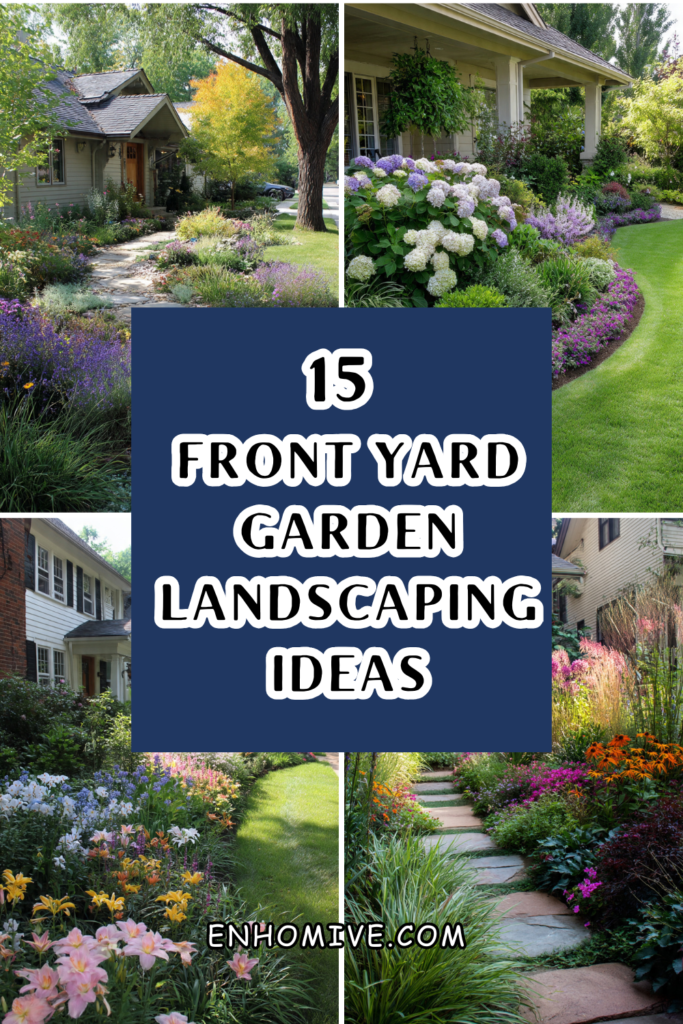
1. Layered Planting Design

Layered planting is one of the most effective ways to make a front yard feel full, lush, and professionally designed. By arranging plants in tiers, with taller trees and shrubs in the back, medium-height plants in the middle, and low-growing groundcovers at the front, you create depth that visually expands the space. This method prevents the garden from looking flat and allows each plant to shine without competing for attention.
For styling, choose plants with contrasting textures and leaf shapes to enhance visual interest. Pair fine ornamental grasses with broad-leaf shrubs and soft flowering plants to create balance. Use mulch between layers to unify the look and reduce weeds, keeping the design clean and low maintenance.
2. Curved Garden Bed Layouts

Curved garden beds soften the rigid lines of driveways, sidewalks, and house architecture. These gentle shapes create a sense of movement that naturally guides the eye through the garden, making the space feel more organic and relaxed.
To style curved beds beautifully, edge them with natural stone or subtle metal borders to keep the curves defined. Plant flowing grasses or cascading flowers along the edges to emphasize the soft shape and avoid sharp visual breaks.
3. Evergreen Structural Planting

Evergreens provide year-round structure, ensuring your front yard never looks bare or neglected during colder months. They form the backbone of the garden and give it consistency even when flowering plants are not in bloom.
Mix upright evergreens with rounded or spreading varieties for a dynamic look. Use them to frame windows, entryways, or corners of the house to anchor the landscape and highlight architectural features.
4. Color-Themed Flower Borders

Color-themed borders create harmony and cohesion in the landscape. Limiting the palette to two or three complementary colors makes the garden feel intentional and visually calming rather than chaotic.
For styling, repeat the chosen colors across multiple beds and containers to create continuity. Use lighter shades near walkways and darker tones closer to the house to draw the eye inward and enhance depth.
5. Pathway Garden Framing

Planting along pathways creates a natural invitation toward the front door. The greenery and flowers guide visitors gently through the space, making the walk feel like an experience rather than a simple transition.
Use low-growing plants near the path edges to avoid blocking visibility, and taller plants slightly further back for depth. Solar lights tucked between plants can enhance both safety and beauty at night.
6. Native Plant Landscaping

Native plants thrive naturally in local conditions, requiring less water, fertilizer, and maintenance. They also support local wildlife and create a healthier ecosystem.
Style native gardens by grouping plants in natural clusters rather than straight rows. This mimics nature and makes the garden feel relaxed and organic while still being visually organized.
7. Symmetrical Formal Design

Symmetry creates balance and elegance, especially for traditional or classic homes. Matching plants, trees, or planters on either side of the entrance establish a sense of order and sophistication.
Keep symmetry from feeling stiff by adding subtle variations in texture or seasonal flowers within the symmetrical framework. This keeps the space dynamic while maintaining structure.
8. Mixed Texture Planting

Texture adds richness even when color is limited. Combining spiky grasses, soft ferns, glossy shrubs, and rough bark textures makes the garden visually engaging year-round.
Use texture to highlight focal points by placing bold textures near entrances and softer ones toward edges. This creates a natural flow and sense of hierarchy in the landscape.
9. Ornamental Tree Centerpiece

An ornamental tree acts as a visual anchor and adds vertical interest to the front yard. Flowering or color-changing trees provide seasonal beauty and a sense of movement throughout the year.
Style around the tree with low shrubs and groundcovers to frame it without competing for attention. Adding uplighting at night can turn it into a stunning focal point after sunset.
10. Low-Maintenance Garden Design

Low-maintenance landscapes prioritize hardy plants, mulching, and efficient layouts to reduce upkeep. This keeps the yard attractive without demanding constant attention.
Choose slow-growing shrubs and drought-tolerant plants to minimize pruning and watering. Gravel, bark mulch, and perennial plants reduce the need for replanting and weeding.
11. Stone and Gravel Accents

Stone and gravel add structure and contrast while improving drainage and reducing weed growth. They introduce a timeless, natural texture that complements plants beautifully.
Use gravel to define pathways or fill between stepping stones, and use larger stones as edging or focal accents. Mixing stone sizes creates a layered, organic feel.
12. Seasonal Flower Planning

Seasonal planting ensures the front yard remains visually interesting throughout the year. Each season brings its own beauty, preventing the garden from feeling stagnant.
Choose plants with staggered bloom times and foliage interest so something is always happening. Incorporate evergreens and winter-interest plants for colder months.
13. Landscape Lighting Integration

Lighting enhances beauty while improving safety. Soft illumination highlights plants, pathways, and architectural features, extending the enjoyment of the garden into the evening.
Use warm-toned lighting for a cozy effect and avoid harsh white lights. Layer lighting by combining ground lights, uplights, and lantern-style fixtures.
14. Defined Edging and Borders

Edging keeps the garden looking neat and intentional. It prevents grass from creeping into flower beds and maintains clear visual boundaries.
Choose edging materials that match your home style, such as stone for rustic homes or metal for modern designs. Consistent edging unifies the entire landscape.
15. Personal Decorative Touches

Personal details give your front yard character and meaning. Sculptures, birdbaths, planters, or custom signs make the space feel unique and expressive.
Keep decorations limited and purposeful so they enhance rather than clutter the design. Thoughtful placement near focal points ensures they feel intentional and elegant.
A front yard garden is not just about plants and design principles, but about creating a welcoming environment that reflects your personality and lifestyle. With thoughtful planning, balanced structure, and personal touches, your front yard can become a beautiful extension of your home that offers pride, peace, and joy every time you return.