
15 Fruit and Vegetable Storage Ideas for a Fresh Organized Kitchen
Fresh produce is one of the most perishable and most valuable things in any kitchen — and the way it is stored has a direct and significant impact on how long it stays fresh, how much gets wasted, and how pleasant and organized the kitchen feels on a daily basis. The right storage solution keeps produce visible, accessible, and at the correct temperature and humidity for each specific type.
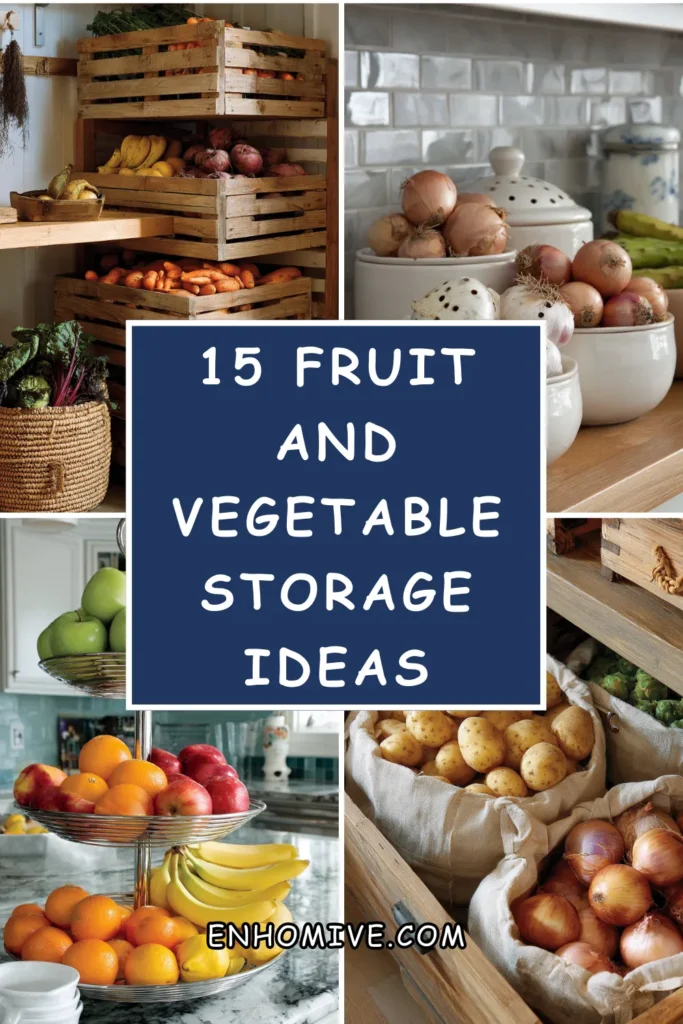
Understanding the basic storage requirements of different produce types is the foundation of good fruit and vegetable storage. Some things prefer room temperature — tomatoes, bananas, potatoes, onions, and most tropical fruits. Some prefer the refrigerator — leafy greens, berries, cut vegetables, and most soft fruits once ripe. Getting these basics right before choosing the storage vessel makes every storage investment genuinely effective.
Here are 15 fruit and vegetable storage ideas that keep produce fresher, reduce waste, and create a more organized and more beautiful kitchen.
1. Tiered Fruit Bowl Display
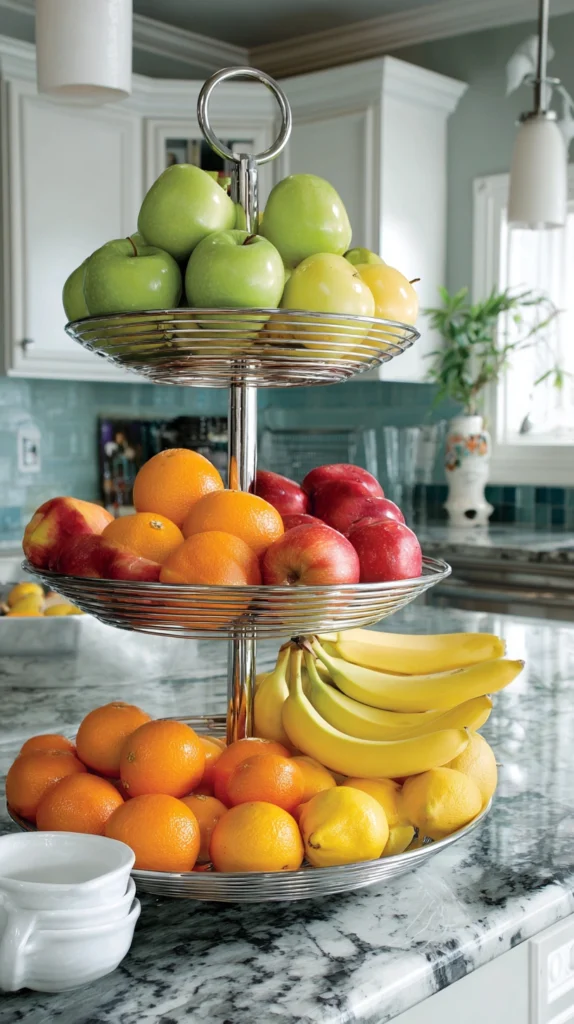
A tiered fruit bowl creates the most visually generous and most practically effective room-temperature fruit storage available.
The tiered format allows a generous quantity of fruit to be stored on the counter in a footprint significantly smaller than a single flat bowl of equivalent capacity and the elevation of upper tiers improves air circulation around all the fruit on every level. Display fruit at peak ripeness at the most accessible level and use upper levels for fruit that needs a day or two more to ripen.
Pro Tip: Keep bananas on a separate banana hook rather than in the tiered fruit bowl. Bananas produce more ethylene gas than almost any other common fruit and storing them in contact with other fruit dramatically accelerates the ripening and deterioration of everything around them. A dedicated banana hook suspends the bunch from the underside of a cabinet while protecting surrounding fruit from ethylene exposure.
2. Open Wire Basket Storage
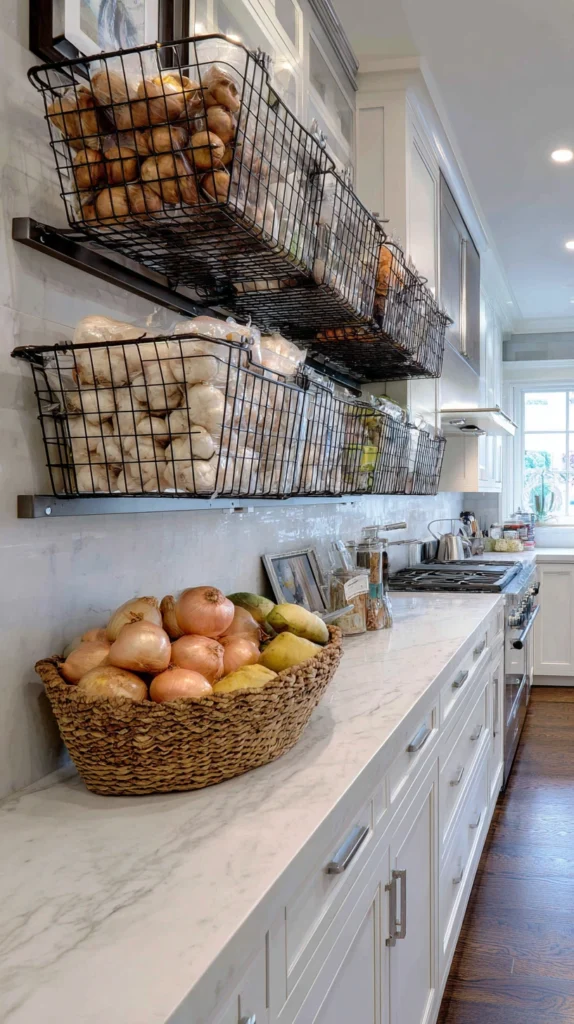
Open wire baskets — wall-mounted, hanging from a rail system, or freestanding on a countertop — create a fruit and vegetable storage system of maximum air circulation and complete visibility. The open wire construction allows air to flow freely around every stored item from every direction — reducing the humidity buildup that accelerates deterioration in solid-sided containers and creating the cool well-ventilated storage conditions that room-temperature production requires.
Pro Tip: Line the base of wire baskets with a single sheet of newspaper rather than a fabric liner. Newspaper absorbs moisture released by stored produce — reducing the humidity in the basket and slowing the deterioration that moisture accumulation causes. The newspaper can be replaced easily and inexpensively at each restocking — maintaining the dry well-ventilated conditions that extend produce freshness most effectively.
3. Refrigerator Produce Drawer Organization
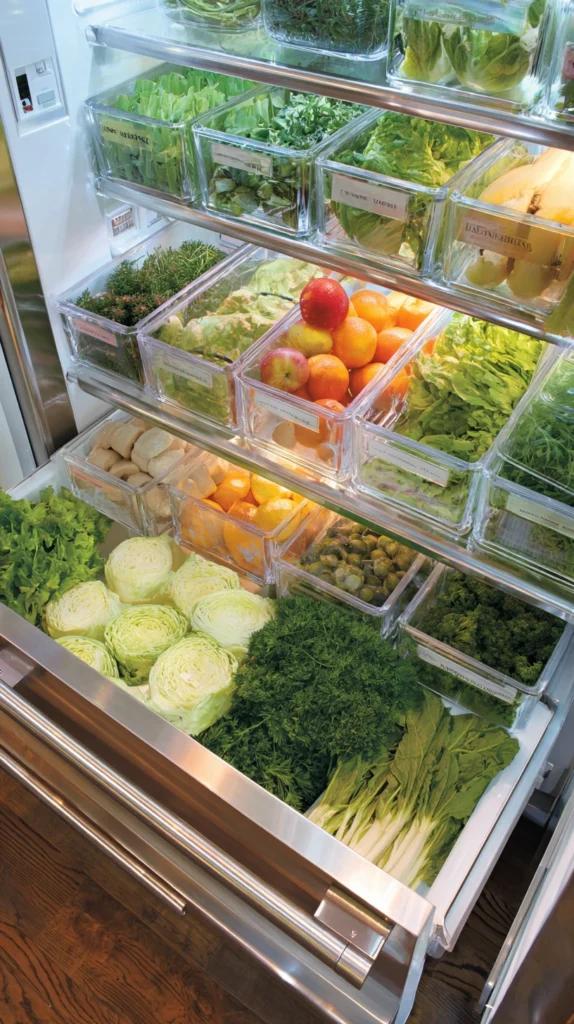
The refrigerator produce drawer is the most valuable and most consistently misused storage space in most kitchens. Organize it with containers and dividers that create defined zones for different types of produce rather than allowing everything to pile together. A small container for herbs, a defined zone for salad leaves, a separate area for soft fruits — the additional organization dramatically reduces the frequency of items being forgotten and deteriorating unseen at the back of the drawer.
Pro Tip: Line the refrigerator produce drawer with paper towels and replace the lining weekly. Paper towels absorb the excess moisture that accumulates in the produce drawer and that is the primary cause of leafy green deterioration — the wet slimy condition that makes salad leaves unusable develops significantly faster in a moist drawer than in a dry one.
4. Hanging Produce Bags
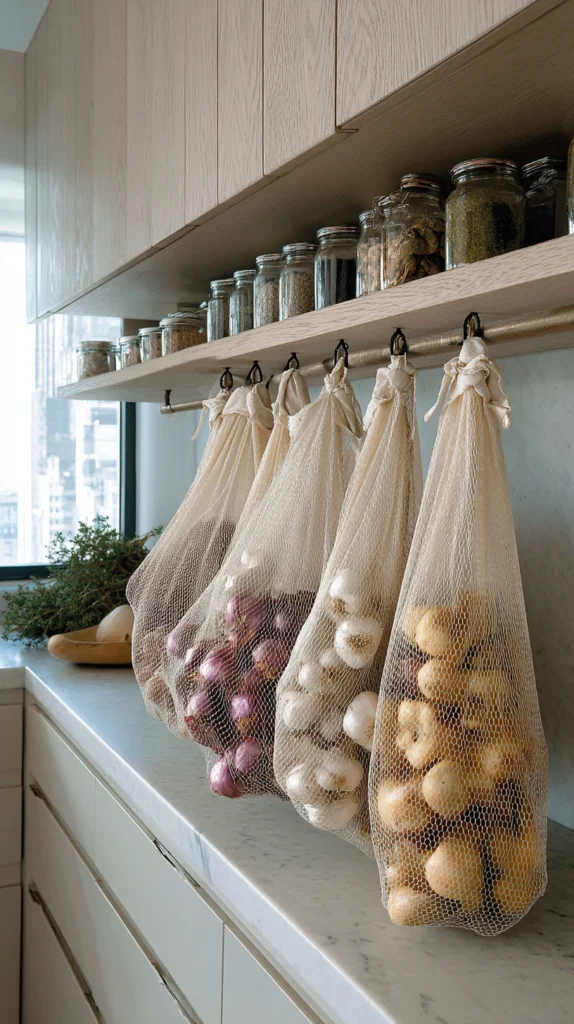
Hanging produce bags — mesh or linen bags suspended from hooks or a rail system — create a storage solution of maximum air circulation and minimum counter footprint. The hanging format keeps produce off the counter surface and multiple bags of different sizes accommodate different produce types simultaneously. Natural linen and cotton mesh bags have genuine visual warmth that suits kitchen aesthetics of every style from contemporary minimal to rustic farmhouse.
Pro Tip: Dedicate specific bags to specific produce types rather than mixing different produce types in the same bag. Onions and garlic in particular should always be stored separately from potatoes — the ethylene from onions accelerates potato sprouting and the moisture from potatoes accelerates onion deterioration. Dedicated bags prevent these negative product interactions that dramatically reduce storage life.
5. Root Vegetable Crate Storage
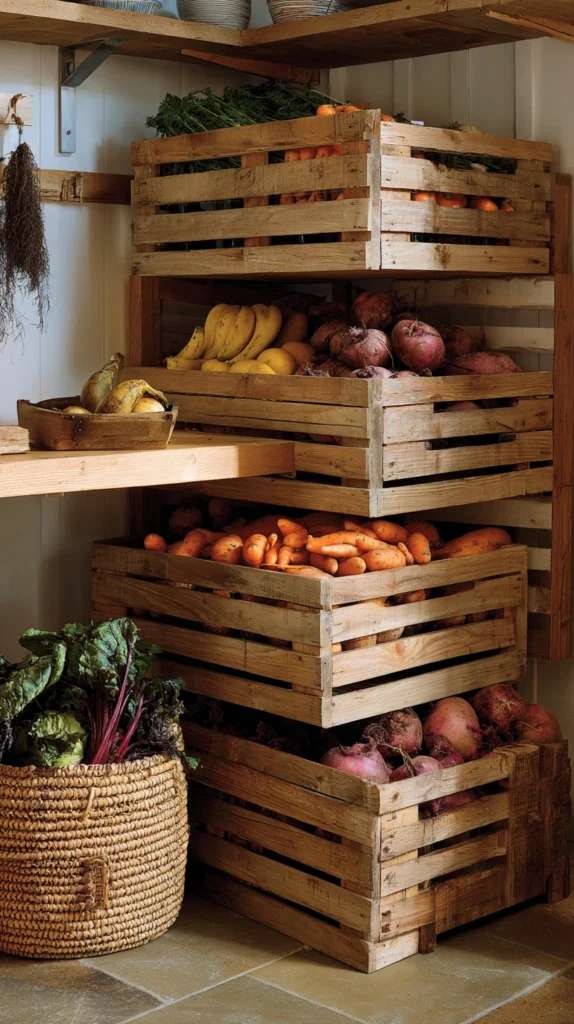
Large open-slatted timber crates repurposed as kitchen storage for root vegetables, squash, and other robust produce create a kitchen storage feature of considerable rustic character and genuine practical usefulness. The slatted sides provide excellent air circulation and the generous capacity accommodates the bulk quantities in which root vegetables are most economically purchased. Stack two or three crates of different sizes in a pantry or kitchen corner to create a multi-tier root vegetable storage system.
Pro Tip: Store potatoes in complete darkness for the longest possible storage life. Light exposure causes potatoes to develop solanine — the compound that creates the green coloration and the bitter slightly toxic quality of light-exposed potato flesh. A closed-front timber crate, a dark pantry location, or a simple cover of natural hessian over an open crate maintains the darkness that preserves potato quality through several weeks of storage.
6. Herb Keeper Jars
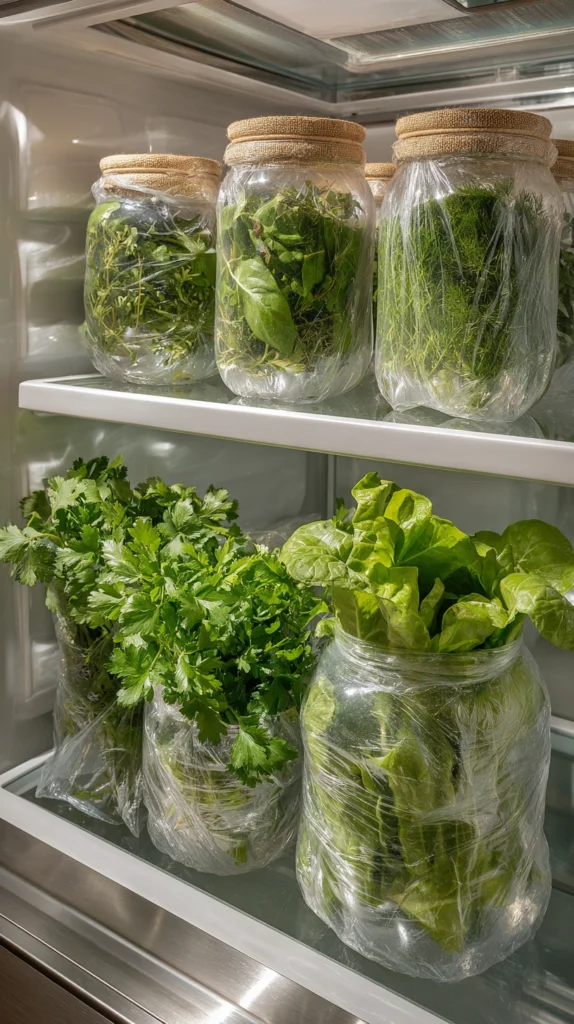
Fresh herbs stored upright in a jar of water — like flowers in a vase — with a loose plastic bag over the top and stored in the refrigerator door create the most effective fresh herb storage system available at zero additional cost beyond the jar itself.
The water keeps herb stems hydrated, the plastic bag creates a humid microclimate around the leaves, and the refrigerator temperature slows deterioration — keeping fresh herbs genuinely fresh for one to two weeks rather than the two to three days that herbs stored loose in a drawer typically survive.
Pro Tip: Change the water in herb keeper jars every two to three days and re-trim the bottom centimetre of each stem at each water change. Fresh water and re-trimmed stems maintain the optimal hydration pathway from the water to the herb leaves — the primary factor in extended fresh herb storage life. Stale water and sealed stem ends create the deteriorating conditions that cause herb leaves to yellow and wilt prematurely.
7. Vegetable Crisper Containers
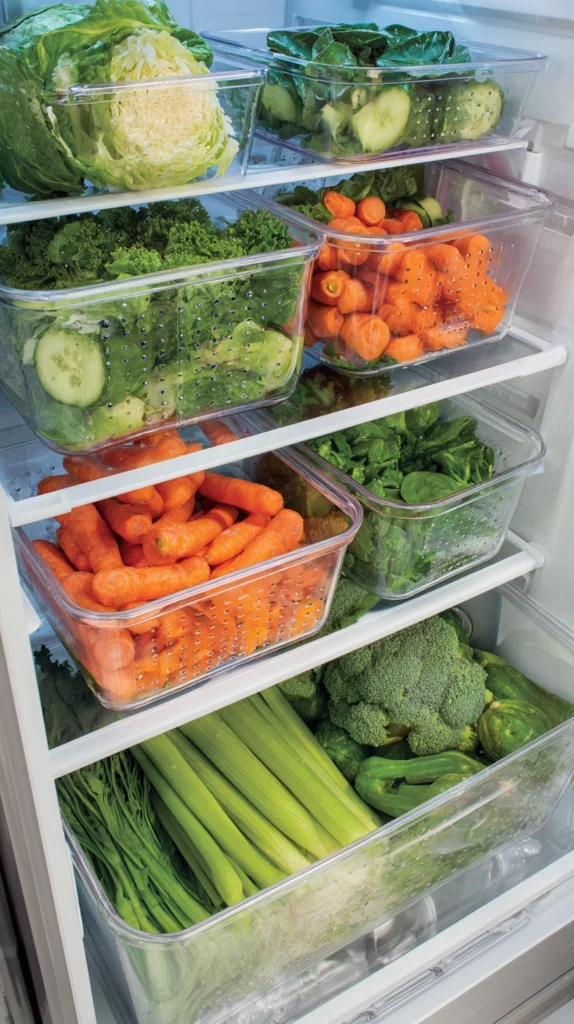
Dedicated vegetable crisper containers with adjustable ventilation vents, moisture-absorbing panels, and perforated bases extend the refrigerator freshness of leafy greens, celery, carrots, and other high-moisture vegetables significantly beyond the freshness achieved in standard refrigerator drawers or simple zip-lock bags. The combination of adjustable ventilation and moisture absorption creates the optimal humidity microclimate for each specific vegetable.
Pro Tip: Wash and dry leafy greens thoroughly before storing them in vegetable crisper containers rather than storing them unwashed. Washing removes surface microorganisms that accelerate deterioration. Thorough drying before storage — using a salad spinner followed by a brief period on a clean kitchen towel — removes the surface moisture that is the primary cause of accelerated leafy green deterioration in refrigerator storage.
8. Countertop Vegetable Crocks
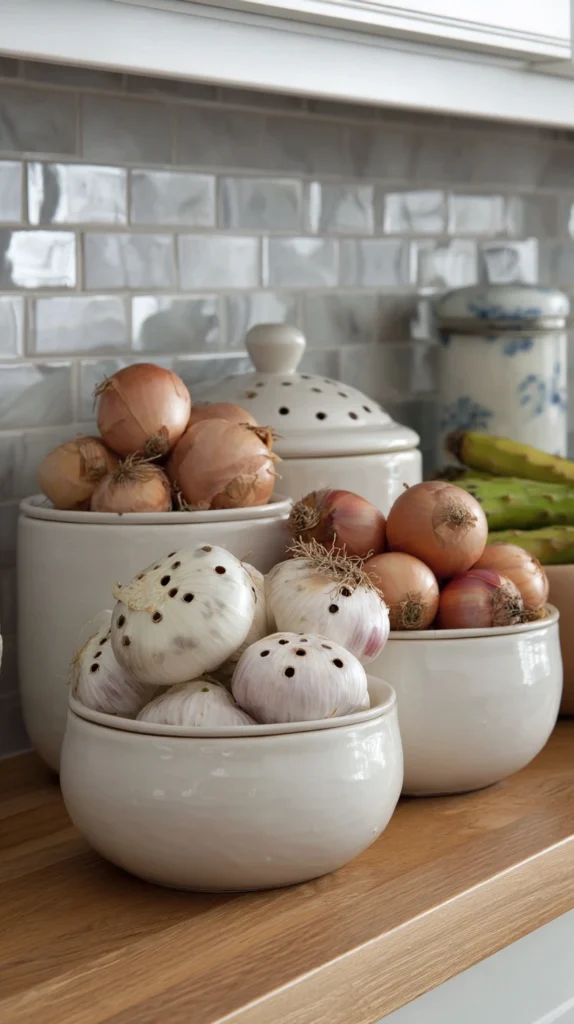
Traditional ceramic vegetable crocks with fitted lids create a kitchen counter storage solution of genuine material beauty and surprising practical effectiveness. The thick ceramic walls moderate temperature fluctuations, maintain a consistent cool interior environment, and provide complete darkness — creating storage conditions that extend the life of onions, garlic, shallots, and other alliums significantly beyond open basket alternatives.
Pro Tip: Choose ceramic vegetable crocks with ventilation holes in the lid or the sides rather than completely sealed alternatives.
Ventilation prevents the moisture and ethylene gas accumulation that deteriorates stored produce in sealed containers — the traditional ventilated crock design has survived centuries of agricultural use precisely because it creates the optimal balance of darkness, cool temperature, and adequate air exchange that root vegetable and allium storage requires.
9. Under-Shelf Hanging Baskets
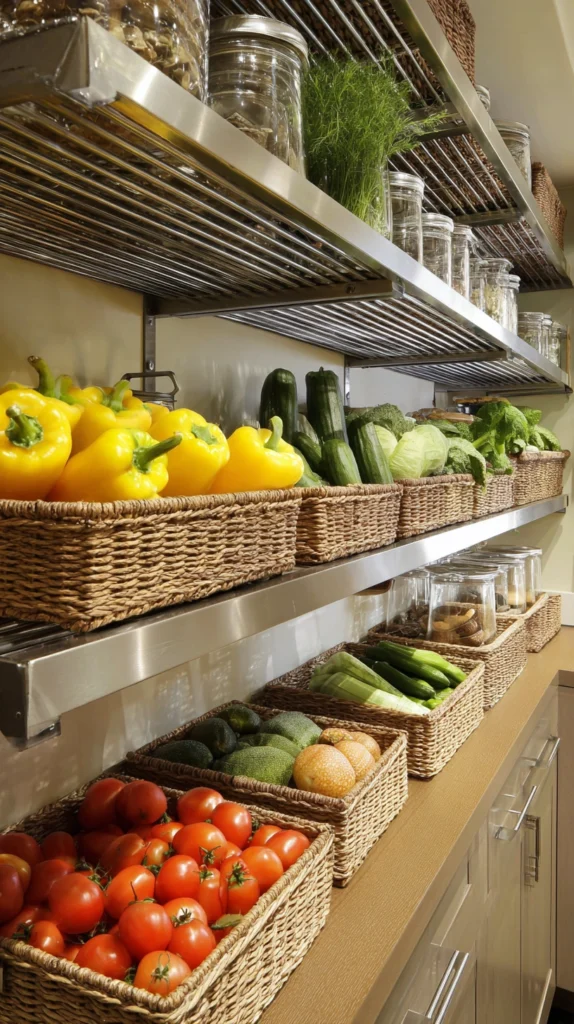
Under-shelf hanging baskets — wire or wicker baskets that clip from the underside of existing kitchen shelves — create storage from space that is otherwise completely unused. The underside of every shelf in the kitchen represents available storage space that standard kitchen organization entirely ignores. A hanging basket beneath a shelf at a convenient height creates a produce storage point that is visible, accessible, and entirely out of the way of the shelf surface above.
Pro Tip: Position under-shelf hanging baskets at a height of 140 to 160 centimetres from the floor for comfortable visibility and access from a standing position. A basket positioned too high requires reaching and poor visibility of the contents. A basket positioned too low creates an awkward access posture. The correct height creates a naturally comfortable access position that makes the basket produce genuinely and spontaneously used during daily cooking activity.
10. Potato and Onion Separation Storage
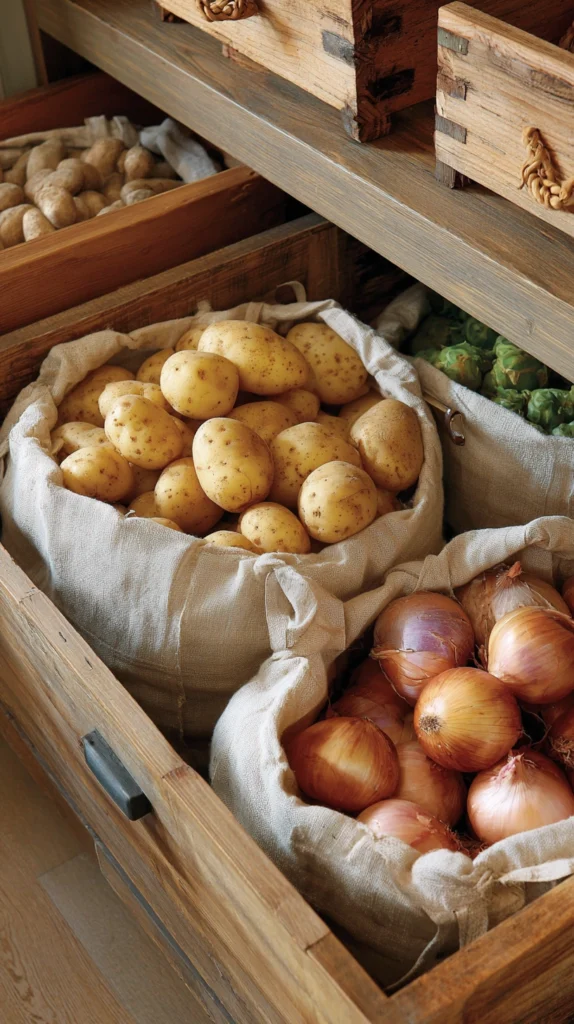
Potatoes and onions stored together deteriorate significantly faster than the same vegetables stored separately — the ethylene from onions accelerates potato sprouting and the moisture from potatoes accelerates onion rot. Creating a specific storage system that physically separates potatoes and onions — in different drawers, different containers, or different areas of the kitchen — dramatically extends the storage life of both.
Pro Tip: Store potatoes and onions in a cool dark location rather than in the refrigerator. Refrigerator temperatures convert the starch in potatoes to sugar — creating a sweet mealy texture in cooked potato unsuitable for most culinary applications. Onions stored in the refrigerator absorb moisture and develop a soft deteriorated texture. A cool dark pantry or under-counter cabinet provides the ideal storage environment for both.
11. Visible Refrigerator Door Produce Storage
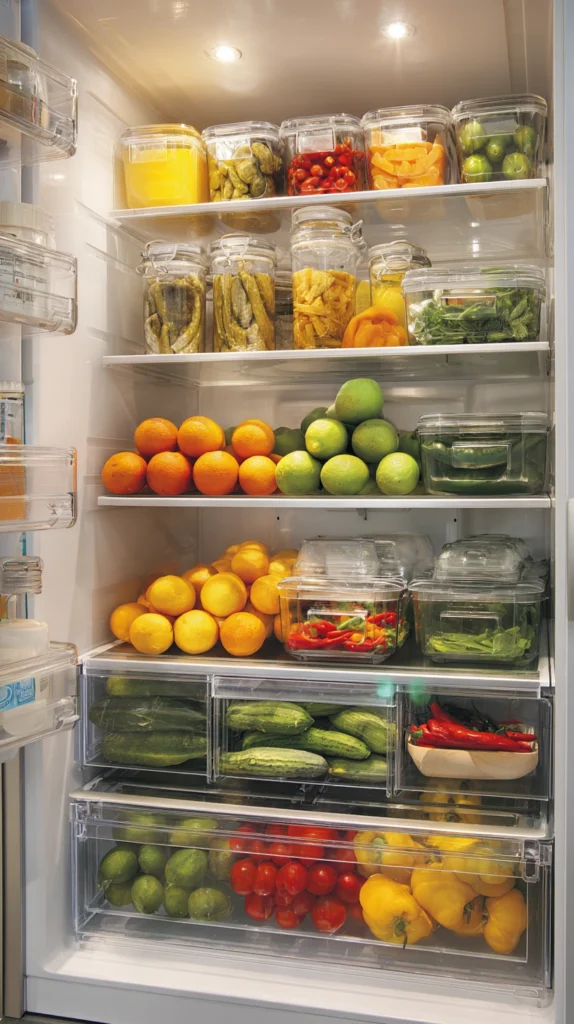
The refrigerator door is the most frequently opened and most easily accessible storage zone in the entire refrigerator — yet it is typically used for condiments and beverages rather than fresh produce. Repurposing one or two refrigerator door shelves for frequently used fresh produce — cut citrus fruits, fresh chillies, a jar of fresh herbs, and fresh aromatics — creates a cooking-prep accessibility system that makes fresh flavors immediately available without any searching or rearranging.
Pro Tip: Use the refrigerator door exclusively for produce items used multiple times per week during active cooking. The refrigerator door experiences more temperature variation than any other refrigerator zone due to the frequency of door opening — making it unsuitable for delicate produce requiring consistent cold temperature but ideal for robust frequently-used items that benefit more from accessibility than from precise temperature stability.
12. Ethylene-Absorbing Refrigerator Inserts
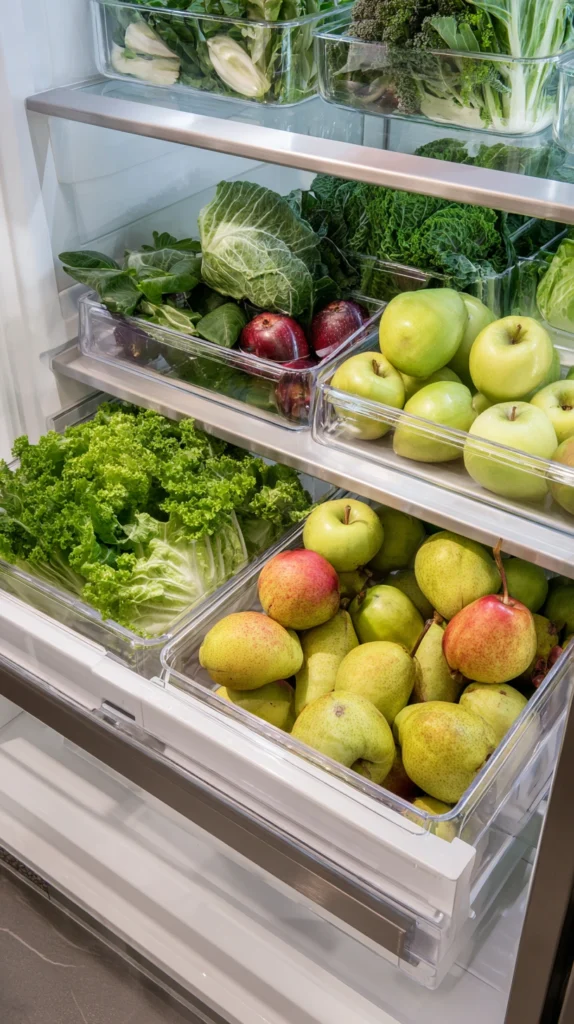
Ethylene-absorbing refrigerator inserts — small packets placed in the produce drawer — significantly extend the freshness of refrigerated produce by absorbing the ethylene gas that fruits and vegetables naturally produce as they ripen. The effect is most significant for produce stored near high-ethylene-producing items — apples, pears, stone fruits, and avocados all produce significant ethylene that accelerates the deterioration of leafy greens and herbs stored nearby.
Pro Tip: Replace ethylene-absorbing refrigerator inserts at the manufacturer’s recommended interval — typically every one to three months. An ethylene absorber that has reached its absorption capacity provides no ongoing benefit but creates the false confidence of a freshness-extending measure that is no longer functioning. Regular replacement at the recommended interval maintains the genuine freshness extension that the product provides when operating within its effective capacity range.
13. Produce Washing and Drying System
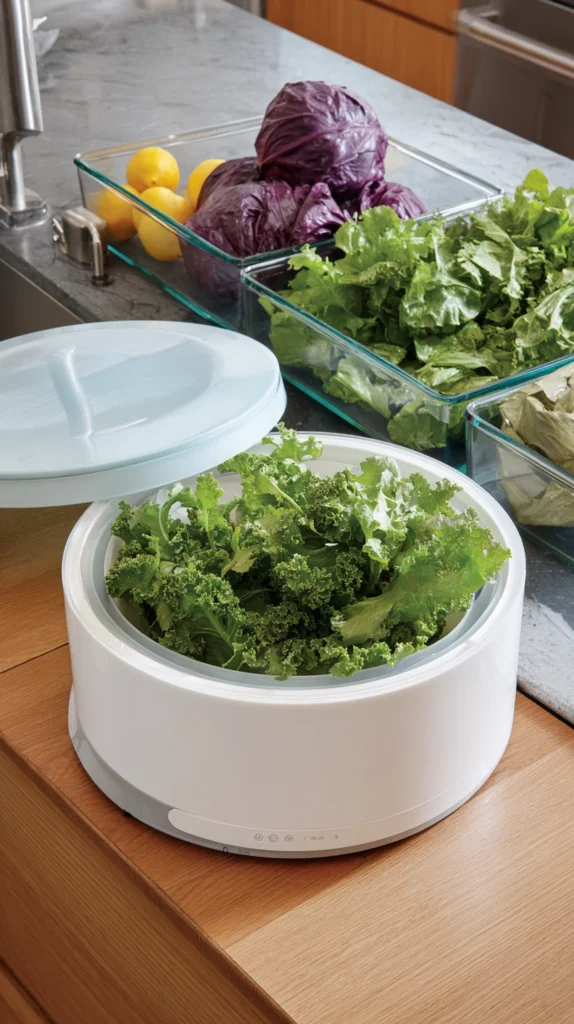
A dedicated produce washing and drying system — a salad spinner for leafy greens and herbs, a produce drying mat for washed vegetables, and breathable storage bags for storing washed and dried produce — creates the most practical kitchen workflow available for fresh produce management.
Washing and preparing produce immediately upon returning from shopping rather than washing each item individually at the point of use creates a refrigerator full of ready-to-use produce that makes fresh food preparation genuinely effortless.
Pro Tip: Invest in a high-quality salad spinner with a large capacity bowl — the bowl doubles as a storage container, allowing washed and spun-dry salad leaves to be stored directly in the spinner bowl in the refrigerator without any additional transfer. The bowl lid creates a gentle humidity environment that keeps salad leaves crisp without the excess moisture that causes deterioration. A single good salad spinner serves as the washing vessel, drying mechanism, and refrigerator storage container simultaneously.
14. Produce-Specific Refrigerator Zones
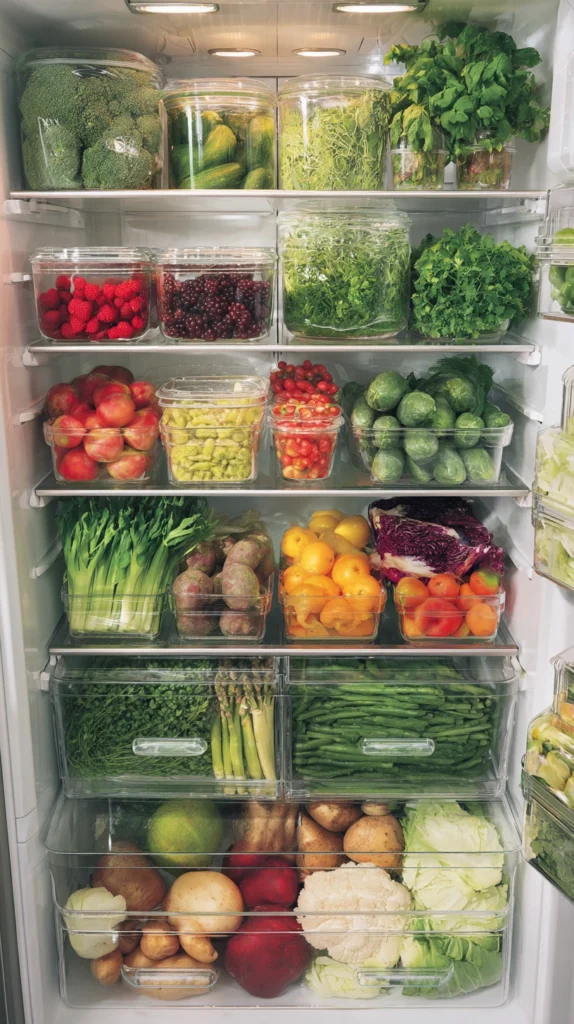
Creating defined produce-specific zones within the main refrigerator body — using clear stackable containers, labeled refrigerator bins, and defined shelf areas for different produce categories — makes every item of fresh produce visible, accessible, and consistently stored in the conditions appropriate for its type.
A dedicated berry container at eye level ensures berries are seen and used before they deteriorate. A dedicated salad greens container with paper towel lining creates optimal humidity conditions for leafy green storage.
Pro Tip: Apply the FIFO principle — first in, first out — consistently throughout all refrigerator produce zones. New produce placed at the back and older produce moved to the front ensures that the oldest items are always the most visible and the most accessible. FIFO management of refrigerator produce zones is the single most effective food waste reduction practice available in any household kitchen.
15. Wall-Mounted Rail System with Hanging Baskets
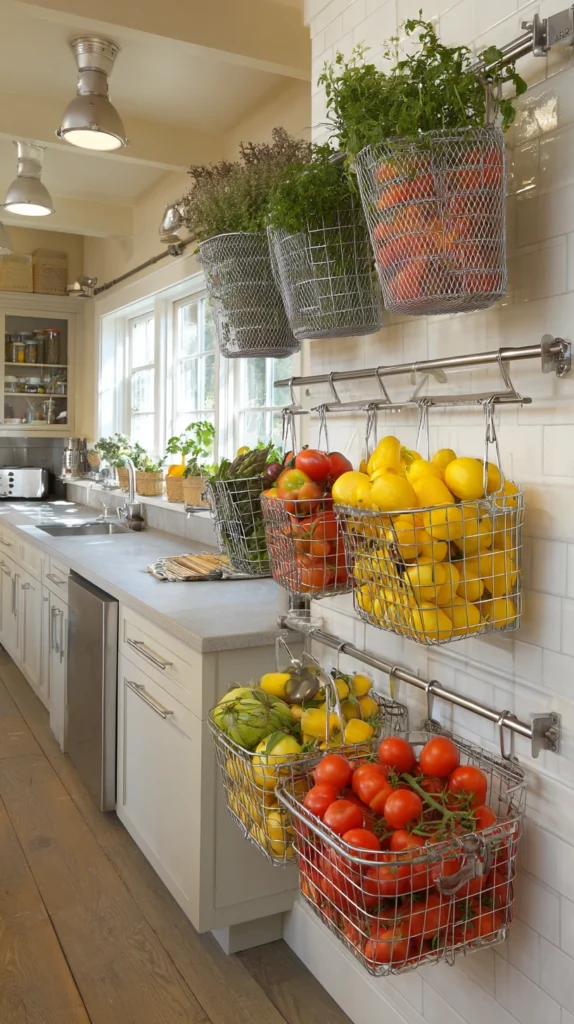
A wall-mounted kitchen rail system — a horizontal stainless steel or timber rail fixed to the kitchen wall with a collection of hanging baskets, hooks, and containers of varying sizes suspended from it — creates a completely flexible and completely visible produce storage system that adapts to changing seasonal availability and changing household produce needs.
The rail system uses otherwise unused vertical wall space as productive kitchen storage and keeps produce visible and accessible without consuming any counter or shelf space.
Pro Tip: Position the kitchen rail system at a height that places the lowest hanging basket at a comfortable reaching height from the primary food preparation area — typically 150 to 170 centimetres from the floor. A rail system positioned too high creates an uncomfortable reaching posture that discourages spontaneous use.
A rail at comfortable reaching height integrated into the primary cooking and preparation zone creates a produce storage system that is genuinely used during daily cooking activity rather than being visually present but practically ignored.
Store Well and Waste Less
The kitchen that stores fresh produce well is the kitchen that wastes less, spends less, and cooks with more spontaneity and more genuine pleasure. Every piece of produce that is properly stored, properly visible, and properly accessible represents a meal that will be cooked rather than a purchase that will be composted.
Choose the storage solutions that suit your kitchen, your buying habits, and your cooking style — and discover that genuinely organized produce storage is one of the most impactful and most immediately rewarding kitchen improvements available at any budget level.