
15 Garden Fence Ideas to Add Style and Function
A garden fence does far more than define boundaries. It shapes how your outdoor space looks, feels, and functions every single day. The right fence can add privacy, enhance curb appeal, support climbing plants, protect pets, and create a polished backdrop for your landscaping.
Whether your garden is large and lush or compact and urban, a thoughtfully chosen fence turns it into a more intentional and stylish space.
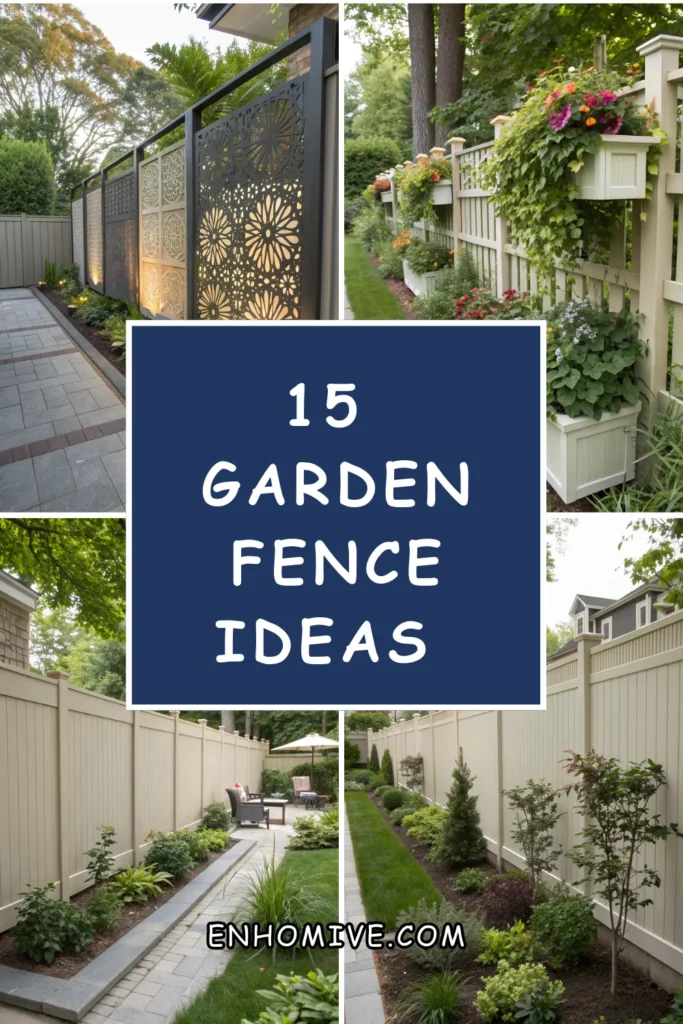
Today’s garden fences go well beyond basic wood panels. From modern metal designs to natural living fences, there are countless ways to blend beauty with practicality. Below are 15 stylish garden fence ideas that balance aesthetics and function, helping you create an outdoor area that feels complete, welcoming, and well-designed.
1. Classic Wooden Slat Fence
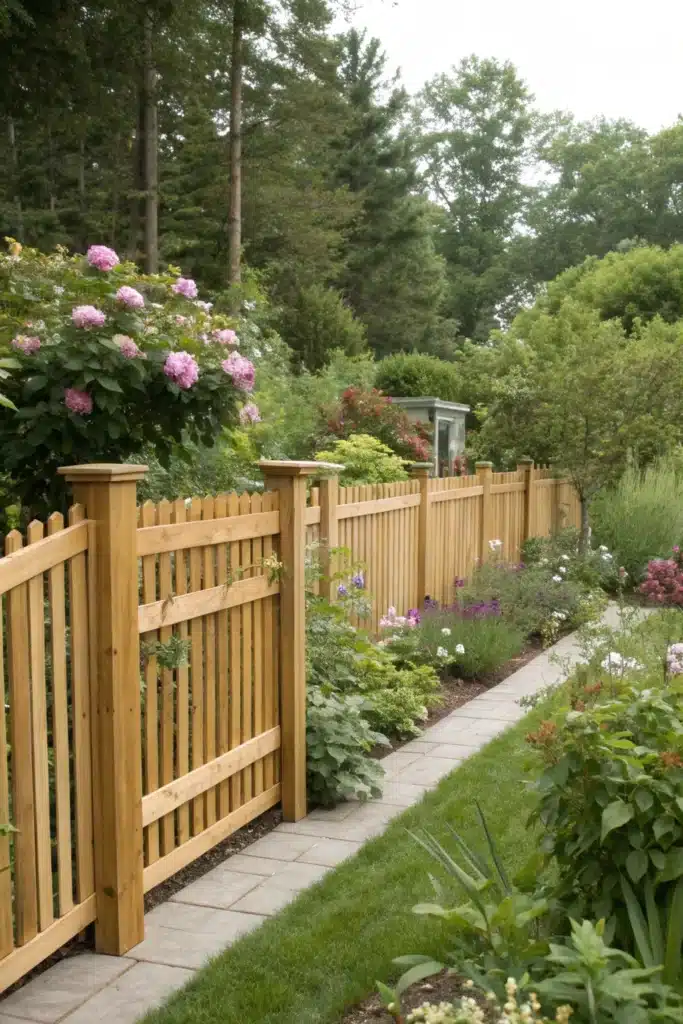
A wooden slat fence is timeless for a reason. Clean horizontal or vertical slats create a warm, structured look that suits almost any garden style. Wood adds natural texture and softens the landscape, making the garden feel inviting rather than enclosed.
Spacing between slats can be adjusted to control privacy and airflow. Tightly spaced slats offer seclusion, while wider gaps allow light and breezes through. When stained or painted thoughtfully, a wooden slat fence becomes both a functional boundary and a stylish design feature.
2. Horizontal Fence for a Modern Look
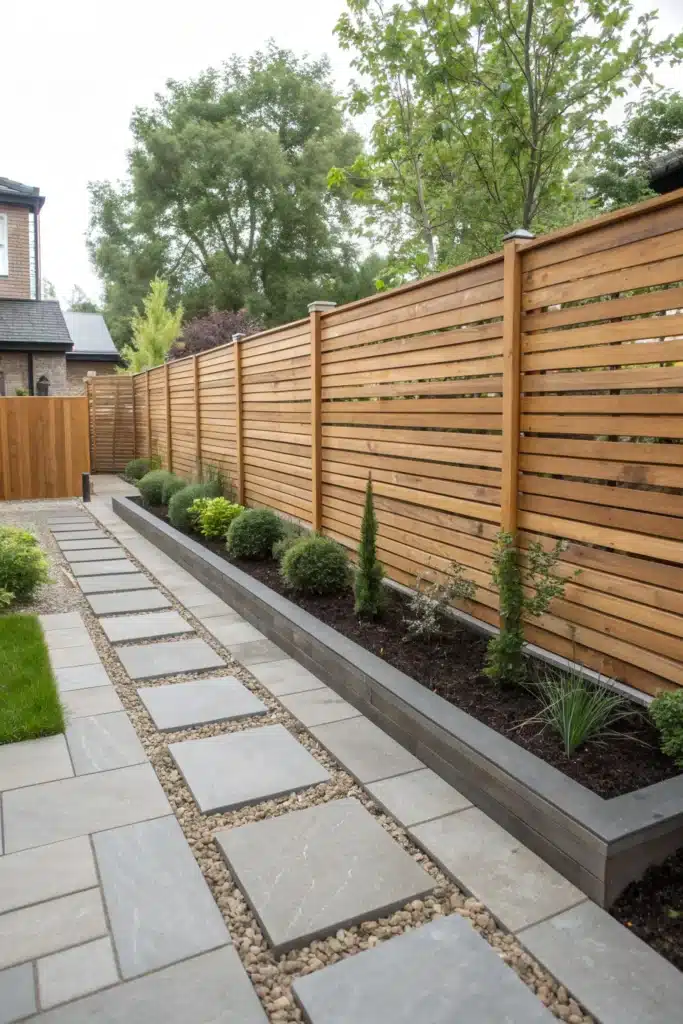
Horizontal fencing instantly gives a garden a contemporary edge. The long lines visually widen the space, making smaller gardens feel more expansive. This style works especially well with modern landscaping and minimalist outdoor furniture.
Using consistent spacing and smooth finishes keeps the look sleek and intentional. Neutral tones like charcoal, black, or warm wood stains elevate the design and help the fence blend seamlessly into modern outdoor settings.
3. Vertical Board Fence with Clean Lines
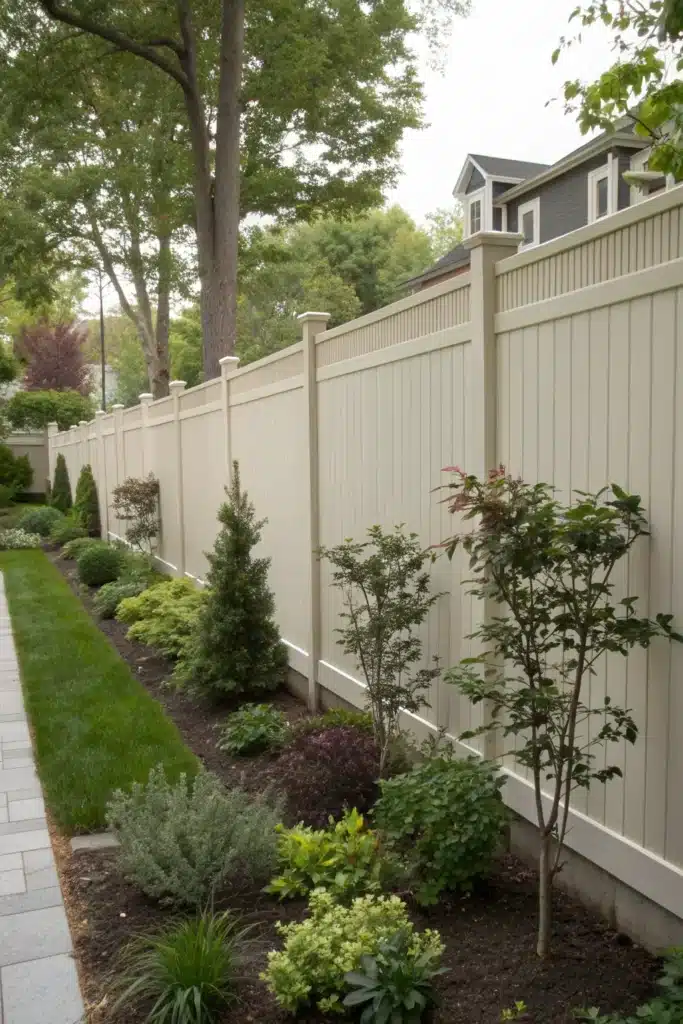
Vertical board fencing offers structure and height, which can make a garden feel more private and protected. This design draws the eye upward, creating a sense of openness even within a defined space.
When boards are evenly spaced and neatly finished, the fence looks polished rather than heavy. It pairs beautifully with tall plants, trees, and layered landscaping, reinforcing the vertical rhythm of the garden.
4. Decorative Metal Fence Panels
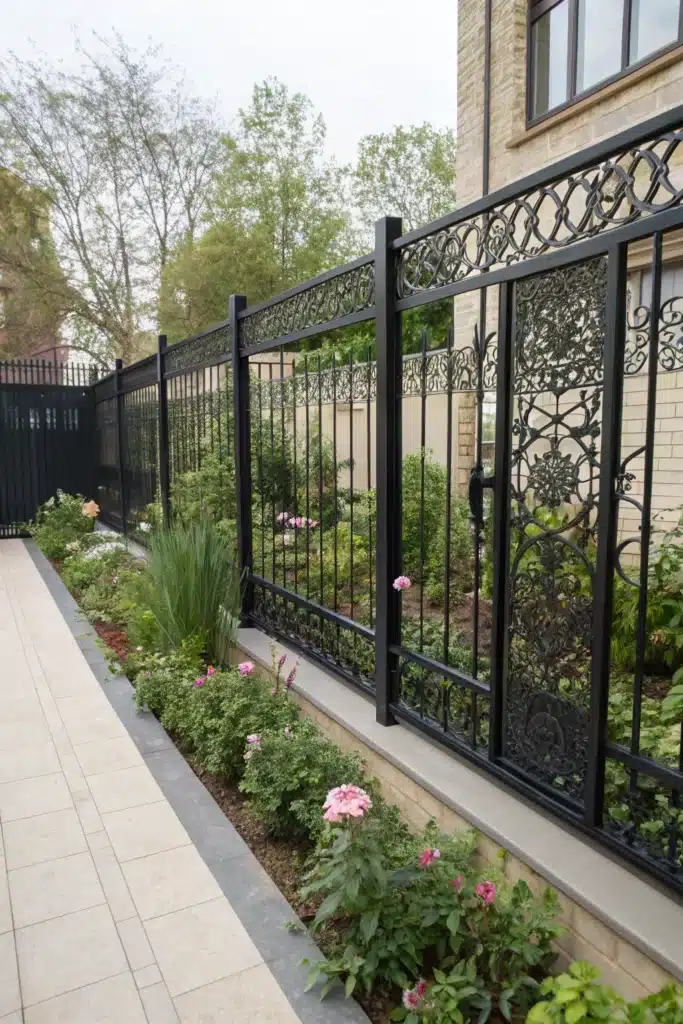
Metal fences bring elegance and durability to garden spaces. Decorative panels with subtle patterns add visual interest while maintaining openness. This type of fence works well for front gardens or areas where you want definition without full privacy.
Powder-coated finishes protect against rust and weathering, making metal fencing a long-lasting option. Black or dark bronze tones create a refined contrast against greenery and flowers.
5. Living Fence with Climbing Plants
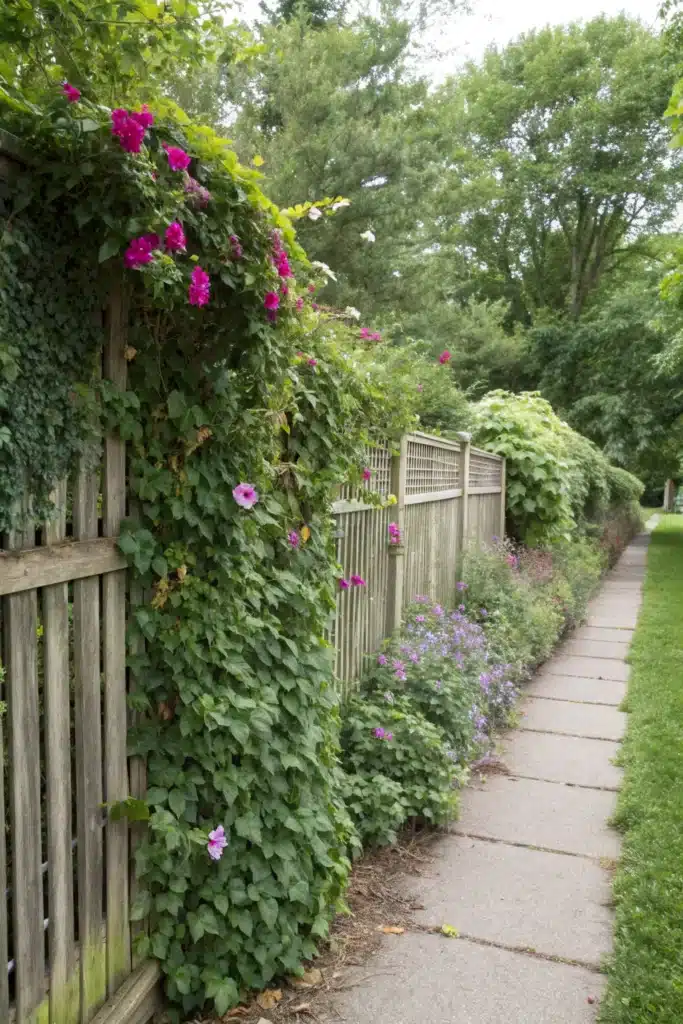
A living fence transforms a simple structure into a lush garden feature. Trellises or wire fences support climbing plants like ivy, jasmine, roses, or bougainvillea, blending fencing with greenery.
Over time, the plants soften the fence and add seasonal interest through flowers and foliage. This approach enhances privacy while keeping the garden feeling natural and vibrant rather than closed off.
6. Bamboo Fence for Natural Texture
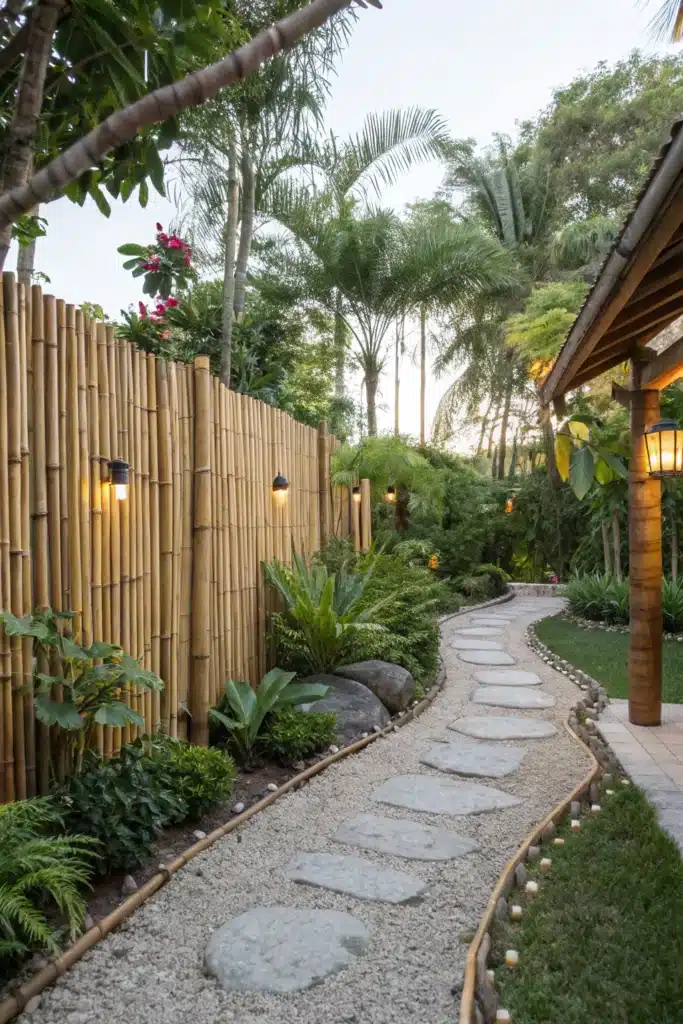
Bamboo fencing is an excellent choice for adding organic texture and a relaxed, resort-like feel. Its natural color and vertical lines bring warmth and character to garden spaces.
Bamboo is lightweight yet durable, making it ideal for both decorative and functional fencing. It pairs especially well with tropical plants, gravel pathways, and minimalist outdoor furniture.
7. Privacy Fence with Decorative Cutouts
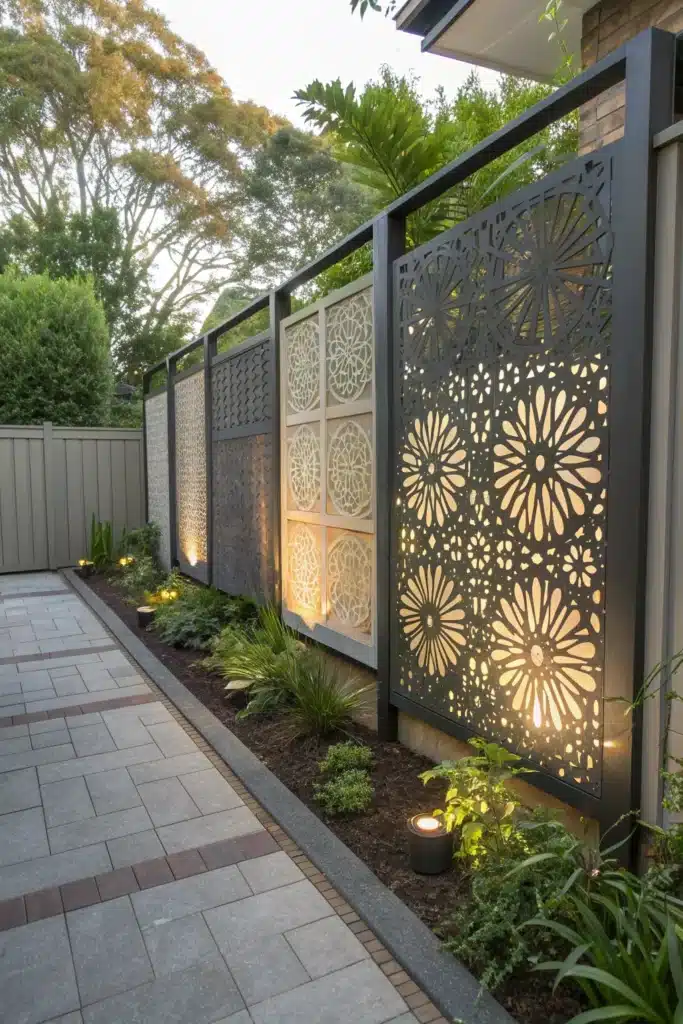
Privacy doesn’t have to mean plain. Fences with decorative cutouts or laser-cut panels offer seclusion while allowing light and airflow. These designs create beautiful shadow patterns that change throughout the day.
This style is perfect for patios or seating areas where privacy is important, but visual interest is still desired. The result is a fence that feels custom and thoughtfully designed.
8. Low Garden Fence for Subtle Definition
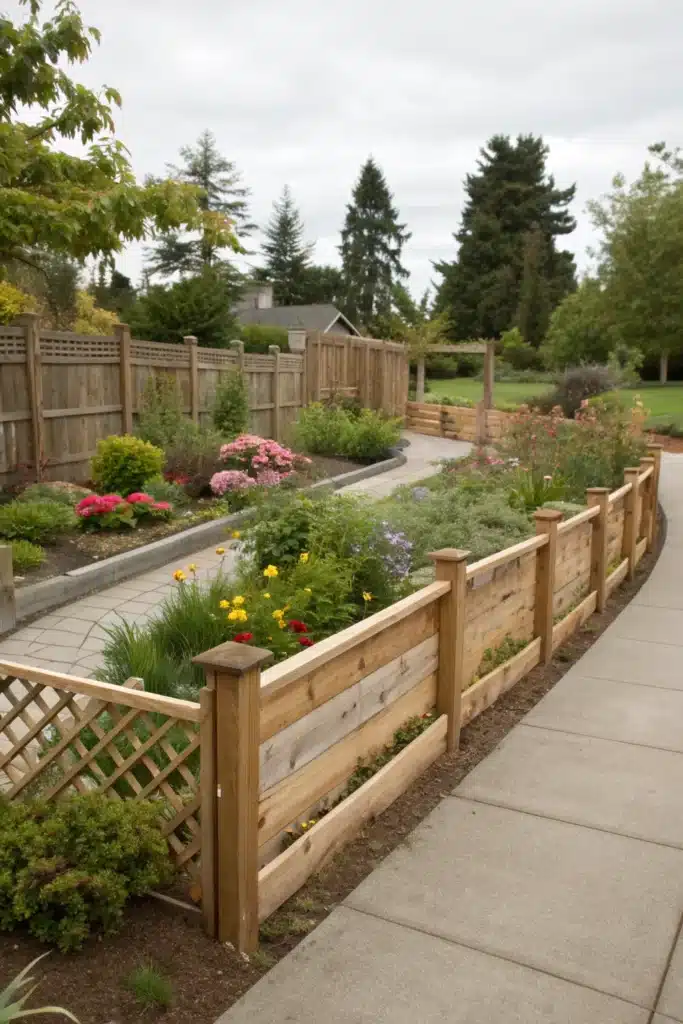
Low fences work beautifully when the goal is to define space rather than block views. Short wooden or metal fences outline garden beds, pathways, or seating zones without overwhelming the landscape.
This approach maintains an open feel while adding structure and organization. Low fences are especially effective in front gardens or shared outdoor spaces where visibility matters.
9. Mixed Material Fence for Visual Depth
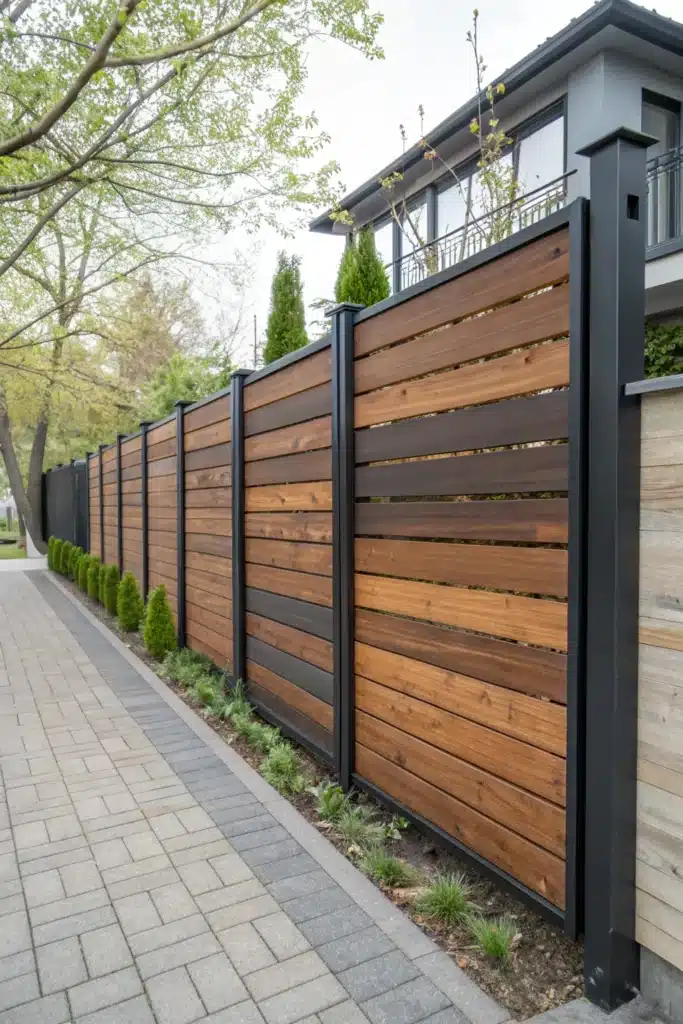
Combining materials adds richness and personality to garden fencing. Wood paired with metal, concrete posts with wooden panels, or stone bases with vertical slats create a layered, high-end look.
Mixed materials help the fence feel like an intentional design element rather than an afterthought. This approach also allows you to balance durability, privacy, and style in a single solution.
10. Lattice Fence for Light and Airflow
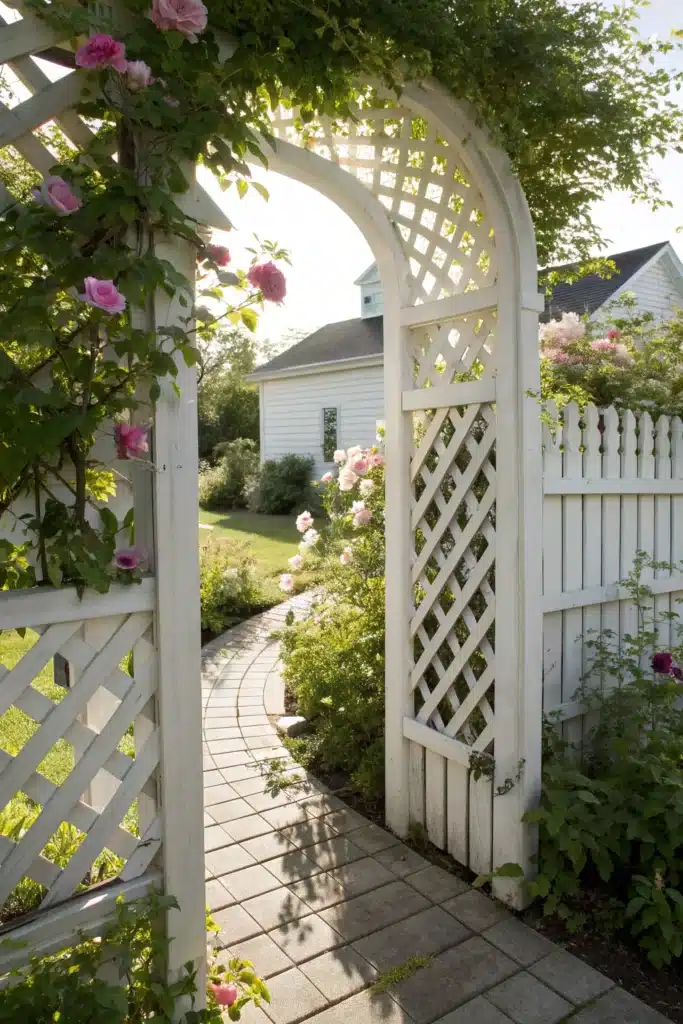
Lattice fencing offers a delicate balance between openness and enclosure. The crisscross pattern allows sunlight and air to pass through while still defining the garden boundary.
Lattice fences are ideal for climbing plants, which quickly transform them into living walls. Painted white or left natural, lattice designs add charm and softness to garden spaces.
11. Solid Panel Fence for Maximum Privacy
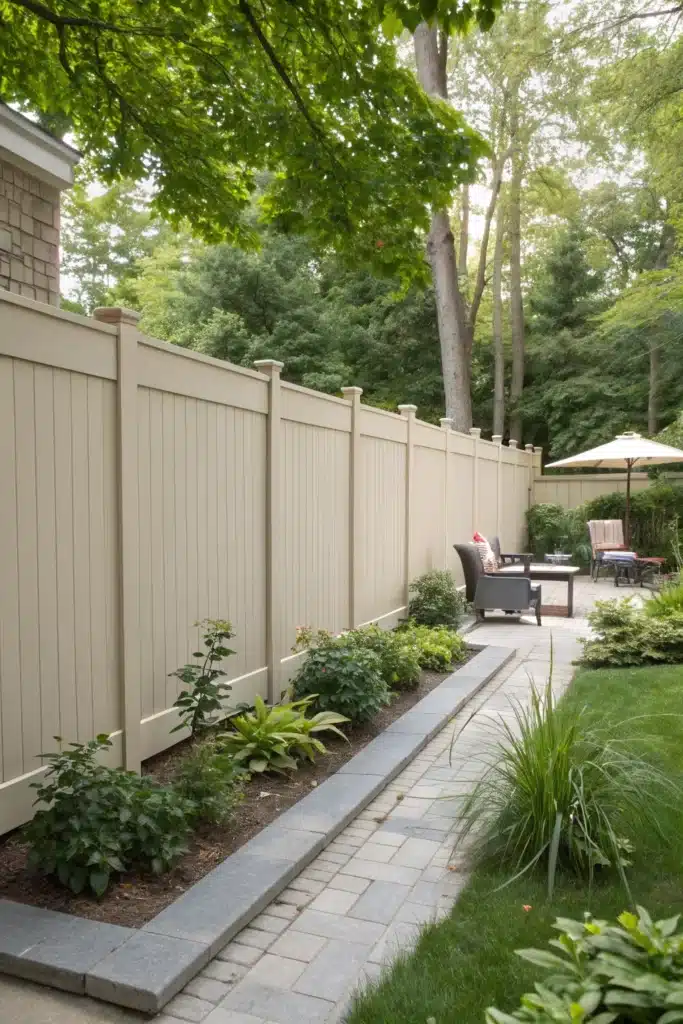
When privacy is a top priority, solid panel fencing delivers. Clean, uninterrupted panels create a strong visual boundary and shield the garden from neighboring views.
To keep solid fences stylish, focus on quality materials and finishes. Adding vertical grooves, subtle textures, or integrated planters can prevent the design from feeling too heavy.
12. Painted Fence for a Pop of Color
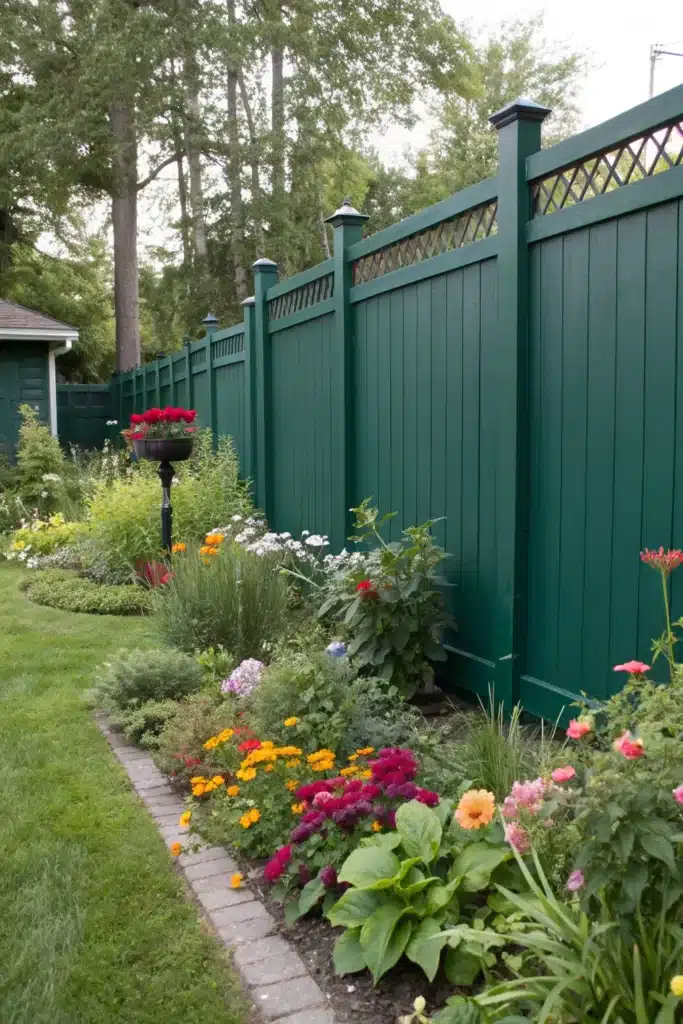
A painted fence instantly refreshes a garden and adds personality. Soft neutrals create a calm backdrop, while bold colors like deep green, navy, or charcoal add drama and depth.
Painting a fence also protects the material and extends its lifespan. When coordinated with plants and outdoor decor, a painted fence becomes a cohesive part of the overall garden design.
13. Wire Fence with Natural Framing
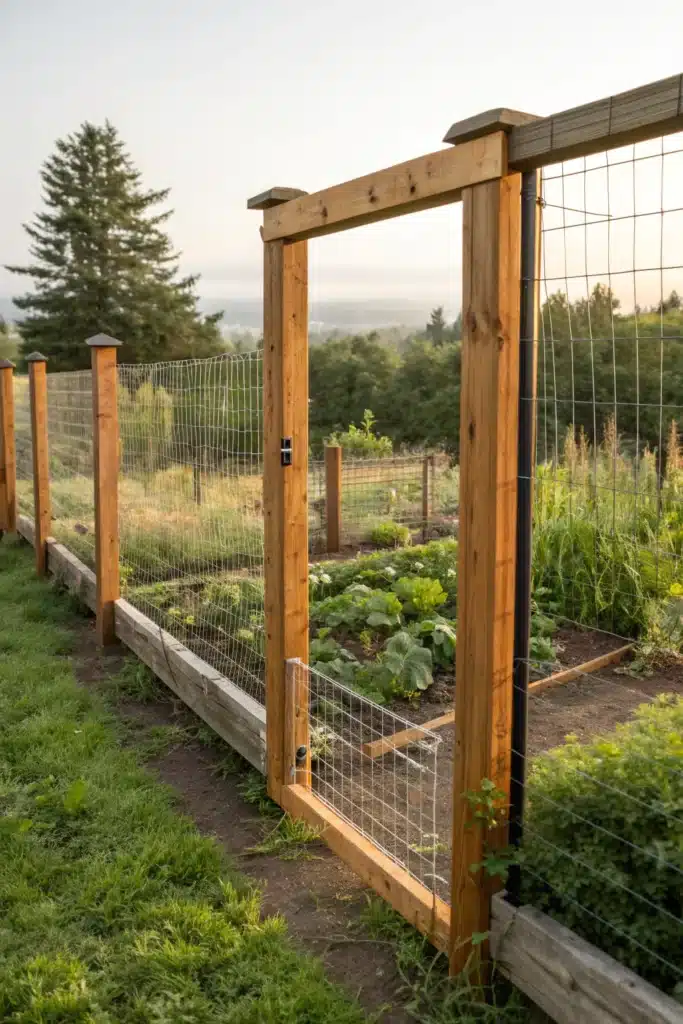
Wire fencing is minimal, practical, and surprisingly stylish when used thoughtfully. It provides security and structure without blocking views or light, making it ideal for gardens with beautiful surroundings.
Framing wire panels with wood or metal adds warmth and refinement. This style works well for vegetable gardens, pet areas, or modern landscapes that prioritize openness.
14. Fence with Built-In Planters
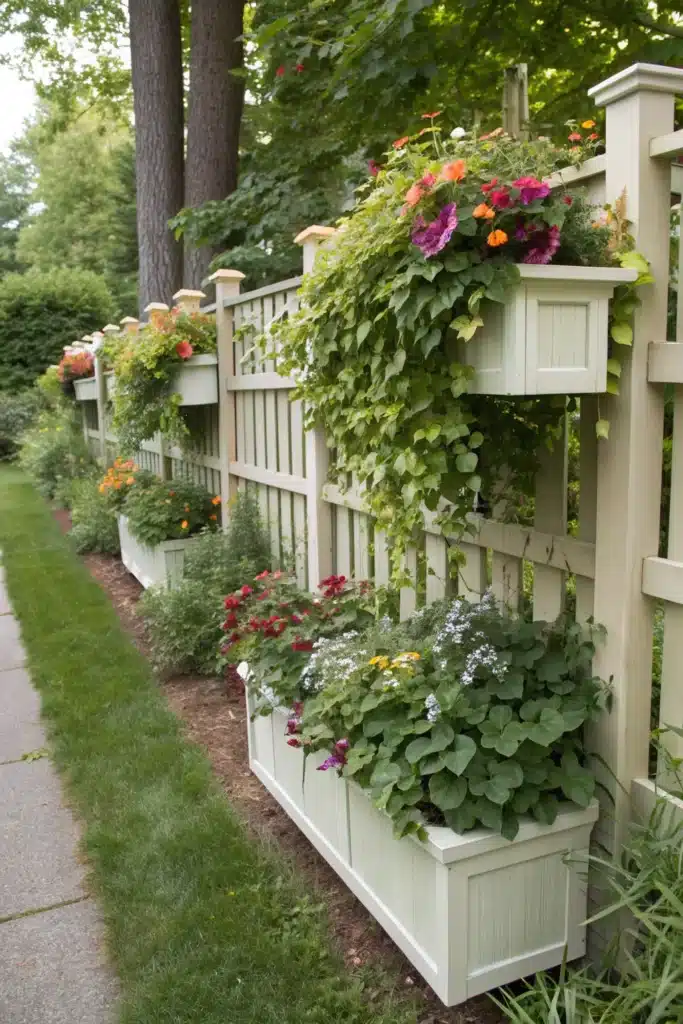
Combining fencing with planters adds both beauty and function. Built-in planter boxes allow you to grow flowers, herbs, or trailing plants directly on the fence, maximizing vertical space.
This design is especially useful in small gardens where every inch matters. The greenery softens the fence and turns it into a living feature rather than a static boundary.
15. Rustic Fence for Cottage Charm
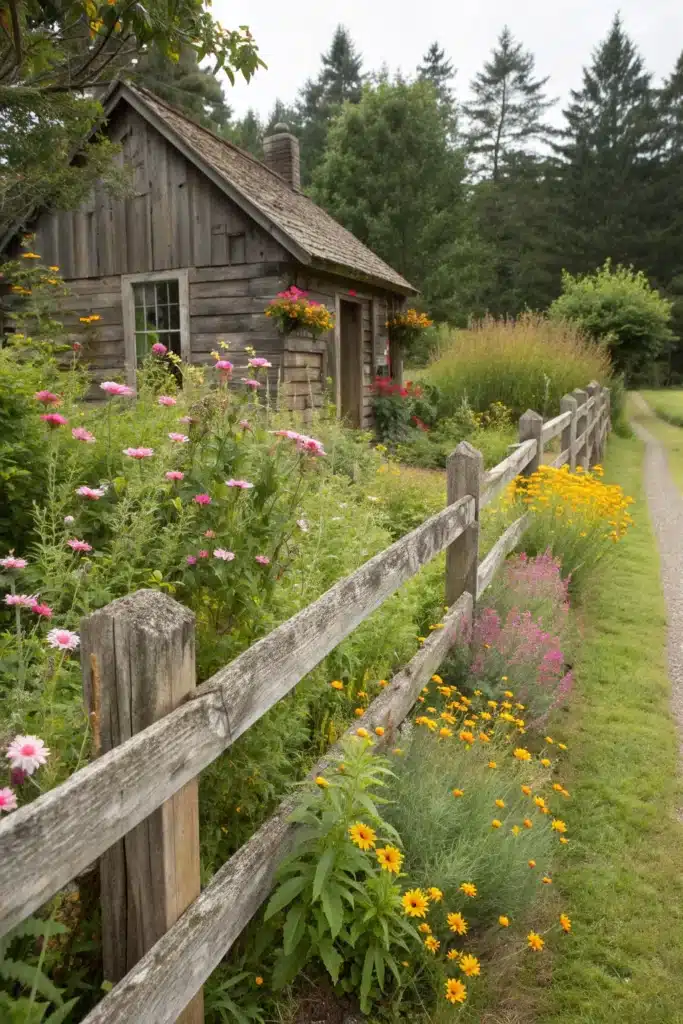
Rustic fencing brings character and charm to garden spaces. Weathered wood, uneven boards, or reclaimed materials create a relaxed, lived-in look that feels welcoming and authentic.
This style pairs beautifully with cottage gardens, wildflowers, and natural landscaping. While rustic in appearance, the fence still serves practical purposes like defining boundaries and supporting plants.
A garden fence is one of the most impactful elements in outdoor design. It frames the space, supports functionality, and sets the tone for the entire garden. By choosing a fence style that balances beauty with purpose, you can create an outdoor area that feels cohesive, stylish, and enjoyable year-round.
Whether you prefer modern lines, natural textures, or charming details, the right garden fence elevates your space and makes it truly your own. With thoughtful design choices, even a simple fence becomes a powerful feature that enhances both the look and usability of your garden.