
14 Garden Seating Ideas Tucked Into Unexpected Corners
A garden is often designed as a series of grand gestures—the sprawling lawn, the central dining patio, or the long, symmetrical flower border. While these areas are essential for entertaining and curb appeal, the true magic of a landscape is often found in the quiet, overlooked “in-between” spaces.
This Year, the trend in landscape architecture has shifted toward “micro-sanctuaries.” These are small, purposeful seating areas tucked into unexpected corners that offer a sense of discovery, intimacy, and a deep connection to nature.
The beauty of an unexpected garden corner is that it requires very little square footage. It is about reclaiming the dead space behind the shed, the narrow strip beside the garage, or the shaded hollow beneath a low-hanging branch.
By placing a seat in these neglected areas, you transform a “passthrough” zone into a destination. Here are fourteen inspired garden seating ideas designed to turn the forgotten corners of your yard into your favorite places to be.
1. The “Borrowed” Fence Niche
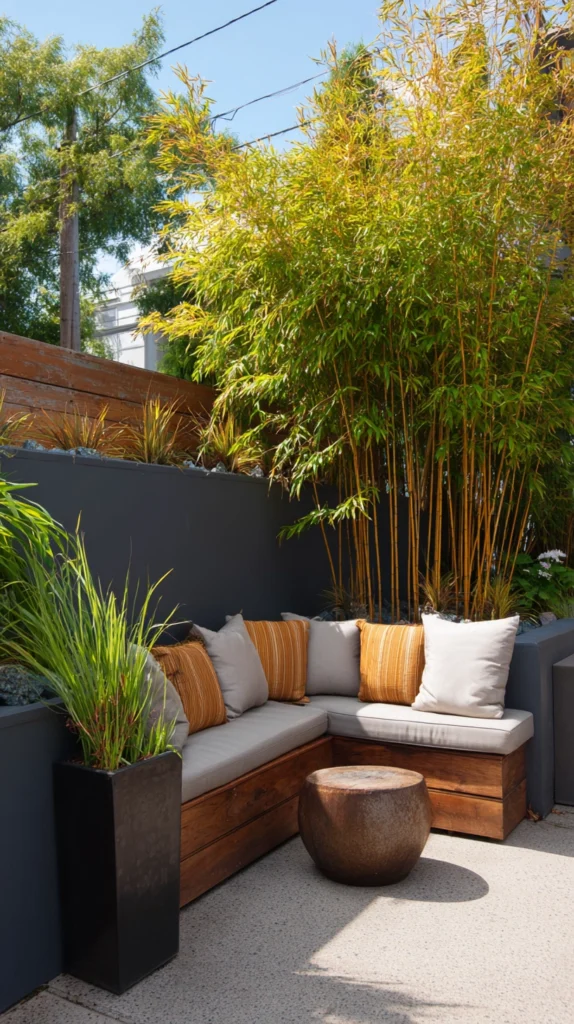
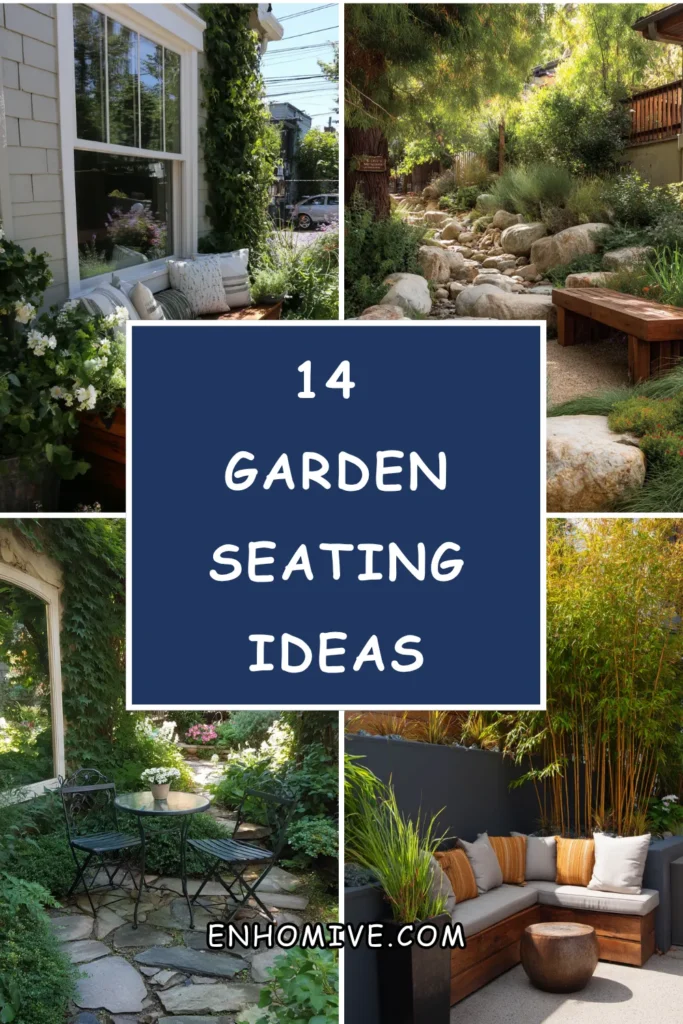
Every garden has a corner where two fence lines meet, often creating an awkward 90-degree angle that serves as a graveyard for fallen leaves. Instead of leaving it empty, install a custom L-shaped corner bench that “hugs” the fence.
To give it a designer edge, paint the fence behind the bench a dark charcoal or navy to make the wood of the seat pop. Surround the bench with tall, architectural plants like horsetail reed or bamboo in narrow planters. This turns a sharp, cold corner into a structured, modern lounge.
2. The Low-Slung “Tree Root” Retreat
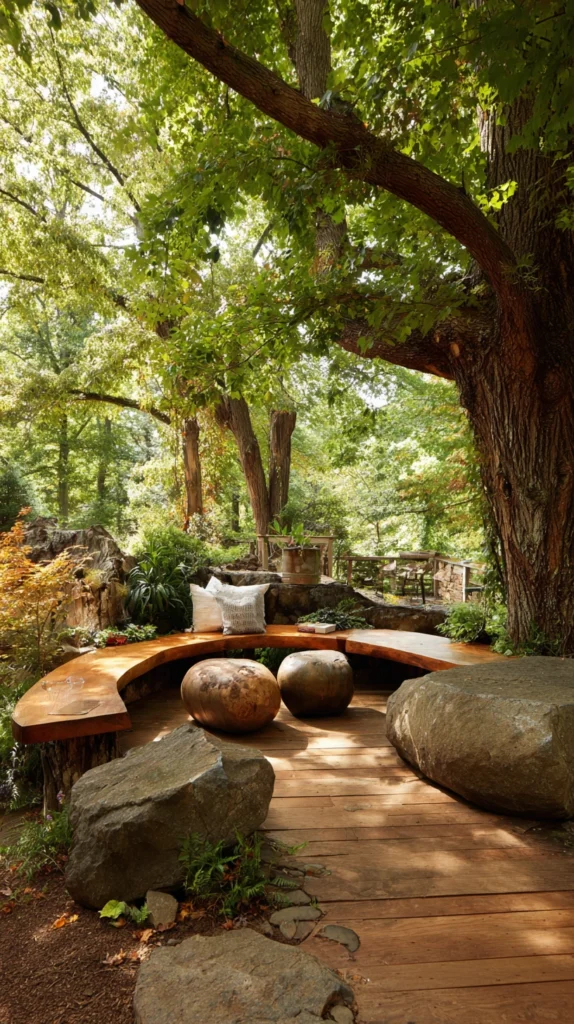
If you have an old, established tree with a wide canopy, the area directly beneath it is often too shaded for grass to grow. Instead of fighting nature with mulch, create a low-profile seating area that feels like it’s growing out of the earth.
Use a “floating” circular bench that wraps around the trunk, or simply place a few oversized, flat-topped boulders as natural stools. The low height keeps you beneath the leaf line, providing a cool, sheltered micro-climate that is perfect for reading during the heat of a July afternoon.
3. The “Side-Yard” Bistro Strip
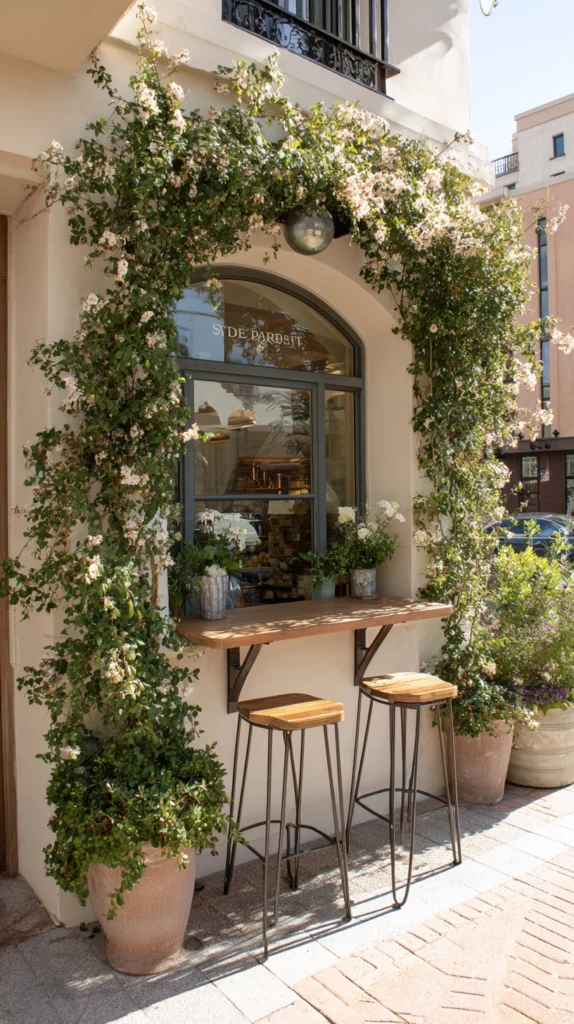
The narrow path between the side of the house and the property line is usually a utilitarian zone for trash cans and AC units. However, this “corridor” can be the perfect spot for a morning coffee nook. Install a narrow, wall-mounted “bar” shelf against the house and pair it with two slim, wrought-iron stools. By adding a vertical trellis with climbing jasmine on the opposite fence, you create a fragrant, private tunnel that feels like a hidden European alleyway.
4. The Recessed Stone “Grotto”
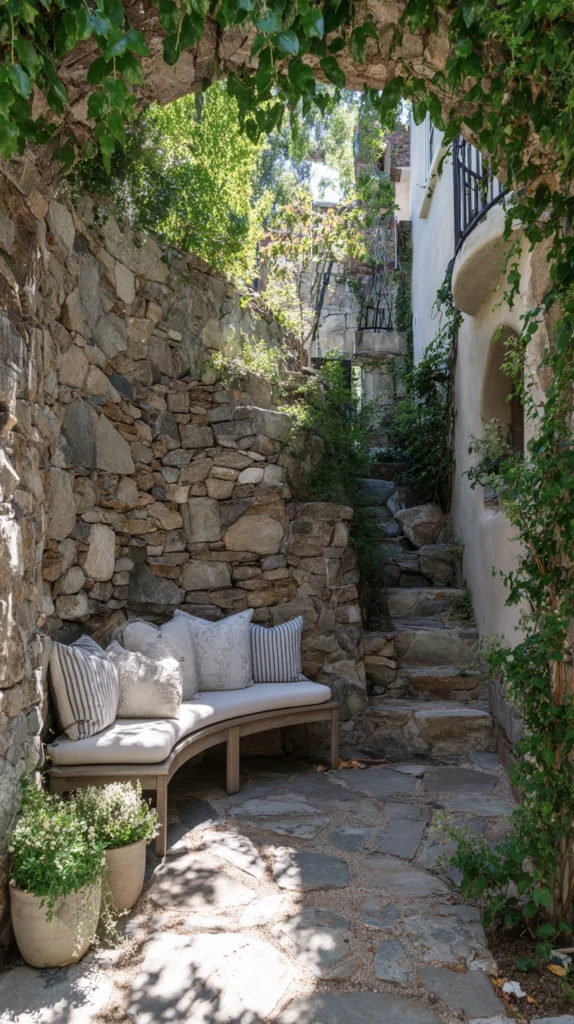
For gardens with sloped terrain, an unexpected corner can be carved directly into a hillside. By building a small, semicircular retaining wall out of dry-stack stone, you create a “recessed” nook that is physically embraced by the earth. Place a simple teak bench or a pair of Adirondack chairs inside. The stone walls absorb heat during the day and release it in the evening, making this a cozy spot for a glass of wine even after the sun goes down.
5. The “End of the Path” Destination
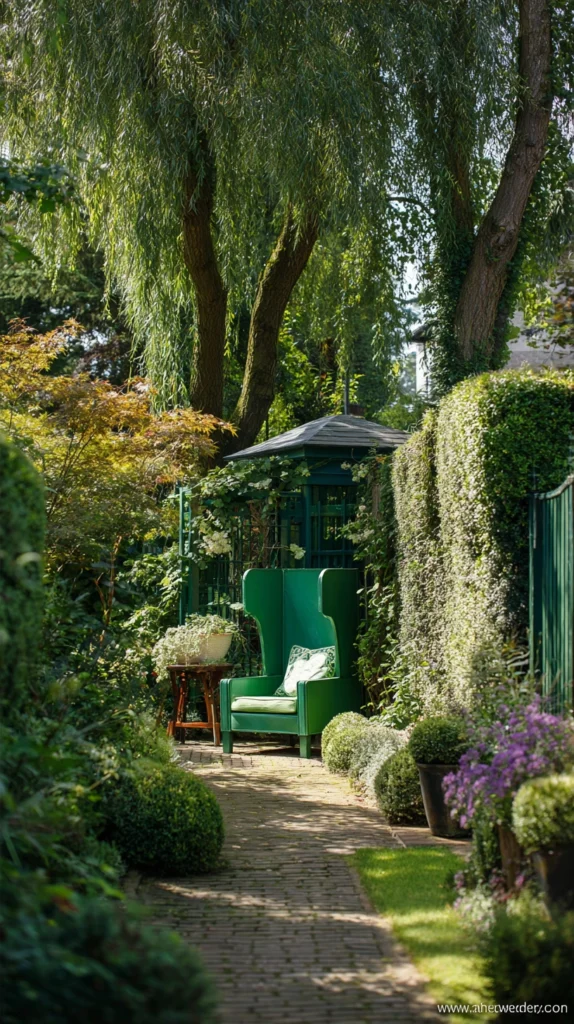
A garden path that leads to nowhere can feel unfinished. To give your walkway a sense of purpose, tuck a single, high-backed “statement” chair into the very last corner where the path terminates. This “destination seat” acts as a visual anchor, drawing the eye through the garden. Choose a chair in a bold color—like a classic British Racing Green or a vibrant Terracotta—to make it a focal point against the surrounding greenery.
6. The Vegetable Patch “Perch”
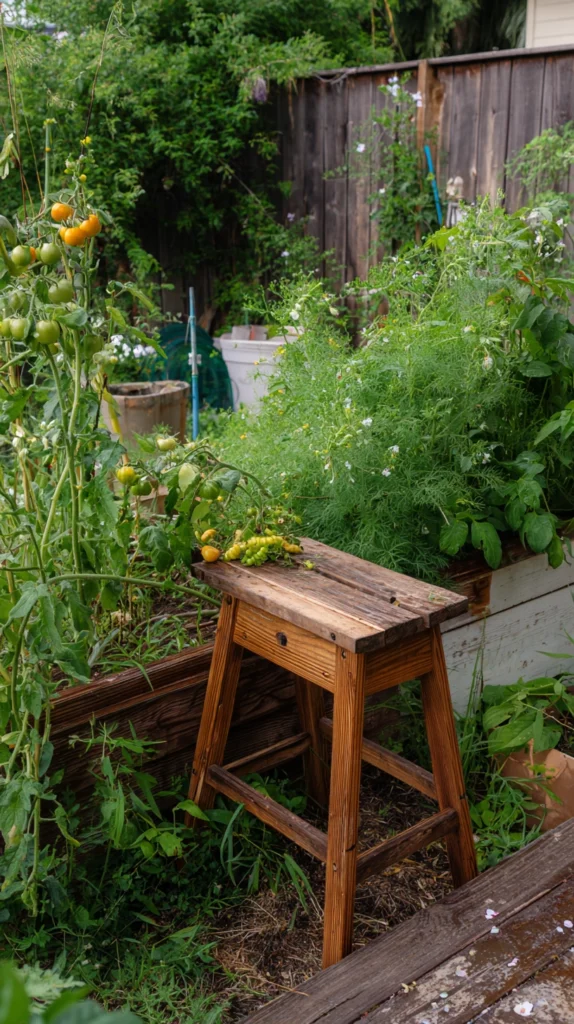
We often think of the vegetable garden as a workspace, but it can also be a place of quiet observation. Tuck a small wooden stool or a vintage milk crate into the corner of your raised bed layout. This allows you to sit at eye-level with your tomatoes and herbs, watching the bees and butterflies at work. It’s a “working seat” that encourages you to slow down and appreciate the progress of your labor rather than just rushing through the weeding.
7. The Shed-Side Sun-Trap
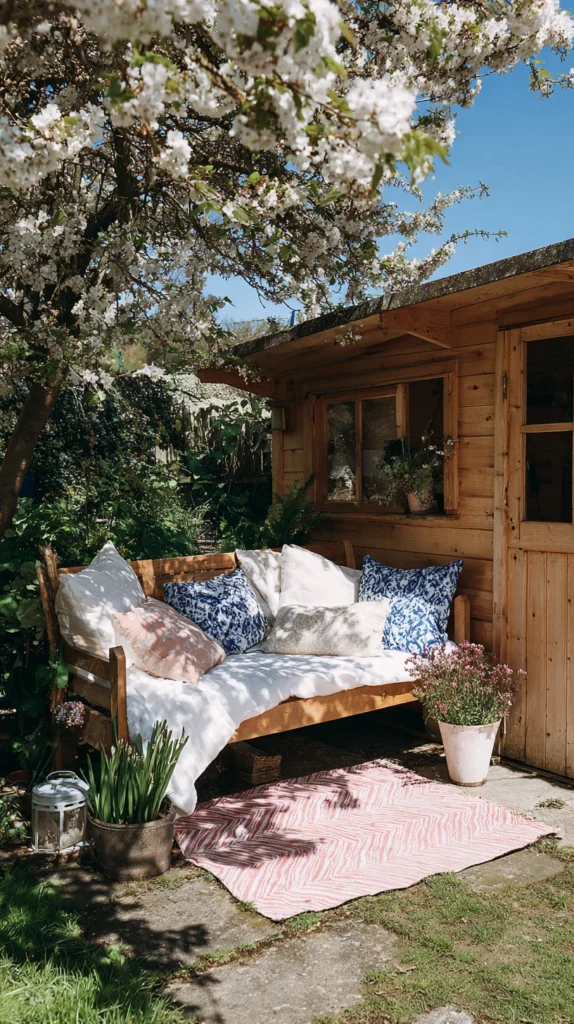
The space directly adjacent to a garden shed or greenhouse is often ignored. However, the wall of the shed can act as a windbreak and a heat-reflector. Lean a simple “daybed” or a wide garden bench against the sunniest side of the shed. By adding a few outdoor cushions and a small rug, you turn the “utility zone” into a private sun-trap. This is often the warmest spot in the garden during early spring, allowing you to get outdoors weeks before the rest of the yard is ready.
8. The “Hedge-Hollow” Hammock
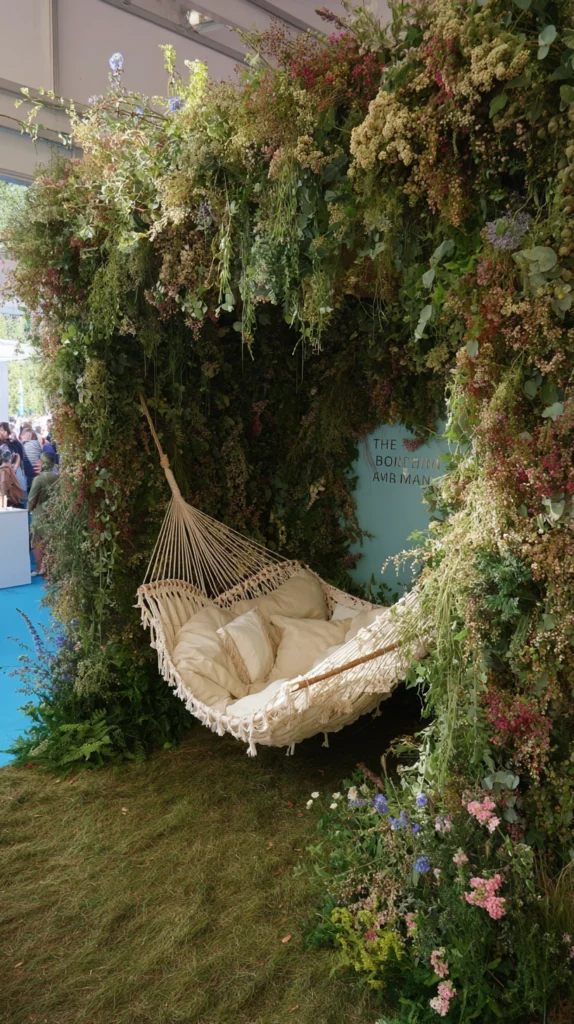
If you have a thick, established hedge or a dense border of evergreens, look for a small gap where two shrubs meet. This “hollow” provides the ultimate privacy. Instead of a traditional bench, hang a woven macramé hammock or a “cocoon” chair from a sturdy overhead branch or a discrete metal frame tucked into the foliage. Being physically “inside” the plants provides a level of sensory immersion that a standard patio cannot offer.
9. The Dry Creek Bed “Boulders”
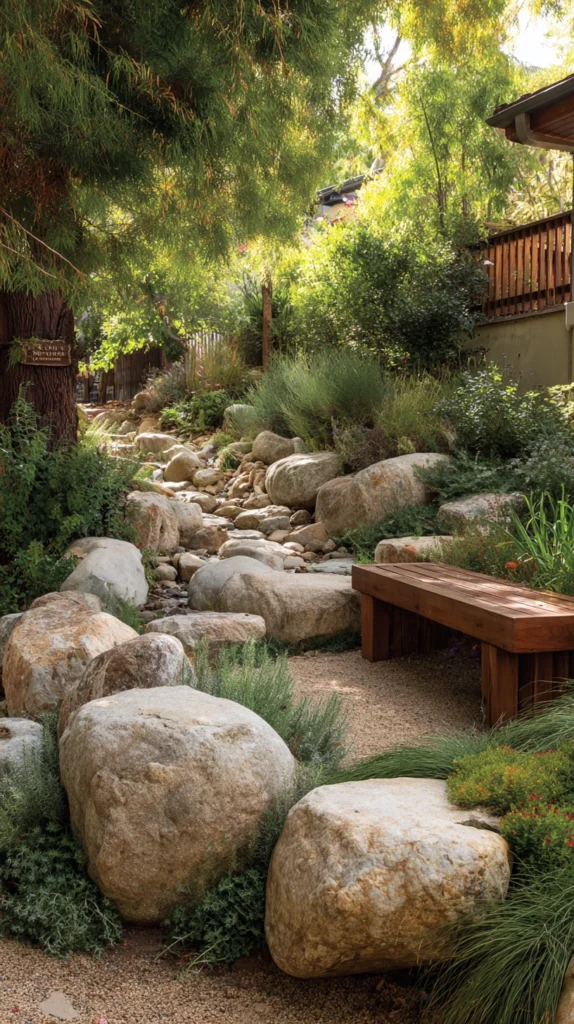
If your garden features a dry creek bed or a rock garden, use the “curves” of the landscape to create seating. An unexpected corner can be formed by grouping several large, flat-topped “seating stones” near a bend in the creek. This creates a primitive, Zen-like seating area that requires zero maintenance. It feels like a natural part of the geology of the yard, providing a place to sit and listen to the wind through the grasses.
10. The Mirrored Corner Nook
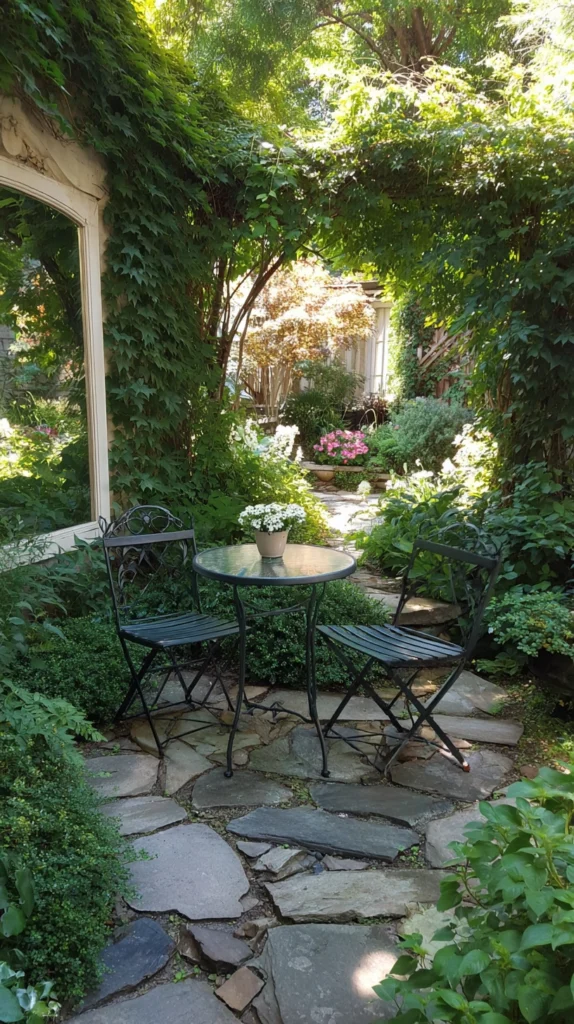
To make a tiny, dark corner feel like a hidden portal, mount a large, weather-treated mirror on the fence or wall behind a small bistro set. The mirror reflects the rest of the garden, making the seating area feel twice as large and significantly brighter. Surround the mirror with climbing ivy to “blur” the edges of the frame. This creates an optical illusion that your seating is tucked into a secret entrance to another garden.
11. The “Over-the-Water” Cantilever
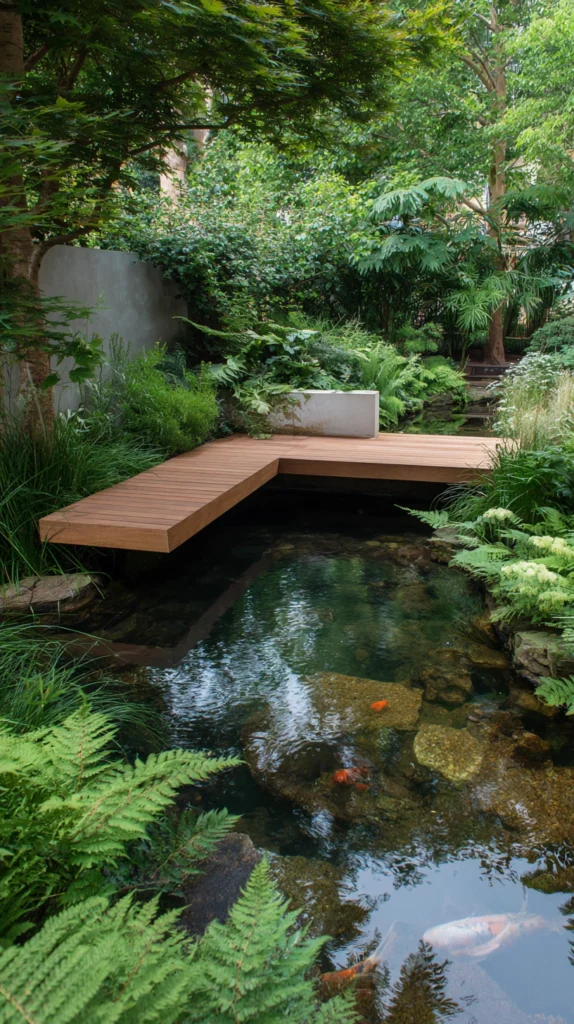
If you have a garden pond or a small water feature, the most unexpected place to sit is right over the edge. By installing a small “decklet” or a bench that cantilevers slightly over the water’s surface, you create an incredible sense of drama. Sitting directly over the water allows you to see the reflections and the movement of fish from a unique perspective, turning a standard water feature into an immersive experience.
12. The “Fire-Stump” Circle
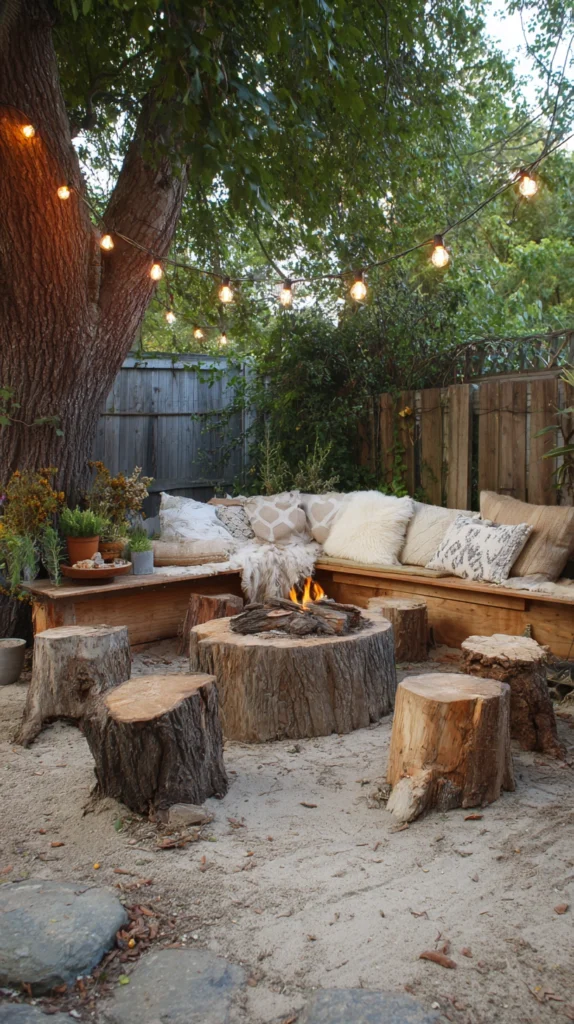
For a rustic, campfire vibe that doesn’t require a massive stone pit, tuck a circle of “stump seats” into a back corner of the yard, perhaps near a wood pile. Use sections of a fallen hardwood tree, sanded smooth on top. This creates a low-impact “primitive lounge” that is perfect for teenagers or for late-night stargazing. It’s a nostalgic, summer-camp aesthetic that feels organic and unpretentious.
13. The Window-Box “Lean-To”
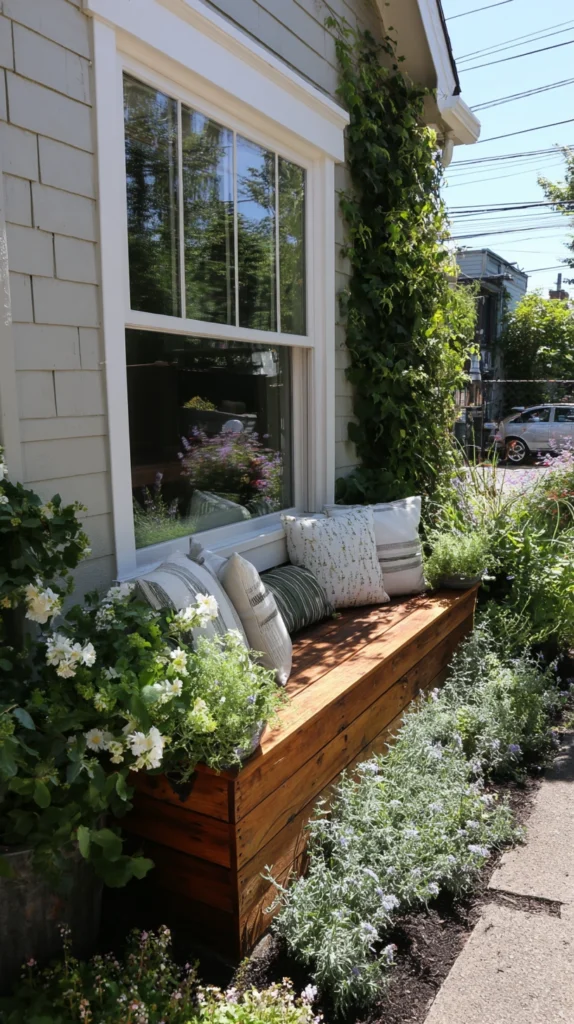
Look for a window on the back of your house that overlooks the garden. Build a wide, deep wooden window box, but instead of filling the whole thing with plants, leave a section of it as a flat “ledge” or seat.
This allows someone to sit right against the house, perhaps chatting with someone inside through the window. It’s a brilliant way to merge the indoor and outdoor lives of the home in a small, unexpected footprint.
14. The “Gateway” Arbor Bench
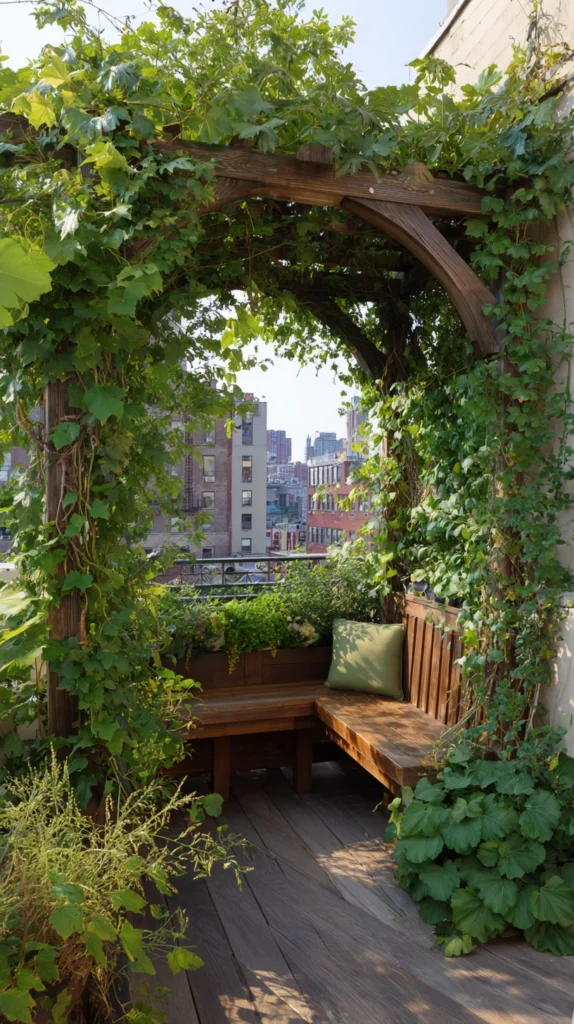
An arbor is usually a transition point between two areas of the garden. By choosing an arbor with a built-in bench, you turn a “doorway” into a “room.” Tuck this arbor into a corner where a path enters a wooded area or a side gate. The overhead structure provides a sense of security and “roof,” while the vines growing over the top provide shade and fragrance. It’s the ultimate “secret garden” entrance.
Tucking seating into unexpected corners is about more than just finding a place to sit; it is about changing your perspective of your own home. When you sit in the corner of the garden that you usually only see when you’re mowing the lawn, the yard looks different. The light hits the plants at a new angle, the sounds of the neighborhood fade away, and you find a sense of peace that the main patio simply cannot provide. This year, look at your garden’s “dead zones” not as problems to be hidden, but as opportunities to be seated.