
How to Clean a Glass Cooktop Without Scratches
Glass cooktops look beautiful when they’re clean. They’re sleek, modern, and make your kitchen look expensive. But keeping them clean is tricky.
One wrong move and you’ve got permanent scratches. Use the wrong cleaner and you’re left with streaks. Scrub too hard and you might crack the surface. It’s frustrating.
The good news? You can keep your glass cooktop spotless without damaging it. You just need to know the right way to do it.
Why Glass Cooktops Scratch So Easily
Glass cooktops aren’t made of regular glass. They’re ceramic glass, which is very hard and can handle high heat. But they’re not indestructible.
What causes scratches:
- Dragging pots and pans across the surface
- Using abrasive cleaners or scrubbers
- Cooking with dirty pans (dirt acts like sandpaper)
- Letting sugar or salt sit on the hot surface
- Using the wrong cleaning tools
Once you scratch the surface, there’s no fixing it. The scratch is permanent. That’s why prevention matters so much.
What You Need for Safe Cleaning

For daily cleaning:
- Dish soap
- Warm water
- Soft microfiber cloths
- Paper towels
For tough stains:
- Baking soda
- White vinegar
- Razor blade scraper (designed for glass cooktops)
- Cooktop cleaning cream (optional)
What to NEVER use:
- Steel wool or metal scrubbers
- Abrasive sponges (the rough green ones)
- Powdered cleansers like Comet
- Bleach or ammonia
- Regular glass cleaner (it leaves residue that burns)
Daily Cleaning: The Right Way
Do this after every time you cook. It takes two minutes and prevents tough stains from building up.
Step 1: Let it cool completely
Never clean a hot cooktop. The heat will cause cleaners to bake on and create streaks. Wait at least 30 minutes after cooking.
Touch it with your hand to make sure it’s cool. Some cooktops have a “hot surface” light that tells you when it’s safe.
Step 2: Wipe away loose debris
Use a dry paper towel or soft cloth to wipe away crumbs, dust, or loose food particles.
Don’t use a wet cloth yet. Wet debris can smear and make a bigger mess.
Step 3: Clean with soapy water
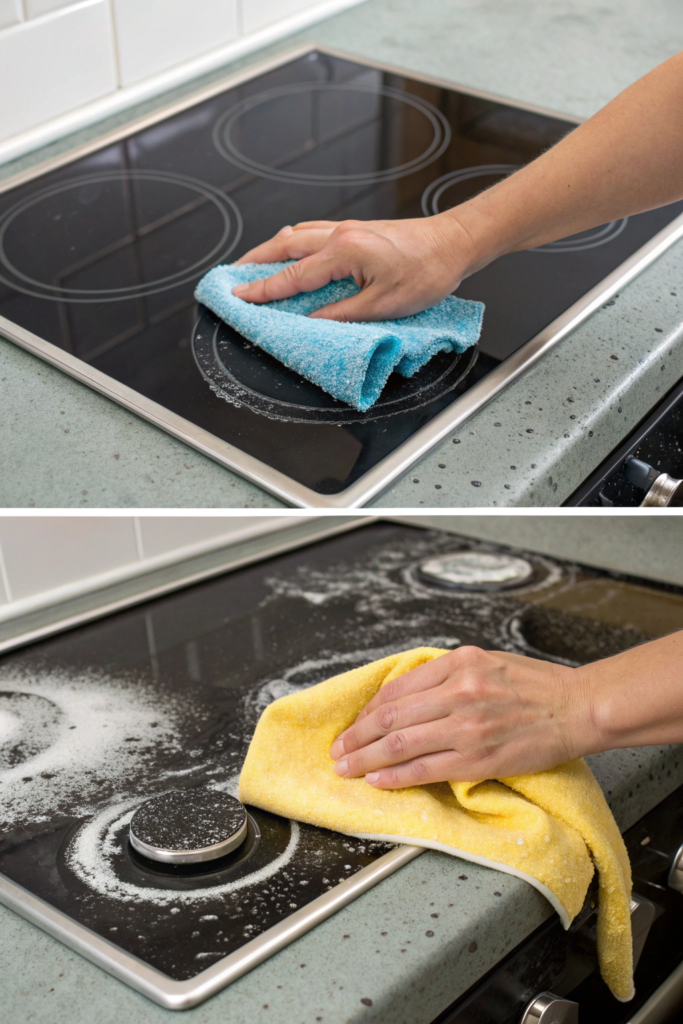
Put a few drops of dish soap on a damp microfiber cloth. Wipe down the entire cooktop in gentle circles.
Don’t scrub hard. Let the soap do the work. Gentle pressure is enough for daily cleaning.
Step 4: Rinse with clean water
Wet a clean cloth with plain water. Wipe away all the soap. Make sure you get it all, or it will leave streaks.
Step 5: Dry and polish
Use a dry microfiber cloth to dry the surface completely. Buff it in circles until it shines.
This step prevents water spots and gives you that showroom look.
Removing Burnt-On Food and Tough Stains

Sometimes food boils over and burns onto the cooktop. Or you get those white cloudy spots that won’t come off. Here’s how to handle them safely.
Method 1: Baking Soda Paste
This works for most stubborn stains and it’s completely safe.
Steps:
- Make sure the cooktop is cool
- Mix baking soda with a little water to make a thick paste
- Spread the paste over the stain
- Let it sit for 15-20 minutes
- Wipe away with a damp cloth using circular motions
- Rinse with clean water
- Dry and buff
The baking soda is gentle but effective. It won’t scratch but it will lift the stain.
Method 2: Vinegar Spray
Great for water spots and light buildup.
Steps:
- Spray white vinegar directly on the stain
- Let it sit for 5 minutes
- Wipe with a soft cloth
- Rinse with water
- Dry completely
Method 3: Baking Soda + Vinegar Combo
For really tough stains, combine both.
Steps:
- Sprinkle baking soda on the stain
- Spray vinegar over the baking soda
- It will fizz—this is good
- Let it sit for 15 minutes
- Wipe with a damp cloth
- Rinse and dry
Using a Razor Blade Scraper Safely
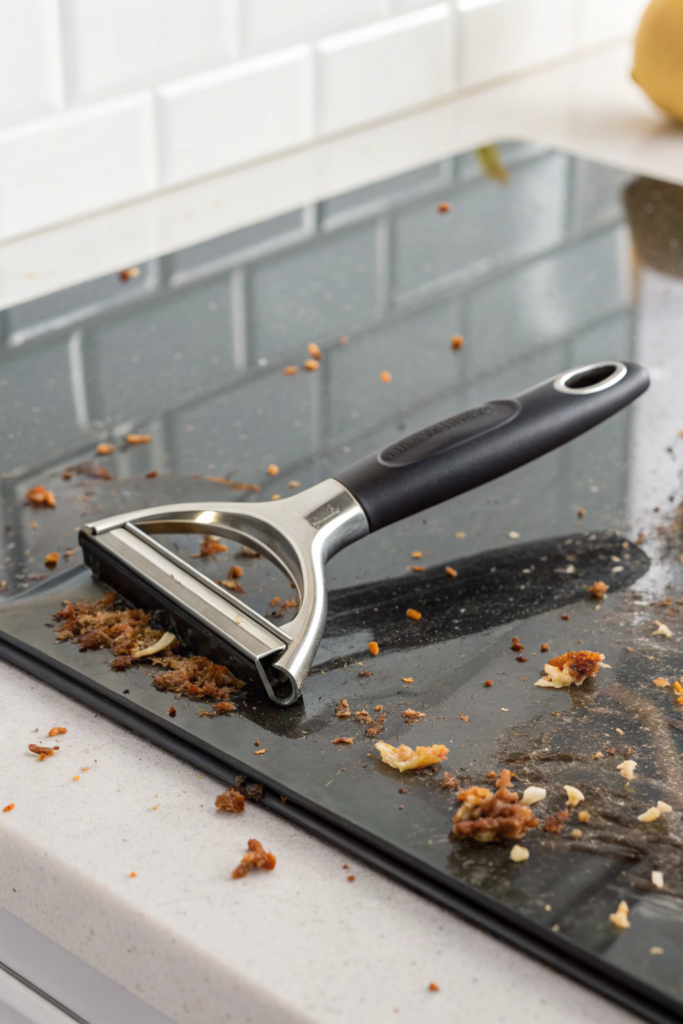
Sometimes you need a razor blade to remove burned-on food. This sounds scary, but it’s safe if you do it right.
Buy the right scraper:
- Get one made specifically for glass cooktops
- It should have a handle and hold the blade at the correct angle
- Single-edge razor blades work best
- Replace dull blades immediately
How to use it without scratching:
Step 1: Make sure the cooktop is completely cool
Step 2: Wet the stained area with water or spray with vinegar
Step 3: Hold the scraper at a 45-degree angle to the surface
Step 4: Push the blade forward gently—never pull it toward you
Step 5: Use light pressure and let the blade do the work
Step 6: Scrape only in one direction
Step 7: Wipe away residue frequently
Important warnings:
- Never scrape on a hot surface
- Don’t hold the blade straight up and down
- Don’t use a dull blade
- Keep your fingers away from the blade edge
- Work slowly and carefully
Dealing with Specific Problems
Burnt sugar or candy:
Sugar is the enemy of glass cooktops. When it melts and cools, it bonds to the glass like concrete. It can even pull chunks out of the surface if left too long.
Fix it immediately:
- Turn off the burner but leave it slightly warm
- Put on oven mitts
- Use a razor scraper while it’s still soft
- Scrape it all away before it cools completely
- Once cool, clean with baking soda paste
- Never let it cool and harden
White cloudy stains:
These are mineral deposits from water or food with high calcium content.
Remove them:
- Spray with white vinegar
- Let sit for 10 minutes
- Wipe with a soft cloth
- Repeat if needed
- For stubborn spots, use baking soda paste
Grease splatters:
Oil and grease leave a film that attracts more dirt.
Clean them:
- Spray with vinegar or use soapy water
- Wipe with a cloth
- Rinse well
- Dry completely to avoid streaks
Metal marks:
Sometimes aluminum pans leave gray marks that look like scratches but aren’t.
Remove them:
- Make a baking soda paste
- Apply to the marks
- Gently rub with a soft cloth
- Rinse and dry
Discoloration:
Over time, some cooktops get a rainbow-like discoloration.
This is usually permanent from repeated heating and cooling. It’s cosmetic only and doesn’t affect function. Some cooktop cleaners can reduce the appearance, but it won’t disappear completely.
Mistakes That Cause Scratches
Mistake 1: Cleaning while hot
People think hot surfaces clean easier. Wrong. The heat sets stains and can cause thermal shock if you use cold water. Always wait until cool.
Mistake 2: Using abrasive tools
That rough side of the sponge? It will scratch. Regular scrub brushes? They’ll scratch too. Stick to soft cloths only.
Mistake 3: Sliding pots and pans
Always lift cookware, never slide it. Even a tiny piece of grit under the pan will scratch as you drag it.
Mistake 4: Cooking with dirty pans
Check the bottom of your pots before putting them on the cooktop. Food, grease, or rough spots will transfer scratches.
Mistake 5: Using too much cleaner
More soap doesn’t mean cleaner. It just means more residue to rinse off. A little goes a long way.
Mistake 6: Letting spills sit
The longer a spill stays on the cooktop, the harder it is to remove. Clean up right away, even if you’re in the middle of cooking.
Preventing Scratches and Damage
Use the right cookware:
- Flat, smooth bottoms only
- Stainless steel or enameled cast iron work best
- Avoid warped or damaged pots
- No rough cast iron unless it’s enameled
Check pans before use:
- Feel the bottom—it should be smooth
- Wipe the bottom clean before placing on cooktop
- Look for stuck-on food or rough spots
Lift, don’t slide:
- Pick up pots to move them
- Never drag them across the surface
- Teach everyone in the house to do this
Clean spills immediately:
- Keep a damp cloth nearby when cooking
- Wipe up boil-overs right away
- Don’t wait until after dinner
Protect the surface:
- Don’t use it as a cutting board
- Don’t set down hot pan lids directly on it
- Don’t put grocery bags on it
Quick Cleaning Schedule
After every use (2 minutes):
- Wipe with soapy water
- Rinse
- Dry and buff
Once a week (5 minutes):
- Deep clean with baking soda paste
- Focus on problem areas
- Polish until spotless
Once a month (10 minutes):
- Use a cooktop cleaning cream if you have it
- Check for any damage or scratches
- Clean around the edges and controls
As needed:
- Use razor scraper for burnt-on food
- Remove mineral deposits with vinegar
- Polish out metal marks
Regular maintenance means you never have to deal with major cleaning projects.
Best Commercial Cleaners (If You Want Them)
You don’t need special cleaners, but some people prefer them.
Good options:
- Weiman Glass Cook Top Cleaner
- Cerama Bryte Cooktop Cleaner
- Bar Keeper’s Friend (use sparingly)
How to use them:
- Apply a small amount to cool surface
- Rub gently with soft cloth
- Let sit if needed
- Buff away with clean cloth
- Polish until shiny
These work well but aren’t necessary. Baking soda and vinegar do the same job for less money.
What to Do If You Scratch It
If you do scratch your cooktop, don’t panic. Minor scratches won’t affect how it works.
For light scratches:
- They might fade with regular cleaning
- Some polishing compounds can reduce their appearance
- They’re mostly cosmetic
For deep scratches:
- They’re permanent
- Make sure edges aren’t sharp (could cut you)
- Continue cleaning normally around them
- They won’t get worse unless you keep scratching the same spot
When to worry:
- Cracks that spread across the surface
- Chips or missing pieces
- Scratches that spark when you use the burner
If you see these, stop using the cooktop and call a repair person. These are safety issues, not just cosmetic problems.
The Bottom Line
Keeping a glass cooktop clean and scratch-free is simple once you know the rules.
The golden rules:
- Always let it cool before cleaning
- Use only soft cloths and gentle cleaners
- Lift pots, never slide them
- Clean spills immediately
- Use a razor scraper correctly for tough spots
Daily routine:
- Wipe with soapy water
- Rinse
- Dry and buff
- Takes 2 minutes
Your cooktop will:
- Look brand new for years
- Stay scratch-free
- Be easy to clean
- Make your kitchen look great
You don’t need expensive cleaners or special tools. Dish soap, baking soda, vinegar, and soft cloths handle 95% of cleaning jobs.
The key is gentle, consistent care. Don’t let stains build up. Don’t use harsh tools. Treat the surface with respect.
Start today:
- Check what cleaning tools you have
- Throw away anything abrasive
- Get some microfiber cloths if you don’t have them
- Make it a habit to wipe down after cooking
A clean, shiny cooktop makes cooking more enjoyable. And when you do it the right way, it only takes a few minutes a day.