
How to Clean Stainless Steel Appliances Without Streaks
Stainless steel appliances look amazing when they’re clean. They’re shiny, modern, and make your kitchen look expensive. But keeping them that way is another story.
You wipe them down and somehow they look worse. Streaks everywhere. Fingerprints that won’t come off. Water spots that multiply. You try again with a different cleaner and just end up with more streaks.

It’s frustrating. But here’s the truth: you’re probably using the wrong method. Stainless steel needs a specific approach. Once you know it, you’ll get perfect results every time.
Why Stainless Steel Streaks So Easily
Stainless steel has a grain, like wood. Those tiny lines running across the surface aren’t just for looks—they’re part of how the metal is made.
When you wipe against the grain, you push dirt and cleaner into those grooves. It settles there and shows up as streaks.
Other causes of streaks:
- Using too much cleaner
- Not drying properly
- Wrong type of cloth
- Hard water minerals
- Old cleaning product buildup
The good news? All of these are easy to fix once you know how.
The Golden Rule: Always Follow the Grain
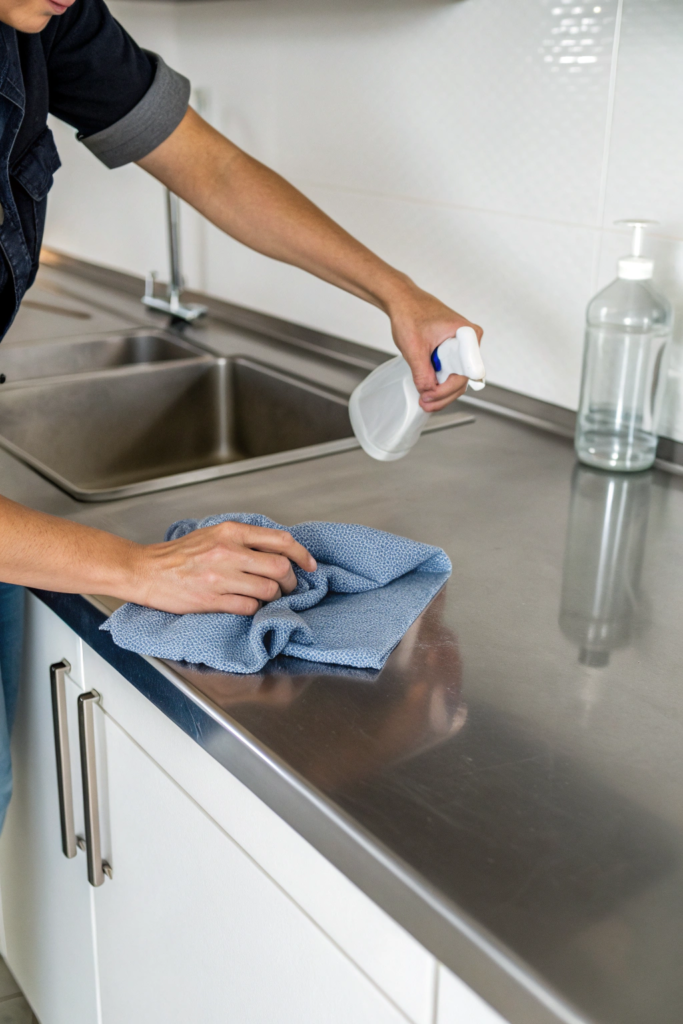
This is the most important thing you need to know. Look closely at your appliance. See those faint lines? That’s the grain.
How to find the grain:
- Look at the surface in good light
- You’ll see very fine horizontal or vertical lines
- Usually runs horizontally on fridges
- Usually runs vertically on dishwashers
- May vary on different parts of the same appliance
Why it matters:
- Wiping with the grain pushes dirt out of the grooves
- Wiping against the grain pushes dirt into the grooves
- Following the grain prevents streaks
- It also gives you that professional polished look
Always wipe in the direction of the grain. Always. This one change will solve most of your streak problems.
What You Need for Streak-Free Cleaning
You don’t need expensive specialty products. Most streak problems come from using the wrong tools, not the wrong cleaner.
Essential supplies:
- Microfiber cloths (at least 3-4)
- Warm water
- Dish soap
- White vinegar
- Spray bottle
Optional but helpful:
- Baby oil or mineral oil
- Rubbing alcohol
- Commercial stainless steel cleaner
What NOT to use:
- Paper towels (leave lint and streaks)
- Abrasive sponges or scrubbers
- Bleach or chlorine cleaners
- Anything with ammonia
- Steel wool
- Rough cloths or rags
The microfiber cloth is the secret weapon. It picks up dirt without leaving lint or streaks. Regular cloths and paper towels can’t do this.
The Best Method: Three-Step Cleaning
This method works every time. It takes about 5 minutes per appliance.
Step 1: Clean
Mix a few drops of dish soap in warm water. Dip your microfiber cloth in it and wring it out well. The cloth should be damp, not dripping.
Wipe the entire surface in the direction of the grain. Use gentle pressure. You’re removing dirt, grease, and fingerprints.
For stubborn spots, apply a little more pressure but keep wiping with the grain.
Step 2: Rinse
Use a clean cloth dampened with plain water. Wipe down the entire surface again, following the grain.
This removes all the soap. If you skip this step, the soap will dry and leave streaks.
Wring out your cloth frequently and use fresh water as needed.
Step 3: Dry and Polish
This is the most important step. Use a completely dry microfiber cloth. Buff the surface in the direction of the grain.
Keep buffing until the surface is completely dry and shiny. This step removes water spots and gives you that streak-free shine.
Don’t stop too soon. Keep polishing until you see your reflection clearly.
The Vinegar Method for Extra Shine
White vinegar is magic on stainless steel. It cuts through grease, removes water spots, and doesn’t leave residue.
How to use it:
Option 1: Vinegar spray
- Fill a spray bottle with white vinegar
- Spray directly on the appliance
- Wipe with the grain using a microfiber cloth
- Dry immediately with a clean dry cloth
Option 2: Vinegar cloth
- Dampen a cloth with vinegar
- Wipe the surface with the grain
- Follow with a dry cloth
- Buff until shiny
Why vinegar works so well:
- Cuts through grease and oil
- Dissolves water spots and mineral deposits
- Evaporates quickly
- Leaves no residue
- Cheap and non-toxic
The smell goes away as it dries. If you hate the smell, add a few drops of lemon essential oil to the spray bottle.
Quick Daily Maintenance
You don’t need to do a full cleaning every day. This quick method takes 30 seconds and keeps appliances looking good between deep cleans.
The daily wipe:
- Keep a microfiber cloth handy
- Spray with water or vinegar
- Quick wipe with the grain
- Dry buff with clean part of cloth
Do this:
- After cooking (when you spot fingerprints)
- Once every evening
- Whenever you see smudges
Focus on high-touch areas:
- Refrigerator handles
- Dishwasher front
- Stove control panel
- Microwave door handle
This prevents buildup and keeps major cleaning sessions short.
Removing Stubborn Stains and Marks
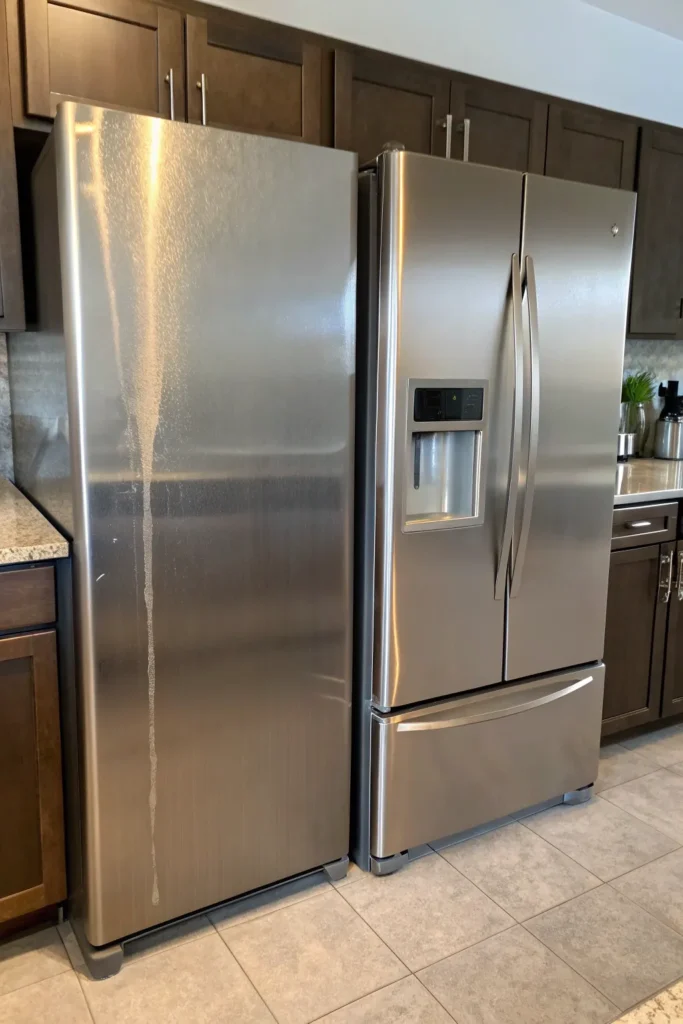
Sometimes you need more than soap and water. Here’s how to handle tough problems.
Fingerprints and smudges:
- Spray with vinegar
- Wipe with the grain
- Dry immediately
- For heavy fingerprints, use rubbing alcohol
Water spots:
- These are mineral deposits
- Vinegar dissolves them easily
- Spray and let sit for 1 minute
- Wipe with the grain
- Dry thoroughly
Grease splatters:
- Use dish soap and warm water
- May need to wipe several times
- Finish with vinegar spray
- Dry and buff
Rust spots:
- Make a paste: baking soda and water
- Apply to rust spot only
- Rub gently with the grain
- Wipe clean
- Dry thoroughly
Stuck-on food:
- Never scrape with metal
- Soak area with warm soapy water
- Let sit for 5 minutes
- Wipe away with soft cloth
- Use plastic scraper if needed
Heat discoloration:
- Usually permanent (rainbow effect)
- Try baking soda paste
- Rub gently with the grain
- May lighten but not disappear
The Oil Polish Method
Some people swear by oil for a streak-free, fingerprint-resistant finish. It works, but you have to do it right.
What oil to use:
- Mineral oil (best choice)
- Baby oil (works well)
- Olive oil (works but can go rancid)
- Commercial stainless steel polish
How to apply:
- Clean appliance completely first
- Put a tiny amount of oil on a microfiber cloth
- Rub it in with the grain
- Use very little—more isn’t better
- Buff with a clean dry cloth
- Keep buffing until no oil residue remains
The result:
- Beautiful shine
- Repels fingerprints
- Lasts about a week
- Can look greasy if you use too much
Important: Don’t use oil on appliances near heat sources. It can attract grease and dust. Skip this method on stoves and ranges.
Dealing with Different Types of Stainless Steel
Not all stainless steel is the same. Some has a coating or finish that needs special care.
Brushed stainless steel:
- Has a visible grain pattern
- Easier to keep clean
- Hides minor scratches better
- Follow the grain strictly
Polished stainless steel:
- Super shiny finish
- Shows every fingerprint
- More prone to streaks
- Needs more frequent cleaning
Coated stainless steel:
- Has a fingerprint-resistant coating
- Don’t use abrasive cleaners
- Don’t use oil (breaks down coating)
- Stick to soap and water
Black stainless steel:
- Special dark finish
- Check manufacturer’s instructions
- Usually can’t use regular cleaners
- May need specific products
When in doubt, check your appliance manual or manufacturer’s website for cleaning recommendations.
Common Mistakes That Cause Streaks
Mistake 1: Using too much cleaner
More spray doesn’t mean cleaner. It just means more residue to wipe away. Use less than you think you need.
Mistake 2: Not drying properly
Letting water air dry causes water spots. Always dry with a cloth immediately after cleaning.
Mistake 3: Using circular motions
Circular wiping goes against the grain in multiple directions. Always wipe straight, following the grain.
Mistake 4: Using dirty cloths
A cloth that’s already dirty or greasy just spreads the mess. Use clean cloths and change them often.
Mistake 5: Cleaning in direct sunlight
Heat makes cleaners dry too fast, leaving streaks. Clean when appliances are cool and not in direct sun.
Mistake 6: Using paper towels
They leave lint, scratch the surface, and don’t absorb well. Microfiber is the only way to go.
The 2-Minute Quick Clean
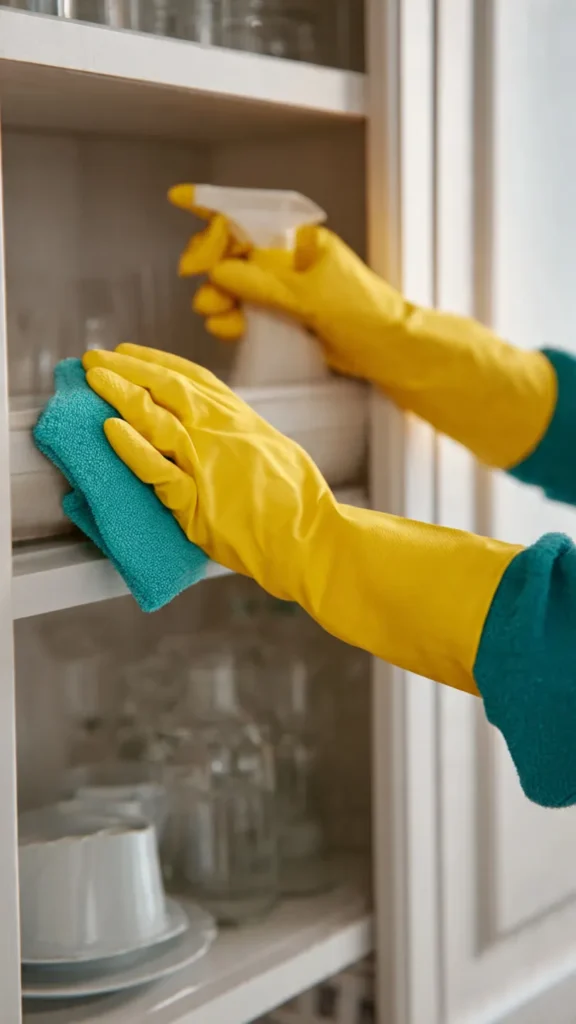
When you need fast results and don’t have time for the full method:
Supplies:
- One microfiber cloth
- White vinegar in spray bottle
Process:
- Spray vinegar on appliance
- Wipe with the grain
- Flip cloth to dry side
- Buff dry with the grain
- Done
This works for daily touch-ups and light cleaning. For heavy dirt or grease, use the full three-step method.
Product Recommendations
You don’t need special products, but some people prefer them.
Good commercial cleaners:
- Weiman Stainless Steel Cleaner
- Magic Stainless Steel Cleaner
- Bar Keeper’s Friend (for tough stains only)
- Method Stainless Steel Polish
Homemade solution that works great:
- 1 part vinegar
- 1 part water
- 3 drops dish soap
- Mix in spray bottle
For polishing:
- Mineral oil
- Commercial stainless steel polish
- Baby oil (unscented)
Always test new products on a small hidden area first.
Cleaning Different Appliances
Refrigerator:
- Grain usually runs horizontally
- Clean handles separately (heavy use area)
- Don’t forget the sides
- Wipe top edge (collects dust)
Dishwasher:
- Grain often runs vertically
- Control panel needs gentle touch
- Clean around door edges
- Wipe door handle frequently
Stove/Range:
- Clean when completely cool
- Grain direction varies by model
- Avoid oil polish (attracts grease)
- Clean control knobs separately
Microwave:
- Usually horizontal grain
- Control panel needs careful cleaning
- Don’t let cleaner seep into buttons
- Clean inside and outside
Sink:
- Takes the most abuse
- Clean daily to prevent water spots
- Use baking soda for stubborn stains
- Dry after each use if possible
Prevention Tips
The best way to clean is to prevent it from getting dirty in the first place.
Daily habits:
- Wipe spills immediately
- Dry water splashes right away
- Use handles instead of pushing on the surface
- Keep a microfiber cloth nearby
Weekly prevention:
- Quick polish with oil or commercial product
- Creates fingerprint-resistant barrier
- Lasts between thorough cleanings
Kitchen habits:
- Use your range hood when cooking
- Reduces grease in the air
- Less settles on appliances
- Clean the hood filter monthly
General tips:
- Teach family members to use handles
- Keep hands clean when touching appliances
- Close refrigerator with elbow or foot if hands are dirty
Troubleshooting Streak Problems
If you’re still getting streaks after following these methods, try this:
Check your water:
- Hard water causes streaks
- Use distilled water instead
- Or use vinegar to counteract minerals
Check your cloths:
- Old microfiber doesn’t work as well
- Wash cloths without fabric softener
- Replace them every few months
Check your technique:
- Are you really following the grain?
- Are you drying immediately?
- Are you using too much cleaner?
Check the appliance:
- Old coating might be breaking down
- Check manufacturer for refinishing options
- Some damage can’t be fixed
The Bottom Line
Streak-free stainless steel is simple once you know the tricks.
The essentials:
- Always wipe with the grain
- Use microfiber cloths only
- Dry immediately after cleaning
- Less cleaner is better than more
The best cleaning method:
- Wash with soapy water
- Rinse with clean water
- Dry and buff thoroughly
- Takes 5 minutes per appliance
Quick daily maintenance:
- Vinegar spray and wipe
- Dry immediately
- Takes 30 seconds
- Prevents heavy buildup
What works:
- Dish soap and water
- White vinegar
- Microfiber cloths
- Following the grain
- Thorough drying
What doesn’t work:
- Paper towels
- Too much cleaner
- Wiping against the grain
- Letting it air dry
- Abrasive scrubbers
Remember:
- The grain direction is everything
- Drying is just as important as cleaning
- Microfiber cloths are non-negotiable
- Prevention beats deep cleaning
Start now:
- Find the grain on your appliances
- Get some microfiber cloths
- Grab vinegar or dish soap
- Clean one appliance start to finish
- See the difference immediately
Your stainless steel appliances can look showroom-perfect every day. It doesn’t take special products or hours of work. Just the right technique and 5 minutes of your time.
Once you see that perfect streak-free shine, you’ll never go back to your old cleaning method.