

How to Deep Clean Your Gas Stove in a Few Simple Steps
A gas stove is the heart of many kitchens, handling daily cooking, spills, grease splatters, and high heat. Over time, food residue and oil buildup can make the stove look dirty, smell unpleasant, and even affect burner performance. While quick wipe-downs help, deep cleaning your gas stove is essential for hygiene, safety, and efficiency.

The good news is that deep cleaning does not need expensive products or hours of effort. With simple tools, budget-friendly ingredients, and the right order of steps, you can restore your gas stove to a clean, fresh, and functional state.
This guide explains how to deep clean your gas stove step by step, includes a budget-based cleaning plan, and answers the most common questions people have.
Why Deep Cleaning Your Gas Stove Is Important

Deep cleaning goes beyond appearance and impacts how your stove works.
Key benefits include:
- Better flame quality and heat distribution
- Reduced smoke and odors during cooking
- Improved gas flow through burners
- Lower fire risk from grease buildup
- Longer appliance lifespan
- A cleaner, healthier kitchen
Neglecting deep cleaning can lead to clogged burner holes and uneven flames.
What to Do Before You Start Cleaning
Safety always comes first when working with gas appliances.
Before cleaning:
- Turn off the gas supply
- Make sure the stove is completely cool
- Remove all cookware
- Open windows for ventilation if using vinegar or degreasers
Never clean a gas stove while it is still warm.
Basic Supplies You’ll Need
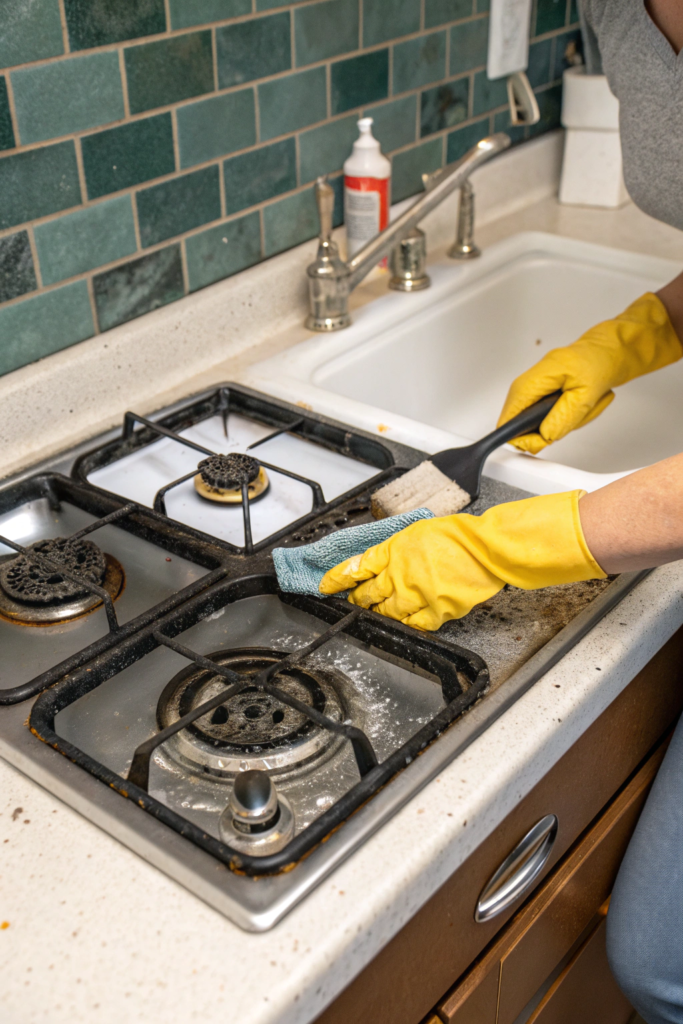
Most gas stove cleaning can be done with common household items.
Essential items:
- Dish soap
- Baking soda
- White vinegar
- Warm water
- Microfiber cloths
- Soft sponge
- Old toothbrush
Optional but useful:
- Degreaser spray
- Plastic scraper
- Paper towels
- Toothpick or safety pin
Avoid steel wool or harsh scrubbers, as they can damage stove surfaces.
Budget-Based Gas Stove Cleaning Guide
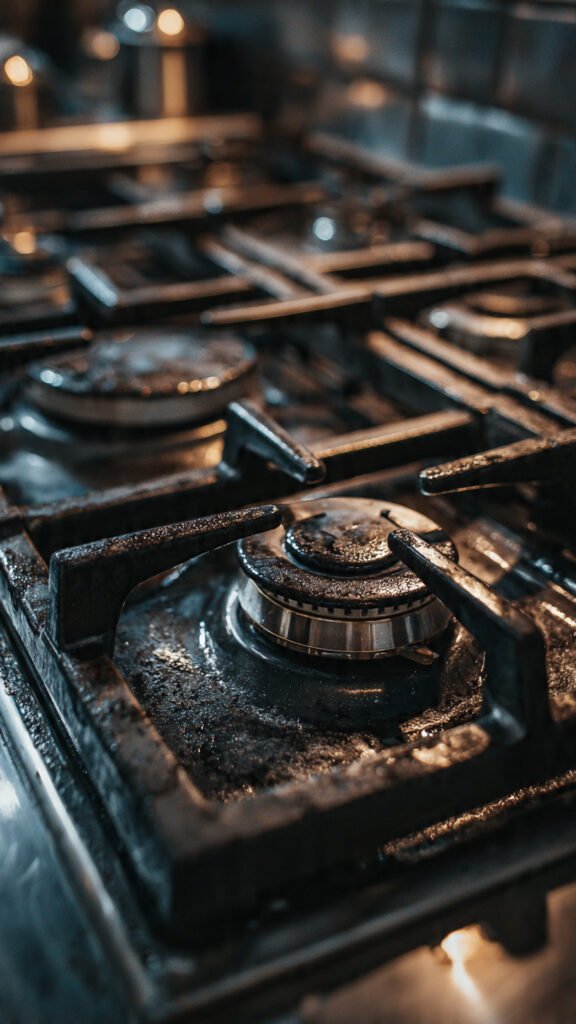
This guide helps you choose the best method based on your budget.
| Budget Level | Cleaning Products | Best For | Estimated Cost |
| Very low budget | Dish soap, baking soda, vinegar | Regular and deep cleaning | Minimal |
| Low budget | Add plastic scraper | Burned-on food | Low |
| Medium budget | Ceramic or degreaser cleaner | Heavy grease buildup | Moderate |
| Higher budget | Stove cleaning kit | Frequent deep cleaning | Higher |
Most households can deep clean effectively using the very low or low budget options.
Step 1: Remove and Soak Stove Grates
Stove grates collect the most grease and burned residue.
How to clean grates:
- Remove grates carefully
- Place them in a sink or basin
- Fill with hot water and dish soap
- Add 2–3 tablespoons of baking soda
- Let soak for 20–30 minutes
For heavy grease:
- Extend soaking time up to one hour
- Scrub gently with a sponge or brush
- Rinse thoroughly
- Dry completely to prevent rust
Step 2: Clean Burner Caps and Burner Heads
Burners need to be clean for proper gas flow.
Steps:
- Remove burner caps and heads
- Soak in warm soapy water
- Scrub gently with a toothbrush
- Rinse and dry fully
To unclog burner holes:
- Use a toothpick or safety pin
- Gently clear each port
- Do not enlarge the holes
Moisture left behind can prevent ignition, so drying is essential.
Step 3: Deep Clean the Stove Surface
Once burners are removed, the surface becomes easier to clean.
Surface cleaning method:
- Sprinkle baking soda over greasy areas
- Spray lightly with vinegar
- Let sit for 10–15 minutes
- Wipe gently with a sponge
- Use a plastic scraper if needed
This method breaks down grease without scratching enamel or stainless steel.
Step 4: Clean Control Knobs Safely
Knobs are touched frequently and collect grease and bacteria.
If knobs are removable:
- Pull them straight off
- Soak in warm soapy water
- Scrub gently
- Rinse and dry fully
If knobs are not removable:
- Wipe with a damp cloth
- Use a toothbrush around edges
- Dry carefully to avoid moisture entering controls
Step 5: Remove Stubborn Burned-On Grease
For tough stains that won’t come off easily:
Extra-strength method:
- Make a thick baking soda paste
- Apply directly to stains
- Cover with a damp cloth
- Let sit for 20 minutes
- Wipe clean gently
Repeat if necessary instead of scrubbing aggressively.
Step 6: Final Wipe and Polishing
A final wipe removes residue and improves appearance.
Final steps:
- Wipe entire stove with clean water
- Dry with a microfiber cloth
- Buff stainless steel surfaces in the direction of the grain
Drying prevents streaks and water spots.
Step 7: Reassemble and Test the Stove
Before turning the gas back on:
- Ensure all parts are completely dry
- Reinstall burner heads and caps correctly
- Place grates securely
Turn on each burner briefly to confirm an even, blue flame.
How Often Should You Deep Clean a Gas Stove
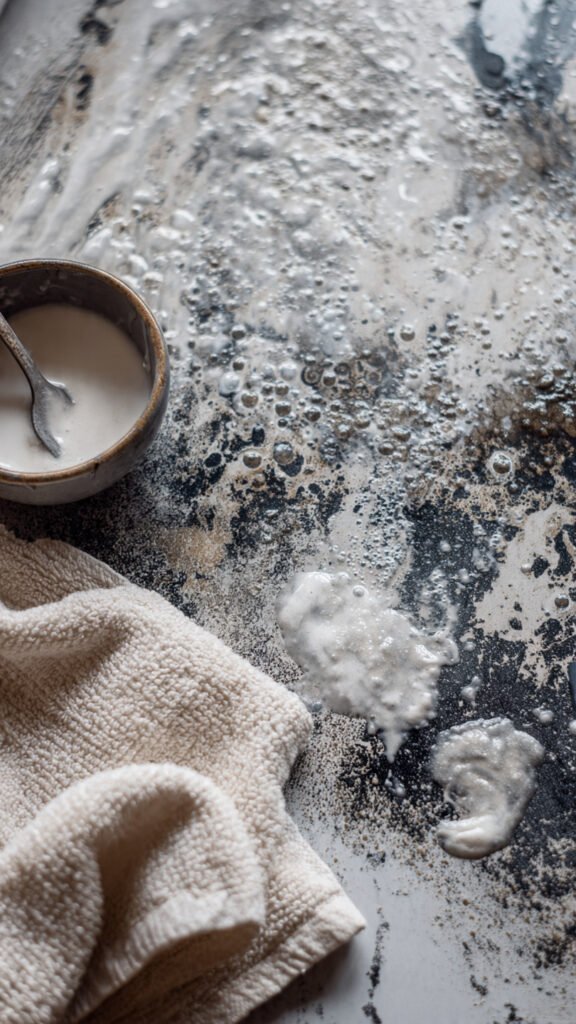
Recommended schedule:
- Light wipe after every use
- Weekly cleaning of grates
- Monthly deep cleaning
- Burner inspection every 2–3 months
Consistent care reduces heavy buildup.
Common Mistakes to Avoid
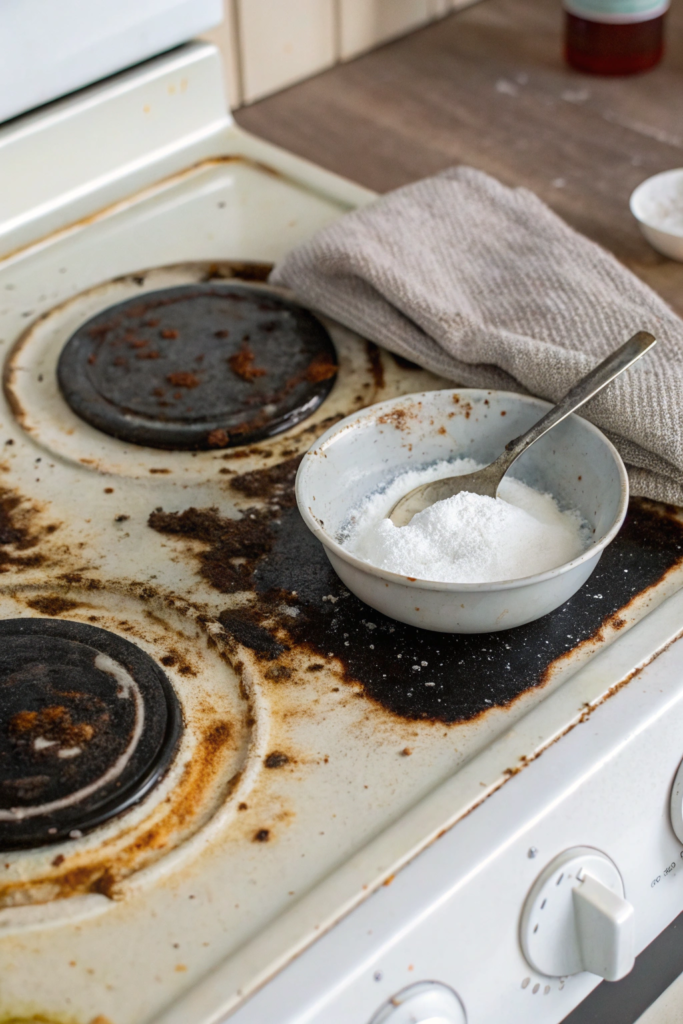
Avoid these frequent errors:
- Using steel wool or harsh scrubbers
- Cleaning while the stove is hot
- Letting burner parts stay damp
- Scraping with metal tools
- Ignoring clogged burner holes
These mistakes can damage the stove or affect safety.
Tips to Keep Your Gas Stove Clean Longer
Helpful habits:
- Wipe spills immediately after cooking
- Use splatter guards
- Avoid overfilling pots
- Clean small messes before they bake on
Prevention saves time and effort.
FAQ: Deep Cleaning a Gas Stove
Can I use vinegar on a gas stove?
Yes. Vinegar is safe for most stove surfaces and helps cut grease and remove odors. Avoid soaking gas components directly in vinegar.
How do I clean gas burners that won’t light?
Soak the burners in warm soapy water, clear clogged holes with a toothpick, and dry completely before reinstalling.
Is baking soda safe for gas stoves?
Yes. Baking soda is gentle and effective for grease and burned-on food when used with water or vinegar.
How long does deep cleaning a gas stove take?
Most deep cleaning sessions take 45 minutes to 1 hour, depending on buildup.
Can I use oven cleaner on a gas stove?
Only if the manufacturer allows it. Oven cleaners are strong and can damage finishes if misused.
Why is my gas flame orange after cleaning?
This usually means moisture remains in the burner holes. Allow burners to dry completely before use.
When to Call a Professional
Professional help may be needed if:
- Burners still do not ignite properly
- You smell gas after cleaning
- Flames remain uneven
- Parts are damaged or cracked
Gas safety should never be ignored.
Final Thoughts
Deep cleaning your gas stove does not have to be complicated or expensive. With simple household ingredients, a step-by-step approach, and regular maintenance, you can keep your stove clean, efficient, and safe.
By focusing on gentle cleaning methods, proper drying, and prevention habits, your gas stove will perform better and look cleaner for years. A little effort each month goes a long way in maintaining a healthy, functional kitchen.