
How to Remove Burnt Food From Pots and Pans Easily
You got distracted while cooking. The phone rang, the kids needed something, or you just forgot you had something on the stove. Now you have a pot with burnt food stuck to the bottom like cement.
You’ve tried scrubbing. Your arm hurts and the burnt food hasn’t budged. You’re thinking about throwing the pot away and buying a new one.
Don’t. You can save it. And you don’t need to scrub until your arm falls off. The secret is letting chemistry do the work for you.
Why Burnt Food Sticks So Hard
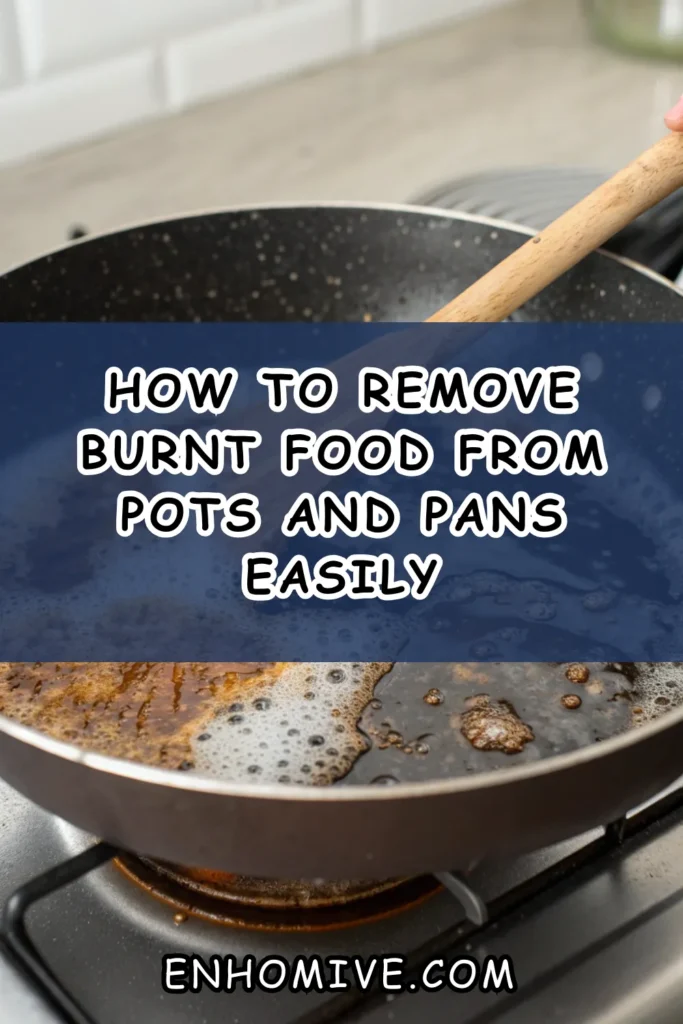
When food burns, it’s not just getting crispy. It’s actually bonding with the metal at a molecular level through a process called carbonization.
What happens when food burns:
- High heat breaks down food molecules
- Carbon bonds form with the metal surface
- The longer it burns, the stronger the bond
- It basically becomes part of the pan
That’s why scrubbing doesn’t work. You’re trying to break chemical bonds with muscle power. You need to dissolve the bonds instead.
The solution:
- Use ingredients that break down carbon bonds
- Let time and chemistry do the heavy lifting
- Scrubbing becomes easy after the bonds are broken
The Best Methods for Different Cookware
Different pans need different approaches. What works for stainless steel can damage non-stick. Here’s the breakdown.
Stainless steel:
- Can handle anything
- Use baking soda, vinegar, or Bar Keeper’s Friend
- Can scrub aggressively
- Won’t damage the surface
Non-stick pans:
- Must be gentle
- Use baking soda and water only
- No metal scrubbers ever
- No abrasive cleaners
Cast iron:
- Never use soap (it strips seasoning)
- Use coarse salt scrub
- Boiling water method
- Re-season after cleaning
Enamel-coated (Le Creuset, etc.):
- Delicate finish that chips
- Use baking soda paste
- No abrasive scrubbers
- Gentle soaking methods
Copper:
- Tarnishes easily
- Use specific copper cleaners
- Or baking soda and lemon
- Polish after cleaning
Aluminum:
- Can discolor with some cleaners
- Avoid acidic solutions
- Use baking soda
- Cream of tartar works well
Choose your method based on what your pan can handle.
Method 1: Baking Soda and Vinegar (Works on Almost Everything)
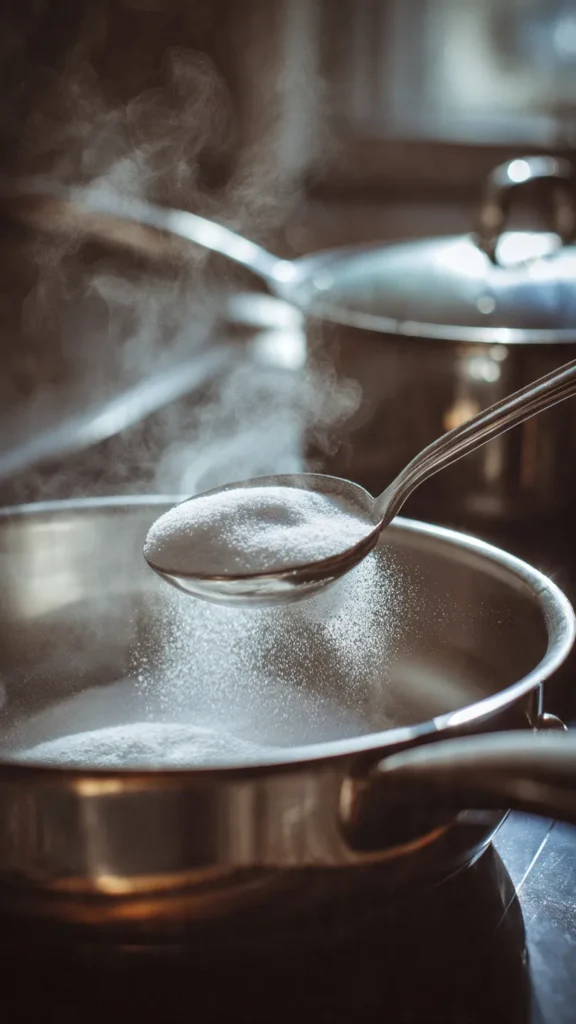
This is the most versatile method. It works on stainless steel, enamel, and even non-stick with gentle scrubbing.
What you need:
- Baking soda
- White vinegar
- Water
- Soft sponge or brush
The process:
Step 1: Cover the burnt area with water
Fill the pan with enough water to cover the burnt spots by at least an inch. Put it on the stove.
Step 2: Bring to a boil
Heat the water until it’s boiling. Let it boil for 5 minutes. This starts loosening the burnt food.
Step 3: Remove from heat and add baking soda
Turn off the heat. Add 2-3 tablespoons of baking soda to the hot water. It will fizz—that’s good.
Step 4: Let it sit
Leave it for at least 30 minutes. For really bad burns, let it sit overnight.
Step 5: Dump the water and add vinegar
Pour out the baking soda water. Sprinkle baking soda over the burnt area. Pour vinegar over it. It will fizz again.
Step 6: Scrub gently
Use a soft sponge to scrub. The burnt food should come off easily now. If some spots remain, make a paste of baking soda and water and scrub again.
Step 7: Rinse and repeat if needed
Rinse the pan. If there’s still burnt food, repeat the process. Stubborn burns might need 2-3 rounds.
Total time: 30 minutes to overnight, depending on severity.
Method 2: Boiling Water and Dish Soap (Fastest Method)
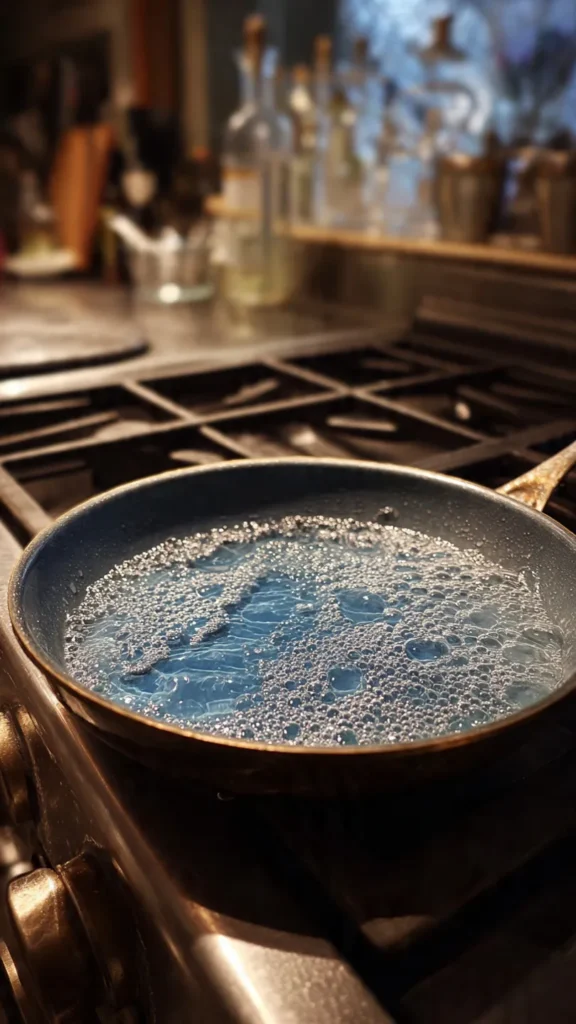
This is the quickest method for light to moderate burns. Works great on stainless steel.
What you need:
- Water
- Dish soap
- Wooden spoon or spatula
The process:
Step 1: Fill the pan with water and soap
Add enough water to cover the burnt area. Squirt in a good amount of dish soap—about 2 tablespoons.
Step 2: Bring to a boil
Put the pan on the stove and bring to a rolling boil.
Step 3: Simmer and scrape
Let it simmer for 10-15 minutes. As it boils, use a wooden spoon to gently scrape the burnt bits. They should start lifting off.
Step 4: Remove from heat and let cool
Turn off the heat and let the water cool for 10 minutes.
Step 5: Dump and scrub
Pour out the water. The burnt food should be very soft now. Scrub with a sponge to remove any remaining bits.
Step 6: Wash normally
Wash the pan with regular dish soap and water.
Total time: 25-30 minutes. Great for when you need the pan to clean quickly.
Method 3: Baking Soda Paste (For Non-Stick and Delicate Surfaces)
This gentle method won’t damage non-stick coatings or delicate enamel.
What you need:
- Baking soda
- Water
- Soft cloth or sponge
The process:
Step 1: Make a thick paste
Mix 3 parts baking soda with 1 part water. It should be like thick toothpaste.
Step 2: Apply generously
Spread the paste over all the burnt areas. Make it thick—at least 1/4 inch.
Step 3: Let it sit
Leave it for several hours or overnight. The longer it sits, the better it works.
Step 4: Add moisture if needed
If the paste dries out, spritz with water to re-wet it. Keep it moist.
Step 5: Scrub gently
Use a soft sponge to scrub the paste and burnt food away. On non-stick, be very gentle.
Step 6: Rinse and repeat
Rinse thoroughly. If any burnt spots remain, apply fresh paste and wait longer.
Total time: Several hours overnight, but zero effort.
Method 4: Cream of Tartar (For Aluminum and Stubborn Stains)
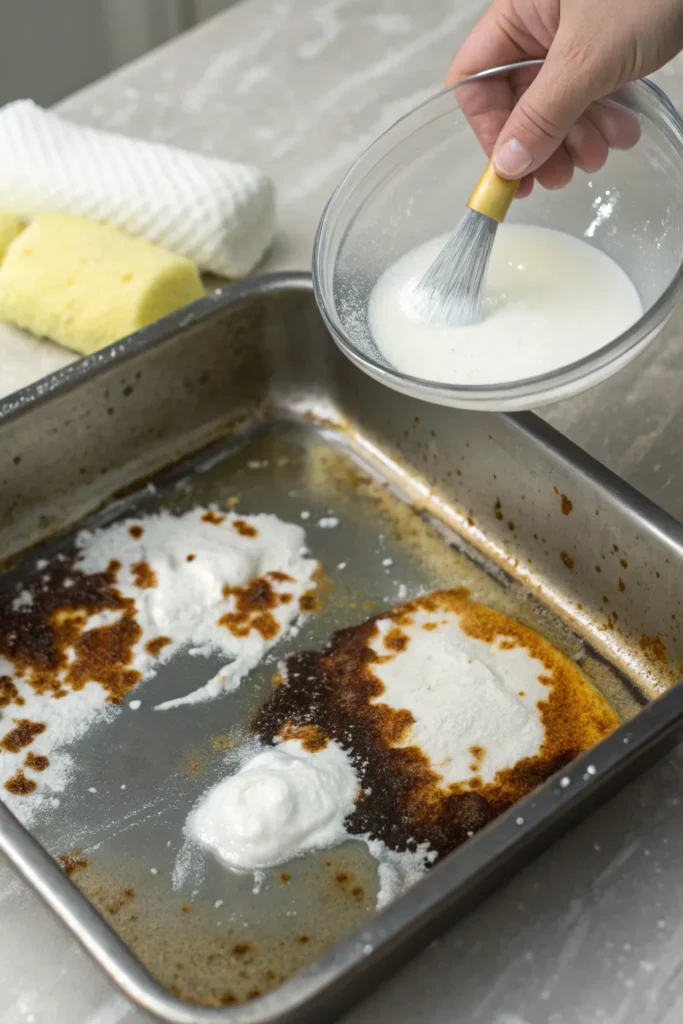
Cream of tartar is mildly acidic and great for aluminum pans that baking soda might discolor.
What you need:
- Cream of tartar
- Water
- Soft sponge
The process:
Step 1: Make a paste
Mix cream of tartar with a little water to make a paste.
Step 2: Apply to burnt areas
Spread it on the burnt spots.
Step 3: Let sit 15-30 minutes
The acid needs time to break down the burnt food.
Step 4: Scrub and rinse
Scrub with a soft sponge. Rinse well.
Works wonderfully on aluminum without causing discoloration.
Method 5: Salt Scrub (For Cast Iron)
Never use soap on cast iron—it strips the seasoning. Salt is your friend.
What you need:
- Coarse salt (kosher or sea salt)
- Oil (vegetable or canola)
- Paper towels or cloth
The process:
Step 1: Heat the pan
Put the dry pan on medium heat for 2-3 minutes. This makes burnt food easier to remove.
Step 2: Add salt
Pour about 1/4 cup of coarse salt into the warm pan.
Step 3: Scrub with oil
Add a tablespoon of oil. Use a folded paper towel to scrub the salt around. The salt acts as an abrasive.
Step 4: Scrub the burnt areas
Really work the salt into the burnt spots. The combination of salt abrasion and oil helps lift the burnt food.
Step 5: Rinse with hot water only
Dump out the salt. Rinse the pan with hot water only—no soap.
Step 6: Dry and re-season
Dry immediately and completely. Rub a thin layer of oil on the surface to maintain seasoning.
Works perfectly without damaging the cast iron seasoning.
Method 6: Dryer Sheet Trick (Surprisingly Effective)
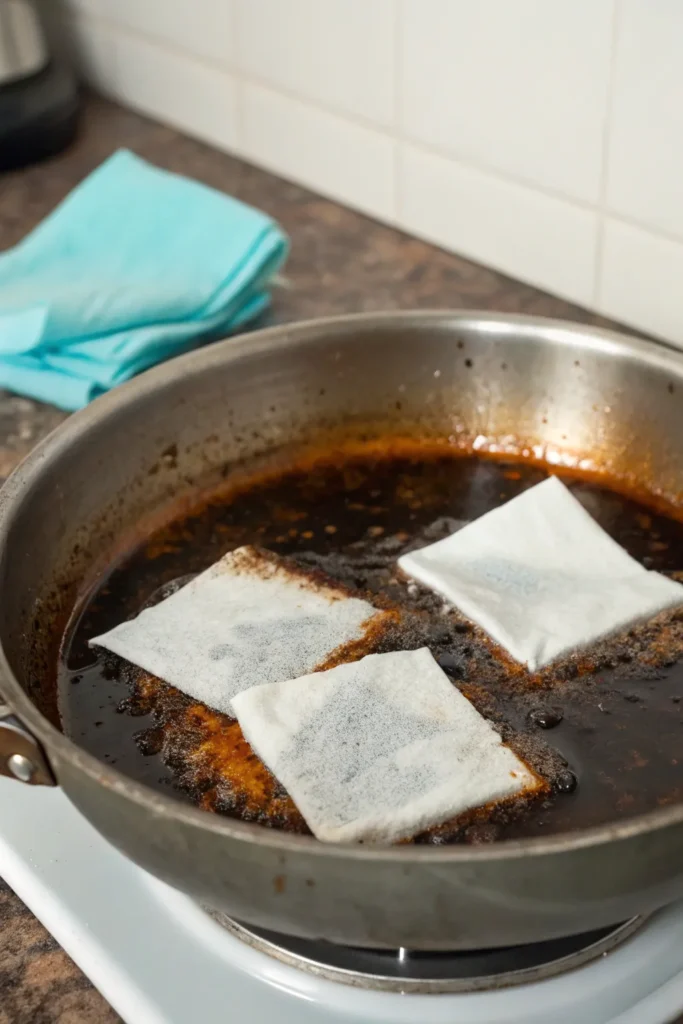
This sounds crazy but it works. The conditioning agents in dryer sheets help loosen burnt food.
What you need:
- 1-2 dryer sheets
- Warm water
- Dish soap
The process:
Step 1: Fill pan with warm water
Add enough water to cover the burnt areas.
Step 2: Add dryer sheet and soap
Drop in 1-2 dryer sheets. Add a squirt of dish soap.
Step 3: Let soak
Let it sit for at least 2 hours, preferably overnight.
Step 4: Remove dryer sheet and scrub
Take out the dryer sheets. Scrub with a sponge. The burnt food should come off easily.
Step 5: Wash thoroughly
Wash the pan well with regular dish soap to remove any dryer sheet residue.
This is great for when you want to walk away and let it work overnight.
Method 7: Bar Keeper’s Friend (For Really Stubborn Burns)
This is the heavy artillery. It’s a powder cleanser that’s amazing on burnt stainless steel.
What you need:
- Bar Keeper’s Friend powder
- Water
- Soft sponge or cloth
The process:
Step 1: Wet the burnt area
Sprinkle a little water on the burnt spots.
Step 2: Sprinkle the powder
Shake Bar Keeper’s Friend over the burnt areas.
Step 3: Make a paste
Use a damp sponge to work it into a paste. Let it sit for 1 minute—no longer.
Step 4: Scrub
Scrub in circular motions. You’ll see the burnt food lifting.
Step 5: Rinse immediately
Rinse very thoroughly. Don’t let it sit too long or it can damage the finish.
Step 6: Repeat if needed
For severe burns, you may need to repeat 2-3 times.
Only use on stainless steel. Don’t use on non-stick, aluminum, or cast iron.
Method 8: Dishwasher Tablet Method
Dishwasher tablets contain powerful cleaning enzymes. They work great on burnt pans.
What you need:
- 1 dishwasher tablet
- Hot water
- Sponge
The process:
Step 1: Cover burnt area with hot water
Fill the pan so the burnt spots are submerged.
Step 2: Drop in a dishwasher tablet
Add one tablet. It will start dissolving and fizzing.
Step 3: Heat gently
Put the pan on low heat and let it simmer for 10 minutes. Don’t boil vigorously.
Step 4: Remove from heat
Turn off the heat and let it cool for 10 minutes.
Step 5: Use the tablet to scrub
As it cools, use the partially dissolved tablet like a scrubber. Scrub the burnt areas.
Step 6: Dump, scrub, and wash
Pour out the water. Give it a final scrub with a sponge. Wash normally.
Very effective and satisfying to watch the tablet work.
What NOT to Do
Some methods seem like they should work but actually damage your pans.
Don’t:
Use steel wool on non-stick pans
- Destroys the coating permanently
- Creates scratches where food sticks
- Ruins the pan
Soak cast iron for hours
- Causes rust
- Strips the seasoning
- Creates more problems
Use oven cleaner on cookware
- Way too harsh
- Toxic chemicals
- Can damage all pan types
Put hot pans in cold water
- Causes warping
- Can crack enamel
- Ruins non-stick coating
Use metal scrapers aggressively
- Scratches most surfaces
- Damages protective coatings
- Makes future sticking worse
Ignore manufacturer instructions
- Some pans have specific care requirements
- Warranty might be voided
- Could cause irreversible damage
When in doubt, start gentle and increase intensity only if needed.
Speed Tips for Different Burn Levels
Light burns (just starting to stick):
- Boiling water and dish soap: 15 minutes
- Should come right off
- Don’t need heavy-duty methods
Medium burns (dark brown, won’t wipe off):
- Baking soda and vinegar: 30-60 minutes
- May need light scrubbing
- Usually comes off in one treatment
Heavy burns (black, crusty, thick layer):
- Overnight baking soda paste
- Or multiple rounds of boiling with baking soda
- May need 2-3 treatments
- Be patient—don’t scrub too hard
Extreme burns (food completely carbonized):
- Combination method: boil, then paste, then scrub
- Bar Keeper’s Friend for stainless steel
- May need several days of repeated treatments
- Some pans might be beyond saving
Preventing Burnt Food in the Future
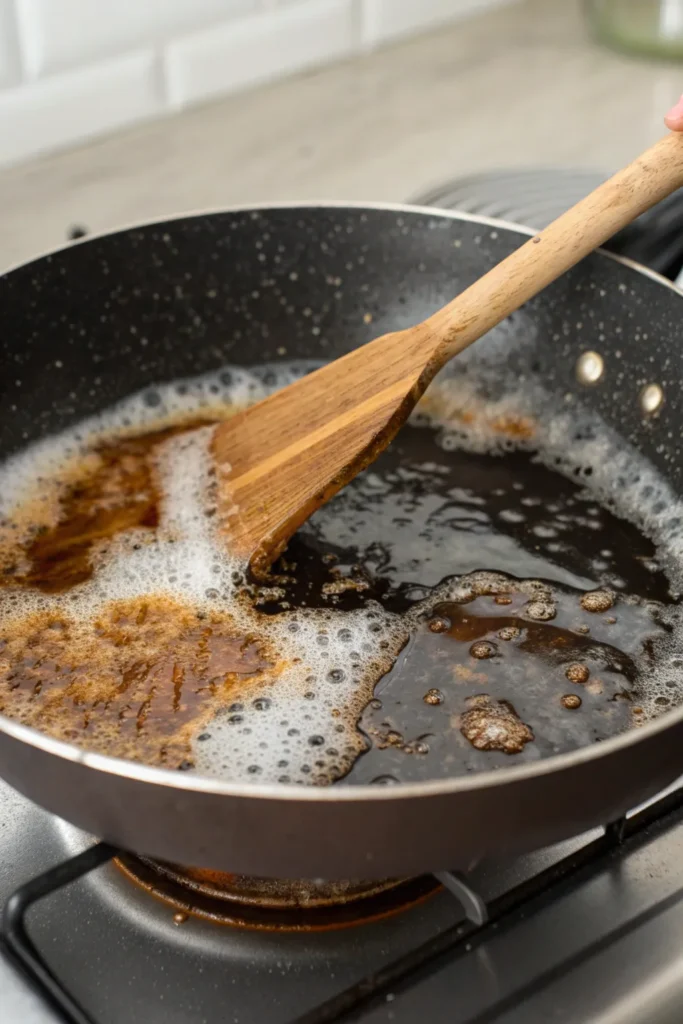
The best burnt pan is the one that never happens.
Prevention tips:
Watch your heat:
- Most cooking doesn’t need high heat
- Medium or medium-low works for most dishes
- High heat burns food faster
Use enough fat:
- Oil or butter prevents sticking
- Creates a barrier between food and pan
- Makes cleanup easier
Don’t walk away:
- Set a timer
- Stay in the kitchen
- Check food regularly
Use the right pan for the job:
- Non-stick for eggs and delicate items
- Stainless steel for searing
- Cast iron for even heat
Deglaze regularly:
- Add liquid to loosen fond (stuck bits)
- Creates delicious sauce
- Prevents burning
Clean pans immediately:
- Don’t let burnt food sit
- Easier to clean when warm
- Prevents harder bonding
When to Give Up on a Pan
Sometimes a pan is truly beyond saving.
Signs it’s time to let go:
Non-stick coating is flaking:
- Health hazard
- Won’t cook properly
- Can’t be fixed
Pan is warped:
- Won’t sit flat on burner
- Heats unevenly
- Will keep burning food
Deep pitting or corrosion:
- Metal is compromised
- Will keep having problems
- Not safe for cooking
Enamel is chipped badly:
- Can’t be repaired
- Exposed metal will rust
- Replacement is needed
But for most burnt food situations, the pan can be saved with the right method and patience.
The Bottom Line
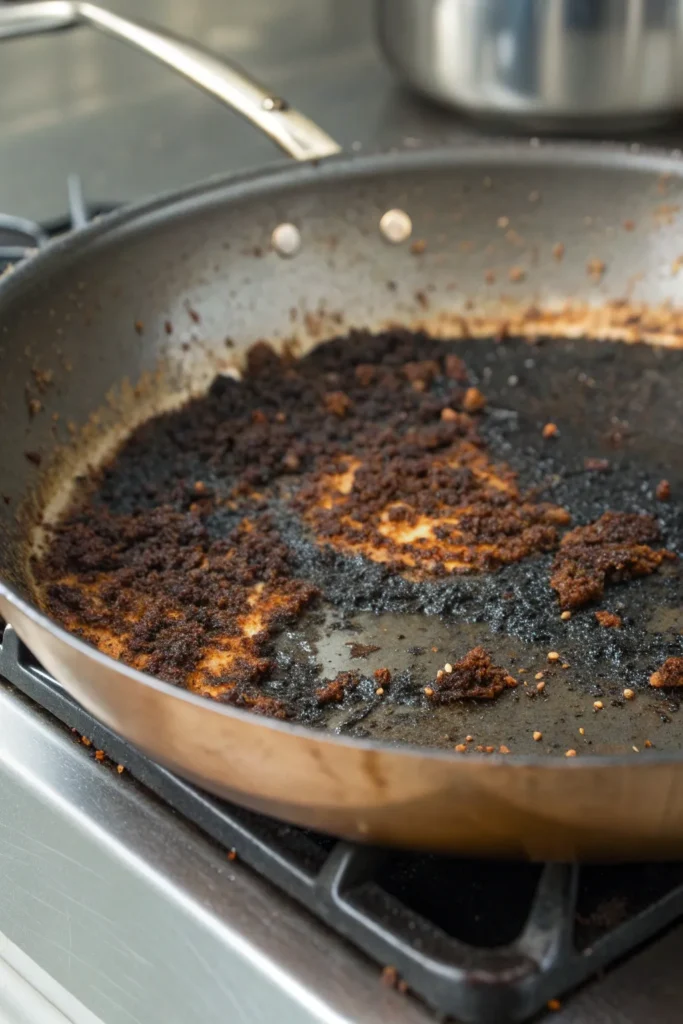
Burnt food doesn’t mean your pan is ruined. You just need the right approach for your pan type.
Quick reference guide:
Stainless steel:
- Baking soda and vinegar
- Bar Keeper’s Friend for tough burns
- Can scrub aggressively
Non-stick:
- Baking soda paste only
- Very gentle scrubbing
- Never metal tools
Cast iron:
- Salt scrub with oil
- No soap
- Re-season after
Enamel:
- Baking soda paste
- Very gentle methods
- Avoid temperature shock
Aluminum:
- Cream of tartar
- Avoid harsh acids
- Gentle scrubbing
The secret to success:
- Let chemistry do the work
- Don’t scrub first—treat first
- Be patient
- Multiple treatments for bad burns
What works:
- Baking soda (universal)
- Vinegar (cuts through carbon)
- Boiling water (loosens bonds)
- Time (the real secret)
What doesn’t work:
- Pure muscle power
- Abrasive scrubbers on delicate pans
- Getting frustrated and scrubbing harder
- Giving up too soon
Try it now:
- Identify your pan type
- Choose the right method
- Set it up to work
- Walk away and let chemistry happen
- Come back to easy cleanup
That burnt pot you’ve been avoiding? It’s not ruined. Pick a method from this guide, set a timer, and give it a try.
In an hour (or overnight), you’ll have a clean pan and realize you almost threw away something perfectly salvageable.
Stop scrubbing. Start soaking. Let science save your cookware.