
15 Japanese Courtyard Garden Ideas
Japanese gardens represent centuries of refined aesthetic philosophy, transforming even modest courtyards into spaces of profound tranquility and beauty.
These gardens don’t merely arrange plants and stones; they create living poetry that engages all the senses while inviting contemplation.
Whether you’re working with a small urban courtyard or a more generous space, these fifteen ideas will help you capture the essence of Japanese garden design, where every element serves a purpose and nothing is superfluous.
1. Design a Tsukubai Water Basin
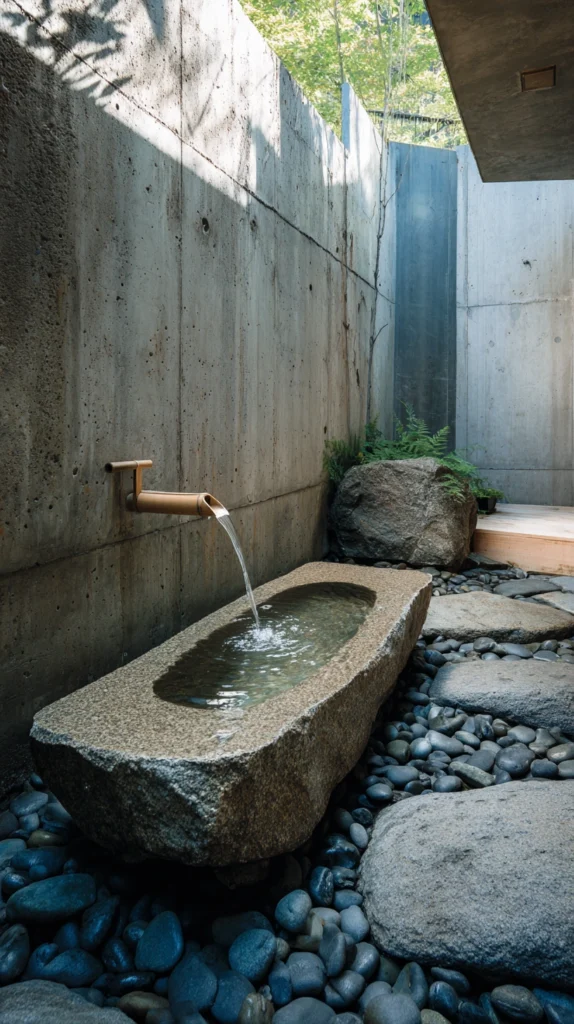
The tsukubai, traditionally used for ritual purification before tea ceremonies, brings the soothing presence of water into intimate courtyard spaces. Position a stone basin low to the ground, requiring visitors to bow humbly as they approach. Surround it with carefully selected river rocks and perhaps a bamboo ladle resting across the basin’s edge.
Water trickles gently from a bamboo spout or hidden pipe, creating subtle sound that masks urban noise while encouraging mindfulness. The constant flow represents life’s impermanence, a key concept in Japanese aesthetics. Place the tsukubai near the courtyard entrance or along a path where its presence feels discovered rather than announced, allowing the sound of water to draw people forward.
2. Create a Karesansui Dry Garden
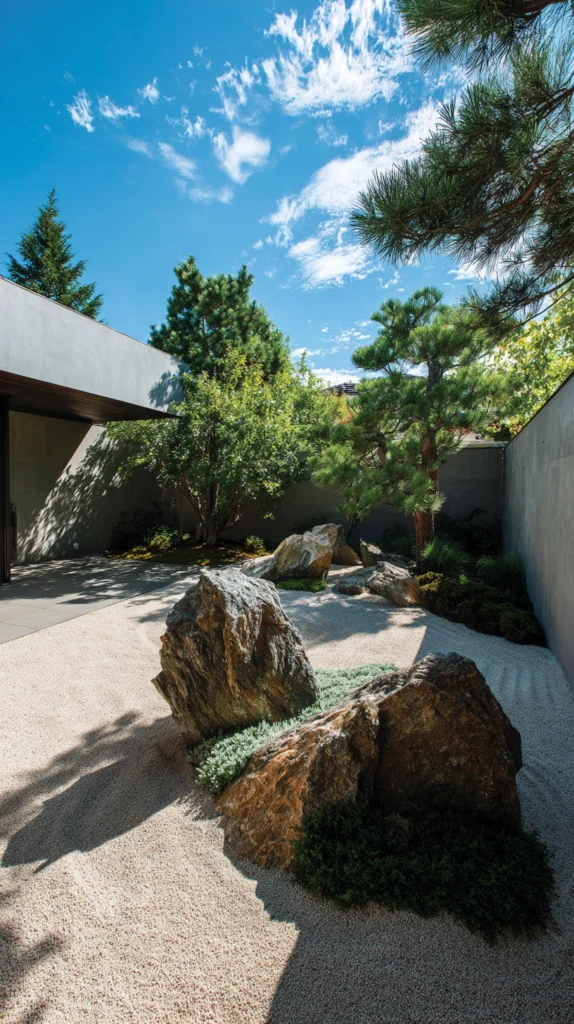
When water features prove impractical or you’re seeking a more contemplative aesthetic, the karesansui or dry garden offers profound beauty through carefully raked gravel representing water. Spread white or light grey gravel across a section of your courtyard, then rake it into patterns suggesting ripples, waves, or flowing currents.
Position carefully selected rocks to represent islands or mountains emerging from this metaphorical sea. The act of raking becomes meditative practice, and the patterns themselves change with light throughout the day. This approach works exceptionally well in smaller courtyards where actual water features might overwhelm the space, and it requires minimal maintenance compared to planted areas.
3. Establish a Moss Garden
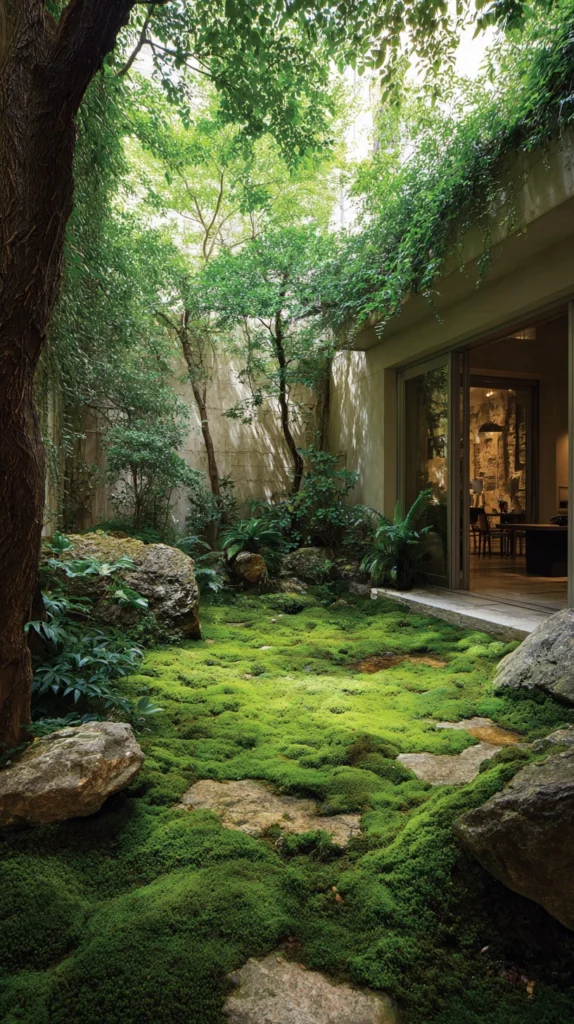
Moss brings ancient tranquility to courtyard gardens, thriving in shaded areas where other plants struggle. Prepare the soil carefully, ensuring proper acidity and moisture retention, then introduce various moss species to create a tapestry of subtle greens and textures.
Moss gardens require patience as they establish, but mature specimens offer year-round beauty that improves with age. Use moss to carpet the ground beneath stepping stones, surround the bases of lanterns, or cover rocks and walls with living velvet. The effect transports visitors to mountain temples or ancient forests, evoking timelessness within your contemporary courtyard. Moss thrives in humid climates and shaded conditions, making it ideal for courtyards bounded by tall buildings or walls.
4. Install a Shishi-Odoshi Bamboo Fountain
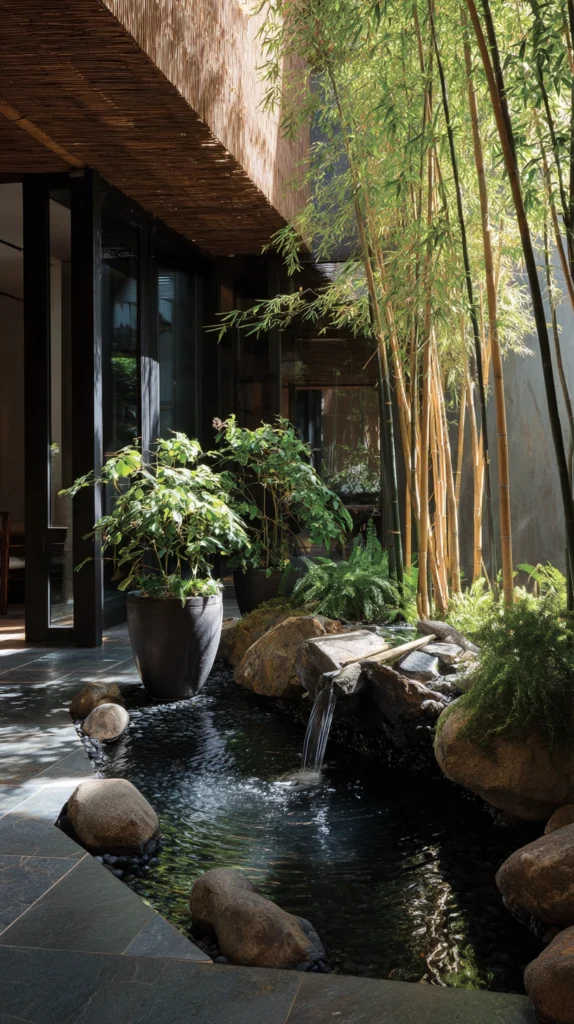
The shishi-odoshi, or deer-scarer, originally developed to protect crops, now serves as a meditative focal point producing rhythmic sounds that structure time and space. Water flows slowly into a balanced bamboo tube that tips forward when full, emptying with a distinctive clack as it strikes a rock. The irregular rhythm creates anticipation and marks moments without the aggressive insistence of mechanical clocks.
Position your shishi-odoshi near seating areas where its sound enhances contemplation, or place it along a pathway where the periodic clack punctuates your journey through the garden. The bamboo’s natural patina develops beautifully over time, and the fountain requires only simple recirculating pump systems to maintain its perpetual motion.
5. Design Carefully Placed Stepping Stones
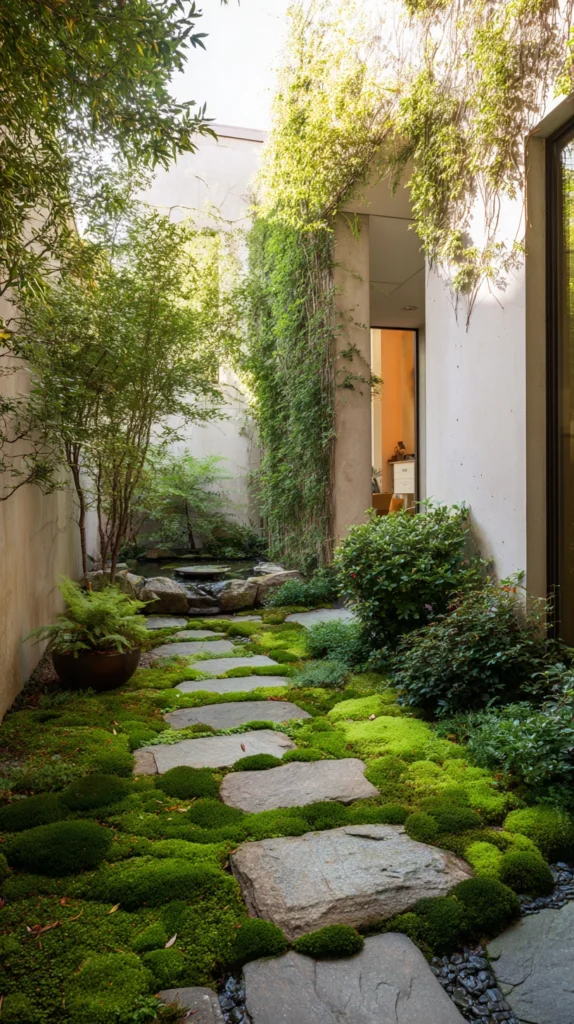
Japanese stepping stones, or tobi-ishi, do more than provide dry passage; they choreograph movement through the garden, controlling pace and directing attention. Select natural stones with interesting shapes and textures, placing them with intentional spacing that requires focused steps, slowing visitors and encouraging mindfulness.
The stones shouldn’t align in straight paths but rather meander naturally, creating journey rather than mere transit. Space them slightly farther apart at viewpoints where you want people to pause, and closer together through transitional areas. The irregular placement prevents rushing while the gaps between stones, whether filled with moss, gravel, or ground covers, become important design elements themselves.
6. Create a Borrowed Scenery View
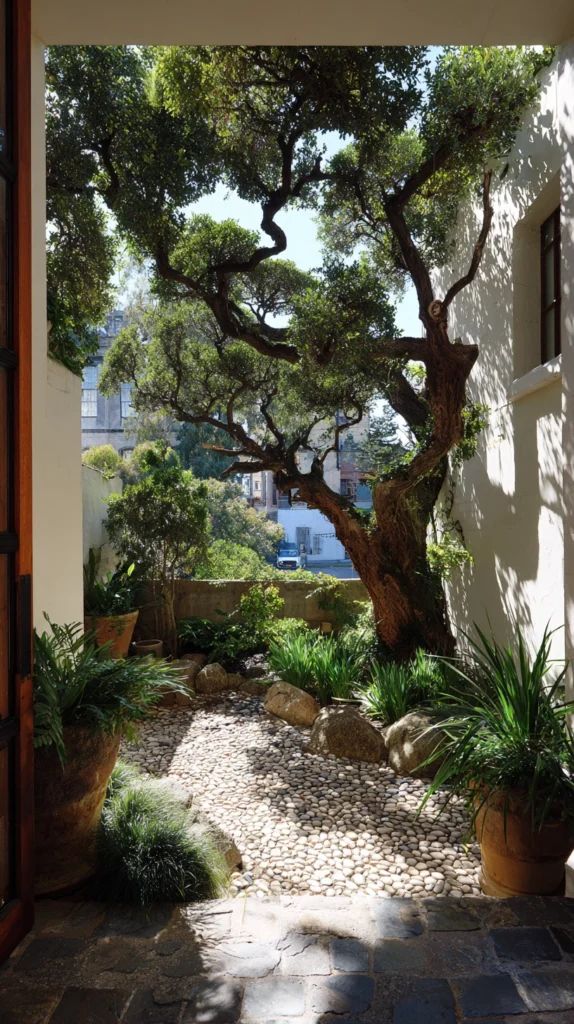
Shakkei, or borrowed scenery, incorporates distant views into your courtyard’s composition, blurring boundaries between contained garden and broader landscape. Frame views of nearby trees, distant mountains, or even architectural elements beyond your walls, using careful plant placement and selective pruning to direct sight lines.
A well-placed tree in your courtyard can echo the shape of distant hills, while strategic openings in screening plants create windows to borrowed elements. This technique makes small courtyards feel expansive by connecting them to larger landscapes, whether natural or urban. The borrowed view changes with seasons and weather, ensuring your garden maintains dynamic interest throughout the year.
7. Incorporate a Stone Lantern
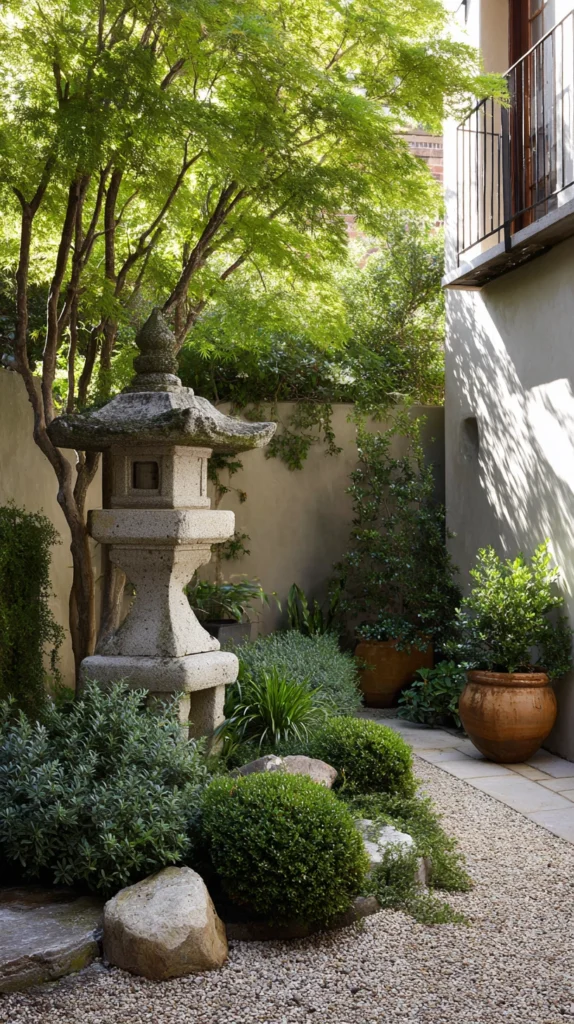
Stone lanterns, or ishidoro, originally lit pathways to tea houses but now serve primarily as sculptural elements embodying tradition and craftsmanship. Position a lantern near water features, along pathways, or at significant viewpoints within your courtyard. Traditional styles include the tall tachi-gata for larger spaces and the low oribe-gata near water basins. The lantern’s weathered stone develops character over time, and its placement should feel inevitable rather than arbitrary, as though it has always stood there.
While functional lighting remains optional, the lantern’s form provides vertical interest and cultural resonance. Consider how shadows will play across its carved details during different times of day.
8. Establish a Bamboo Grove
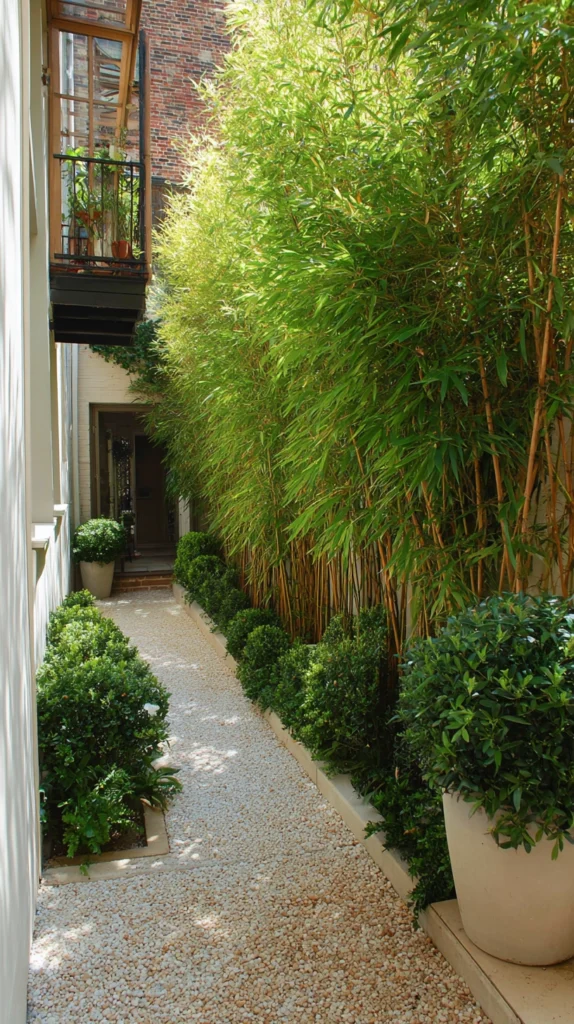
Nothing evokes Japanese gardens more immediately than bamboo’s distinctive rustle and vertical grace. Plant a grove of running or clumping bamboo varieties, depending on your need for containment, creating a living screen that sways with breezes while producing subtle, soothing sounds. Bamboo works beautifully as courtyard boundaries, providing privacy while maintaining an airy quality that solid walls cannot match.
The interplay of light and shadow through bamboo culms creates shifting patterns on walls and ground, adding temporal dimension to static spaces. Choose varieties appropriate to your climate and install proper root barriers if using running species, as bamboo’s vigor can quickly exceed boundaries without management.
9. Design a Pine Pruning Showcase
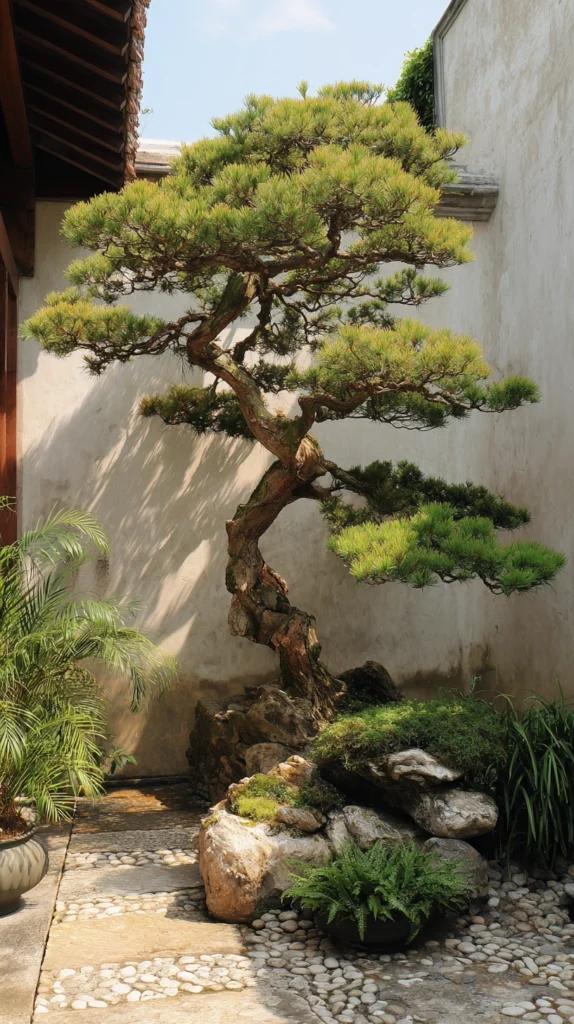
The Japanese black pine, shaped through careful pruning into cloud-like forms, represents the garden arts’ pinnacle. Training a pine requires years of patient work, but the sculptural results transform these trees into living art that improves with age. Position your pine as a focal point visible from primary viewing areas, allowing its architectural form to anchor the composition.
The pruning style, called niwaki, removes lower branches and thins the canopy into distinct layers that float like clouds, revealing the trunk’s structure while creating negative space as important as the foliage itself. Even young pines can begin this training, and the practice becomes a meditative ritual connecting you to centuries of tradition.
10. Create a Fern and Shade Garden
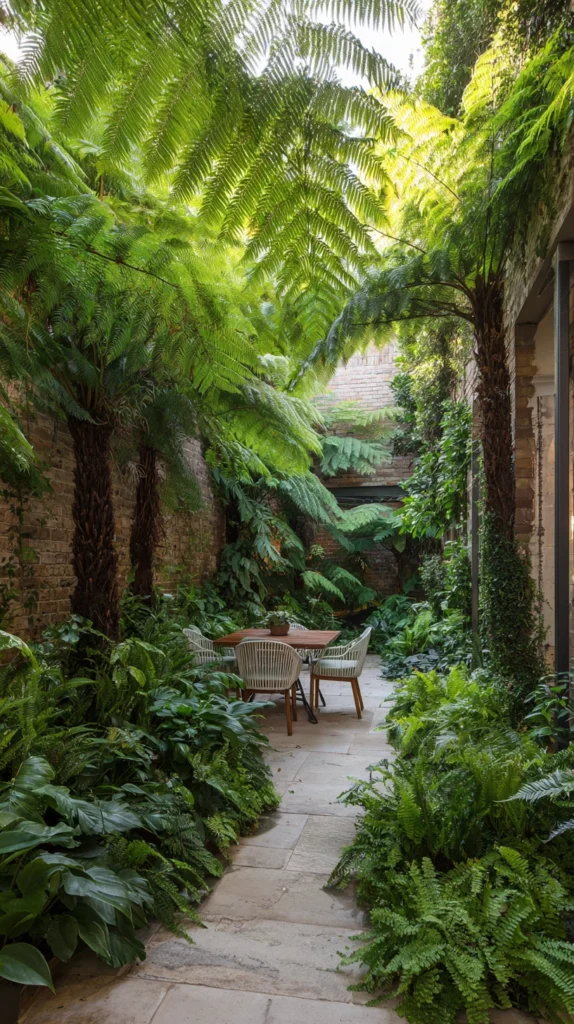
Japanese courtyards often celebrate shade rather than fighting it, and ferns thrive in these conditions while offering delicate textures that contrast beautifully with stones and architectural elements. Plant various fern species beneath trees or along shaded walls, mixing different frond shapes and sizes to create layered interest.
Combine them with hostas, astilbes, and other shade lovers that complement rather than compete. The resulting garden feels cool and peaceful even during hot months, offering retreat and respiration. Ferns’ unfurling fronds mark spring’s arrival with particular grace, while many species maintain beauty well into winter, especially in milder climates.
11. Install a Moon-Viewing Platform
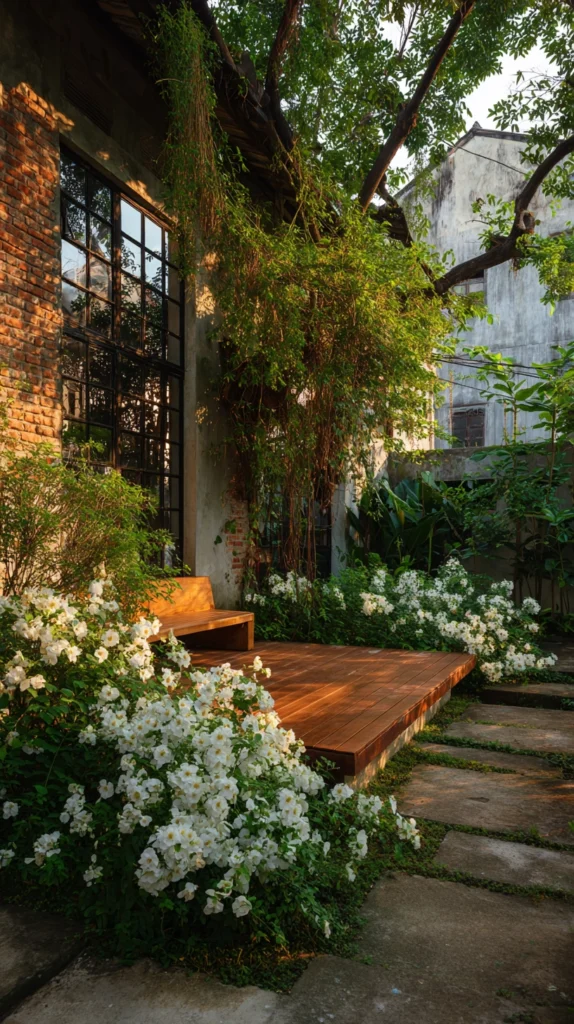
The Japanese tradition of tsukimi, or moon viewing, celebrates autumn’s harvest moon through dedicated viewing areas. Create a simple platform or deck area with unobstructed sky views, positioning it to face southeast where the full moon rises. Furnish it minimally with low seating or cushions, perhaps adding a small table for tea service.
Surround the platform with plants that look beautiful by moonlight, such as white-flowering species or plants with silvery foliage that seems to glow. The platform serves dual purposes, providing daytime seating while offering a designated space for contemplative evening moments when moonlight transforms the familiar courtyard into something mysterious and profound.
12. Design a Courtyard Tea Garden
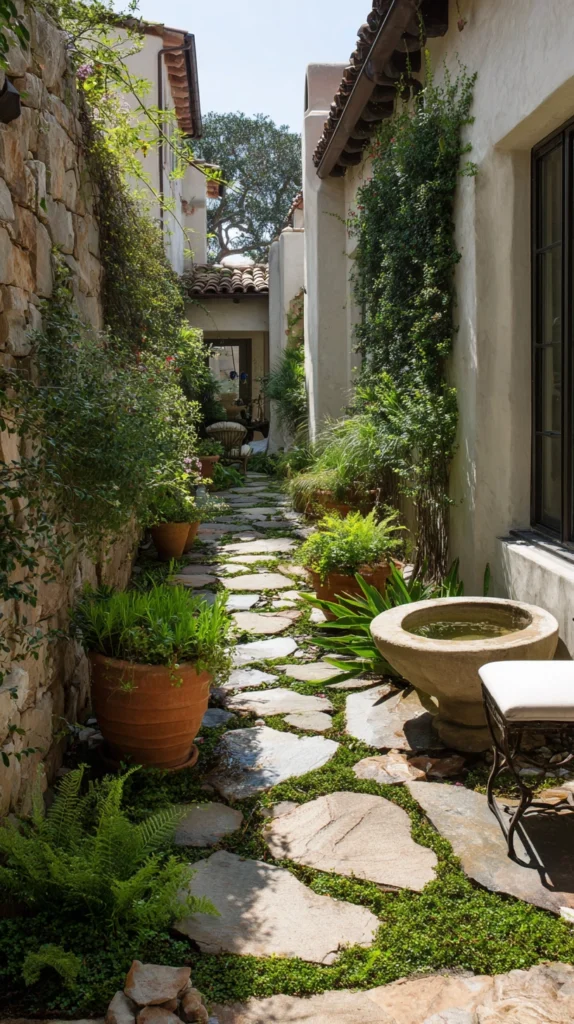
The roji, or tea garden, creates a transition between everyday world and the tea ceremony’s ritualized space. Even without an actual tea house, you can capture this aesthetic by designing a pathway leading through your courtyard from entrance to a seating area.
Use stepping stones to slow the pace, add a tsukubai for symbolic purification, and plant the path with subtle, natural plantings that avoid showy flowers. The goal involves gradually shifting visitors’ mindset from external concerns toward present-moment awareness.
Keep plantings restrained and natural, emphasizing greens and textures over bright colors. This approach works particularly well in entrance courtyards where the journey from street to home benefits from transitional space.
13. Incorporate Pruned Azaleas
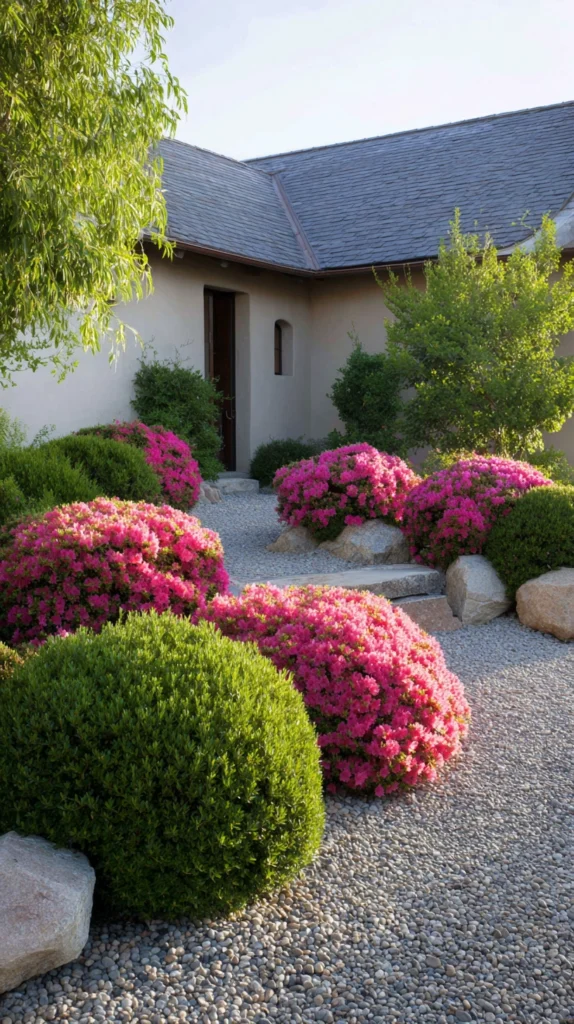
Japanese azaleas, pruned into rounded, cloud-like forms called karikomi, provide structure and seasonal interest while maintaining the garden’s contemplative mood.
These evergreen shrubs offer glossy foliage year-round, then explode with flowers in spring, creating one of the garden’s few moments of exuberant color. Prune them into flowing, organic shapes that echo natural landforms or clouds, avoiding rigid geometric forms.
Position them in groups of odd numbers, allowing them to flow together into unified masses that read as single sculptural elements. The contrast between their soft, rounded forms and the angular stones nearby creates visual tension that enlivens the composition.
14. Create a Courtyard Zen Garden
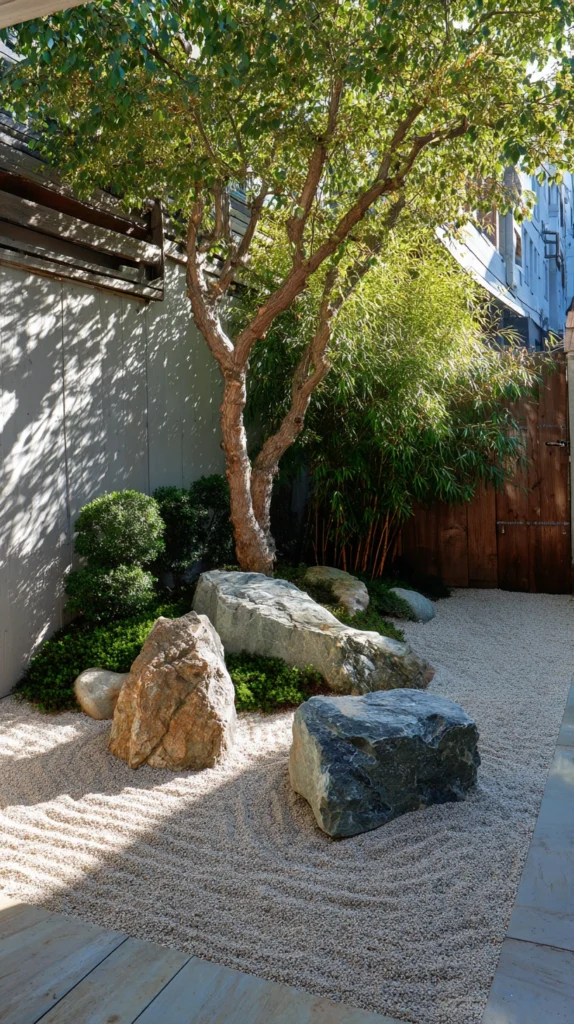
The contemplative Zen garden reduces elements to essential minimums, creating space for meditation and reflection. Cover the courtyard floor with raked gravel, position a few carefully selected rocks, and eliminate almost everything else.
The rocks should suggest natural formations, arranged to create dynamic tension and implied movement despite their obvious permanence. Rake the gravel into patterns that flow around rocks like water around islands, changing the patterns periodically to refresh the space and practice mindfulness.
A single well-placed tree, perhaps a Japanese maple or pine, might provide the only plant material. This approach demands excellent proportions and spatial relationships, as there’s nowhere to hide mistakes in such spare compositions.
15. Establish Seasonal Interest Plants
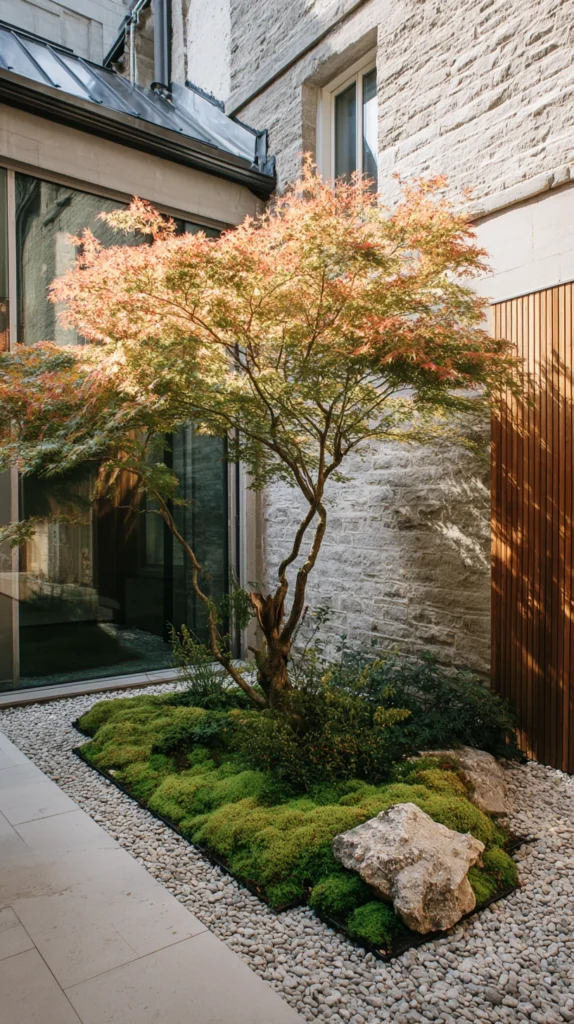
While Japanese gardens emphasize restraint, they also celebrate seasonal changes as reminders of time’s passage and life’s impermanence. Plant Japanese maples for spectacular autumn color, cherry trees for spring blossoms, and evergreens for winter structure. Include autumn-flowering plants like Japanese anemones or grasses that catch low winter light.
The key involves selecting plants whose seasonal transformations feel natural rather than garish, avoiding hybrids bred for extreme colors or forms. Each season should bring subtle changes that reward regular observation, encouraging daily engagement with your courtyard as a living calendar marking the year’s progression. This seasonal awareness, called mono no aware, represents a fundamental aspect of Japanese aesthetic appreciation.