
15 Kitchen Lighting Ideas to Brighten and Enhance Your Space
Kitchen lighting does far more than simply illuminate your countertops. It shapes how the space looks, feels, and functions throughout the day. The right lighting can make a small kitchen feel open, highlight beautiful finishes, and improve everyday tasks like cooking and cleaning.
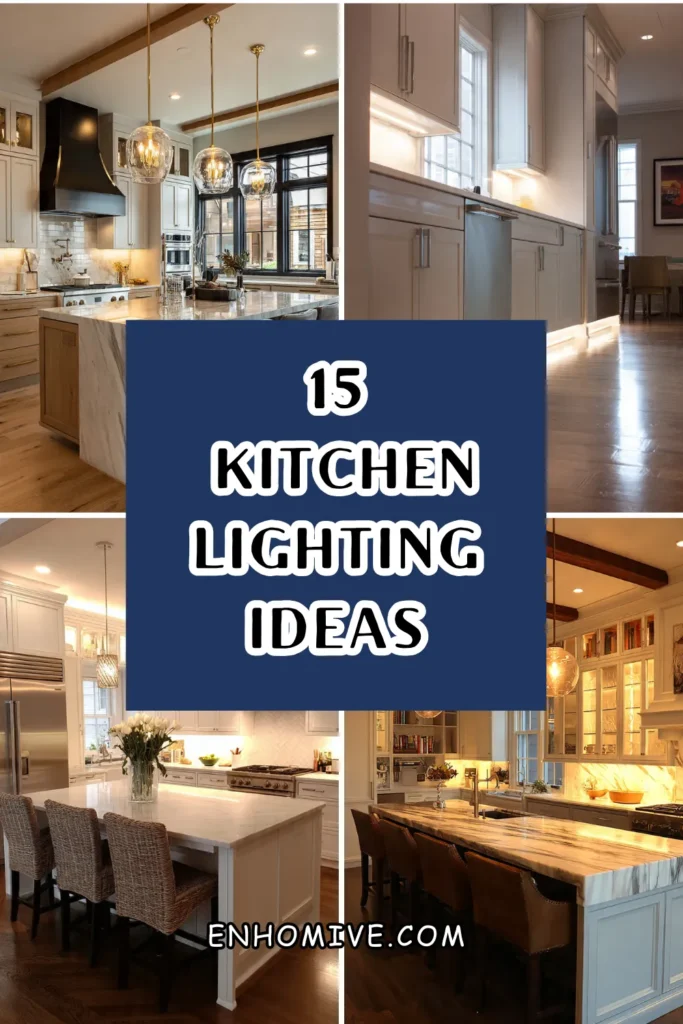
A well-lit kitchen balances practicality with atmosphere, combining layers of light that work together seamlessly. These kitchen lighting ideas focus on brightening your space while enhancing its style, comfort, and usability.
1. Layered Lighting for a Well-Balanced Kitchen
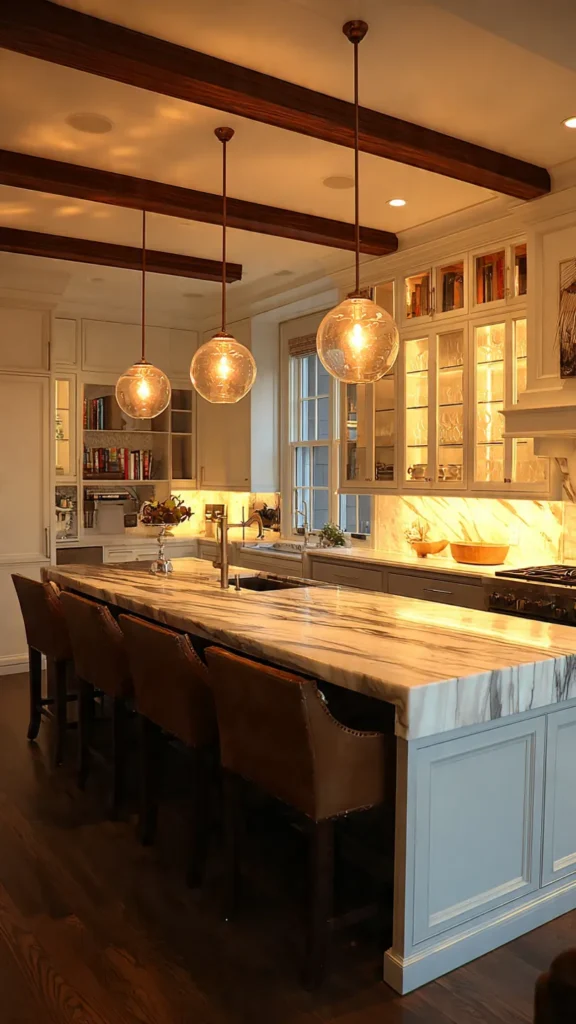
The most effective kitchens use layered lighting rather than relying on a single fixture. This means combining ambient lighting for overall brightness, task lighting for work areas, and accent lighting for visual interest. Ambient lighting often comes from ceiling fixtures or recessed lights, while task lighting focuses on countertops, sinks, and prep areas. Accent lighting highlights architectural features or décor. Together, these layers create a kitchen that feels bright, functional, and welcoming at all times.
2. Recessed Ceiling Lights for Clean, Even Illumination
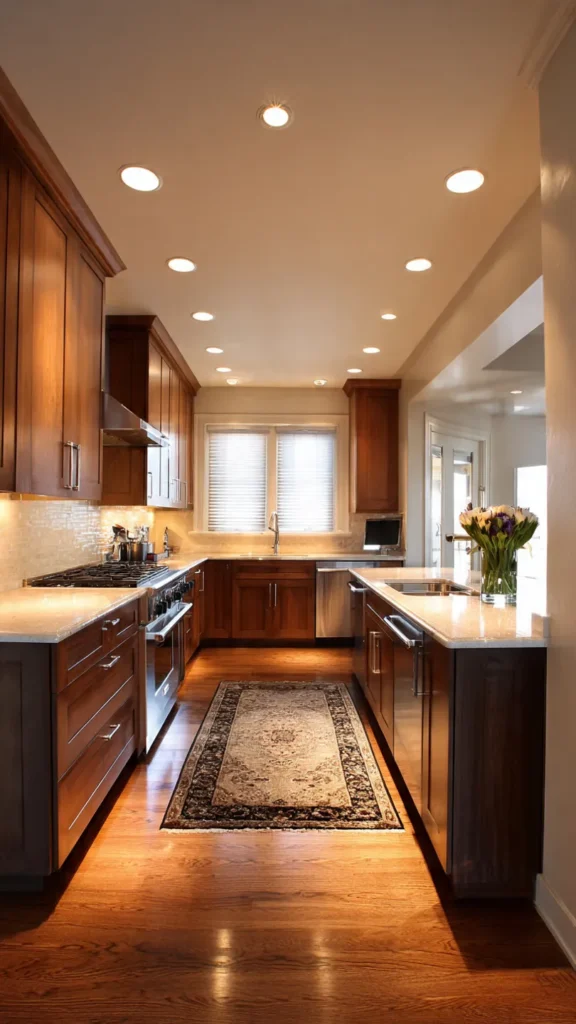
Recessed lighting is a popular choice for kitchens because it provides even illumination without visual clutter. Installed strategically across the ceiling, recessed lights help eliminate dark corners and shadows. They work especially well in modern and minimalist kitchens where clean lines are important. Using warm white bulbs ensures the space feels inviting rather than harsh, making recessed lighting both practical and stylish.
3. Pendant Lights Over Kitchen Islands
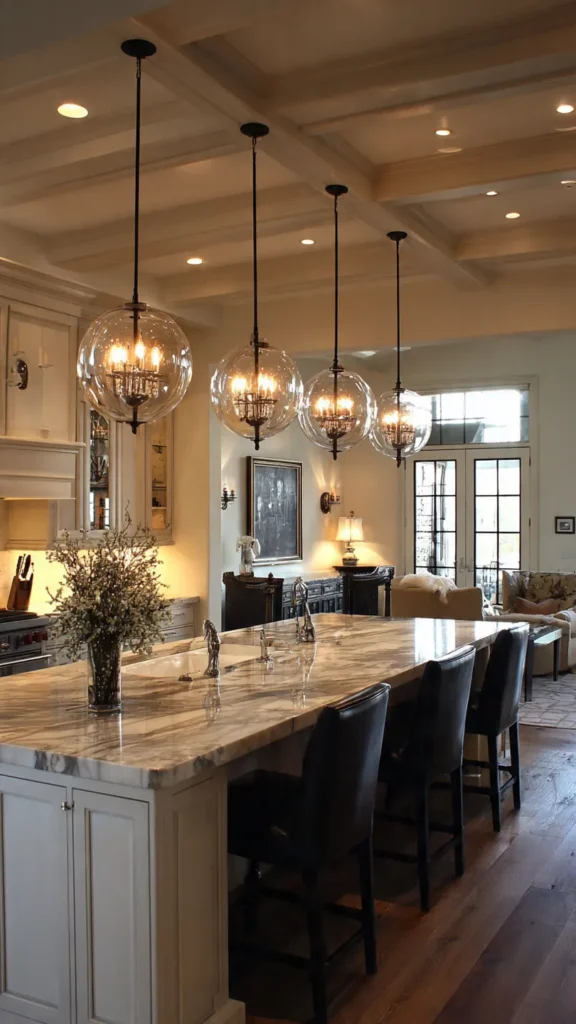
Pendant lights are one of the most impactful ways to enhance a kitchen. Hung above an island or peninsula, they provide focused task lighting while acting as decorative focal points. Whether you choose sleek modern pendants or more classic designs, they add personality and depth to the space. Spacing and scale are key, as pendants should complement the island without overwhelming it.
4. Under-Cabinet Lighting for Functional Brightness
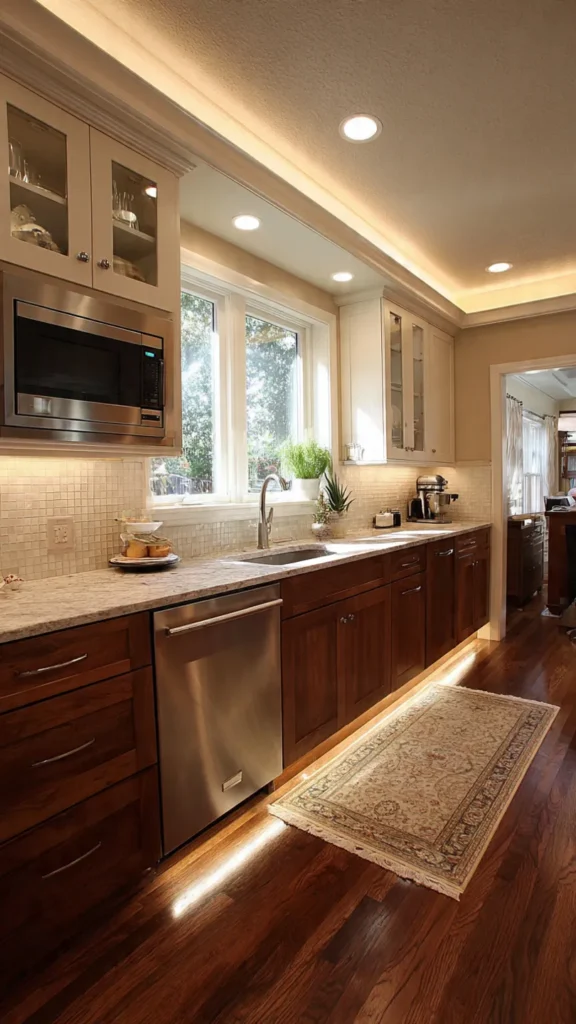
Under-cabinet lighting is essential for illuminating countertops where food preparation happens. These lights reduce shadows cast by upper cabinets, making tasks safer and easier. LED strip lights or puck lights are popular options because they are energy-efficient and discreet. Beyond function, under-cabinet lighting adds a soft glow that enhances the kitchen’s overall ambiance.
5. Overhead Statement Fixtures for Visual Impact
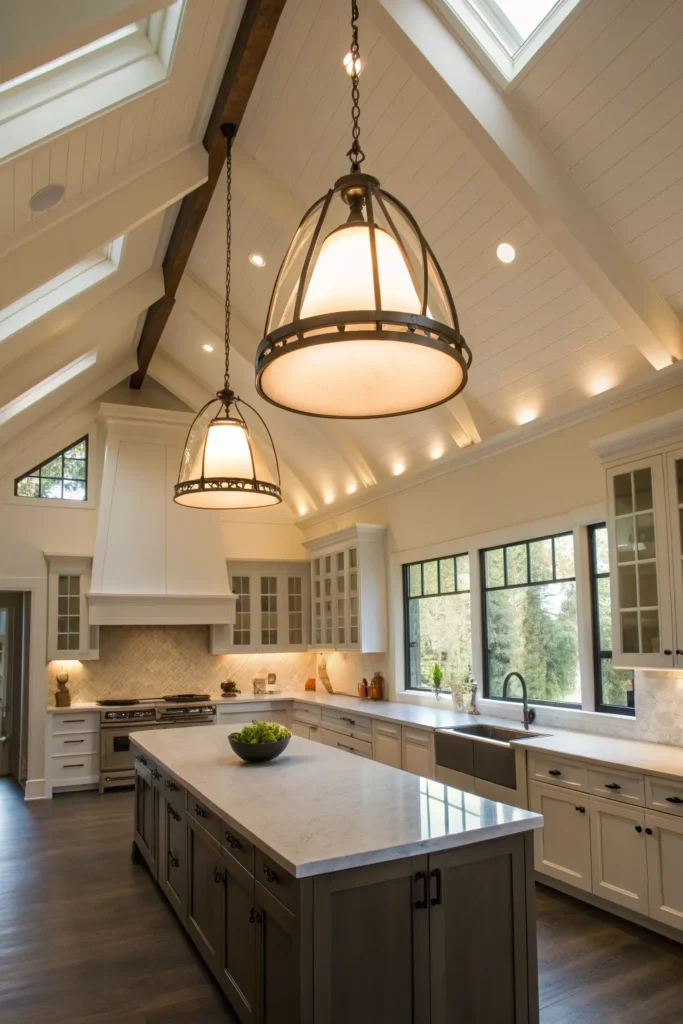
A statement light fixture can instantly elevate a kitchen’s design. Chandeliers, oversized pendants, or sculptural ceiling lights add character and draw the eye upward. These fixtures work particularly well in kitchens with higher ceilings or open layouts. When paired with simpler task lighting, a statement fixture adds drama without sacrificing functionality.
6. Natural Light as a Key Design Element
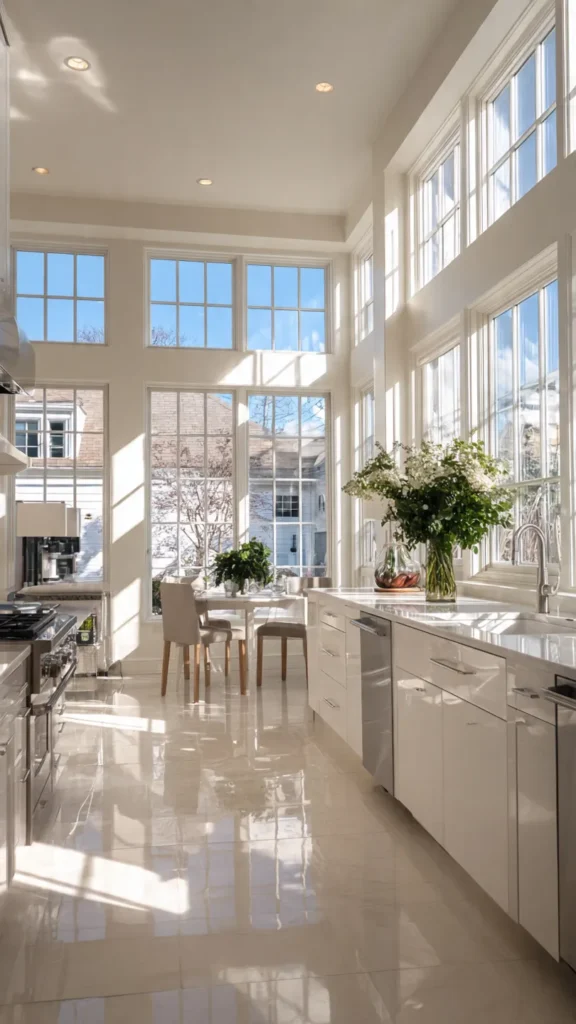
Maximizing natural light is one of the best ways to brighten a kitchen. Large windows, skylights, or glass doors allow sunlight to flood the space, making it feel open and fresh. Light-colored walls and reflective surfaces help bounce natural light throughout the room. Even during the day, natural light reduces the need for artificial lighting and creates a more pleasant cooking environment.
7. Toe-Kick Lighting for Subtle Glow
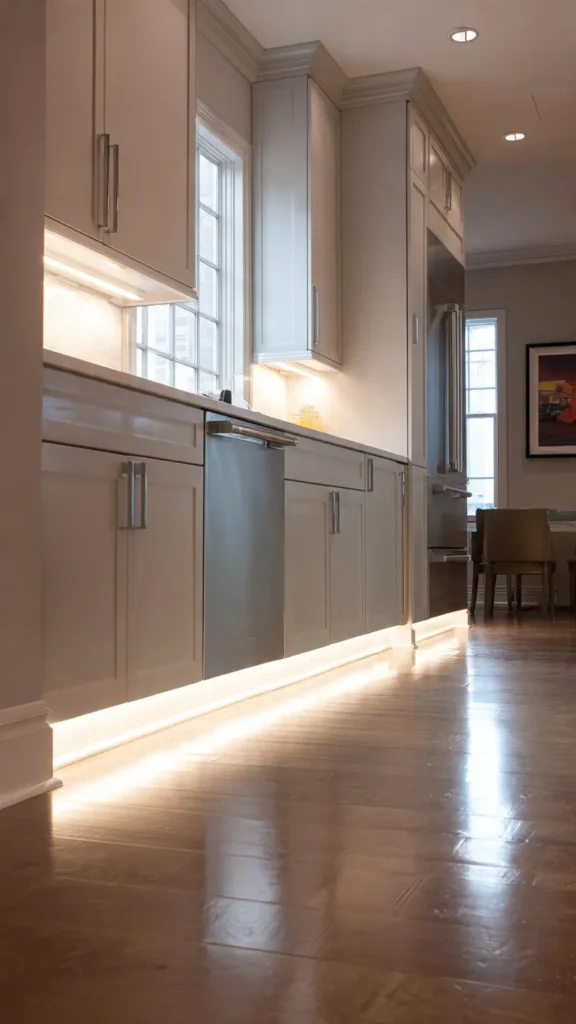
Toe-kick lighting, installed at the base of lower cabinets, adds a subtle yet effective layer of illumination. While not essential for tasks, it enhances safety by lighting pathways and creates a soft, modern glow. This type of lighting works especially well in contemporary kitchens, adding depth and a touch of luxury without being overpowering.
8. Cabinet Interior Lighting for Function and Style
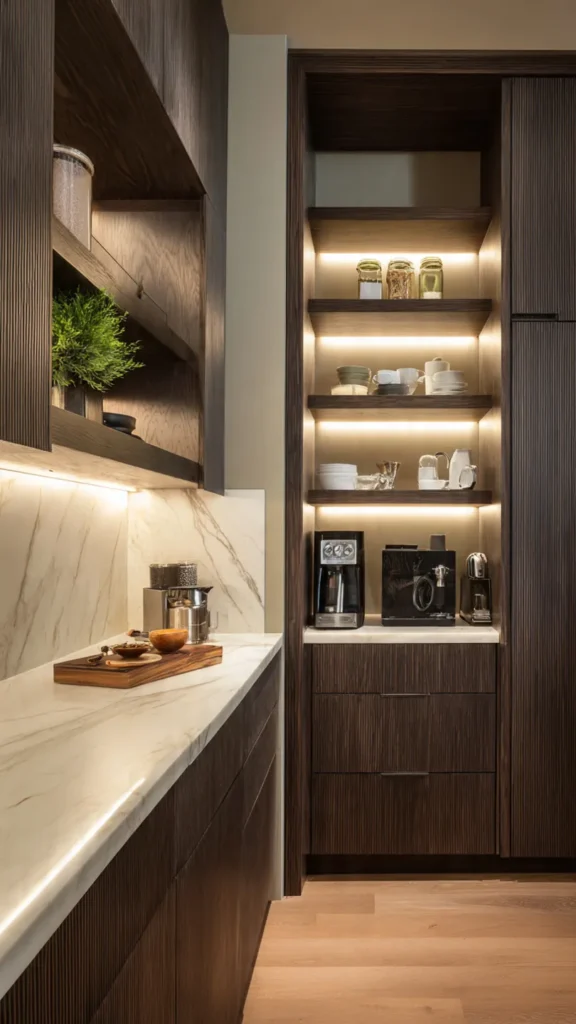
Lighting inside cabinets makes it easier to find items while also adding a polished, high-end feel. Glass-front cabinets benefit especially from interior lighting, as it highlights dishware and décor. This idea combines function with aesthetics, turning storage into a design feature that enhances the overall brightness of the kitchen.
9. Track Lighting for Flexible Illumination
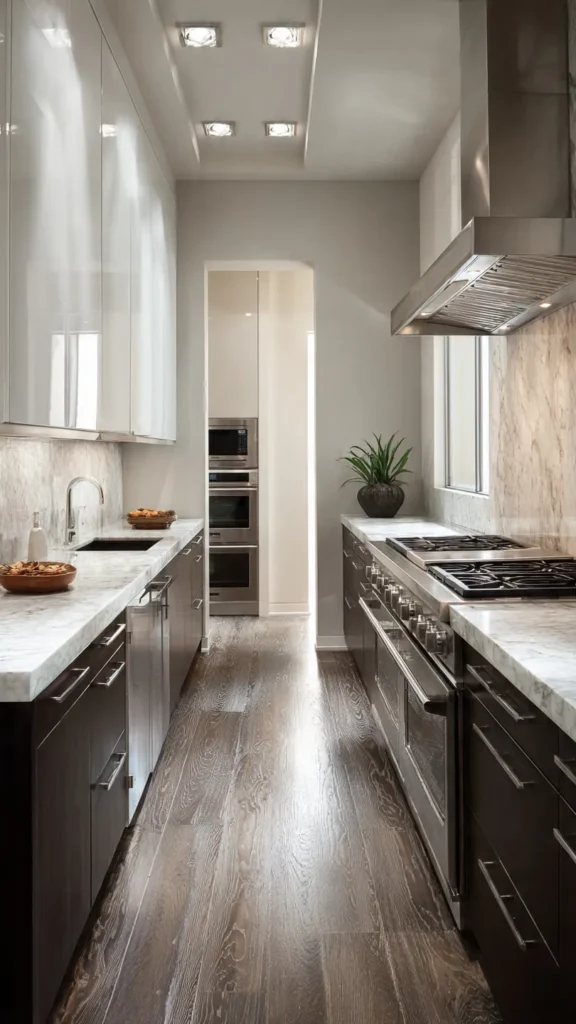
Track lighting offers flexibility by allowing you to direct light exactly where it is needed. Adjustable heads can be angled toward workspaces, artwork, or architectural details. This makes track lighting a great option for kitchens with unique layouts or multiple focal points. Modern track designs keep the look clean while providing practical versatility.
10. Warm Lighting for a Cozy Atmosphere
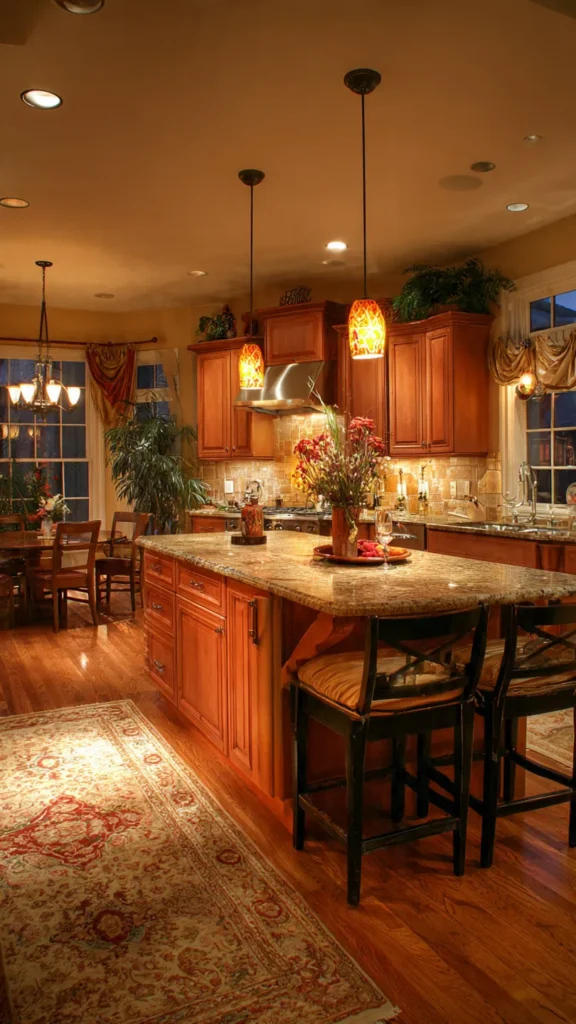
While brightness is important, warmth should not be overlooked. Warm-toned lighting creates a welcoming and comfortable atmosphere, especially in kitchens that double as gathering spaces. Choosing bulbs with a warm color temperature softens the look of the room and complements natural materials like wood and stone. This balance ensures the kitchen feels inviting rather than overly clinical.
11. Dimmable Lights for Versatile Use
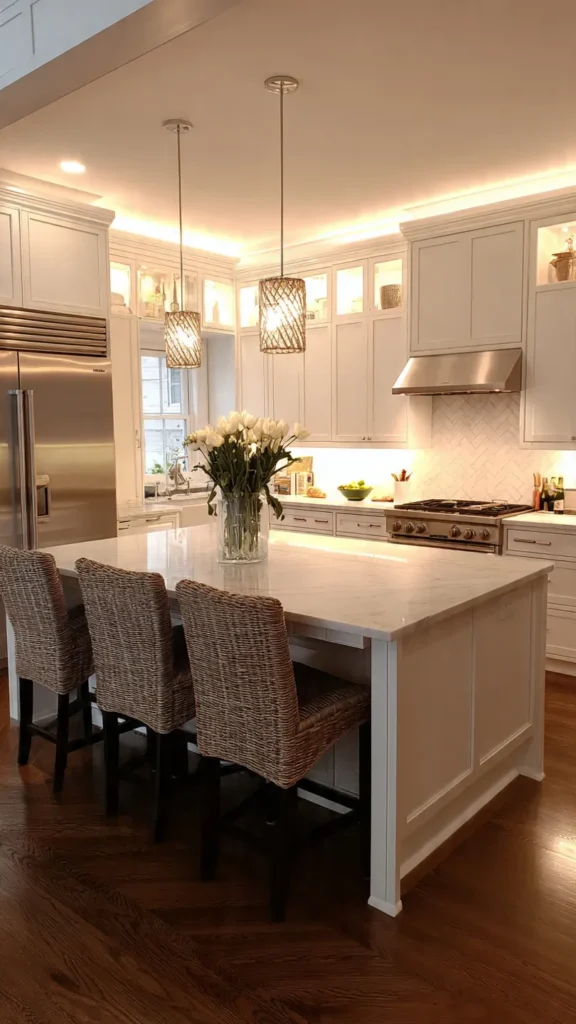
Installing dimmers allows you to adjust lighting levels based on time of day and activity. Bright lighting is ideal for cooking and cleaning, while softer light creates a relaxed mood for dining or entertaining. Dimmable lights add flexibility and enhance the kitchen’s functionality, making it adaptable to different needs without changing fixtures.
12. Accent Lighting to Highlight Design Features
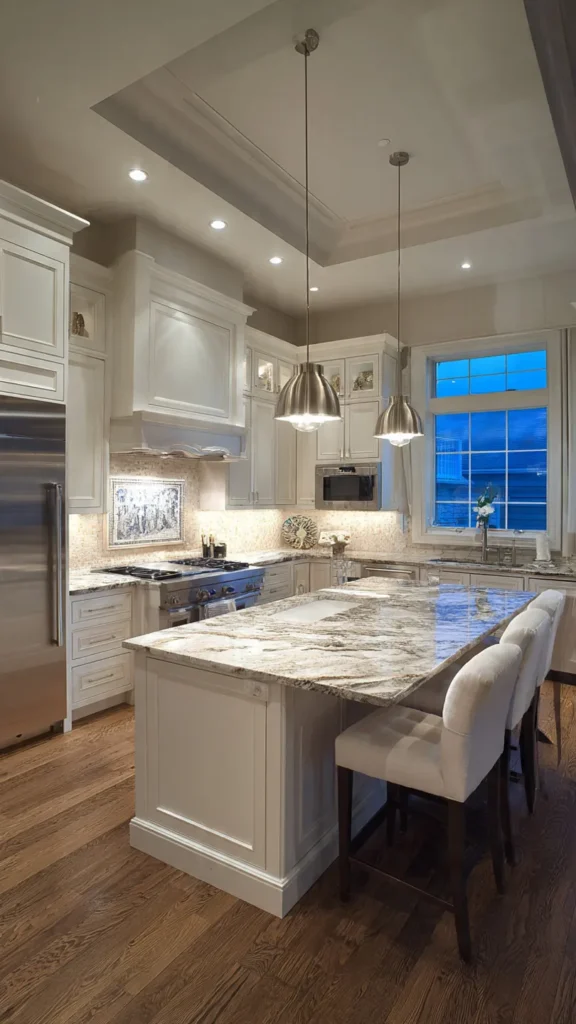
Accent lighting draws attention to special elements in the kitchen, such as open shelving, backsplashes, or architectural details. Small spotlights or LED strips can highlight textures and finishes, adding depth and visual interest. This type of lighting enhances the kitchen’s design and makes the space feel thoughtfully curated.
13. Lighting Over Sinks and Prep Areas
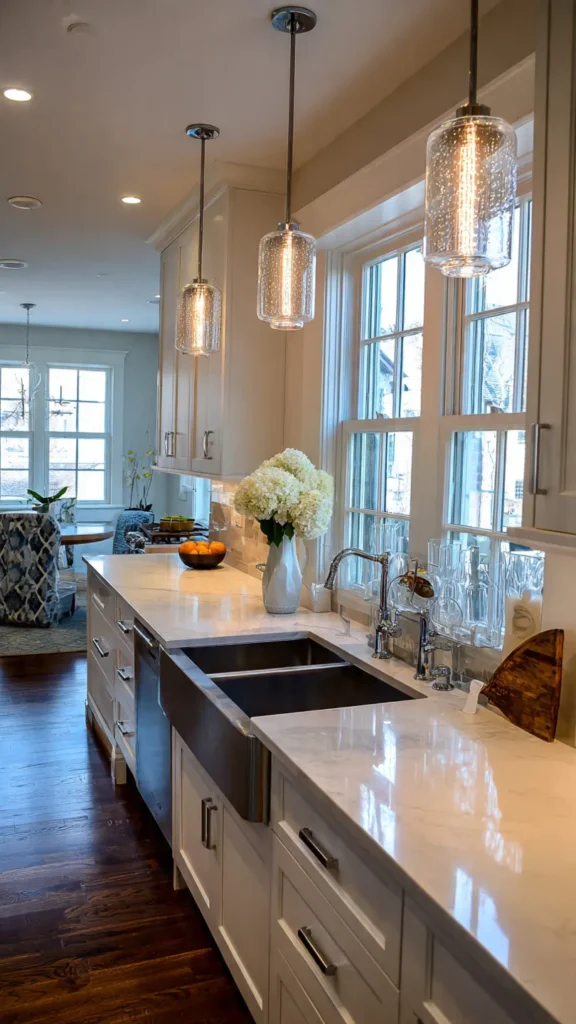
Task lighting over sinks and prep zones is crucial for everyday functionality. Focused lighting in these areas improves visibility and reduces eye strain. Pendant lights or recessed fixtures positioned directly above work zones ensure these areas are well-lit without casting shadows. Proper placement is key to achieving both comfort and efficiency.
14. Energy-Efficient LED Lighting Solutions
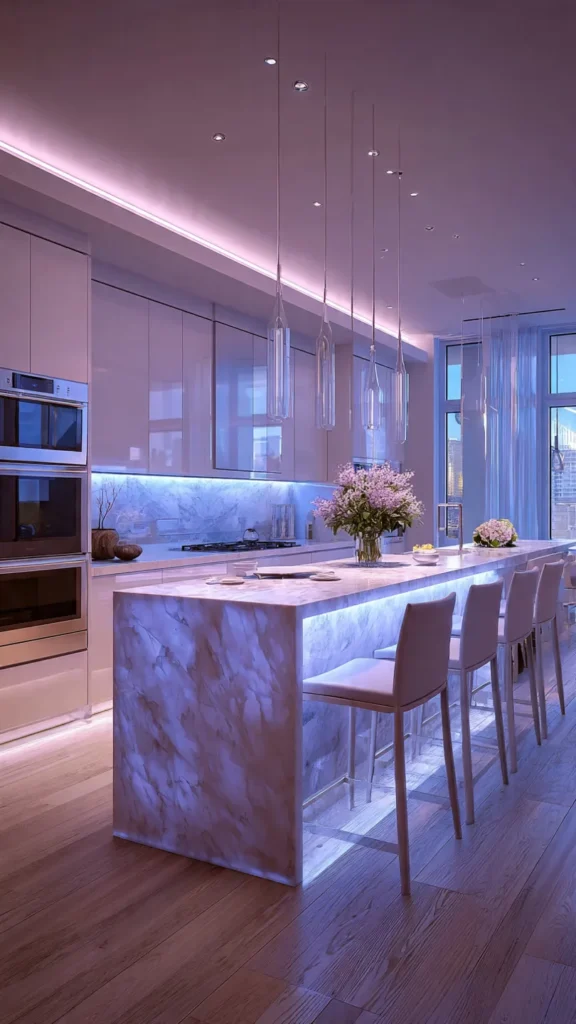
LED lighting has become a go-to choice for modern kitchens due to its energy efficiency and longevity. LEDs provide bright, consistent light while consuming less power than traditional bulbs. They are available in a range of color temperatures and styles, making it easy to find options that suit your kitchen’s design and lighting needs.
15. Coordinated Lighting for a Cohesive Look
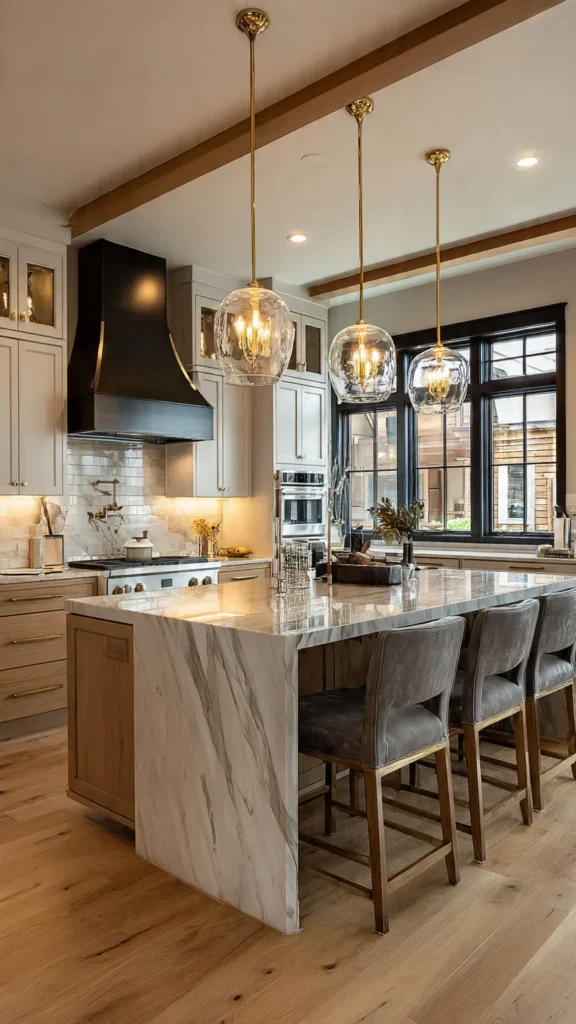
The final step in effective kitchen lighting is coordination. All fixtures should work together in terms of style, finish, and color temperature. Mixing too many different lighting styles can feel chaotic, while a cohesive approach creates harmony. When lighting elements complement one another, the kitchen feels balanced, polished, and intentionally designed.
Kitchen lighting plays a crucial role in both the functionality and beauty of your space. By layering different types of lighting, choosing fixtures that enhance your design, and balancing brightness with warmth, you can create a kitchen that feels open, efficient, and inviting. These kitchen lighting ideas show how thoughtful illumination transforms your kitchen into a bright and enjoyable place where style and practicality come together seamlessly.