
15 Living Room Color Scheme Ideas That Transform Your Space
Color has the power to completely change how a living room feels. It can make a small space feel open, a dark room feel cozy, or a plain layout feel intentional and stylish.
The right color scheme does more than decorate walls, it sets the mood, highlights architectural features, and brings all the elements of your living room together into one cohesive story.

Choosing a living room color scheme isn’t about following trends blindly. It’s about understanding how colors interact with light, furniture, textures, and your daily lifestyle.
These 15 living room color scheme ideas are designed to be practical, adaptable, and transformative, helping you create a space that feels both beautiful and livable.
1. Warm White and Soft Beige for Timeless Calm
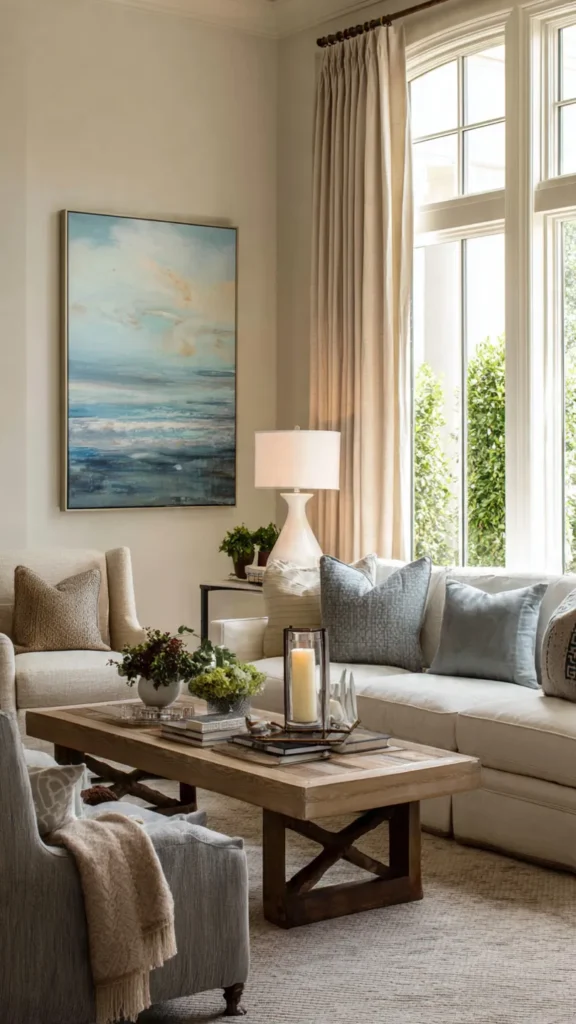
A warm white and beige color scheme is one of the most versatile options for a living room. It creates a calm, airy foundation that works with almost any furniture style, from modern to traditional.
Warm whites prevent the space from feeling stark, while beige adds softness and depth. Layering these tones through walls, upholstery, and rugs creates a seamless look. This scheme is ideal for rooms that rely on natural light and for homeowners who want a neutral base that won’t feel dated over time.
2. Gray and Cream for Subtle Sophistication
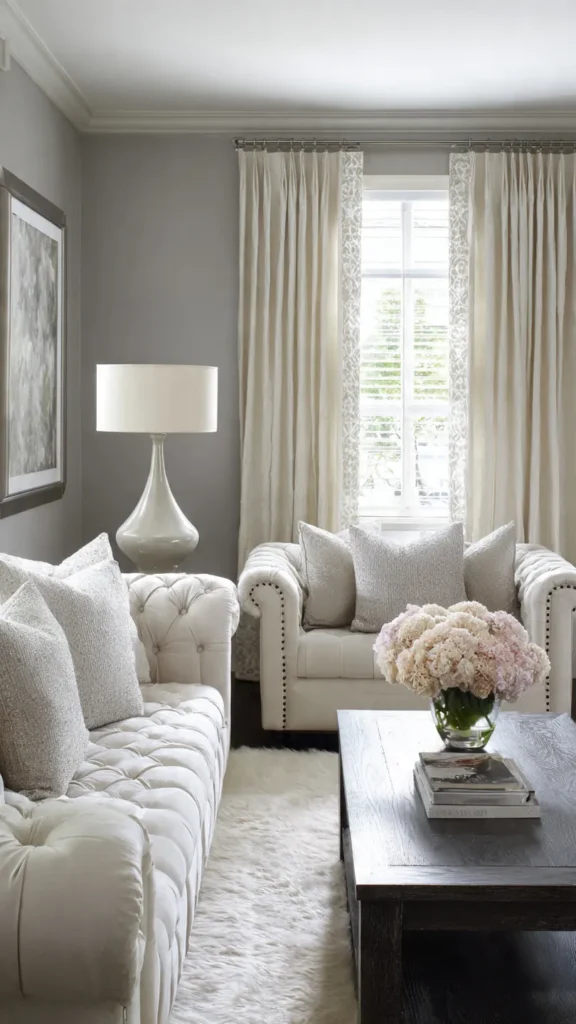
Gray can feel cold if used incorrectly, but pairing it with cream transforms it into something warm and inviting. This combination adds sophistication without feeling heavy or overly formal.
Light gray walls with cream sofas or curtains create balance and softness. Adding texture through knit throws or woven rugs prevents the scheme from feeling flat. This palette works especially well in contemporary or transitional living rooms where elegance and comfort are equally important.
3. Navy Blue and White for Classic Contrast
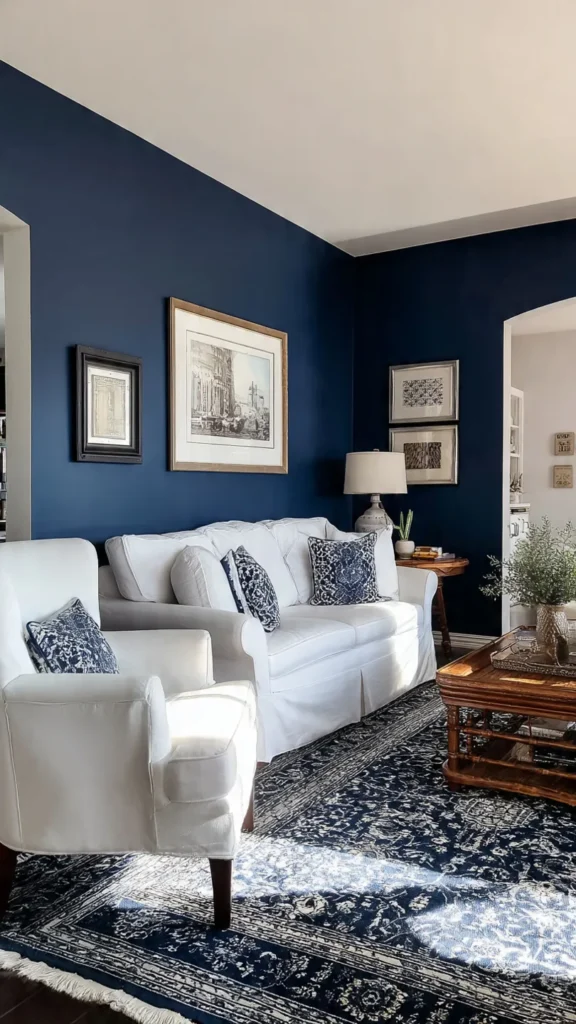
Navy blue paired with crisp white creates a striking yet timeless living room color scheme. The contrast feels fresh and structured while still being approachable.
Navy works beautifully as an accent wall, built-in shelving color, or upholstery choice. White balances the depth of blue, keeping the space from feeling too dark. This scheme suits living rooms that want a bold presence without overwhelming the senses.
4. Greige and Soft Charcoal for Modern Warmth
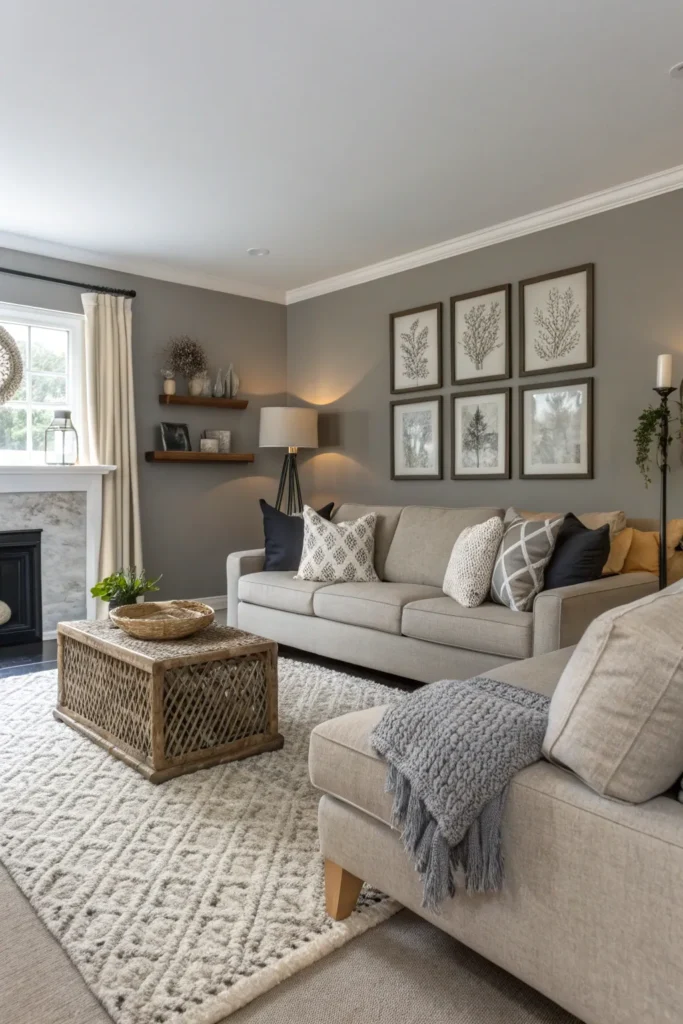
Greige, a blend of gray and beige, offers the best of both worlds. When paired with soft charcoal accents, it creates a modern yet welcoming living room.
This scheme works well for open-plan homes where the living room flows into other areas. Greige walls provide continuity, while charcoal in pillows, artwork, or furniture adds definition. The result is a space that feels grounded, polished, and comfortable.
5. Earthy Browns and Creamy Whites for Natural Comfort
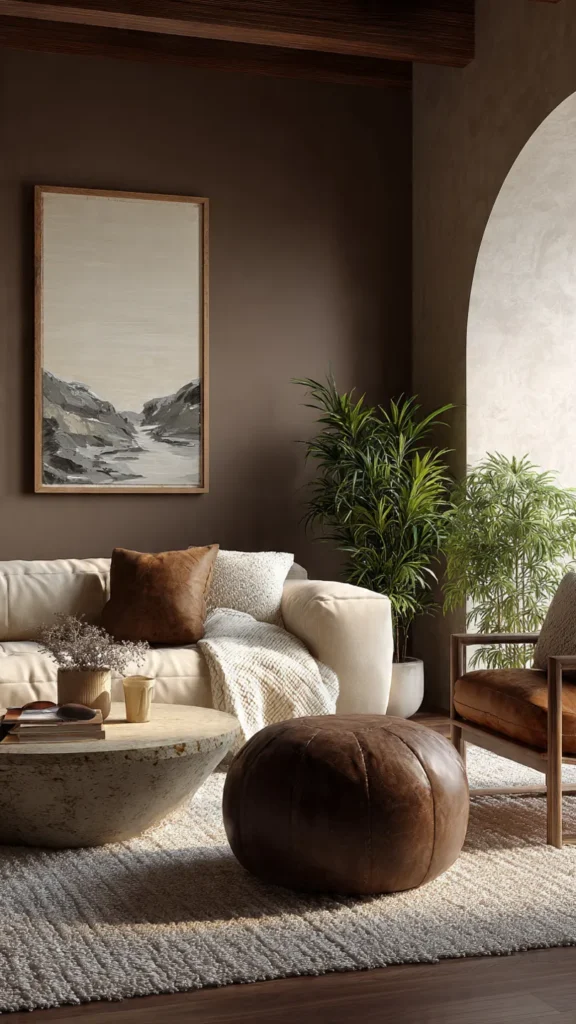
Earth tones bring warmth and stability into a living room. Browns paired with creamy whites create a cozy, grounded environment that feels connected to nature.
Wood furniture, leather accents, and natural fiber rugs enhance this color scheme. Creamy whites prevent the browns from feeling heavy, maintaining a balanced and inviting atmosphere. This palette is perfect for homes that prioritize comfort and timeless appeal.
6. Sage Green and Warm Neutrals for Relaxed Elegance
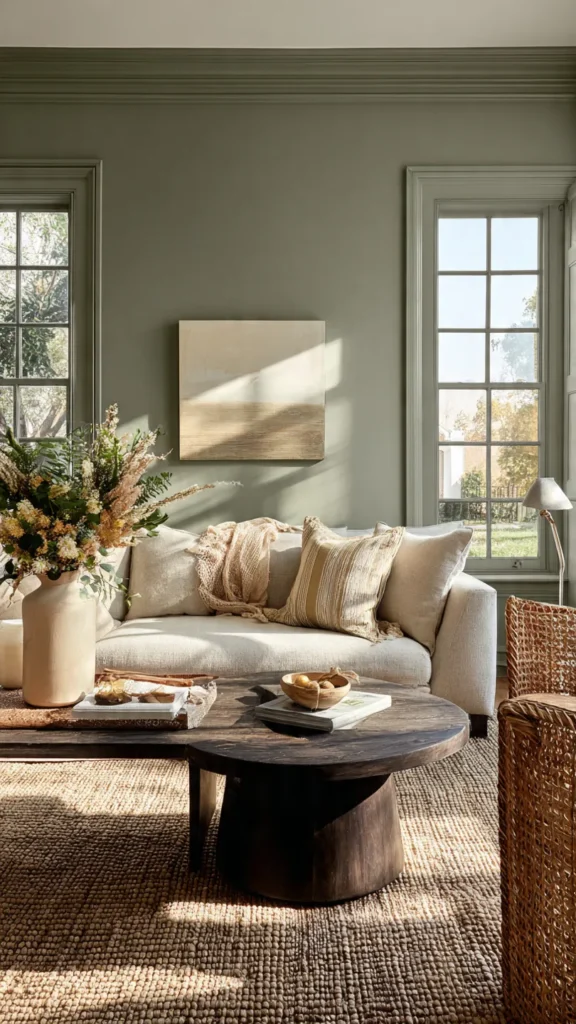
Sage green has become a favorite for living rooms because of its calming, natural quality. When paired with warm neutrals like beige or soft taupe, it creates a serene and elegant space.
Use sage green on walls or large furniture pieces, then layer in neutral textiles and wood tones. This scheme works beautifully in both traditional and modern interiors, offering a subtle pop of color without overwhelming the room.
7. Soft Blue and Light Gray for Airy Freshness
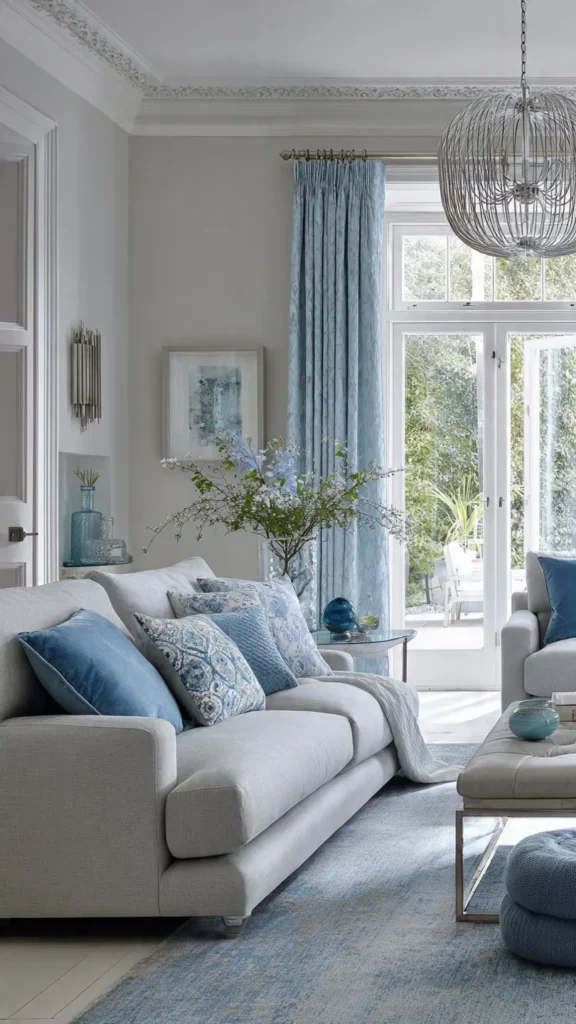
Soft blue evokes a sense of calm and openness, making it ideal for living rooms meant for relaxation. When paired with light gray, the result is clean, balanced, and refreshing.
This color scheme works especially well in rooms with plenty of daylight. Blue adds personality, while gray keeps things grounded. Incorporating white trim or accents further enhances the light, breezy feel.
8. Charcoal and Warm Wood for Cozy Drama

For those who love depth and mood, charcoal paired with warm wood tones creates a dramatic yet inviting living room. The key is balance.
Charcoal walls or furniture provide richness, while wood elements add warmth and texture. Keeping ceilings, trim, or large rugs light prevents the room from feeling closed in. This scheme works best in spaces with good lighting or larger dimensions.
9. Blush and Neutral Gray for Soft Modern Style
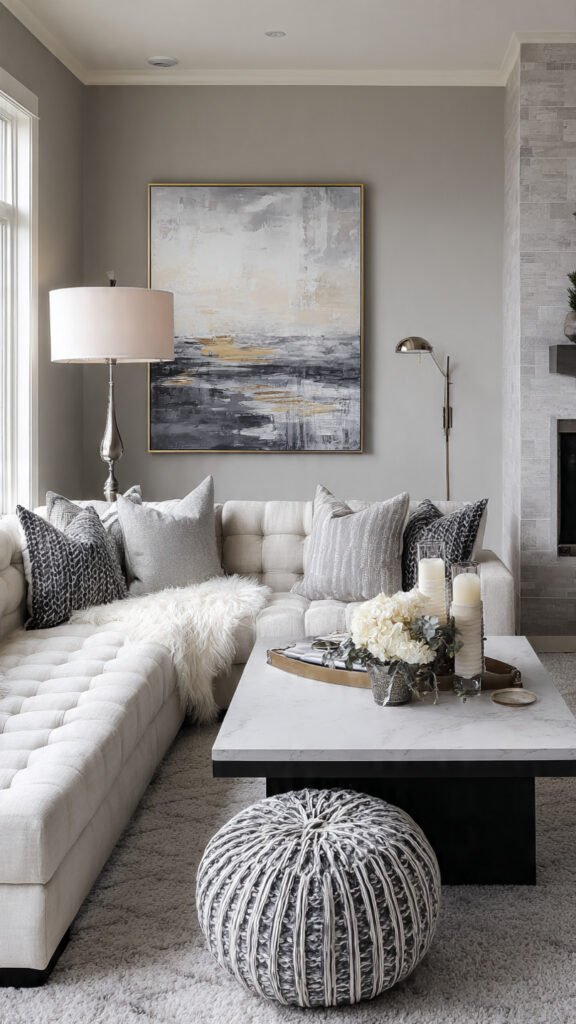
Blush isn’t just for bedrooms. In a living room, soft blush tones paired with neutral gray create a modern, welcoming atmosphere.
Blush adds warmth and personality, while gray keeps the look grounded and sophisticated. This combination works well for contemporary spaces that want subtle color without bold saturation. Using blush in small doses, such as pillows or accent chairs, keeps the scheme elegant.
10. Beige and Black for Clean Definition
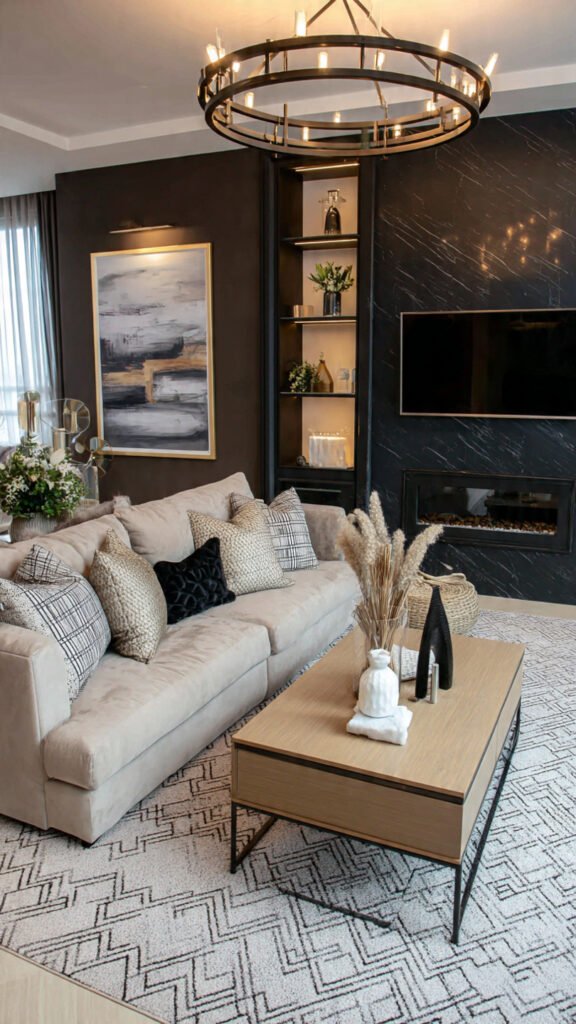
Beige and black is a high-impact yet understated color scheme. Beige softens the boldness of black, creating a refined and balanced living room.
Black accents in lighting, frames, or furniture outlines add structure and contrast. Beige walls and upholstery maintain warmth and approachability. This scheme is ideal for minimalist or modern homes seeking clarity and visual interest.
11. Terracotta and Warm White for Earthy Character
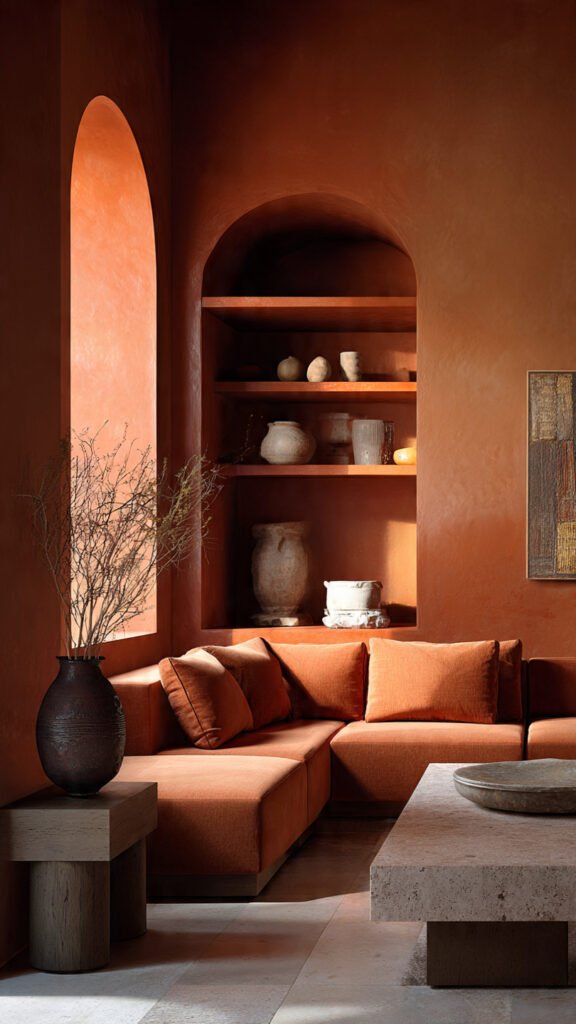
Terracotta brings warmth, depth, and personality into a living room. When paired with warm white, it feels inviting rather than heavy.
This scheme works beautifully in bohemian, Mediterranean, or eclectic interiors. Terracotta can appear in walls, ceramics, or textiles, while white balances and brightens the space. The result feels cozy, expressive, and grounded.
12. Monochromatic Neutrals for Seamless Flow
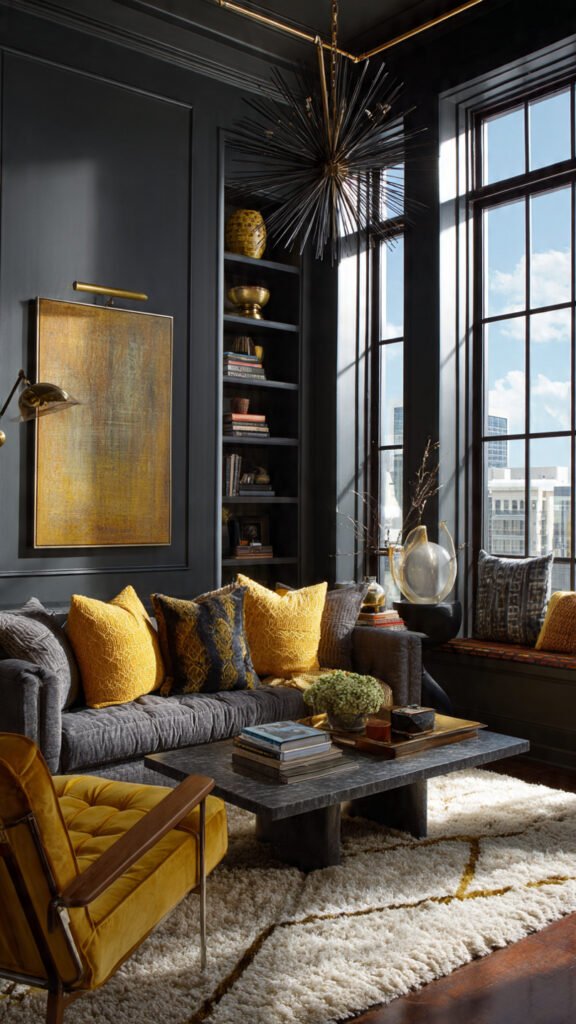
Using different shades of the same neutral color creates a cohesive and sophisticated living room. This monochromatic approach relies on variation in tone and texture rather than contrast.
For example, layering ivory, beige, and taupe adds depth while maintaining harmony. Textures like linen, wool, and wood prevent the room from feeling flat. This scheme is ideal for those who love understated elegance.
13. Olive Green and Cream for Classic Depth
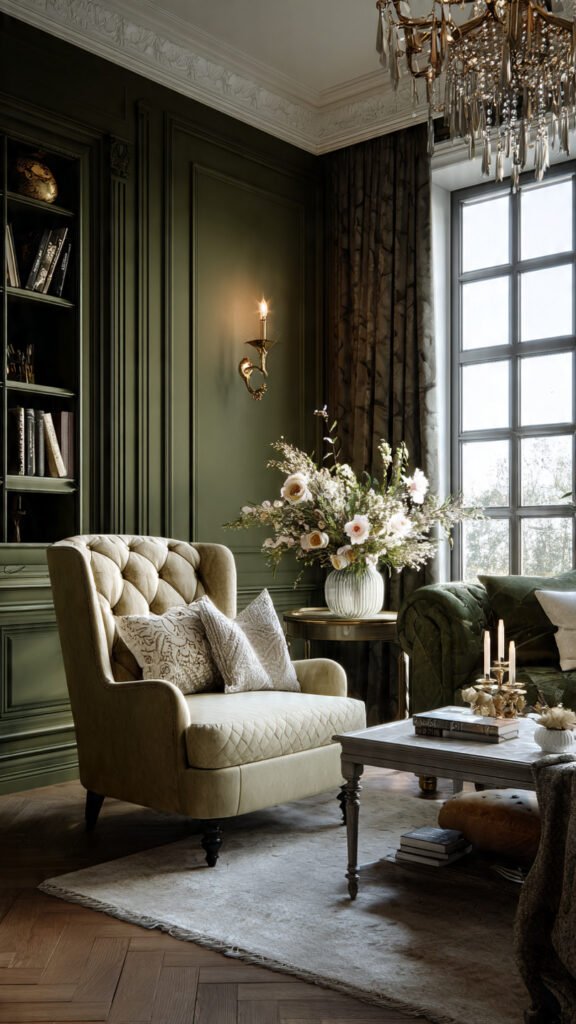
Olive green adds richness and maturity to a living room. Paired with cream, it feels timeless and refined.
Olive works well on accent walls, cabinetry, or upholstered pieces. Cream keeps the palette light and balanced. Adding brass or wood accents enhances the warmth and sophistication of this color scheme.
14. Soft Taupe and White for Versatile Balance
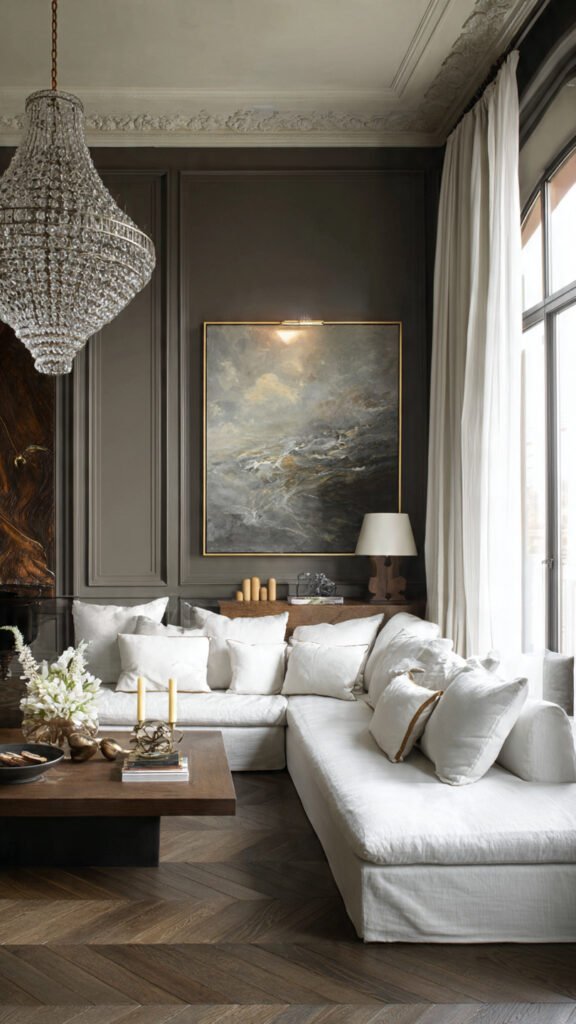
Taupe is one of the most adaptable living room colors. When paired with white, it creates a neutral yet dynamic environment.
Taupe walls offer warmth without heaviness, while white trim and furniture add brightness. This scheme suits a wide range of styles and allows easy updates through accessories and seasonal decor.
15. Neutral Base with Layered Accent Colors
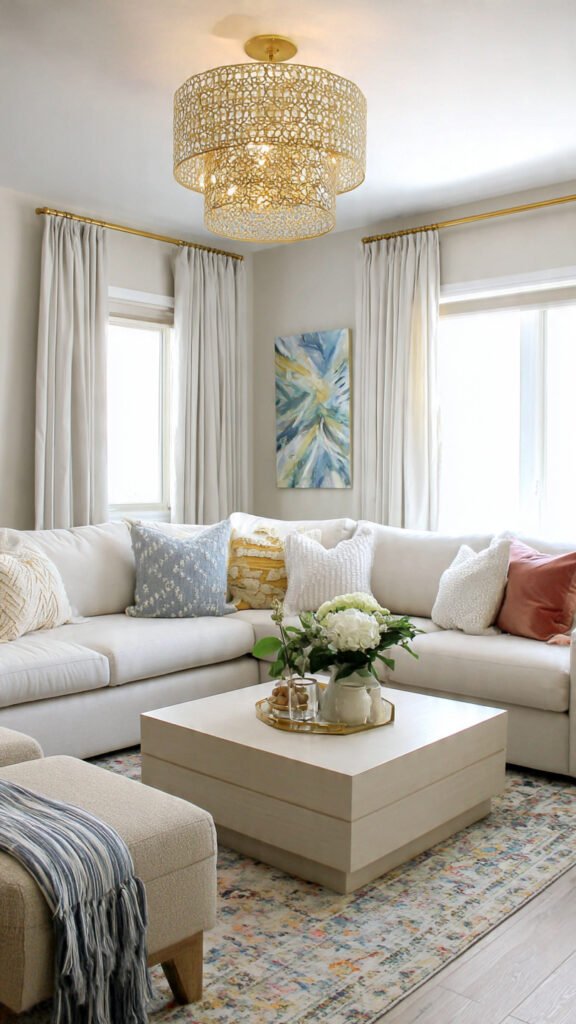
Sometimes the most transformative color scheme starts with a neutral base and builds personality through accents. Whites, beiges, or light grays provide flexibility and longevity.
Accent colors like blue, green, rust, or mustard can appear in pillows, artwork, or rugs. This approach allows you to refresh the living room easily without repainting, making it practical and budget-friendly.
A living room color scheme shapes how the space looks, feels, and functions. Whether you prefer calm neutrals, earthy warmth, or subtle color, the right combination can transform your living room into a place that feels intentional and inviting. By choosing colors that work with your light, furniture, and lifestyle, you create a space that not only looks better but feels better to live in every day.