
15 Longest Blooming Trees and Shrubs for a Garden That Never Stops Flowering
Most gardens have a peak moment — a glorious two or three weeks in late spring when everything flowers simultaneously and the garden looks like something from a magazine. And then it is over, and the garden settles into a long stretch of green that is pleasant but unremarkable until the following year.
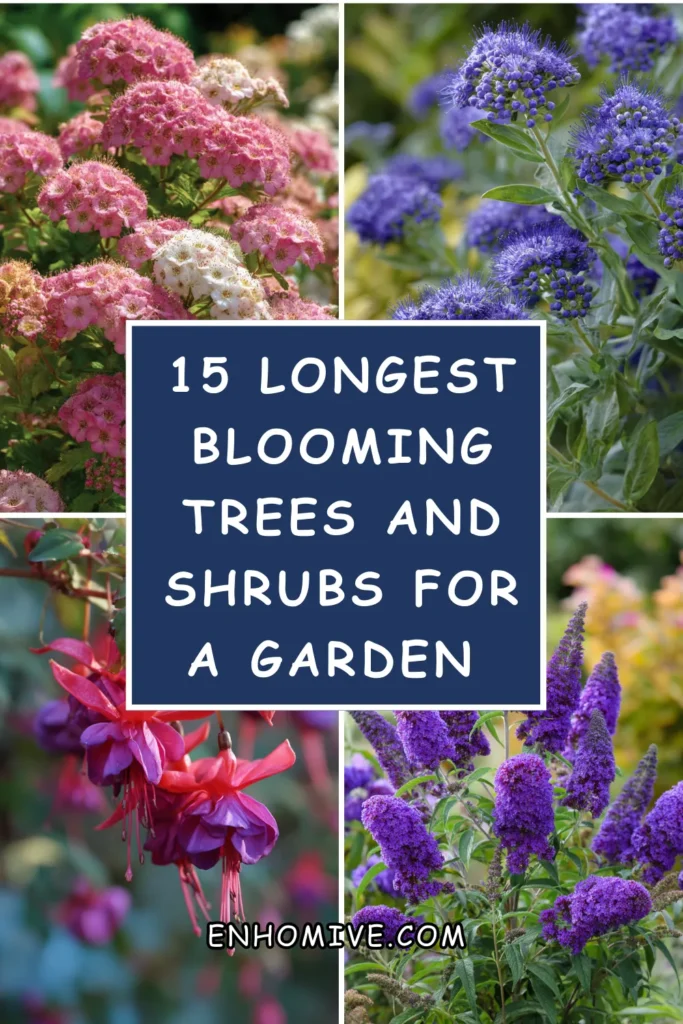
The solution is not more plants — it is smarter plants. Choosing trees and shrubs that bloom for extended periods rather than brief spectacular bursts means the garden has colour, fragrance, and life running from early spring all the way through to late autumn. A garden planted with long-blooming woody plants is one that rewards you with something beautiful every single time you look out of the window.
Here are 15 of the longest blooming trees and shrubs available to gardeners — plants that earn their place not just for a fortnight but for months at a time.
1. Buddleja — Butterfly Bush
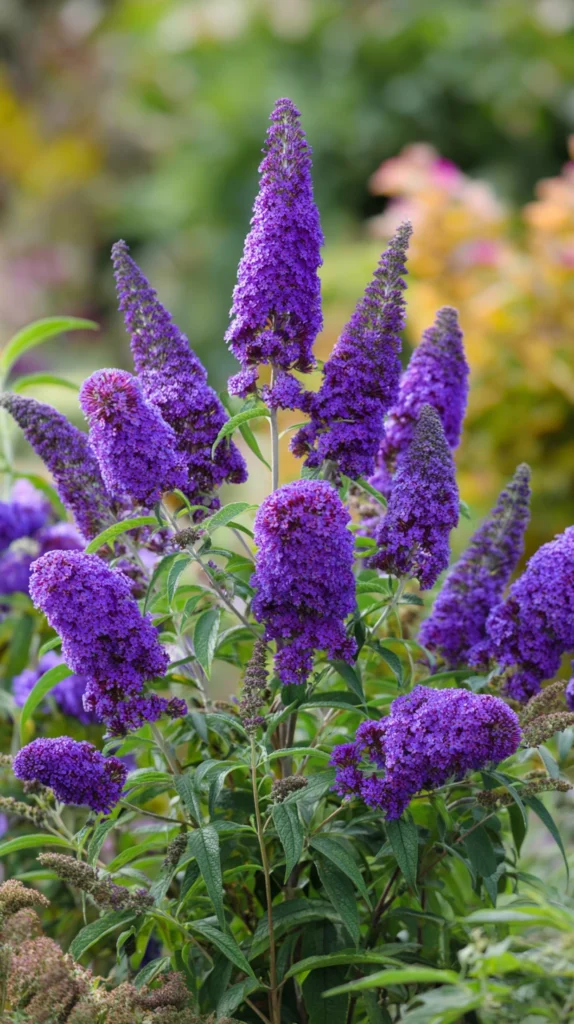
Buddleja is one of the most reliably long-blooming shrubs available in any climate and the name butterfly bush is entirely earned — on a warm summer day a flowering buddleja in full bloom is covered in butterflies, bees, and other pollinators in a way that few other garden plants can match.
The blooming period runs from midsummer through to early autumn — typically from July to September in the northern hemisphere — with individual flower spikes lasting several weeks before fading. Deadheading spent flower spikes promptly encourages the plant to produce new spikes continuously throughout the season, significantly extending the overall blooming period beyond what an undeadheaded plant delivers.
Pro Tip: Cut buddleja back hard in early spring — to around 30 centimetres from the ground — every year without exception. Hard annual pruning is the single most important thing you can do for a buddleja’s long-term flowering performance. Plants left unpruned become large, woody, and increasingly sparse in their flowering. Hard-pruned plants produce vigorous new growth that flowers abundantly from midsummer onward every season.
2. Hydrangea
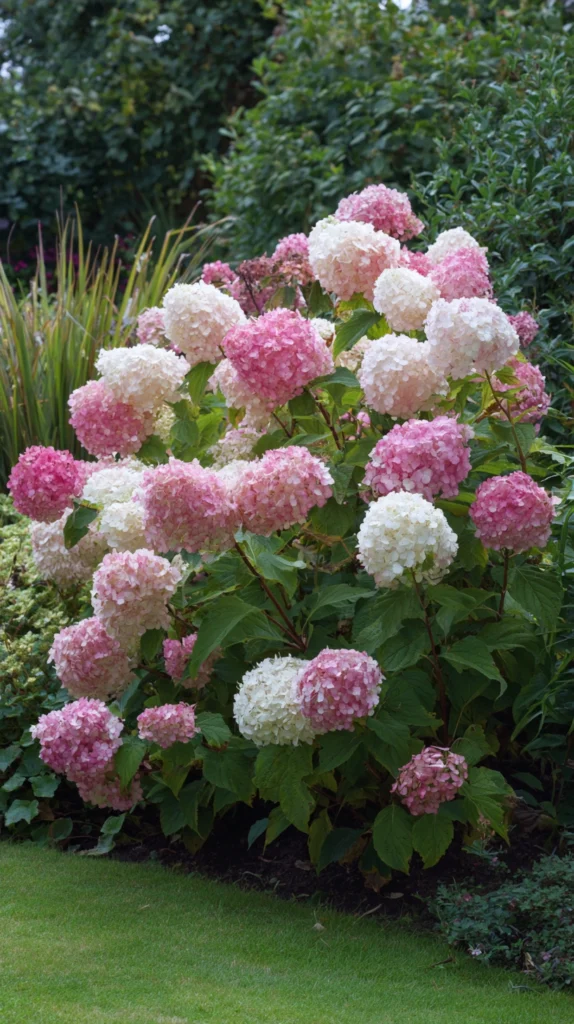
Hydrangeas are among the longest-blooming shrubs in the garden — the large mophead and lacecap varieties of Hydrangea macrophylla begin flowering in midsummer and the flower heads, though they fade gradually from their original pink, blue, or white, remain decorative on the plant well into autumn and even winter when they dry to beautiful papery forms that hold their structure through frost.
The panicle hydrangeas — Hydrangea paniculata varieties like Limelight and Vanille Fraise — are particularly long-blooming, opening in creamy white in midsummer and transitioning through pink to deep rose as autumn progresses, providing almost five months of changing colour from a single plant. This colour transition quality makes panicle hydrangeas one of the most rewarding long-season shrubs available.
Pro Tip: Leave the dried flower heads of hydrangeas on the plant throughout autumn and winter rather than cutting them off as they fade. The dried heads provide genuine ornamental value through the colder months — particularly beautiful when dusted with frost or light snow — and also protect the developing buds below them from severe frost damage. Cut the old heads off in early spring just as the new growth begins to emerge.
3. Potentilla — Shrubby Cinquefoil
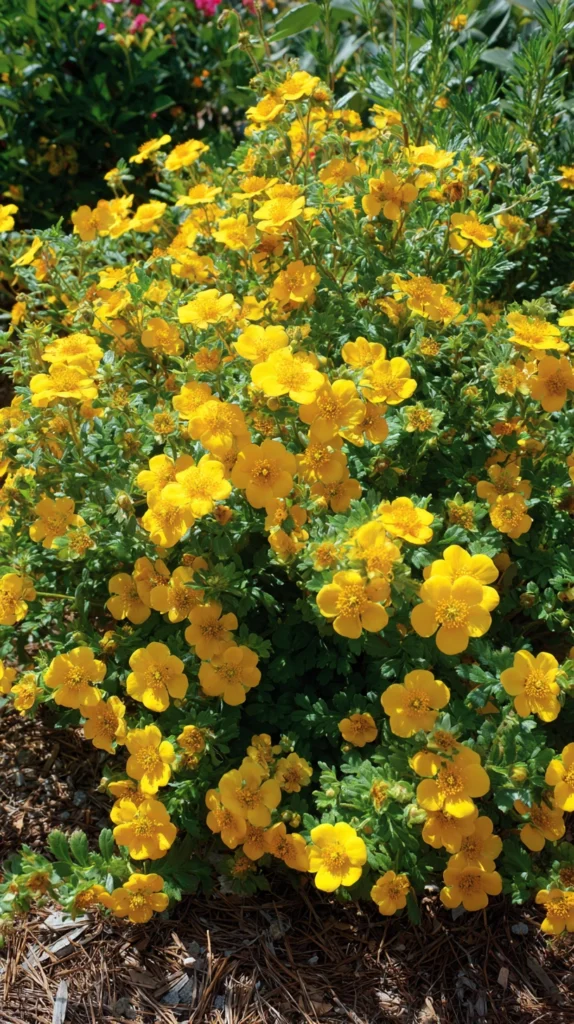
Potentilla fruticosa is one of the most underrated long-blooming shrubs in the garden. It is compact, completely hardy, tolerant of poor soils, and produces its cheerful small flowers — in yellow, white, pink, or orange depending on the variety — from late spring all the way through to the first frosts of autumn. No other commonly grown shrub blooms as consistently and reliably for as long.
The flowering period of a well-grown potentilla routinely runs from May to October — five full months of continuous colour from a plant that asks almost nothing in return. It does not need deadheading, does not require rich soil, tolerates exposed positions, and recovers quickly from hard pruning. For a difficult spot that needs reliable long-season colour, potentilla is the answer.
Pro Tip: Give potentilla full sun or at the very minimum a half-day of direct sunlight for the best flowering performance. Plants grown in significant shade produce fewer flowers and become increasingly leggy and open in their habit over time. Full sun brings out the best flowering performance that makes this shrub such an extraordinary long-season performer — in partial shade it is merely good, in full sun it is exceptional.
4. Rose — Repeat Flowering Varieties
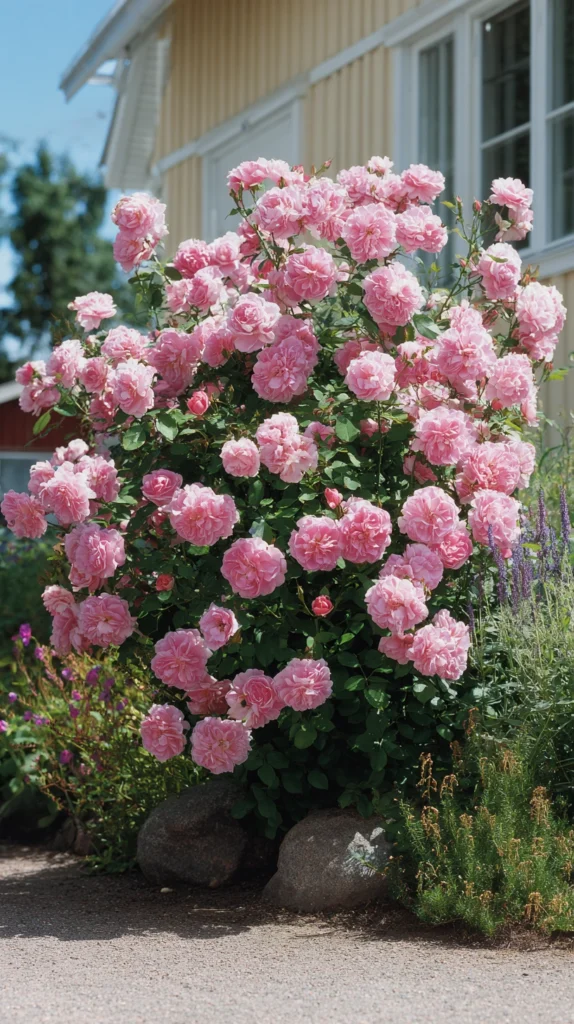
A well-chosen repeat-flowering rose is one of the most generous long-blooming shrubs a garden can contain. Modern shrub roses, English roses, and many climbing roses flower in flushes from early summer right through to the first hard frosts — sometimes as late as November in a mild year — providing months of colour, fragrance, and cutting material that no other shrub can match for sheer romantic beauty.
Varieties like Rosa Gertrude Jekyll, Rosa The Generous Gardener, and Rosa Munstead Wood are among the most reliably repeat-flowering with the richest fragrance, producing flush after flush of blooms throughout the season when deadheaded regularly and fed appropriately. The combination of long season, extraordinary fragrance, and beautiful flower form makes a repeat-flowering rose one of the highest-value plants in any garden.
Pro Tip: Feed repeat-flowering roses with a balanced rose fertilizer immediately after the first flush of flowers has finished and been deadheaded. The second and subsequent flushes of bloom draw heavily on the plant’s nutrient reserves, and feeding at this point — rather than only in spring — directly fuels the production of subsequent flower flushes. Roses that are not fed after their first flush frequently produce disappointing second flushes or stop flowering altogether by late summer.
5. Lavender
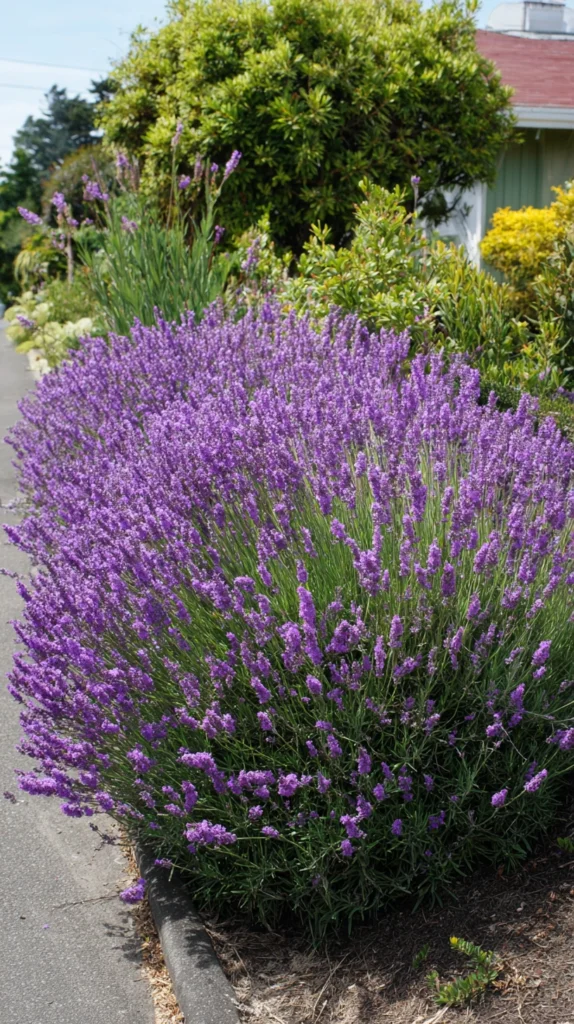
Lavender is one of the most beloved garden plants in the world and its blooming season — typically from June through to September with some varieties beginning in May — makes it one of the most reliably long-performing shrubs for a sunny, well-drained position. The silvery foliage and aromatic quality of the whole plant mean it earns its place even outside the blooming season.
Hidcote and Munstead are the most compact and reliably hardy varieties for a garden border. Grosso and Phenomenal are larger varieties with particularly long flower spikes that are excellent for cutting and drying. All perform best in full sun with very free-draining soil — lavender is one of those plants that genuinely thrives on neglect in the right conditions and resents kindness in the form of rich soil or overwatering.
Pro Tip: Trim lavender immediately after the first flush of flowers has finished — cutting back the flower stems and around a third of the current season’s foliage growth but never cutting into the old woody stems below the green growth. This trim encourages a second flush of flowers in late summer and prevents the plant from becoming the woody, open, and increasingly bare-centred shape that untrimmed lavender inevitably develops within a few years.
6. Caryopteris — Bluebeard
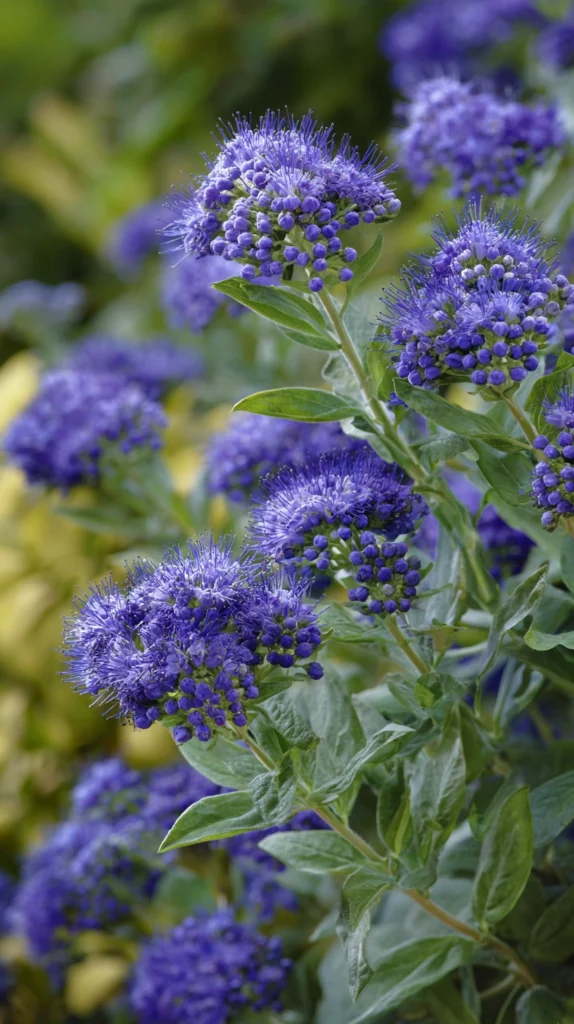
Caryopteris is a small, mounded shrub that produces clouds of intense blue or blue-violet flowers from late summer through to mid-autumn — precisely the period when blue-flowering plants are most scarce and most valuable in the garden. The late season timing of its blooming makes it one of the most strategically important long-blooming shrubs for maintaining garden interest through August, September, and October.
The most widely available variety — Caryopteris x clandonensis Heavenly Blue — produces its vivid blue flower clusters reliably from August onward and is intensely attractive to bees and butterflies at a time of year when most other nectar sources have finished. The aromatic grey-green foliage is attractive throughout the growing season even before flowering begins.
Pro Tip: Cut caryopteris back hard to a low framework of woody stems in early spring — similar to the treatment recommended for buddleja. The season’s flowers are produced on new growth, and hard pruning each spring ensures vigorous new shoots that flower prolifically from late summer. Plants left unpruned gradually become large and woody with diminishing flower production — hard annual pruning is what keeps this shrub performing at its best year after year.
7. Abelia
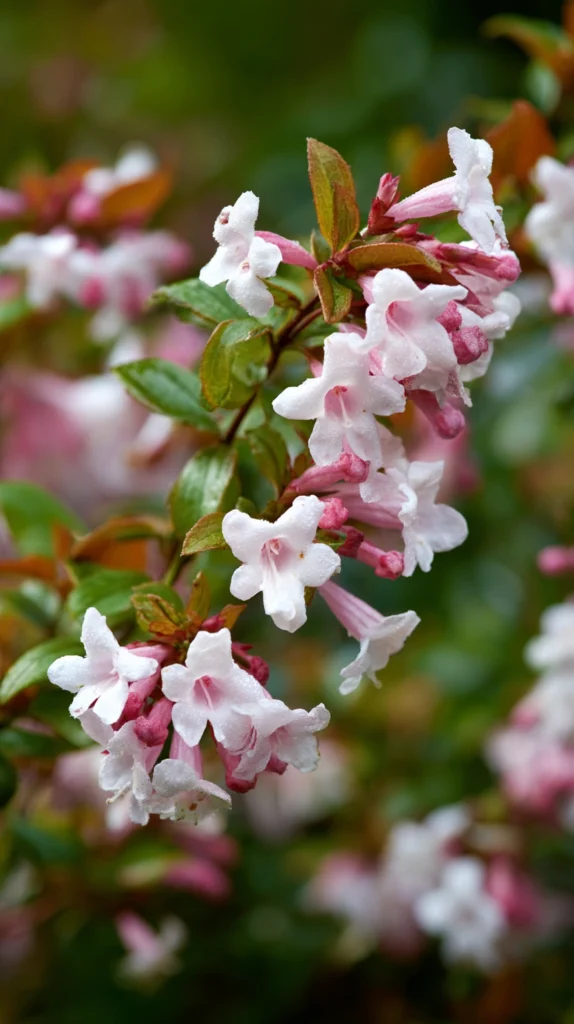
Abelia is a shrub that deserves to be far more widely planted than it currently is. It produces small, tubular flowers — white, pink, or pale lilac depending on the variety — from midsummer through to the first frosts of autumn, covering the plant in bloom for four to five months with very little maintenance required. The flowers are attractive to bees and butterflies throughout this extended period.
Beyond the flowers, abelia offers attractive semi-evergreen foliage that often develops bronze and red tints in autumn, extending the plant’s seasonal interest well beyond the end of its blooming period. Varieties like Abelia x grandiflora and the compact Abelia Confetti — which has attractive cream-edged variegated foliage — are both excellent choices for a long-season shrub border.
Pro Tip: Plant abelia in a position with some shelter from cold winter winds, particularly in colder gardens at the northern edge of its hardiness range. Abelia is semi-evergreen and the foliage can be damaged by harsh winter winds even when the plant itself survives the cold temperatures without problem.
A sheltered position against a warm wall or within a mixed shrub border that provides wind protection on the coldest side ensures the plant retains more of its foliage through winter and emerges into spring in the best possible condition.
8. Escallonia
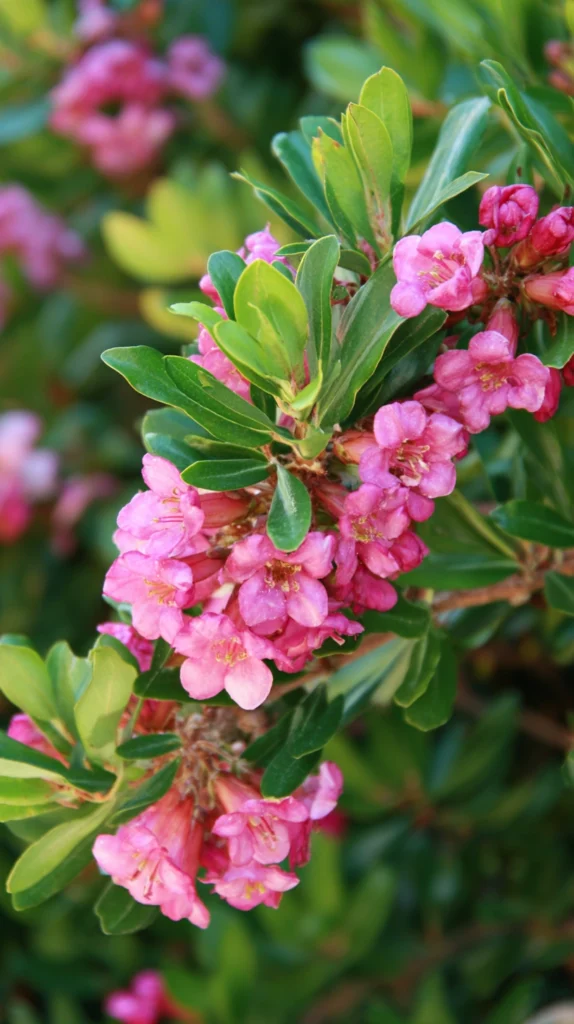
Escallonia is a tough, versatile evergreen shrub that produces its small tubular flowers — typically in shades of pink, red, or white — from early summer through to autumn, making it one of the longest-blooming evergreen shrubs available for a garden border or hedge. The glossy dark green foliage is attractive year-round and provides a rich backdrop for the flowers throughout the blooming season.
It is particularly valuable in coastal gardens where its tolerance of salt-laden winds makes it one of very few flowering shrubs that performs reliably in exposed seaside positions. Inland it makes an excellent flowering hedge that provides privacy, wind shelter, and months of colour simultaneously. Varieties like Escallonia Apple Blossom and Escallonia Red Elf are among the most reliable and widely available.
Pro Tip: Prune escallonia immediately after the main flush of flowers in midsummer rather than in spring. Escallonia flowers on growth produced in the previous season, and spring pruning removes the flowering wood before it has a chance to bloom.
Pruning immediately after flowering gives the plant the maximum amount of time to produce new growth that will carry next year’s flowers — the timing of pruning is the single most important factor in maintaining good flowering performance in this shrub.
9. Indigofera
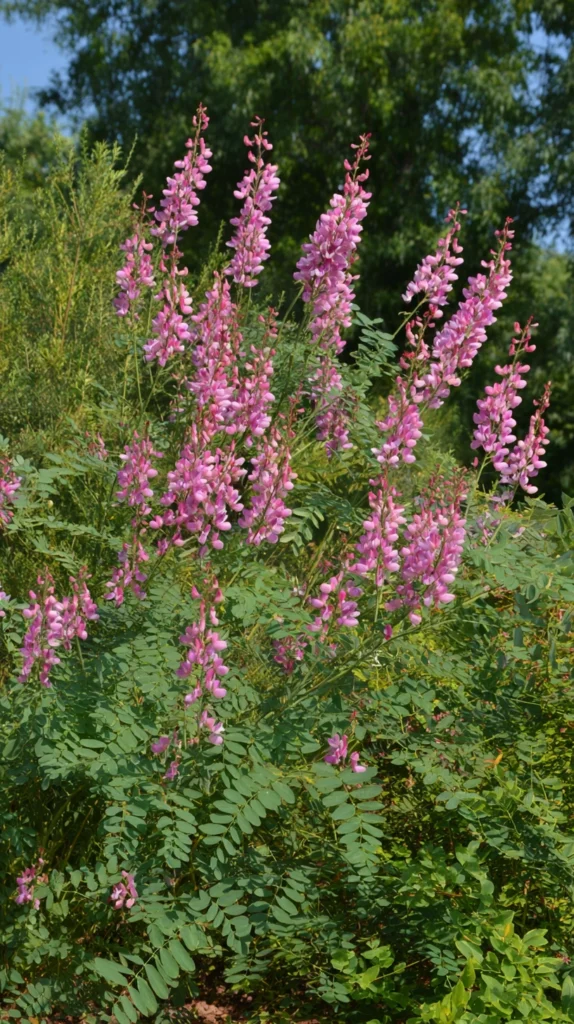
Indigofera is a graceful, arching shrub that produces its small pea-like flowers — typically in shades of pink, rose, or purple — in long racemes from midsummer through to autumn. The blooming period of a well-established indigofera routinely runs from July to October, making it one of the more underused but genuinely excellent long-season shrubs for a sunny border position.
The fine, pinnate foliage has an elegant, almost fern-like quality that makes the plant attractive throughout the growing season even before flowering begins. Indigofera heterantha and Indigofera amblyantha are both excellent species for garden use, producing their flowers prolifically over a long season on a plant that combines refined good looks with genuine toughness.
Pro Tip: Cut indigofera back to a low framework of stems in early spring in the same way as buddleja and caryopteris. Like those shrubs, indigofera flowers on new season growth and responds to hard annual pruning with vigorous new shoots that carry a prolific flower display throughout the summer and autumn. In mild winters indigofera may retain some of its stems intact, but cutting back hard regardless of the winter weather produces the best flowering results consistently.
10. Spiraea
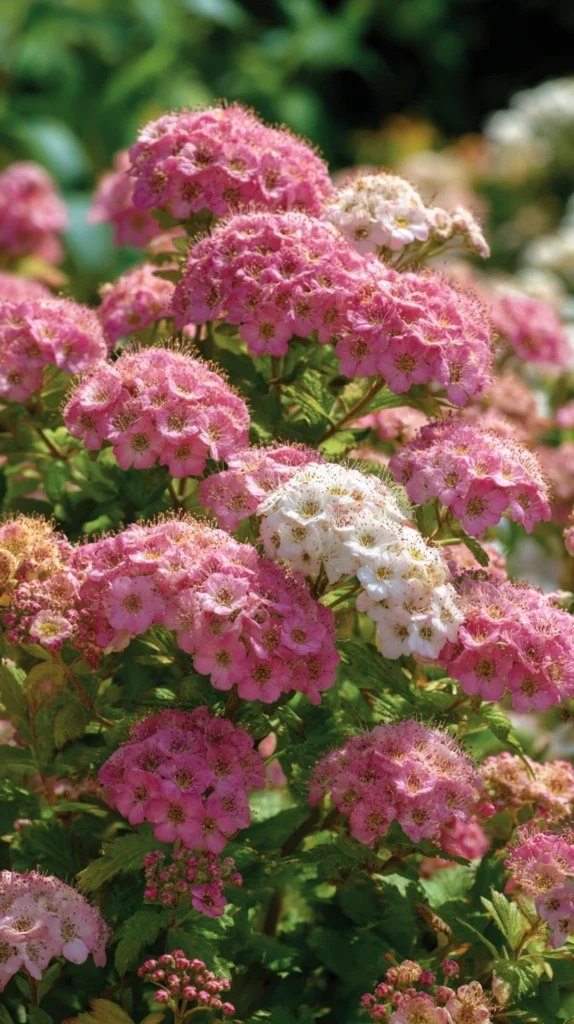
Spiraea is a genus of deciduous shrubs that contains some of the most reliably long-blooming plants in the garden. The summer-flowering spiraeas — particularly Spiraea japonica varieties like Anthony Waterer, Little Princess, and Gold Mound — produce their flat-topped clusters of tiny pink or white flowers from midsummer through to early autumn and respond to deadheading with a genuine second flush of blooms that extends the season further.
The compact habit of most spiraea varieties makes them excellent plants for the front of a shrub border where their long flowering performance can be appreciated at close range. The foliage of some varieties — particularly the golden-leaved forms — provides additional ornamental interest before and after the flowering season, making spiraea a genuinely multi-season garden plant.
Pro Tip: Deadhead spiraea regularly throughout the blooming season by removing the faded flower clusters promptly as they finish. Spiraea responds to deadheading more reliably than almost any other commonly grown shrub — plants that are deadheaded consistently throughout the summer produce flower flushes almost continuously from midsummer to autumn, while plants left undeadheaded produce one main flush and then largely stop. Regular deadheading is the single most effective maintenance task for maximising spiraea’s long-season flowering potential.
11. Oleander
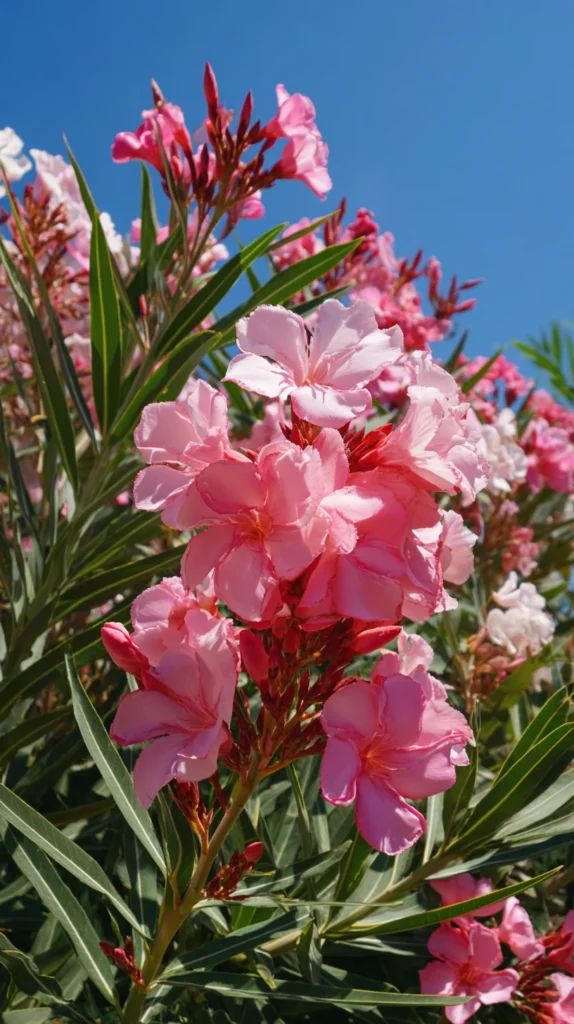
Oleander is a Mediterranean shrub of extraordinary long-season flowering performance — in warm climates it blooms almost continuously from late spring through to autumn, covering the plant in clusters of single or double flowers in shades of white, pink, red, salmon, or yellow for five to six months of the year. In cooler northern climates it performs best grown in a container that can be moved under cover for winter.
The bold, architectural foliage is attractive year-round and the plant tolerates drought, heat, and poor soil with remarkable equanimity — qualities that make it one of the most useful long-blooming plants for hot, dry garden conditions where many other shrubs struggle to perform. The flowers are lightly fragrant in the warmest weather, adding an additional sensory dimension to the already impressive visual display.
Pro Tip: All parts of oleander are highly toxic if ingested — leaves, flowers, stems, and even the water in which cut stems have been placed. This toxicity is important to be aware of in gardens used by children or pets, and hands should always be washed thoroughly after handling the plant. With appropriate awareness of this characteristic, oleander is a completely manageable garden plant — but the toxicity is significant enough to mention prominently whenever this shrub is recommended.
12. Weigela
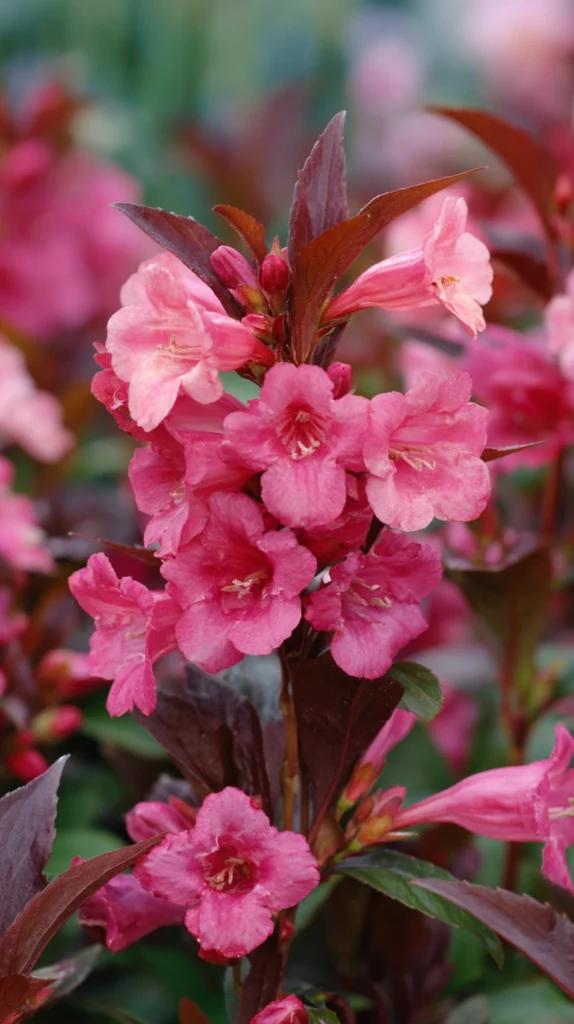
Weigela is a deciduous shrub that produces its funnel-shaped flowers — in shades of red, pink, white, or bicolored depending on the variety — in a generous main flush in late spring and early summer, followed by a reliable repeat flowering through the rest of summer and into autumn that keeps the plant in colour for a total period that few other shrubs of similar size can match.
Modern varieties like Weigela Florida Wine and Roses and the compact Weigela My Monet combine attractive foliage — dark burgundy in the case of Wine and Roses, cream-variegated in My Monet — with reliable long-season flowering that makes them genuinely multi-season garden shrubs. The flowers are attractive to hummingbirds in North America and to bees and other pollinators in European gardens.
Pro Tip: Prune weigela immediately after the main spring flowering flush by removing around a third of the oldest, thickest stems completely at the base. This renewal pruning encourages the plant to produce vigorous new stems from the base that carry the best repeat flowers later in the season. Weigela that is never pruned gradually fills with old, unproductive wood and the repeat flowering performance declines noticeably over time.
13. Hibiscus Syriacus — Rose of Sharon
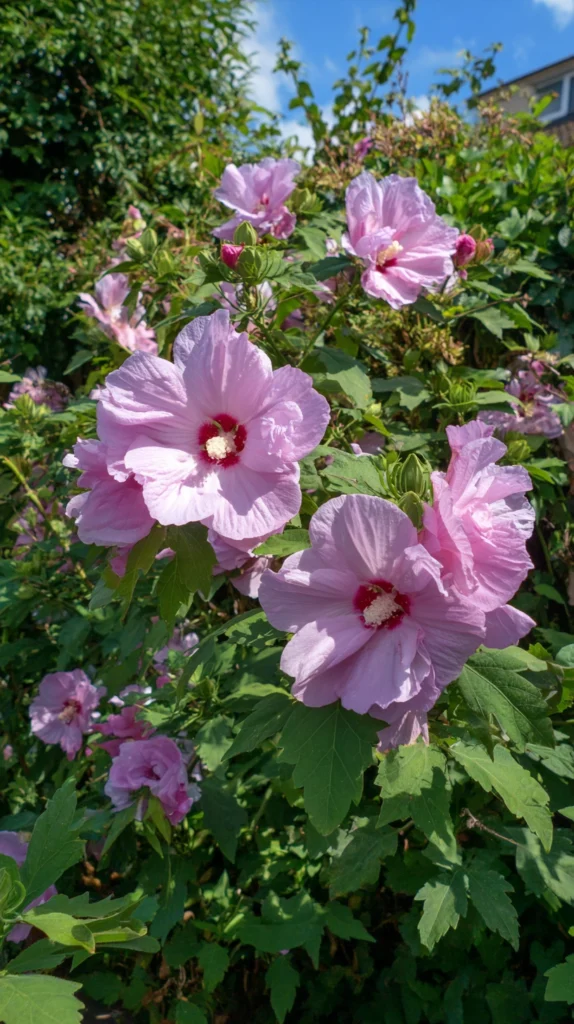
Hibiscus syriacus — the hardy garden hibiscus, also known as Rose of Sharon — is a late-season flowering shrub of remarkable generosity, producing its large, showy flowers from midsummer through to mid-autumn in a continuous display that provides colour at precisely the time of year when many other garden shrubs have finished their flowering season.
The individual flowers are large and striking — resembling the tropical hibiscus in form but produced on a fully hardy deciduous shrub that tolerates cold winters without any protection. Varieties like Hibiscus syriacus Blue Bird, Hamabo, and the double-flowered Ardens produce their flowers so prolifically and over such an extended period that the shrub is rarely without bloom from July to October.
Pro Tip: Give Hibiscus syriacus the warmest, most sheltered and sunniest position available in the garden. This shrub flowers best and for the longest period in maximum heat and light — it is genuinely a plant that rewards a hot south or west-facing wall position with a flowering display that cool, shaded conditions cannot produce. In a cold or shaded position it survives but flowers briefly and reluctantly. In full sun and warmth it is one of the most spectacular long-season flowering shrubs available.
14. Fuchsia
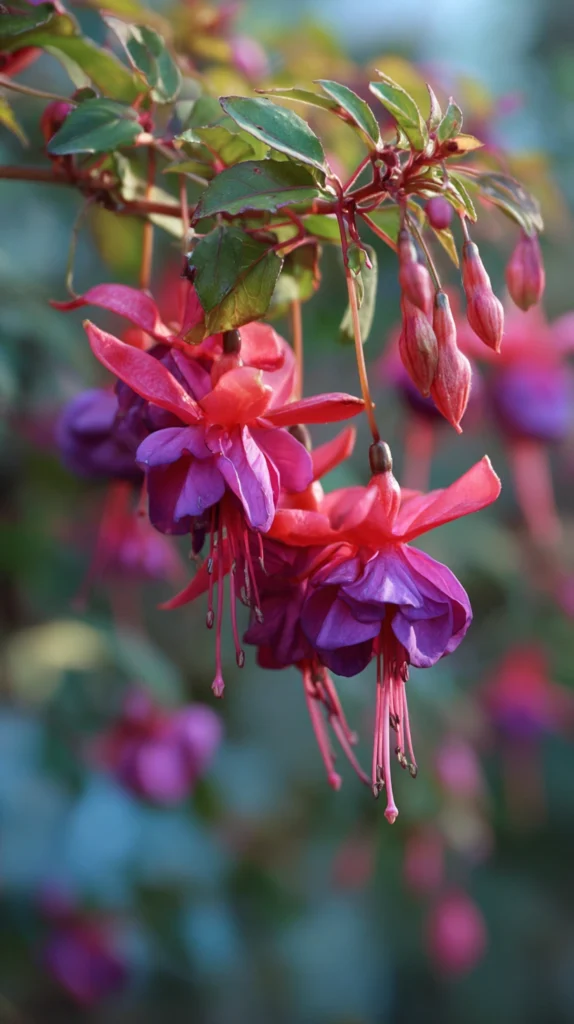
Hardy fuchsia varieties are among the most prolific and long-season flowering shrubs available for a temperate garden — producing their characteristic pendulous flowers in combinations of red, pink, purple, and white from midsummer through to the first hard frosts of autumn, and in mild gardens sometimes beginning as early as June and continuing into November.
Fuchsia magellanica and its many cultivars are the most reliably hardy and the most prolifically flowering for outdoor garden use. The arching stems covered in pendulous flowers from midsummer onward create a plant that looks like a living chandelier at the height of its performance — one of the most dramatic and generous flowering effects available from any deciduous shrub.
Pro Tip: Cut hardy fuchsia stems back to ground level in early spring rather than attempting to preserve the previous year’s framework. Hardy fuchsias reliably regenerate from the root system even after the stems have been killed back completely by frost, and fresh growth from the base produces better flowering than attempting to maintain the old framework through winter. In cold gardens mulch the base heavily in late autumn to protect the root system from severe frost.
15. Vitex Agnus-Castus — Chaste Tree
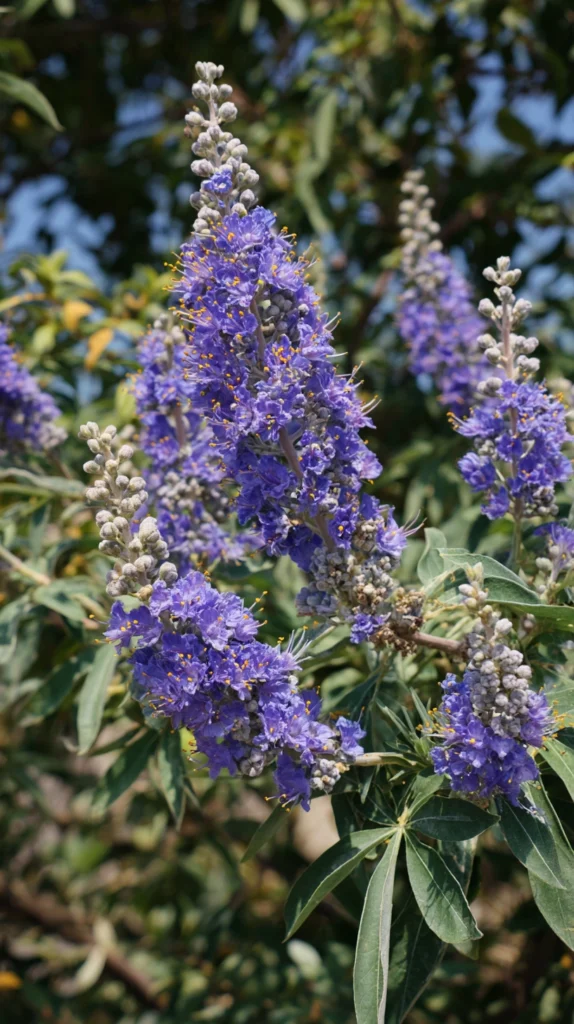
Vitex agnus-castus is a large shrub or small tree that produces long spikes of lavender-blue, pink, or white flowers from midsummer through to autumn — a blooming period that routinely runs from July to October and fills a time in the garden calendar when blue-flowered plants of any size are particularly scarce and valuable.
The aromatic, palmate foliage has a Mediterranean character that makes the whole plant attractive throughout the growing season, and the flower spikes — which can reach 30 centimetres in length on a well-established plant — are intensely attractive to bees and butterflies throughout the blooming period. It performs best in full sun with excellent drainage and is particularly well-suited to hot, dry gardens where its Mediterranean origins give it a natural advantage.
Pro Tip: Prune vitex agnus-castus hard in early spring — cutting back to a low framework of permanent stems just as the new growth begins to emerge. Like buddleja, which it resembles in its growth habit and flowering performance, vitex flowers on new season growth and responds to hard annual pruning with the most vigorous and prolific flowering display.
Plants left unpruned become very large and woody with diminishing flower production at the tips of increasingly long, bare stems.
Plant for the Long Season and Never Look Back
A garden planted with long-blooming trees and shrubs is fundamentally different from one that peaks for a fortnight and then fades. It is a garden that rewards you consistently — with colour in June and still colour in October, with fragrance in July and pollinators in September, with something worth looking at every single time you step outside.
Choose even three or four plants from this list and position them thoughtfully so their blooming periods overlap and succeed each other through the season. The result is a garden that feels genuinely alive for months rather than weeks — and once you have experienced that, the brief-blooming alternatives become very difficult to go back to.