
15 Meditation Corner Ideas for Gardens
The garden meditation corner is one of the most personally valuable and most consistently underdesigned additions available to the domestic outdoor space. Most gardens are designed around activity, the vegetable patch that produces food, the lawn that accommodates play, the patio that hosts gatherings, the borders that reward the gardener’s labor with seasonal display.
The meditation corner is the garden’s counterpoint to all of this productive, social, and physical activity. It is the space designed specifically for stillness, for the quiet that the modern household’s interior rarely offers and that the garden, with its natural sounds and its connection to the living world beyond the domestic routine, is uniquely positioned to provide.
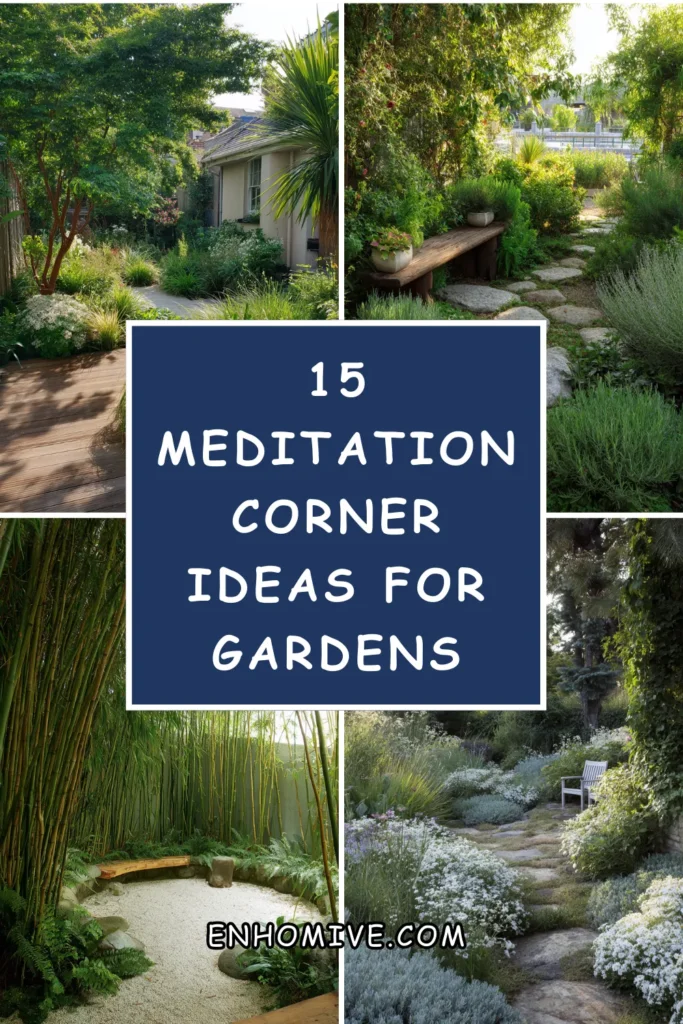
The meditation corner’s design requirements are specific and in some respects contrary to the requirements of other garden spaces. Where the outdoor dining area needs to be immediately accessible and socially connected to the home’s interior, the meditation corner needs a degree of separation and enclosure that creates the psychological boundary between the meditating mind and the household’s daily activity.
Where the lawn needs to be open and visually generous, the meditation corner needs the enclosure of defined boundaries that create the sense of a space within a space.
The garden meditation corner does not require a large footprint. Some of the most effective meditation corners in domestic gardens occupy no more than two by two meters of garden area, because the quality of the space is determined not by its size but by the specific combination of enclosure, sensory calm, comfortable seating, and natural beauty that the meditation practice most benefits from. Here are fifteen ideas for creating a garden meditation corner of genuine restorative quality.
1. A Bamboo-Enclosed Circular Sanctuary
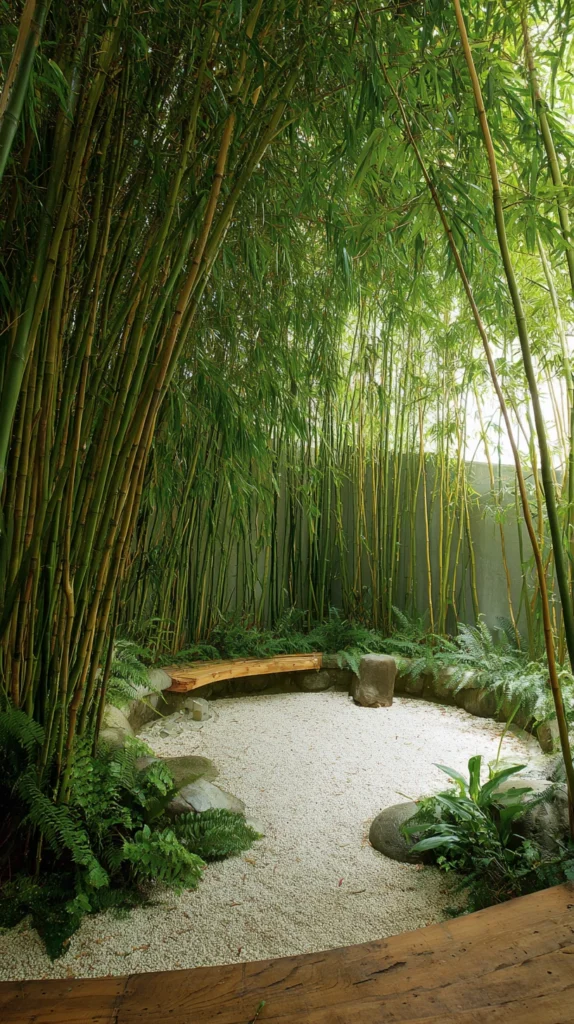
A circular clearing enclosed by a dense planting of bamboo, its tall, straight culms creating a living wall of complete visual privacy and extraordinary acoustic quality, creates a meditation space of profound natural enclosure that no built structure can replicate with the same organic completeness. The bamboo’s specific sound in the wind, its hollow culms creating the gentle percussion of the wind instrument, provides the natural white noise that masks the ambient sounds of the surrounding environment.
The bamboo enclosure should be of a clumping variety rather than a running variety, as running bamboo spreads aggressively beyond its planted boundary and creates the maintenance problem that the meditation corner’s low-maintenance philosophy specifically resists. Clumping bamboo varieties maintain a defined boundary while creating the dense, tall enclosure that the meditation space requires.
The circular clearing within the bamboo enclosure should be surfaced with a material of sensory quality appropriate to the barefoot or sock meditation position. Fine gravel of smooth, rounded aggregate creates the gentle texture underfoot that the raked Zen garden tradition values. A low moss ground cover creates the specific softness and the cool, living quality of the forest floor. A simple timber deck of smooth, warm boards creates the dry, comfortable platform that the seated meditation position most practically requires.
The entrance to the bamboo sanctuary should be a simple opening of minimal width, just sufficient for a single person to pass through, that creates the specific quality of crossing a threshold that the entry into a dedicated meditation space benefits from. The narrow entrance reinforces the psychological boundary between the outside world and the sanctuary within, creating the transition that the shift from the daily mind to the meditative mind most naturally uses.
2. A Japanese-Inspired Zen Corner
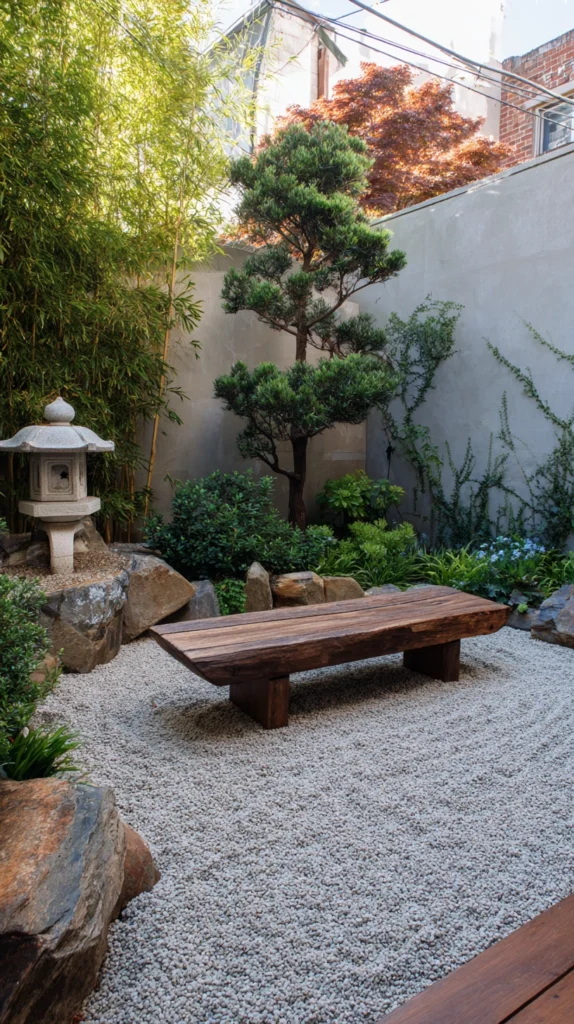
A meditation corner designed around the principles of the Japanese garden tradition creates a space of extraordinary sensory calm and visual simplicity whose specific aesthetic qualities, the raked gravel, the mossy stone, the carefully placed specimen plant, and the absence of decorative clutter, create the environmental conditions that the meditative state most naturally arises within.
The raked gravel garden, a defined area of fine gravel or crushed granite maintained in a raked pattern of concentric circles or parallel lines, is the Zen garden’s most iconic element and the most practically achievable for the domestic garden meditation corner. A contained section of raked gravel of two by two meters, bordered by a simple timber edge or a low stone kerb, creates the visual focus of complete simplicity that the Zen tradition values above all other aesthetic qualities.
A single specimen plant within or beside the raked gravel area, a Japanese maple in its autumn color, a cloud-pruned boxwood, or a carefully shaped pine, creates the organic counterpoint to the gravel’s mineral precision. The single plant rather than the multiple planting reflects the Zen garden’s compositional philosophy of the meaningful singular rather than the abundant multiple, and creates a visual focus of specific, contemplative quality.
Stone lanterns, a simple water basin, and a timber bench of minimal profile, each chosen for their specific quality and their relationship to the overall composition rather than accumulated as decorative elements, complete the Zen meditation corner’s material vocabulary. The restraint of the object selection is the most difficult and the most important design quality to achieve and maintain in the Zen-inspired meditation corner.
3. A Wildflower Meadow Meditation Seat
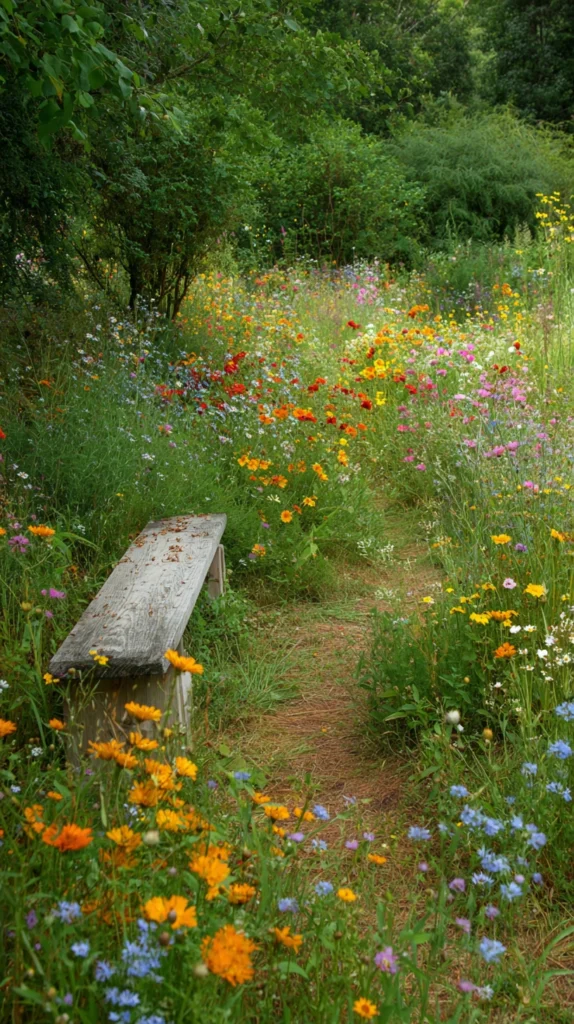
A simple timber bench or a stone seat positioned within or at the edge of a wildflower meadow section of the garden, surrounded by the movement and the color and the insect activity of a meadow planting in full summer bloom, creates a meditation space of extraordinary sensory richness whose specific quality of being within a living, moving, sound-filled natural environment creates one of the most grounding and most joyful forms of meditative experience available in the domestic garden.
The wildflower meadow itself requires a period of establishment that the meditation corner’s design must accommodate. A meadow sown from seed in autumn or spring takes one to two growing seasons to reach the density and the species diversity that creates the full sensory richness of the mature meadow. The meditation corner’s seating can be positioned and used from the first growing season while the meadow reaches its full development around it.
The seating within the wildflower meditation corner should be of a material that relates to the meadow’s natural character. A simple timber bench of untreated or naturally weathered oak, its surface developing the silver-grey patina of exposed exterior timber over successive seasons, creates a seat of complete material authenticity within the meadow’s organic context. A stone seat of local material creates an even more permanent and more geologically connected seating element.
A mown path leading from the main garden through the meadow to the meditation seat creates the physical approach that gives the journey to the meditation corner its specific quality of transition. The contrast between the mown path’s neat precision and the wildflower meadow’s abundant informality creates a walking meditation in miniature.
4. A Water Feature Meditation Corner
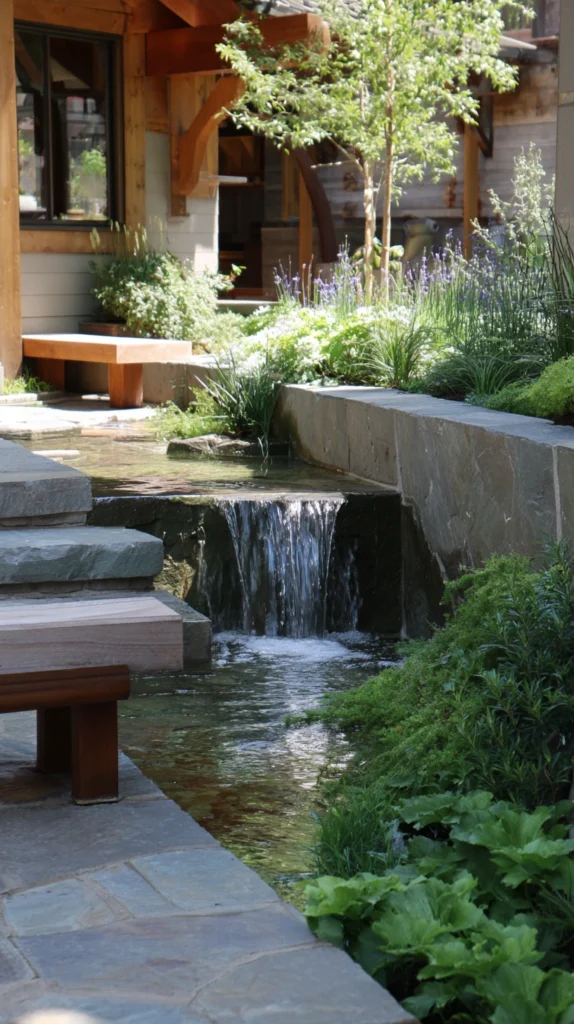
A meditation corner organized around a water feature creates a space whose acoustic quality, the specific, continuous sound of moving water, provides the most effective natural masking of intrusive ambient sound available in the domestic garden. The sound of water is physiologically associated with the reduction of the stress response, and its presence in the meditation corner creates the specific quality of sensory calm that the meditation practice most benefits from.
The water feature for the meditation corner should be chosen for its sound quality as much as its visual quality. A recirculating pump moving water over a simple weir of stone or slate creates the gentle, consistent sound of a shallow stream. A millstone fountain whose water wells up from the stone’s center and spreads silently across its surface creates the visual quality of moving water with the more subtle acoustic quality of a surface disturbed rather than falling water.
A small pond of still water, its surface reflecting the sky and the surrounding planting with the specific quality of a natural mirror, creates the meditation corner’s most visually contemplative water element. The still surface is not acoustically active but its visual quality, the reflected sky, the movement of reflected clouds and leaves, and the occasional ripple of a landing bird or a rising fish, creates a visual focus of sustained meditative interest.
Position the meditation seating at a specific distance from the water feature that places the sound at the optimum level for meditation, present enough to mask intrusive sounds but not so loud that it dominates the meditative experience. A distance of one to two meters from a recirculating fountain creates the acoustic relationship that most people find most supportive of the meditative state.
5. A Treehouse Meditation Platform
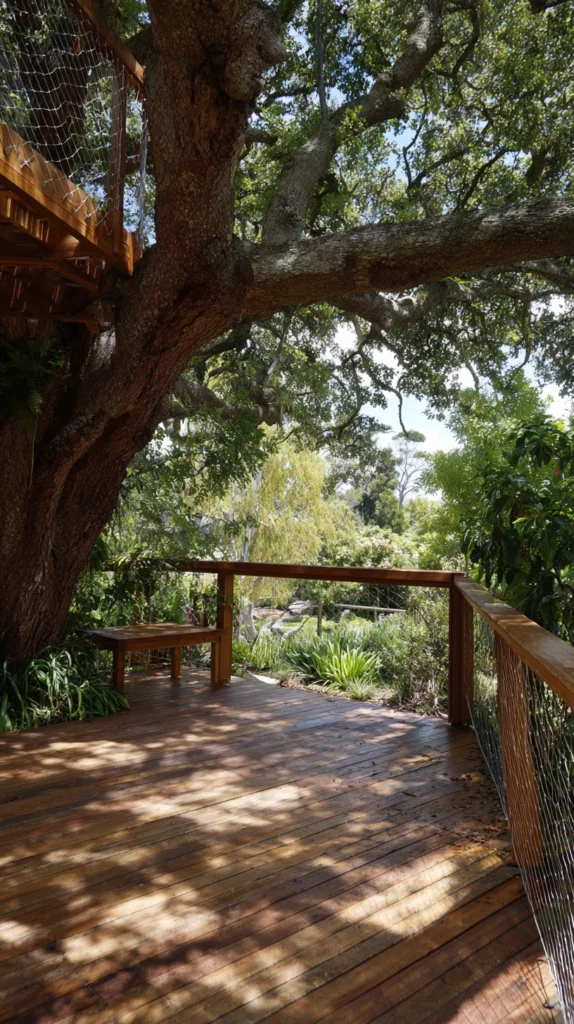
An elevated timber platform built around or between the branches of a mature garden tree, accessed by a simple timber stair or a series of timber steps fixed to the tree’s trunk, creates a meditation space of complete otherworldly quality whose specific elevation above the garden’s ground plane creates the psychological separation from the domestic routine that the most complete meditation environments provide.
The platform does not need to be a fully enclosed structure to provide the meditation corner’s required sense of enclosure. A simple deck with a low rail on the open sides, the tree’s canopy providing the overhead coverage and the surrounding branches providing the sense of being within a living structure, creates the meditation platform’s specific quality of elevated, organic enclosure that no ground-level structure can replicate.
The platform’s surface should be of smooth, warm timber that is comfortable for the seated or lying meditation positions that extended meditation practice naturally explores. A timber deck of sufficient area for a meditation cushion, a small side table for water and incense, and the space for a comfortable, unselfconscious shift of position during longer sessions creates the platform’s complete functional provision.
Sunrise and sunset meditation sessions on the elevated platform create the specific quality of observing the garden’s light change from above and within the tree canopy in the way that the ground-level meditation corner cannot provide.
The elevated position places the meditating person at the level of the garden’s birds, within the movement of the wind through the tree’s leaves, and at the specific elevation where the garden’s sounds arrive from below rather than from all sides simultaneously.
6. A Sensory Herb Garden Corner
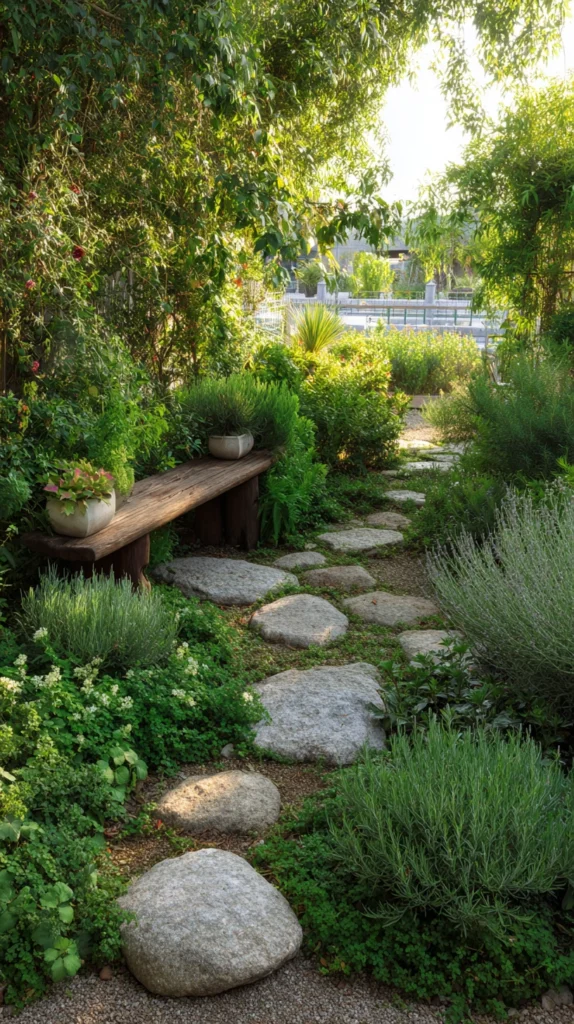
A meditation corner surrounded by a planting of fragrant herbs creates a space whose olfactory quality provides the most direct and most physiologically powerful sensory support for the meditative state available in the domestic garden.
The specific fragrances of lavender, rosemary, chamomile, lemon balm, and the various aromatic herbs of the Mediterranean tradition are each associated with specific physiological responses that the meditation practice benefits from directly.
The herb planting should be arranged to surround the meditation seating on at least three sides, creating an olfactory enclosure that is as important as the visual enclosure of the conventional meditation corner’s boundary. Low-growing herbs at the seating’s immediate edge, lavender, chamomile, and thyme whose fragrance is released by the proximity of the sitting body, create the most immediate and most direct olfactory experience.
The meditation seating within the herb garden corner should be positioned at the height that places the seated meditator’s face at the level of the herb planting’s most fragrant zone. A low bench or a ground-level cushion platform places the face within the fragrant cloud of the surrounding herb planting rather than above it, creating the most complete olfactory meditation experience.
A simple path of stepping stones through the herb planting, leading from the main garden to the meditation seat through a corridor of fragrant planting that brushes against the passing body and releases its fragrance as a walking meditation approach, creates the sensory transition from the outer garden to the meditation corner’s inner sanctuary with a quality of botanical welcome that no other garden path can provide.
7. A Minimalist Stone and Gravel Corner
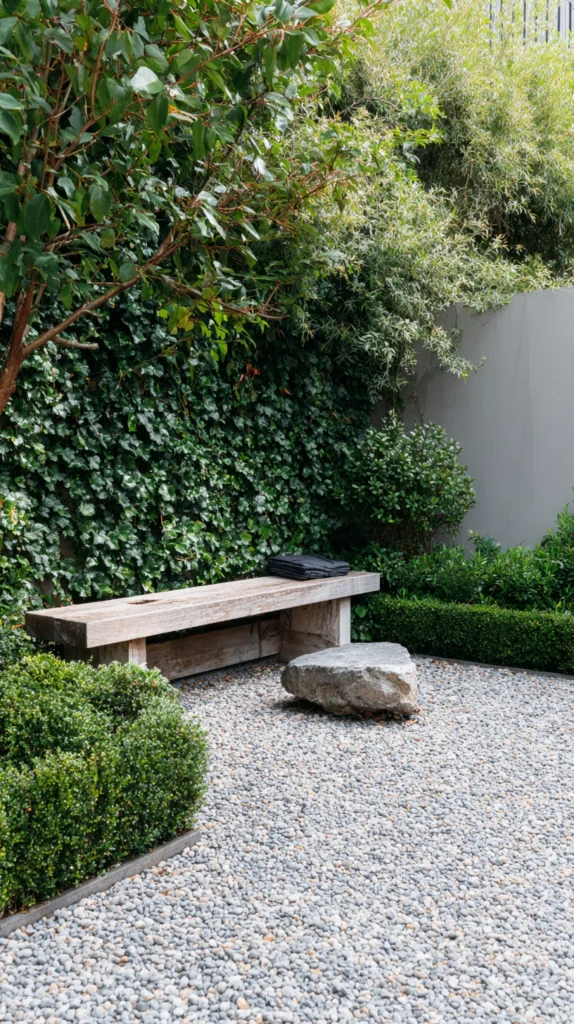
A meditation corner of complete material minimalism, a defined area of fine gravel or crushed stone with a single stone seat or a simple timber bench, enclosed by a low clipped hedge or a simple timber fence, creates a space whose deliberate emptiness and material restraint creates the specific environmental quality of the meditation corner that requires nothing of its occupant except the willingness to be still.
The gravel surface should be of a quality and a depth that creates both the visual quality of the composed mineral surface and the practical quality of adequate drainage that prevents the standing water that renders the outdoor meditation space unusable after rain. A depth of seventy to one hundred millimeters of gravel over a permeable membrane creates the drainage performance and the surface depth that the raked gravel pattern requires for its visual expression.
The enclosing hedge, in a species of dense, fine-textured foliage that clips to a clean, precise surface, creates the meditation corner’s most architectural boundary. Boxwood, yew, and hornbeam are the species whose clipping quality creates the most precise and most visually authoritative enclosure.
The hedge’s height of one hundred and twenty to one hundred and fifty centimeters creates the seated privacy that the meditation practice requires without the enclosed, claustrophobic quality of a taller boundary.
A single object of contemplative quality within the minimalist stone corner, a smooth river stone of significant size and beautiful form, a simple ceramic bowl for water offerings, or a small cast stone figure of genuine artisanal quality, creates the visual focus that the meditation corner’s emptiness directs the meditating eye toward with the specific quality of the intentional focal point within the composed, empty space.
8. A Covered Pergola Meditation Space
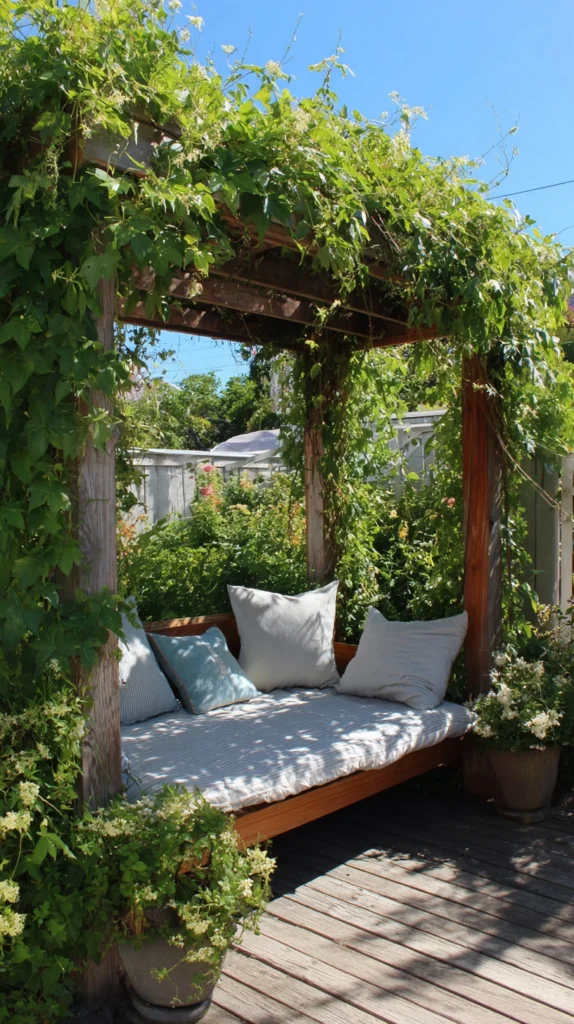
A pergola of modest dimensions, three by three meters or smaller, positioned in a quiet corner of the garden and furnished with a comfortable bench seat or a daybed, climbing plants trained over its overhead structure, and the specific combination of partial shade and filtered light that the overhead coverage creates, provides the meditation corner with all-weather protection and the specific quality of sheltered outdoor space that neither the fully open nor the fully enclosed meditation space possesses.
The pergola’s climbing plant selection should be chosen for the specific sensory qualities that suit the meditative environment. Wisteria creates the most dramatically beautiful pergola covering in late spring with its cascading flower clusters and its specific, heavy fragrance. Jasmine creates the most fragrant evening meditation environment of any climbing plant available in the temperate garden. A climbing rose in a soft, muted tone creates the most classically beautiful pergola covering with the longest flowering season.
The meditation bench or daybed beneath the pergola should be of genuine reclining quality for the meditation positions that horizontal or semi-reclined practice employs. A daybed of adequate length for the full-body reclining position, with a cushion of outdoor-grade foam in a depth of eight to ten centimeters and a fabric of adequate weather resistance, creates the seating comfort that extended meditation sessions require without the daily concern of carrying cushions in and out of the house.
The pergola’s lighting provision, simple string lights wound through the overhead structure or a single pendant light of weather-resistant construction hung from the pergola’s central beam, creates the evening meditation corner of complete atmospheric quality. The warm, gentle light of the pergola after dark creates a meditation environment of extraordinary intimacy and beauty that the daytime pergola’s natural light cannot provide in the same specific atmospheric form.
9. A Sound Garden Meditation Corner
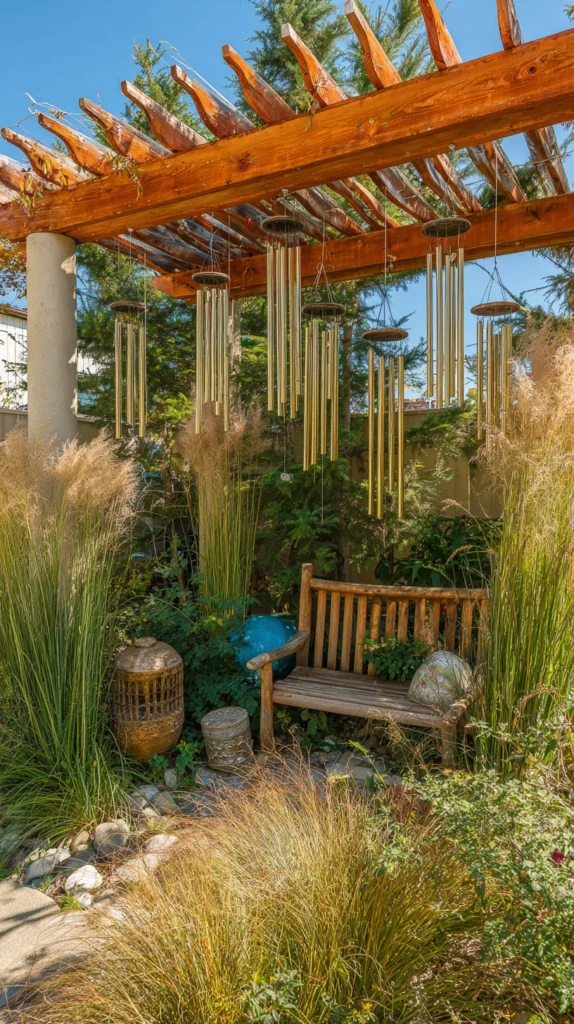
A meditation corner designed around the specific acoustic qualities of the garden’s own sounds, wind chimes, bamboo rustling, water movement, and the careful positioning of planting that creates the specific sound environments of the natural world, creates a meditation space whose primary design quality is the acoustic environment rather than the visual one.
Wind chimes of varied materials and varied scales create the specific acoustic texture of the sound garden. Metal chimes in a minor pentatonic tuning create the specific harmonic quality of the traditional Asian wind chime whose tones are consistently described as calming by the neurological research into sound and the stress response. Bamboo chimes create the softer, more organic sound of hollow wood struck by the wind. Glass chimes create the brightest, most crystalline sound of the three materials.
Rustling grasses planted in the sound garden’s boundary, including the tall, plumed forms of miscanthus and pennisetum whose seed heads create the specific soft sound of movement in light wind, create the living acoustic boundary of the sound meditation corner.
The grasses’ sound is continuous in even the lightest breeze and creates the specific quality of gentle, organic white noise that the meditation practice benefits from most directly.
Position the sound garden meditation corner in a location that receives the garden’s prevailing wind at its gentlest, where the acoustic elements are reliably activated by the ambient breeze rather than requiring the stronger wind conditions that would disrupt the meditation practice with excessive sound. The relationship between the wind’s typical strength and the sound elements’ activation threshold is the sound garden’s most important siting consideration.
10. A Moon Garden Meditation Corner
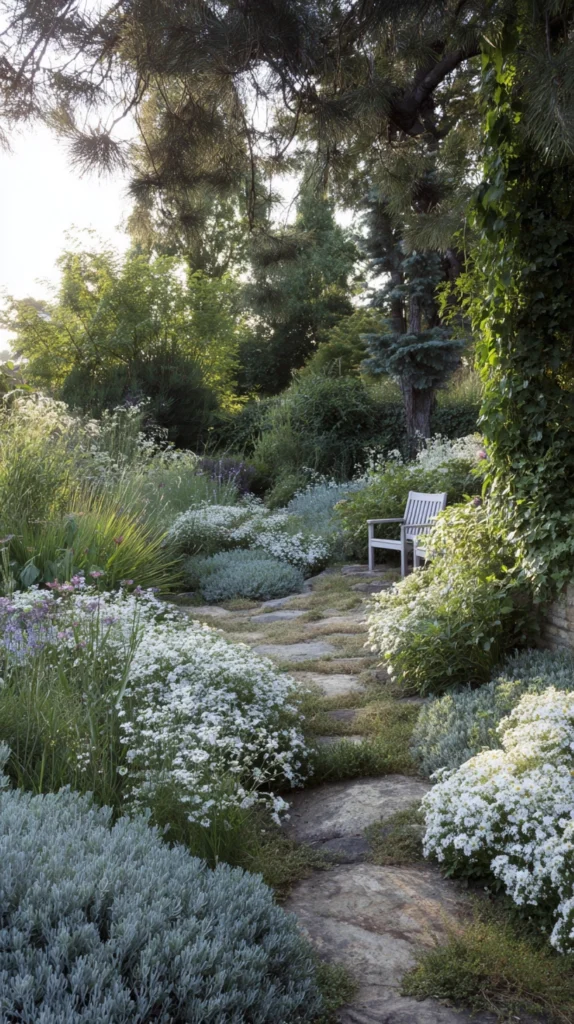
A meditation corner designed for evening and nighttime use, planted with the white-flowering and silver-foliaged plants that are most visible and most beautiful in moonlight and artificial light of warm tone, creates a garden meditation space that is specifically oriented toward the evening meditation practice rather than the daytime session that most garden spaces default to.
The moon garden’s planting palette is defined by its specific relationship to low-light conditions. White flowers that reflect every available light source with maximum efficiency, white roses, white jasmine, white nicotiana, and the various white-flowering perennials and annuals, create the planting that remains visible and beautiful after sunset when the colored flower is reduced to a dark silhouette. Silver-foliaged plants, artemisia, stachys, and the various silver-leaved shrubs, create the reflective foliage that amplifies the moonlight’s cool quality.
The fragrant plants of the moon garden are particularly important because many of the most powerfully fragrant garden plants release their fragrance primarily in the evening. Night-scented stocks, nicotiana, jasmine, and the various evening-fragrant plants create the moon garden’s olfactory quality of intensifying perfume as the evening deepens, creating the specific sensory richness of the nighttime garden that the daytime meditation corner’s planting cannot approach.
Lighting in the moon garden meditation corner should be of the minimum intensity consistent with safe navigation to and from the seating. A simple solar-powered lantern at the path’s edge, or a low-voltage stake light at the seating’s immediate surroundings, provides adequate orientation without the light level that disrupts the moon garden’s specifically low-light, star-visible quality.
11. A Rock Garden Meditation Space
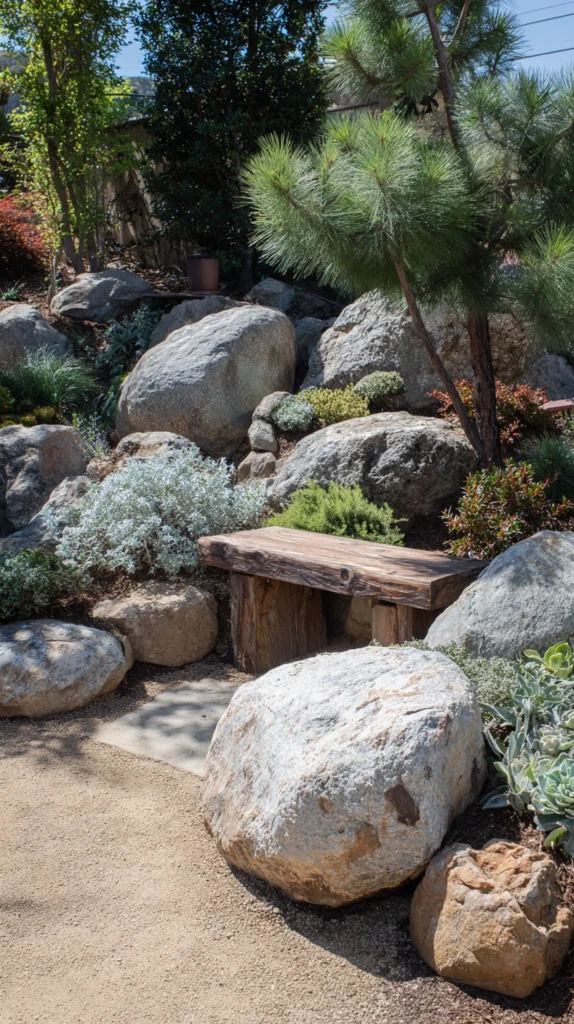
A meditation corner created within a rock garden, its seating positioned among the carefully placed stones and the low-growing alpine and succulent planting that characterizes the rock garden tradition, creates a meditation space of extraordinary geological character whose specific quality of age and permanence creates the meditative context of the deep time that the stone’s geological origin represents.
The rocks in the meditation rock garden should be of genuine geological interest, selected for their specific form, their surface texture, and their visual quality from the meditation seating position. A single large stone of exceptional form positioned as the meditation corner’s primary visual focus creates the contemplative object that the Zen stone garden tradition identifies as the garden’s most important compositional element.
The low planting among and between the rocks, including the specific species of drought-tolerant alpine plants, sedums, sempervivums, and the various low-growing plants of the rock garden tradition, creates a planting of extraordinary species diversity in a very small footprint. The rock garden’s planting richness creates a meditation surface of continuous biological interest whose individual plant forms reward the close, sustained attention of the meditative state.
The rock garden meditation corner’s maintenance requirement is lower than most other garden meditation spaces because the drought-tolerant plants of the alpine and rock garden tradition require minimal watering, minimal fertilizing, and minimal intervention beyond the occasional removal of spent flowers and the cutting back of any plants that spread beyond their allotted position. The low-maintenance quality suits the meditation corner’s philosophy of simplicity.
12. A Woodland Glade Meditation Space
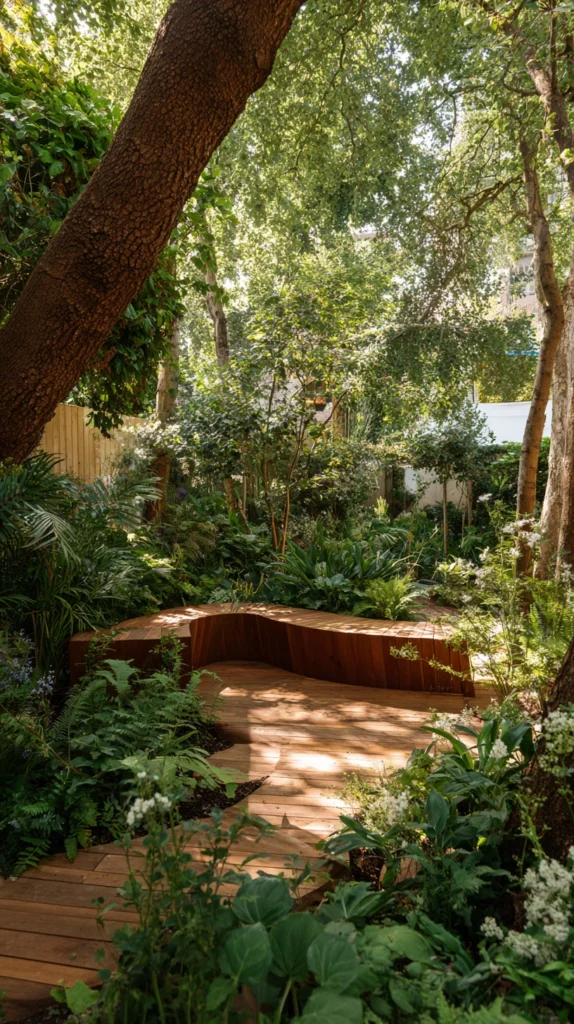
A meditation corner created within a woodland area of the garden, or a planting of woodland-character trees and shade-tolerant plants that creates the woodland glade experience within the domestic garden’s boundaries, creates a meditation space of profound organic enclosure and the specific quality of filtered, dappled light that the woodland interior provides in its most beautiful and most atmospherically distinct form.
The woodland glade’s light quality is its most distinctive and most meditation-supportive environmental quality.
The dappled light that filters through the leaf canopy overhead, creating patterns of light and shadow on the ground that shift continuously with the movement of the wind in the canopy, provides a visual focus of extraordinary dynamic quality that the open garden’s direct light cannot approach. Watching the shifting light patterns on the ground below the canopy is one of the simplest and most complete forms of visual meditation available in any garden.
Woodland planting of adequate density to create the canopy effect, using multiple tree species of complementary scale and seasonality, creates the glade’s living ceiling. A large specimen tree as the canopy’s primary structure, with smaller understory trees and large shade-tolerant shrubs beneath, creates the layered woodland structure that the woodland glade meditation space requires for its specific atmospheric quality.
A simple timber seat of weathered quality, positioned at the glade’s center where the canopy overhead is densest and the filtered light quality is most pronounced, creates the meditation seating with the most complete relationship to the woodland environment.
The seat should be of a low-maintenance material that weathers naturally rather than deteriorating, so that the woodland glade’s meditation corner requires the same minimal intervention that the woodland garden itself characteristically demands.
13. A Raised Platform with Surrounding Planting
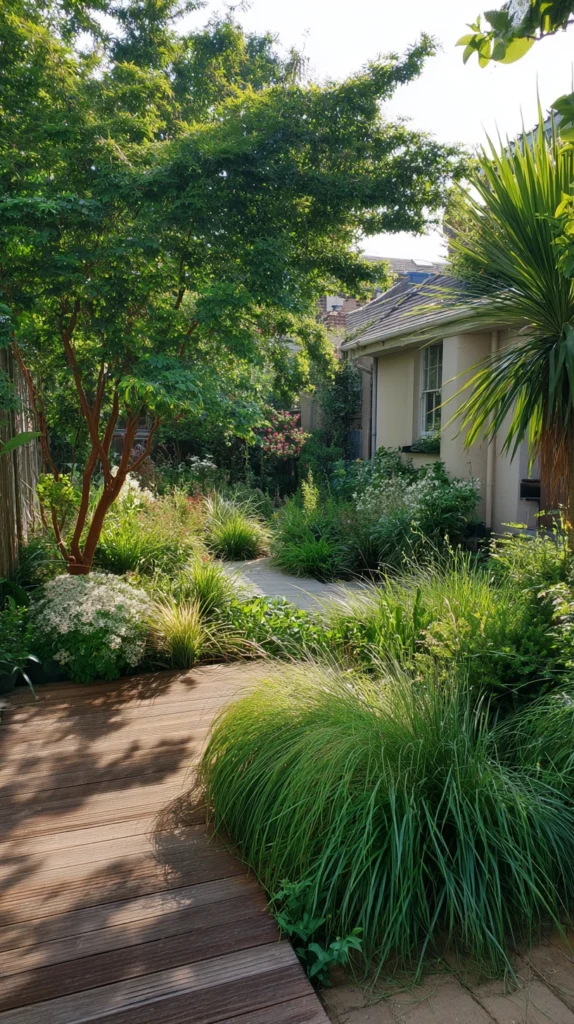
A raised timber platform of modest elevation, twenty to thirty centimeters above the garden’s ground level, surrounded by a dense planting of fragrant and textural plants that creates an enclosing border at the platform’s edge, creates a meditation corner of defined elevation and complete planting enclosure that combines the specific qualities of the elevated and the planted meditation space in a single, spatially coherent form.
The platform’s elevation creates a subtle but perceptible sense of being above the surrounding garden rather than within it, a quality of overview that is psychologically associated with the specific form of relaxed awareness that meditation practice cultivates.
The raised position places the seated meditator’s eye level above the surrounding planting’s dense middle zone and at the level of the planting’s upper flowers and foliage, creating a visual relationship with the surrounding plants that the ground-level seat cannot provide.
The surrounding planting at the platform’s edge should be dense enough to create the visual enclosure that the meditation space requires while allowing the planting’s fragrance and the sound of insects and wind movement within it to reach the platform’s seated occupant. Lavender at the platform’s immediate edge, with taller ornamental grasses and fragrant shrubs beyond, creates the layered planting boundary of sensory richness.
A simple step at the platform’s entrance, defined by a change of material or a slight widening of the platform’s edge, creates the threshold crossing that marks the entry into the meditation space as a specific, intentional act rather than an incidental movement through the garden. The threshold, even at the minimal scale of a single raised step, creates the psychological boundary that the meditation corner’s separation from the surrounding garden most benefits from.
14. A Winter-Ready Four-Season Meditation Corner
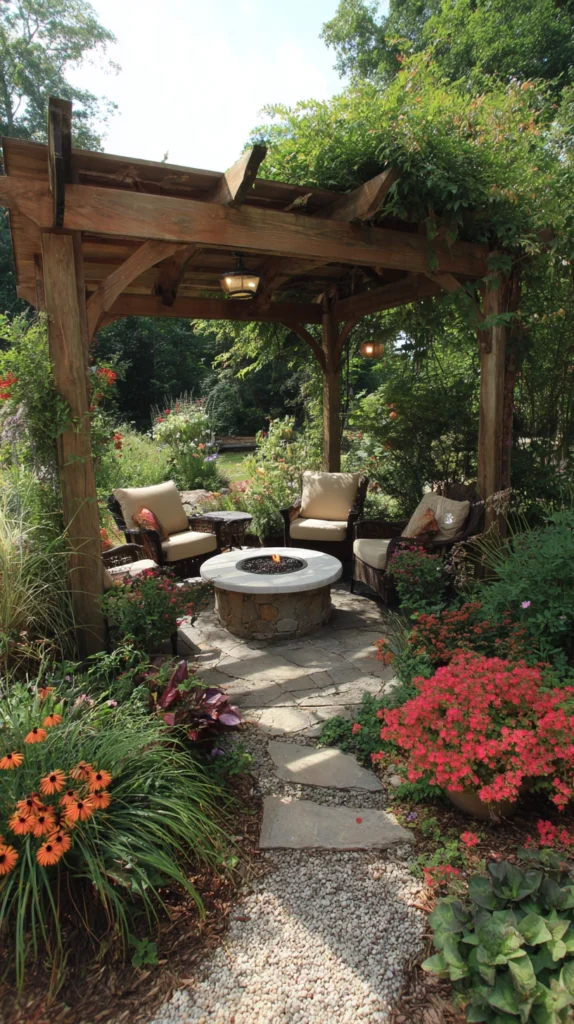
A meditation corner designed for year-round use, with a covered structure that provides rain protection, a heat source for the cold months, and the planting selection that creates sensory interest and beauty in all four seasons, creates the most personally valuable and most consistently used garden meditation space available. The meditation corner that is only usable in summer provides its restorative benefit for three months of the year. The four-season meditation corner provides it every day.
The covered structure for the four-season meditation corner should provide adequate overhead protection for the rainfall conditions of the specific climate, with a roof of sufficient pitch and extent to keep the seating dry in the prevailing rain direction. A lean-to structure fixed to the house or garden wall creates the most weather-protected and the most structurally stable covered meditation space at the most economical construction cost.
The heat source for the cold season meditation corner, a small patio heater of the infrared variety whose warmth is felt directly on the body rather than heating the surrounding air that the open structure cannot retain, creates the thermal comfort that extended outdoor sitting in cool temperatures requires.
A small fire pit at the meditation corner’s center creates the alternative heat source whose specific quality of fire, the visual focus of the moving flame and the specific warmth of radiant heat from a real fire, provides the most atmospherically complete cold-weather meditation environment.
The four-season planting for the meditation corner should include species whose interest is distributed throughout the year rather than concentrated in a single season. Spring bulbs for the late winter and early spring.
Summer fragrance from the lavender and the roses. Autumn color from the Japanese maple or the ornamental grass seed heads. Winter structure from the evergreen framework of clipped hedging, the bark of the winter-interest trees, and the skeletal beauty of the deciduous plants whose form is most clearly visible when they are free of their foliage.
15. Design the Meditation Corner for Your Specific Practice
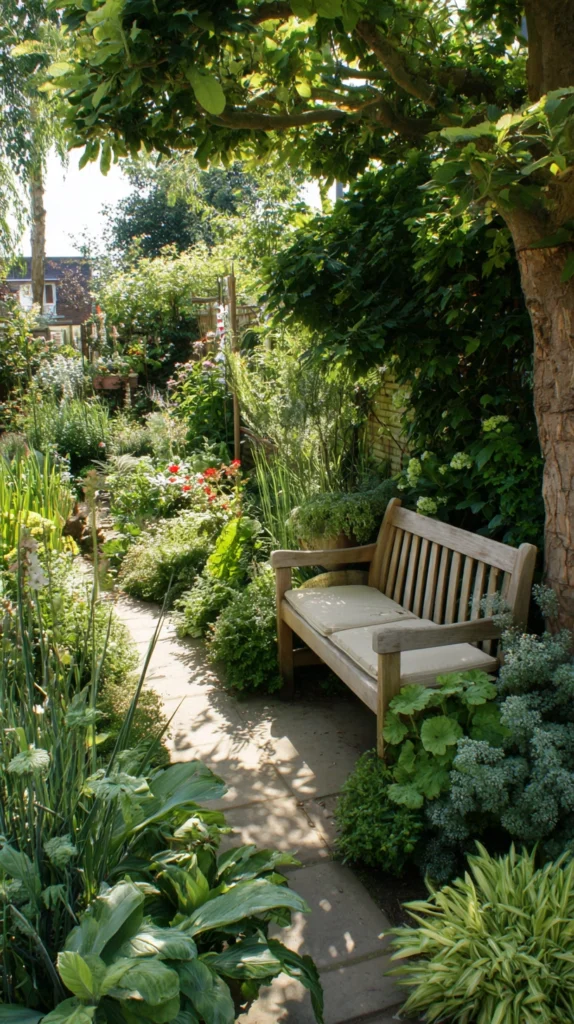
The final meditation corner idea is the most important and the most personally specific. It is the commitment to designing the meditation corner for the specific form of meditation practice that the household’s meditators actually engage in, rather than the generic meditation space that addresses no specific practice with complete effectiveness.
The seated mindfulness meditator needs a level, comfortable, dry seating position with a specific visual focus and an acoustic environment of sufficient calm for the internal attention that the mindfulness practice requires. The walking meditation practitioner needs a defined path of adequate length for the slow, deliberate walking practice, with a clear, unobstructed surface and a boundary that defines the walking meditation’s extent.
The yoga practitioner whose practice extends into outdoor meditation needs a flat, even platform of adequate dimensions for the full yoga mat and the movement of the practice. The practitioner of loving-kindness meditation who opens their awareness to the living world around them needs the rich biological environment of the planted, wildlife-supporting garden that the minimalist stone and gravel corner cannot provide.
The meditation corner designed for the specific practice that is actually going to be engaged in, rather than the meditation practice of a generalized, aspirational meditating self, is the meditation corner that will be used every day. Its daily use creates the specific restorative benefit, the reduction of stress, the improvement of focus, the specific quality of mental clarity and emotional regulation, that the meditation practice is designed to provide.
The garden that contains a meditation corner used every day is a garden that has genuinely improved the quality of the life lived within and around it, which is the highest standard available by which any garden design decision can be measured.