
15 Mediterranean Garden Ideas to Create Your Own Coastal Retreat
Mediterranean gardens evoke the sun-drenched landscapes of southern Europe, from the terraced hillsides of Italy to the whitewashed courtyards of Greece and the fragrant herb gardens of Provence.
These gardens capture a romantic, timeless aesthetic characterized by drought-tolerant plants, warm stone surfaces, and outdoor living spaces designed for lingering over long meals and afternoon siestas.
The beauty of Mediterranean garden design lies in its practicality—these gardens thrive in hot, dry climates with minimal water while creating lush, inviting spaces that feel like permanent vacation destinations.
Whether you live in California, Texas, Australia, or any region with mild winters and hot summers, these fifteen ideas will help you transform your outdoor space into a Mediterranean paradise that’s both beautiful and sustainable.
1. Build Terracotta and Stone Pathways
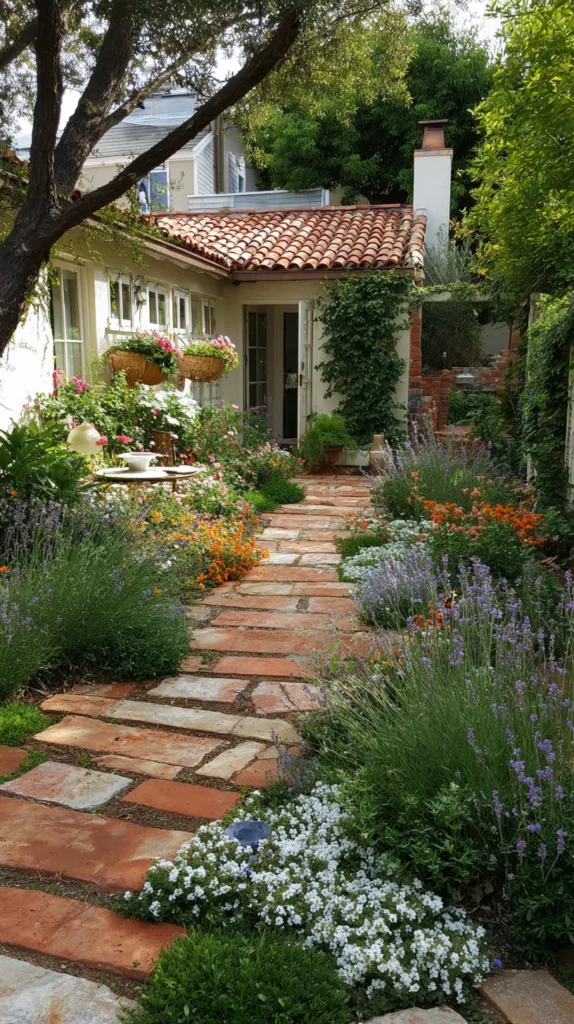
Mediterranean gardens rely heavily on beautiful hardscaping to create structure and define spaces. Terracotta tiles, natural stone pavers, cobblestones, and decomposed granite pathways establish the bones of your garden while evoking the ancient walkways of Mediterranean villages. Mix materials for visual interest—combine large flagstones with pebble mosaics, or alternate terracotta tiles with strips of flat river stones.
These warm-toned surfaces absorb heat during the day and radiate it back at night, extending the comfortable outdoor season. Pathways should meander through the garden rather than taking direct routes, encouraging leisurely strolls and discovery around each corner.
2. Create Intimate Courtyards and Patios
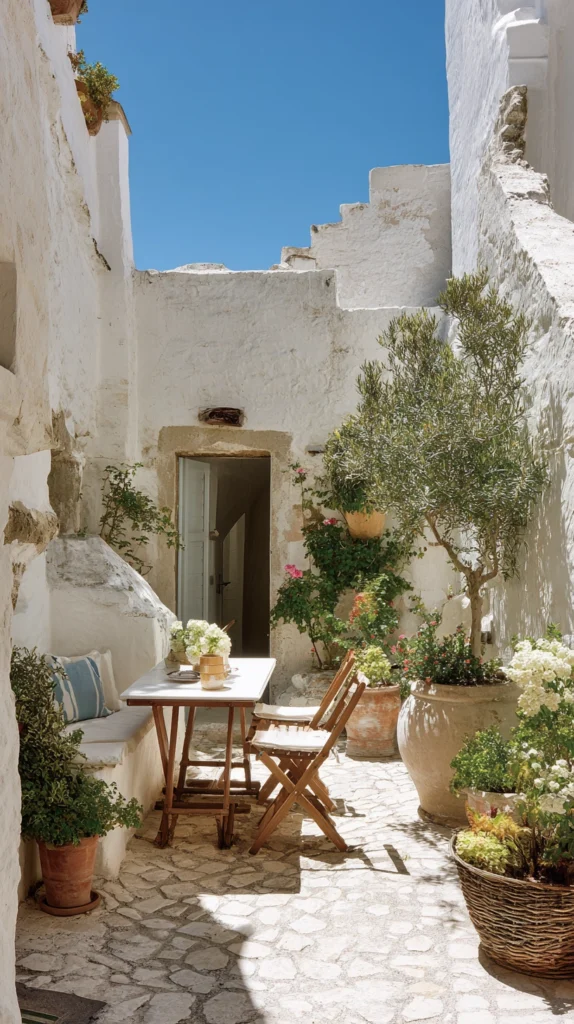
The courtyard is the heart of Mediterranean garden design, serving as an outdoor room for dining, entertaining, and relaxing. Enclosed or partially enclosed patios create microclimates that offer shelter from wind while trapping warmth in cooler months. Use walls, hedges, or trellises to define boundaries and create a sense of intimacy and enclosure.
Furnish your courtyard with weather-resistant dining tables, comfortable seating, and decorative elements that encourage you to spend time outdoors. The goal is to blur the distinction between indoor and outdoor living, making your garden an extension of your home that’s used daily rather than occasionally.
3. Plant Fragrant Herbs in Abundance
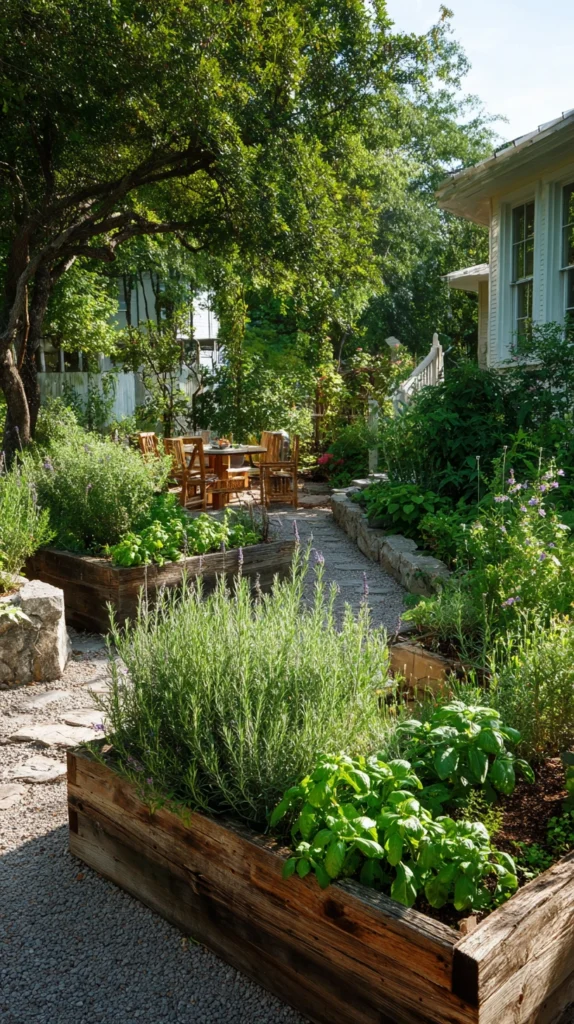
No Mediterranean garden is complete without aromatic herbs that perfume the air and provide fresh ingredients for cooking. Rosemary, lavender, thyme, oregano, sage, and basil are quintessential Mediterranean herbs that thrive in hot, dry conditions with full sun.
Plant them along pathways where brushing against them releases their essential oils, in raised beds near outdoor kitchens, or in large terracotta pots clustered near seating areas. Many Mediterranean herbs have attractive flowers that draw pollinators, adding movement and life to the garden. These plants require minimal water once established and can be harvested regularly, making them both beautiful and functional.
4. Incorporate Olive Trees as Focal Points
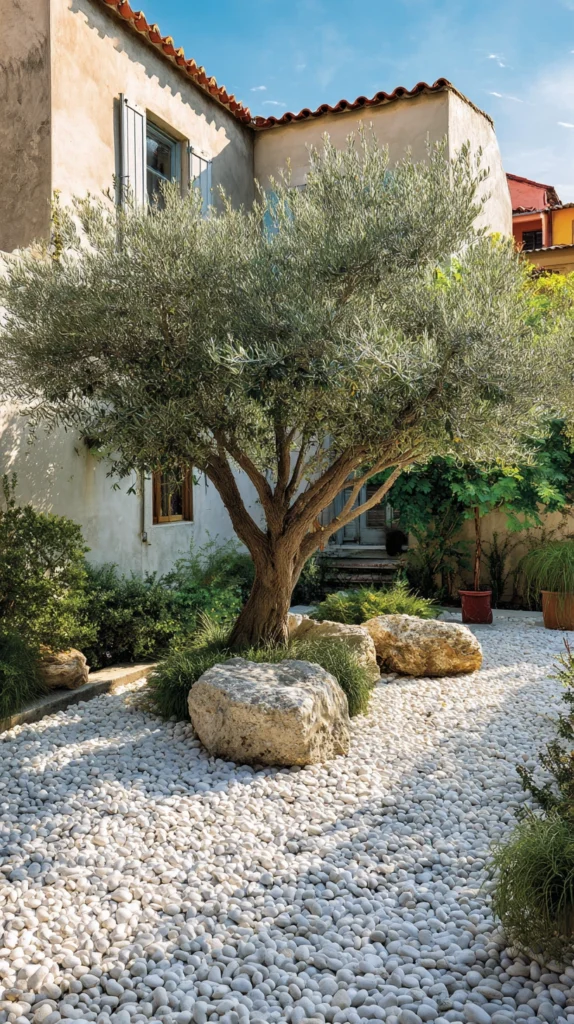
Olive trees symbolize Mediterranean landscapes and make stunning focal points in gardens. Their silvery-gray foliage, gnarled trunks, and graceful form provide year-round interest and architectural presence. Plant olive trees as specimens in gravel gardens, use them to frame entryways, or create small groves that provide dappled shade.
While productive olive trees can be messy when fruiting, fruitless varieties offer the same aesthetic without the maintenance concerns. Olive trees are remarkably drought-tolerant once established and can live for centuries, making them worthy investments that add immediate maturity and character to new gardens.
5. Add Climbing Vines and Pergolas
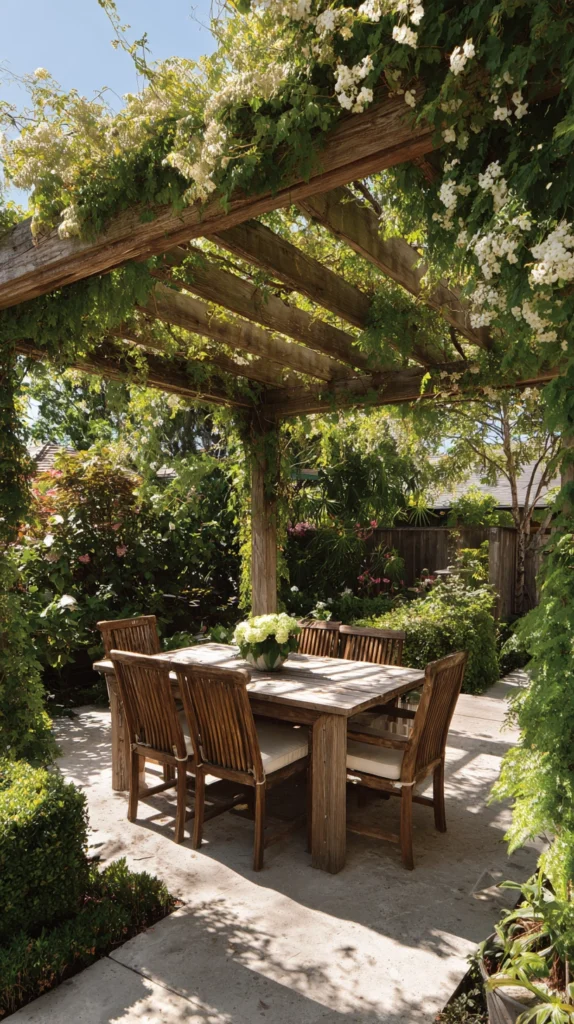
Pergolas draped with flowering vines create the romantic, relaxed atmosphere that defines Mediterranean gardens. Wisteria, bougainvillea, jasmine, grapevines, and climbing roses transform simple wooden or metal structures into living arbors that provide filtered shade and intoxicating fragrance. Train vines over outdoor dining areas, entryways, or along walls to soften hard edges and add vertical interest.
The dappled shade from pergolas allows air circulation while protecting from intense midday sun. Choose vines appropriate for your climate—bougainvillea thrives in frost-free areas, while wisteria tolerates colder winters. The combination of structural elements and flowing plants creates the layered, established look characteristic of old Mediterranean gardens.
6. Design with Gravel and Decomposed Granite
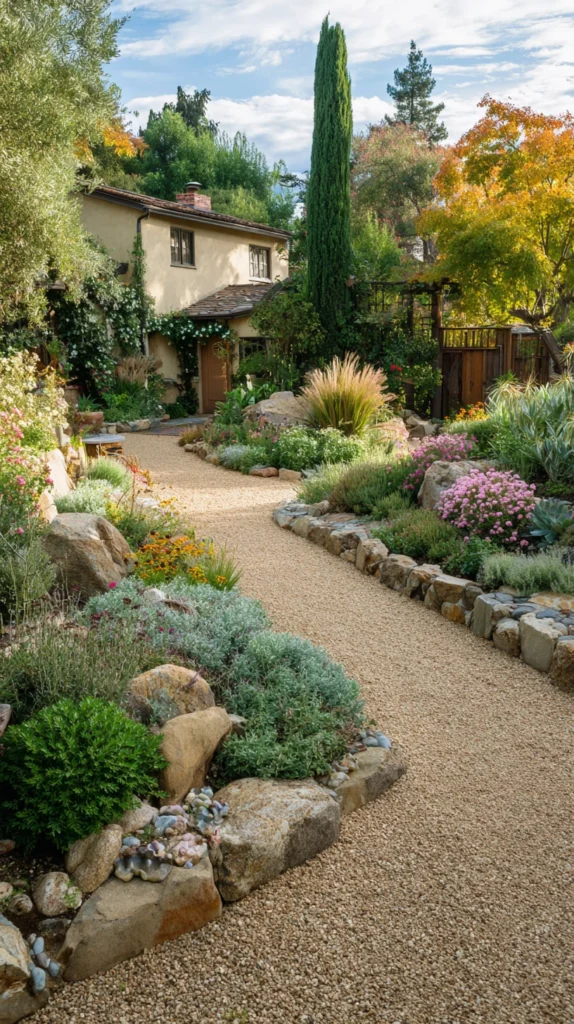
Gravel serves as both a practical ground cover and a design element in Mediterranean gardens. Crushed limestone, decomposed granite, or pea gravel in warm earth tones creates pathways, defines planting areas, and reduces water needs by eliminating lawn.
The neutral backdrop allows colorful plantings to stand out while creating visual cohesion throughout the garden. Gravel reflects light, keeping the garden bright even in shaded areas, and provides excellent drainage during heavy rains. Edge gravel areas with stone borders or terra cotta pavers to prevent migration into planting beds. The sound of gravel underfoot adds a sensory element that enhances the Mediterranean experience.
7. Install a Water Feature or Fountain
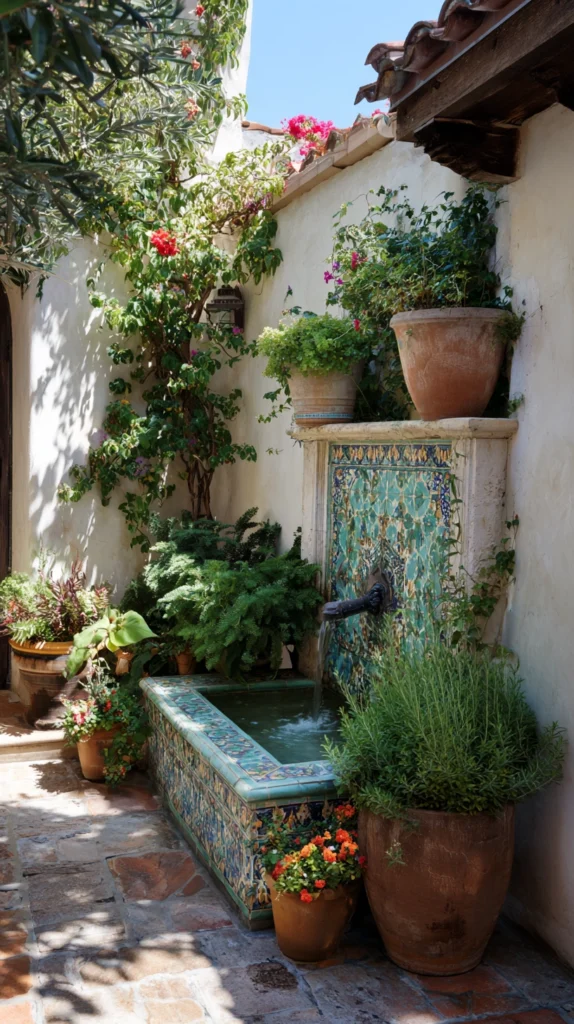
Water features provide cooling relief and soothing sounds in Mediterranean gardens, creating focal points that draw the eye and invite contemplation. Traditional tiled fountains, simple wall-mounted spouts flowing into basins, or reflecting pools surrounded by plantings all work beautifully. Use materials like aged stone, hand-painted tiles, or terracotta vessels that complement the Mediterranean aesthetic.
Position water features where they can be enjoyed from seating areas, and consider recirculating systems that minimize water waste. Even small fountains create significant impact through sound and movement, transforming the garden atmosphere and attracting birds and beneficial insects.
8. Create Raised Beds with Stone Walls
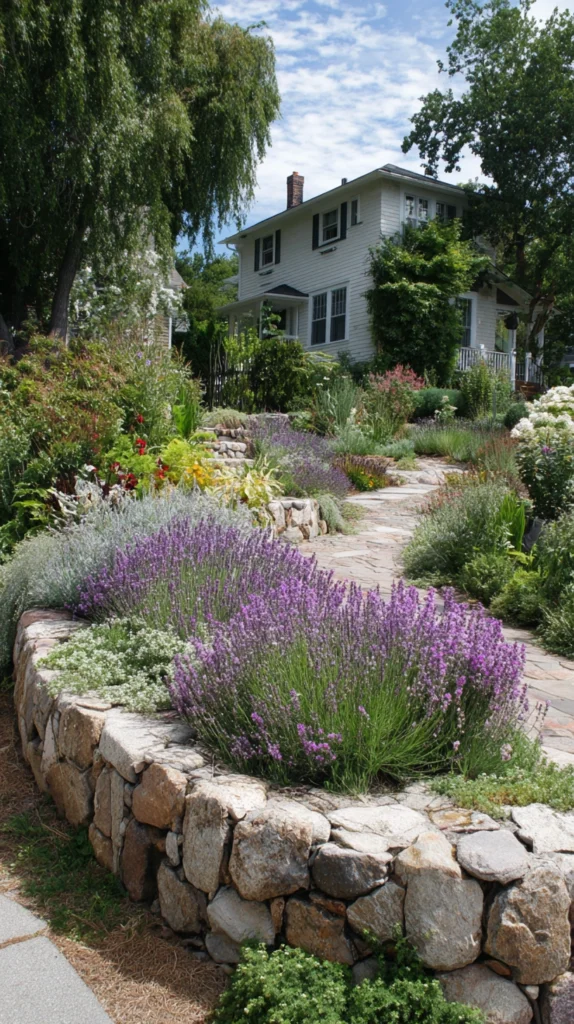
Terraced gardens with dry-stacked stone walls or mortared rock retaining walls solve slope challenges while creating classic Mediterranean character. Raised beds improve drainage for plants that dislike wet feet, provide better visibility for low-growing herbs and flowers, and create level spaces for pathways and patios.
Fill beds with well-draining soil amended with compost, and plant them with cascading plants like trailing rosemary or lavender that soften the stone edges. The combination of stone and plants creates textural contrast and visual interest while referencing the ancient agricultural terraces found throughout Mediterranean regions.
9. Plant Citrus Trees in Containers
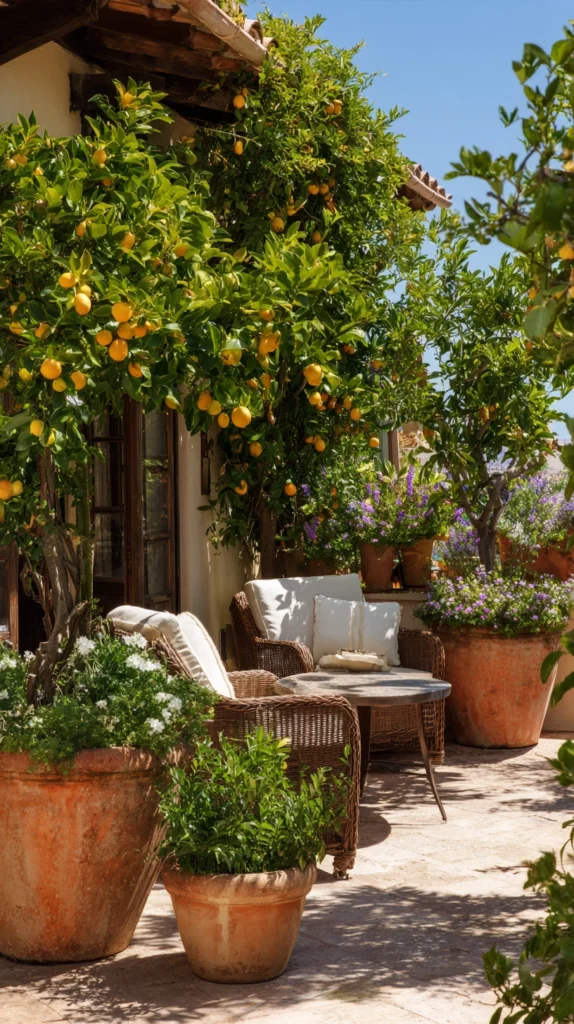
Potted citrus trees bring both ornamental beauty and edible bounty to Mediterranean gardens. Lemons, limes, oranges, and kumquats thrive in containers, allowing you to move them to protected areas during cold snaps if needed. The glossy evergreen foliage, fragrant white blossoms, and colorful fruit provide year-round interest.
Cluster several containers of varying sizes near outdoor dining areas or flanking doorways for dramatic impact. Use large terracotta, glazed ceramic, or concrete pots that complement your garden’s style. Citrus trees appreciate regular watering during the growing season but are relatively low-maintenance and long-lived when properly cared for.
10. Embrace Drought-Tolerant Perennials
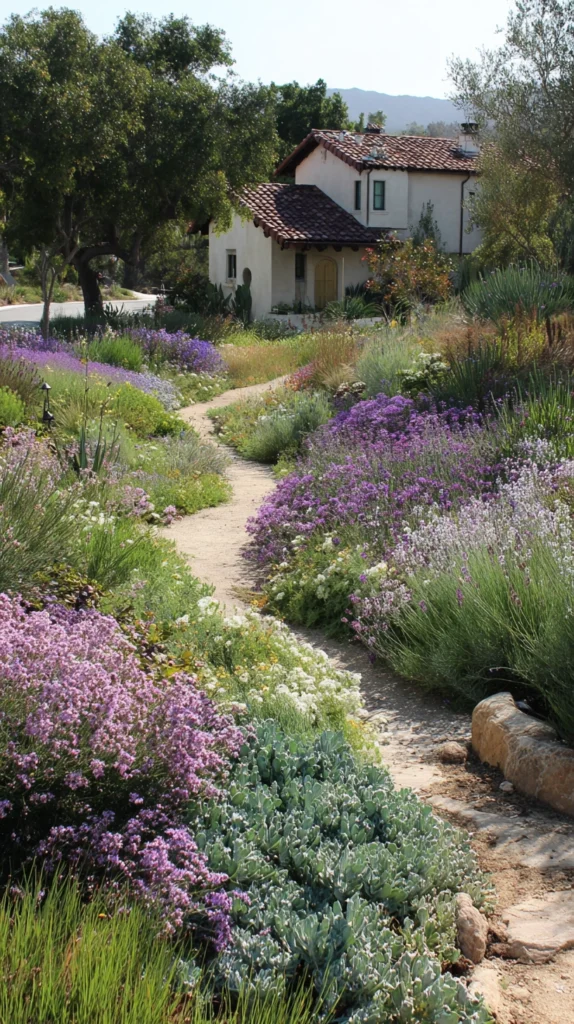
Mediterranean climate perennials offer spectacular color and texture while requiring minimal water once established. Lavender, santolina, Russian sage, Jerusalem sage, gaura, and Mediterranean spurge create billowing masses of foliage punctuated by seasonal blooms. These plants have silvery or gray-green foliage that reflects light and conserves moisture, contributing to the characteristic color palette of Mediterranean gardens.
Plant in drifts rather than regimented rows for a naturalistic, cottage-garden feel. Many of these perennials benefit from hard pruning after flowering, which keeps them compact and encourages fresh growth for the next bloom cycle.
11. Add Weathered Terracotta Containers
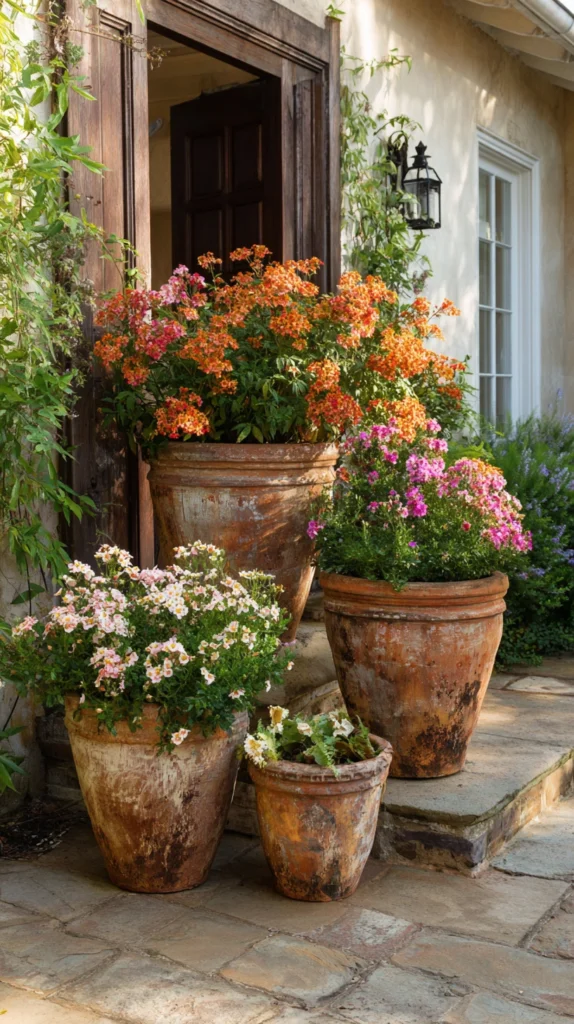
Terracotta pots are synonymous with Mediterranean gardens and provide flexibility for showcasing seasonal plants or growing tender specimens that need winter protection. Use oversized containers as statement pieces planted with dramatic agaves or architectural grasses, or group collections of smaller pots with various herbs and flowers.
Aged, weathered terracotta develops a beautiful patina that adds instant character—you can accelerate this process by rubbing pots with yogurt or buttermilk to encourage moss and lichen growth. Cluster pots in odd numbers at different heights near doorways, along pathways, or on patios to create living sculptures that can be rearranged as plants grow and seasons change.
12. Design an Outdoor Kitchen or Pizza Oven
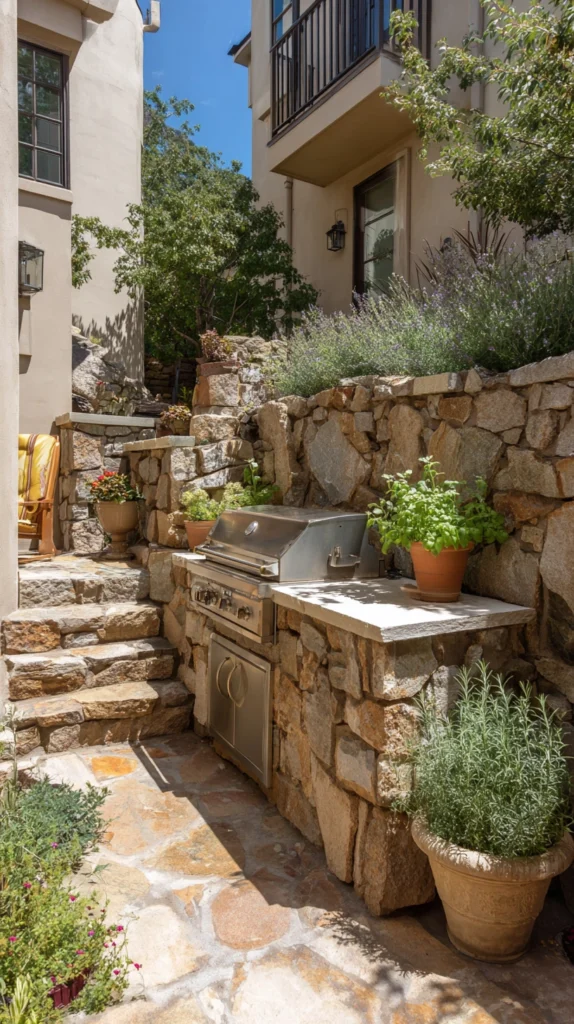
Mediterranean culture revolves around outdoor cooking and communal meals, making outdoor kitchens natural additions to these gardens. A simple setup might include a built-in grill and counter space, while elaborate versions feature pizza ovens, sinks, refrigerators, and ample prep areas.
Traditional wood-fired pizza ovens built from brick or stone become architectural focal points that anchor outdoor entertaining areas. Surround cooking spaces with herbs for easy harvesting, and position them near dining areas to keep the cook connected to guests. The combination of fire, food, and fragrant plants creates multisensory experiences that embody Mediterranean outdoor living.
13. Incorporate Colorful Tile Accents
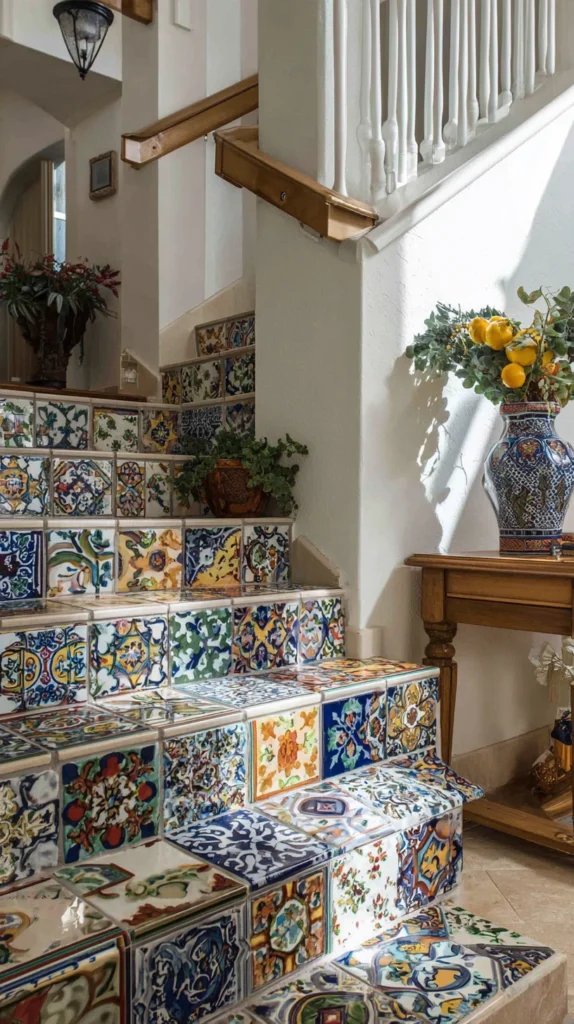
Hand-painted ceramic tiles add color, pattern, and personality to Mediterranean gardens. Use decorative tiles as risers on outdoor stairs, create mosaic tabletops, embellish fountain surrounds, or install tile murals as garden art. Spanish, Italian, Moroccan, and Greek tile traditions offer distinct styles ranging from bold geometric patterns to delicate floral designs.
These permanent decorative elements withstand weather while adding visual interest to hardscaping that might otherwise feel plain. Mix solid-colored tiles with patterned ones, and choose colors that complement your plantings and architectural elements. Tile accents can transform ordinary concrete surfaces into distinctive features that reflect your personal style.
14. Plant Flowering Trees and Shrubs
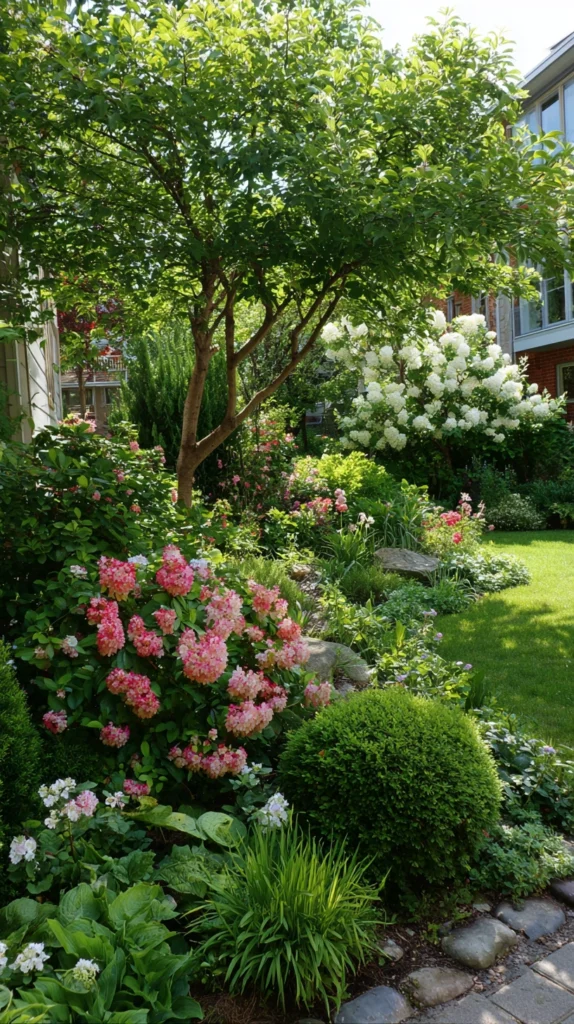
Beyond herbs and perennials, Mediterranean gardens benefit from carefully chosen flowering trees and shrubs that provide structure and seasonal drama. Crape myrtle, oleander, pomegranate, fig, rockrose, Spanish broom, and flowering quince all thrive in Mediterranean climates while offering beautiful blooms.
These woody plants create the garden’s framework, providing privacy screening, defining boundaries, and adding vertical layers. Many produce edible fruit as a bonus, connecting your garden to Mediterranean agricultural traditions. Choose plants with different bloom times to ensure continuous color from spring through fall, and consider evergreen options that maintain the garden’s structure during winter months.
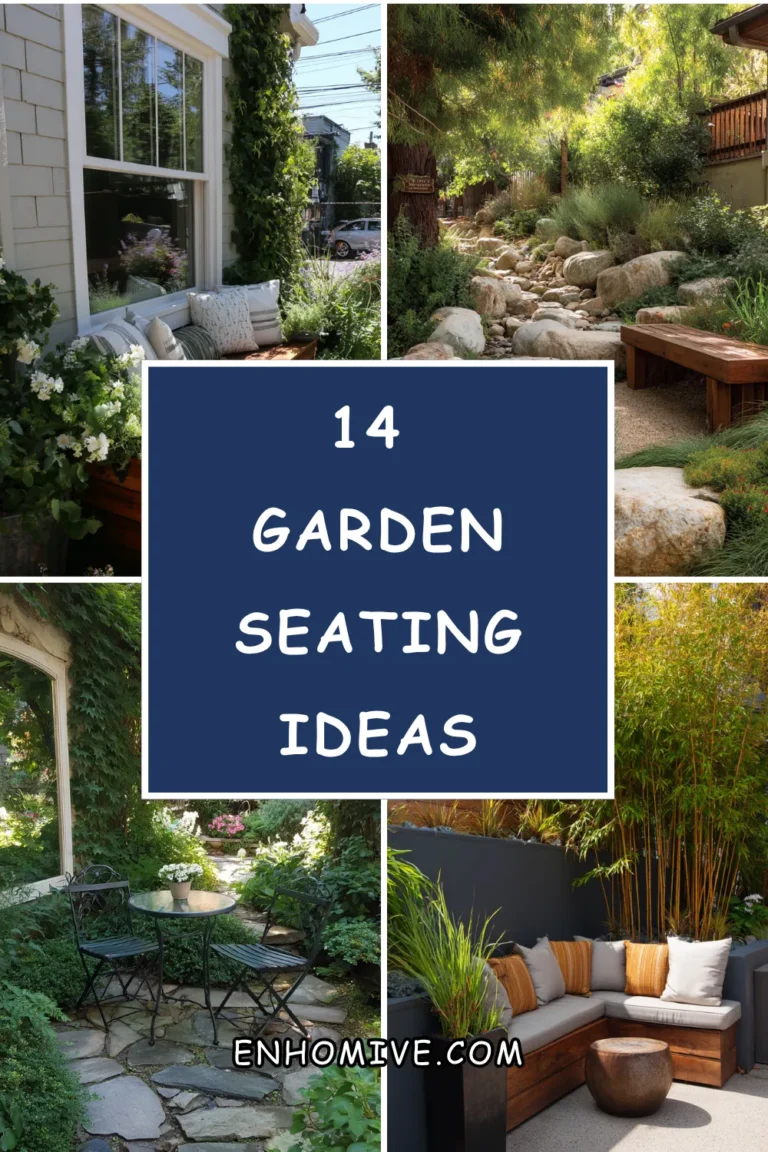
15. Create Shaded Seating Nooks
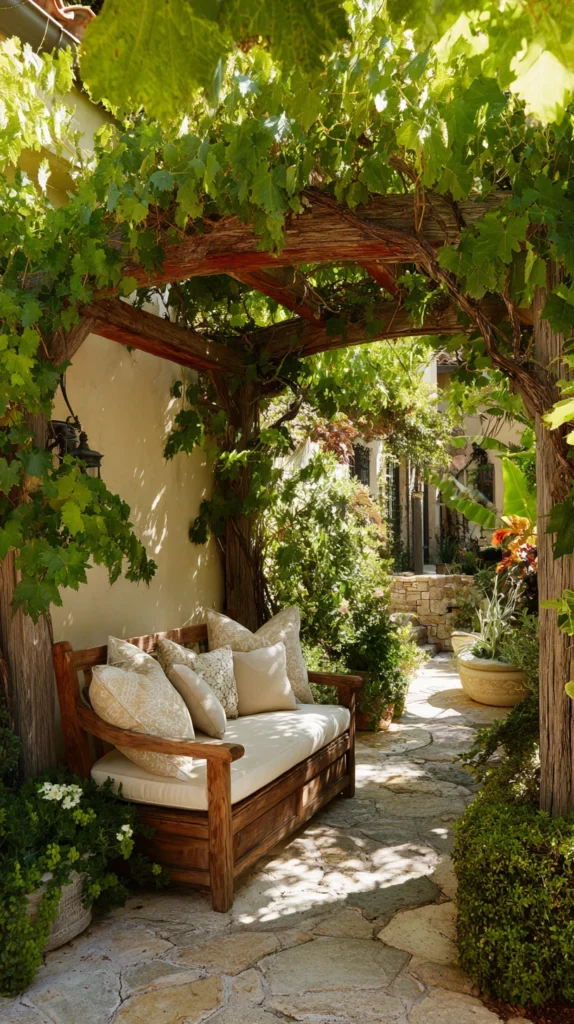
Mediterranean gardens should include multiple seating areas that offer different experiences throughout the day—a sunny breakfast spot, a shaded afternoon retreat, and a warm evening gathering space. Position benches under arbors, create alcoves with tall hedges, or place seating beneath established trees.
Use comfortable, weather-resistant furniture upholstered in durable outdoor fabrics, and add cushions in colors inspired by the sea and sky. Surround seating with fragrant plants so you’re enveloped in perfume while relaxing. These spaces become true outdoor rooms that extend your living area and encourage you to slow down and savor the garden you’ve created.
Bringing Mediterranean Magic Home
Creating a Mediterranean garden is about more than plant selection—it’s about embracing a lifestyle that prioritizes outdoor living, celebrates simple pleasures, and works with natural conditions rather than against them.
These gardens succeed because they’re designed for the climate, requiring less water and maintenance than traditional gardens while providing more beauty and usability. The key is starting with good hardscaping, choosing appropriate plants, and designing spaces that invite you outside. Over time, as plants mature and materials weather, your garden will develop the timeless, established character that makes Mediterranean landscapes so compelling and such a joy to inhabit.