
15 Old-Money Interior Ideas for Quiet Luxury
There is a particular kind of wealth that does not need to announce itself. It does not chase trends, does not cover every surface in logos, and is not interested in impressing anyone.
It simply exists — confident, considered, and utterly at ease with itself. This is the essence of old-money style, and in interior design it translates into spaces that feel cultivated over time rather than assembled overnight.
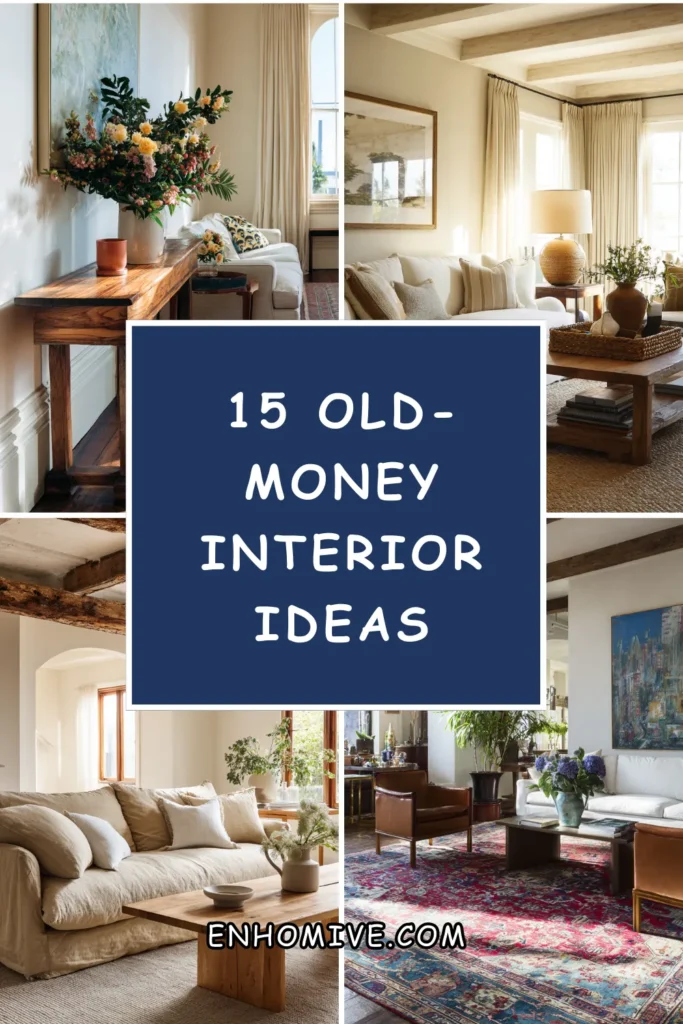
The aesthetic is rooted in quality, restraint, and an almost instinctive understanding of proportion and permanence. It is not about spending the most money; it is about spending it wisely, slowly, and with genuine discernment. Here are fifteen old-money interior ideas that embody the spirit of quiet luxury.
1. Invest in One Genuinely Exceptional Sofa
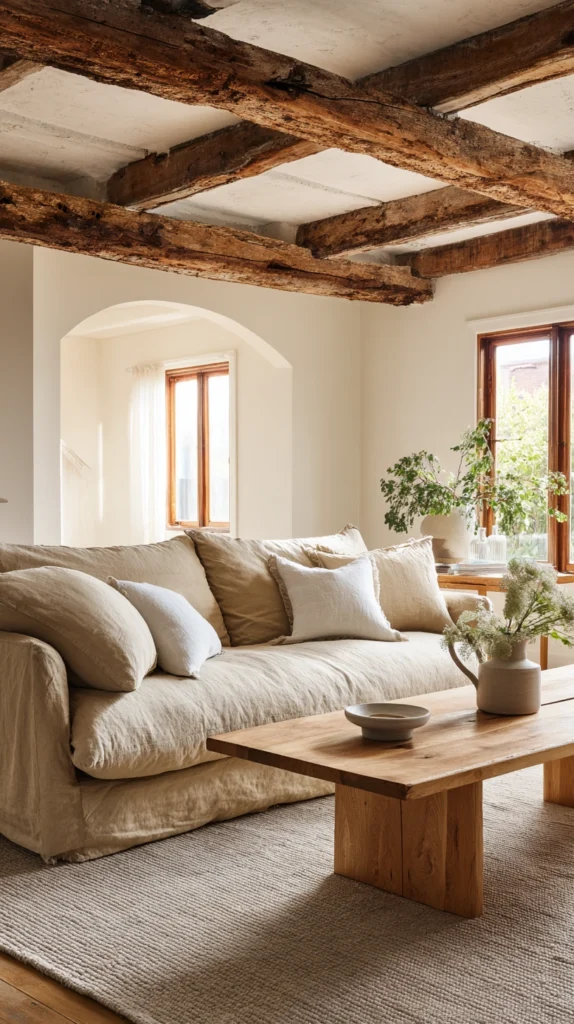
The old-money approach to a living room begins with a single, unwavering commitment to quality seating. Rather than filling a room with multiple mediocre pieces, the quiet luxury philosophy directs all resources toward one genuinely exceptional sofa — deep-seated, generously proportioned, upholstered in fabric that improves with age.
Aged leather that develops a patina, heavy linen that softens with washing, and wool bouclé that holds its structure for decades are all appropriate choices. The sofa should feel slightly oversized, slightly formal, and completely comfortable. It should look as though it has been in the family for twenty years, even if it arrived last month. Everything else in the room is arranged in deference to it.
2. Panelled Walls in Muted, Considered Tones
Architecture as Decoration
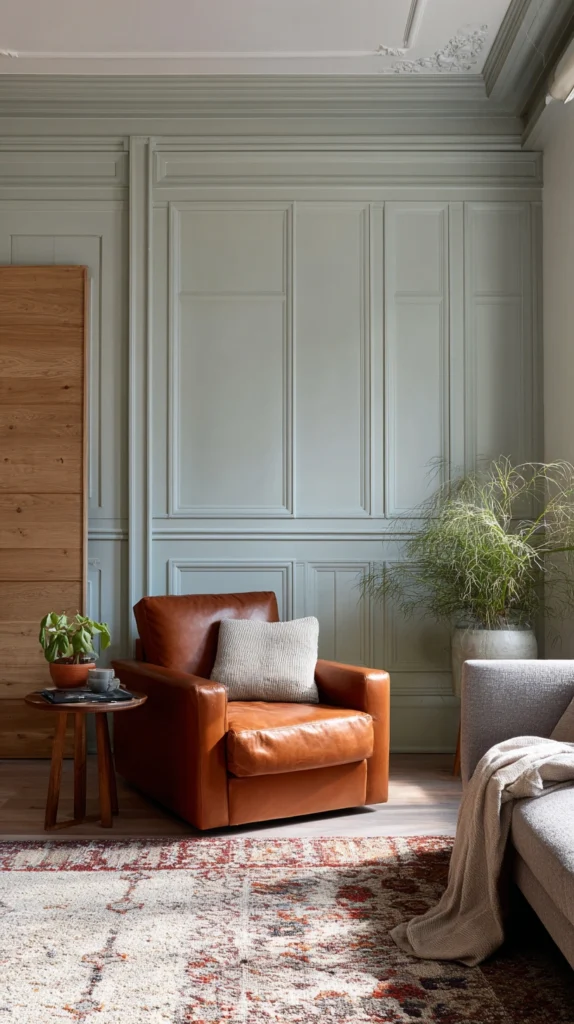
Nothing communicates old money more immediately than walls with architectural detail. Timber panelling, whether full height or dado height, transforms a plain plastered wall into something that feels permanent and deliberately crafted. In the old-money interior, panelling is never painted in anything attention-seeking.
Deep sage green, faded duck egg, warm off-white, dusty stone, and aged navy are the tones that work — colours that look as though they have been on the walls for decades and have faded gently and gracefully into exactly the right shade. The panelling itself should have clean, simple profiles rather than ornate mouldings, communicating quality through proportion rather than decoration.
3. A Library Wall of Actual Books
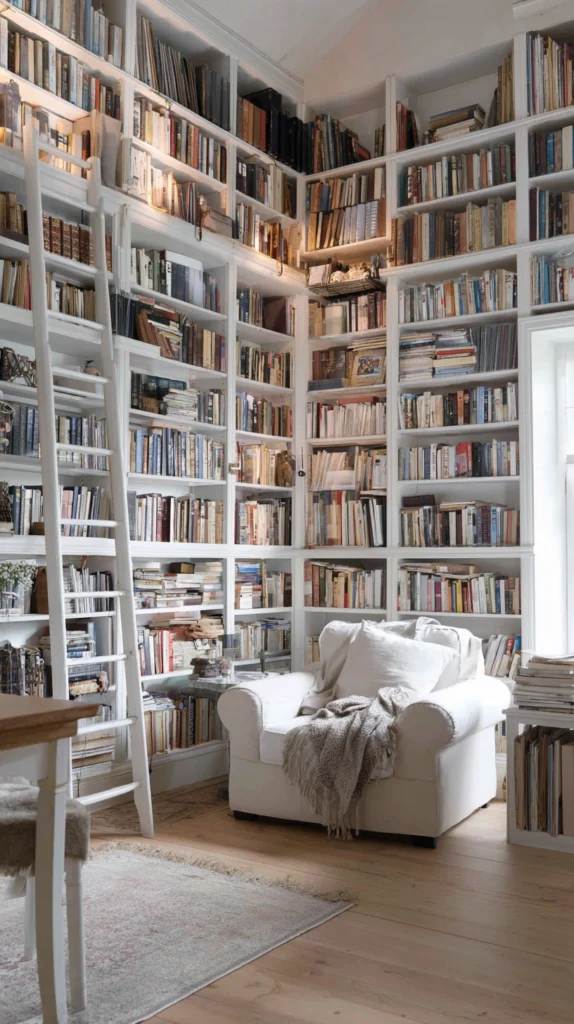
In the world of quiet luxury, books are not props arranged by spine colour for Instagram. They are read, referenced, and accumulated over a lifetime of genuine intellectual curiosity. A floor-to-ceiling library wall filled with real books — mismatched spines, varying ages, the occasional horizontal stack — communicates education, culture, and a life lived with ideas in a way that no other decorative element can replicate.
Built-in shelving painted in the same tone as the surrounding walls creates a seamless, architectural effect. A rolling library ladder on a brass track is both practical and one of the most quietly glamorous details available to any interior.
4. Antique and Vintage Furniture Alongside Contemporary Pieces
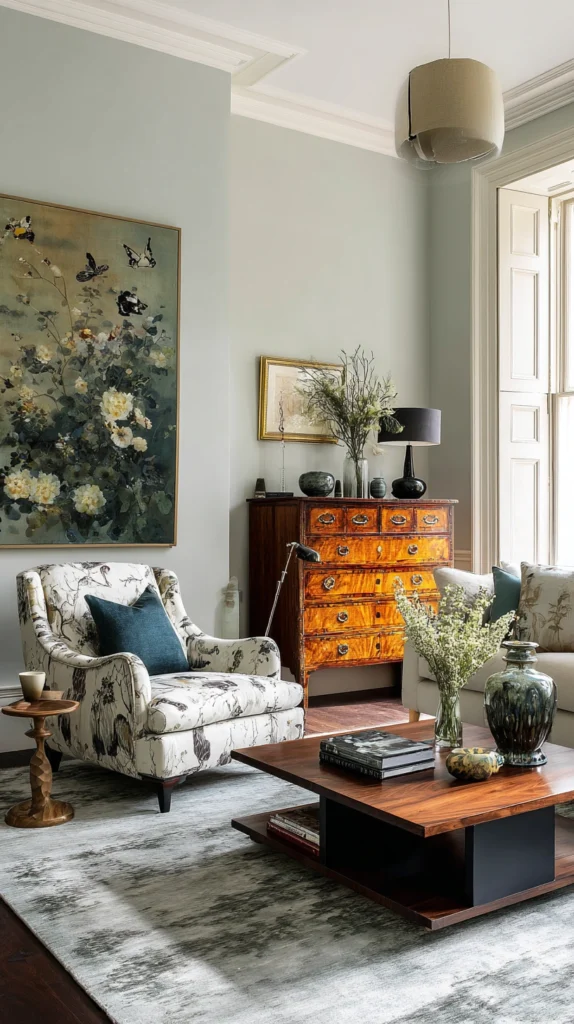
The old-money interior is never entirely new. It contains pieces that have been inherited, discovered, or bought with patience and genuine knowledge — a Georgian writing desk, a Victorian chest of drawers, a mid-century armchair reupholstered in contemporary fabric. These antique and vintage pieces sit alongside newer furniture without awkwardness because they are united by quality and proportion rather than period or style.
The mix communicates that the interior has evolved organically over time rather than being purchased as a complete set from a single showroom. This sense of accumulation and history is impossible to fake convincingly, but it can be approached by buying one genuinely old piece at a time.
5. Persian and Antique Rugs on Timber or Stone Floors
The Foundation of Every Great Room
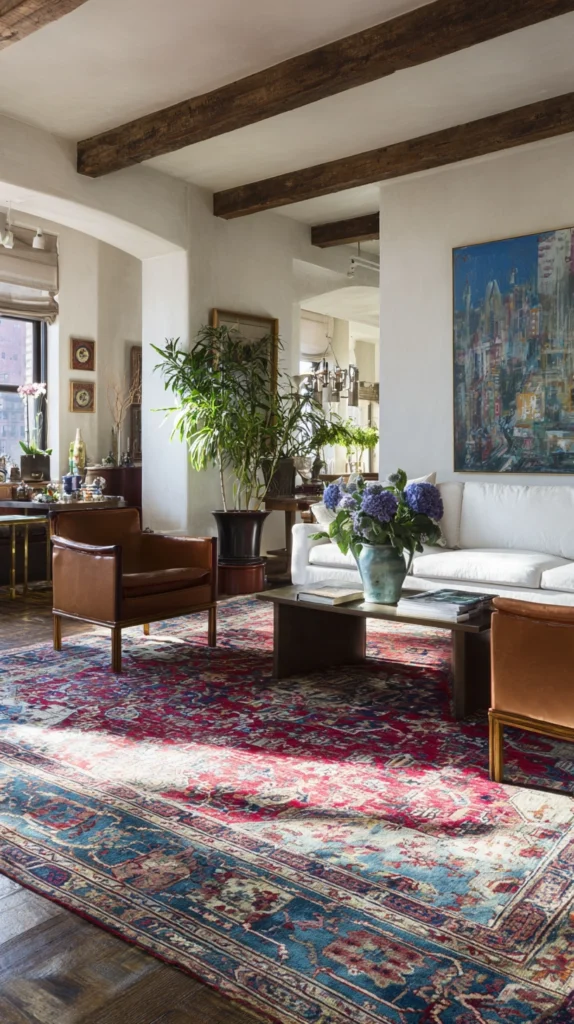
A beautiful rug is the foundation of a well-composed room, and in the old-money interior it is almost always either a genuine Persian or Oriental rug, or a high-quality antique or vintage piece with a comparable depth of colour and pattern.
These rugs are irreplaceable in the warmth and character they bring to a space — the way their colours have faded unevenly over decades, the slight irregularities in the weaving, the almost infinite complexity of their patterns that reveal new details the longer you look.
Laid on wide-plank timber floors or natural stone, an aged rug grounds the entire room and provides the colour and pattern from which everything else takes its cues.
6. Proper Window Treatments with Weight and Length
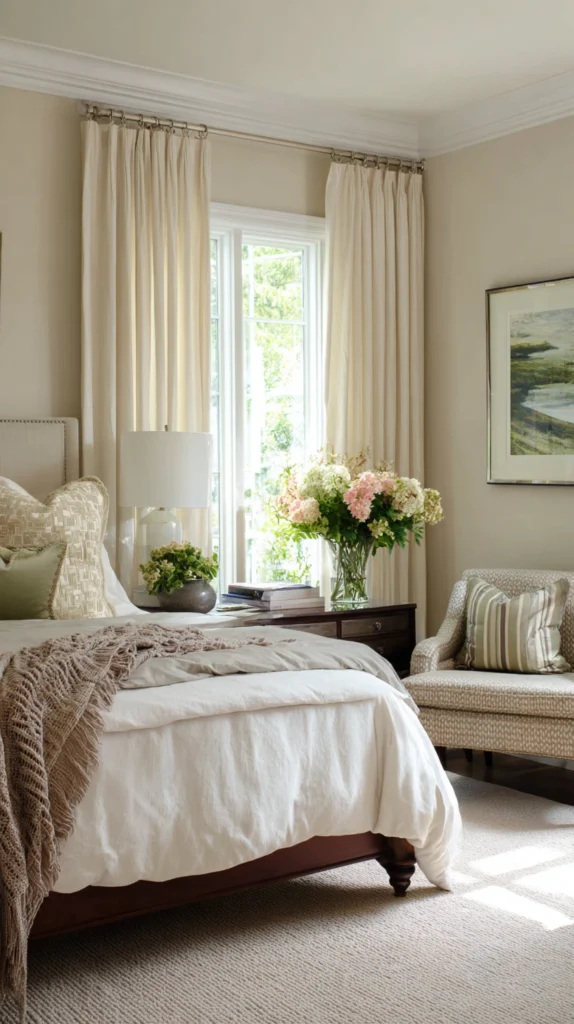
Curtains in the old-money interior are never an afterthought. They are full-length, generously cut, and made from fabric with genuine weight and drape — heavy linen, wool, velvet, or silk in muted, considered tones that complement rather than compete with the walls.
They hang from proper curtain poles or concealed tracks fitted close to the ceiling, maximising the apparent height of the room, and they puddle very slightly on the floor in a way that signals abundance without extravagance. Interlined curtains that hold their shape and fall in deep, even folds are a detail that separates genuinely well-dressed windows from merely adequate ones. The difference is immediately visible and immediately felt.
7. Brass and Bronze Hardware Throughout
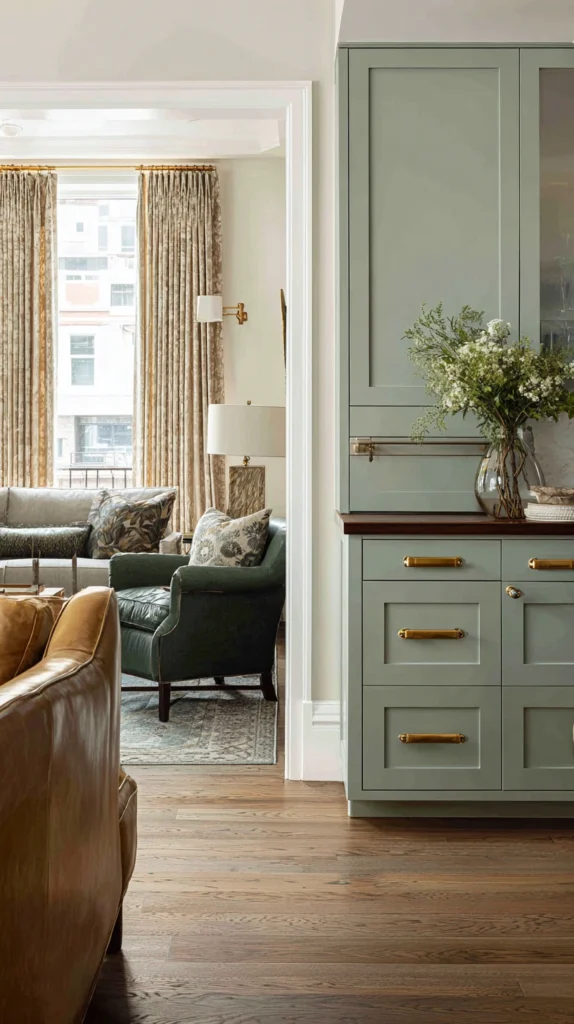
In every room of the old-money interior, the hardware — door handles, cabinet pulls, light switches, tap fittings, curtain rings, and picture hooks — is made from brass, bronze, or aged gold rather than chrome, nickel, or matte black.
These warm metallic tones age naturally and beautifully, developing a patina that makes them look increasingly valuable over time rather than increasingly dated. Unlacquered brass in particular, which tarnishes and develops character with use, is one of the defining material choices of the quiet luxury aesthetic.
It communicates permanence and quality in a way that feels instinctive rather than decorative — the kind of detail you notice only subconsciously but whose absence would be immediately felt.
8. Original Artwork Hung with Confidence
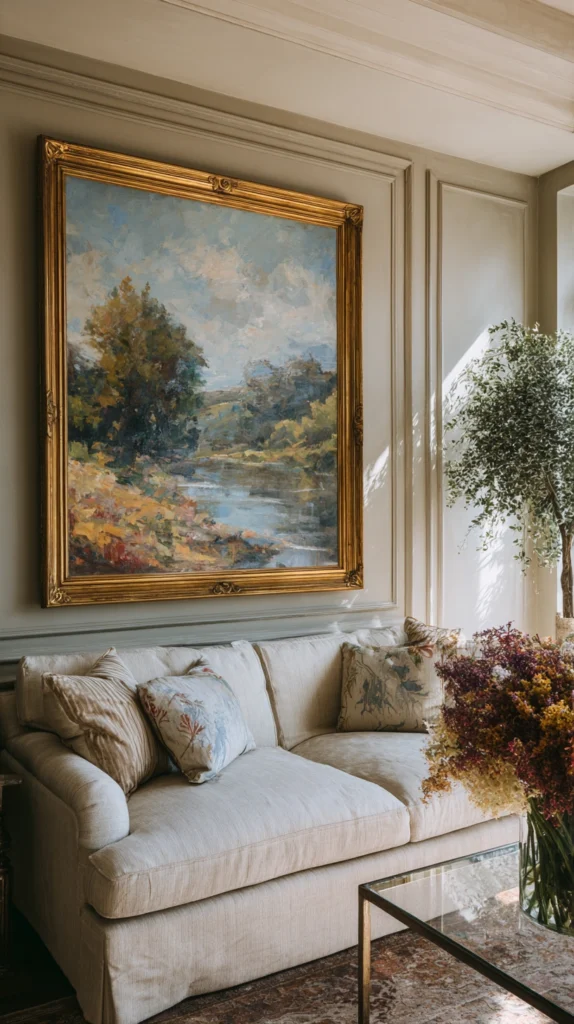
Art That Was Bought for Love, Not Investment
The walls of an old-money interior are hung with art that has been acquired slowly, selectively, and for entirely personal reasons. It might include an oil portrait of an ancestor, a landscape painting bought from a gallery thirty years ago, a collection of botanical prints accumulated over decades of travel, or a contemporary work that simply stopped the owner in their tracks.
The art is hung at proper eye level, framed appropriately — oil paintings in simple gilt frames, works on paper behind glass in flat painted or natural timber frames — and given enough wall space to breathe. There is no gallery wall of identical frames filled with prints downloaded from the internet. Every piece has a provenance, even if only a personal one.
9. A Statement Dining Table Built to Last Generations
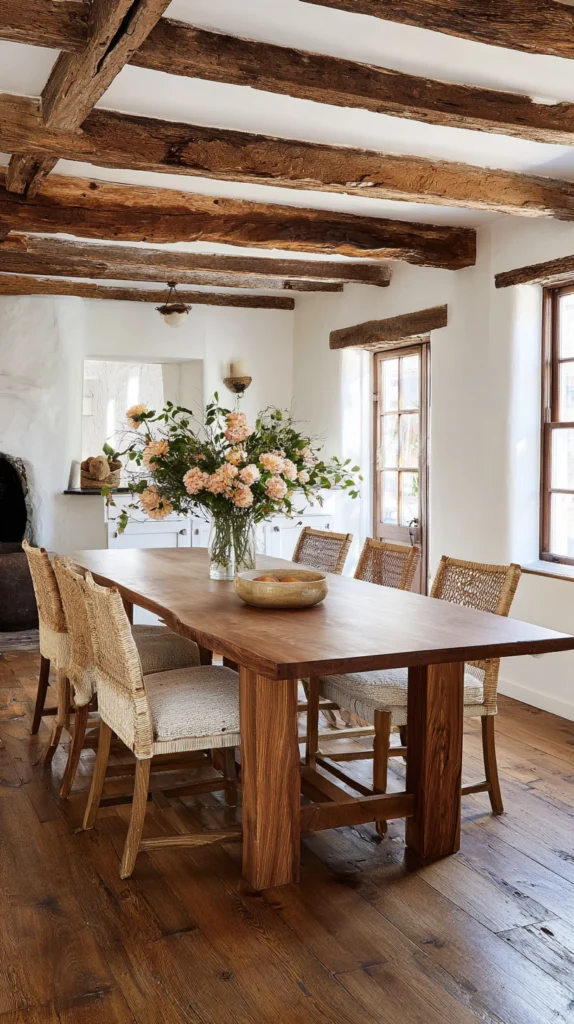
The dining table in the old-money interior is substantial, solid, and made to outlast everyone currently using it. A large oval or rectangular table in aged oak, walnut, or mahogany with visible grain, natural imperfections, and a surface that shows the marks of decades of use sits at the centre of the dining room with complete self-assurance.
It does not need a matching set of chairs — mismatched chairs in complementary tones and materials, some carvers and some side chairs, some upholstered and some not, create the sense of a table that has been used and loved across multiple generations. The formality of the table is offset by the relaxed variety of the seating.
10. Layered Table Lamps Rather Than Overhead Lighting
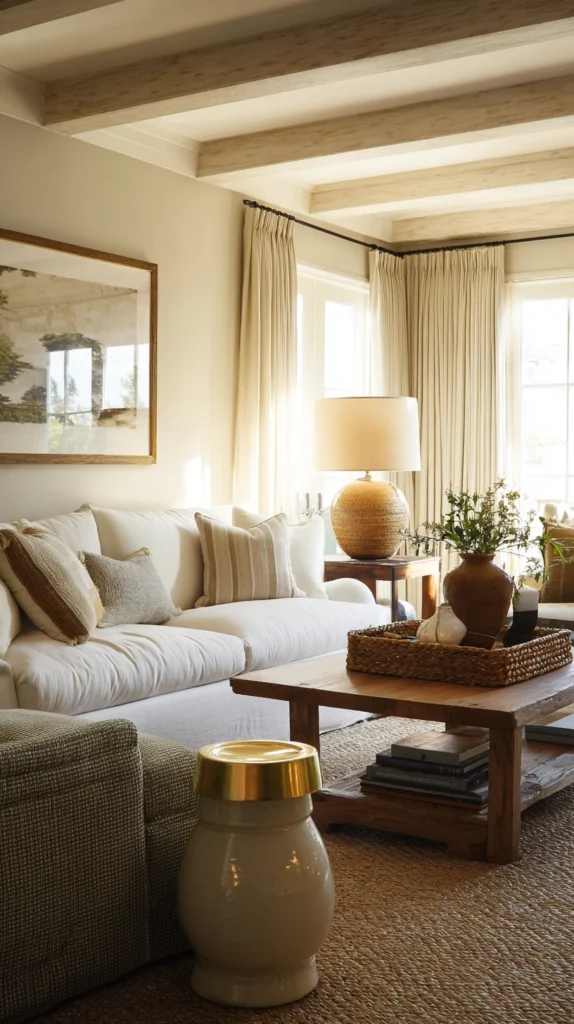
One of the most immediately transformative differences between an old-money interior and an ordinary one is the quality of the lighting. Quiet luxury interiors rely almost entirely on layered table and floor lamps rather than overhead lighting, which is used sparingly if at all. A room lit by four or five table lamps of varying heights creates pools of warm, intimate light that make every surface, texture, and face look better.
The lamps themselves should be substantial — ceramic bases in muted glazes, turned timber, aged brass, or hand-thrown stoneware, topped with proper fabric shades in natural linen, cotton, or silk. This is not a detail that can be approximated cheaply, but even one genuinely good lamp transforms a room’s atmosphere.
11. Natural Stone Surfaces in Kitchens and Bathrooms
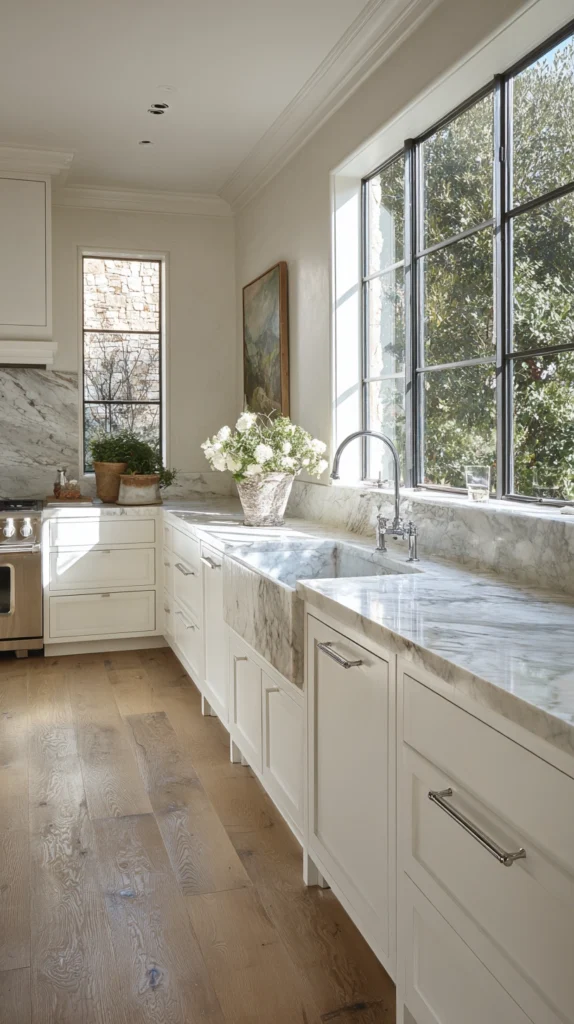
Materials That Improve With Age
In kitchens and bathrooms, the old-money interior defaults to natural stone rather than engineered alternatives. Honed Carrara marble, aged limestone, worn travertine, and brushed granite all carry a depth and variation that manufactured surfaces cannot replicate.
The key word in the old-money approach to stone is honed rather than polished — a matte, slightly absorbent surface that feels ancient and tactile rather than glossy and hard. These surfaces stain slightly, mark gently, and develop character over time, and in the quiet luxury worldview this is not a flaw but a feature. A kitchen worktop that shows twenty years of family cooking tells a richer story than one that looks as pristine as the day it was installed.
12. A Well-Chosen Wallpaper Used with Restraint
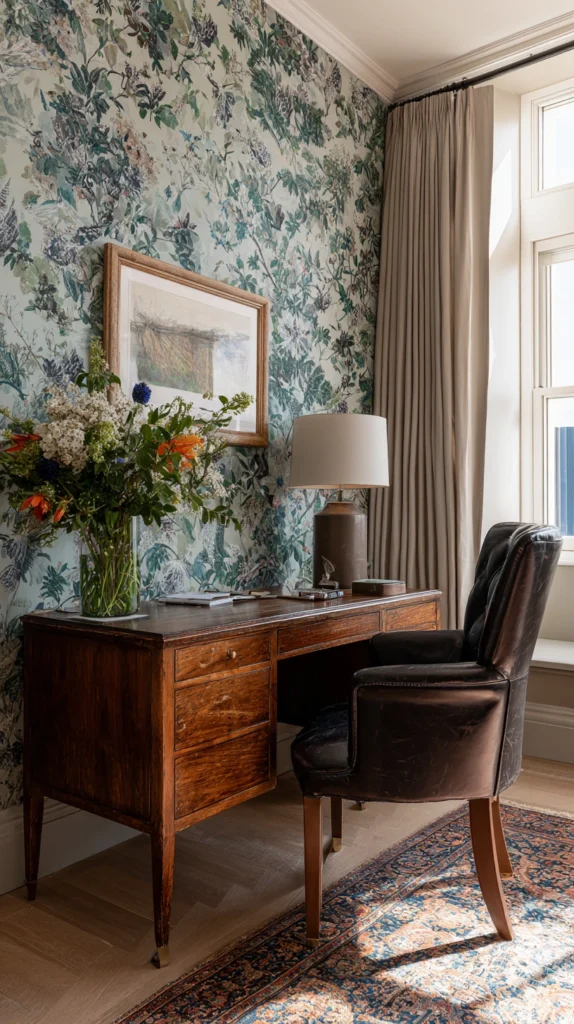
Wallpaper in the old-money interior is used selectively and chosen with genuine knowledge. A single wall of botanical wallpaper in a study, a toile de jouy in a bedroom, a subtle damask in a dining room, or a hand-painted de Gournay-style design in an entrance hall — each of these applications uses wallpaper as a considered architectural decision rather than a decorative trend.
The patterns are traditional, drawn from a vocabulary of design that has existed for centuries, and the colourways are muted and complex rather than bright and simple. A beautifully wallpapered room feels like a room that was designed by someone who genuinely understood what they were doing.
13. Fresh Flowers and Living Plants as a Constant
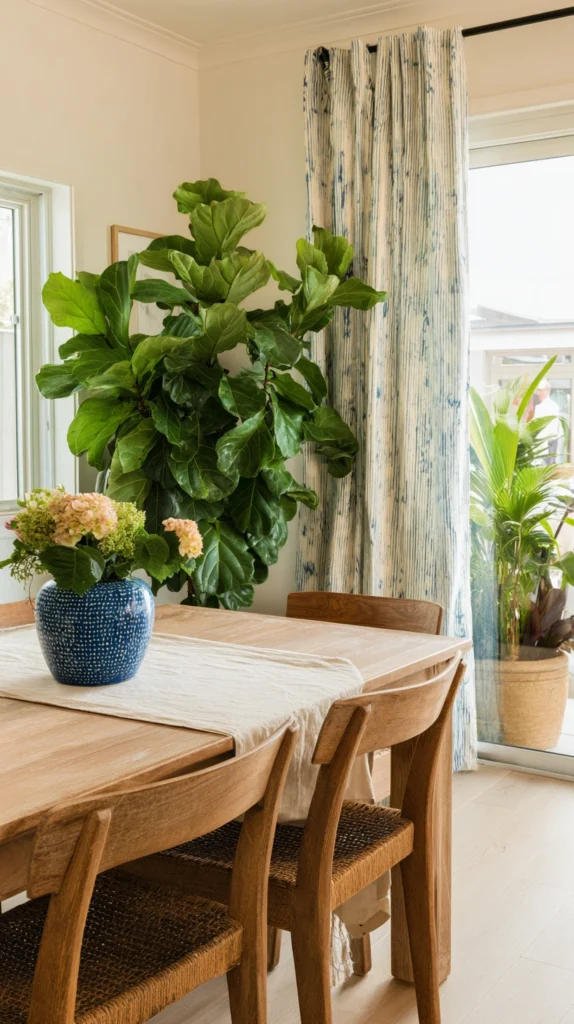
In the old-money interior, fresh flowers are not a special occasion luxury — they are a weekly ritual. A large, loosely arranged bunch of seasonal flowers in a simple glass or ceramic vase on the dining table, a single stem in a bud vase on a bedside table, a bowl of forced bulbs on a hall console — these living elements connect the interior to the natural world and signal that the home is actively cared for and lived in.
The arrangements are never stiff or formal; they lean toward the garden-picked rather than the florist-arranged, with stems at varying heights and a slight wildness that feels effortless. Potted plants — a large fiddle leaf fig, a mature olive tree, a bay topiary — reinforce the same message of ongoing, attentive care.
14. Considered Scent as an Interior Element
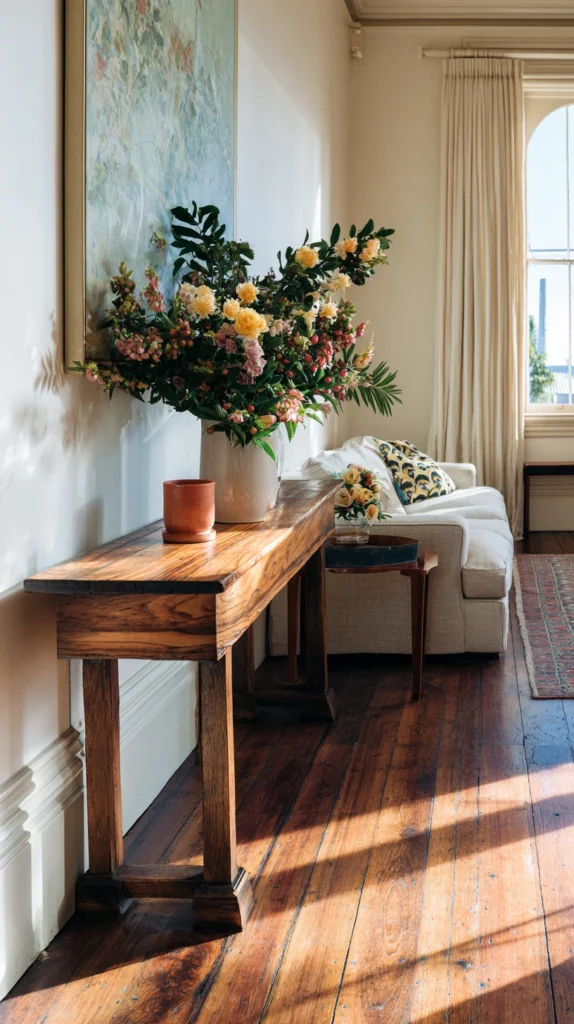
The Detail You Cannot See but Always Feel
Old-money interiors have a scent — not an artificial one sprayed from a bottle, but a layered, natural fragrance built from beeswax polish on timber surfaces, fresh flowers, woodsmoke from an open fire, old books, and perhaps a single, understated candle in a scent that complements rather than overwhelms.
Scent is the most immediately emotional of all the senses and the one that creates the most lasting impression of a space. Investing in high-quality, naturally scented candles, using proper beeswax or wood polish on timber furniture, and maintaining a wood-burning fireplace during the colder months all contribute to an olfactory atmosphere that communicates care, quality, and permanence as powerfully as any visual element.
15. Restraint as the Ultimate Design Principle
Knowing What to Leave Out
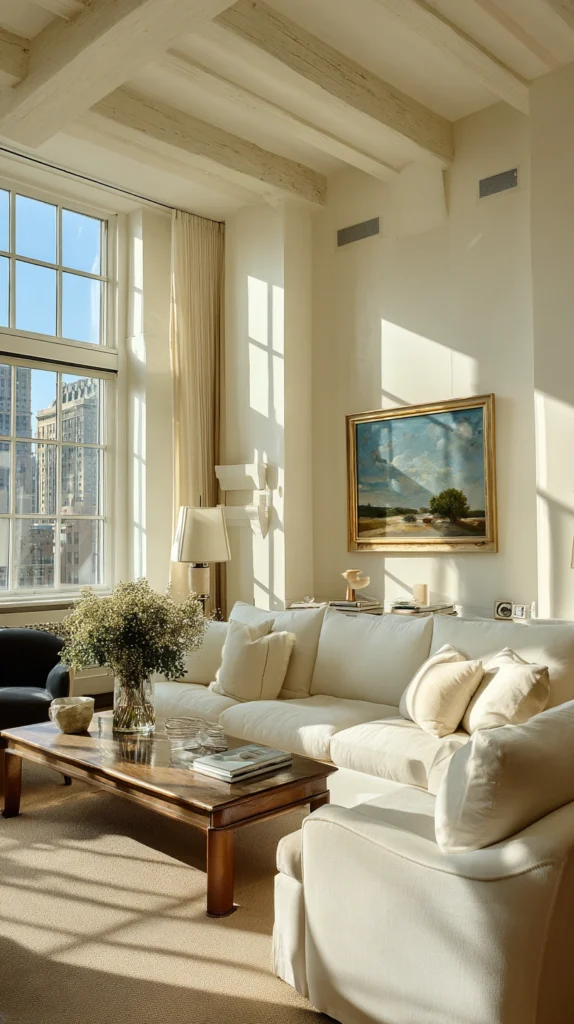
The defining characteristic of the old-money interior is not any single piece of furniture, any particular colour palette, or any specific material choice. It is restraint. The discipline to leave surfaces clear, to resist filling every shelf, to choose one exceptional piece over three adequate ones, to say no to trends and yes only to things that will still be beautiful in thirty years.
Every room in the quiet luxury interior has breathing room — space for the eye to rest, for the quality of individual pieces to be noticed, for the architecture of the room itself to be appreciated. This restraint is the hardest thing to achieve and the easiest to undermine, but it is ultimately what separates a genuinely refined interior from one that is merely expensive. Quiet luxury does not shout. It simply endures.
The Old-Money Mindset
Adopting the old-money interior approach is less about budget than it is about patience and philosophy. It means buying fewer things and better things, caring for what you own, and resisting the pull of trends in favour of a slower, more considered accumulation of quality.
It means valuing craft, provenance, and permanence over novelty, and understanding that the most beautiful interiors are never finished — they simply continue to evolve, deepen, and improve with time and use. That is the true luxury that old money understands and new money so often misses.