
15 Open-Concept Living Room Zoning Ideas Without Walls
Open-concept living rooms are loved for their airy feel and flexibility, but they can be challenging to organize without traditional walls. Creating distinct zones helps define how the space is used while preserving openness and flow.
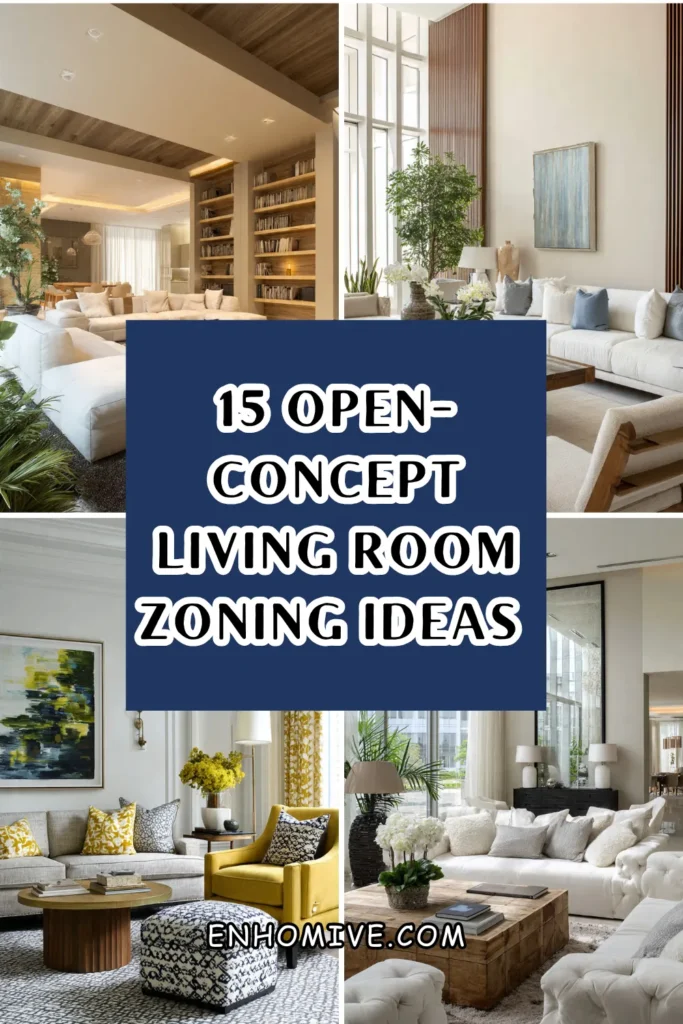
These open-concept living room zoning ideas show how you can separate areas visually and functionally without building walls or closing the space off.
1. Use Area Rugs to Define Each Zone
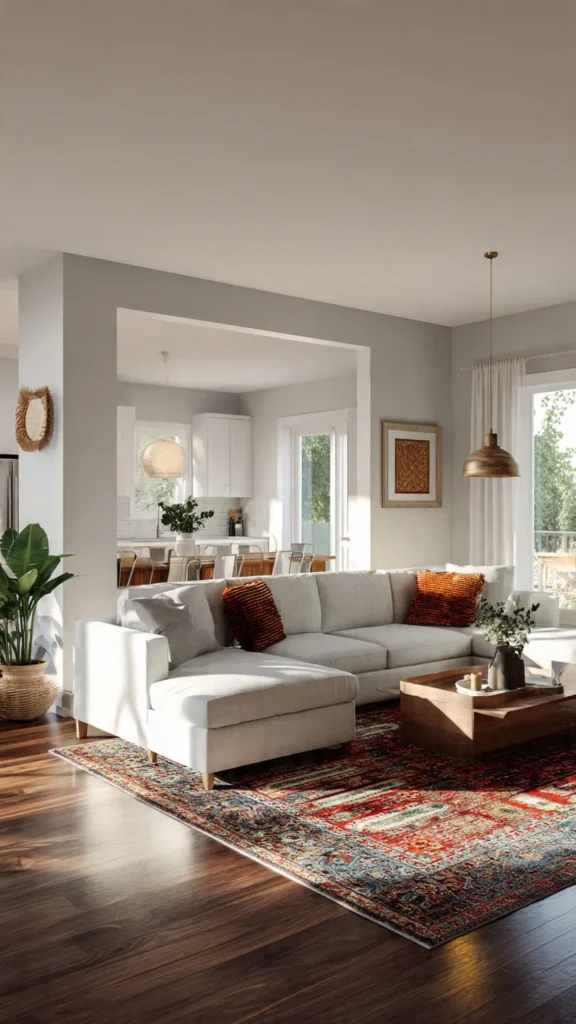
Area rugs are one of the simplest and most effective ways to zone an open-concept living room. A rug visually anchors furniture and signals where one area begins and ends. This works especially well for separating seating, dining, or workspace zones.
Choose rugs that vary slightly in texture or pattern while staying within a cohesive color palette. Ensure each rug is properly sized for its zone. This creates clear boundaries without disrupting openness.
2. Arrange Furniture Back-to-Back
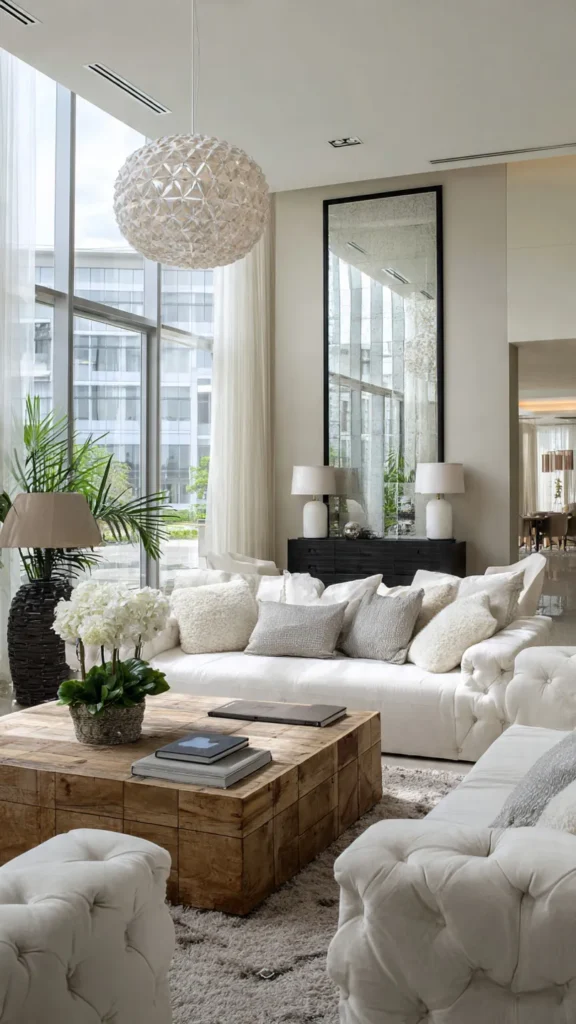
Placing furniture back-to-back is a smart way to create separation without barriers. A sofa positioned with its back to the dining or kitchen area clearly defines the living room zone. This layout maintains flow while establishing purpose.
Add a console table or low shelf behind the sofa for added function. Keep the height low to preserve sightlines. This subtle zoning method feels intentional and clean.
3. Create Zones Using Lighting
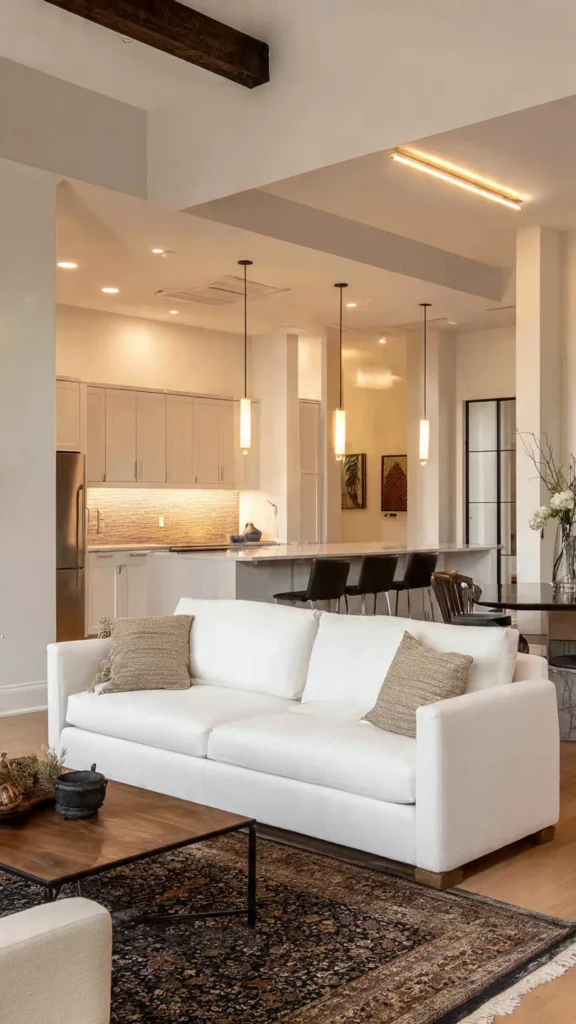
Lighting can subtly divide an open-concept space into functional zones. Different lighting styles signal different activities, such as lounging, dining, or working. This approach adds both function and atmosphere.
Use pendant lights over dining areas and floor lamps in seating zones. Stick to a cohesive style to maintain harmony. Lighting-based zoning feels sophisticated and uncluttered.
4. Use Furniture Orientation to Guide Flow
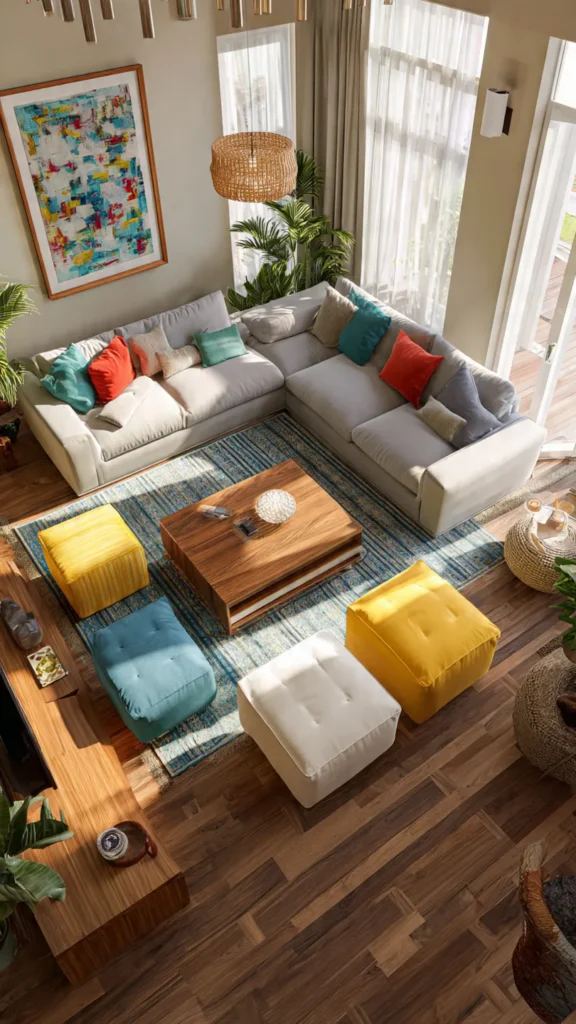
The direction furniture faces can define zones naturally. Sofas, chairs, and tables oriented inward create a clear living area. This method relies on placement rather than physical separation.
Ensure furniture is angled toward the intended focal point. Leave walkways open to encourage movement between zones. Orientation-based zoning keeps the space intuitive and fluid.
5. Incorporate Open Shelving as a Divider
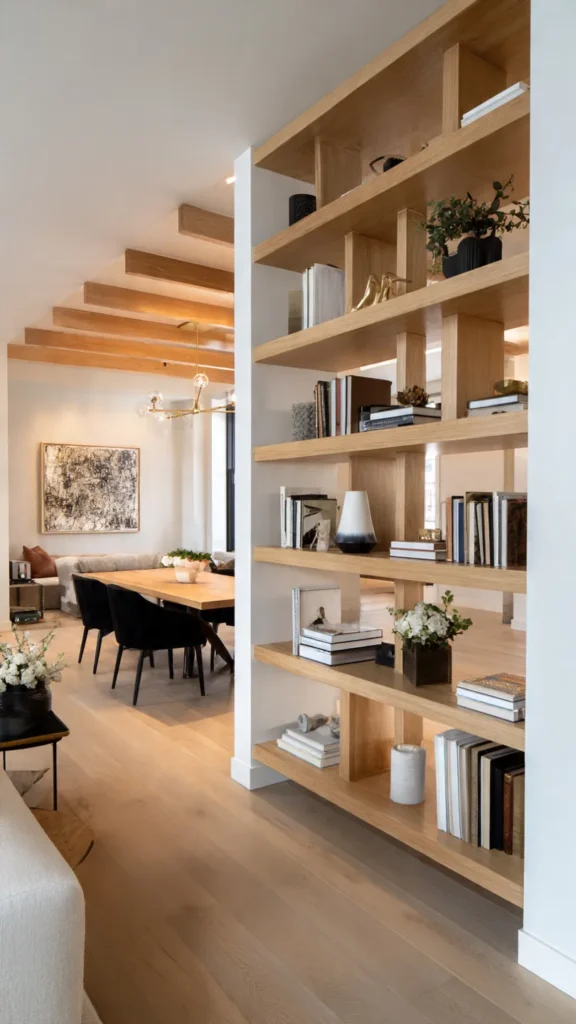
Open shelving provides visual separation while allowing light to pass through. It works well between living and dining areas or between a living room and home office. This adds storage without closing off the space.
Choose shelves with an open or airy design. Style them lightly to avoid visual clutter. This solution combines zoning with practical storage.
6. Use Different Flooring Materials
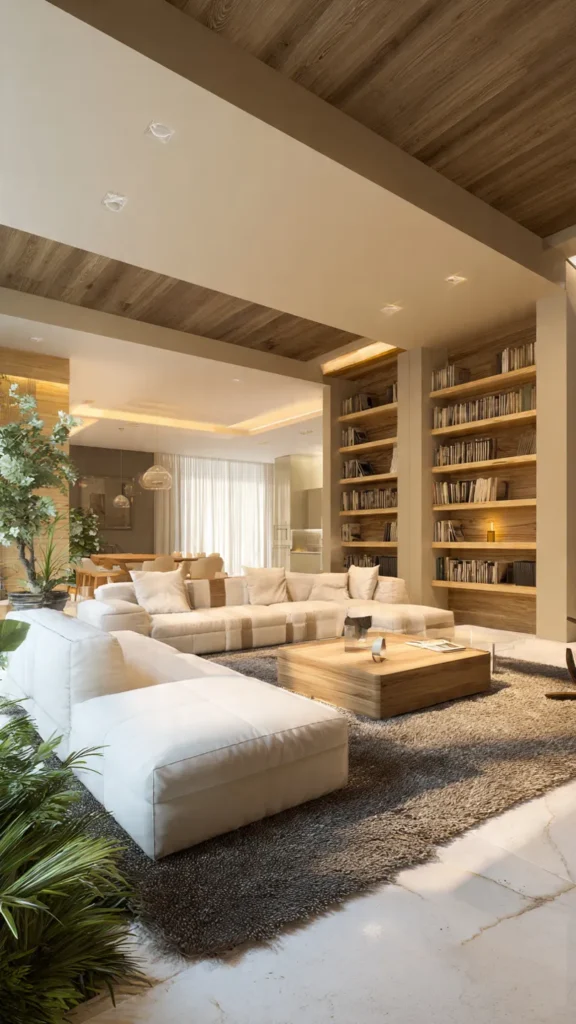
Changing flooring materials or patterns is a powerful zoning tool. For example, hardwood in the living area and tile in the kitchen naturally separate spaces. This technique creates a clear visual transition.
Keep flooring colors complementary to maintain cohesion. Avoid abrupt contrasts that disrupt flow. Subtle changes work best in open-concept layouts.
7. Create a Visual Break with Color
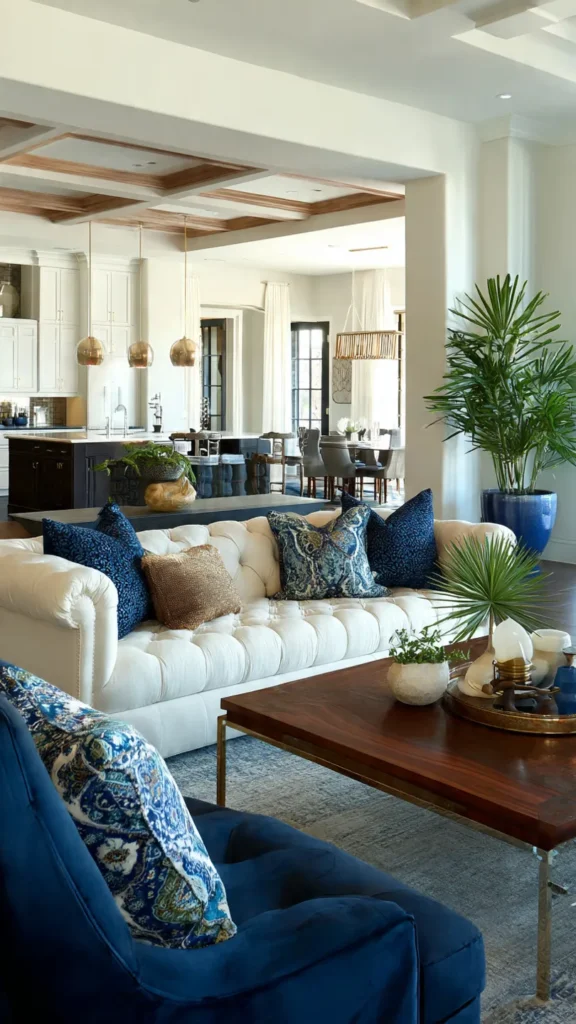
Color can be used strategically to define zones without walls. Slight variations in wall color, furniture tones, or décor palettes signal different areas. This maintains openness while adding structure.
Stick to related shades for a cohesive look. Use color changes sparingly to avoid visual chaos. This approach works especially well in neutral or monochromatic spaces.
8. Use Curtains or Fabric Panels
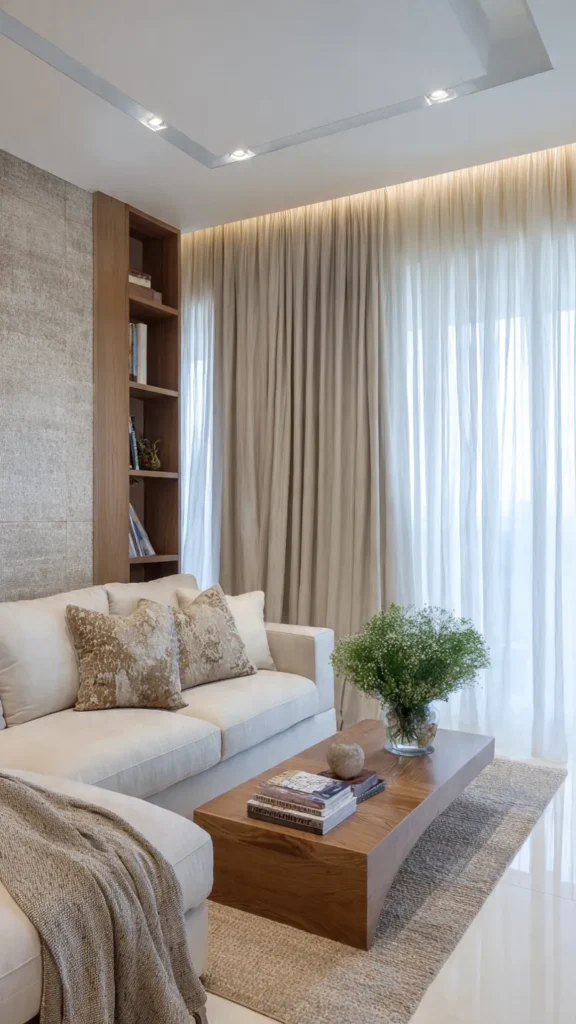
Curtains offer flexible zoning that can be adjusted as needed. Sheer or lightweight fabrics maintain airflow and light while creating separation. This option works well for temporary or adaptable layouts.
Mount curtain rods on ceilings for a seamless look. Choose fabrics that complement the room’s palette. Fabric zoning adds softness and versatility.
9. Position a Large Table Between Zones

A dining table or console table can act as a natural divider. Placed between living and kitchen areas, it signals a transition without blocking sightlines. This method is practical and visually effective.
Ensure there’s enough clearance around the table for movement. Keep styling minimal to avoid clutter. The table becomes both a functional and visual boundary.
10. Use Plants to Define Boundaries
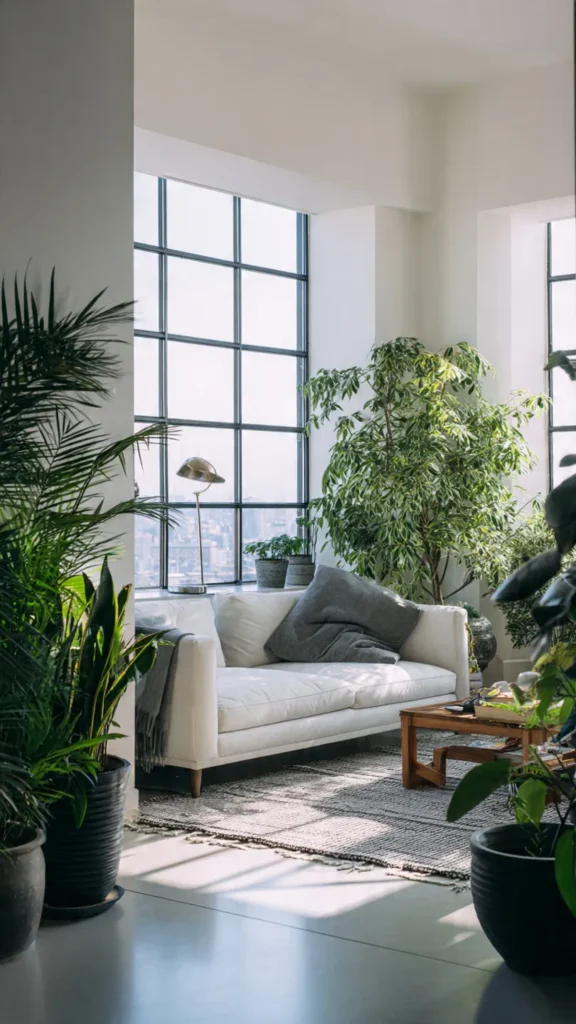
Plants are a natural and refreshing way to zone an open-concept living room. Tall plants or grouped planters create gentle separation while adding life. They soften transitions between areas.
Choose planters that match the overall design. Avoid overcrowding to maintain openness. Greenery-based zoning feels organic and calming.
11. Create Height Variation with Furniture

Varying furniture heights helps define zones visually. Low sofas paired with taller shelving or lamps create subtle boundaries. This adds dimension without physical barriers.
Balance heights carefully to maintain harmony. Avoid blocking key sightlines or windows. Height variation adds interest and clarity.
12. Use Statement Pieces as Anchors
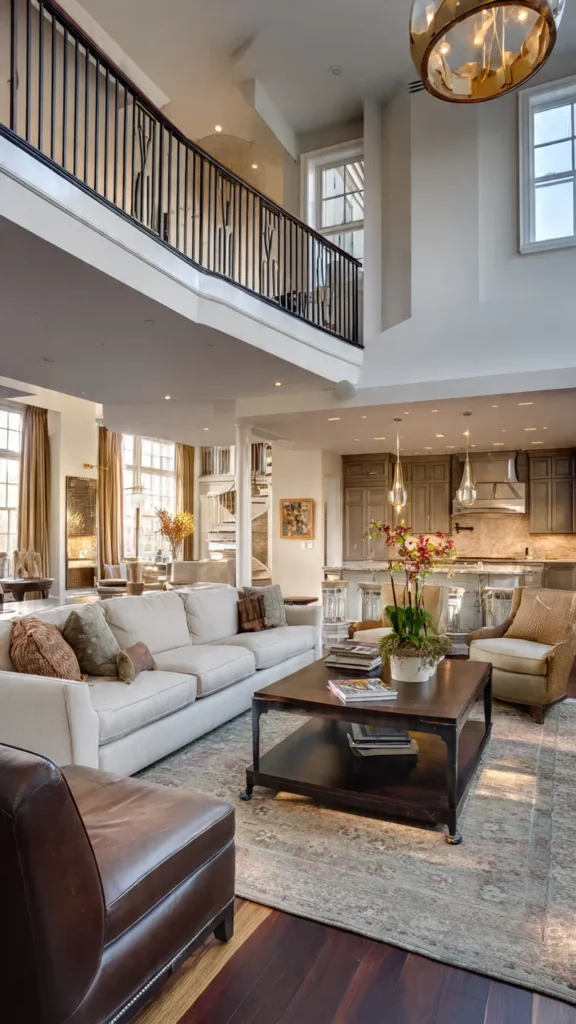
Statement furniture or décor pieces can anchor specific zones. A bold sofa, large artwork, or distinctive rug defines the living area. These anchors give each zone a clear identity.
Keep other elements more subdued for balance. Avoid competing statement pieces in one area. This approach keeps zoning clear and stylish.
13. Define Zones with Ceiling Treatments
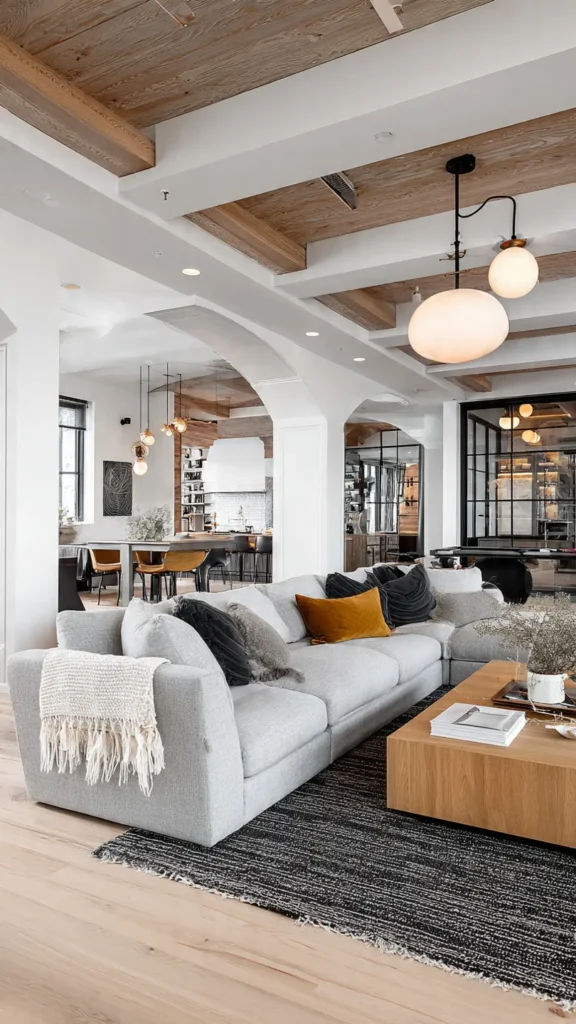
Ceiling details can subtly separate areas in an open-concept space. Different light fixtures, beams, or ceiling colors signal zone changes. This draws the eye upward and adds architectural interest.
Keep treatments cohesive to avoid fragmentation. Subtle changes are more effective than dramatic ones. Ceiling zoning enhances structure without enclosure.
14. Use Low Dividers or Benches
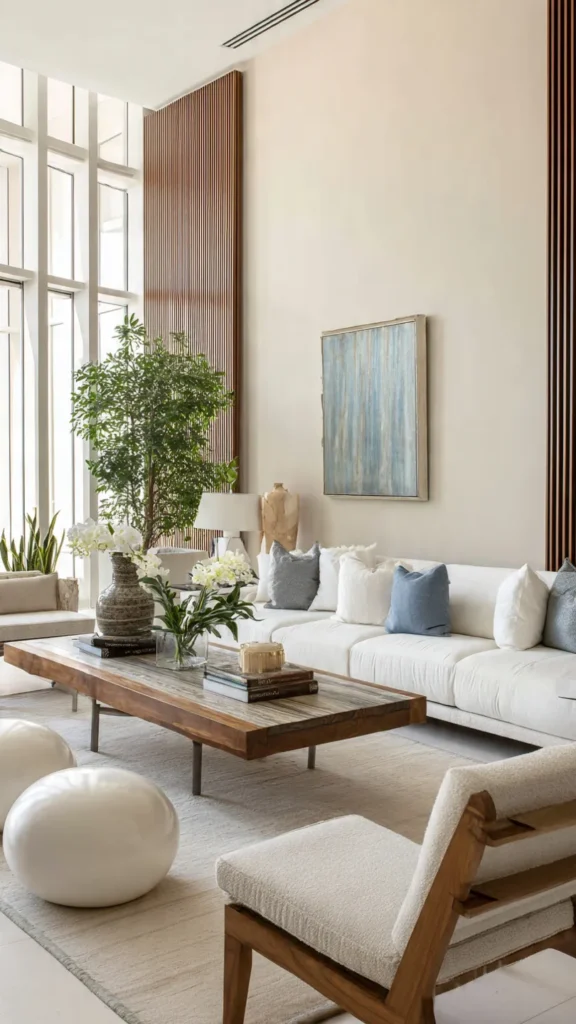
Low dividers or benches create separation while preserving openness. They work well behind sofas or between living and entry areas. Their low height maintains visual flow.
Choose pieces that double as seating or storage. Keep designs simple and streamlined. This solution adds function and definition.
15. Layer Textures to Distinguish Zones
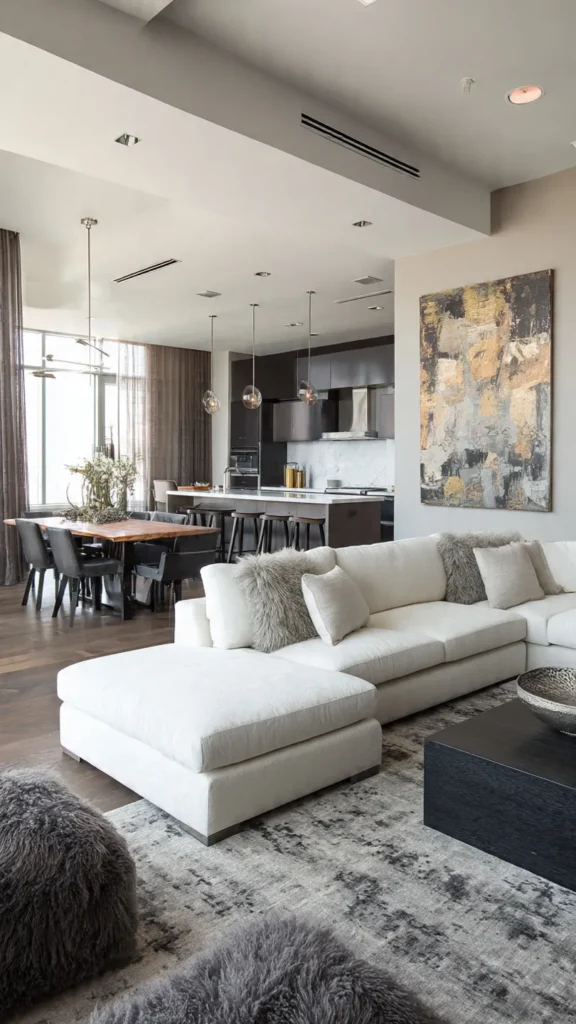
Texture variation helps differentiate zones without visual barriers. Plush textiles in the living area contrast with sleeker finishes in dining or kitchen spaces. This creates subtle yet effective separation.
Stick to a unified color palette to maintain cohesion. Use texture changes intentionally rather than randomly. This final touch ties the open-concept space together beautifully.
These open-concept living room zoning ideas prove that walls aren’t necessary to create structure. With thoughtful use of furniture, lighting, texture, and layout, you can define zones while preserving the openness that makes open-concept living so appealing.