

15 Painted Porch Floor Ideas
The painted porch floor is one of the most immediately impactful and most personally expressive home improvement projects available to the homeowner whose porch has lost its visual quality through age, wear, and accumulated weathering.
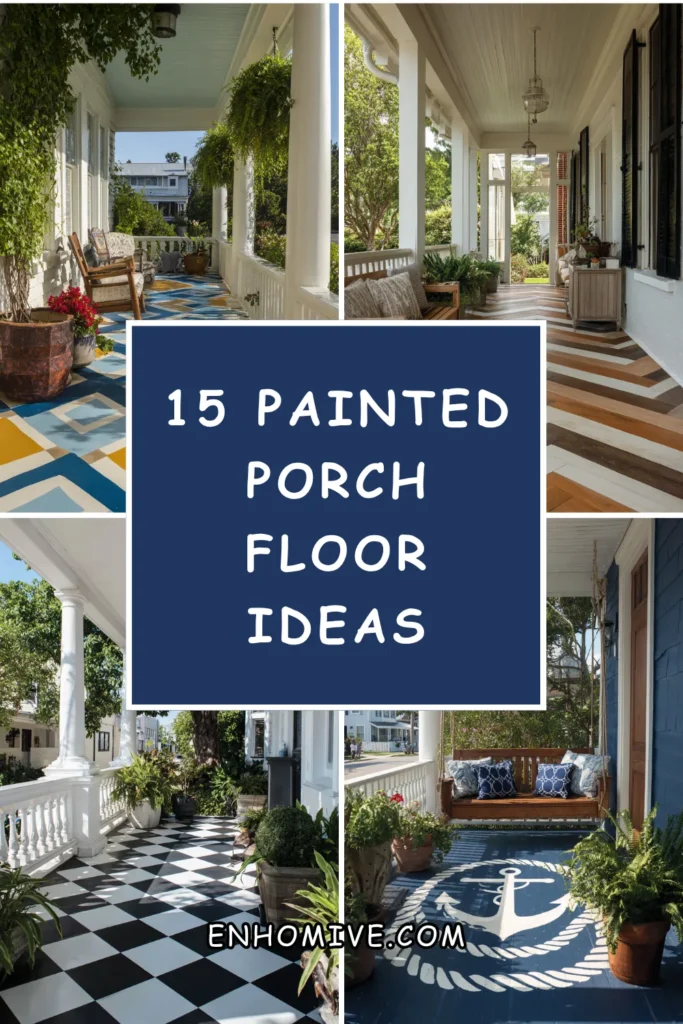
The painted floor’s specific quality is its capacity to transform the entire character of the porch with a relatively modest investment of time and materials, creating a surface that reads as a designed element rather than a purely functional platform. Here are fifteen painted porch floor ideas that bring genuine design confidence and lasting visual quality to every porch and covered outdoor space.
1. The Classic Black and White Checkerboard
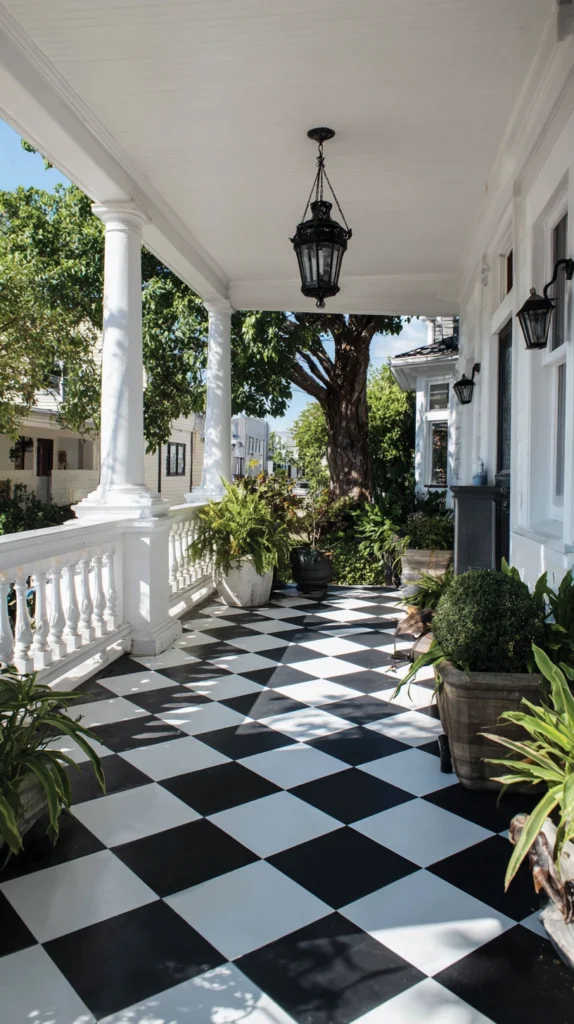
The black and white checkerboard is the painted porch’s most historically enduring and most immediately recognizable pattern. Its graphic simplicity creates maximum visual impact, and its classical reference to the tiled entrance halls of the Georgian and Victorian tradition gives it a cultural authority that more contemporary patterns cannot approach.
Apply the lighter color first across the entire floor, allow it to cure completely, then tape the checkerboard grid and apply the darker color within the taped squares. Remove the tape while the dark paint is still slightly wet for the cleanest possible edge definition between the alternating color fields.
2. The Painted Stripe in Complementary Colors
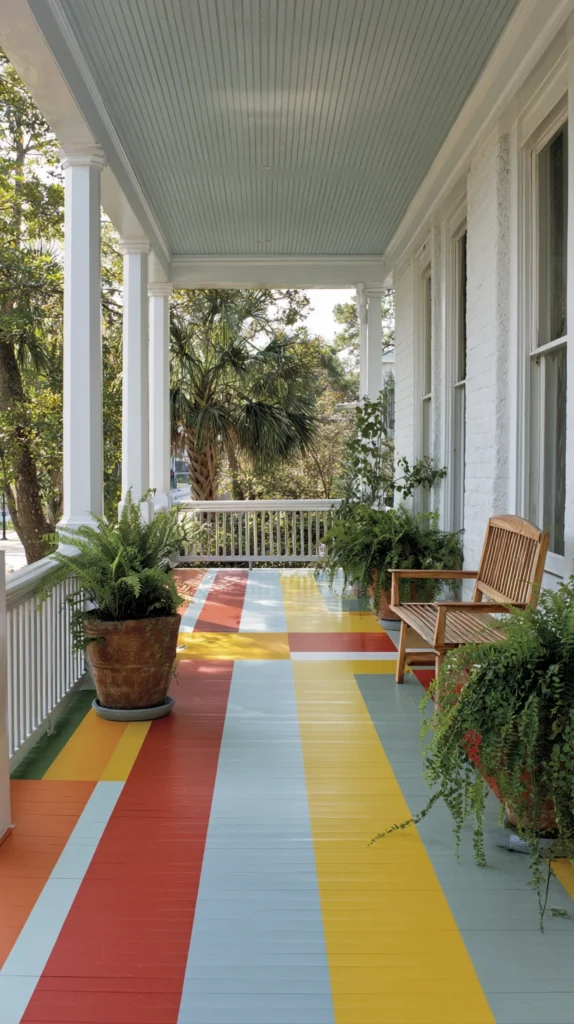
A simple painted stripe across the porch floor’s width, its bands of two complementary colors alternating in a consistent repeat, creates the painted floor of most cheerfully energetic and most contemporary graphic character. The stripe’s directional quality creates the optical illusion of a floor that is either wider or longer than its actual dimensions depending on its orientation relative to the porch’s primary axis.
Orient the stripes perpendicular to the porch’s length for the optical widening effect that makes the narrow porch appear more generous. Orient them parallel to the porch’s length for the receding perspective effect that makes the short porch appear to extend further from the house than its actual depth.
3. The Painted Diamond Pattern
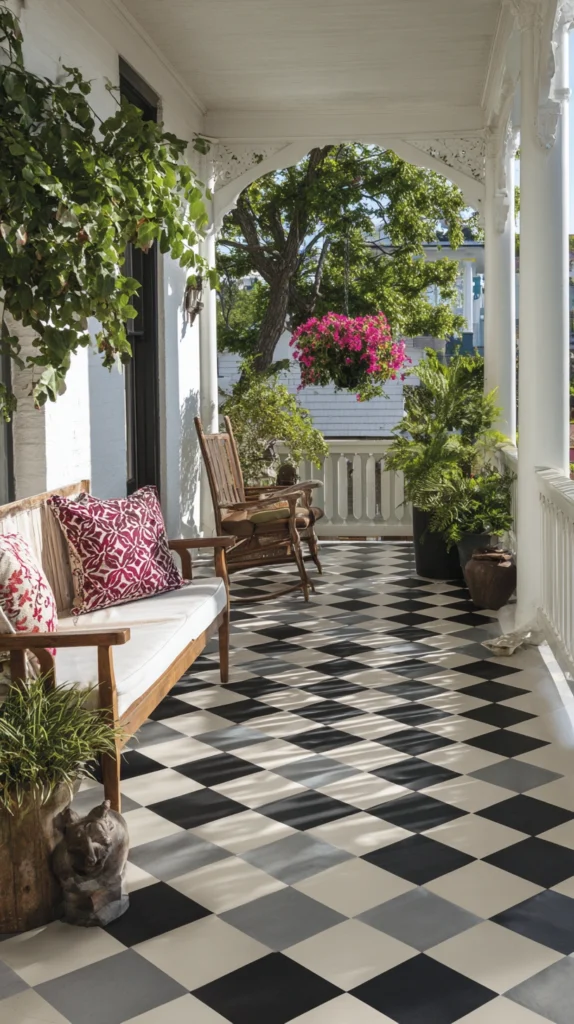
A painted diamond pattern, created by rotating the checkerboard grid forty-five degrees to the floor’s primary axis, creates the most elegant and most architecturally refined of the geometric painted floor treatments. The diamond’s diagonal orientation creates the dynamic visual quality of a pattern that energizes the floor surface with directional movement rather than the static quality of the axis-parallel square.
The diamond pattern’s execution requires precise geometry established with a chalk line before the painter’s tape is applied. Establish the diamond’s center point at the floor’s geometric center and work outward consistently from this reference point, creating the diagonal grid that the tape then follows for the pattern’s execution.
4. The Solid Color with Painted Border
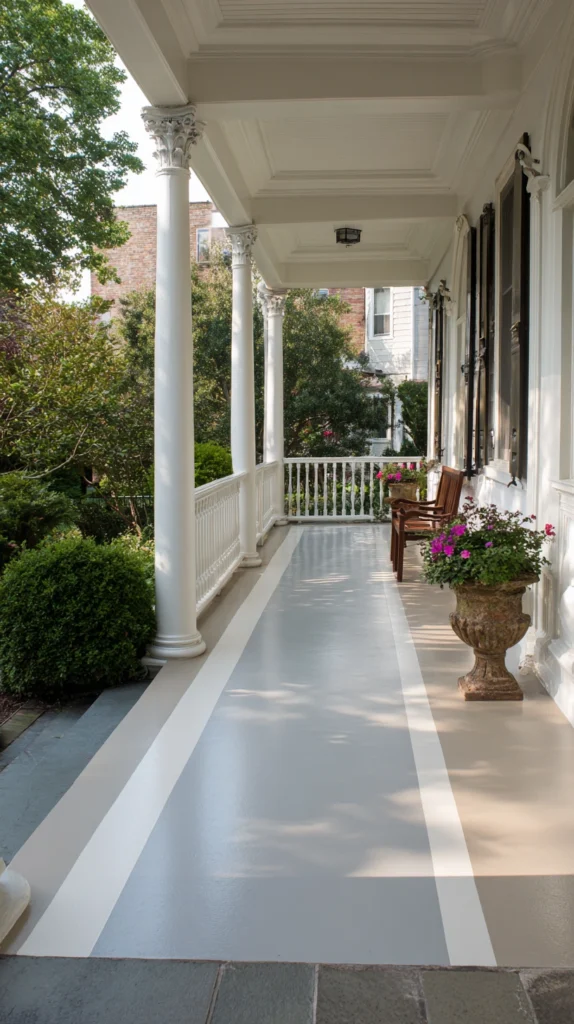
A single solid color applied to the porch floor’s main area, with a painted decorative border of complementary color at the floor’s perimeter, creates the painted floor of most classically resolved and most architecturally appropriate treatment. This approach suits the formal porch whose design character calls for understated elegance rather than the bold graphic impact of the all-over geometric pattern.
The border’s width should be proportional to the floor’s overall dimensions. A border of ten to fifteen centimeters suits the standard porch floor. A wider border of twenty to twenty-five centimeters creates the more emphatically framed quality of a floor that reads as a carpet with a defined central field and a clearly articulated surround.
5. The Painted Wood Grain Effect
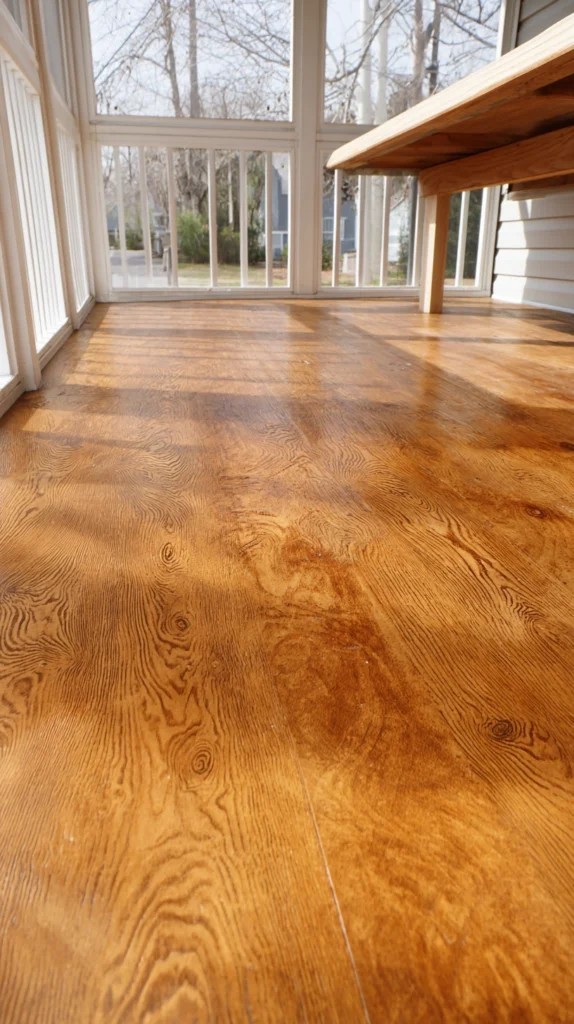
A painted faux wood grain effect applied to a concrete porch floor using a specialized graining tool and a compatible glaze over a base coat creates the floor’s most convincingly naturalistic treatment. The faux wood grain simulates the warmth and organic pattern of natural timber on the more durable and more easily maintained concrete substrate.
Apply the base coat in a warm, mid-toned timber color, allow it to cure completely, then apply the contrasting glaze and work the graining tool in a consistent direction across the full floor width. Seal the completed faux grain with a minimum of three coats of clear exterior floor varnish of adequate durability for the porch floor’s specific traffic level.
6. The Stenciled Medallion Pattern
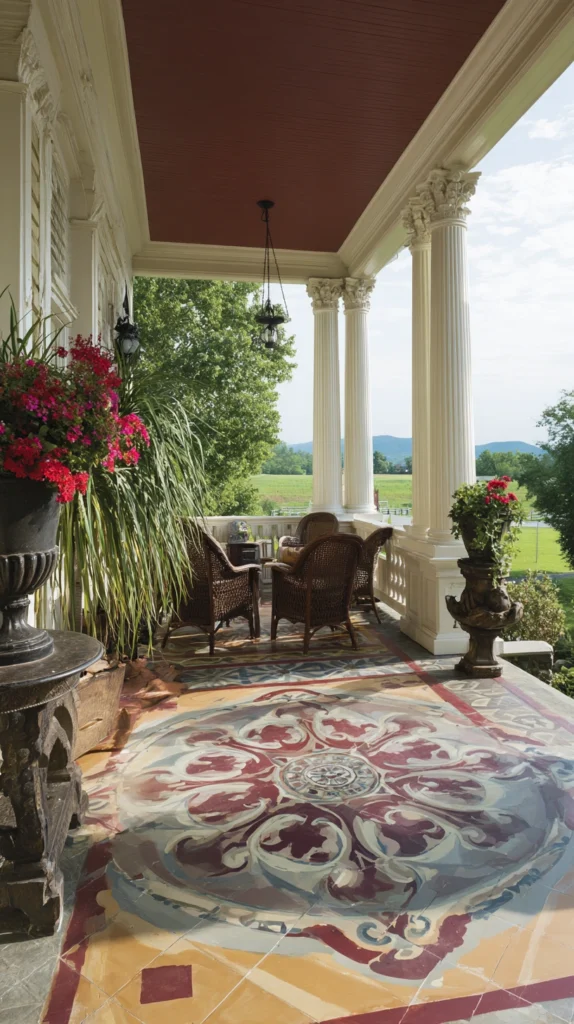
A large stenciled medallion pattern at the porch floor’s center, surrounded by the solid painted ground of the base color, creates the painted floor of the most dramatically focal and most decoratively ambitious character. The medallion’s central position creates the visual anchor of the porch floor’s composition, drawing the eye immediately to the pattern’s detail and creating the most impressive first impression.
Apply the stencil in a minimum of two colors for the visual complexity that the single-color medallion cannot achieve. A three-color medallion with a base ground, a mid-tone, and a highlight creates the layered decorative quality of the most elaborately painted porch floors of the colonial and Victorian traditions.
7. The Painted Concrete in Terracotta
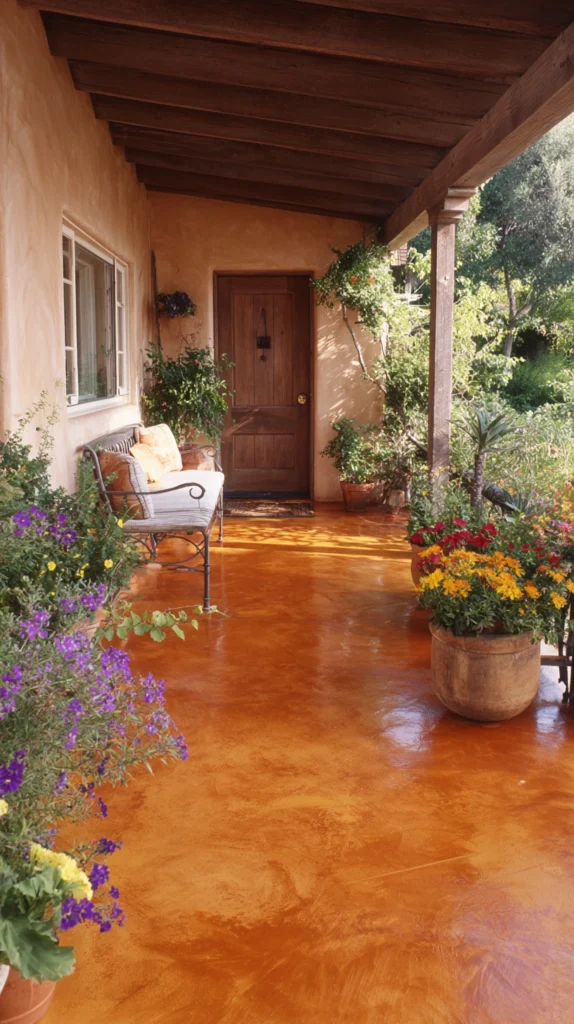
A concrete porch floor painted in a warm terracotta tone creates the most warmly Mediterranean and most immediately welcoming porch floor treatment in the solid painted color approach. The terracotta’s warm, earthy tone creates the specific quality of the sun-warmed clay that the Mediterranean courtyard and the Californian bungalow porch most naturally reference.
Prepare the concrete surface thoroughly before applying the terracotta paint. Clean with a degreasing solution, etch with a dilute acid wash to open the concrete’s pores, and apply a concrete primer of appropriate specification before the decorative topcoat. The painted concrete floor’s long-term performance depends almost entirely on the preparation quality rather than the paint quality.
8. The Navy Blue with White Rope Border
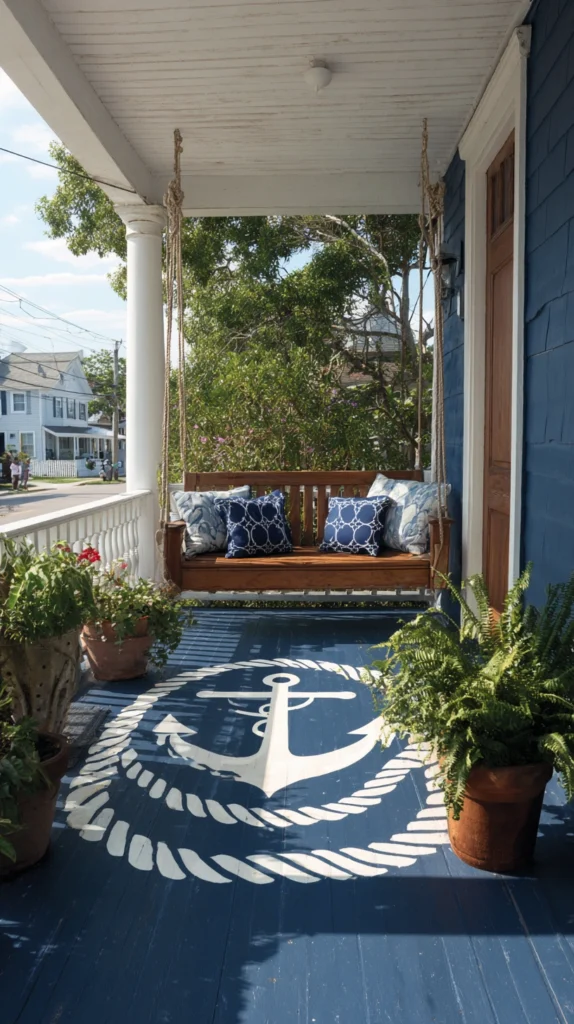
A navy blue porch floor with a painted white rope border at the perimeter creates the painted floor of most immediately recognizable nautical character. The rope border’s twisted pattern elevates the solid navy floor from the merely painted to the artisanally decorated, creating the coastal home’s most characterfully themed exterior floor treatment.
Paint the rope border freehand using a fine artist’s brush, or use a specialist rope pattern stencil for the more consistently executed version. Complete the nautical design with a painted anchor or compass rose at the floor’s center, creating the painted floor of complete coastal narrative whose individual elements tell a coherent design story.
9. The Painted Pebble Pattern
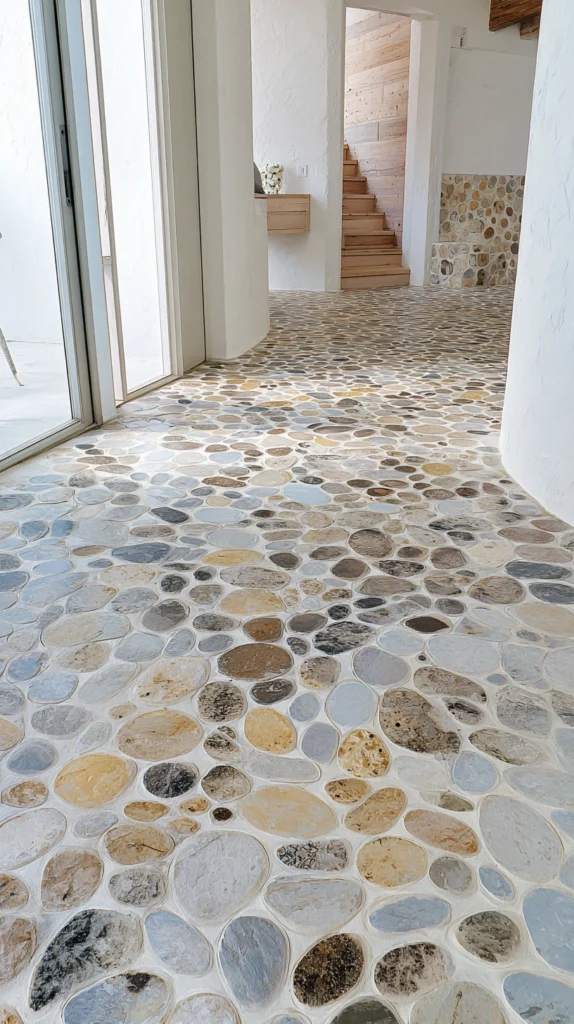
A painted pebble pattern, individual oval shapes in varied sizes and warm neutral tones scattered across the floor in the pattern of beach pebbles, creates the most naturalistically referencing and most organically textured painted floor treatment available. The painted pebbles’ varied sizes, slightly varied tones, and random distribution create the painted floor of most convincing natural surface simulation.
Add a highlight of lighter paint at each pebble’s upper edge and a shadow of darker tone at the lower edge to create the three-dimensional quality of the rounded form. The highlight and shadow’s consistent direction across all pebble shapes creates the unified lighting quality that makes the painted pebbles read as a coherent, naturally lit surface rather than a flat decorative pattern.
10. The Color-Blocked Zones
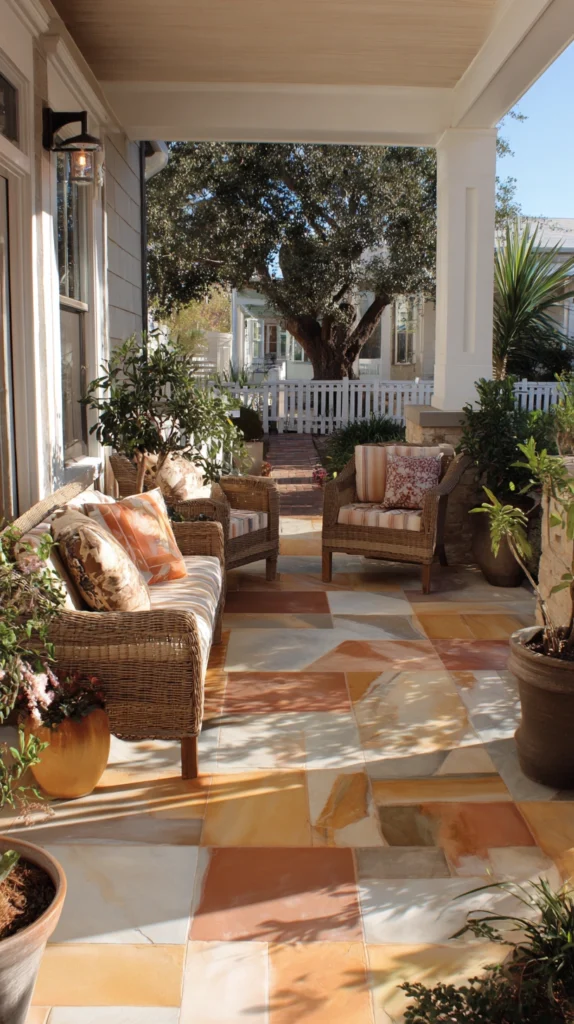
A color-blocked porch floor that divides the total area into two or three distinct colored zones creates the most contemporary and most deliberately designed painted floor treatment for the modern porch. The color-blocked zones can define different functional areas using color as the organizational and spatial tool.
Choose colors from the same tonal family rather than from contrasting positions on the color wheel, creating the sophisticated color-blocking of related tones. Warm sand, warm terracotta, and warm cream create the sophisticated color-blocked floor of most elegantly restrained chromatic variety and most harmonious overall visual quality.
11. The Painted Herringbone
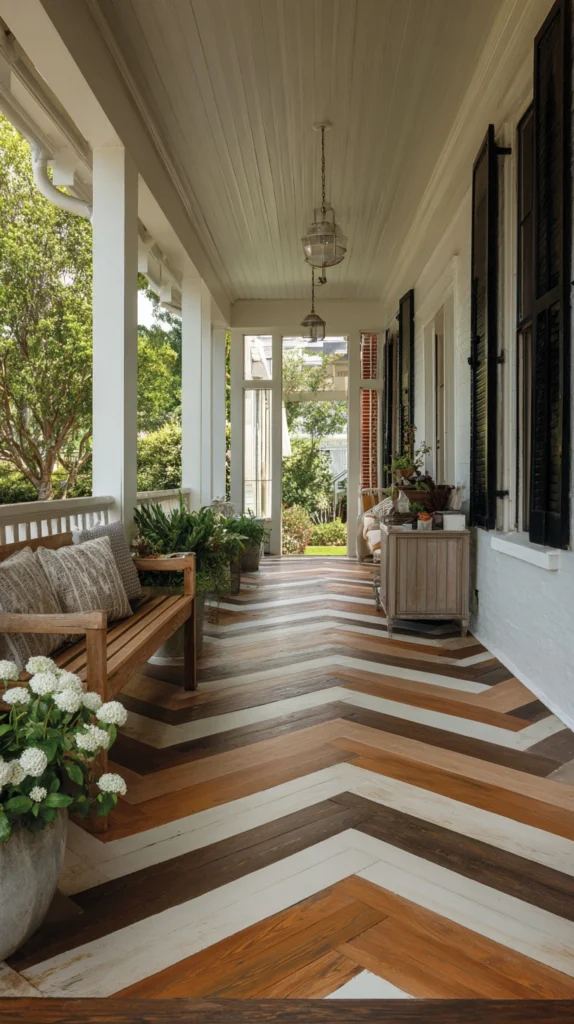
A painted herringbone pattern creates the painted floor of most enduringly sophisticated and most architecturally credible pattern treatment. The herringbone’s visual energy is directional, guiding the visitor’s eye and feet along the porch’s primary axis with the dynamic movement of the diagonal unit’s alternating orientation.
Create the herringbone by painting the full floor in the lighter color, then establishing the herringbone grid with chalk lines and painter’s tape before applying the darker color within the alternating units. The two colors should be in sufficient tonal contrast for the pattern’s geometry to be clearly readable from the typical viewing distance of three to five meters.
12. The Ombre Gradient Floor
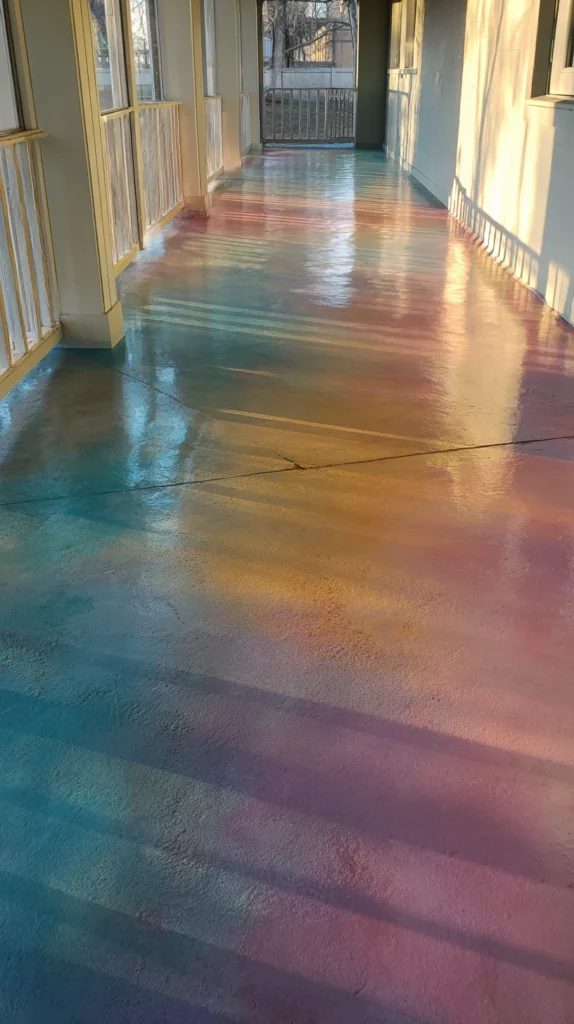
An ombre gradient floor, its color transitioning gradually from a deep saturated tone at one end of the porch to the pale, barely-there version of the same color at the opposite end, creates the painted floor of most atmospheric and most dramatically painterly character. The gradient’s smooth color transition creates the visual quality of a surface that appears lit from within rather than painted from above.
Achieve the smooth ombre gradient by working wet-into-wet across the floor’s full width at each stage of the color transition, blending adjacent color zones with a dry brush before the paint begins to set. Practice the blending technique on a sample board before committing to the full floor application for the technique control that the smooth gradient requires.
13. The Painted Tile Imitation
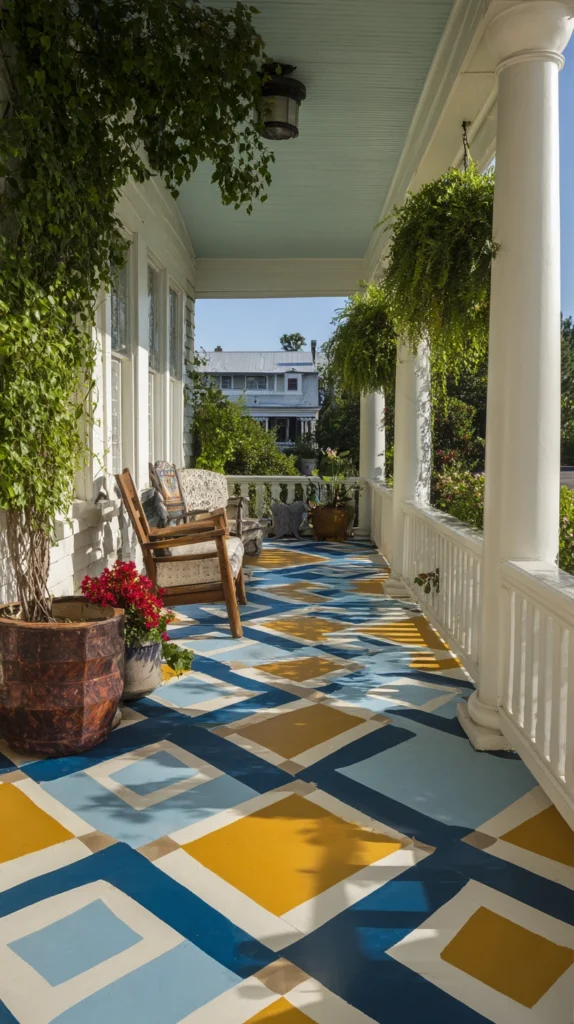
A painted tile imitation pattern, its individual painted units precisely dimensioned and colored to simulate the appearance of encaustic or geometric tile, creates the painted floor of most decoratively ambitious and most convincingly material-referencing treatment. The painted tile imitation achieves the visual quality of the genuine tiled floor at a fraction of the cost and without the structural requirements of the actual tile installation.
Use a purpose-made encaustic tile stencil for the most consistently executed pattern repeated across the full floor area. The repeating geometric pattern in two to four colors creates the visual complexity of the finest Victorian entrance floor tiles on the affordable substrate of the painted timber or concrete porch surface.
14. The Rustic Whitewash
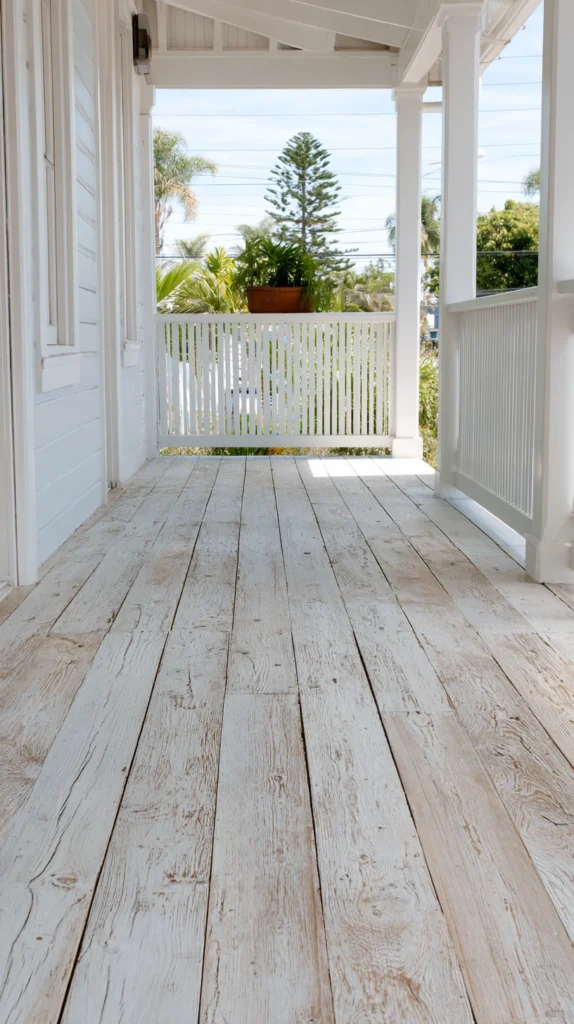
A whitewash treatment applied to a timber porch floor, its thin, semi-transparent white paint allowing the timber’s natural grain to remain visible beneath the whitened surface, creates the painted floor of most organically naturalistic and most warmly coastal character.
The whitewash’s specific quality is its compatibility with the timber’s natural material rather than concealment beneath an opaque paint film.
Dilute white exterior paint to a consistency of approximately one part paint to two parts water. Apply with a wide brush working in the direction of the timber grain, then wipe back the excess with a clean cloth before the diluted paint begins to set. This creates the transparent, grain-revealing quality of the authentic whitewash finish.
15. Design the Painted Porch Floor for the Home’s Specific Character
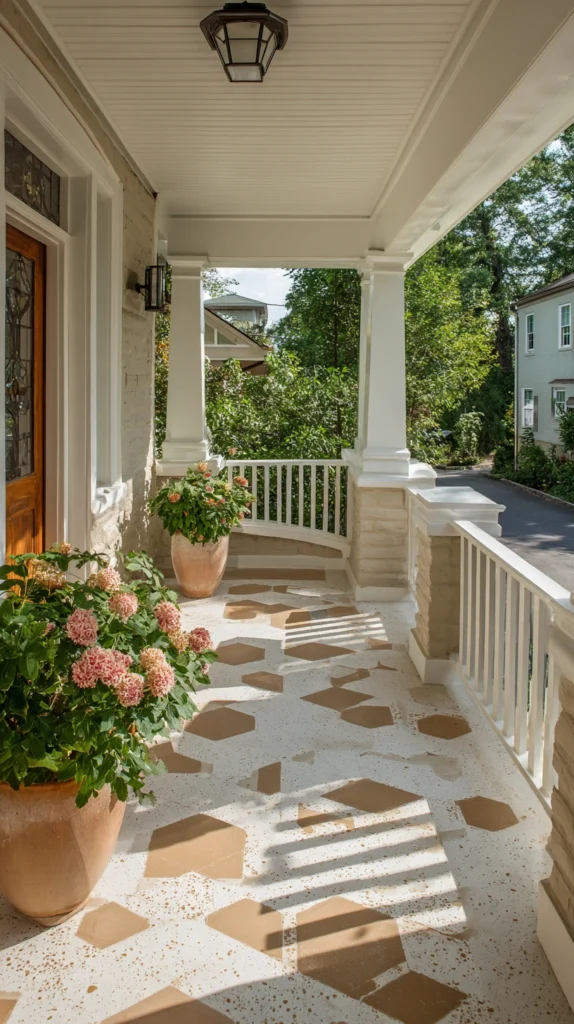
The most important painted porch floor principle is the commitment to designing the floor for the home’s specific architectural character rather than applying a pattern or color that, however beautiful in isolation, does not relate to the specific building it belongs to.
The painted porch floor that reflects the home’s architectural style, complements the exterior’s color palette, and expresses the creative personality of the people who made the design decisions creates the threshold of most genuine and most lasting quality.
This quality of authentic, specific rightness, the sense that the floor belongs exactly to this house and no other, is the painted porch floor’s highest achievement and the standard against which every design decision in its creation should be measured.