

15 Paver Walkway Ideas for a Beautiful Outdoor Path
A well-designed paver walkway does more than connect two points in a garden. It creates a sense of arrival, defines the landscape, and communicates the character of the home it approaches before a single door has been opened.
The best walkways slow the visitor down just enough to appreciate the garden they are passing through — the material, the pattern, the planting alongside, and the quality of design all working together to create an approach that feels genuinely considered and genuinely beautiful.
Paver walkways are also the most versatile and most durable of all garden path options. The right paver material and the right installation creates a surface that handles heavy foot traffic, resists frost damage, requires minimal maintenance, and looks genuinely better as it ages and weathers into the surrounding landscape.
Here are 15 paver walkway ideas that create a beautiful and genuinely functional outdoor path.
1. Herringbone Brick Walkway
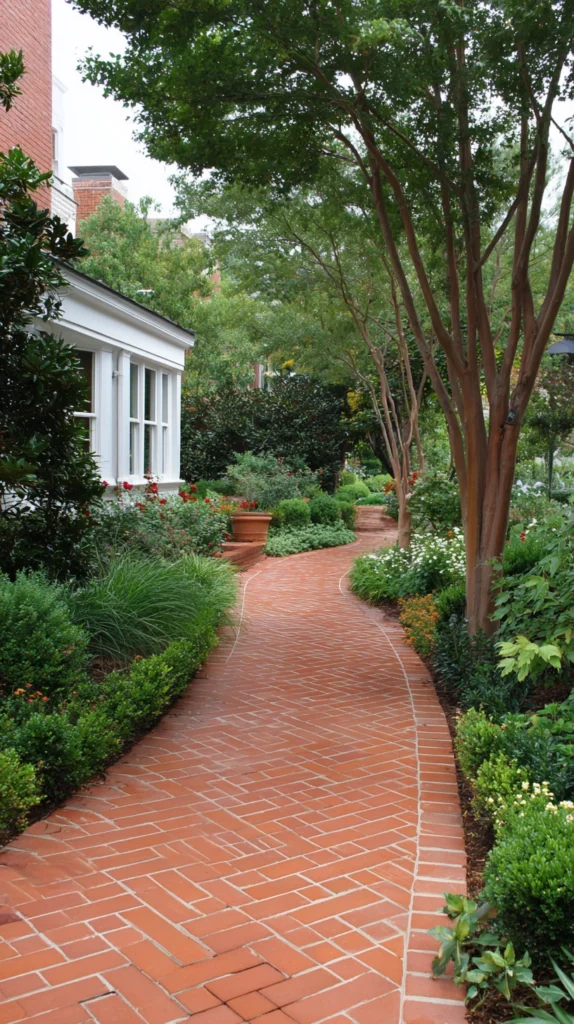
A herringbone pattern brick walkway — the classic 45-degree diagonal laying pattern that creates a continuous interlocking zigzag across the path surface — is one of the most enduringly beautiful and most structurally stable paver patterns available.
The interlocking nature distributes load across the entire path surface rather than concentrating it at individual joints — making it the most structurally robust of all brick laying patterns and the most resistant to individual brick movement and settlement.
Pro Tip: Lay herringbone brick walkways with soldier course borders — a single row of bricks laid lengthwise along each edge — to contain the herringbone pattern within a defined frame and prevent edge bricks from rotating and separating over time. A soldier course creates a clean defined edge that makes the herringbone pattern read as a deliberate design composition rather than an informal scatter of bricks.
2. Natural Flagstone Walkway
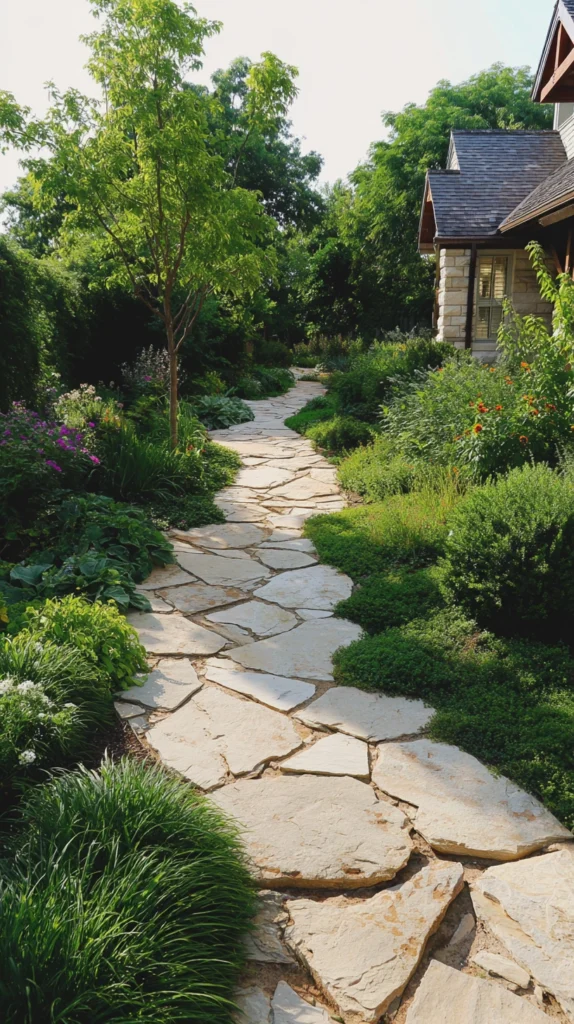
A natural flagstone walkway — large irregular pieces of natural stone laid with planting gaps between them or with tight mortar joints — creates a garden path of extraordinary natural beauty and genuine geological character. Each flagstone is unique — its specific shape, color, and surface texture completely individual — creating a path of completely organic non-repeating beauty that manufactured paving materials cannot replicate. Limestone, sandstone, slate, and granite all create beautiful walkways with different material characters and different aesthetic directions.
Pro Tip: Lay natural flagstones with consistent joint widths between adjacent stones despite the irregular shapes of the individual pieces — selecting and fitting each stone to maintain approximately equal joint widths throughout. Inconsistent joint widths create an unresolved accidental-looking installation. Consistent joint widths despite irregular stone shapes create a path that looks deliberately designed rather than randomly assembled.
3. Stepping Stone Through Lawn
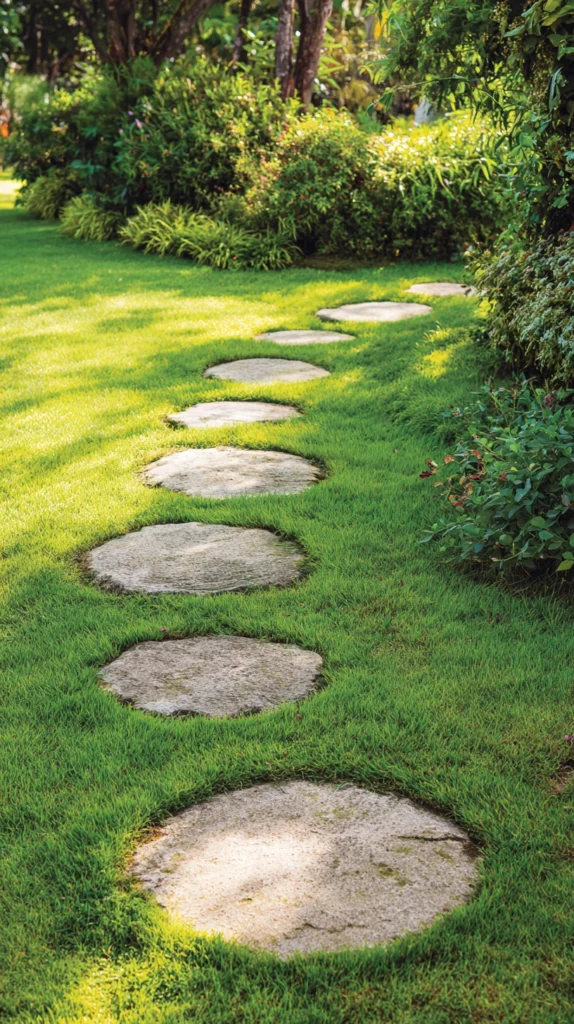
Circular or irregular stepping stones set flush with the lawn surface — each stone positioned at a natural walking stride distance from the next — creates the most relaxed and most organically beautiful garden path available. The stepping stone through the lawn path is the most minimal landscape intervention — the grass continuing uninterrupted around each stone, the path defined only by the rhythm of individual stones rather than any continuous paved surface.
Pro Tip: Set stepping stones flush with or very slightly below the surrounding lawn surface. A stone flush with the lawn can be mowed over directly without any obstacle. A stone projecting even slightly above lawn level catches the mower blade on every pass — creating a persistent maintenance frustration that makes the beautiful stepping stone path a weekly source of minor irritation.
4. Concrete Paver Grid with Ground Cover Planting
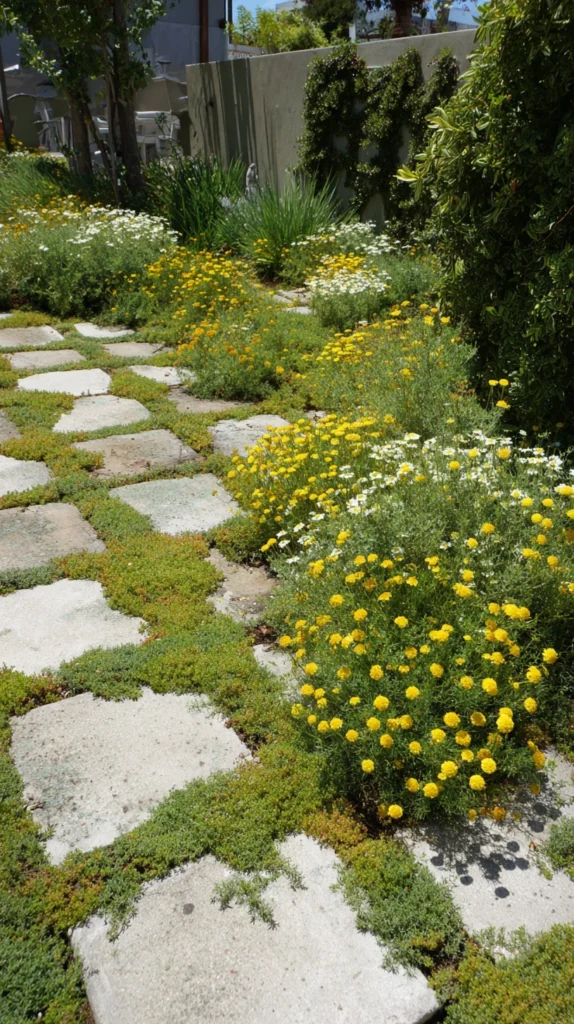
A grid of square or rectangular concrete pavers with generous planting gaps between each paver — filled with low-growing ground cover plants like creeping thyme, mind-your-own-business, or chamomile — creates a walkway of extraordinary visual softness and genuine organic beauty. The planting between the pavers transforms a hard paved surface into a living fragrant path that changes through the seasons and improves with every year of establishment.
Pro Tip: Use concrete pavers of at least 600mm by 600mm for a planted grid walkway. Smaller pavers with generous planting gaps create a path where the planting dominates and the paved surface is insufficient for comfortable walking. Larger pavers with proportionally smaller planting gaps create a path that is genuinely comfortable to walk while still allowing the planting to soften the hard paved surface effectively.
5. Decomposed Granite with Paver Borders
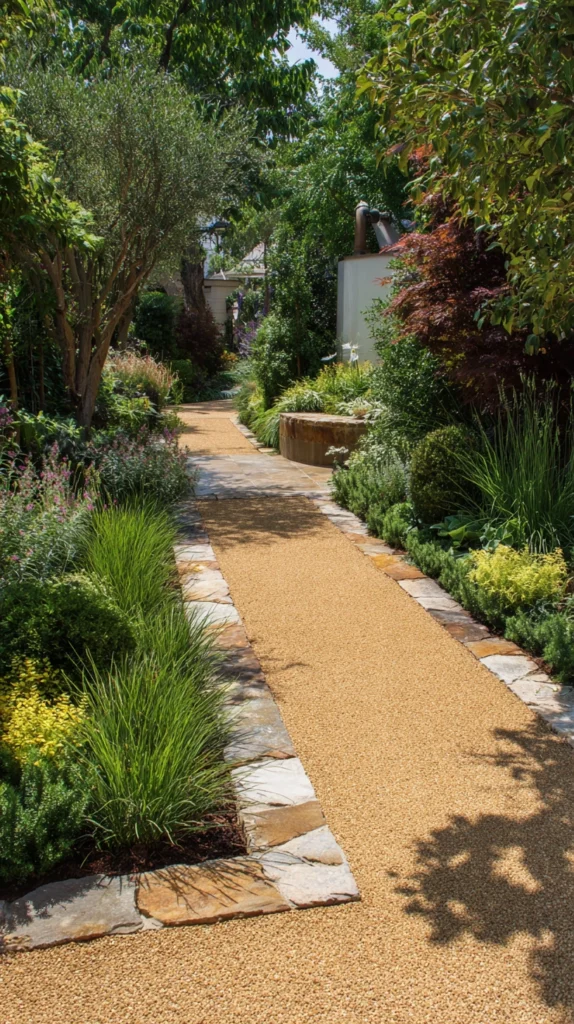
A decomposed granite walkway — a compacted pathway of crushed granite aggregate in warm honey, buff, or grey tones — edged with a defined border of concrete, brick, or natural stone pavers creates a path of considerable natural warmth and genuine garden character. The decomposed granite provides a soft permeable naturally draining path surface. The paver border provides the structural definition that prevents the granite from scattering into the surrounding garden.
Pro Tip: Install a subsurface stabilizing membrane beneath a decomposed granite walkway before laying the granite surface. Without a stabilizing membrane the decomposed granite gradually migrates downward into the soil below — the path surface thinning and developing soft spots and depressions that create an uneven uncomfortable walking surface within two to three seasons of installation.
6. Mixed Material Walkway
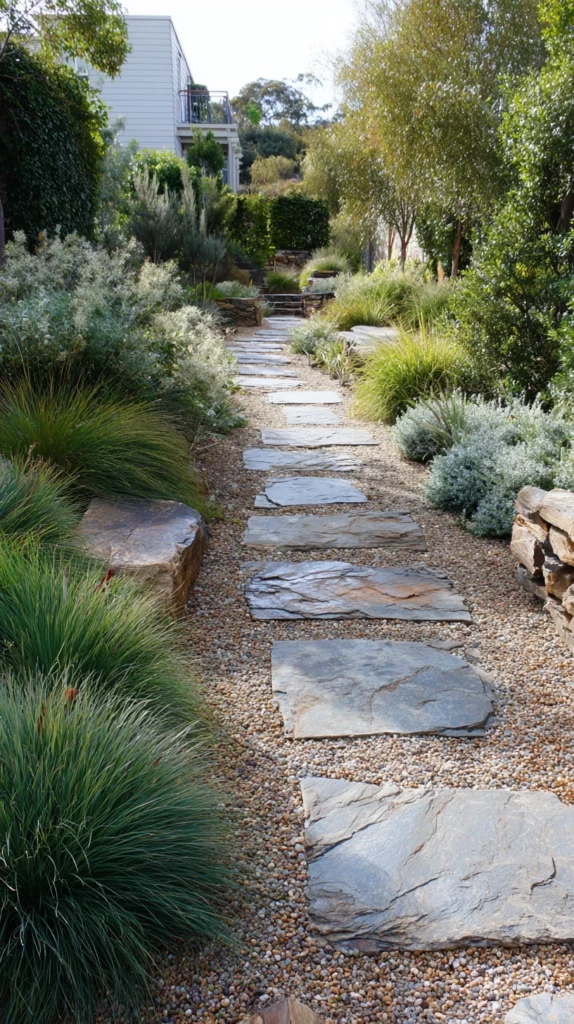
A walkway combining two or more paver materials — large natural stone slabs alongside smaller brick infill, concrete pavers alongside river pebble borders, or timber sleepers alongside gravel fill — creates a path of considerable visual interest and genuine material richness that single-material alternatives entirely lack.
Large bluestone pavers with fine gravel infill, or wide timber sleepers with decomposed granite between them, create a path of extraordinary visual warmth and genuine material beauty.
Pro Tip: Choose mixed paver materials that share a consistent tonal temperature — either all warm-toned materials or all cool-toned materials — for a mixed material path that reads as a unified considered composition.
Warm honey stone alongside warm timber alongside warm gravel creates coherence. Mixing warm and cool-toned materials without a unifying principle creates visual fragmentation that undermines the quality of the finished path.
7. Formal Symmetrical Brick Walkway
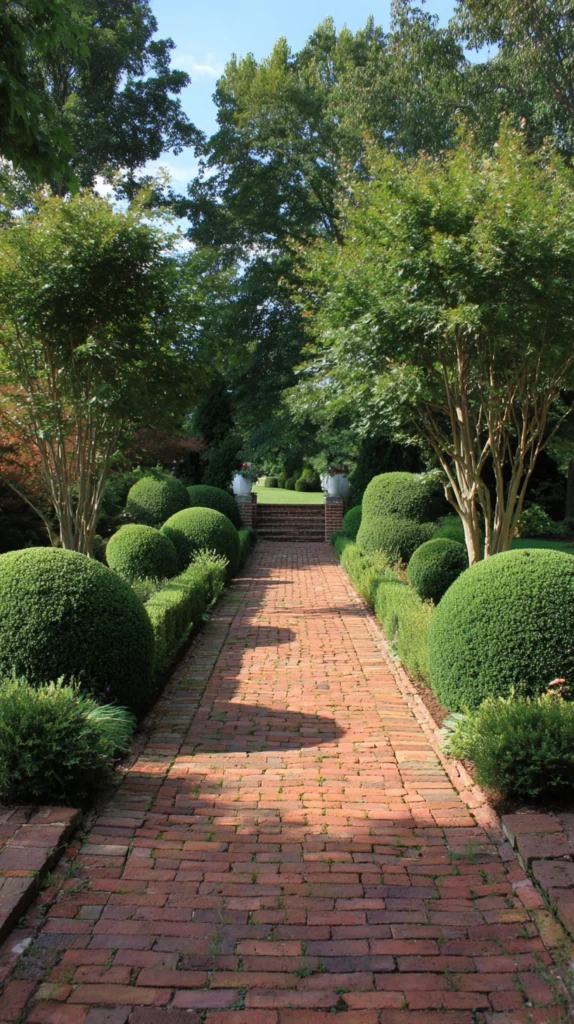
A formal symmetrical brick walkway — a straight path of consistent width with a defined laying pattern and precise consistent joints, bordered by symmetrically planted formal hedging or topiary — creates a garden approach of considerable architectural authority and classical formal beauty.
The symmetrical planting alongside is as important as the paver pattern itself — perfectly matched pairs of clipped box balls or formal topiary columns at regular intervals creating the visual rhythm and spatial enclosure that makes a formal walkway so specifically beautiful.
Pro Tip: Maintain absolute precision in the laying of a formal symmetrical brick walkway — perfectly straight lines, perfectly consistent joint widths, and perfectly level individual bricks throughout the full length. The beauty of a formal walkway depends entirely on precision — any deviation from the straight line or variation in joint width immediately undermines the formal authority that makes this walkway type so specifically and powerfully beautiful.
8. Curved Natural Stone Walkway
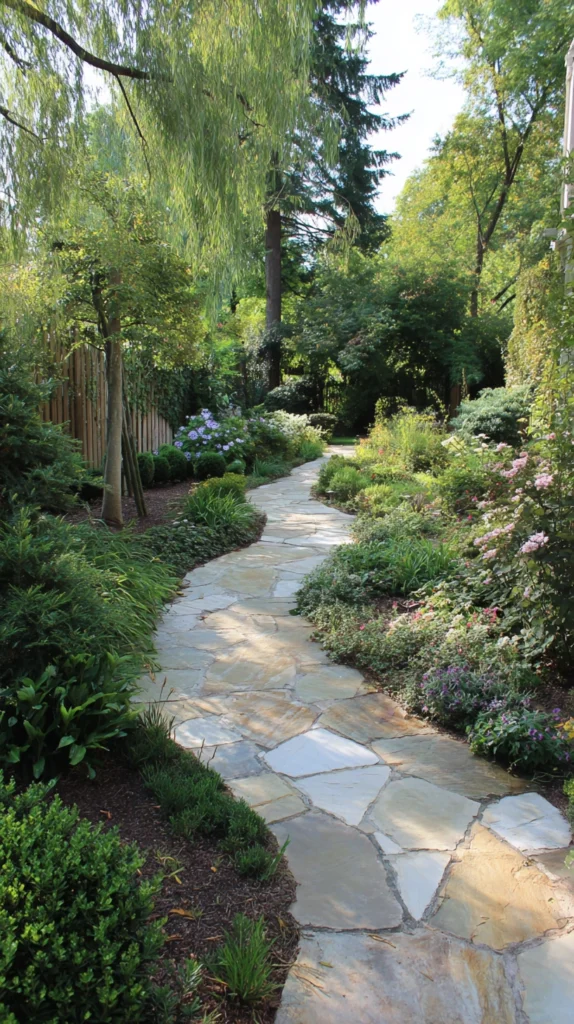
A gently curved walkway of natural stone — the path following the natural contours of the garden rather than the straight-line logic of the shortest distance between two points — creates a garden path of considerable visual grace and genuine spatial interest. A curved path slows the visitor, creates a sense of discovery, and reveals the garden in a sequence of changing views that a straight path delivers all at once rather than progressively and beautifully.
Pro Tip: Design the curve with a single consistent radius rather than multiple changing curves that create an S-shape or serpentine path.
A single consistent curve reads as a deliberate graceful design gesture. A serpentine path with multiple changing curves can feel restless and over-designed — the path drawing too much attention to itself rather than simply guiding the visitor gracefully through the garden.
9. Reclaimed Cobblestone Walkway
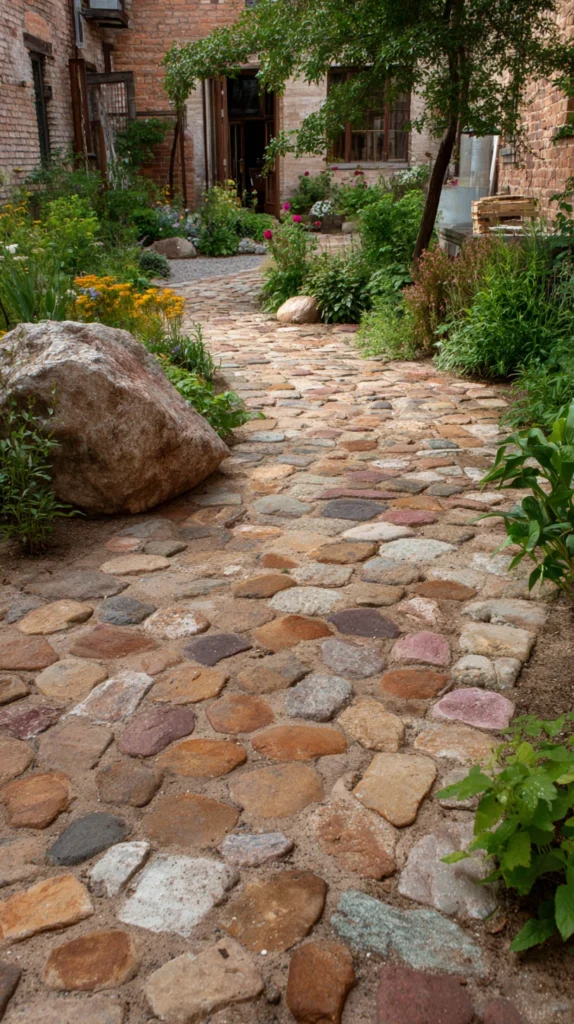
A walkway constructed from reclaimed cobblestones — the small rounded historically worn stones of old European streets — creates a garden path of extraordinary historical character and genuine material beauty.
Reclaimed cobblestones carry the evidence of their previous life in their worn rounded surfaces and warm varied coloring — creating a path of authentic accumulated character that new manufactured paving cannot replicate regardless of how carefully it is detailed or installed.
Pro Tip: Set reclaimed cobblestones in a generous sand and cement bedding mortar with tight consistent joints for a cobblestone path that is stable, safe, and comfortable to walk. Cobblestones set too loosely in a sand-only base create a path surface that rocks, shifts, and becomes uneven under foot traffic — the individual stones moving independently rather than functioning as a unified stable surface.
10. Porcelain Paver Walkway
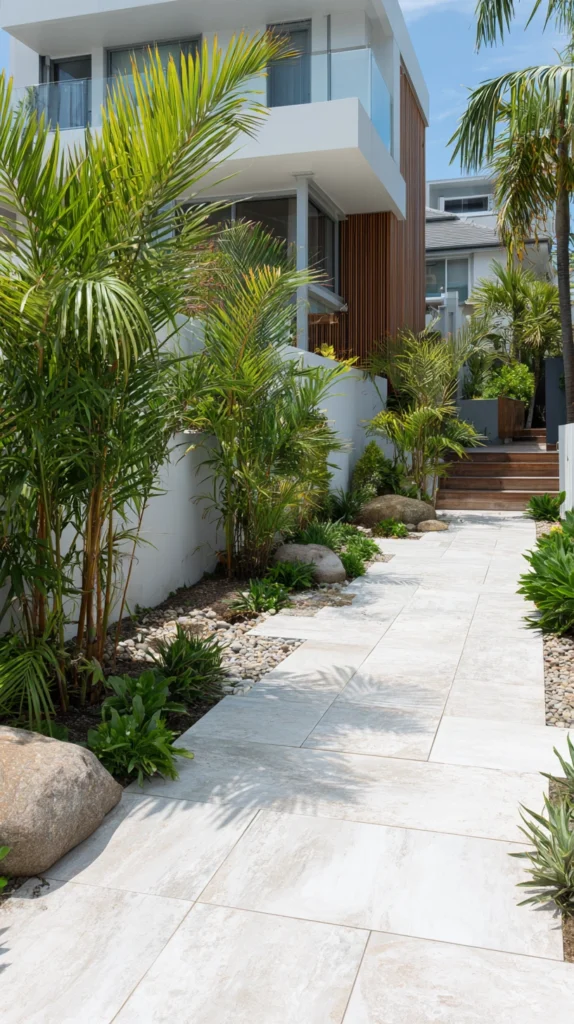
A porcelain paver walkway — large format porcelain tiles designed specifically for outdoor use in popular contemporary formats of 600mm by 600mm and 900mm by 900mm — creates a garden path of maximum design precision and contemporary aesthetic confidence.
Large format porcelain pavers laid with minimum joint widths create a walkway of extraordinarily clean contemporary visual impact — the near-continuous surface of large pale stone-effect pavers creating a path of genuine architectural elegance.
Pro Tip: Specify outdoor-rated porcelain pavers with a slip-resistance rating of R11 or higher for a walkway used in wet conditions. Standard indoor porcelain tiles installed outdoors create a dangerously slippery walking surface when wet — an unacceptable safety hazard. Outdoor-rated porcelain pavers have a textured surface finish that provides adequate grip in all weather conditions throughout the year.
11. Timber Sleeper Walkway
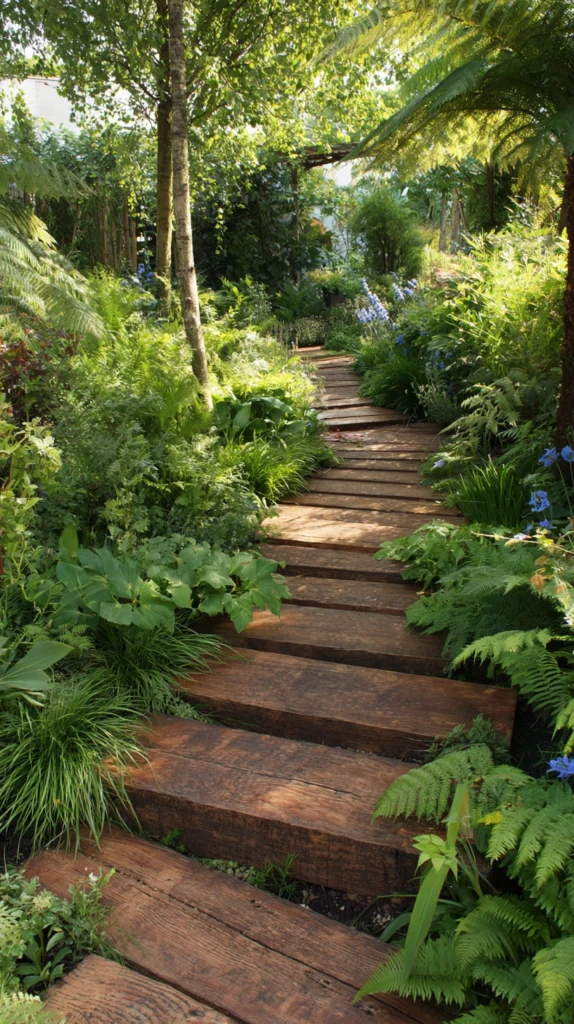
A walkway constructed from treated timber sleepers — laid perpendicular to the direction of travel with consistent gaps between each sleeper — creates a garden path of considerable natural warmth and genuine rustic character.
The warm brown tone of treated timber sleepers alongside lush garden planting creates a path that feels genuinely connected to the natural landscape and genuinely at home in the organic planted environment of a well-tended garden.
Pro Tip: Apply a specialist timber deck oil to timber sleeper walkways annually — a single coat applied to the top surface of each sleeper after cleaning maintains the natural timber color, prevents UV greying, and significantly extends the useful life of the timber surface. Untreated timber sleeper walkways grey and develop surface cracking within two to three seasons of outdoor exposure.
12. Mosaic Paver Walkway
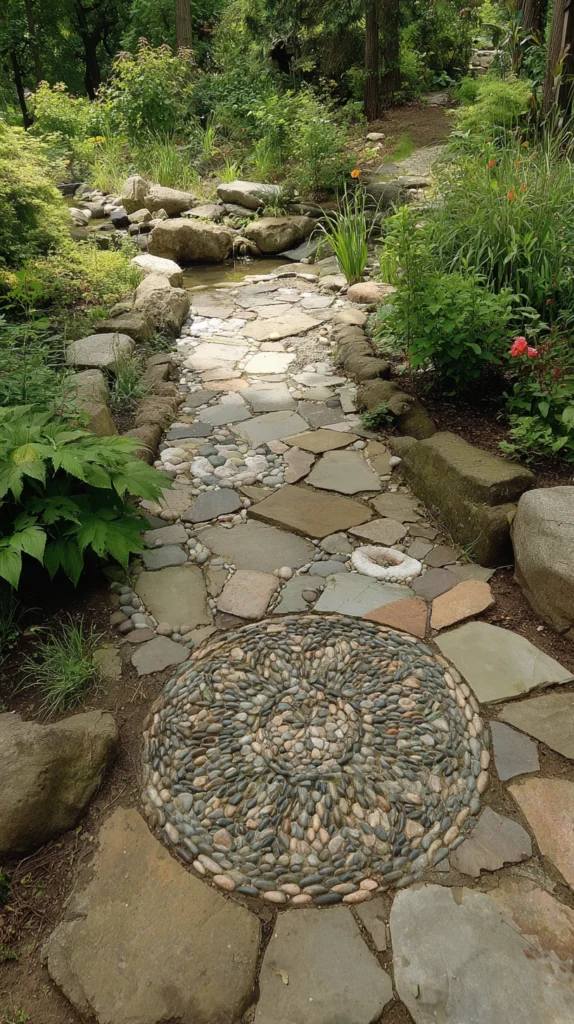
A walkway incorporating a mosaic detail — a section of pebble mosaic, a decorative tile insert, or a pattern created from contrasting paver colors — creates a garden path of considerable artistic character and completely individual beauty.
A circular pebble mosaic panel set within a flagstone path, a compass point design in contrasting brick colors at the path entrance, or a wave pattern in alternating light and dark pavers creates a walkway of genuine artistic ambition and considerable personal character.
Pro Tip: Position the mosaic detail at a point where it will be naturally noticed and paused over — at the entrance gate, at the front door threshold, or where the path changes direction. A mosaic positioned mid-path in an unremarkable location may be walked over without notice. A mosaic at a natural transition point in the path becomes a genuine moment of discovery and delight that guests consistently comment on and remember.
13. Grass Joint Paver Walkway
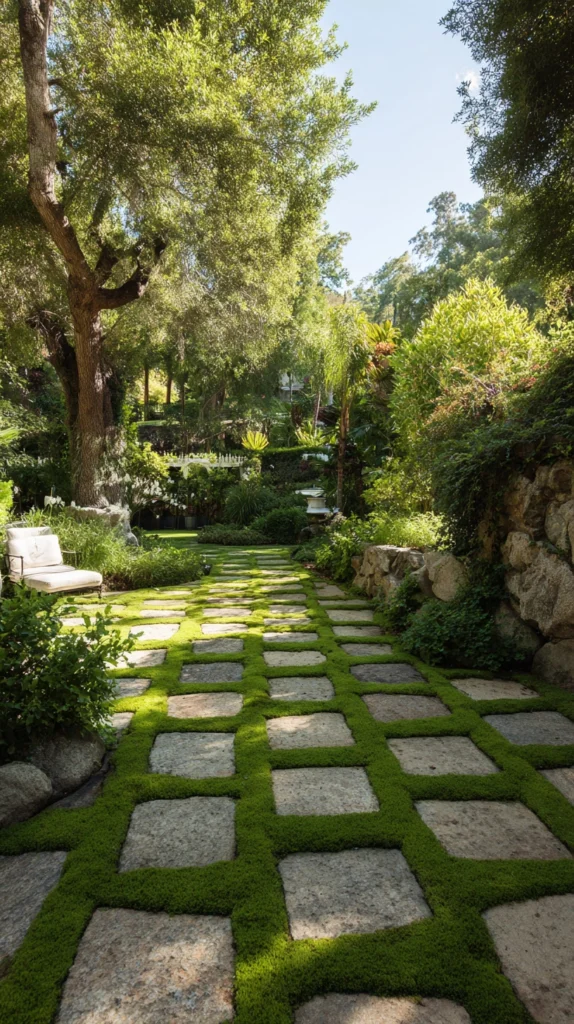
A paver walkway with grass joints — pavers laid with generous gaps between each unit, the gaps maintained as living grass rather than filled with mortar — creates a walkway of extraordinary visual softness and genuine natural integration within the lawn setting.
The grass joint walkway appears to be part of the lawn rather than imposed upon it — the grass continuing through the path in a way that creates complete visual integration between the path and the surrounding garden.
Pro Tip: Choose pavers of at least 450mm by 450mm for a grass joint walkway to ensure the paved surface area exceeds the grass joint area across the full path width. Smaller pavers with wide grass joints create a surface where the grass visually dominates and the path feels insufficiently defined. Larger pavers with proportionally narrower grass joints create a clearly defined comfortable path while maintaining the beautiful soft quality of the grass joint detail.
14. Stepping Stone in Gravel Garden
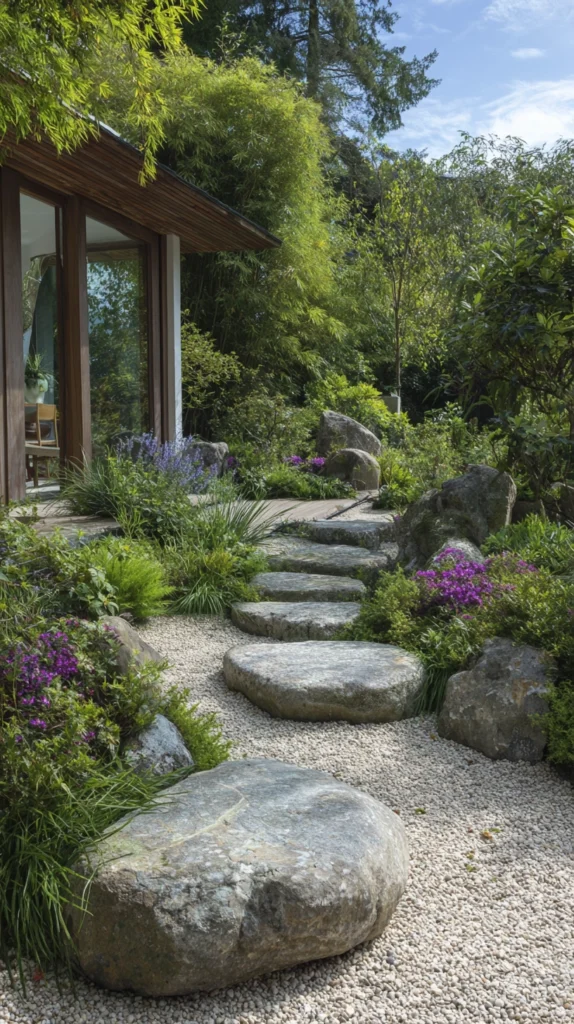
Large natural stone or concrete stepping stones set within a raked gravel garden — the stones providing the walking surface, the gravel providing the low-maintenance visually calm surrounding surface — creates a Japanese-inspired garden path of considerable meditative beauty and genuine design restraint.
The contrast between the solid permanence of stone and the fine fluid quality of the surrounding gravel creates a path of extraordinary visual calm and genuine aesthetic minimalism.
Pro Tip: Use stepping stones dramatically larger than intuition suggests — stones of 600mm by 600mm or larger create genuine visual presence within the surrounding gravel. Smaller stones within a gravel garden appear to disappear into the surface — creating a path that looks visually uncertain rather than the confident calm visual statement that large stepping stones within raked gravel create so powerfully and so beautifully.
15. Permeable Paver Walkway
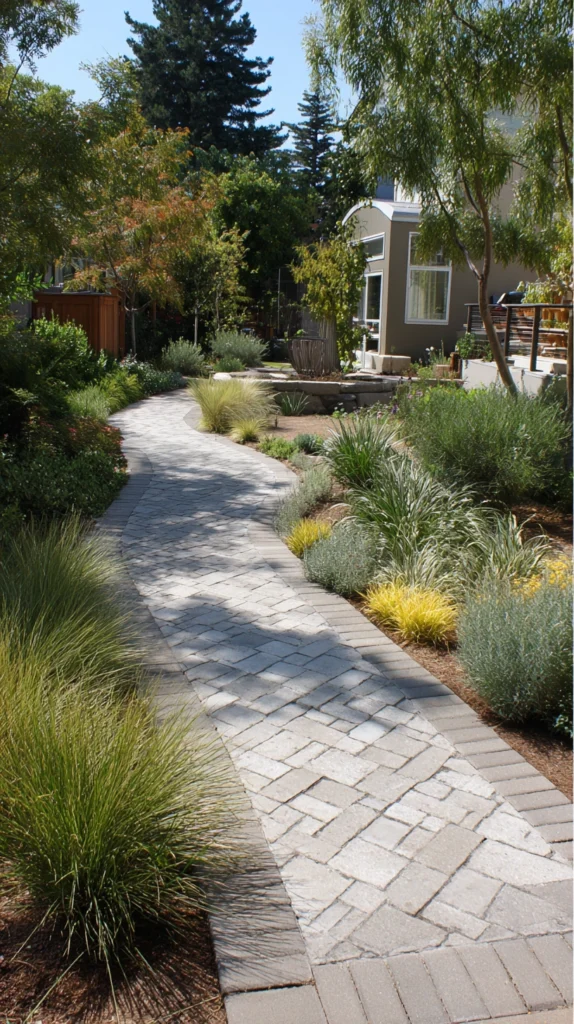
A permeable paver walkway — pavers specifically designed with open joints or internal voids that allow rainwater to drain through the path surface into the soil below — creates a garden path of genuine environmental responsibility and considerable practical advantage. Permeable pavers manage surface water naturally, reduce garden flooding risk, and maintain soil moisture in the planted areas alongside the path without any additional drainage infrastructure.
Pro Tip: Install a permeable paver walkway on a properly graded sub-base of crushed stone aggregate of at least 150mm depth for a domestic garden walkway.
A permeable paver system installed without an adequate sub-base drainage layer has nowhere to direct the water that passes through the surface — the sub-base saturating and the permeable surface becoming effectively impermeable in wet conditions.
The Walkway Sets the Tone
A paver walkway is the first element of the garden that every visitor experiences. It creates the first impression of the garden and the home it approaches — communicating the care, the intention, and the quality of design that everything behind it will either confirm or contradict.
Choose the material that suits the character of your home and your garden. Install it with the care and the precision that a permanent garden feature deserves. And discover that a genuinely beautiful walkway transforms not just the approach to the house but the quality of every day spent in the garden it passes through.