
15 Plants That Attract Dragonflies
Dragonflies are among the garden’s most spectacular and most beneficial visitors. Their aerial acrobatics, their iridescent wings catching the sunlight as they patrol the garden’s airspace, and their specific quality of prehistoric, jewel-like beauty create the garden wildlife spectacle that no butterfly, no bee, and no bird quite replicates with the same combination of speed, precision, and visual drama.
Their practical benefit to the garden is equally impressive. A single dragonfly consumes hundreds of mosquitoes, midges, and other small flying insects each day, making the dragonfly-attracting garden one of the most effective natural pest management systems available to the home gardener without any chemical intervention whatsoever.
Attracting dragonflies to the garden requires the understanding of two fundamental aspects of their life cycle. The adult dragonfly that hunts above the garden’s planting needs the open airspace and the insect prey that the garden’s flowering plants attract.
The dragonfly larva, which spends the majority of its life underwater, needs the aquatic environment of a pond or a water feature with the specific aquatic planting that the larva uses for shelter, hunting, and the emergence process that transforms the aquatic larva into the adult aerial hunter. Here are fifteen plants that attract dragonflies to the garden by providing the specific environmental conditions that both the adult and the larval stages of their remarkable life cycle require.
1. Water Lilies
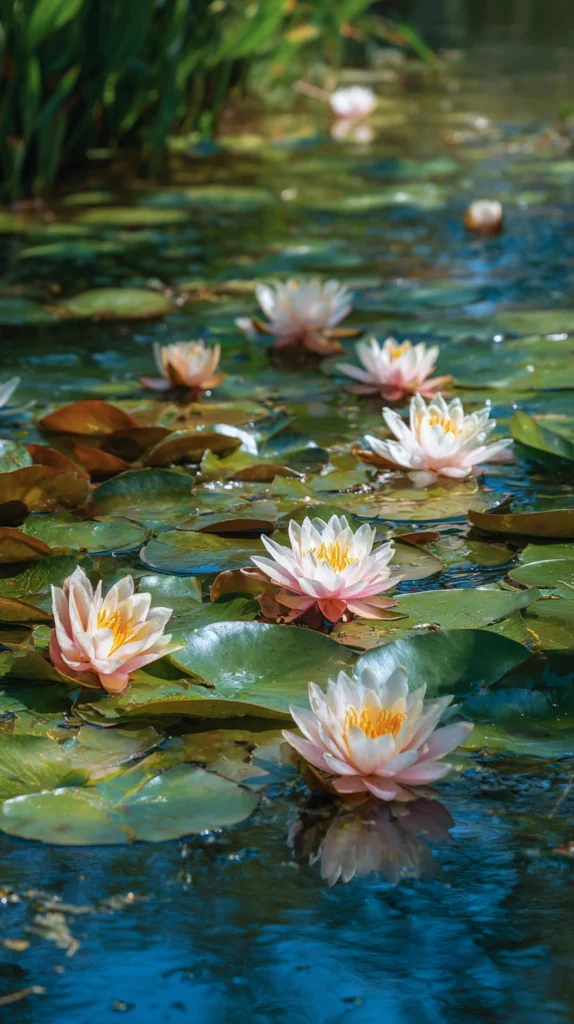
Water lilies are the dragonfly garden’s single most important aquatic plant. Their large, flat leaves create the surface platform that adult dragonflies use for perching, for basking in the sunlight, and for the egg-laying behavior that begins the next generation’s aquatic life.
Without the broad, stable leaf surface of the water lily, many dragonfly species have no suitable oviposition platform and will not breed in the pond regardless of the water’s quality or the surrounding planting’s appropriateness.
Choose water lily varieties of a size appropriate to the pond’s surface area. A variety whose leaf coverage is calibrated to cover approximately fifty to sixty percent of the pond’s surface area creates the optimal balance between the open water that dragonfly larvae require for hunting and the leaf coverage that the adult requires for perching and egg-laying. Too much coverage reduces the pond’s oxygen levels. Too little coverage reduces the dragonfly’s willingness to use the pond for breeding.
2. Bulrushes
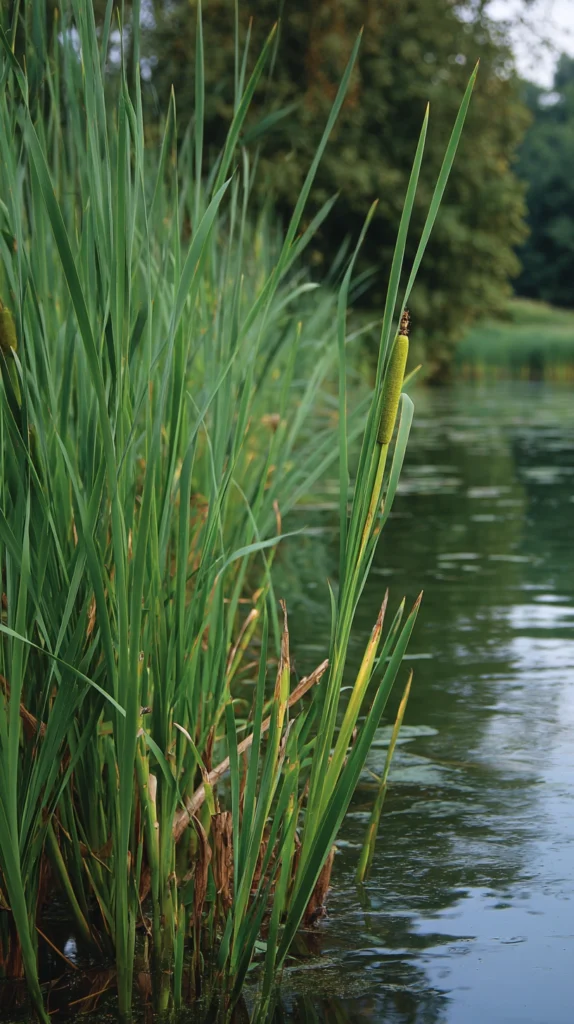
Bulrushes are the dragonfly garden’s most structurally important emergent aquatic plant. Their tall, straight stems create the vertical climbing surface that the dragonfly larva uses for its emergence from the water, the remarkable process by which the aquatic larva climbs above the water’s surface, splits its larval skin, and emerges as the adult winged dragonfly in the most dramatic metamorphosis available in the British garden wildlife calendar.
Plant bulrushes in the pond’s shallow margin zone where the water depth is between twenty and forty centimeters, using aquatic planting baskets of appropriate size to contain the plant’s vigorous spreading root system.
The bulrush’s tendency to colonize aggressively should be managed by annual root division that prevents the emergent plant from dominating the pond’s surface and eliminating the open water the pond’s ecosystem requires.
3. Arrowhead
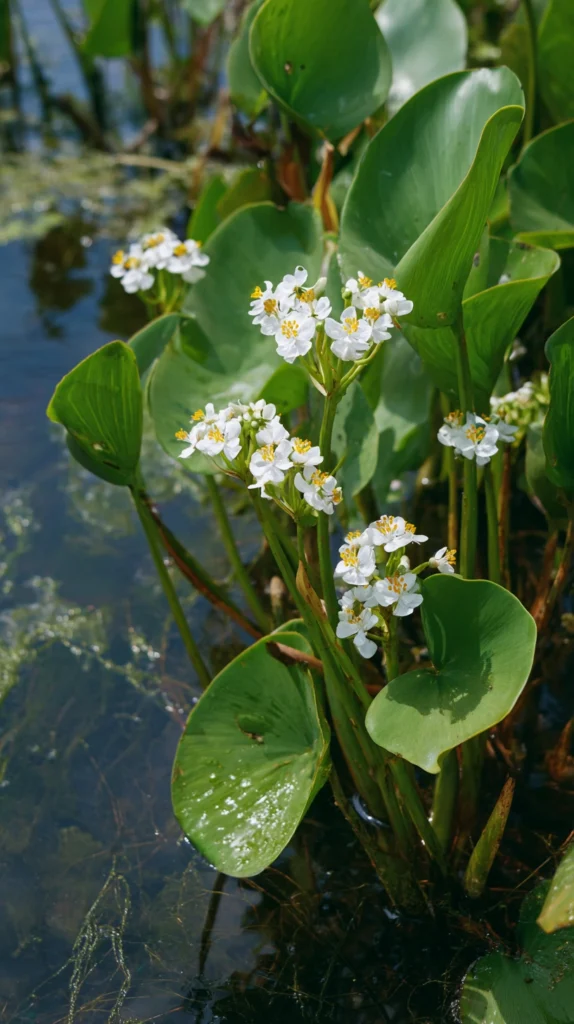
Arrowhead, with its distinctive arrow-shaped leaves and its delicate white flowers, creates the pond margin planting of most attractive visual quality and most valuable dragonfly habitat function.
The plant’s varied leaf forms, the submerged strap-like leaves, the floating leaves, and the emergent arrow-shaped leaves, create the structural complexity of the aquatic habitat that the dragonfly larva uses for shelter and hunting within the pond’s water column.
Arrowhead’s white flowers attract the small flying insects that the adult dragonfly hunts above the pond’s surface, creating the aerial food resource that keeps the adult dragonfly returning to the garden pond as its primary hunting territory.
Position the arrowhead at the pond’s sunniest margin where its flowers achieve the greatest abundance and the insect activity above them is most concentrated.
4. Purple Loosestrife
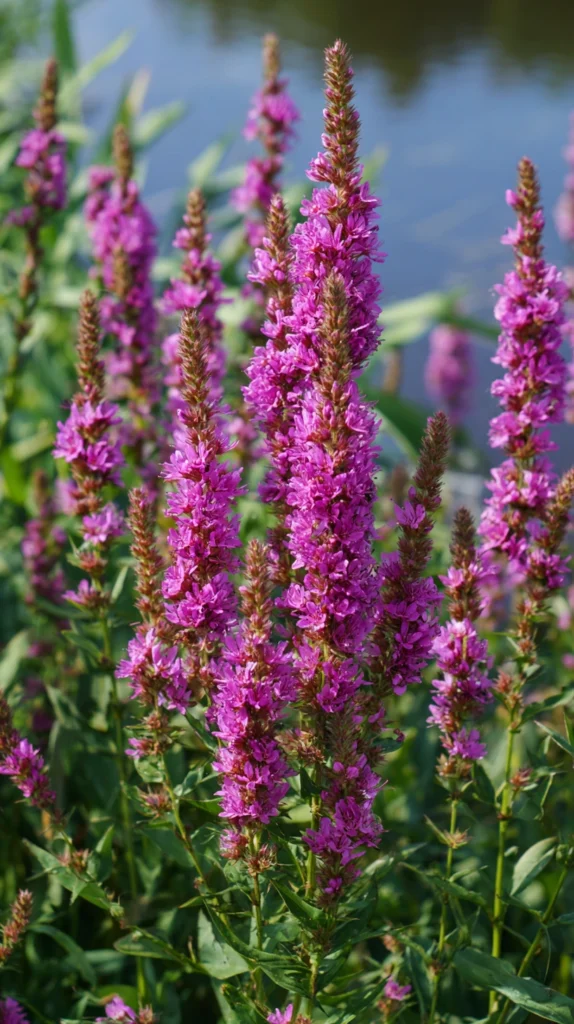
Purple loose strife is one of the most visually dramatic and most ecologically valuable plants available for the dragonfly garden’s pond margin and the surrounding boggy ground. Its tall spires of vivid magenta-purple flowers create the most colorful feature of the late summer dragonfly garden while attracting the high density of pollinating insects that the hunting adult dragonfly pursues as its primary prey.
Plant purple loosestrife in the moist, boggy ground adjacent to the pond rather than within the water itself, where its vigorous growth can be managed without the risk of the plant colonizing the pond’s interior. The moist margin’s growing conditions suit the purple loosestrife’s preference for wet feet without waterlogged roots, creating the vigorous, abundantly flowering plant of most ecological value.
5. Yellow Flag Iris
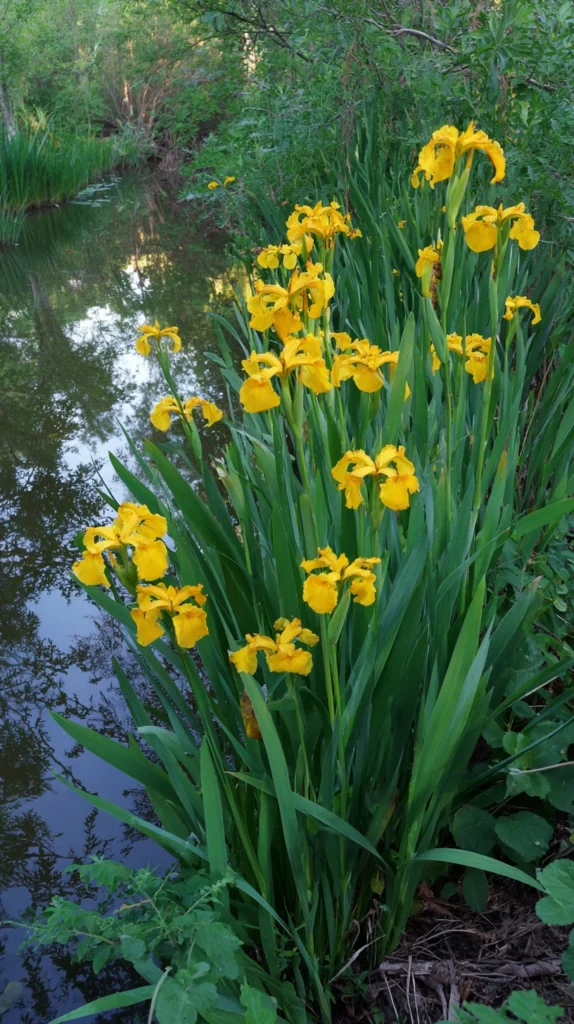
The yellow flag iris is the dragonfly garden’s most elegant and most architecturally beautiful emergent aquatic plant. Its tall, sword-like leaves create the vertical structure of the pond margin and the specific emergence surface that many dragonfly species prefer for the larval emergence process. Its bright yellow flowers in late spring create the visual spectacle of the garden pond at its most beautiful seasonal moment.
Plant yellow flag iris in the pond’s shallow margin at a depth of ten to thirty centimeters, where its vigorous root system creates the dense planting mass that the dragonfly larva uses for shelter during its extended aquatic development. The iris’s spreading habit should be managed by dividing the clumps every two to three years to prevent the plant from dominating the pond margin and reducing the open water area.
6. Pickerel Weed
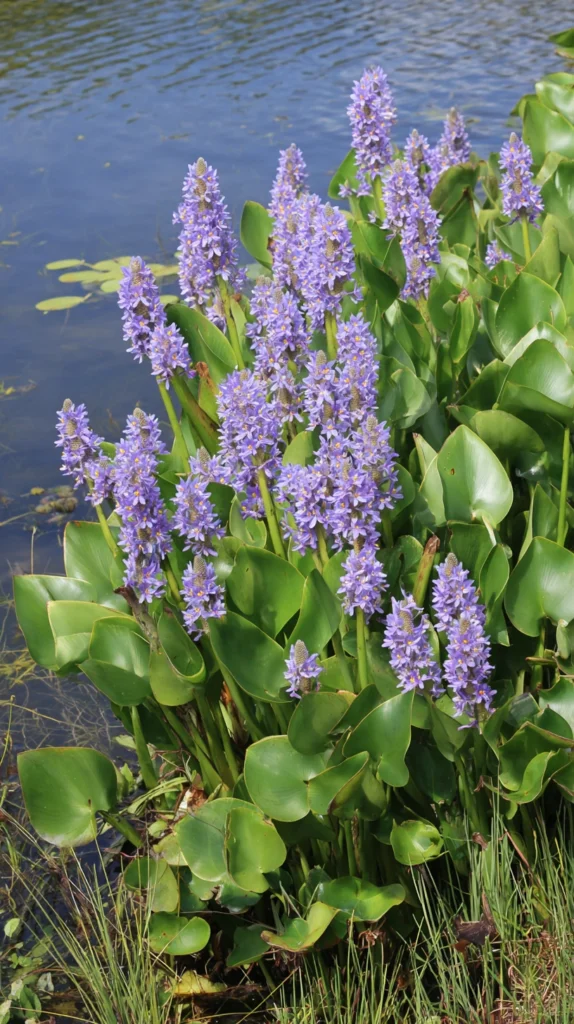
Pickerel weed is one of the most reliably dragonfly-attracting aquatic plants available to the garden pond. Its dense spikes of violet-blue flowers are produced continuously throughout the summer and attract the high density of pollinating insects that the hunting dragonfly pursues above the water’s surface. Its broad, heart-shaped leaves create both the surface shade that reduces algal growth and the perching platform that adult dragonflies use between hunting flights.
Position pickerel weed at the pond’s sunniest margin where its flower production is most abundant and the insect activity above its flowers is most concentrated. The plant’s preference for the warm, sunny, shallow water of the pond’s south-facing margin suits the dragonfly’s preference for hunting in the warm, well-lit airspace above the sunniest section of the garden pond.
7. Water Mint
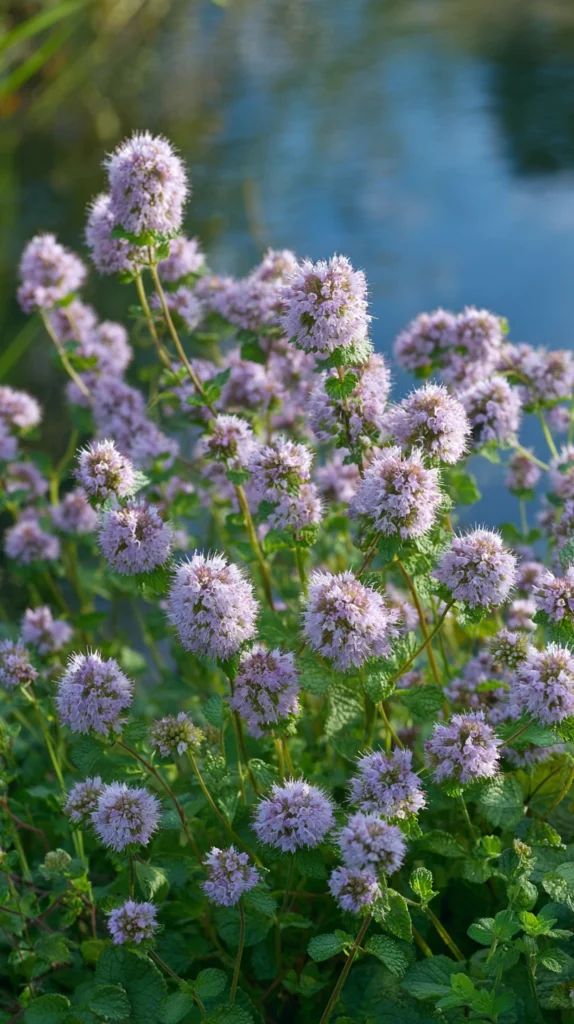
Water mint creates the dragonfly garden’s most fragrant pond margin planting and the most insect-rich flowering surface available in the aquatic plant palette. Its dense clusters of pale lilac flowers are among the most attractive of all garden flowers to the wide range of pollinating insects that form the adult dragonfly’s prey, and the high insect density above the flowering water mint creates the concentrated hunting opportunity that the dragonfly specifically seeks.
Plant water mint in the shallow pond margin or in the boggy ground at the pond’s edge where its spreading root system creates the dense planting mass of most habitat value. The plant’s vigorous spreading habit should be controlled by regular division to prevent it from colonizing the pond margin at the expense of the planting diversity that the complete dragonfly habitat requires.
8. Marsh Marigold
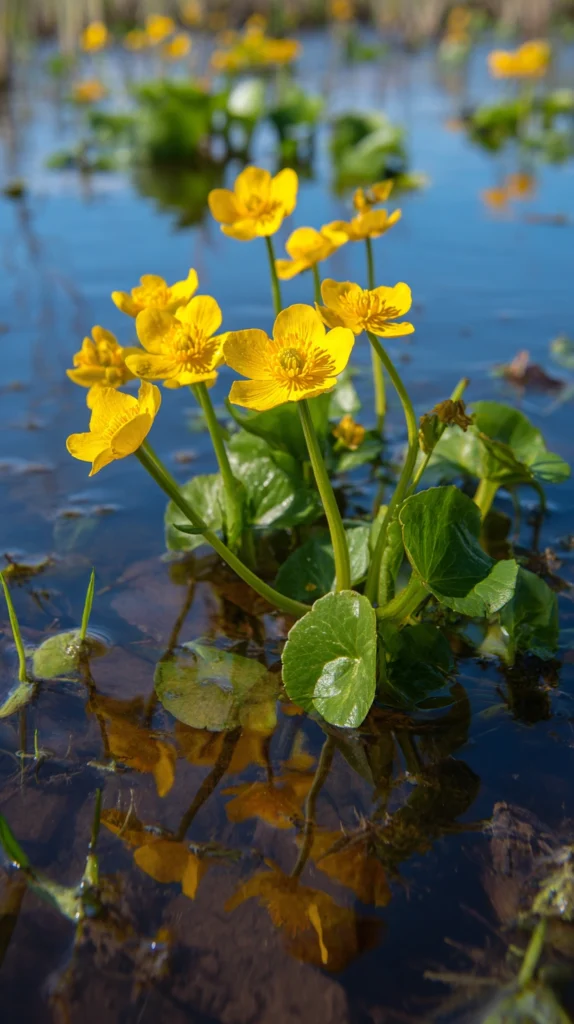
Marsh marigold provides the dragonfly garden pond’s earliest seasonal flowering, its bright golden-yellow flowers appearing in early spring before most other aquatic plants have begun their seasonal growth. This early flowering creates the first significant insect activity of the garden season above the pond’s surface, and the adult dragonflies that emerge from their larval stage in the early warm days of spring find in the marsh marigold’s early flowers the prey concentration that the sparsely planted early season pond cannot otherwise provide.
The marsh marigold’s flowering period is relatively brief, typically four to six weeks in spring, and its companion planting with the later flowering aquatic species ensures the continuous insect activity above the pond throughout the dragonfly’s full active season from spring through to autumn.
9. Bogbean
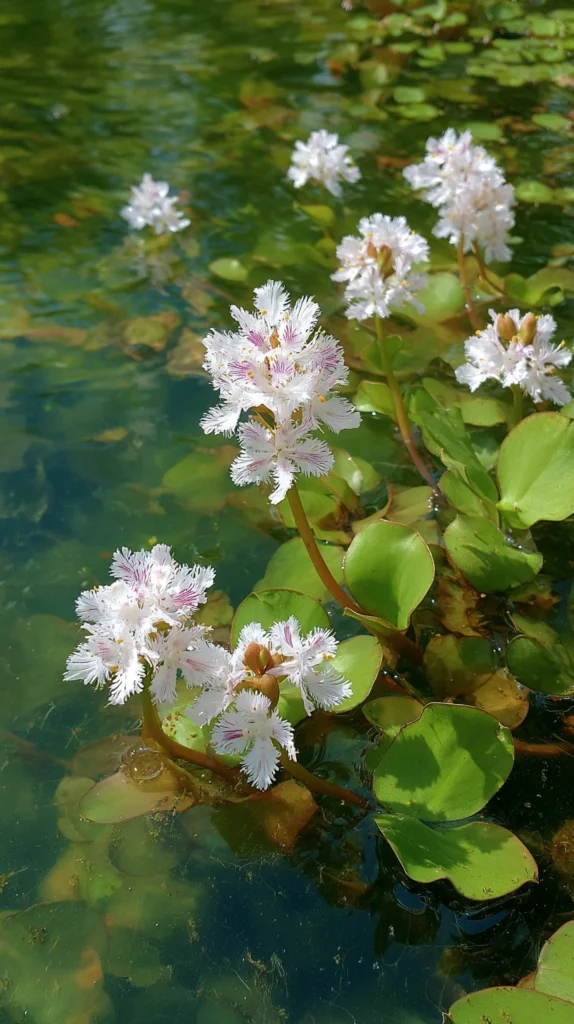
Bogbean is one of the aquatic plant world’s most ornamentally beautiful and most ecologically valuable species for the dragonfly garden. Its trifoliate leaves emerge from the water’s surface with the fresh green quality of the spring pond at its most vital, and its exquisitely fringed white and pink flowers create the pond’s most intricate and most delicately beautiful floral display of the late spring season.
The bogbean’s spreading stems create the surface structure of the pond margin that both the adult dragonfly uses for perching and the aquatic larva uses for shelter within the water below.
The plant’s horizontal growth habit, spreading across the water’s surface rather than growing vertically above it, creates the structural layer of the pond margin that the vertical emergent plants cannot provide at the water’s surface level.
10. Flowering Rush
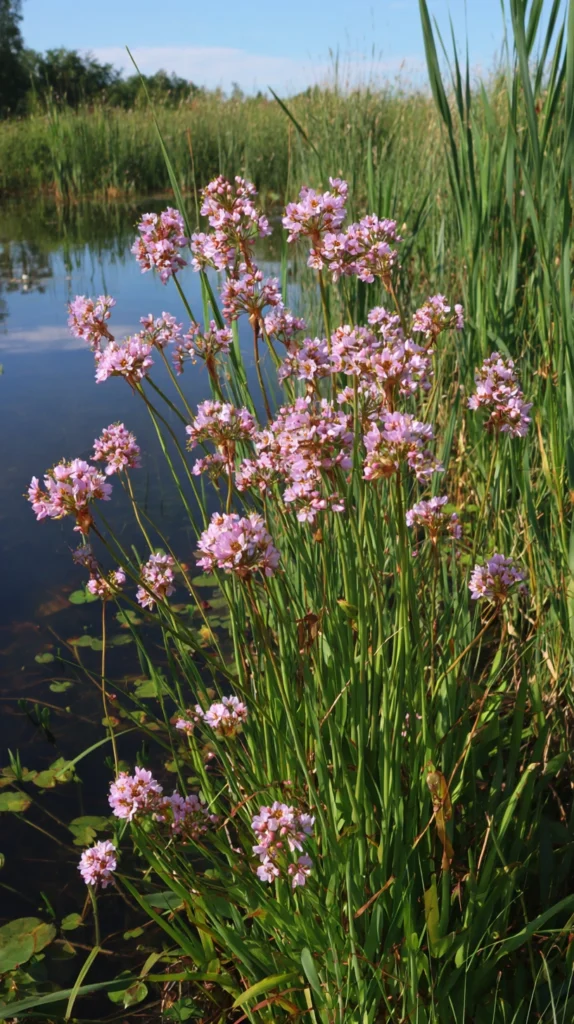
The flowering rush creates the dragonfly garden’s most elegantly architectural pond margin planting, its tall, slender stems carrying the umbels of rose-pink flowers that create the pond edge’s most graceful vertical accent of the midsummer season.
The flowering rush’s tall, smooth stems create the emergence surface that several dragonfly species specifically prefer for the larval metamorphosis, their smooth, firm surface providing the secure grip that the emerging larva requires for the extended, vulnerable process of the adult’s emergence from the larval case.
Position the flowering rush at the pond’s deeper margin zone where the water depth is between thirty and sixty centimeters, creating the transition between the shallow emergent planting and the deeper open water zone that the complete pond habitat required for the full range of dragonfly species.
11. Hornwort
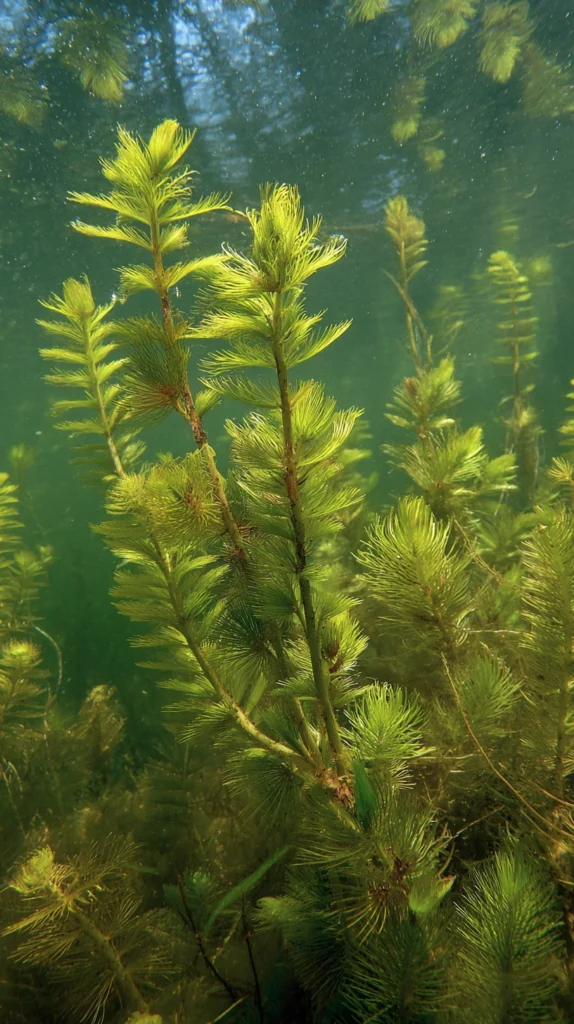
Hornwort is the dragonfly garden pond’s most valuable submerged oxygenating plant. Its dense, feathery underwater stems create the oxygen-rich water quality that the dragonfly larva requires for its multi-year aquatic development, and the plant’s branching structure creates the underwater habitat of maximum complexity where the larva can hunt, shelter, and develop through its successive instars.
Hornwort requires no planting basket or soil substrate, floating freely within the water column and obtaining its nutrients directly from the water. Simply introduce bunches of hornwort into the established pond and the plant will establish itself at the depth most suited to the available light conditions, creating the submerged oxygenating layer of most complete aquatic habitat value with the minimum planting effort of any aquatic species available.
12. Lavender
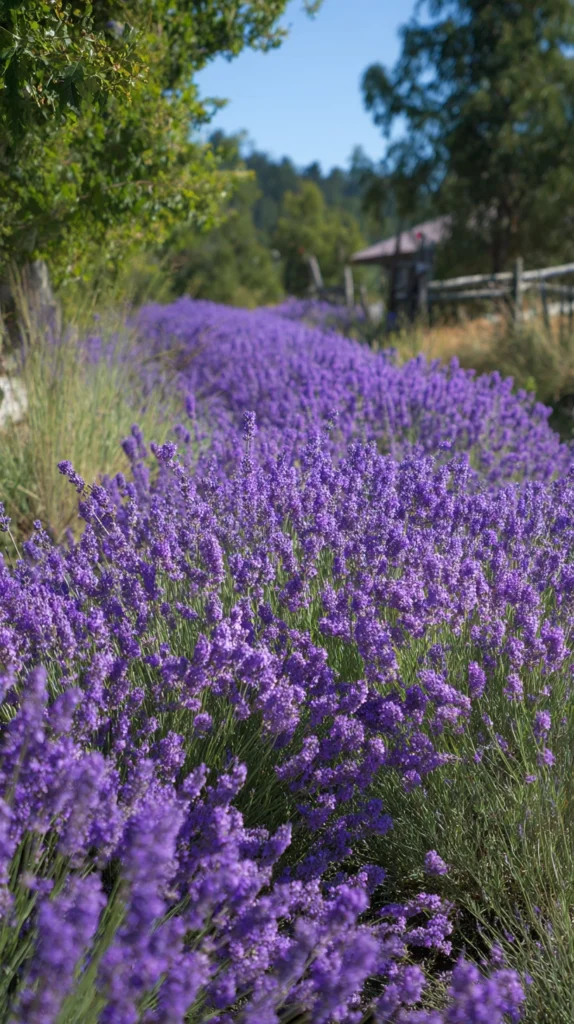
Lavender planted around the sunny margins of the dragonfly garden creates the terrestrial flowering plant of most consistently high insect-attracting performance.
The lavender’s abundant, fragrant flowers attract the dense clouds of bees, hoverflies, and the various small flying insects that form the adult dragonfly’s prey in the garden’s aerial hunting territory. The high insect density above the lavender planting creates the concentrated prey resource that the dragonfly’s hunting behavior is specifically adapted to exploit.
Plant lavender in generous drifts of at least five plants for the massed flowering display that creates the significant insect concentration that the hunting dragonfly notices from across the garden. The individual lavender plant attracts individual insects.
The lavender drift creates the insect cloud that attracts the aerial predator whose hunting efficiency depends on the prey density that only the massed planting achieves.
13. Echinacea
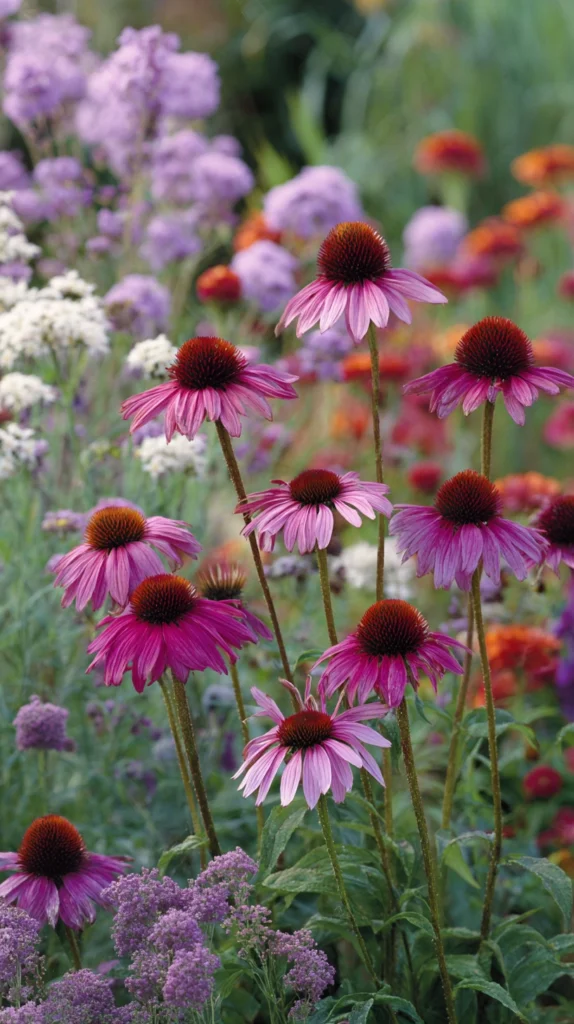
Echinacea, the coneflower, creates the late summer and early autumn dragonfly garden’s most ecologically productive flowering perennial. Its large, open flower heads attract the concentrated diversity of pollinating insects that maintain the garden’s aerial insect density through the late season when many earlier flowering plants have completed their display and the insect activity above the garden begins to decline.
The echinacea’s open flower structure, with its accessible nectar and its prominent central cone that provides the insect with a stable landing platform, creates the most efficient feeding station for the wide range of insect species that form the dragonfly’s prey.
The variety of insect species attracted to the echinacea creates the prey diversity that the opportunistic dragonfly hunter exploits with the specific efficiency of the predator adapted to the variable prey availability of the garden’s seasonal insect community.
14. Agastache
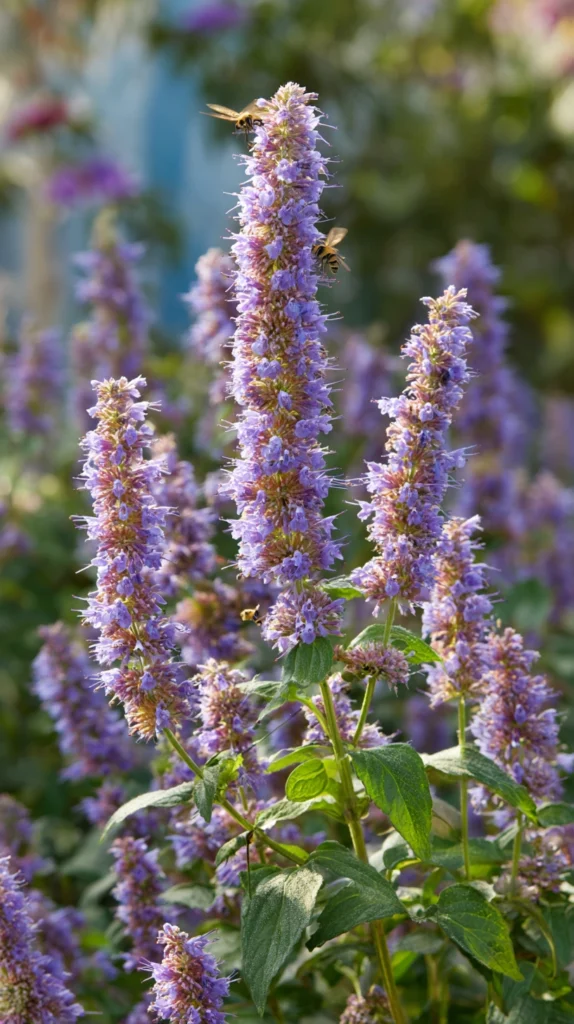
Agastache, the hyssop, creates one of the garden’s most reliably high-performing insect-attracting perennials for the dragonfly garden’s terrestrial planting. Its tall spikes of tubular flowers in shades of blue, purple, and orange attract the extraordinary density of bees, butterflies, and hoverflies that the dragonfly hunts throughout the garden’s warm season. The agastache’s long flowering season, from midsummer through to the first autumn frosts, extends the garden’s peak insect activity period significantly beyond the brief flowering season of the shorter-performing summer perennials.
The agastache’s aromatic foliage creates the specific olfactory quality of the garden’s insect-attracting planting that is perceptible to both the human garden visitor and to the insect community whose foraging behavior the fragrance directs toward the plant from considerable distances.
15. Design the Dragonfly Garden as a Complete Habitat System
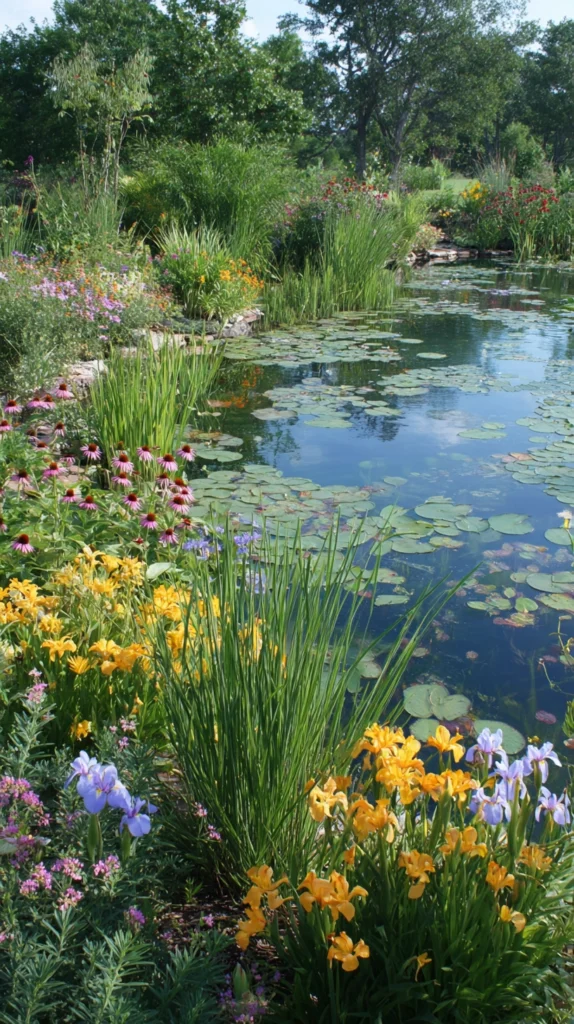
The final and most important principle of the dragonfly-attracting garden is the commitment to designing the planting as a complete habitat system rather than as a collection of individually dragonfly-friendly plants placed without consideration of their relationship to each other and to the garden’s broader ecological function.
The dragonfly requires the complete provision of the aquatic habitat for its larval development, the emergent planting for its metamorphosis, the open airspace for its adult hunting territory, and the abundant insect prey that the garden’s flowering plants create above both the pond and the surrounding terrestrial planting.
These four requirements must all be met simultaneously and consistently for the dragonfly to complete its full life cycle within the garden and to become the permanent, breeding resident whose spectacular presence transforms the garden’s ecological quality from the merely wildlife-friendly to the genuinely and completely wildlife-excellent.