
14 Poolside Cabana Ideas
The pool without a cabana is a pool that is working at half its potential. The water itself — the shimmer and cool of it, the specific pleasure of immersion on a hot afternoon — is irreplaceable, but the experience of a pool as an outdoor living environment rather than simply a body of water to swim in requires the infrastructure of shelter, comfort, and hospitality that only a well-designed pool structure can provide. The cabana is that structure. At its most basic it is a place to change clothes and store towels.
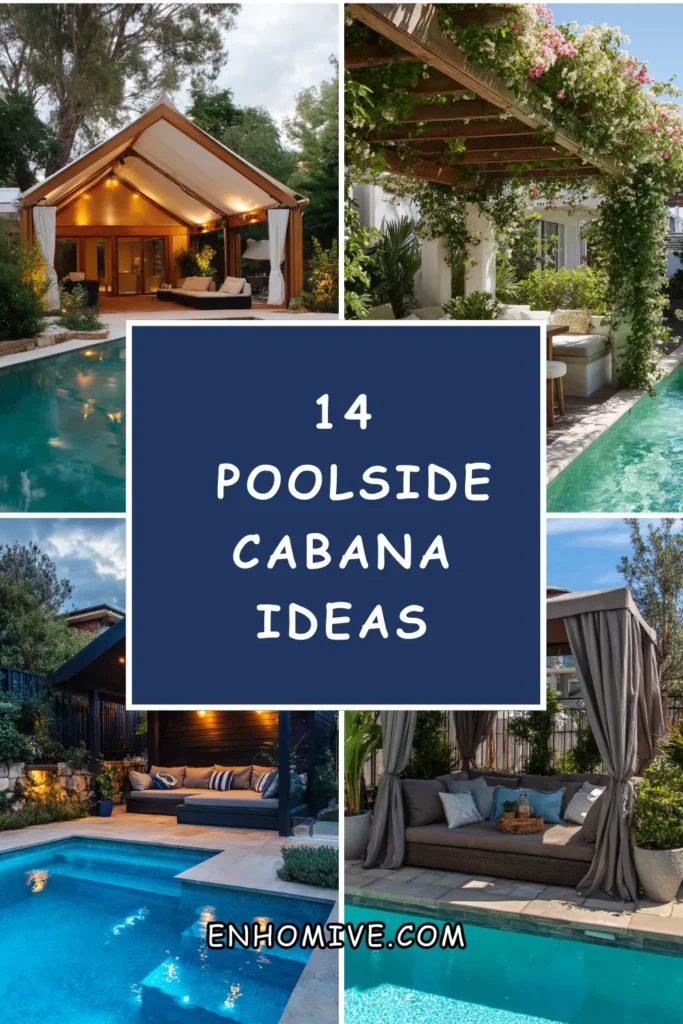
At its best it is one of the most pleasurable rooms in the home — a covered, furnished, accessorized space that extends the pool’s usable hours into the hottest parts of the day that direct sun makes intolerable, that provides the shade and comfort for guests who are not swimming but want to remain part of the pool environment, and that gives the entire outdoor space the quality of a designed resort rather than a domestic backyard.
The range of cabana styles, materials, and configurations available to the homeowner is broader than most people realize, from the modest and economical to the architecturally ambitious, and the right choice depends on the pool’s setting, the homeowner’s budget, and the specific way the outdoor space is used and enjoyed. Here are fourteen ideas that span that range with intelligence and style.
1. The Classic Timber-Frame Cabana with Curtains
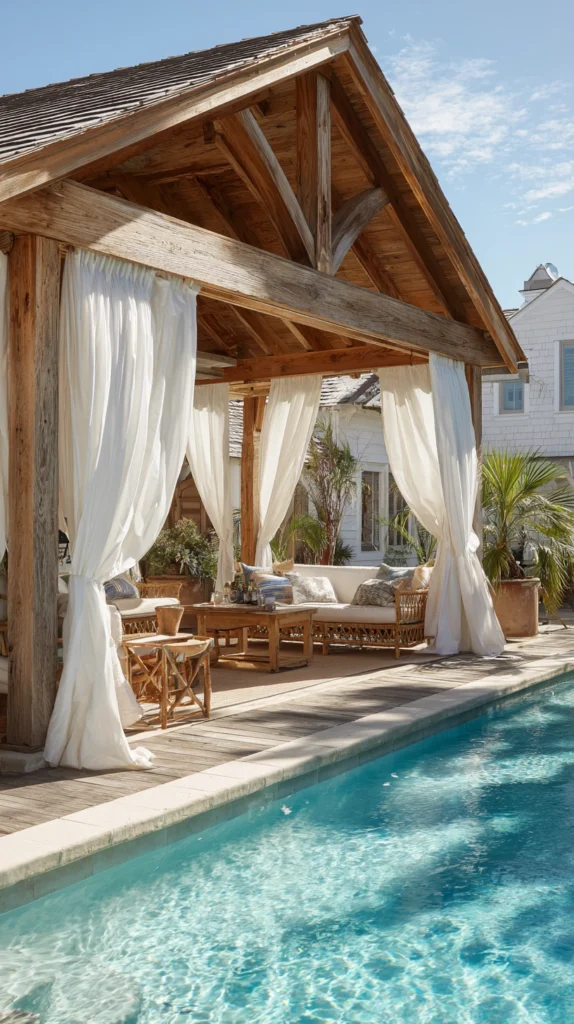
The timber-frame cabana — four posts supporting a beam structure and a roof, with outdoor curtains hanging from the beam on three or four sides — is the poolside shelter in its most classical and most versatile form.
It is the structure that appears in the most photographed resort pools and the most aspirational backyard design publications because it works, consistently and beautifully, in virtually every climate and every pool setting.
The timber frame can be constructed from a range of species and finishes: rough-sawn cedar that weathers naturally to silver gray, smooth-planed hardwood in teak or ipe finished with oil, painted softwood in a heritage color that relates to the house, or pressure-treated pine that provides durability at lower material cost.
The curtains hanging from the beam structure are the cabana’s most impactful decorative element — white or off-white linen or outdoor cotton creates the most universally beautiful poolside aesthetic, draping in the breeze and filtering the afternoon light into the interior with a softness that is both visually and thermally comfortable.
Draw the curtains fully for maximum privacy and shade; pull them to the sides and tie them with simple loops for an open, airy configuration that maintains the structure’s architectural presence while allowing the pool’s atmosphere to flow freely through it.
2. A Modern Flat-Roof Concrete Cabana
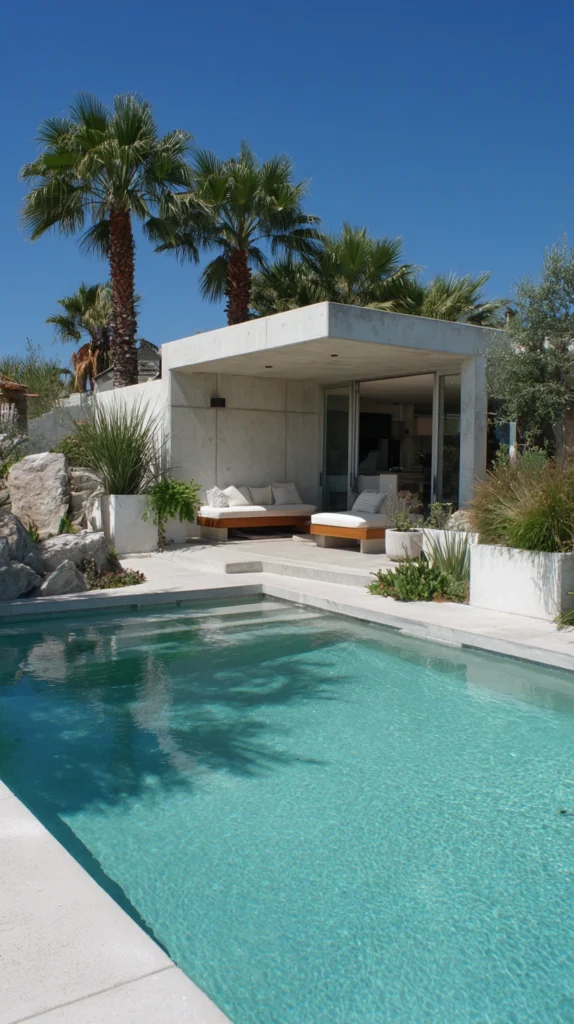
The flat-roof concrete cabana — a structure whose walls and ceiling are poured concrete rather than timber or fabric, giving the pool area an architectural permanence and visual weight that timber structures cannot approach — is the poolside shelter for the homeowner who wants their outdoor space to feel like a designed building rather than a temporary installation.
Concrete’s qualities — its thermal mass, which keeps the interior cool during the hottest part of the day; its structural integrity, which allows large cantilevered roof overhangs that provide generous shade without intermediate posts; and its raw, honest surface texture, which suits the water and the landscape with a naturalness that polished finishes do not — make it the material of choice for the most architecturally ambitious residential cabana projects.
The interior can be finished with the same sophisticated simplicity as the exterior: polished concrete floors, built-in concrete benches with outdoor cushions, a concrete sink and outdoor shower, and carefully considered openings that frame the pool view in the manner of an architectural photographer’s most considered shot.
3. A Bohemian-Style Canvas and Timber Cabana
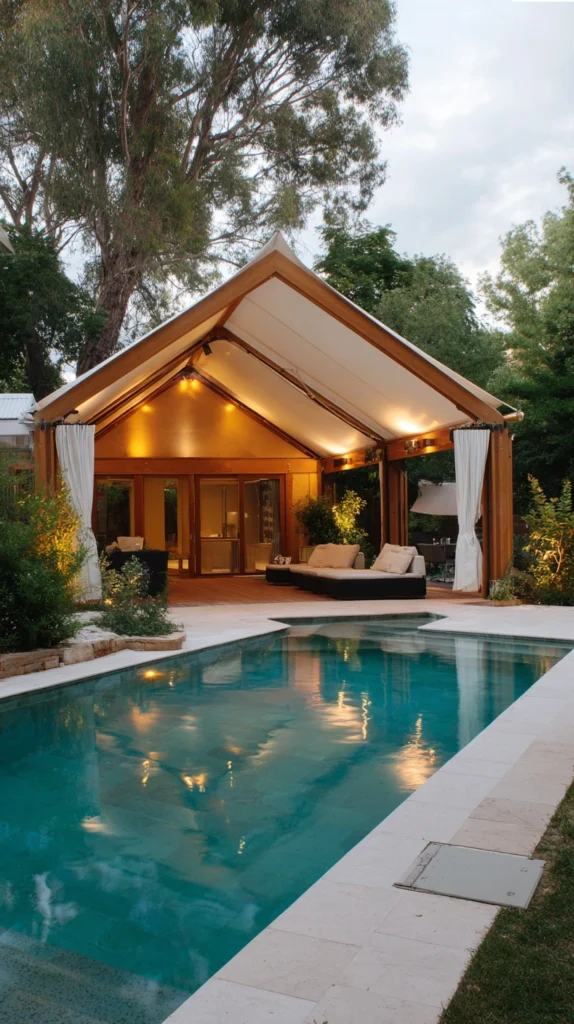
For the homeowner who wants their pool area to feel relaxed, handmade, and genuinely personal rather than architecturally precise, a canvas and timber cabana with a bohemian aesthetic delivers a quality of warmth and informality that more structured alternatives cannot match.
A simple timber pole frame — eucalyptus, bamboo, or rough timber uprights — supporting a canvas or heavyweight cotton roof and partial side panels, furnished with a daybed in natural rattan or woven seagrass, oversized floor cushions in warm Indian-influenced textiles, a low timber table, and hanging lanterns creates a poolside space with the atmosphere of a luxury beach resort in Southeast Asia or the Caribbean.
The canvas roof can be dyed in a warm, faded tone — terracotta, warm ochre, deep indigo — that suits the bohemian aesthetic better than the white or natural canvas of more conventional cabana treatments. Macramé wall hangings, potted palms in woven basket pots, and a collection of mismatched lanterns complete the aesthetic without requiring precision or expensive materials.
4. A Steel and Glass Minimalist Pool House
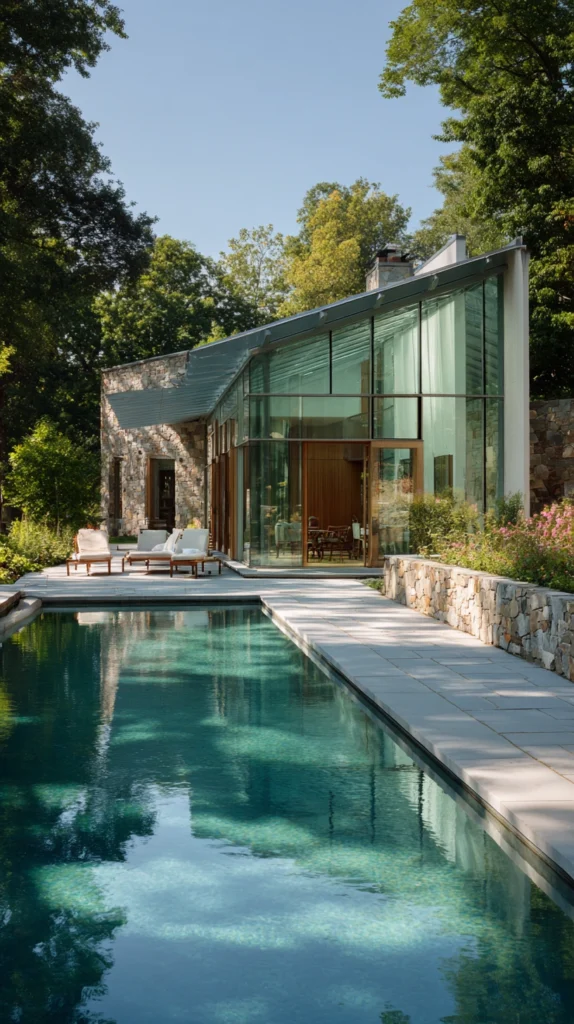
The minimalist pool house — a glass and steel structure adjacent to the pool that provides changing facilities, a bathroom, storage, and an outdoor living area under a single roof — is the poolside structure with the highest functional ambition and the closest architectural relationship to the main house.
This is not strictly a cabana in the traditional sense — it is a small building, with all the structural and regulatory implications that implies — but for pools where the main house is not immediately adjacent and where guests need genuine changing and bathroom facilities, the pool house is the most complete solution available.
A steel and glass structure of this type, properly designed and built, can be one of the most beautiful additions to any residential property: the transparency of the glass walls allows the pool’s shimmer to be visible from within the structure and the garden to be visible from every angle, and the precision of the steel framework creates a contemporary architectural quality that suits any modern pool setting.
5. A Painted Timber Cabana in a Signature Color
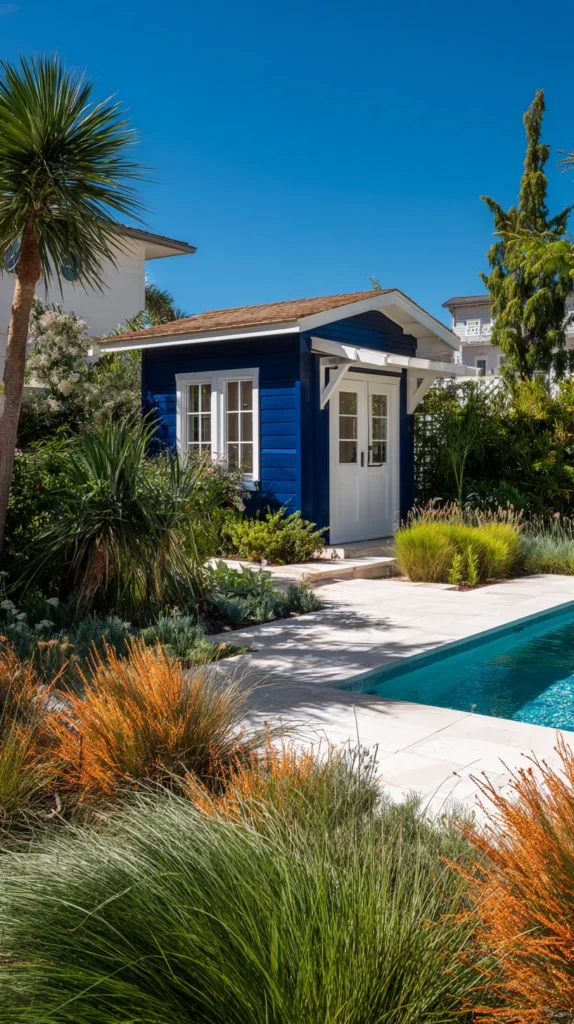
The cabana that is painted in a deliberately chosen, confidently applied signature color — a deep terracotta, a rich navy, a forest green, a warm coral — uses its exterior surfaces as a design statement within the pool landscape rather than treating color as a secondary consideration.
The cabana’s color should be chosen in deliberate relationship to the pool’s surroundings: the tones of the paving, the plantings, the house’s exterior, and the specific quality of the light that the location receives at different times of day. A deep navy cabana against a white-paved pool with Mediterranean plantings and a warm evening light creates a composition of extraordinary beauty.
A terracotta cabana among drought-tolerant grasses and agaves has an entirely different character that is equally resolved. The painted exterior requires maintenance — repainting every few years as the outdoor environment takes its toll on the surface — but the visual impact of a confidently colored cabana justifies the maintenance commitment without question.
6. A Thatch-Roofed Tropical Cabana
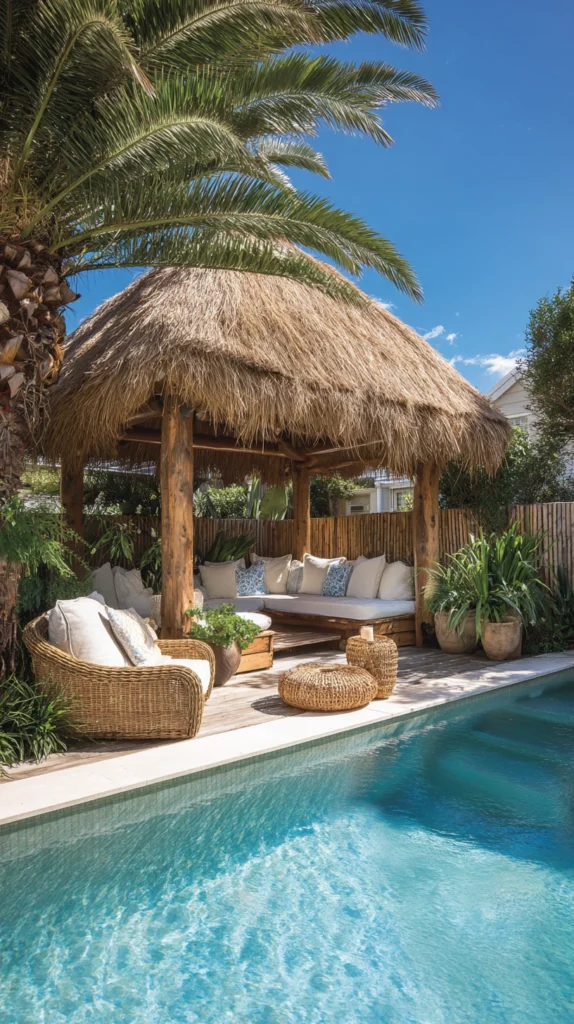
The thatched poolside cabana — an open-sided or partially sided structure whose roof is constructed from palm thatch, reed, or artificial thatch in a convincing synthetic material — creates a tropical aesthetic that transports the pool environment to an entirely different cultural and geographical register.
Real palm thatch has qualities that no synthetic material can fully replicate: the warmth of its color, the texture of its surface, the sound of rain on a thatch roof that is one of the most pleasurable acoustic experiences available in any outdoor space.
Synthetic thatch, available in UV-resistant materials that maintain their color and structure far longer than natural alternatives, provides the visual effect with significantly reduced maintenance and greater longevity.
The thatch roof should be sufficiently pitched — at a minimum thirty degrees — for effective water shedding, and sufficiently thick — at least fifteen centimeters of compacted thatch — for adequate insulation and durability. Pair the thatched roof with natural timber posts, a bamboo bar counter, and rattan furniture for the most authentically tropical pool experience available in a domestic setting.
7. A Pergola-Style Cabana with Climbing Plants
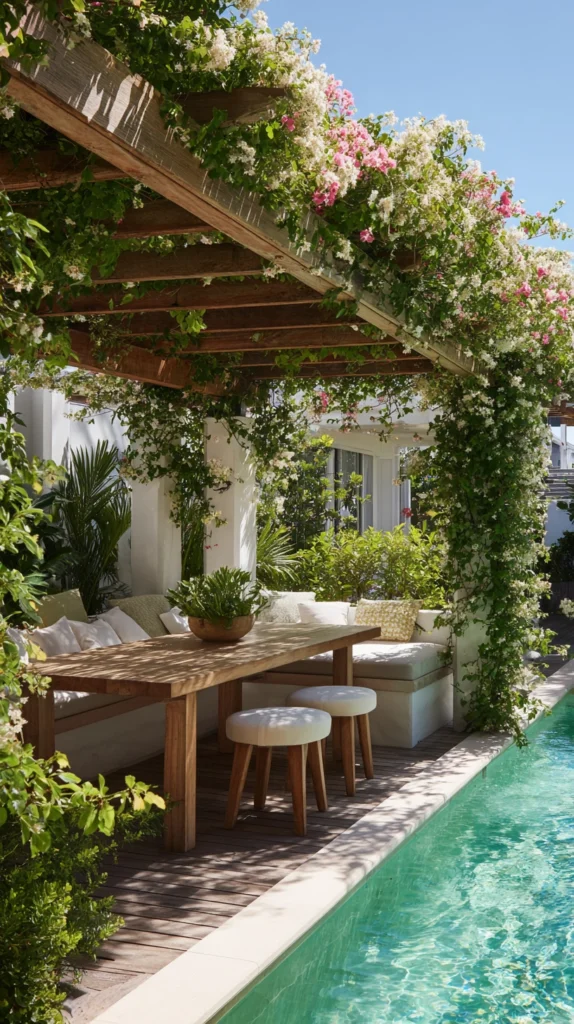
A pergola structure adjacent to the pool — its horizontal beam roof supporting climbing plants that grow to create a living canopy of leaves, flowers, and fragrance — is the poolside shelter that improves most dramatically over time and that creates a quality of natural shade unavailable through any manufactured alternative.
The living canopy of a mature pergola — wisteria, grapevine, jasmine, or climbing roses trained across the beam structure and allowed to develop over several seasons into a dense, fragrant overhead mass — provides shade that is dappled and shifting rather than flat and uniform, and the quality of light beneath a planted pergola on a summer afternoon is one of the most genuinely beautiful indoor-outdoor conditions available.
The structure beneath the living canopy should be furnished with the simplicity that lets the planting do the decorative work: a long timber dining table for alfresco meals, a simple daybed with outdoor cushions, a string of lights through the beams for evening use, and nothing more. The pergola itself is the decoration; the furnishings are simply the excuse to spend time within it.
8. An Outdoor Kitchen Cabana for Entertaining
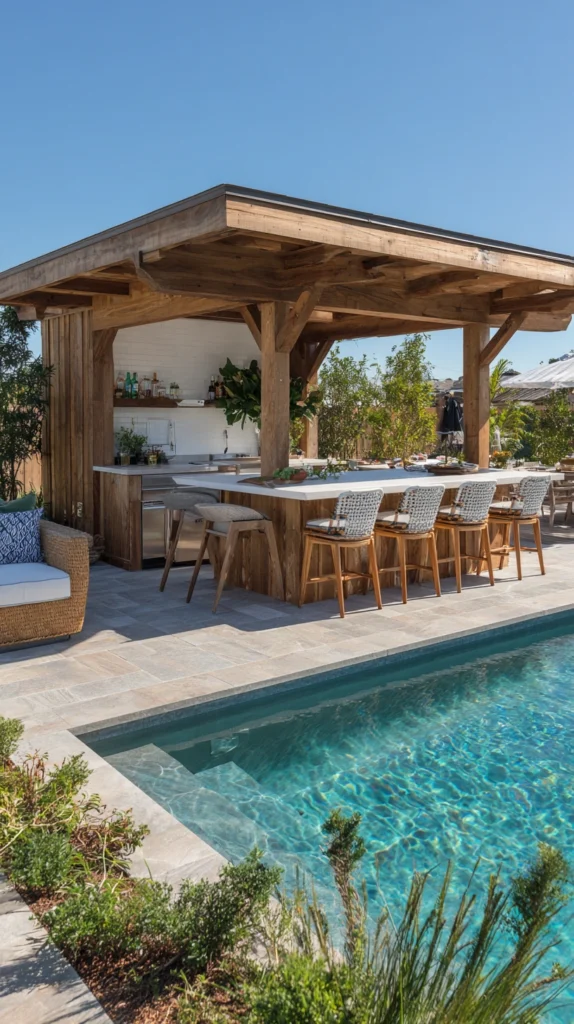
The cabana that incorporates an outdoor kitchen — a built-in grill, a counter for food preparation, a refrigerator, and a sink, all integrated into the cabana’s structure and positioned to allow the cook to face the pool while working — is the poolside structure designed specifically around the social dynamics of summer entertaining.
The outdoor kitchen cabana makes the pool area a self-sufficient entertaining environment where food and drinks can be prepared, served, and consumed without any return to the main house, and where the cook is never separated from the social activity of the pool.
The kitchen counter, facing the pool from beneath the cabana’s shade, naturally becomes the gathering point around which guests congregate — some sitting on bar stools at the counter, some in the pool, some on the pool deck — creating the specific social configuration of the cook-as-host that is among the most convivial outdoor entertaining formats available.
Choose materials for the outdoor kitchen that suit the cabana’s overall aesthetic and that withstand the outdoor environment: stainless steel, concrete, or stone for the counter; powder-coated aluminum for the grill and cabinetry; marine-grade timber for any shelving exposed to the pool’s humidity.
9. A Moroccan-Inspired Cabana with Lanterns and Textiles
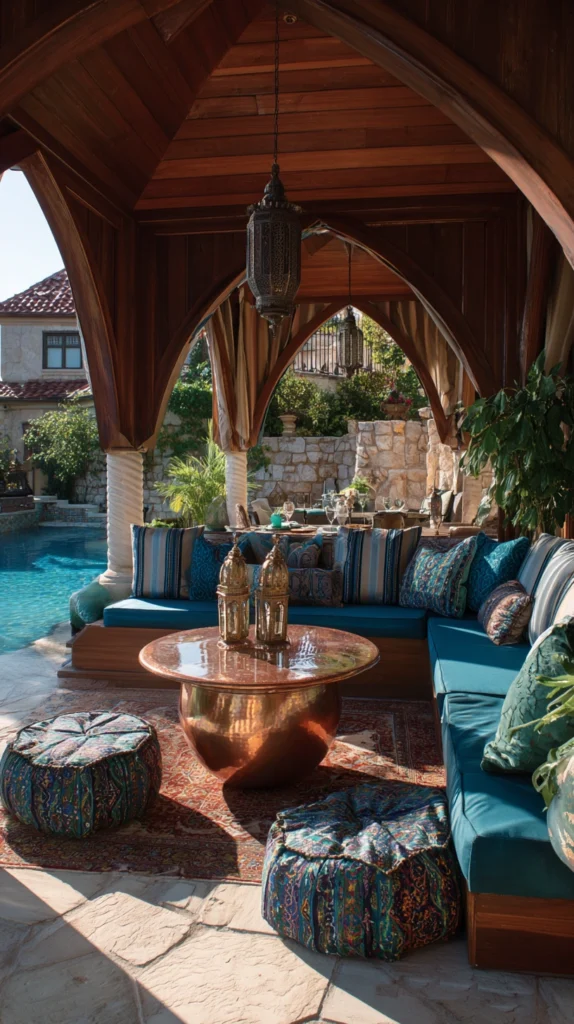
The Moroccan aesthetic — rich textiles, intricate metalwork lanterns, low seating around a central table, geometric tile, and the specific combination of enclosed intimacy and decorative richness that characterizes the finest Moroccan riads — translates beautifully into a poolside cabana setting, creating an outdoor living space with extraordinary atmosphere and a cultural richness that more conventional cabana styles cannot approach.
An arched or domed timber frame, covered in fabric or in ceramic tile, furnished with low banquette seating covered in Moroccan textiles in deep jewel tones — cobalt, saffron, emerald, burgundy — with a central brass or copper table, hanging lanterns that cast geometric light patterns onto the surrounding surfaces, and a collection of ceramic and metalwork decorative objects creates a poolside cabana that feels like a designed destination rather than a functional pool accessory.
The Moroccan aesthetic is maximalist and demands commitment — half-measures produce a confused result — but fully realized it creates a pool environment of genuine exoticism and beauty.
10. A Daybed Cabana for Ultimate Relaxation
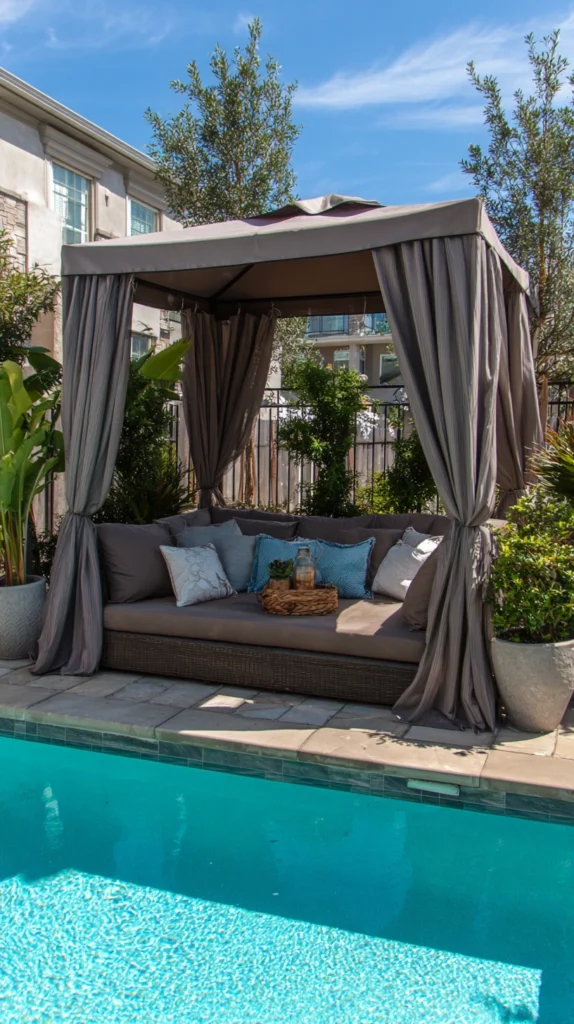
The cabana designed around a single generous daybed — or two daybeds positioned symmetrically within the shelter — is the most unambiguously hedonistic pool structure available, and it is the most honest about the primary purpose of a poolside cabana, which is the provision of a shaded, comfortable place to lie down and do nothing of consequence for an extended period on a warm afternoon.
The daybed should be genuinely generous in its dimensions — at least eighty centimeters wide and two meters long, ideally wider — and the mattress or cushion pad should be of sufficient depth and quality that lying on it for three hours is indistinguishable in comfort terms from lying on a good interior bed.
The canopy above the daybed — whether a simple fabric shade, a timber pergola structure, or a more elaborate structure with curtains on all four sides — should provide complete shade across the entire daybed surface at the hottest part of the afternoon, which requires more careful orientation analysis than most cabana installations receive.
11. A Poolside Changing Room Cabana with Outdoor Shower
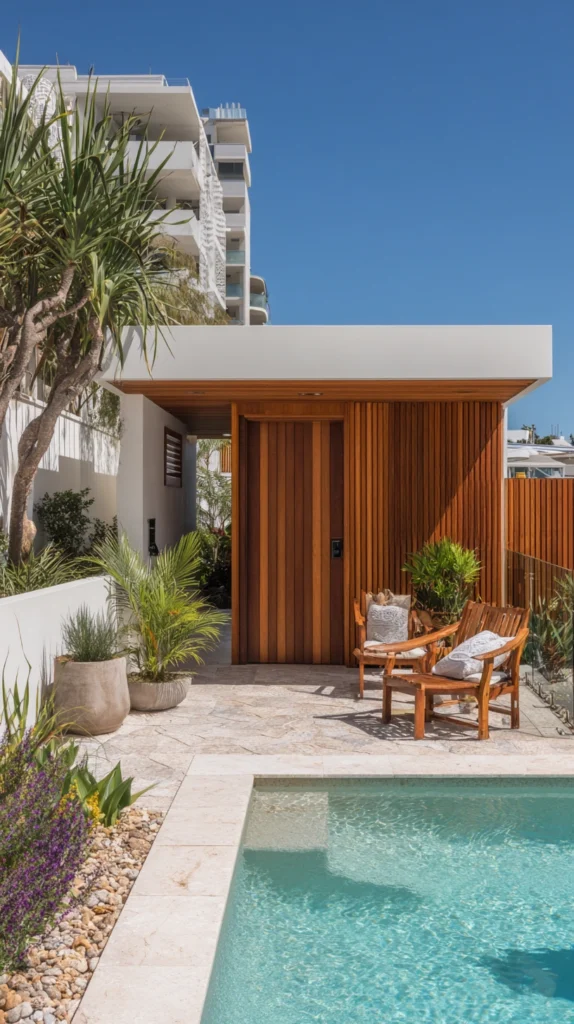
The functional cabana — a small, well-designed structure whose primary purpose is to provide a changing room, storage for pool equipment and towels, and an outdoor shower — is the pool structure that most consistently improves the practical experience of pool ownership and that is most consistently underinvested in relative to its impact on the pool’s daily usability.
An outdoor shower positioned on the cabana’s exterior wall — a simple but well-made shower fitting in brushed stainless or black metal, with a timber deck beneath and a simple timber or bamboo screen for privacy — creates the essential pool-to-house transition point where swimmers rinse chlorine before returning indoors.
The changing room within should be genuinely functional: a bench for sitting while changing, hooks for clothing and towels, a mirror, adequate lighting, and lockable storage for valuables.
The exterior of this functional structure should be designed with the same care as any other cabana style — it is highly visible within the pool environment and deserves a material and color treatment that contributes positively to the pool area’s overall aesthetic.
12. A Floating or Over-Water Cabana Element
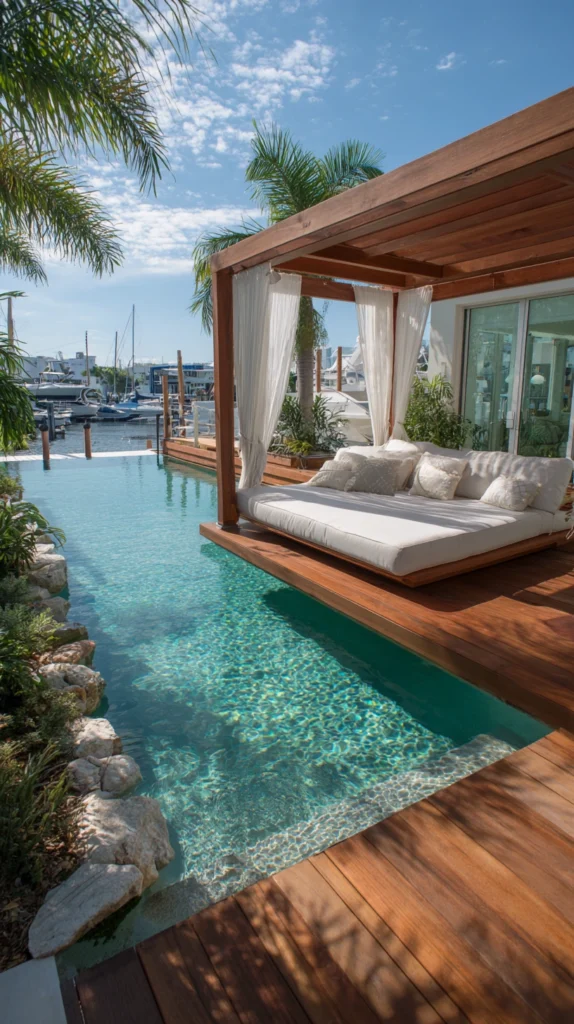
Where the pool’s design and engineering allows, a cabana element positioned at the pool’s edge with some structural extension over the water — a cantilevered roof projecting above the pool’s surface, a deck platform extending over the shallow end, or a daybed positioned so that its occupant is suspended above the water — creates a pool experience of extraordinary intimacy with the water that no entirely land-based structure can replicate.
This configuration requires structural engineering to ensure the cantilevered element is safely supported and that the pool’s waterproofing is maintained where any structure meets the pool shell, but the spatial experience it creates — lying in the shade with the water visible and audible directly below, the occasional spray of a swimmer reaching the structure above — is one that pools with purely peripheral cabanas cannot provide.
13. A Dark Moody Cabana for Dramatic Contrast
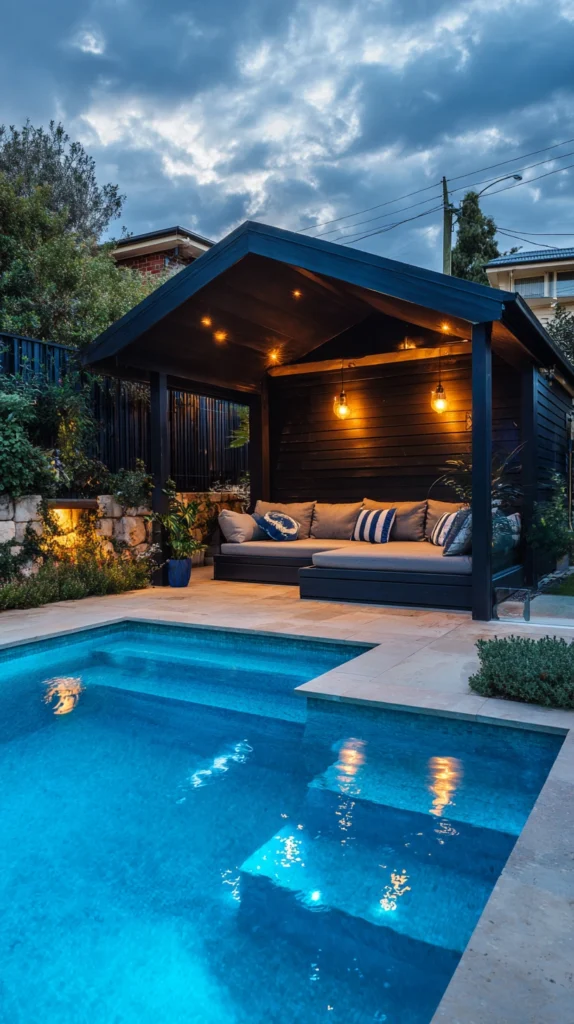
The conventional poolside color palette — white, cream, pale blue, natural timber — is so thoroughly established that a cabana conceived in deliberate opposition to it has a visual impact that is immediate and unforgettable.
A dark cabana — black-stained timber, dark charcoal fabric, deep forest green painted exterior — positioned against the bright, reflective surface of a pool and the blue of the sky and water creates a contrast of extraordinary graphic power that makes the pool environment look like a professionally designed resort rather than a domestic backyard.
The interior of a dark cabana, properly illuminated with warm pendant lights or lanterns, has a quality of intimate drama that light-colored alternatives cannot approach — the darkness of the enclosure creates a strong visual separation between the interior and the bright outdoor environment, making the shaded interior feel genuinely cool and genuinely private in a way that a pale-colored cabana with equivalent shade provision does not.
14. A Lighting-Focused Cabana for Evening Pool Use
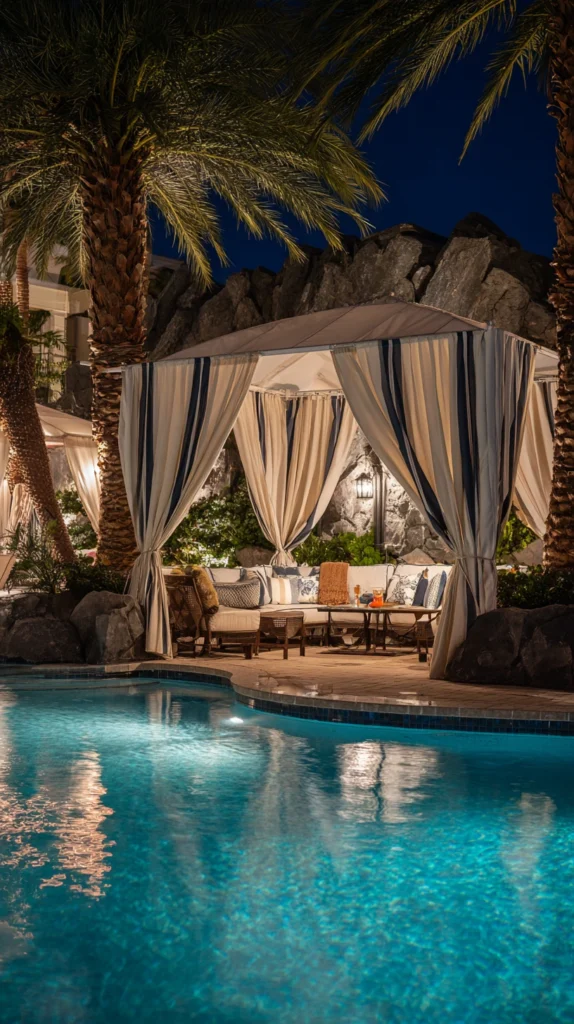
The final poolside cabana idea is one that addresses the temporal dimension of pool enjoyment most directly — the recognition that the best hours around a well-designed pool are often the evening hours, when the heat of the day has moderated, the light has turned golden and then warm amber and then the deep blue of late dusk, and the pool itself becomes a glowing, illuminated element in the darkening garden.
A cabana designed specifically for evening use — with multiple lighting sources at different heights creating a layered atmosphere, with outdoor heaters positioned for comfort as the air cools, with a sound system integrated into the structure for music, and with curtains that can be closed to create an enclosed, lantern-lit interior as darkness falls — transforms the pool environment from a daytime-only amenity into a genuine year-round outdoor living space that is at its most beautiful and most atmospheric when the sun has gone down and the water glows blue in the darkness of the garden surrounding it.