
15 Romantic Cottagecore Garden Ideas for Spring
There is a particular fantasy that cottagecore embodies — one that has clearly struck a nerve given how thoroughly it has saturated the cultural imagination over the past several years.
It is the fantasy of the unhurried life, of mornings spent in a garden that seems to have grown itself, of flowers tumbling over stone walls and bees moving between blooms with the peaceful efficiency of creatures that have never heard of a deadline.
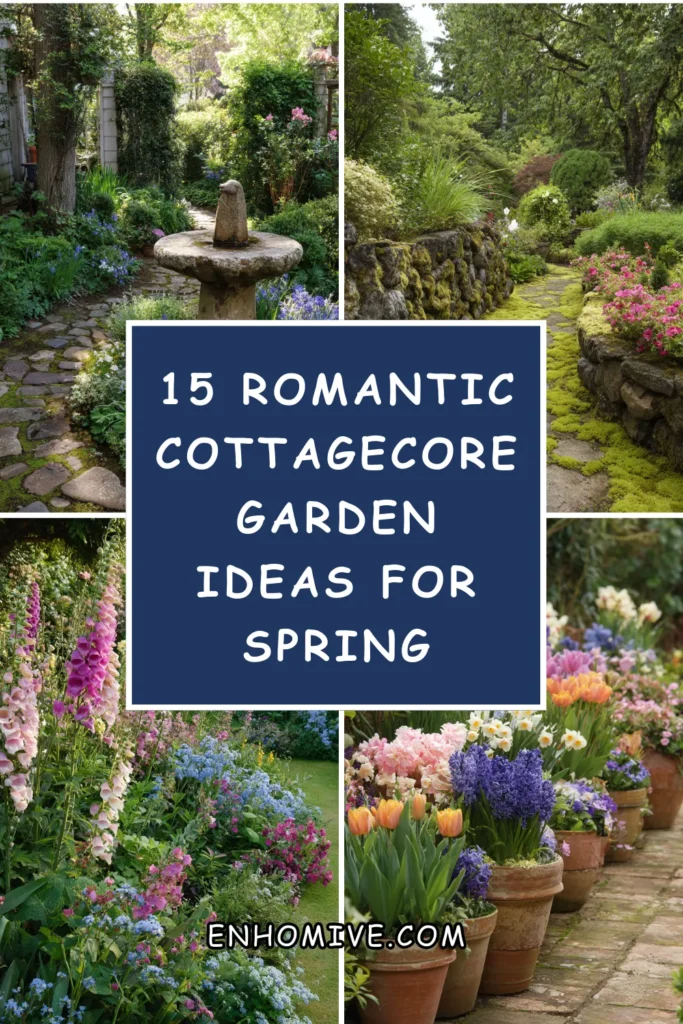
What makes this fantasy so persistently appealing is that, unlike most aesthetic movements, it is actually achievable. You do not need a thatched cottage in the English countryside or a half-acre walled garden to create something that captures the spirit of cottagecore.
You need intention, a willingness to embrace productive imperfection, and a genuine love of growing things. Spring is the ideal season to begin, when the ground is receptive and the light has that particular quality of new beginnings. Here are fifteen ideas for bringing romantic cottagecore energy into your garden this season.
1. Plant a Cutting Garden for Fresh Flower Abundance
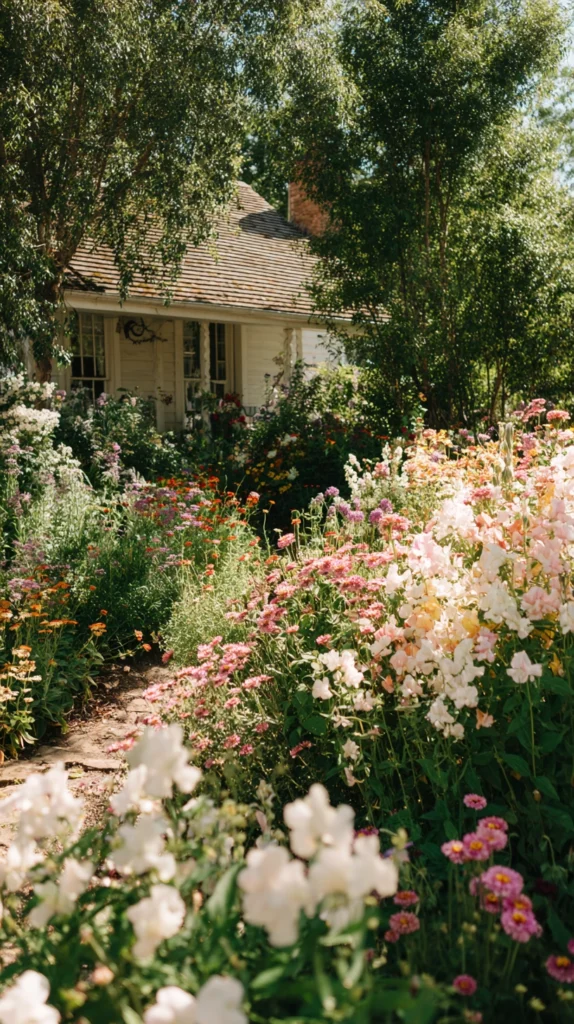
The cutting garden is perhaps the most quintessentially cottagecore garden feature you can create, and also one of the most practically rewarding. A dedicated bed — or even a generous row along a sunny fence line — planted with flowers grown specifically for bringing indoors transforms your relationship to both your garden and your home simultaneously.
Sweet peas are the undisputed queen of the cottagecore cutting garden, with their ruffled blooms, extraordinary fragrance, and romantic color range running from white through every shade of pink and purple to deep magenta. Plant them alongside cosmos, which flower prolifically and self-seed with cheerful abandon, larkspur for vertical drama, and zinnias for late-season color that bridges summer into autumn.
The cutting garden rewards the slightly chaotic planting approach that cottagecore celebrates — things can be close together, colors can tumble into each other, and the result should look generous and slightly wild rather than measured and controlled.
2. Build or Source a Vintage Wooden Arch Dripping with Roses
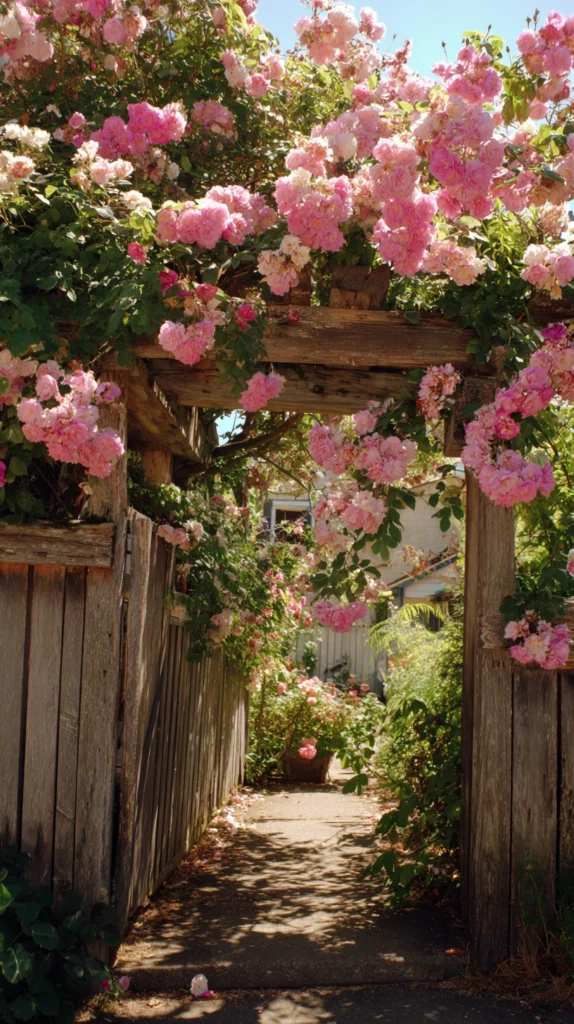
Nothing says romantic cottage garden more directly than a wooden arch laden with climbing roses, and spring is the season when this vision begins its annual fulfillment. The arch itself should look as though it has been standing for decades — weathered timber or painted wood showing its age, perhaps with some decorative detail at the top that catches the eye.
Plant a climbing rose on each side and train the canes gently as they grow, and within a few seasons you will have the entrance to your garden transformed into something genuinely magical.
For cottagecore authenticity, choose roses with old-fashioned flower forms — the densely petalled, cupped blooms of David Austin varieties like Gertrude Jekyll or Generous Gardener rather than the high-centered modern hybrid tea form. Their fragrance is as important as their appearance, and when a warm spring breeze moves through an arch of these roses, the effect on everyone who passes beneath it is immediate and unmistakable.
3. Create a Wildflower Meadow Patch
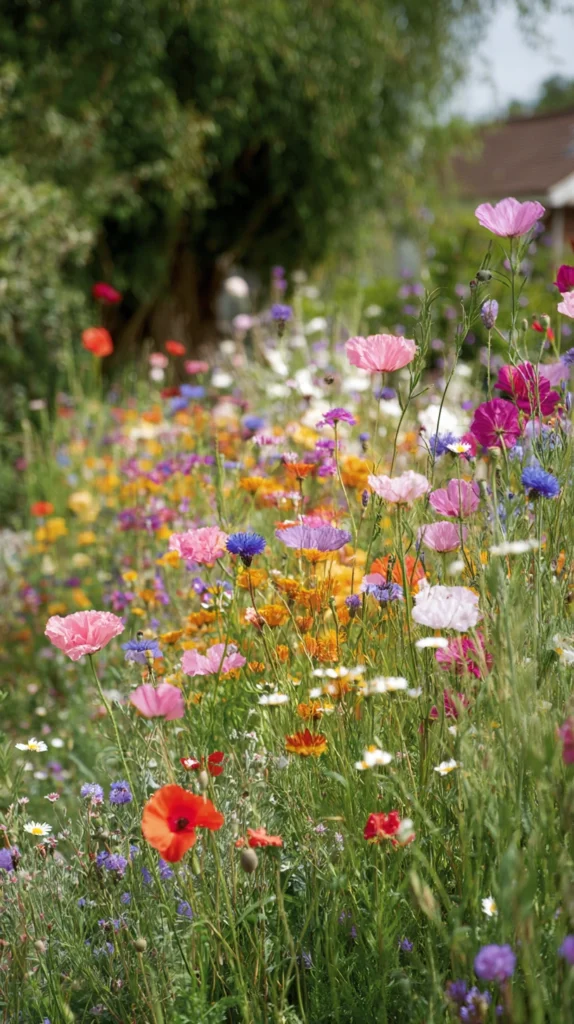
The wildflower meadow is one of those ideas that sounds effortful and turns out, once you commit to it, to be considerably easier than a traditional lawn and infinitely more beautiful in the cottagecore context.
Even a small patch — a few square meters at the garden’s edge, or a strip along a fence — sown with a native wildflower mix delivers poppies, cornflowers, ox-eye daisies, and dozens of other species in a loose, naturalistic tapestry that looks like something from a pre-Raphaelite painting.
The key is in the preparation: the soil should be poor and well-drained, free from competitive grass seed, and the area should receive good sun. Sow in early spring or autumn, scatter the seed with deliberate unevenness, and then resist the urge to tidy or intervene. Wildflower meadows reward neglect in a way that almost nothing else in the garden does.
4. Tuck a Weathered Wooden Bench Into a Planted Nook
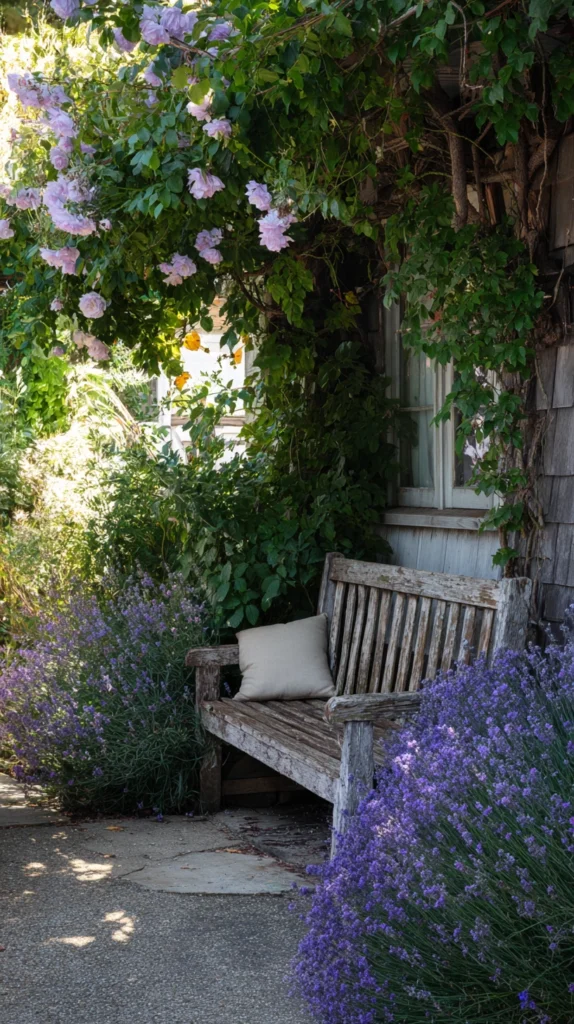
Every romantic cottage garden needs a place to sit that feels like it was discovered rather than installed — a weathered wooden bench half-hidden by overhanging branches, enclosed on two or three sides by planted borders, and positioned to look at something beautiful rather than simply away from the house.
The bench itself should have some history to it, whether genuine or cosmetic. A new bench left unpainted to weather naturally, or an old bench rescued from a salvage yard and given a light sand without stripping its character, is infinitely more appropriate to the cottagecore aesthetic than anything that arrives flat-packed.
Surround it with fragrant plants — lavender at the feet, roses arching overhead, honeysuckle climbing whatever structure is nearby — so that sitting there engages multiple senses simultaneously. This is where you bring your morning coffee and your notebook, and the garden should feel, from this spot, like it was made specifically for exactly that.
5. Plant Climbing Roses and Clematis Together
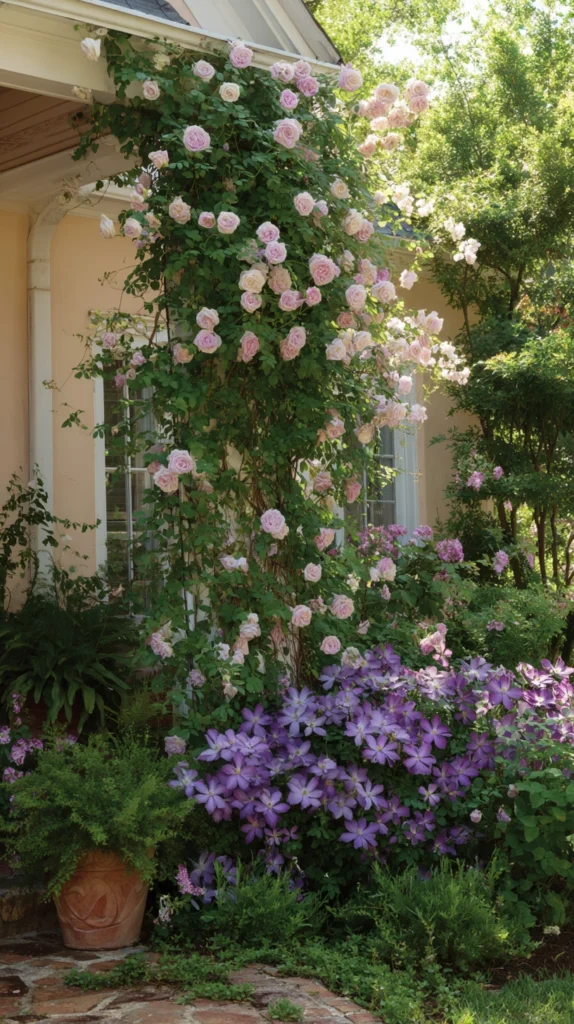
One of the most beloved planting combinations in romantic garden design is the pairing of a climbing rose with a clematis allowed to scramble through it. The clematis threads itself between the rose canes and produces flowers of a different form, color, and often a different season, effectively giving the same structure two entirely different performances across the growing year.
A soft pink rose paired with a deep purple clematis like Jackmanii is a classic for very good reason — the combination has been reproduced so often precisely because it never fails to be beautiful.
A white rose with a pale blue clematis reads as more delicate and ethereal. Whatever the color pairing, the effect of two plants sharing one structure with such apparent ease and harmony captures something essential about the cottagecore garden philosophy: that the most beautiful things are rarely the most controlled.
6. Add a Moss-Covered Stone Wall or Path
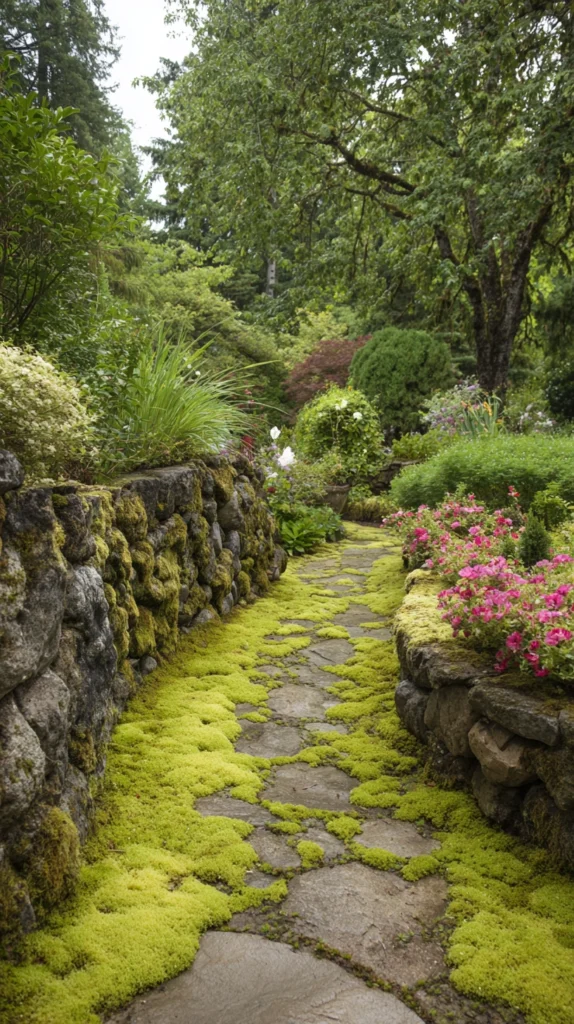
Stone is one of cottagecore’s most important materials, and in the garden it should look as though it has been there long enough for moss to have made its own quiet decision to move in.
A dry-stone wall along the garden’s boundary, a path of irregular flagstones with chamomile or creeping thyme planted in the gaps, or even a collection of large moss-covered stones arranged naturally among planted borders all introduce the sense of deep time and organic accumulation that gives cottage gardens their particular emotional resonance.
You can encourage moss on stone surfaces by painting them with a slurry of yogurt or buttermilk and leaving them in a shaded, moist position — the moss spores that are already present in the environment will find their way to the surface and establish within a single growing season.
7. Hang a Birdcage Planter Filled with Trailing Flowers
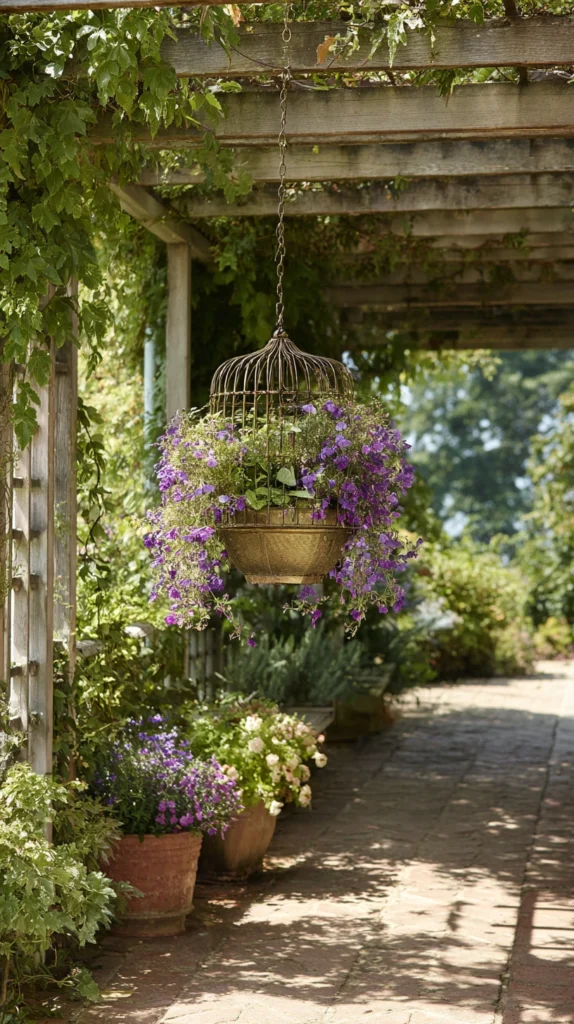
The decorative birdcage repurposed as a planter is one of those details that is simultaneously impractical and completely irresistible, which is perhaps why it has become so thoroughly associated with the cottagecore aesthetic.
Hung from a tree branch, a pergola beam, or a shepherd’s hook at the garden’s edge, an antique or antique-style birdcage filled with trailing lobelia, ivy-leaf pelargoniums, or tumbling bacopa creates a vertical planting element with a romance that a conventional hanging basket simply cannot replicate.
The cage’s open structure allows airflow and light to reach the plants from every direction, and the visual effect of flowers growing through the bars has an undeniable charm. Choose a cage with some weathering or patina for the most authentic look, and line the interior with moss before adding compost and plants.
8. Grow an Herb Garden with Cottage Informality
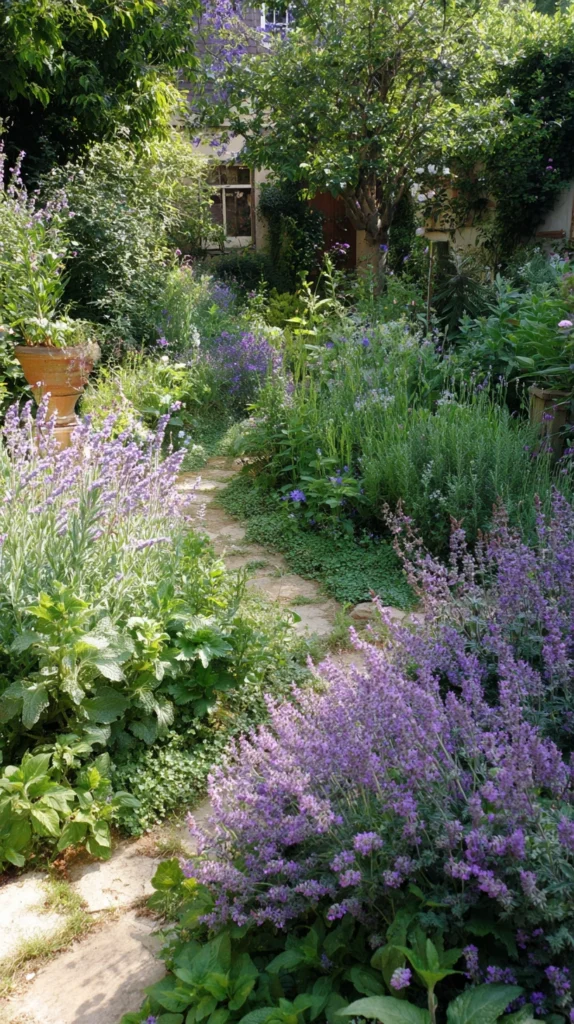
The herb garden in a cottagecore context is nothing like the rigidly geometric formal knot garden of Renaissance design. It is loose, fragrant, slightly overgrown at the edges, and planted with a generosity that suggests the gardener grew more than they strictly needed because they couldn’t resist it. Lavender, rosemary, thyme, sage, lemon balm, chamomile, and borage all belong here, planted in drifts that blur into each other rather than neat separated clumps.
Allow the herbs that want to flower to flower fully — the purple spires of lavender, the tiny stars of borage, the delicate white daisies of chamomile are all part of the garden’s beauty and all beloved by pollinators. A collection of terracotta pots in various sizes, some chipped and characterful, grouped near the kitchen door completes the picture of a garden that is simultaneously decorative and genuinely useful.
9. Create a Romantic Bower with Wisteria or Jasmine
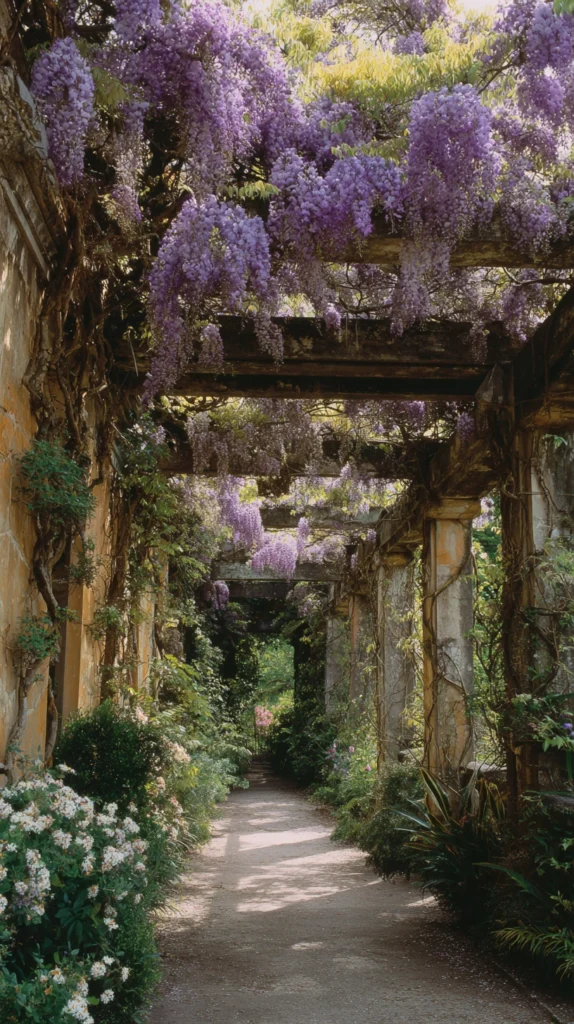
A garden bower — a simple arched or tunneled structure through which wisteria or jasmine climbs and eventually encloses — is one of the most ambitious and most rewarding cottagecore garden projects you can undertake. Wisteria in full spring bloom is one of the most spectacular sights in the gardening calendar, its cascading purple or white racemes hanging in dense clusters and releasing a fragrance that travels far beyond the plant itself.
Training it over a simple timber frame or iron arch and allowing it to knit itself into a living canopy takes several years but requires relatively little intervention once established. In the meantime, white jasmine will cover a bower structure within a single season and flower with a sweetness that makes the wait for the wisteria entirely bearable.
10. Scatter Terracotta Pots of Spring Bulbs Throughout the Garden
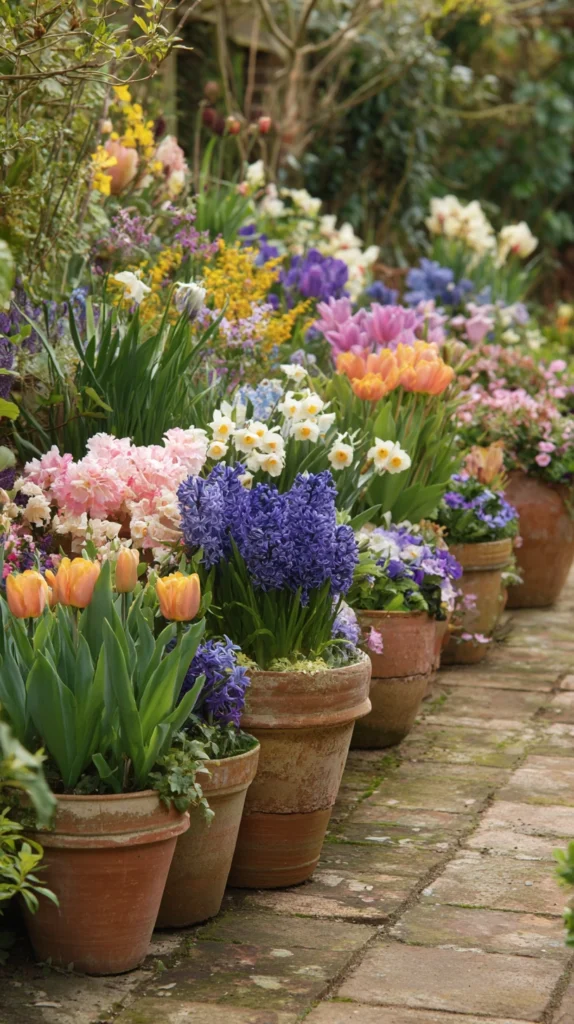
The cottagecore approach to container gardening is one of generous abundance and deliberate imperfection. Rather than matching containers arranged in symmetrical pairs, scatter terracotta pots of varying sizes — some mossy and aged, some new and clean, some chipped around the rim — throughout the garden in clusters and groupings that look as though they arrived naturally over time.
Fill them in spring with tulips, narcissus, hyacinths, and muscari in color combinations that are soft and old-fashioned rather than bright and contemporary — pale apricot tulips, creamy double narcissus, soft blue muscari, and white hyacinths in a mixture that suggests a painter’s palette rather than a garden centre display. As each pot finishes flowering, move it to a quieter corner and replace it with something new, keeping the garden in a state of continuous seasonal evolution.
11. Introduce a Vintage Watering Can as a Planted Feature
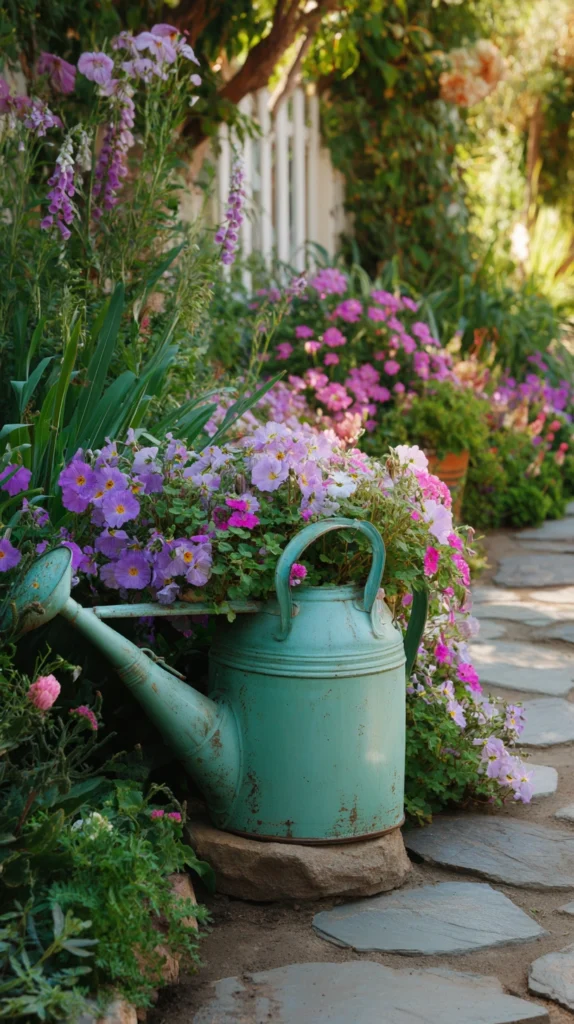
The decorative vintage watering can — planted with trailing flowers and placed at a garden path’s edge or against a stone wall — is one of those ideas that cottagecore has claimed so thoroughly that it now functions almost as the aesthetic’s logo. And yet it continues to work, because the image of a beautiful old watering can sprouting flowers from its spout captures perfectly the spirit of productive beauty that lies at the heart of cottage garden philosophy.
Source a genuine old can from a salvage yard or antique market, drill drainage holes in the base if they are not already present from natural rust, and plant it with a trailing pelargonium, a tumbling nasturtium, or a simple mix of bacopa and trailing lobelia. Place it where it will be seen from the bench described earlier.
12. Plant a Rose Hedge for Boundary Beauty
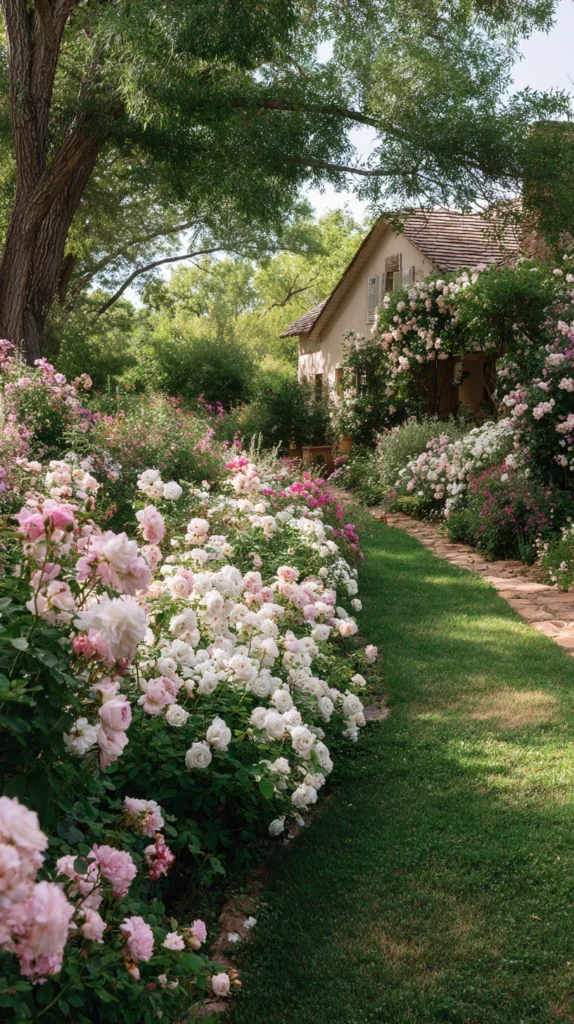
Where a conventional garden might use a wooden fence or a clipped privet hedge to define its boundaries, a cottagecore garden draws its edges in roses. A mixed rose hedge of repeat-flowering shrub roses in soft, harmonious colors — pale pink, blush, white, and the faintest hint of apricot — creates a boundary that is simultaneously practical and breathtakingly beautiful throughout the growing season.
Choose varieties with good disease resistance and a naturally arching habit, such as the Flower Carpet series or the robust English shrub roses bred for garden performance rather than greenhouse perfection. Underplant the roses with catmint, which flowers in complementary lavender-blue and suppresses weeds while attracting pollinators, and the hedge becomes a complete and largely self-sustaining ecosystem of beauty.
13. Add a Sundial or Stone Birdbath as a Garden Focal Point
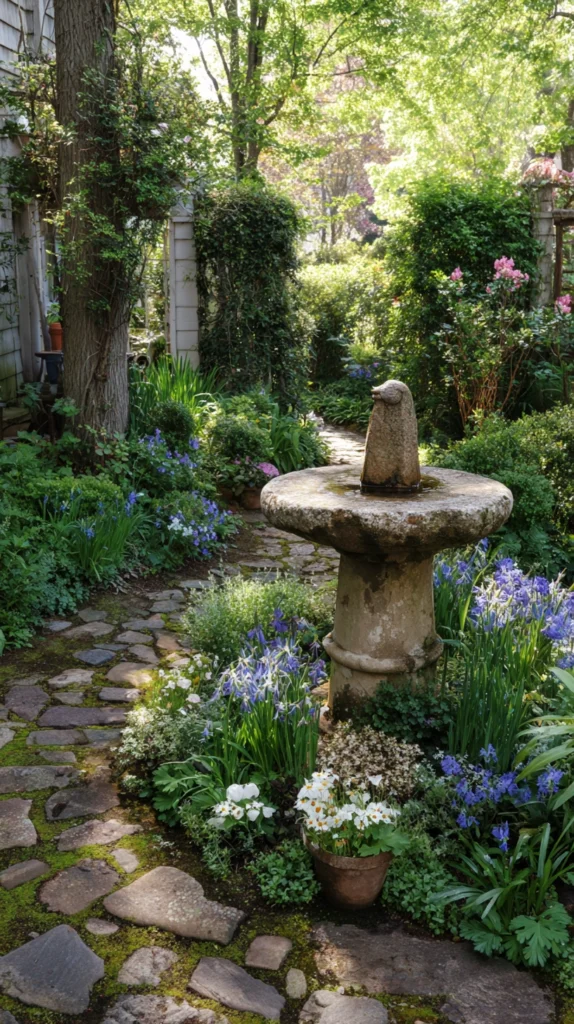
Every romantic garden needs a focal point — something the eye travels toward naturally and rests on with pleasure — and in the cottagecore garden this should be something with a sense of age and permanence. A stone sundial positioned at the crossing of two paths, or a weathered birdbath placed at the garden’s center and surrounded by low-growing plants, performs this function beautifully while also connecting the garden to something beyond mere decoration.
Birdbaths especially earn their place — they are genuinely functional, drawing birds into the garden where they contribute to both the sensory experience and the ecological health of the space. Choose stone over resin, simple over elaborate, and allow moss and weathering to do their slow, beautiful work without interference.
14. String Fairy Lights Through Trees and Shrubs
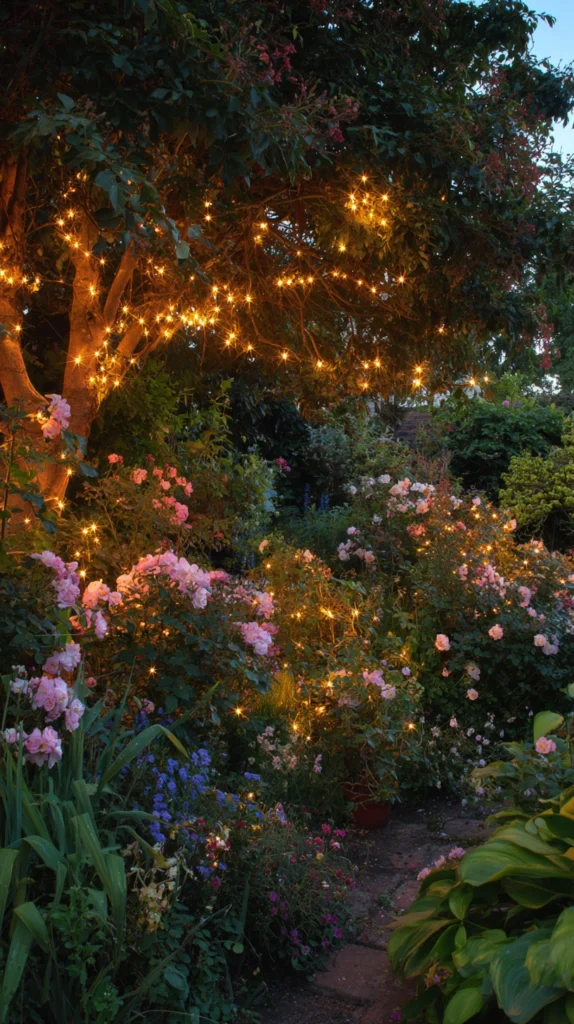
The cottagecore garden at dusk and into the evening is a different experience from its daytime self, and fairy lights are the simplest and most effective tool for extending the garden’s magic beyond daylight hours.
Strung loosely through the branches of a flowering tree, woven through the canes of a climbing rose, or draped between two posts across a garden path, warm-toned fairy lights in spring — when the evenings are still cool enough to make outdoor sitting feel like a small adventure — create an atmosphere of enchantment that is difficult to replicate through any other means.
Choose solar-powered strings for simplicity and sustainability, and opt for a warm amber tone rather than cool white, which maintains the organic, candlelit quality that the cottagecore aesthetic requires.
15. Let Self-Seeders Have Their Way
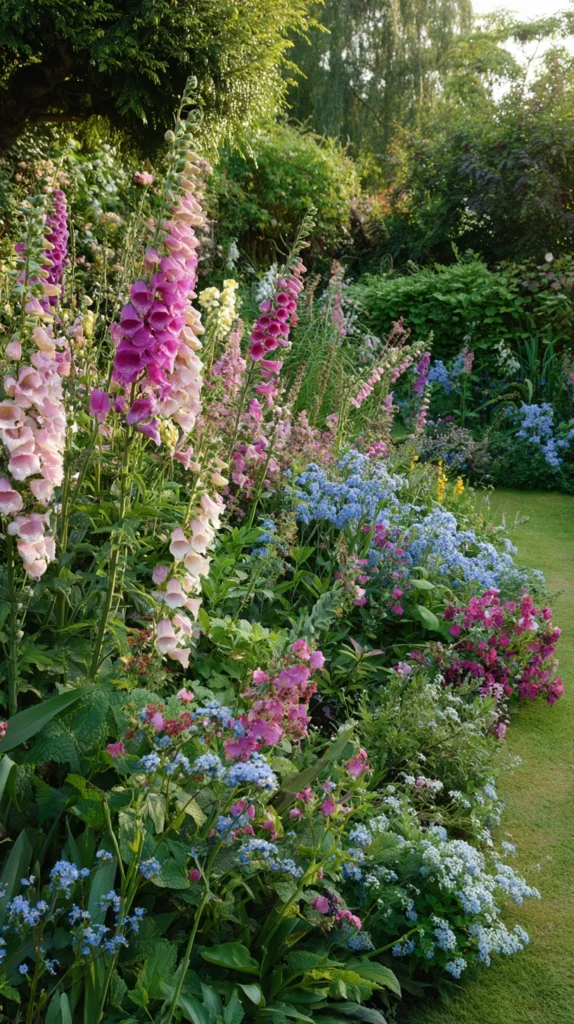
The final and perhaps most philosophically important cottagecore garden idea is not something you plant at all — it is something you allow. Self-seeding plants are the cottage garden’s most authentic inhabitants: foxgloves appearing in unexpected corners, forget-me-nots carpeting the ground between roses, aquilegias in every color threading themselves through borders, honesty scattering its papery silver moons wherever the wind takes its seeds.
Allowing these self-seeders to do as they wish — moving a seedling here, editing one there, but broadly permitting the garden to participate in its own design — produces the quality of beautiful accident that defines the very best cottage gardens and that no amount of deliberate planting alone can fully replicate. The garden that looks as though it grew itself is always, in the end, the most romantic one of all.