
15 Shower Ideas Without Doors for a Sleek, Modern Look
Doorless showers represent one of the most transformative trends in contemporary bathroom design, offering a seamless, spa-like aesthetic that makes bathrooms feel more spacious, luxurious, and architecturally cohesive.
Also known as walk-in showers, open showers, or barrier-free showers, these designs eliminate the visual interruption of shower doors and frames, creating flowing, unobstructed spaces that feel dramatically larger than their actual square footage. The absence of doors creates clean sightlines that showcase beautiful tilework, fixtures, and architectural details while simplifying cleaning and maintenance by eliminating the grout, tracks, and hardware where soap scum and mildew typically accumulate.
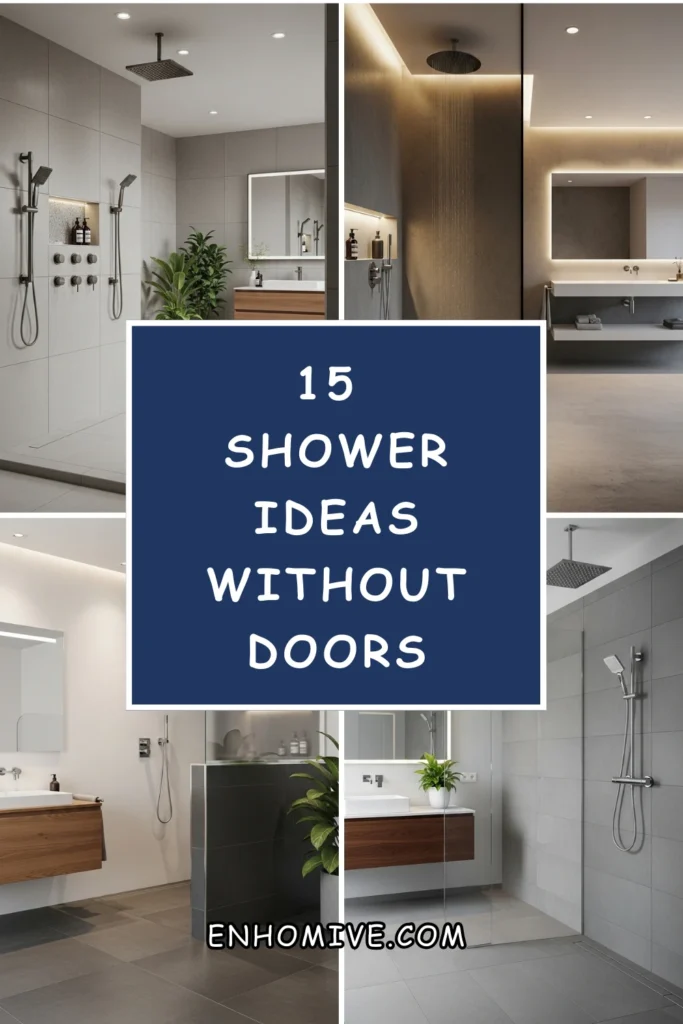
Beyond aesthetics, doorless showers offer practical advantages including improved accessibility for people with mobility challenges, easier bathroom cleaning, better ventilation that reduces mold and mildew, and timeless design that won’t look dated as hardware styles evolve. However, successful doorless shower design requires careful planning around water containment, proper drainage, adequate space, and strategic layout to prevent water from escaping into the rest of the bathroom.
These fifteen ideas demonstrate various approaches to doorless shower design, from minimalist walk-in configurations to creatively partitioned spaces that balance openness with water control, proving that eliminating doors doesn’t mean sacrificing function or comfort.
1. Create a Seamless Wet Room Design
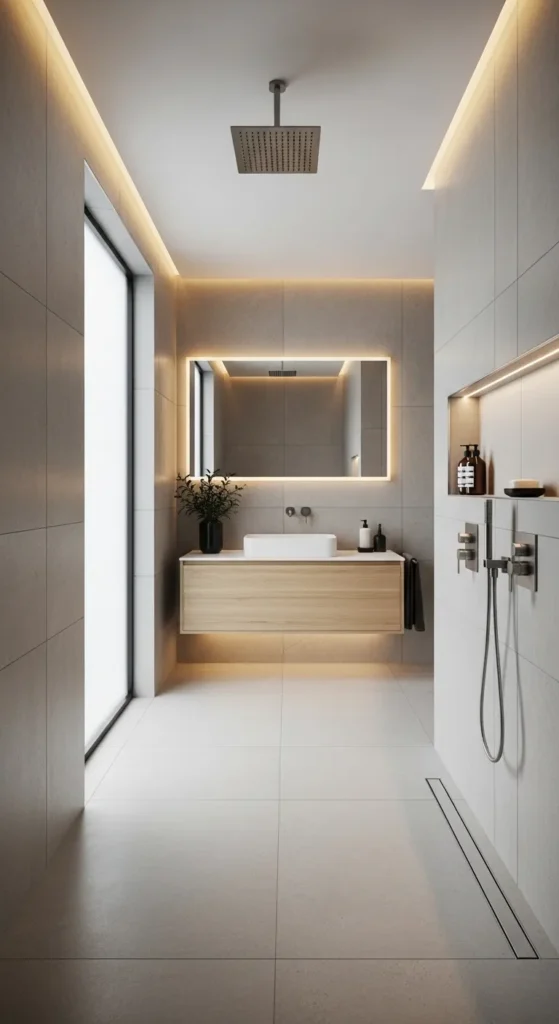
Wet rooms take doorless shower concepts to their ultimate expression by making the entire bathroom waterproof, eliminating barriers between shower and bathroom entirely. The floor slopes gently toward a central or linear drain, allowing water to flow away from all areas while the entire space functions as one cohesive unit.
This approach works beautifully in contemporary bathrooms where minimalism and seamless design take priority. Install waterproof membranes beneath all flooring and partway up walls, use large-format tiles with minimal grout lines, and ensure proper drainage with adequate floor slope. Position the showerhead over the drain area, but allow the entire bathroom to handle occasional water exposure.
This creates the ultimate spa-like experience where the bathroom feels like a single, unified sanctuary rather than a collection of separate fixtures and zones. Wet rooms particularly suit small bathrooms where eliminating visual barriers makes spaces feel significantly larger.
2. Install a Half Wall or Knee Wall Partition
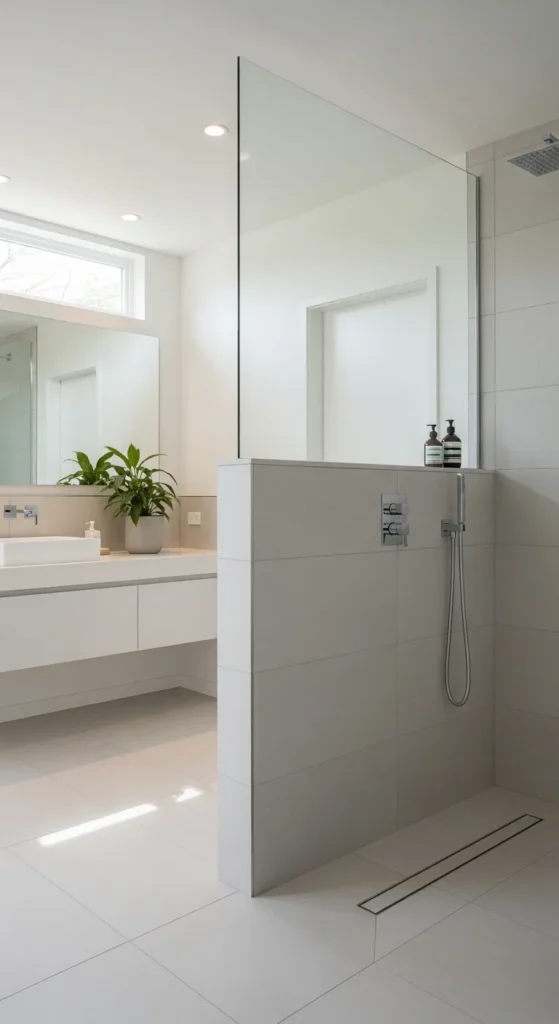
A partial wall extending partway into the shower area provides water containment without the visual weight of full enclosures. These knee walls, typically 36 to 42 inches high, block direct water spray while maintaining open, airy feelings and preserving visual connection across the bathroom.
Build the half wall from the same tile as surrounding walls, creating material continuity that reinforces the seamless aesthetic. Position the showerhead so it sprays away from the bathroom opening, using the partial wall to shield the rest of the space from mist and splashes. The top of the wall can feature a small ledge for toiletries, adding functional value.
This solution works well in medium-sized bathrooms where some water containment proves necessary but full enclosures would make spaces feel cramped. The partial barrier provides psychological comfort for those hesitant about fully open showers while maintaining the sleek, modern aesthetic that makes doorless showers appealing.
3. Use a Single Glass Panel for Minimal Separation
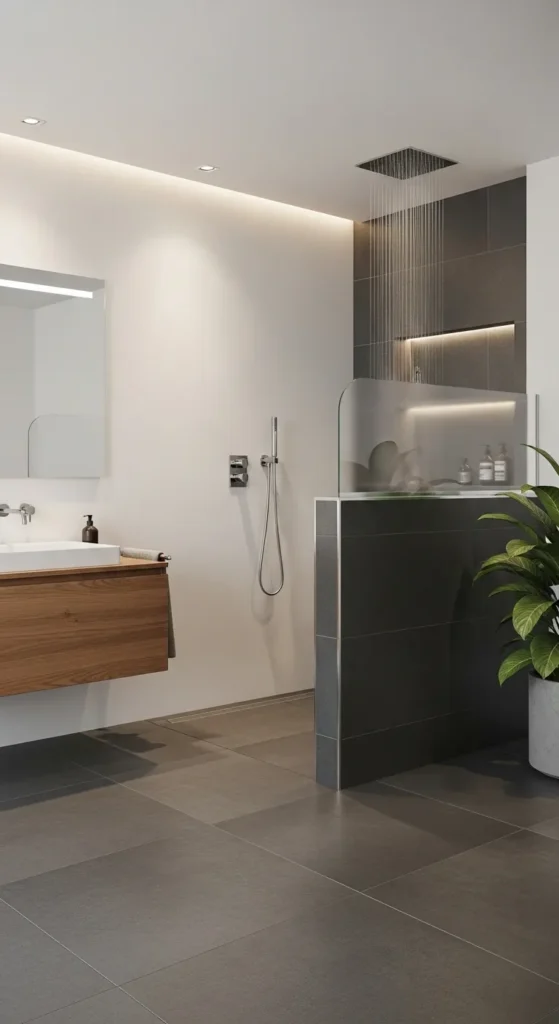
A single fixed glass panel provides splash protection while maintaining the open, barrier-free quality that defines doorless showers. Unlike traditional enclosed showers with multiple glass panels and frames, this minimalist approach uses one substantial piece of clear glass positioned strategically to deflect water spray.
Install frameless glass extending from floor to ceiling, positioned perpendicular to the showerhead wall. The glass doesn’t fully enclose the shower—instead, it creates a partial barrier that prevents direct spray from reaching the rest of the bathroom while leaving generous openings for entry and air circulation. Choose ultra-clear, low-iron glass for maximum transparency, and ensure professional installation with high-quality hardware.
This approach suits bathrooms where complete openness proves impractical due to space constraints or water control concerns, offering a compromise that maintains sleek aesthetics while providing functional water containment. The single glass panel requires significantly less maintenance than multi-panel enclosures while creating architectural interest through its substantial, sculptural presence.
4. Design with Multiple Showerheads and Body Sprays
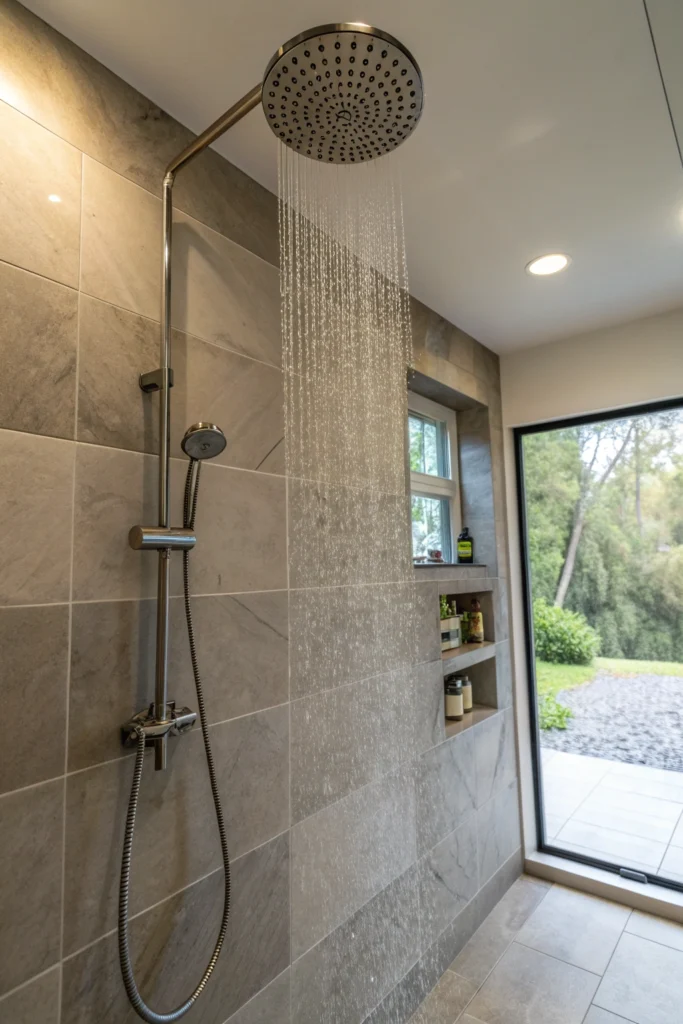
When showers lack doors, enhancing the bathing experience through luxurious fixtures justifies the open design and creates true spa-like indulgence. Multiple showerheads, body sprays, and rainfall fixtures transform functional bathing into sensory experiences worth showcasing.
Install a large rainfall showerhead centered over the shower area, add a handheld sprayer for flexibility, and incorporate body jets at various heights along the walls. This multi-fixture approach surrounds bathers in water from all directions, creating immersive experiences that feel dramatically different from standard single-showerhead configurations. The visual impact of multiple fixtures adds architectural interest to the shower area, making it a focal point worthy of the openness that doorless designs provide. Ensure adequate water pressure and consider whether your hot water system can support simultaneous fixture operation. This luxurious approach particularly suits master bathrooms where creating resort-quality bathing experiences justifies the investment in premium fixtures and plumbing infrastructure.
5. Incorporate a Curved or Angled Entry
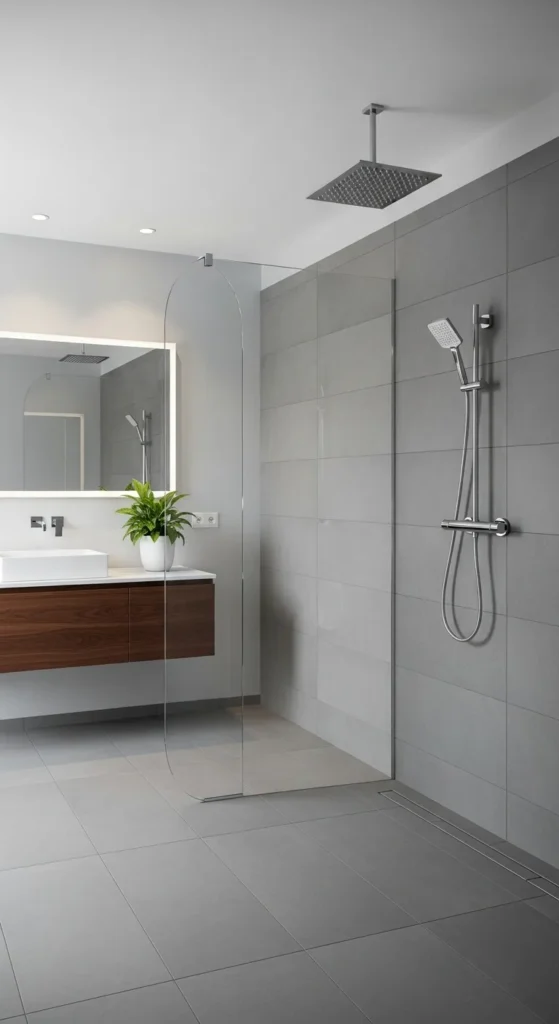
Rather than square, perpendicular entries, curved or angled shower openings create organic flow while subtly directing water away from bathroom interiors. The gentle geometry feels more welcoming and sophisticated than harsh right angles while providing superior water containment.
Design shower walls in gentle curves that wrap partially around the space, or angle walls to create entry openings that don’t directly face toilets or vanities. This thoughtful geometry prevents straight sightlines into showers, providing visual privacy while maintaining the open aesthetic. Curved walls add softness and visual interest, creating sculptural quality that elevates the entire bathroom design.
This approach requires careful planning and often custom tile work, but the result is distinctive, architecturally significant bathrooms that showcase design sophistication. Curved entries work particularly well in larger bathrooms where space allows for generous shower dimensions that accommodate flowing, non-linear layouts.
6. Use Different Flooring to Define the Shower Zone
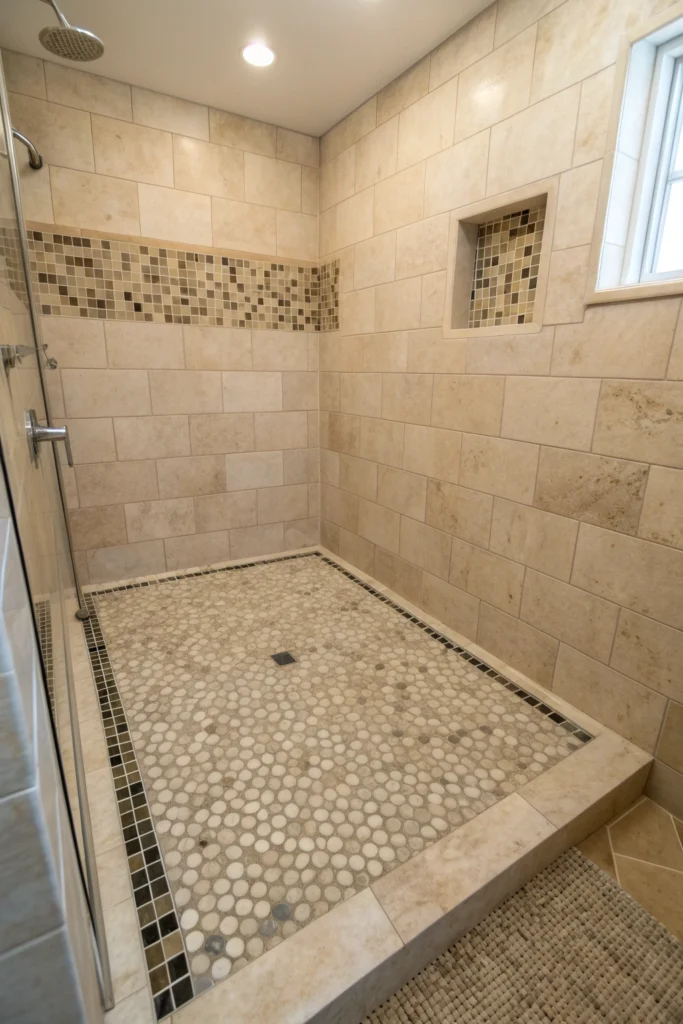
When showers lack physical barriers, using distinct flooring materials or patterns within the shower area creates clear visual definition while maintaining physical openness. This design strategy communicates “this is the shower zone” without requiring walls or doors.
Install pebble tile, smaller mosaic tiles, or distinctly different colored tiles within the shower footprint, contrasting with larger tiles used throughout the rest of the bathroom. The textural and visual difference clearly delineates the shower area while providing practical benefits—smaller tiles with more grout lines offer better slip resistance when wet. Ensure the transition between different flooring types is flush and smooth to prevent tripping hazards while maintaining accessibility.
This approach works beautifully in bathrooms where maintaining visual flow takes priority but some shower definition proves helpful for practical or aesthetic reasons. The flooring change adds design interest while serving functional purposes, demonstrating how thoughtful material choices solve problems elegantly.
7. Position Showers in Alcoves or Niches
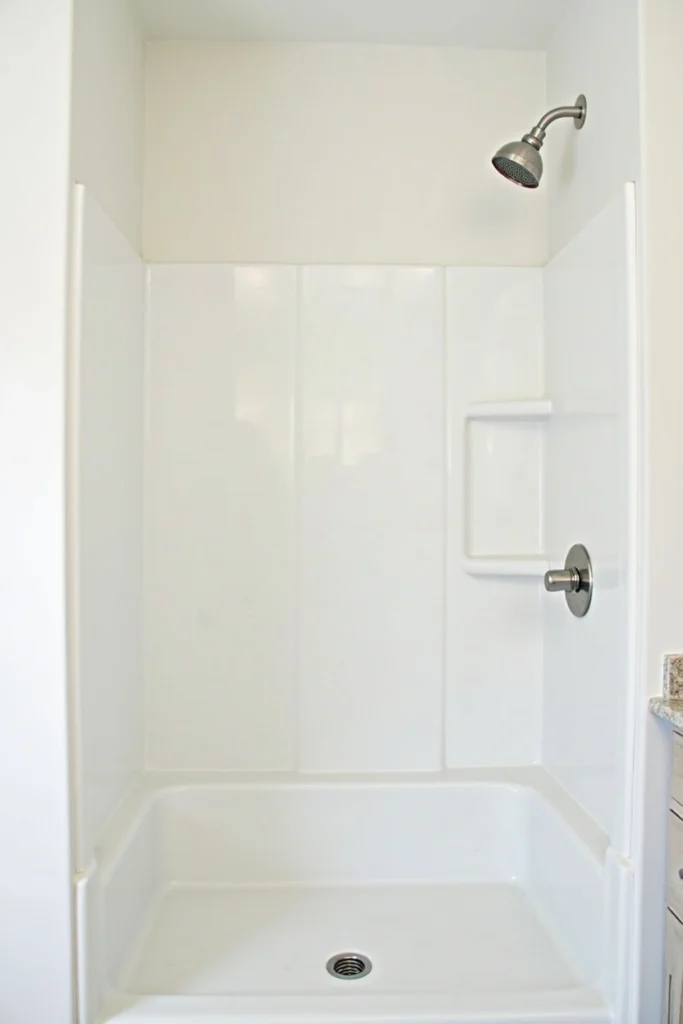
Tucking doorless showers into alcoves or architectural niches naturally contains water while creating defined shower spaces without requiring doors. The surrounding walls on three sides provide water control while the open fourth side maintains the doorless aesthetic.
Design bathrooms with recessed areas specifically for showers, or utilize existing architectural features like window alcoves or structural protrusions. The three contained sides allow you to position the showerhead so spray directs away from the open side, minimizing water escape.
This configuration works exceptionally well in bathrooms with irregular shapes or architectural quirks that might otherwise prove challenging to design around. The alcove creates a cozy, enclosed feeling during showering while the doorless entry maintains openness when the shower isn’t in use. Add a beautiful tile treatment within the alcove to create a jewel-box effect, making the shower area a visual focal point that deserves its open display.
8. Install a Ceiling-Mounted Rainfall Showerhead
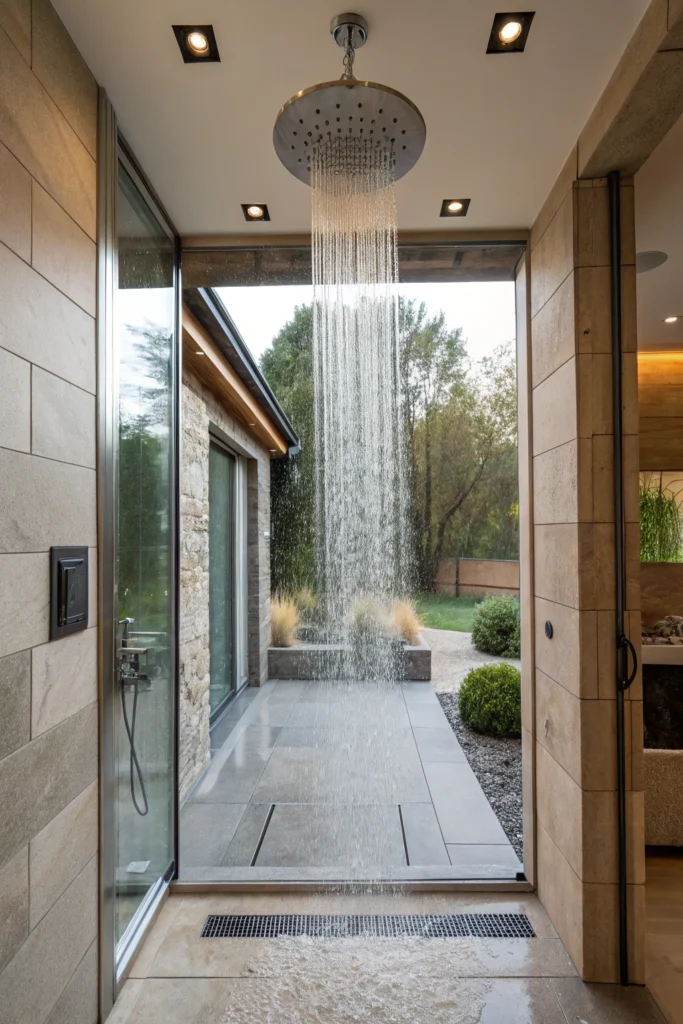
Large, ceiling-mounted rainfall showerheads create luxurious showering experiences while their overhead position directs water primarily downward rather than outward, reducing splash and spray that might escape doorless configurations.
Mount a generous rainfall head—12 to 16 inches in diameter—directly in the ceiling over the shower center. The water falls gently and vertically, creating relaxing, immersive experiences while minimizing the forceful spray that standard wall-mounted showerheads produce. This fixture choice suits doorless showers particularly well because the water pattern naturally contains itself better than angled spray.
Pair the rainfall head with a handheld sprayer for versatility, ensuring the handheld mounting position also directs spray inward. The architectural impact of a substantial ceiling-mounted fixture adds luxury and visual interest while the practical water pattern supports successful doorless design.
9. Create a Linear Drain for Seamless Flooring
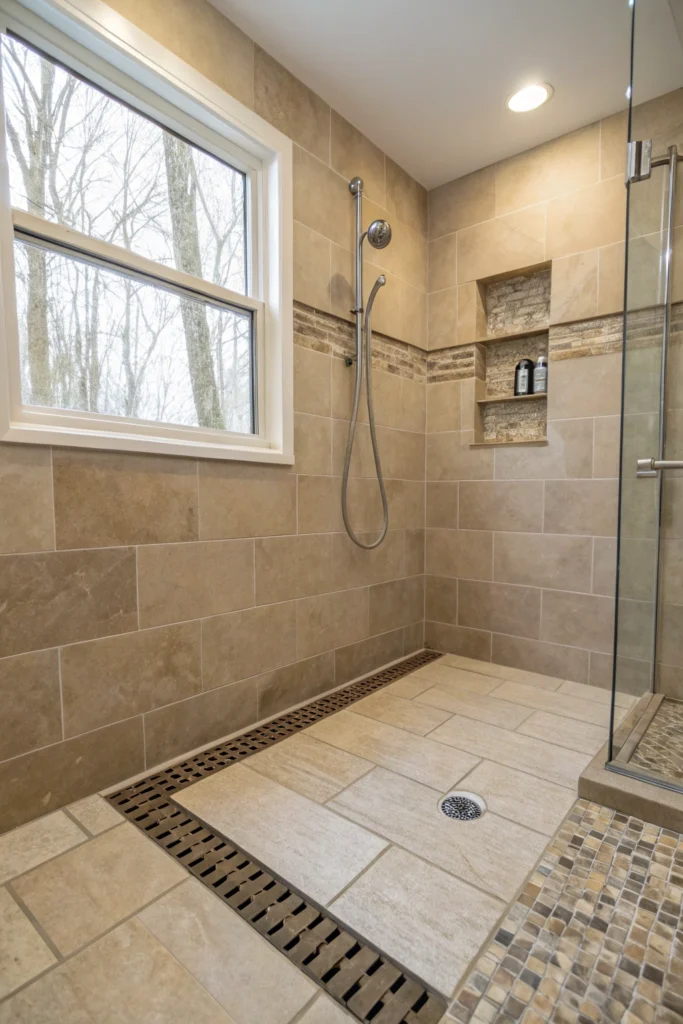
Linear drains—long, narrow drains typically positioned along one edge of the shower area—allow for single-slope flooring that directs water efficiently while eliminating the traditional center drain configuration and its multi-directional slopes.
Install a linear drain along the shower’s open edge, allowing the shower floor to slope in one direction toward the drain. This creates more usable flat floor space while the drain’s position at the opening catches water before it can escape into the bathroom.
Linear drains offer sleek, contemporary aesthetics and can be positioned to create visual lines that enhance the bathroom’s overall design. Choose drain grates in finishes matching other fixtures, or opt for tile-insert grates that virtually disappear into the floor.
This drainage approach particularly suits modern, minimalist bathrooms where every detail contributes to clean, uncluttered aesthetics. The improved water management makes doorless configurations more practical even in compact bathrooms.
10. Incorporate Built-In Benches or Seating
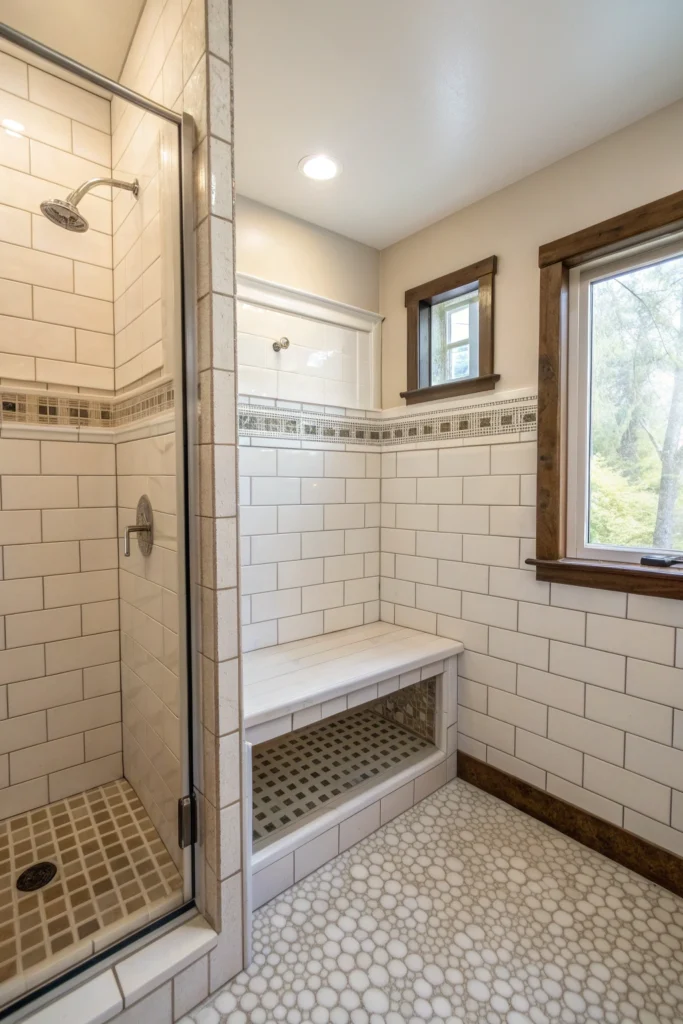
Built-in shower benches add luxury and practicality to doorless showers while creating architectural interest through their substantial presence. These integrated seats invite leisurely showering while serving as visual anchors within open shower spaces.
Build a tiled bench along one shower wall, ensuring it’s deep enough for comfortable sitting—typically 15 to 18 inches—and positioned at comfortable seating height around 18 inches from the floor. The bench provides a place to sit during showering, rest while shaving legs, or simply relax under warm water.
It also offers practical storage for shampoo bottles and soaps when not being used for seating. In doorless showers, substantial benches help define the shower area and create visual weight that balances the openness. Choose waterfall-edge benches where tiles wrap over the front edge for polished, furniture-like appearance, or incorporate contrasting tile on the bench top for design interest.
11. Use Floor-to-Ceiling Tile for Cohesive Design
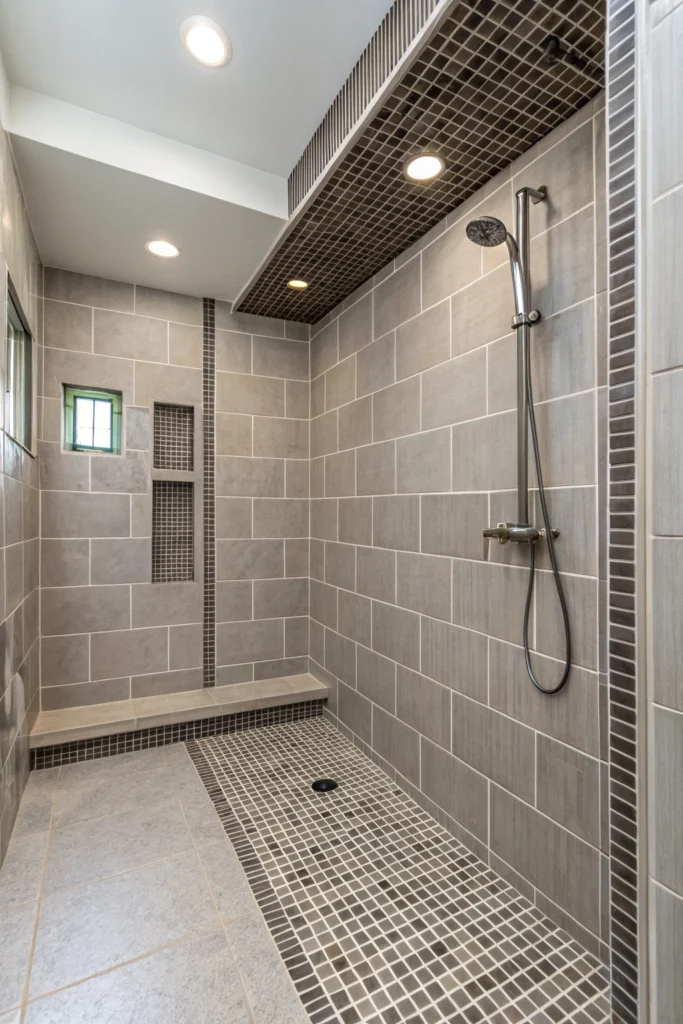
When showers lack doors, treating the entire bathroom with consistent, high-quality tile creates unity that makes the doorless design feel intentional rather than incomplete. This comprehensive approach showcases beautiful tilework while simplifying the visual experience.
Extend your chosen tile from floor to ceiling throughout the entire bathroom, or at minimum within the entire shower area. This generous tile treatment creates waterproof surfaces ideal for doorless configurations while the visual continuity makes bathrooms feel larger and more cohesive. Large-format tiles minimize grout lines for easier cleaning and more contemporary aesthetics, while premium materials like natural stone, marble, or textured porcelain create luxury worthy of the spa-like openness.
The investment in quality tile pays dividends in doorless showers where tilework becomes a primary design feature rather than being hidden behind shower enclosures. This approach works beautifully in bathrooms of all sizes, from compact powder rooms to expansive master suites.
12. Design with Recessed Niches for Storage
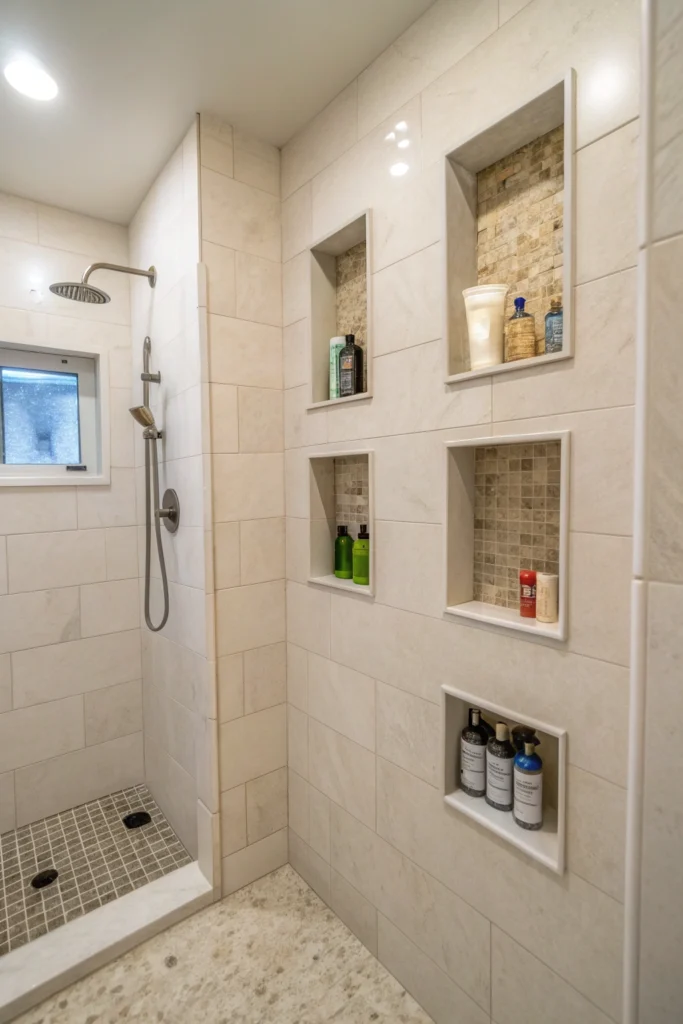
Built-in recessed niches eliminate the need for hanging caddies or corner shelves while providing elegant, permanent storage solutions that maintain clean lines essential to successful doorless shower design.
Create one or multiple niches within shower walls at convenient heights for soap, shampoo, and other bathing essentials. Frame niches with contrasting tile, decorative borders, or lighting to make them design features rather than merely functional necessities.
Horizontal niches spanning substantial wall width provide generous storage while creating strong visual lines. Ensure niches have slight forward slopes so water drains rather than pooling. In doorless showers where every element remains visible, beautiful, thoughtfully designed niches contribute to the overall aesthetic rather than detracting from it. The recessed design maintains the smooth wall planes that make doorless showers feel so architecturally clean and contemporary.
13. Install Heated Floors for Comfort
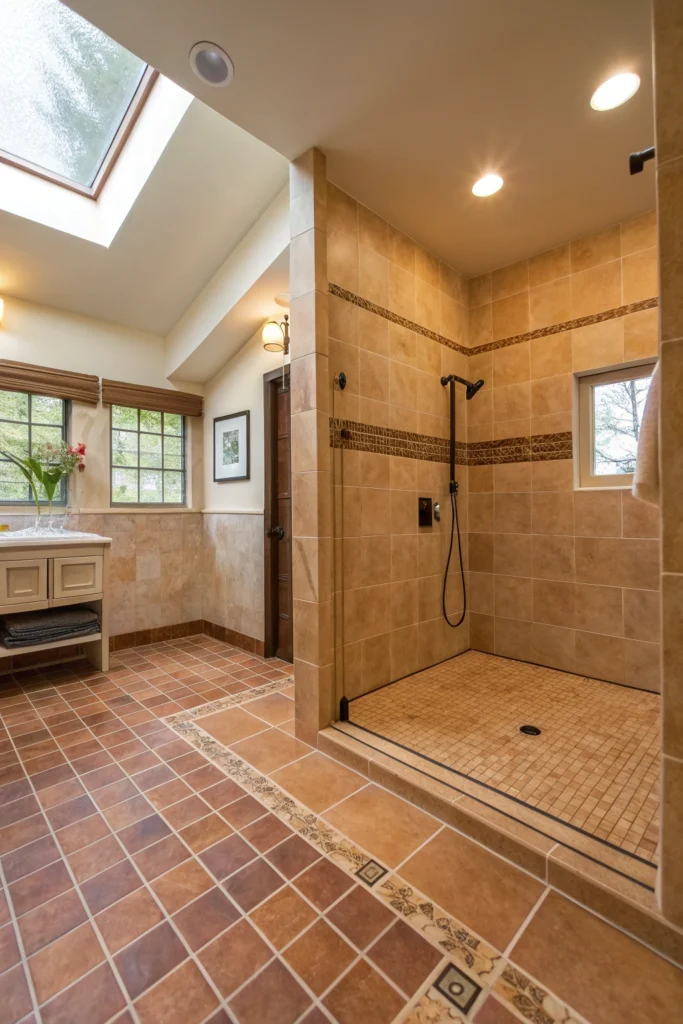
Radiant floor heating transforms doorless showers from potentially chilly experiences into luxurious comfort zones where warm floors greet your feet from the moment you step in. This upgrade addresses one common concern about doorless showers—the lack of enclosed warmth.
Install electric or hydronic radiant heating beneath bathroom flooring, extending it throughout the shower area and beyond. The warm floors dry quickly, reducing standing water and slippery conditions while creating spa-like comfort.
In doorless showers where air circulation prevents the steam-room warmth that enclosed showers develop, heated floors compensate beautifully, ensuring the bathing experience remains comfortable even in cooler months. This addition elevates bathrooms from functional spaces to genuine retreats where every detail supports comfort and luxury. The operational cost remains modest, especially with programmable thermostats that heat floors only during peak usage times.
14. Position Strategic Lighting Within the Shower
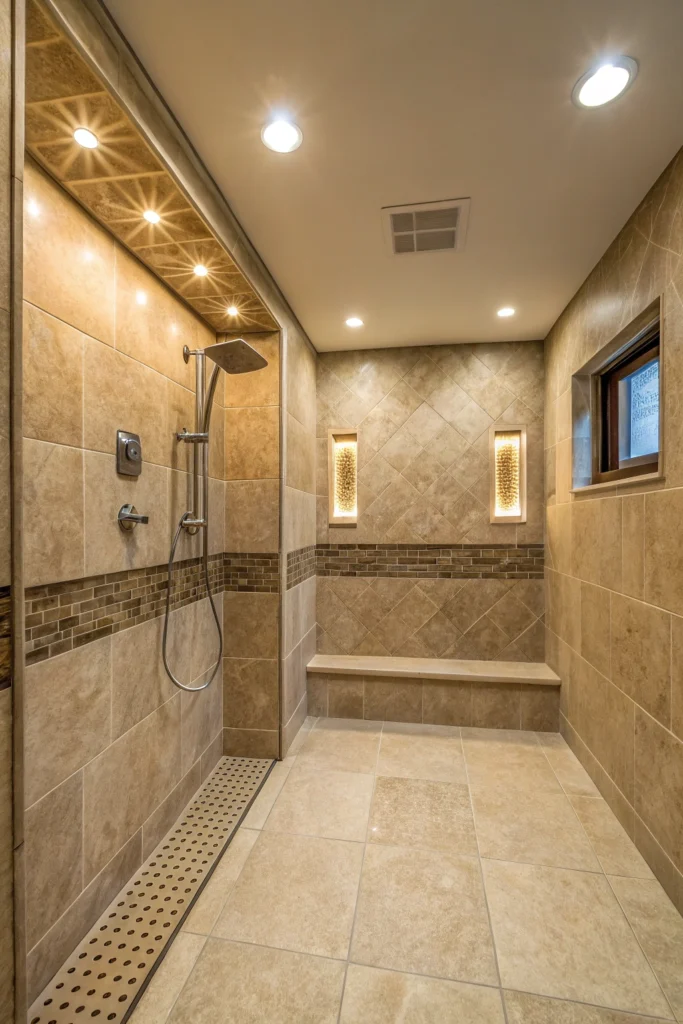
Thoughtful shower lighting enhances safety, creates ambiance, and highlights beautiful tile work and fixtures in doorless designs where shower interiors remain constantly visible.
Install waterproof recessed lights within the shower ceiling, positioned to provide even illumination without creating harsh shadows. Add LED strip lighting within recessed niches for dramatic effect, or incorporate color-changing LEDs for customizable ambiance.
Ensure all shower lighting uses appropriate waterproof fixtures rated for wet locations, and work with licensed electricians familiar with bathroom electrical codes. In doorless showers, lighting transforms from purely functional necessity to design opportunity, allowing you to create mood, highlight architectural features, and ensure the shower area contributes to the bathroom’s overall beauty even when not in use. Dimmer controls allow flexibility from bright task lighting during morning routines to soft, relaxing illumination for evening baths.
15. Create Adequate Space with Generous Dimensions
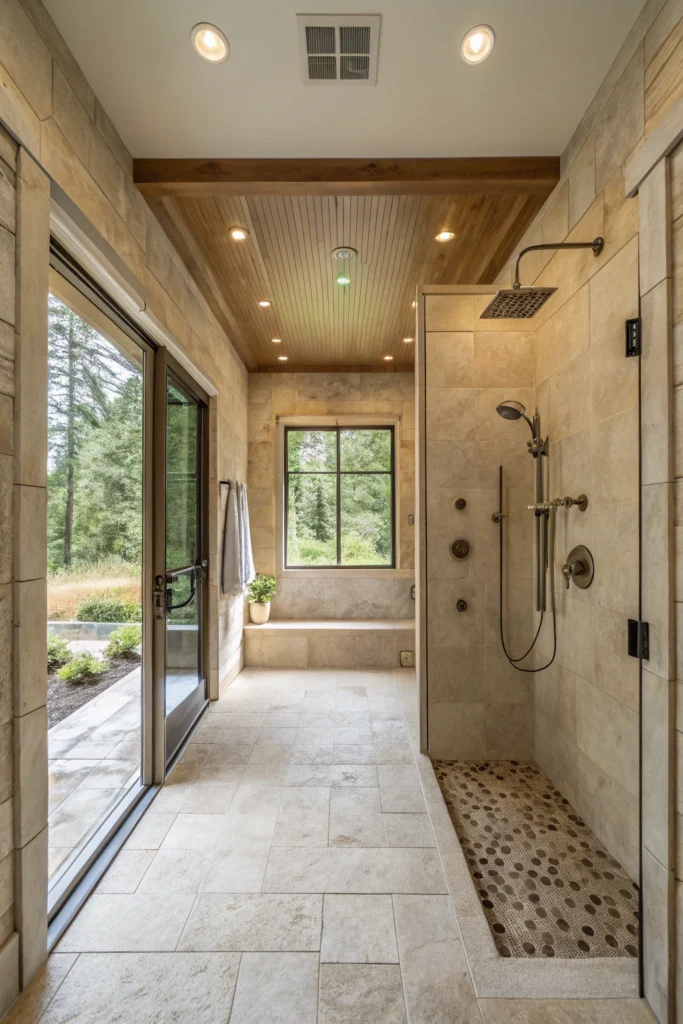
Perhaps the most critical factor in successful doorless shower design is ensuring adequate size—too-small showers struggle with water containment regardless of other design features. Generous dimensions make doorless configurations practical and comfortable.
Design walk-in showers with minimum dimensions of 36 inches by 60 inches, though larger proves better—48 inches by 72 inches or more creates truly luxurious, practical spaces where water containment occurs naturally through adequate distance between showerhead and opening.
The larger footprint allows you to position fixtures so spray angles away from openings, include benches or multiple showerheads without crowding, and create genuinely spa-like experiences worthy of the architectural investment. In bathroom renovations, consider whether eliminating bathtubs or reconfiguring layouts might provide the square footage necessary for properly sized doorless showers. The generous space transforms showering from cramped, purely functional activities into relaxing, rejuvenating experiences that justify the bathroom’s status as a personal sanctuary.
Doorless showers represent a design philosophy that prioritizes openness, simplicity, and architectural beauty while requiring thoughtful planning around practical considerations like water management, adequate sizing, and proper drainage.
When executed successfully, these barrier-free bathing spaces create bathrooms that feel more spacious, luxurious, and serene than traditional enclosed alternatives, proving that sometimes the most impactful design decisions involve what you choose to eliminate rather than what you add. The result is timeless, elegant bathrooms that function as personal retreats where every shower feels like a spa experience.