
15 Spring-Inspired English Country Cottage Ideas
There is a reason the English country cottage has maintained its grip on the collective imagination across centuries of design trends, technological revolutions, and shifting aesthetic fashions.
It speaks to something that does not change — the deep human appetite for warmth, for beauty that has accumulated rather than been installed, for spaces that tell the story of a life lived in genuine relationship with the natural world and the passing of seasons. The cottage aesthetic is not about perfection.
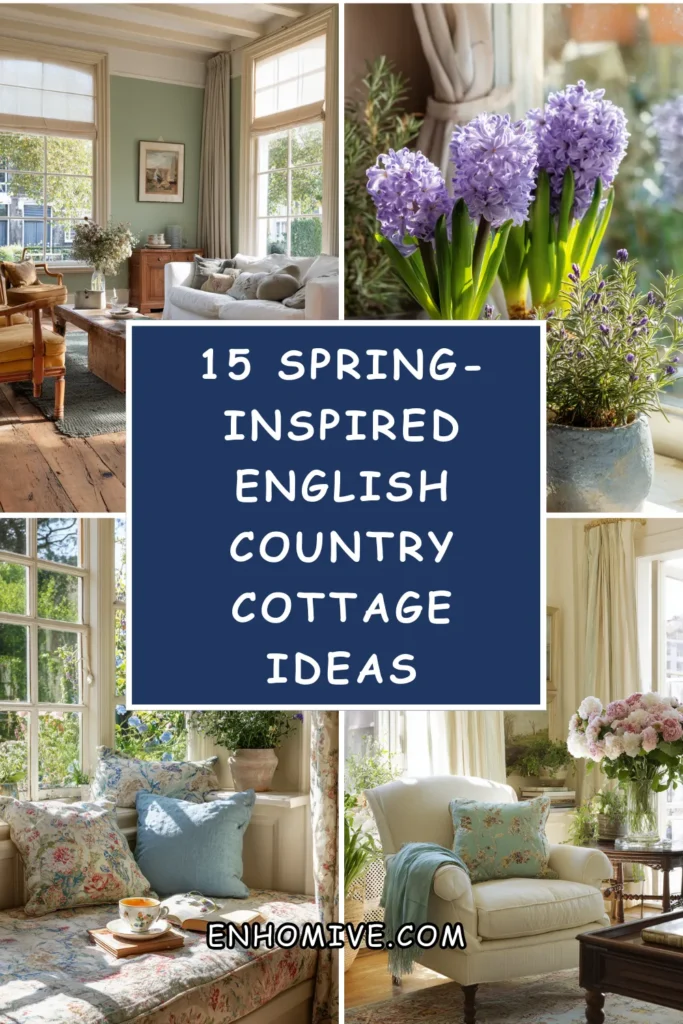
It is about the opposite of perfection — the worn flagstone floor that has been walked on for two hundred years, the window seat cushion faded by decades of afternoon sun, the garden that has been tended and loved and allowed to follow its own instincts in roughly equal measure.
In spring, this aesthetic reaches its annual peak, when the garden erupts into the kind of beauty that inspired the painters and poets who made the English countryside famous, and when the inside of a cottage, opened to soft spring air and new light, feels like the most civilized place on earth. Here are fifteen ideas for bringing that spirit into your home this season.
1. Paint Your Walls in a Soft Heritage Tone
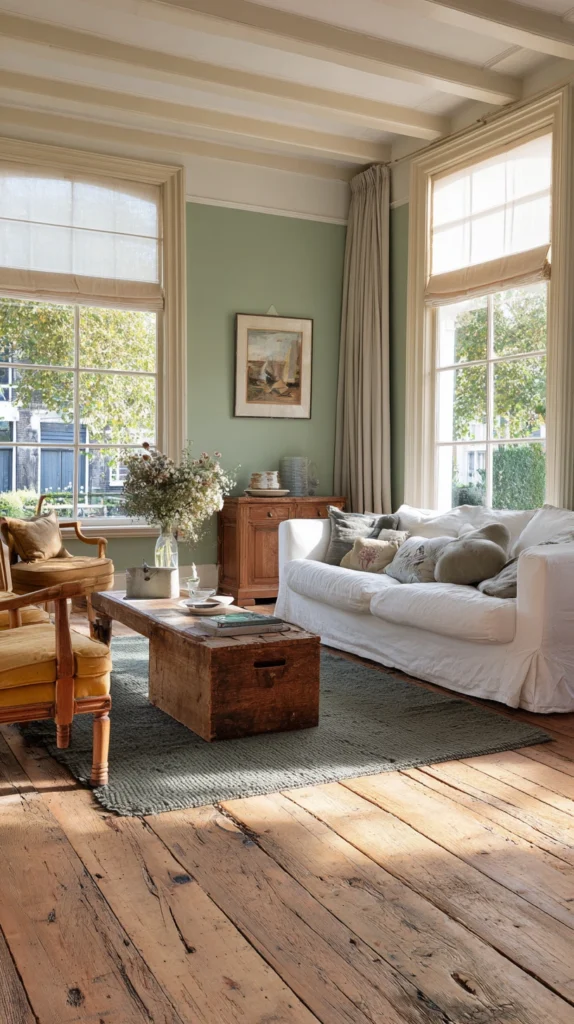
The color palette of the English country cottage interior begins with its walls, and the right choice here does more foundational work than any other single decision. Heritage paint companies — Farrow and Ball, Little Greene, Edward Bulmer Natural Paint — have developed ranges that capture the specific quality of aged, natural pigments in a way that modern synthetic paints rarely replicate.
These are colors with depth and complexity, colors that shift perceptibly between morning and evening light, that read differently on a cloudy day than on a bright one, and that seem to absorb and hold the warmth of a room in a way that flat, uniform commercial paints do not.
For spring, the most appropriate cottage tones are soft warm whites with a hint of yellow or pink, pale sage greens that reference the garden beyond the window, dusty blues with the faded quality of old chintz, and the warm putty and stone tones that have colored English plaster walls for centuries. Choose a color that looks right at its worst — in gray morning light, on a damp spring day — and it will be extraordinary at its best.
2. Introduce Floral Chintz in Considered Doses
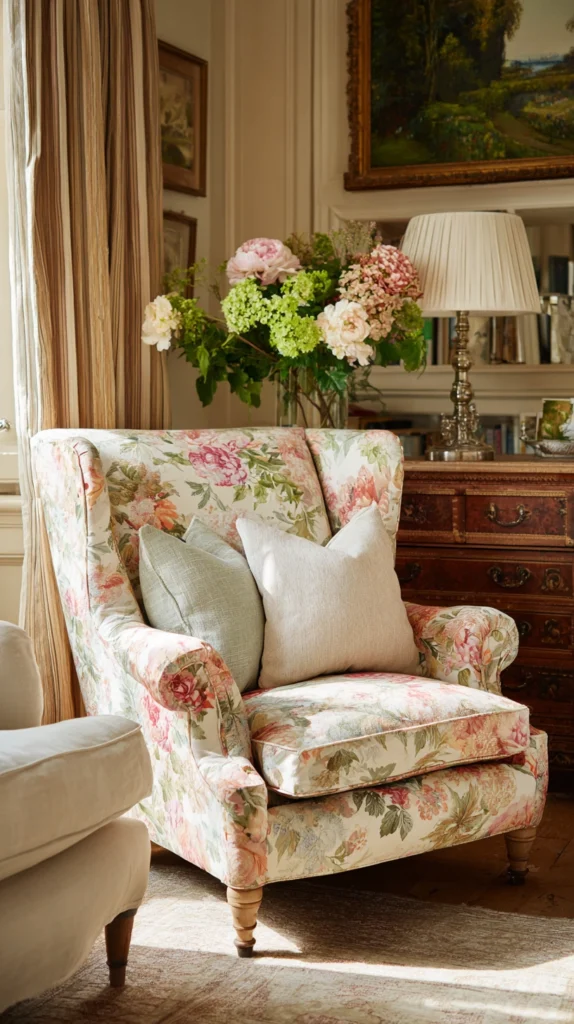
Floral chintz — the densely patterned, glazed cotton fabric printed with oversized botanical motifs that became the defining textile of the English country house style — is having a genuine and well-deserved revival, and spring is the ideal season to introduce it into a home that aspires to cottage character.
The key word in its deployment is considered. Chintz used on every surface becomes overwhelming, a caricature of the style rather than a genuine expression of it. Chintz used on one significant surface — a pair of armchair covers, a single sofa, the curtains in one room — becomes the room’s defining character piece, the element that establishes the entire aesthetic language of the space and from which everything else takes its cue.
Choose a chintz with a color palette that can be extracted and echoed throughout the room in solid fabrics — the rose pink in the chintz repeated in a plain linen cushion, the leaf green in the printed background echoed in the painted furniture.
3. Fill Every Available Surface with Fresh Garden Flowers
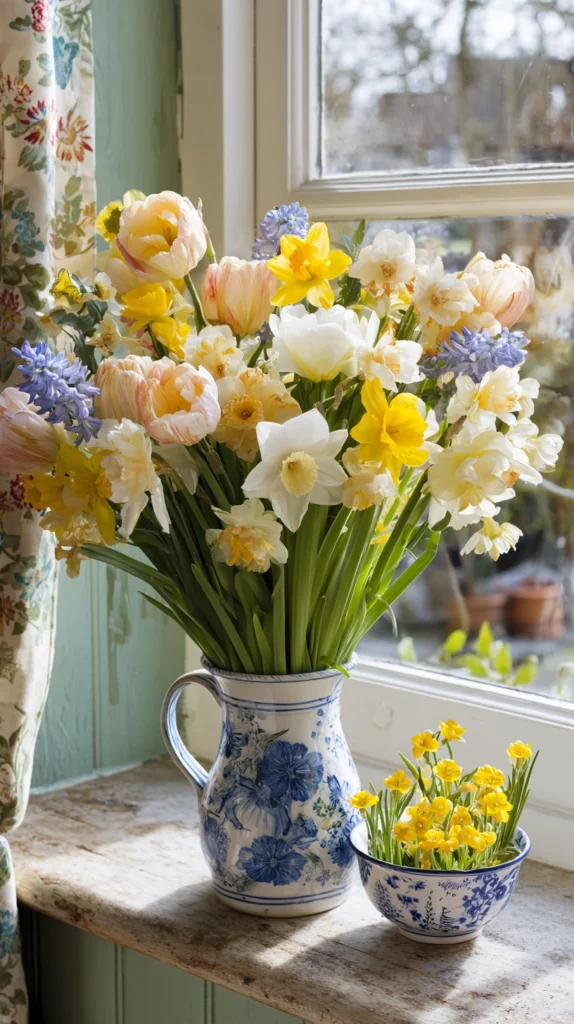
No element of English cottage spring decoration is more important or more easily achieved than fresh flowers in every room. This is not about formal arrangements or florist’s technique — it is about the practice of cutting whatever is currently beautiful in the garden and bringing it inside in generous quantities, placed in simple vessels without excessive arrangement, allowed to tell the story of the season honestly and directly.
A jug of tulips on the kitchen windowsill. A bowl of narcissus on the hall table. A glass of sweet peas beside the bed. Branches of flowering currant or apple blossom in a tall pot in the corner.
The English cottage tradition of flowers in every room is one of the most ancient and most persistently relevant domestic practices in the design canon, and it requires nothing more sophisticated than a garden, or a market, and the habit of buying and cutting more than you think you strictly need.
4. Layer Rugs on Stone or Wooden Floors
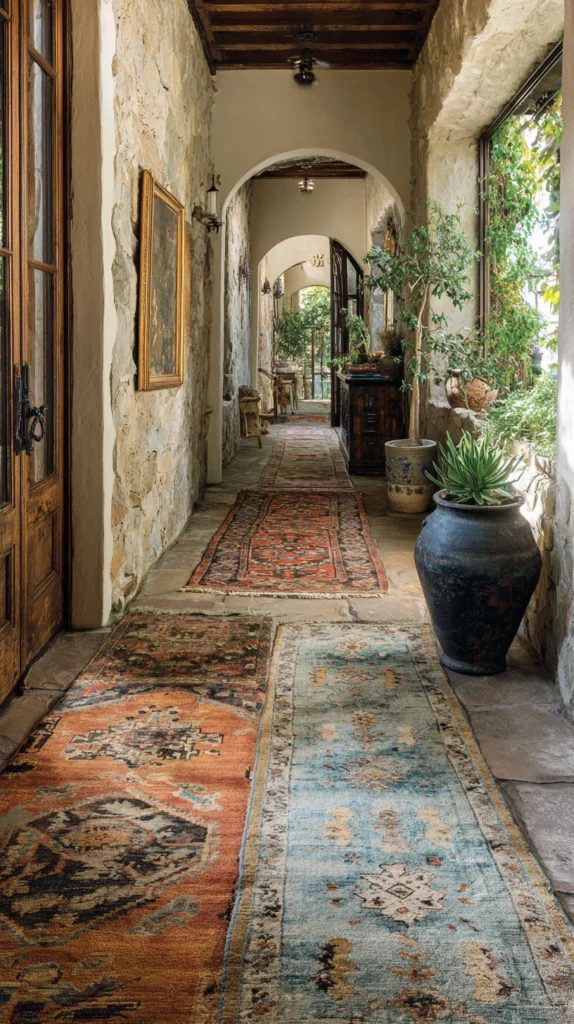
The English cottage floor — whether original flagstone, worn brick, or wide-plank timber that has darkened and mellowed over decades — is one of the great material pleasures of the style, and layering rugs over it is the traditional approach that combines warmth and comfort with respect for the beautiful floor beneath.
Persian or Turkish rugs in faded, aged colors are the classic cottage choice, their complex patterns and warm red, blue, and ochre tones providing the visual richness that plain carpeting can never replicate.
Layering a smaller rug over a larger flatweave, or placing multiple rugs in a single room so that different seating areas have their own defined surface, creates the accumulated, gathered quality of a room that has evolved over time rather than been decorated at a single moment. Wear and fading in a rug are not flaws in a cottage context — they are evidence of a life being lived, and they are treated accordingly.
5. Use Open Shelving to Display a Collected China
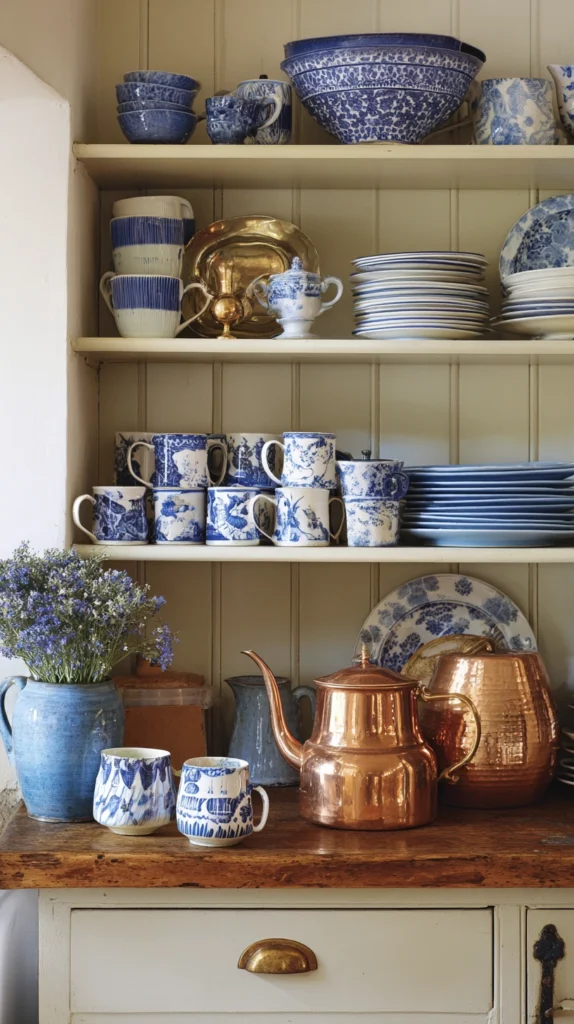
The open dresser — a piece of furniture with closed cupboards at the base and open shelving above, used to display a collection of china, pottery, and everyday objects — is one of the English cottage’s most defining and most practical interior elements.
A well-dressed kitchen dresser displaying a gathered collection of blue and white transferware, mixed floral china, hand-thrown pottery mugs, and the occasional piece of copper or pewter creates a display of enormous warmth and character that tells the story of acquisition over time — pieces bought at market stalls, inherited from grandparents, collected on travels — in a way that a matching dinner service displayed in a glass-fronted cabinet never can. The collection should not match. The beauty is in the variation, the slight imperfection of the gathered whole, the evidence that these pieces were chosen individually and loved specifically.
6. Embrace the Window Seat as a Spring Reading Sanctuary
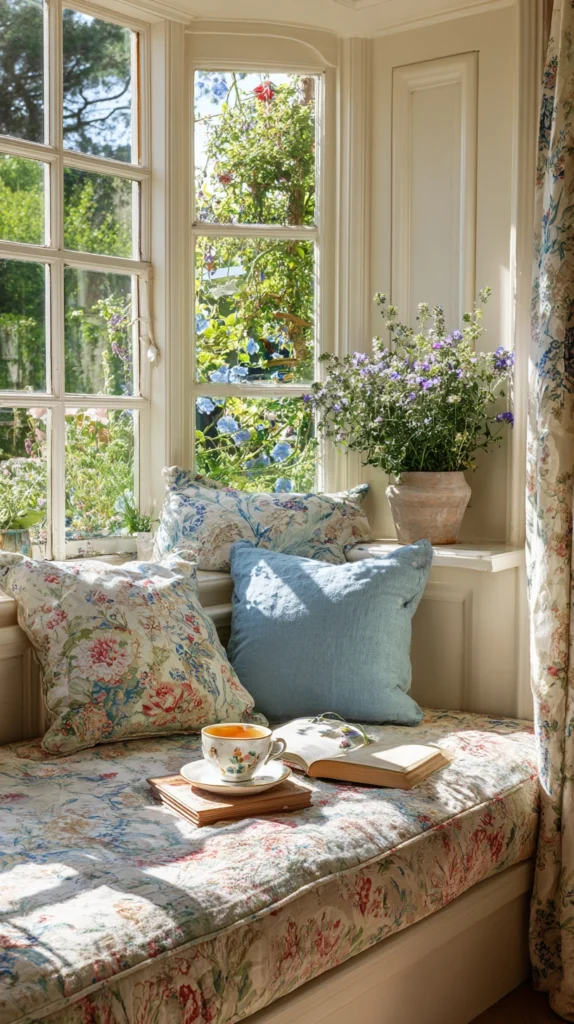
The window seat is the English cottage’s most beloved interior feature and one of its most practically rewarding — a built-in or furniture-based seating alcove positioned at a window to take maximum advantage of the light and view beyond. In spring, a window seat cushioned in a faded floral or a simple stripe, piled with reading pillows, and positioned beside a window that looks onto a garden in the process of waking up is one of domestic life’s great pleasures.
The spring light that falls through a cottage window — particularly through the small-paned sash windows of older English houses — has a particular quality of filtered warmth that invites the kind of slow, unhurried reading that modern life rarely otherwise permits. A pile of books, a cup of tea, a cat optional but thematically appropriate: the window seat in spring is a complete argument for the cottage lifestyle.
7. Hang Simple Muslin or Linen Curtains
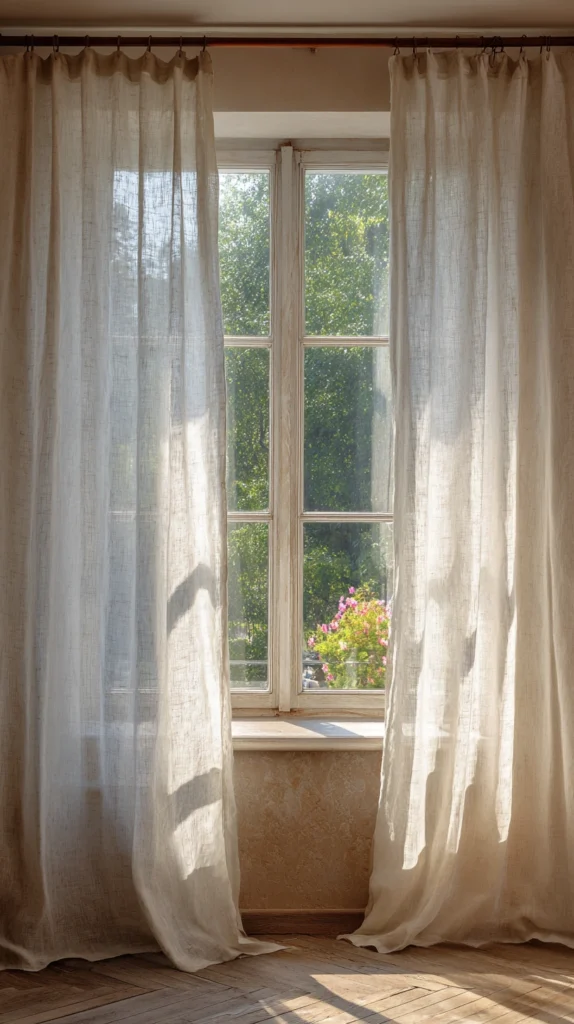
The curtains of an English spring cottage should filter light rather than block it, frame windows rather than overwhelm them, and move visibly in the gentle drafts that characterize older, imperfectly sealed cottage windows.
Simple, unlined curtains in natural muslin, aged linen, or a lightweight cotton print hung from a plain wooden or iron pole with simple ring clips are the antithesis of the grand lined-and-interlined drawing room curtain, and in a cottage context they are far more appropriate and far more beautiful.
Allow them to fall simply to the floor without elaborate tiebacks or formal dressing. Let them be slightly imperfect in their hanging — the folds will arrange themselves over time into a naturalness that no dresser can fully achieve. Wash them in a hot wash when they yellow or accumulate dust, and hang them back still slightly damp so they dry without creasing.
8. Incorporate Exposed Timber Beams Where Available
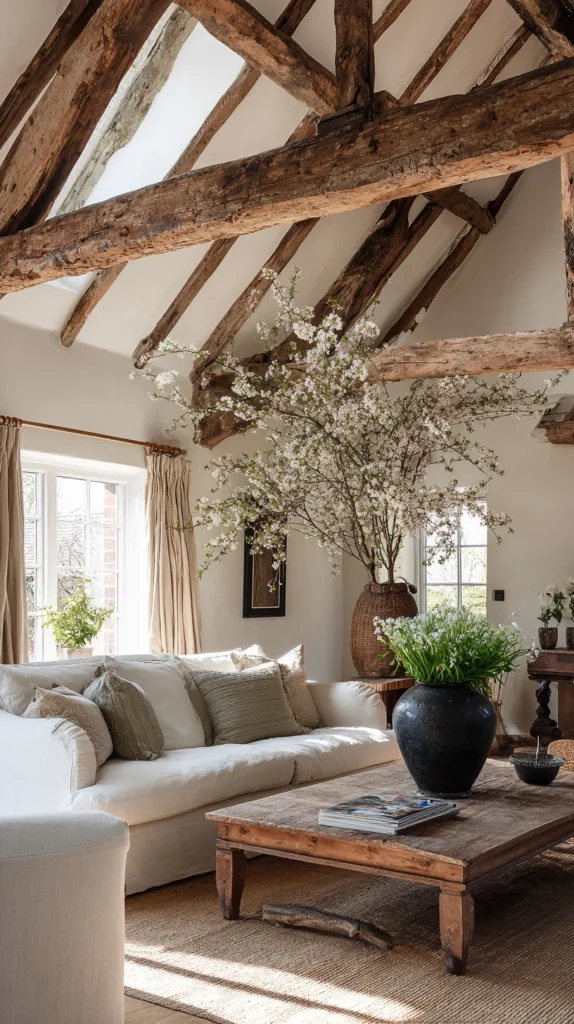
The exposed timber beam — a structural element of genuine antiquity in older English buildings, a deliberately introduced element in newer ones — is the cottage’s most architecturally significant decorative feature, and in spring it should be celebrated rather than minimized. Beams that have been boxed in with plasterboard in an ill-conceived modernization deserve to be uncovered if at all possible.
Those that are already visible benefit from being cleaned to reveal their grain and color without being stripped of the darkness and patina that time has given them — a light oiling with Danish or linseed oil brings out the warmth of old oak without the plasticky brightness of polyurethane varnish. In spring, a vase of flowering branches placed beneath a low beam, or a hanging of dried herbs from a kitchen beam, acknowledges the timber’s presence and integrates it into the seasonal decoration of the room.
9. Plant a Cottage Garden Visible from Inside
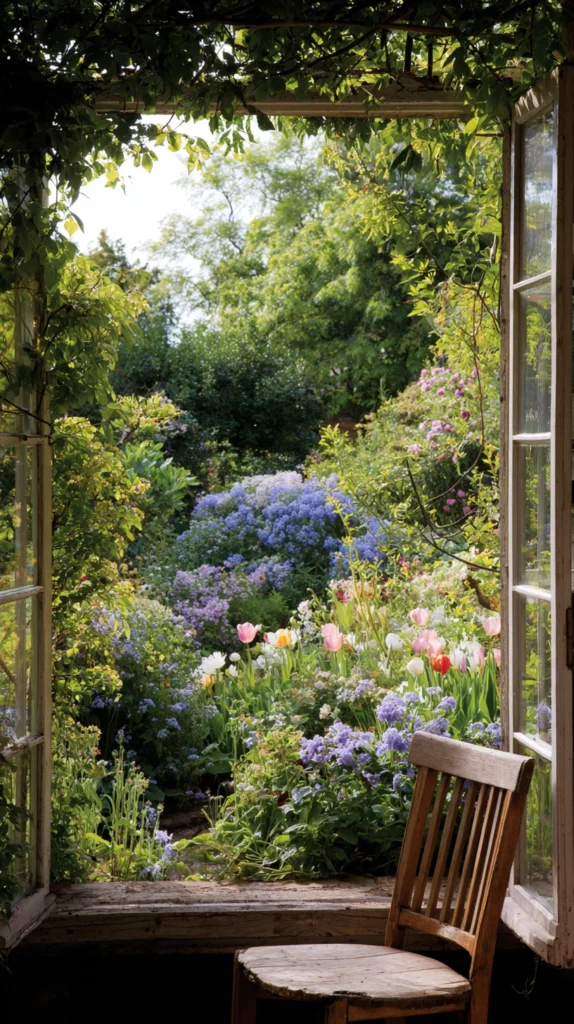
The relationship between the English cottage interior and its garden is not incidental — it is fundamental to the aesthetic’s emotional resonance and its practical livability. A cottage that looks out onto a beautifully planted spring garden is a different experience from one whose windows face a paved yard or an unplanted lawn, and investing in the garden visible from the most-used interior rooms is as important as any interior decorating decision.
A cottage garden in spring — dense with tulips, forget-me-nots, wallflowers, and the first of the roses making their appearance against the warm stone or brick of the cottage wall — seen through a low window from a comfortable interior chair is one of the most satisfying possible views that domestic life can provide. Plant for the inside view as much as for the garden itself.
10. Choose Furniture That Shows Its Age Honestly
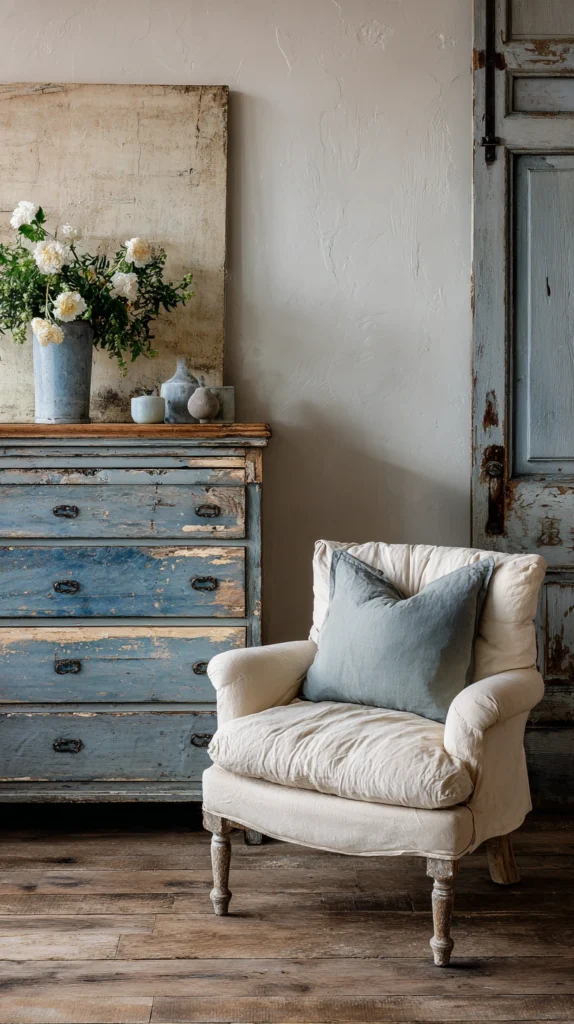
English cottage furniture is old, or made to look old, or at least made to be honest about the material it is made from and the use it has seen. Painted furniture in the faded colors of old milk paint — soft blue-gray, warm green, aged white — with the paint worn through at corners and edges to reveal the wood beneath. Pine dressers and tables with the patina of decades of use. Upholstered pieces with the comfortable softness of deep filling that has settled into the shape of its regular occupants.
Buying new furniture for a cottage aesthetic means buying pieces with genuine material quality — solid wood, natural fabric, traditional construction — and then trusting time and use to give them the character that money alone cannot purchase. Alternatively, a well-chosen secondhand piece from a local auction house will arrive already in possession of everything that the cottage style requires.
11. Bring Fragrance Indoors with Potted Hyacinths and Herbs
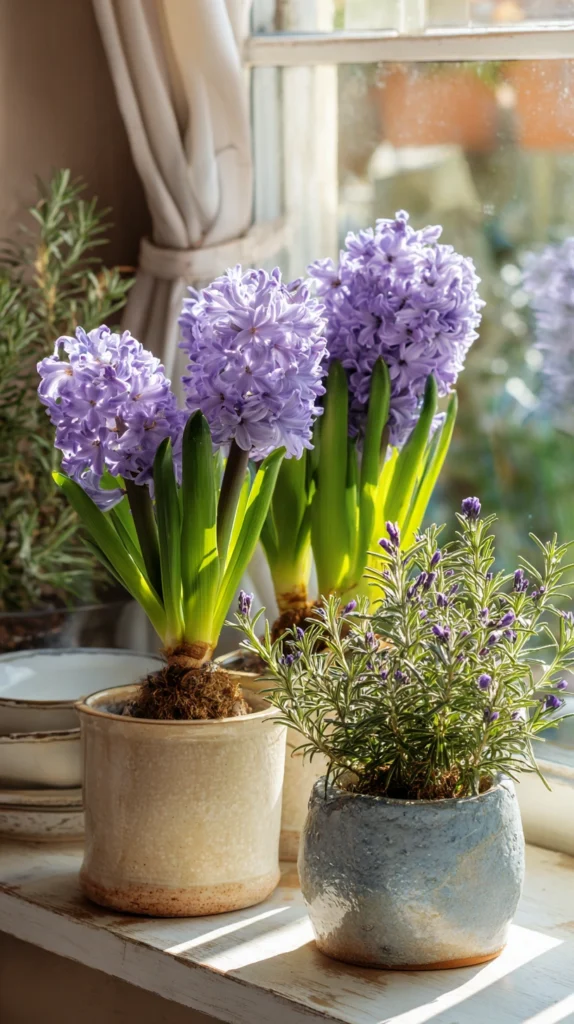
Spring in an English cottage smells of specific things: hyacinths on the windowsill, the faint green scent of newly cut grass coming through an open door, woodsmoke in the evenings when the temperature still drops, beeswax polish on old furniture, the herby sweetness of rosemary brushed in passing on the way through the garden.
Recreating this olfactory landscape indoors is as important as any visual decision, and the simplest approach is the direct one — potted hyacinths in the most-used rooms, herbs growing on the kitchen windowsill, beeswax candles rather than synthetic fragrance, and the open windows and doors that allow the garden’s own spring scent to move freely through the interior.
12. Use Vintage Botanical Prints Throughout
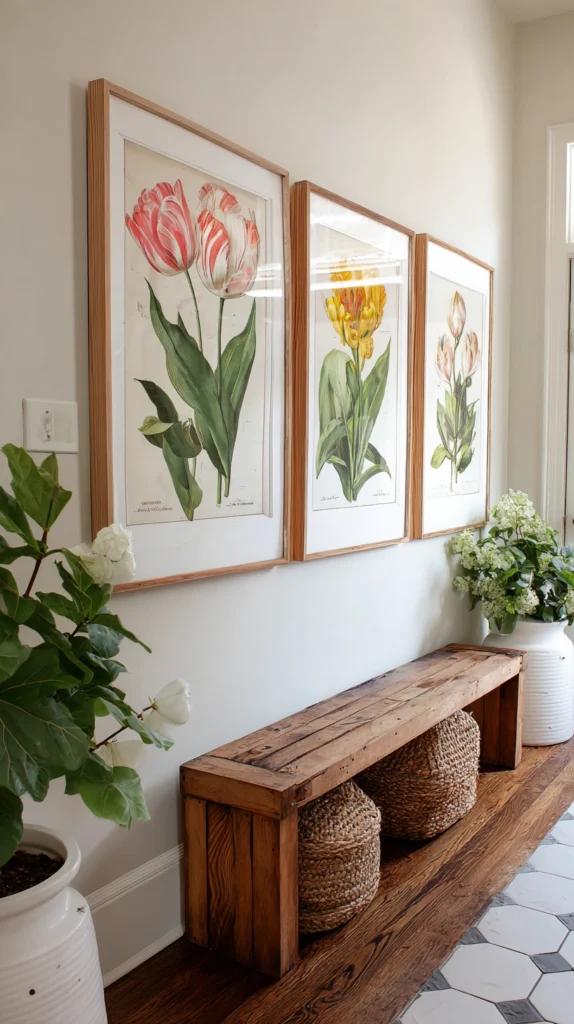
The tradition of displaying botanical illustrations — the detailed, scientifically accurate, artistically beautiful prints produced by the natural history illustrators of the eighteenth and nineteenth centuries — in English country homes is so established as to be almost synonymous with the style itself.
These prints, framed simply in thin gilt or plain wood frames and hung in groups on the walls of sitting rooms, hallways, and bedrooms, bring the visual vocabulary of the garden inside in a permanent form that complements the seasonal flowers in their jugs and vases.
Original vintage prints are available at antique fairs and specialist dealers at a range of prices; high-quality reproductions are widely available and entirely appropriate in a style that has always valued beauty above authentication.
13. Simmer a Stovetop Potpourri for Spring Scent
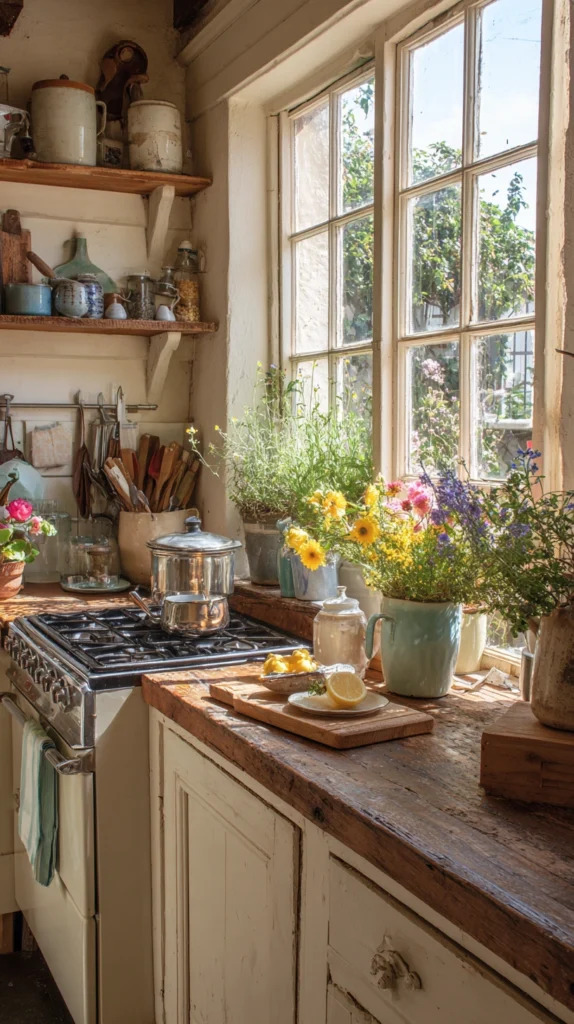
A practical and deeply satisfying way to fill a cottage with the specific scent of an English spring is the stovetop potpourri — a small pot of water simmered gently on the hob with lemon slices, fresh rosemary sprigs, a vanilla pod, and a handful of whatever fragrant herbs and flowers are currently growing in the garden.
This simple practice, requiring nothing more than a small saucepan and whatever botanical material is to hand, fills the kitchen and the rooms adjacent to it with a warm, genuine fragrance that no candle or diffuser quite replicates because it is made from real plant material responding to real heat. Change the combination weekly as different herbs and flowers come into season.
14. Add a Kitchen Garden Trug or Basket as Decor
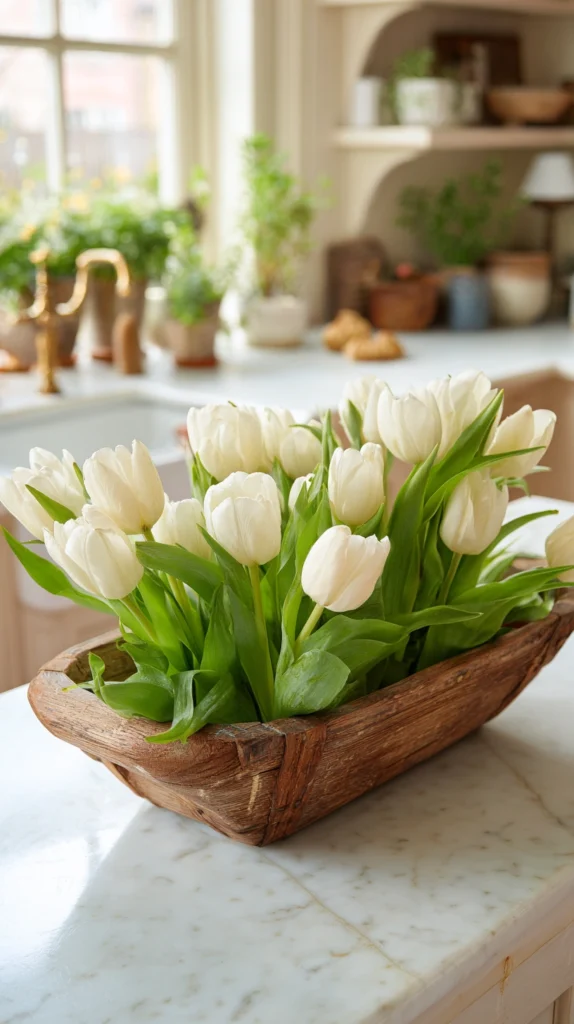
The garden trug — the shallow, boat-shaped wooden basket traditionally used by English gardeners to carry flowers, vegetables, and herbs from garden to kitchen — is one of those utilitarian objects that is also simply beautiful, and in spring it earns its place as a decorative element in the kitchen or on the back doorstep as much as a functional one.
A trug filled with the morning’s cut flowers waiting to be arranged, or with the first spring vegetables from the kitchen garden, or simply with a gathered collection of interesting seedheads, moss, and botanical material from the garden, captures the productive beauty of the cottage garden tradition in a single unpretentious object. Hang it on a hook by the back door when not in use, and it contributes to the cottage atmosphere even when empty.
15. Keep One Room Gloriously Imperfect
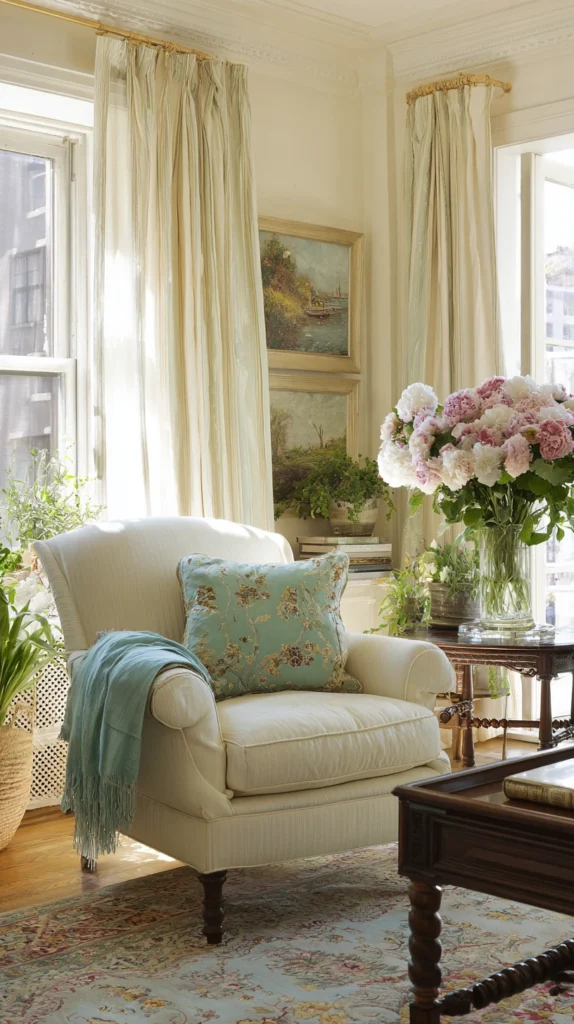
The final and most philosophically important spring cottage idea is the permission it grants — genuinely and without reservation — to keep one room in a state of what might be called productive imperfection. The stack of books that has grown too tall for the shelf and migrated to the floor beside the armchair.
The collection of seed packets on the kitchen table awaiting the weekend’s planting. The vase of flowers slightly past their best but still beautiful in their decline. The throw that is never quite folded because it is always being used. These are not failures of housekeeping — they are the evidence of a home that is genuinely lived in, genuinely loved, and genuinely connected to the rhythms of a life being fully inhabited. The English country cottage at its best has always understood this, and spring, with its abundance and its energy and its productive disorder, is the season that understands it best of all.