
15 Stair Railing Ideas for a Modern Upgrade
The stair railing is one of those architectural elements that most homeowners notice only when it is wrong — when it wobbles, when it is out of style to the point of embarrassment, when it clashes with a recently renovated hallway in a way that makes the whole ground floor feel incomplete.
When the railing is right, it tends to disappear into the overall composition of the staircase and the home, doing its architectural work quietly and providing the safety function it exists to provide without drawing undue attention to itself.
The best stair railings, however, do something more than disappear gracefully — they contribute positively to the home’s visual character, they frame the vertical transition between floors with a material quality and a design intelligence that make the staircase one of the home’s most considered architectural moments rather than simply its most functional one.
The stair railing upgrade is, relative to its visual impact, one of the more accessible home improvement projects available — it does not require structural modification, it does not affect the home’s floor plan, and in many cases it can be undertaken by a competent contractor in a day or two. The design decision is where the real work lies. Here are fifteen ideas for making that decision with confidence.
1. Cable Railing for Transparent Modernity
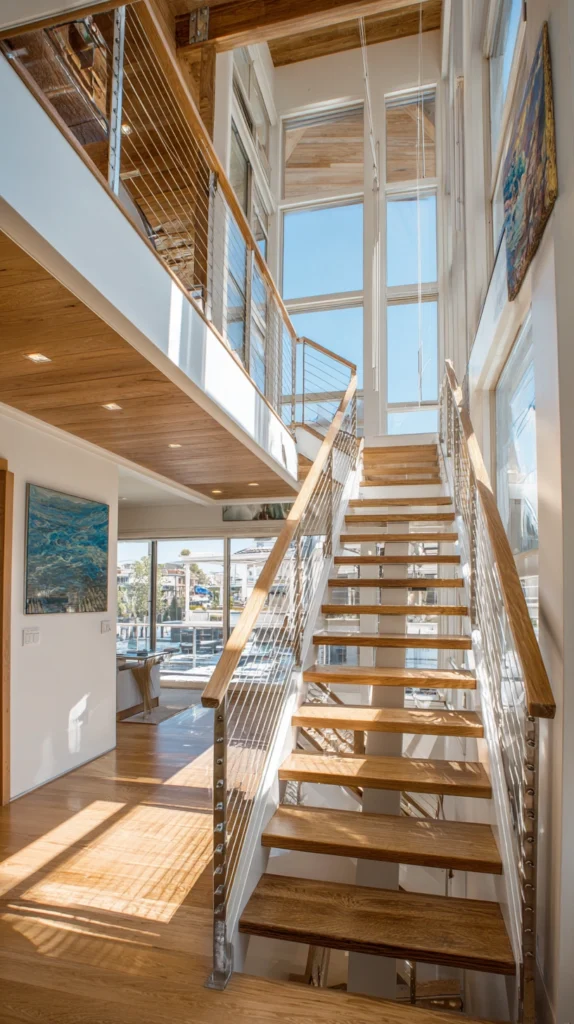
The cable railing — horizontal stainless steel cables tensioned between a top rail and a bottom rail or newel posts, replacing the conventional vertical baluster infill — is the contemporary stair railing system that offers the most complete visual transparency available in any railing format.
The cables, when tensioned correctly, are sufficiently taut that they comply with building code requirements for balusters while visually occupying almost none of the space between rails.
Looking through a cable railing is like looking through the railing that is not there — the view from the staircase to the room below, or from the room below to the staircase above, is unimpeded by the visual mass that timber, metal, or glass balusters inevitably introduce.
Cable railing suits open-plan homes particularly well, where visual connection between floors is a spatial priority, and it suits any interior where a clean, minimalist aesthetic is the organizing design principle.
The top rail should be in a material that relates to the home’s predominant material palette — a timber cap rail adds warmth, a steel tube maintains the industrial refinement of the cable infill, a brass top rail introduces a warm metallic element that elevates the whole system.
2. Black Steel Rod Balusters for Industrial Elegance
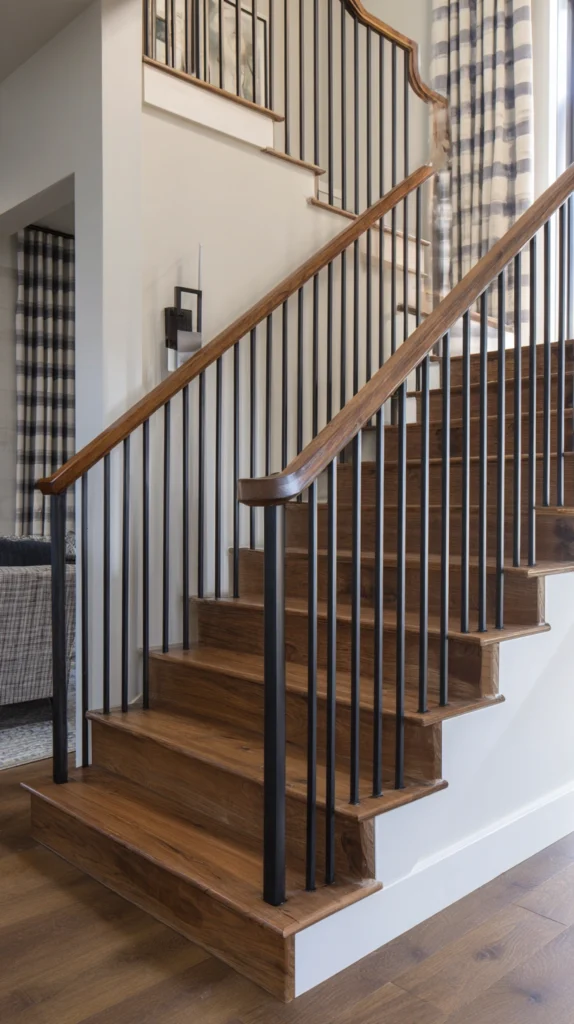
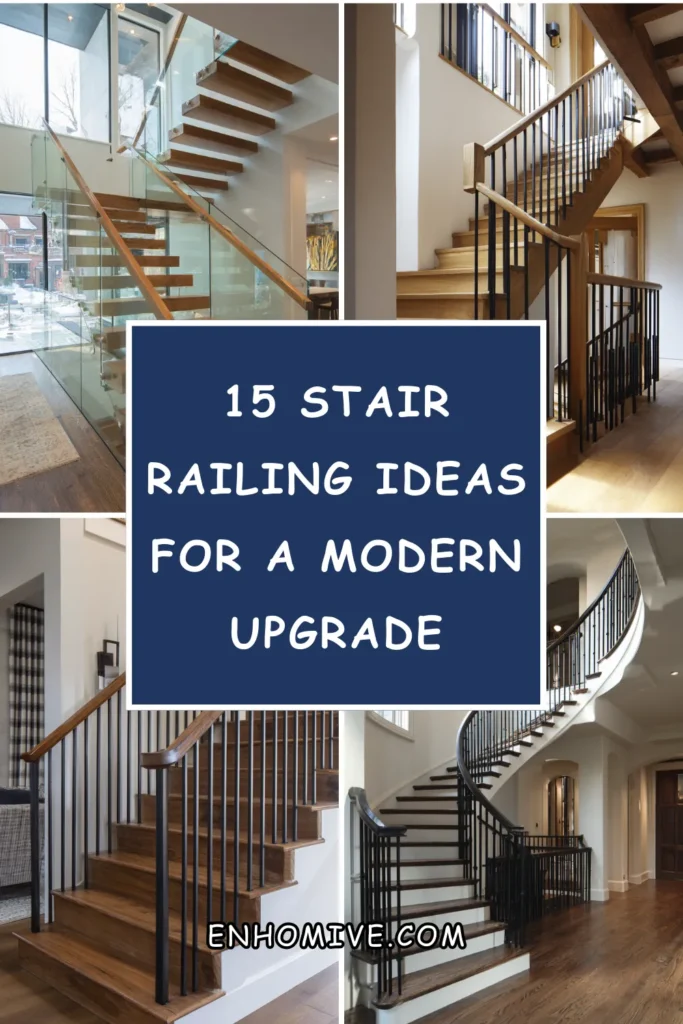
The black powder-coated steel baluster — a simple round or square rod in a matte black finish, installed vertically between the handrail and the treads or bottom rail — is the stair railing component that has done more to transform the look of contemporary renovated homes than any other single railing element over the past decade.
Its appeal is not complicated to explain: the matte black finish suits virtually every interior palette, relating equally well to white walls, natural timber, stone flooring, and the full range of contemporary and traditional color schemes; the rod’s simple geometric form is architecturally clean without being cold; and the vertical rhythm of a series of evenly spaced black rods creates a graphic quality at the stair’s profile that is visible from across a room and consistently satisfying.
Pair black steel balusters with a warm timber handrail — white oak, walnut, or painted timber in a tone that relates to the floor — and the combination of warm wood and cool black metal creates a material contrast that is one of contemporary interior design’s most reliable and most timeless pairings.
3. Glass Panel Railing for a Light-Filled Staircase
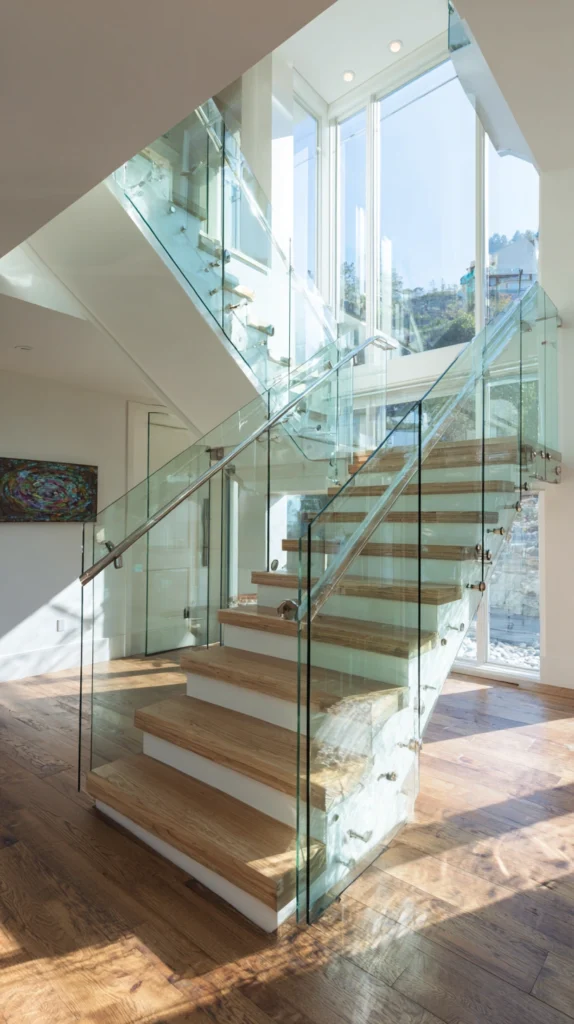
A glass panel railing — large sheets of toughened or laminated safety glass installed as continuous panels between posts, replacing the conventional baluster infill — creates a staircase of extraordinary lightness and spatial generosity because the glass transmits light across the full height of the railing without interruption, allowing the staircase to remain visually open and the light from windows at different floor levels to travel freely through the stairwell.
Glass railings are particularly effective in staircases where natural light is the primary spatial asset — where a roof light above the stairwell, a landing window, or a double-height glazed wall creates a light-filled vertical space that conventional baluster railings would partially obscure.
The glass panels can be clear for maximum transparency, tinted in a subtle tone for privacy while maintaining light transmission, or acid-etched for a frosted effect that diffuses light beautifully while providing a degree of visual obscuring.
The fixing system — the posts and channels that hold the glass panels — should be selected with the same care as the glass: slim, minimal fixings in brushed stainless, powder-coated black, or warm brass determine the overall character of the installation at least as much as the glass itself.
4. Timber Spindles Painted in a Bold Accent Color
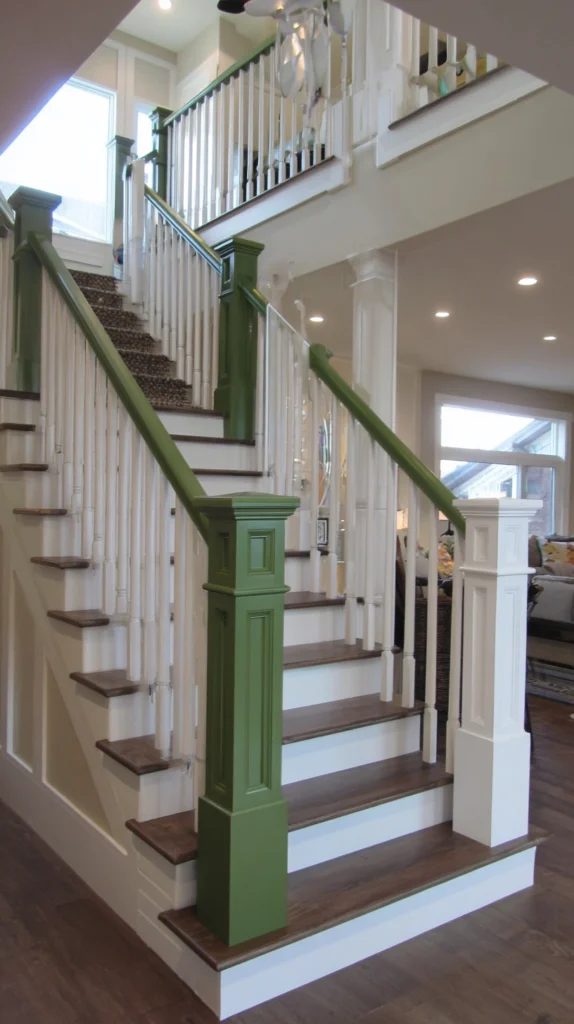
The painted timber spindle railing is one of the most economical upgrade paths available to a homeowner with an existing timber balustrade, and the decision to paint the spindles in a bold accent color rather than the default white or off-white that most existing balusters carry is one that can transform the character of a staircase completely without replacing a single structural element.
Painting the spindles in a deep, saturated color — forest green, navy, charcoal, terracotta, or a rich burgundy — while keeping the handrail and newel posts in white, natural timber, or a contrasting tone creates a staircase with graphic energy and a clear design intention that the all-white version entirely lacks.
The color choice should relate to at least one other element of the home’s interior palette — a sofa color, a door color, a room’s accent wall — so that the painted spindles read as part of a considered design scheme rather than an isolated decorating decision. This upgrade requires nothing more than preparation, primer, and quality paint, and it delivers one of the highest visual impact-to-cost ratios of any home improvement available.
5. Laser-Cut Metal Panels for Decorative Presence
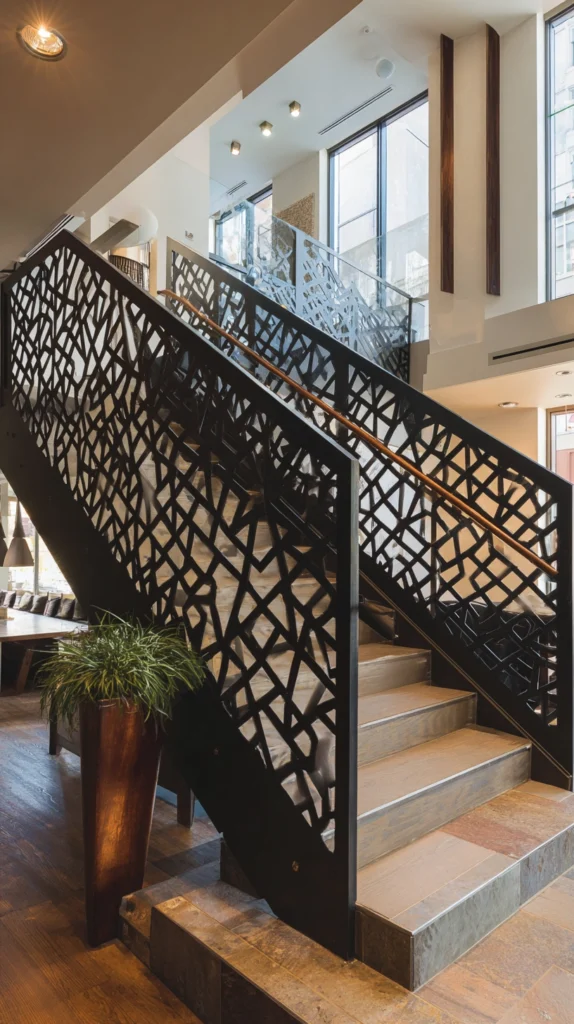
Laser-cut metal infill panels — sheets of mild steel, stainless steel, or aluminum with a pattern cut through their surface by a computer-controlled laser, installed as flat panels between handrail and bottom rail — bring a decorative quality to stair railings that conventional balusters and cables cannot approach, creating a railing whose infill surface functions as a graphic or ornamental element as well as a structural barrier.
The range of laser-cut patterns available is virtually unlimited — geometric abstracts, botanical motifs, architectural references, custom designs specific to the homeowner’s interests or cultural heritage — and the choice of pattern determines the railing’s contribution to the staircase’s overall aesthetic language.
Geometric patterns in a minimal, contemporary style suit modern homes with strong design sensibilities. More organic, botanical patterns suit homes with a warmer, more biophilic aesthetic.
Custom patterns — a specific motif that has personal significance to the homeowner — make the railing a genuinely singular element that no catalog product can replicate. Powder-coat the panels in a color that relates to the home’s palette, and the laser-cut railing becomes one of the home’s most distinctive and most memorable features.
6. Rope or Natural Fiber Horizontal Railing
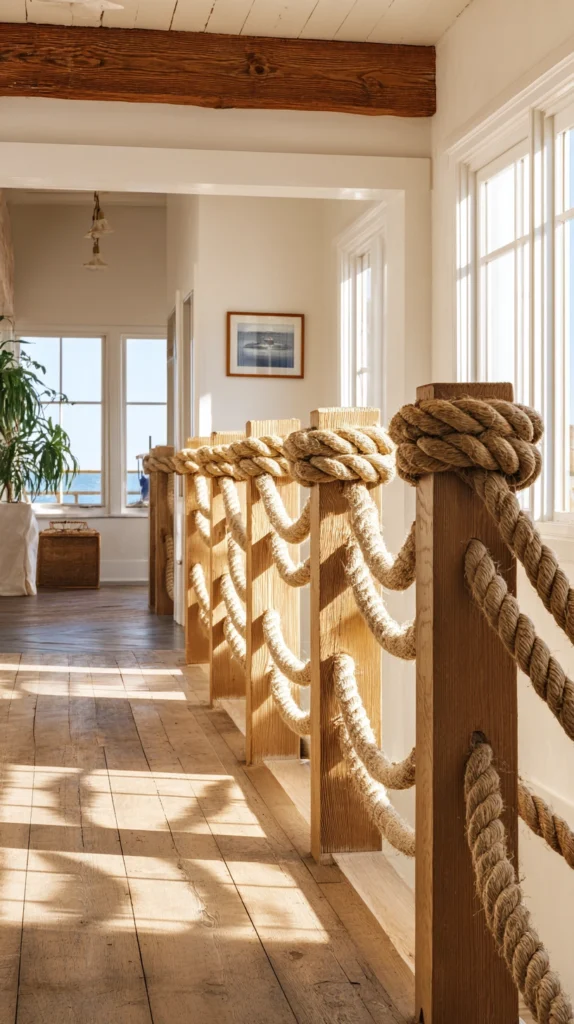
The horizontal rope railing — multiple runs of thick natural or synthetic rope strung between posts in place of conventional balusters, creating a maritime, relaxed, and warmly textured railing infill — is a design choice with strong coastal and Scandinavian associations that translates well into a broader range of interior contexts than its niche aesthetic might initially suggest.
Natural manila or sisal rope in a diameter of thirty to fifty millimeters, properly tensioned between timber or metal posts, creates a railing with extraordinary tactile warmth and organic character that feels genuinely distinctive without being deliberately eccentric.
The rope infill is particularly effective on open-plan staircases in family homes, where its softness and its slight give underhand create a more approachable, less formal quality than metal or glass alternatives.
The rope requires periodic tensioning as it stretches with age and use, and eventual replacement as it degrades from UV exposure and handling, but its low cost relative to metal or glass alternatives makes maintenance replacement entirely manageable.
7. Wrought Iron Balusters for Traditional Character
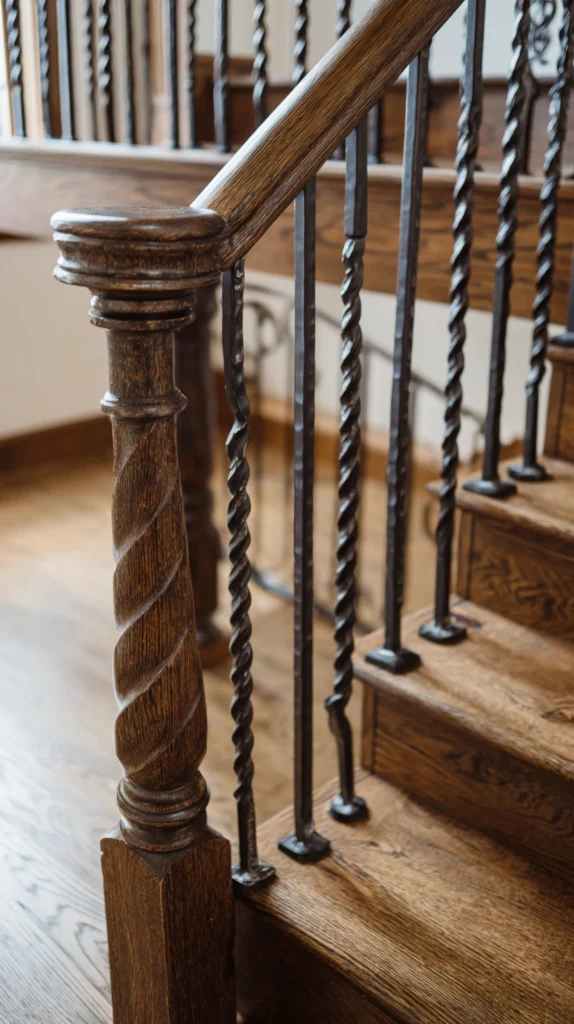
Wrought iron balusters — either the genuine hand-forged article available from specialist blacksmiths or the very good cast iron alternatives available from railing suppliers — bring to the staircase a material tradition of considerable depth and a design language that suits period homes, traditional interiors, and contemporary spaces that deliberately reference historical materials within a modern architectural context.
The range of wrought iron baluster designs spans from the simple twist and scroll patterns that have characterized domestic ironwork for centuries to more elaborate floral and figurative forms that suit the most ornate Victorian and Edwardian interiors. For contemporary application, simpler wrought iron designs — a clean twist, a straightforward basket form, a minimal geometric cross — provide the material warmth and craft quality of iron without the period-specific detailing that would date the installation within a decade. Finish wrought iron balusters in a flat or satin black for maximum versatility, or in a dark bronze for a warmer, more antique quality.
8. A Chunky Timber Handrail as the Primary Statement
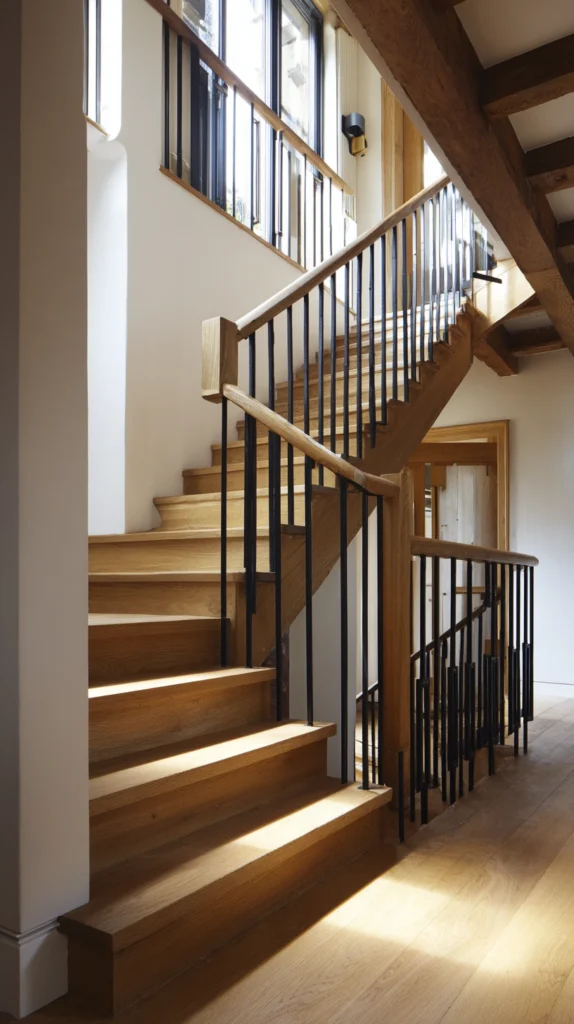
In stair railing design, the handrail is often treated as a secondary element — something that sits on top of the balusters and provides the required grip surface — when it could equally be treated as the primary architectural statement of the railing system, with the baluster treatment receding to serve the handrail’s dominance.
A chunky, generously proportioned timber handrail — in white oak, walnut, or Douglas fir, finished in a clear oil that allows the grain and the natural variation of the timber to remain visible and tactile — creates a railing presence that is felt as much as seen.
The hand’s experience of a well-made timber handrail — the warmth of the wood, the smoothness of the finished surface, the generous width that fills the palm — is one of the domestic architecture’s most satisfying tactile experiences, and it is achieved by specifying a handrail of sufficient mass and quality rather than the undersized, inadequate rail profile that many standard railing systems provide.
Round handrail profiles in timber feel most natural in the hand; D-shaped profiles that are flat on top and rounded below provide the grip of a round rail with the visual cleanness of a flat surface.
9. Alternating Metal and Timber Balusters
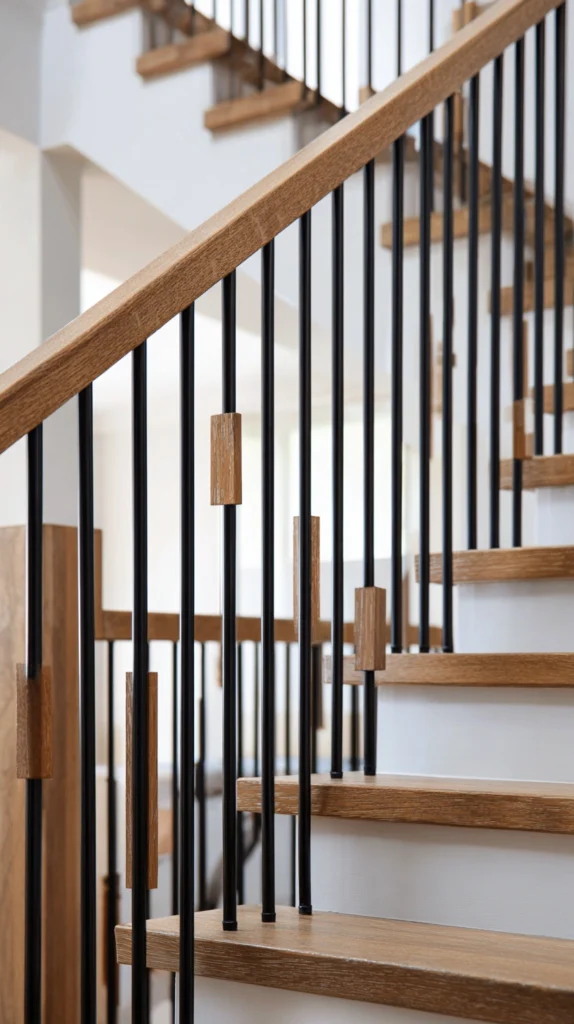
A railing that alternates metal and timber balusters — one metal rod, one timber spindle, repeating through the full length of the railing — creates a visual rhythm and material variety that is more interesting than either material used alone, and that suits the hybrid aesthetic of contemporary homes where the division between warm and cool, natural and industrial is deliberately blurred.
The metal rods should be in a finish that relates to the home’s hardware — black powder coat, brushed brass, satin nickel — and the timber spindles should be in a species and finish that relates to the staircase’s treads and the surrounding floor material.
The alternating pattern creates a graphic element at the staircase profile that is visible from across the room and that rewards close attention without demanding it, which is precisely the quality that good architectural detail should possess.
10. A Floating Stair with Single-Side Glass Railing
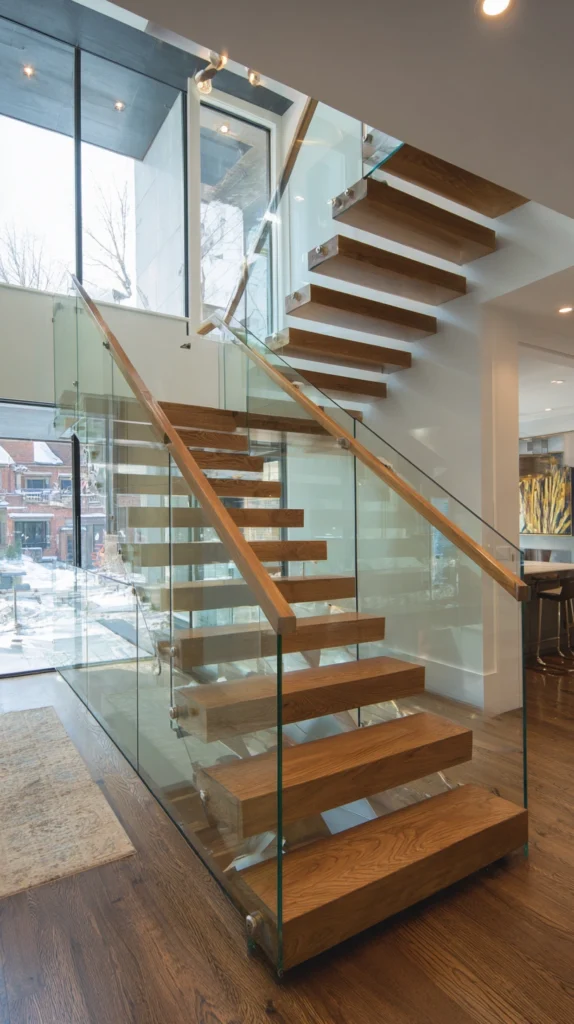
The floating staircase — individual timber or stone treads cantilevered from a single structural wall without a supporting stringer on the open side — is perhaps the most dramatic stair form available in contemporary residential design, and its visual power is entirely dependent on the railing system that defines its open edge.
A single run of glass panels, fixed with minimal hardware to the tread’s edge or to a slim floor-mounted channel, maintains the floating stair’s architectural drama by providing the required safety barrier while adding almost no visual mass to the composition. The treads appear to float because nothing — no stringer, no post, no baluster — occupies the space beneath and beside them that a conventional staircase would fill, and the glass railing maintains this openness while providing the code-required barrier.
This combination is among the most expensive and most technically demanding stair railing systems available, requiring significant structural engineering and precision installation, but the spatial result — a staircase that appears to exist in defiance of gravity — justifies every aspect of the investment.
11. A Shaker-Style Square Spindle Railing
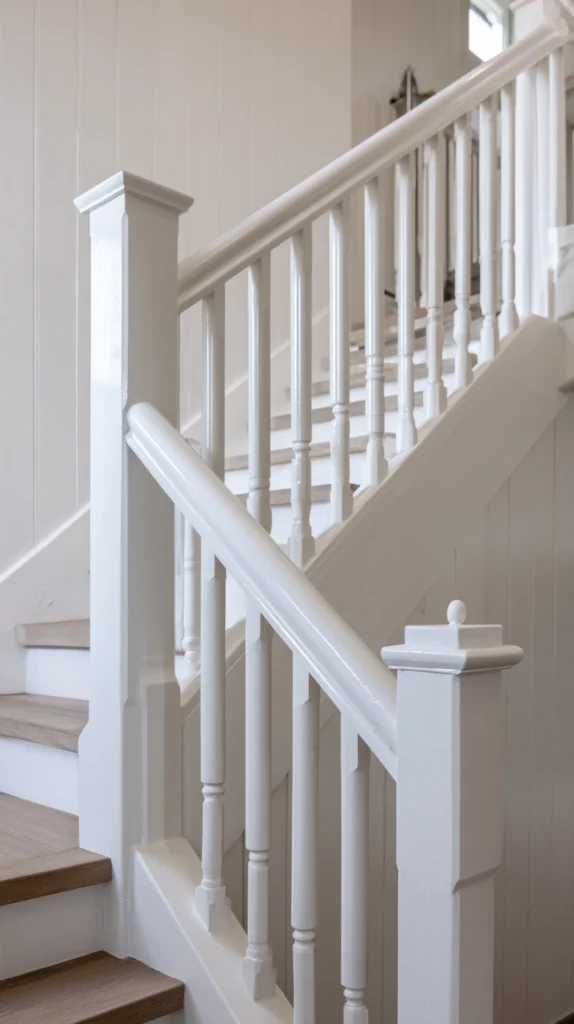
The Shaker aesthetic — simple, honest, well-made, free of ornament — translates into stair railing design as the square-section timber spindle in a clean, unadorned profile, installed with precise spacing and a slightly thicker handrail and newel post that give the railing system sufficient visual weight.
Shaker-style railings suit craftsman bungalows, farmhouse interiors, contemporary homes that value material honesty over decorative complexity, and any interior where the design language is spare without being cold.
Paint the spindles and rail in a single color — a warm white, a soft gray, or a painted green or navy for a more characterful treatment — and the railing reads as a unified architectural element rather than a collection of individual components.
The quality of the paint application determines the quality of the result: a perfectly prepared, smoothly applied finish with clean lines at every joint gives the Shaker railing its characteristic quality of quiet perfection.
12. A Curved Railing on a Spiral or Curved Stair
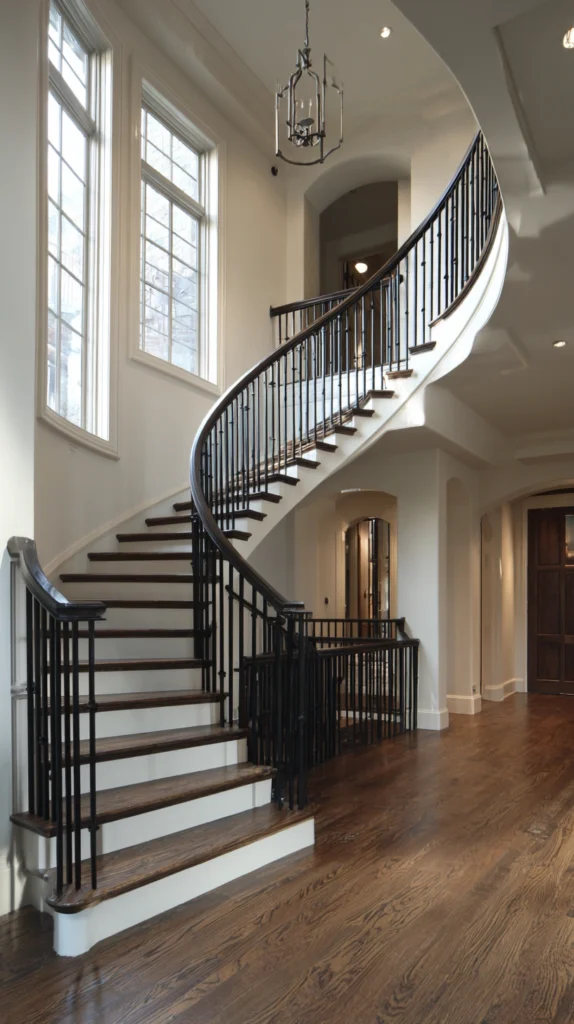
The curved staircase — sweeping in a gentle arc from one floor level to another rather than climbing in straight flights between landings — is an architectural form of extraordinary elegance, and its railing system must curve in precise correspondence with the stair’s geometry for the composition to work.
A custom-bent metal railing — the top rail curved to follow the stair’s plan precisely, with balusters installed perpendicular to the treads and a handrail profile that flows continuously through the curve without kinking — is the element that makes a curved staircase’s potential fully realized. This is necessarily custom work that requires a skilled fabricator and careful site measurement, and its cost is correspondingly higher than standard straight-run railing systems.
The material and finish of the curved railing should be chosen with particular care, as its curvature makes it a more prominent architectural element than a straight railing of equivalent length — the curve commands attention, and the material quality should justify that attention.
13. Black Metal Framing with Integrated Shelf
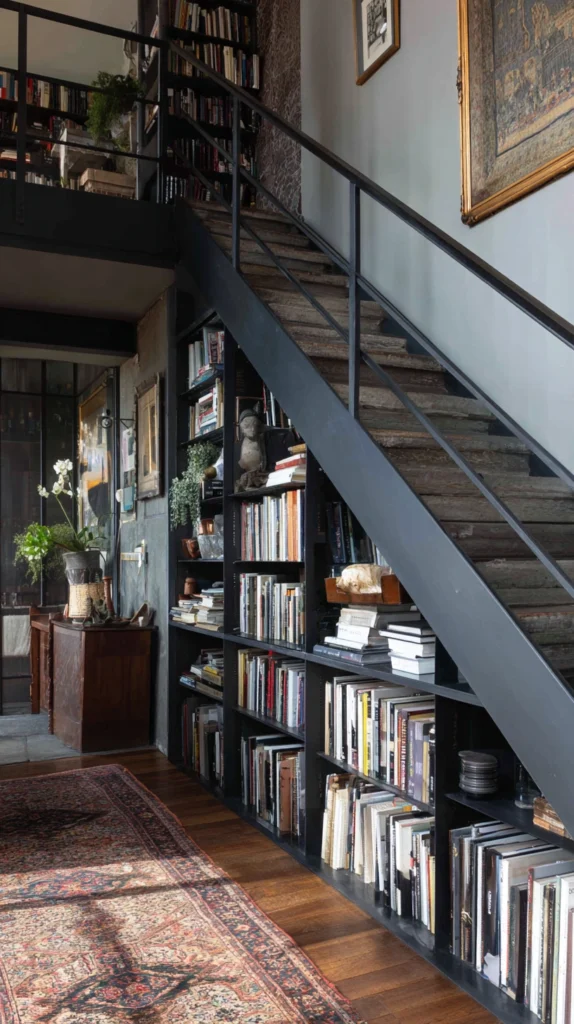
A stair railing system whose posts are extended above handrail height to support a continuous shelf running alongside the staircase — books, plants, ceramics, and decorative objects displayed on the shelf above the railing’s functional zone — transforms the staircase from a purely transitional space into a gallery and display environment that makes the journey between floors genuinely engaging. The shelf is supported by the extended posts of the railing’s upright elements, which in black powder-coated metal creates a combined railing and shelving system of considerable visual interest and practical value.
The objects on the shelf change with the seasons and with the household’s accumulation of beautiful things, making the staircase a living, evolving display environment rather than a static architectural feature.
This system suits homes where storage and display are perennial priorities, and where the staircase’s length and visibility make it a natural location for the kind of personal display that gives a home its specific character.
14. Vertical Steel Flat Bar Balusters
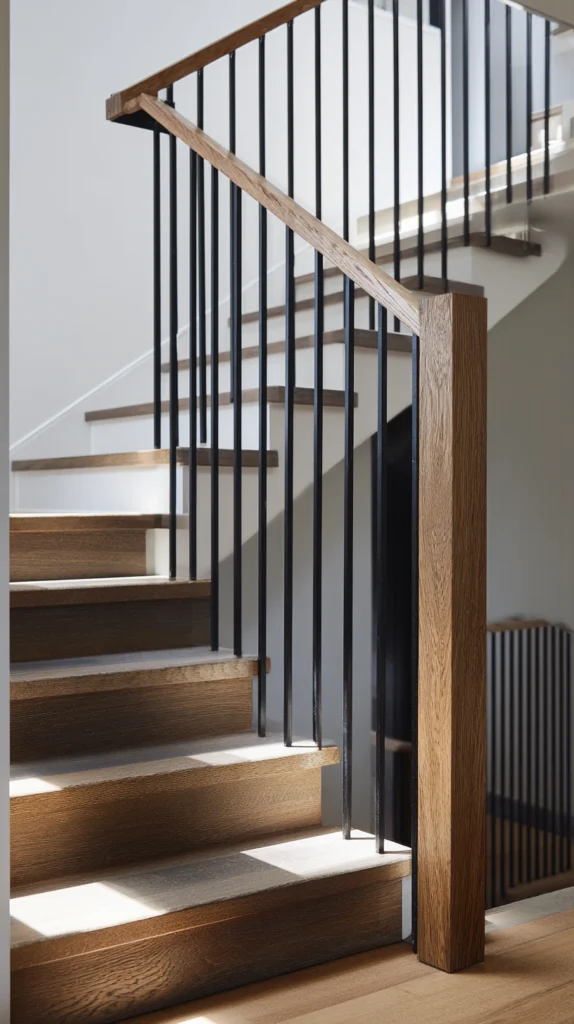
The flat bar steel baluster — a rectangular section steel bar installed vertically with the flat face oriented toward the room rather than the stair, creating a series of thin vertical planes rather than a series of round rods — is a railing detail with a precision and graphic quality that round rod balusters cannot replicate.
Seen from the side, flat bar balusters are virtually invisible — the thin edge profile disappears against the background — which creates an alternating rhythm of presence and absence as the viewer moves around the stair that is one of the most visually interesting qualities available in metal railing design.
Seen from the front, the flat faces create a series of thin parallel planes that overlap slightly as the viewer’s angle changes, producing a depth and visual complexity that rod balusters, which are the same from every angle, do not possess. Install flat bar balusters in matte black and pair them with a substantial timber handrail for a combination that is simultaneously architecturally precise and materially warm.
15. A Completely Bespoke Railing as Architectural Art
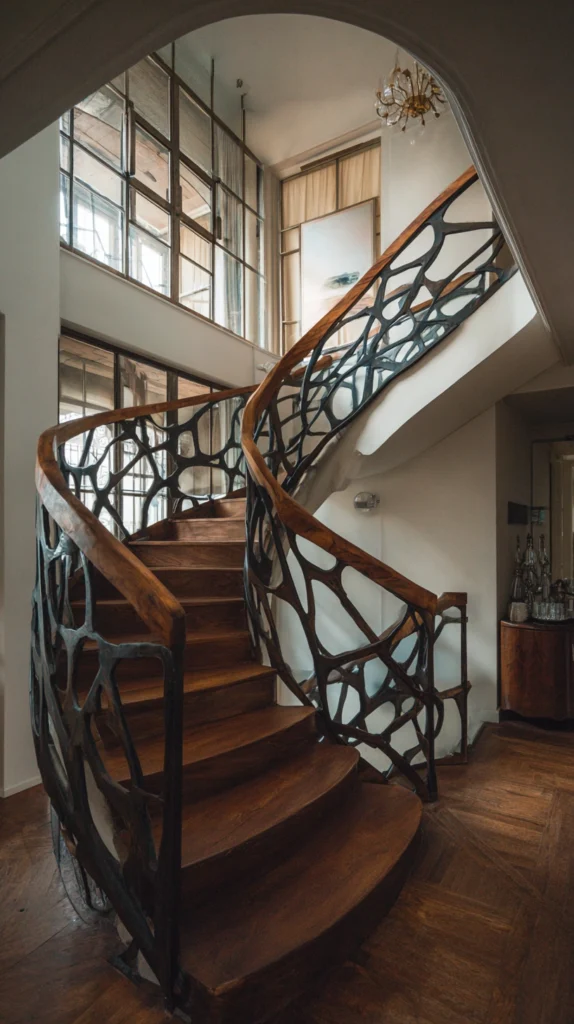
The final stair railing idea is not a product category or a style reference but an invitation — the invitation to commission a railing as a piece of bespoke architectural metalwork that is specific to your home, your staircase, and your design vision in a way that no catalog product can be.
A blacksmith or metalwork fabricator engaged to design and make a unique railing for a specific staircase produces an object that is, in every sense, a work of craft and design rather than a manufactured product — one whose form reflects the maker’s skill and the client’s brief in a combination that will never be precisely replicated in any other home.
The investment in bespoke metalwork is significant, but the result — a railing that is genuinely singular, that tells the story of its making in every joint and surface, that gives the staircase an artistic identity that no standard system can provide — is one that accumulates in value over time in proportion to the increasing rarity of genuine craft in the domestic environment. Of all the stair railing ideas on this list, it is the most demanding and the most rewarding, which is as it should be.