
15 Stone Path Edging Ideas
Stone path edging transforms ordinary walkways into defined, polished landscape features that guide movement through your outdoor space with intention and style. Proper edging prevents path materials from migrating into surrounding beds, maintains clean lines, and creates visual boundaries that enhance your garden’s overall structure.
Whether you’re working with gravel, flagstone, pavers, or mulch pathways, the right edging solution elevates the entire landscape while providing practical benefits that reduce maintenance and improve longevity.
The variety of stone edging options available today means you can find solutions that complement any landscape style, from formal estate gardens to relaxed cottage settings. Stone edging materials range from natural fieldstone and river rock to precisely cut granite and limestone, each offering distinct aesthetic qualities and functional benefits.
By selecting edging that harmonizes with your home’s architecture, existing hardscaping, and regional landscape character, you create cohesive outdoor spaces that feel intentionally designed rather than haphazardly assembled.
Beyond aesthetics, quality path edging serves essential practical functions including water management, erosion control, and weed prevention. Well-installed edging creates barriers that keep grass from invading paths, prevents soil washout during heavy rains, and defines mowing edges that simplify lawn maintenance.
The investment in proper edging pays dividends through reduced upkeep, extended path life, and enhanced property value that comes from professional-quality landscape finishing.
1. Stacked Fieldstone Borders
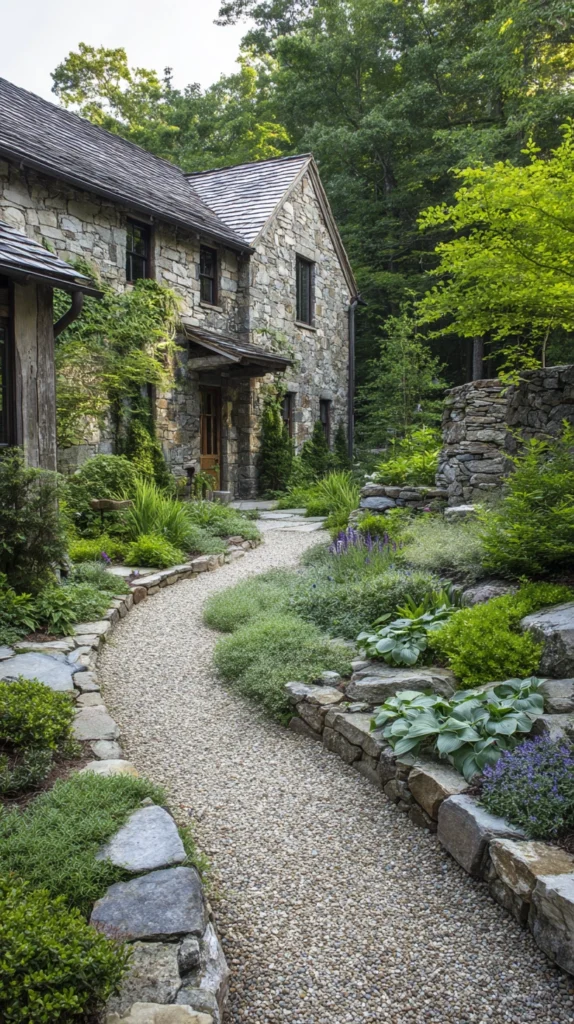
Dry-stacked fieldstone creates rustic, natural-looking borders that blend seamlessly into informal garden settings and cottage-style landscapes. These irregularly shaped stones nestle together without mortar, allowing for gentle curves and organic lines that follow natural terrain contours. The varied sizes, colors, and textures of fieldstone add visual interest while providing substantial weight that keeps path materials contained without requiring deep installation.
2. Cut Granite Curbing
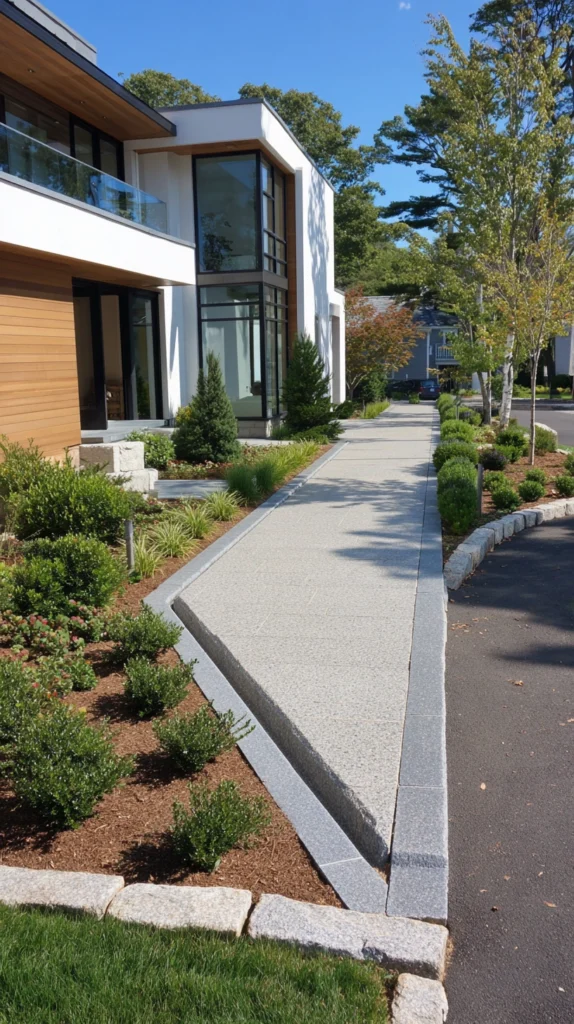
Precisely cut granite curbing delivers formal, architectural edging with clean lines and exceptional durability that lasts for generations. These uniform stones create crisp boundaries perfect for formal gardens, traditional estates, or contemporary landscapes where geometric precision matters.
Available in various finishes from smooth polished surfaces to split-face textures, granite curbing provides timeless elegance that withstands freeze-thaw cycles and heavy foot traffic without degrading.
3. River Rock Ribbons
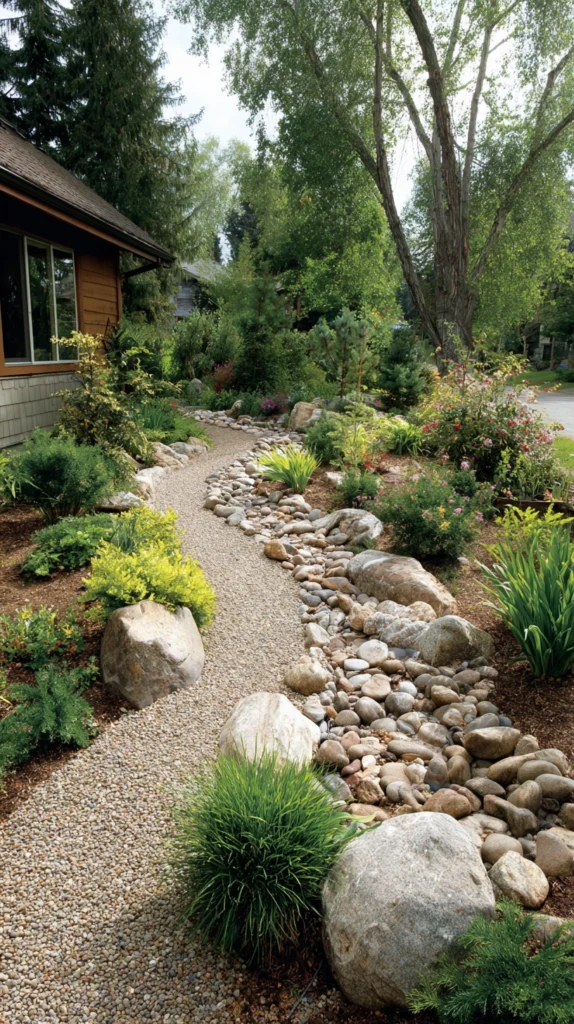
Smooth river rocks arranged in single or double rows create flowing, organic edging that softens hardscape elements with natural curves. These water-worn stones in sizes ranging from golf balls to grapefruits offer color variations from warm tans and grays to darker charcoals and browns. River rock edging works beautifully in naturalistic gardens, Japanese-inspired landscapes, or anywhere you want gentle transitions between paths and planting beds.
4. Limestone Blocks
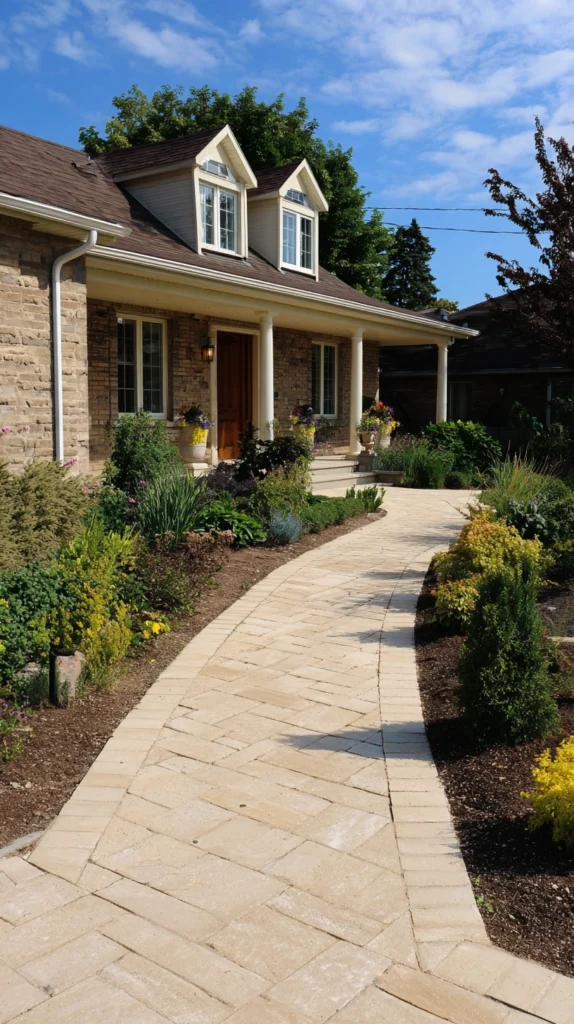
Stacked limestone blocks provide substantial, geometric edging with warm neutral tones that complement both traditional and contemporary landscape designs. The soft, porous nature of limestone allows for easy cutting and shaping while developing attractive patina as it weathers naturally over time. These blocks can be mortared for formal applications or dry-stacked for more relaxed installations, offering flexibility in both appearance and installation method.
5. Slate Standing Stones
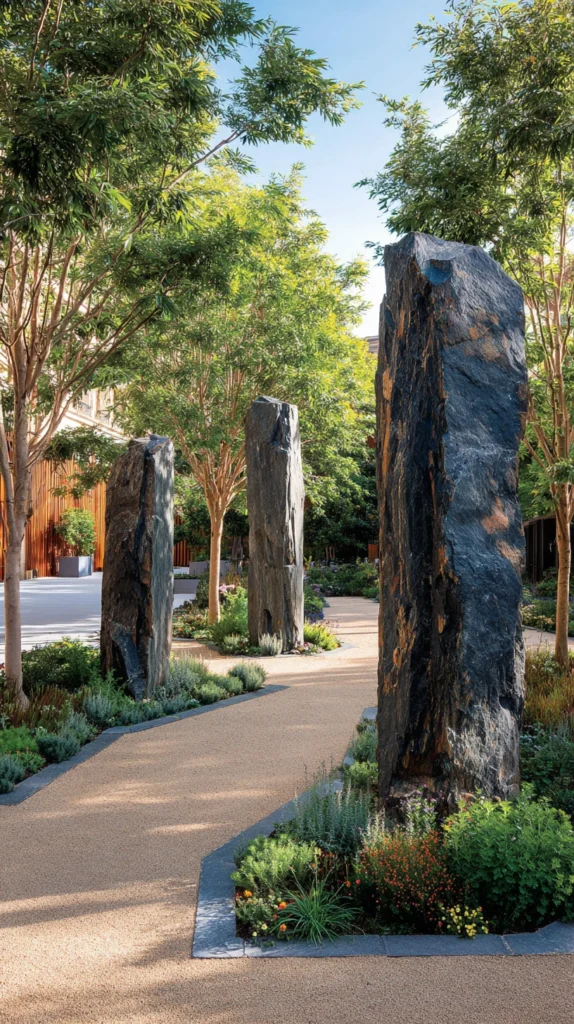
Vertically installed slate pieces create dramatic, contemporary edging with strong linear presence and interesting texture variations. These thin, upright stones provide height definition that clearly separates paths from adjacent areas while showcasing slate’s natural layering and color striations. The dark tones of most slate varieties create striking contrast against lighter path materials like gravel or crushed limestone.
6. Cobblestone Edges
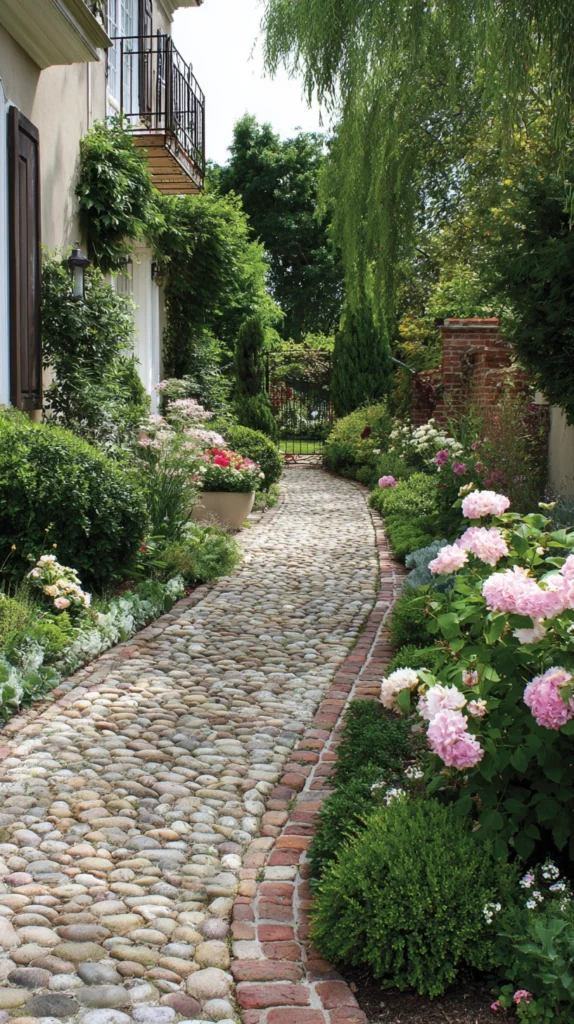
Traditional cobblestones arranged along path borders bring old-world European charm and historical character to garden walkways. These rounded stones, typically granite or basalt, can be set in sand, soil, or mortar depending on the desired formality and permanence. Cobblestone edging works particularly well with brick or stone paths, creating cohesive hardscaping that references classical landscape design traditions.
7. Flagstone Soldiers
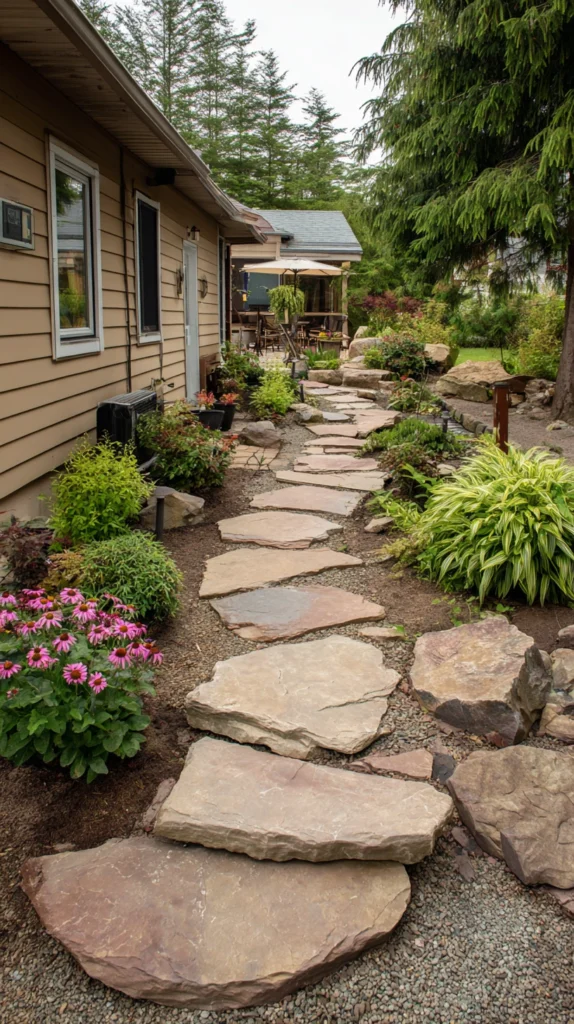
Large flagstone pieces set vertically on edge create substantial borders with impressive visual weight and natural stone beauty. This “soldier course” installation showcases the stone’s thickness and layered structure while providing sturdy containment for path materials. The irregular edges of natural flagstone create interesting profiles that add character and prevent the monotony of perfectly uniform edging.
8. Basalt Columns
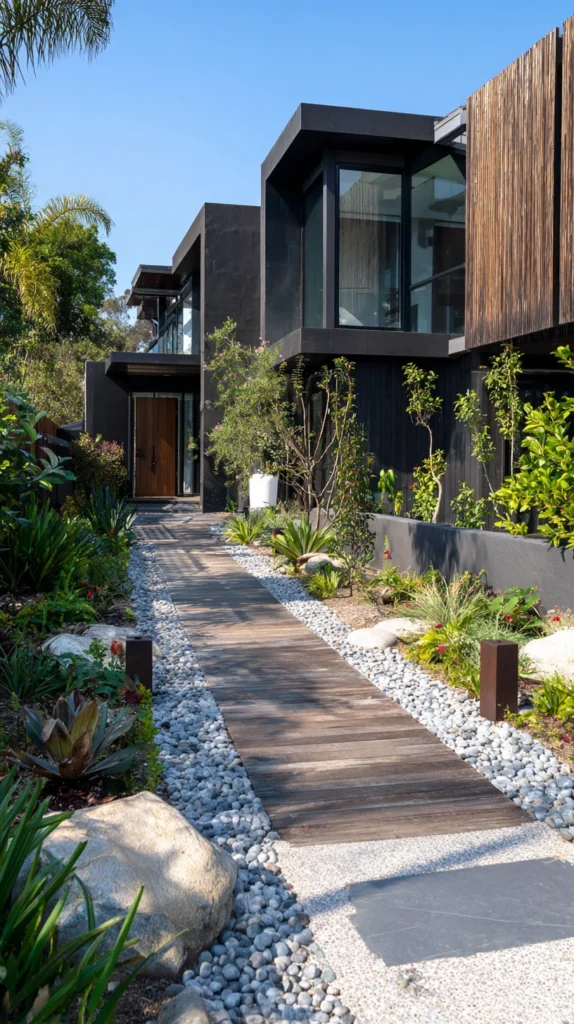
Cut basalt columns arranged vertically deliver modern, sculptural edging with strong geometric impact and dark, sophisticated coloring. These cylindrical or rectangular pieces create rhythmic patterns along path edges while their substantial size provides excellent material containment. The fine-grained texture and near-black color of basalt offers dramatic contrast against lighter aggregates, mulches, or plants.
9. Sandstone Blocks
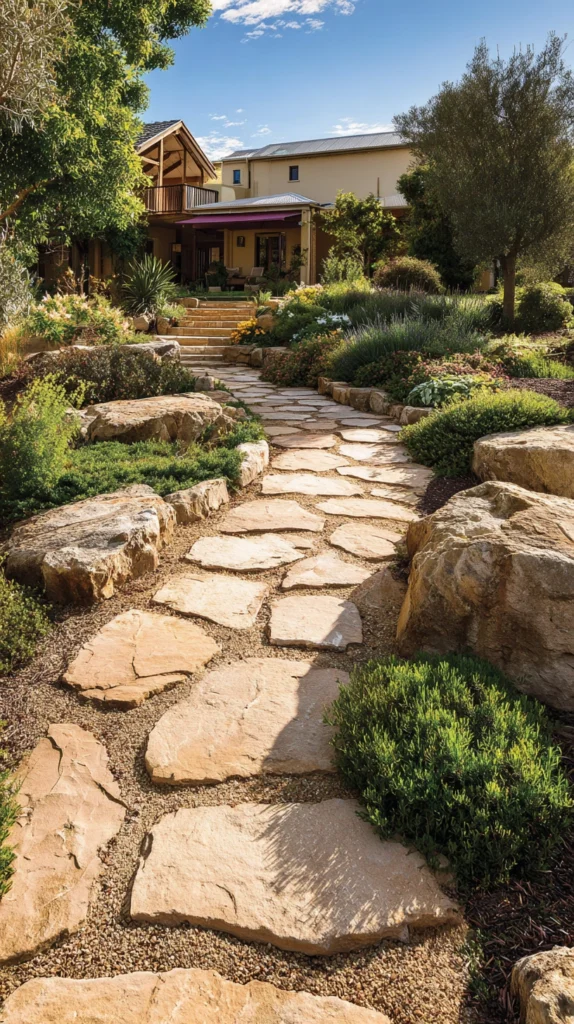
Warm-toned sandstone blocks bring earthy, desert-inspired aesthetics with colors ranging from buff and tan to rust and pink. The slightly textured surface and natural color variations create casual, approachable edging that works well in southwestern, Mediterranean, or informal garden settings. Sandstone’s softer composition makes it easier to shape and customize compared to harder stones like granite.
10. Mixed Stone Mosaic Borders
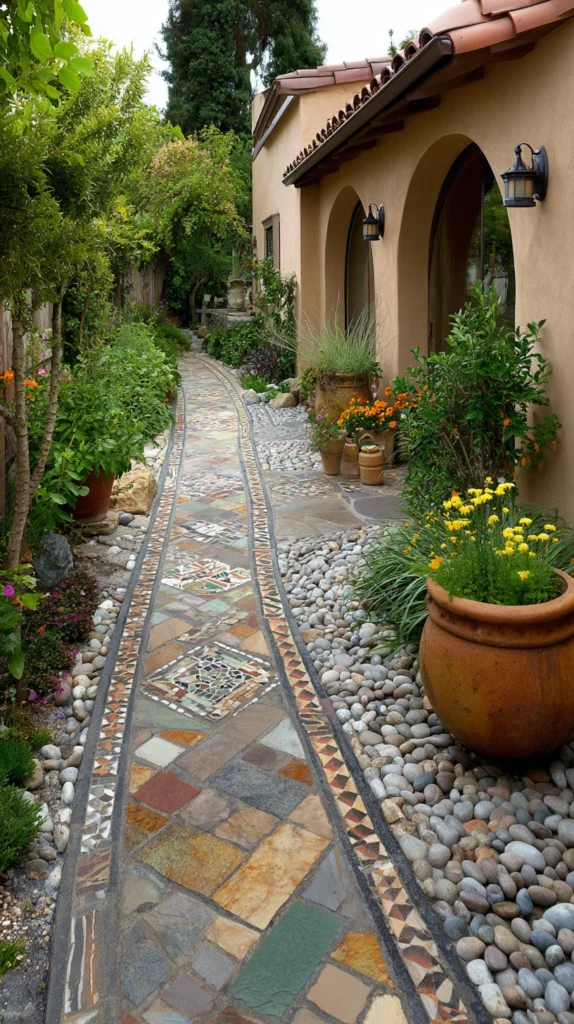
Combining various stone types, sizes, and colors creates artistic mosaic edging that transforms functional borders into decorative landscape features. This approach allows creative expression through pattern-making, color gradation, and textural contrast that personalizes your garden paths. Mixed stone edging works beautifully in cottage gardens, eclectic landscapes, or anywhere you want edging to serve as artistic focal points.
11. Quartzite Ledgestone
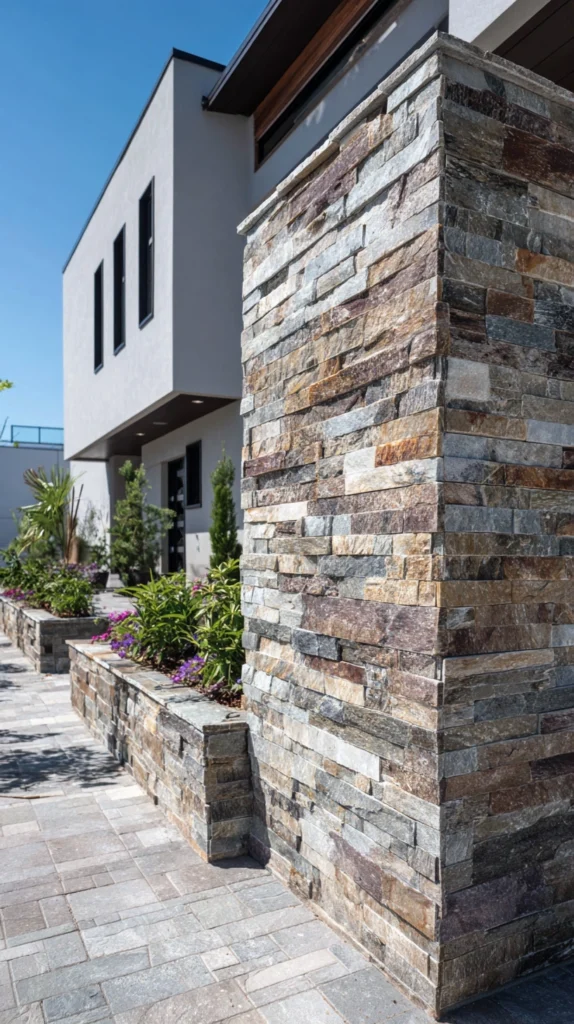
Horizontally stacked quartzite ledgestone creates contemporary linear edging with refined texture and subtle sparkle from the stone’s natural mica content. The flat, elongated shape of ledgestone pieces allows for clean, modern installations with minimal grout lines and streamlined appearance. Available in various earth tones and sometimes with dramatic color striping, quartzite brings upscale architectural quality to path edges.
12. Boulder Accents
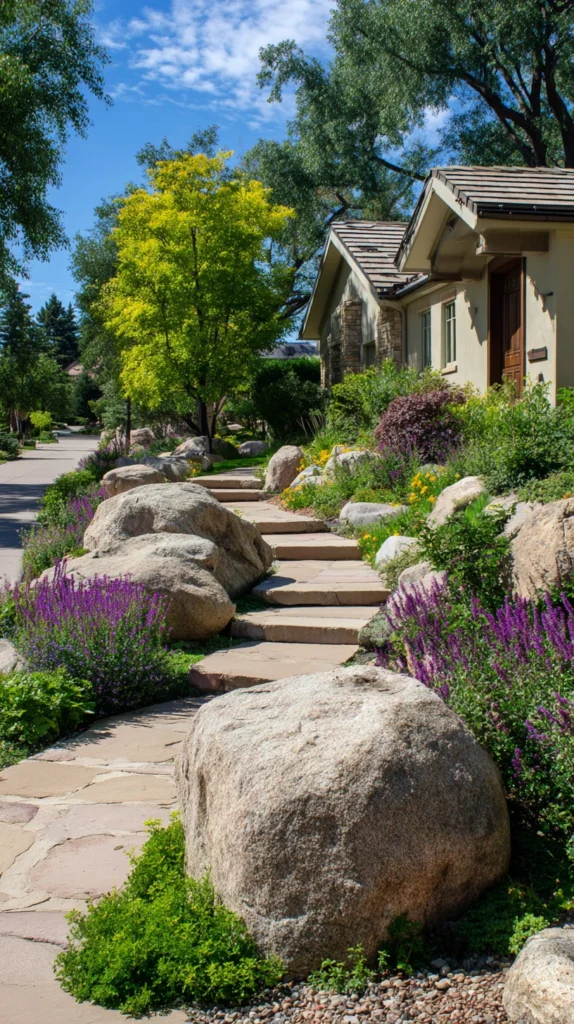
Large boulders placed at intervals along path edges create natural, sculptural punctuation that anchors walkways to the surrounding landscape. These substantial stones work best in informal or naturalistic settings where their irregular shapes and significant presence enhance rather than disrupt the design. Strategic boulder placement at path curves, intersections, or endpoints provides both visual interest and practical functions like erosion control.
13. Pea Gravel Trenches
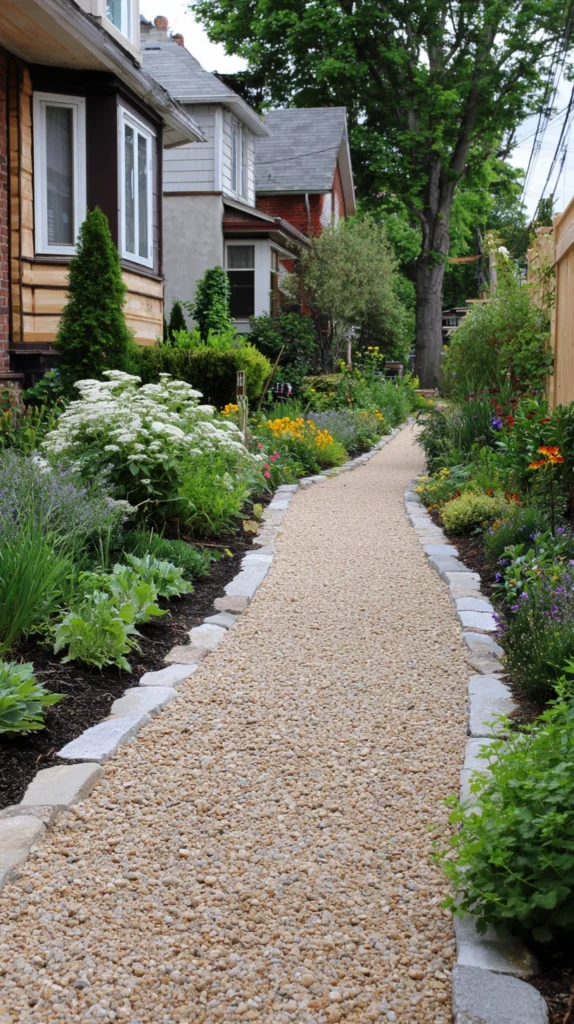
Creating shallow trenches filled with pea gravel alongside paths provides flexible, economical edging with excellent drainage characteristics. This soft edging approach works particularly well with informal paths, cottage gardens, or situations where rigid borders would feel too structured. The small, rounded stones in neutral tones blend easily with various landscape styles while allowing water to percolate freely.
14. Travertine Pavers
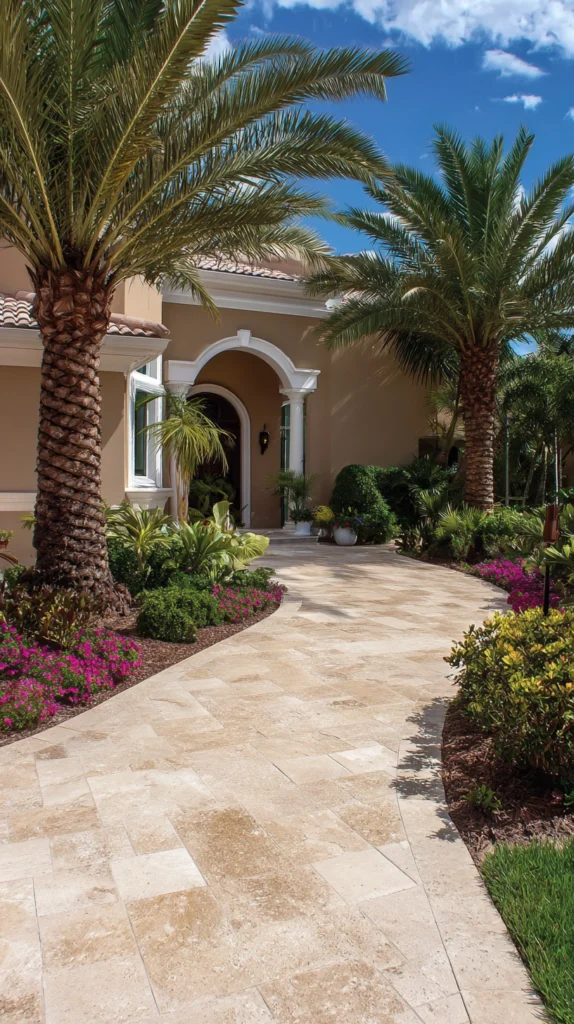
Mortared travertine pavers create luxurious, resort-style path edging with warm honey and cream tones and characteristic pitted texture. The formal, refined appearance of travertine elevates path designs while its natural slip-resistance makes it practical for walkway applications. This high-end stone choice works beautifully in Mediterranean, tropical, or contemporary luxury landscapes where material quality defines the overall aesthetic.
15. Slate Chips or Shale
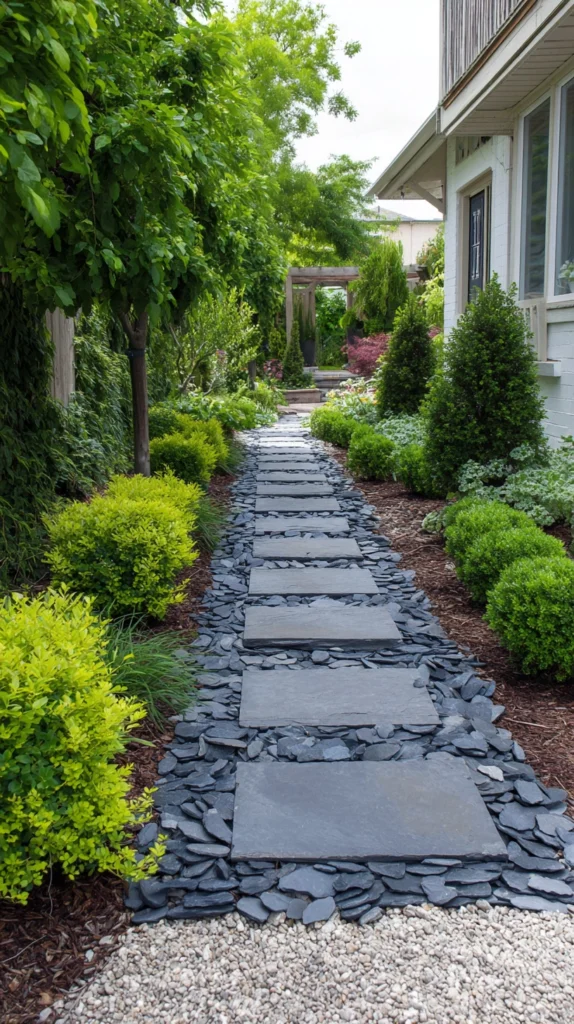
Loose slate chips or shale pieces laid in shallow trenches provide informal, textured edging with rich color options including purples, grays, and blacks. This loose-laid approach offers easy installation, excellent drainage, and the ability to easily adjust edging lines as landscape needs evolve. The angular, fractured appearance of slate chips creates an interesting texture that contrasts nicely with smoother path surfaces.
Bringing It All Together
Selecting ideal stone path edging requires balancing aesthetic preferences with practical considerations including climate suitability, maintenance requirements, and budget constraints. Begin by evaluating your existing landscape style, path materials, and architectural context to identify edging options that create cohesive, intentional design.
Consider both immediate visual impact and long-term performance to ensure your investment delivers lasting beauty and functionality.
Don’t rush the selection process—visit stone yards to see materials in person, observe how they look in various lighting conditions, and feel their textures. Photography rarely captures stone’s true character, making hands-on evaluation essential for confident decisions. Collect samples when possible and place them along your actual path to visualize how they’ll appear in context before committing to full installation.
Whether you choose formal cut stone or casual river rock, rustic fieldstone or contemporary basalt, quality stone edging transforms simple paths into landscape features that enhance your property’s beauty and usability.
Take time to plan carefully, install properly, and maintain appropriately to ensure your stone edging delivers decades of performance and pleasure. The investment in thoughtful path edging pays continuous dividends through improved aesthetics, simplified maintenance, and the satisfaction of well-crafted outdoor spaces.