
15 Sustainable Balcony Garden Ideas to Celebrate Earth Day
A balcony might be the smallest piece of outdoor space you own, but in the hands of a thoughtful gardener, it can become one of the most meaningful. Earth Day is a reminder that environmental stewardship doesn’t require vast land or grand gestures — it requires intention, creativity, and a willingness to work with what you have.
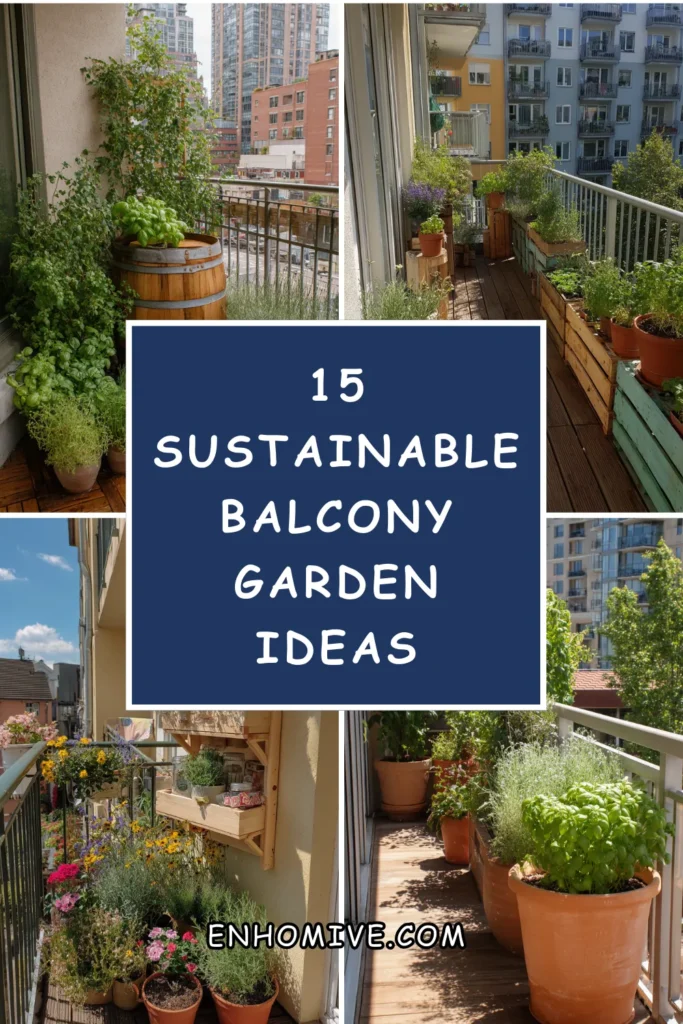
A sustainably designed balcony garden reduces waste, supports wildlife, grows food, manages water thoughtfully, and connects you daily to the natural rhythms that sustain all life.
Whether your balcony catches full sun or sits in partial shade, faces a city skyline or a suburban street, these 15 ideas will help you transform it into a genuinely green space worth celebrating every day of the year.
1. Build a Self-Watering Container System
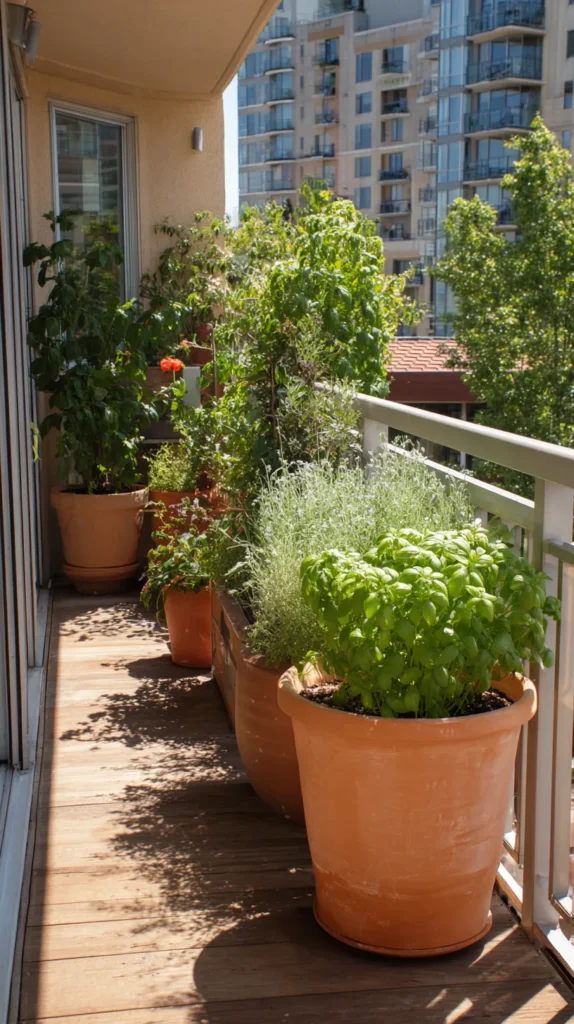
Water is one of the most precious resources a balcony gardener works with, and conventional containers waste a surprising amount of it through evaporation and runoff. Self-watering containers solve this elegantly by incorporating a reservoir at the base that plants draw from through capillary action, delivering moisture directly to the roots as needed.
The result is healthier plants, significantly reduced water consumption, and far less time spent watering — a genuine win on every front. Self-watering containers are available at most garden centers, or you can convert standard pots using inexpensive wicking inserts. For a fully sustainable setup, connect your self-watering containers to a small drip irrigation timer so water is delivered only when and where it is needed.
2. Set Up a Balcony Worm Bin
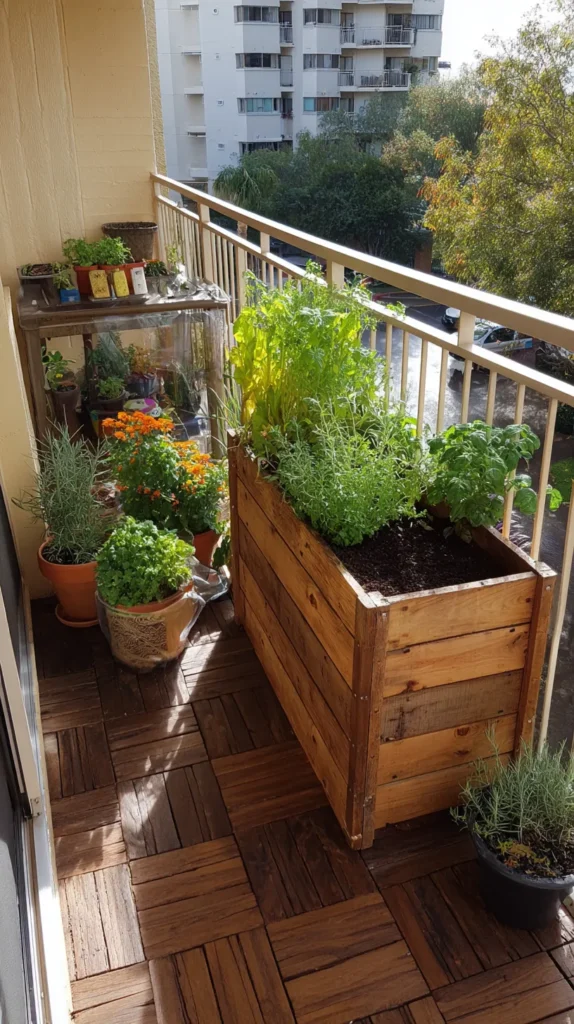
Composting on a balcony might sound impractical, but a compact worm bin changes that equation entirely. Red wiggler worms process kitchen scraps — fruit and vegetable peels, coffee grounds, tea bags, crushed eggshells, and paper scraps — into extraordinarily rich castings that are among the finest natural fertilizers available.
A well-managed worm bin produces no unpleasant odor, fits comfortably in a corner of even a small balcony, and eliminates the need to purchase chemical fertilizers for your container plants. The liquid that drains from the bin, known as worm tea, can be diluted with water and applied directly to your plants for an immediate nutrient boost. Starting a worm bin this Earth Day is one of the most impactful single steps a balcony gardener can take.
3. Grow a Salad Green Wall
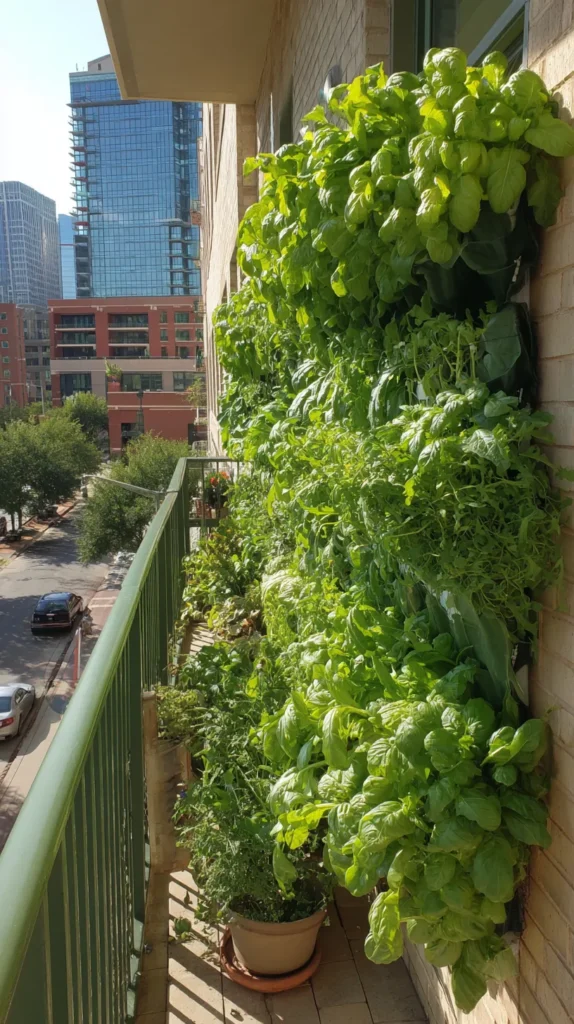
A vertical wall of salad greens is both the most space-efficient and most satisfying food garden a balcony can support. Using a modular pocket planter system, a repurposed shoe organizer, or a purpose-built vertical frame, you can grow an entire season’s worth of cut-and-come-again salad greens — leaf lettuce, arugula, spinach, mizuna, and mustard greens — in a footprint of just a few square feet of wall space.
Harvest outer leaves regularly and the plants will continue producing for months. A productive salad green wall reduces grocery packaging waste, eliminates food miles for your most frequently consumed greens, and provides the daily satisfaction of eating food you grew yourself.
4. Create a Pollinator Pocket Garden
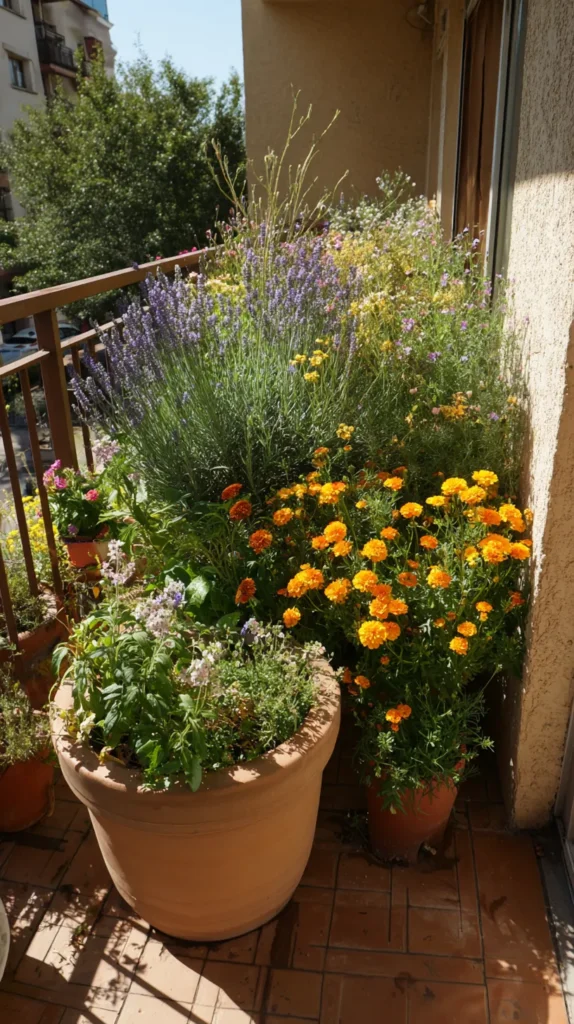
Urban pollinators — bees, butterflies, hoverflies, and moths — are under enormous pressure from habitat loss, and a thoughtfully planted balcony can serve as a genuine lifeline in the urban landscape.
The key is choosing plants rich in accessible nectar and pollen rather than heavily hybridized double-flowered varieties that look showy but offer little to visiting insects. Lavender, salvia, single-flowered marigolds, sweet alyssum, borage, phacelia, and verbena bonariensis are all excellent pollinator plants that thrive in containers.
Even a single pot of lavender makes a measurable difference. Group several pollinator-friendly plants together so that visiting insects can move efficiently between flowers, and avoid any pesticide use that would undermine the habitat you’re creating.
5. Collect Rainwater in a Compact Barrel
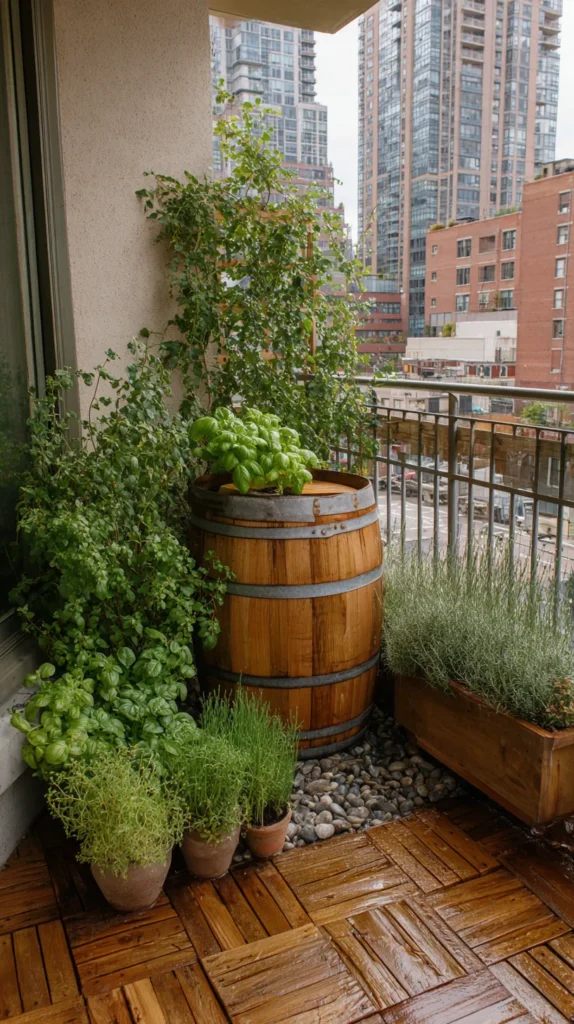
Rainwater harvesting on a balcony requires creative thinking, since most balconies lack a downspout to tap into. However, a simple solution is to position a compact collection barrel or large lidded container beneath any overhang, eave, or drain outlet your balcony might have, capturing whatever runoff is available.
Even in the absence of a dedicated source, leaving open containers to collect rainfall during spring showers accumulates a surprising amount of free, unchlorinated water that plants love. Rainwater is naturally slightly acidic, which many container plants prefer, and using it reduces your household water consumption while building a small buffer against dry spells. Cover collection vessels with mesh to prevent mosquito breeding.
6. Plant Fruit in Containers
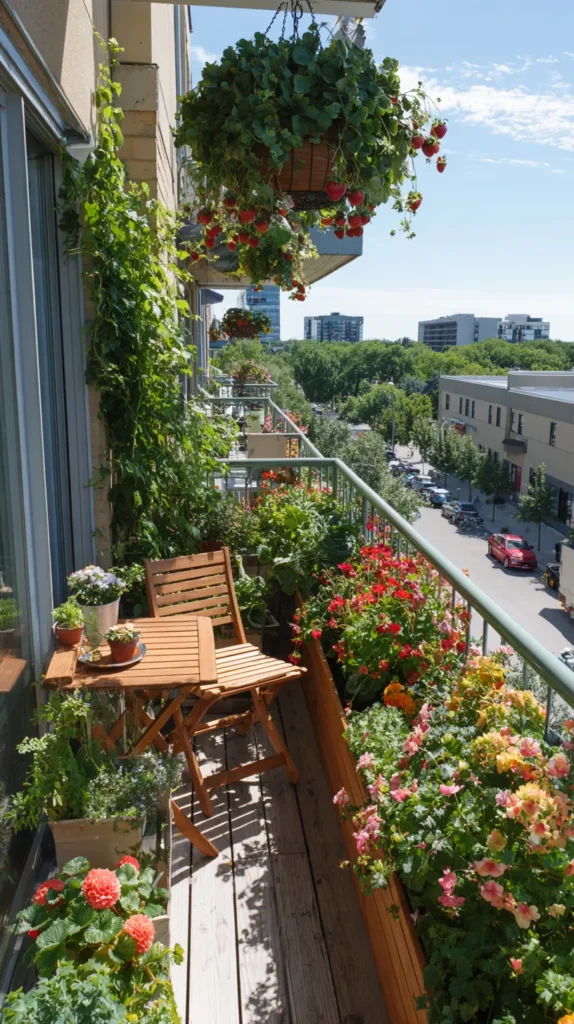
Growing your own fruit on a balcony is one of the most rewarding sustainable gardening achievements, and more varieties are suited to container culture than most people realize. Dwarf and patio strawberries are perhaps the easiest starting point — they thrive in hanging baskets, window boxes, and small pots, and produce generously from late spring through summer.
Blueberries are excellent in large containers, requiring only acidic potting mix and a sunny spot, and function as attractive ornamental shrubs as well as productive fruit plants. Compact fig varieties, dwarf citrus trees, and patio apple trees all grow successfully in large containers with proper care. This Earth Day, adding even one fruit plant to your balcony is a long-term investment in homegrown food that will reward you for years to come.
7. Use Only Peat-Free, Organic Potting Mix
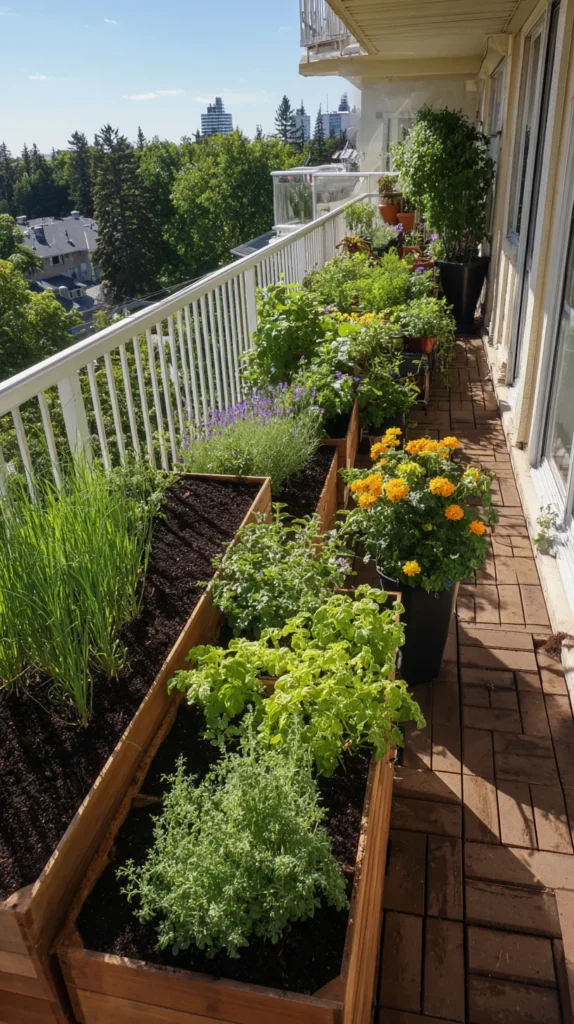
The potting mix you fill your containers with has a larger environmental footprint than most gardeners realize. Conventional potting mixes are often based on peat moss, harvested from ancient bogland ecosystems that store vast amounts of carbon and support highly specialized wildlife.
When peat bogs are drained and mined for horticultural use, stored carbon is released and irreplaceable habitats are destroyed. Peat-free compost alternatives — based on coir fiber, composted bark, wood fiber, or green waste compost — are now widely available, perform comparably to peat-based mixes for most plants, and carry a dramatically lower environmental cost. Making the switch to peat-free potting mix this Earth Day is a straightforward, meaningful choice.
8. Install a Compact Herb Spiral
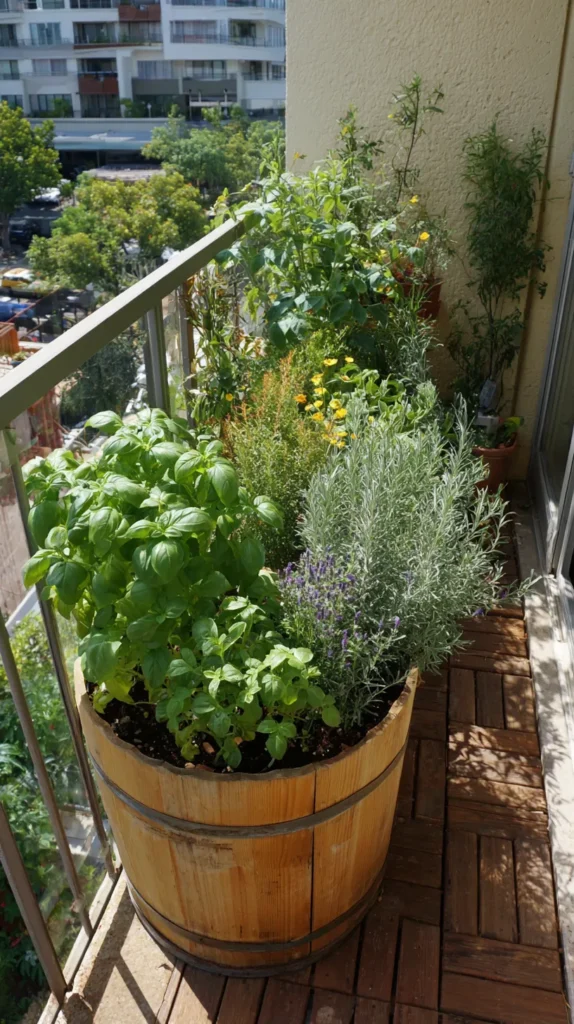
The herb spiral is a beautifully efficient planting design that creates multiple growing zones — from well-drained and sunny at the top to moisture-retentive and partially shaded at the base — in a very small footprint. On a balcony, a compact herb spiral can be built in a large half-barrel planter or constructed from stacked terracotta pots of graduating sizes.
Plant drought-tolerant Mediterranean herbs like thyme, rosemary, oregano, and sage at the upper, drier levels, and moisture-loving herbs like mint, parsley, and chives toward the base. The vertical design maximizes growing surface, the varied microclimates support a wider range of herbs than a flat planting, and harvesting fresh herbs daily reduces the packaging waste and food miles associated with store-bought alternatives.
9. Upcycle Containers from Household Waste
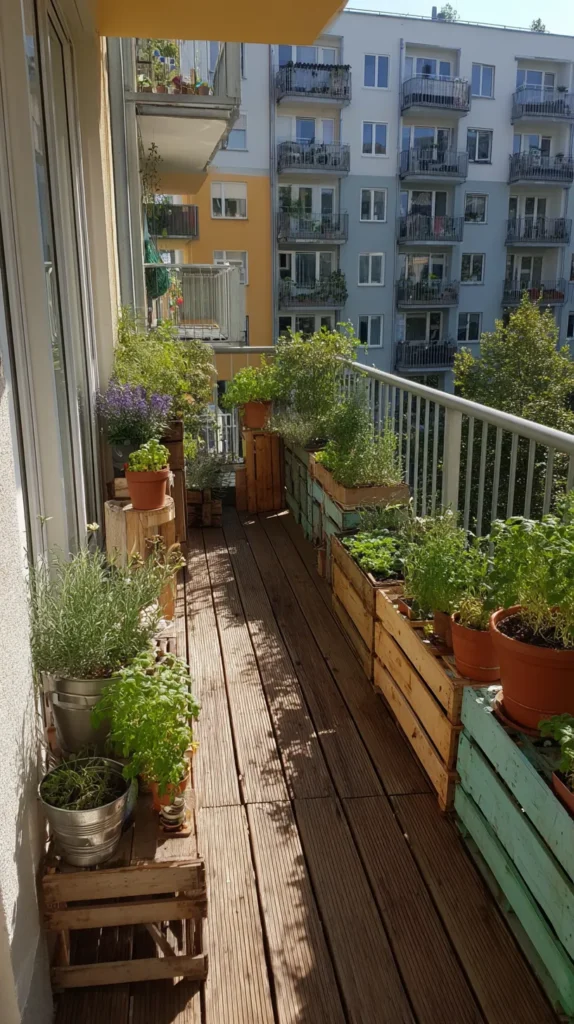
The most sustainable container garden is one built largely from materials that would otherwise be discarded. Old colanders, wooden wine crates, cracked ceramic bowls, large tin cans, worn rubber boots, repurposed wooden drawers, and even worn-out canvas bags all make perfectly functional planters with the addition of drainage holes and a handful of gravel at the base for drainage.
Upcycled containers give a balcony garden an individual, characterful quality that no matching set of shop-bought pots can replicate, and they extend the useful life of objects that might otherwise head to landfill. The only precaution is to avoid using containers that previously held chemicals or non-food substances for growing edibles.
10. Grow a Tea and Herbal Medicine Garden
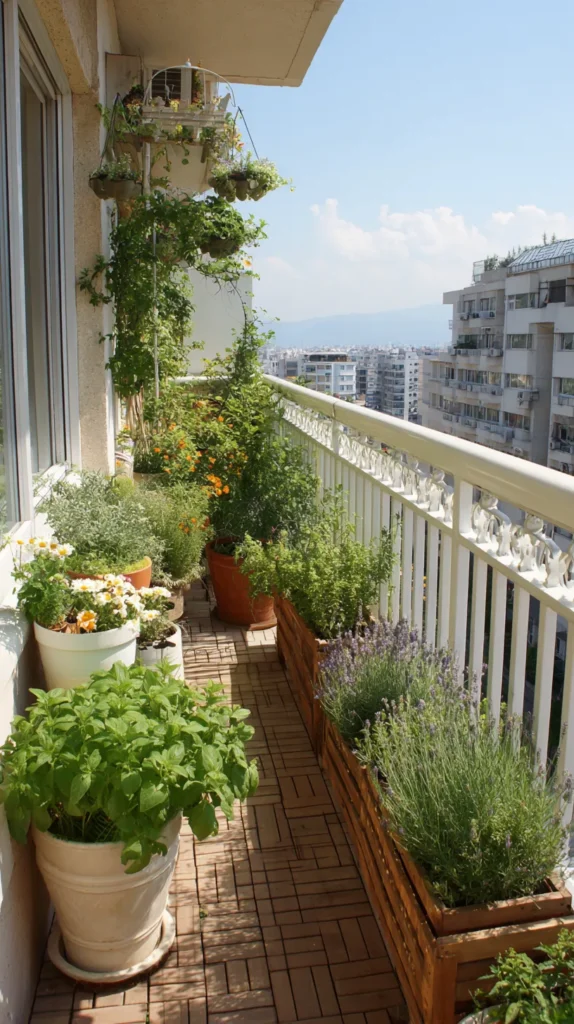
A dedicated collection of medicinal and tea herbs on your balcony serves double duty as both a productive garden and a sustainable household resource.
Chamomile, lemon balm, peppermint, spearmint, echinacea, calendula, and lemon verbena all grow readily in containers, require minimal care beyond regular watering and occasional feeding, and can be harvested fresh or dried for use throughout the year.
Growing your own herbal teas eliminates the packaging waste of store-bought tea bags — most of which contain plastic — and gives you a connection to the plants you’re consuming that deepens appreciation for what you’re drinking. Dry harvested herbs in small bundles hung from the balcony railing on warm days and store them in glass jars for winter use.
11. Attract Birds with a Balcony Feeding Station
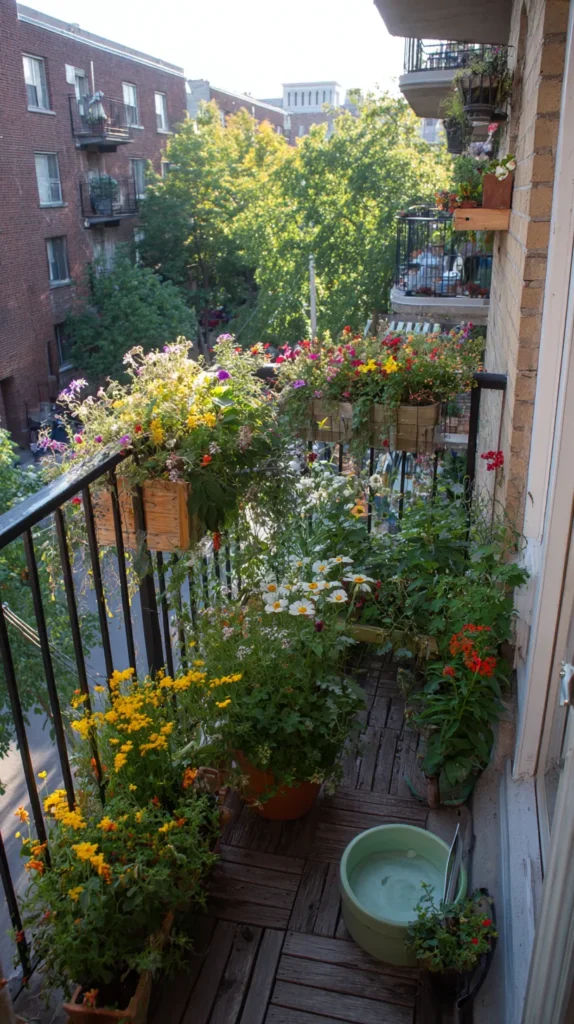
A small bird feeder mounted on a balcony railing or hung from a hook extends your garden’s ecological reach far beyond its physical footprint. Urban birds — sparrows, finches, tits, robins, and blackbirds depending on your region — benefit enormously from reliable supplementary feeding, particularly during spring when they are raising young and natural food sources are not yet fully abundant.
Choose a feeder that can be easily cleaned to prevent disease, fill it with high-quality mixed seed or specific selections for the species in your area, and add a shallow dish of fresh water nearby. The birds you attract will also help manage aphid and insect populations on your balcony plants, creating a small but genuine ecological loop.
12. Plant a Native Wildflower Container
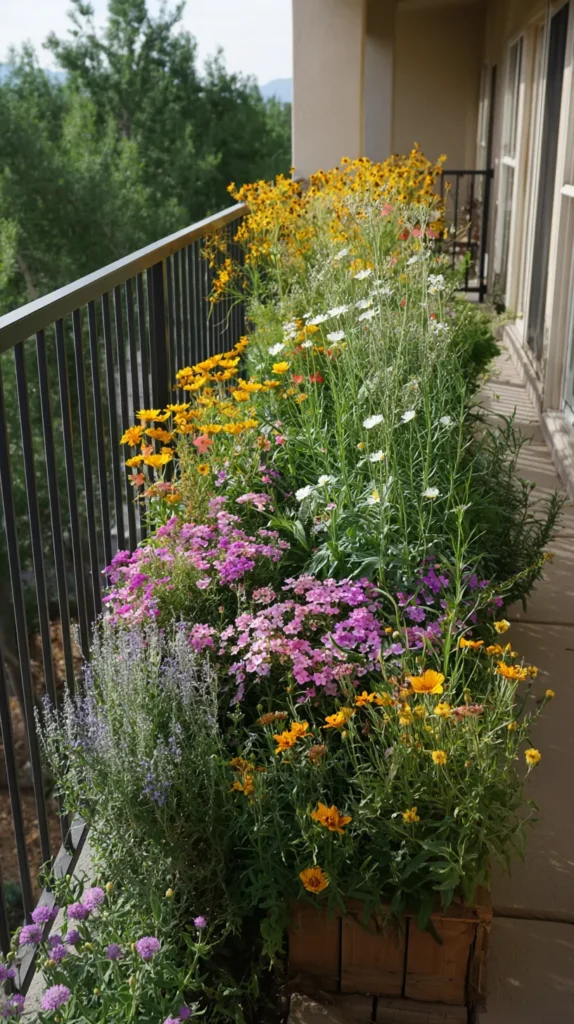
Native wildflowers are among the most ecologically valuable plants a balcony gardener can grow, supporting a far wider range of insects than non-native ornamentals while typically requiring less water, less feeding, and far less maintenance.
A large container planted with a native wildflower mix suited to your region — or seeded with a specifically chosen selection of natives including yarrow, cornflower, ox-eye daisy, and wild thyme — becomes a hub of biodiversity from late spring through autumn.
Allow seedheads to develop and stand through winter rather than cutting back immediately, as they provide food for birds and shelter for overwintering insects. One container of native wildflowers does more ecological work than a dozen containers of imported ornamentals.
13. Build a Mini Bug Hotel
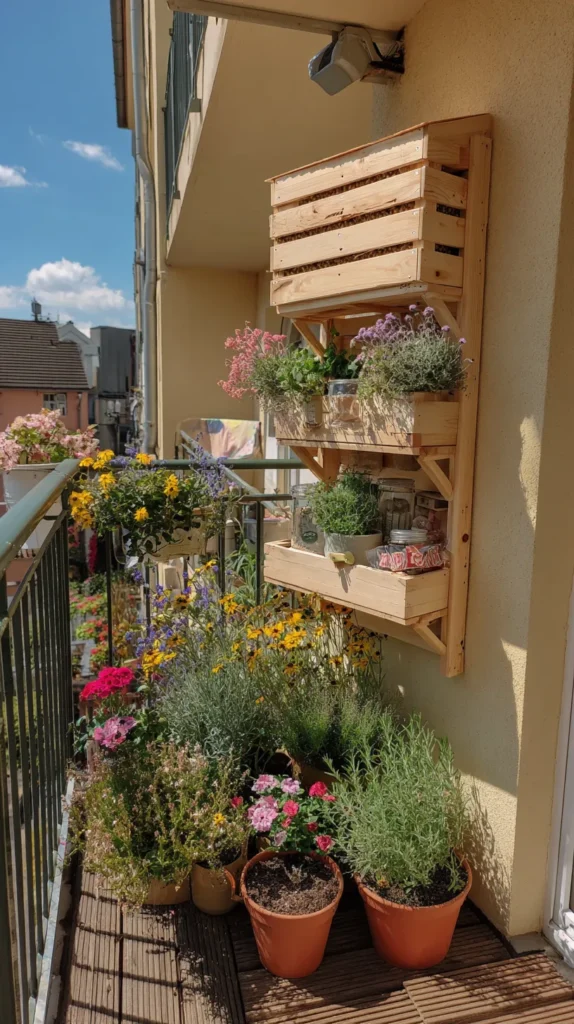
A bug hotel — a structure filled with natural materials that provide nesting and overwintering habitat for beneficial insects — is one of the easiest and most rewarding wildlife features a balcony can accommodate.
A small version can be constructed from a wooden box or old drawer filled with a variety of natural materials: bundles of hollow bamboo canes and dried hollow stems for solitary bees, pine cones and bark for beetles and woodlice, dried moss and straw for overwintering insects, and tightly rolled corrugated cardboard for lacewings.
Mount the hotel on a sunny, sheltered wall or fence at a comfortable height and leave it undisturbed. The insects that take up residence will repay you by pollinating your plants and controlling pest populations naturally.
14. Grow Climbing Plants on a Trellis
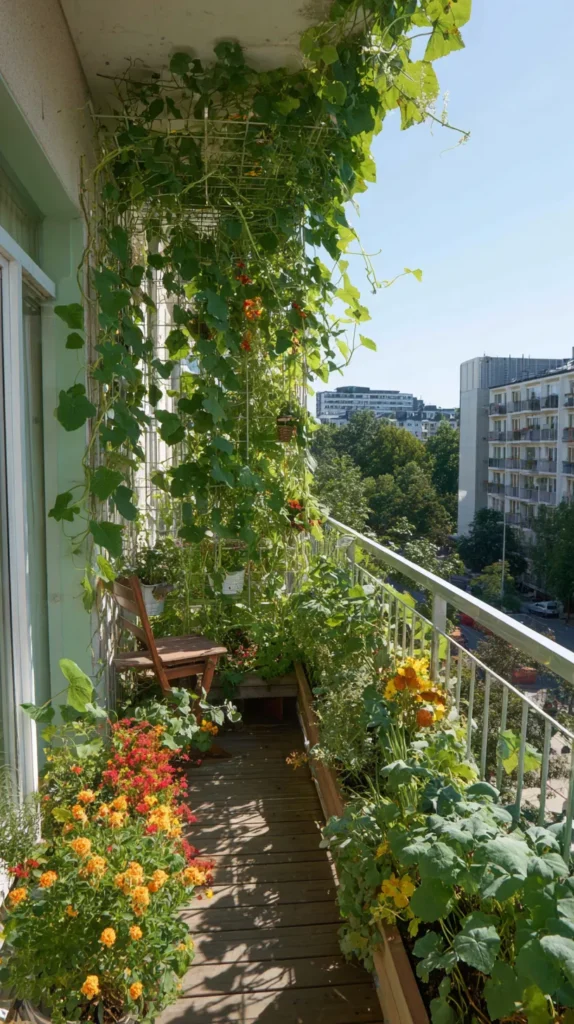
A trellis mounted on a balcony wall or railing and planted with climbing plants achieves multiple sustainable goals simultaneously. It creates a living privacy screen that reduces the need for manufactured screening materials, it insulates the wall behind it and can reduce heat absorption in summer, it provides nectar and shelter for insects and birds, and it produces a genuinely beautiful, verdant effect in a minimal footprint.
Climbing beans and peas are productive edible options that fix nitrogen in their growing medium. Climbing nasturtiums are entirely edible — flowers, leaves, and seedpods all — and irresistible to pollinators. Clematis and honeysuckle offer stunning flowers and powerful fragrance. A well-chosen climbing plant transforms a bare balcony wall into a living, working feature of the garden.
15. Commit to Zero-Plastic Gardening
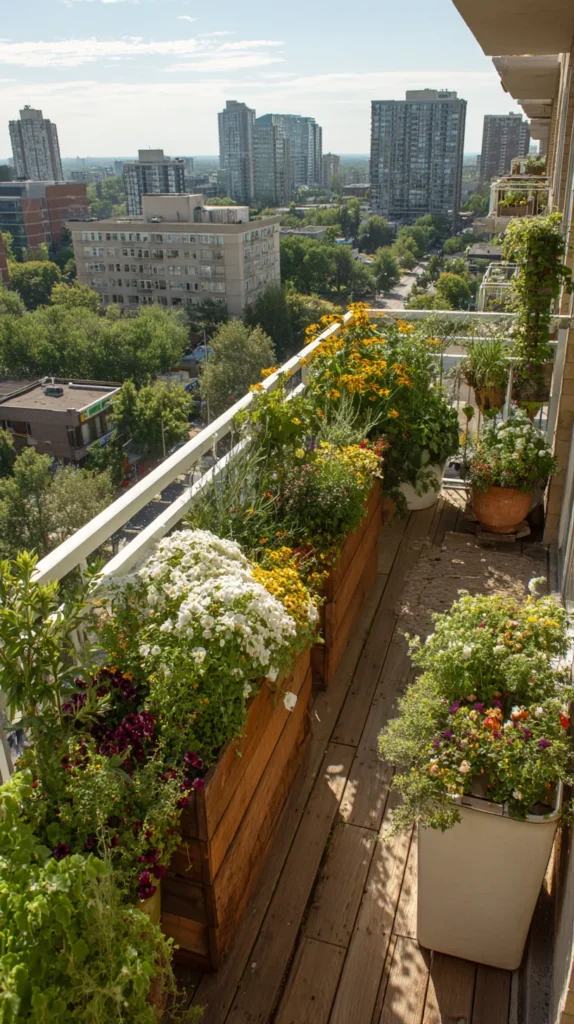
One of the most powerful Earth Day commitments a balcony gardener can make is to eliminate single-use plastic from their gardening practice entirely.
This means sourcing plants in biodegradable pots rather than plastic ones, buying seeds in paper packets rather than plastic bags, using bamboo or wooden plant labels instead of plastic stakes, choosing tools with wooden handles over plastic ones, and storing potting mix in reusable fabric bags or repurposed containers.
It means composting organic waste rather than sending it to landfill in plastic bags, and choosing glass, ceramic, or metal containers over plastic pots wherever possible. No single swap is dramatic in isolation, but the cumulative effect of eliminating plastic across an entire gardening practice is genuinely significant — and the resulting garden looks and feels better for it too.
Every Balcony Counts
The sustainable balcony garden is not about perfection or completeness. It is about making deliberate choices — about water, about waste, about wildlife, about what you grow and how you grow it — that reflect a genuine commitment to the health of the planet you share.
A worm bin in the corner, a pot of native wildflowers, a bird feeder on the railing, a trellis of climbing beans: these small, specific acts of care accumulate into something that matters. This Earth Day, look at your balcony not as a limitation but as an opportunity. The most meaningful gardens are not always the largest ones.