
15 Cozy Terracotta Decor Ideas for Neutral Interiors
Terracotta is one of those rare colours that manages to feel simultaneously warm and grounded, energetic and calm. Sitting at the intersection of burnt orange, dusty red, and earthy brown, it brings an unmistakable warmth to interior spaces that cooler neutrals like grey and white simply cannot generate on their own.
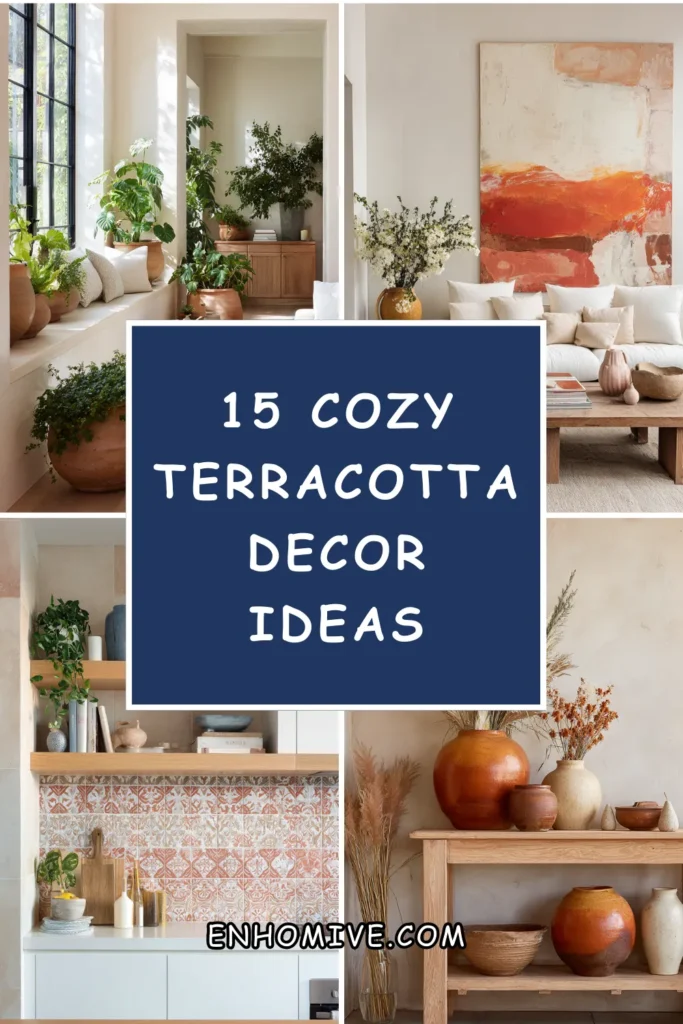
It works beautifully within neutral interiors because it adds depth and temperature without overwhelming a carefully considered palette. Whether used as an accent or as a more dominant presence, terracotta has a natural, sun-baked quality that makes spaces feel lived-in, inviting, and deeply human. Here are fifteen cozy terracotta decor ideas that will bring genuine warmth to any neutral interior.
1. Terracotta Ceramic Vases as Focal Points
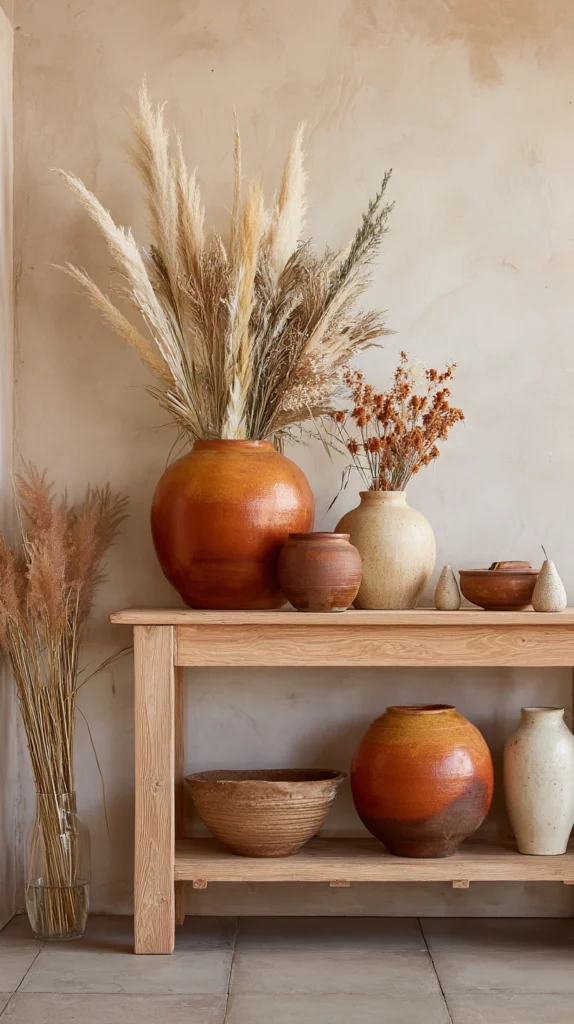
The simplest and most immediate way to introduce terracotta into a neutral interior is through ceramic vases. A grouping of unglazed or lightly glazed terracotta vases in varying heights and shapes placed on a console table, sideboard, or shelf creates an instant focal point that feels organic and considered.
The beauty of terracotta ceramics lies in their imperfection — slight variations in tone, texture, and form make each piece feel handmade and unique. For maximum impact, group an odd number of vessels together and vary the proportions dramatically, pairing a tall, narrow neck vase with a wide, squat pot and a medium rounded form. Fill one with dried pampas grass or eucalyptus branches and leave the others empty to let the material speak for itself.
2. Terracotta Wall Paint in a Feature Area
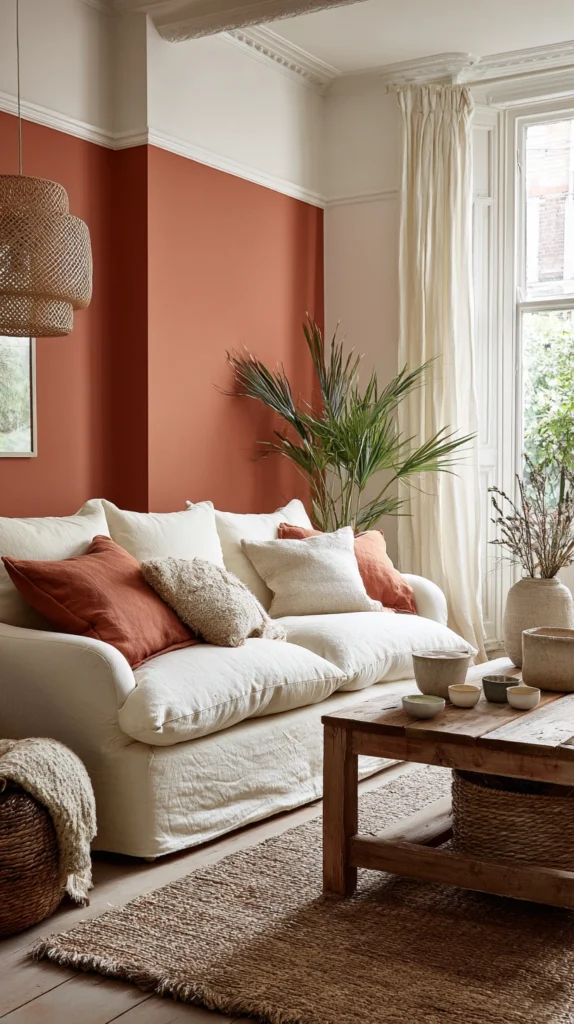
Painting an entire room terracotta can feel overwhelming, but using it on a single feature wall or within an alcove creates a warm, enveloping backdrop that transforms the character of the space without commitment to full coverage. In a neutral interior anchored by white, linen, or greige on the remaining walls, a terracotta feature wall introduces drama and depth while keeping the overall palette balanced.
The key is choosing the right shade — terracotta paint ranges from pale, peachy blush tones to deep, almost brick-red hues, and the undertones matter enormously depending on the light quality of your room. North-facing rooms benefit from warmer, deeper terracotta tones that compensate for cooler light, while south-facing rooms can carry lighter, more faded terracotta without feeling washed out.
3. Terracotta Cushions and Throws on Neutral Sofas
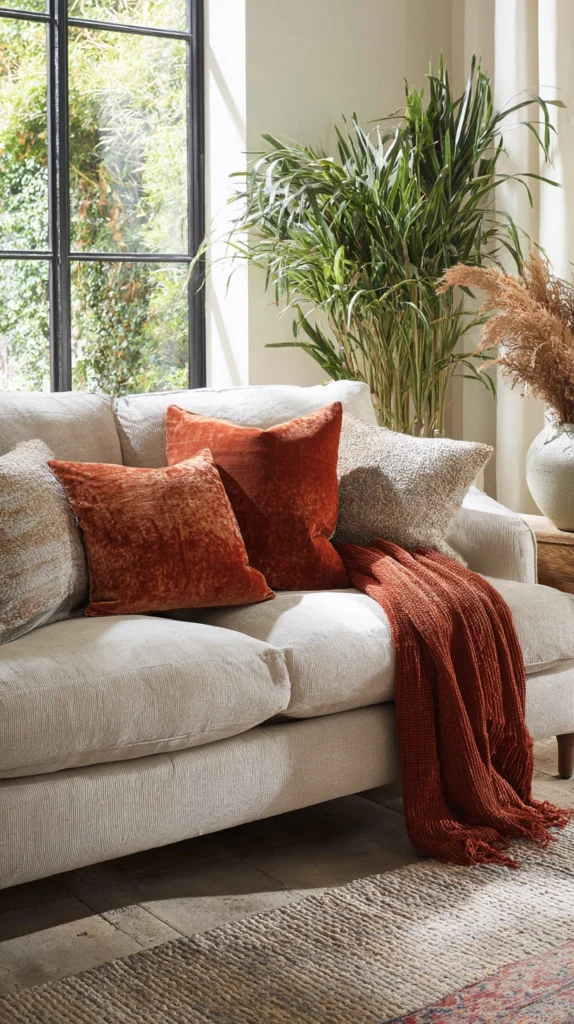
A neutral sofa in linen, oatmeal, or cream provides the perfect canvas for terracotta soft furnishings. Cushions in terracotta velvet, woven cotton, or textured boucle bring immediate warmth to a seating arrangement without requiring any structural changes to the room.
The contrast between the coolness of a neutral sofa and the warmth of terracotta cushions creates a visual tension that makes both colours look better than they would in isolation.
Layering a terracotta throw casually over one arm of the sofa adds another texture and reinforces the colour story without making the arrangement feel overly staged. This is one of the easiest and most reversible ways to introduce terracotta into a space.
4. Terracotta Floor Tiles in Living and Dining Areas
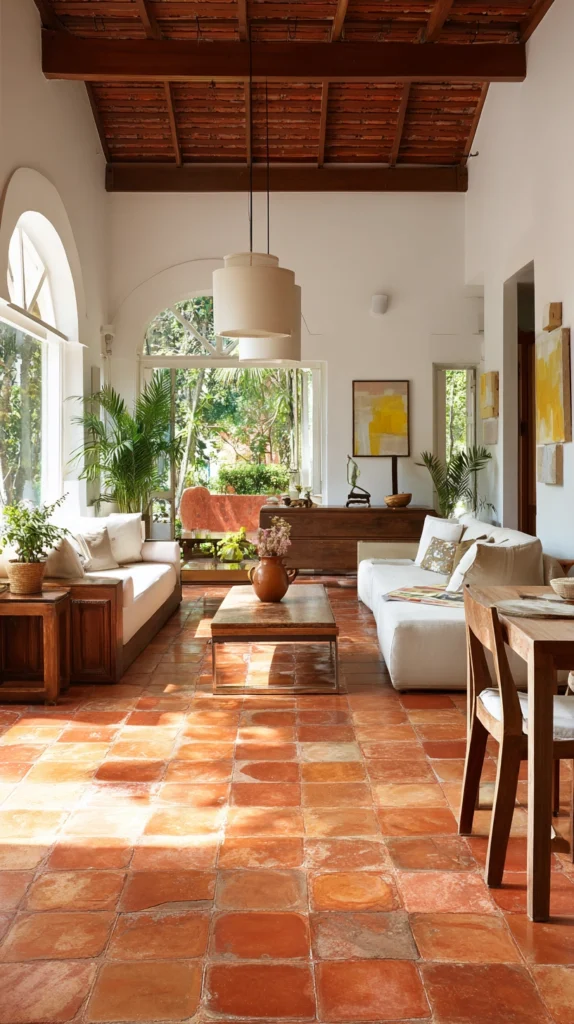
Bringing Warmth From the Ground Up
Genuine terracotta floor tiles — the kind made from natural clay and fired at relatively low temperatures — have been used in homes across the Mediterranean, Mexico, and North Africa for centuries, and their enduring appeal makes complete sense. Their warm, mottled tones and slightly uneven surfaces give them a depth and character that manufactured tiles cannot replicate.
In a neutral interior, terracotta floor tiles anchor the entire space with warmth from the ground up, influencing the quality of light throughout the room as the tiles reflect warm tones upward. They require sealing to prevent staining and benefit from periodic re-sealing, but the maintenance is straightforward and the reward is a floor that only becomes more beautiful with age and use.
5. Terracotta Planters Throughout the Home
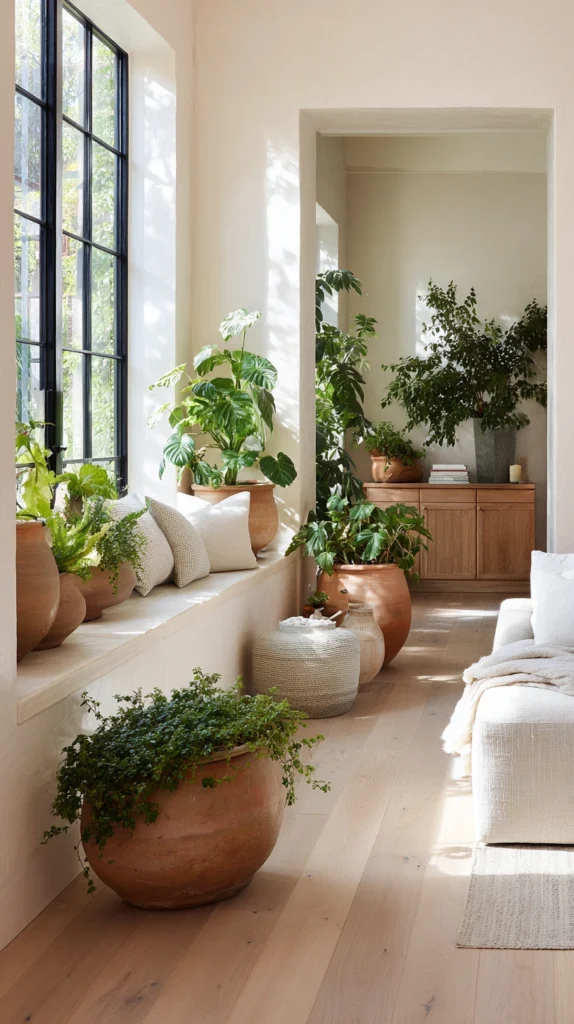
The connection between terracotta and plant life is ancient and intuitive, and bringing terracotta planters indoors is one of the most natural ways to incorporate the material into a neutral interior.
Grouping terracotta pots of varying sizes across a windowsill, clustering them in a corner of a living room, or lining them along a kitchen shelf creates a display that feels simultaneously decorative and purposeful.
Unglazed terracotta is porous, which makes it particularly good for plants that prefer their roots to dry out between waterings, including succulents, cacti, herbs, and Mediterranean species. The earthy tones of the pots complement virtually every plant variety, making it impossible to create a combination that looks wrong.
6. Terracotta Bedding and Bedroom Textiles
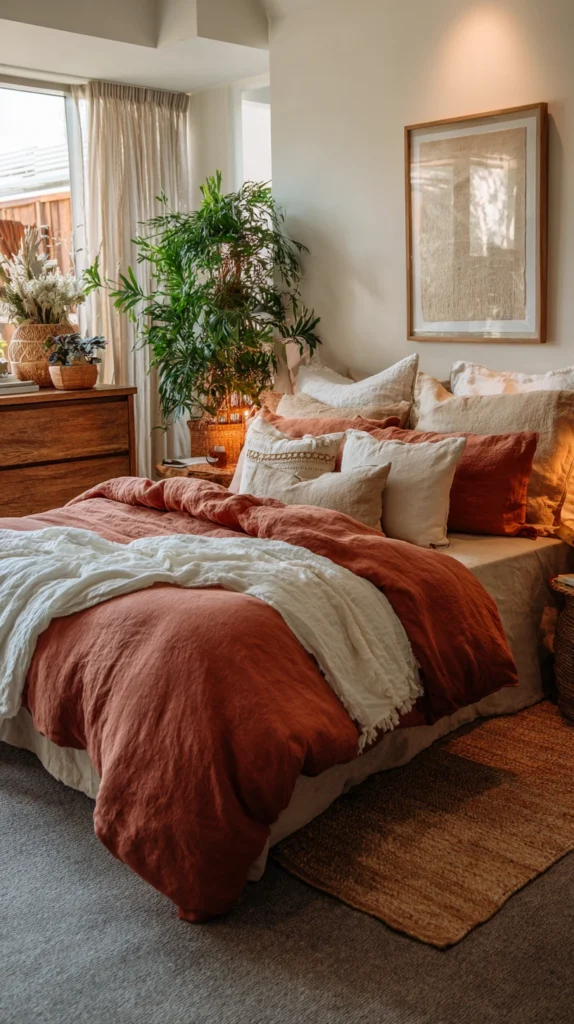
The bedroom is arguably the space where terracotta feels most at home. Its warm, earthy tones create an enveloping, cocoon-like atmosphere that is deeply conducive to rest and relaxation. A terracotta duvet cover or bedspread layered with cream, rust, and warm white pillow covers creates a bed that looks abundantly comfortable and beautifully considered.
Linen is the fabric that most naturally complements terracotta’s earthy character — its slightly rough texture and organic drape feel entirely consistent with the material’s clay origins. In a bedroom with white walls, natural timber furniture, and warm lighting, terracotta bedding transforms the space from merely neutral to genuinely warm and inviting.
7. Terracotta Lampshades and Lighting Accents
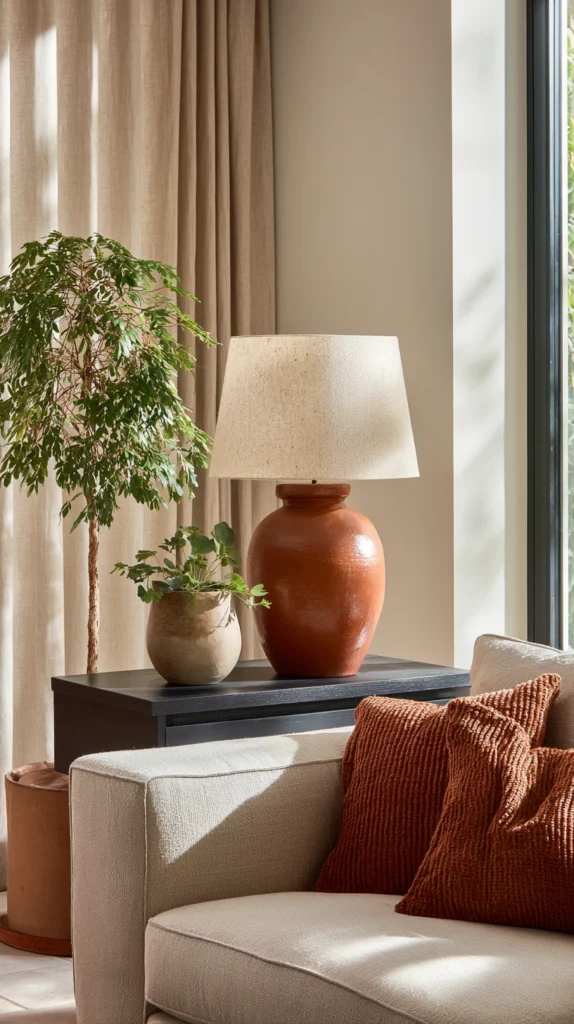
Warm Light Made Warmer
Lampshades in terracotta-toned fabric or ceramic table lamp bases in the characteristic earthy hue bring the colour into the vertical plane of a room in a way that vases and cushions cannot. A ceramic table lamp base in matte terracotta topped with a natural linen shade creates a lighting element that contributes to the room’s colour palette even when switched off, and when illuminated, casts warm, amber-toned light that enhances every other element in the space.
Terracotta pendant shades in perforated ceramic or ribbed clay are increasingly available and bring a subtle, patterned light effect to dining areas and bedrooms that adds considerable atmosphere.
8. Terracotta Abstract Art and Wall Prints
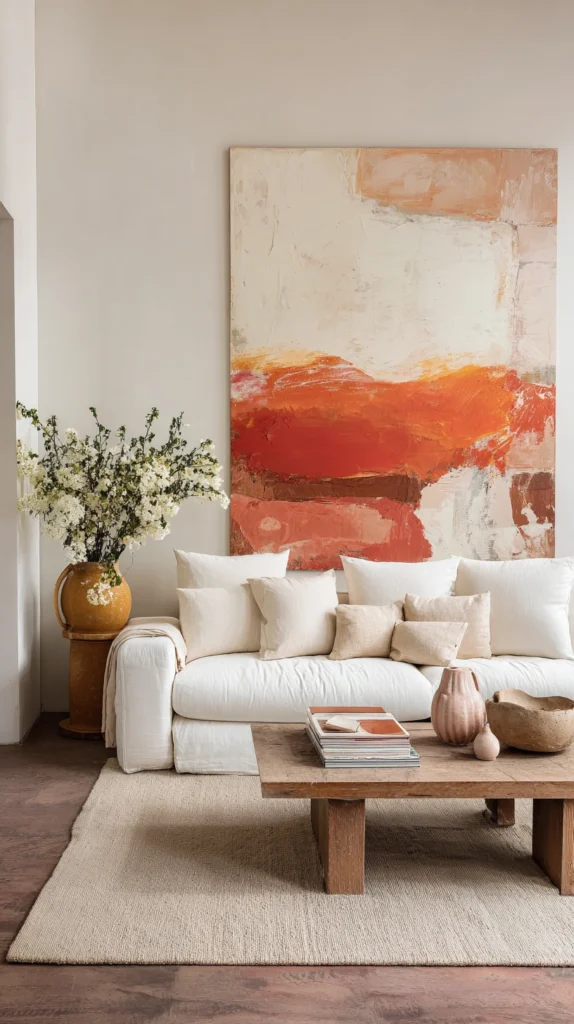
Art featuring terracotta tones — whether abstract paintings with ochre, rust, and burnt sienna brushwork, or photographic prints of terracotta landscapes and architecture — brings the colour to eye level in a way that feels deliberately curated.
A large abstract canvas with sweeping brushstrokes in terracotta, cream, and warm brown hung above a sofa or fireplace becomes the anchor of the entire room’s colour story, giving you permission to pull those tones through the space in smaller accents elsewhere.
For a more restrained approach, a series of smaller prints in simple terracotta-toned frames arranged in a grid or salon-style grouping creates visual interest without the dominance of a single large work.
9. Terracotta Kitchen Accessories and Ceramics
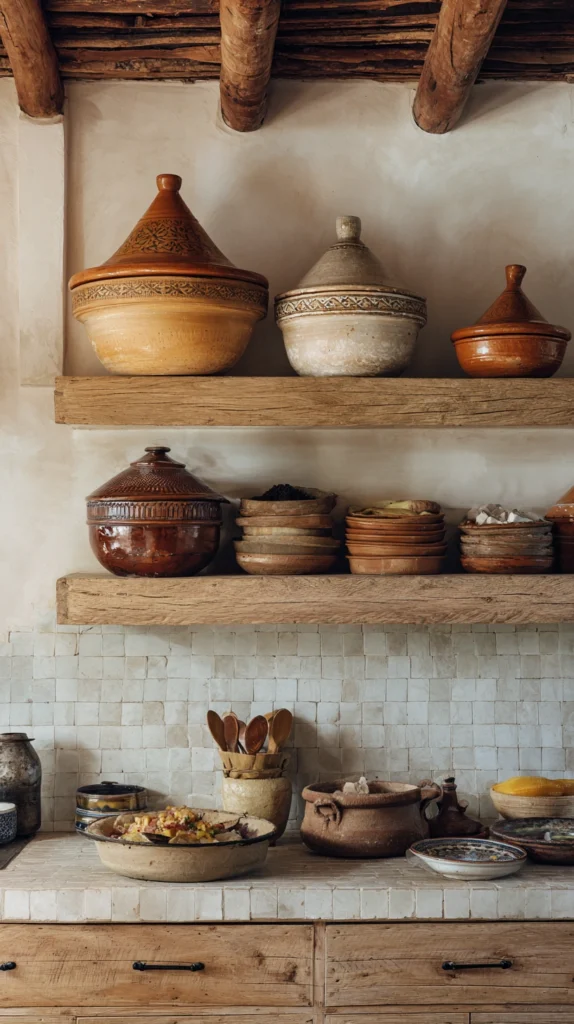
The kitchen is a natural home for terracotta given the material’s historical connection to cooking and food storage. Replacing mismatched kitchen accessories with a cohesive collection of terracotta-toned pieces — a ceramic utensil holder, a set of stoneware mixing bowls, a terracotta salt pig, a clay tagine, or a set of handmade side plates — creates a kitchen that feels warm and characterful while remaining entirely functional.
These pieces do not need to match exactly; slight variations in tone and finish between pieces add to the artisanal, collected quality of the display. On open kitchen shelving in particular, a grouping of terracotta ceramics creates a still-life composition that is genuinely beautiful.
10. Terracotta Bathroom Accents
Warmth in the Most Utilitarian Space
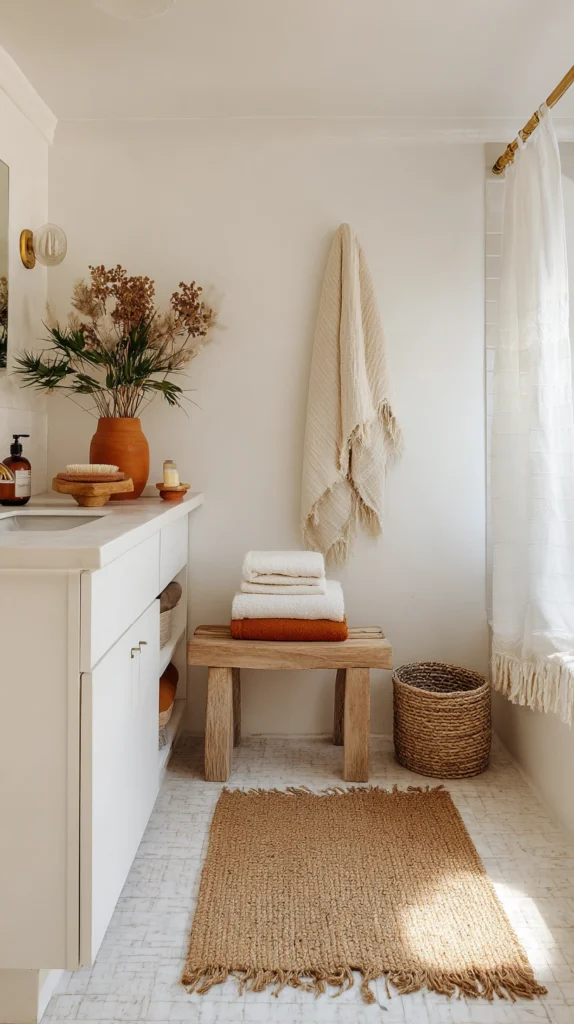
The bathroom is often the last room people think to introduce colour into, yet it is frequently the space that benefits most from warmth. In a bathroom anchored by white tiles, chrome fixtures, and cool natural stone, terracotta accents provide exactly the warmth needed to prevent the space from feeling clinical.
A terracotta soap dish, a set of matching ceramic toothbrush holders and cups, a hand-thrown terracotta vase holding dried botanicals, or a woven terracotta-toned bath mat all introduce the colour in small, affordable increments.
For a more committed approach, terracotta zellige or handmade tiles used as a feature splashback or shower niche lining bring pattern, texture, and warmth to the bathroom simultaneously.
11. Woven and Rattan Furniture with Terracotta Cushions
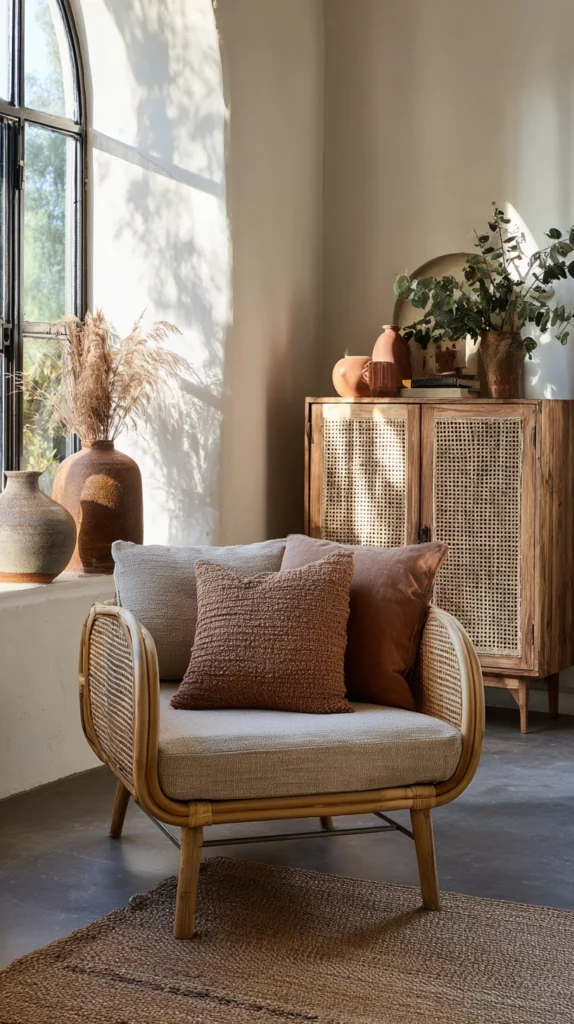
Natural woven furniture — rattan chairs, jute poufs, seagrass baskets, and cane-backed armchairs — shares a material kinship with terracotta that makes the combination feel entirely coherent. Both materials are natural, tactile, and warm in tone, and together they create an interior that feels grounded in the natural world without becoming overly rustic or themed.
A rattan armchair with a terracotta boucle cushion, a seagrass rug beneath a terracotta-toned coffee table, or a cane sideboard styled with terracotta ceramics and dried botanicals creates a layered, textural interior that feels curated and genuinely cozy.
12. Terracotta Curtains and Window Treatments
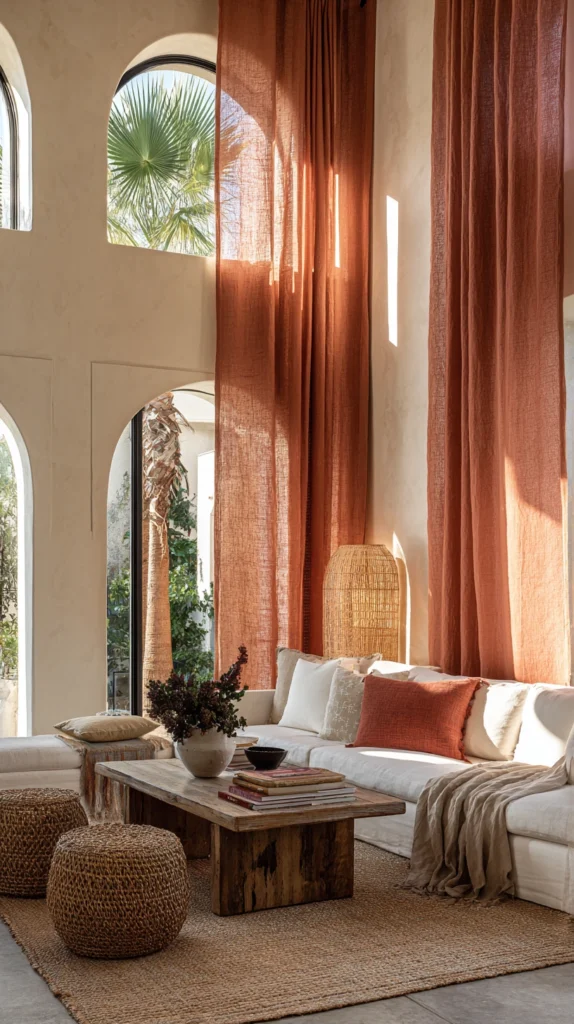
Full-length curtains in terracotta linen or cotton bring the colour to the largest vertical surfaces in a room — the walls on either side of the windows — creating a dramatic, enveloping warmth that smaller accents cannot replicate. In a room with white or neutral walls, terracotta curtains frame the windows like a warm border and shift the entire temperature of the space.
Linen is the ideal fabric for terracotta curtains because its natural texture and slight translucency allow light to filter through with a warm glow that reinforces the earthy colour. For a more relaxed, bohemian feel, unlined terracotta linen curtains that pool slightly at the floor create a look that is abundantly cozy and effortlessly stylish.
13. Terracotta Candles and Candle Holders
The Smallest Accents With the Biggest Atmosphere
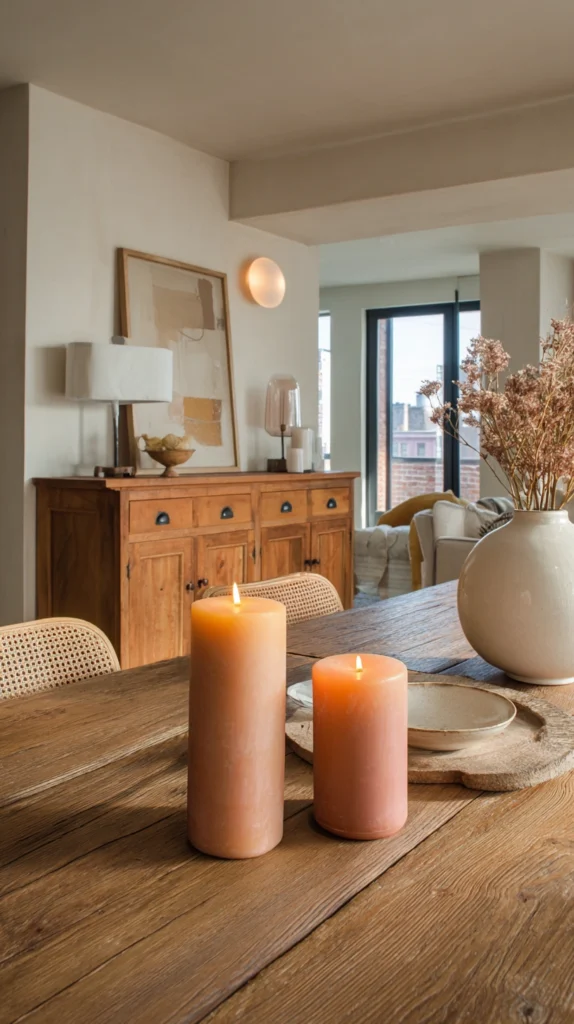
Candles in terracotta tones, whether the wax itself is coloured or the candles are housed in terracotta ceramic vessels, contribute to both the colour story and the atmosphere of a space simultaneously.
Grouped on a dining table, arranged along a windowsill, or clustered on a coffee table tray, terracotta candles add warmth twice over — through their colour during the day and through their flickering light in the evening. Hammered terracotta taper candle holders, hand-thrown clay tealight holders, and large pillar candles in burnt orange and rust tones are all widely available and represent one of the most affordable ways to incorporate the colour into any room.
14. Terracotta Geometric Tiles as Splashbacks and Feature Surfaces
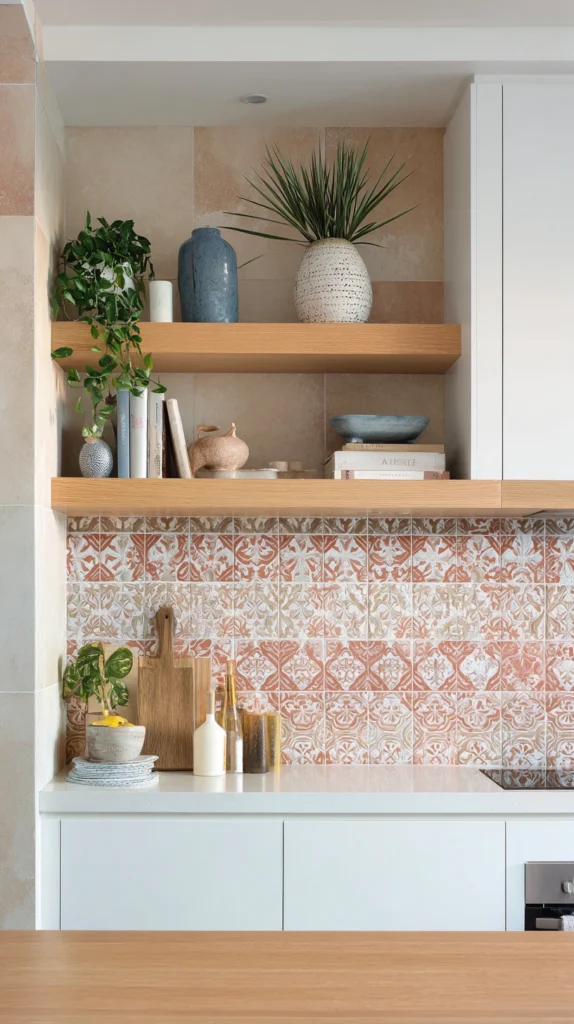
Encaustic cement tiles or handmade ceramic tiles in terracotta tones used as a kitchen splashback, fireplace surround, or feature wall section introduce pattern, colour, and texture in a defined, contained area that feels deliberately architectural.
Geometric patterns in terracotta and cream, or terracotta combined with black and white, create a surface that references North African, Spanish, and Mexican tile traditions in a way that feels contemporary rather than kitsch. The key is keeping the surrounding surfaces simple and neutral so that the tiled area reads as a considered feature rather than competing with too many other elements.
15. Layered Terracotta Tones for a Tonal Interior
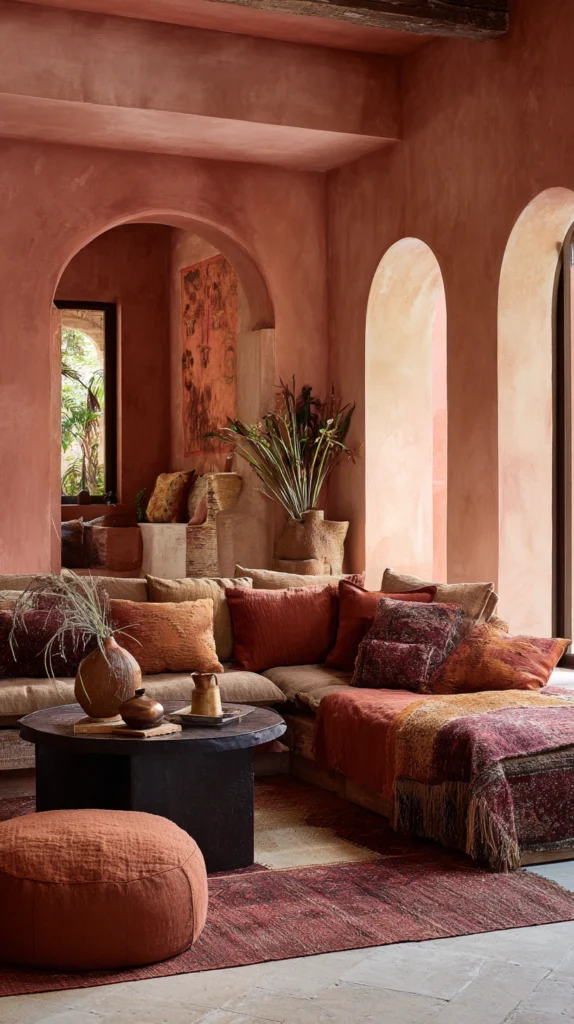
Moving Beyond Accent Into Full Palette
The most sophisticated approach to terracotta in a neutral interior is not using it as a single accent colour but layering multiple shades and tones of the same earthy family to create a fully developed, tonal palette.
Pale blush terracotta on the walls, a deeper burnt sienna on soft furnishings, rich rust in the rugs and curtains, and raw unglazed clay in the ceramics and accessories creates an interior that feels completely immersive and deeply warm without relying on contrast to generate visual interest.
This tonal approach requires more confidence and commitment than simply adding a terracotta cushion to a grey sofa, but the result is an interior with genuine personality and a warmth that envelops everyone who enters the space.
Building a Terracotta Interior That Lasts
Terracotta works in neutral interiors because it does not fight with the underlying palette — it enriches it. The most important principle when incorporating terracotta is balance. Pair warm terracotta tones with natural materials like linen, timber, rattan, and stone that share its earthy origins. Introduce the colour at multiple scales and in multiple textures to create depth and layering.
And resist the urge to match everything too precisely — slight variations in tone between different terracotta pieces create a collected, organic quality that is far more interesting than a perfectly coordinated set. Terracotta at its best feels like it has always been there, as though the warmth it brings to a space is simply the natural temperature of a home well-lived-in.