
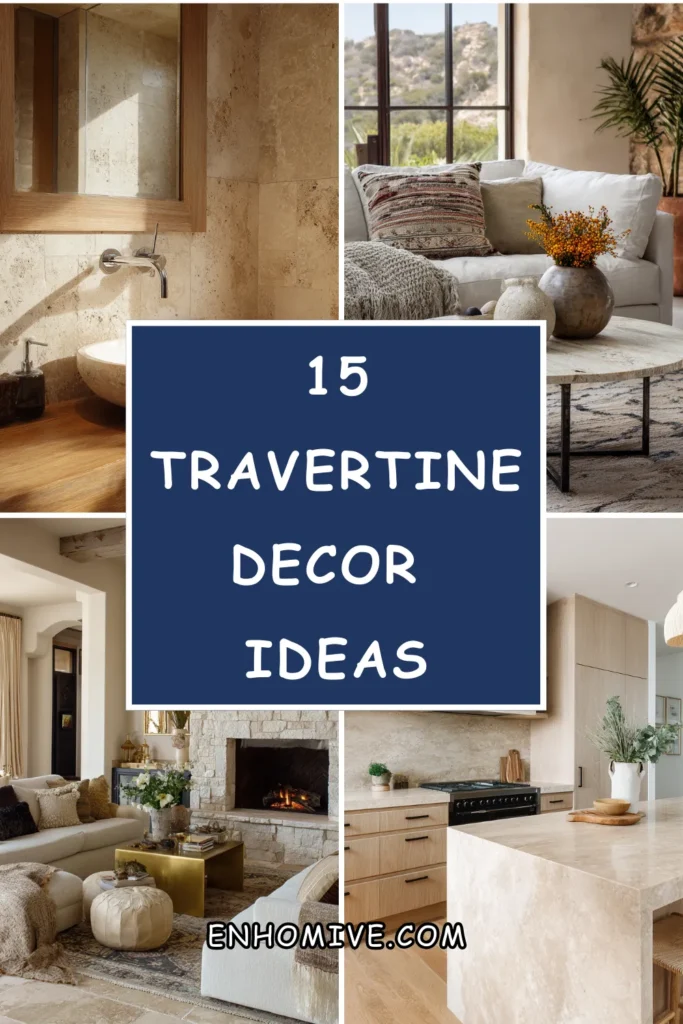
15 Travertine Decor Ideas
Travertine occupies a specific and irreplaceable position in the hierarchy of natural stones used in interior design. It is not the dramatic, veined spectacle of marble, whose bold geological patterns command attention and create surfaces of obvious visual power. It is not the austere, uniform coolness of limestone, whose restrained surface reads as architectural background rather than decorative statement.
Travertine is the stone with warmth — its characteristic pitted, cellular surface created by the carbon dioxide bubbles that escaped from the hot spring deposits where it formed over millennia, its color range running from the palest cream through warm honey tones to the deep walnut and chocolate tones of its most dramatically colored varieties, its surface that appears to have been made by a slow and patient natural process rather than by the violent geological forces that produce marble’s veining.
The specific warmth of travertine — a warmth that is simultaneously visual, tactile, and almost metaphorical, the warmth of a material that formed in warm spring water and carries that thermal memory in its surface — makes it the natural stone most suited to the creation of domestic interiors that feel genuinely, materially comfortable rather than merely beautiful.
Its recent revival in contemporary interior design is not simply a trend — it is the recognition by a generation of designers and homeowners that the specific quality of travertine’s warmth and texture is irreplaceable in the creation of interiors that feel authentically good to be in. Here are fifteen ideas for using it with the intelligence and confidence it deserves.
1. A Travertine Kitchen Countertop for Warm Functionality
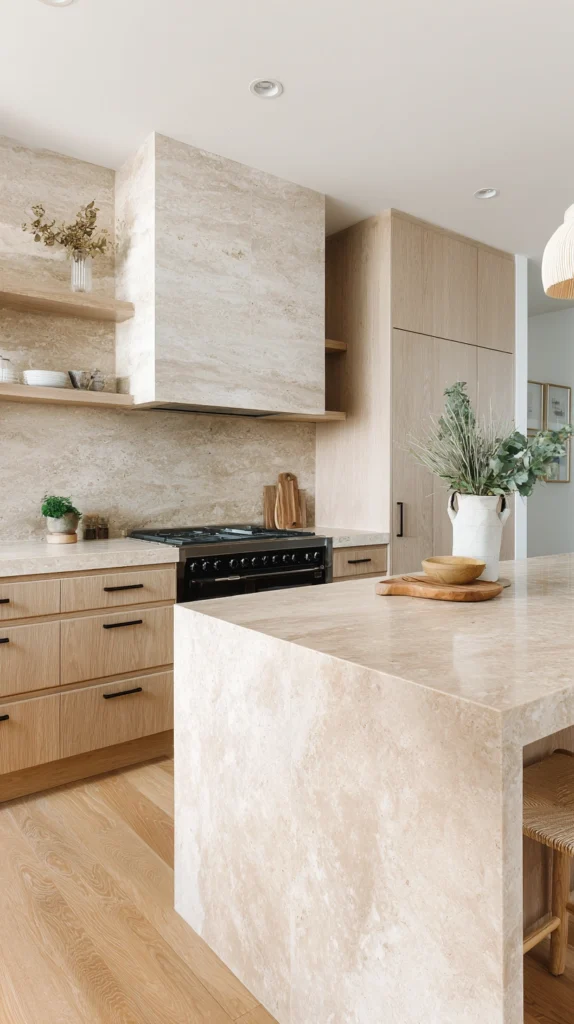
The travertine kitchen countertop — a surface cut from filled or unfilled travertine in a format appropriate to the kitchen’s layout, finished in a honed rather than polished surface that suits the kitchen’s working character — creates a cooking environment of genuine material warmth that marble and engineered stone alternatives cannot quite replicate.
Travertine’s warm honey and cream tones relate to the natural material kitchen — timber cabinetry, terracotta or stone flooring, warm brass hardware — with a naturalness that cooler stone options lack, and its honed surface provides a tactile quality that the morning kitchen routine, with its repeated placing and lifting of cups and utensils, makes fully felt.
The travertine countertop requires more maintenance consideration than some alternatives — it should be sealed regularly, it is susceptible to acidic foods and drinks, and its natural holes in unfilled travertine require either filling or the acceptance that they will collect kitchen residue — but the daily pleasure of working on a surface of genuine geological beauty justifies the care it requires.
Choose a filled and honed travertine for the kitchen’s working surfaces, where the filled holes provide a more hygienic and more practical surface than the raw unfilled stone, and the honed finish provides grip and warmth without the reflective glare of a polished surface.
2. Travertine Bathroom Walls for Total Immersion
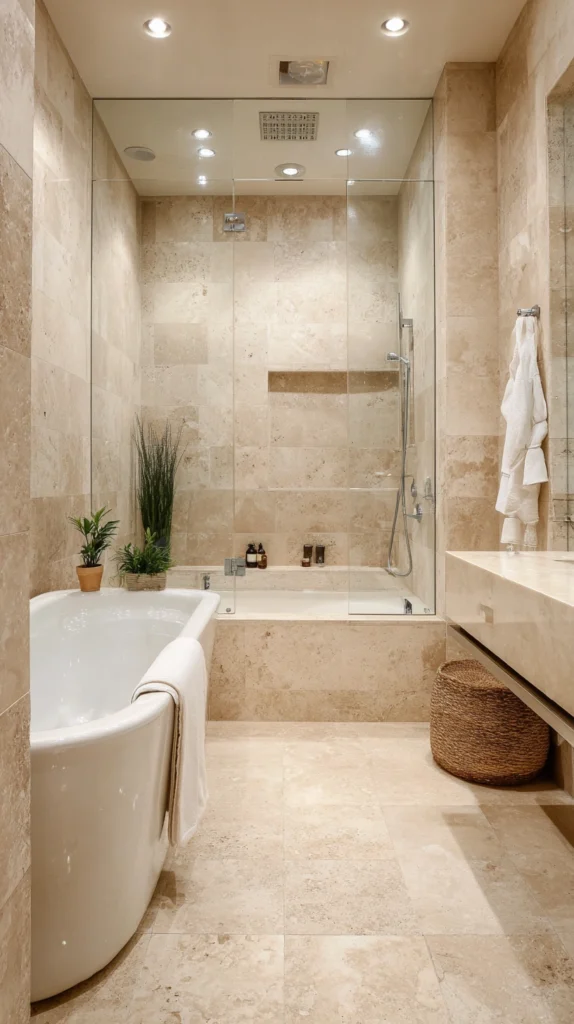
The bathroom clad in travertine — walls, floor, and shower enclosure in a continuous application of the same warm stone — creates a bathing environment of extraordinary sensory richness that no tiled bathroom can approach. The travertine’s cellular texture absorbs and returns the light of the bathroom — the morning sunlight from the window, the warm glow of artificial lighting in the evening — with a quality of diffuse warmth that smooth, reflective surfaces distribute too evenly to create.
The experience of standing in a travertine shower — the stone’s warmth underfoot even before the water has heated the floor, the texture of the stone walls perceptible to the touch during washing, the warm cream and honey tones of the stone’s surface creating a visual environment of complete natural beauty — is one of the most genuinely luxurious available in any domestic setting.
The travertine bathroom should use a consistent stone lot — slabs or tiles from the same quarry batch — to ensure the tonal and textural consistency that makes the continuous stone application read as a unified material environment rather than a patchwork of slightly different stones.
3. A Travertine Feature Wall in the Living Room
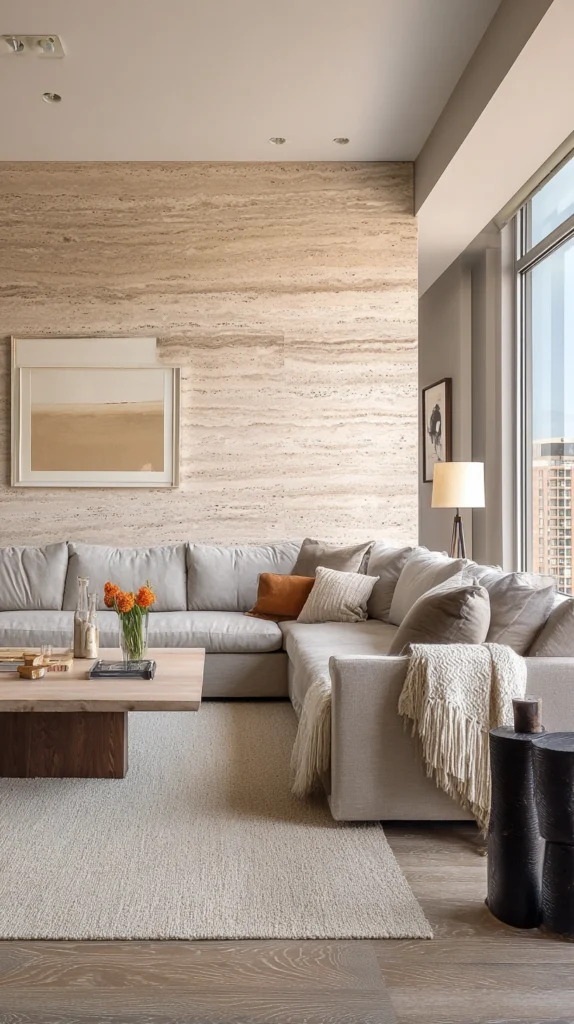
A full or partial feature wall in travertine — either large-format tiles in a consistent running bond or more dramatic large slab panels — creates a living room backdrop of considerable warmth and texture that painted walls and timber paneling cannot achieve.
The travertine feature wall’s cellular surface creates a complex play of light and shadow across its face that changes as the room’s light changes through the day — the morning light raking across the stone’s surface and emphasizing its texture, the afternoon light softening the shadows, the warm evening lamplight creating the most flattering and most atmospheric quality of the stone’s surface at its most beautiful.
Position the travertine feature wall behind the primary seating arrangement or the fireplace — the room’s natural focal points — and dress the wall simply: a single significant artwork, a wall-mounted light, or the clean face of the travertine itself without additional decoration, trusting the stone’s natural beauty to provide the feature wall’s full visual content without supplementary decoration.
4. Travertine Flooring Throughout Open Plan Living Areas
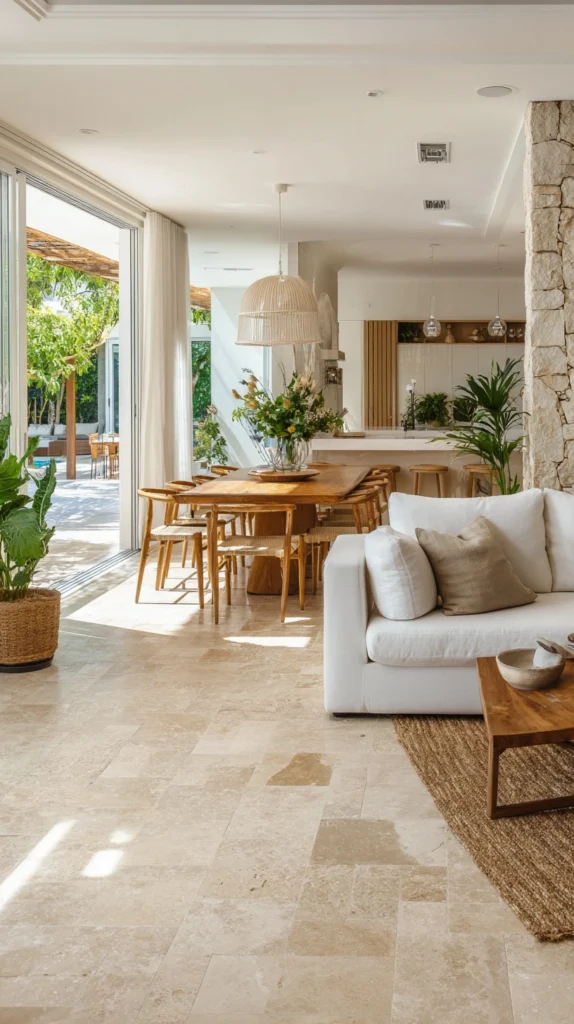
Continuous travertine flooring throughout an open plan living, dining, and kitchen area — a single material running uninterrupted from the kitchen’s work zones to the living room’s seating area to the dining room’s table arrangement — creates an interior of complete spatial generosity and material warmth that the division of different floor materials for different zones cannot replicate.
The single floor material’s continuity creates a visual expansion of the floor plane that makes the open plan’s total area appear larger than the same floor divided between timber, stone, and tile in different zones.
The travertine’s warm tone creates a floor that relates to every material in the surrounding interior — timber furniture, upholstered sofas, ceramic accessories, brass fixtures — with the natural versatility of a stone whose color exists at the intersection of the warm neutrals that most interior palettes are built upon.
Choose a large-format tile — six hundred by twelve hundred millimeters or larger — for the most seamless and most architecturally impressive floor result, and maintain the consistent grout joint width throughout to create the precisely laid floor that the open plan’s visual prominence demands.
5. A Travertine Fireplace Surround
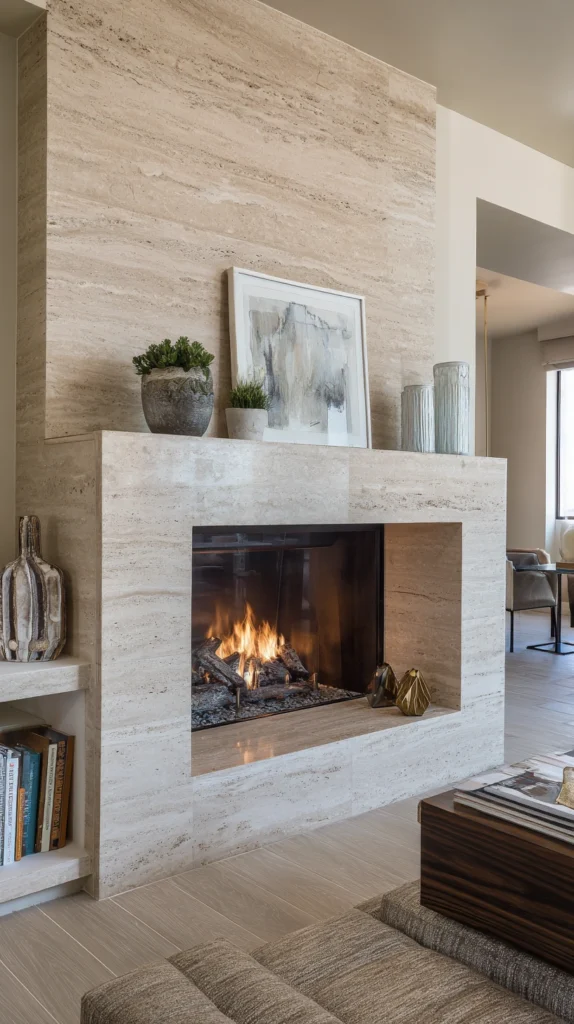
The travertine fireplace surround — the stone’s warm, cellular surface framing the opening of the fireplace in a material of genuine geological antiquity — creates a living room focal point that relates to the classical tradition of the stone fireplace with a warmth and material richness that its cooler stone alternatives cannot match.
Travertine has been used for fireplace surrounds in the finest European domestic interiors for centuries — the Roman travertine that built the Colosseum was the same geological formation that filled the fireplaces of the villas surrounding it — and its application in the contemporary living room creates a material connection to that tradition without the period specificity of a design that is explicitly historical in its architectural language.
A simple, minimal travertine surround — clean geometric profiles without the elaborate moldings of the classical fireplace — suits the contemporary interior’s preference for material quality over decorative complexity, and the travertine’s inherent surface interest provides sufficient visual richness without the addition of carved detail.
6. Travertine in a Powder Room for Maximum Impact
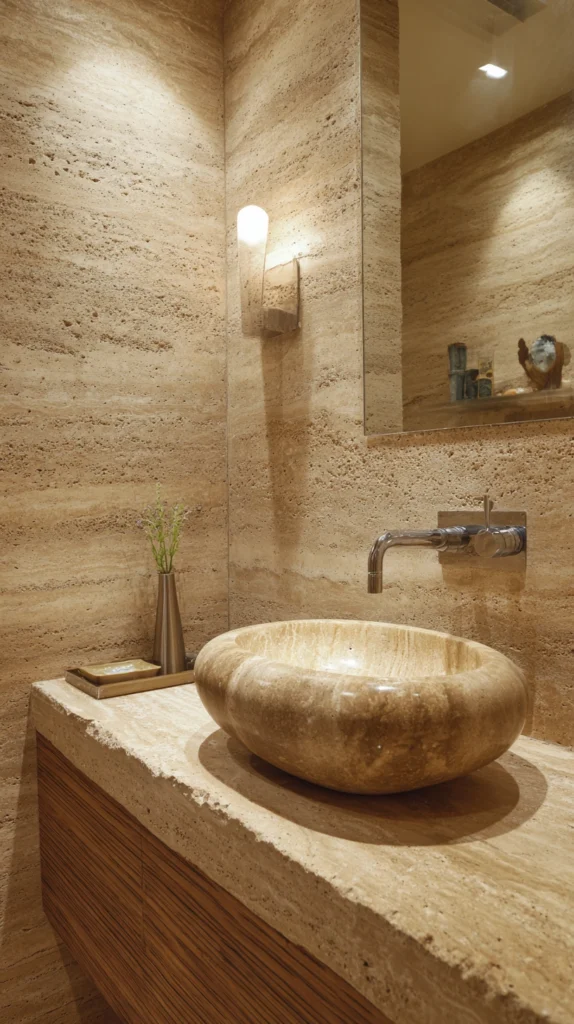
The powder room — small, enclosed, experienced at close range for brief periods, and unlikely to be the subject of the intensive maintenance regime that the bathroom’s daily use demands — is the ideal location for travertine’s most dramatic application: the fully clad room whose walls, floor, and ceiling are all in travertine, creating a total material environment of cave-like warmth that the larger bathroom’s more complex functional requirements prevent.
The fully travertine-clad powder room — its four walls, its floor, and ideally its ceiling all in the same warm stone, with a vessel basin cut directly from a travertine block and a simple brass faucet — creates a room of absolute material purity and extraordinary visual impact that arrives instantly and fully as the visitor enters the small space.
The travertine should be in an unfilled, honed or textured finish in the powder room, where the stone’s full cellular character can be celebrated without the hygiene concerns that the unfilled surface creates in the kitchen or the main bathroom’s daily washing environment.
7. A Travertine Dining Table for Material Warmth at Meals
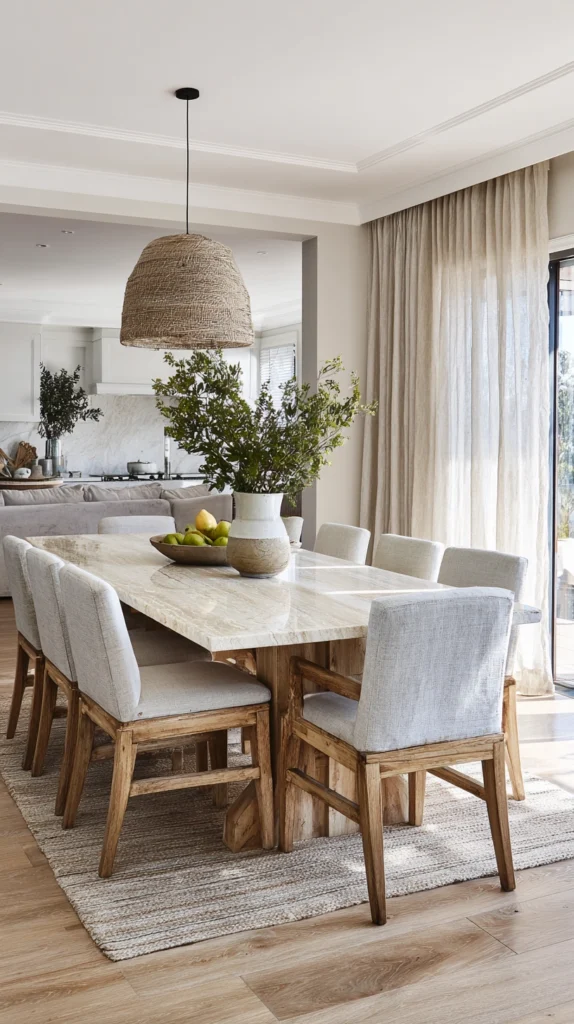
A dining table with a travertine top — either a solid slab of travertine on a timber or steel base, or a travertine-topped table in a proprietary furniture format — creates a dining surface of considerable material beauty and warmth that relates to the meal’s visual and tactile experience in ways that timber and engineered stone alternatives cannot.
The travertine dining table’s warm surface — the candlelight of a dinner party setting reflecting in the stone’s slightly varied, warm-toned surface — creates a table setting of genuine material luxury that makes the act of dining more visually and sensory pleasurable simply through the quality of the surface on which the setting rests.
The travertine’s cellular texture creates a surface that is slightly more forgiving of the casual use of a dining table than polished marble — its matte, textured quality doesn’t show every mark with the clarity that a polished surface would — but it requires the same care with acidic foods and drinks that all calcium carbonate stones demand.
8. Travertine Tiles as a Kitchen Backsplash
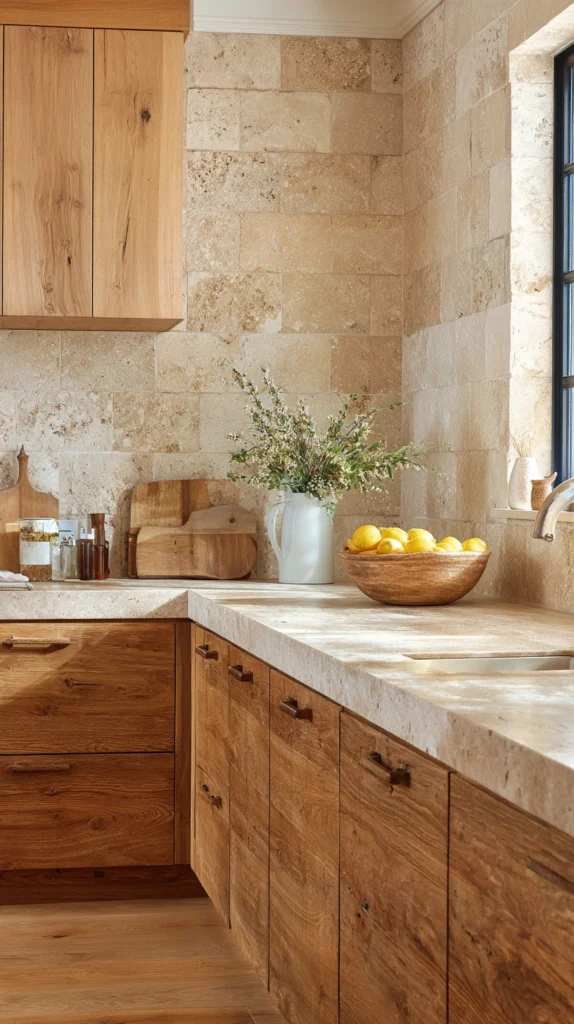
A travertine tile backsplash — the stone’s warm, cellular surface installed as the working wall of the kitchen between the countertop and the upper cabinetry — creates a kitchen backdrop of natural material warmth that relates to the travertine countertop if one is present, or provides a warm stone element in a kitchen where the countertop is in another material.
The travertine backsplash should be in a filled, honed format for the kitchen’s hygienic requirements — the unfilled stone’s natural holes collect grease and food residue that is difficult to clean effectively from the working wall environment.
A subway tile format in travertine — the rectangular horizontal tile that has been the backsplash’s most popular format for decades — creates a backsplash of warm, slightly textured interest that updates the familiar format through the quality of the natural material rather than through novelty of pattern or layout.
The travertine subway backsplash suits the natural material kitchen — timber cabinetry, stone countertop, warm brass or black hardware — with complete aesthetic coherence.
9. Travertine Coffee Table for Living Room Grounding
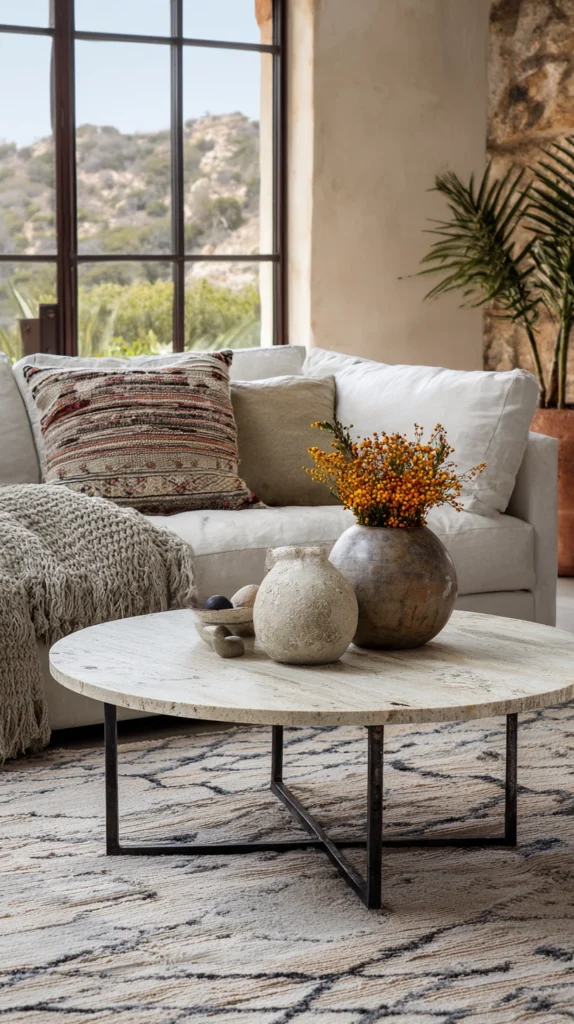
The travertine coffee table — a round, oval, or rectangular stone top on a base of brass, steel, or timber — is the living room’s most impactful single furniture addition for the homeowner who wants to introduce the material’s specific warmth without committing to the larger architectural applications.
The coffee table’s travertine top is experienced at close range from the surrounding seating — touched, rested upon, looked at from the specific intimate distance of daily living room use — and this closeness makes the coffee table one of the most sensory furniture applications of any material in the living room.
The travertine coffee table’s warm surface grounds the seating arrangement with the specific quality of material weight and warmth that timber and glass alternatives lack, and its geological age and natural beauty create the sense of anchoring the domestic interior to the natural world that the most material-conscious contemporary interior design consistently seeks.
10. Travertine as Outdoor Paving for Seamless Indoor-Outdoor Flow
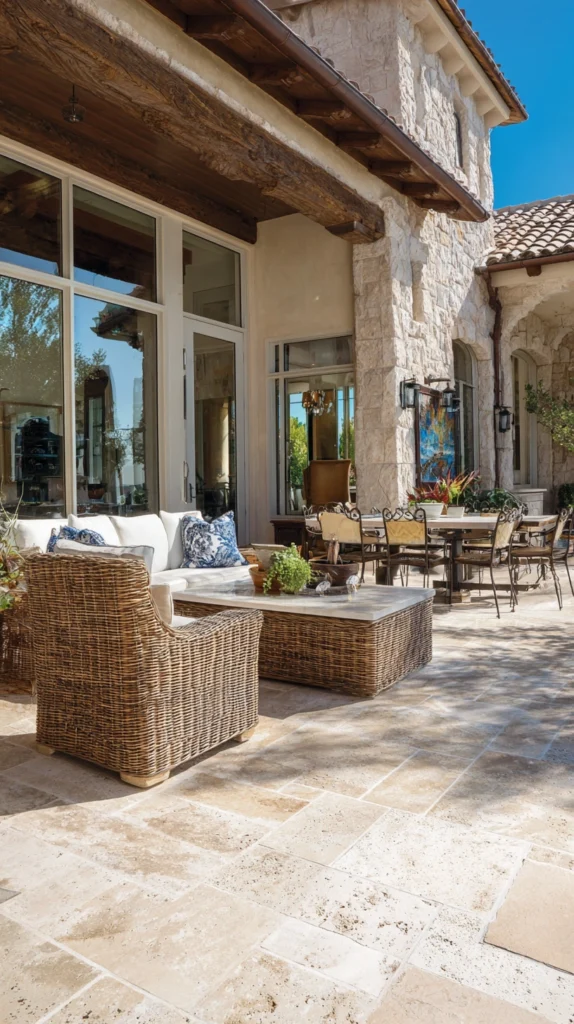
Travertine pavers — large format tiles of exterior-grade travertine in a tumbled or brushed finish that suits the outdoor environment — used on the patio, terrace, or courtyard adjacent to the main living areas create the material continuity between inside and outside that the contemporary open plan home’s indoor-outdoor connection most powerfully requires.
When the interior travertine flooring continues through the opening glass doors onto the exterior terrace in the same material and the same tone, the visual boundary between inside and outside dissolves and the living area appears to extend seamlessly into the garden — a spatial effect of considerable power that different floor materials cannot create regardless of how carefully their colors are coordinated.
The exterior travertine should be in an antique or tumbled finish rather than honed — the rougher, more textured surface provides the slip resistance that smooth stone outdoors cannot guarantee when wet — and should be sealed with an exterior-rated penetrating sealer that protects the stone from the freeze-thaw cycles and water infiltration that outdoor stone endures.
11. Travertine Shelving for Display with Material Depth
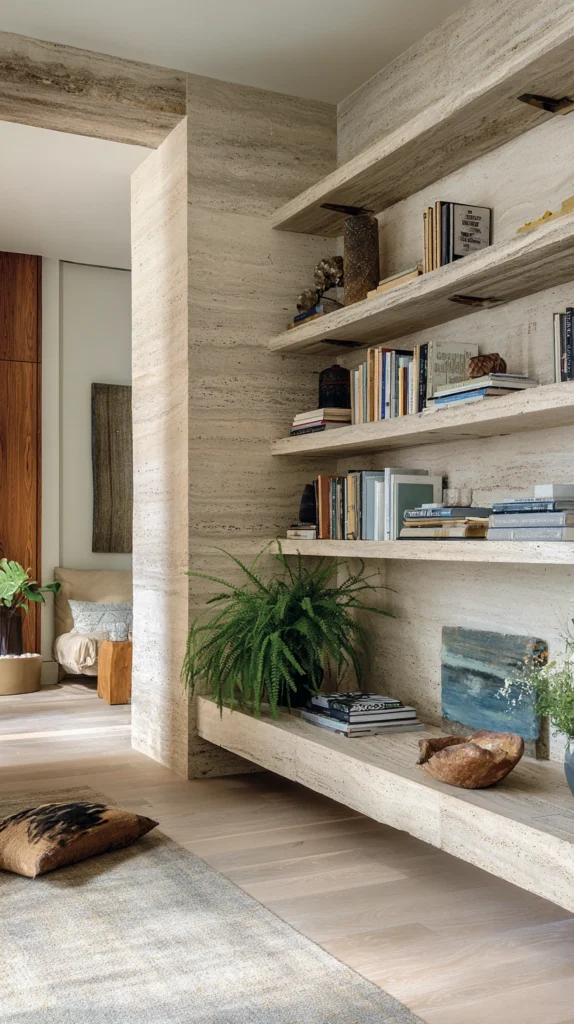
Shelving constructed from travertine — slabs of the stone cut to shelf dimensions and supported on simple brackets in brass, black steel, or minimal timber, creating floating stone shelves on the wall — brings the material’s specific warmth and surface depth to the display and storage function in a way that timber and painted MDF shelving cannot approach.
The travertine shelf’s weight and material presence gives displayed objects the sense of resting on something of genuine geological substance rather than a manufactured surface, and the stone’s warm, cellular surface provides a visually interesting base layer for any arrangement of books, ceramics, and decorative objects placed upon it.
Travertine shelving suits the bathroom vanity — where stone shelves above the basin hold towels and beauty products on a surface of complete material coherence with a travertine wall or floor below — and the living room — where travertine shelves on a feature wall create a display system of genuine material ambition.
12. A Travertine Basin or Sink
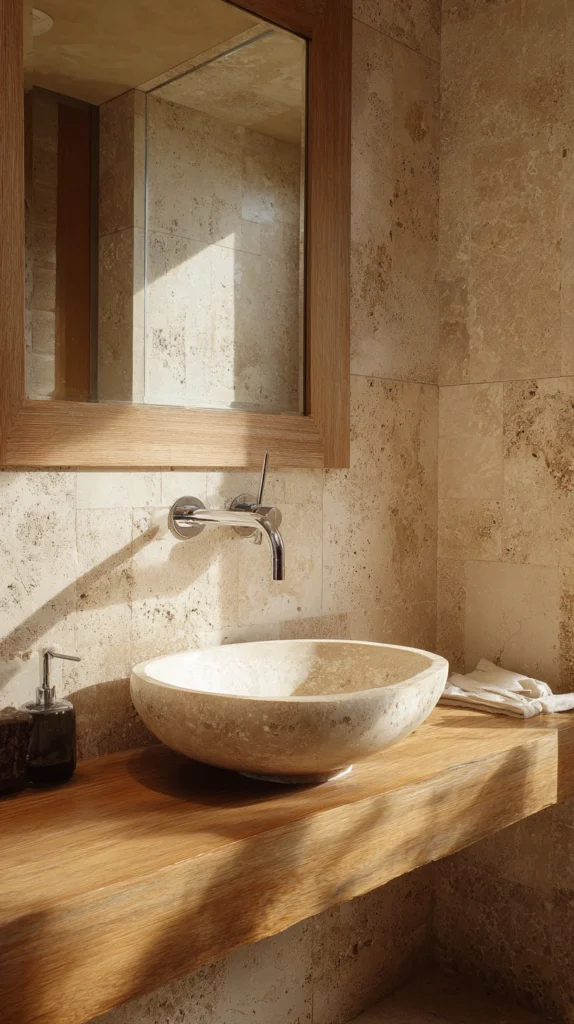
A basin carved or formed from travertine — either a vessel basin that sits above the vanity counter, a carved basin integrated into a travertine slab counter, or a freestanding travertine sink in a utility or kitchen context — is the most direct and most complete expression of the stone’s material quality available in any domestic application.
The carved travertine basin’s interior surface — the stone’s cellular texture visible within the bowl, the warm tone of the travertine catching the bathroom’s light as the water fills and drains — creates a washing experience of unusual sensory richness that the ceramic and composite basins that most bathrooms contain entirely lack.
A vessel basin in travertine on a simple timber or concrete vanity counter, with a simple wall-mounted brass tap, creates a bathroom focal point of complete natural beauty that is simultaneously the most functional element of the room and its most visually significant material statement.
13. Travertine in the Bedroom for Warmth Underfoot
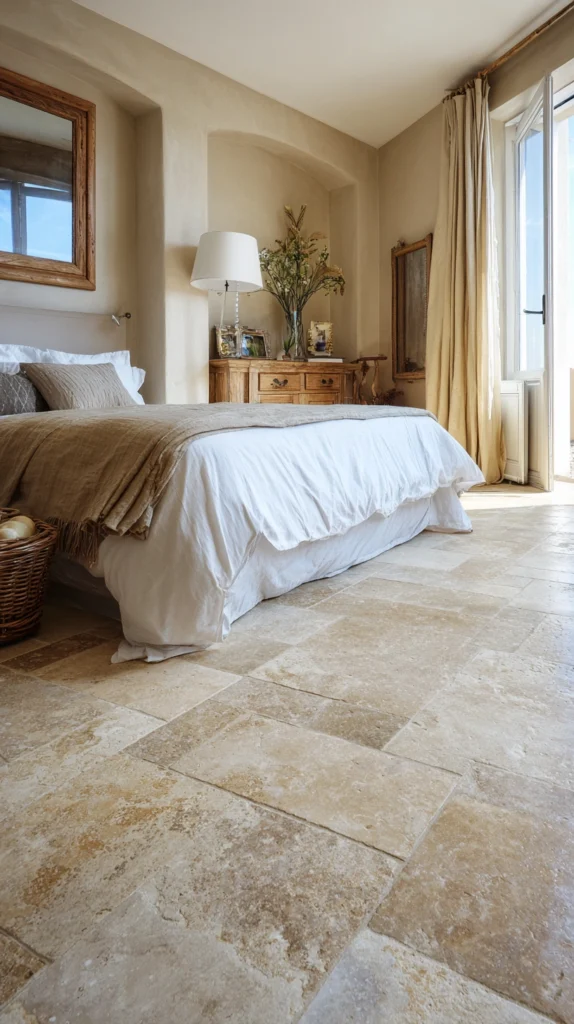
The bedroom floor in travertine — a material whose warmth of color and texture is more suited to the bedroom’s intimate, bare-foot environment than the cool precision of polished marble or the industrial quality of concrete — creates a sleeping space of complete material warmth that begins each morning with the specific sensory pleasure of bare feet on warm stone.
The bedroom travertine should be in a finer format than the open plan living area — smaller tiles or a honed large format with a very smooth surface that suits the bare-foot contact of the bedroom without the texture that characterizes the more utilitarian applications — and should be installed with underfloor heating beneath for the cold months when stone’s thermal conductivity would otherwise make the bare-foot experience less pleasant.
The warm honey tones of the bedroom travertine floor create a morning visual experience of natural beauty that the bedroom’s waking occupant receives before any other visual impression of the day.
14. Travertine Accessories for Small-Scale Introduction
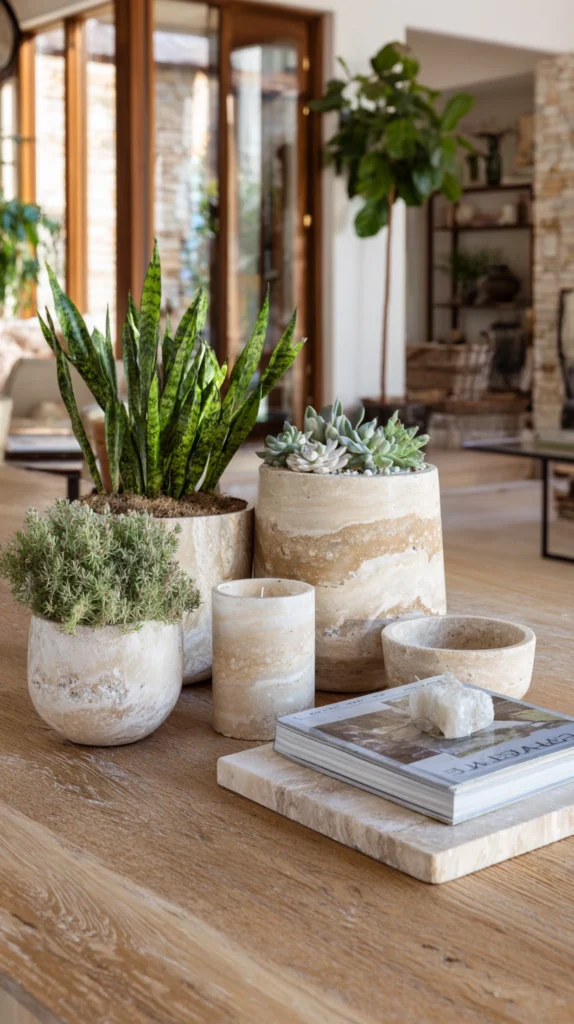
The travertine object — the candle holder, the tray, the vase, the bookend, the small decorative vessel — is the most accessible and most immediately impactful way to introduce the material’s specific warmth into a domestic interior without the commitment and cost of architectural or large-scale furniture applications.
A travertine candle holder on the living room coffee table or the dining table centerpiece holds the candle flame within the warm stone’s cellular surface, the wax of the melting candle creating a slow, beautiful relationship with the stone beneath it. A travertine tray on the bathroom vanity, holding perfume bottles and small beauty objects, creates a surface of natural material warmth that elevates the daily routine.
A pair of travertine bookends on the living room shelf, their warm stone mass anchoring a collection of books, introduce the geological weight of the material at the most intimate and most handleable scale. These small travertine objects are travertine’s most personal and most immediately accessible application.
15. Design an Entire Room Around Travertine’s Warmth
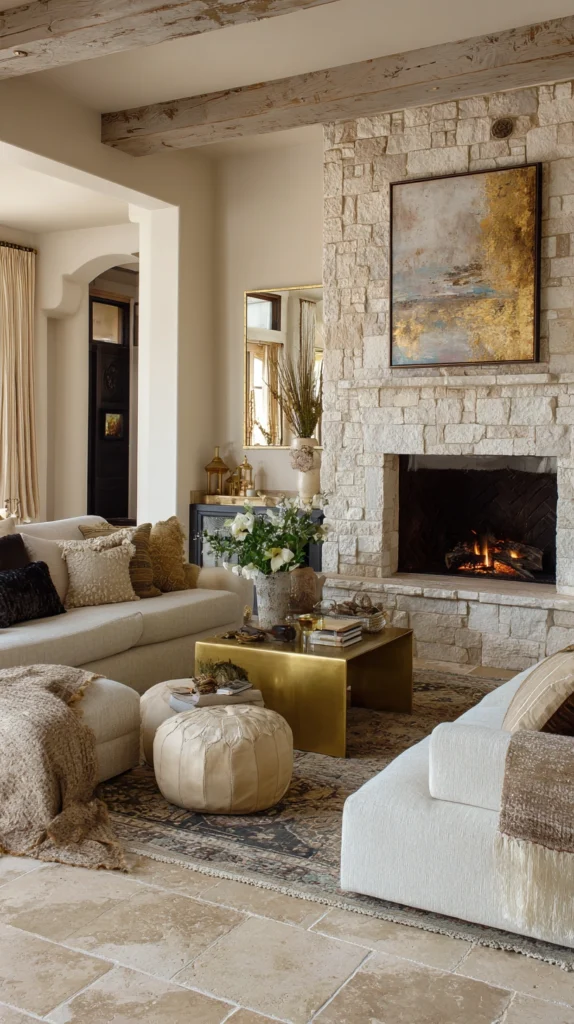
The final travertine decor idea is the most complete and the most ambitious: the room designed entirely around the specific warmth of travertine as its foundational material concept — a room whose palette, material selection, furniture choices, and lighting scheme are all calibrated to the specific warm, honey-toned quality of the travertine that is its primary surface material.
In this room, the travertine is not a feature or an accent — it is the material logic that everything else serves. The wall paint is chosen to complement the stone’s warm cream. The furniture upholstery is in a natural linen or bouclé that harmonizes with the stone’s organic texture.
The hardware is in unlacquered brass whose warm gold tone relates to the stone’s warmer veining. The lighting is warm white at 2700K that brings out the honey in the travertine’s tone rather than the cool white that suppresses it.
The plants are in terracotta pots that continue the warm material conversation. Every decision in service of the travertine’s specific quality of warmth creates a room of complete material intelligence — a room that feels not decorated but made, with the specific satisfaction of a space where every element belongs to and serves a single, deeply considered material vision.