
15 Tropical Backyard Garden Ideas
Imagine stepping into your backyard and instantly feeling like you’ve been transported to a faraway island paradise. The lush greenery, vibrant colors, gentle sounds of water, and warm, inviting atmosphere all work together to create an escape right outside your door.
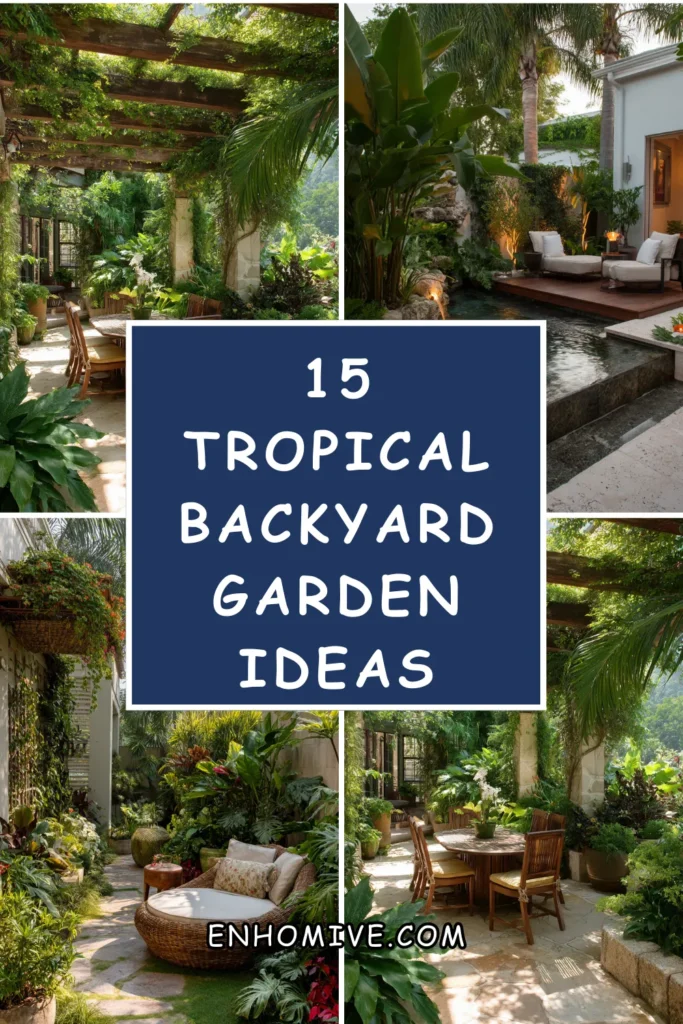
Tropical gardens aren’t just for those living in warm climates—with the right design elements and plant choices, anyone can create a resort-style retreat that transforms an ordinary backyard into an extraordinary sanctuary.
Whether you’re working with a sprawling space or a compact urban plot, these 15 tropical backyard garden ideas will help you design your own personal paradise where vacation vibes are available every single day.
1. Layer Plants at Multiple Heights: Creating Jungle Density
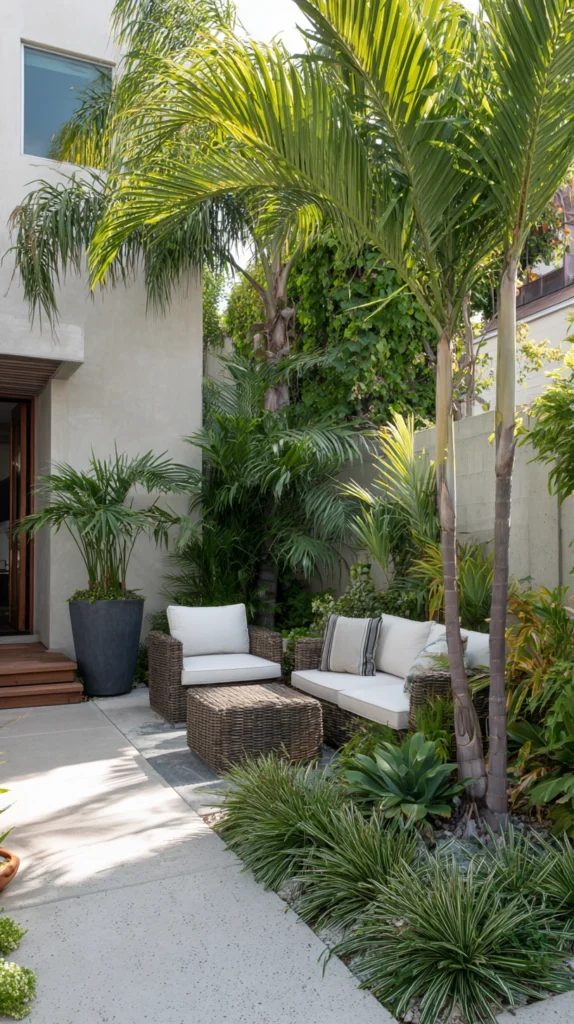
The hallmark of any tropical garden is its incredible lushness and layered density. Recreate this effect by planting at multiple levels—tall palms or banana plants forming the canopy, medium shrubs like hibiscus or bird of paradise in the middle tier, and low-growing ferns or hostas carpeting the ground.
This vertical layering mimics natural rainforest structure while creating visual depth and interest. The overlapping foliage creates that essential feeling of abundance where every corner bursts with life. Don’t be afraid to plant generously and let foliage overlap—tropical gardens thrive on abundance rather than sparse, minimalist spacing. This layered approach also provides natural privacy screening while maximizing the tropical atmosphere.
2. Bold Foliage Over Flowers: Dramatic Leaves
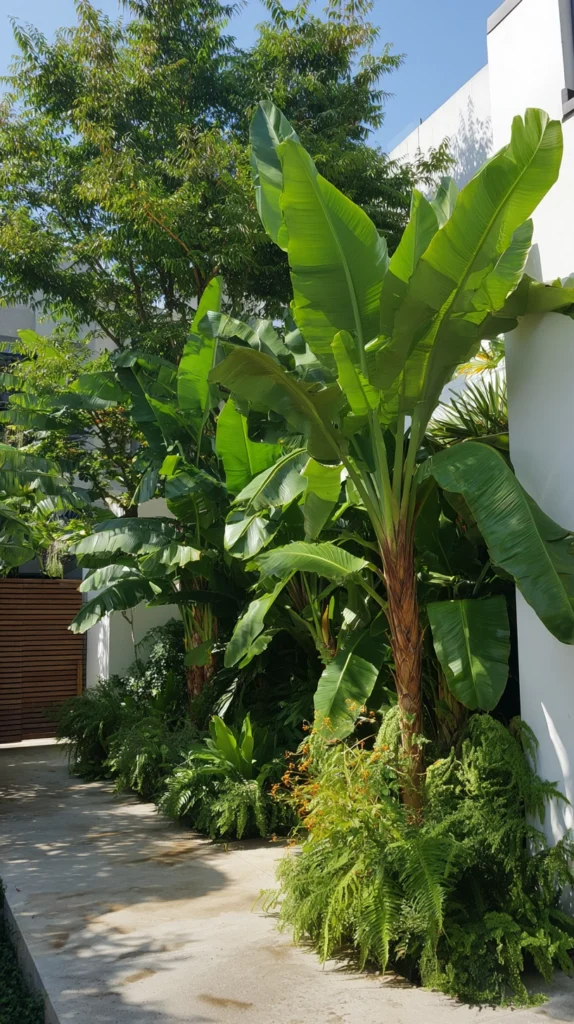
While flowers certainly have their place, tropical gardens rely primarily on dramatic foliage for impact. Focus on plants with oversized leaves like elephant ears, banana plants, cannas, and monsters.
These architectural plants bring immediate tropical drama through sheer scale and striking leaf shapes. Mix different leaf textures and colors—glossy dark greens alongside chartreuse, burgundy foliage near lime green, and variegated patterns adding complexity.
The diversity of foliage creates constant visual interest that doesn’t depend on seasonal blooms. Large leaves also create movement when they catch the breeze, adding kinetic energy to your garden. This foliage-first approach ensures your tropical garden looks lush and full throughout the entire growing season.
3. Water Features: Essential Tropical Soundtrack
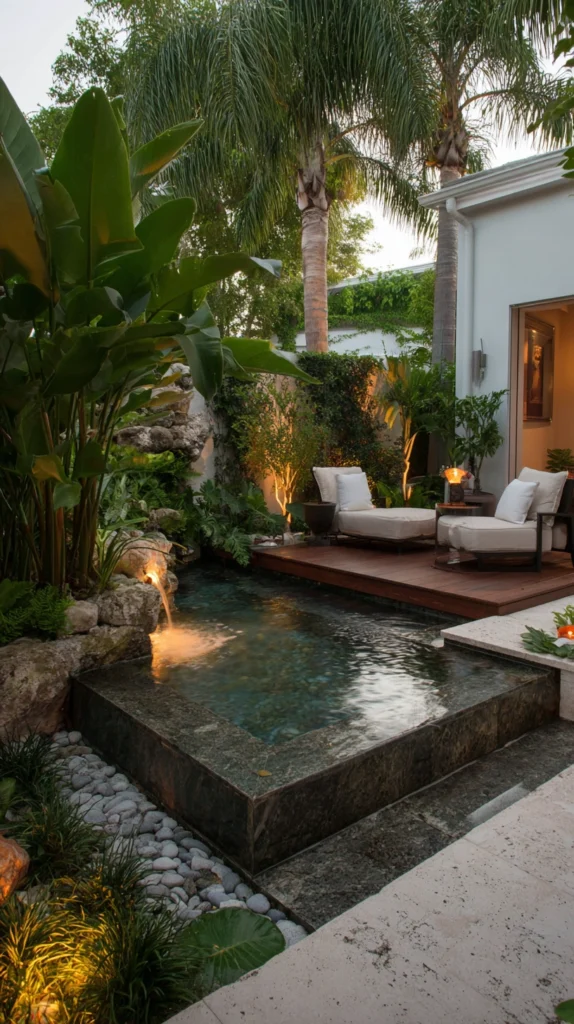
No tropical garden feels complete without the soothing sound of water. Even a modest fountain or small recirculating feature adds that crucial auditory element that transforms spaces into genuine retreats. The gentle trickle of water creates instant tranquility while masking neighborhood noise and urban sounds. For compact spaces, consider wall-mounted fountains or simple bowl features surrounded by smooth river stones.
Larger backyards can accommodate ponds with water lilies, dramatic waterfalls, or tiered fountains. The water element also attracts birds and beneficial wildlife, adding another layer of life to your tropical paradise. The reflective quality of water surfaces bounces light around your garden, enhancing brightness and creating shimmering visual interest.
4. Bamboo Elements: Natural Tropical Texture
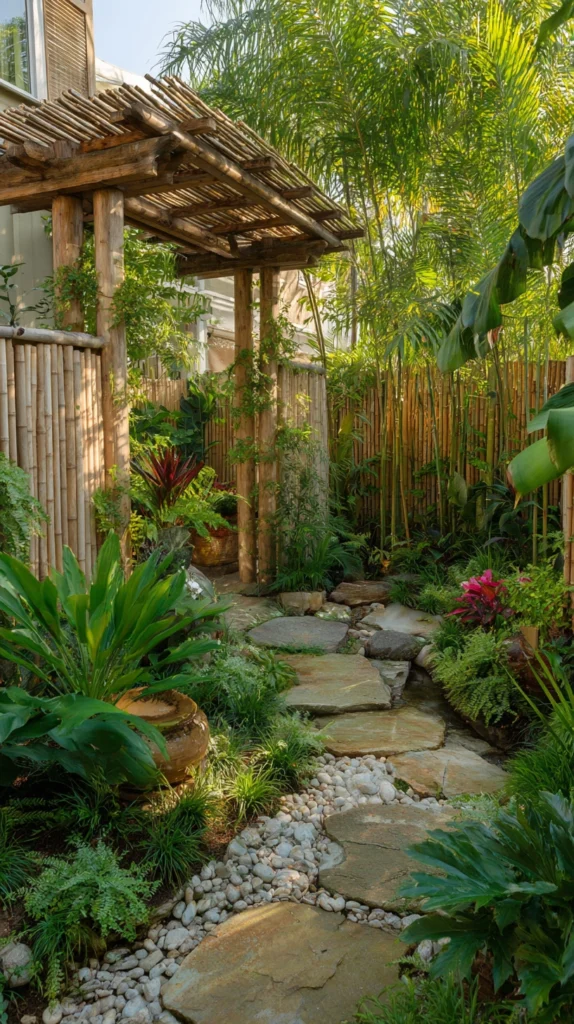
Bamboo instantly evokes tropical destinations and brings authentic texture to your backyard garden. Use bamboo fencing for privacy screening, bamboo poles to construct trellis structures or pergolas, and clumping bamboo varieties as dramatic landscape plants.
The vertical lines and gentle rustling of bamboo create movement and sound that enhance the tropical atmosphere. Bamboo also grows quickly, providing fast results for impatient gardeners wanting immediate impact.
Consider incorporating bamboo into hardscape features too—bamboo edging along pathways, bamboo privacy screens dividing garden zones, or decorative bamboo water spouts for fountains. The warm, honey-colored tones complement the greens of tropical foliage beautifully while adding an exotic, resort-quality finish.
5. Tiki Bar or Outdoor Kitchen: The Entertainment Hub
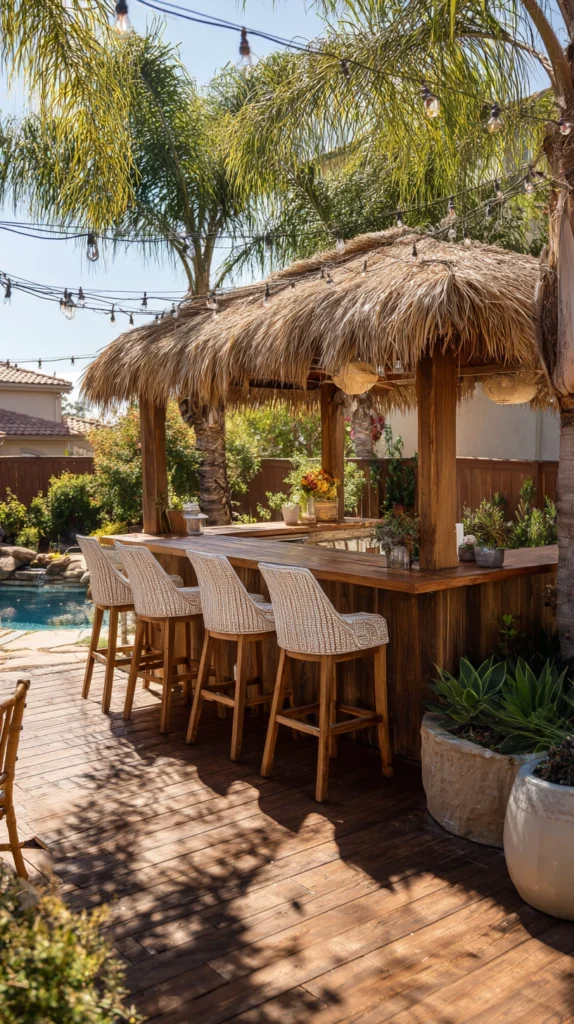
Transform your tropical backyard into an entertaining destination by installing a tiki bar or outdoor kitchen. These features become natural gathering spots while significantly enhancing the vacation vibe. A simple bar constructed with bamboo facing and topped with a thatched roof creates an instant island atmosphere.
Stock it with colorful glassware, tropical-themed accessories, and all the fixings for fruity cocktails. For more elaborate setups, full outdoor kitchens with grills, refrigeration, and prep areas allow you to cook and entertain without constantly running inside. Surround your bar or kitchen area with lush plantings, add string lights overhead, and include comfortable seating to create a resort-style entertaining zone that rivals any vacation destination.
6. Vibrant Color Pops: Strategic Brightness
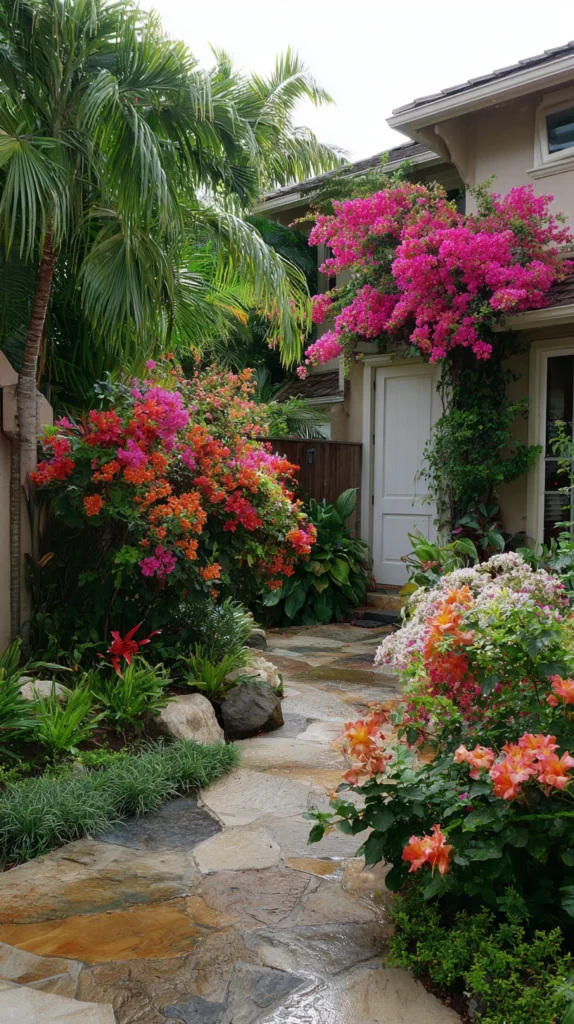
While tropical gardens rely heavily on foliage, strategic pops of bright color add excitement and energy. Incorporate flowering plants like hibiscus, bird of paradise, bougainvillea, or tropical cannas that produce vivid blooms in oranges, reds, pinks, and yellows. These color bursts stand out dramatically against the lush green backdrop.
Extend color beyond plants through accessories—brightly colored outdoor cushions, painted furniture in turquoise or coral, vibrant ceramic planters, or even colorful glass fishing floats hung from trees. The key is using color intentionally rather than randomly, creating focal points and guiding the eye through your tropical landscape while maintaining the green foundation that makes those colors sing.
7. Curved Pathways: Inviting Exploration
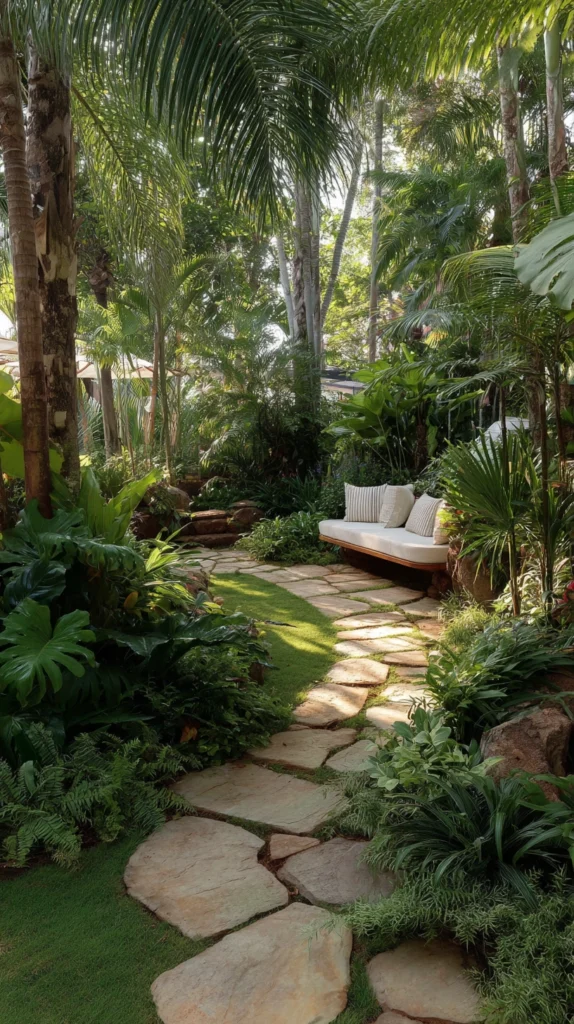
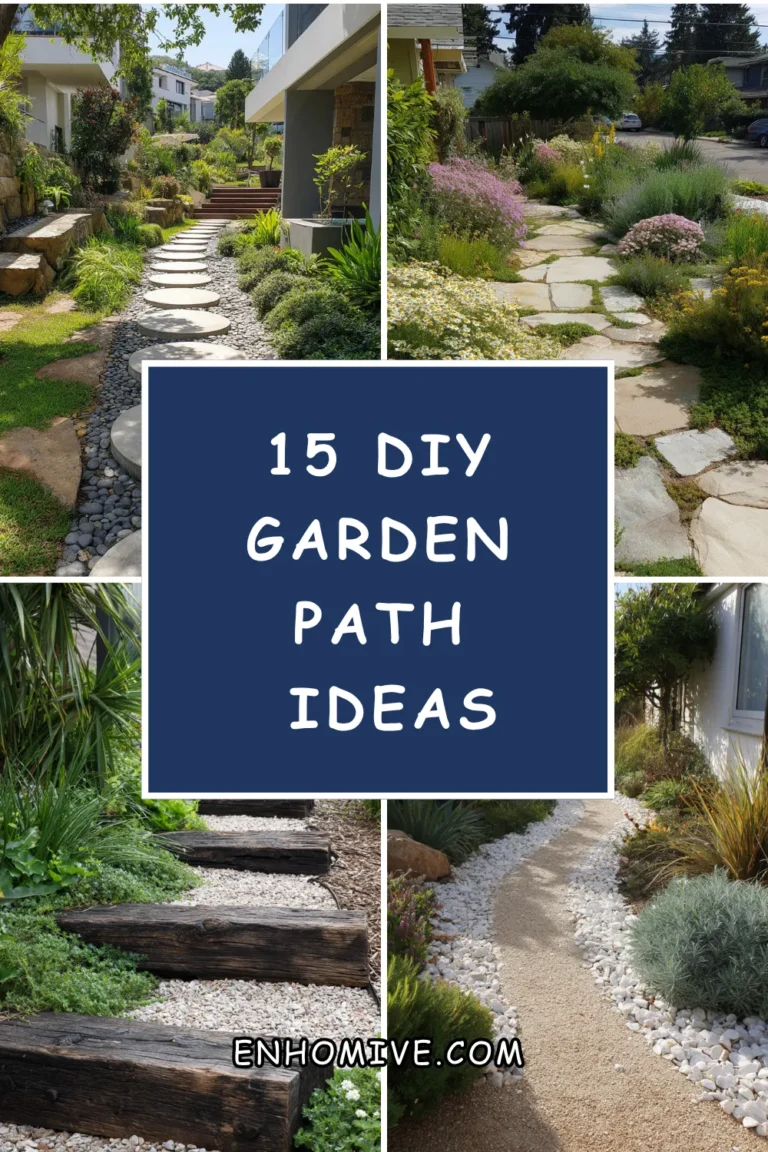
Straight pathways feel formal and predictable—tropical gardens benefit from curved, meandering paths that create mystery and encourage exploration. Design walkways that wind through your plantings, disappearing around corners and revealing new vistas as you move through the space.
Use materials like stepping stones set in gravel, decomposed granite, or natural flagstone for organic, earthy appeal. Border pathways with low-growing tropical ground covers or ornamental grasses that soften edges and create that slightly wild, jungle-like feeling. The curved approach also makes gardens feel larger by preventing you from seeing the entire space at once, adding perceived depth and dimension to even modest backyards.
8. Outdoor Lounging Areas: Retreat Within the Retreat
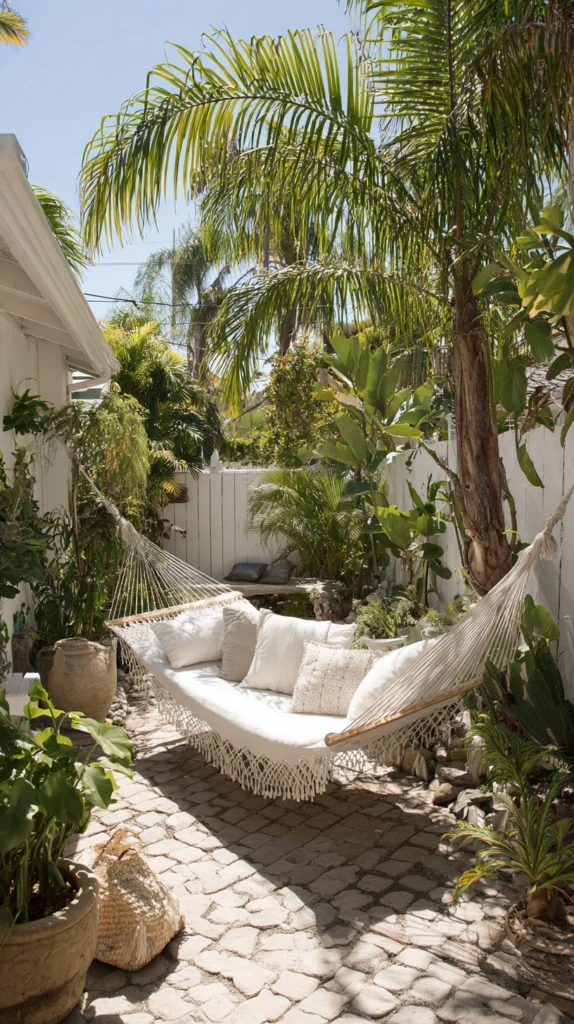
Create dedicated lounging zones throughout your tropical garden where you can truly relax and enjoy your paradise. Install a hammock strung between palms, place a daybed with flowing curtains in a secluded corner, or arrange comfortable seating under a pergola draped with flowering vines.
These retreat-within-a-retreat spots provide destinations throughout your garden and encourage you to actually use and enjoy the space. Add weatherproof cushions in tropical prints, outdoor rugs defining the seating area, and small side tables for drinks or books. Position lounging areas where they’ll receive dappled shade during hot afternoons while maintaining views of your most beautiful plantings and water features.
9. Tropical Containers: Mobility and Impact
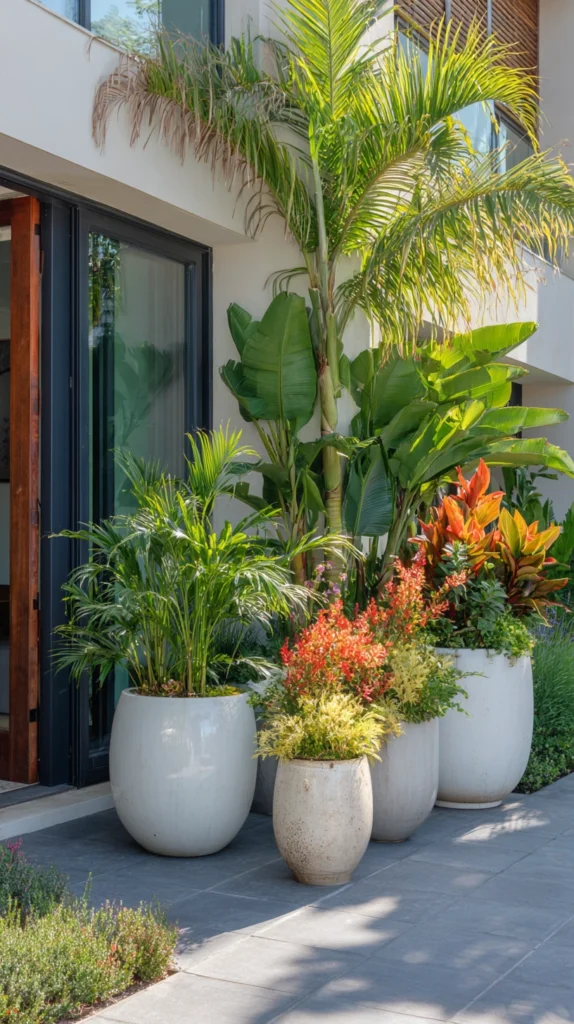
Large containers planted with tropical specimens offer flexibility and dramatic impact, especially in smaller backyards or where in-ground planting isn’t feasible. Group oversized pots in varying heights near patios or along pathways, filling them with palms, bamboo, elephant ears, or colorful cannas.
The mobility of containers allows you to rearrange your tropical display seasonally or bring tender plants indoors during cold months if you’re gardening outside tropical zones. Choose containers that enhance your tropical theme—simple terracotta for natural warmth, glazed ceramics in vibrant colors for contemporary flair, or woven baskets for organic texture. The containers themselves become design elements that contribute to your overall tropical aesthetic.
10. Shade Structures: Filtered Light and Comfort
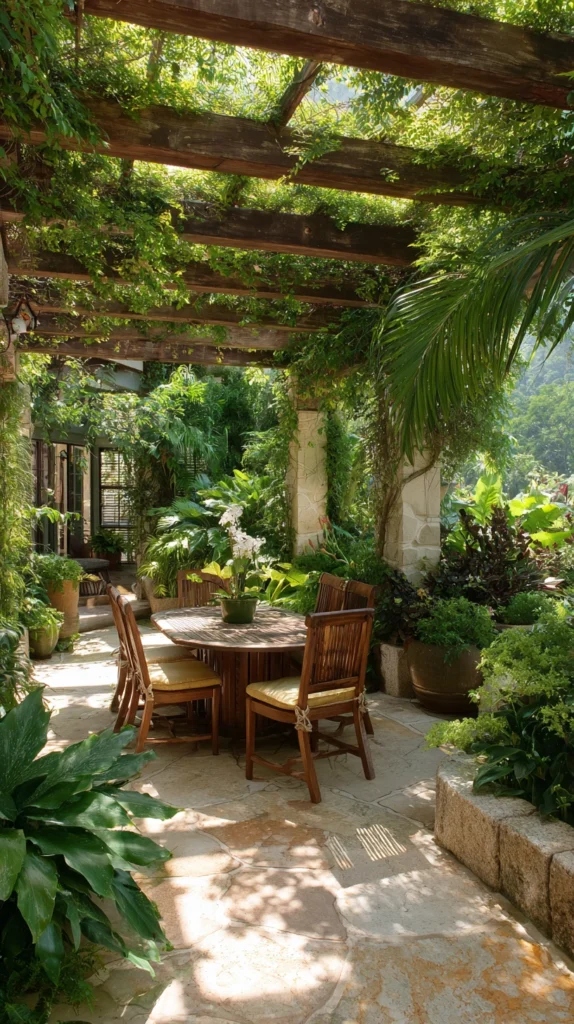
Tropical environments naturally feature filtered light beneath dense canopies. Recreate this effect with shade structures like pergolas, cabanas, or shade sails that provide relief from harsh sun while creating defined outdoor rooms.
Train fast-growing vines like passion flower, trumpet vine, or climbing jasmine over pergolas to create living ceilings that filter light beautifully. For contemporary spaces, architectural shade sails in neutral colors create sculptural interest while providing cooling shade. Thatched roofing on gazebos or covered seating areas brings authentic tropical resort styling. These structures extend the usability of your tropical garden during peak heat while adding vertical architecture that enhances the overall design.
11. Rocks and Boulders: Natural Anchors
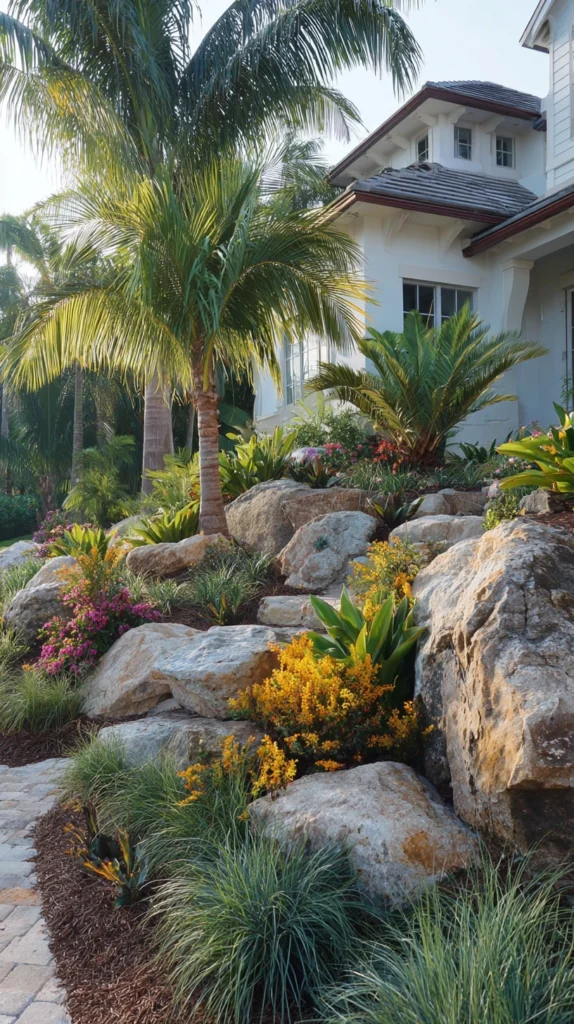
Incorporate rocks, boulders, and stone elements to add permanence and natural beauty to your tropical landscape. Large boulders positioned strategically create visual anchors and focal points while suggesting ancient, established landscapes.
Surround them with lush plantings that appear to grow naturally around the stone. Use river rocks to edge pathways or create dry creek beds that add texture and natural drainage solutions.
Stack flat stones to create informal retaining walls for terraced planting beds. The combination of hard stone elements with soft, abundant foliage creates pleasing contrast while grounding your tropical garden with earthy, organic materials that feel timeless and natural.
12. Tropical Lighting: Extending the Magic
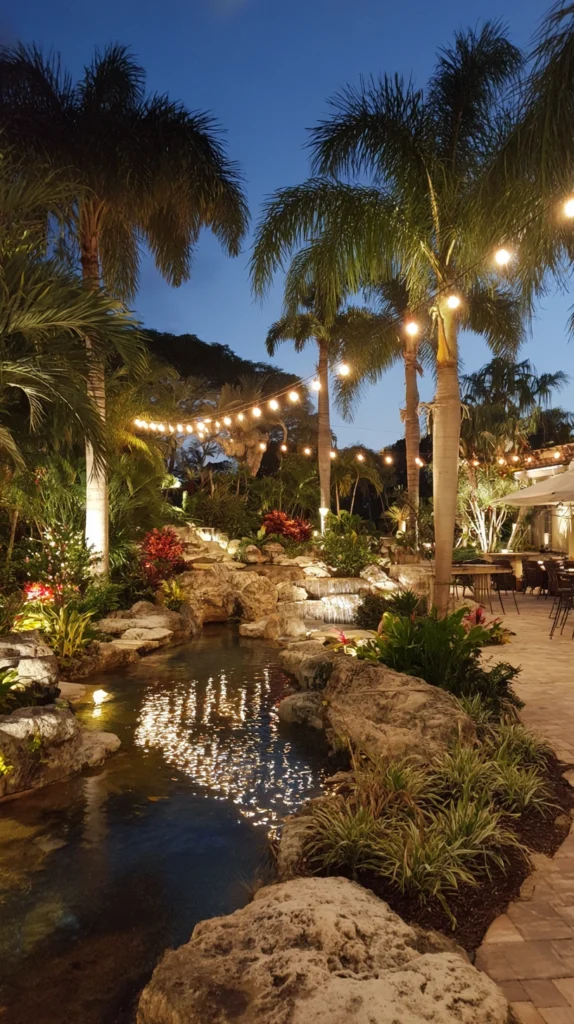
Thoughtful lighting transforms your tropical garden from daytime retreat to evening wonderland. String lights woven through palms or draped across pergolas create magical ambient glow. Tiki torches positioned along pathways add authentic island atmosphere while providing flickering firelight.
Uplights positioned at the base of specimen plants cast dramatic shadows and highlight architectural foliage. Floating candles or lanterns near water features create romantic reflections.
The right lighting allows you to enjoy your tropical paradise after sunset while creating an atmosphere that rivals the most luxurious resorts. Focus on warm-toned lighting that enhances the golden, sunset quality tropical gardens naturally evoke.
13. Tropical Garden Art: Whimsical Personality
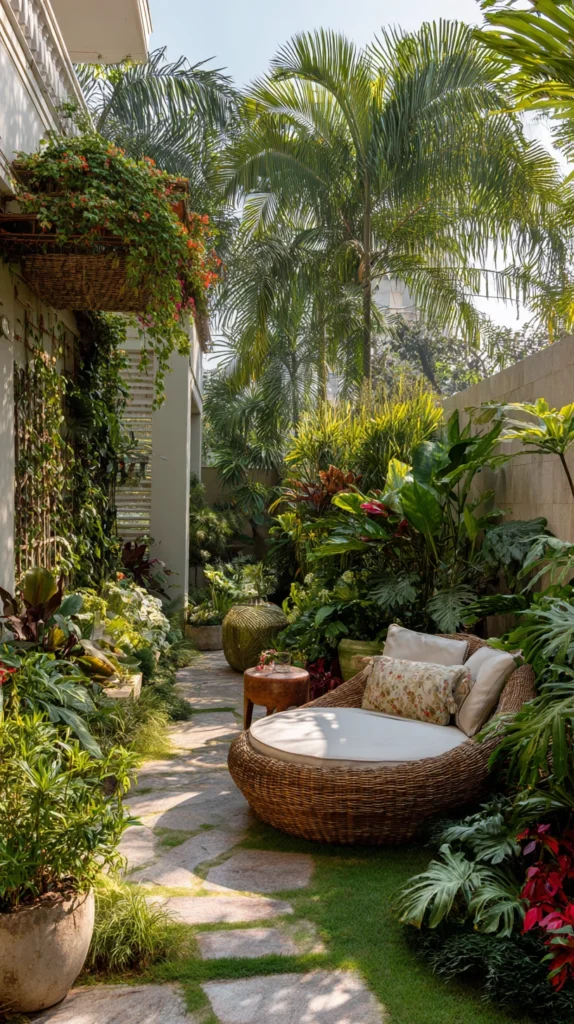
Inject personality and whimsy into your tropical landscape through carefully selected garden art and decorative elements. Consider tropical-themed sculptures depicting parrots, sea turtles, or palm trees.
Hang colorful wind chimes that add gentle sound as they catch the breeze. Display vintage surfboards, weathered oars, or nautical elements that suggest coastal tropical destinations. Use brightly painted furniture or art pieces as focal points throughout the garden.
The key is choosing items that feel intentional and cohesive rather than cluttered—select pieces that genuinely enhance your tropical theme and bring joy rather than randomly filling space with tropical clichés.
14. Create a Tropical Pool Oasis: Ultimate Luxury
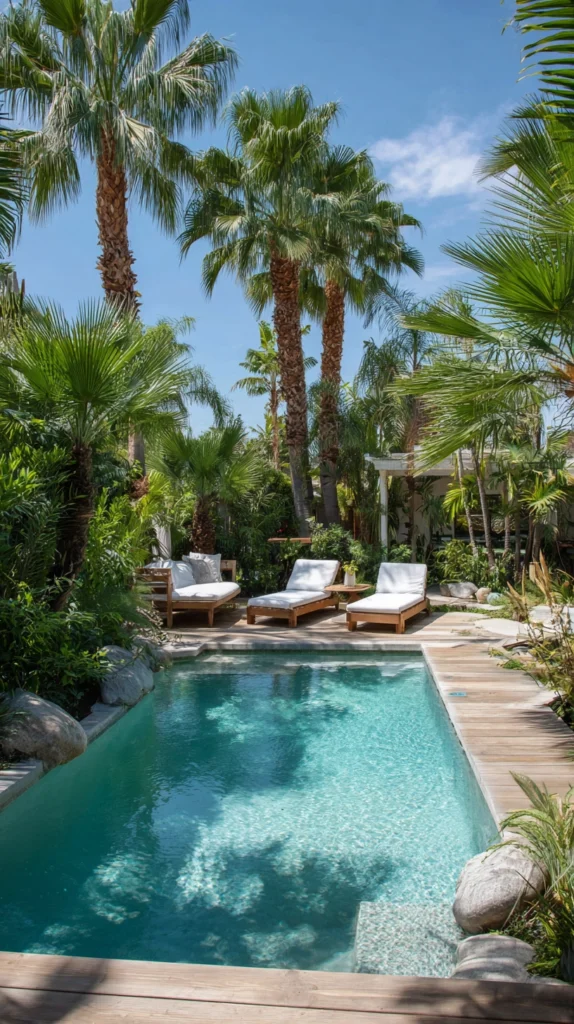
If you’re fortunate enough to have a pool, transform the surrounding area into a true tropical resort experience. Plant densely around the pool perimeter with palms, banana plants, and flowering tropicals that create a lush, private enclosure.
Add natural stone or wood decking that feels organic and earthy. Install an outdoor shower with bamboo screening for practical function and resort-style appeal. Arrange comfortable loungers with colorful towels and cushions.
Position your poolside tiki bar nearby for easy access to refreshments. The combination of water, lush plantings, and comfortable amenities creates an environment where you’ll genuinely feel like you’re vacationing at an exclusive tropical resort rather than simply swimming in your backyard.
15. Embrace Organized Chaos: Natural Wildness
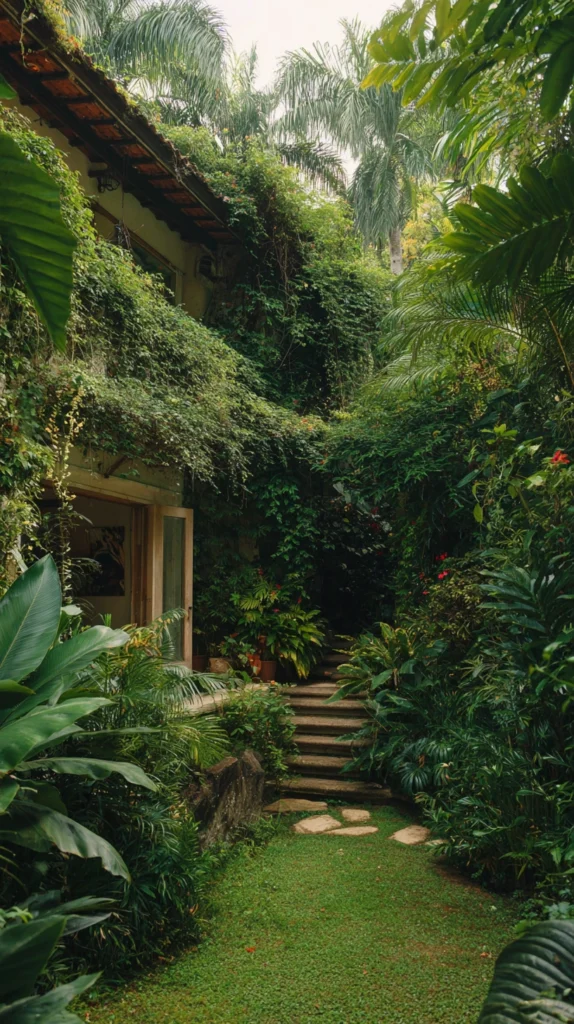
Perhaps the most important tropical garden principle is embracing a certain degree of organized chaos. Unlike formal gardens with rigid structure and precise pruning, tropical landscapes feel slightly wild and untamed. Allow plants to grow generously and overlap their neighbors. Let vines scramble naturally rather than training them too precisely.
Encourage self-seeding where appropriate. The goal is creating spaces that feel lush, abundant, and alive rather than manicured and controlled. This doesn’t mean neglecting maintenance—tropical gardens still require regular care—but it does mean accepting and celebrating the exuberance of tropical plants and their natural growth habits. The slightly wild feeling is what makes tropical gardens feel like genuine escapes rather than ordinary landscapes.
Bringing Your Tropical Vision to Life
Creating your tropical backyard paradise requires understanding key principles while adapting them to your specific climate, space, and lifestyle. Here are essential considerations for success:
Climate Adaptation: If you’re gardening outside true tropical zones, choose cold-hardy alternatives that mimic tropical aesthetics. Many plants offer tropical looks while tolerating cooler temperatures—hardy bananas, certain palm species, elephant ears, and cannas can survive surprisingly cold winters with protection. Alternatively, treat tender tropicals as annuals, replacing them seasonally, or grow them in containers that move indoors during cold months.
Start with Structure: Begin your tropical garden transformation by establishing the hardscape framework—pathways, water features, seating areas, and structures. These permanent elements define your garden’s bones and provide the foundation for planting. Getting the structure right ensures your tropical plants have proper context and support.
Layer Gradually: Rome wasn’t built in a day, and neither are lush tropical gardens. Start with foundational plantings—trees and large shrubs—then fill in with medium-sized plants and ground covers over time. This gradual approach allows plants to establish properly while preventing overcrowding and letting you adjust your design as things mature.
Water and Drainage: Tropical plants generally appreciate consistent moisture, but they also require excellent drainage. Amend heavy clay soils with organic matter, create raised beds if necessary, and ensure your irrigation system delivers regular water without creating soggy conditions that lead to root rot.
Feed Generously: The lush growth of tropical gardens demands regular fertilization. Use slow-release fertilizers formulated for tropical plants or supplement with regular applications of liquid fertilizer during the growing season. Well-fed plants produce the vigorous, abundant growth that makes tropical landscapes so spectacular.
Maintain Thoughtfully: While tropical gardens embrace natural wildness, they still require regular maintenance. Prune strategically to control size and shape, remove damaged foliage, divide overcrowded perennials, and refresh mulch to maintain that polished paradise appearance.
Your tropical backyard garden becomes more than just a landscape—it transforms into a lifestyle. It’s a space that encourages you to slow down, relax, and genuinely enjoy outdoor living.
Every element works together to create an environment where stress melts away and vacation vibes reign supreme. With thoughtful planning, generous planting, and attention to authentic tropical details, your backyard can become the personal paradise you’ve always dreamed of—no plane ticket required.