
15 Wall Decor Ideas with Plants
There is a particular kind of beauty that only a living thing can bring to a wall. Paint, art, mirrors, and shelving all have their place, but a plant on or near a wall introduces something none of those things can replicate. movement, breath, and the quiet evidence of something growing.
The mistake most people make with plant wall decor is going too far. a moss wall covering an entire surface, a grid of thirty hanging planters, a vertical garden that requires a maintenance schedule. These approaches overwhelm rather than enhance, and they turn what should be a calm decorative decision into a horticultural project.
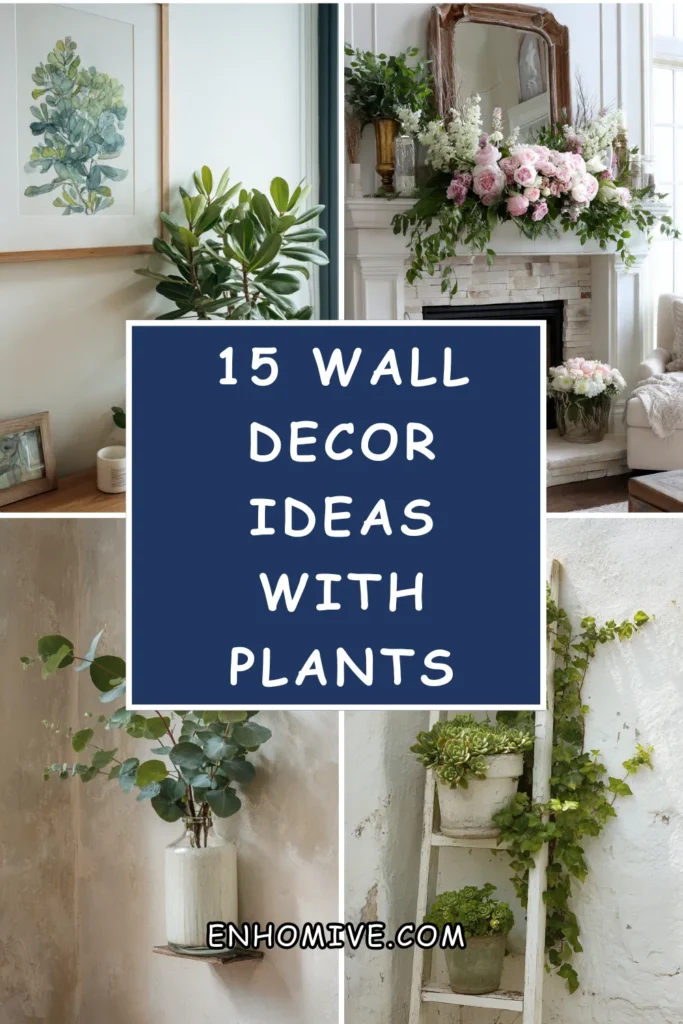
The ideas in this list take a different approach. Each one uses plants minimally and intentionally, treating a single stem, a small trailing vine, or one carefully chosen pot as the design element it truly is. Less plant, more impact. Here are 15 wall decor ideas with plants that prove restraint is the most sophisticated decorating tool of all.
1. A Single Large-Leaf Plant Beside a Gallery Wall
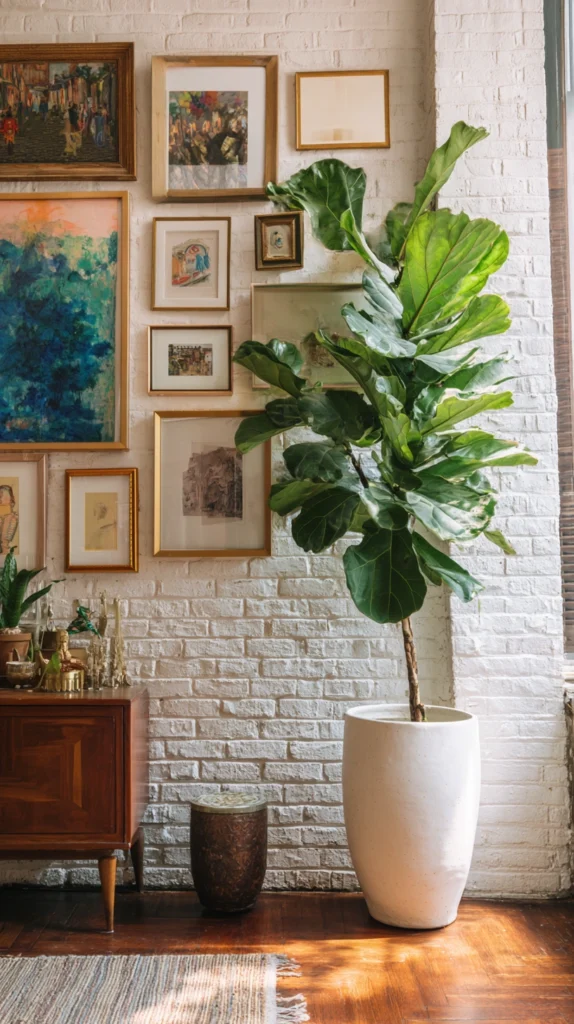
A gallery wall of framed prints or photographs is a considered, composed arrangement, and adding a single large-leaf plant beside it introduces a living element that softens the formality without competing with the art. A fiddle-leaf fig, a monstera, or a large bird of paradise positioned to one side of the gallery creates a natural frame on one edge of the arrangement. The organic shapes of the leaves contrast beautifully with the geometric regularity of the frames.
The plant does not need to be on the wall itself. simply positioned close enough that its leaves reach into the negative space beside the arrangement is sufficient. The relationship between the art and the plant is what creates the effect, not proximity. This pairing works in living rooms, hallways, and dining rooms wherever a gallery wall needs a softening counterpoint.
2. One Trailing Plant on a High Shelf
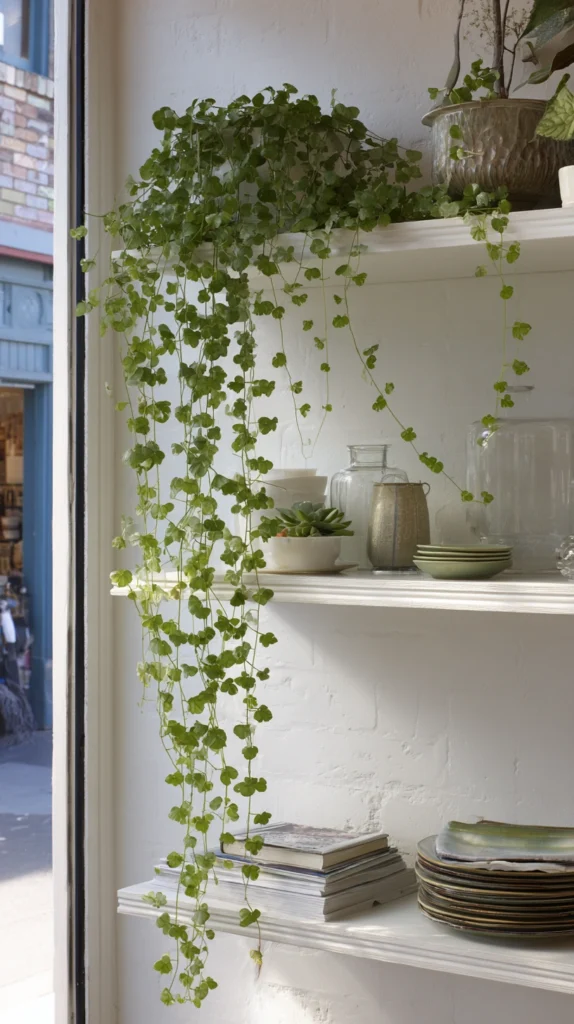
A single trailing plant placed on a high wall-mounted shelf is one of the most visually elegant and low-maintenance plant wall decor approaches available. A pothos, a string of pearls, a heartleaf philodendron, or a tradescantia allowed to trail naturally downward from a shelf positioned at or above eye level creates a vertical green line that draws the eye upward and adds life to an otherwise static wall. The higher the shelf, the more dramatic the trailing effect becomes over time as the plant grows.
Choose a shelf in a finish that suits the room. natural wood for an organic aesthetic, painted to match the wall for a seamless built-in look, or in a contrasting dark tone for a more graphic effect. Keep everything else on the shelf minimal. the trailing plant should be the focal point, not one item competing among many. One plant, one shelf, one beautiful vertical line of green.
3. A Framed Pressed Botanical Print Beside a Real Plant
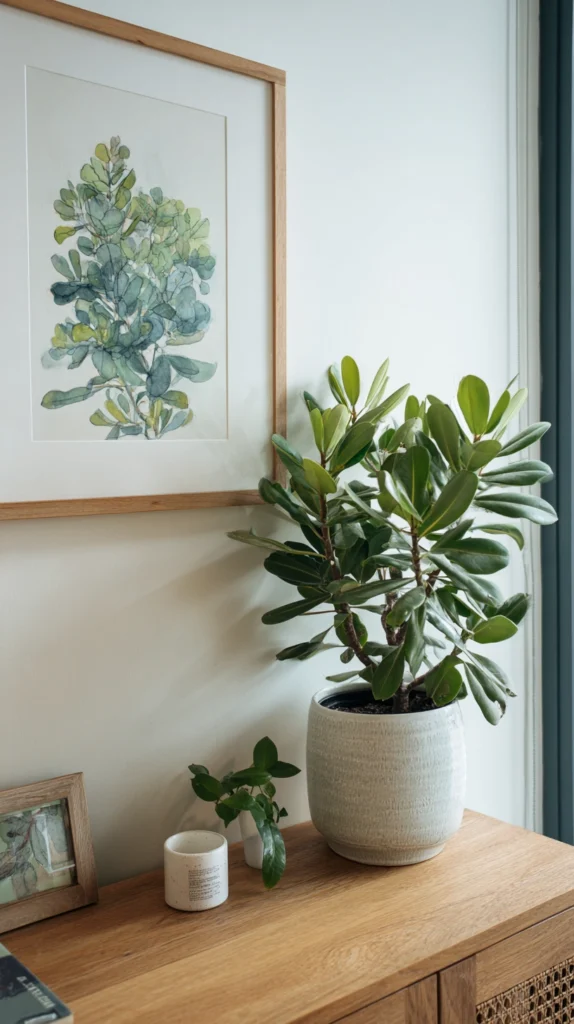
The combination of a framed pressed botanical print or a detailed botanical illustration hung on the wall alongside a small living plant creates a conversation between the represented and the real that is genuinely compelling. A framed fern print beside a small living fern in a wall-mounted pot. a framed eucalyptus illustration beside a single eucalyptus stem in a slim wall-hung vase. The pairing makes both elements more interesting than either would be alone.
Choose frames in a simple, thin profile in brass, black, or natural wood that does not overwhelm the botanical content within them. Position the living plant at a scale that feels like a quiet echo of the print rather than a competing statement. This approach works beautifully in bathrooms, home offices, and bedrooms where a small but considered botanical moment is all the wall needs.
4. A Wall-Hung Propagation Station
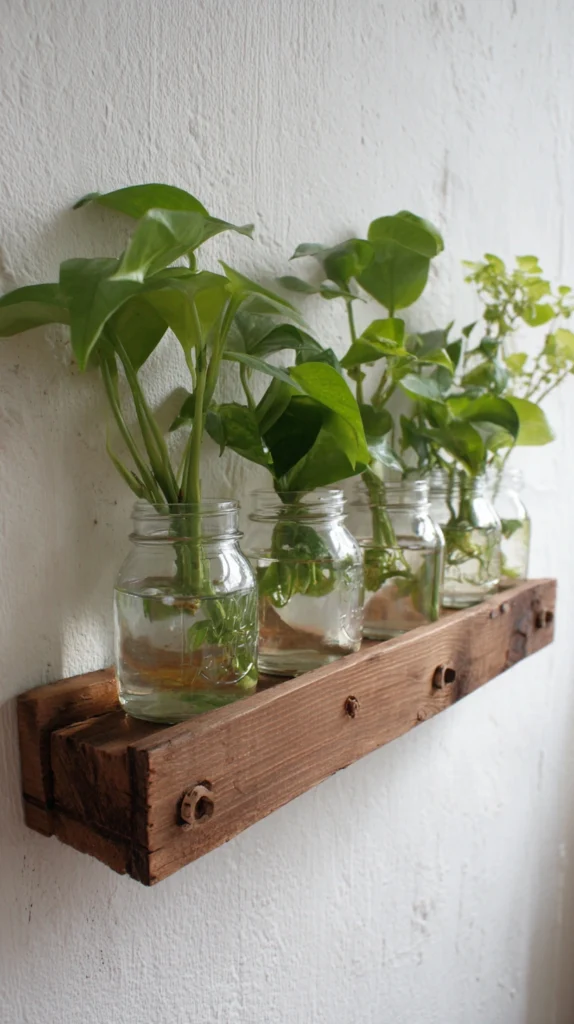
A propagation station. a series of small glass vessels mounted on the wall and filled with water and plant cuttings. is one of the most modern and minimal plant wall decor ideas currently popular in considered interiors.
The glass vessels catch and refract light, the water is visually clean and transparent, and the small cuttings suspended within them add the gentlest possible suggestion of greenery without any of the soil, pot, or maintenance complexity of a conventional houseplant. It is plant decor reduced to its most essential and beautiful form.
Mount three to five vessels at varying heights on a small section of wall in a kitchen, bathroom, or home office. Use cuttings from existing plants. a stem of pothos, a sprig of mint, a cutting of tradescantia. Change the water weekly and the cuttings as they develop roots and are ready to pot on. The propagation station is perpetually evolving, which gives it a living quality that static wall decor can never replicate.
5. One Air Plant in a Geometric Wall Mount
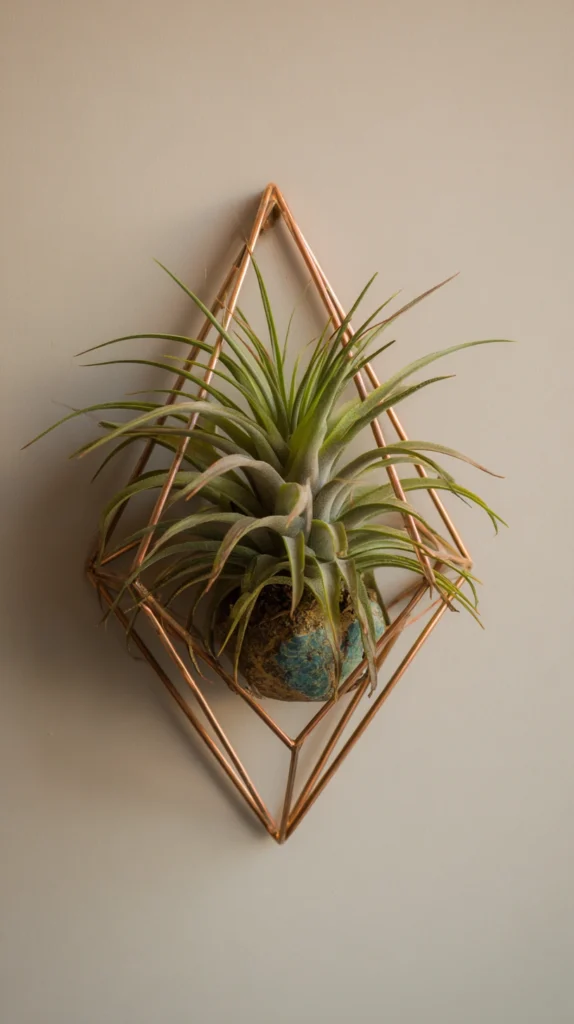
Air plants. tillandsia. are among the most forgiving and architecturally beautiful plants available, requiring no soil, minimal water, and very little light to thrive. A single air plant displayed in a geometric copper, brass, or matte black wall mount becomes a small sculptural installation that reads as art as much as it does as plant decor.
The contrast between the angular geometry of the mount and the organic, slightly wild form of the air plant is a tension that makes the combination endlessly interesting.
Position the wall mount on a section of plain wall where it has room to be seen clearly without competing with other decorative elements. A cluster of two or three geometric mounts at varying heights on the same wall creates a minimal installation that has real visual impact while remaining extremely low maintenance. Mist the air plant once or twice a week and it will thrive for years with no other attention.
6. A Slim Ledge Shelf with One Small Pot
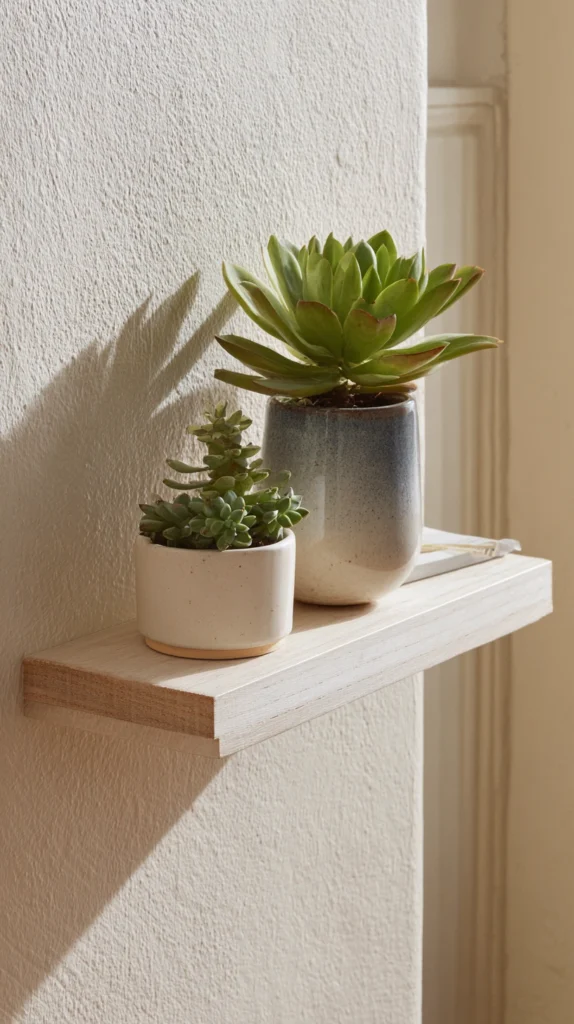
A picture ledge shelf. the shallow, lipped shelf designed for propping art and photographs. can hold a single small potted plant with the same effortless, changeable quality it brings to picture display.
A small succulent, a tiny cactus, a single stem of rosemary in a terracotta pot, or a compact spider plant all sit beautifully on a picture ledge without overwhelming the shelf or demanding significant maintenance. The ledge format means the plant can be moved, swapped, and replaced instantly as seasons and preferences change.
Style the ledge with one plant and one or two simple objects alongside it. a small framed photograph, a single candle, a smooth stone. The restraint of the arrangement is what gives it its quiet confidence. This works in hallways, above a desk, beside a bed, or in a bathroom where a single living element on an otherwise bare wall makes an outsized impact.
7. A Hanging Planter at Window-Adjacent Wall
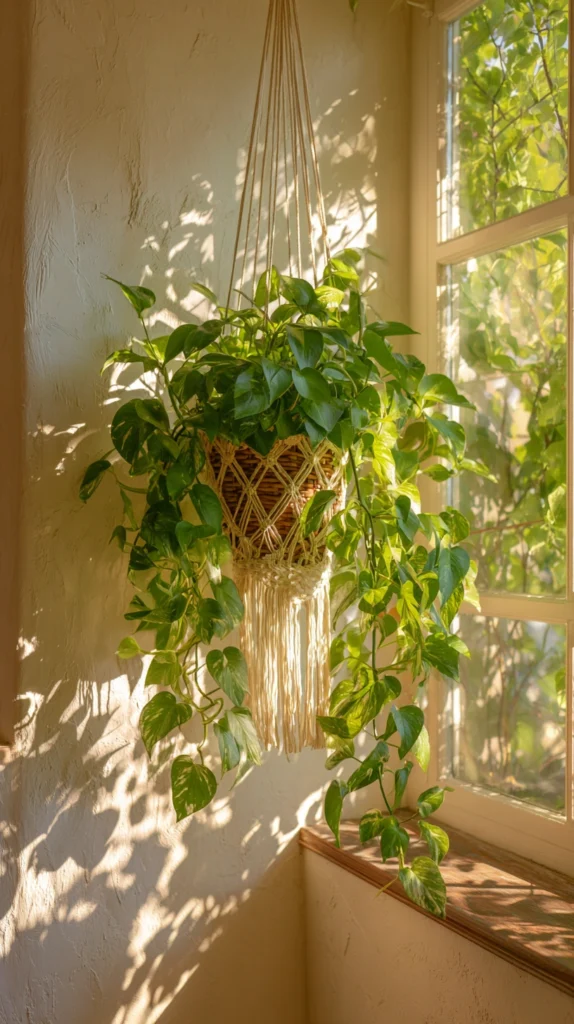
A single hanging planter suspended near a window rather than in the window itself allows natural light to reach the plant while positioning it against the wall where it becomes a genuine decorative feature.
A macramé hanger in natural cotton holding a small pothos or trailing ivy, suspended from a single ceiling hook positioned a foot or two from the window frame, creates an organic, textural element that moves gently in any air current. The shadow it casts on the adjacent wall as light passes through the leaves is an unexpected bonus.
Choose a hanging planter in a natural material. macramé, rattan, leather cord, or woven seagrass. that complements the wall behind it rather than competing with it. Keep the pot itself simple. a plain terracotta or a matte white ceramic that does not distract from the plant and the hanger. One hanging planter near one window is all a room needs to feel connected to the natural world without being overrun by it.
8. A Dried Botanical Arrangement on the Wall
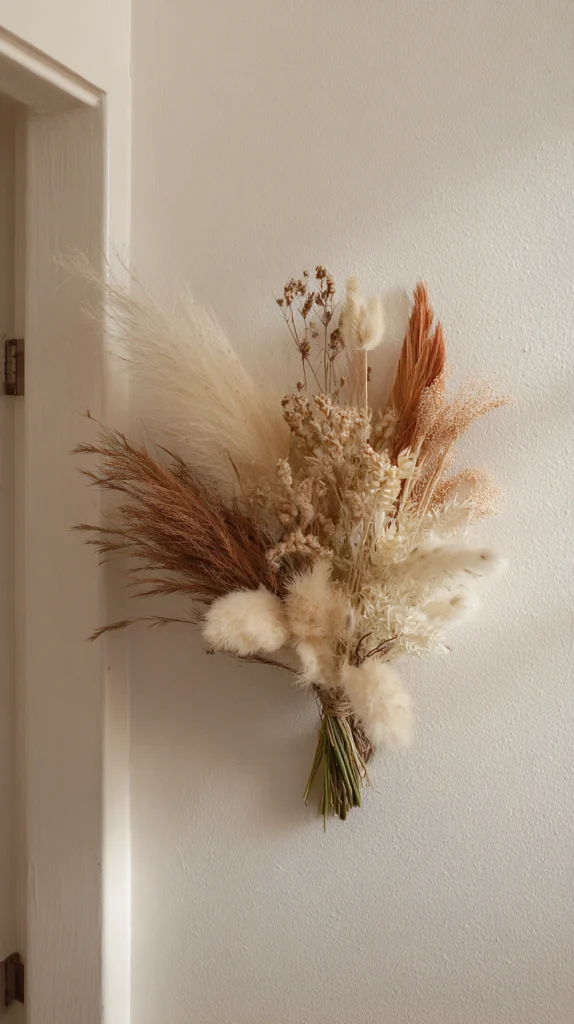
Dried botanicals offer all of the visual warmth and organic texture of living plants with none of the maintenance, watering, or light requirements. A single dried botanical arrangement. A bundle of pampas grass, a wreath of preserved eucalyptus, a cluster of dried lavender tied with linen twine and hung from a simple nail. brings a gentle, natural presence to a wall that reads as plant-adjacent without being a plant at all. In rooms where light is insufficient for living plants, dried botanicals solve the problem entirely.
Hang a large bundle of dried pampas or dried palm leaves from a single nail above a sofa or bed for a statement that is simultaneously bold and restrained. The neutral tones of dried botanicals. cream, wheat, soft grey-green. sit harmoniously with virtually every wall color and room palette. They require nothing more than occasional dusting and last for a year or more before needing replacement.
9. A Terrarium Mounted on the Wall
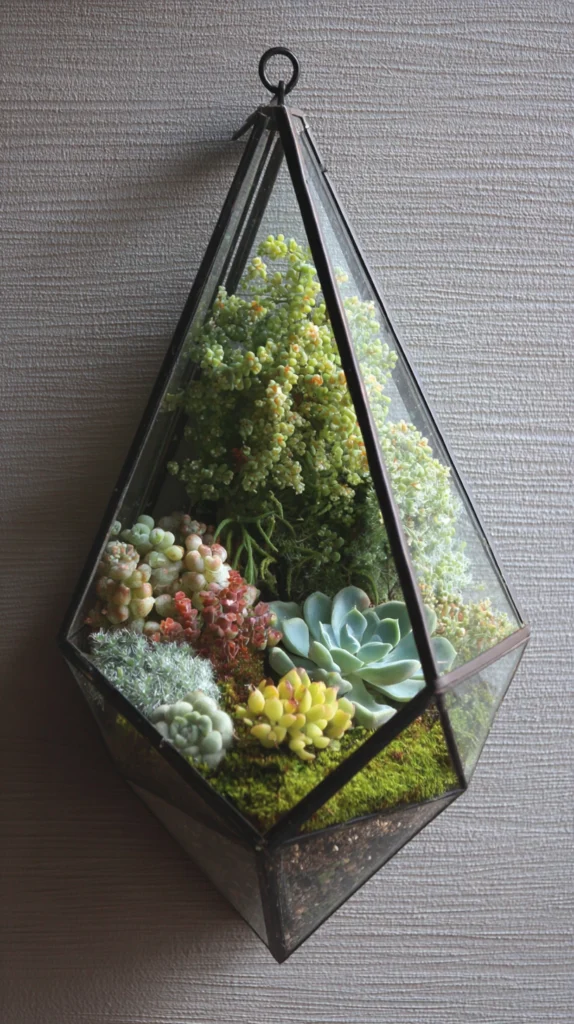
A wall-mounted geometric terrarium. a glass and metal enclosure fixed to the wall like a picture frame. creates a miniature living scene that functions as both art and plant display simultaneously.
Planted with a small amount of moss, a single tiny succulent, or a miniature fern, a wall terrarium introduces greenery in an entirely contained and self-sufficient format. The glass enclosure protects the wall from moisture while creating a window into a small, self-contained natural world.
Choose a terrarium in a simple geometric form. a hexagon, a triangle, or a simple rectangular frame. and mount it at eye level where its contents can be appreciated clearly. Keep the planting inside minimal and architectural. one plant, a layer of gravel, a small piece of wood or stone. The terrarium should feel like a considered composition rather than a miniature jungle crammed into a frame.
10. Botanical Wallpaper on a Single Accent Wall
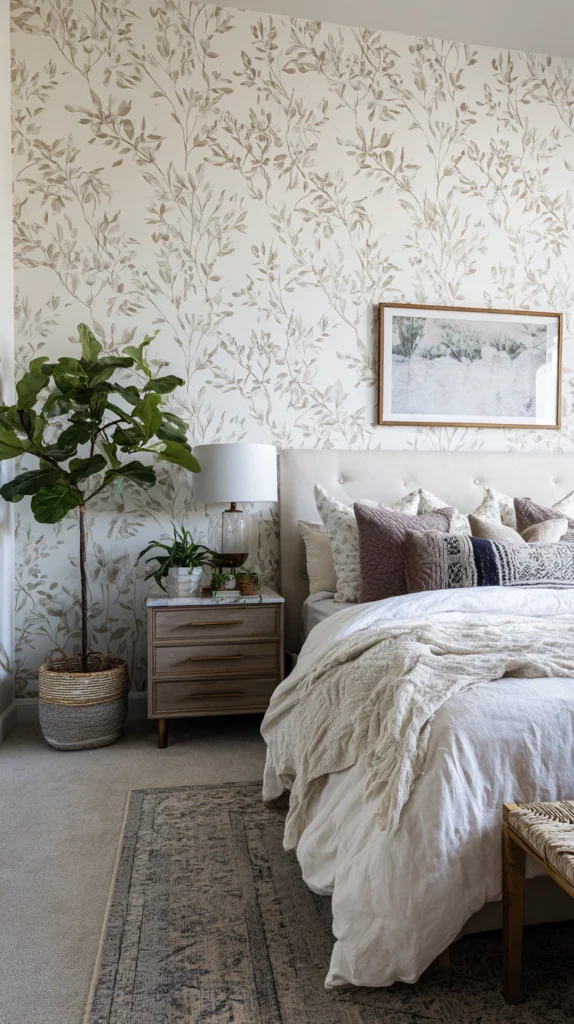
A single accent wall papered in a botanical print brings the visual language of plants to a wall without requiring a single living thing to be maintained. A botanical wallpaper in a restrained color palette. sage green leaves on a warm white ground, a delicate fern print in soft grey on cream, a simple branch and leaf pattern in muted terracotta. creates a living, organic feeling on the wall that pairs beautifully with one or two actual plants placed in front of it.
The wallpaper and the real plant create a layered botanical moment where the illustrated and the living coexist.
Limit the botanical wallpaper to one wall only. the wall behind a bed, the wall behind a sofa, or the wall at the end of a hallway. Keep the remaining walls plain so the botanical wall has the visual space to breathe and be appreciated. This approach requires the lowest possible plant maintenance while delivering some of the highest botanical visual impact of any idea in this list.
11. A Single Stem in a Wall-Hung Vase
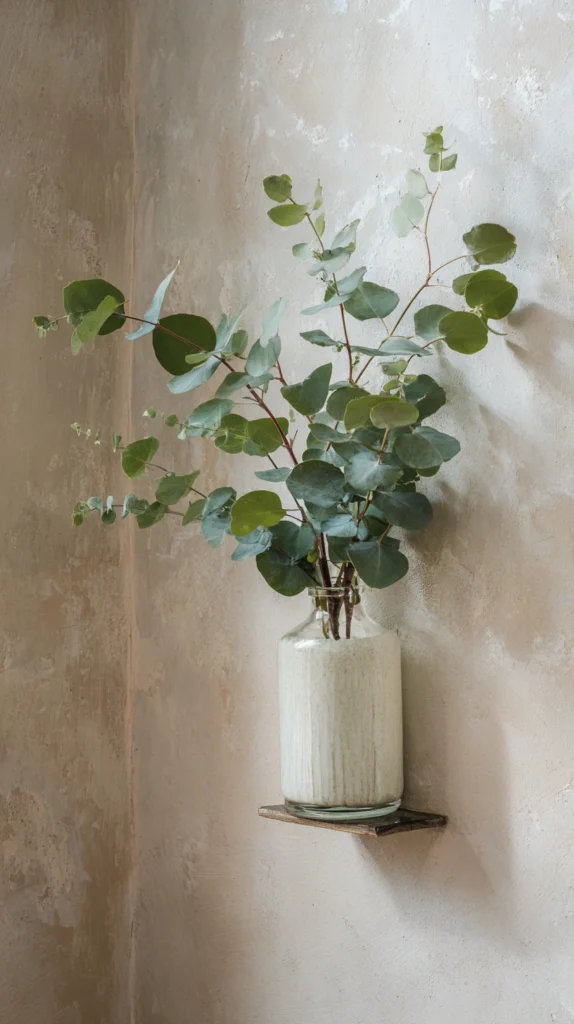
A wall-hung bud vase holding a single fresh or dried stem is plant wall decor at its most reductive and most beautiful. A slim ceramic vase mounted on the wall at eye level, holding one stem of eucalyptus, one branch of cherry blossom, one sprig of rosemary, or a single garden rose, creates a moment of botanical beauty that takes thirty seconds to assemble and costs almost nothing to maintain. Change the stem weekly with whatever is seasonal and available and the wall detail stays perpetually fresh.
Choose a wall-hung vase in a simple form and a neutral material. matte white ceramic, raw terracotta, or a slim glass tube in a minimal metal mount. Position it on a plain stretch of wall where the single stem can be seen clearly against the background without competing with other decorative elements. The simplicity of one stem in one vase is not a limitation. it is the point.
12. A Living Wall Panel in a Small Format
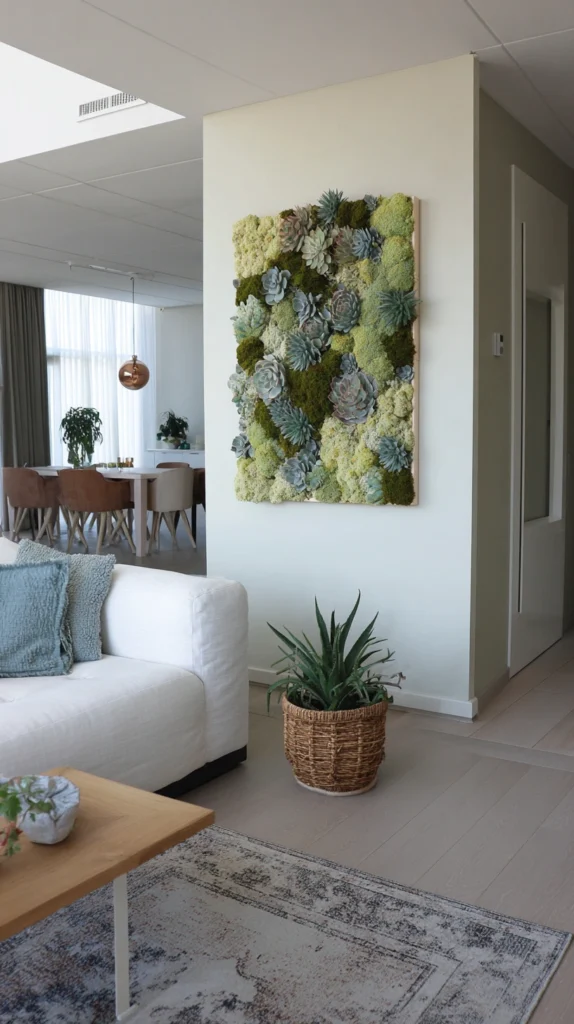
A living wall or vertical garden panel does not need to cover an entire wall to be effective. A small, self-contained living wall panel. a framed planting system approximately 60 by 60 centimeters containing a handful of low-maintenance plants in a contained growing medium. brings the concept of a vertical garden into a domestic space at a scale that is genuinely manageable.
Mounted on a single section of wall in a kitchen, bathroom, or living room, a small living wall panel reads as a piece of art that happens to be alive.
Choose the most low-maintenance plants possible for a small living wall panel. succulents, air plants, and moss all require minimal watering and light. Avoid high-maintenance herbs or flowering plants that need frequent attention to remain attractive. The panel should enhance the wall quietly and consistently, not require daily management that eventually leads to neglect and deterioration.
13. A Wabi-Sabi Branch Installation with One Plant
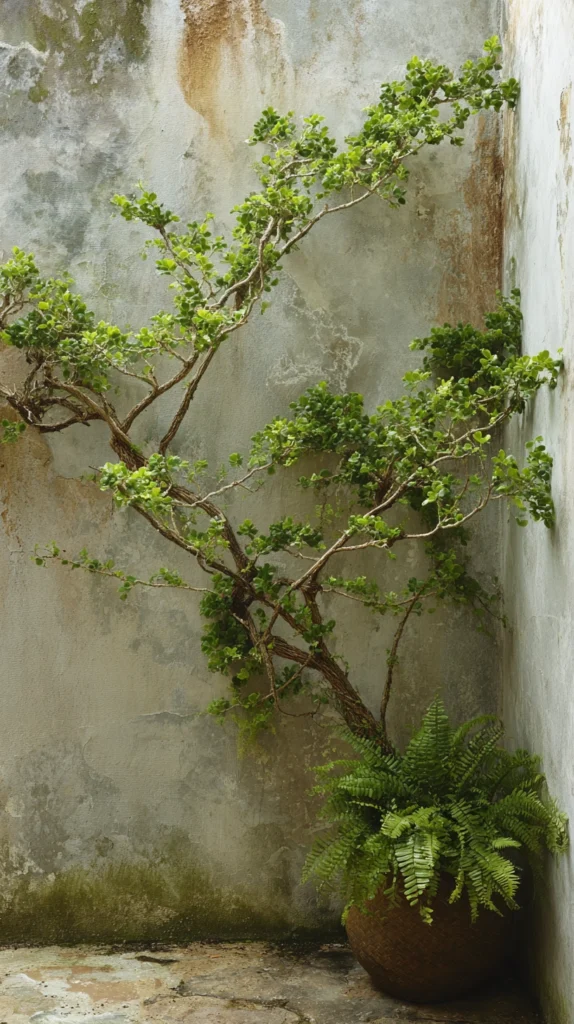
A single sculptural branch. a piece of driftwood, a dried cherry branch, a smooth white birch stem. mounted or leaned against a wall creates a botanical installation that is part art and part nature.
Pair it with one small living plant positioned at its base. a tiny fern in a simple pot, a small succulent in terracotta, a trailing plant whose stems begin to reach toward the branch above. The combination of the static sculptural branch and the slowly growing plant creates a composition that evolves subtly over time.
This approach suits minimalist, Japandi, and wabi-sabi inspired interiors where the beauty of natural, imperfect forms is central to the aesthetic. The branch costs nothing if gathered from a garden or a walk. the plant costs very little. and the result is a wall installation of genuine originality that no shop-bought decoration can replicate. It is plant wall decor at its most poetic and its most personal.
14. Grouped Small Pots on a Wall-Mounted Ladder
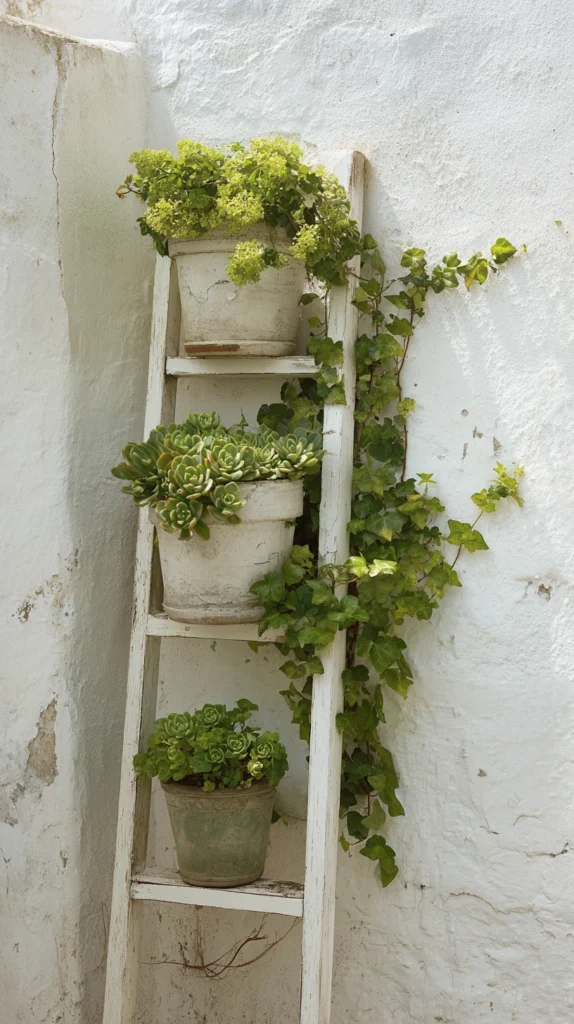
A small decorative ladder mounted horizontally on the wall or leaned vertically against it provides a structure from which two or three small potted plants can be hung or balanced at different heights. The ladder itself is a decorative object with a natural, artisanal quality, and the small plants hanging from its rungs reinforce that organic aesthetic. Keep the pots consistent in material. all terracotta, all matte white ceramic, or all woven seagrass. so the grouping reads as a deliberate arrangement rather than a random collection.
Limit the plants to two or three maximum. enough to create a sense of grouping without tipping into abundance that requires significant maintenance. Choose plants with different leaf forms and textures so the grouping has visual variety within its restrained color palette. A small trailing plant, a compact upright succulent, and a simple leafy herb make a naturally varied and visually balanced trio.
15. A Botanical Print Gallery with One Living Plant
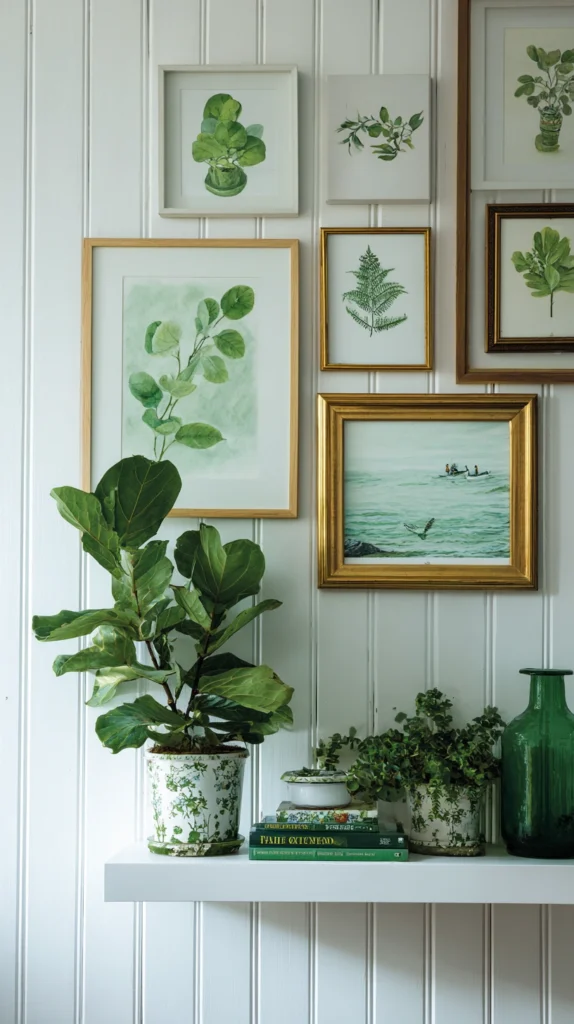
The final idea brings together the beauty of botanical illustration and the quiet presence of a single living plant in a combination that is greater than the sum of its parts. A small gallery of three to five framed botanical prints. pressed flower illustrations, vintage herb engravings, simple leaf studies. arranged on one section of wall with a single small living plant positioned on a shelf or surface directly below the arrangement creates a botanical moment that feels curated, layered, and genuinely alive.
The living plant anchors the illustrated plants above it in reality, creating a dialogue between art and nature that makes both elements more interesting. Choose prints in a cohesive color palette that coordinates with the room, and frame them simply and consistently. Position the living plant directly below the center of the arrangement so it feels like the natural conclusion of the botanical story the prints above it are telling. One plant, several prints, one quietly beautiful wall.
The Minimum Effective Dose
The best plant wall decor uses the minimum number of plants needed to achieve the desired effect. one trailing stem, one hanging planter, one living vase. and trusts that restraint to do the decorative work that abundance would only undermine. A single plant on or near a wall, chosen with care and positioned with intention, does more for a room than a dozen plants placed without thought. Begin with one. and let it be enough.