

15 Backyard Movie Night Setup Ideas
There is a specific quality of pleasure in watching a film outdoors that no indoor cinema, however comfortable and however well-equipped, can replicate. It is the pleasure of the sky above the screen — the fading dusk light giving way to darkness as the opening credits roll, the occasional airplane crossing the visual field of the stars, the warm outdoor air carrying the scent of the garden.
It is the pleasure of the informal social arrangement that the outdoor cinema naturally creates — the gathered chairs and blankets, the communal food and drinks station, the absence of the formal row-seating arrangement that the indoor cinema imposes.
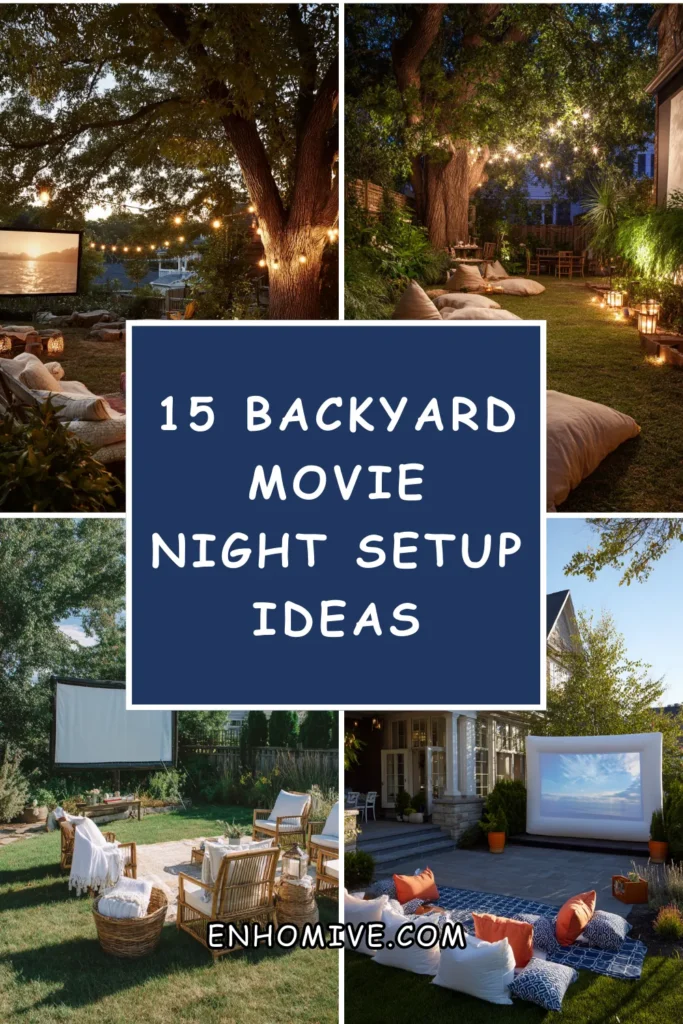
It is the pleasure of a home transformed for an evening into something more special than its everyday configuration, the familiar backyard made theatrical and magical by darkness, light, and the particular atmosphere of shared film watching under the open sky.
Setting up a backyard movie night well — with a screen of adequate size and quality, sound that genuinely serves the film, seating that remains comfortable for a full two-hour screening, and lighting and atmosphere that create the right environmental conditions for enjoyment — requires more thought and preparation than the casual setup that most backyard movie nights begin with, and considerably less than most people assume before they have done it once. Here are fifteen ideas for creating a backyard movie night that delivers on the experience’s full potential.
1. Choose the Right Projection Screen
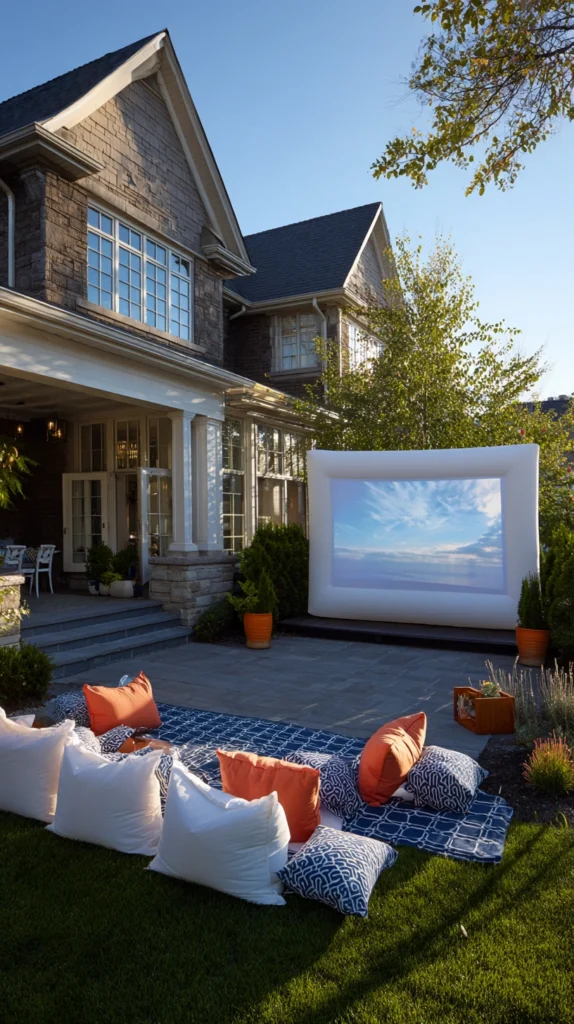
The projection screen is the backyard movie night’s most critical technical element, and its selection determines the quality ceiling of the entire experience — no projector, however powerful, no sound system, however good, can compensate for a screen that is too small, too reflective, or poorly tensioned.
The options range from the improvised — a white sheet hung between two trees, a white-painted fence section, the light-colored wall of the house — to the purpose-made inflatable screen, the tensioned frame screen on a freestanding stand, and the fixed outdoor projection surface.
For occasional use, an inflatable screen of three to four meters diagonal is the most practical option: it sets up in fifteen minutes, packs down to a manageable storage size, creates a consistently flat and properly tensioned projection surface, and its white projection fabric provides the diffuse reflectivity that maximises image brightness without the hot-spot glare of a glossy surface.
For frequent use, a fixed or semi-permanent tensioned frame screen mounted to the fence or house wall provides a superior surface that is ready to use without setup. Whatever the screen type, ensure it is large enough to be comfortably viewed from the intended seating distance — a minimum of one meter of screen diagonal for every three meters of viewing distance is the standard guideline.
2. Select a Projector with Adequate Outdoor Brightness
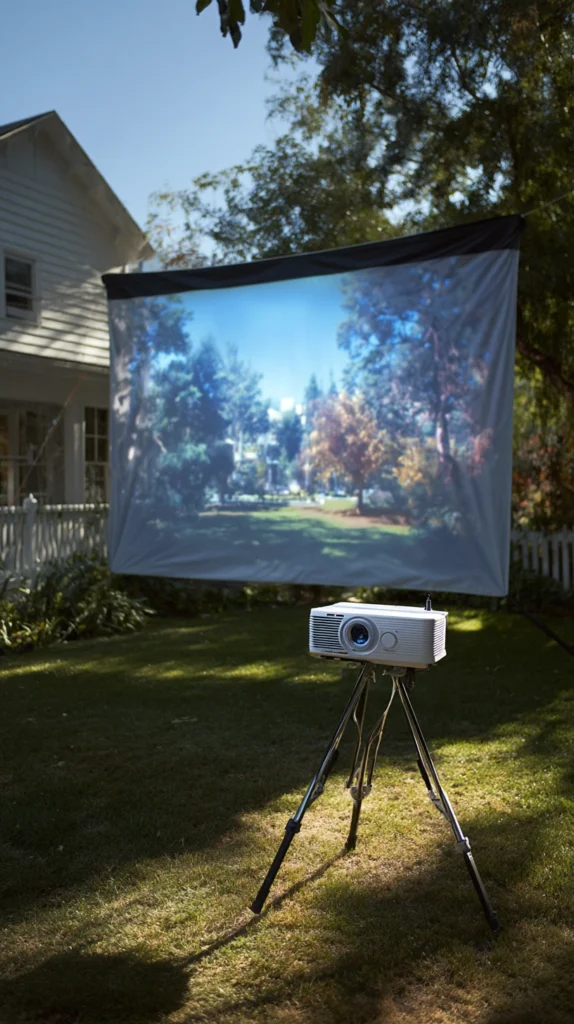
The outdoor projector faces a challenge that the indoor home cinema projector does not: ambient light. Even after dark, the sky’s residual illumination, the lights of adjacent houses, and the garden’s own accent lighting create an ambient light level that significantly reduces the apparent brightness of the projected image relative to the same projector used in a darkened interior.
An outdoor projector should have a minimum brightness specification of 3000 ANSI lumens for small gatherings in a reasonably dark backyard, and 5000 lumens or above for larger screens or gardens with significant ambient light interference. Native 1080p resolution provides adequate image quality for a four-meter screen at typical backyard seating distances; 4K resolution provides a visible improvement in detail for larger screens or closer seating positions.
The projector should be mounted at a height and distance from the screen that creates a square, non-distorted image — use the projector’s keystone correction only as a last resort, as it reduces the effective resolution of the projected image. A projector trolley or a dedicated outdoor mount creates a stable, consistently positioned setup that eliminates the alignment work required each time the projector is set up on an improvised surface.
3. Solve the Sound System Before the Screening Night
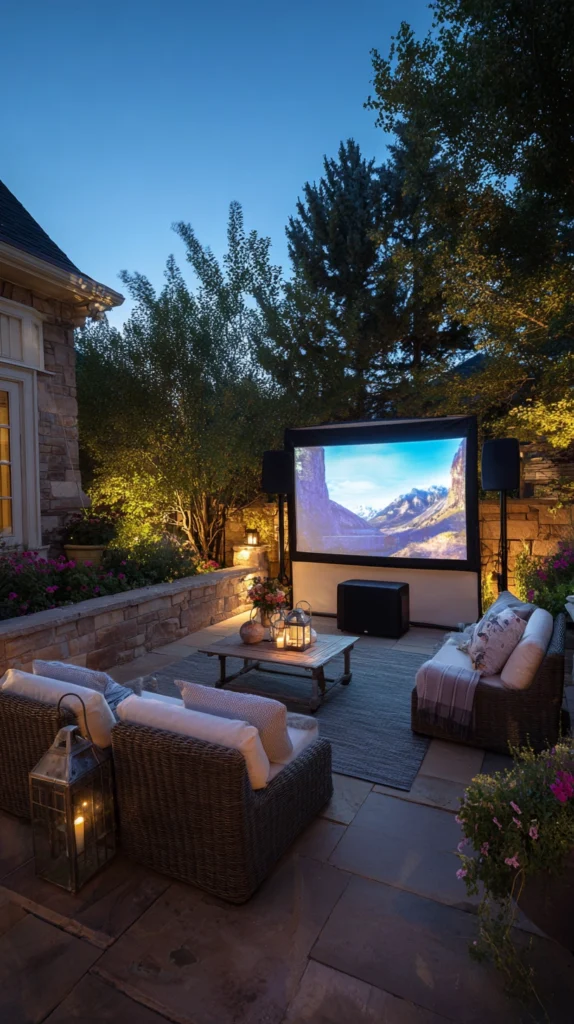
The sound system is the backyard movie night element that is most consistently underinvested in relative to its contribution to the overall experience quality — most people prioritize the screen and projector while accepting whatever Bluetooth speaker happens to be available for the audio, with the result that a visually impressive setup is undermined by sound that is too quiet to follow dialogue at comfortable distance, too directional to cover the seating area evenly, or too tinny in quality to convey the full sonic range of a film’s soundtrack.
A quality outdoor sound solution for a backyard movie night requires a stereo or surround setup with sufficient power to project sound clearly to the farthest seat in the viewing area without the volume level that would disturb neighbors.
A pair of outdoor-rated bookshelf speakers positioned at the screen’s sides and connected to a compact stereo amplifier is the most cost-effective genuinely adequate solution for most backyard scales. Position the speakers at ear height for the seated audience, angle them slightly inward to cover the full seating area, and test the balance and volume from every seating position before the screening begins.
4. Create a Comfortable Seating Arrangement
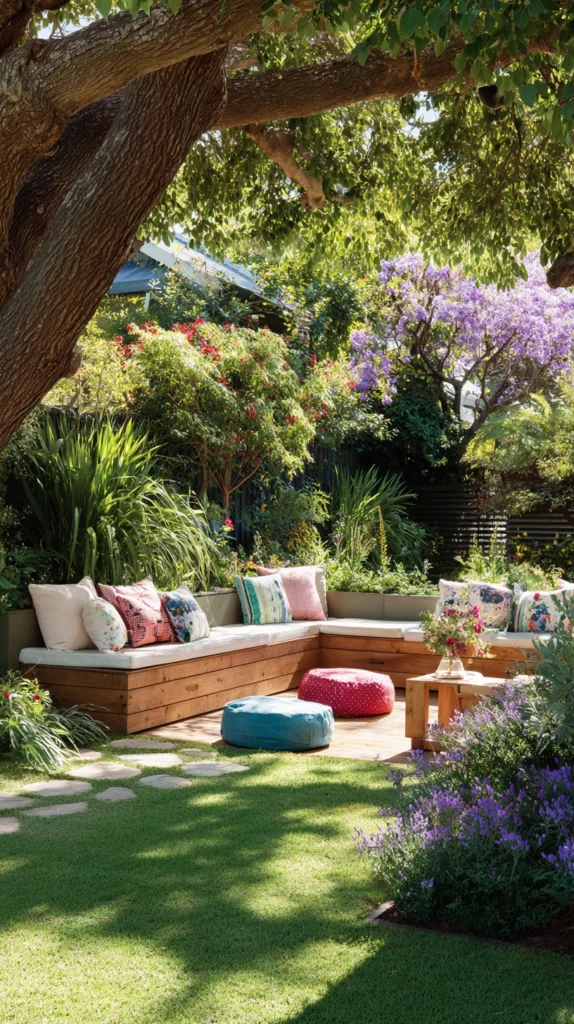
The backyard movie night seating arrangement determines the social character of the event as much as the technical setup determines its quality, and the decision about what type of seating to provide — and how to arrange it — should be made with the specific gathering in mind.
A family movie night with young children benefits from a layered arrangement: bean bags and floor cushions at the front for the children, garden chairs and recliners in the middle tier for the adults, and a raised seat or two at the back for anyone who wants to observe from a comfortable height.
A gathering of adults benefits from the generous, informal comfort of outdoor sofas and daybeds pulled from the patio area, arranged in a loose horseshoe that allows conversation between screenings and communal snacking during them.
The key seating requirements are comfort for a full film’s duration — two hours is a long time in a garden chair of inadequate quality — and adequate sightlines from every position to the full screen surface. Test every seating position before the screening begins to identify any positions with obstructed sightlines that require adjustment.
5. Build a Dedicated Snacks and Drinks Station
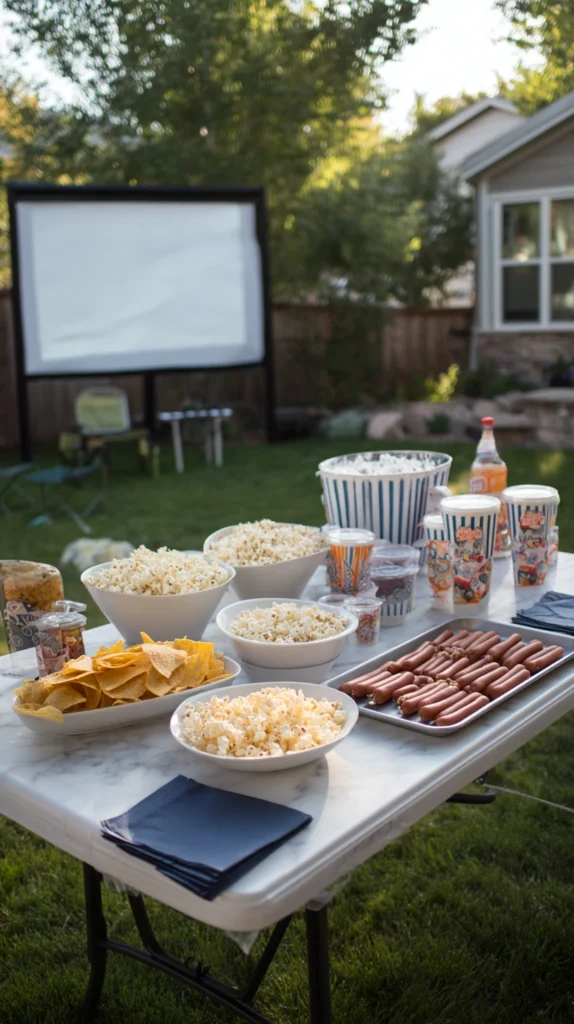
The food and drinks station is the backyard movie night’s most immediately social element — the gathering point before the screening, the resupply point during interval breaks, and the element whose quality and variety communicates most directly the effort and care invested in the event.
A dedicated snacks and drinks station — a table or a series of surfaces within convenient reach of the seating area but outside the sightline of the screen — holding the evening’s food and drink in an organized, accessible, and visually appealing arrangement creates the convivial hospitality quality that elevates a casual movie night into a memorable event.
The classic movie night food — popcorn in individual portions, nachos and dips, hot dogs in a warming tray, a selection of cold drinks in an ice bucket — suits the outdoor cinema context with a specific appropriateness, and its presentation in attractive serving vessels, labelled clearly, creates the atmosphere of a designed hospitality experience rather than a kitchen raid.
A separate hot drinks station for later in the evening — a thermos of hot chocolate, a cafetiere of coffee, mugs and marshmallows — maintains the comfort of the gathering as the night air cools.
6. Design the Atmospheric Lighting
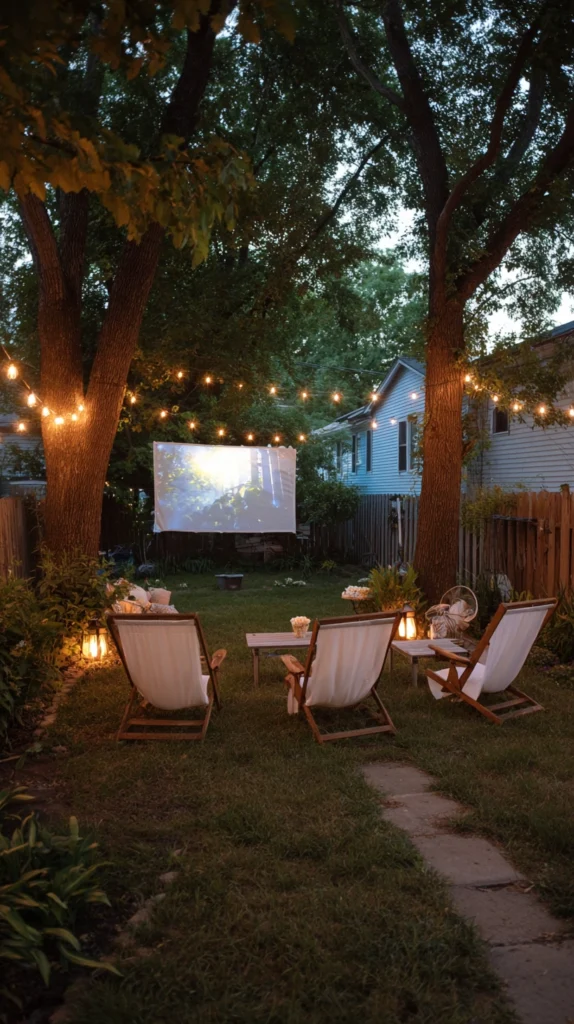
The atmospheric lighting of a backyard movie night is the element that most transforms the space from a garden with a screen in it to a genuinely theatrical outdoor environment, and it requires more thought than the simple function of providing enough light to navigate safely between the seating area and the snacks station.
The lighting scheme should operate in two modes: a pre-screening ambient mode that creates a warm, social atmosphere during the gathering and setup phase, and a screening mode that reduces the ambient light to the minimum required for safety while maintaining the atmospheric quality that makes the dark garden feel inviting rather than merely dark.
Festoon lights strung at height between the garden’s trees or on a simple overhead framework create the most universally beautiful pre-screening atmosphere — their warm, dotted illumination creating a canopy of light above the gathering area.
During the screening, these festoon lights should be dimmed or turned off, with only small pathway lights at ground level maintaining the minimal safety illumination required. Candles in lanterns at the sides of the seating area, their flames too low and too warm to affect the projected image, create the most atmospherically appropriate screening-mode lighting.
7. Set Up a Blanket and Comfort Station
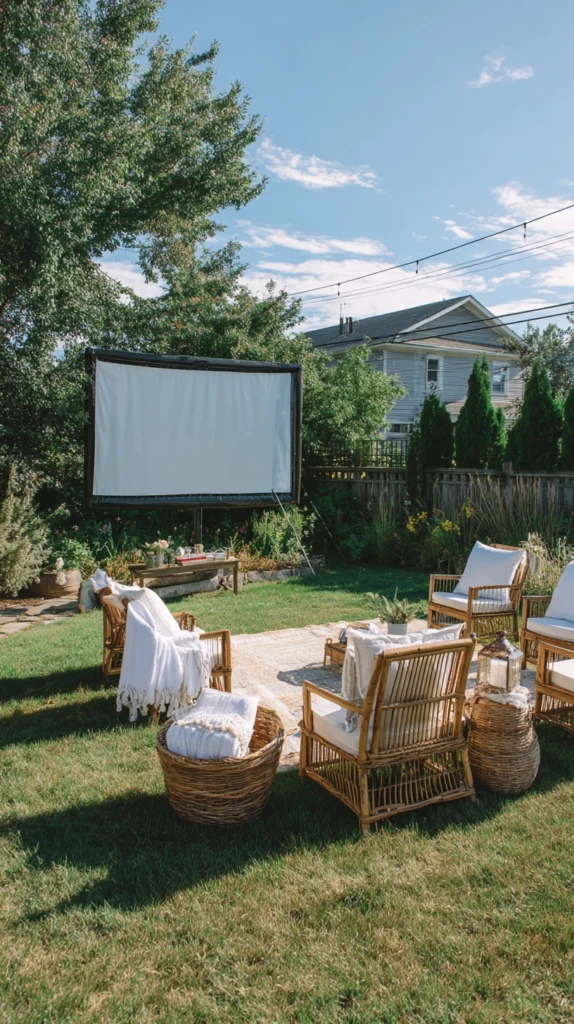
The outdoor cinema’s greatest threat to audience enjoyment — greater than technical failures, greater than poor image quality, greater than inadequate sound — is physical discomfort from the cold. The temperature drop that occurs after sunset, amplified by the stillness of seated film watching and accelerated as the evening progresses into the genuinely cold small hours, can reduce an enthusiastic outdoor cinema audience to a shivering, distracted gathering within forty minutes of the screening’s start.
A dedicated blanket station — a large basket or a decorative crate holding a generous selection of blankets, throws, and cushions, available for audience members to help themselves before the screening begins — is the most important comfort provision available for any outdoor movie night.
The blankets should be warm enough for genuine autumn cold rather than only adequate for the residual warmth of a summer evening, and there should be enough for every audience member plus generous spares. Supplement the blanket provision with portable patio heaters positioned at the sides and rear of the seating area for evenings when the temperature requires more than textile warmth.
8. Choose the Right Film for the Setting
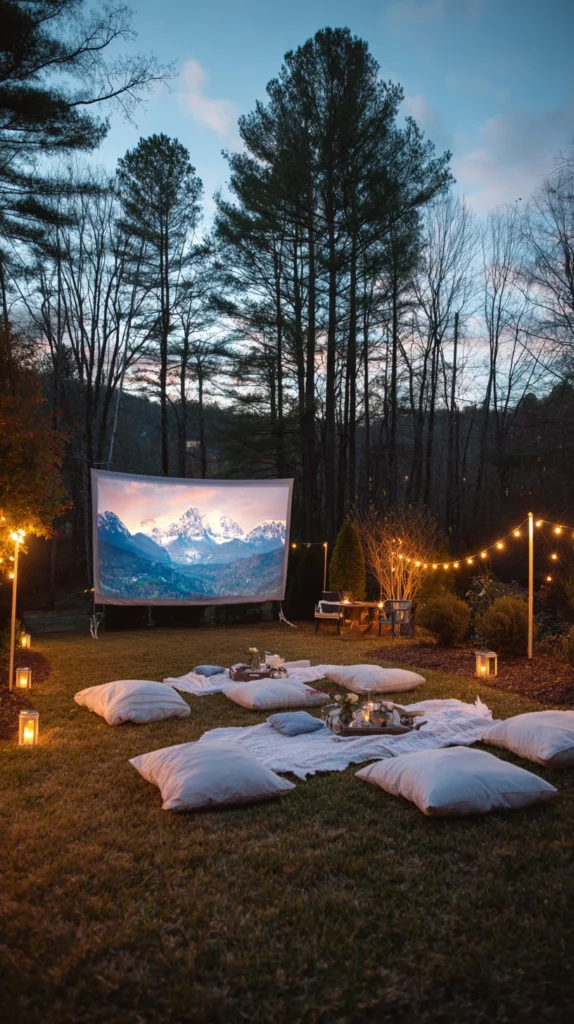
The film selection for a backyard movie night is a curatorial decision with significant consequences for the evening’s success, and the outdoor cinema context imposes specific constraints on the film selection that the indoor cinema does not.
Films with very dark scenes — many horror films, some thriller sequences, films shot in low-key lighting — lose significant visual detail in an outdoor projection environment where the ambient light level is higher than a controlled indoor space can achieve.
Films with very quiet passages — much art cinema, many drama films with naturalistic sound design — struggle in outdoor sound environments where wind, neighbor noise, and ambient sound compete with the film’s quieter moments.
Films that work best outdoors are those with strong visual compositions that read well at outdoor brightness levels, bold and clear sound design that projects above ambient noise, and the crowd-pleasing accessibility that makes the inclusive social gathering of a movie night work for a mixed audience.
Summer blockbusters, beloved family films, classic comedies, and outdoor-themed adventure films are the natural selection for a backyard cinema, and the selection should be announced in advance so that audience members can arrive with appropriate enthusiasm and appropriate dress.
9. Create a Themed Décor Around the Film
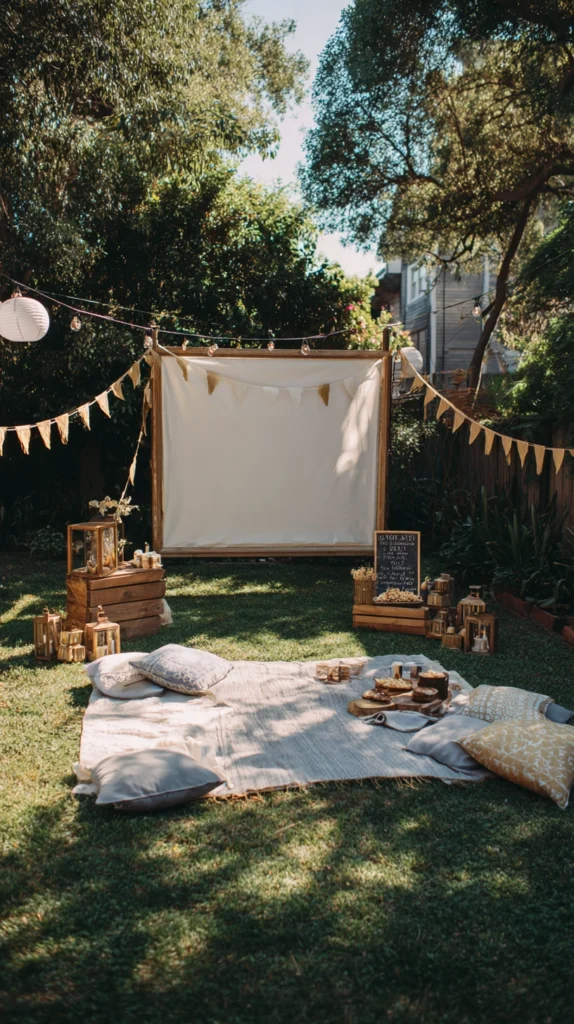
A backyard movie night that extends the film’s theme or setting into the event’s décor and food creates a gathering of considerably greater memorability and creative ambition than the standard setup, and the thematic extension requires very little additional effort relative to the heightened experience it creates.
A screening of The Great Gatsby suggests a gold and black color scheme, jazz on the pre-screening playlist, and champagne in couples at the drinks station. A Harry Potter marathon suggests fairy lights and lanterns creating a Great Hall atmosphere, butterbeer in tankards, and house-colored blankets at the comfort station.
A classic Western calls for bandanas as napkins, chili in cast iron pots, and country music until the film begins. The theme connects the event’s various elements into a coherent experience and gives the gathering a creative identity that a straightforward film screening cannot achieve, and its development is itself an enjoyable part of the event’s preparation.
10. Plan for Technical Failures in Advance
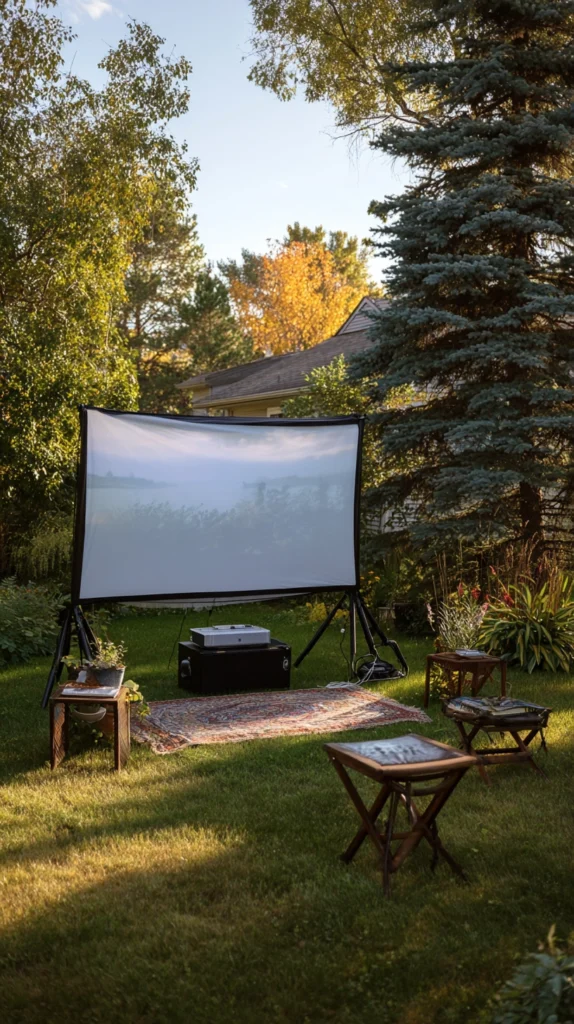
The backyard movie night’s greatest practical risk is the technical failure — the projector that refuses to connect to the media source, the Bluetooth speaker that drops its pairing mid-film, the power cable that proves two meters short of the outdoor socket.
Planning for these failures in advance — testing every element of the technical setup in full at least one day before the screening, identifying the cable runs and power requirements before the equipment is permanently positioned, and having a backup plan for the most likely failure scenarios — converts what would otherwise be an evening-ruining crisis into a minor inconvenience that is resolved within minutes.
The most important pre-screening technical checks are: image quality and focus at the actual screening distance, audio clarity at the actual seating positions, cable management that prevents trip hazards in a dark outdoor space, and power supply adequacy for all simultaneous electrical loads. Run the full system for at least thirty minutes during the daylight test to identify any overheating or interference issues that only emerge after extended operation.
11. Manage Insects and Outdoor Pests
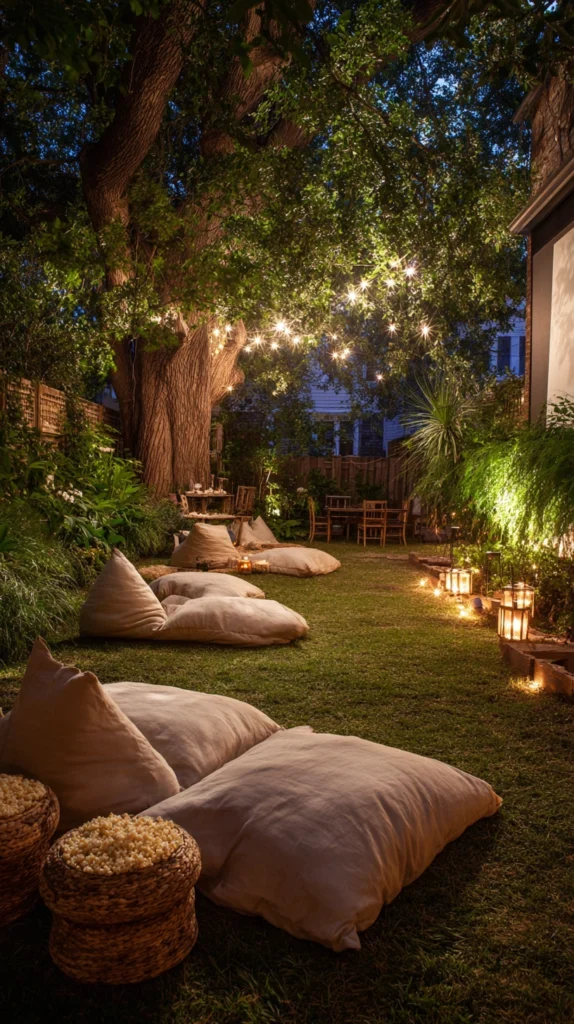
The outdoor cinema’s most reliably disruptive element — more disruptive than any technical failure, more damaging to audience enjoyment than any seating inadequacy — is insects.
The combination of warm audience bodies, residual food and drink, and the light sources of the projector and festoon lights creates an insect attraction of considerable power, and in summer months a backyard movie night without adequate insect management can become genuinely intolerable within thirty minutes of dark.
Citronella candles placed at the perimeter of the seating area provide mild repellent effect and considerable atmospheric quality simultaneously.
Plug-in insect repellent devices operating in the outdoor socket nearest the seating area provide more reliable chemical repellency without the fire risk of candles near blankets and cushions. Personal insect repellent spray available at the snacks station allows audience members to apply individual protection before the screening begins.
The projector’s light source is the primary insect attractor — a screen fabric that diffuses rather than reflects light reduces the beam’s insect-attracting intensity at the projection source.
12. Build a Permanent Outdoor Cinema Zone
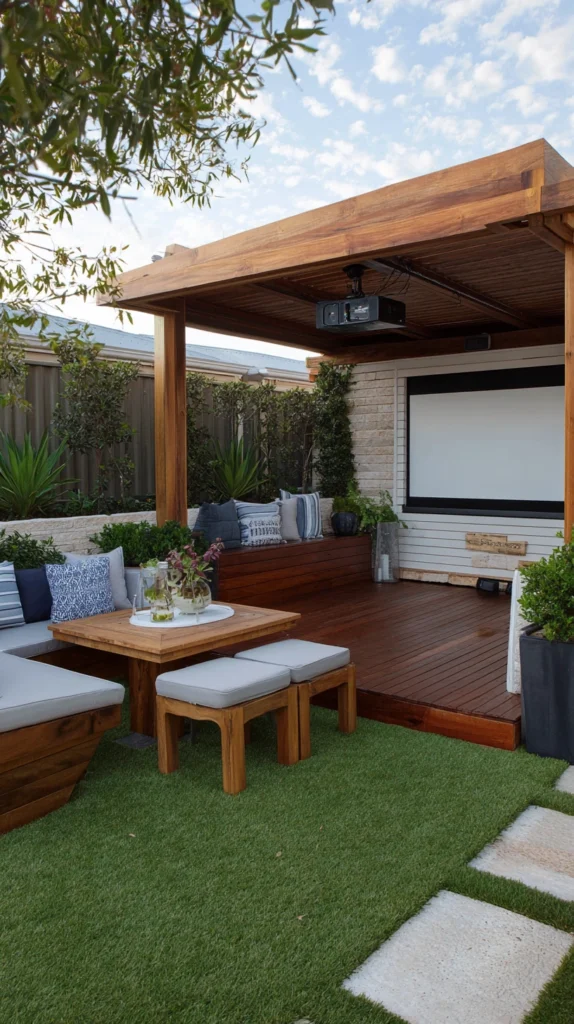
For households where the backyard movie night is a regular seasonal event rather than an occasional occurrence, the investment in a semi-permanent outdoor cinema zone — a dedicated area of the backyard fitted with a permanent screen mount, a weatherproof projector housing, buried cable runs, outdoor speaker mounting points, and a furnished seating area that can be quickly converted to cinema mode — eliminates the setup and teardown labor that prevents the casual backyard movie night from becoming a frequent, spontaneous pleasure.
The permanent outdoor cinema zone requires a one-time investment of design time and material cost that pays its return across every subsequent screening in saved setup time, improved technical quality, and the availability of an impromptu outdoor screening at minimal notice.
The zone should be designed with the garden’s overall aesthetic in mind — the screen housing integrated into the garden’s architectural language, the speaker mounts designed as garden features rather than technical intrusions, the seating area beautiful in its everyday configuration and simply supplemented for cinema mode.
13. Curate a Pre-Film Playlist and Program
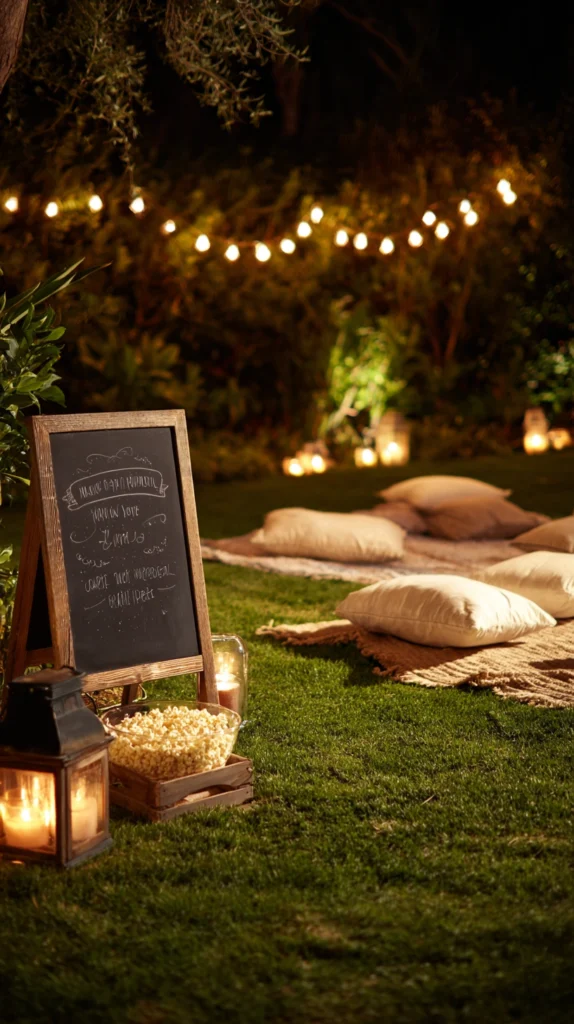
The period before the film begins — the gathering time when audience members arrive, find their seats, collect blankets and snacks, and settle into the evening — is a social and atmospheric opportunity that the unprepared backyard cinema wastes in silence or in the arbitrary sound of whatever music happens to be playing from a forgotten playlist.
A curated pre-film playlist — music chosen for its thematic relationship to the film, its appropriate energy level for the social gathering phase, and its natural conclusion at the screening’s start time — creates the atmosphere of a genuinely designed event and builds the anticipation that makes the film’s opening more impactful.
A brief program — a printed card or a chalkboard welcome sign that lists the evening’s film, the start time, the snacks available, and any relevant event details — creates the hosted quality that converts a casual gathering into a genuine occasion, and the small effort of its preparation is entirely repaid by the impression it creates on the arriving audience.
14. Consider Neighbor Relations and Local Regulations
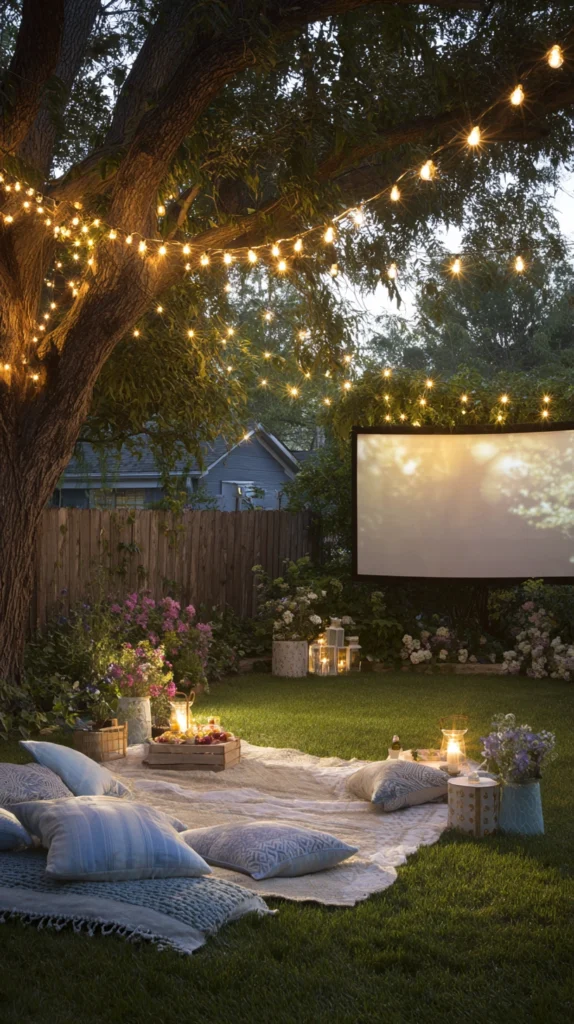
The backyard movie night that creates an extraordinary experience for its participants while creating a noise nuisance for adjacent neighbors is a social failure regardless of its technical success, and the consideration of neighbor relations is a practical necessity rather than merely a courtesy.
Sound management is the primary neighbor consideration: the outdoor speaker system that covers the seating area adequately should be directed away from the boundary fence of the most sensitive neighbor, and the volume should be tested from beyond the garden boundary before the screening begins to assess the actual sound level experienced outside the garden perimeter.
A courtesy note to adjacent neighbors — informing them of the planned screening, its likely finish time, and your willingness to manage the volume if it becomes a problem — creates the goodwill that converts a potential complaint into a tolerant co-existence.
Check local council or municipality regulations regarding outdoor amplified sound, which in many jurisdictions is subject to specific time and volume restrictions that apply to residential properties.
15. Make It a Recurring Seasonal Ritual
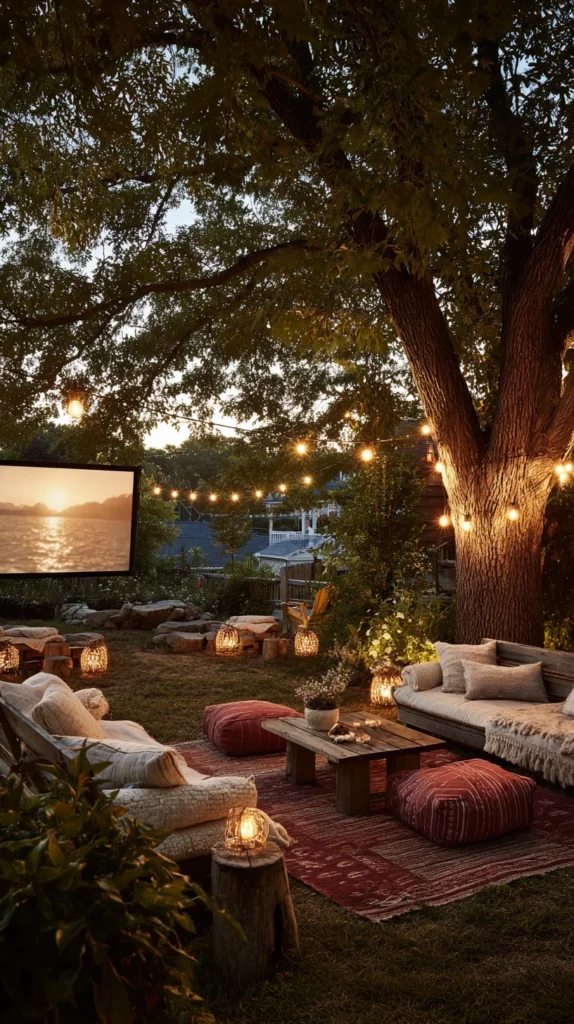
The final backyard movie night idea is the most personally rewarding and the most socially valuable: the commitment to making the outdoor cinema a recurring seasonal ritual rather than a one-off experiment.
The first backyard movie night is the one that reveals what works and what needs refinement — the seating arrangement that proved inadequate, the sound system that needed more power, the snacks that disappeared too quickly and the ones that went untouched.
The second and third screenings benefit from this accumulated experience, and by the fourth or fifth iteration the backyard cinema has become a genuinely refined, genuinely reliable pleasure that the household and its regular guests look forward to with the specific anticipation of a beloved recurring event.
The seasonal ritual of the backyard movie night — the summer evening screenings that mark the outdoor season’s peak, the autumn screenings wrapped in blankets as the year turns — creates the specific quality of place and memory that turns a backyard into a home.