
15 Backyard Reading Nook Ideas
There is a specific quality of pleasure in reading outdoors that no indoor reading environment, however carefully designed and however comfortably furnished, can quite replicate. It is the quality of being simultaneously enclosed and open.
The enclosure of the nook’s defined, sheltered space creating the psychological safety and focused intimacy that deep reading requires, and the openness of the outdoor environment providing the specific sensory background of birdsong, moving air, the sound of garden water, and the peripheral awareness of growing things that the indoor room, however beautiful, cannot synthesize.
The backyard reading nook is the domestic outdoor space’s most intimate and most personally valuable addition — more used, per square meter of its footprint, than any other outdoor structure available, because it serves the single activity that most people find both most restorative and most consistently difficult to make time and space for.
Creating a backyard reading nook that is genuinely used — that becomes the daily destination for the household’s reading hours rather than a beautiful but intermittently visited garden feature.
It requires attention to the specific practical requirements of outdoor reading: adequate shade, comfortable and weather-appropriate seating, protection from the specific weather conditions of the local climate, and the organizational provision of the books, drinks, and accessories that extended reading sessions require. Here are fifteen ideas for creating one that delivers on every one of these requirements.
1. A Pergola Reading Nook with Climbing Plants
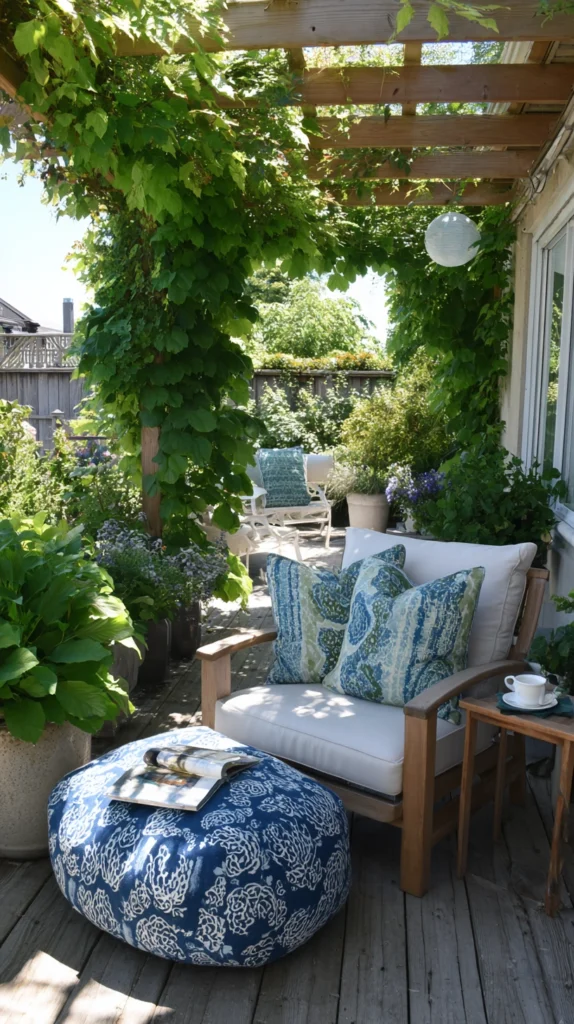
The pergola — a simple overhead structure of posts and horizontal beams supporting a partially shaded roof — is the reading nook’s most naturally suited structural framework, because its overhead coverage provides the dappled shade that outdoor reading requires while its open sides allow the airflow and the sensory connection to the garden that distinguishes the outdoor reading experience from its indoor equivalent.
A pergola of modest dimensions — three by three meters is sufficient for a single reading chair and its accompanying small table and storage — positioned at a quiet corner of the backyard and furnished with a deeply comfortable chair, a side table, and a footrest creates a reading destination of genuine intimacy and considerable beauty.
The climbing plants trained over the pergola’s beams — a fragrant climbing rose, a jasmine, a productive grapevine whose leaves provide summer shade and whose fruit provides the additional pleasure of reading with a glass of something cold — develop over successive seasons into a living canopy of extraordinary beauty and sensory richness that transforms the simple timber structure into a garden room of complete enchantment.
Position the pergola to face the garden’s most beautiful view while receiving the morning or afternoon light from the side rather than directly overhead.
2. A Hammock Between Two Trees
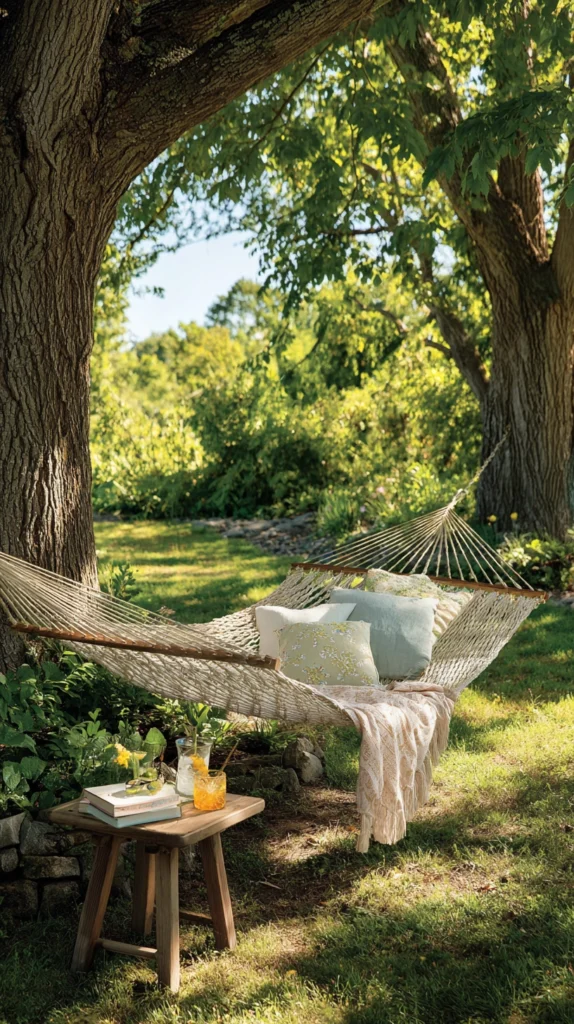
The hammock is the reading nook in its most elemental form — the simplest possible outdoor resting structure, requiring nothing more than two trees of appropriate spacing and a length of woven fabric or rope to create a suspended reading and resting position of remarkable comfort and completely irreplaceable outdoor quality.
The experience of reading in a hammock — the slight, continuous movement of the suspended form, the canopy of leaves visible above the reader, the specific quality of physical support that the hammock’s conforming surface provides for a body in the horizontal reading position — is one that no chair, however well designed and however generously cushioned, can replicate.
The hammock’s practical requirements are modest: two trees or posts of adequate strength and appropriate spacing, a quality hammock in a weather-resistant material, and sufficient clearance beneath the hammock for safe entry and exit.
A small side table or a hanging hook at arm’s reach holds the drink and the spare book without requiring the hammock’s occupant to leave the reading position, and a string of fairy lights through the canopy above creates the possibility of evening reading sessions that extend the hammock’s use beyond daylight hours.
3. A Built-In Bench with Storage and Shade
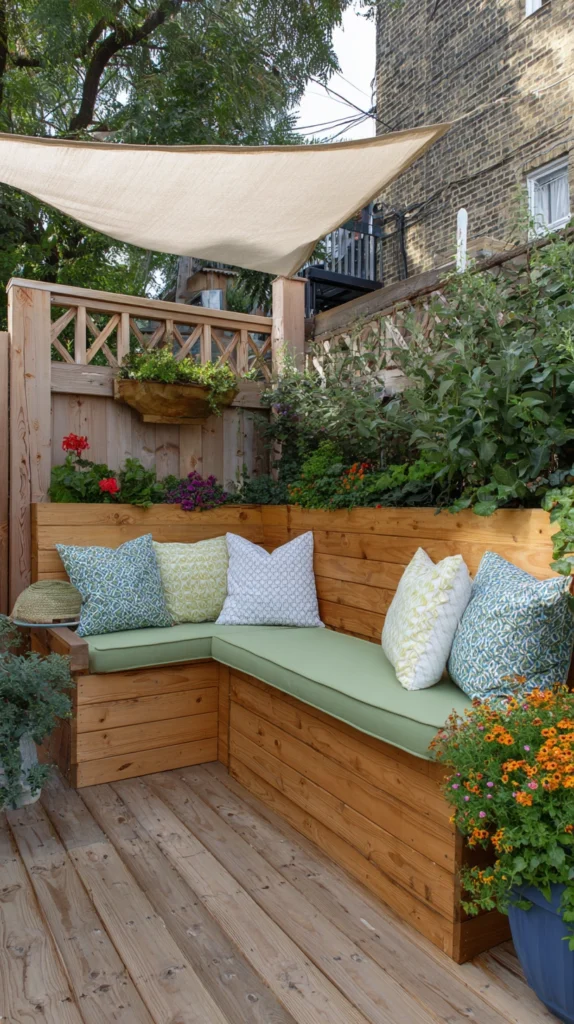
A built-in timber bench — a permanent seat constructed from hardwood or treated softwood, fixed to the garden’s boundary wall or fence, with the bench seat itself containing lift-top storage compartments for outdoor cushions, books, and reading accessories — creates a reading nook of complete practical functionality and architectural integration with the garden’s structure.
The built-in bench’s permanence gives the reading nook a quality of designed intentionality that a placed piece of outdoor furniture cannot approach — it belongs to the garden as an architectural element rather than sitting in it as furniture — and its storage compartments resolve the reading nook’s most persistent practical challenge: the provision of outdoor-safe storage for the cushions, the books, and the accessories that the reading session requires but that must be protected from rain and dew when the nook is not in use.
A shade sail or a simple pergola structure above the bench creates the overhead coverage that extended outdoor reading requires, and a planting border directly in front of the bench — fragrant herbs, flowering perennials at graduated heights — creates the sensory foreground that makes the bench reading position a complete sensory experience.
4. A Treehouse Reading Platform
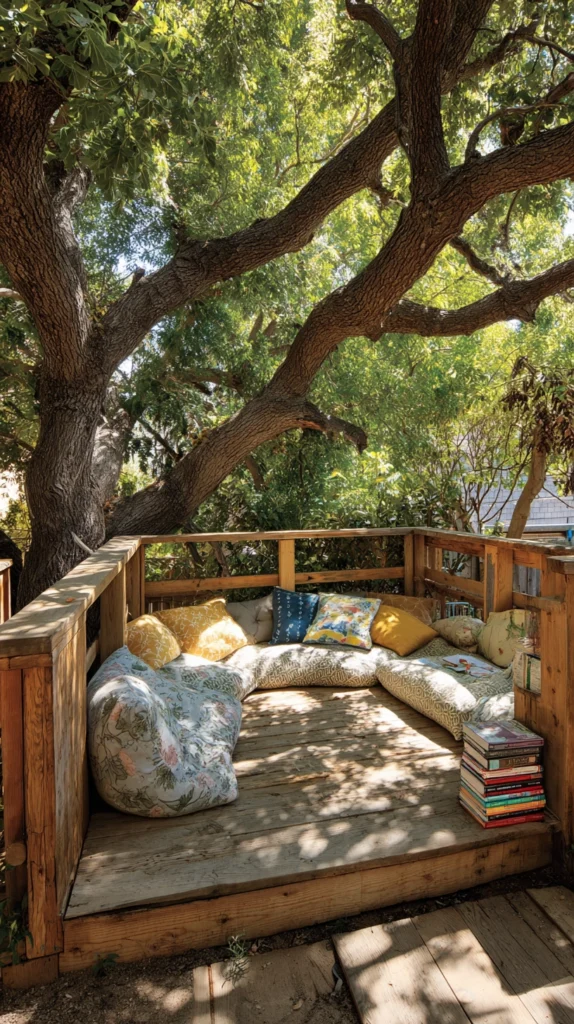
The treehouse reading platform — an elevated timber deck built around or between the branches of a mature garden tree, accessed by a simple ladder or a timber stair, and furnished with cushions, a small shelf for books, and the specific quality of seclusion that height provides — creates the most completely magical backyard reading nook available, and the one whose specifically elevated, enclosed, arboreal quality cannot be replicated by any ground-level alternative.
The reading platform does not require the enclosed rooms and the complex construction of a full treehouse — a simple deck of adequate size, with a railing on the open sides and the tree’s canopy providing the overhead coverage, is sufficient to create the specific quality of being within the tree rather than merely beside it.
The sound of wind in the leaves above and around the platform, the view across the garden from the elevated position, and the specific sense of having climbed to a private place above the ordinary level of daily life create a reading environment of complete otherworldliness that the ground-level nook, however beautifully designed, cannot provide.
5. A Sunken Seating Area with Planting Surrounds
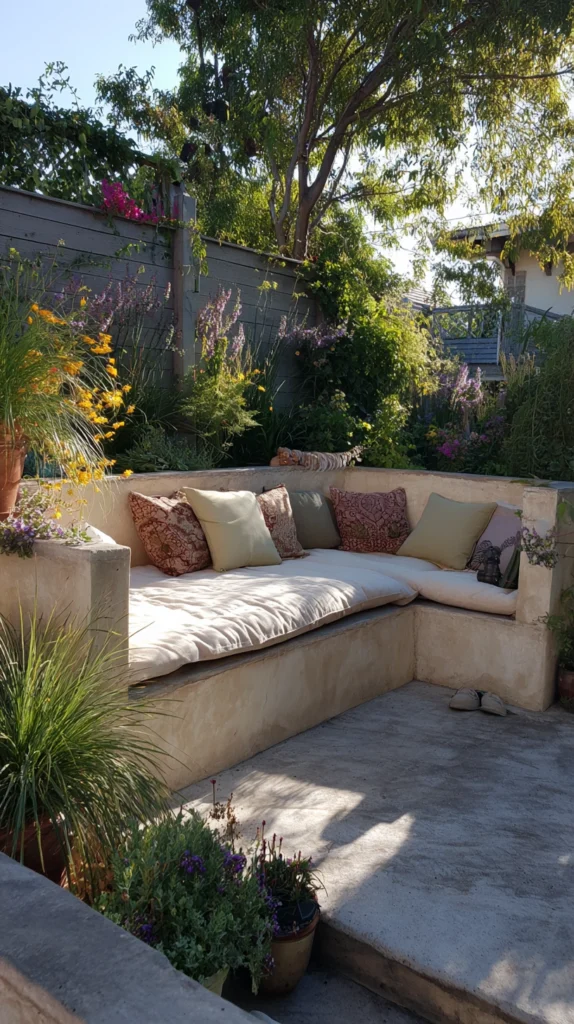
A sunken seating area — a section of the garden excavated to a depth of forty to sixty centimeters below the surrounding grade, creating a contained, bowl-like outdoor room with the surrounding garden visible above its edges — creates a reading nook of extraordinary intimacy and wind protection that the above-grade seating area cannot replicate.
The sunken position creates a microclimate of warmth and shelter — the garden’s prevailing wind passes over the sunken area rather than through it, the surrounding soil acts as thermal mass that maintains the microclimate’s warmth longer than an above-grade area retains heat, and the slightly enclosed quality of the below-grade position creates a psychological intimacy that promotes the relaxed, focused state that deep reading requires.
Planting the raised edges of the sunken area with dense, fragrant plants — lavender, rosemary, and the various herbs whose scent is released by proximity and gentle movement — creates a sensory environment of complete outdoor pleasure that supplements the reading experience with the garden’s most agreeable sensory offerings.
6. A Greenhouse or Cold Frame Reading Corner
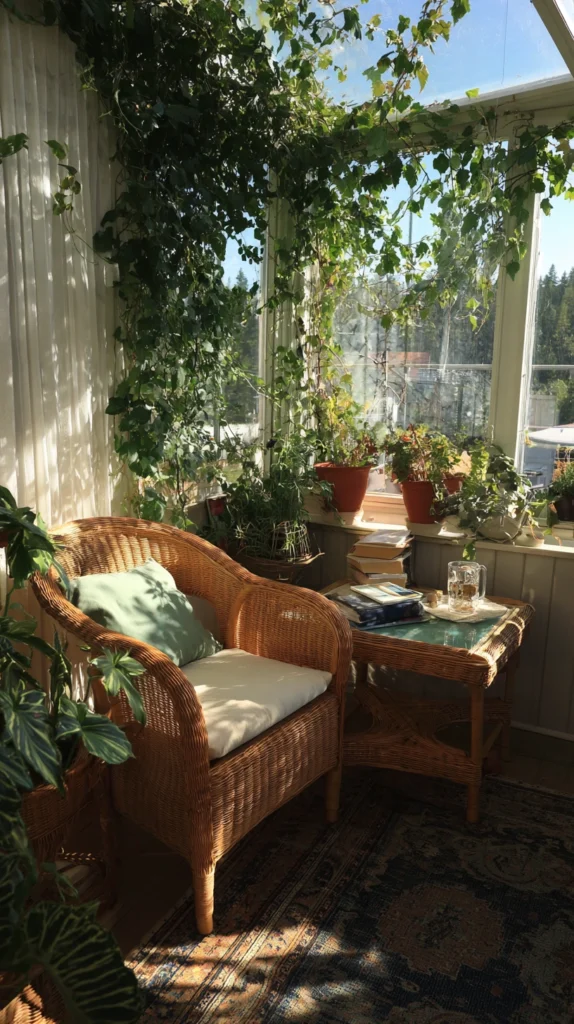
The greenhouse reading corner — a chair and a small table tucked into the end of a working greenhouse, surrounded by the growing plants and the specific warm, humid atmosphere of the greenhouse interior — is the reading nook for the gardener whose love of plants makes the plant-surrounded environment the most naturally restorative reading context available.
The greenhouse’s glass structure creates a warm, sunny reading environment on cool days when the outdoor temperature would make other reading nook options uncomfortable, extending the effective outdoor reading season by several weeks at each end of the warmer months.
The specific quality of the greenhouse atmosphere — the scent of damp earth and growing plants, the condensation on the glass, the sound of rain amplified by the glass overhead — creates a sensory environment of unusual richness and calm that the open garden cannot provide in the same specific combination.
Even a small section of a modest greenhouse — a single chair beside the staging, with a shelf for the current book and the cup of tea — creates the reading corner with the distinctive greenhouse quality that no other outdoor space replicates.
7. A Willow or Hazel Woven Structure
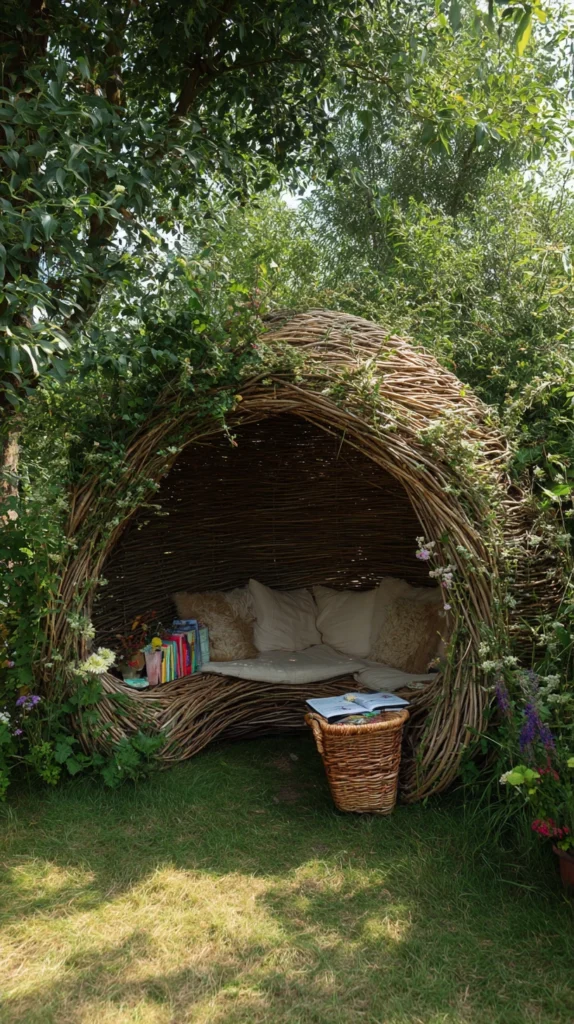
A natural woven structure — a reading shelter constructed from living or dried willow or hazel, its curved walls and arching roof creating an organic, cave-like enclosure of completely natural materials — creates a reading nook of extraordinary character and intimacy that no manufactured structure can replicate. Living willow structures, planted in late winter and woven into shape as they grow through the season, develop into a genuinely living shelter over two to three growing seasons — their leaves providing the summer shade, their woven structure providing the wind shelter, and their organic material creating the specific sensory connection to natural materials that the reading nook’s restorative function most completely benefits from.
A dried willow or hazel woven dome — constructed from pre-harvested material woven over a simple former — creates a more immediately available structure at the cost of the living quality that the planted willow’s seasonal growth provides. Either approach creates a reading nook of genuine craft and natural beauty that is completely specific to the garden and the person who made it.
8. A Shed Conversion into a Reading Retreat
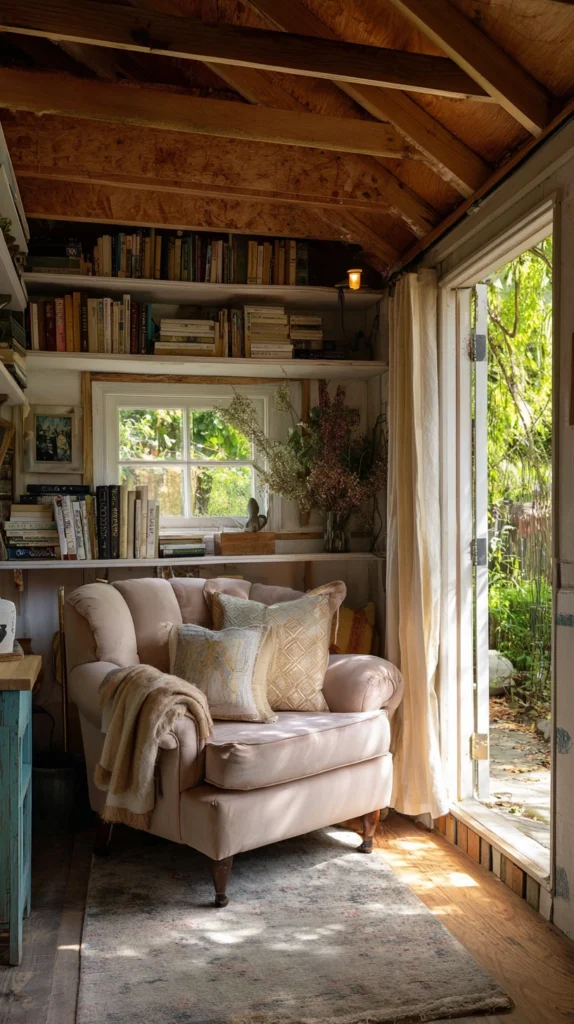
The garden shed converted into a reading retreat — insulated, properly ventilated, furnished with a comfortable chair and bookshelves, lit with a quality lamp, and decorated with the personal objects that make a reading space feel genuinely one’s own — creates the backyard’s most fully enclosed and most all-weather reading destination, the outdoor reading nook that functions on every day of the year regardless of temperature, rain, or the quality of the garden’s ambient conditions.
The shed reading retreat’s complete enclosure creates a psychological separation from the household’s daily activity that the open or semi-open garden nook cannot provide — when the door is closed, the shed is a room of absolute privacy whose separation from the main house creates the specific quality of having gone somewhere specifically to read.
A small wood-burning stove or a plug-in electric heater extends the shed reading retreat’s usable season into the coldest months. A kettle, a small selection of teas, and a comfortable throw complete the provision for extended reading sessions in complete domestic comfort.
9. A Deck Reading Corner with Shade Sail
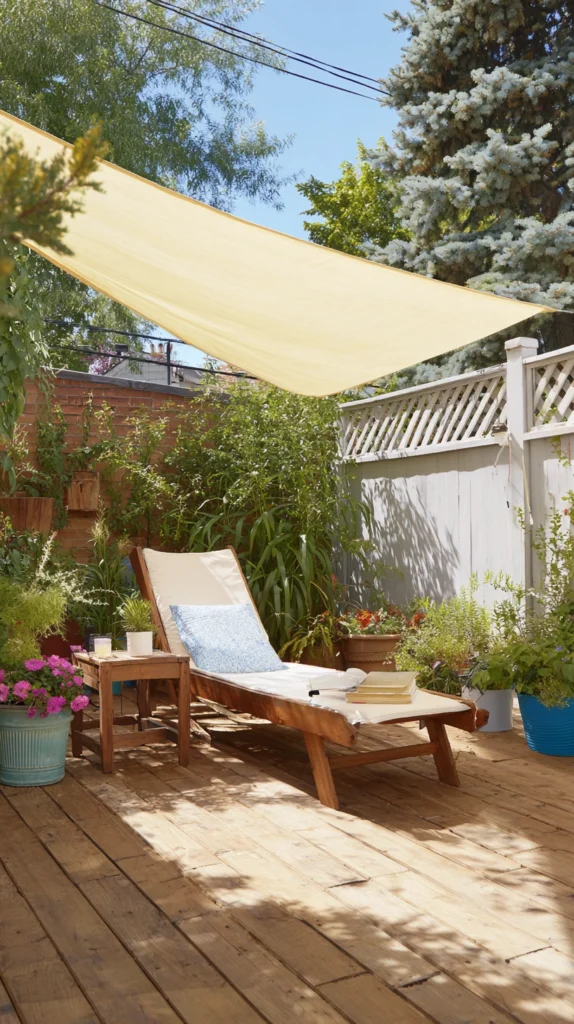
The deck reading corner — a defined section of the existing outdoor deck or patio, separated from the main deck’s social and dining functions by a simple arrangement of planters, a change in flooring material, or simply the positioning of the furniture — furnished with a reclining chair or a daybed and shaded by a tensioned sail shade creates a reading nook within the existing outdoor infrastructure without any dedicated structural addition.
The shade sail above the reading corner resolves the primary practical challenge of deck-based reading — the direct overhead sun that makes afternoon deck use uncomfortable in summer — by creating a pool of shade precisely over the reading position without blocking the surrounding deck’s access to light.
The deck reading corner’s integration with the main outdoor space means it is available with zero transition from the household’s daily outdoor routine — the reading session can begin immediately without the preparation or the journey that a more remote garden nook requires, which makes it the reading nook most likely to be used for the spontaneous, unplanned reading sessions that make up the majority of any genuine reader’s daily practice.
10. A Meditation Garden Reading Nook
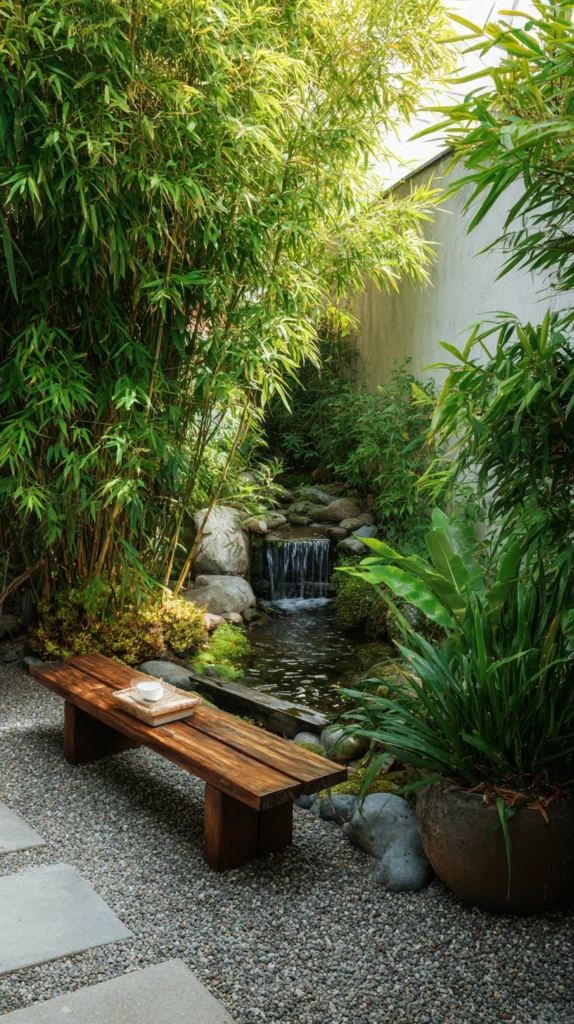
A reading nook designed within a meditation garden context — a quiet corner of the backyard designed around the principles of sensory calm, natural material simplicity, and the specific planting that promotes the focused, undistracted attention that meditation and deep reading share.
It creates a reading environment of complete psychological and sensory support for the kind of reading that demands the most from its environment: the demanding novel, the philosophical text, the poetry collection, the long-form essay whose quality of attention exceeds what the typical domestic environment can consistently provide.
The meditation garden reading nook uses simple, natural materials — a timber bench or a stone seat of generous proportions, a raked gravel or moss ground surface, a single significant plant or stone as the visual focus — and the specific quality of plantings that promote calm: bamboo whose sound in the wind is consistently described as restorative, water whose movement creates the white noise that masks urban sound, lavender whose fragrance is physiologically associated with reduced anxiety and increased calm.
11. A Children’s Backyard Reading Fort
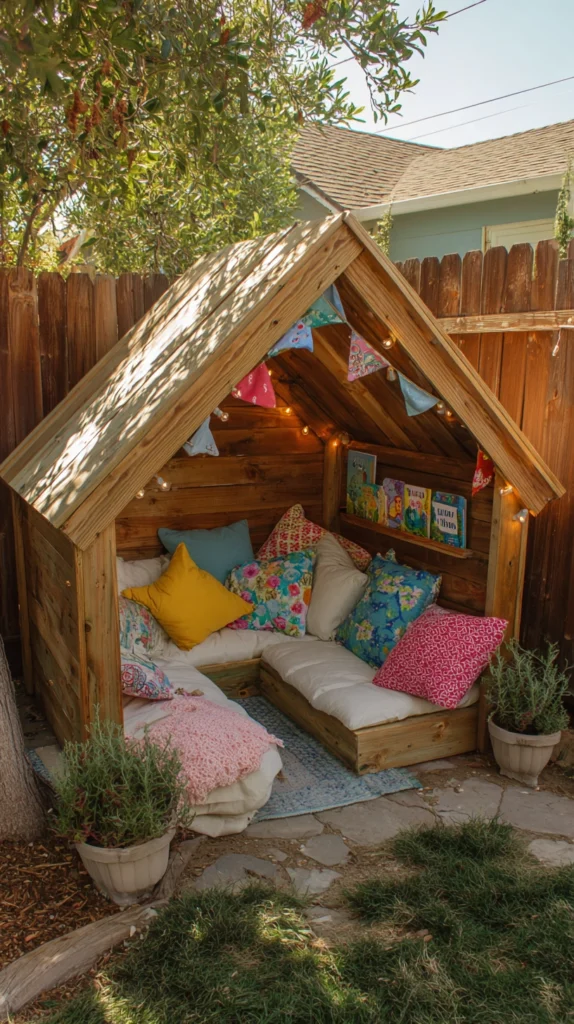
A backyard reading fort designed specifically for children — a low-ceilinged, child-scaled structure whose entrance requires ducking, whose interior is sized for small bodies, and whose furnishing — floor cushions, a small shelf of books, fairy lights, and the personal decorative objects of the child’s own choosing — creates the reading space that most powerfully promotes the child’s independent reading practice.
The child’s reading fort derives its power from the sense of a completely personal space — a place that belongs entirely to the child, that is built at the child’s scale, and that the child can retreat to for the reading that is most genuinely pleasurable when it is genuinely self-chosen rather than prescribed.
The fort can be constructed from a simple timber frame covered with canvas or outdoor fabric, from bamboo poles and woven panels, or from the branches of a dense hedge or shrub trimmed to create an entrance and a usable interior — the material matters less than the sense of enclosure and ownership that the child’s specific space provides.
12. A Coastal-Style Reading Nook with Nautical Details
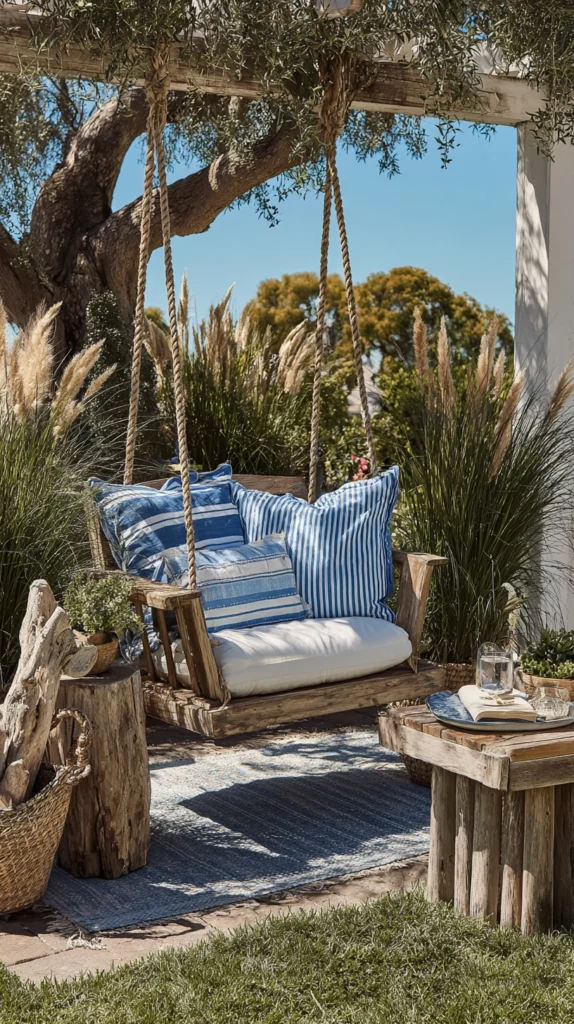
The coastal reading nook — a hammock chair or a rope-hung daybed on a covered porch or under a simple sail shade, furnished with striped cushions in blue and white, a simple timber shelf holding the current books and a collection of beach-found objects, and surrounded by the nautical material references of driftwood, rope, and weathered timber.
It creates an outdoor reading environment of relaxed, holiday-quality pleasure that suits the backyard of any household whose most restorative reading experiences are associated with the specific quality of the seaside.
The coastal reading nook’s material palette — the bleached timber, the natural rope, the blue and white textile, the salt-and-sand quality of weathered surfaces — creates a sensory environment whose associations with relaxation and holiday pleasure provide an immediate psychological context for reading that promotes the relaxed, unhurried quality that the best outdoor reading sessions possess.
13. A Winter-Ready Outdoor Reading Nook with Heating
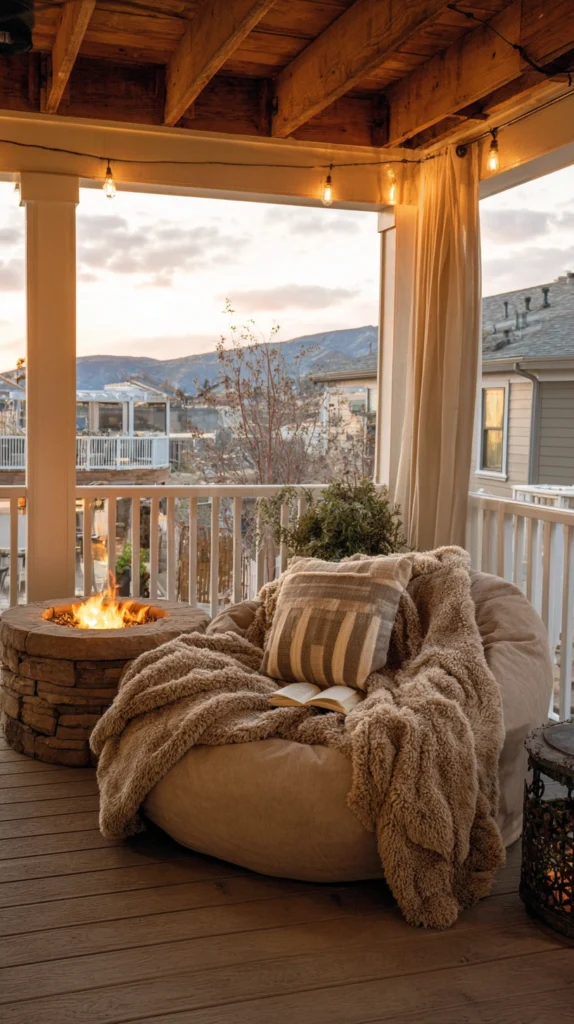
The outdoor reading nook that extends its usable season into the autumn and winter months — through the provision of a patio heater, a fire pit within safe distance of the seating, or an integrated outdoor heating system built into the nook’s structure — creates a year-round outdoor reading destination rather than a summer-only amenity, and the specific pleasure of reading outdoors in the cooler months.
Wrapped in a wool throw, a cup of something warm in reaching distance, the bare-branch garden visible over the book’s edge — is one that most outdoor readers discover to be genuinely distinctive and genuinely desirable once the infrastructure exists to make it comfortable.
The winter-ready reading nook requires a covered structure — a pergola with a solid or polycarbonate roof section, a sail shade in a heavier outdoor fabric, or a properly enclosed structure — that provides rain protection, supplemented by the heat source and the generous textile provision that the cooler outdoor temperature demands.
14. A Potting Shed Reading Annexe
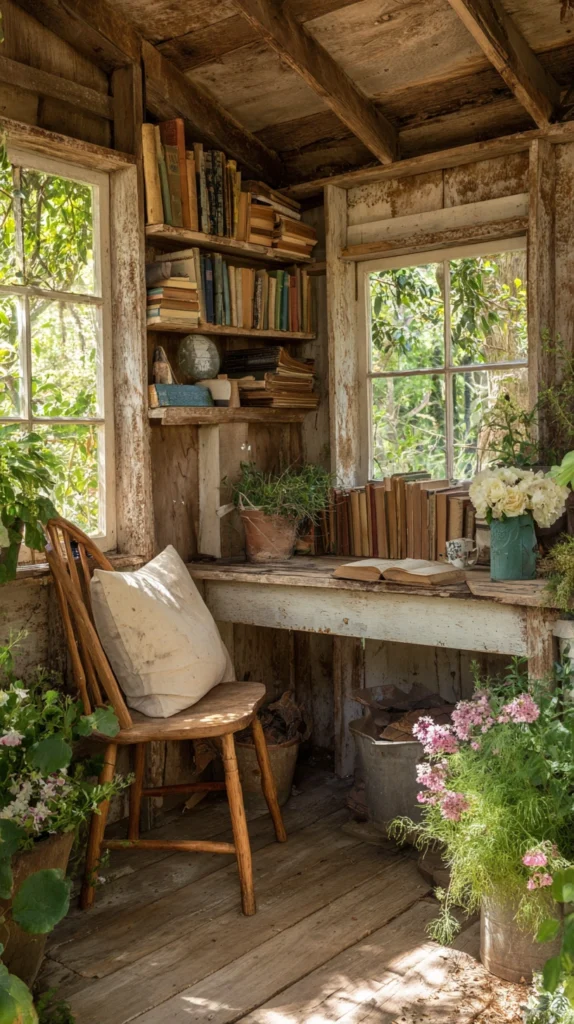
A reading annexe created within or adjacent to the potting shed — the gardener’s working structure that typically already possesses the quality of intimate, plant-surrounded enclosure that the best reading nooks require — creates a backyard reading destination that combines the pleasures of the garden and the book in a single, integrated outdoor space.
A comfortable wooden chair in a corner of the potting shed, beside the workbench with its view through the shed’s window to the garden, with a shelf above for the current books and a hook for the gardening apron, creates a reading nook of complete authenticity to the gardening life — a space that serves both the practical work of the garden and the restorative reading that the garden’s occupant needs in equal measure.
The potting shed’s specific atmosphere — the scent of compost and soil, the warmth of an enclosed timber structure on a cool day, the sound of rain on the roof — creates a reading environment whose sensory richness and specific gardening associations make it one of the most personally meaningful reading destinations available to the gardener.
15. Design the Reading Nook Around Your Reading Habits
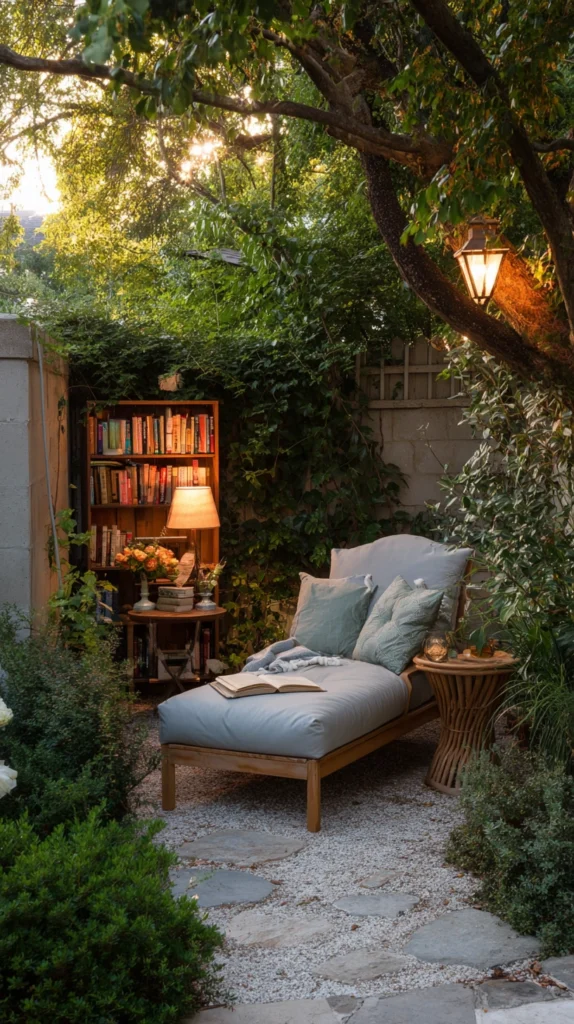
The final backyard reading nook idea is the most important design principle of all — the commitment to designing the nook specifically around the actual reading habits of the person who will use it rather than the idealized reading nook of a lifestyle magazine.
The reader who reads in long sessions of two or three hours needs genuine reclining support, adequate shade for the full period of likely occupation, and the provision for food and drink that extended sessions require.
The reader who reads in short bursts of twenty minutes needs a nook that can be accessed and settled into in seconds, without the preparation that a more elaborate destination requires. The reader who reads at dawn needs a nook positioned to receive the morning light.
The reader who reads at dusk needs a nook positioned to retain the evening warmth. The reader who reads in all seasons needs a nook with weather protection for every condition.
The nook designed for the specific, genuine reading habits of its occupant is used daily and loved deeply — the nook designed for the aspirational reading life of a person who does not yet exist in the household is visited occasionally and admired from a distance without ever quite becoming the daily destination it was intended to be.