

Budget vs Premium: Best Ways to Clean Your Bathroom Tiles
Have you ever looked at your bathroom tiles and wondered why they don’t sparkle like they used to? You’re not alone. Dirty, grimy tiles can make even the most beautiful bathroom look dingy and uninviting.
I’ve spent years experimenting with different cleaning methods, from dollar-store solutions to high-end products, and I’ve learned that you don’t always need to spend a fortune to get professional results. Whether you’re on a tight budget or willing to invest in premium solutions, there’s a cleaning method that will work for your bathroom tiles.
In this guide, I’ll share everything I’ve discovered about cleaning bathroom tiles effectively. I’ll break down both budget-friendly and premium options, so you can choose the approach that fits your needs and wallet. Let’s transform those dull, grimy tiles back to their original shine.
Why Regular Tile Cleaning Matters
Bathroom tiles face a constant battle against soap scum, hard water deposits, mildew, and everyday grime. Over time, these elements don’t just make your bathroom look dirty—they can actually damage your tiles and grout if left unchecked.
I learned this lesson the hard way when I neglected my bathroom tiles for several months. What started as a thin film of soap scum turned into stubborn stains that required intense scrubbing. Regular cleaning would have taken a fraction of the time and effort.
Clean bathroom tiles offer more than just aesthetic appeal. They contribute to a healthier home environment by preventing mold and mildew growth, which can trigger allergies and respiratory issues. Plus, maintaining your tiles properly extends their lifespan, protecting your investment and avoiding costly replacements down the line.
The good news? You have options for every budget. Budget methods can be just as effective as premium solutions when used correctly, and sometimes the best approach combines elements from both categories.
Understanding Your Tile Type Before You Clean
Before diving into cleaning methods, it’s crucial to identify what type of tiles you have. Different materials require different care approaches, and using the wrong cleaning method can cause permanent damage.
Ceramic and Porcelain Tiles
These are the most common bathroom tiles and also the most forgiving when it comes to cleaning. They’re durable, non-porous, and can handle both acidic and alkaline cleaners. I’ve found that ceramic and porcelain tiles respond well to almost any cleaning method, making them ideal for experimentation with different products.
Natural Stone Tiles
Natural stone tiles like marble, granite, travertine, and slate require special care. These materials are porous and can be damaged by acidic cleaners like vinegar or lemon juice. I once made the mistake of using a vinegar solution on my marble shower tiles, and the etching damage was permanent. Always use pH-neutral cleaners on natural stone.
Glass Tiles
Glass tiles are beautiful but show water spots and streaks easily. They’re non-porous and can handle most cleaners, but they require proper drying techniques to maintain their sparkle. Microfiber cloths have become my go-to tool for streak-free glass tiles.
| Tile Type | Characteristics | Safe Cleaners | Avoid |
| Ceramic/Porcelain | Durable, non-porous | Most cleaners, acidic solutions | Harsh abrasives |
| Natural Stone | Porous, delicate | pH-neutral only | Acidic cleaners, vinegar |
| Glass | Shows streaks easily | Most cleaners, glass cleaner | Abrasive scrubbers |
| Glazed | Protective coating | Mild cleaners | Harsh chemicals |
Budget-Friendly Tile Cleaning Methods
Method 1: The Classic Vinegar and Baking Soda Approach
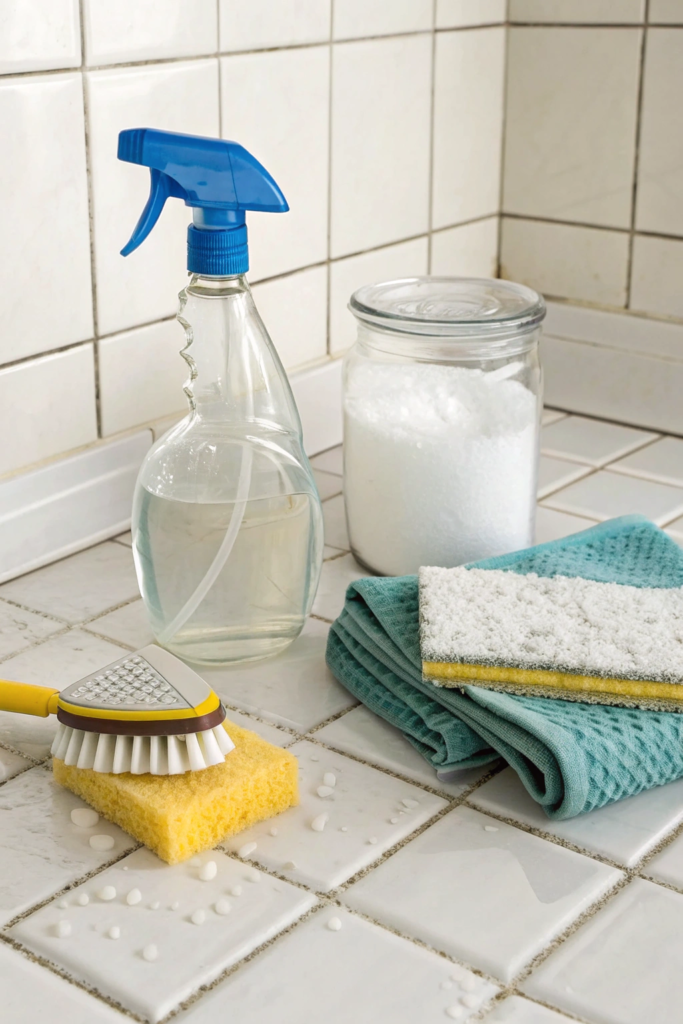
This is my tried-and-true method that costs less than five dollars and works incredibly well on ceramic and porcelain tiles. The combination creates a natural chemical reaction that lifts grime and soap scum effectively.
How to Use:
- Mix equal parts white vinegar and water in a spray bottle
- Spray the solution generously on your tiles
- Let it sit for 10-15 minutes to break down soap scum
- Sprinkle baking soda over the tiles
- Scrub with a soft brush or sponge in circular motions
- Rinse thoroughly with warm water
- Dry with a microfiber cloth to prevent water spots
I use this method weekly on my shower tiles, and it keeps them looking nearly new. The vinegar cuts through soap scum while the baking soda provides gentle abrasion without scratching.
Pro Tip: For extra cleaning power, heat the vinegar in the microwave for 30 seconds before mixing with water. Warm vinegar is significantly more effective at dissolving stubborn deposits.
| Application | Details |
| Cost | $2-5 for supplies |
| Best For | Ceramic, porcelain tiles |
| Frequency | Weekly for maintenance |
| Time Required | 20-30 minutes |
| Effectiveness | 8/10 for regular grime |
Method 2: Dish Soap and Warm Water Solution
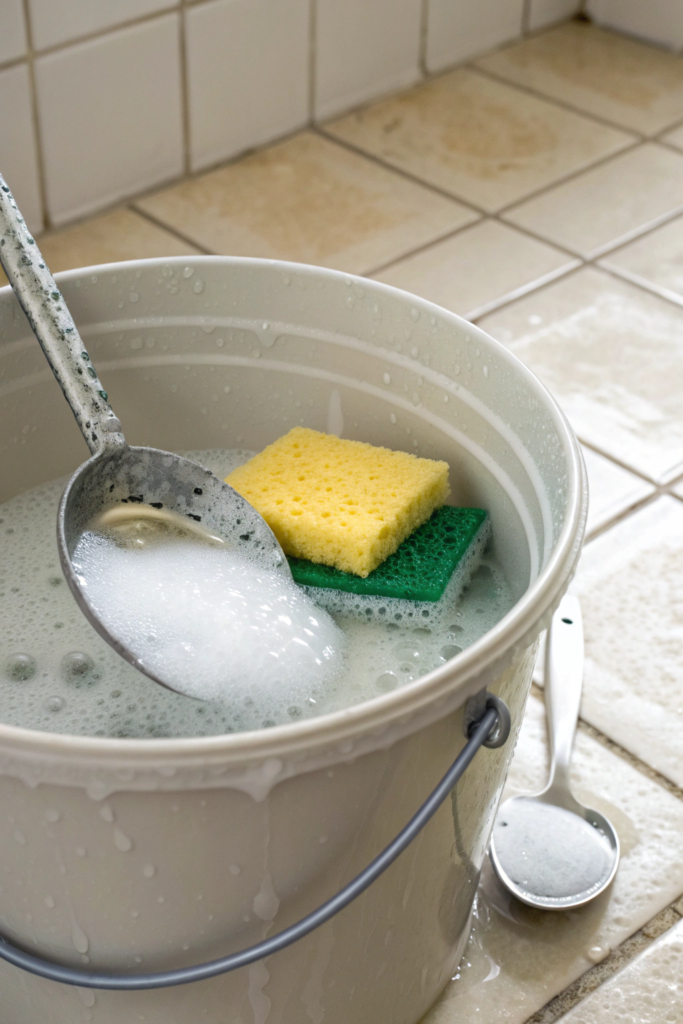
Never underestimate the power of simple dish soap. This is the gentlest method and perfect for regular maintenance cleaning between deep cleans. I use this approach several times a week for quick touch-ups.
How to Use:
- Fill a bucket with warm water
- Add 2-3 tablespoons of dish soap
- Mix until suds form
- Dip a sponge or mop into the solution
- Wipe down all tile surfaces
- Rinse with clean water
- Dry to prevent water spots
This method works on all tile types, including natural stone, because dish soap is pH-neutral. It’s particularly effective for maintaining tiles that are already clean and just need regular upkeep.
Method 3: Hydrogen Peroxide for Grout and Mildew
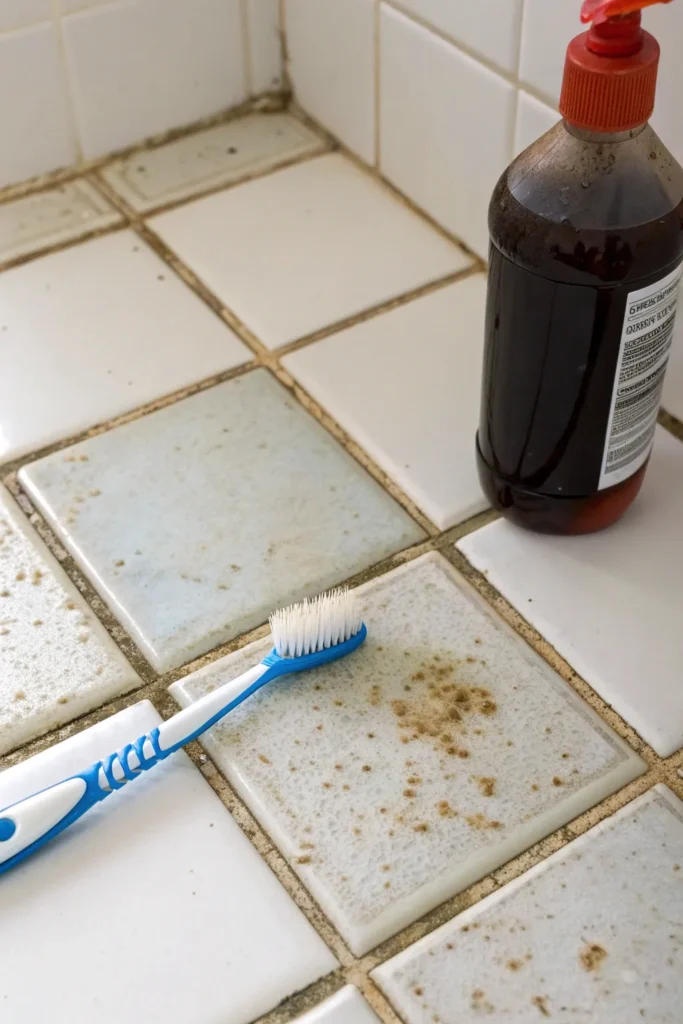
Hydrogen peroxide is an affordable powerhouse for tackling mildew and discolored grout. At around three dollars a bottle, it’s one of the most cost-effective solutions I’ve found for stubborn stains.
How to Use:
- Pour 3% hydrogen peroxide directly onto grout lines
- Let it sit for 10-15 minutes
- Scrub with an old toothbrush or grout brush
- For tiles, spray hydrogen peroxide and wipe after 5 minutes
- Rinse thoroughly
- Repeat for stubborn stains
I discovered this method when battling pink mildew in my shower. Within two applications, the grout went from dingy gray to nearly white again.
| Cleaning Agent | Cost | Strength | Safe For |
| White Vinegar | $2-3 per gallon | Moderate acid | Ceramic, porcelain only |
| Baking Soda | $1-2 per box | Gentle abrasive | All tile types |
| Hydrogen Peroxide | $3-4 per bottle | Bleaching agent | All tile types |
| Dish Soap | $2-5 per bottle | Mild surfactant | All tile types |
Method 4: Steam Cleaning with a Basic Steam Mop
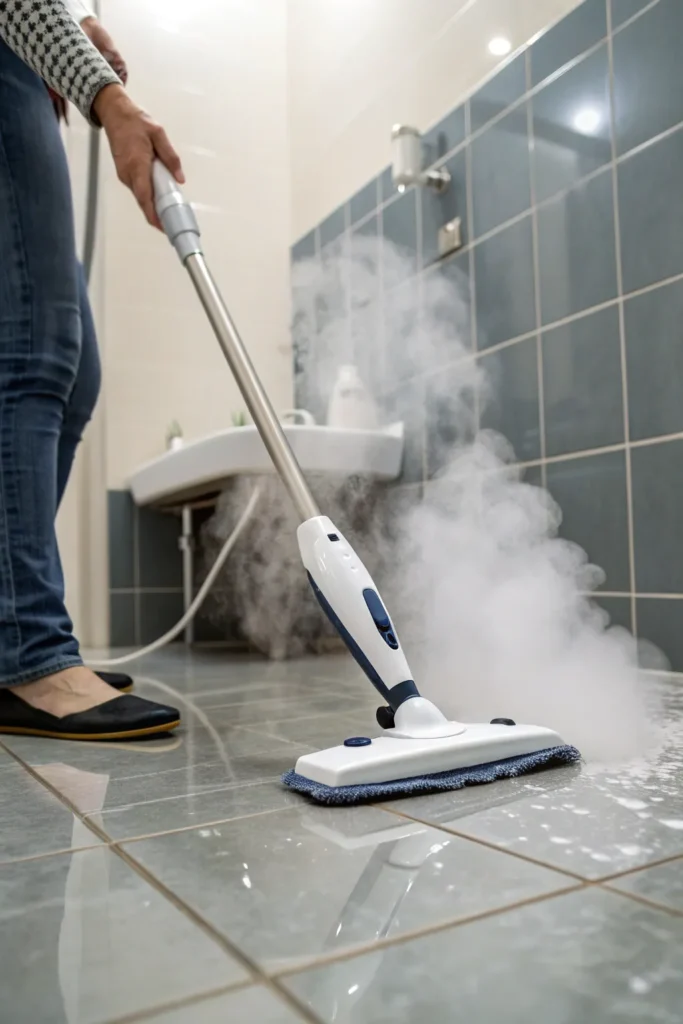
If you’re willing to invest around $30-50, a basic steam mop offers incredible value. Steam cleaning uses only water and heat, making it safe for all tile types and extremely effective at sanitizing.
I purchased a budget steam mop two years ago, and it’s become my favorite tool for monthly deep cleans. The high-temperature steam kills 99.9% of bacteria and dissolves grime without any chemicals.
Pro Tip: Always sweep or vacuum your bathroom floor before steam cleaning to remove loose debris that could scratch tiles when the mop passes over them.
Premium Tile Cleaning Methods
Method 1: Professional-Grade Enzymatic Cleaners
Enzymatic cleaners use biological enzymes to break down organic matter like soap scum, body oils, and mildew. These products typically cost $15-30 per bottle but are highly concentrated and last for months.
How to Use:
- Dilute according to manufacturer instructions (usually 1:10 ratio)
- Apply to tiles with a spray bottle or sponge
- Allow the enzymes to work for 15-20 minutes
- Wipe clean with minimal scrubbing required
- Rinse if specified on the label
I was skeptical about paying more for cleaners until I tried an enzymatic formula. The difference was remarkable—grime that required serious elbow grease with budget methods practically wiped away on its own.
| Product Type | Average Cost | Coverage | Longevity |
| Enzymatic Cleaner | $15-30 | 500-1000 sq ft | 3-6 months |
| pH-Neutral Stone Cleaner | $12-25 | 300-600 sq ft | 2-4 months |
| Professional Grout Cleaner | $18-35 | Focused application | 4-8 months |
| Tile Sealant | $20-40 | 150-300 sq ft | 1-2 years |
Method 2: Ultrasonic Cleaning Devices
This is the most high-tech option I’ve tested, with devices ranging from $150-400. Ultrasonic cleaners use high-frequency sound waves to agitate cleaning solutions, providing deep cleaning without manual scrubbing.
While this is a significant investment, it’s transformed how I clean my bathroom. I fill the device with water and a small amount of cleaner, run it along the tiles, and watch years of buildup dissolve. For someone with mobility issues or anyone who wants to minimize physical effort, this technology is worth considering.
Method 3: Professional Stone Care Systems
If you have natural stone tiles, investing in a proper stone care system is essential for long-term maintenance. These kits typically cost $50-100 and include pH-neutral cleaner, sealer, and polishing compound.
Complete Stone Care Process:
- Clean with pH-neutral stone cleaner weekly
- Dry thoroughly to prevent water spots
- Apply stone sealer every 6-12 months
- Polish with stone-specific polish monthly
- Address stains immediately with stone poultice
I inherited a bathroom with marble tiles and initially used regular cleaners that dulled the surface. After switching to a professional stone care system, the tiles regained their lustrous finish within a month.
Method 4: Commercial Steam Cleaners with Multiple Attachments

Professional-grade steam cleaners cost $200-500 but offer variable steam settings, multiple attachments for grout lines and corners, and more powerful steam output than budget models.
I upgraded to a commercial unit after struggling to clean intricate tile patterns with a basic steam mop. The precision attachments reach into grout lines and corners that regular mops miss completely. If you have a large bathroom or multiple bathrooms, this investment pays for itself in time savings and superior results.
Pro Tip: Look for steam cleaners with adjustable steam levels. Delicate tiles need less heat than ceramic tiles, and having control prevents accidental damage.
Deep Cleaning Grout Lines: Budget and Premium Approaches
Grout presents a unique challenge because it’s porous and traps dirt, mold, and mildew. Even clean tiles can look dingy if the grout is discolored.
Budget Grout Cleaning Method
The Baking Soda Paste Technique:
- Mix baking soda with just enough water to create a thick paste
- Apply the paste along grout lines with an old toothbrush
- Let it sit for 10 minutes
- Spray with vinegar—the fizzing action helps lift dirt
- Scrub vigorously with the toothbrush
- Rinse thoroughly and dry
This method requires significant elbow grease but costs almost nothing. I use it monthly on my shower floor where grout gets the dirtiest.
Premium Grout Cleaning Method
Professional Grout Cleaner with Power Brush:
- Apply commercial grout cleaner according to instructions
- Let it penetrate for the recommended time (usually 5-15 minutes)
- Use an electric grout brush ($30-60) or drill brush attachment ($10-20)
- The rotating bristles deep clean without manual scrubbing
- Rinse thoroughly
- Apply grout sealer once dry to prevent future staining
I invested in a drill brush attachment for $15, and it cut my grout cleaning time by more than half. The motorized scrubbing reaches deeper into the porous grout than manual brushing ever could.
| Grout Cleaning Method | Cost | Time Required | Effectiveness | Physical Effort |
| Baking Soda Paste | $1-2 | 45-60 minutes | Good | High |
| Hydrogen Peroxide | $3-5 | 30-45 minutes | Very Good | Moderate |
| Commercial Grout Cleaner | $15-30 | 20-30 minutes | Excellent | Low |
| Steam Cleaner | $30-500 | 15-20 minutes | Excellent | Very Low |
Preventing Future Tile Grime: Maintenance Tips
The best cleaning strategy is preventing buildup in the first place. I’ve developed a simple routine that keeps my bathroom tiles looking freshly cleaned with minimal effort.
Daily Habits
After every shower, I squeegee the tiles and glass doors. This 30-second habit prevents soap scum and hard water deposits from forming. I keep the squeegee hanging in the shower so it’s always accessible.
Opening the bathroom window or running the exhaust fan for 15-20 minutes after showering reduces humidity that promotes mildew growth. Since implementing this habit, I’ve noticed dramatically less mildew in grout lines.
Weekly Maintenance
Once a week, I spray my tiles with either a vinegar solution (for ceramic tiles) or a mild soap solution (for all tile types) and wipe them down quickly. This takes about 10 minutes and prevents the need for intense scrubbing later.
I also run my steam mop over the bathroom floor weekly. The quick steam cleaning sanitizes and removes any soap residue or hair before it becomes embedded in the tiles or grout.
Monthly Deep Cleaning
Once a month, I dedicate 45 minutes to a thorough bathroom cleaning. This includes:
- Deep cleaning grout lines with my preferred method
- Polishing fixtures and hardware
- Cleaning behind the toilet and in hard-to-reach corners
- Applying grout sealer to high-moisture areas if needed
- Checking for any damaged caulking or grout that needs repair
| Maintenance Schedule | Frequency | Time Required | Tasks |
| Daily Quick Clean | After each shower | 1-2 minutes | Squeegee tiles, ventilate |
| Weekly Wipe-Down | Once per week | 10-15 minutes | Spray and wipe all surfaces |
| Monthly Deep Clean | Once per month | 45-60 minutes | Grout cleaning, detailed scrubbing |
| Quarterly Sealing | Every 3 months | 30 minutes | Apply grout sealer |
Common Tile Cleaning Mistakes to Avoid
Through trial and error, I’ve made plenty of mistakes that taught me what NOT to do. Here are the most common errors that can damage your tiles or make cleaning harder.
Using Acidic Cleaners on Natural Stone
I mentioned this earlier, but it bears repeating because it’s such a costly mistake. Vinegar, lemon juice, and other acidic cleaners will etch marble, limestone, and travertine. The damage is permanent and dulls the surface. Always verify your tile type before selecting a cleaning method.
Neglecting to Rinse Properly
Whatever cleaning solution you use, thorough rinsing is essential. Soap residue left on tiles attracts more dirt and creates a sticky film. I learned this when my tiles looked clean immediately after cleaning but felt slightly tacky within hours.
Using Abrasive Scrubbers on Glazed Tiles
Steel wool, abrasive scouring pads, and harsh brushes can scratch the glazed surface of tiles, creating microscopic grooves where dirt accumulates. Once I switched to soft sponges and microfiber cloths, my tiles stayed cleaner longer and maintained their shine.
Mixing Cleaning Chemicals
Never mix bleach with vinegar or ammonia-based cleaners. These combinations create toxic fumes that are dangerous to breathe. Even if you’re using budget methods, use them separately, never together.
Pro Tip: If you’ve used one cleaner and want to try another, rinse the tiles thoroughly with plain water between applications. This prevents any accidental chemical reactions.
Budget vs Premium: Which Should You Choose?
After years of testing both approaches, I’ve concluded that the best strategy combines elements from both categories based on your specific situation.
Choose Budget Methods If:
- You have ceramic or porcelain tiles that are relatively easy to clean
- You have time for regular maintenance cleaning
- You don’t mind physical scrubbing
- You’re maintaining tiles that are already in good condition
- You’re on a tight household budget
Budget methods work brilliantly for regular maintenance. I use vinegar and baking soda weekly on my shower tiles and get excellent results without spending much money.
Choose Premium Methods If:
- You have natural stone tiles requiring specialized care
- You have limited time for bathroom cleaning
- You experience mobility issues or physical limitations
- You’re dealing with years of neglected buildup
- You have a large bathroom or multiple bathrooms
- You want professional-level results with less effort
I switched to premium methods for my monthly deep cleans and noticed immediate improvements in both results and time savings. The upfront cost is higher, but the efficiency and effectiveness justify the investment.
My Recommended Hybrid Approach
For most households, I recommend this combination strategy:
Daily: Squeegee tiles after showers (free)
Weekly: Vinegar solution or dish soap wipe-down ($3-5 monthly)
Monthly: Professional grout cleaner with drill brush attachment ($20-30 every 3-4 months)
Quarterly: Steam cleaning with a mid-range steam mop ($40-80 one-time purchase)
Annually: Professional stone sealing if you have natural stone tiles ($20-40 annually)
This approach keeps costs manageable while delivering excellent results. The total annual cost runs about $100-150, far less than professional cleaning services or tile replacement.
| Approach | Annual Cost | Time Investment | Results Quality |
| Budget Only | $20-40 | High (6-8 hours) | Good |
| Premium Only | $300-500 | Low (2-3 hours) | Excellent |
| Hybrid Method | $100-150 | Moderate (4-5 hours) | Excellent |
Special Situations: Tackling Stubborn Problems
Removing Hard Water Stains
Hard water stains are among the most frustrating tile problems. The mineral deposits create a chalky white film that regular cleaners can’t touch.
Budget Solution: Make a paste of lemon juice and baking soda (for ceramic tiles only). Apply, let sit for 15 minutes, scrub, and rinse. For natural stone, use a commercial hard water remover designed for stone.
Premium Solution: Invest in a water softener for your shower ($40-100 for a basic showerhead filter). This prevents hard water stains from forming and also benefits your skin and hair.
Eliminating Pink Mildew
That pink slimy substance in your shower isn’t actually mold—it’s a bacteria called Serratia marcescens. It thrives in moist environments and spreads quickly.
Budget Solution: Spray hydrogen peroxide directly on affected areas, let sit for 10 minutes, scrub with a brush, and rinse thoroughly. Repeat weekly until completely gone.
Premium Solution: Use a professional mildew remover containing quaternary ammonium compounds. These are more effective and provide longer-lasting protection.
Dealing with Rust Stains
Rust stains from metal fixtures or old pipes create orange-brown discoloration on tiles and grout.
Budget Solution: Create a paste with cream of tartar and hydrogen peroxide. Apply to rust stains, let sit for 30 minutes, scrub gently, and rinse. This works on ceramic and porcelain.
Premium Solution: Commercial rust removers specifically formulated for bathroom tiles provide faster results with less scrubbing. Look for products safe for your specific tile type.
Tools That Make Tile Cleaning Easier
Having the right tools makes a significant difference in cleaning effectiveness and efficiency. Here are my must-have tools for both budget and premium approaches.
Essential Budget Tools
- Spray bottles for mixing cleaning solutions ($5-10)
- Microfiber cloths for drying and polishing ($8-12 for a pack)
- Old toothbrushes for grout lines (free)
- Squeegee for daily maintenance ($5-10)
- Soft-bristle brush or sponge ($3-6)
- Bucket for mixing solutions ($5-8)
Total investment: $30-50 for tools that last years.
Premium Tools Worth Considering
- Electric grout brush or drill brush attachment ($15-60)
- Steam cleaner with attachments ($40-500 depending on quality)
- Microfiber mop with washable pads ($25-40)
- Commercial spray bottles with adjustable nozzles ($10-15)
- Professional-grade squeegee ($15-25)
- Wet/dry vacuum for large cleanup jobs ($60-150)
These premium tools reduce cleaning time significantly and deliver professional results. I particularly recommend investing in a steam cleaner and an electric grout brush as priorities.
| Tool | Budget Option Cost | Premium Option Cost | Impact on Results |
| Scrub Brush | $3-6 | $15-60 (electric) | Moderate to High |
| Mop/Cleaning Tool | $8-15 | $40-500 (steam) | High |
| Squeegee | $5-10 | $15-25 | Moderate |
| Spray Bottles | $5-10 | $10-15 | Low |
| Cloths/Pads | $8-12 | $15-25 (premium microfiber) | Moderate |
Understanding When Professional Help Is Needed
Sometimes DIY cleaning isn’t enough, and knowing when to call professionals can save you time, money, and frustration.
Signs You Need Professional Tile Cleaning
I’ve learned to recognize these warning signs that indicate professional intervention is necessary:
- Grout is crumbling or missing in sections
- Tiles are cracked or loose
- Persistent mold that returns within days after cleaning
- Deep stains that don’t respond to any cleaning method
- Severe hard water buildup that has etched the tile surface
- Natural stone that has lost its seal and appears dull
Professional tile cleaning services typically cost $200-500 for an average bathroom, but they have industrial equipment and specialized knowledge that can restore tiles beyond what home methods achieve.
Professional Services Worth Considering
Tile and Grout Restoration: Professionals use high-powered steam cleaners and specialized chemicals to restore heavily soiled tiles. They can also re-grout damaged areas and apply professional-grade sealers.
Stone Polishing and Sealing: For natural stone tiles, professional polishing removes etching and restores the original finish. Professional sealing lasts longer than DIY applications.
Color Sealing: If your grout is permanently stained, color sealing applies a colored sealer that makes grout look uniform and new. This costs $3-6 per square foot but can be worth it for dramatically discolored grout.
I had professionals restore the travertine tiles in my master bathroom after years of improper cleaning had dulled them. The transformation was remarkable, and now that I know proper maintenance techniques, they’ve stayed beautiful.
Maintaining Your Results Long-Term
Once you’ve invested time and effort into cleaning your bathroom tiles, protecting that investment requires ongoing attention.
Sealing Grout Lines
Unsealed grout is porous and absorbs stains like a sponge. Applying grout sealer creates a protective barrier that makes future cleaning much easier.
How to Seal Grout:
- Ensure grout is completely clean and dry (wait 24-48 hours after cleaning)
- Apply grout sealer along grout lines with an applicator brush or bottle
- Wipe away excess from tiles immediately
- Let cure according to manufacturer instructions (usually 24-72 hours)
- Apply a second coat for maximum protection
- Reseal every 6-12 months depending on moisture exposure
Since I started sealing my grout regularly, cleaning has become dramatically easier. Water and soap scum bead up on the surface instead of soaking in.
Ventilation Is Critical
Proper bathroom ventilation is the single most important factor in preventing mildew, soap scum buildup, and moisture damage to tiles and grout.
I installed a humidity-sensing exhaust fan that automatically runs when moisture levels are high. This $60 upgrade has reduced mildew growth by about 80%, meaning less frequent deep cleaning is necessary.
Addressing Issues Immediately
Small problems become big problems quickly in bathrooms. I’ve adopted a policy of addressing issues within 24 hours of noticing them.
A small amount of mildew can be wiped away in seconds. Left for a week, it spreads and requires serious scrubbing. A loose tile noticed early can be re-adhered easily. Ignored, it can lead to water damage behind the tile and costly repairs.
Pro Tip: Keep a small container of your preferred cleaning solution in the bathroom with a microfiber cloth. When you notice a spot or buildup, you can address it immediately rather than waiting for your weekly cleaning routine.
Enjoying Clean, Beautiful Bathroom Tiles
Clean bathroom tiles completely transform the look and feel of your bathroom. Whether you choose budget methods, premium solutions, or my recommended hybrid approach, the key is consistency and using appropriate methods for your tile type.
I’ve shared the methods that work in my home after years of experimentation and learning from mistakes. Your bathroom tiles might present unique challenges, but the principles remain the same: regular maintenance, appropriate cleaning products, and proper tools make all the difference.
Start with the budget methods if you’re new to focused tile cleaning. As you develop your routine and identify your specific challenges, you can strategically incorporate premium products and tools where they provide the most value.
Your bathroom deserves to sparkle, and you deserve the satisfaction of maintaining beautiful tiles without spending hours scrubbing or hundreds of dollars on professional services. What cleaning challenges are you facing with your bathroom tiles? I’d love to hear about your experiences and what methods work best for you.