

Budget vs Professional Upholstery Cleaning: Which Option Is Right for You?
Have you looked at your favorite couch lately and wondered when it became so dingy? Between daily use, pet hair, spills, and accumulated dust, upholstered furniture takes a beating that can make even expensive pieces look worn and uninviting.
I faced this exact dilemma two years ago when my beautiful cream-colored sectional started looking more gray than cream.
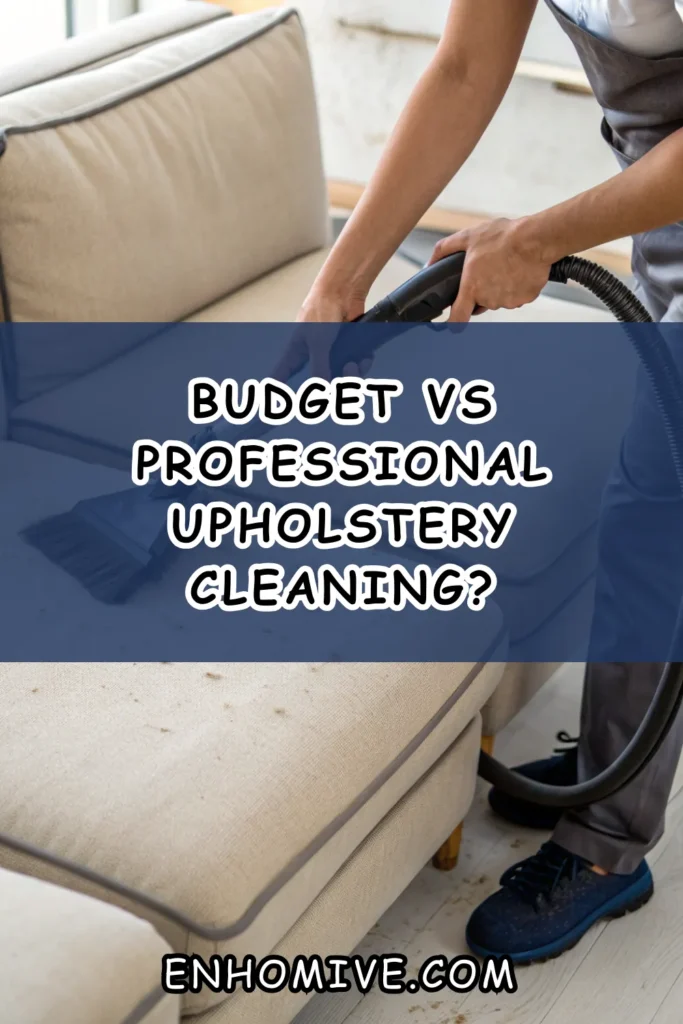
The quotes I received from professional cleaners made me gulp—$300-500 seemed like a lot for furniture I could technically clean myself. But would DIY methods actually work, or would I end up damaging my investment?
After experimenting with both budget and professional approaches on different pieces of furniture, I’ve learned exactly when each method makes sense. In this guide, I’ll share everything I’ve discovered about upholstery cleaning, from dollar-store solutions to professional services, so you can make the best decision for your furniture and budget.
Why Upholstery Cleaning Matters More Than You Think
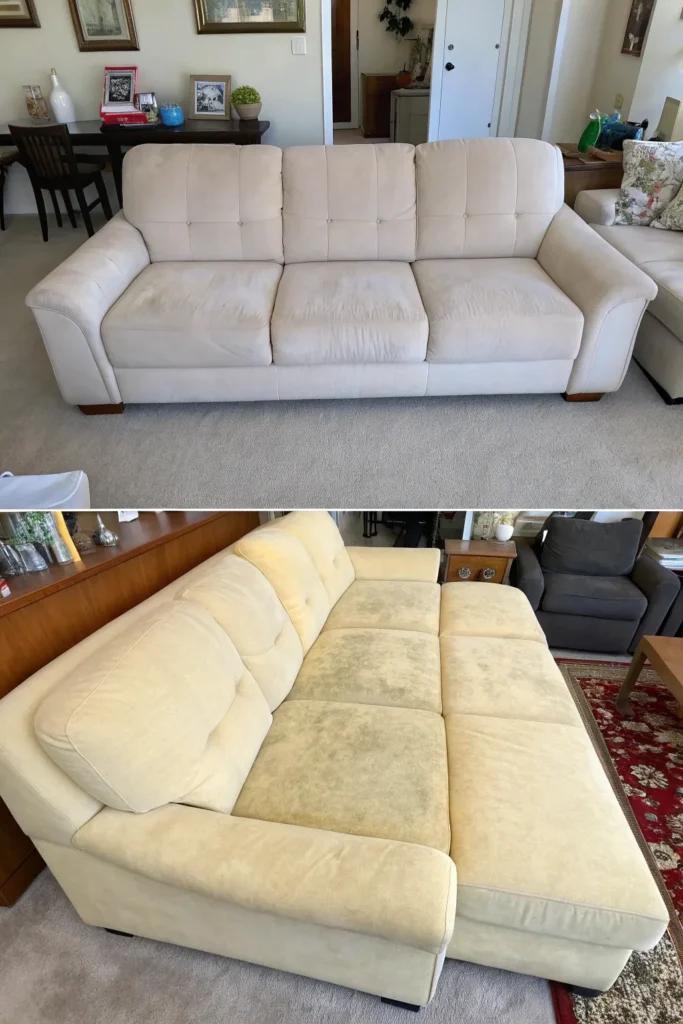
Your upholstered furniture is one of the biggest investments in your home, yet it’s often the most neglected when it comes to cleaning. I used to vacuum my couch occasionally and spot-clean spills, assuming that was enough. I was wrong.
Upholstery harbors dust mites, allergens, pet dander, dead skin cells, and bacteria that you can’t see. Over time, these contaminants don’t just make your furniture look dirty—they can affect indoor air quality and trigger allergies. I noticed my seasonal allergies improved significantly after I started properly cleaning my upholstered furniture every six months.
Beyond health concerns, regular cleaning extends the life of your furniture dramatically. Body oils, dirt, and grime break down fabric fibers over time. That five-thousand-dollar sofa that should last fifteen years might only make it to eight or nine without proper maintenance.
Clean upholstery also transforms the entire feel of your living space. When I finally deep-cleaned my sectional, the difference was stunning. Colors looked brighter, the fabric felt softer, and my entire living room seemed fresher. It was like getting new furniture for a fraction of the replacement cost.
Understanding Your Upholstery Before You Clean
The single most important step before cleaning any upholstered furniture is identifying the fabric type and checking the manufacturer’s cleaning code. I learned this lesson the hard way when I ruined a chair cushion by using water on a fabric that required dry cleaning only.
Decoding Upholstery Cleaning Codes
Every piece of upholstered furniture has a tag with a cleaning code. These codes are standardized across the industry and tell you which cleaning methods are safe.
W (Water-based cleaning): You can use water-based cleaners and steam cleaning. This is the most common code and the easiest to work with. Most synthetic fabrics fall into this category.
S (Solvent-based cleaning only): Water will stain or damage this fabric. Use only dry-cleaning solvents. Natural fibers like silk often carry this code.
WS (Water or Solvent): Either cleaning method works. This gives you the most flexibility in choosing cleaning approaches.
X (Vacuum only): Professional cleaning only, or just vacuuming. Don’t attempt wet cleaning of any kind. I have one antique chair with this code, and I’ve learned to accept that it needs professional care.
If you can’t find the tag, it’s usually stapled under the cushions or on the underside of the furniture. Never proceed with cleaning without knowing your fabric code—the risk of permanent damage is too high.
| Cleaning Code | Meaning | Safe Methods | Avoid |
| W | Water-safe | Water-based cleaners, steam | Dry-cleaning solvents |
| S | Solvent only | Dry-cleaning solutions | Water, steam |
| WS | Water or solvent | Any method | Nothing |
| X | Vacuum only | Professional cleaning, vacuuming | All DIY wet cleaning |
Common Upholstery Fabric Types
Different fabrics present different cleaning challenges. Understanding your fabric helps you choose the most effective cleaning method.
Cotton and Linen: These natural fibers are durable and generally water-safe, but they can shrink if over-wetted. I’ve had good success with both budget and professional methods on cotton upholstery.
Polyester and Microfiber: Synthetic fabrics are the easiest to clean. They’re stain-resistant, dry quickly, and handle water-based cleaning well. My microfiber sectional has survived countless spills and DIY cleanings without issue.
Leather and Faux Leather: These require completely different care than fabric. Water can stain leather, and harsh chemicals can dry it out or crack it. I use specialized leather cleaners exclusively.
Velvet and Chenille: These pile fabrics crush easily and show water marks. They require gentle cleaning and careful drying to maintain their texture.
Silk and Delicate Fabrics: These almost always need professional cleaning. My one attempt at DIY silk cleaning left water marks that required professional correction.
Budget Upholstery Cleaning Methods
Method 1: The Vacuum and Brush Approach
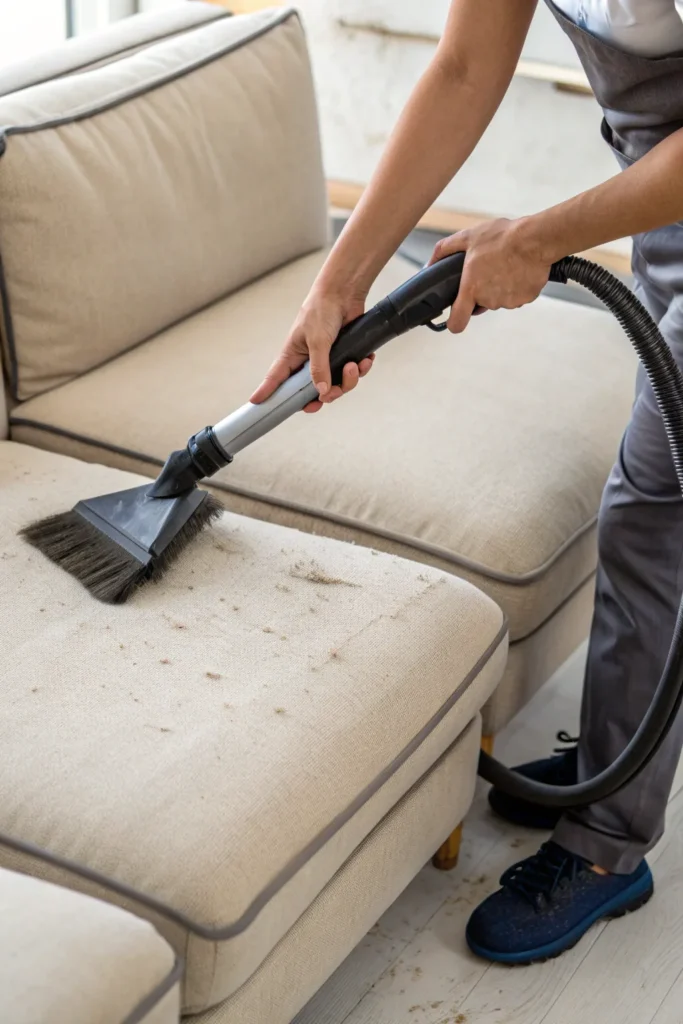
This is the foundation of all upholstery maintenance and costs virtually nothing if you already own a vacuum. I do this weekly on all my upholstered furniture, and it prevents the need for deeper cleaning as frequently.
How to Do It:
- Remove all cushions and vacuum both sides thoroughly
- Use the upholstery attachment to vacuum the entire piece
- Pay special attention to crevices where crumbs and debris accumulate
- Use a soft brush to loosen embedded dirt before vacuuming
- Work in overlapping strokes to ensure complete coverage
- Vacuum underneath cushions and in the frame area
- Finish by vacuuming the floor around the furniture
This method removes surface dirt, dust mites, pet hair, and allergens. While it doesn’t deep clean, regular vacuuming prevents dirt from being ground into the fabric fibers where it becomes much harder to remove.
Pro Tip: Sprinkle baking soda over the entire piece before vacuuming. Let it sit for 15-20 minutes to absorb odors, then vacuum thoroughly. This leaves your furniture smelling fresh without any chemical scent.
| Method | Cost | Time Required | Effectiveness | Best For |
| Vacuum Only | $0 (equipment owned) | 15-20 minutes | Maintenance | Weekly upkeep |
| Vacuum + Baking Soda | $2-3 | 30-40 minutes | Good for odors | Monthly refresh |
| Deep Vacuum | $0 | 45-60 minutes | Surface cleaning | Bi-weekly cleaning |
Method 2: DIY Upholstery Shampoo Solution
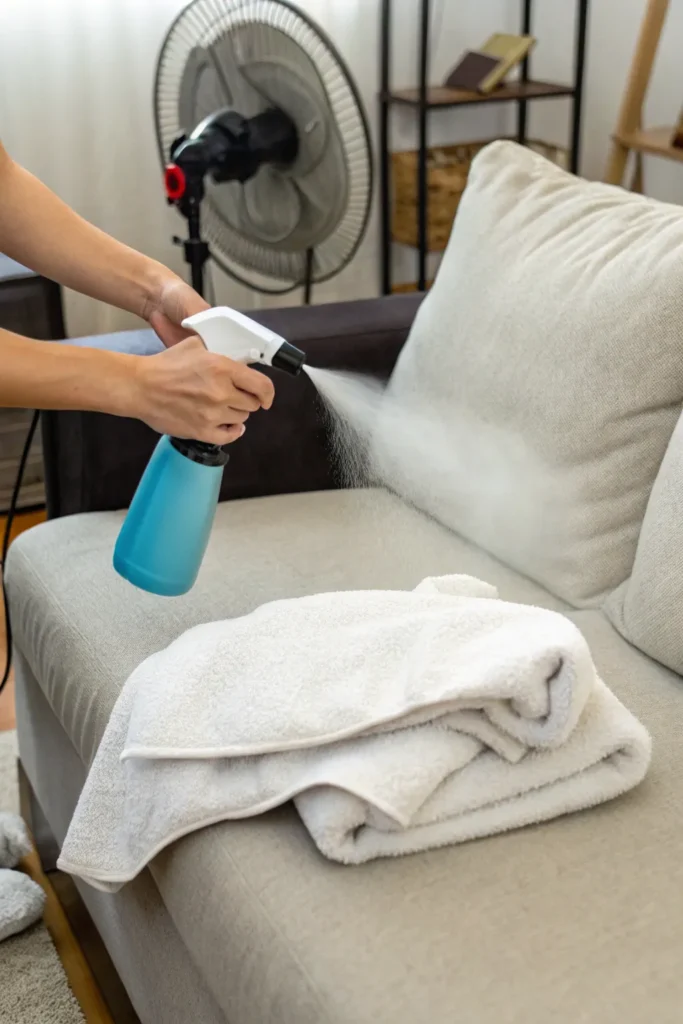
For water-safe fabrics (code W or WS), you can make an effective cleaning solution for just a few dollars. I use this method quarterly on my microfiber furniture with excellent results.
Homemade Upholstery Cleaner Recipe:
- 2 cups warm water
- 1 tablespoon dish soap (clear or white, not colored)
- 1 tablespoon white vinegar
- Mix in a spray bottle
Application Process:
- Test in an inconspicuous area first and wait 24 hours
- Vacuum thoroughly before cleaning
- Spray the solution lightly—don’t soak the fabric
- Gently agitate with a soft brush in circular motions
- Blot (don’t rub) with clean white towels
- Allow to air dry completely (use fans to speed drying)
- Vacuum again once dry to restore fabric texture
The key is using minimal moisture. I made the mistake of over-wetting my first attempt, and the cushion took three days to dry completely. Now I use light misting and multiple applications if needed rather than soaking the fabric.
Pro Tip: Work in sections no larger than 2×2 feet at a time. This prevents the cleaning solution from drying on the fabric before you can blot it up, which can leave residue.
Method 3: Steam Cleaning with a Handheld Steamer
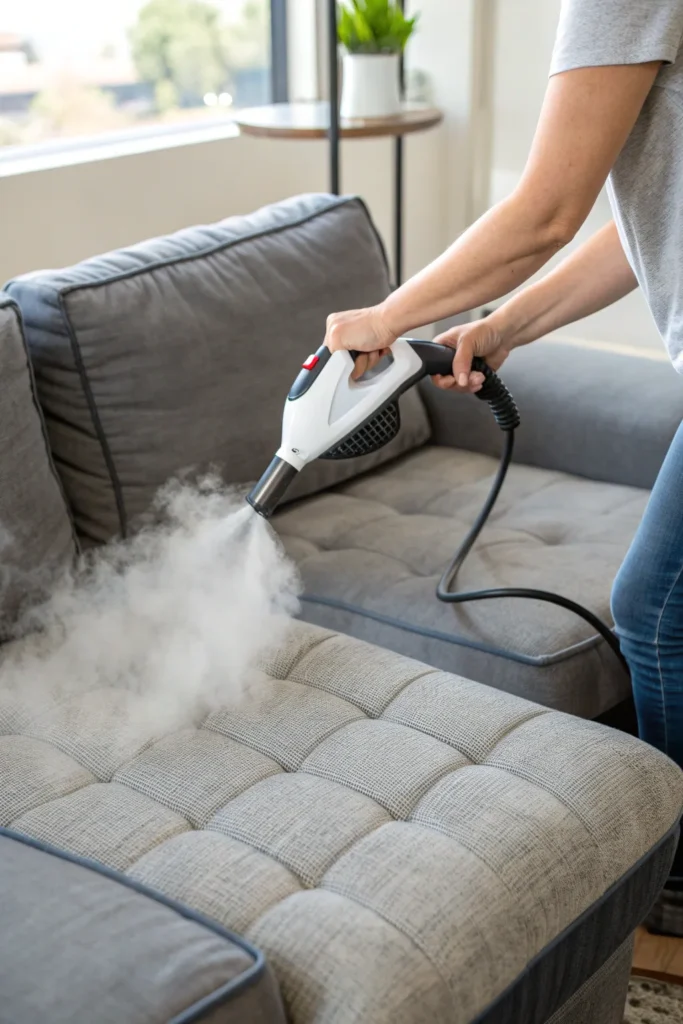
A handheld garment steamer ($30-50) doubles as an excellent upholstery cleaner for water-safe fabrics. I purchased one specifically for clothing but discovered it’s incredibly effective on furniture.
Steam Cleaning Process:
- Fill the steamer with distilled water to prevent mineral deposits
- Vacuum furniture thoroughly first
- Hold the steamer 6-8 inches from the fabric
- Move slowly in overlapping passes
- Follow immediately with a clean microfiber cloth to absorb moisture
- Work in sections to maintain control
- Allow 2-4 hours drying time with good ventilation
Steam cleaning sanitizes upholstery by killing dust mites, bacteria, and allergens with heat alone—no chemicals required. It’s particularly effective for refreshing furniture between deep cleanings.
The limitation is that steam alone doesn’t remove heavy soiling or stains. It’s best for maintenance, cleaning or freshening lightly soiled furniture.
Method 4: Spot Cleaning with Targeted Solutions
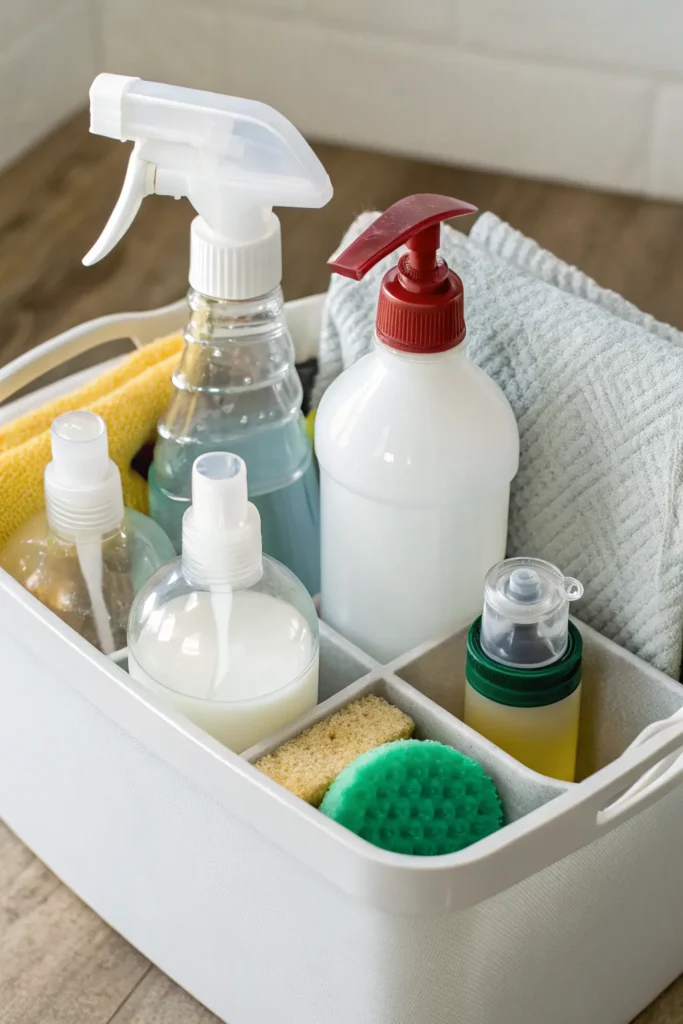
Different stains require different treatments. I keep a small arsenal of spot cleaners for quick action when spills happen.
For Grease and Oil Stains:
- Sprinkle cornstarch or baking soda immediately to absorb oil
- Let sit for 30 minutes
- Vacuum thoroughly
- If stain remains, apply a small amount of clear dish soap diluted with water
- Blot with clean cloth
For Wine, Coffee, and Juice:
- Blot immediately—never rub
- Mix 1 part white vinegar with 2 parts water
- Apply with spray bottle
- Blot with clean white cloth
- Repeat until stain lifts
For Ink and Marker:
- Dab with rubbing alcohol on a cotton ball
- Work from outside of stain inward
- Blot frequently with clean cloth
- This works surprisingly well on most ink stains
For Pet Accidents:
- Blot up as much as possible immediately
- Apply enzyme-based pet stain remover (available for $8-15)
- Follow product instructions
- These break down organic matter and eliminate odors
I keep all these supplies in a caddy under my kitchen sink for quick access. The faster you address a stain, the more likely it is to come out completely.
| Stain Type | Budget Solution | Cost | Success Rate |
| Grease/Oil | Cornstarch + dish soap | $2-4 | 80% |
| Wine/Coffee | Vinegar + water | $2-3 | 70% |
| Ink | Rubbing alcohol | $3-4 | 60% |
| Pet Stains | Enzyme cleaner | $8-15 | 85% |
| General Dirt | DIY soap solution | $2-3 | 75% |
Method 5: Rental Carpet Cleaners for Upholstery
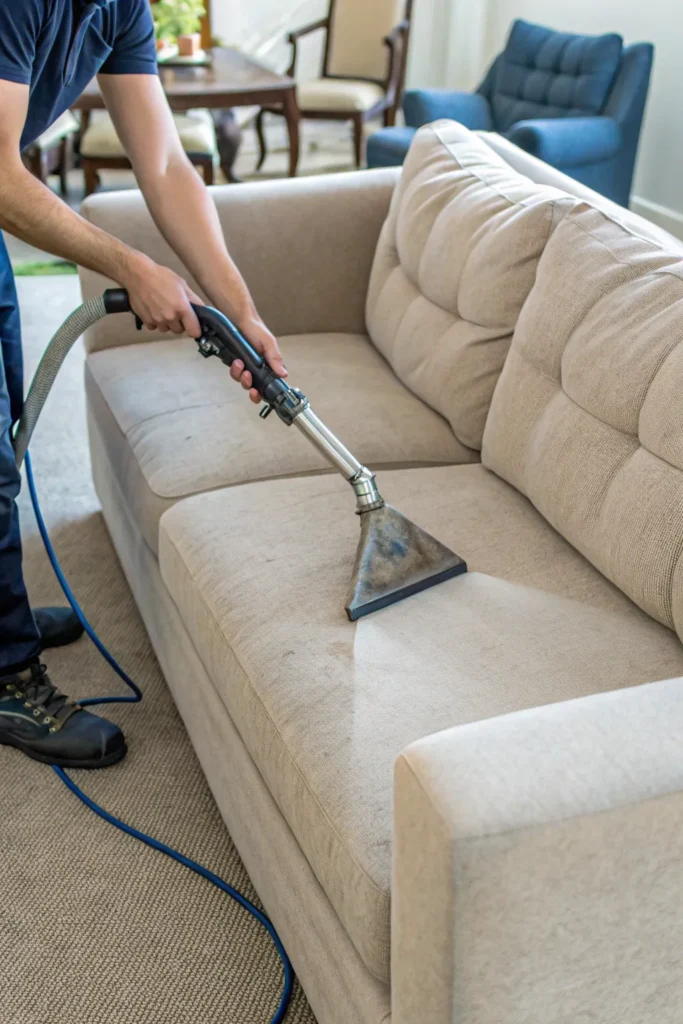
Most carpet cleaning machines from rental stores ($30-40 per day) include upholstery attachments. This bridges the gap between DIY methods and professional service.
Using a Rental Machine:
- Rent a machine with an upholstery tool attachment
- Use upholstery-specific cleaning solution, not carpet cleaner
- Pre-treat heavily soiled areas
- Work in sections with the attachment tool
- Make multiple passes—one to apply solution, one to extract
- Avoid over-wetting by moving slowly and steadily
- Use fans to accelerate drying
I rented a machine for my sectional’s annual deep clean and was impressed with the results. The extraction power removes more dirt and moisture than manual blotting can achieve. However, the learning curve is steep, and I over-wet one cushion on my first attempt.
The cost-effectiveness depends on how much furniture you’re cleaning. For a single couch, it might not be worth the rental fee plus cleaning solution. For multiple pieces, it can save hundreds compared to professional cleaning.
| Budget Method | Upfront Cost | Ongoing Costs | Skill Level | Results Quality |
| Vacuum + Brush | $0-80 | $0 | Beginner | Maintenance |
| DIY Solution | $2-5 | $2-5 per use | Beginner | Good |
| Handheld Steamer | $30-50 | $0 | Intermediate | Very Good |
| Spot Cleaning | $20-40 kit | $5-10 per use | Beginner | Variable |
| Rental Machine | $30-40 per day | $10-15 solution | Intermediate | Very Good |
Professional Upholstery Cleaning Services
What Professional Cleaning Actually Involves
Professional upholstery cleaning isn’t just doing what you’d do at home but with better equipment. The process is comprehensive and addresses issues that DIY methods can’t touch.
Typical Professional Process:
- Pre-inspection to identify fabric type, soiling level, and problem areas
- Pre-vacuuming with commercial-grade equipment
- Pre-treatment of stains and heavily soiled areas
- Hot water extraction or dry cleaning (depending on fabric code)
- Application of fabric protector (usually optional but recommended)
- Speed drying with air movers
- Post-cleaning inspection and spot re-treatment if needed
I hired professionals for my formal living room furniture after my DIY attempts didn’t fully remove set-in stains. Watching them work was educational—they have techniques and products that aren’t available to consumers.
Professional Cleaning Methods Explained
Professionals use different methods depending on fabric type, soiling level, and the furniture’s value.
Hot Water Extraction (Steam Cleaning): This is the most common and effective method for water-safe fabrics. Professionals use truck-mounted or portable machines that inject hot cleaning solution deep into fibers and immediately extract it along with dirt, oils, and allergens.
The equipment professionals use is far more powerful than rental machines. The extraction removes more moisture, reducing drying time from hours to 4-6 hours typically. I was skeptical that it would make that much difference, but my professionally steam-cleaned sectional dried in six hours compared to the two days it took when I rented a machine.
Dry Cleaning (Low-Moisture): For S-coded fabrics and delicate materials, professionals use specialized dry-cleaning solvents that don’t involve water. The process uses minimal moisture, making it safe for fabrics that water would damage.
I have a vintage velvet chair that carries an S code. Professional dry cleaning completely refreshed it without crushing the pile or leaving water marks. This isn’t something I could safely do at home.
Foam Cleaning: This method uses very little moisture—a foam cleaning solution is worked into the fabric and then vacuumed out. It’s a middle ground between wet and dry cleaning, suitable for WS-coded fabrics and situations where quick drying is essential.
Professionals recommended this for my office chairs in a commercial space where furniture needed to be usable immediately. The chairs were ready within two hours.
| Professional Method | Best For | Drying Time | Cost Range | Effectiveness |
| Hot Water Extraction | W-coded fabrics | 4-8 hours | $100-200 per piece | Excellent |
| Dry Cleaning | S-coded fabrics | 1-2 hours | $150-300 per piece | Excellent |
| Foam Cleaning | WS-coded fabrics | 2-4 hours | $80-150 per piece | Very Good |
| Specialized Treatment | Antiques, delicate | 2-6 hours | $200-500 per piece | Excellent |
Cost Breakdown of Professional Services
Professional upholstery cleaning costs vary significantly based on several factors. Understanding pricing helps you budget and compare quotes effectively.
Average Costs by Furniture Type:
- Standard sofa (3-cushion): $100-200
- Sectional sofa: $150-350
- Loveseat: $75-150
- Armchair or recliner: $50-100
- Ottoman: $30-60
- Dining chair (per chair): $15-35
I learned that many companies have minimum service charges ($125-150), so cleaning a single chair isn’t cost-effective. However, adding multiple pieces to one appointment reduces the per-piece cost significantly.
Additional Service Costs:
- Fabric protector application: $30-75
- Pet odor treatment: $40-100
- Stain removal pre-treatment: $20-50
- Scotchgard or similar protection: $40-80
- Emergency or same-day service: 25-50% surcharge
When I had my living room and dining room done together, the company gave me a package discount that reduced the per-piece cost by about 20%.
Benefits of Professional Cleaning
After trying both approaches extensively, I’ve identified clear advantages to professional cleaning that justify the higher cost in certain situations.
Superior Equipment and Products: Professional-grade extraction machines remove far more dirt and moisture than consumer equipment. The first time I watched professionals work, I was shocked at how much dirty water came out of furniture I thought was relatively clean.
The cleaning solutions professionals use are industrial-strength but safe for fabrics. They’re formulated to clean more effectively while leaving less residue than consumer products.
Expertise in Fabric Care: Professionals know how to handle different fabrics without damage. When I mentioned my velvet chair, the technician immediately knew it required dry cleaning and adjusted his approach accordingly.
They can identify potential problems before they become disasters. A technician once pointed out that one of my cushion covers wasn’t colorfast and pre-treated it differently to prevent dye bleeding.
Time Savings: Professional cleaning of my sectional took the technicians 90 minutes including drying setup. The same job took me an entire Saturday when I did it myself with a rental machine.
For busy households or people with physical limitations, this time savings alone can justify the cost.
Guaranteed Results: Reputable companies guarantee their work. When a stubborn stain on my couch didn’t fully lift, they came back a week later and retreated it at no charge until it was completely gone.
This peace of mind is valuable, especially on expensive furniture. If I ruin a cushion with DIY cleaning, I’m out the cost of the furniture. If a professional damages something, they’re liable.
Pro Tip: Ask if the company includes fabric protection in their pricing or if it’s an add-on. Some include it, others charge extra. I’ve found that a fabric protector is worth the investment—it makes future cleaning easier and protects against future stains.
Budget vs Professional: Making the Right Choice
After cleaning various pieces of furniture with both methods, I’ve developed a clear framework for deciding which approach makes sense in different situations.
When Budget Methods Work Best
Budget DIY cleaning is ideal for:
Regular Maintenance: Weekly vacuuming and quarterly light cleaning keep furniture in good condition between professional deep cleans. I maintain all my furniture this way and only bring in professionals annually.
New or Lightly Soiled Furniture: If your furniture is relatively new and just needs freshening, DIY methods are perfectly adequate. There’s no need to spend $150 on professional cleaning when a $3 DIY solution works fine.
Water-Safe Fabrics: Microfiber, polyester, and other W-coded fabrics are forgiving and DIY-friendly. I’ve never had a problem cleaning these myself.
Minor Spot Cleaning: For small spills caught immediately, DIY spot treatment is faster and more convenient than scheduling a service call. I keep spot-cleaning supplies handy for this exact purpose.
Budget Constraints: If professional cleaning isn’t in the budget, doing it yourself is infinitely better than not cleaning at all. Clean furniture lasts longer, even if the cleaning isn’t professional-grade.
Learning and Experimentation: If you enjoy DIY projects and want to learn furniture care, starting with budget methods on less valuable pieces is a low-risk way to develop skills.
When Professional Cleaning Is Worth the Investment
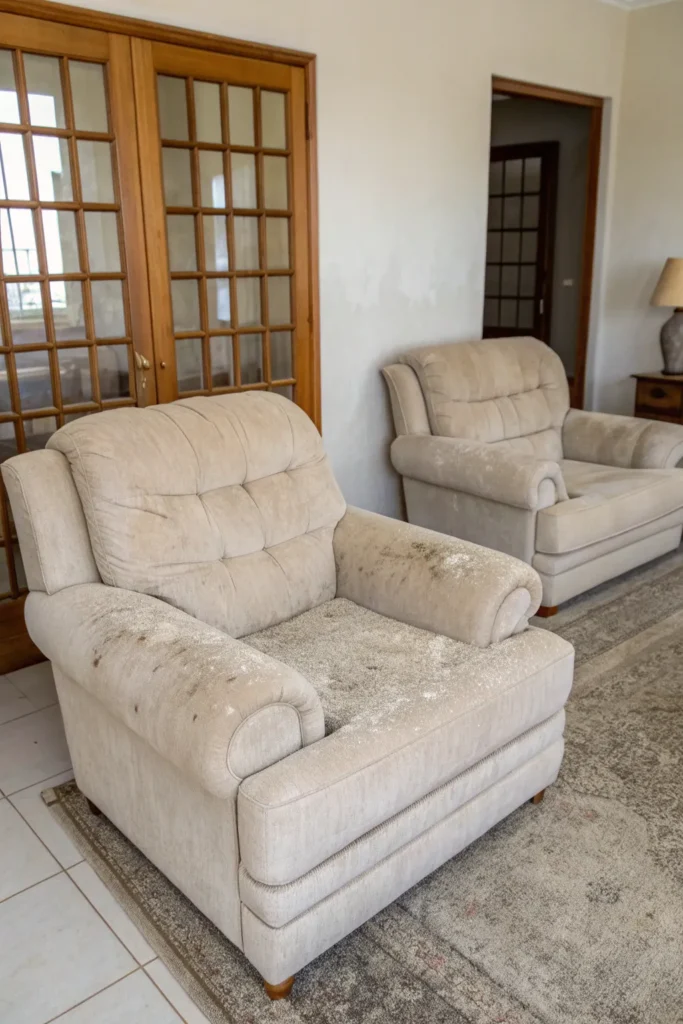
Professional cleaning makes sense for:
Deep Cleaning and Restoration: For furniture that hasn’t been cleaned in years or is heavily soiled, professional equipment and expertise deliver results DIY methods can’t match. The professionals removed stains from my sectional that I couldn’t budge after multiple attempts.
Expensive or Antique Furniture: When furniture costs thousands of dollars, professional cleaning is insurance against DIY damage. The $200 I spent cleaning my $3,000 velvet chair was absolutely worth it.
Delicate or Specialty Fabrics: S-coded fabrics, silk, velvet, and antique upholstery should only be professionally cleaned. The risk of damage with DIY methods is too high.
Stubborn Stains and Odors: Pet urine, red wine, ink, and other stubborn issues often need professional-strength treatments. After my dog had an accident on the couch, no amount of DIY enzyme cleaner fully eliminated the odor. Professionals solved it in one visit.
Allergen Reduction: Professional hot water extraction removes significantly more allergens than DIY methods. When my seasonal allergies worsened, my doctor recommended professional upholstery cleaning. The improvement was noticeable within days.
Time Constraints: If your time is valuable or limited, professional cleaning is far more efficient. The entire process for my sectional took 90 minutes versus the full day I spent doing it myself.
Moving or Selling: Professional cleaning before selling furniture or before moving into a new home ensures everything looks and smells its best. It can increase resale value or simply provide peace of mind in a new space.
| Scenario | Budget Method | Professional Service | Best Choice |
| Weekly maintenance | ✓ Perfect | ✗ Overkill | Budget |
| Light surface cleaning | ✓ Adequate | ✓ Excellent | Budget |
| Annual deep clean | ✓ Possible | ✓ Excellent | Professional |
| Stubborn stains | ✓ Limited success | ✓ High success | Professional |
| S-coded fabrics | ✗ Risky | ✓ Essential | Professional |
| New furniture upkeep | ✓ Excellent | ✓ Excellent | Budget |
| Allergen removal | ✓ Partial | ✓ Complete | Professional |
| Time-constrained | ✗ Slow | ✓ Fast | Professional |
My Recommended Hybrid Approach
The most cost-effective strategy combines both methods strategically. This is the exact approach I use in my own home.
Monthly: Thorough vacuuming with brush attachment (15-20 minutes per piece)
Quarterly: DIY spot treatment and light cleaning with homemade solution (1-2 hours total)
Semi-Annually: Steam cleaning with handheld steamer for freshening (30-45 minutes per piece)
Annually: Professional deep cleaning for main living areas (varies by furniture)
As Needed: Professional cleaning for stains that don’t respond to DIY treatment
This schedule keeps furniture consistently clean while minimizing costs. The annual professional cleaning tackles deep-down dirt that DIY methods can’t reach, while regular DIY maintenance prevents heavy soiling from developing.
Annual Cost Breakdown:
- DIY supplies: $20-40
- Handheld steamer: $40 (one-time purchase)
- Professional cleaning: $200-400
- Total first year: $260-480
- Subsequent years: $220-440
Compare this to either cleaning everything yourself (less effective results) or using professional services exclusively (annual costs of $600-1,200), and the hybrid approach delivers the best value.
Common Upholstery Cleaning Mistakes to Avoid
I’ve made every mistake in the book while learning to clean upholstery. Here are the most costly errors and how to avoid them.
Over-Wetting the Fabric
This is the number one mistake DIYers make, and I’m guilty of it. Too much moisture leads to:
- Mold and mildew growth inside cushions
- Water stains and rings on fabric
- Extended drying times (days instead of hours)
- Potential wood frame damage from moisture
- Fabric shrinkage
The rule is simple: use as little moisture as possible. Light misting, thorough blotting, and multiple light applications are better than soaking the fabric once.
Pro Tip: Place white towels under cushions after cleaning to absorb moisture that wicks through. Replace them every few hours until the towels stay dry.
Using Colored Cloths or Paper Towels
I ruined a cream cushion by blotting with a blue towel that wasn’t colorfast. Always use white cloths or towels when cleaning upholstery—if any dye transfers, it won’t stain your furniture.
Paper towels can leave lint and don’t absorb as well as cloth. I learned to keep a stack of white microfiber cloths specifically for furniture cleaning.
Rubbing Instead of Blotting
When my son spilled grape juice on the couch, my instinct was to scrub vigorously. This spread the stain, pushed it deeper into fibers, and damaged the fabric texture.
The correct technique is always blotting—pressing firmly to absorb liquid without spreading or grinding it in. Work from the outside of the stain toward the center to prevent spreading.
Not Testing in Hidden Areas
Every fabric reacts differently to cleaning solutions. I once applied a “universal” cleaner to a chair without testing and created a permanent light spot where the solution stripped some color.
Now I always test any new product or method on a hidden area—under cushions, on the back panel, or on the underside. Wait 24 hours to check for color bleeding, shrinkage, or other damage before proceeding.
Using Too Much Soap
More soap doesn’t mean cleaner furniture. Excess soap leaves sticky residue that actually attracts dirt faster, making furniture look dingy shortly after cleaning.
I use far less soap now than I did initially—just a tablespoon in a full spray bottle of water is plenty. If you see suds forming, you’re using too much.
Skipping the Vacuum Step
Cleaning without vacuuming first means you’re just turning dry dirt into mud. I made this mistake on a heavily used couch and essentially made the dirt problem worse by wetting it before removing loose particles.
Always vacuum thoroughly before any wet cleaning. This removes surface dirt, dust, and debris that would otherwise complicate the cleaning process.
Using the Wrong Products for Your Fabric Code
This is where people damage expensive furniture. Using water on S-coded fabrics causes staining and water marks. I’ve seen friends permanently damage silk and velvet upholstery by not checking the cleaning code first.
Never skip the step of identifying your fabric’s cleaning code. If you can’t find it, assume it needs professional cleaning rather than risk damage.
| Common Mistake | Consequence | Prevention |
| Over-wetting | Mold, damage, long drying | Light misting, blot thoroughly |
| Colored cloths | Dye transfer | Use only white cloths |
| Rubbing stains | Spread stains, damage fabric | Always blot, never rub |
| No testing | Permanent damage | Test all products first |
| Too much soap | Residue buildup | Use minimal soap |
| Skipping vacuum | Grinding in dirt | Always vacuum first |
| Wrong method | Ruined furniture | Check fabric code always |
Advanced Tips for Better Results
After years of trial and error, I’ve discovered techniques that significantly improve cleaning outcomes for both DIY and professional approaches.
Improving Drying Time
Slow drying is the enemy of good upholstery cleaning. The longer furniture stays wet, the higher the risk of mildew, water stains, and damage.
Fast-Drying Techniques:
- Use fans—I position oscillating fans to blow directly on cleaned furniture
- Open windows for air circulation when weather permits
- Point a dehumidifier at cleaned furniture to pull moisture from the air
- Remove cushion covers if possible and dry separately
- Stand cushions on edge rather than laying flat to maximize airflow
- Clean on warm, dry days rather than humid or rainy days
Since implementing these techniques, my drying times have dropped from 24+ hours to 4-6 hours for most pieces.
Layering Cleaning Methods
I’ve found that combining techniques yields better results than any single method alone.
My Optimal Deep Cleaning Process:
- Vacuum thoroughly
- Spot-treat stains with appropriate solutions
- Steam clean with handheld steamer for sanitizing
- Apply DIY cleaning solution lightly
- Immediately blot and extract moisture
- Set up fans for fast drying
- Vacuum again once completely dry to restore texture
This layered approach takes more time but delivers results that rival professional cleaning for less than $10 in supplies.
Pre-Treating High-Traffic Areas
The arms and seat cushions of furniture soil faster than other areas. Pre-treating these spots before general cleaning addresses the heaviest soiling.
I apply a cleaning solution to arms and seats first, let it dwell for 5-10 minutes, then proceed with overall cleaning. This extra dwell time on problem areas makes a noticeable difference in how clean these sections get.
Using Fabric Protector
After cleaning—whether DIY or professional—applying fabric protector extends how long furniture stays clean and makes future cleaning easier.
I use Scotchgard Fabric Protector ($8-12 per can) after every deep clean. Spills bead up on the protected surface instead of immediately soaking in, giving me time to blot them before stains set.
The protection gradually wears off with use, so reapplication after each deep cleaning maintains the benefit.
Pro Tip: Fabric protector only works on clean fabric. Applying it to dirty upholstery seals in dirt and stains. Always clean first, dry completely, then protect.
Maintaining Clean Upholstery Long-Term
Keeping furniture clean is easier than getting it clean. These maintenance habits dramatically reduce how often deep cleaning is necessary.
Daily and Weekly Habits
Daily Quick Picks:
- Shake out throw blankets and cushions
- Spot-clean spills immediately when they happen
- Brush off crumbs after snacking on the couch
- Keep pets off furniture if possible, or use washable covers
Weekly Maintenance:
- Vacuum all upholstered furniture with attachment
- Flip and rotate cushions for even wear
- Check for new stains or spots that need attention
- Freshen with light fabric spray if desired
These simple habits take less than 30 minutes weekly but keep furniture looking good between deep cleans.
Seasonal Deep Cleaning Schedule
I’ve settled on this schedule after experimenting with different frequencies:
Spring (March-April): Full professional or thorough DIY deep clean after winter
Summer (July): Light DIY maintenance clean
Fall (September-October): Full professional or thorough DIY deep clean before holiday season
Winter (January): Spot treatment and steam freshening as needed
This twice-yearly deep cleaning schedule, combined with weekly maintenance, keeps all my furniture looking and smelling fresh year-round.
Protective Measures
Prevention is always easier than cleaning. These strategies reduce how much cleaning your furniture needs.
Using Slipcovers: Washable slipcovers protect expensive upholstery from daily wear. I use them on my formal living room furniture and simply throw them in the washing machine every few weeks.
Strategic Throw Blankets and Cushions: Decorative throws placed over high-contact areas like arms and backs protect the actual upholstery. These are machine-washable and easy to clean.
No Food or Drinks Rule: This is hard to enforce with family, but limiting eating and drinking to the kitchen and dining room prevents most upholstery stains.
Pet Furniture: Providing pets with their own furniture reduces how much they use yours. My dog has her own chair that gets cleaned frequently, leaving my other furniture mostly pet-free.
| Maintenance Level | Time Investment | Frequency | Impact on Furniture Life |
| Daily habits | 2-5 minutes | Daily | Moderate |
| Weekly vacuum | 15-20 minutes | Weekly | High |
| Monthly refresh | 30-45 minutes | Monthly | High |
| Seasonal deep clean | 2-4 hours | 2x yearly | Very High |
| Protective measures | One-time setup | Ongoing | Very High |
When to Replace Instead of Clean
Sometimes furniture is beyond saving, and continuing to invest in cleaning is throwing good money after bad. I’ve learned to recognize when replacement makes more sense than cleaning.
Signs Furniture Is Beyond Repair
Structural Damage: If the frame is broken, springs are poking through, or cushions have lost all their support, cleaning won’t solve these problems. I finally replaced an old recliner after cleaning it beautifully but realizing it was still uncomfortable and sagging.
Irreparable Stains: Some stains—particularly dye transfers, bleach spots, or permanent fabric damage—can’t be cleaned out. If professional cleaners can’t remove a stain, it’s permanent.
Persistent Odors: Pet urine that has soaked through cushions into the frame and padding may be impossible to fully deodorize. I tried everything on an old couch before finally admitting the smell was never going away.
Fabric Deterioration: If the fabric itself is fraying, splitting, or falling apart, cleaning will only accelerate the damage. This is common with very old furniture or low-quality fabrics.
Cost-Benefit Analysis: If cleaning costs approach 30-50% of replacement cost and the furniture is old or worn, replacement might be the smarter investment.
Reupholstering as an Alternative
For furniture with good bones but damaged or hopelessly stained fabric, reupholstering can be worth considering.
Professional reupholstering costs $600-2,000 depending on the piece, but it gives you essentially new furniture while preserving a frame you love. I reupholstered an antique chair that had sentimental value, and the $800 cost was worthwhile because the frame was solid and the piece had family history.
However, reupholstering modern, mass-produced furniture rarely makes financial sense when replacement pieces cost less.
Getting the Most From Professional Services
If you decide to hire professionals, these strategies ensure you get the best value and results.
Choosing a Reputable Company
Not all upholstery cleaning companies offer the same quality. I learned this after a disappointing experience with a cheap service that left furniture wetter than it cleaned.
What to Look For:
- Certification from the IICRC (Institute of Inspection, Cleaning and Restoration Certification)
- Insurance and bonding to protect against damage claims
- Specific experience with upholstery, not just carpet cleaning
- References or reviews from previous customers
- Willingness to identify fabric codes and adjust methods accordingly
- Clear pricing without hidden fees
Questions to Ask:
- What cleaning method will you use for my fabric type?
- How long will drying take?
- Do you move furniture or do I need to prepare the area?
- Is fabric protector included or extra?
- What happens if a stain doesn’t come out?
- Do you guarantee your work?
The company I use now answered all these questions thoroughly before I booked, which gave me confidence in their professionalism.
Preparing for Professional Service
Proper preparation ensures technicians can work efficiently and deliver the best results.
Before the Appointment:
- Remove small items, pillows, and throws
- Vacuum the floor around furniture
- Move small furniture pieces if possible
- Secure pets in another room
- Point out specific stains or problem areas
- Have access to electrical outlets and water
I make a list of specific concerns to discuss when technicians arrive. Pointing out pet stain areas, old spills, or odor issues ensures they give these areas special attention.
After Professional Cleaning Care
Immediate Post-Cleaning Steps:
- Keep fans running as directed
- Avoid using furniture until completely dry (usually 4-8 hours)
- Don’t replace cushions or pillows until fully dry
- Open windows if weather permits for air circulation
- Don’t walk on furniture with shoes or bare feet while drying
First Week After Cleaning:
- Vacuum after 24-48 hours to restore fabric texture
- Inspect thoroughly and contact the company immediately if you notice any issues
- Apply fabric protector if you declined professional application
- Resume normal use once everything is completely dry
Following these post-cleaning protocols maximizes the results and longevity of professional cleaning.
Conclusion: Creating Your Personal Upholstery Cleaning Strategy
Clean upholstery transforms your living space and protects your furniture investment. Whether you choose budget DIY methods, professional services, or my recommended hybrid approach, the key is consistency and using appropriate techniques for your specific furniture.
I’ve found that understanding my furniture’s needs, maintaining a regular cleaning schedule, and knowing when to call professionals delivers the best results at the most reasonable cost. My furniture looks better, lasts longer, and contributes to a healthier home environment.
Start with regular vacuuming and simple maintenance, then graduate to deeper cleaning methods as you gain confidence and experience. Don’t be afraid to call professionals for challenging situations—the cost is worthwhile when it prevents damage to expensive furniture or solves problems beyond DIY capabilities.
What approach will you take for your upholstered furniture? I’d love to hear about your experiences with different cleaning methods and what works best in your home.