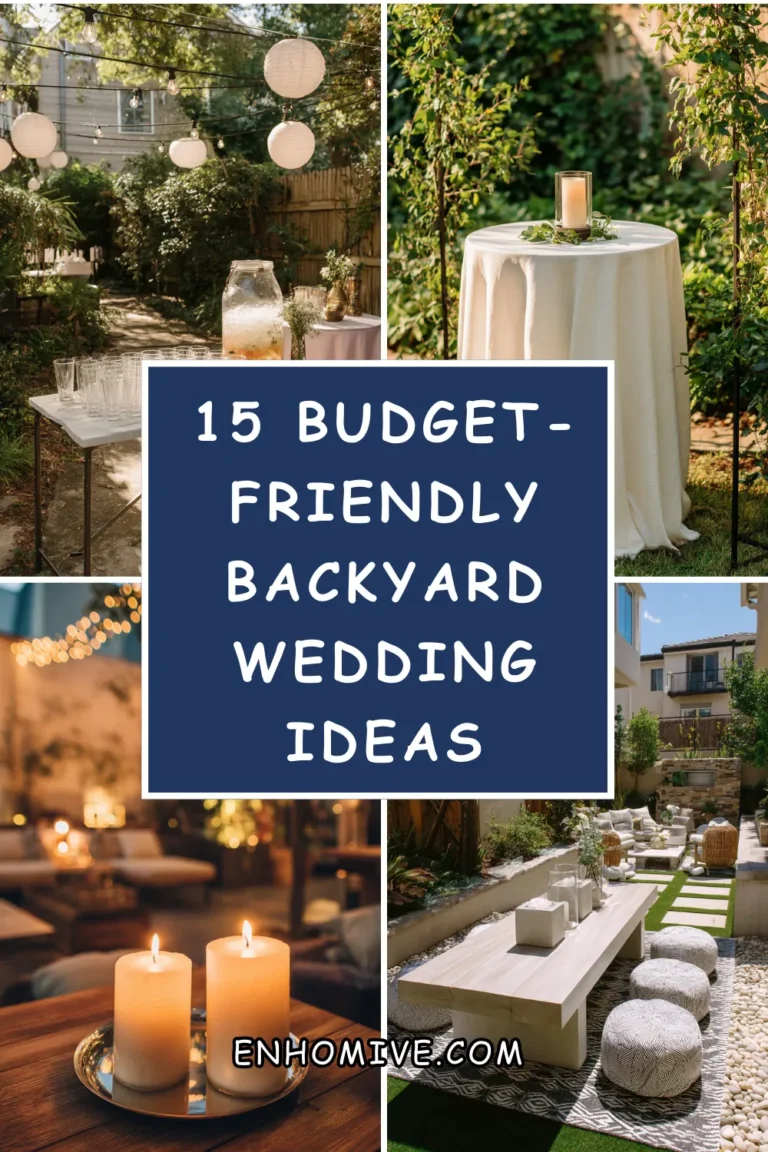

15 Fire Pit Ideas for a Sloped Yard That Actually Work
A sloped yard presents what appears at first to be a significant obstacle to fire pit installation — but which is, on closer examination, actually an opportunity.
The challenge of a slope forces a level of design thinking that a flat yard does not require and the solutions that emerge are often more interesting, more permanent, and more genuinely beautiful than anything a flat garden installation would have produced. A well-designed fire pit on a sloped yard becomes a feature that works with the landscape rather than fighting it.
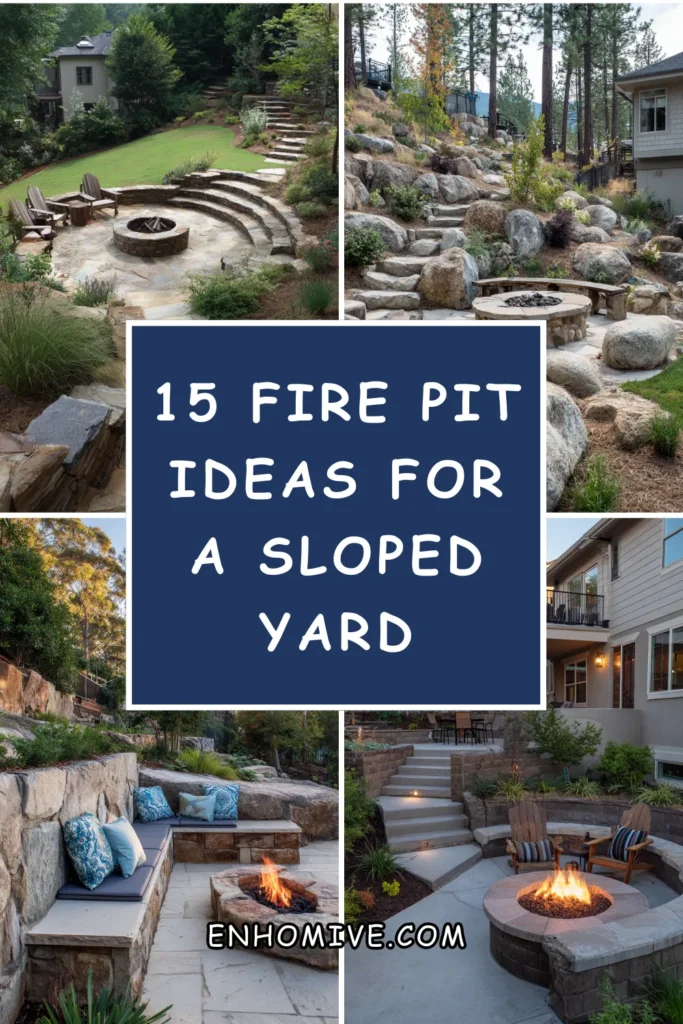
The fundamental requirement is level ground at the fire pit position and in the immediate seating area around it. Everything else — the slope, the level changes, the terracing — can become part of the design rather than a problem to be solved.
Here are 15 fire pit ideas for a sloped yard that create genuine, beautiful, functional outdoor gathering spaces.
1. Cut-In Level Terrace
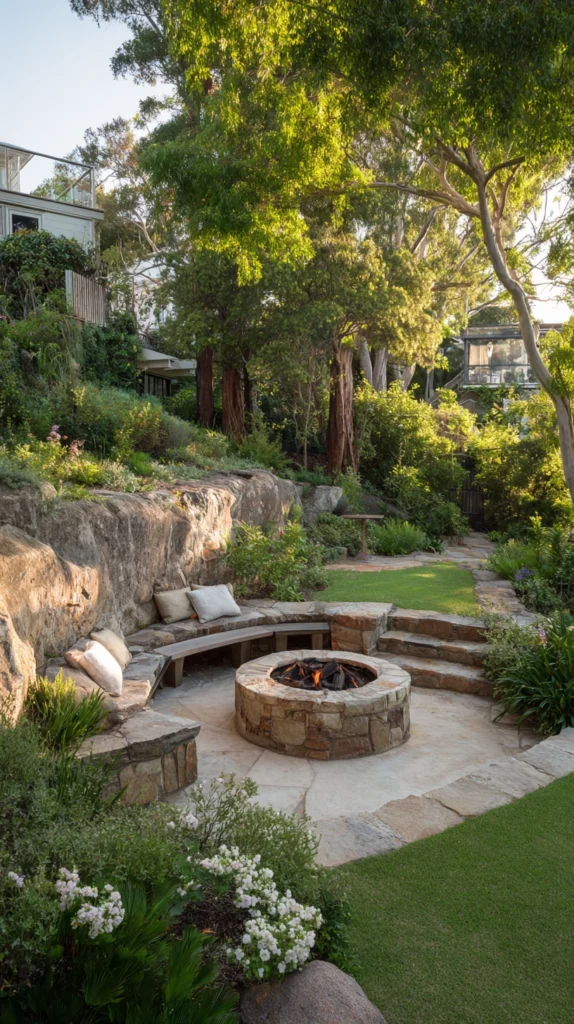
Cutting a level terrace directly into the slope — excavating a flat platform for the fire pit and surrounding seating — creates the most permanent and most naturalistic solution. The excavated terrace uses the slope as a natural backdrop, creating a sheltered outdoor room with the existing soil bank as the rear wall. Retain the cut face with a dry stone wall, treated timber, or planted reinforcement depending on the aesthetic and the degree of the slope.
Pro Tip: Excavate the terrace to at least one metre deeper than the seating footprint to allow comfortable movement without anyone backing into the retaining wall. A terrace exactly the size of the seating feels cramped and claustrophobic. Generous depth creates a terrace that feels like a genuine outdoor room.
2. Retaining Wall Seating Area
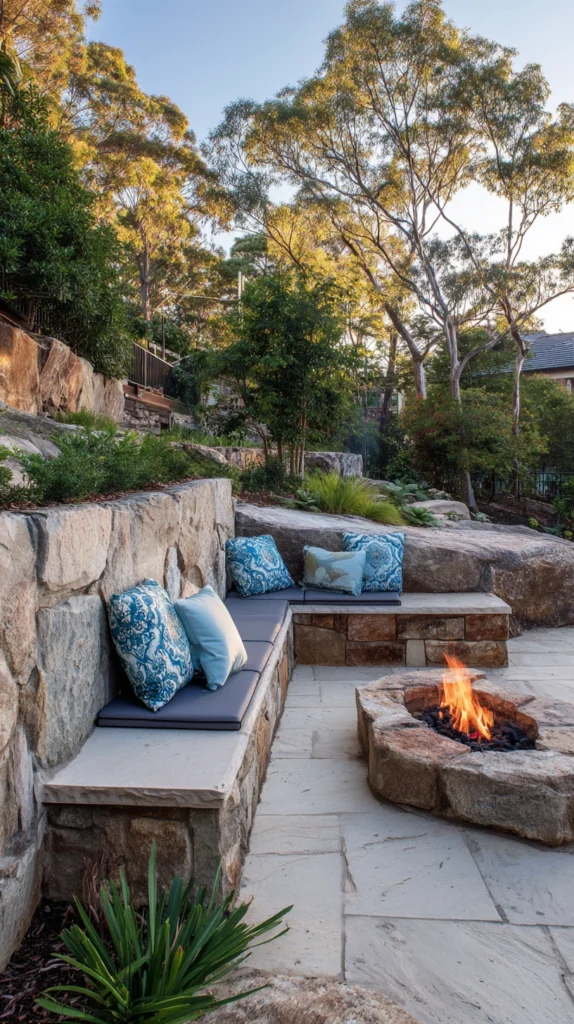
Building a retaining wall with the wall top designed to double as seating creates a fire pit installation that solves the slope problem and provides built-in seating from the same structure. Built from natural stone, reclaimed brick, or treated hardwood sleepers at approximately 45 to 50 centimetres height — comfortable for seated use. The wall holds back the slope, creates the level platform, and its flat top becomes the primary seating surface.
Pro Tip: Cap the retaining wall seating surface with smooth flat coping stone or a smooth timber plank that is comfortable without cushions and sheds rainwater effectively. A rough or unfinished cap surface requires cushions for every use — which must be stored and retrieved. A smooth comfortable cap makes the seating immediately usable and increases the spontaneous usability of the fire pit area significantly.
3. Sunken Fire Pit Bowl
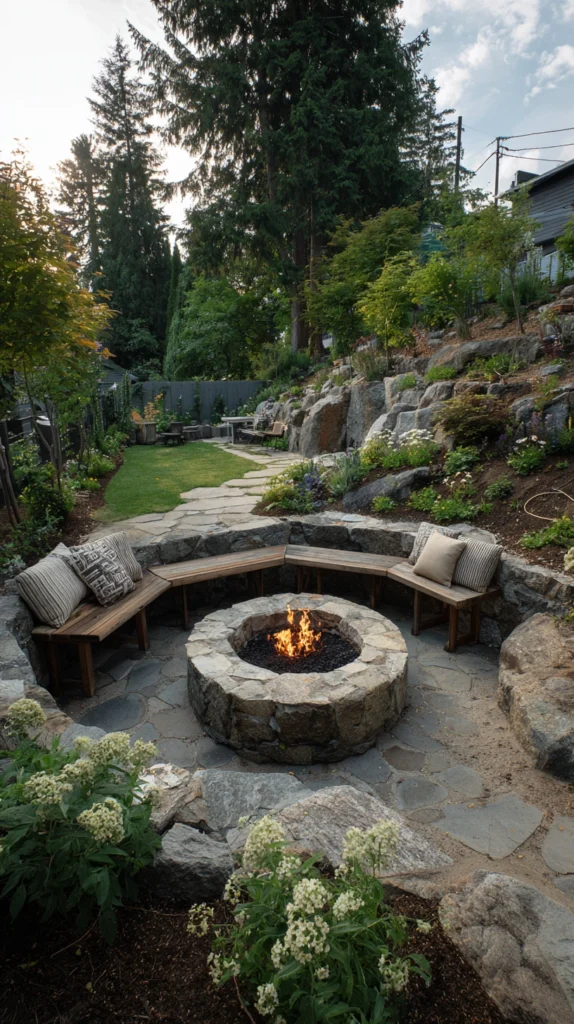
Creating a sunken fire pit area — excavating a bowl-shaped depression into the slope, lining the sides with stone or timber, and installing the fire pit at the lowest point — creates extraordinary natural shelter and intimate enclosure. The sunken position places the fire below the prevailing wind level, creating a naturally sheltered microclimate. The surrounding bank creates visual privacy from the rest of the yard — a quality of hidden protected gathering that makes this one of the most desirable sloped yard fire pit solutions.
Pro Tip: Install drainage at the lowest point of a sunken fire pit area before completing construction. A sunken depression is the natural collection point for surface water runoff from the slope above. Without adequate drainage the area fills with standing water after every rainfall and becomes unusable until it dries out completely.
4. Stepped Terrace Amphitheater
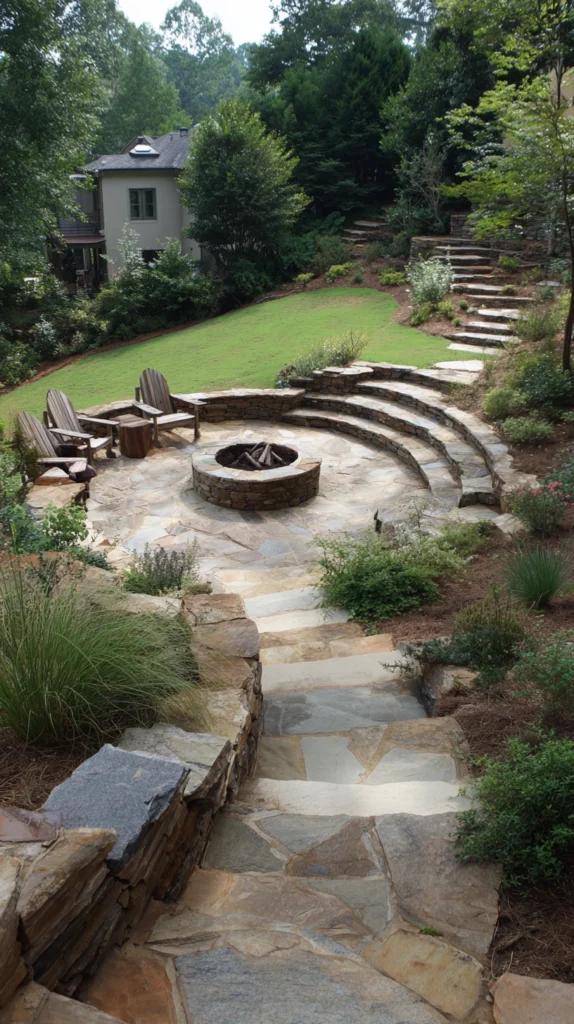
A stepped terrace design — multiple level platforms descending the slope with the fire pit at the lowest level and seating arranged on stepped terraces above — creates a natural amphitheater-like quality where upper terraces provide elevated seating overlooking the fire. Build the terrace steps from the same material as the retaining walls for a visually cohesive design. The fire pit at the lowest level is visible from every terrace level above it.
Pro Tip: Make the lowest fire pit terrace the most generously sized of all the terrace levels. Upper seating terraces can be narrower because they are purely seating spaces, but the fire pit terrace must accommodate safe fire management, adequate clearance around the fire pit, and comfortable seated access from every position around it.
5. Timber Deck Platform
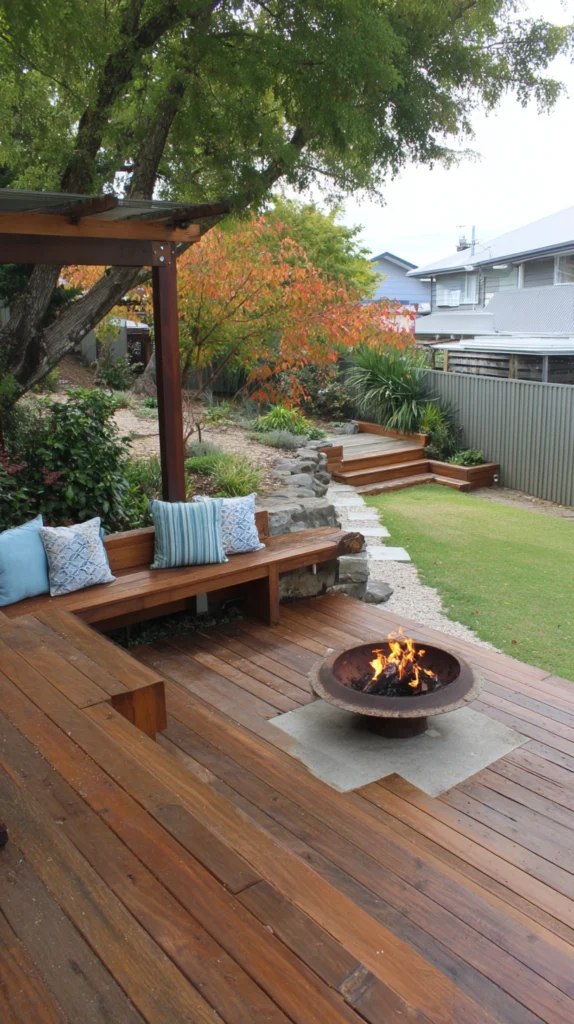
Building a timber deck platform on the slope — supported on posts of varying heights to create a level surface above the sloping ground — creates a fire pit installation that sits above the slope rather than in it. The deck provides a perfectly level surface at whatever height the slope requires and creates a defined outdoor room that frames views across the sloped yard from the fire pit seating position.
Pro Tip: Build the deck platform to extend at least 1.5 metres beyond the fire pit on all sides. A deck exactly sized for the fire pit with seating immediately at the deck edge creates insufficient clearance between the fire and seated occupants — both a comfort issue in terms of radiated heat and a genuine fire safety concern. Always use a non-combustible fire pit pad or insert within the deck.
6. Boulder Retaining and Seating
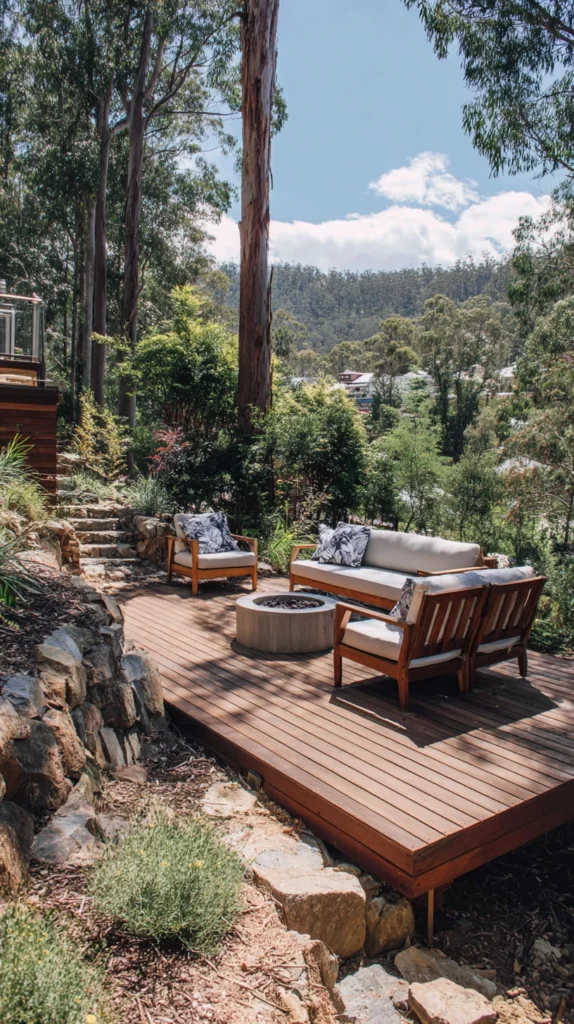
Using large natural boulders to retain the slope and create informal seating around a fire pit creates an installation of completely natural landscape-integrated beauty. Choose boulders of varying sizes for the most natural arrangement — uniform boulders look placed rather than naturally occurring. Position the largest boulders at the slope base as primary retaining elements and use progressively smaller boulders as seating around the fire pit perimeter.
Pro Tip: Set boulders used as retaining elements at least one third of their total height below ground for genuine stability. A boulder sitting primarily above ground has minimal retaining capacity and will shift under the lateral pressure of the retained slope — particularly in wet conditions when waterlogged soil becomes significantly heavier. Deep setting creates permanent retaining stability.
7. Gabion Wall Terrace
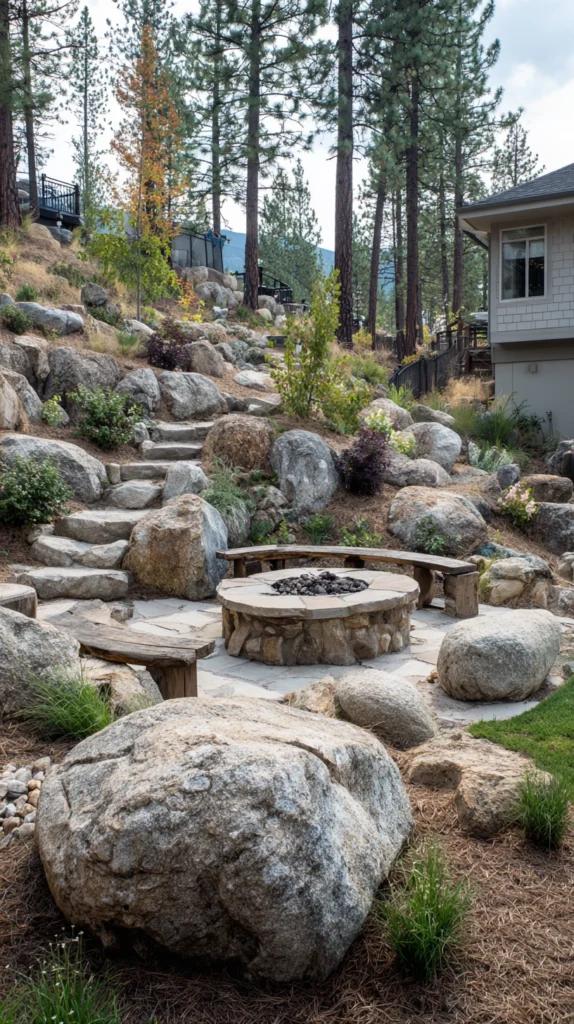
Gabion walls — wire mesh cages filled with stones — used to retain the slope and create a level fire pit terrace provide a contemporary retaining solution of considerable visual interest and extraordinary structural reliability.
Gabion walls are self-draining, freeze-thaw resistant, and require no foundations — making them particularly suitable for sloped yard retaining applications. The textural quality of stone-filled wire cages creates visual interest that conventional block or timber walls lack.
Pro Tip: Fill gabion cages with locally sourced stone rather than purchasing stone from a distance. Locally sourced stone creates a visual connection between the gabion wall and the surrounding landscape that imported stone lacks and the cost saving of sourcing locally is often considerable given the large volumes required to fill gabion cages to their necessary dimensions.
8. Hillside Niche Fire Pit
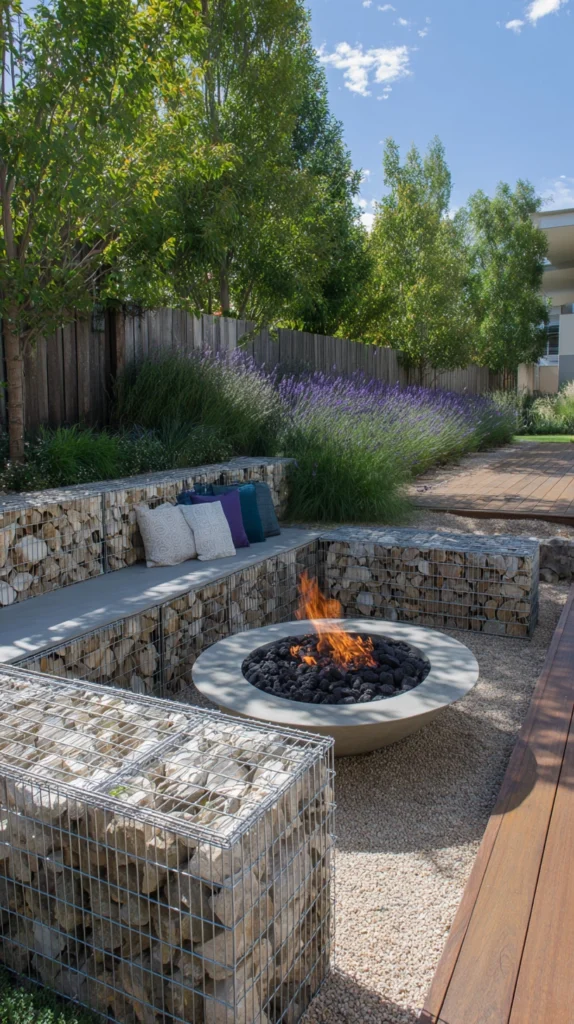
Carving a niche directly into a steep hillside — excavating a recessed alcove into the face of the slope and positioning the fire pit within the enclosed niche — creates a fire pit installation of extraordinary shelter and visual drama. The niche is enclosed on three sides by the slope itself, creating a naturally sheltered cave-like gathering space of considerable intimacy. This is the most completely sheltered of all sloped yard fire pit solutions.
Pro Tip: Ensure the open front of the niche is at least 2.5 metres wide and the ceiling height at least 2.2 metres for adequate smoke dispersal. A niche that is too small or too enclosed creates a smoke trap that makes fire use genuinely unpleasant and potentially hazardous. A generous niche opening allows adequate combustion gas escape for comfortable, safe fire use.
9. Fire Pit with Integrated Steps
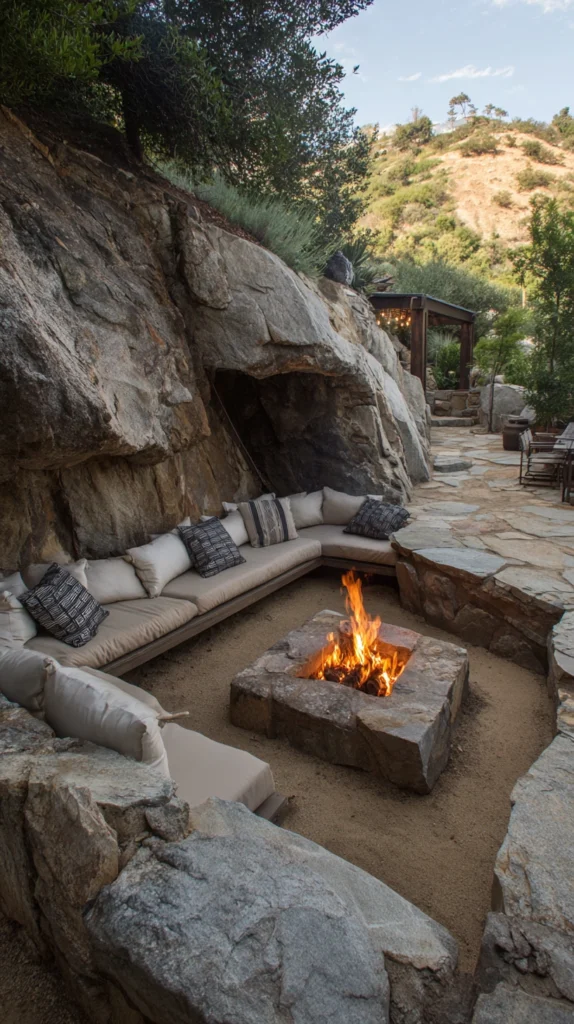
Designing the fire pit area with integrated steps connecting it to the main yard level above creates a fire pit installation with a genuine sense of arrival. Design the steps generously — a tread depth of at least 35 centimetres and a riser height of no more than 18 centimetres for comfortable safe descent carrying drinks and cushions. Light the steps with low-level integrated step lighting for safe nighttime use.
Pro Tip: Align the steps so they descend toward the fire pit rather than arriving at the seating area from behind. Arriving at the fire pit from the front — walking toward the fire as you descend — creates a sense of arrival and a visual reveal of the fire pit that arriving from behind entirely lacks. Step orientation significantly affects the experiential quality of the approach to the gathering space.
10. Container Fire Pit on a Level Platform
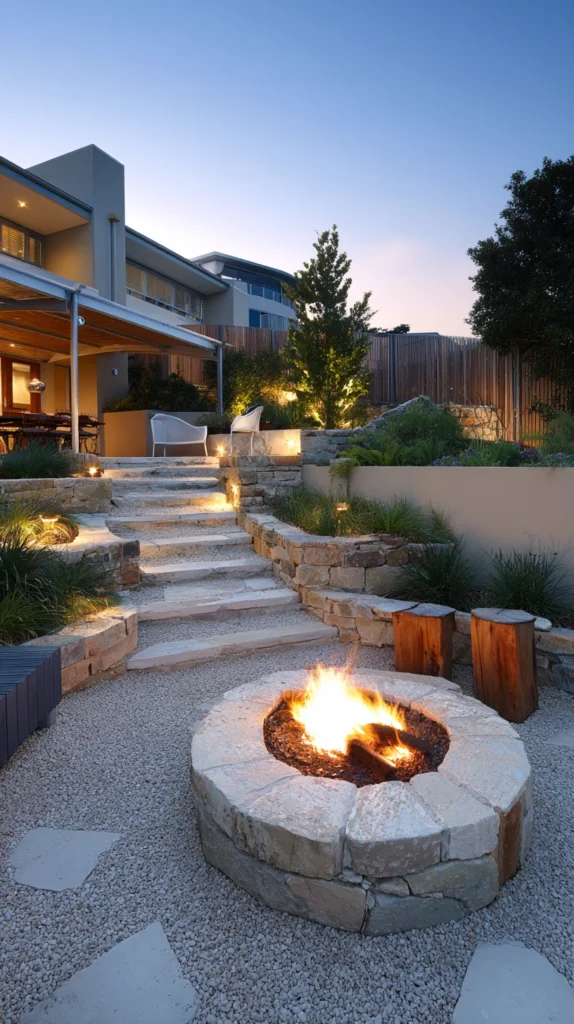
A portable container fire pit placed on a purpose-built level platform at a convenient point on the slope creates the most flexible sloped yard solution. The level platform can be constructed from a simple timber frame, a concrete slab, or a laid stone base and the portable fire pit bowl can be moved, stored, and replaced as circumstances change. Ideal for rented properties or for yards where the optimal fire pit location is not yet certain.
Pro Tip: Build the level platform at least 20 centimetres larger than the fire pit base footprint on all sides. A platform exactly sized for the fire pit base leaves no margin for the ash and ember drop that occurs around the fire during use. A slightly generous platform dimension contains this material cleanly and makes post-fire cleanup significantly easier.
11. Natural Stone Fire Ring on Cut Ground
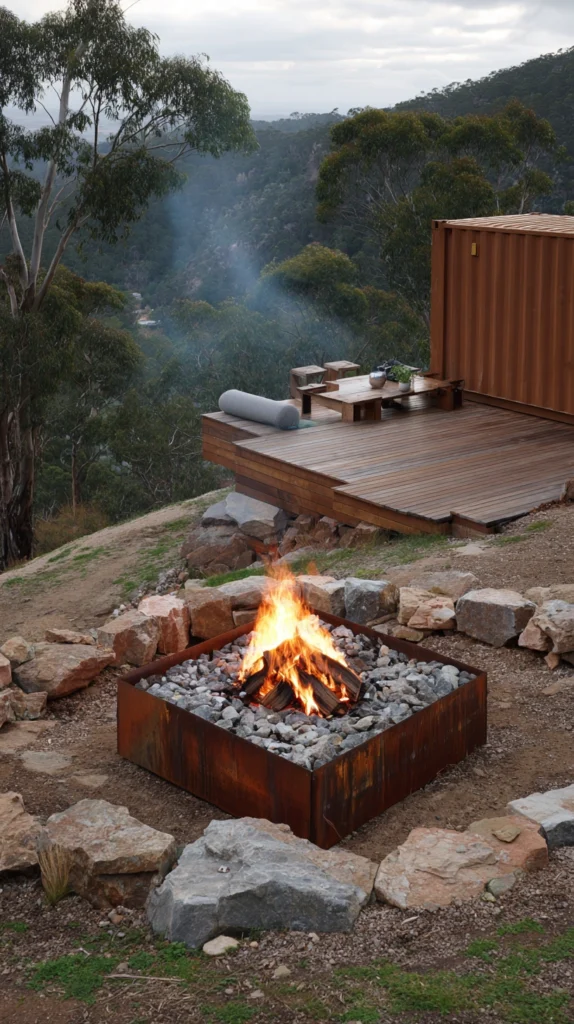
A natural stone fire ring arranged directly on a cut and leveled section of slope creates the simplest, most affordable, and most naturally beautiful sloped yard fire pit solution. The cut slope section provides the level ground. The stone ring provides the fire containment. The surrounding slope provides natural enclosure and wind shelter. This approach requires a degree of initial slope cutting but beyond the ground preparation the installation itself costs almost nothing.
Pro Tip: Bury the base stones of the natural stone fire ring at least 10 centimetres into the leveled ground rather than simply placing them on top of it. Surface-placed stones shift and separate during fire use as the ground beneath them heats and cools through repeated fire cycles. Partially buried base stones remain in position permanently and maintain the circular form through many seasons of regular use.
12. Multi-Level Patio Fire Pit
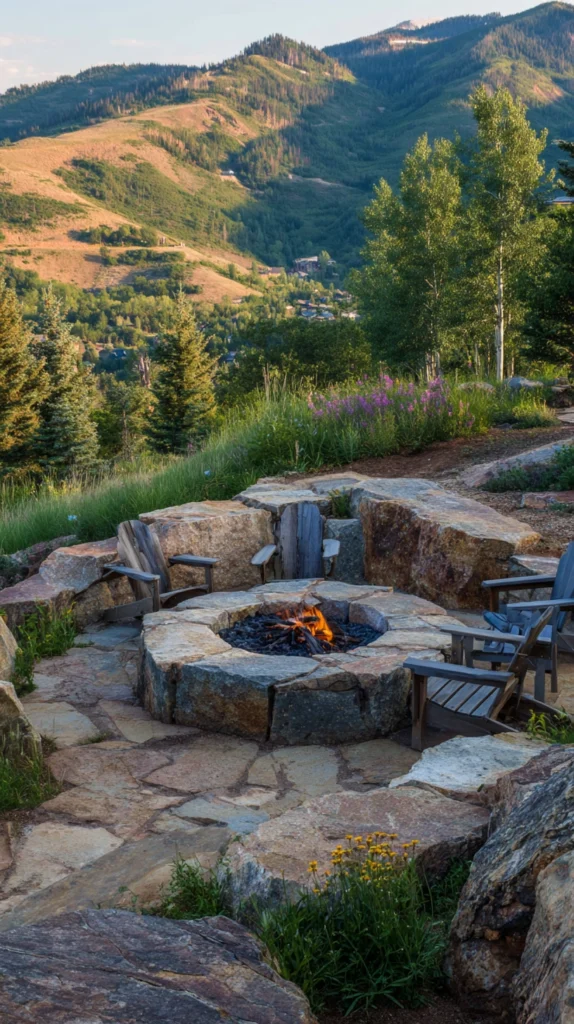
A multi-level patio design — an upper patio at the main garden level connected by steps to a lower patio containing the fire pit — creates an installation of considerable architectural quality. Surface both patio levels in the same material for a visually cohesive design that reads as a unified outdoor room composition rather than two separate areas connected by steps. The material continuity between levels creates the sense of a single architecturally coherent outdoor space despite the level change.
Pro Tip: Make the lower fire pit patio at least as large as the upper patio. Fire pit gathering tends to become the primary outdoor social activity on any property with a genuinely inviting fire pit — and a lower patio significantly smaller than the upper cannot accommodate the full group that naturally gravitates toward the fire. Equal patio areas at both levels ensures the fire pit space can serve as the primary gathering destination.
13. Planted Slope Fire Pit Terrace
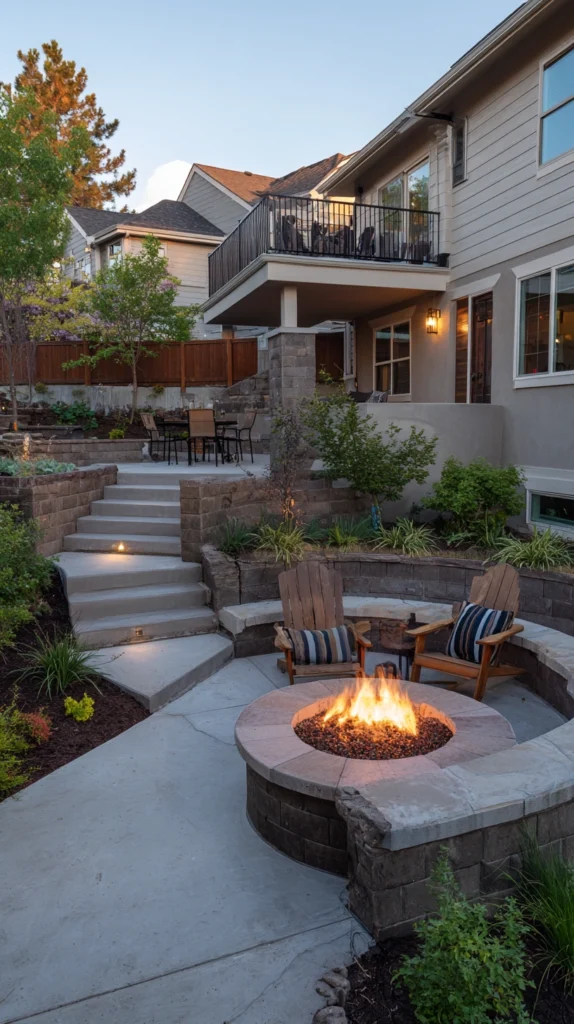
A fire pit terrace created by building a low retaining wall with the slope above it planted densely with low-growing ground cover — creeping thyme, sedum, ornamental grasses, or native wildflowers — creates an installation where the slope management becomes a genuine garden feature. The planted slope stabilizes the bank against erosion, softens the visual impact of the retaining wall, and creates a genuinely beautiful garden setting for the fire pit gathering space.
Pro Tip: Choose drought-tolerant deep-rooting ground covers for the slope above the fire pit wall rather than shallow-rooted moisture-demanding plants. Deep-rooting plants — sedum, creeping thyme, native grasses — stabilize the slope permanently and require virtually no maintenance once established. Shallow-rooted plants provide minimal erosion protection and require frequent watering and replacement throughout the growing season.
14. Slope Base Fire Pit
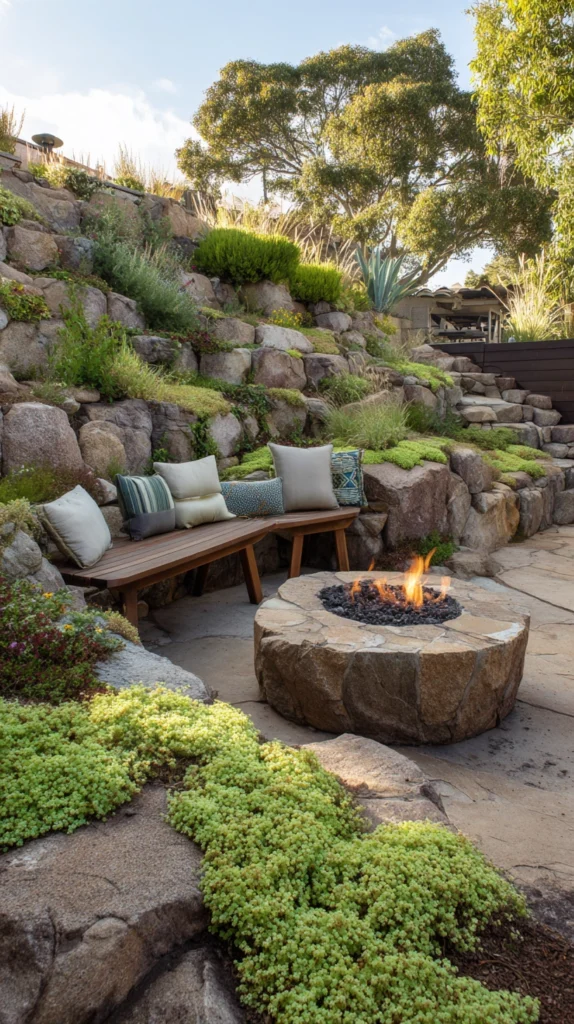
The base of a slope — where the gradient levels out into the flat lower section of the yard — is often the most naturally appropriate fire pit location on a sloped property. The slope itself forms a natural backdrop, the level ground provides the flat surface needed, and the topographic enclosure created by the slope rising behind the seating creates natural shelter and definition. Install the fire pit a minimum of 3 metres from the slope base and keep the slope face clear of combustible vegetation.
Pro Tip: Stabilize the slope face immediately behind a slope base fire pit with dense low-growing fire-resistant planting — succulents, stone crops, low-growing native species. A stabilized planted slope face is both more beautiful and significantly safer than a bare or loosely vegetated slope that sheds dry material toward the fire pit during dry weather conditions.
15. Hillside Deck Cantilever Fire Pit
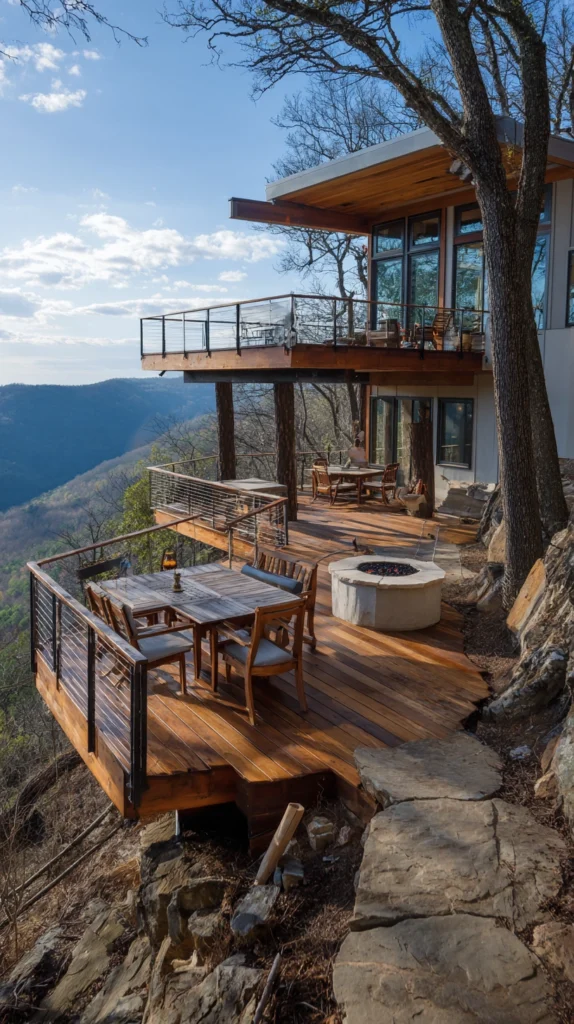
A cantilevered deck extending from the hillside — supported on posts driven into the slope below and anchored to the hillside above — creates a dramatic fire pit platform that appears to float above the sloped landscape. The cantilevered position provides extraordinary views across the lower garden from the fire pit seating and the elevated platform creates a quality of suspended, tree-house-like gathering that ground-level fire pit installations cannot replicate.
Pro Tip: Engage a structural engineer before constructing a cantilevered deck on a significant slope. The structural loads involved in a cantilevered platform — particularly one bearing the dynamic loads of fire pit use and multiple occupants — require proper engineering calculation rather than amateur estimation. The engineering fee is modest relative to the construction cost and the peace of mind of a properly engineered structure is entirely worth the investment.
Work With the Slope, Not Against It
A sloped yard is not a fire pit problem — it is a fire pit opportunity. The slopes, the levels, and the natural topography create the conditions for fire pit installations of genuine character and genuine shelter that no flat yard installation can approach.
Choose the solution that suits your specific slope, your aesthetic, and your budget. Build it well and build it level. And discover that the most interesting outdoor gathering space on any sloped property is almost always the one created by working with the landscape rather than fighting it.