

How to Clean Kitchen Tile Grout Without Harsh Chemicals
Look down at your kitchen floor. Those grout lines between the tiles used to be white or light gray. Now they’re brown, stained, and grimy. Some spots might even be black with mold.
Your beautiful tile floor looks dirty no matter how much you mop. The tiles shine but the grout is disgusting. It makes your whole kitchen look neglected.
Most people reach for bleach or harsh chemical cleaners. But those smell terrible, burn your hands, and can actually damage grout over time. There’s a better way.

You can get grout brilliantly clean using simple ingredients you already have. No toxic fumes. No burning skin. Just clean the grout that looks new again.
Why Grout Gets So Dirty
Grout is porous like a sponge. It has thousands of tiny holes that trap dirt, grease, food particles, and anything else on your floor.
What makes grout dirty:
- Spilled food and liquids soak in
- Cooking grease settles into pores
- Dirt from shoes grinds into the surface
- Moisture encourages mold and mildew
- Regular mopping just pushes dirt around
The longer dirt sits in grout, the deeper it penetrates. Surface cleaning doesn’t touch it. You need something that can pull the dirt back out of those pores.
Why natural cleaners work:
- Baking soda is mildly abrasive (scrubs without scratching)
- Vinegar is acidic (dissolves mineral deposits and grease)
- Hydrogen peroxide oxidizes stains (bleaches without chlorine)
- Dish soap breaks down grease (lifts oil-based dirt)
These ingredients actually clean grout instead of just masking the problem.
What You Need
Essential supplies:
- Baking soda
- White vinegar
- Hydrogen peroxide (3% from the pharmacy)
- Dish soap
- Hot water
Tools:
- Stiff brush (grout brush, old toothbrush, or scrub brush)
- Spray bottle
- Bucket
- Microfiber cloths or rags
- Knee pad (optional but your knees will thank you)
Optional extras:
- Lemon juice
- Borax
- Steam mop
What NOT to use:
- Bleach (damages grout over time)
- Ammonia (harsh and toxic)
- Acidic cleaners on natural stone (etches marble, travertine)
- Metal brushes (scratch tiles)
Everything you need costs less than $10 and is safe to use around food, kids, and pets.
Method 1: Baking Soda and Vinegar Paste (Best All-Purpose Method)
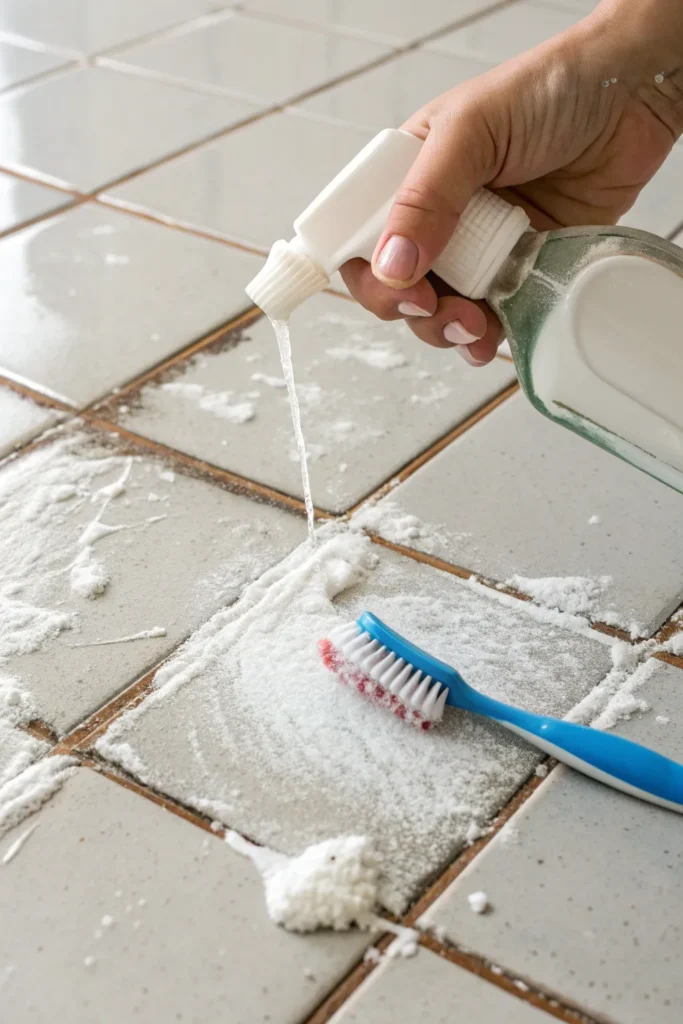
This is the most popular method for good reason. It works on almost all grout stains and is completely safe.
The process:
Step 1: Make a thick paste (2 minutes)
Mix baking soda with just enough water to make a thick paste. It should be like peanut butter—spreadable but not runny.
You’ll need about 1/2 cup of baking soda for an average kitchen floor. Make more if needed.
Step 2: Apply to grout lines (5-10 minutes)
Use your finger, an old toothbrush, or a small spatula to spread paste along all the grout lines.
Don’t worry about getting it on the tiles. It won’t hurt them and wipes off easily.
Step 3: Let it sit (15-30 minutes)
Give the baking soda time to penetrate the grout and start breaking down dirt. For really dirty grout, wait 30 minutes or longer.
While you wait, you can prep the vinegar spray.
Step 4: Spray with vinegar
Fill a spray bottle with white vinegar. Spray it directly on the baking soda paste.
It will fizz and bubble. That’s the chemical reaction working. The fizzing helps lift dirt from deep in the grout.
Step 5: Scrub the grout lines (10-20 minutes)
Use a stiff brush to scrub along each grout line. Work in small sections. Scrub back and forth along the grout, not across it.
You’ll see the paste turning brown or gray as it pulls out dirt. Keep scrubbing until you’ve done all the grout.
Step 6: Wipe clean (5 minutes)
Use a damp cloth to wipe away the dirty paste. Rinse the cloth frequently in clean water.
Step 7: Mop with clean water (5 minutes)
Go over the floor with clean water to remove any residue. Let it dry.
Total time: About 45 minutes to 1 hour for an average kitchen floor. Active scrubbing time is only 10-20 minutes.
Method 2: Hydrogen Peroxide Spray (For Whitening and Mold)
Hydrogen peroxide is a natural bleaching agent. It whitens grout without the harshness of chlorine bleach.
What you need:
- Hydrogen peroxide (3%)
- Baking soda
- Spray bottle
- Scrub brush
The process:
Step 1: Make the spray (2 minutes)
Fill a spray bottle with hydrogen peroxide. You can use it straight or mix it half-and-half with water for light stains.
For extra power, add 1 tablespoon of baking soda per cup of peroxide. Shake gently.
Step 2: Spray the grout lines
Spray generously on all grout lines. Make sure it’s thoroughly wet.
Step 3: Let it sit (10-30 minutes)
The peroxide needs time to work. For light stains, 10 minutes is enough. For mold or heavy staining, wait 30 minutes or longer.
You might see it bubbling slightly. That’s the peroxide working.
Step 4: Scrub if needed
For stubborn stains, scrub with a brush. For light cleaning, you might not need to scrub at all.
Step 5: Wipe and rinse
Wipe with a damp cloth and rinse with clean water.
Why this works great:
- Kills mold and mildew naturally
- Whitens without chlorine
- No toxic fumes
- Safe for all grout types
Total time: 20-40 minutes, most of it waiting.
Method 3: Dish Soap and Baking Soda (For Greasy Kitchen Grout)
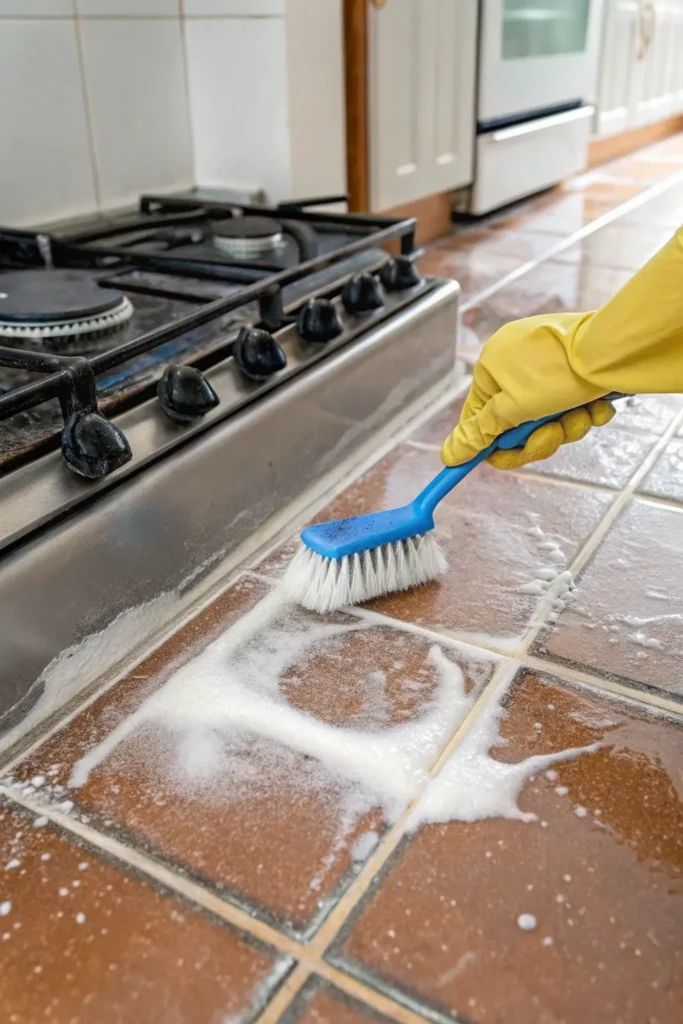
Kitchen floors get cooking grease on them. This method is specifically designed to cut through that oily grime.
What you need:
- Baking soda
- Dish soap (Dawn works best)
- Hot water
- Scrub brush
The process:
Step 1: Make cleaning paste
Mix 1/2 cup baking soda with 1/4 cup dish soap. Add just enough hot water to make a paste.
Step 2: Apply to grout
Spread the paste on grout lines with a brush or your fingers.
Step 3: Let it work (10-15 minutes)
The dish soap needs time to break down the grease.
Step 4: Scrub thoroughly
Use a stiff brush to scrub each grout line. The combination of baking soda abrasion and soap degreasing works wonders.
Step 5: Rinse well
Wipe with a damp cloth, then mop with clean water. Soap residue attracts dirt, so rinse thoroughly.
Perfect for:
- Grout near the stove
- High-traffic kitchen areas
- Floors with lots of cooking grease
Total time: 30-40 minutes.
Method 4: Steam Cleaning (No Chemicals at All)
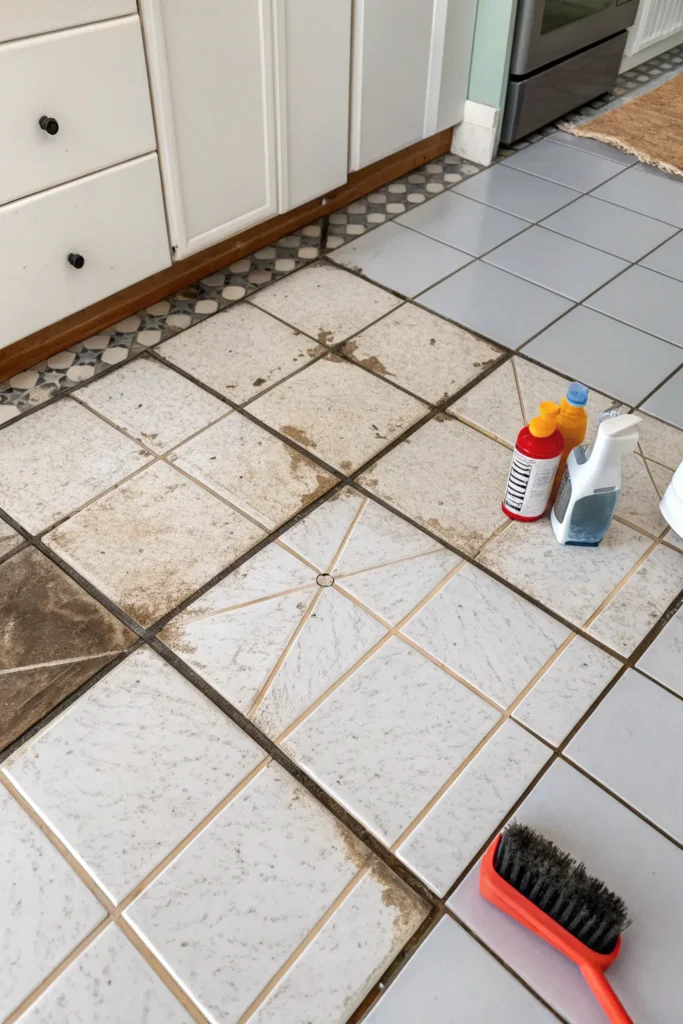
If you have a steam mop or steam cleaner, this is the easiest method. Pure heat and water clean grout naturally.
What you need:
- Steam mop or handheld steam cleaner
- Microfiber cloth
The process:
Step 1: Prep the floor
Sweep or vacuum to remove loose dirt.
Step 2: Steam the grout lines
Move the steam mop slowly along grout lines. Hold it in place for a few seconds on stubborn spots.
For a handheld steamer, use the brush attachment and work in small sections.
Step 3: Wipe immediately
Use a microfiber cloth to wipe up the loosened dirt while it’s still wet.
Step 4: Go over problem areas twice
Really dirty grout might need a second pass.
Why steam works:
- Heat kills mold and bacteria
- Loosens dirt from pores
- No chemicals needed
- Quick and effective
- Sanitizes as it cleans
Total time: 15-30 minutes for most kitchen floors.
Method 5: Lemon Juice and Borax (Natural Whitening Power)
This combination is great for whitening dingy grout and has natural antibacterial properties.
What you need:
- Fresh lemon juice (or bottled)
- Borax
- Scrub brush
The process:
Step 1: Make a paste
Mix equal parts lemon juice and borax to form a paste. About 1/4 cup of each works well.
Step 2: Apply to grout
Spread the paste along grout lines.
Step 3: Wait 15-20 minutes
Let the citric acid and borax work on the stains.
Step 4: Scrub
Use a stiff brush to scrub the grout lines.
Step 5: Rinse thoroughly
Wipe clean with a damp cloth and mop with water.
Bonus: Your kitchen will smell like fresh lemons instead of chemicals.
Total time: 30-40 minutes.
The Oxygen Bleach Method (For Severe Staining)
Oxygen bleach (like OxiClean) is chemical but much gentler than chlorine bleach. It’s a good middle ground when natural methods aren’t enough.
What you need:
- Oxygen bleach powder
- Warm water
- Scrub brush
The process:
Step 1: Mix the solution
Follow package directions. Usually it’s 1-2 tablespoons per gallon of warm water.
Step 2: Apply to grout
You can either mop it on or make a paste and apply it directly to grout lines.
Step 3: Wait 15-30 minutes
Don’t let it dry completely. Re-wet if needed.
Step 4: Scrub
Use a brush on the grout lines.
Step 5: Rinse well
Mop with clean water multiple times to remove all residue.
Why it’s better than chlorine bleach:
- Doesn’t weaken grout
- No toxic fumes
- Color-safe
- Gentler on hands
Total time: 45 minutes to 1 hour.
Tips for Easier Cleaning
Make it less exhausting:
Work in sections:
- Don’t try to do the whole floor at once
- Do 3-4 square feet at a time
- Take breaks
- Spread the work over several days if needed
Use the right brush:
- Grout brushes are specifically angled for this job
- Old toothbrushes work for small areas
- Electric scrub brushes save your arms
Protect your knees:
- Use knee pads or a cushion
- Or use a mop with a grout brush attachment
- Some people prefer to sit and scoot
Get help:
- Kids can help apply paste
- Partners can scrub while you wipe
- Trade sections to avoid fatigue
Choose the right time:
- Clean when the floor can dry for a few hours
- Don’t do it right before cooking dinner
- Weekend mornings work well
How to Deep Clean vs. Maintain
For first-time deep cleaning:
- Use the baking soda and vinegar method
- Might need to do it twice
- Plan for 1-2 hours
- Do it in sections over a weekend
For regular maintenance:
- Quick hydrogen peroxide spray weekly
- Or steam mop grout lines
- Takes 10-15 minutes
- Prevents heavy buildup
Monthly routine:
- Baking soda paste on high-traffic areas
- Quick scrub
- 20-30 minutes
As needed:
- Spot treat stains when they happen
- Don’t let spills sit
- Quick wipe prevents deep staining
Regular light cleaning is easier than infrequent deep cleaning.
Different Grout Colors Need Different Approaches
White or light grout:
- Can use all methods
- Hydrogen peroxide whitens beautifully
- Shows dirt easily but responds well to cleaning
Dark or colored grout:
- Avoid hydrogen peroxide (can lighten it)
- Use baking soda and vinegar
- Dish soap method works great
- Steam cleaning is perfect
Epoxy grout:
- Less porous than regular grout
- Doesn’t stain as easily
- Simple soap and water often enough
- Don’t need harsh methods
Unsealed grout:
- More porous and stains easily
- Clean it, then seal it
- All natural methods are safe
When to Seal Grout
Sealing grout after cleaning makes future cleaning much easier.
Why seal:
- Creates a barrier against stains
- Repels water and oil
- Makes mopping more effective
- Extends grout life
When to seal:
- After deep cleaning
- When grout is completely dry (wait 24-48 hours)
- Every 1-2 years
- After any grout repairs
How to seal:
- Buy grout sealer at hardware store
- Apply with small brush or applicator
- Wipe excess off tiles immediately
- Let dry 24 hours before walking on it
Sealed grout might only need steam cleaning or simple mopping to stay clean.
What Doesn’t Work (Save Your Time)
Magic erasers on grout:
- Work okay on tiles
- Too soft for grout
- Fall apart quickly
- Expensive for large areas
Straight vinegar without baking soda:
- Can damage some grout over time
- Not as effective alone
- Especially bad for natural stone
Cola or other sodas:
- Internet myth
- Sticky mess
- Attracts ants
- Don’t waste your Coke
Pressure washing indoors:
- Water damage risk
- Can erode grout
- Makes a huge mess
- Only for outdoor tile
Just mopping harder:
- Doesn’t clean grout
- Only cleans tile surface
- Wastes your energy
Stick to proven methods that actually work.
Dealing with Mold and Mildew
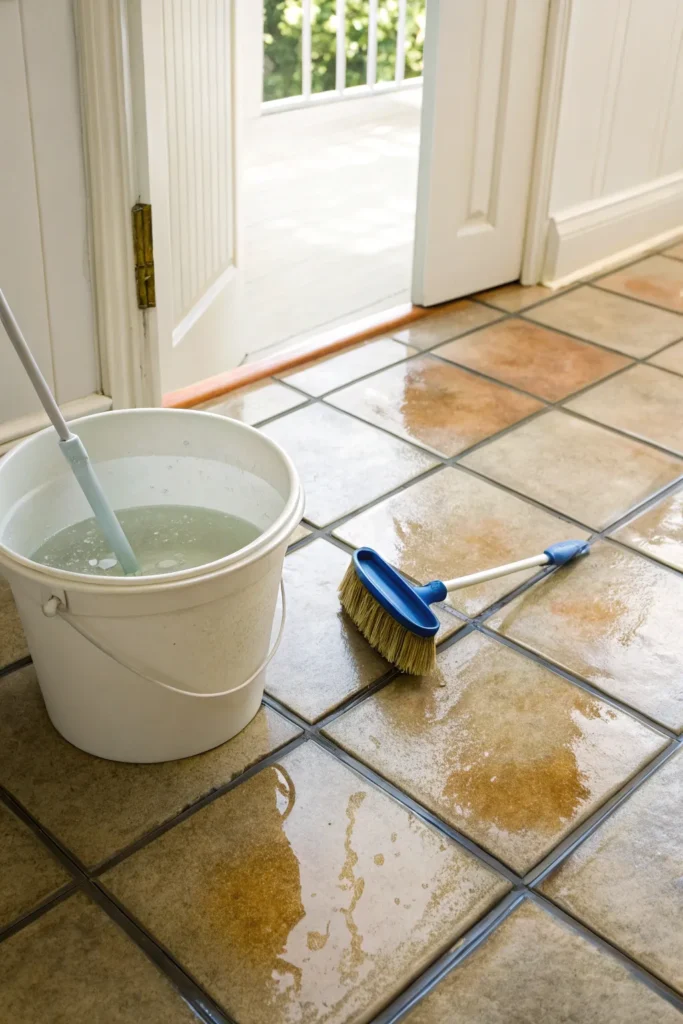
Grout in damp areas can develop mold. Here’s how to handle it naturally.
For mold:
Hydrogen peroxide method:
- Spray straight 3% hydrogen peroxide
- Let sit 30 minutes
- Scrub with brush
- Kills mold naturally
Baking soda and peroxide paste:
- Mix into thick paste
- Apply to moldy grout
- Wait 30-60 minutes
- Scrub thoroughly
- Rinse well
Tea tree oil (for stubborn mold):
- Mix 1 teaspoon tea tree oil with 1 cup water
- Spray on grout
- Don’t rinse (it keeps working)
- Smell fades as it dries
Prevention:
- Keep kitchen well-ventilated
- Fix leaks immediately
- Dry up spills quickly
- Use exhaust fan when cooking
The Bottom Line
Clean grout doesn’t require harsh chemicals. Simple, natural ingredients work just as well—often better.
Best methods ranked:
For regular cleaning:
- Hydrogen peroxide spray (easiest)
- Steam cleaning (no chemicals)
- Baking soda and vinegar (most versatile)
For heavy staining:
- Baking soda and vinegar paste (best all-around)
- Oxygen bleach (when natural isn’t enough)
- Multiple treatments (patience beats chemicals)
For grease:
- Dish soap and baking soda (specifically for oil)
- Steam cleaning (heat cuts grease)
For mold:
- Hydrogen peroxide (kills mold naturally)
- Tea tree oil spray (prevents return)
What you need:
- Baking soda (under $2)
- White vinegar (under $3)
- Hydrogen peroxide (under $2)
- Scrub brush (under $5)
- Total: less than $12
How long it takes:
- First deep clean: 1-2 hours
- Regular maintenance: 15-20 minutes
- Spot cleaning: 5 minutes
The secret:
- Let the cleaner sit and work
- Don’t rush the scrubbing
- Rinse thoroughly
- Seal grout after cleaning
What works:
- Baking soda (gentle scrubbing)
- Vinegar (dissolves buildup)
- Hydrogen peroxide (whitens and kills mold)
- Patience (chemistry takes time)
What doesn’t work:
- Pure muscle power without chemistry
- Harsh chemicals (damage grout long-term)
- Mopping alone (doesn’t reach into grout)
- Giving up (grout can almost always be cleaned)
Start today:
- Pick one small area to test
- Make baking soda paste
- Apply, wait, scrub, rinse
- See the dramatic difference
- Expand to the rest of your floor
Your grout can look new again. You don’t need toxic chemicals, expensive products, or professional cleaning services.
Just baking soda, vinegar, a brush, and some elbow grease. Your kitchen floor will transform, and you can feel good knowing you did it safely and naturally.
Stop ignoring those dingy grout lines. Mix up some baking soda paste right now and tackle just one small section. Once you see how well it works, you’ll be motivated to finish the whole floor.