

15 Indoor Herb Garden Ideas for Fresh Flavors at Home
Growing herbs indoors is one of the most rewarding ways to bring freshness, fragrance, and flavor into your home.
Whether you live in an apartment, a small house, or simply want herbs close to your kitchen, an indoor herb garden makes everyday cooking feel more intentional and enjoyable. Beyond convenience, herbs also add greenery, improve air quality, and bring a calm, lived-in beauty to your space.
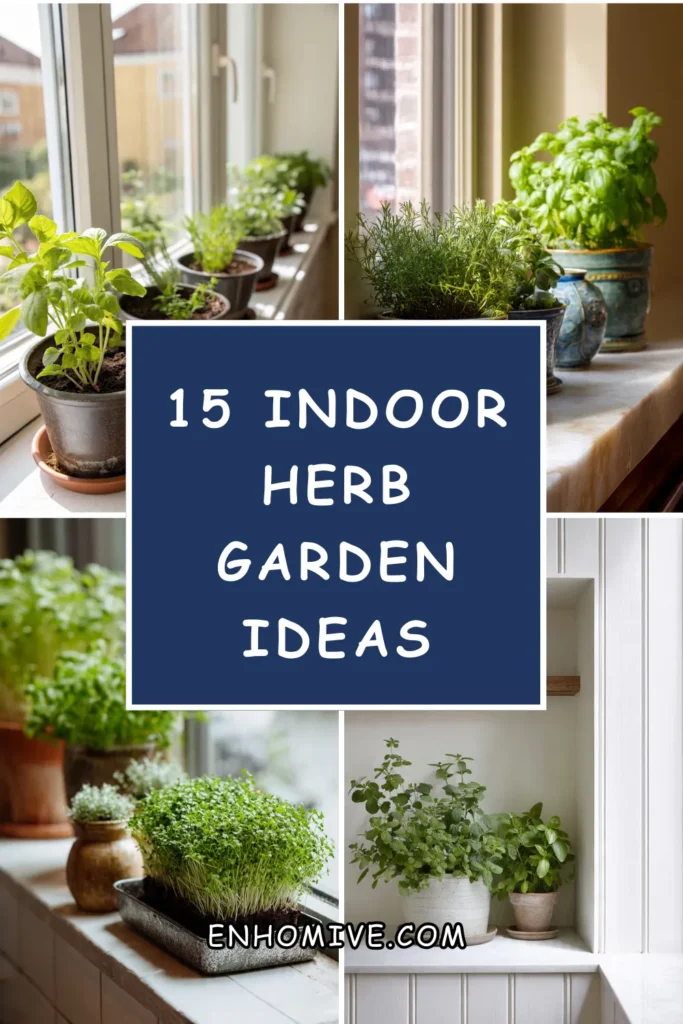
Indoor herb gardening doesn’t require a large area or advanced skills. With the right setup, light, and care, you can enjoy fresh basil, mint, rosemary, and more throughout the year. These 15 indoor herb garden ideas are designed to be practical, stylish, and adaptable to different homes, helping you grow herbs successfully while enhancing your interior.
1. Sunny Kitchen Windowsill Herb Garden
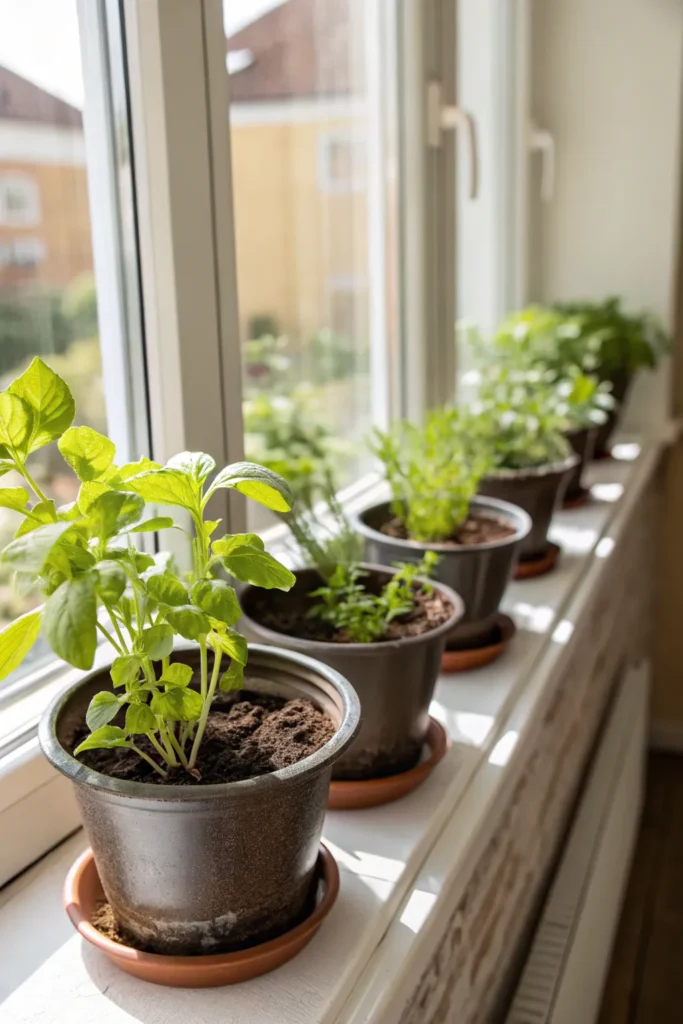
A kitchen windowsill is one of the most natural places to grow herbs indoors. Positioned near sunlight and close to where you cook, it offers convenience and ideal growing conditions. Small pots lined neatly along the sill can hold basil, parsley, chives, and cilantro.
This setup works best with south- or west-facing windows that receive several hours of sunlight daily. Choose lightweight pots with drainage holes and place saucers underneath to protect surfaces. The visual effect is charming and practical, turning an ordinary window into a productive green zone.
2. Countertop Herb Station Near the Stove
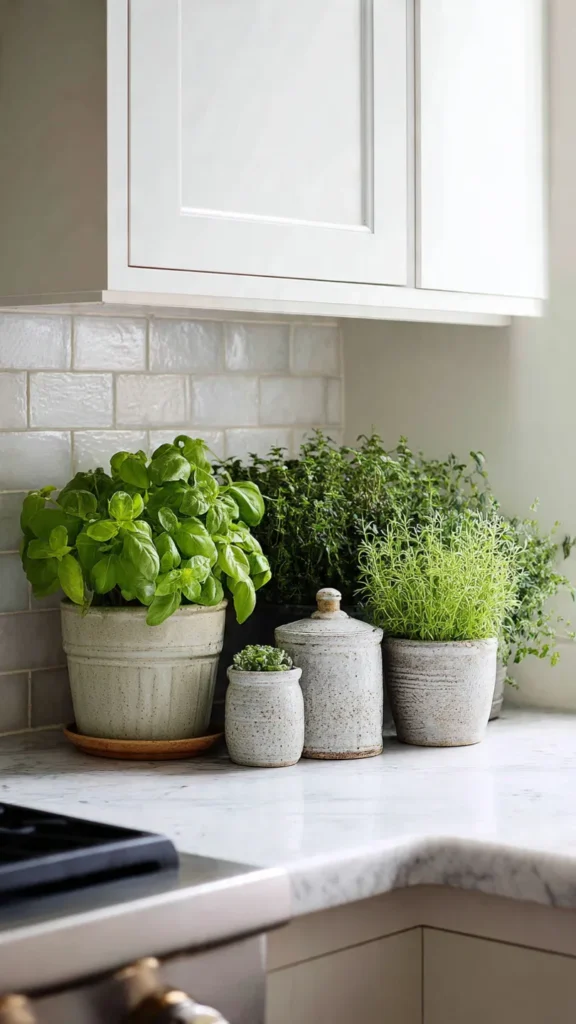
A countertop herb garden keeps fresh flavors within arm’s reach while cooking. Compact pots or a slim herb tray can sit neatly beside the stove or prep area, making it easy to snip herbs as needed.
This idea works especially well for herbs you use often, such as thyme, oregano, or basil. Good airflow and regular watering are essential, as kitchen heat can dry soil quickly. The result is a functional, lived-in kitchen detail that blends beauty with everyday use.
3. Wall-Mounted Herb Planters

Wall-mounted herb gardens are perfect for homes with limited counter space. Vertical planters or small wall shelves allow you to grow multiple herbs without cluttering work surfaces.
Mounted near a window or under a grow light, this setup turns herbs into living decor. It also improves air circulation around plants and makes harvesting easy. Choose lightweight containers and ensure secure mounting to keep everything safe and stable.
4. Open Shelf Herb Display
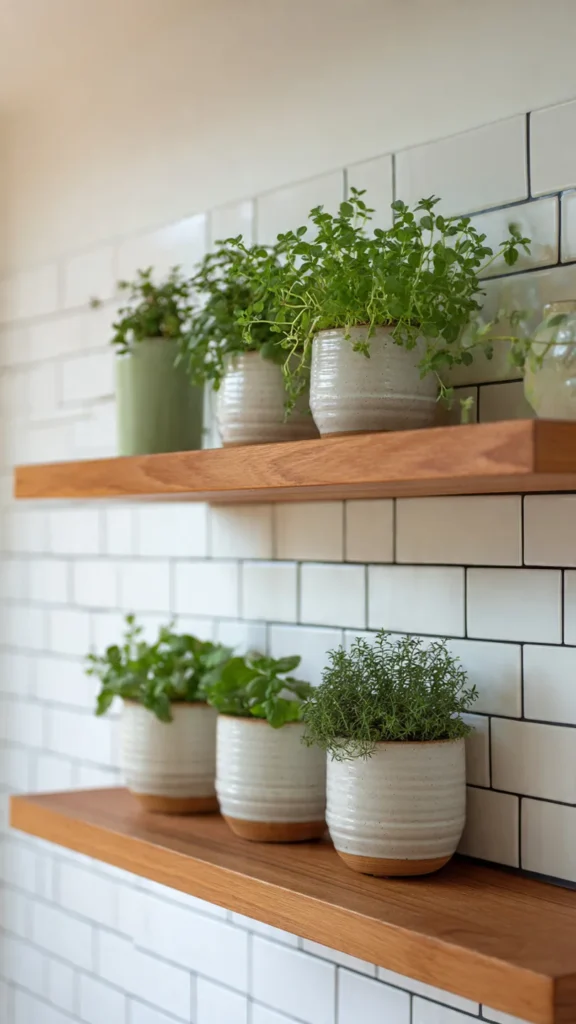
Open shelving provides a stylish way to display herbs while keeping them accessible. Placing potted herbs on kitchen shelves creates a layered, organic look that softens hard surfaces.
This idea works best with uniform pots to keep the display cohesive. Rotate plants occasionally so they receive even light, and avoid overcrowding shelves. The combination of greenery and practical storage creates a relaxed, designer-inspired kitchen feel.
5. Hanging Herb Garden by the Window
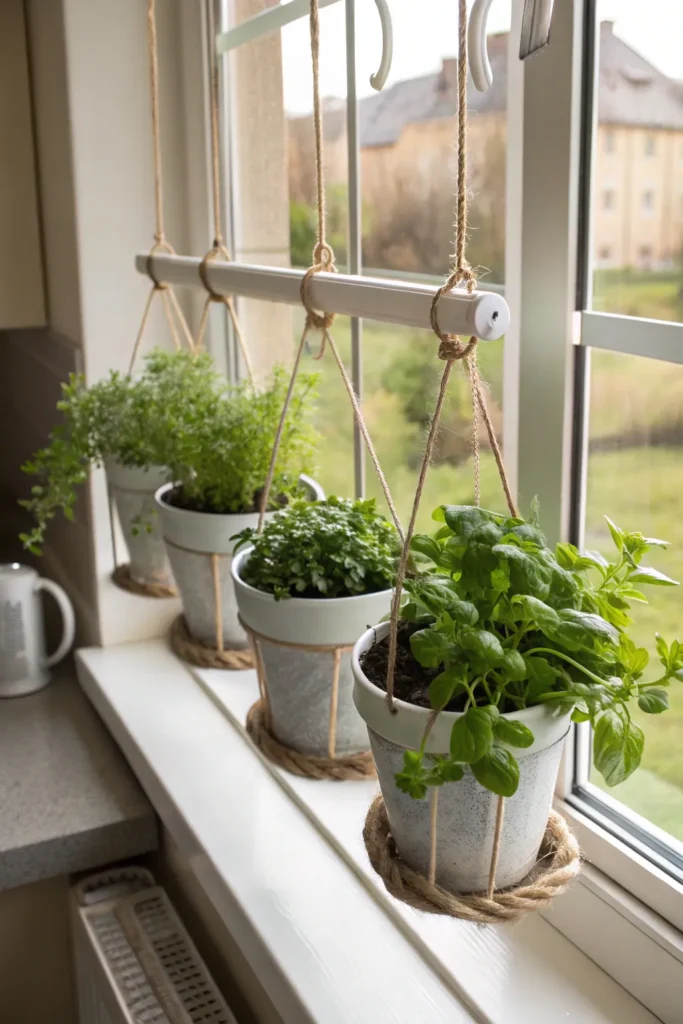
Hanging planters are an excellent option for maximizing vertical space. Suspended near a bright window, herbs receive good light while staying off counters and shelves.
This approach works well for trailing herbs like mint or compact varieties like thyme. Make sure hanging containers are lightweight and have proper drainage. The gentle movement of hanging plants also adds a dynamic, airy quality to the room.
6. Indoor Herb Garden with Grow Lights
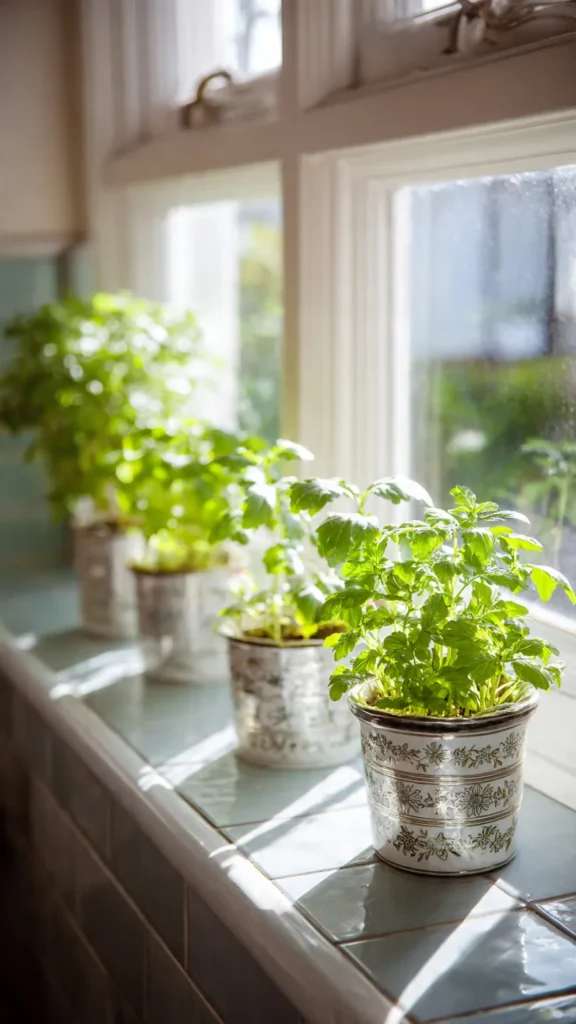
Not every home has strong natural light, and that’s where grow lights make a difference. Compact LED grow lights allow herbs to thrive year-round, even in darker kitchens or interior rooms.
Grow lights can be mounted under cabinets, on shelves, or integrated into dedicated herb stands. They provide consistent light and help prevent leggy growth. This setup is ideal for serious home cooks who want reliable, healthy herbs regardless of season.
7. Herb Garden in Decorative Ceramic Pots

Using decorative ceramic pots elevates an indoor herb garden from purely functional to visually refined. Coordinated colors, textures, or finishes can complement your kitchen or living space.
Ceramic pots retain moisture well, which benefits many herbs. Just ensure they have drainage holes or use inner nursery pots. This idea allows herbs to blend seamlessly into your decor while still serving a practical purpose.
8. Minimalist Herb Garden Tray
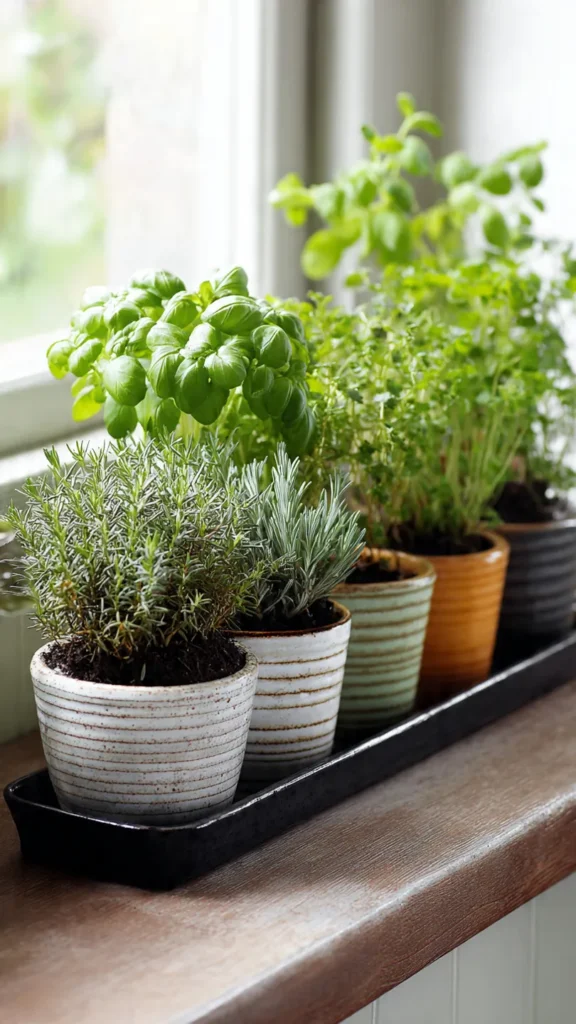
A simple herb tray groups several small pots together, creating a clean, organized look. This setup works well on countertops, islands, or dining sideboards.
Trays make watering easier by catching excess moisture and help define the herb garden as a single design element. Choose a tray material that complements your space, such as wood for warmth or metal for a modern touch.
9. Indoor Herb Garden on a Rolling Cart
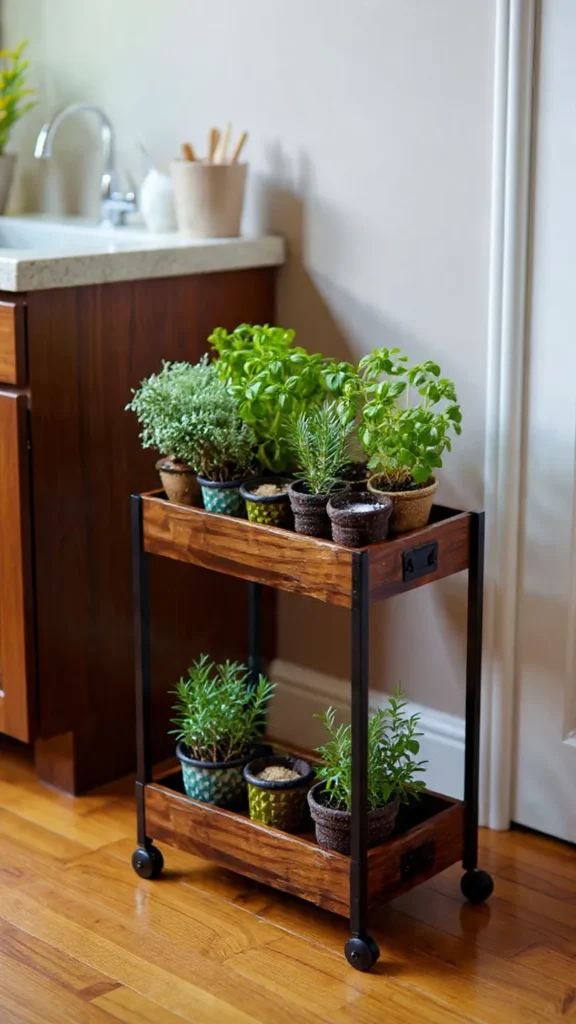
A rolling cart offers flexibility and convenience. You can move your herb garden to follow sunlight throughout the day or reposition it for cleaning and entertaining.
This idea works especially well in apartments or multipurpose spaces. A two- or three-tier cart can hold multiple herbs while keeping them organized. It also creates a mobile green feature that adapts to your lifestyle.
10. Herb Garden in the Dining Area

Growing herbs in the dining area may seem unexpected, but it can be both practical and decorative. Herbs like rosemary or bay add fragrance and visual interest to the space.
Place them near a window or use subtle grow lighting. This idea connects food, plants, and gathering spaces, reinforcing a natural, welcoming atmosphere that feels thoughtful and intentional.
11. Built-In Herb Niche
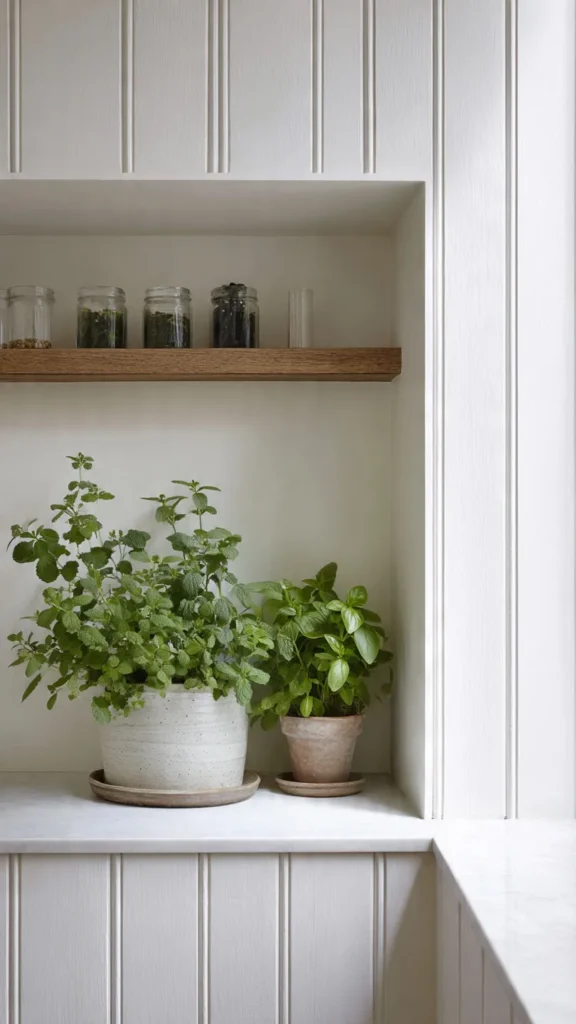
If your home allows, a small built-in niche or recessed shelf can become a dedicated herb garden. This architectural approach feels custom and refined while keeping plants protected.
A built-in herb niche works well near the kitchen or dining area. It provides structure, prevents clutter, and highlights herbs as an integral part of the home rather than an afterthought.
12. Bathroom Herb Garden for Humidity-Loving Plants
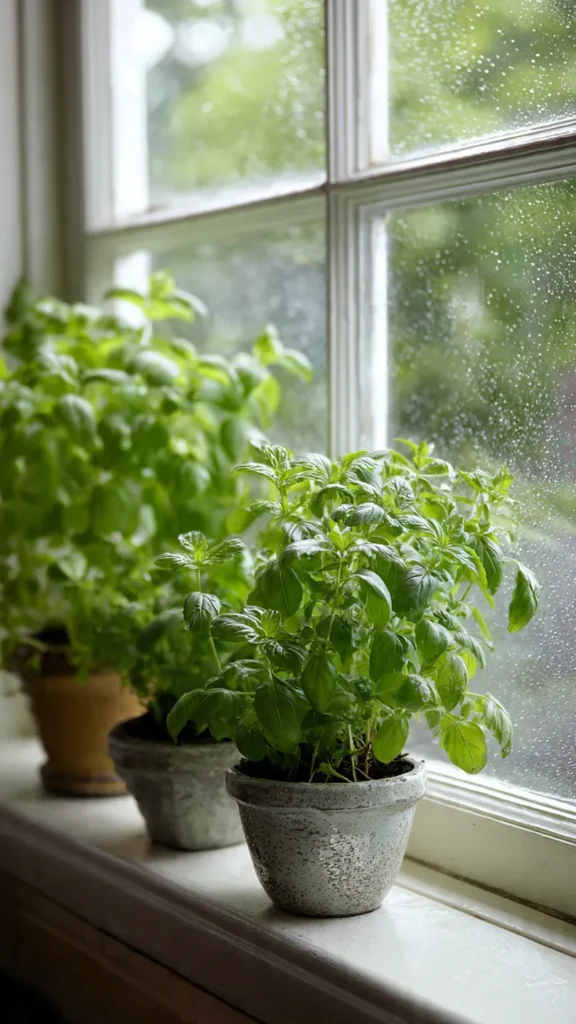
Bathrooms with windows can support certain herbs that enjoy humidity, such as mint or basil. Placing herbs on a windowsill or shelf adds freshness to the space.
This idea brings greenery into an often-overlooked area and improves air quality. Just ensure the herbs receive enough light and are not exposed to extreme temperature changes.
13. Herb Garden with Labeled Pots
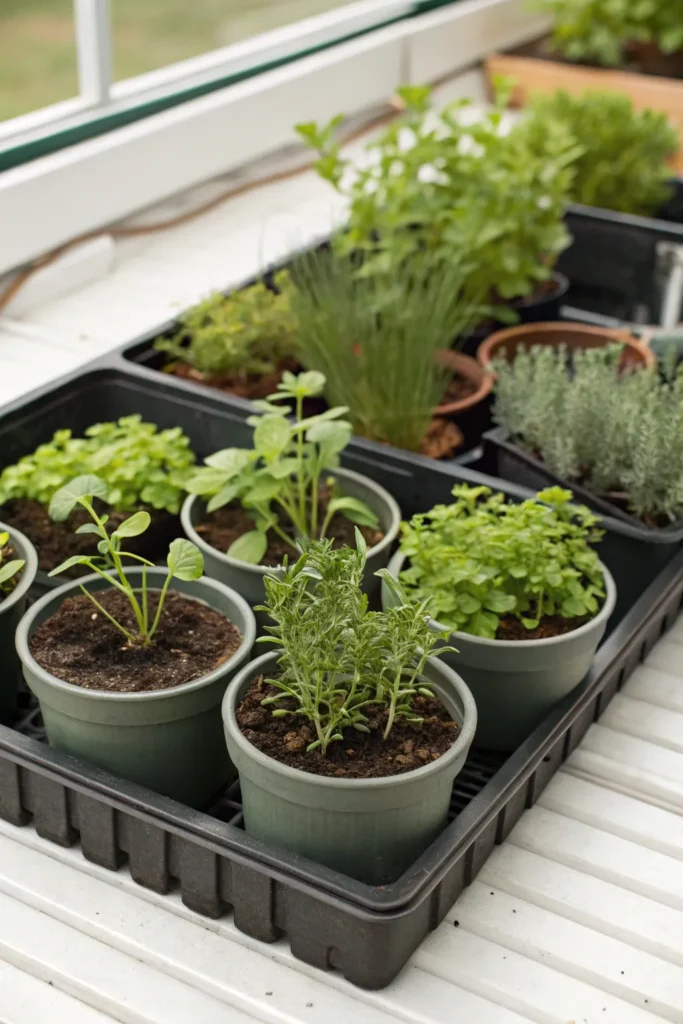
Labeling herb pots helps with organization and care, especially if you grow many varieties. Simple plant markers or subtle labels add charm while making identification easy.
This is particularly useful for beginners learning herb care. Labels also add a thoughtful, curated look that makes the herb garden feel intentional and well maintained.
14. Seasonal Herb Rotation Indoors
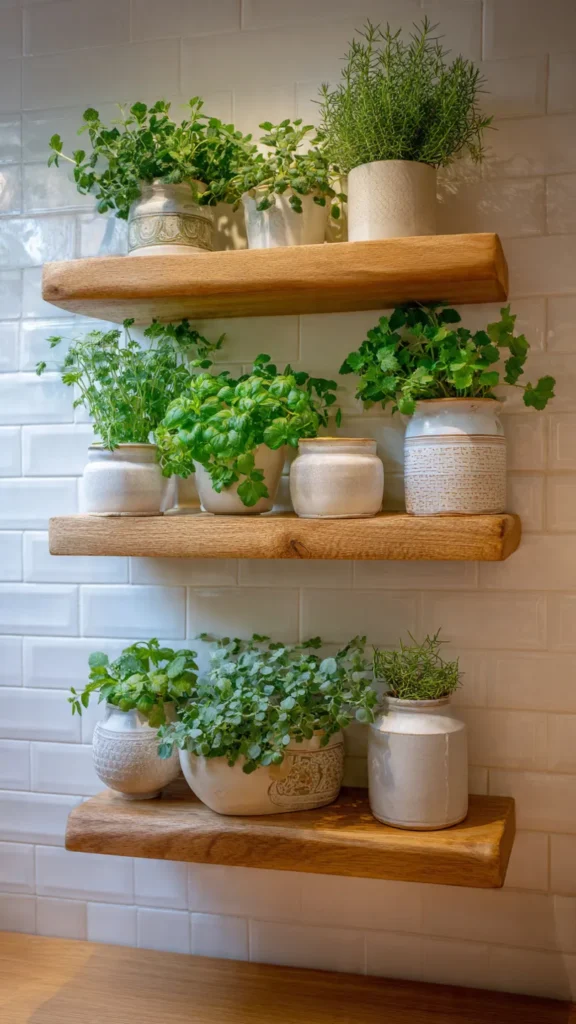
Rotating herbs seasonally keeps your indoor garden productive and fresh. Some herbs thrive in cooler months, while others prefer warmth and longer daylight hours.
By adjusting your selection throughout the year, you maintain healthy plants and consistent flavor. This approach encourages mindful gardening and helps you understand each herb’s growing needs.
15. Mixed Herb and Microgreen Setup

Combining herbs with microgreens maximizes variety in a small space. Microgreens grow quickly and can be harvested frequently, making them a great complement to longer-growing herbs.
This setup works well with shallow trays and compact lighting. It provides fresh flavors for salads, garnishes, and everyday cooking, all within a small, efficient indoor garden.
Caring for Indoor Herbs Successfully
Indoor herb gardens thrive with consistent care. Most herbs need bright light, regular watering, and good airflow. Avoid overwatering by checking soil moisture before adding water, and trim herbs frequently to encourage healthy growth.
Using quality potting soil and containers with drainage helps prevent root issues. With a little attention, indoor herbs can remain productive and beautiful for months.
Why Indoor Herb Gardens Are Worth It
Indoor herb gardens offer convenience, freshness, and a deeper connection to your food. They reduce waste, save money, and bring a sense of calm into your home. Even a small setup can make cooking more enjoyable and interiors more alive.
By choosing the right indoor herb garden idea for your space, you can enjoy fresh flavors year-round while adding natural beauty to your everyday environment.