
15 Living Room Wall Decor Ideas to Elevate Your Space
Your living room walls are the largest uninterrupted surfaces in your home, which means they carry enormous visual and emotional weight. They shape how light moves, how spacious the room feels, how cozy it becomes at night, and how your personality is expressed to anyone who enters. Wall décor is not just about hanging art — it is about creating rhythm, balance, warmth, and identity. A well-designed wall can make a modest room feel intentional, a large room feel intimate, and a plain space feel rich with story.
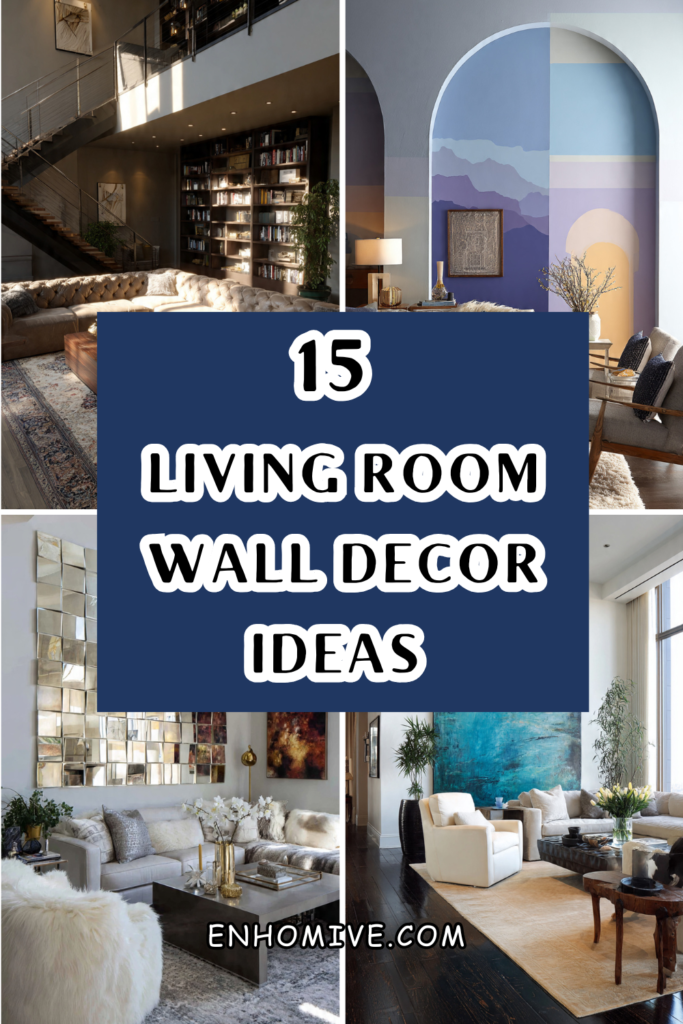
Below are 15 deeply developed wall décor ideas that explore not only what to put on your walls, but how to place it, how it affects mood and perception, and how to style it thoughtfully so your living room feels complete and alive.
1. The Layered Gallery Wall
A layered gallery wall is one of the most expressive and personal ways to decorate your living room. It allows you to combine artwork, photography, typography, textiles, and small objects into a visual story. Unlike strict grid gallery walls, a layered approach feels organic and relaxed. Frames may overlap slightly, vary in size, and be arranged by eye rather than ruler.
This type of wall creates visual depth, which makes the room feel more dynamic and lived-in. It also invites people to come closer, explore individual pieces, and engage with your space on a personal level. You can include family photos, travel memories, vintage prints, children’s art, or even handwritten notes framed like artwork.
Styling tip: Start with a central anchor piece and build outward, keeping 2–3 inches between frames for breathing room.
Psychology note: Layered walls feel comforting because they mimic the visual richness of lived spaces like libraries, cafés, and old homes.
2. Oversized Statement Art
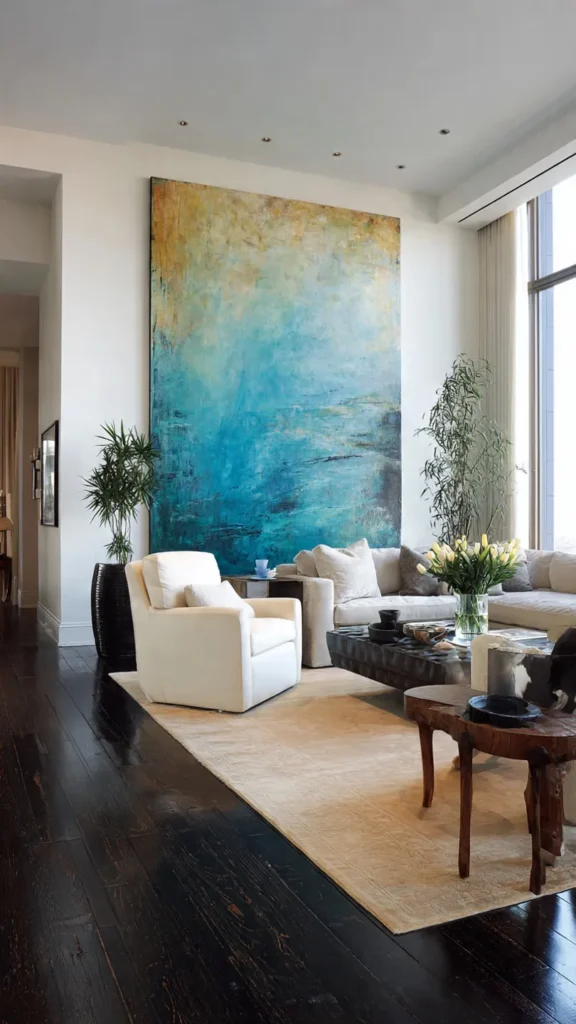
One large piece of art can replace ten small ones. Oversized art gives your living room a clear focal point and emotional direction. Whether it’s an abstract painting, landscape photograph, or textile piece, large art simplifies your wall while still making a strong impact.
This approach is ideal for minimalist or modern spaces where you want drama without clutter. It also works beautifully above sofas, fireplaces, or consoles where a single piece can anchor the furniture visually.
Styling tip: Choose art that is at least two-thirds the width of the sofa beneath it for proper scale.
Lighting tip: Add a picture light or subtle spotlight to elevate the artwork in the evening.
3. Textured Wall Treatments
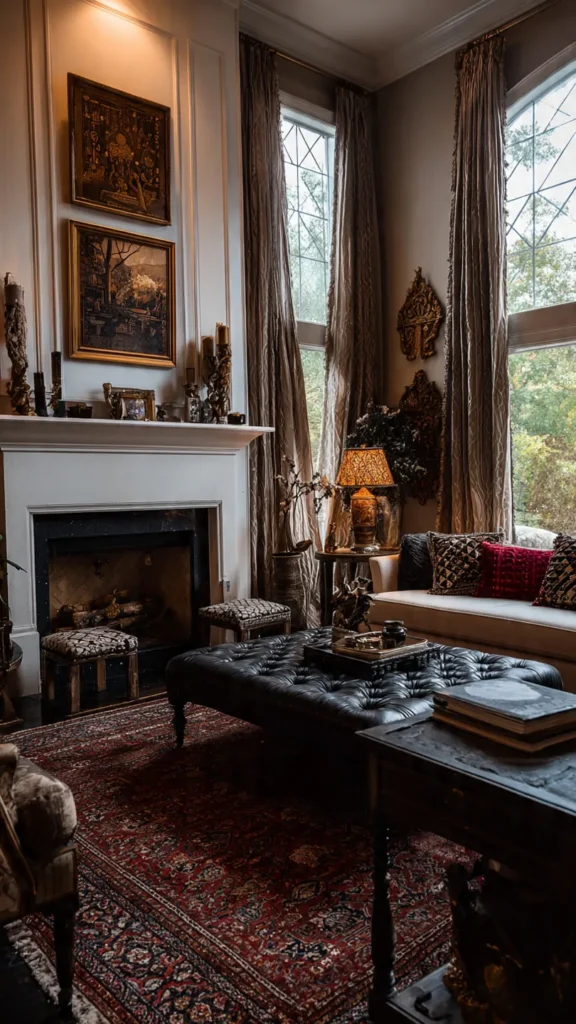
Texture adds depth even without color or pattern. Wood slats, limewash paint, plaster finishes, fluted panels, or fabric-covered walls turn flat surfaces into sensory experiences.
Textured walls catch light differently throughout the day, creating movement and softness. They are especially powerful in neutral spaces where color is restrained.
Styling tip: Pair textured walls with simple furniture so the wall itself becomes the feature.
Acoustic benefit: Fabric and wood textures help absorb sound, making large living rooms feel quieter and more intimate.
4. Floating Shelves with Styled Objects
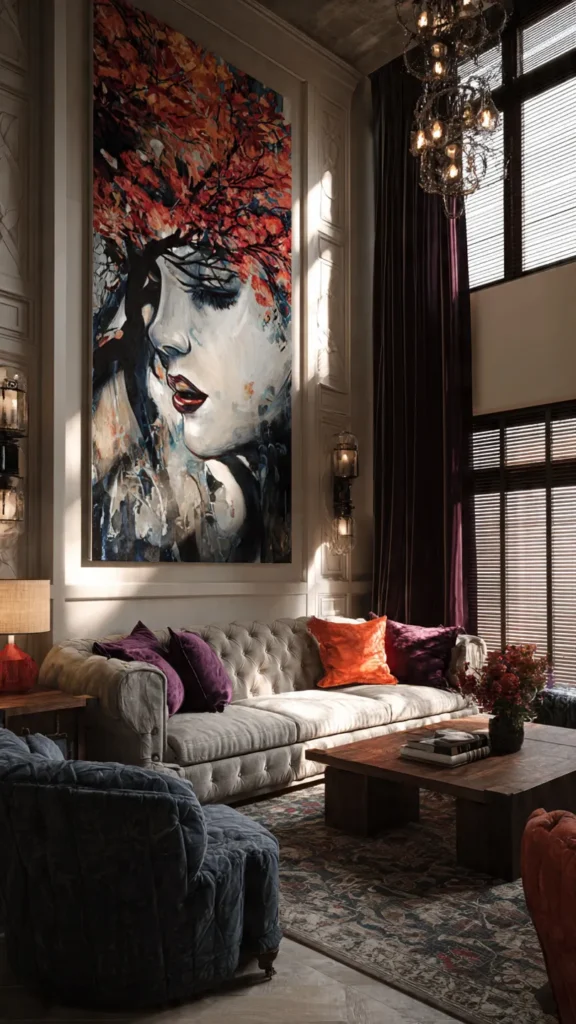
Floating shelves combine function and décor. They allow you to display books, plants, ceramics, and personal items while still feeling light and airy.
Unlike cabinets, shelves do not visually close off the wall, which keeps the room feeling open. They are also flexible — you can change the styling seasonally or whenever you crave something new.
Styling tip: Follow the rule of threes when styling shelves and vary height, shape, and texture.
Mistake to avoid: Overcrowding shelves makes the wall feel cluttered and chaotic.
5. Vertical Plant Displays
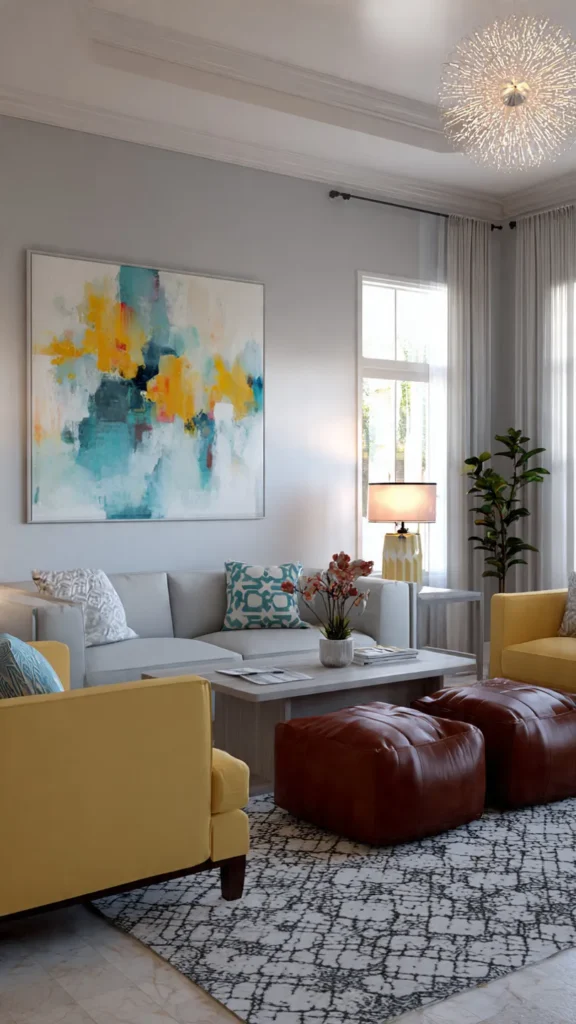
Plants on walls bring movement, life, and emotional calm into the living room. Vertical planters, wall-mounted pots, or trailing vines soften architectural lines and add freshness.
This approach is especially powerful in urban homes where access to nature is limited.
Styling tip: Mix trailing plants with upright ones for layered depth.
Health note: Indoor plants can improve air quality and reduce stress.
6. Mirrors as Functional Art
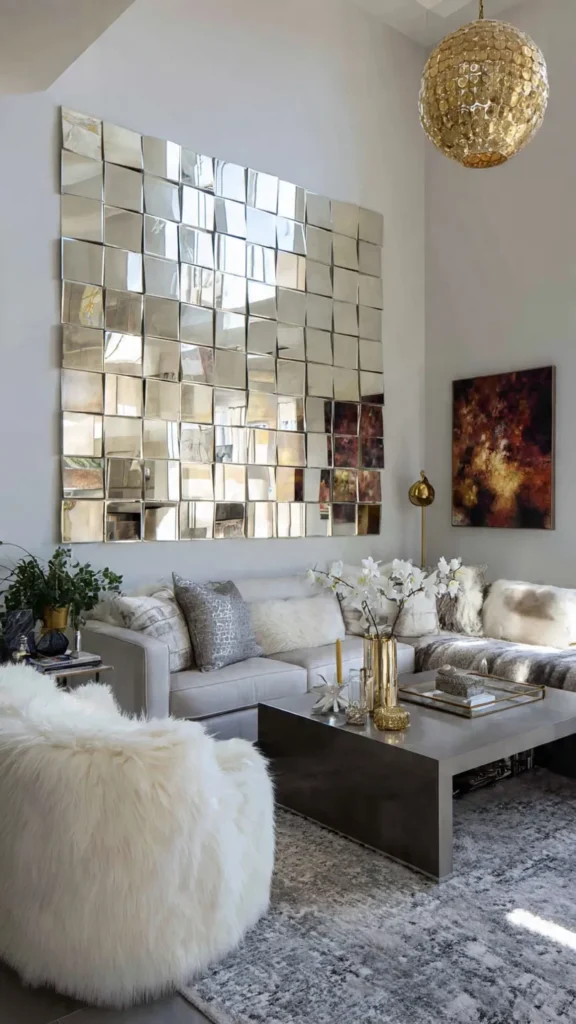
Mirrors are one of the most powerful wall décor tools because they reflect light and visually expand space. A large mirror can double the perceived size of a small living room and brighten dark corners.
Decorative frames allow mirrors to function as artwork as well as functional pieces.
Styling tip: Position mirrors opposite windows or lamps to maximize reflected light.
7. Sculptural Wall Art
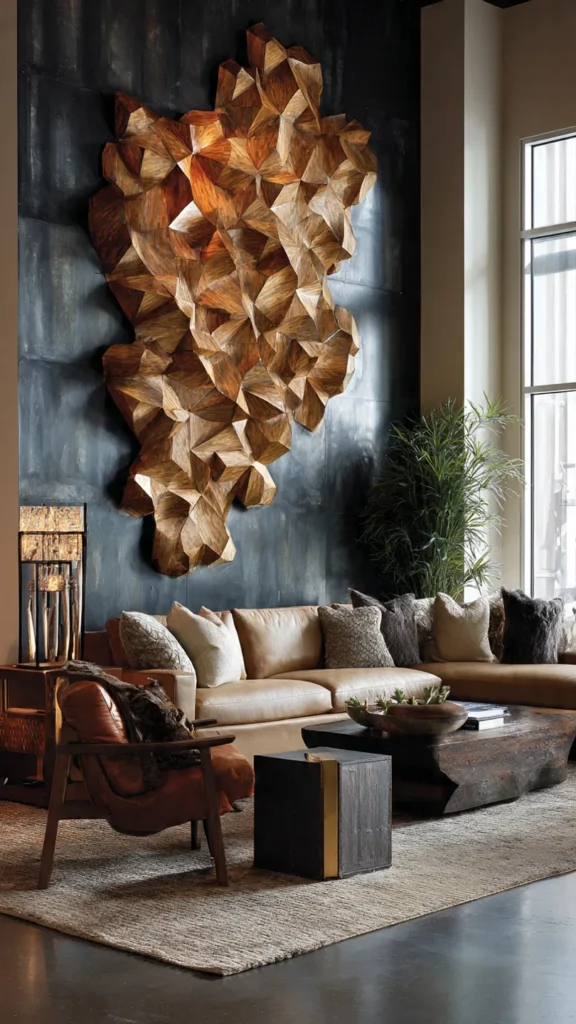
Three-dimensional wall art adds drama and tactile interest. Sculptures, ceramic installations, metal shapes, or layered wooden forms make walls feel alive.
These pieces work well in modern, contemporary, or artistic homes.
Styling tip: Let sculptural art breathe — avoid surrounding it with too many flat pieces.
8. Wallpaper Feature Walls
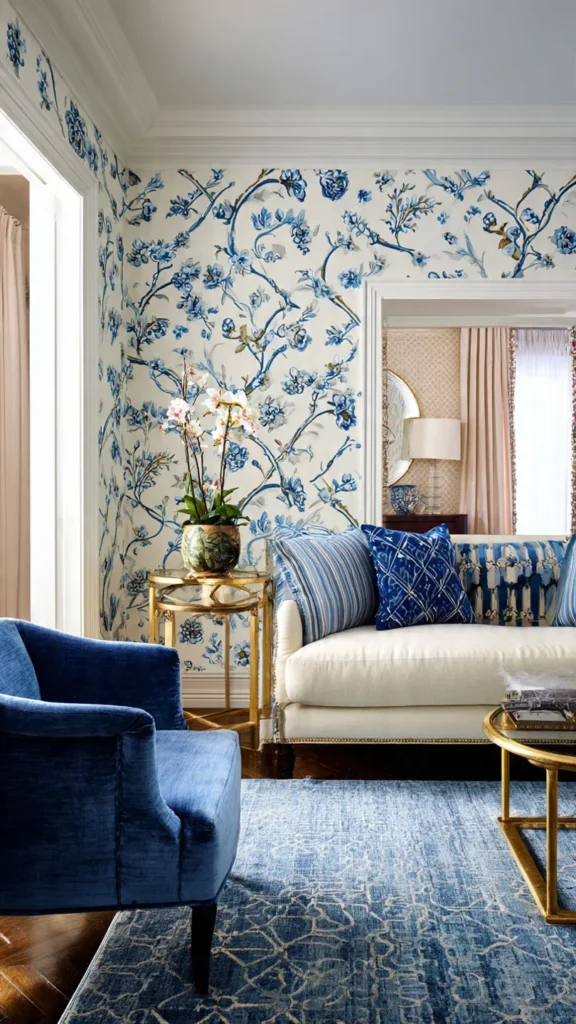
Wallpaper introduces pattern, color, and mood without overwhelming the entire room. A single wallpapered wall can transform the atmosphere instantly.
Choose florals for romance, geometrics for modern energy, or textures for subtle elegance.
Styling tip: Pull colors from the wallpaper into pillows or rugs for cohesion.
9. Fabric and Textile Hangings
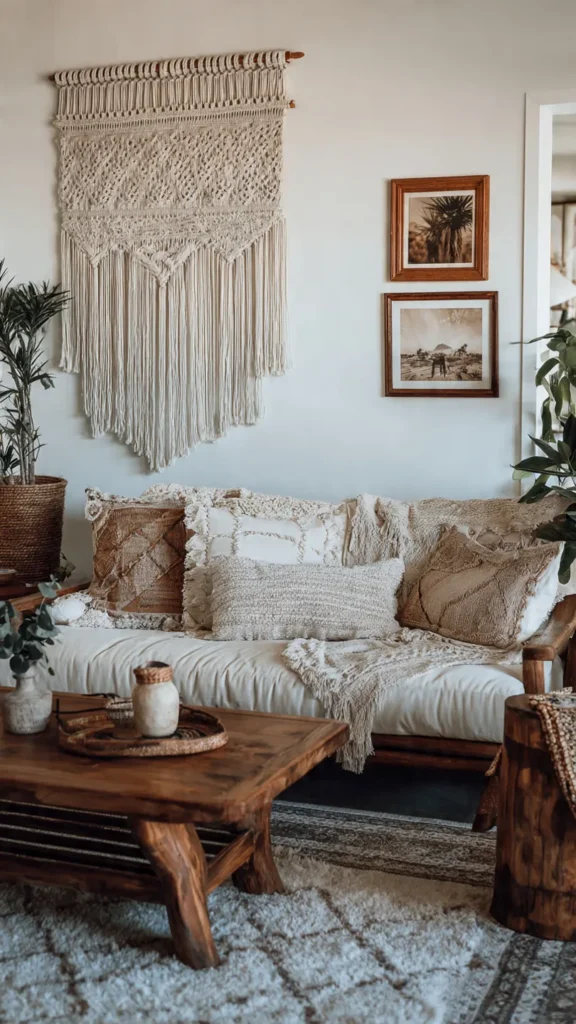
Textiles add softness and warmth. Macramé, tapestries, kilims, or woven panels soften the room and create a relaxed, cozy feeling.
They are ideal for boho, cottage, or eclectic interiors.
Styling tip: Layer textiles with framed art for visual contrast.
10. Painted Accent Techniques
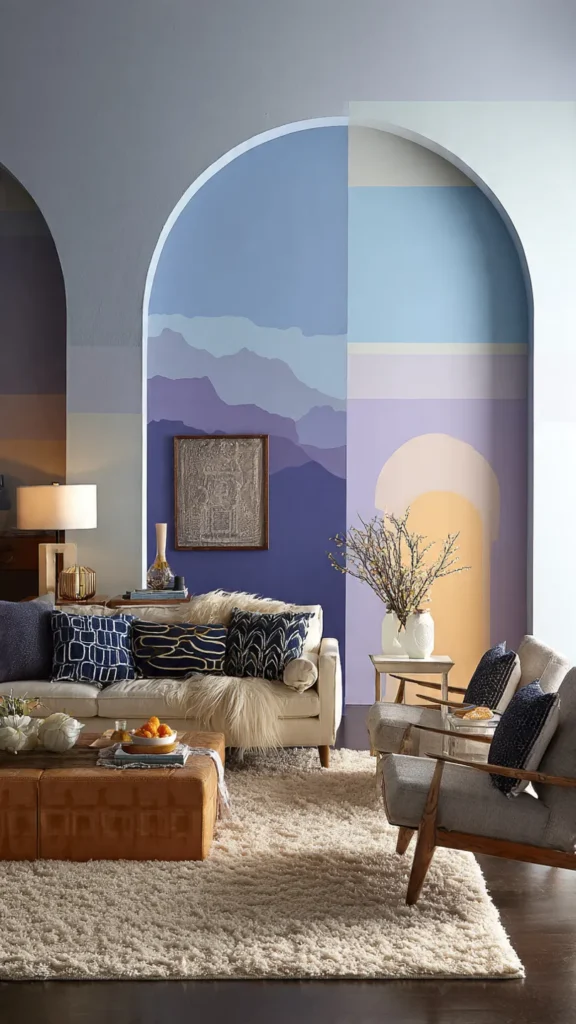
Paint can be art. Color-blocking, arches, stripes, or mural-style gradients create graphic interest using only paint.
This is budget-friendly and highly customizable.
Styling tip: Use painter’s tape and test small areas before committing.
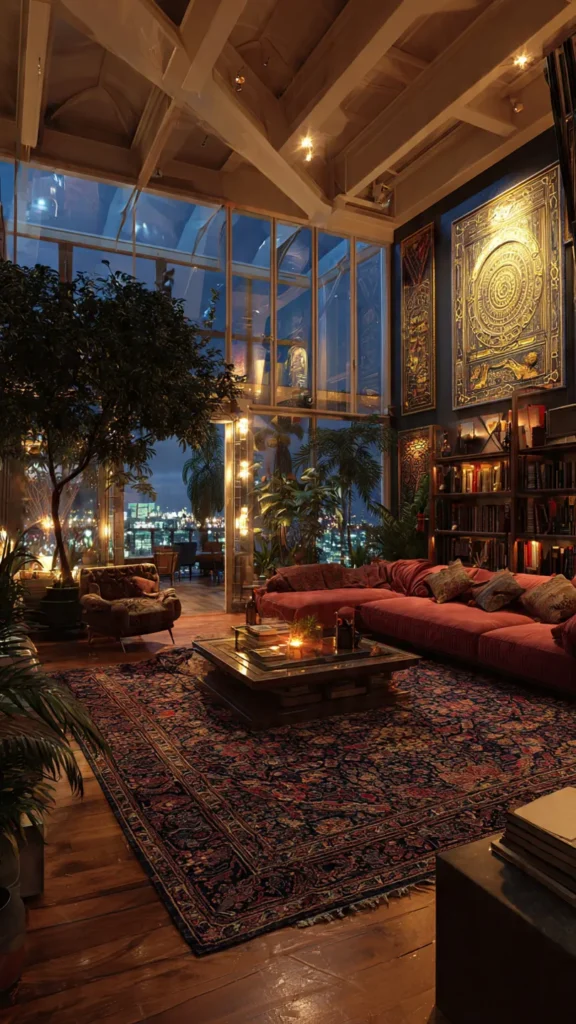
11. Full Wall Bookcases
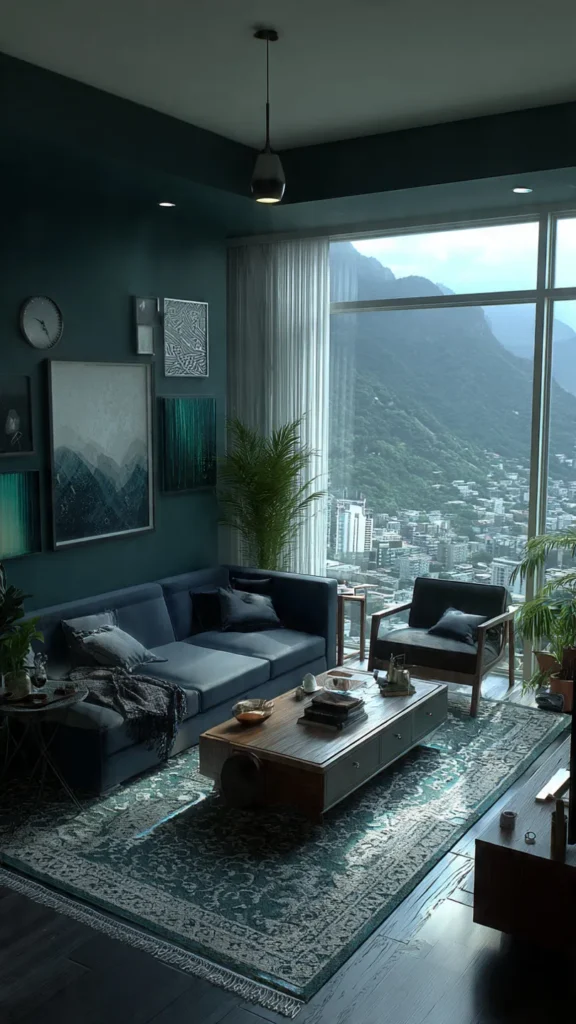
A wall of books adds color, texture, and intellectual warmth. Books create a sense of personality and depth that no art print can replicate.
They also act as sound absorbers and visual insulation.
Styling tip: Mix books with plants and objects to prevent visual monotony.
12. Personal Story Walls
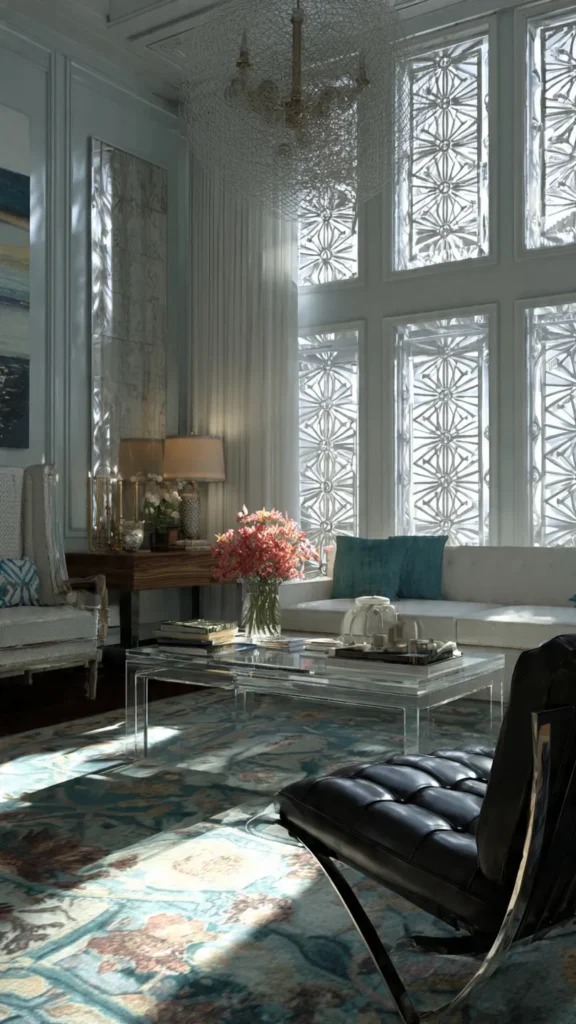
A wall dedicated to memories — travel photos, heirlooms, family art — creates emotional connection.
This makes your living room feel deeply personal rather than staged.
Styling tip: Group items by theme, color, or era for clarity.
13. Statement Clocks
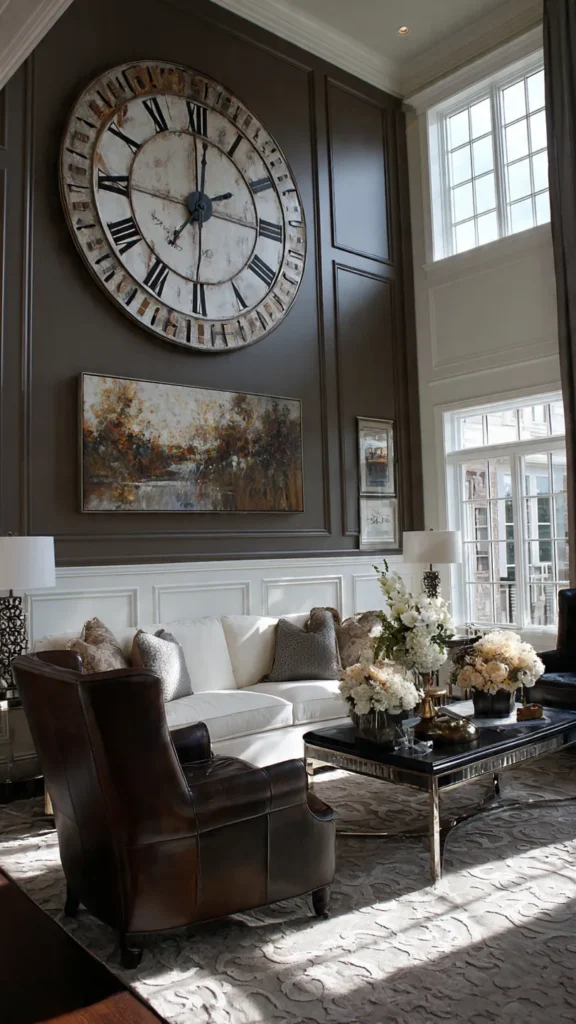
Large clocks provide structure and function. They add rhythm to the wall and often become focal points.
Choose minimalist designs for modern spaces or ornate ones for traditional rooms.
14. Light as Wall Decor
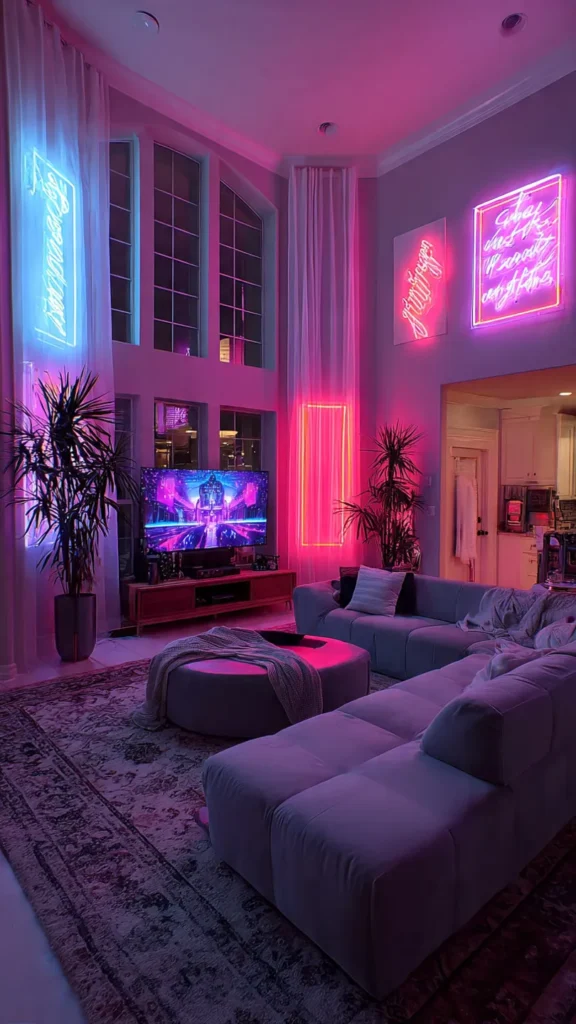
Sconces, LED art, neon words, or glowing panels turn light into décor.
Light adds drama and mood after dark.
Styling tip: Use warm light for comfort, cool light for modern energy.
15. Negative Space as Design
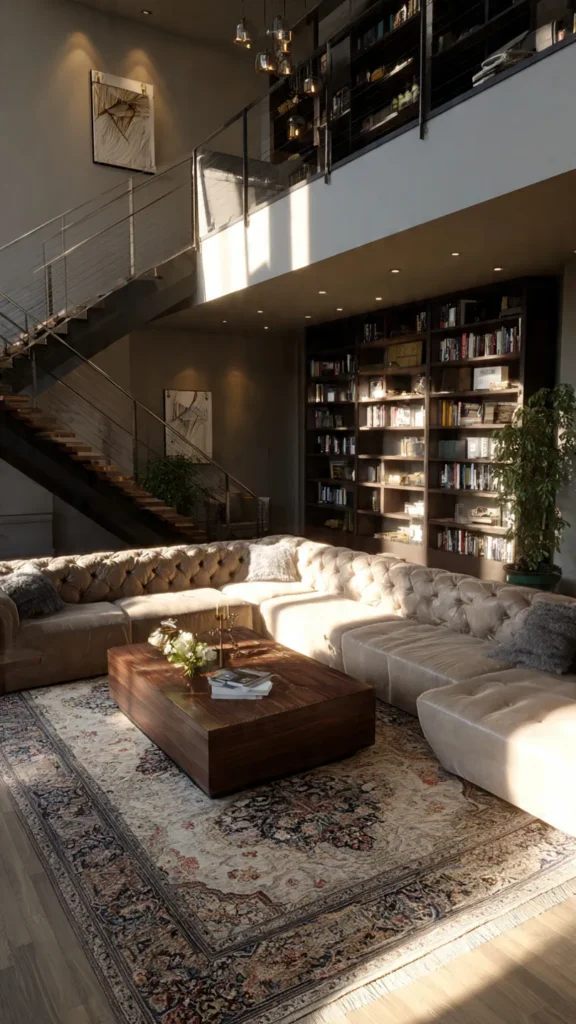
Leaving some walls partially empty creates breathing room. Negative space allows other elements to shine and prevents visual fatigue.
Styling tip: Use one small, intentional piece to anchor the space.
Walls are not just surfaces — they are emotional canvases. Through thoughtful design, your walls can tell your story, shape your mood, and transform your living room into a place that feels intentional, comforting, and alive.