

15 Marble Decor Ideas That Look Luxurious
Marble is the material that most completely encodes the concept of luxury into its physical surface. This is not simply a cultural association — it is a geological one. The formation of marble requires specific conditions of heat and pressure sustained over geological time periods that produce a material of extreme rarity relative to the abundance of the sedimentary limestone from which it derives.

Its surface, when cut and polished, reveals the record of its formation in the veining that runs through it — the movement of mineral-laden fluids through the rock under conditions of enormous pressure, preserved as permanent marks in a surface that is then exposed by the stonemason’s saw and brought to the interior where it catches the light in ways that no other natural material quite replicates.
The white marble with gray veining that has become the shorthand for luxury interior design is actually just one point in a spectrum that includes black and gold, green and white, pink and cream, deep burgundy, and the extraordinarily complex multi-color varieties that some quarries produce in small quantities.
All of it is marble, and all of it carries the specific quality of irreplaceable natural beauty that makes the material as relevant to contemporary interior design as it has been to every era of architecture before it. Here are fifteen ideas for using it in your home with the intelligence and confidence it deserves.
1. A Marble Kitchen Island as the Room’s Centrepiece
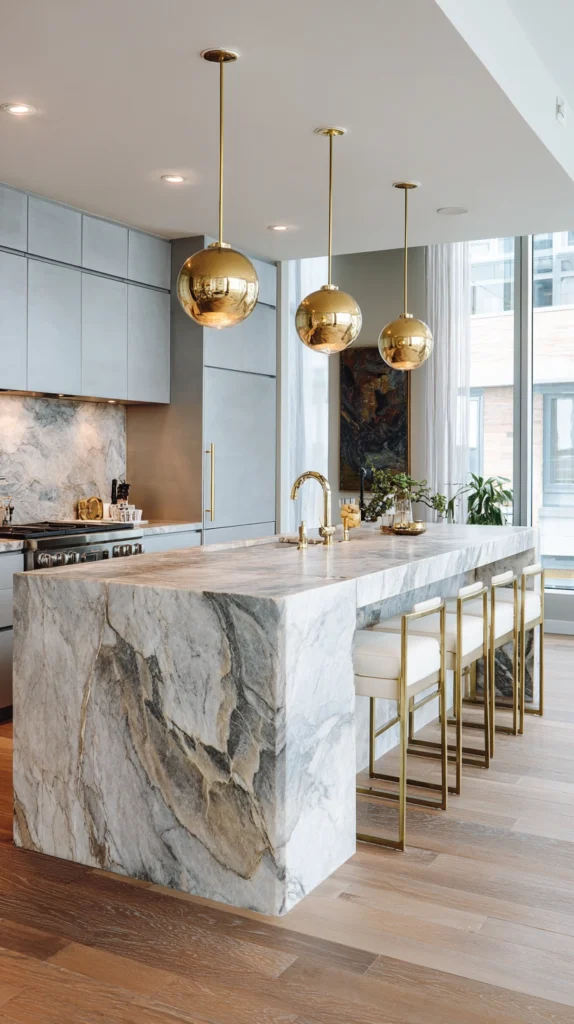
The marble kitchen island is the most impactful single application of marble in any domestic interior — a large horizontal surface in a material of unquestioned beauty that sits at the center of the home’s most used room and is experienced daily from multiple angles, in multiple lighting conditions, and at multiple distances.
The island’s marble top should be specified in a slab of sufficient quality that the veining is dramatic and specific rather than generic — a slab with a unique and beautiful vein pattern that makes the island a genuinely individual object rather than a generic marble surface.
Book-matched marble — two adjacent slabs from the same block installed side by side so that their vein patterns mirror each other across the centerline — creates an island top of extraordinary visual power and formal beauty.
The marble island top requires proper sealing and careful maintenance — marble is calcium carbonate, which reacts with acids including citrus juice, wine, and vinegar — but the daily pleasure of working on and looking at a surface of genuine geological beauty justifies the care it requires entirely.
2. Marble Bathroom Walls for Total Immersion
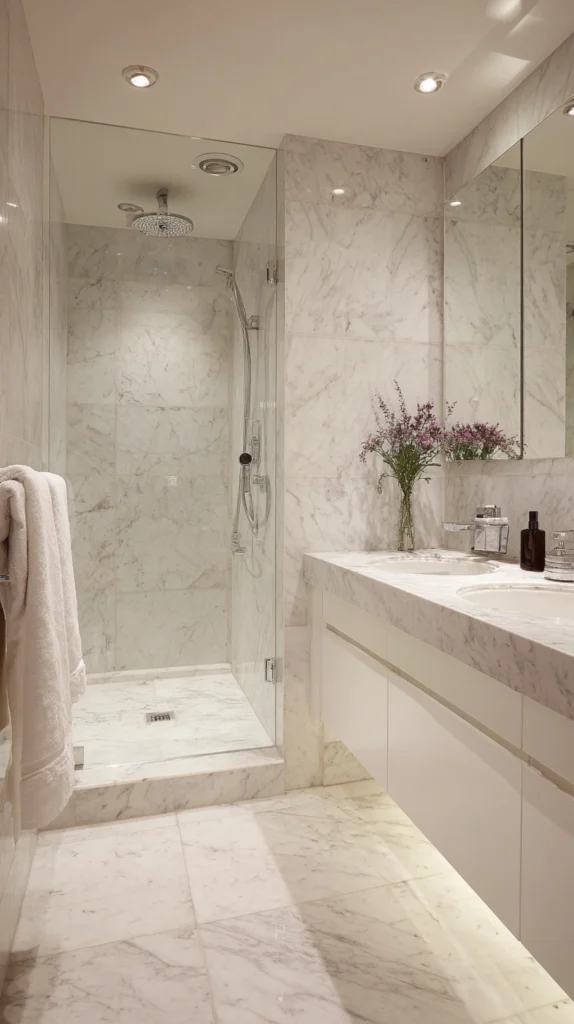
The bathroom clad entirely in marble — floor, walls, and shower enclosure in a continuous application of the same material — is the domestic interior’s closest equivalent to the great marble baths of antiquity, and it creates an experience of bathing that is incomparably more beautiful and more sensory than the tiled bathroom of standard domestic provision.
The key to the all-marble bathroom is the selection of a single marble variety and the specification of slabs from the same lot, which ensures that the veining flows consistently through the space and creates the impression of a room carved from a single block of stone rather than assembled from separate pieces.
The continuity of material from floor to wall to ceiling in a marble bathroom creates a spatial quality that is simultaneously opulent and calming — the eye has nowhere to stop and register a material change, and the uniformity of the surface creates a bathroom of profound sensory consistency.
Underfloor heating beneath marble floors is essential — cold marble on bare feet at the start of a morning is the one experience that undermines the material’s otherwise perfect bathroom performance.
3. A Marble Fireplace Surround for Classical Elegance
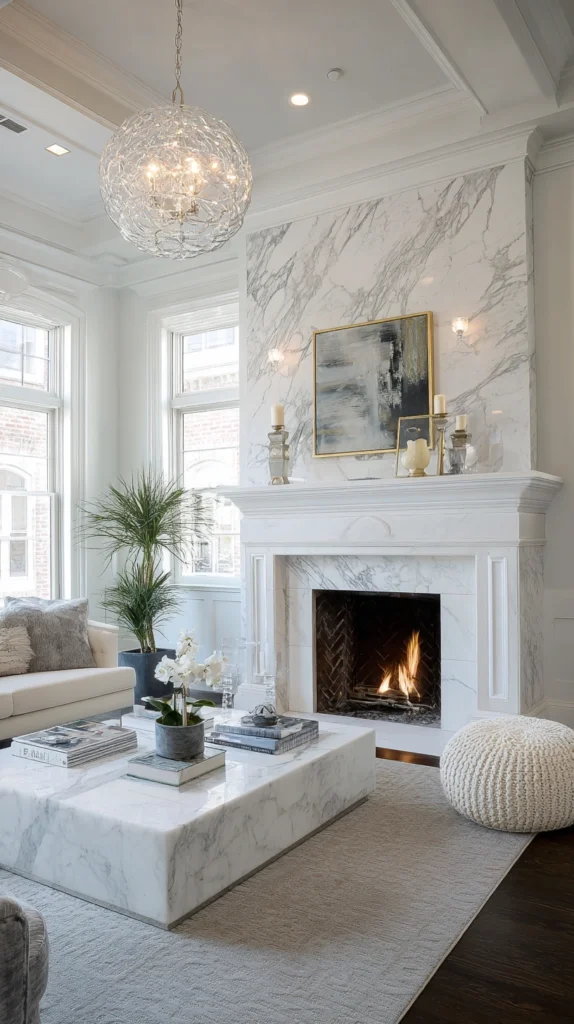
The marble fireplace surround is perhaps the most historically resonant of all marble interior applications — the material has been used for fireplace surrounds in the finest domestic interiors of Europe for five centuries, and its presence in a room’s most significant architectural feature creates an immediate quality of classical authority and material richness that no other surround material can replicate.
A white Carrara marble surrounded with simple molding profiles suits virtually every interior style from the purely traditional to the quietly contemporary — the material’s intrinsic beauty requires minimal decorative elaboration, and the simplest profiles often create the most elegant result.
A more dramatically veined marble — Calacatta with bold gold veining, Verde Alpi in deep green and white, Portoro in black and gold — creates a fireplace of maximum visual impact that becomes the room’s undisputed focal point regardless of what else the room contains.
The mantel shelf above the surround provides the display surface that the fireplace’s social role requires — dress it with considered restraint, allowing the marble beneath to read without visual competition.
4. Marble Coffee Table as Living Room Luxury
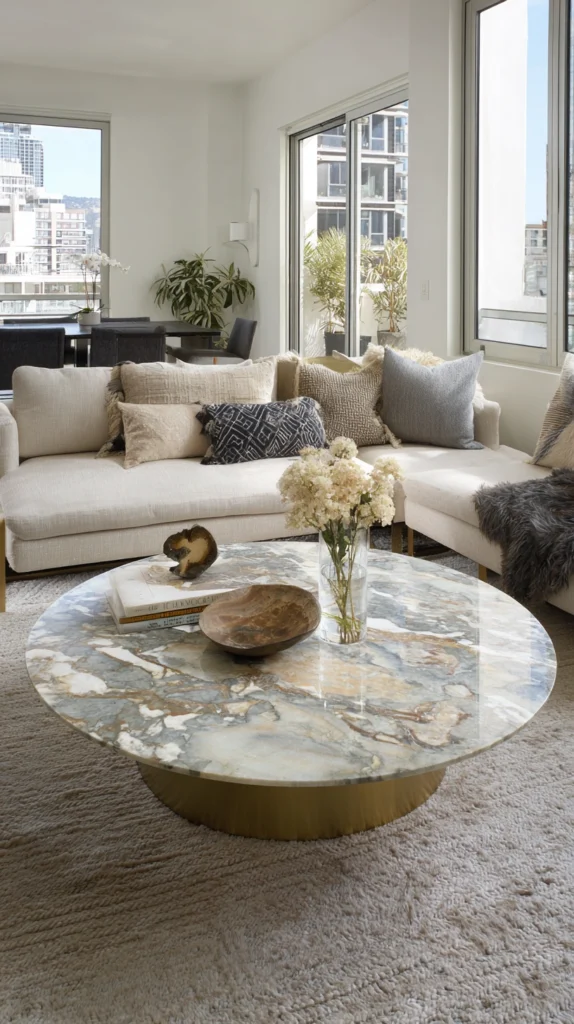
The marble coffee table — a marble top on a base of brass, steel, timber, or stone — is the most accessible and most immediately impactful way to introduce marble into a living room that does not have the architectural features that allow larger marble applications.
The coffee table’s horizontal surface is experienced at close range from the surrounding seating — touching distance, the range at which the marble’s surface texture and veining are most intimately perceived — and this closeness makes the coffee table one of the most sensory applications of the material available in residential furniture.
A round marble top on a slim brass base is among the most classically elegant furniture forms in contemporary interior design — the circle of stone on the delicate metal structure creates a composition that is simultaneously substantial and light, grounded and elevated.
Ensure the marble top is properly sealed and provide coasters for the drinks that the coffee table will inevitably hold — marble rings from glasses are the most common and most preventable marble maintenance issue in a living room context.
5. Marble Shelf Liners for Bookcase Drama
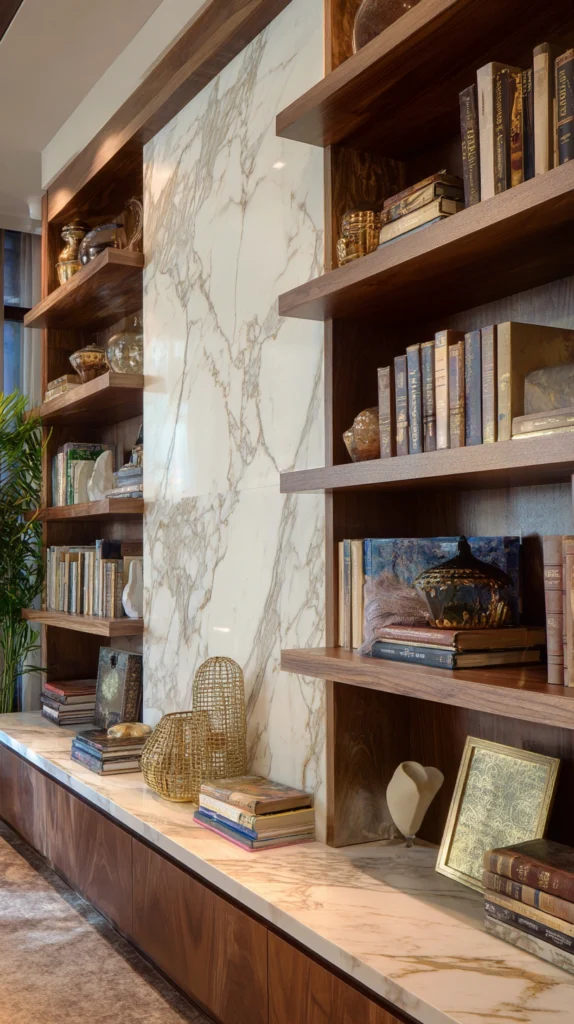
One of the most unexpected and most impactful ways to introduce marble into a room is as a shelf liner — thin marble tiles or marble-effect porcelain cut to the depth of a bookcase shelf and laid along the shelf surface so that the marble is visible between and below the objects displayed on the shelf.
From the front, the bookcase’s contents sit on a horizontal band of marble that transforms the shelf from a simple storage surface to a display platform of considerable material richness.
The marble shelf liner is visible only in glimpses — between the books, beneath the ceramics, alongside the objects — which creates a quality of material discovery that a more prominent marble application does not provide.
This is marble used as a supporting player rather than a lead character, and the books and objects on the shelf become more interesting for the material they are displayed against.
6. A Marble Accent Wall in the Bedroom
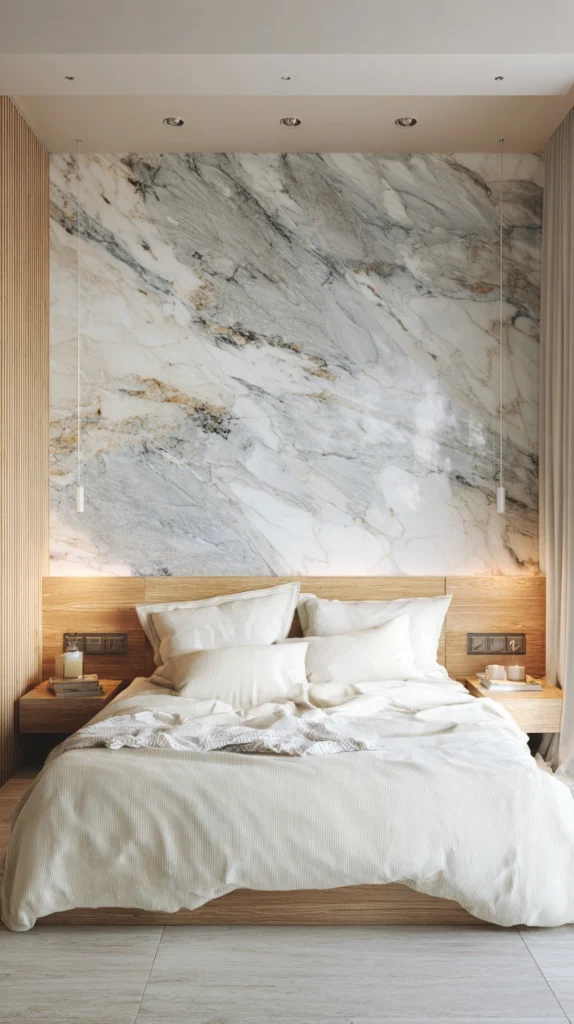
A full or partial accent wall in marble — either genuine stone slabs installed floor to ceiling on the bedroom’s primary wall, or a large-format marble-effect porcelain that delivers a convincing visual equivalent at a significantly lower cost and weight — creates a bedroom feature wall of extraordinary luxury and visual presence.
The bedroom accent wall is most effectively placed behind the bed, creating a headboard backdrop of genuine architectural ambition that replaces the conventional painted or wallpapered accent wall with something of considerably greater material authority.
The marble wall’s veining creates a pattern of natural beauty that is unique to the specific stone selected and that provides the bedroom’s primary decorative element without requiring any additional art, textile, or decorative elaboration.
Keep the surrounding room’s palette as simple as possible — white or cream bedding, natural timber side tables, simple pendant lights — to allow the marble wall to fulfill its role as the undisputed visual center of the bedroom.
7. Marble Bathroom Vanity Top for Daily Luxury
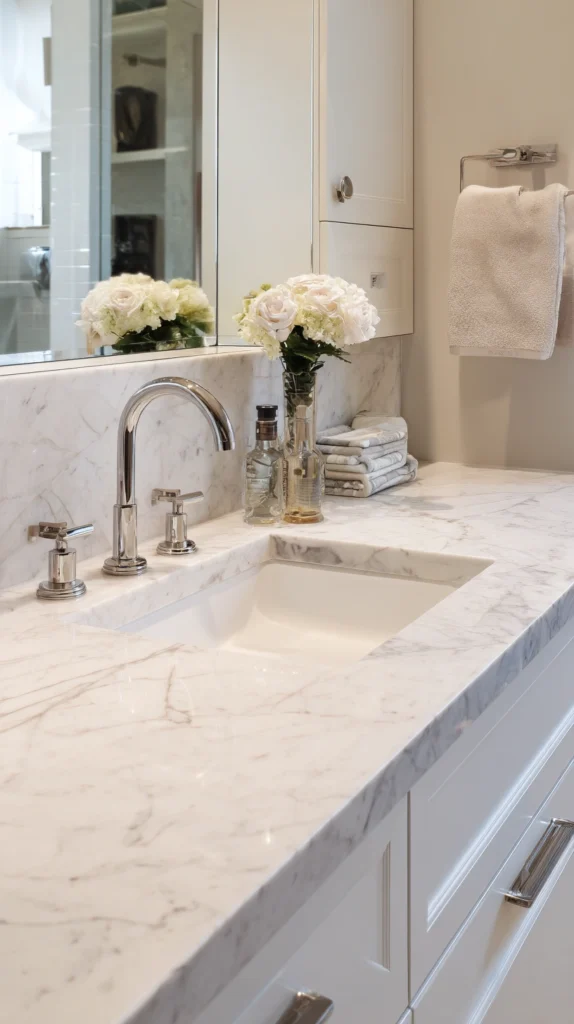
The bathroom vanity top in marble — a cut stone slab with an undermounted basin and a polished edge profile — converts the bathroom’s most used surface into a daily experience of material luxury that the ceramic and engineered stone alternatives simply cannot match.
Every morning and evening interaction with the vanity — the placement of a toothbrush, the setting down of a soap dish, the reaching for a product — is experienced against the specific sensory quality of the marble’s cool, smooth, weight-communicating surface.
The vanity top’s marble should be selected with the bathroom’s specific light quality in mind — a bathroom with warm artificial lighting shows warm-veined marbles like Calacatta Gold at their most beautiful, while a bathroom with cool natural light from a north-facing window shows the cooler Carrara and Bardiglio varieties with greater visual accuracy.
Seal the marble top regularly and avoid leaving soap and water to pool on the surface, as the alkaline residue of soap can dull the polished surface over time if not regularly cleaned.
8. Marble Coasters and Trays for Accessible Luxury
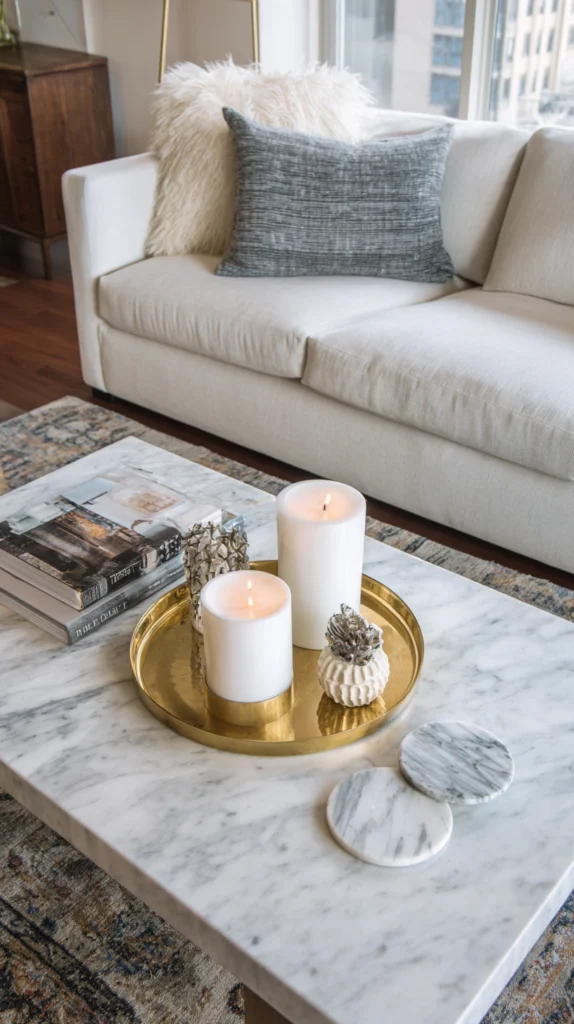
The accessible entry point into marble decor — the approach that delivers the material’s sensory and visual quality without the commitment and cost of architectural or large-scale furniture applications — is the collection of marble accessories: coasters, trays, bookends, candle holders, soap dishes, and the small functional objects that are handled daily and experienced at the most intimate scale available in any interior.
A set of marble coasters in a honed finish — the matte surface of honed marble is warmer and less formal than the polished surface, and more forgiving of the slight moisture exposure that a coaster surface inevitably receives — on a living room coffee table introduces the material’s specific sensory quality in the most accessible possible format.
A marble tray on a bathroom vanity, holding perfume bottles and small ceramics, creates a surface composition of considerable beauty at negligible cost relative to any larger marble application. These small objects are the marble decor starter kit, and their quality is consistently disproportionate to their size.
9. Marble Flooring in an Entry Hall for First Impressions
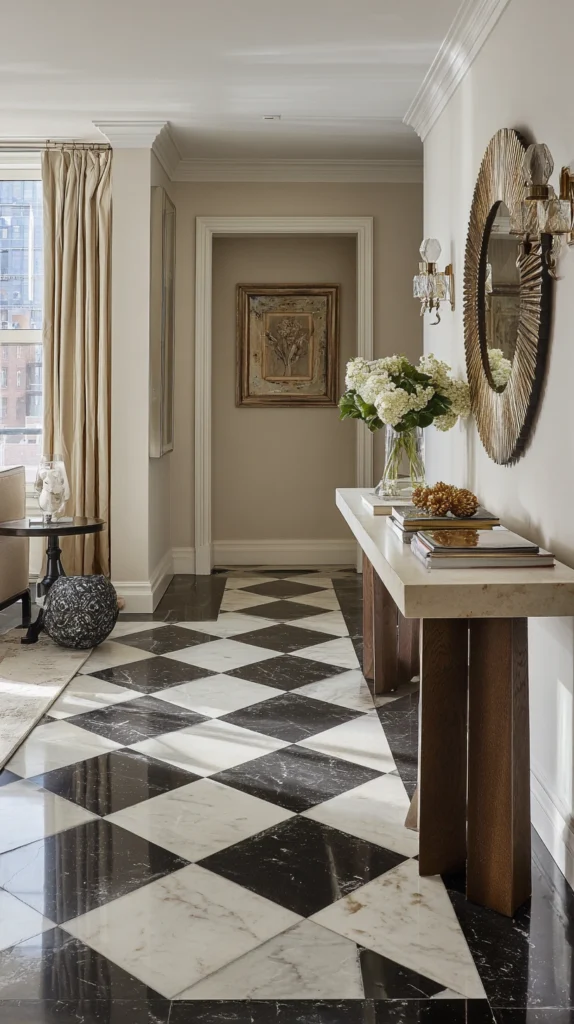
The entry hall is the home’s first impression — the surface that guests encounter before any other interior element, the room that sets the tone for everything that follows — and marble flooring in an entry hall creates an arrival experience of immediate and unambiguous luxury.
A classic black and white marble checkerboard in an entry hall — the pattern that has featured in the finest European domestic interiors since the sixteenth century — creates a graphic, formal welcome of enduring elegance. A large-format marble tile in a single variety with a consistent vein direction creates a more contemporary and more minimalist arrival experience that suits modern architecture with precise, clean lines.
The marble entry hall floor communicates the quality of the home’s interior before the visitor has seen any other element of its decoration, and the quality of that communication is entirely consistent with the quality of the material — marble floors never fail to impress, and they never date.
10. A Marble Backsplash in a Muted Kitchen
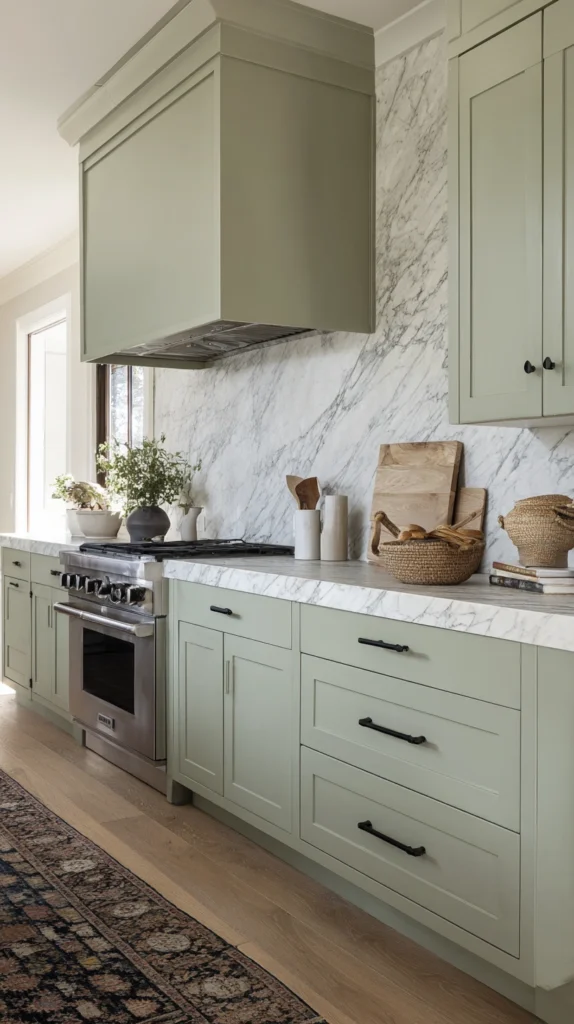
The kitchen backsplash in a full-height marble slab — the marble running from countertop to the underside of the upper cabinets in a single uninterrupted expanse of veined stone — creates a kitchen focal wall of exceptional material beauty that transforms the backsplash from a splash-protection surface into the kitchen’s primary design statement.
The full-height marble slab backsplash eliminates the grout lines of a tiled backsplash, creating a seamless surface that is both more beautiful and more hygienic — the continuous stone surface has fewer points of potential contamination and is easier to wipe clean.
In a kitchen with muted, restrained cabinetry — plain Shaker doors in an off-white or soft sage, simple hardware in brushed brass — a marble backsplash provides the room’s entire decorative energy and renders every other surface detail unnecessary. The marble should be sealed before installation and resealed regularly to protect the polished surface from the grease and steam of daily cooking.
11. Marble Side Tables for Bedroom Sophistication
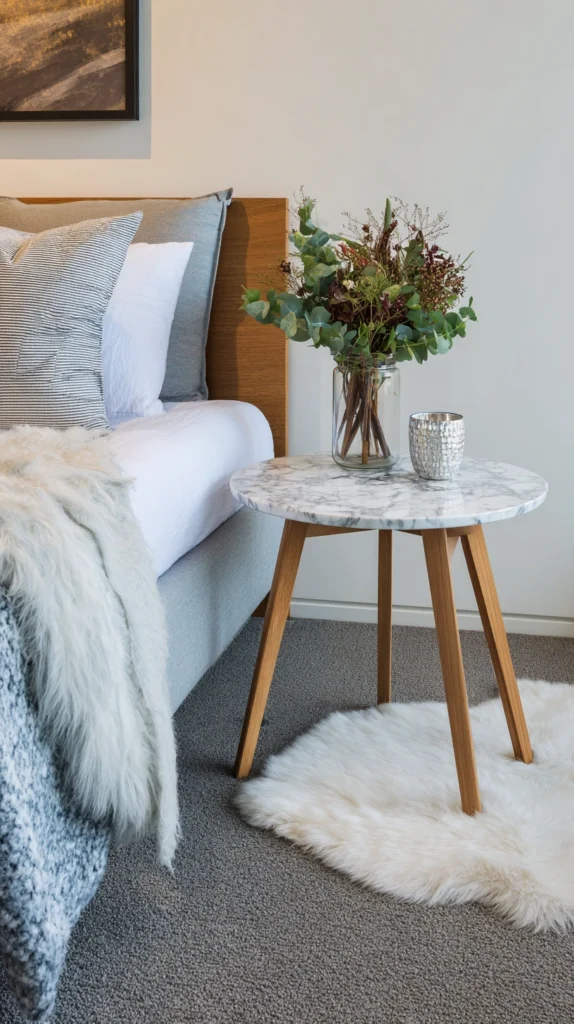
The bedside table in marble — either a full marble structure in a simple geometric form, or a marble top on a base of timber, cane, or metal — creates a bedroom material moment of considerable elegance at the scale of the room’s most intimate furniture.
Bedside tables are handled multiple times each day — set down upon, opened, closed, moved — and the tactile quality of marble at the scale of a frequently touched piece of furniture is one of the most directly pleasurable sensory experiences available in residential interior design.
A pair of matching marble side tables flanking the bed creates the symmetrical bedroom composition that the classical interior requires, and the visual weight of the marble is sufficient to anchor the bedside arrangement even when the tables are relatively small.
Choose a marble variety that relates to the bedroom’s overall palette — a warm Calacatta Gold for a bedroom with warm tones and brass fixtures, a cool Carrara for a bedroom with cooler whites and brushed nickel hardware.
12. Marble Wallpaper for the Look Without the Weight
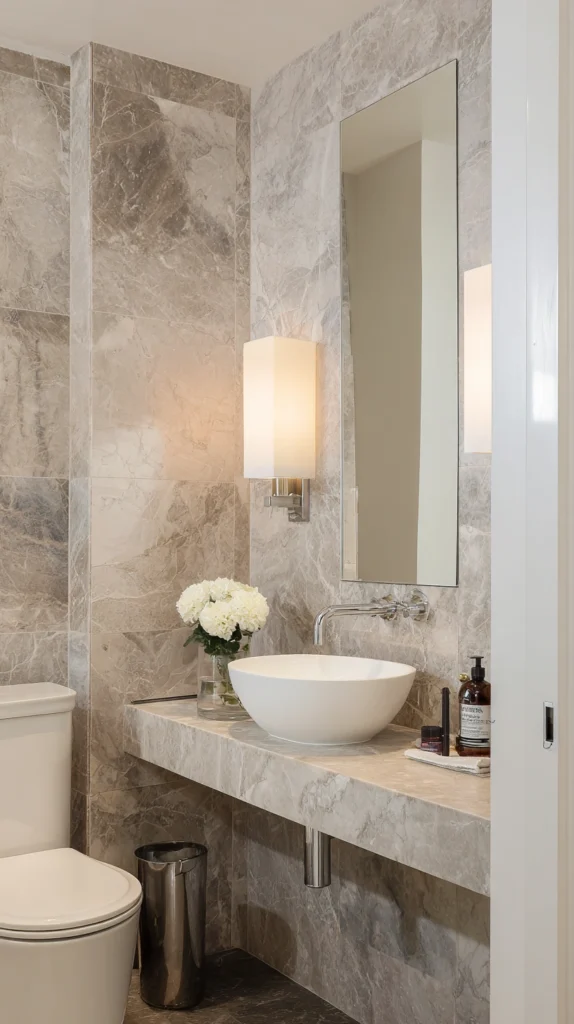
The marble effect wallpaper — a high-quality printed or embossed wallpaper whose surface pattern convincingly replicates the veining and coloration of specific marble varieties — is the approach that delivers the visual impact of marble at a fraction of the cost and without the structural requirements that genuine stone installation demands.
The best marble wallpapers are genuinely convincing at the distances at which a wall is typically viewed — the veining patterns are specific and varied rather than generic and repetitive, the color gradations are subtle and realistic, and the scale of the pattern is calibrated to the wall height for maximum visual plausibility.
Marble wallpaper is particularly effective in powder rooms, where the enclosed scale of the space and the close viewing distance reward the detail of a quality wallpaper, and in bedrooms where the softness of the paper surface suits the room’s sensory character better than the cool weight of actual stone.
13. A Marble Dining Table for Memorable Meals
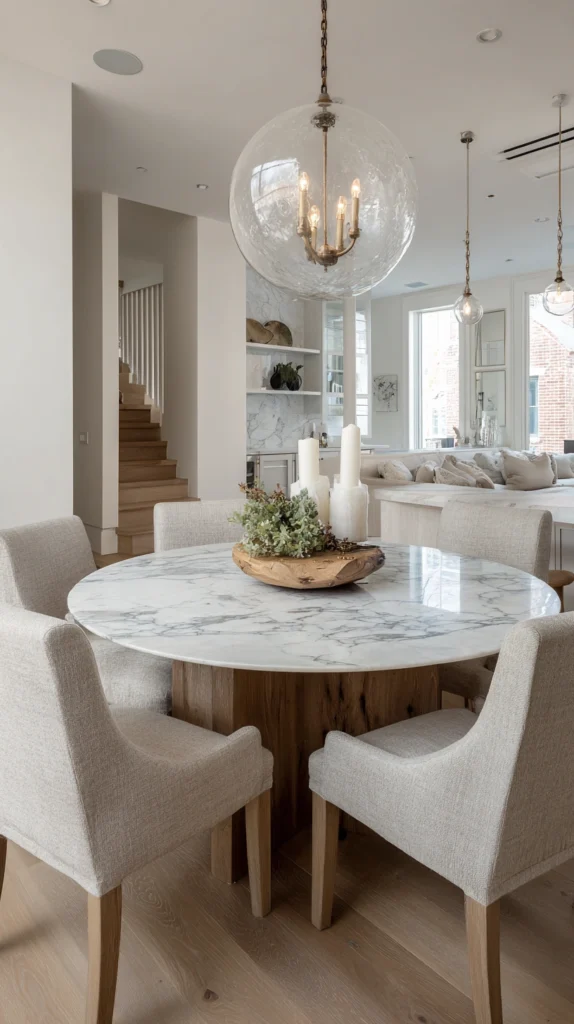
The marble dining table — a stone top on a base of timber, metal, or stone — creates a dining experience of considerable visual and tactile richness that timber and glass alternatives cannot replicate.
The marble’s surface reflects the candlelight of a dinner table setting with the specific quality that only natural stone achieves — not the mirror-like reflection of glass or the absorbed warmth of timber, but the deep, internal luminosity of a polished stone surface that seems to catch light from within rather than simply reflecting it.
A round marble dining table in a dining room of modest size creates a social configuration of democratic equality — every seat at a round table is equally positioned relative to every other — and the marble’s material quality transforms the everyday function of eating into something of greater ceremony and beauty.
Seal the table top thoroughly and maintain it carefully; the dining table receives more direct food and liquid exposure than almost any other marble surface in the home.
14. Marble in a Home Bar or Drinks Station
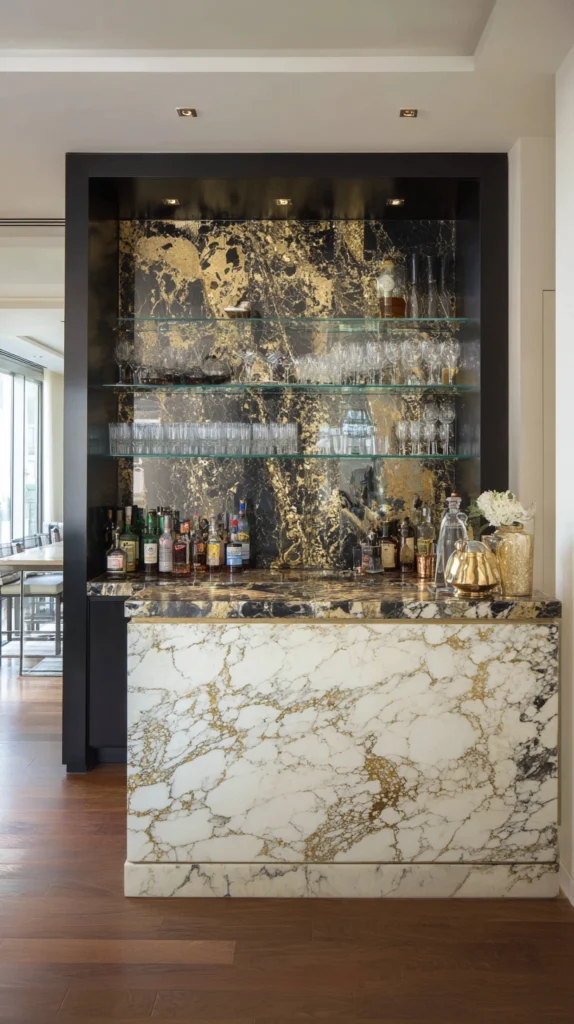
The home bar or drinks station with a marble counter — a small section of marble countertop in a bar niche, a marble-topped drinks trolley, or a marble back panel behind a bar cabinet display — creates a home drinks experience with the specific glamour of the finest hotel bars and the best private clubs.
The marble in a bar context relates directly to the tradition of the marble bar counter — a surface whose combination of cool temperature, smooth surface, and inherent material luxury suits the serving of cold drinks with a physical appropriateness that warmer surfaces cannot match.
A Portoro marble back panel — its black ground with gold veining creating a dramatically opulent backdrop for bottles and glassware — is among the most spectacular small-scale marble applications available in residential design, delivering maximum visual impact in the confined space of a bar niche.
15. Marble Objects and Sculpture for Collector’s Beauty
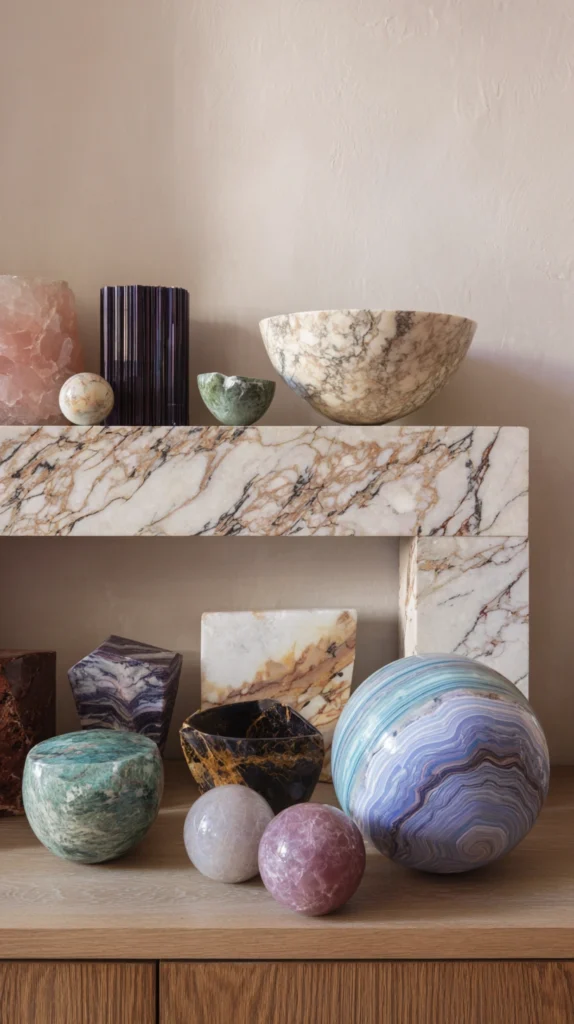
The finest marble decor idea of all is also the most timeless and the most personal: the collection of marble objects chosen for their intrinsic sculptural beauty rather than their functional role — a smooth marble sphere of generous diameter on a timber shelf, a carved marble bowl used as a fruit or key dish, a small marble sculpture positioned on a plinth in a corner, a collection of marble specimens in different colors and formations arranged as a geological still life on a coffee table or console.
These objects are marble in its most direct expression — material collected for the specific quality of its beauty, displayed for the pleasure of looking at and touching something that the earth produced over millions of years and that will outlast every other object in the room by a period of time too long to meaningfully calculate.
They require no installation, no sealing, no specialist maintenance. They require only the eye that recognizes their beauty and the decision to bring that beauty into the daily environment of the home.